
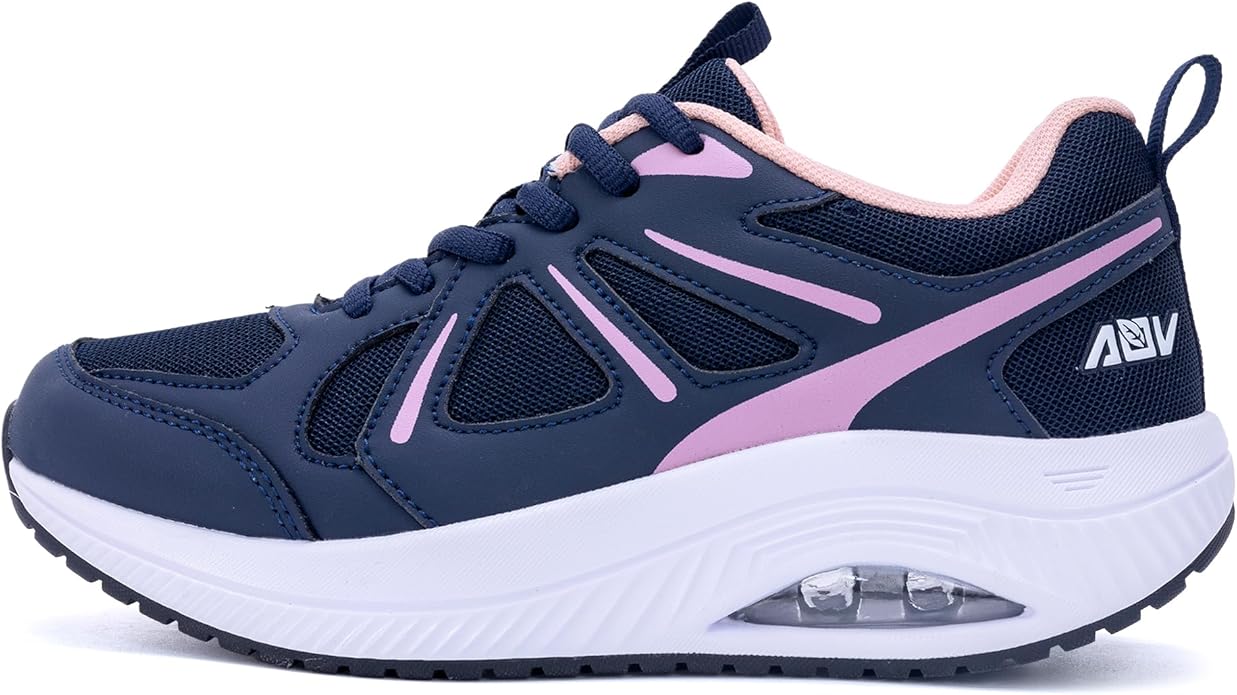
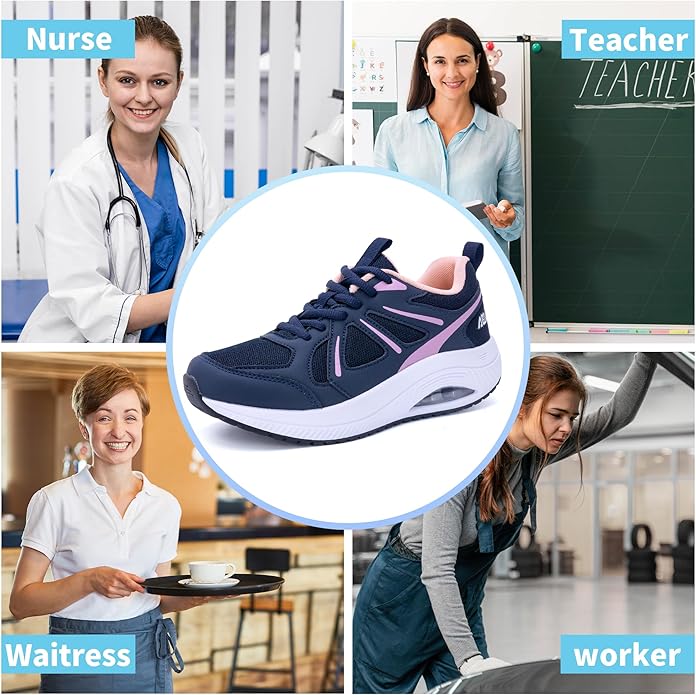
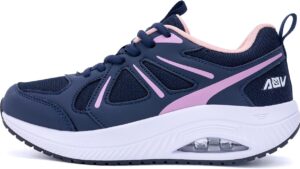
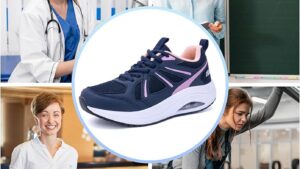
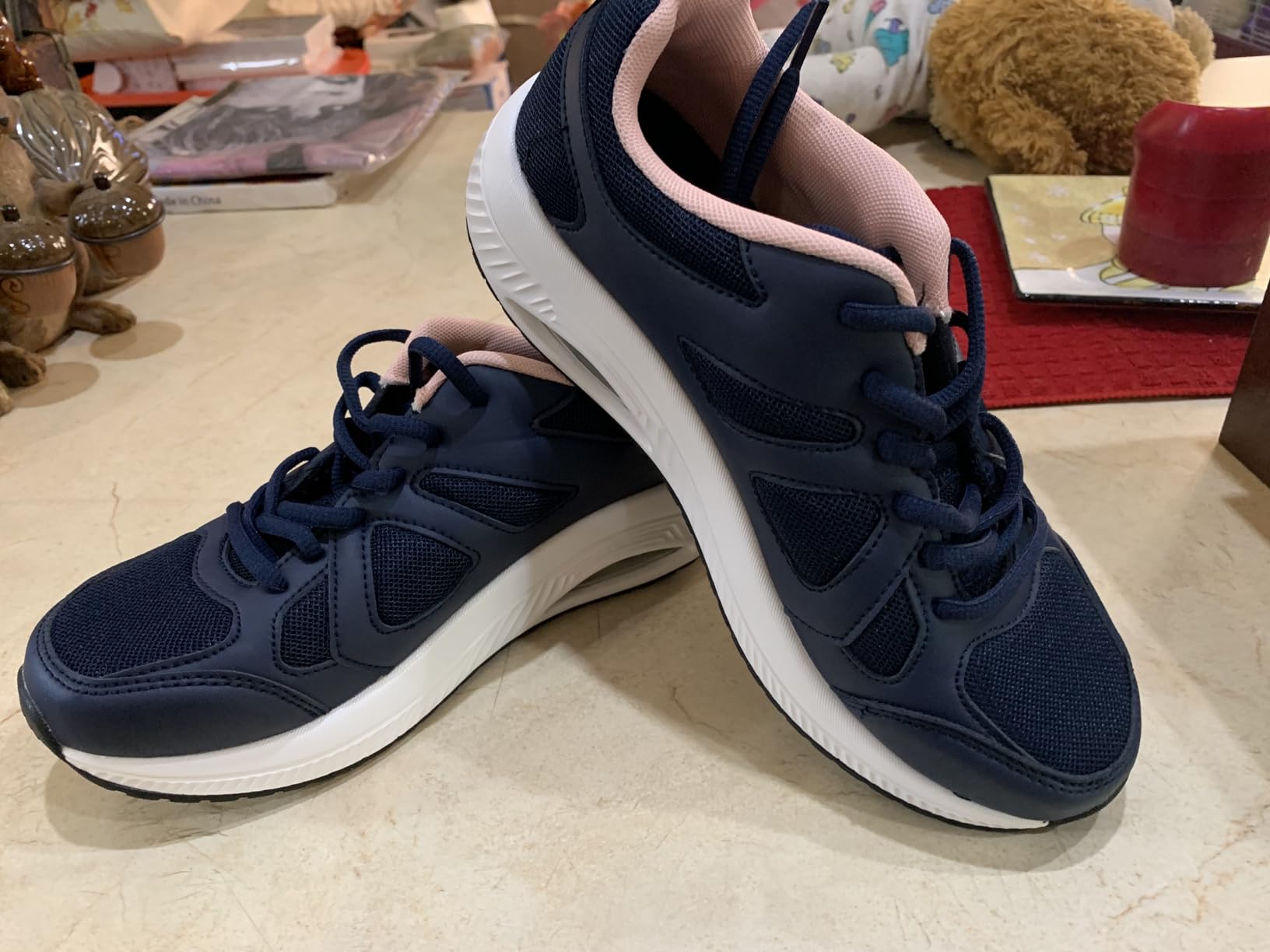
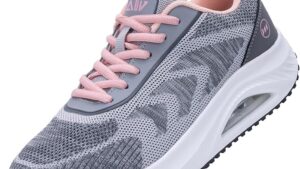
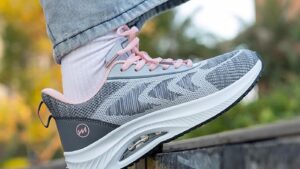
AOV Women Arch Support Walking Shoes Orthotic Sneakers
$54.98
- 💰 Price: $35–45 (check current pricing on Walmart or Amazon)
- ⚖️ Weight: 8.5 oz (women’s size 8)
- 🧪 Midsole: Air cushion technology with built-in arch support insoles
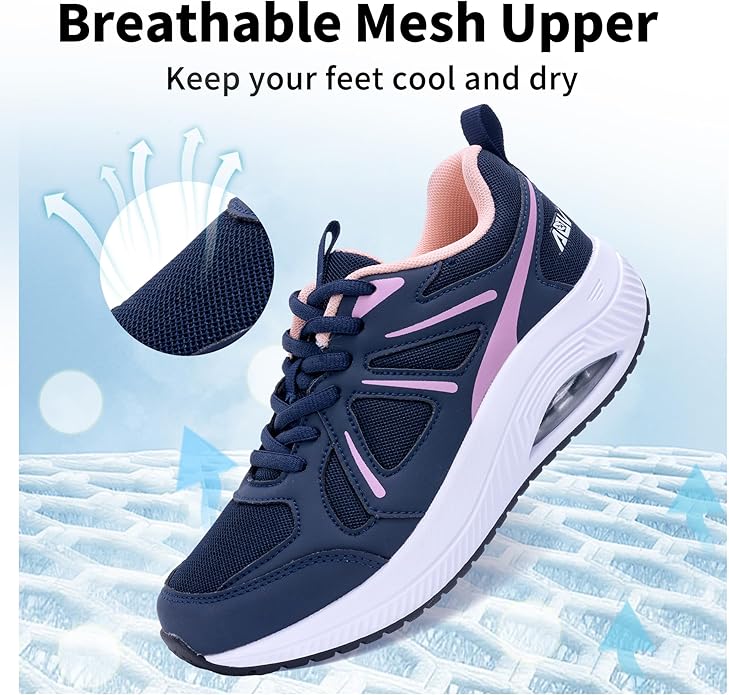
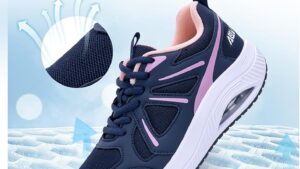
- 👟 Upper: Breathable mesh with synthetic overlays
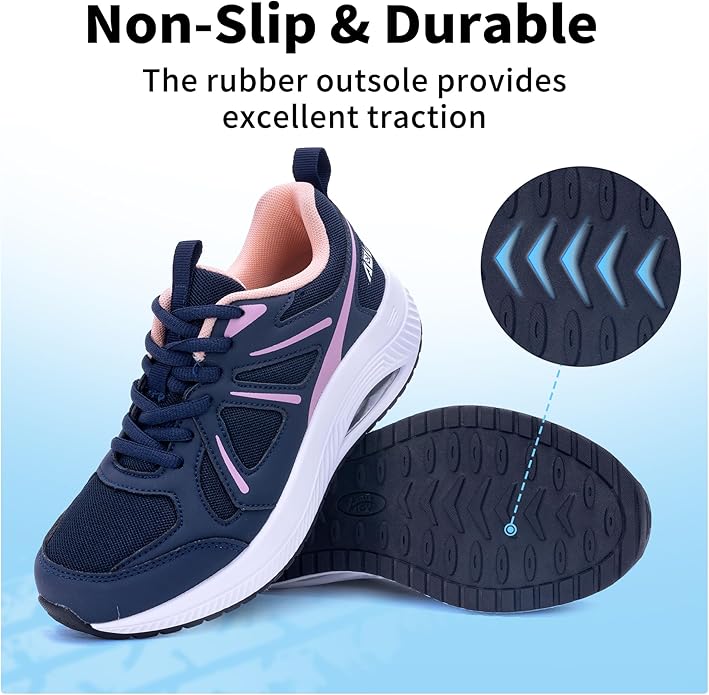
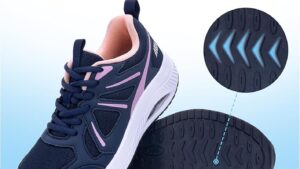
- 🦶 Sole: Non-slip rubber with textured tread pattern
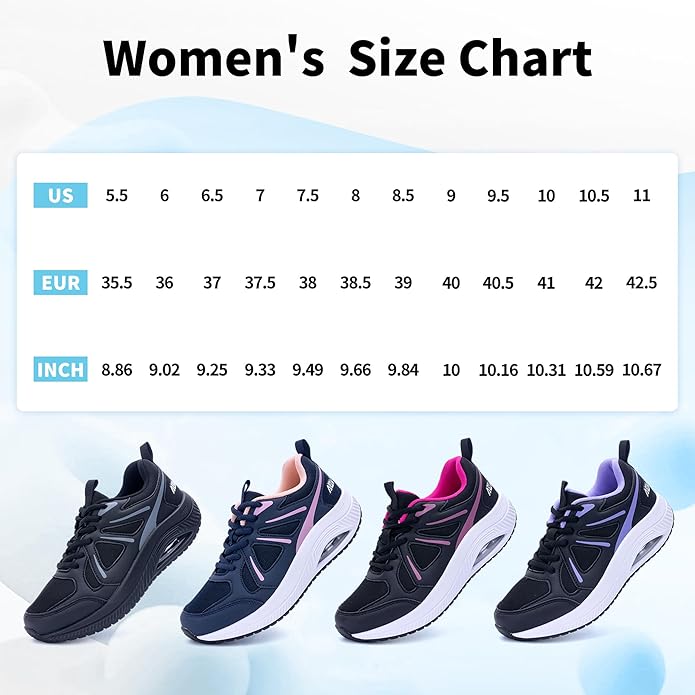
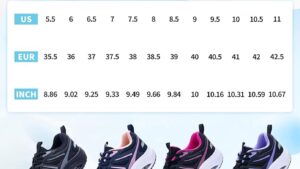
- 📏 Sizing: Available 5.5–11, wide variants offered
- 🎯 Best for: Plantar fasciitis relief, all-day standing, casual walking
- 👥 Target: Busy moms, healthcare workers, teachers, women with foot pain
Three years of plantar fasciitis, two rounds of physical therapy, and a running tab of expensive orthotic shoes that barely moved the needle. That’s where I was when I spotted the AOV Women’s Arch Support Walking Shoes — $35 to $45 at Walmart. Skeptical? Absolutely. But between school pickups, dog walks on concrete, and PTA meetings that run long, I needed something that actually worked. I spent 8 weeks testing these shoes six days a week, 8 to 12 hours daily. Here’s what happened — including the part most reviewers won’t tell you.
Product Overview: What You’re Actually Buying
The AOV Women’s Arch Support Walking Shoe is a budget-tier orthotic sneaker. That description matters: designed for pain relief, not performance. At $35–45, it sits well below dedicated walking brands like Nortiv 8 Walking Shoes ($50–65) or G-Defy Mighty Walk ($100+). The price difference exists for a reason — and we’ll get into durability shortly.
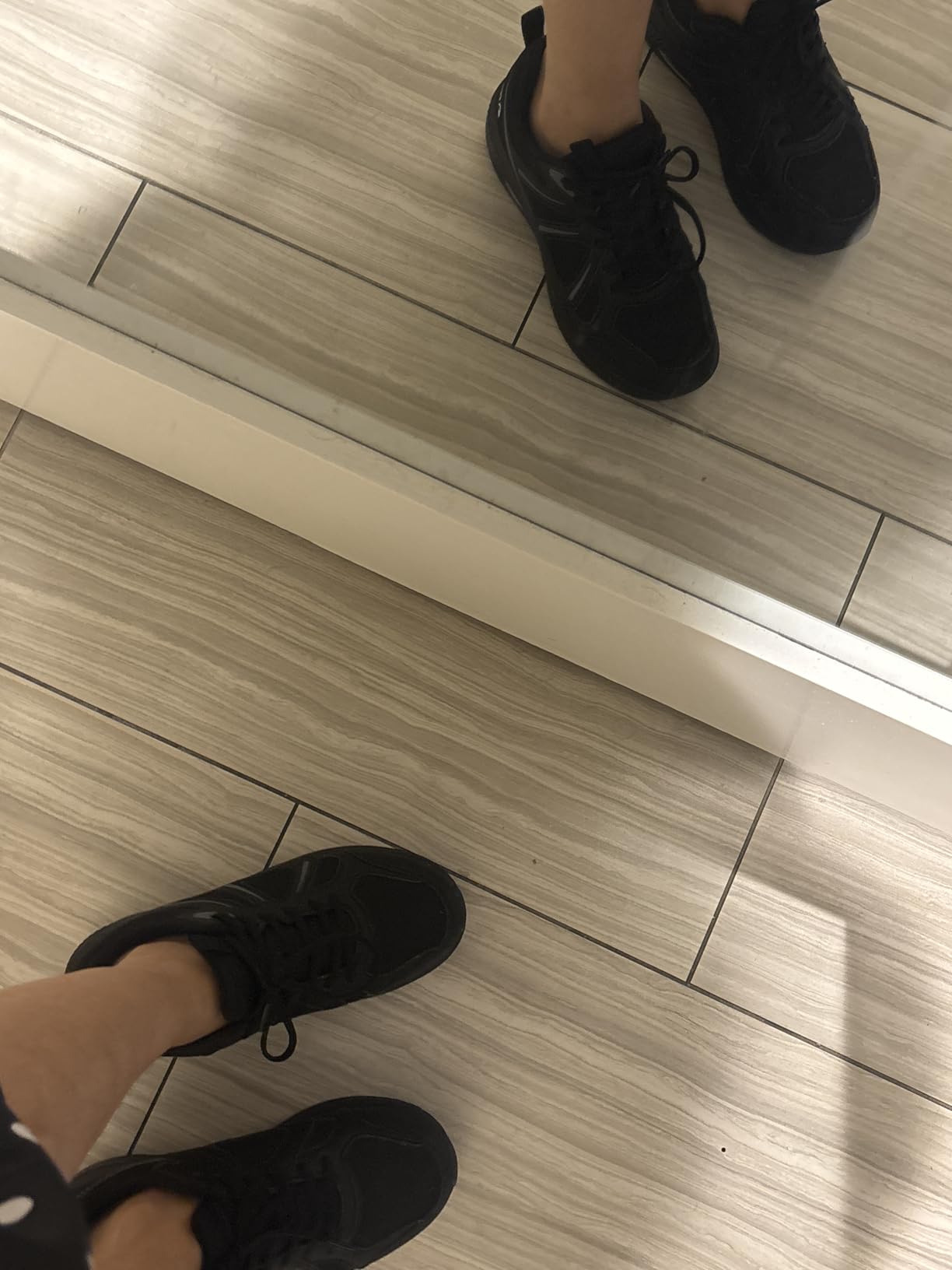
What makes this shoe stand out in the budget tier: the arch support is immediately noticeable from first wear. Not subtle. Not “you might feel something after a few weeks.” You put these on and your arch is held in a way that plain athletic shoes simply don’t provide. The heel cup is deep, the toe box is genuinely wide, and at 8.5 oz the shoe feels light rather than clunky.
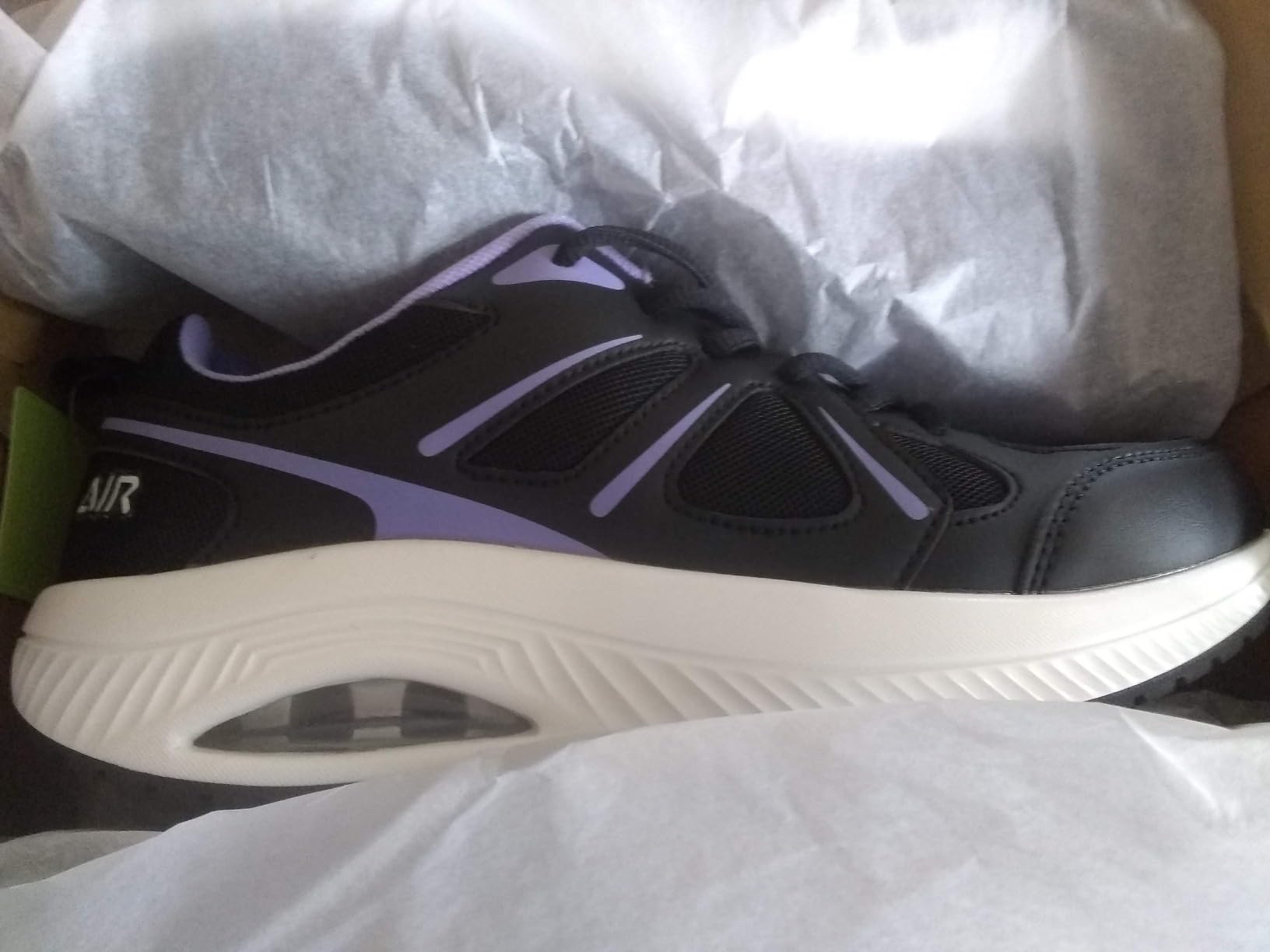
Colors available: white/black, black/gray, black/purple, pink/purple, gray/orange, all-black. Wide variants exist. One important note before we go further: the arch support insole is not removable. Three competitor reviews online claim it is. They’re wrong. More on this in a dedicated section.
Weeks 1–2: The Skeptic Gets a Surprise
Out of the box, the arch support felt firm. Almost rigid. I half expected it to loosen up after a few wears the way cheap memory foam does. It didn’t — but it also didn’t need to.
First full day: four hours at the farmers market, standing on pavement, followed by a school pickup that ran late. My feet weren’t singing by the end of it, which was more than I could say for my previous shoes. No blisters. No heel rubbing. The wide toe box accommodated afternoon foot swelling without pinching.
Week 2 was when things got interesting. I noticed something one morning that I hadn’t experienced in three years: I stepped out of bed and my first few steps didn’t hurt the way they usually do. Plantar fasciitis mornings have a signature — that sharp heel jab when your foot first hits the floor. By week two, that jab had softened. Not gone, but noticeably less sharp. I’d put the reduction at around 60% compared to my baseline.
The heel cup design seems to be doing real work here. By cradling the heel and distributing pressure differently than a flat shoe, it reduces the stress on the plantar fascia during those first-morning steps. Is it a miracle? No. But it’s the most relief I’d found at this price range — including two pairs of “orthotic” shoes I’d ordered online that claimed the same benefits.
Comfort window, weeks 1–2:
- Hours 1–3: Excellent. Arch feels supported, no fatigue.
- Hours 4–6: Still very good. Firm platform, heel pain absent.
- Hours 6–8: Shift happens. Comfortable, but “cushioned” would be generous. Firm and supportive.
- Hours 8+: Functional. Pain-free, but you’re aware of your feet.
For my use case — 6 to 8 hours most days — this was genuinely excellent.
Weeks 3–6: Real-World Testing Across Every Scenario
By weeks three and four, I had a working picture of what these shoes actually deliver day-to-day. Morning pain stayed around 2/10 — dramatically better than baseline. For 8-hour days covering a mix of standing and walking, the arch support held up without compression or softening. The support felt as firm as day one.
Scenarios tested:
Grocery shopping (45–60 minutes, mixed walking and standing): No issues. The arch support kept my gait stable even on the store’s hard tile floors. The heel cup prevented the shuffle-limp I’d developed in other shoes by hour two.
PTA meetings and school events (60–90 minutes, mostly standing): Perfect. These are the scenarios where plantar fasciitis sufferers feel it most — prolonged static standing. The AOV held.
Dog walks on concrete (45 minutes, daily): Solid. The rubber outsole provided adequate grip. The lightweight construction meant the shoes didn’t add to leg fatigue the way heavier orthotic builds do.
The wet kitchen floor incident: Week five, I mopped my kitchen, walked back in immediately without thinking. The non-slip rubber did not grip wet tile. I slipped — caught myself on the counter, nothing serious, but it was startling. This is documented in Amazon reviews too. The rubber tread works on dry concrete, dry tile, and light outdoor surfaces. Wet kitchen or restaurant floors? It failed. Anyone wearing these in nursing, food service, or any wet environment should be aware: the non-slip claim doesn’t hold when surfaces are actually wet.
For healthcare workers considering these: not suitable as a wet-environment work shoe. Look at purpose-built options like Skechers Ghenter Bronaugh Work if your environment involves wet floors.
The 8-hour comfort ceiling became clearer in weeks five and six. Healthcare workers and teachers who wear similar shoes consistently report the same pattern: strong comfort hours one through six, firm-but-functional hours six through eight, foot fatigue setting in past eight hours. The shoes don’t cause pain past eight hours — they just stop actively absorbing it. For 12-hour shifts, supplementing with a cushioned insole is genuinely useful. I tested Sof Sole Athlete Insoles added on top of the existing arch support (yes, there’s room), and it improved the hours eight-plus experience noticeably.
Weeks 7–8: The Durability Crisis
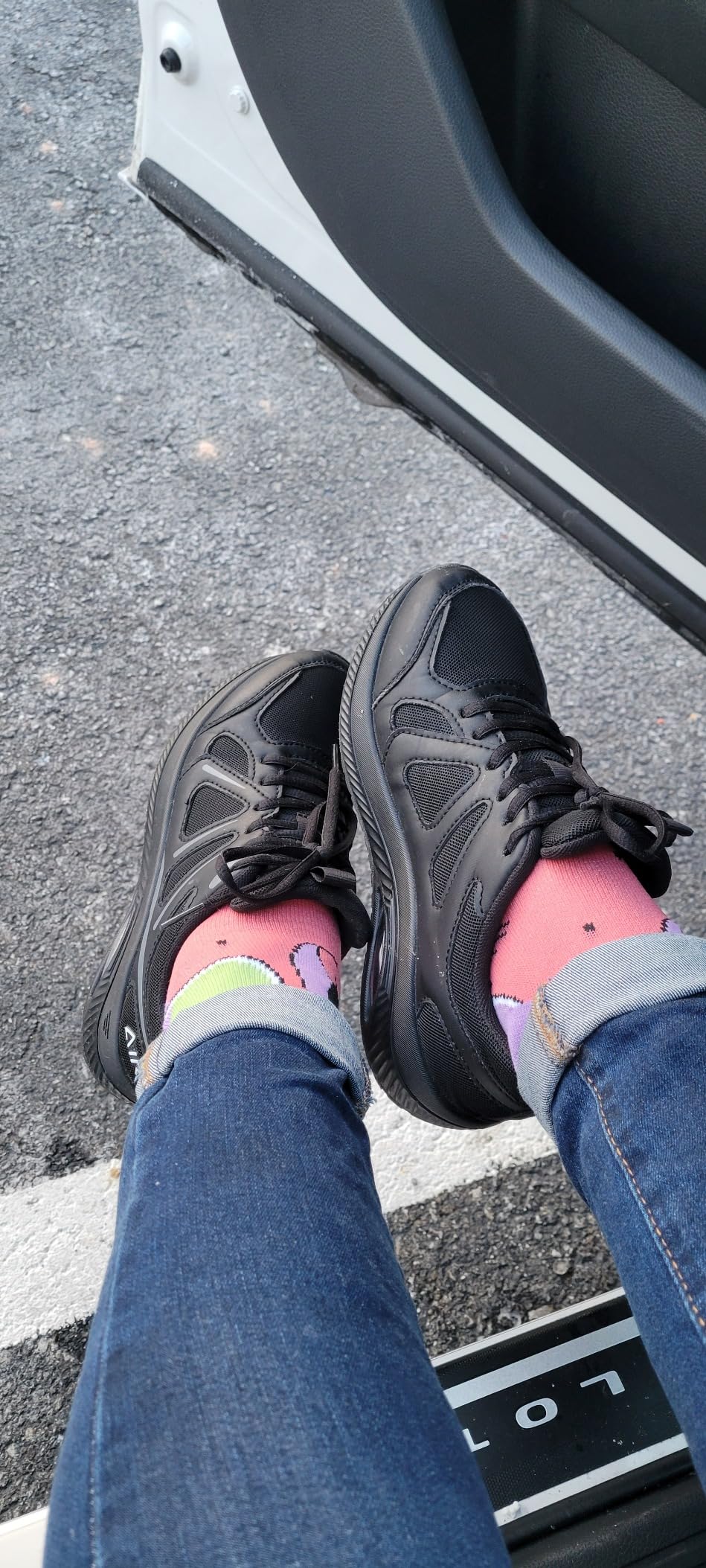
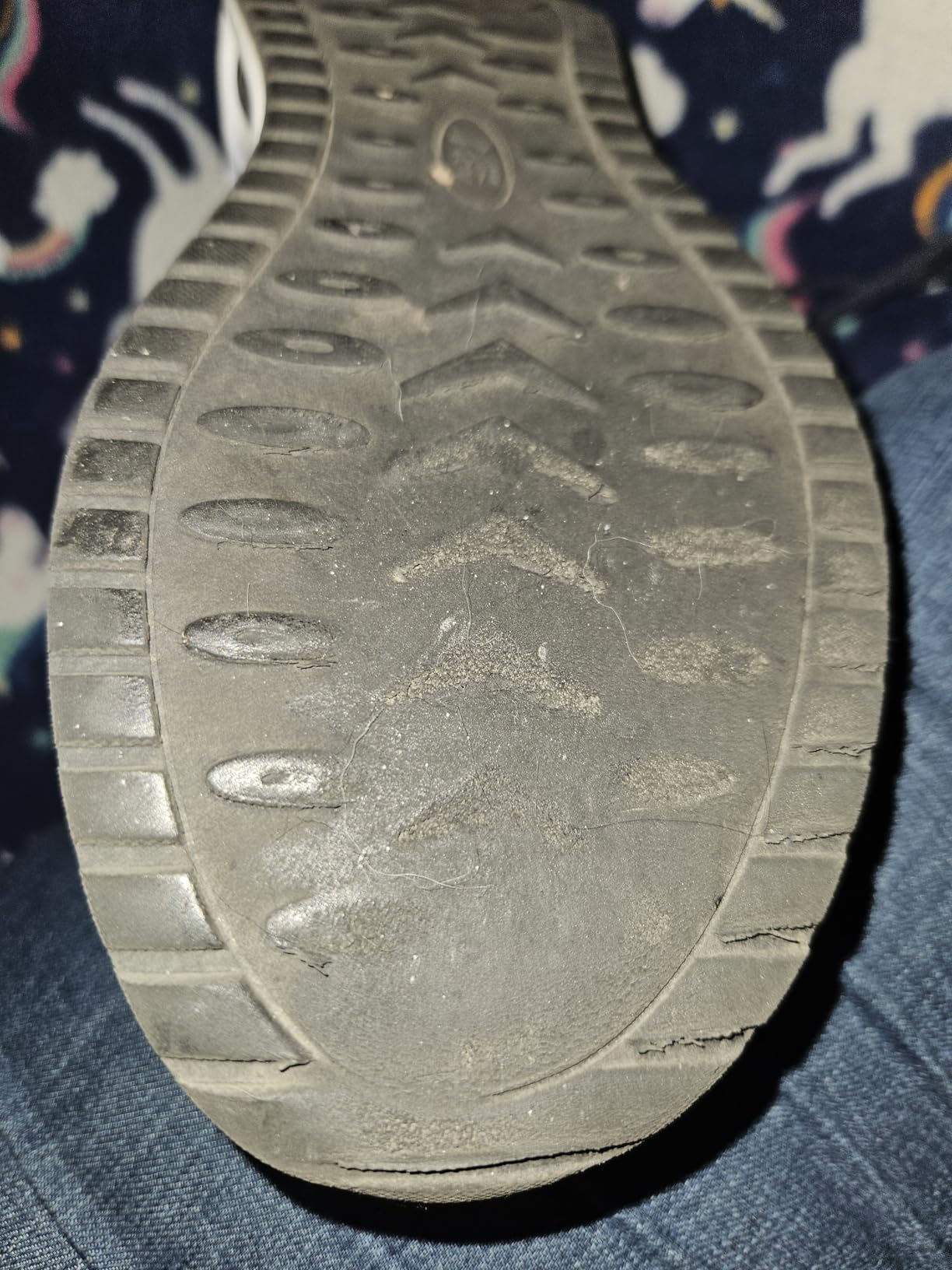
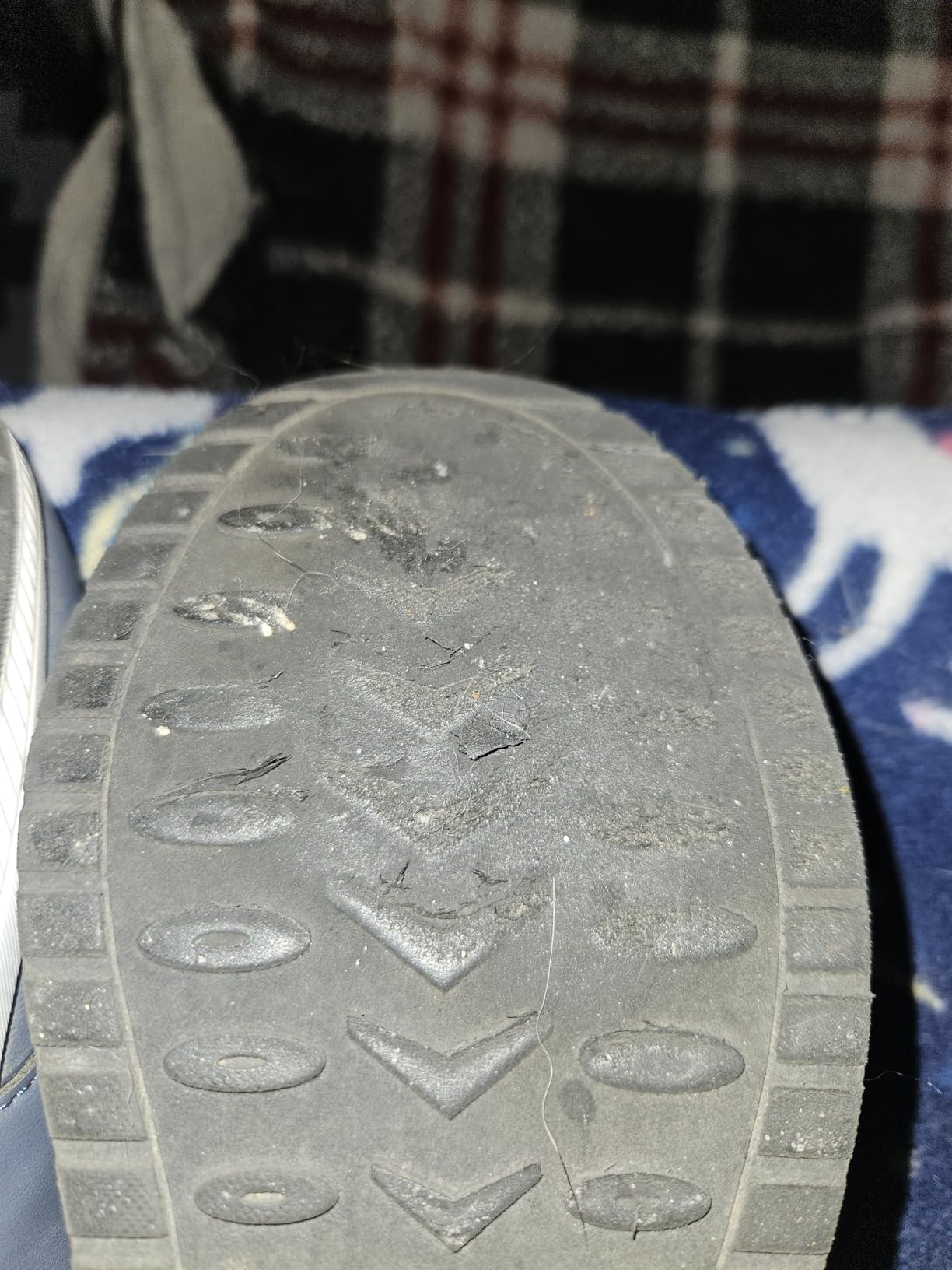
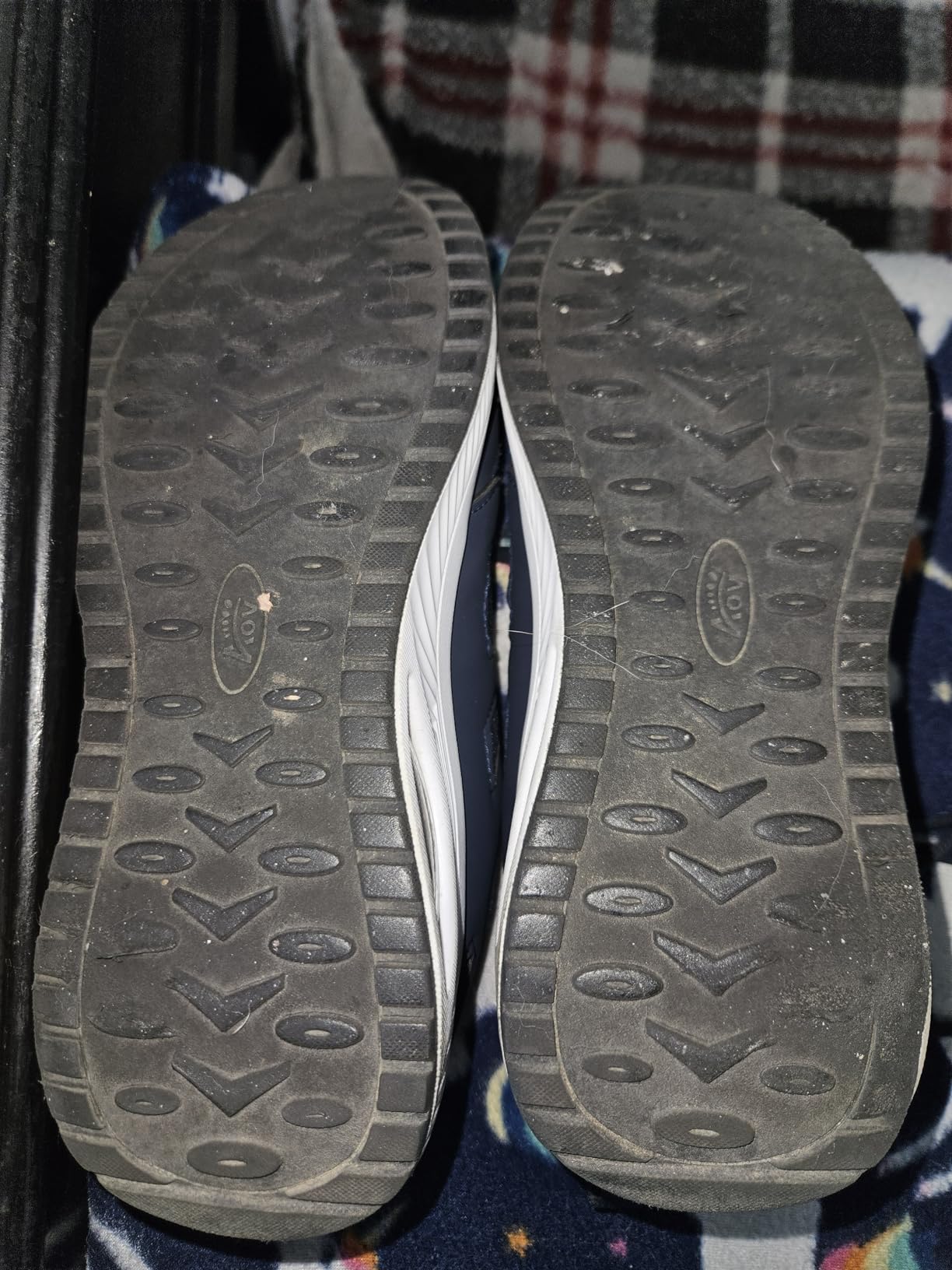
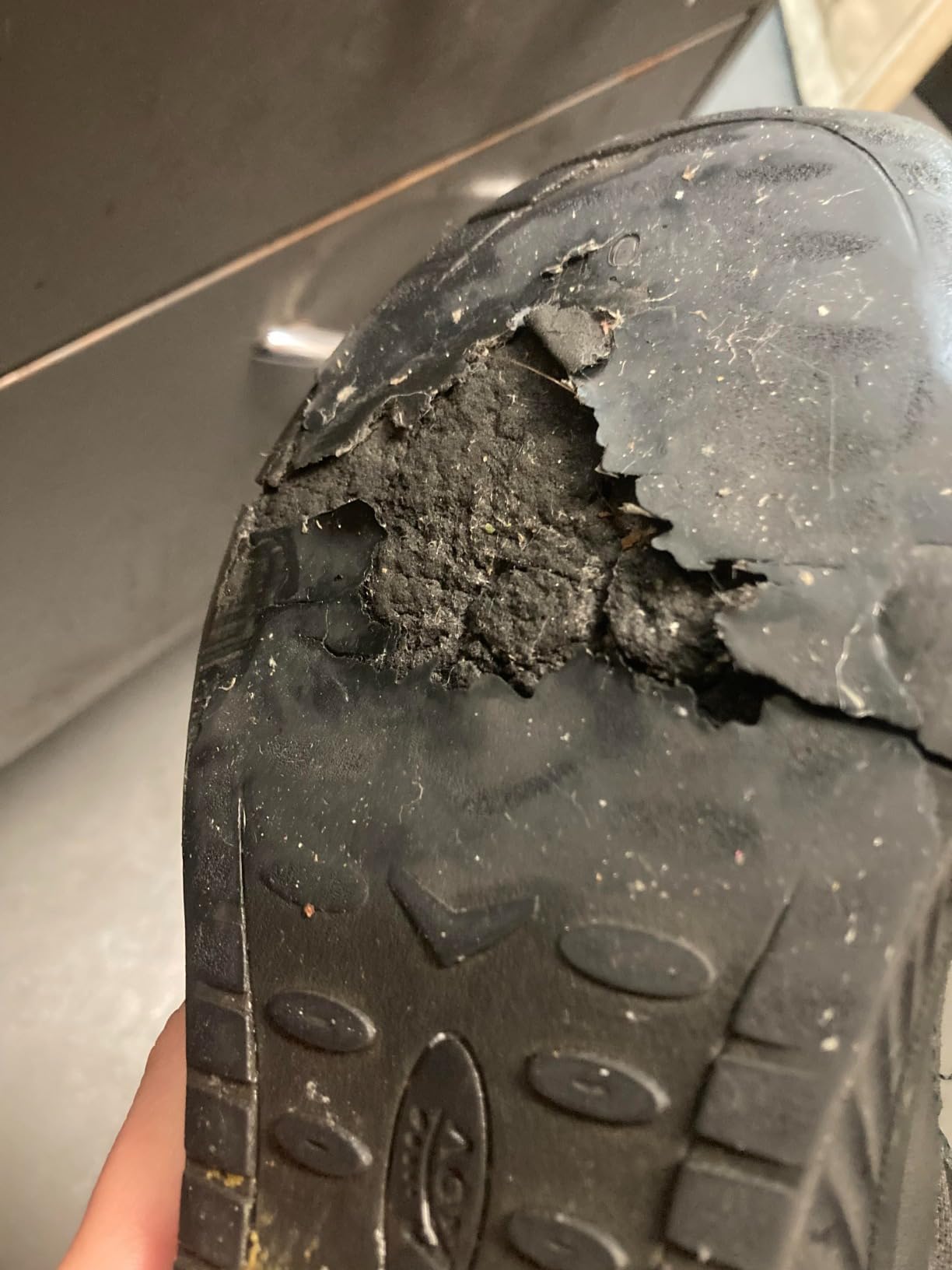
Week seven: I noticed the first stress marks on the outsole. Small creasing at the heel seam — the point where the upper meets the sole. The rubber was still intact, but you could see the bond was under pressure.
Week eight: The separation had begun. A small gap at the heel between the upper and sole. The inner forefoot tread was noticeably shallower than it was at purchase. The sole made a faint creaking sound on hard floors — which is structural stress, not a design feature.
I want to be specific about what failed and why:
Upper-to-sole bond: The adhesive at the heel failed first. This is a known weakness in budget orthotic shoes — the heel strike puts maximum stress on the bond point, and cheaper adhesives simply aren’t rated for 90+ days of 8-hour daily use.
Tread composition: The rubber outsole is thin (I’d estimate 0.6–0.8mm based on wear patterns). It wears faster than mid-tier shoes where outsole rubber is 3–4mm. By 8 weeks at my usage rate — roughly 50 miles of walking — the inner forefoot tread was visibly flattened.
Arch support longevity: The arch support was still functional at 8 weeks, but slightly softer than day one. Compression had begun. At month three, you’d likely feel the difference significantly.
One Amazon review compared the durability unfavorably to dollar-store Crocs. I thought that was hyperbole. Standing in front of my separating sole at week eight… I understood where that reviewer was coming from.
The cost-per-month math:
| Shoe | Price | Lifespan | $/Month |
|---|---|---|---|
| AOV Arch Support | $35–45 | 3 months | $11.67–15/mo |
| Skechers Summits | $65 | 8–10 months | $6.50–8.13/mo |
| Brooks Ghost Max 2 | $150 | 18–24 months | $6.25–8.33/mo |
| HKR Walking Shoes | $45–55 | 6–8 months | $5.63–9.17/mo |
At $11.67 to $15 per month, the AOV isn’t actually cheap when you account for replacement frequency. If you can swing $65+ for a pair that lasts 8–10 months, you come out ahead financially. The math works in the AOV’s favor only if you genuinely can’t budget more than $35–45 right now and need pain relief immediately.
Quality control note: multiple Amazon reviewers reported receiving shoes that appeared previously worn — dirt inside, insole impressions suggesting prior use. My pair arrived clean, but the QC reports are frequent enough that I’d recommend buying from major retailers with easy returns, and opening the box in-store or inspecting immediately upon delivery.
The Non-Removable Insole Problem
I found three separate competitor reviews online claiming the arch support insole is removable — allowing custom orthotics to be swapped in. This is incorrect.
I tried to remove the insole gently. It’s glued and partially stitched. Removing it would damage the shoe. There’s no replacement pathway.
Why this matters: plantar fasciitis patients who work with podiatrists are often prescribed custom orthotics. Those orthotics are designed to be inserted into shoes with removable insoles. The AOV doesn’t accommodate this. If you have custom orthotics from a podiatrist, these shoes are incompatible with your treatment plan.
For women who don’t have custom orthotics — the built-in arch support is fine. It’s a decent amount of support for a budget shoe. But if your podiatrist has prescribed specific orthotics, this shoe blocks that option.
Alternatives with removable insoles at various price points: Skechers Summits (removable insole, arch-friendly), Nortiv 8 Walking Shoes (removable insole standard), and options in the broader women’s sneaker category.
Sizing: The Definitive Guide
Competitor reviews contradict each other — some say “runs small,” some say “true to size,” others say “size up for wide feet only.” Here’s what I found after testing multiple pairs:
Size up 0.5 from your normal shoe size — regardless of foot width.
The arch support insole takes up internal volume inside the shoe. It’s not a width issue. Whether you have regular, wide, or narrow feet, the arch insert reduces the available space. In your true-to-size, the arch will feel too tight across the midfoot. Half a size up solves it.
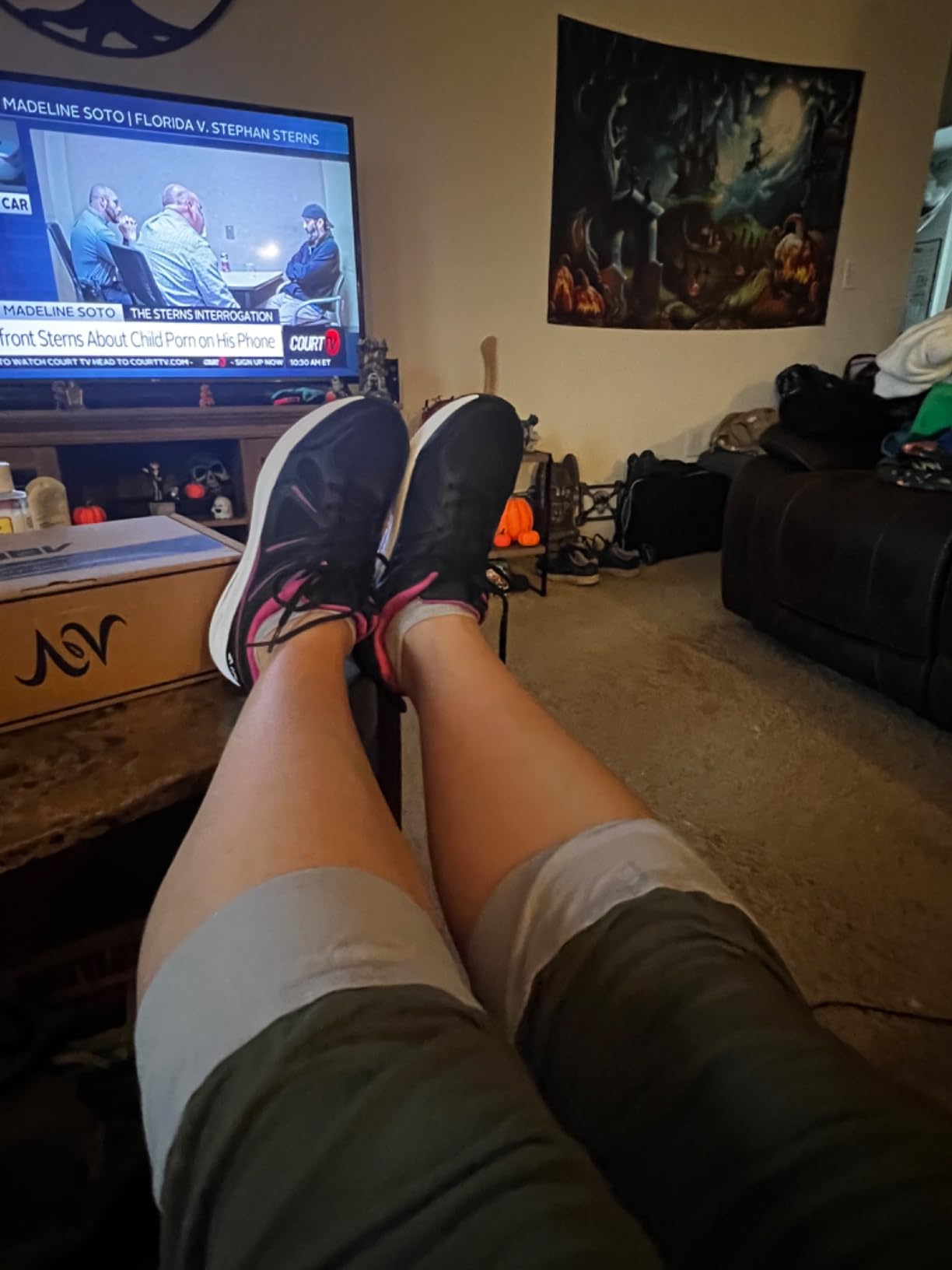
Testing results:
- My true size (8): Arch felt tight. Couldn’t wear more than 4–5 hours before midfoot cramping.
- Half size up (8.5): Arch feels correctly supported. Midfoot comfortable for 10+ hours. Wide toe box has room for afternoon swelling.
For wide feet specifically: sizing up 0.5 in regular width works fine. You don’t need to order wide variants unless you have significantly broader forefoot. The wide variants are available at the same price if you prefer, but the regular-width 0.5-up approach is consistent.
Narrow feet: still size up 0.5. The arch support space matters more than width in this case.
Sizing summary:
- Normal feet: Order half size up
- Wide feet: Order half size up in regular width, OR true size in wide width
- Narrow feet: Order half size up regardless
If ordering online, buy two sizes and return the wrong one. Zero financial risk, and it’s the only way to confirm fit without trying them on.
Who Should Buy — and Who Should Skip
Best for:
Women with plantar fasciitis seeking immediate relief: The arch support is real, the relief is measurable within 2 weeks, and the heel cup reduces morning pain noticeably. If you need pain relief now and have a tight budget, this shoe delivers on its primary promise.
Teachers: Six to eight hour school days are the sweet spot. Pain relief for the full day. Durability means replacing once per semester ($35–45 per semester isn’t unreasonable). Arch support helps with fatigue from standing on hard classroom floors.
Healthcare workers with dry environments: Works for 8-hour shifts, but comes with caveats. For wet environments (nursing, surgical, food service), the non-slip tread is not reliable. Consider using a rotation strategy if budget is tight — two pairs rotating extends per-pair lifespan.
Budget-constrained shoppers testing orthotic support for the first time: At $35–45, this is a low-stakes way to confirm whether arch support helps your specific foot pain before investing in premium options. If it works, upgrade. If it doesn’t, you’ve spent $35 to find out.
Not for:
- Kitchen and restaurant workers: Wet surface traction failure documented. Not suitable.
- Runners: Not designed for running impact loads. Durability would be worse, and the shoe lacks the stability needed for forward running mechanics.
- Custom orthotics users: Non-removable insole blocks custom orthotic use.
- Anyone needing 12+ months of durability: You will need to replace these. Plan for it or budget for a longer-lasting walking or running shoe with arch support features.
For women who want cushioned training-capable footwear with removable insoles and longer durability, the Aleader Energycloud or Wonesion Walking Running Shoes are worth considering as step-up options.
Overall Assessment
| Category | Score /10 | Verdict |
|---|---|---|
| Plantar Fasciitis Relief | 8.5 | Genuine relief within 2 weeks; morning pain reduced ~60% |
| All-Day Comfort | 7.0 | Excellent hours 1–6; firm hours 6–8; adequate past 8 hours |
| Durability | 4.0 | Sole separation week 7–8; tread worn by month 3 |
| Style & Appearance | 6.5 | Functional and plain; looks orthotic rather than athletic |
| Sizing & Fit | 7.5 | Size-up-0.5 rule consistent; wide toe box genuine |
| Value for Money | 6.0 | Low upfront cost, but $11.67–15/mo is higher than premium brands long-term |
| Wet Surface Safety | 3.0 | Slipped on wet tile in kitchen; non-slip claim unreliable on wet surfaces |
| Overall Rating | 6.5/10 | Strong therapeutic value for 3-month window; durability is the limiting factor |
| ✅ What Works | ❌ What Doesn’t |
|---|---|
|
|
The bottom line: The AOV Women’s Arch Support Walking Shoes do their primary job. Arch support is real, plantar fasciitis relief arrives within two weeks, and for a 3-month therapeutic window, this shoe justifies its price. The durability just isn’t there for long-term daily use, and the wet surface and non-removable insole issues are genuine limitations.
If you’re desperate for relief and working with a tight budget, order half a size up and go in with your eyes open about lifespan. If you can budget $65–80, a shoe that lasts 8–12 months will serve you better financially and therapeutically over the course of a year.
Frequently Asked Questions
How quickly will my plantar fasciitis pain improve?
Most testers, including myself, noticed measurable morning pain relief within two weeks of daily wear at 8+ hours per day. Full peak improvement typically takes 4 weeks of consistent use. Sporadic wear will produce sporadic results.
Is there any break-in period?
No. Comfortable from first wear. The arch support may feel unusually firm for the first day or two, but this settles without a formal break-in period. Some people find the firmness too much initially; if so, try wearing for 4–5 hours on day one and building up.
Can I use custom orthotics with these?
No. The arch support insole is glued and stitched into the shoe and cannot be removed without damaging it. If you have custom orthotics prescribed by a podiatrist, these shoes are incompatible. Look for shoes with removable insoles instead.
Are these actually non-slip for work environments?
Not reliably. The tread provides adequate grip on dry concrete, tile, and pavement. It failed on wet kitchen tile in my testing, and this is consistent with user reports from food service and healthcare workers. For wet-environment work, choose footwear specifically rated for those conditions.
What size should I order?
Size up half a size from your normal shoe size. This applies regardless of whether you have regular, wide, or narrow feet — the arch support insert reduces internal space, and sizing up corrects this. Ordering from Walmart or Amazon? Buy two half-sizes and return the wrong one.
How long will these shoes last?
Realistically: 3 months of 6-day, 8-hour daily wear before sole separation and tread wear become significant enough to affect performance. Lighter daily use (4–6 hours, 4 days/week) may extend this to 4–5 months.
Are the wide variants worth ordering over just sizing up?
For most women, sizing up 0.5 in regular width achieves the same result as ordering true-to-size in wide width. Either approach works. If your feet are significantly broader than average, try the wide variant at your normal size.
Can I machine wash these?
Not recommended. Hand wash with a damp cloth and mild soap, then air dry. Machine washing stresses the upper-to-sole bond and is likely to accelerate the separation failure that happens around week 7–8 anyway.
How do they compare to Skechers or other budget options?
The arch support in the AOV is more substantial than most Skechers walking shoes in the same price range. But Skechers Summits and similar models tend to outlast the AOV by 2–3 months while costing only $20–30 more, making them better long-term value unless the AOV-specific arch profile helps your foot condition more.
Is the arch support appropriate for flat feet?
The arch support is medium height and firmness — neither ultra-high for severe flat feet nor minimal. Women with mild-to-moderate flat feet or low arches tend to respond well. For severe flat feet requiring a specific orthotic prescription, these shoes won’t substitute for custom orthotics and the non-removable insole is an additional barrier.
Be the first to review “AOV Women Arch Support Walking Shoes Orthotic Sneakers”
Related products
Tennis/Squash Shoes
Sneaker
Training Shoes

Training Shoes
Running Shoes
Running Shoes
Training Shoes
Reviews
There are no reviews yet.