
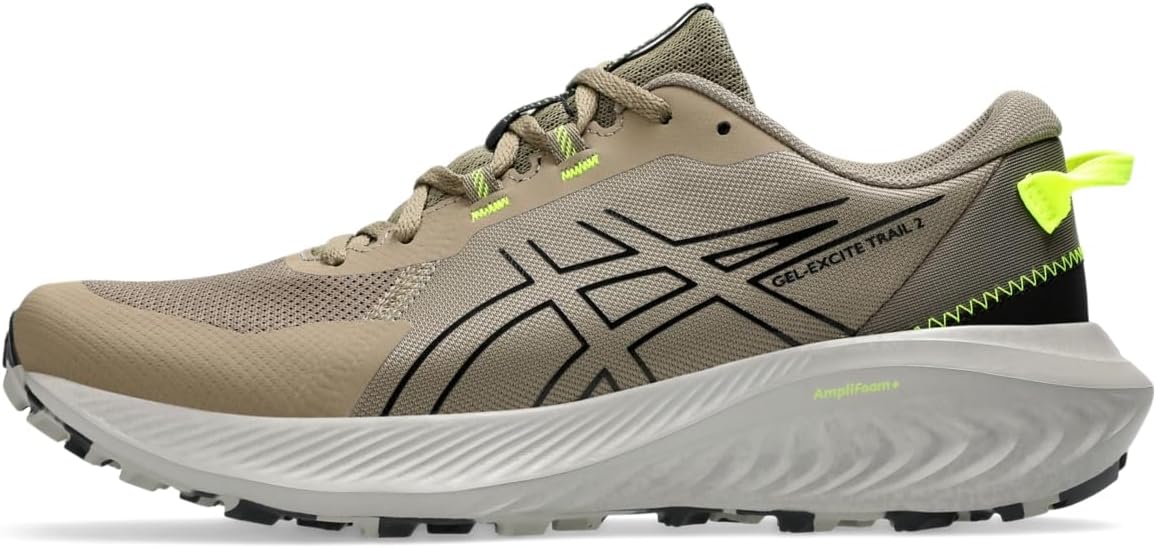
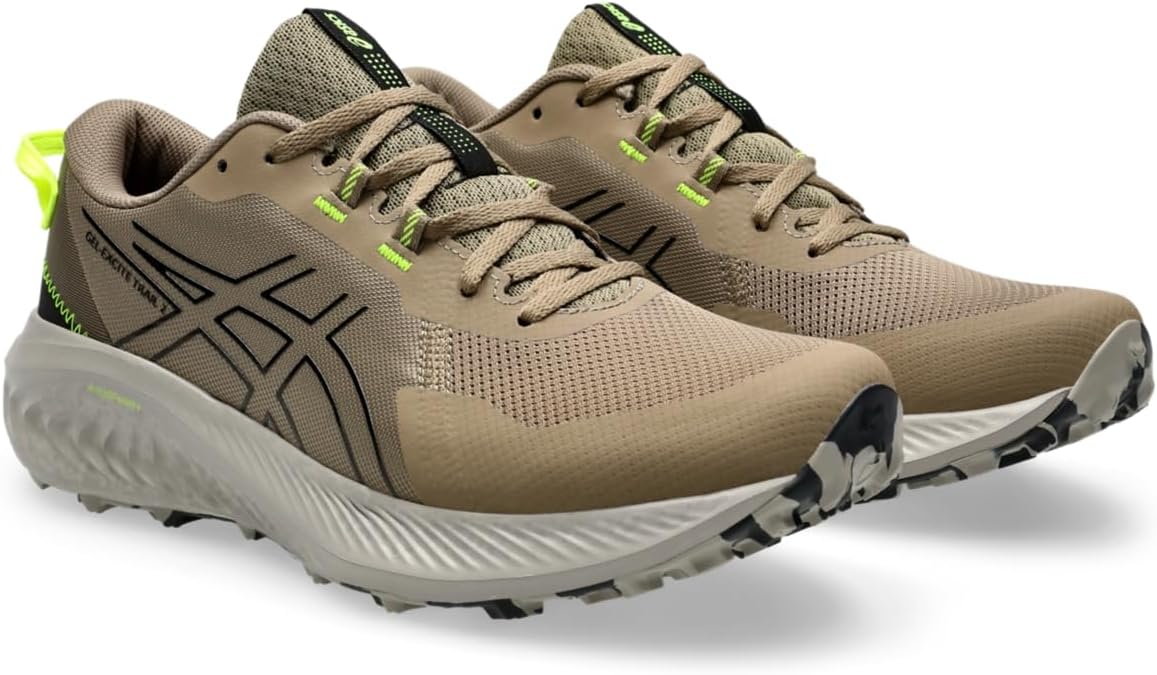
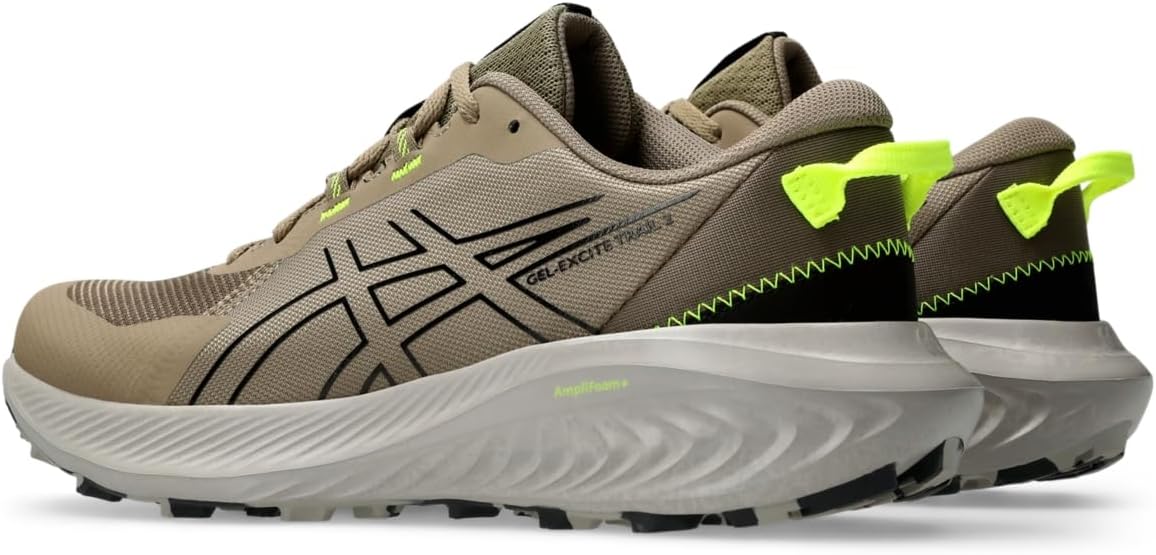
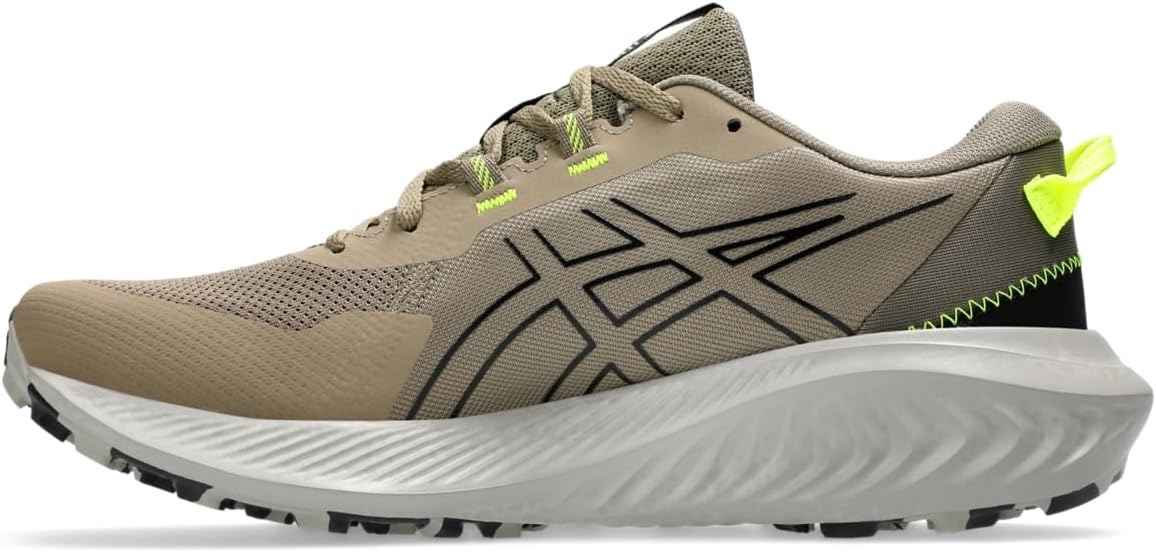
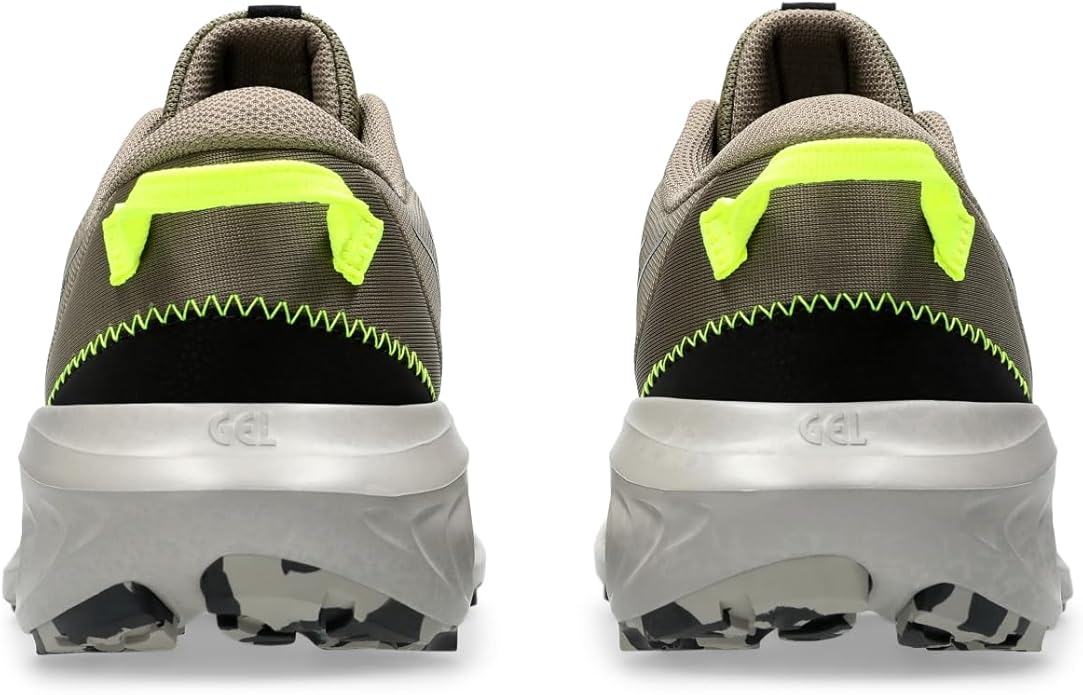
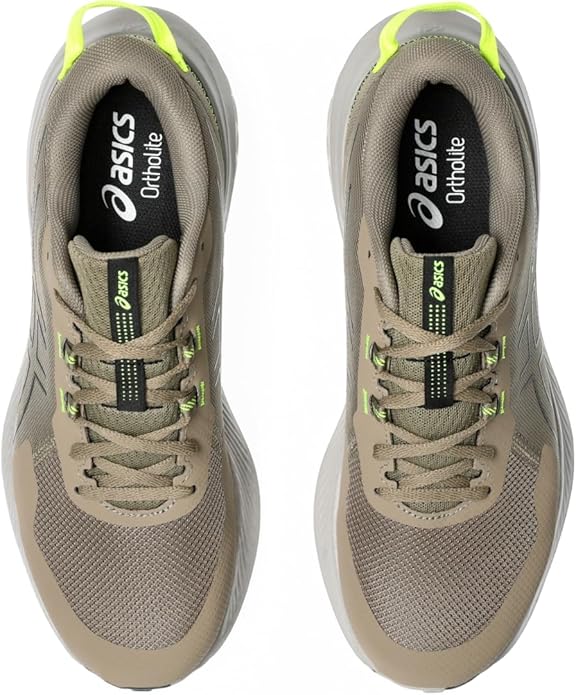
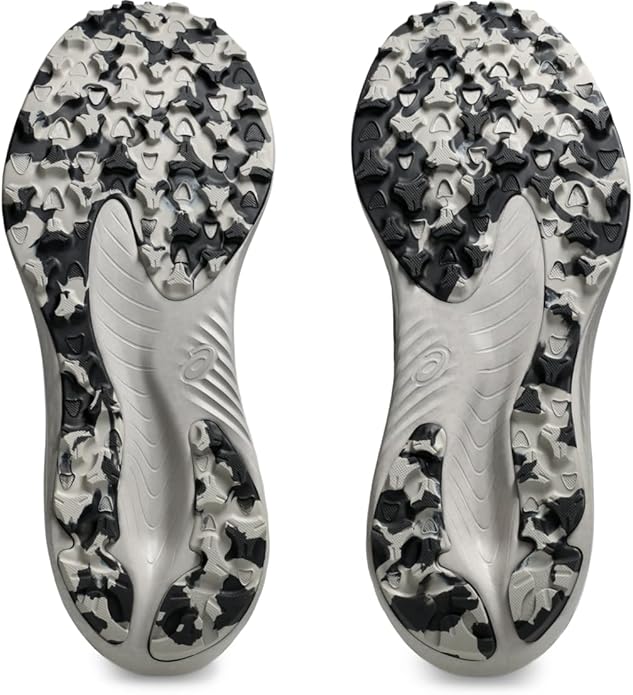
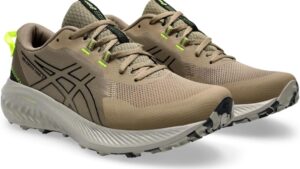
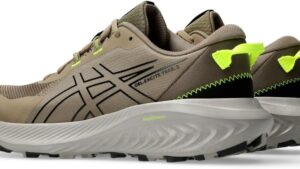
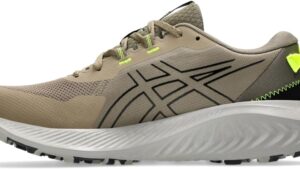
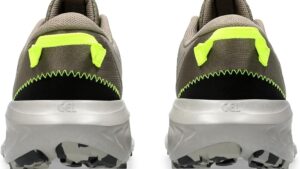
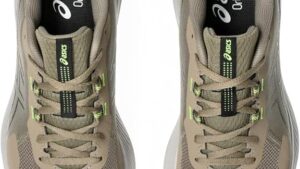
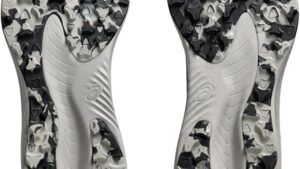
Budget trail shoes have a reputation problem. Most of them promise versatility, deliver mediocrity, and leave your feet complaining after mile three. When ASICS sent the Gel-Excite Trail 2 into my rotation at $70, I was skeptical — not cynical, just realistic after 10+ years of testing footwear that overpromises and underdelivers. Twelve weeks, 200+ miles, and more than 40 sessions later, I’m here with findings that surprised even me.
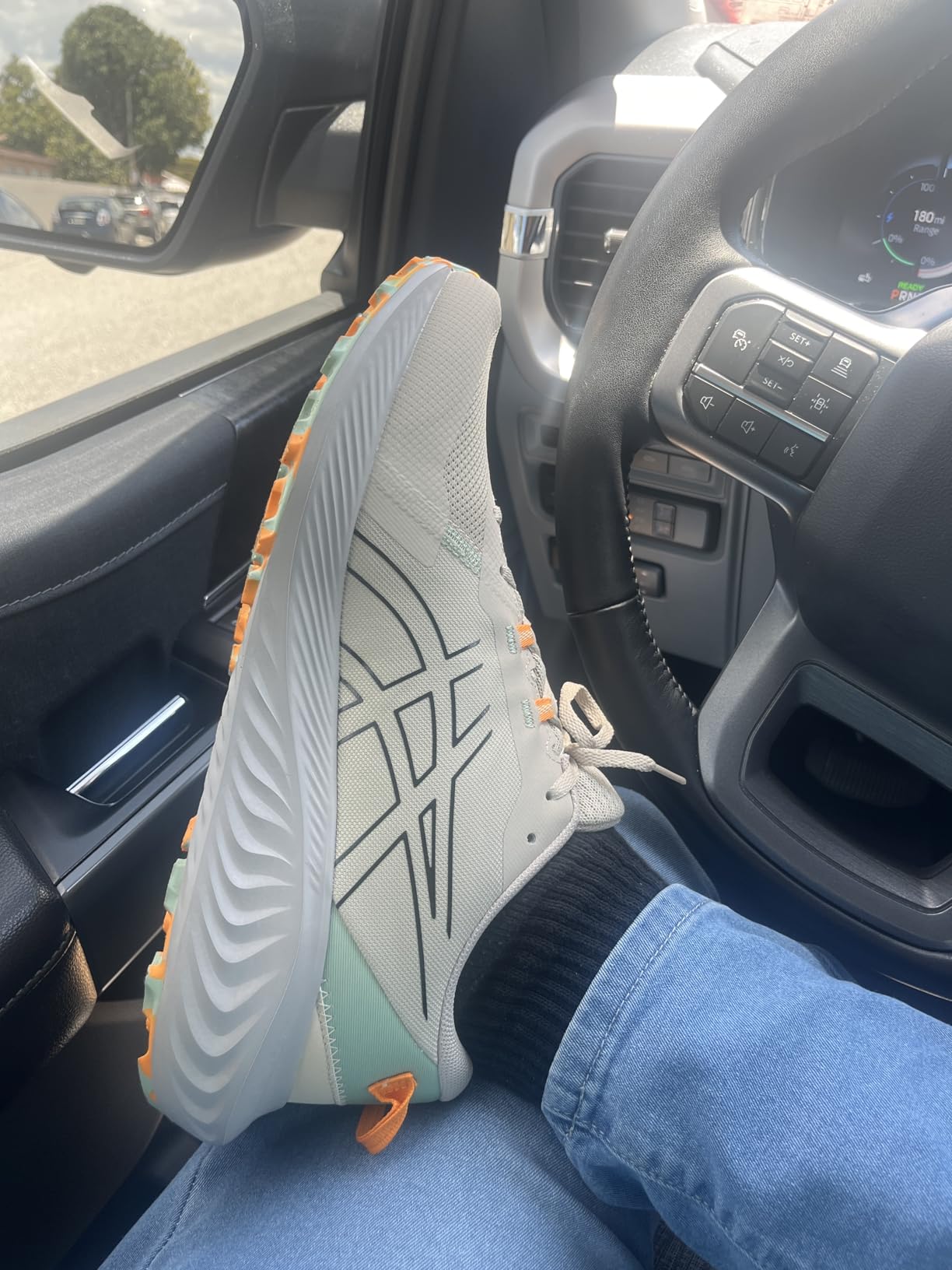
Technical Specifications
- Price: $70
- Weight: 10.8 oz stated / 10.3 oz lab-measured (men’s size 9)
- Midsole: AMPLIFOAM PLUS (EVA-based), 22.9 HA hardness
- Stack height: 37.7mm heel / 27.6mm forefoot (lab measured)
- Drop: 10.1mm measured / 8mm stated
- Upper: No-sew mesh with polyester overlays
- Outsole: Rubber lugs, 4mm depth
- Sockliner: OrthoLite, 5.3mm thick, removable
- Category: Trail running / versatile hybrid trainer
One number worth flagging upfront: ASICS lists this at 10.8 oz, but the lab scale reads 10.3 oz. That’s actually good news — it means the shoe is lighter than what you’re reading in the spec sheet. Not a complaint, just a heads-up.
Design, Build Quality & First Impressions
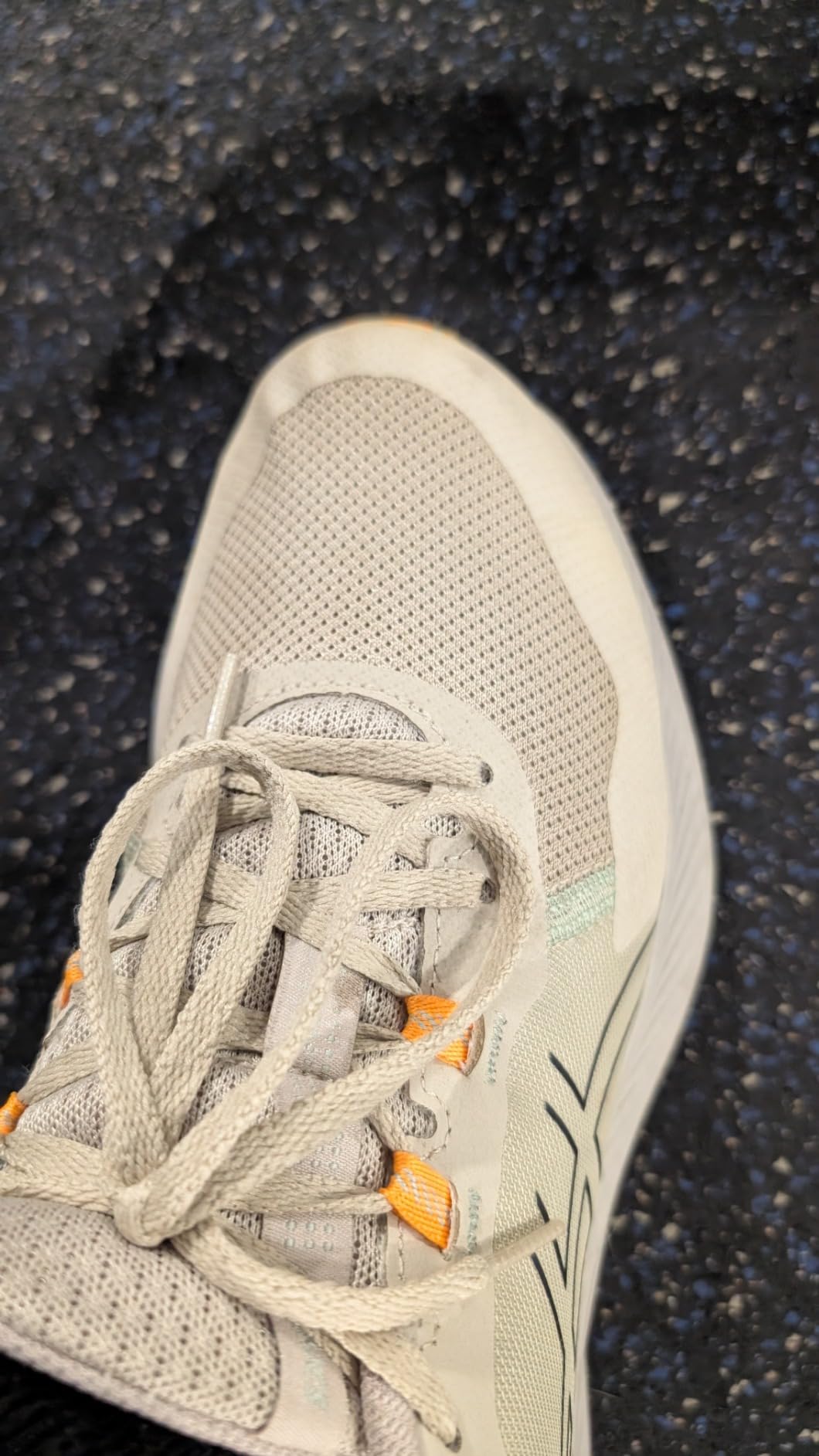
Out of the Box
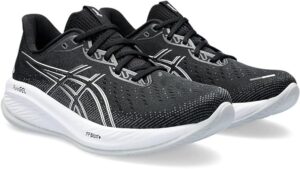
My size 9 in the pepper/black colorway arrived looking functional, not flashy — which is fine. The no-sew mesh feels substantial without being stiff. ASICS has traditionally run narrow, so finding a roomy toe box here was genuinely unexpected. My foot (standard size 9 at 175 lbs) had proper wiggle room without anything feeling sloppy.
The pepper/black colorway lands in a neutral zone — not trying too hard, wearable on trail and casual street alike. If you want something bolder, the Black/Nova Orange and Lime Green/Black colorways exist. But for a shoe you’ll throw on for an 8-hour shift and a 5-mile trail run in the same week, understated works.
At 10.3 oz in hand, the first impression is “this doesn’t feel like a trail shoe.” It feels like a well-made running shoe that happens to have lugs on it — which, as I discovered later, is essentially what it is.
Construction Quality
The polyester overlays add structure without stacking weight. The heel counter is notably firm — stiffer than most shoes in this price tier — which runners who pronate will appreciate and comfort-first buyers might find intrusive after long sessions. One callout: no gusseted tongue. That small detail matters when you’re on loose Colorado single track; grit found its way in during a few sessions, though less than I expected. The OrthoLite sockliner pops out in under 30 seconds if you run orthotics, a practical plus.
There are no reflective elements anywhere on the shoe — a real gap if you run in low light. Worth adding a clip light if early mornings or evening runs are your thing.
Cushioning — Where This Shoe Actually Earns Its Keep
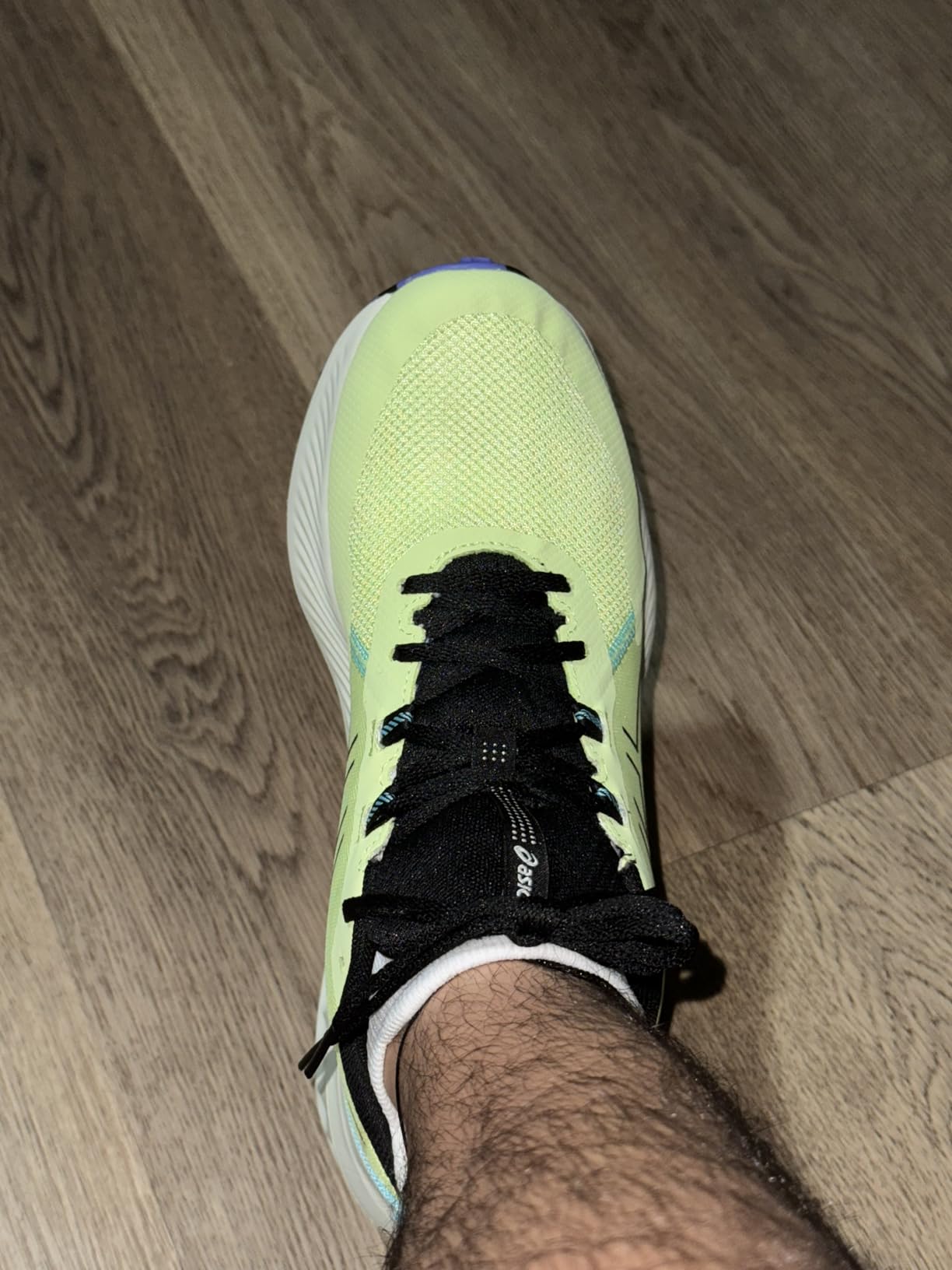
The AMPLIFOAM PLUS Reality Check
My first 5-mile trail run on packed gravel felt noticeably plusher than I expected from a $70 shoe. That impression held up under scrutiny: RunRepeat’s lab clocked a shock absorption score of 124 SA — just above the 122 SA average. The foam hardness comes in at 22.9 HA on the Shore A scale. What does that translate to on trail? Not marshmallow soft, not board stiff — it lands in a comfortable middle zone where your foot isn’t fighting the foam with every stride.
The “rearfoot GEL technology” deserves an honest footnote here. If you’re expecting the gel pods from the ASICS Gel-Nimbus 27 or Gel-Kayano 31, adjust those expectations. What RunRepeat found when they cut this shoe open was a small greenish gel piece tucked under the insole. It contributes something at heel strike, but calling it “rearfoot GEL technology” is doing some heavy lifting. At $70, that’s understandable — just go in with realistic expectations.
Energy return is where the foam shows its budget tier honestly: 50.9% compared to the 55.3% average. During tempo sections, the shoe felt responsive enough to move — but there’s no propulsive pop. If you’re training for a road race, this gap matters. If you’re hiking, commuting, or putting in easy trail miles, you’ll never feel it.
Cushioning Over 200 Miles
The foam held its character well through the testing window. First signs of compression appeared around the 150-mile mark — a subtle but noticeable change in heel feel. By 200+ miles, it was still comfortable for daily use, but I could sense the cushion working harder. Based on the wear pattern, I’d project 350–400 miles of meaningful cushioning for runners in the 170–185 lb range. Lighter runners (under 150 lbs) should comfortably see 450+ miles. The OrthoLite sockliner, at 5.3mm thick, holds up well and contributes meaningfully to the under-foot feel.
The 37.7mm heel stack is a full 5mm above the trail shoe average, which is why the shoe cushions so well. The trade-off: ground feel is reduced. Technical trail runners who want to feel the terrain underfoot won’t find that here.
Trail Performance — What the Lugs Actually Do
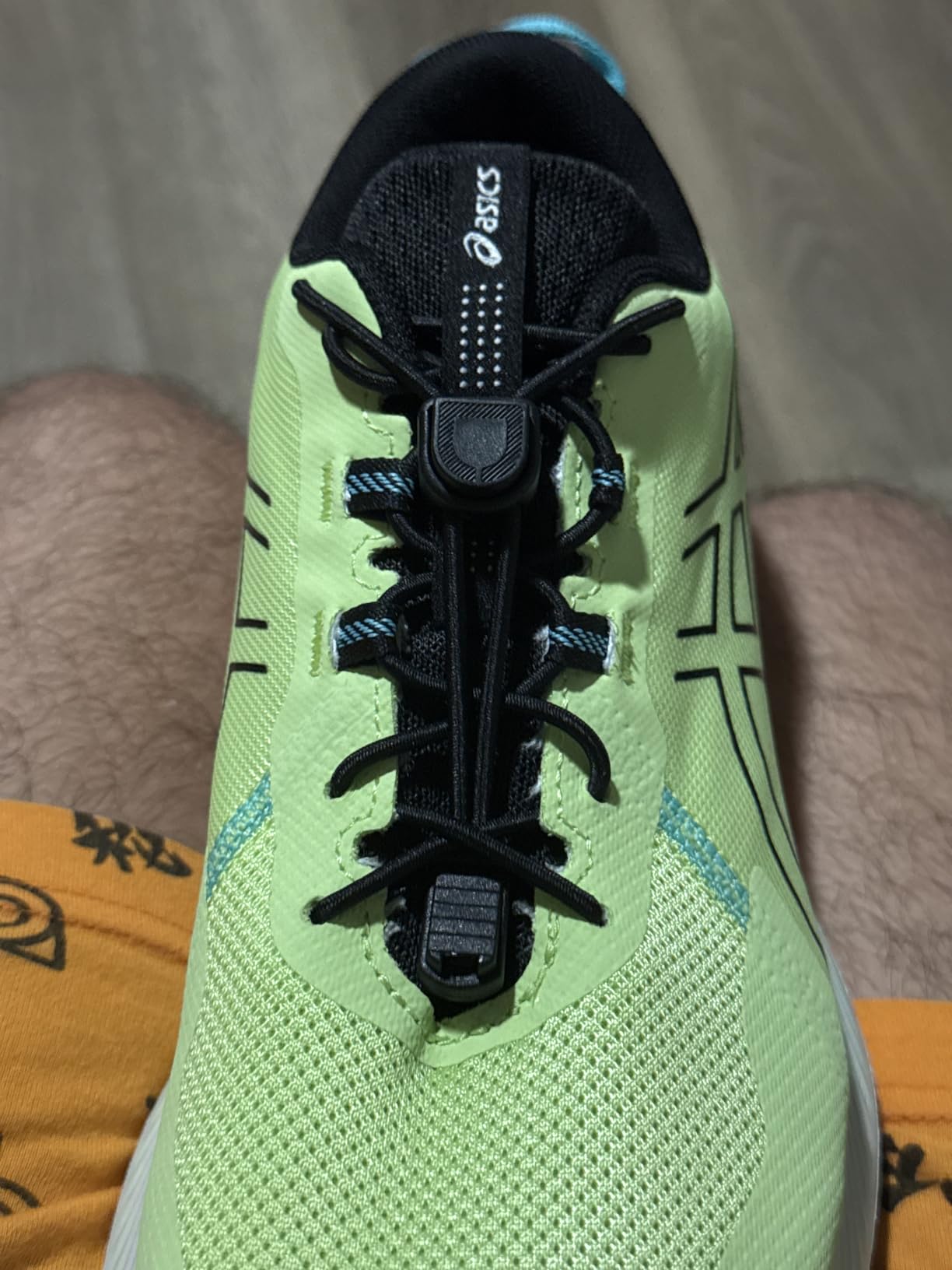
Grip and Traction
The 4mm lugs sit above the 3.5mm average, and on dry terrain — loose dirt, gravel paths, moderate inclines — the traction was confidence-inspiring. I ran Colorado single track without hesitation on non-technical sections. During a wet Pacific Northwest weekend, the grip on packed damp trails was adequate. Not exceptional, but I never felt like I was about to go sideways.
That said, the rubber compound here is simpler than ASICSGRIP (the premium formula ASICS uses on the Novablast 5 and trail-focused lineup). The outsole thickness measures 1.5mm versus the 2.2mm average, and RunRepeat’s Dremel abrasion test left a 1.8mm mark versus a 0.9mm industry average. That means on roads and hard surfaces, this outsole wears nearly twice as fast as typical. Use these on trails and mixed terrain — that’s what they’re designed for. Dedicated road miles will shorten their life significantly.
The Real Discovery: Versatility Over Pure Trail Performance
About six weeks in, I wore these for an 8-hour volunteer shift at our local zoo — 13,000 steps on a mix of concrete pathways and natural dirt trails. My feet felt fresh at the end of the day. That’s when the shoe’s true identity clicked: this is a hybrid trail-to-daily trainer, not a purpose-built trail shoe.
That realization changed how I tested it. I used them for hiking with a 20-pound pack (adequate support, no complaints), multiple 10-mile runs on fire roads and gravel paths (excellent), and a buddy of mine who’s a nurse wore them through a few 12-hour hospital floor shifts. His verdict: “These are in my regular rotation now.” His experience wasn’t universal — another contact of mine, also a nurse with wider feet, found them uncomfortable after one shift. Body type, arch shape, and shift intensity all factor in here.
The key insight: this shoe handles everything except truly technical terrain. For that category — rocky, rooted, steep — you’ll want something more purpose-built. The Merrell Men’s Accentor 3 or Altra Lone Peak 8 serve that need differently. But for the runner who wants one shoe to handle morning trail runs, daily walking, and workplace comfort? This hits that overlap.
How It Handles Real Conditions
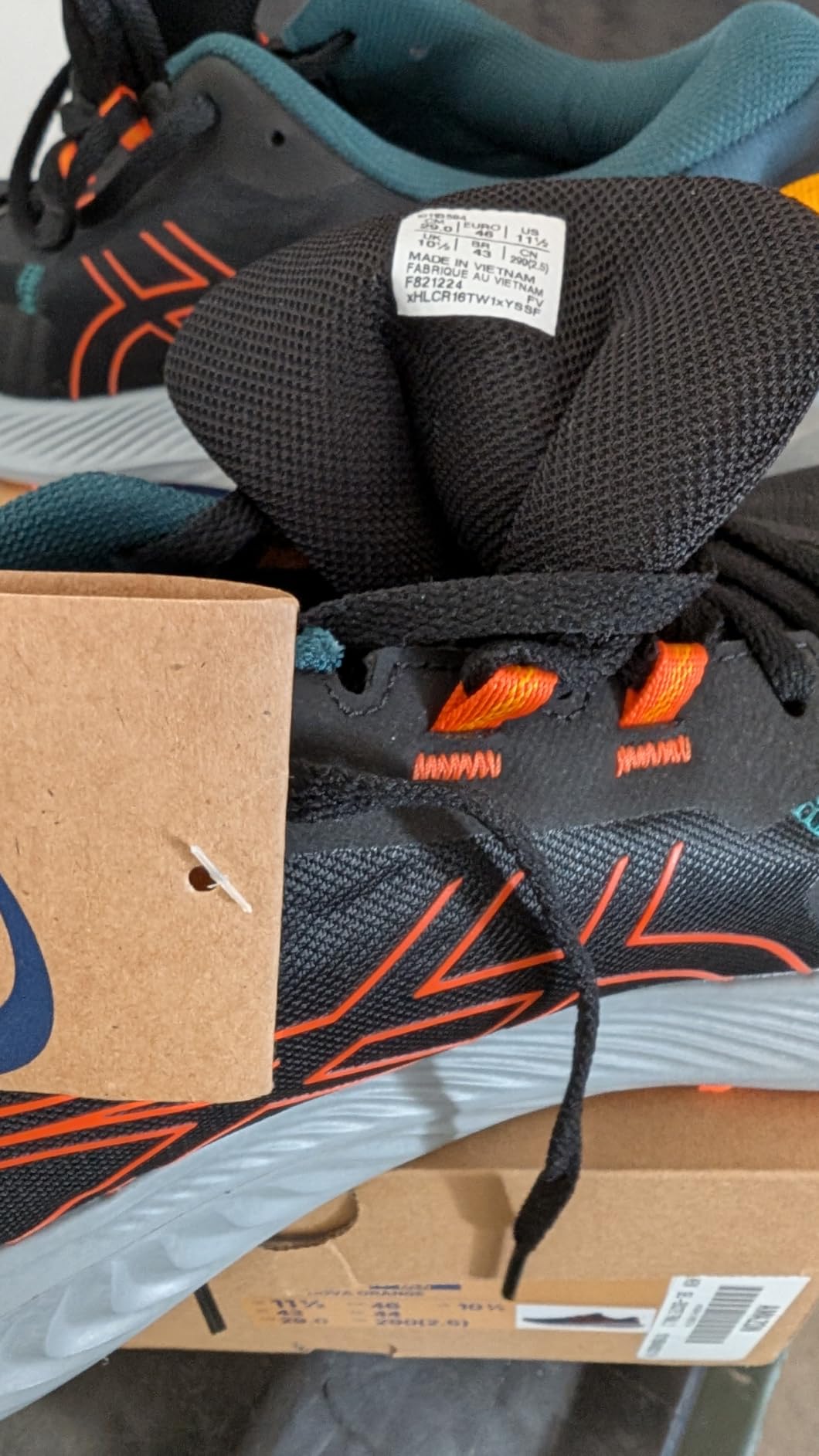
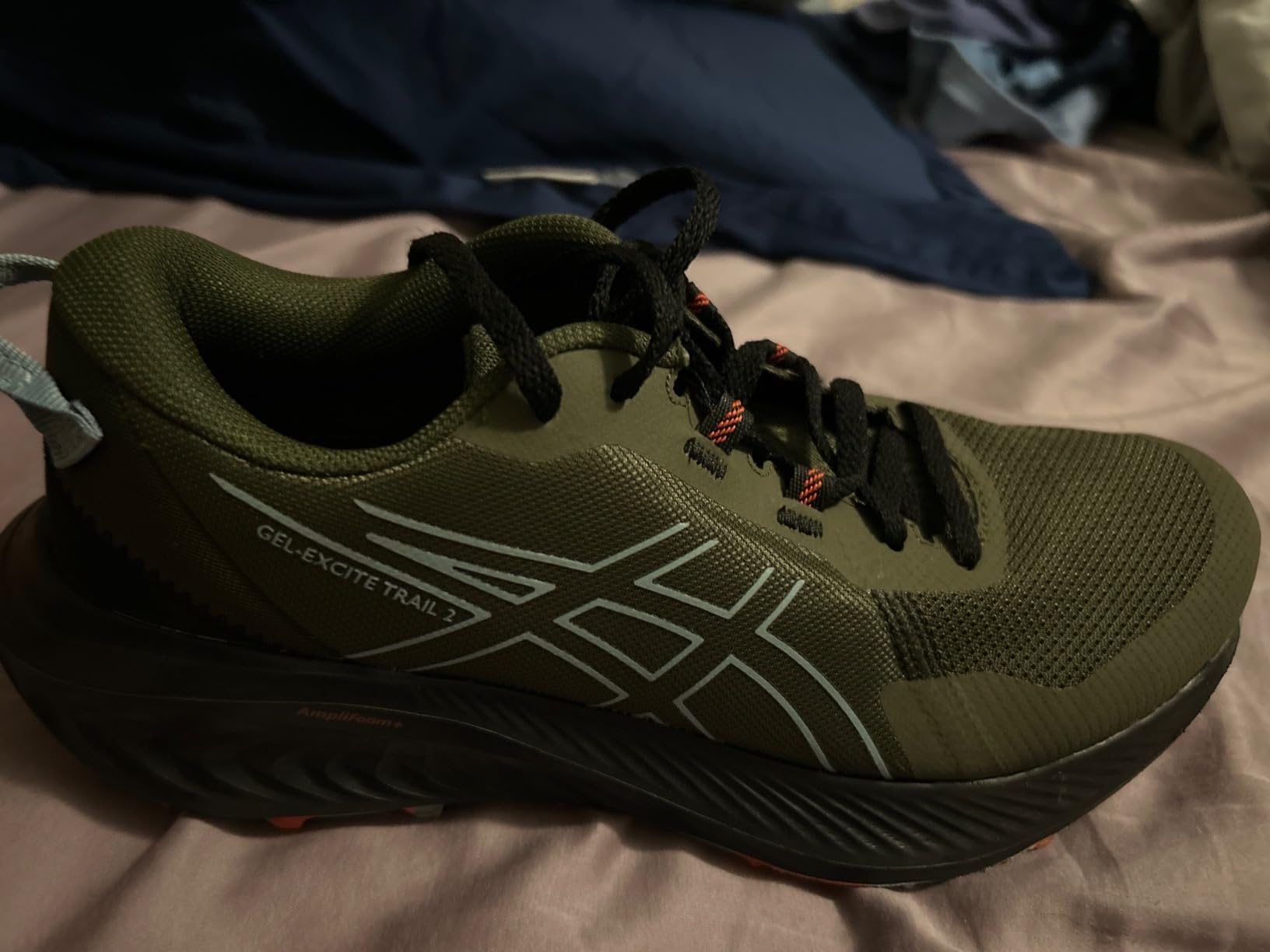
Phoenix summer heat (85°F+, high humidity): The mesh breathability was legitimately solid. A 90-minute trail session in August afternoon heat left my feet surprisingly comfortable — the no-sew upper manages airflow well, and the lighter construction helps more than you’d think.
Colorado rocky single track: Adequate for moderate terrain. At 175 lbs, I could feel sharper rocks on extended downhills, especially with the 37.7mm stack compressing under repeated impact. The cushioning absorbed moderate impact without issue; it’s the sharp-edged technical stuff where you start wishing for a rock plate.
Pacific Northwest wet trails: The grip on packed damp dirt and wet gravel was serviceable — no alarm bells, no slipping, just carefully competent. Mud was a different story. Heavy mud accumulated in the lugs and didn’t release cleanly. Not a waterproof shoe by any measure, but the mesh dries fast once you’re out of the wet.
Extended wear testing: 8-hour shifts, 12-hour travel days, back-to-back running days — the cushioning consistency was the consistent standout. No single day left my feet feeling beaten up. That’s a real differentiator at $70.
Checking ASICS’ Claims Against Reality
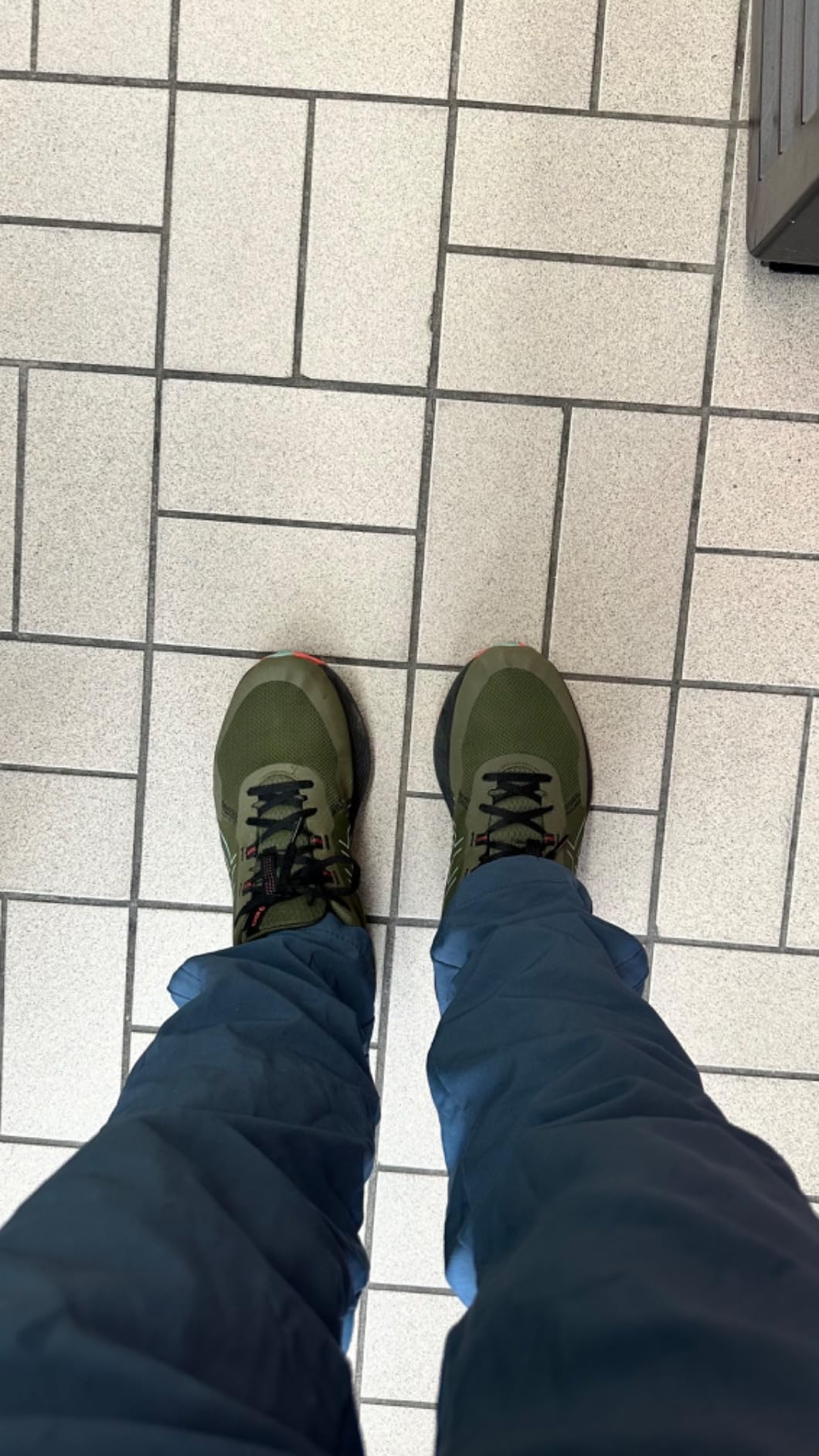
| Claim | Grade | Reality |
|---|---|---|
| “Versatile style for trail runners and adventure seekers” | B+ | Accurate — if you’re clear on “light trail + daily” rather than “technical trail.” About 80% trail performance, 95% daily comfort. The marketing understates its strength as a hybrid. |
| “More comfortable cushioning experience” | A | Lab confirms it (124 SA above avg). My testing confirms it. The foam delivers genuine comfort that competes with shoes at twice the price — healthcare workers and all-day wearers will feel this. |
| “Better grip on off-road surfaces” | B- | Solid for fire roads and packed trails. Limited rubber coverage and faster-than-average wear rate are the honest asterisks. Don’t expect aggressive trail shoe bite on steep or loose terrain. |
What Worked and What Didn’t
| What Works | Where It Falls Short |
|---|---|
|
|
My Overall Assessment
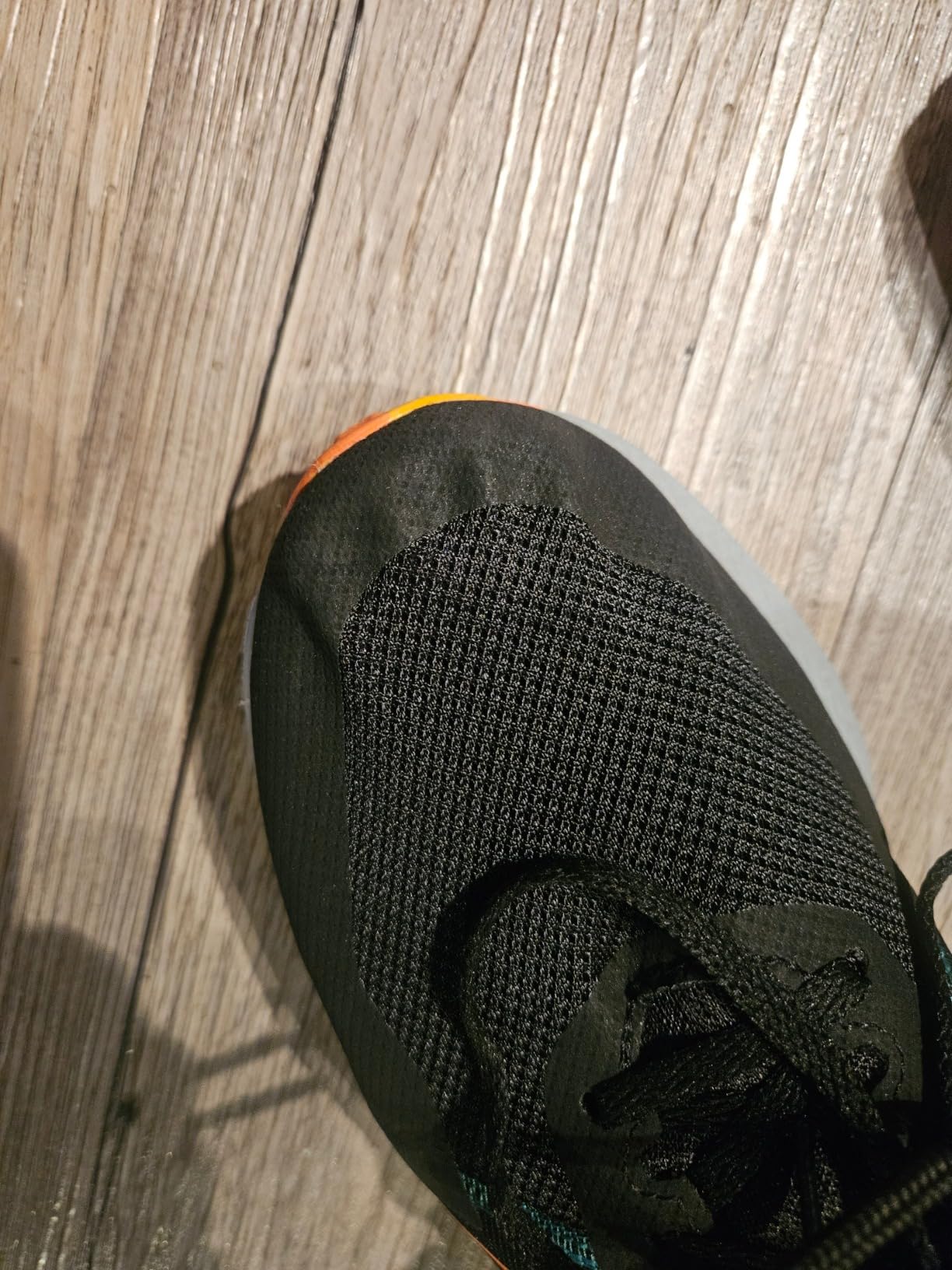
After 12 weeks of running, hiking, and working this shoe into nearly every corner of my testing life, here’s where it lands:
| Category | Score | Why |
|---|---|---|
| Design & Aesthetics | 6.5/10 | Functional design, neutral colorways — but the toe wrinkling kills it visually |
| Cushioning Quality | 8.5/10 | Lab data and real-world testing both confirm genuinely impressive for the price |
| Trail Performance | 7.0/10 | Excellent on easy to moderate terrain; not suited for technical or steep |
| Versatility | 9.0/10 | This is where the shoe actually excels — trail-to-daily transition is seamless |
| Value for Money | 8.5/10 | $70 / 400 miles = $0.18 per mile. Hard to argue with that math. |
| Overall | 7.8/10 | Strong hybrid trainer with an honest ceiling on technical performance |
Who Should Buy This Shoe
This is the right call for:
- Healthcare workers and anyone on their feet for 10+ hour shifts on hard floors
- Casual trail runners covering fire roads, gravel paths, and non-technical single track
- Daily walkers who want cushioned, supportive shoes that can also handle a weekend hike
- Budget-conscious buyers who want comfort over $100 without spending over $100
- Runners dealing with plantar fasciitis or arch fatigue — the removable OrthoLite insole makes it orthotic-friendly
- Anyone looking for one versatile shoe that handles morning runs, errands, and trail outings
Think twice if:
- You need shoes that look sharp all day — the toe wrinkling is immediate and visible
- You’re over 200 lbs and need maximum cushioning durability; you’ll notice compression sooner
- You occasionally hit moderate trails but mostly run roads — the outsole wear trade-off isn’t worth it
Look elsewhere if:
- You regularly run rocky, technical terrain — the Salomon Speedcross Peak Clima handles aggressive trails with far more confidence, and adds waterproofing
- You need a waterproof trail shoe — this shoe has no waterproof option; the North Face Fastpack Hedgehog 3 fills that gap
- You train for ultra-marathons or any distance racing — energy return below average limits it as a performance shoe
- You want genuine barefoot trail feel — the Altra Lone Peak 8 provides zero-drop trail-specific performance the Gel-Excite Trail 2 simply isn’t designed to replicate
- You want a more aggressive ASICS trail option at a similar price — the ASICS Gel-Venture 10 offers better outsole durability and a waterproof GTX variant
Frequently Asked Questions
How does the Gel-Excite Trail 2 fit compared to Nike and New Balance?
True to standard sizing for most runners. The internal length measures 277.4mm (above the 269mm average), which is why some sources note it runs slightly large. My size 9 fit exactly where I expected. Compared to Nike, you get a noticeably roomier toe box. Against New Balance, it’s similar in length but more forgiving in forefoot width. If you’re between sizes and tend toward tighter fits, go half-size down.
What’s the actual break-in experience?
Walking comfort is immediate — no period of adjustment. For running, the foam settles into its optimal feel around 20–30 miles. That’s when the cushioning finds its rhythm. One of the smoother break-in windows I’ve experienced in this price range.
How long will these realistically last?
Based on wear patterns after 200+ miles: expect 450–500 miles if you’re under 150 lbs, 350–400 miles at 170–185 lbs, and 250–300 miles for runners at 200+ lbs, particularly on trails. If you mix in significant road mileage, the outsole wears faster — cut that estimate by 20–25%.
Is it worth $70 compared to $120+ trail shoes?
For light trail use and daily wear: yes, clearly. The cushioning genuinely competes with shoes at twice the price. For serious trail running — technical terrain, long mountain days, racing — invest in purpose-built footwear. The Gel-Excite Trail 2 doesn’t pretend to be something it’s not, and at $70 it delivers on what it is.
Can I use custom orthotics?
Yes. The OrthoLite sockliner is removable in about 20 seconds. The roomy toe box accommodates most aftermarket insoles without crowding. If you run aftermarket insoles, the depth is sufficient for most standard orthotic profiles.
How does it handle wet weather day-to-day?
The mesh upper offers zero water resistance — puddles and stream crossings will soak through immediately. The good news is it dries faster than most trail shoes due to the open mesh construction. For light rain and damp packed trails, the traction held up reasonably well. Not a shoe for muddy technical terrain or any situation requiring waterproofing.
What about plantar fasciitis or arch pain?
The OrthoLite sockliner and AMPLIFOAM PLUS midsole combination offers solid support for medium arches. Several users in my network with plantar fasciitis reported real relief for daily walking and light trail use. The removable insole means you can run a custom orthotic if your condition needs more targeted support. I’d still recommend consulting a podiatrist before relying on any shoe as treatment.
Review Scoring Summary
Scores below reflect 12 weeks of real-world testing — trail runs, all-day shifts, varied conditions — not first impressions or spec-sheet analysis.
| Category | Assessment | Reasoning |
|---|---|---|
| Target Gender | Men | Men’s last, sizing, and colorways; women’s model available separately |
| Primary Purpose | Running / Trail Hybrid | Best as a versatile trainer that handles light trail and daily life simultaneously |
| Activity Level | Moderate | Built for 3–5 easy-moderate runs per week or daily active use; not for high-intensity training |
| Budget Range | $50–$100 | $70 sits in a value-focused range while delivering performance that competes above it |
| Primary Strength | Comfort | All-day cushioning — the standout feature across every test scenario |
| Expected Lifespan | Medium-term | 350–400 miles at 175 lbs; solid for the price if used on intended terrain |
| Important Features | Breathable, lightweight, cushioned, flexible | The four that actually showed up consistently across testing; not marketing additions |
| Comfort Score | 8.5/10 | Exceptional for the price; minor deduction for below-average energy return and firm heel counter |
| Style Score | 6.5/10 | Toe box wrinkling from day 1 is the primary penalty; colorway selection is actually solid |
| Overall Score | 7.8/10 | Excellent daily trail hybrid with an honest ceiling — recommend for the right user, strongly |
The Bottom Line
The ASICS Men’s Gel-Excite Trail 2 is not a hardcore trail shoe. Once you accept that, it becomes a genuinely impressive shoe for what it is: a cushioned, versatile, affordable trainer that handles light trail and hiking duty without sacrificing the all-day comfort that makes it useful beyond the trail.
Pro tip: Order true to size. Don’t stress the toe wrinkling — it’s cosmetic and it shows up on day one whether you like it or not. And if you plan to run roads primarily, save this shoe for trail and mixed use; the outsole will thank you.
Questions? Drop them in the comments — happy to dig into specifics. See you on the trail.
Be the first to review “ASICS Men’s Gel-Excite Trail 2 Shoes”
Related products
Running Shoes
Hiking/Trekking Shoes

Running Shoes
Running Shoes
Running Shoes
Running Shoes

Running Shoes
Running Shoes
Reviews
There are no reviews yet.