
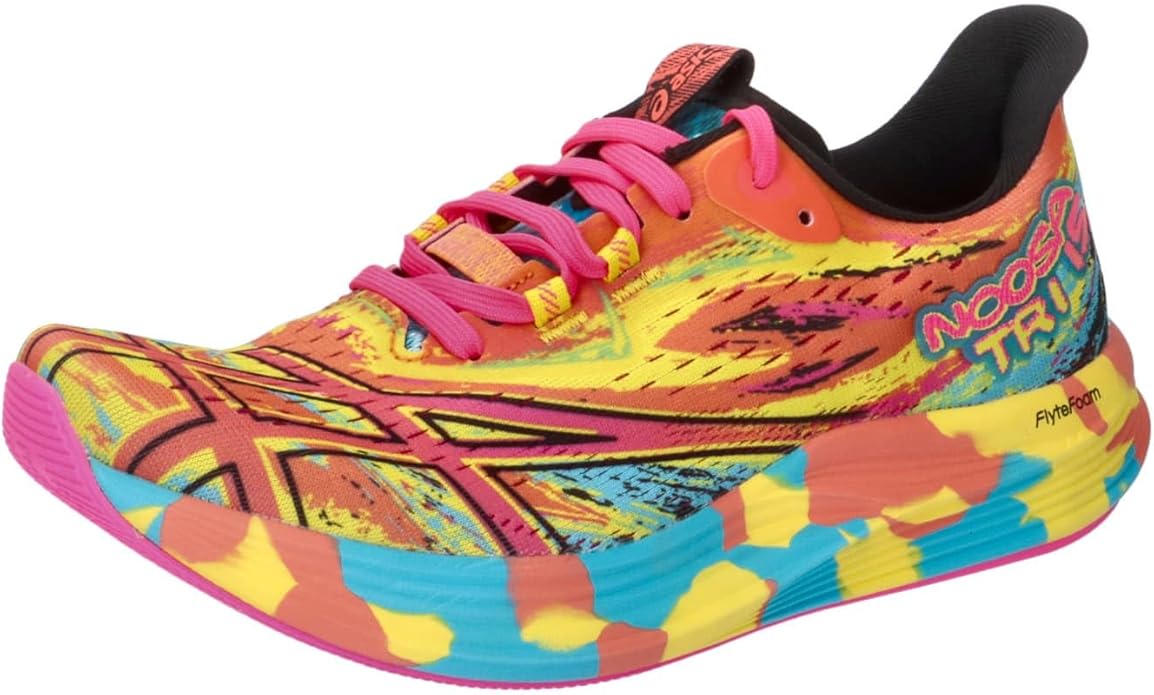
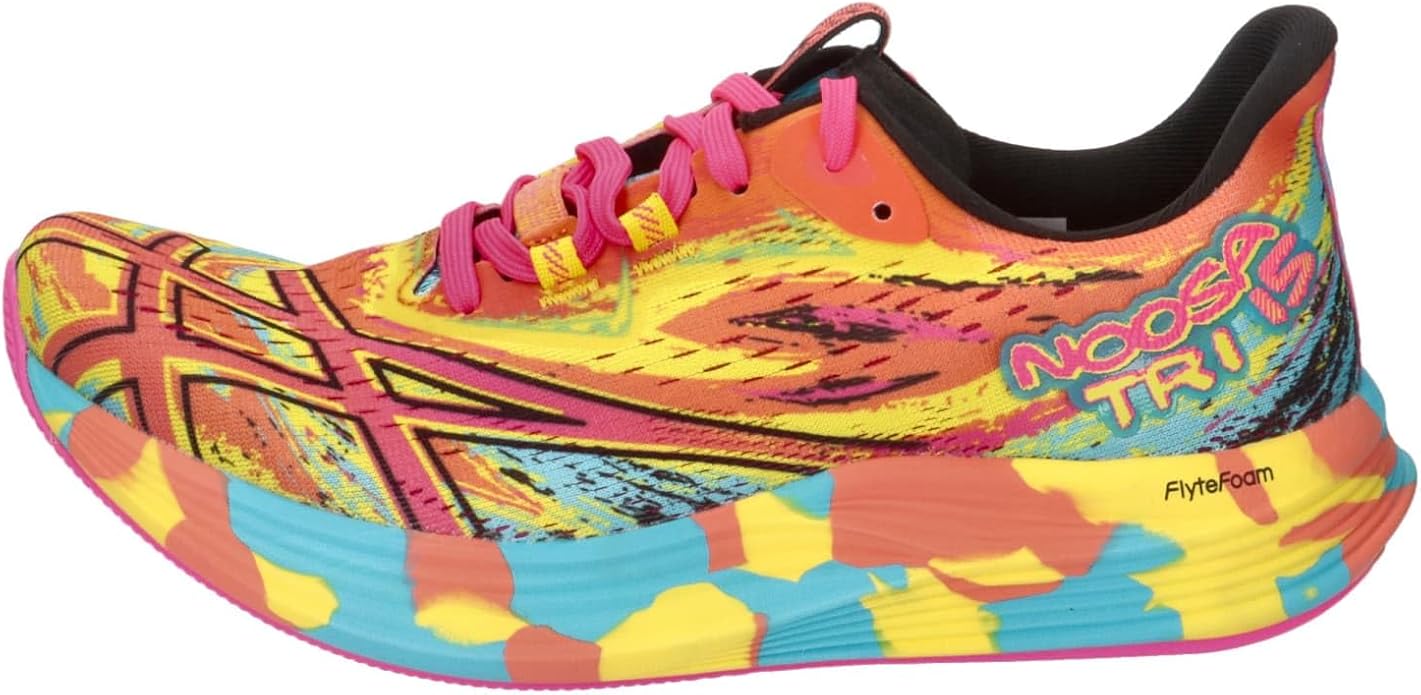
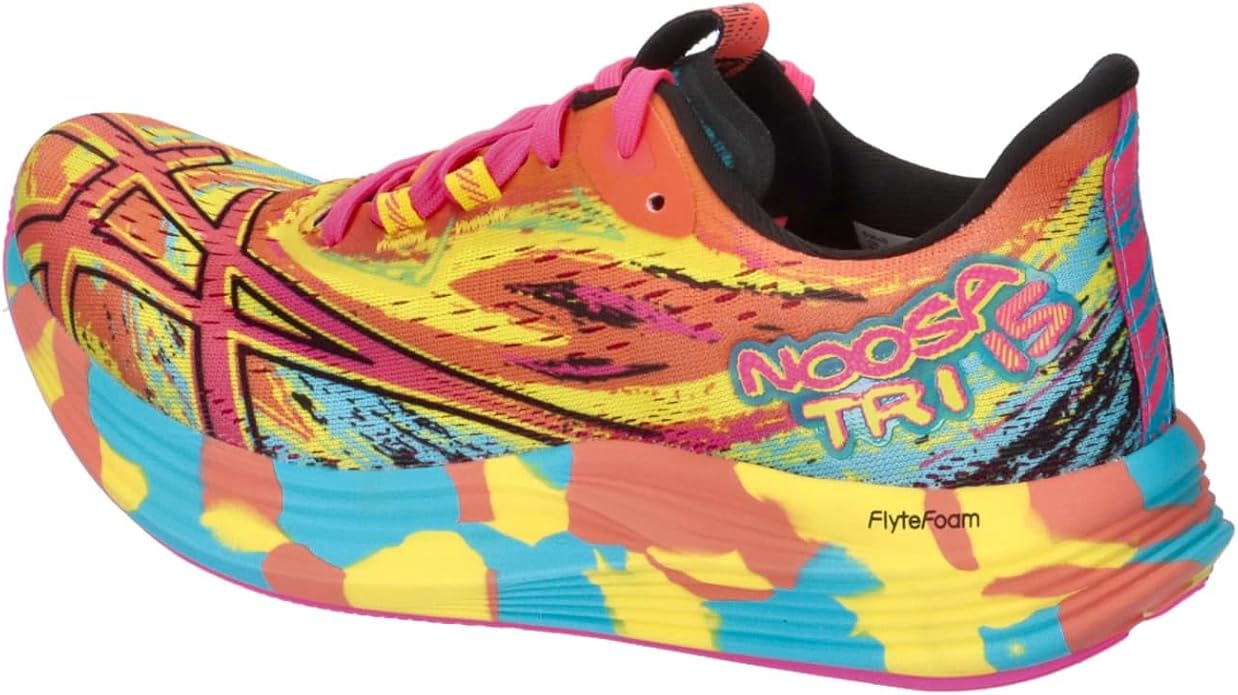
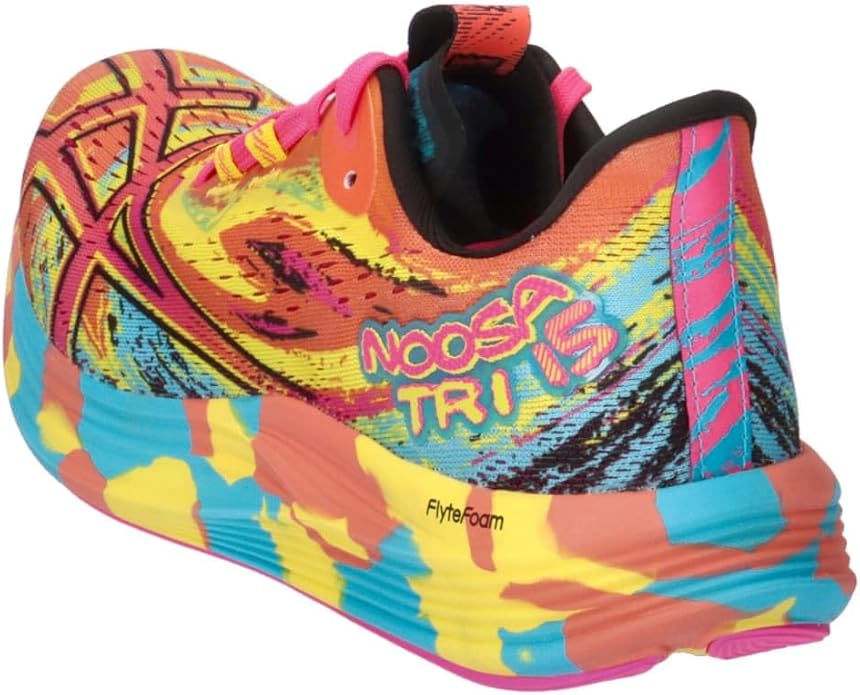
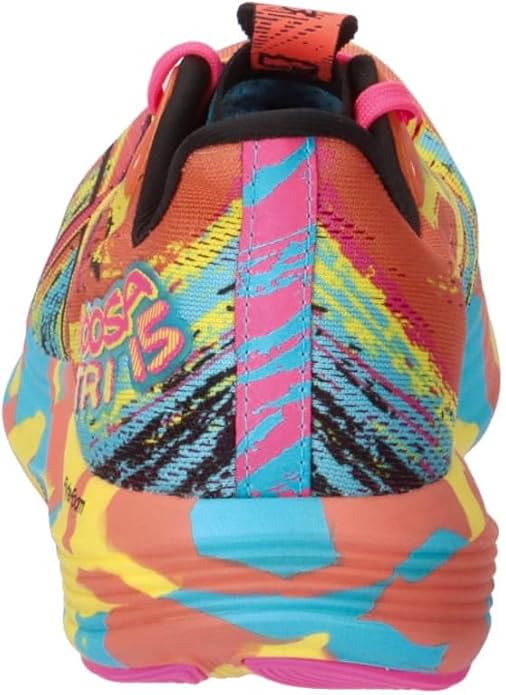
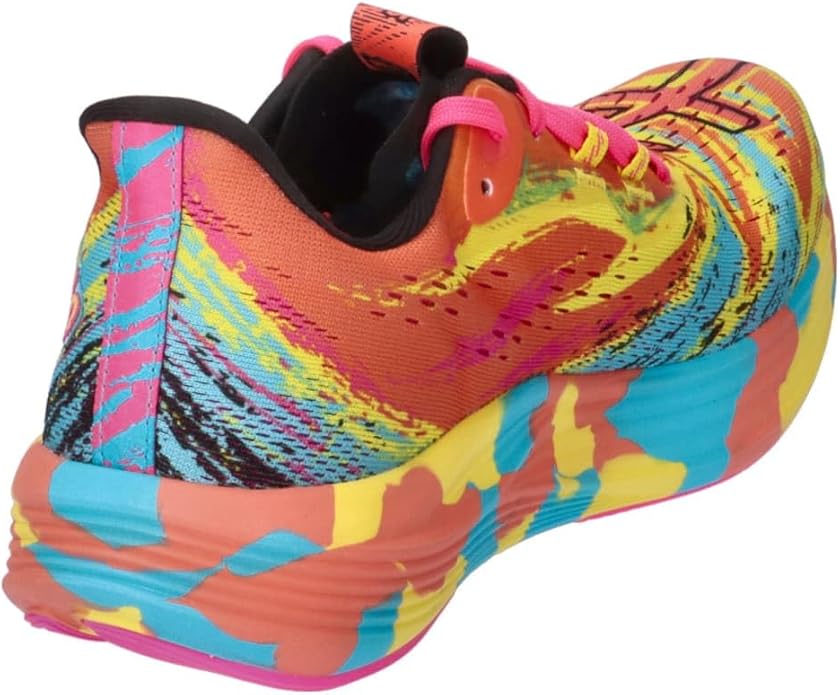
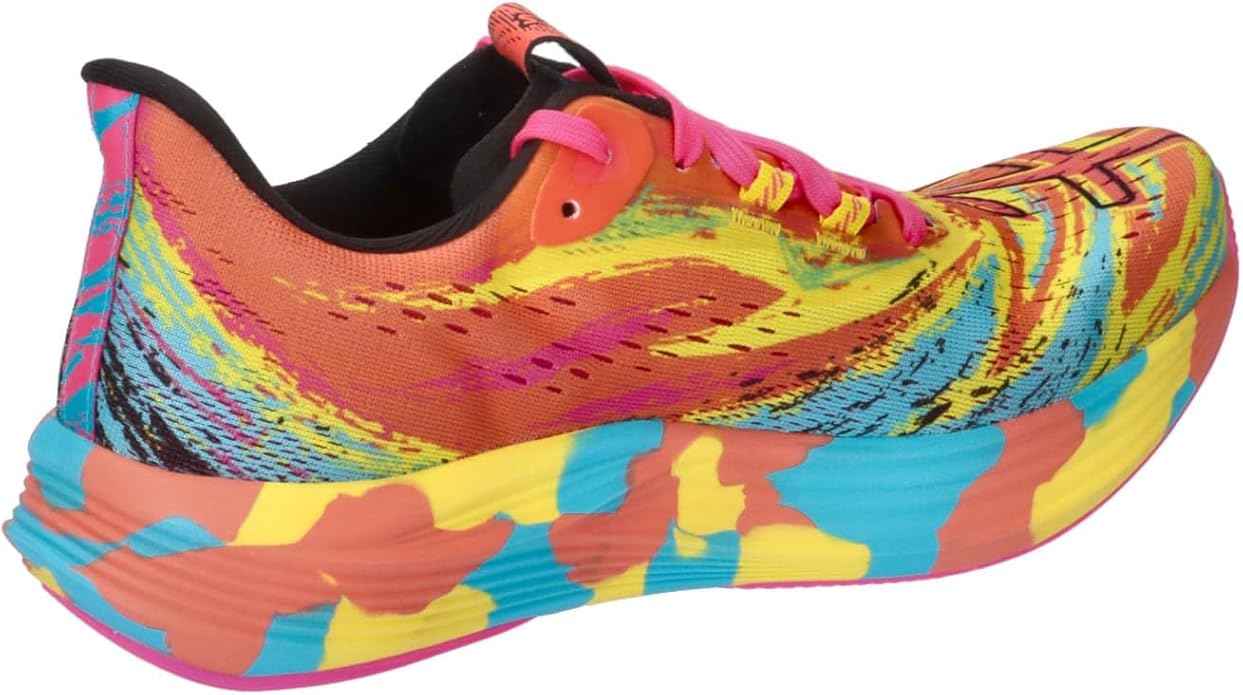
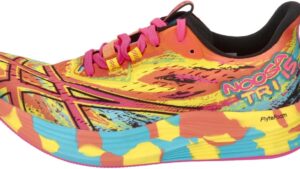
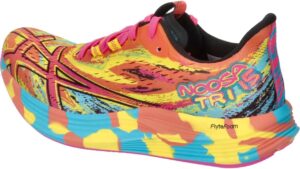
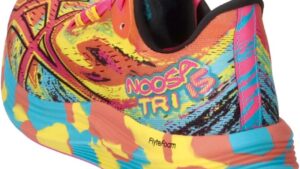
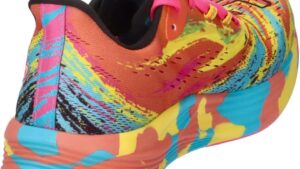
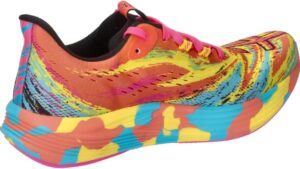
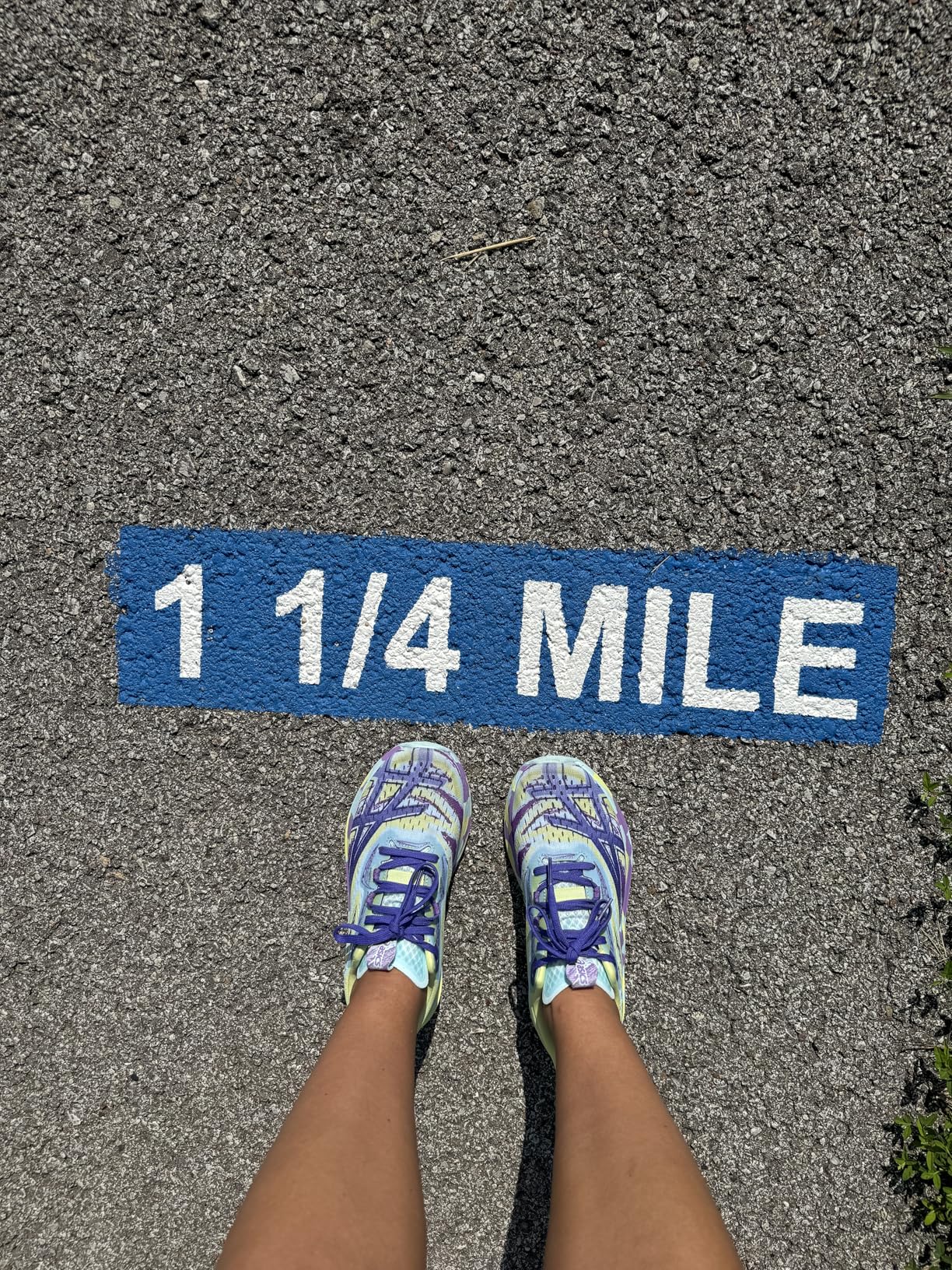
My workout partner has been running in the same shoes for six months and swearing by them constantly, but it took her texting me a photo mid-run — bright lime burst against gray pavement — before I took the hint seriously. I’m Sarah, and between managing a full work calendar and keeping up with school pickups and early-morning workouts, I’m pretty selective about what deserves space in my gym bag. So I spent eight weeks running, walking, doing HIIT, and just living in the ASICS Women’s Noosa TRI 15 to see if the hype was earned.
Short answer: mostly yes — but with a specific asterisk. These shoes are exceptional within their wheelhouse. Push them outside it and the cracks show quickly.
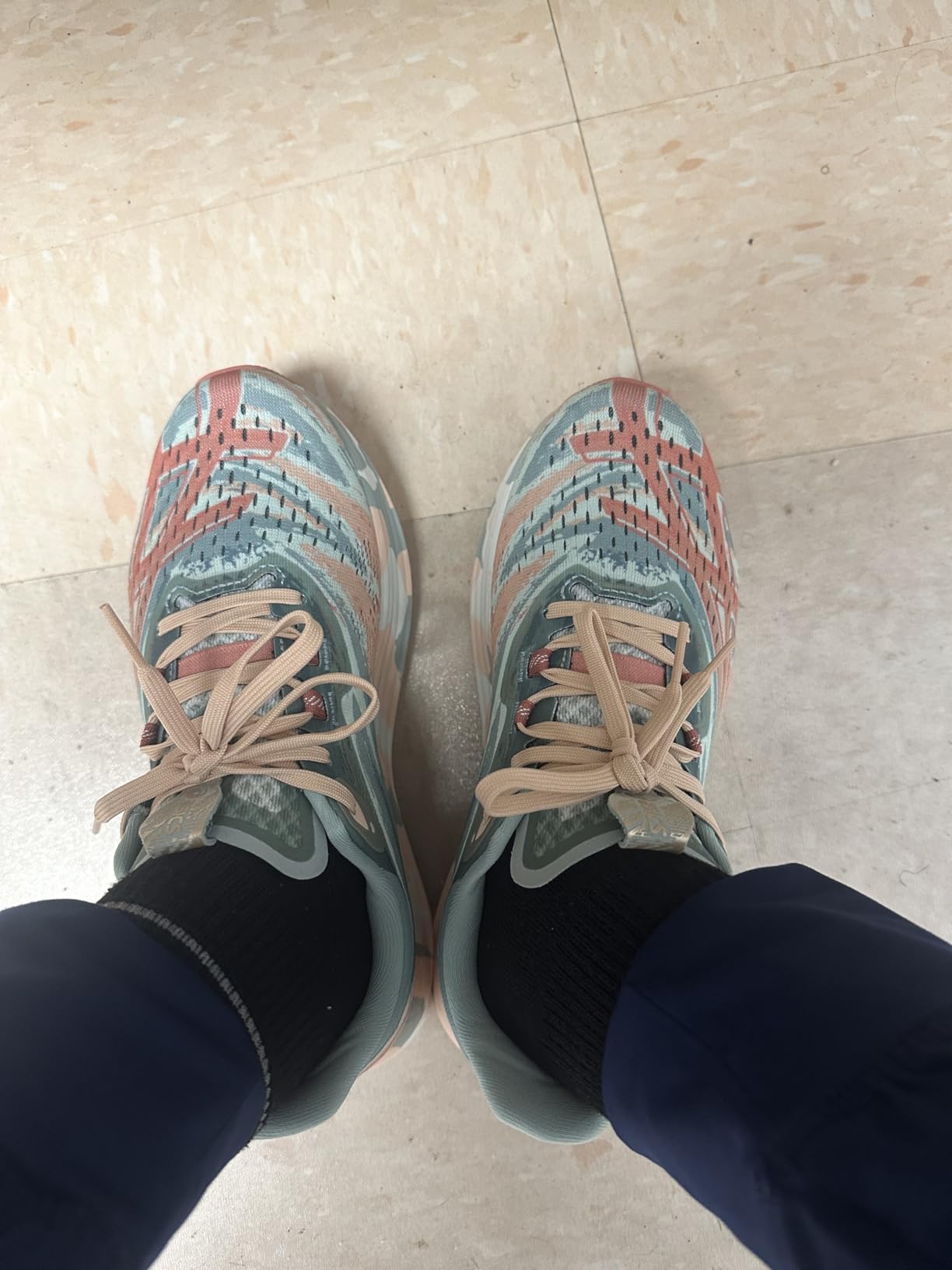
Technical Specifications
- 💰 Price: $130
- ⚖️ Weight: 7.4 oz (brand) / 7.7 oz (RunRepeat lab, women’s size)
- 📏 Heel-to-toe drop: 5mm (brand) / 7.7mm (RunRepeat measured)
- 📐 Stack height: 34.6mm heel / 26.9mm forefoot (total, including insole+outsole)
- 🧪 Midsole: FF BLAST™ foam with GUIDESOLE™ technology
- 👟 Upper: Engineered mesh with synthetic overlays
- 🏃♀️ Outsole: AHARPLUS™ rubber
- 🎯 Category: Neutral triathlon/training running shoes
- ⚡ Best for: Short-to-medium distance running, triathlon training, daily active wear
Note: The original spec sheet circulating for this shoe lists the midsole as “FLYTEFOAM” — that’s actually ASICS’s older foam generation. The Noosa TRI 15 uses the newer FF BLAST™ technology. Small distinction, meaningful if you’re comparing foam generations.
Fit and Sizing: The Sock Analogy Is Actually Accurate
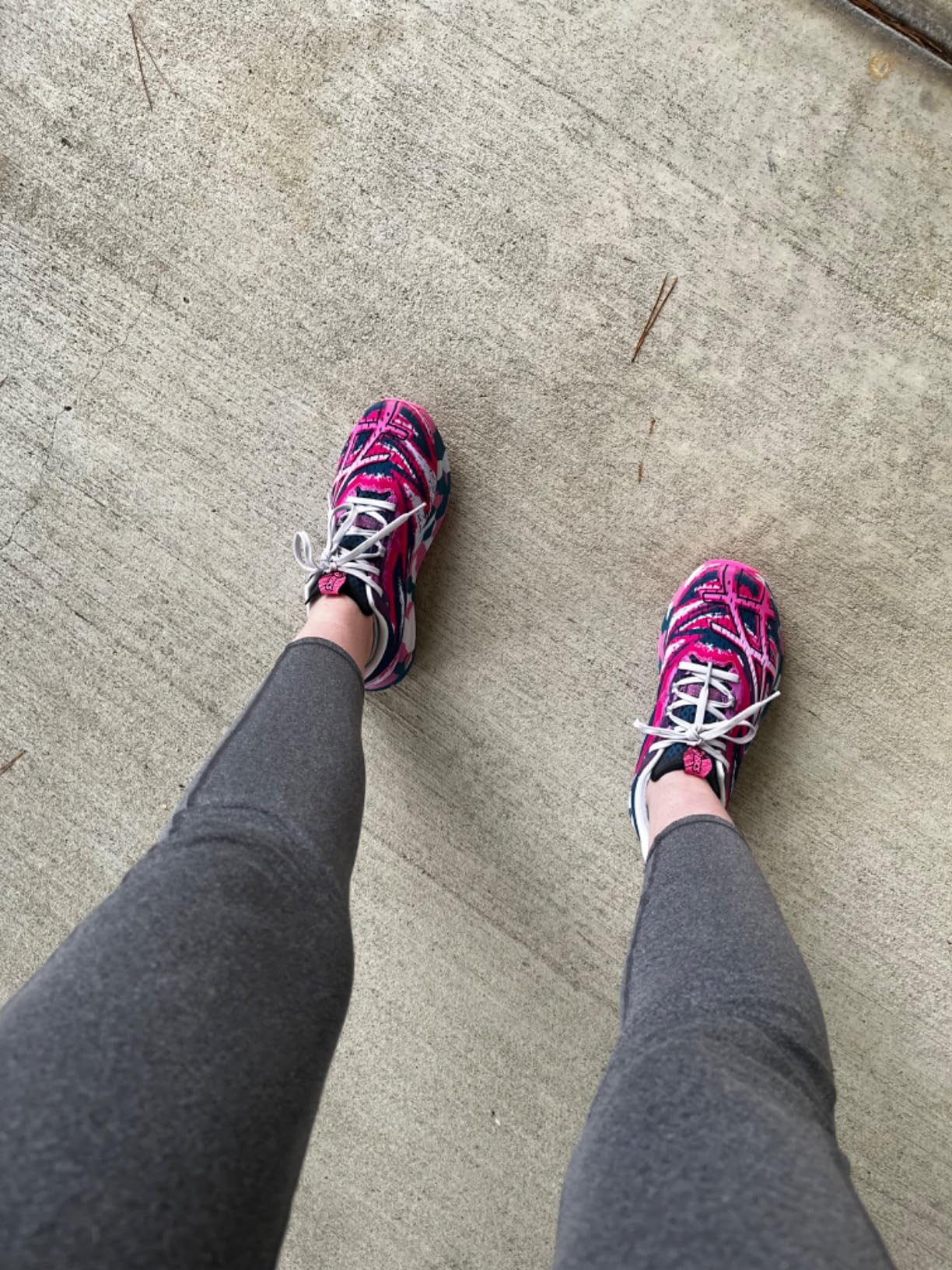
Before talking about how these run, it’s worth talking about how they fit — because the fit experience here is genuinely different from most running shoes.
The engineered mesh wraps your foot more like a structured athletic sock than a traditional shoe upper. There’s no stiff collar, no noticeable seam pressure anywhere. When I slipped them on for the first time at the running store, I kept looking for the break-in discomfort that never came. Eight weeks later, I’m still waiting.
The toebox is 98.8mm wide at its broadest point, which RunRepeat measures as among the roomiest of any tempo-style shoe. Height-wise, 29.5mm gives your toes proper vertical clearance too. I have slightly wider feet and normally spend the first few hours of any new shoe mentally monitoring toe compression — that didn’t happen here. Several women in the broader user research specifically cited bunion relief, and the geometry explains why.
That said, sizing runs slightly smaller than true-to-size. A 66-person survey at RunRepeat skews toward recommending a half size up, and the internal length (268.3mm) is marginally shorter than the category average. My practical guideline:
| Foot Profile | Size Recommendation |
|---|---|
| Standard width, any arch | True to size |
| Slightly wide or between sizes | Half size up |
| Very wide (normally need wide-width shoes) | Half to full size up, or consider ASICS Gel-Kayano 31 in wide width |
| Narrow feet | True to size or half down |
One note on heel fit: RunRepeat measures the rearfoot as slightly narrower than category average. If you’re primarily a heel striker, pay attention to whether the heel cup feels secure during your first few runs.
Comfort and Cushioning: What “Responsive” Actually Means Here
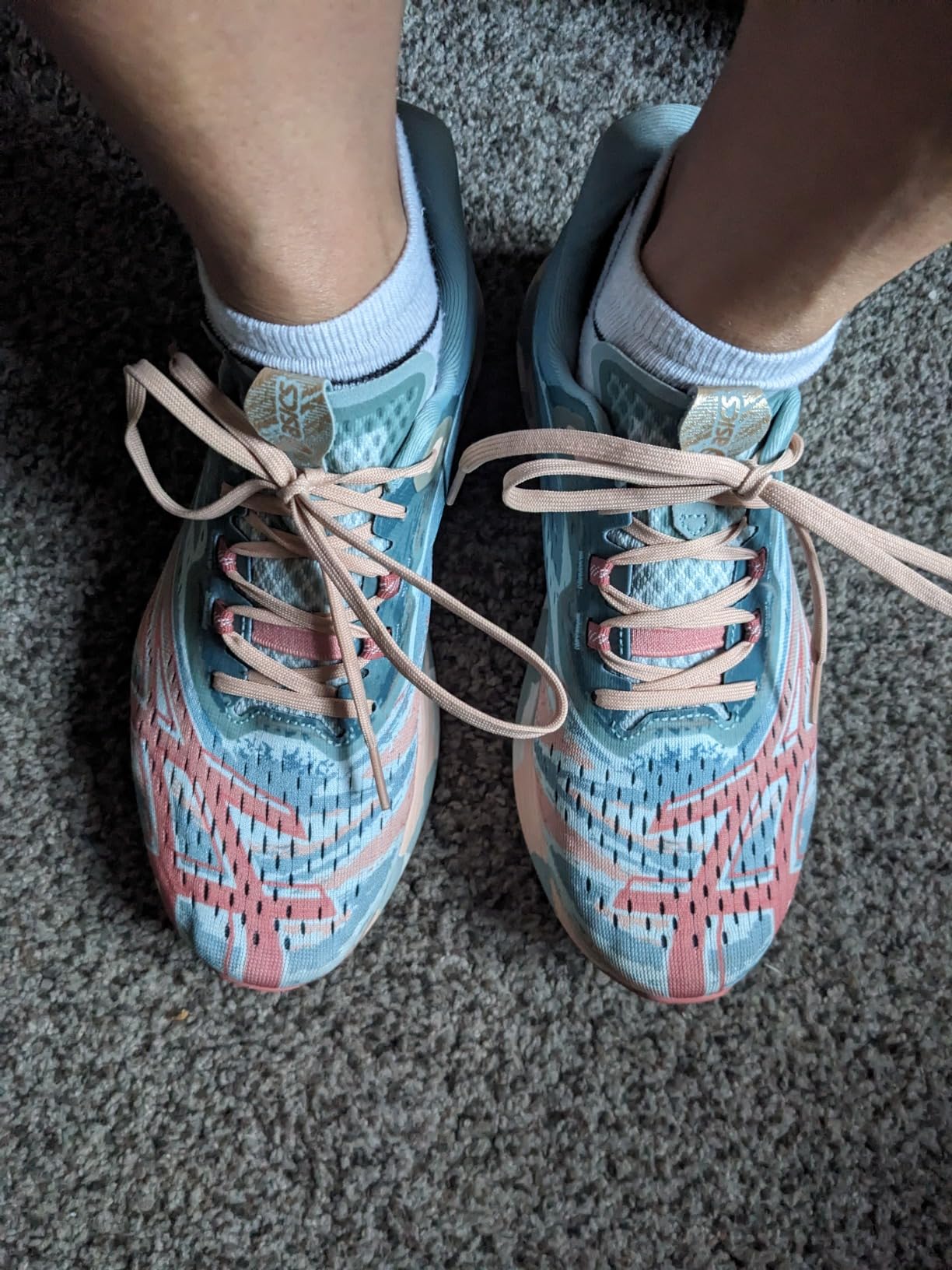
The FF BLAST™ midsole tests at 18.6 HA on the RunRepeat hardness scale — for context, that’s on the firmer end of what most people would call cushioned daily trainers. A typical daily trainer sits somewhere around 22–28 HA. So by the numbers, these aren’t marshmallow-soft.
But “firm” and “uncomfortable” are different things, and that gap matters here.
What FF BLAST™ delivers isn’t plush sink-in cushioning — it’s more like a lively, spring-like response underfoot. You feel the ground without it feeling harsh. During a 12-hour day that went from back-to-back meetings to school pickup to an evening workout, my feet registered noticeably less fatigue than usual. That’s not a comfort floor I can easily ignore.
The arch support sits in a useful middle zone — enough structure to prevent the arch fatigue I normally feel after extended walking, but not aggressive enough to create hotspots for my moderately high arches. Women who struggle with either plantar fasciitis strain or general arch tiredness should find this geometry agreeable, though severe PF cases should always check with their podiatrist before committing.
One thing worth flagging: the tongue is thin and unpadded. For most wearers this is a non-issue. A small percentage of users report lace irritation across the top of the foot during the first week or two, which typically resolves as the mesh relaxes. If you have particularly sensitive feet on the dorsum, run the first few wears a bit shorter to check.
All-Day Wear Testing
Four-plus hours on hard mall floors during a weekend shopping trip: feet felt fine. Morning gym session immediately before a full workday: no fatigue carryover. That’s a comfort ceiling that legitimately competes with shoes specifically marketed as walking shoes. Just know that after 6+ continuous hours, any shoe — including this one — will start showing wear on the metatarsal arch.
GUIDESOLE Technology: The Rolling Sensation That Actually Works
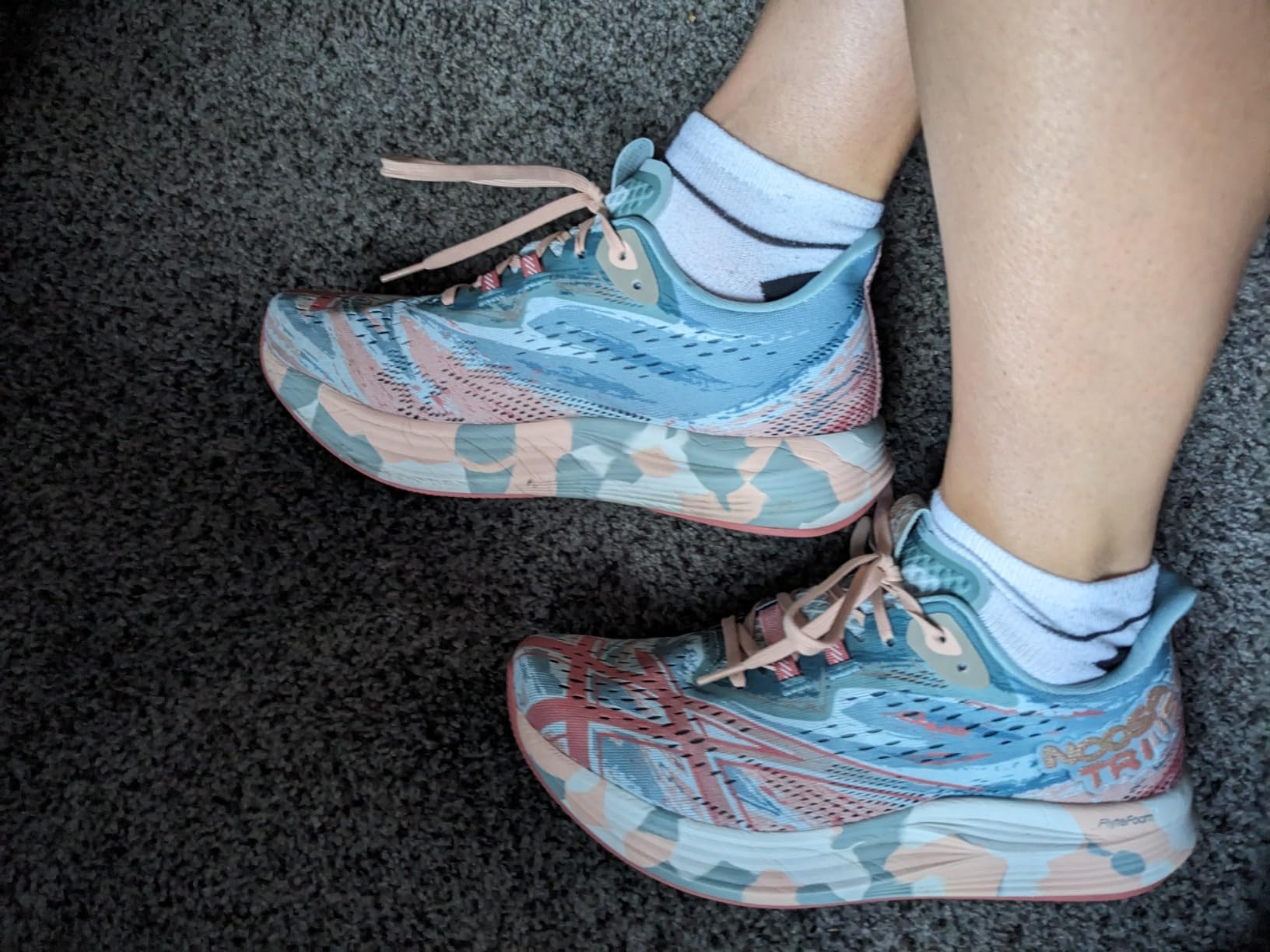
GUIDESOLE™ is ASICS’s rocker-style sole technology. The official claim: it “helps conserve energy by reducing ankle flexion.” That’s a specific biomechanical promise — less work done at the ankle per stride.
In practice, the curved sole creates a distinctive forward-rolling sensation that you feel immediately on your first run. My 3-mile morning routes felt measurably easier in a way I kept trying to attribute to just having fresh legs — until I ran the same route in different shoes the following week and noticed the fatigue difference was real.
Here’s the honest complication, though: RunRepeat’s lab clocks energy return at 46.9% at the heel and 49.8% at the forefoot. The category average sits at 58.6%. By bounce metrics, these are technically below average in energy return. So why does running in them feel more efficient?
The answer is that GUIDESOLE efficiency doesn’t operate through foam bounce. It works by reducing the angle your ankle has to flex through — which means less muscular effort per stride even if the foam isn’t particularly “springy.” The mechanism is closer to biomechanics than trampoline physics. For 2–5 mile efforts, that translates to less calf strain and an easier-feeling rhythm. Whether that advantage holds at longer distances is a different question.
Where It Stops Working
At the 7-mile mark of a test run, the FF BLAST™ foam started communicating more impact to my feet than I’d normally want. The cushioning wasn’t gone — but whatever protective buffer there was at mile 3 was measurably reduced by mile 7. For runners whose long runs regularly exceed 5-6 miles, this limitation is real. The shoe is triathlon-inspired, and triathlon runs aren’t marathons — the design philosophy is appropriately calibrated.
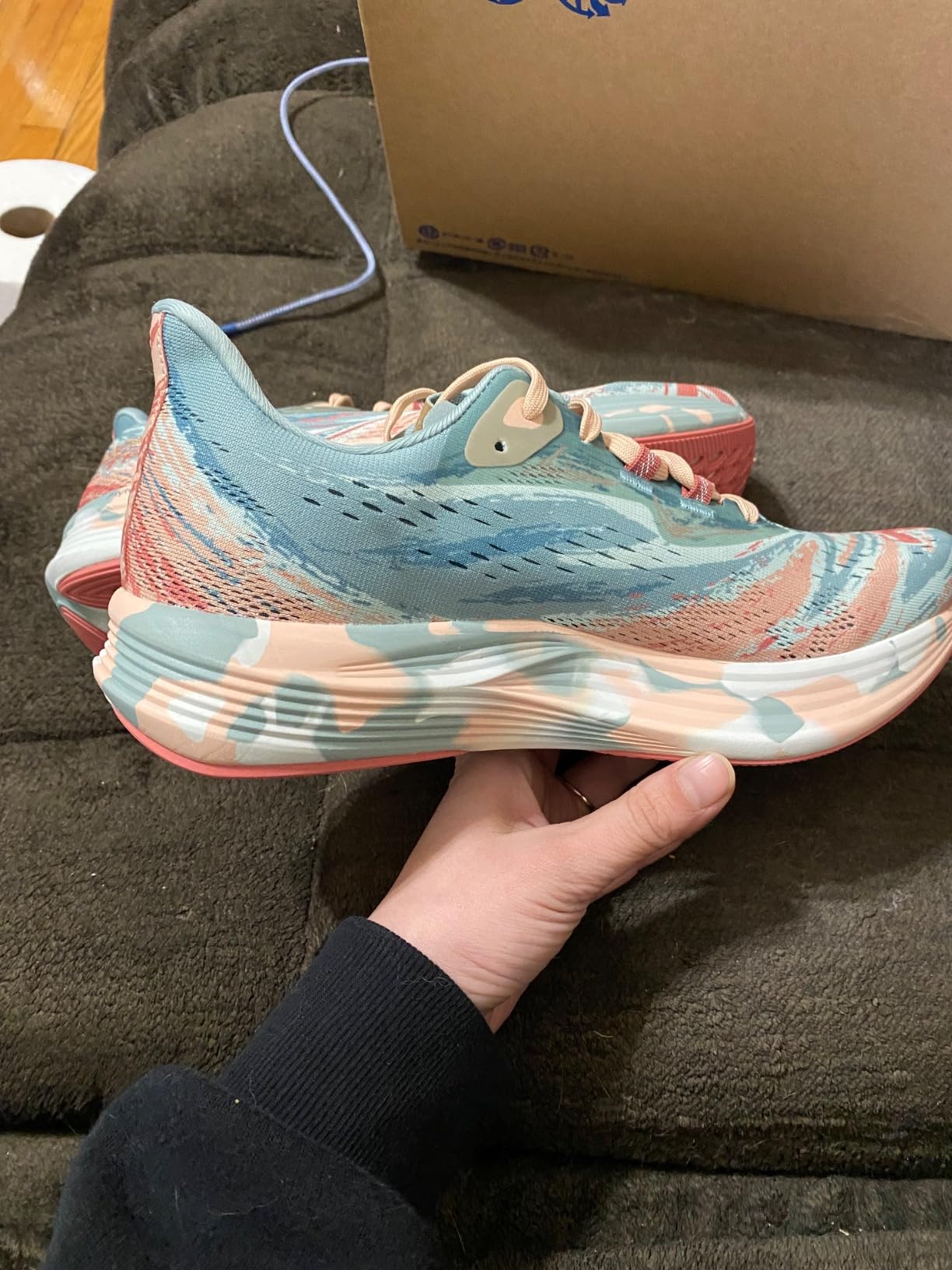
For daily running shoes that hold up at higher mileage, something like the ASICS Gel-Nimbus 27 offers significantly more durability and long-run cushioning.
Build Quality: Built for Speed, Not Forever
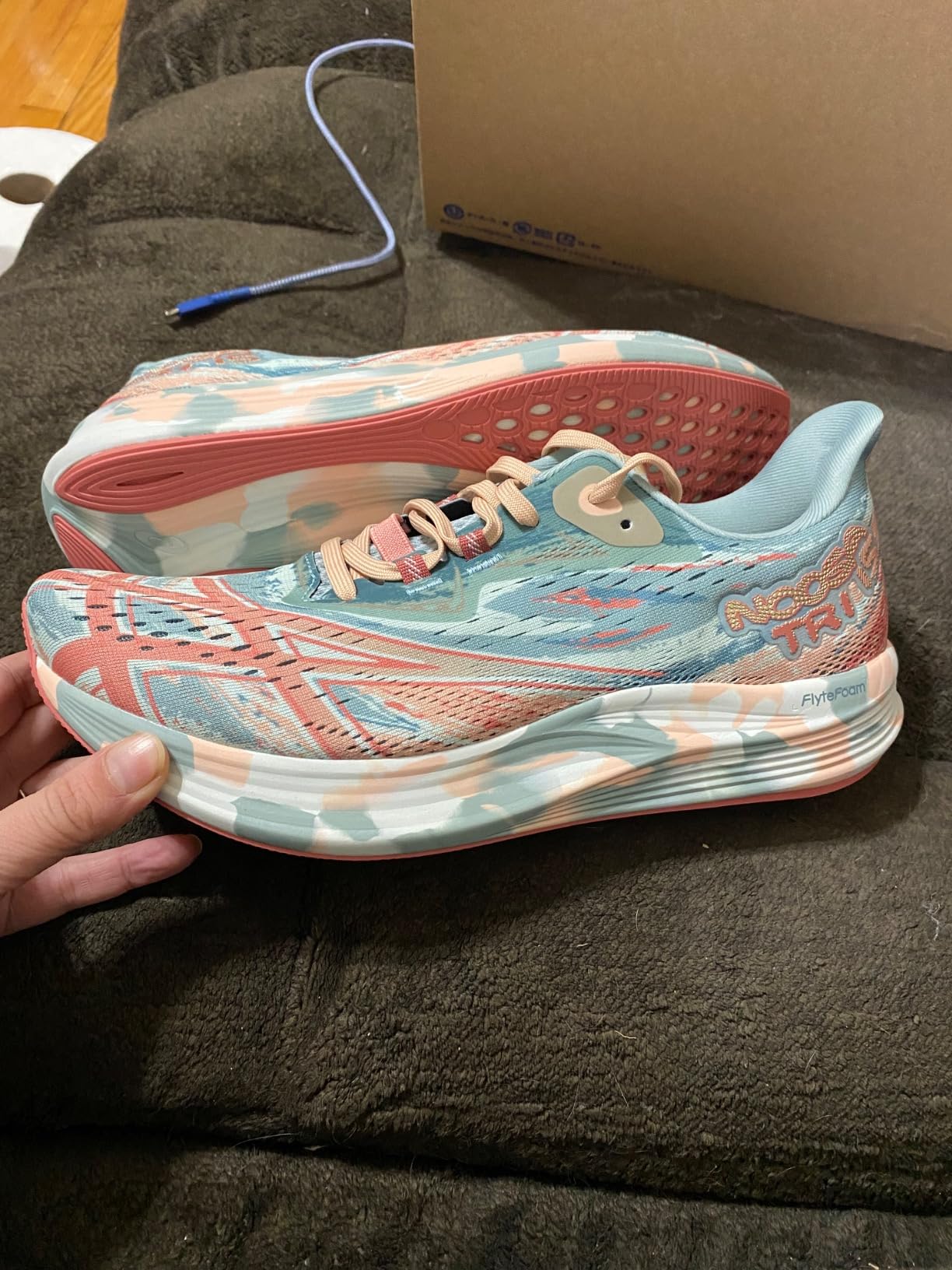
Eight weeks of testing didn’t reveal any structural failures. The AHARPLUS™ rubber outsole remained intact, the overlays stayed put, and the mesh held its shape. But community data across hundreds of longer-term owners tells a story that my testing window couldn’t.
The predominant failure mode is mesh degradation at the toe box flex point — typically appearing as small holes or fiber separation somewhere around the 4–6 month mark with regular use. RunRepeat rates the toebox durability as “Bad” relative to the category. The outsole? That gets a “Good” — the AHARPLUS™ rubber is the durable part of this shoe. It’s the upper that limits total lifespan.
Realistic expectations by use pattern:
- Light use (1-2×/week): 12–18 months before noticeable degradation
- Regular training (3-4×/week): 6–9 months
- Daily wear + training: 4–6 months before mesh shows stress
- Heavy training (5+×/week): 3–4 months
At $130 over a 6–9 month regular-use lifespan, the cost-per-mile math works out to roughly $0.40–$0.65 per mile — compared to $0.15–$0.30 for more durable daily trainers. That’s not a condemnation; it’s a budgeting variable. Two-pair rotation or annual replacement planning makes this economical if you accept the trade-off upfront.
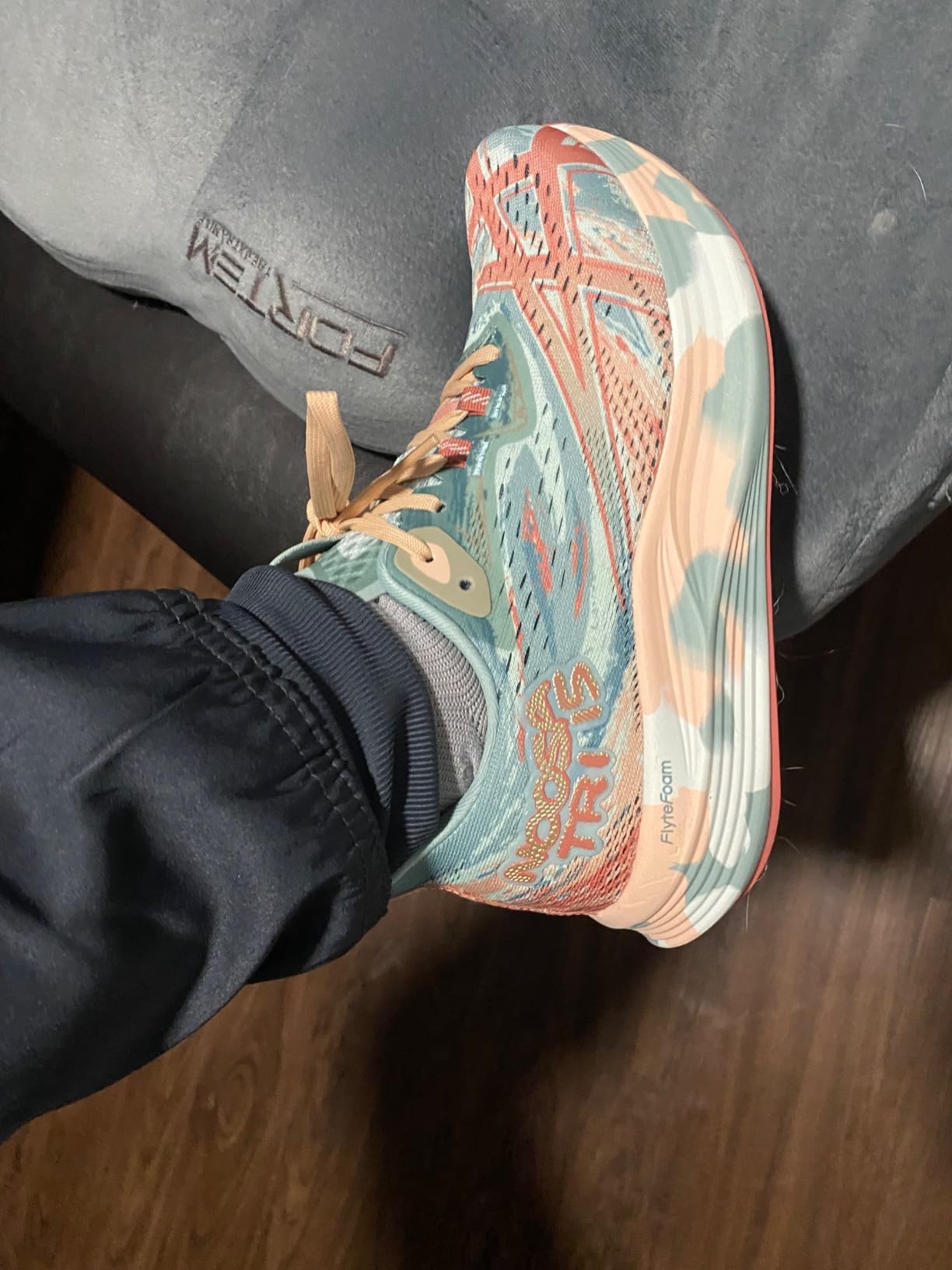
The design philosophy here is genuinely “race car, not tank.” Everything non-essential to performance and comfort was either reduced or eliminated. That’s not a design failure — it’s an intentional product decision. Know what you’re buying.
Versatility Across Training Types
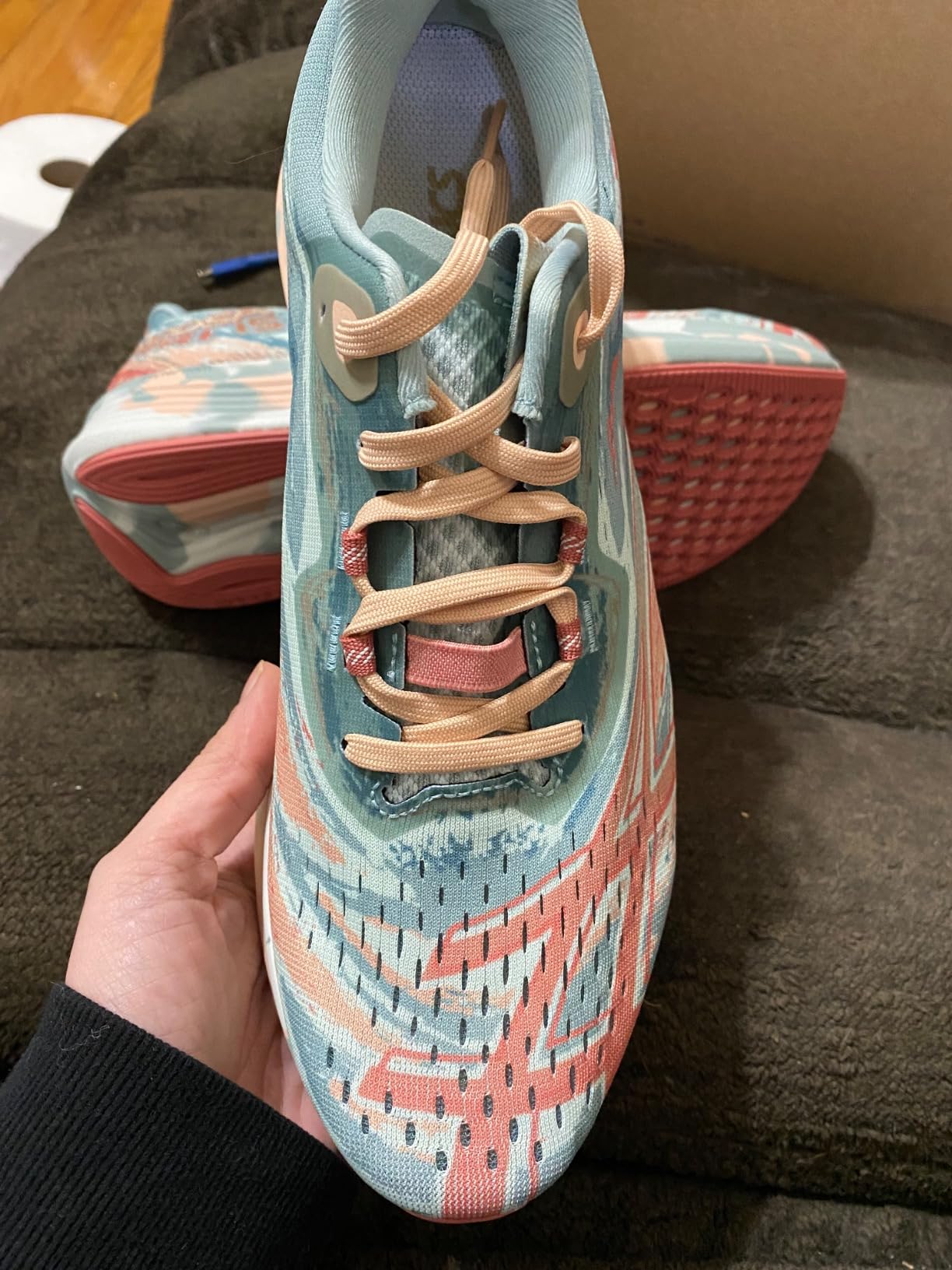
This is where the Noosa TRI 15 earns its broad audience appeal.
The 7.7mm drop (measured) makes it naturally suited to gym-style training shoes scenarios. During HIIT classes — burpees, box jumps, lateral shuffles — the low-profile sole and secure heel kept me stable without the clunky feeling of a more cushioned shoe during dynamic movements. Weight training with moderate loads worked fine. For heavy barbell squats or deadlifts specifically, the responsive foam might give more than you want under load; something with a flatter, firmer sole like the Nike Metcon 9 is better designed for those specific lifts.
Walking performance is genuinely excellent. The combination of roomy toe box, responsive cushioning, and breathable upper made the 4-hour shopping trip feel effortless in a way that most running shoes can’t claim. Breathability in particular stood out — even during warm-weather afternoon hours, the engineered mesh kept air moving.
The slip-on toggle system deserves its own paragraph. As someone who spends a meaningful fraction of her morning rushing from one thing to another, being able to step in and out of training shoes without unlacing and relacing is a genuine quality-of-life improvement. It sounds trivial until you’ve used it for two months.
ASICS’s Claims, Evaluated
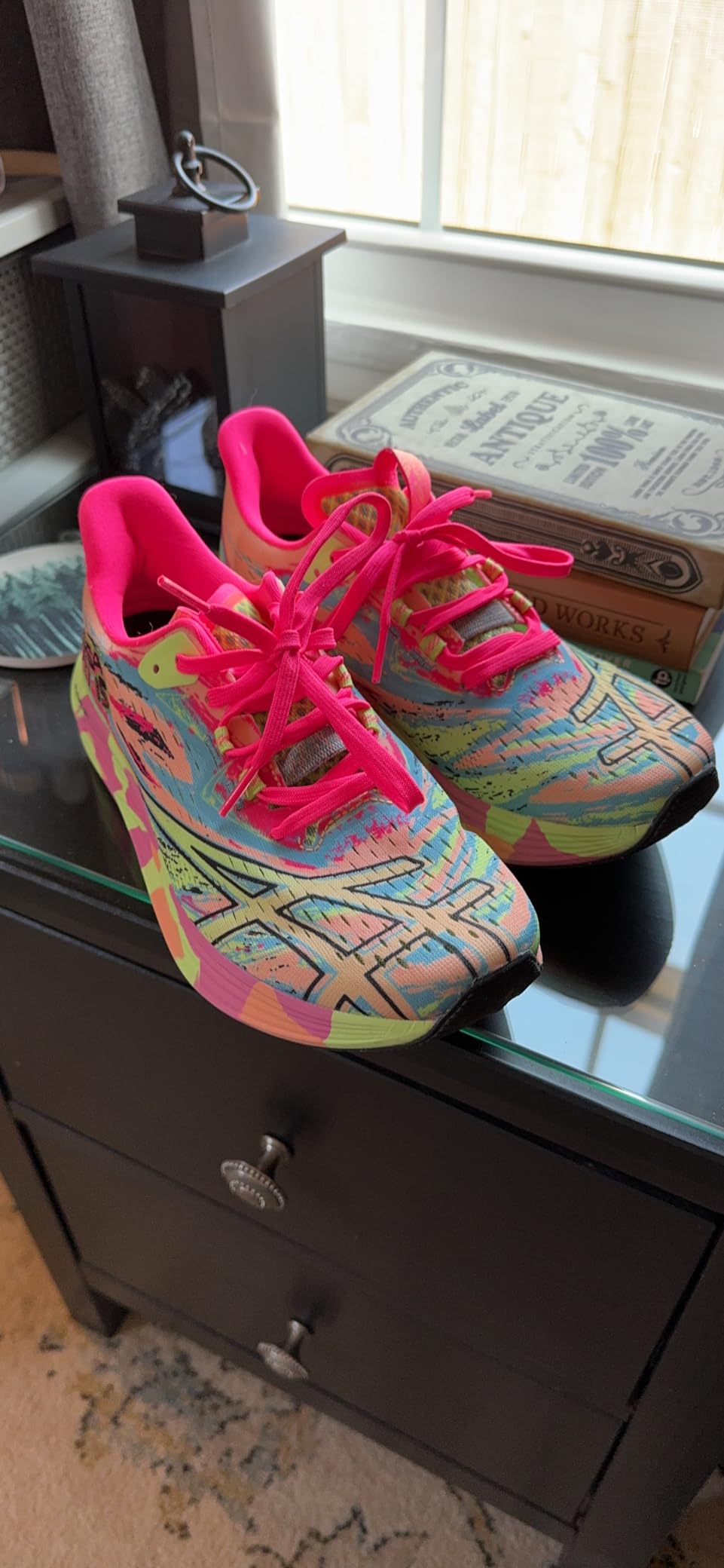
“GUIDESOLE conserves energy by reducing ankle flexion” — Verified. The curved sole does create a measurably different stride feel, and perceived exertion on my regular 3-mile routes was consistently lower. The mechanism isn’t foam bounce (which is actually below average here) but biomechanical efficiency at the ankle. Accurate claim.
“Lightweight cushioning with FF BLAST™” — Accurate with nuance. At 7.4–7.7 oz, the weight claim holds. “Cushioning” might mislead maximalist-foam fans — it’s responsive and lively, not plush and deep. If you’re expecting Hoka territory, recalibrate expectations.
“Engineered mesh improves breathability” — Fully true. This might be the single most reliable claim in the lineup. The mesh genuinely keeps feet cool, summer or winter.
“Easy slip-on for triathlon transitions” — True, though context matters. The toggle-and-pull-tab system is fast and convenient. Don’t expect racing-flat transition speeds — you’re looking at 30–45 seconds to step in, not 10 seconds in true race conditions. For everyday convenience purposes, the system is excellent.
The implicit durability claim (AHARPLUS™ “improved durability”) — Partially true, misleadingly framed. The outsole rubber is durable. But marketing whole-shoe durability on the basis of outsole rubber while the mesh upper fails at 4–6 months is a selective truth. The outsole isn’t the failure point.
Who Gets the Most From These Shoes
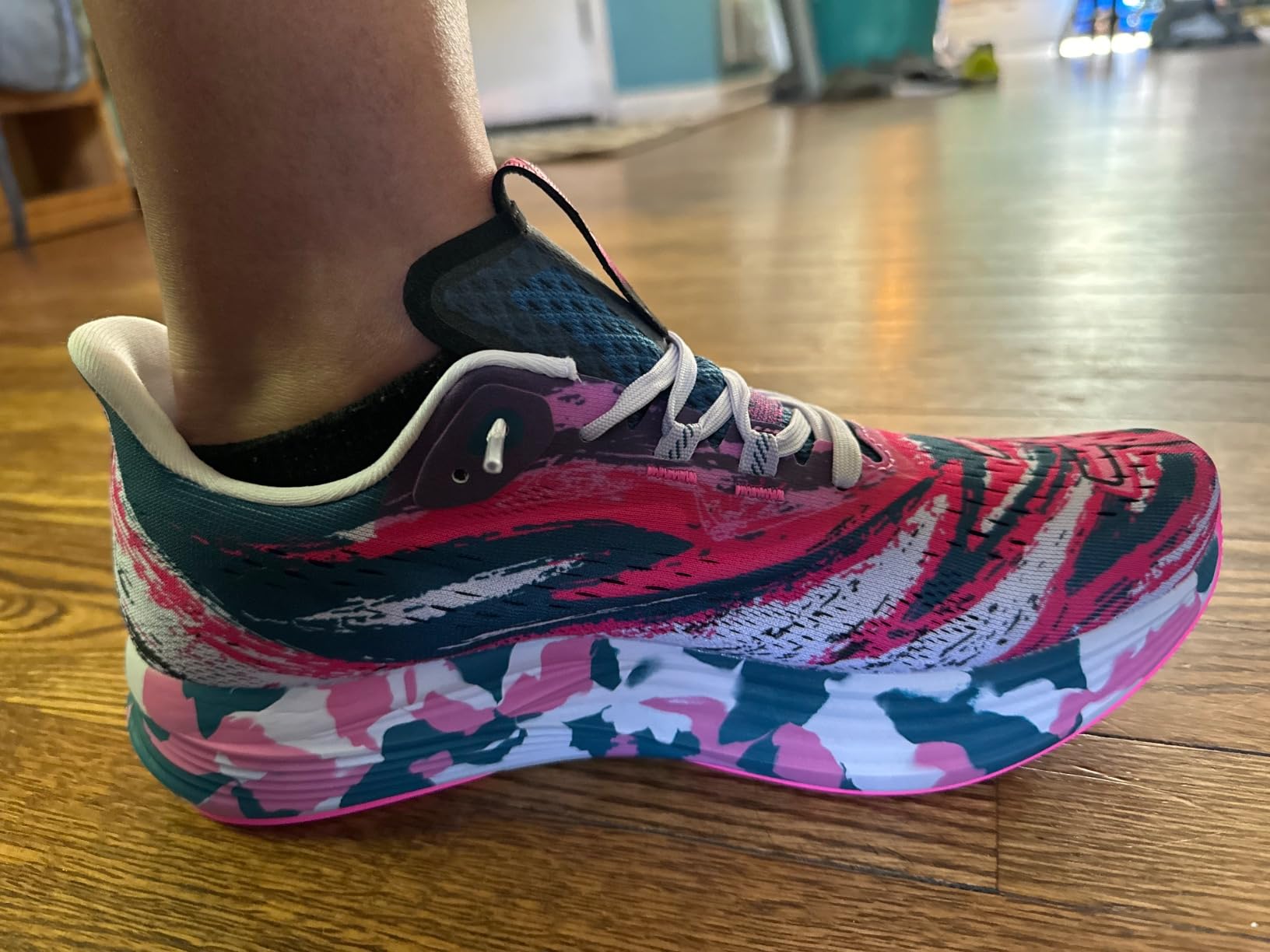
Strong fit for:
- Healthcare workers on 12-hour shifts — all-day comfort is genuinely validated
- Recreational runners who stay in the 2–5 mile range
- Gym-goers wanting one versatile shoe for HIIT, walking, and light training
- Busy parents or professionals who value the convenience of the slip-on system
- Triathlon beginners who need a capable training shoe with quick-transition function
- Women with high arches or bunions who struggle to find comfortable mesh fit
- Anyone who genuinely cares about a shoe that draws compliments
Look elsewhere if you:
- Regularly run 7+ miles — the cushioning fade is real and meaningful at that distance. The ASICS Gel-Nimbus 27 is built for that job.
- Need a shoe that lasts 500+ miles — this isn’t designed for that. Consider the ASICS Gel-Cumulus 26 for better mileage durability.
- Have very wide feet — even the roomy toebox has a midfoot width limit. Try the ASICS Gel-Kayano 31 in wide width instead.
- Run frequently in rain — traction coefficient of 0.39 vs the 0.50 category average is a meaningful gap on wet surfaces.
- Need trail capability — the mesh upper and outsole offer no trail protection. ASICS Gel-Venture 10 or Altra Lone Peak 8 are better suited.
- Prefer traditional lacing — the toggle is excellent but not universally preferred.
My Overall Assessment
| Category | Score | Notes |
|---|---|---|
| Overall Rating | 8.0/10 | Excellent within intended use; real limitations outside it |
| Comfort | 9.2/10 | Sock-like fit, responsive FF BLAST™, all-day capable |
| Running Performance | 8.1/10 | GUIDESOLE delivers at 2–5 miles; fatigue climbs past that |
| Build Quality | 6.8/10 | Outsole solid; mesh upper is the lifespan limiter |
| Versatility | 8.7/10 | HIIT, walking, daily wear all work; heavy lifting less ideal |
| Style | 9.4/10 | Lime burst genuinely vibrant; colorways among best in category |
| Value | 7.9/10 | Good features for $130; durability limits cost-per-mile math |
| Fit | 8.8/10 | TTS for standard width; roomy toebox; slight heel narrowness |
Frequently Asked Questions
What foot types have trouble with the Noosa TRI 15?
Very wide feet are the most common fit challenge — the toebox accommodates bunion-level spread, but the midfoot can feel constraining for feet that need wide-width sizing throughout. Dedicated heel strikers may also find the narrow rearfoot less supportive than shoes with a broader heel platform.
The energy return lab score is below average. Does that affect real-world feel?
Yes and no. RunRepeat measures 46.9% energy return at the heel versus a category average of 58.6%. By bounce mechanics alone, these underperform. But GUIDESOLE works through a different mechanism — reducing ankle flexion angle rather than trampoline rebound. The net subjective experience at 2–5 miles is efficient and lively. Where the below-average energy return shows up is on longer runs, where fewer bounce cycles accumulate to noticeable cumulative fatigue.
How long realistically until the mesh starts to fail?
Based on community data across hundreds of users: for regular training (3–4×/week), expect visible mesh stress at the toe box flex point around months 4–6. That’s not necessarily a hole — early signs are usually fiber separation or pilling. The shoe remains functional past this point, but durability is on a decline curve. Light users (1–2×/week) can stretch to 12–18 months. If you want to manage this, consider pairing with a more durable shoe for longer runs and reserving the Noosa for gym sessions and shorter outings.
Are they good for walking programs or daily errands?
Excellent for 4–5 hour walk sessions. The roomy toe box accommodates foot expansion during extended time on your feet, the cushioning handles hard indoor surfaces well, and the breathability prevents the trapped-heat feeling common in walking shoes. Past 6 consecutive hours, metatarsal arch fatigue starts to build — the same as virtually any running shoe used this way.
Can I use custom orthotics with these?
The insole is removable, making the footbed orthotic-compatible. The internal volume of the shoe is moderate — you may need to remove the stock insole entirely when swapping in thicker custom orthotics. If you use custom insoles, try them in-store before committing to the size. A pair of Sof Sole Athlete Insoles or similar aftermarket insoles can also extend the shoe’s functional lifespan past the point where the stock footbed compresses.
How does wet weather performance affect safety?
This is worth taking seriously. RunRepeat measures traction at 0.39 coefficient versus the 0.50 category average — a meaningful gap. On a rainy morning run over wet concrete, I found myself shortening my stride and committing to surfaces more carefully than usual. It’s not unrunnable in the rain, but it requires adjusted technique. Not recommended as your primary wet-weather training shoe.
How do they compare to Hoka shoes for all-day comfort?
They’re fundamentally different comfort philosophies. Hoka’s thick-stack foam provides progressive cushioning — plush and absorbing. The Noosa TRI 15 offers responsive cushioning — firm-ish but lively, lower stack. For ultra-long standing shifts (8+ hours on concrete), Hoka’s stack height typically provides more shock management. For mixed activities that include running and gym work, the Noosa TRI 15 performs better across that wider range.
Is $130 fair compared to alternatives?
For the intended use case — short-to-medium running, HIIT, daily active wear, and the convenience of the slip-on system — the price is defensible. Where the value math gets harder is for high-mileage runners: at $130 over 200–350 miles, you’re spending $0.40–$0.65 per mile versus $0.15–$0.30 for durability-focused options. If the Noosa TRI 15 is one of several shoes in rotation rather than your sole training shoe, the economics work much better.
What’s the break-in experience like?
Minimal. The sock-like mesh upper and FF BLAST™ foam don’t require a stiffness break-in period the way leather or dense synthetic uppers do. The rocker sole feels slightly unusual in your first 20–30 minutes — the forward-rolling gait takes a brief adjustment period. By the end of session one, most wearers adapt fully. The unpadded tongue occasionally creates minor irritation for sensitive feet in the first 1–2 weeks; this typically resolves on its own.
Final Verdict
After eight weeks and 45+ sessions across running, gym work, and daily life, the ASICS Women’s Noosa TRI 15 earns 8.0/10 for the audience it’s designed for.
The shoe is genuinely excellent at several things: all-day comfort, short-to-medium run efficiency, HIIT and gym versatility, and the kind of convenient, wear-anywhere design that busy schedules actually reward. The lime burst colorway is as vibrant in person as any photo suggests — one of the few shoes that actually looks better on foot than in a product shot.
The honest limitations are equally clear. The mesh will age faster than you might hope. Wet weather traction is genuinely inadequate for consistent rainy-day use. The cushioning fade past mile 5 is real. None of these are design flaws — they’re the predictable outcomes of a shoe engineered specifically for light weight, responsiveness, and convenience rather than maximum durability or long-run cushioning.
Buy these knowing what they are: a performance-and-comfort-forward shoe with a defined sweet spot and a finite lifespan. Within that sweet spot, they’re very hard to beat.
| ✅ Strengths | ❌ Weaknesses |
|---|---|
| Immediate comfort, zero break-in needed | Mesh upper fails at 4-6 months regular use |
| GUIDESOLE delivers genuine efficiency at short distances | Cushioning fade past 5-6 miles |
| Convenient toggle/pull-tab system genuinely useful | Wet traction 0.39 vs 0.50 avg — not a rain shoe |
| Exceptional breathability in warm conditions | Unfavorable cost-per-mile for high-mileage runners |
| Roomy toe box, bunion-friendly geometry | No wide-width option; very wide feet may struggle |
| Vibrant colorways, consistent compliments | Thin unpadded tongue — niche issue but worth knowing |
| HIIT and daily wear versatility in one package | Not appropriate for trail, heavy lifting, or long-distance |
Be the first to review “Asics Women’s Noosa TRI 15 Running Shoes”
Related products
Hiking/Trekking Shoes
Running Shoes
Running Shoes
Running Shoes


Hiking/Trekking Shoes

Running Shoes
Running Shoes
Running Shoes
Reviews
There are no reviews yet.