
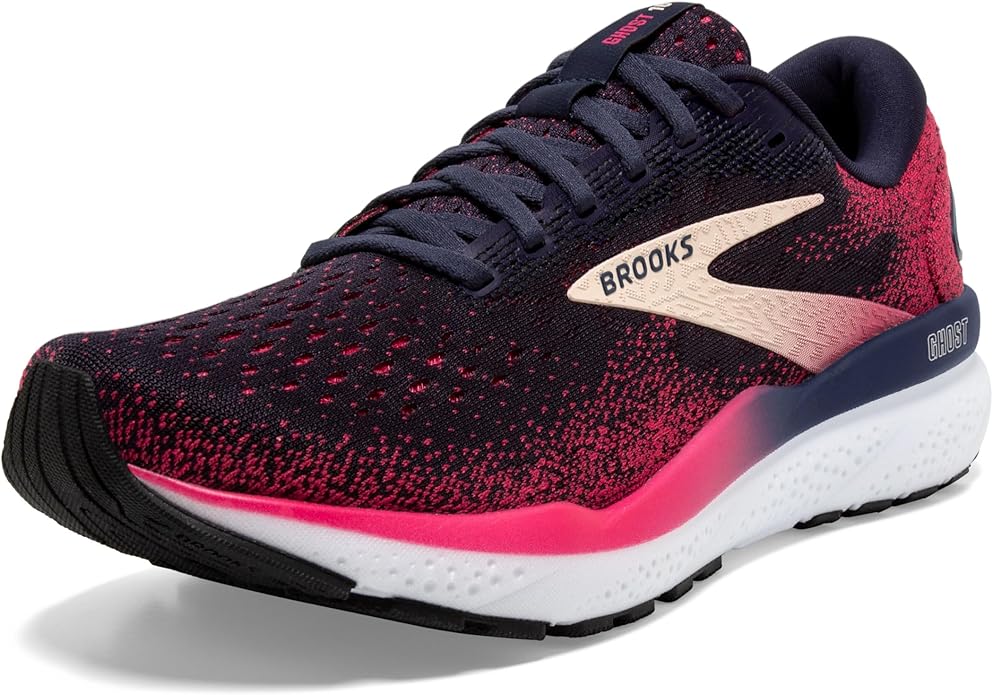
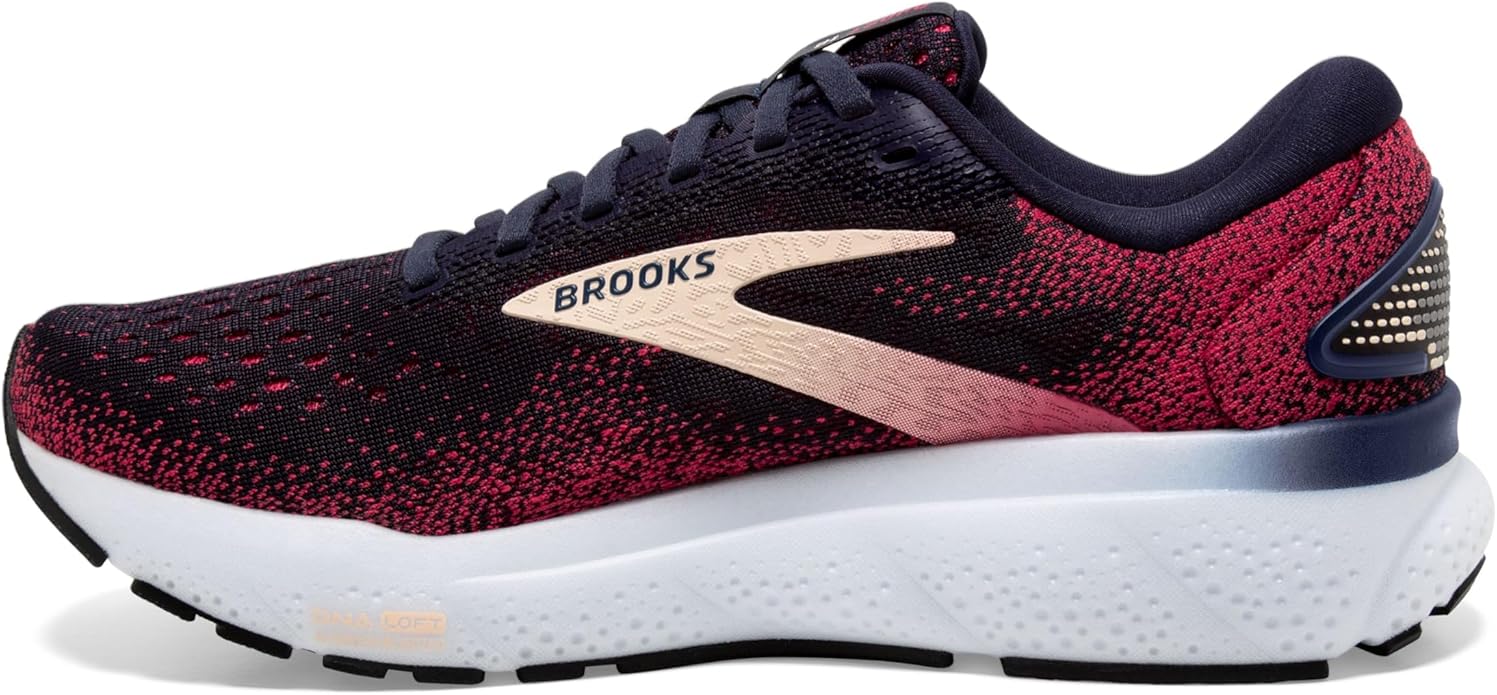
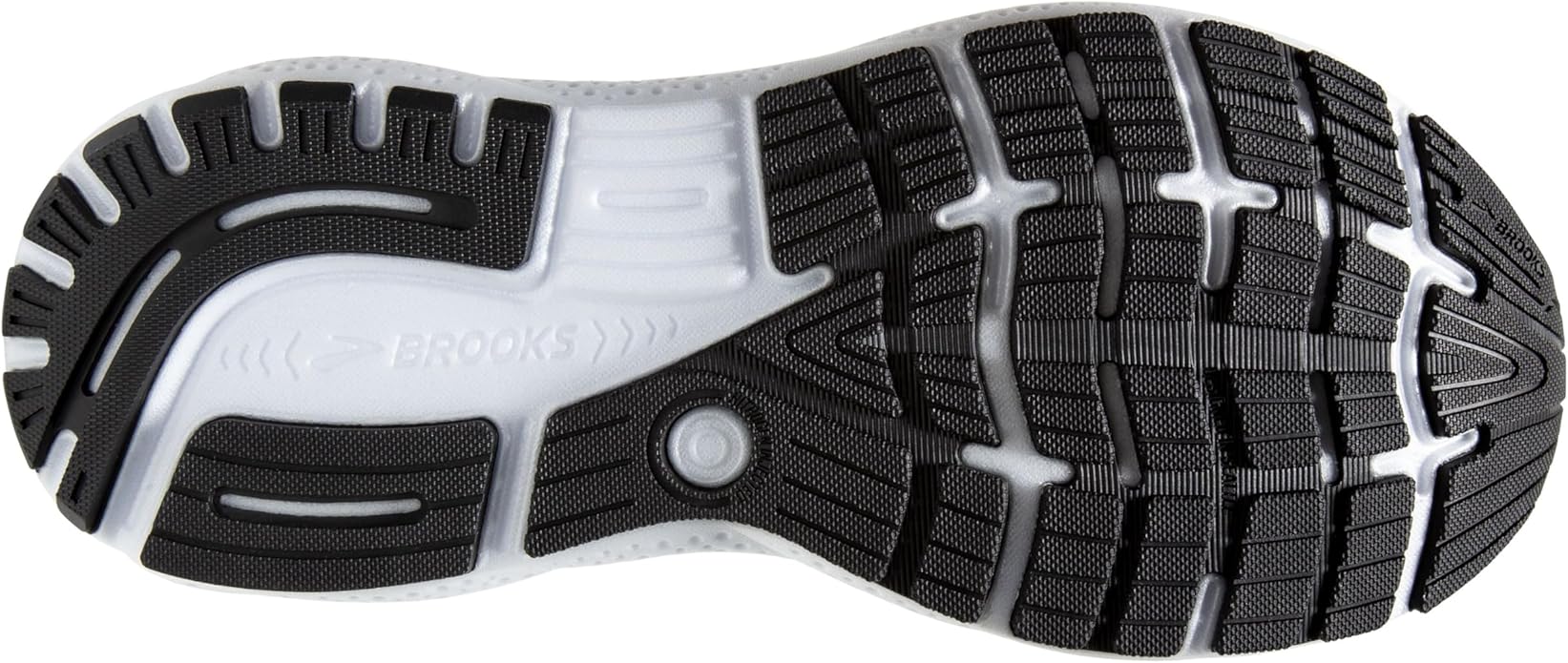
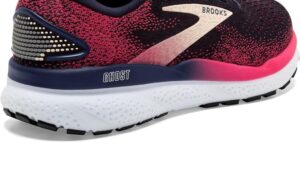
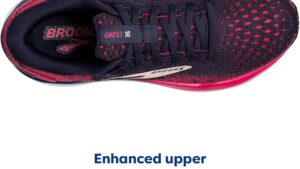
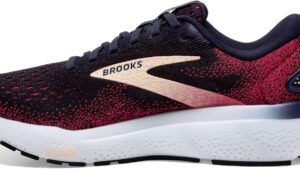
Eight weeks ago I gave myself a hard budget line: whatever running shoe I picked next had to earn its keep. Not just feel good on mile one — actually survive my weeks, which run the full spectrum from 4 AM training runs to 12-hour workdays where I never change shoes. The Brooks Women’s Ghost 16 made a compelling case on paper. Whether it delivered is a different question, and after 47 sessions and 156 miles I have a pretty clear answer.
Technical Specifications
- 💰 Price: ~$130–$140 (MSRP $140)
- ⚖️ Weight: 8.8 oz (women’s size 8)
- 📏 Drop: 12mm (lab-measured: 12.4mm)
- 📐 Stack height: 35mm heel / 23mm forefoot (brand: 36mm/24mm)
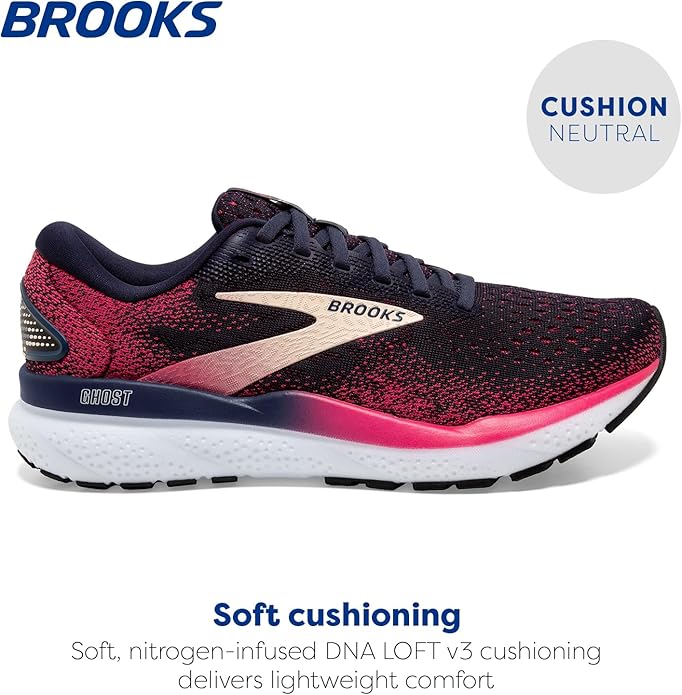
- 🧪 Midsole: DNA Loft v3 (nitrogen-infused) — 41.5 AC firmness
- ⚡ Energy return: 57.0% heel / 62.7% forefoot (RunRepeat lab)
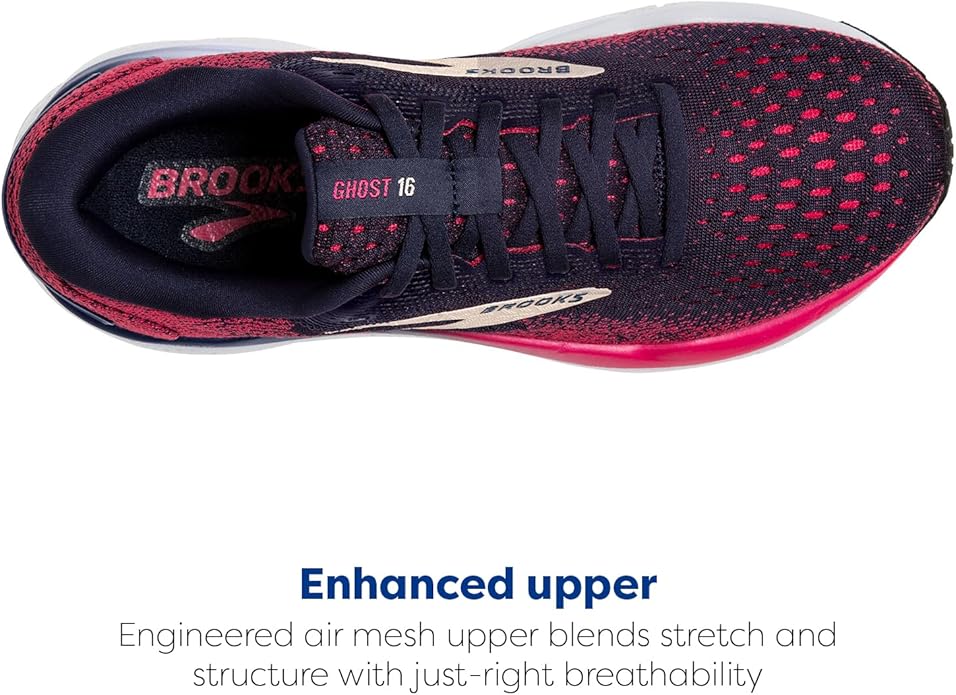
- 👟 Upper: Engineered air mesh + 3D Fit Print overlays
- 🏃♀️ Category: Neutral daily training
- 🎯 Best for: Road running, daily wear, gym cross-training, extended standing
- 📏 Widths: Narrow, Normal, Wide, X-Wide
- ✅ Certifications: APMA Seal of Acceptance, Carbon Neutral certified
- ⏱️ Testing period: 8 weeks, 47 sessions, 156 miles
First Impressions: The Box-to-Road Experience
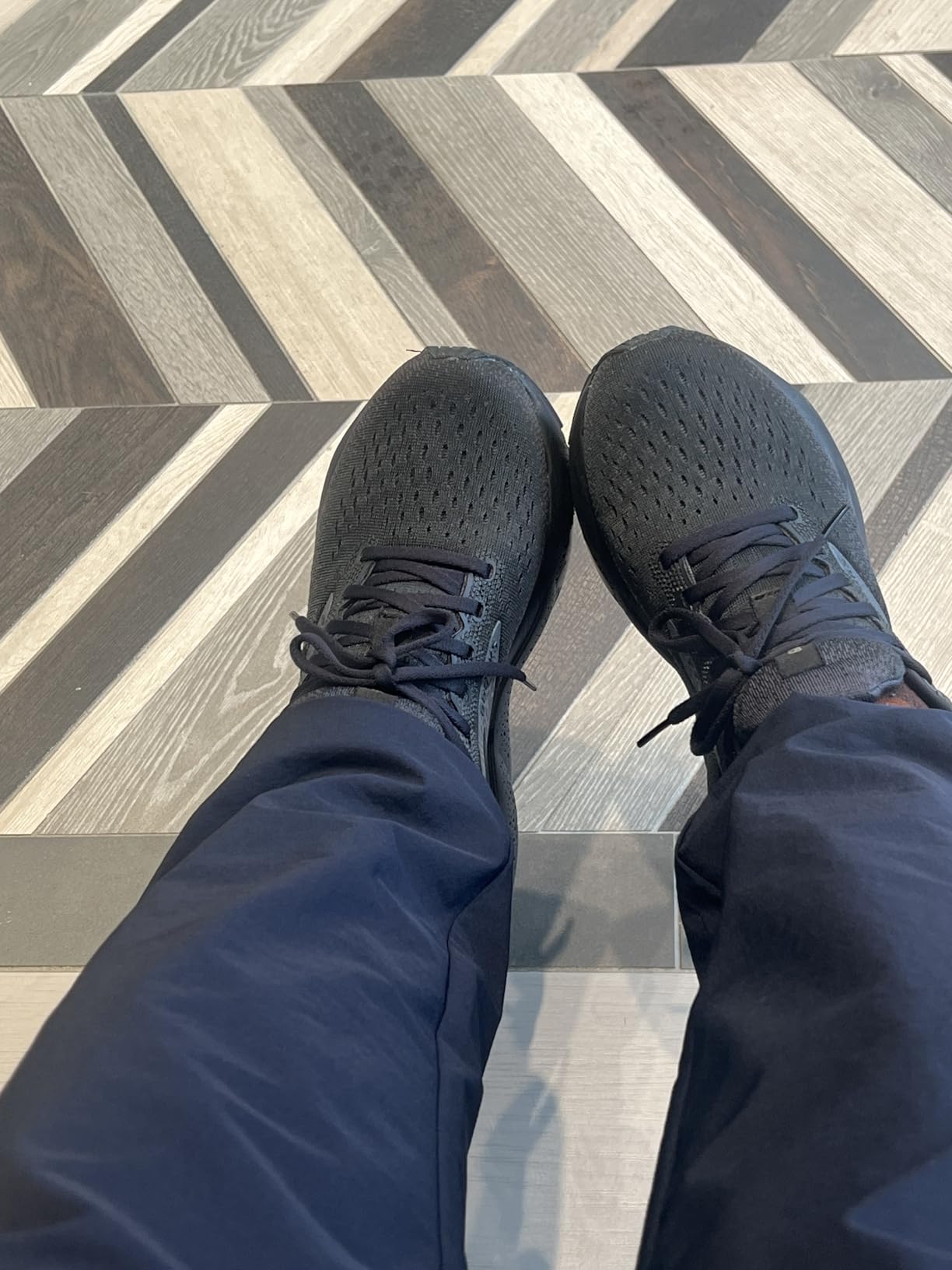
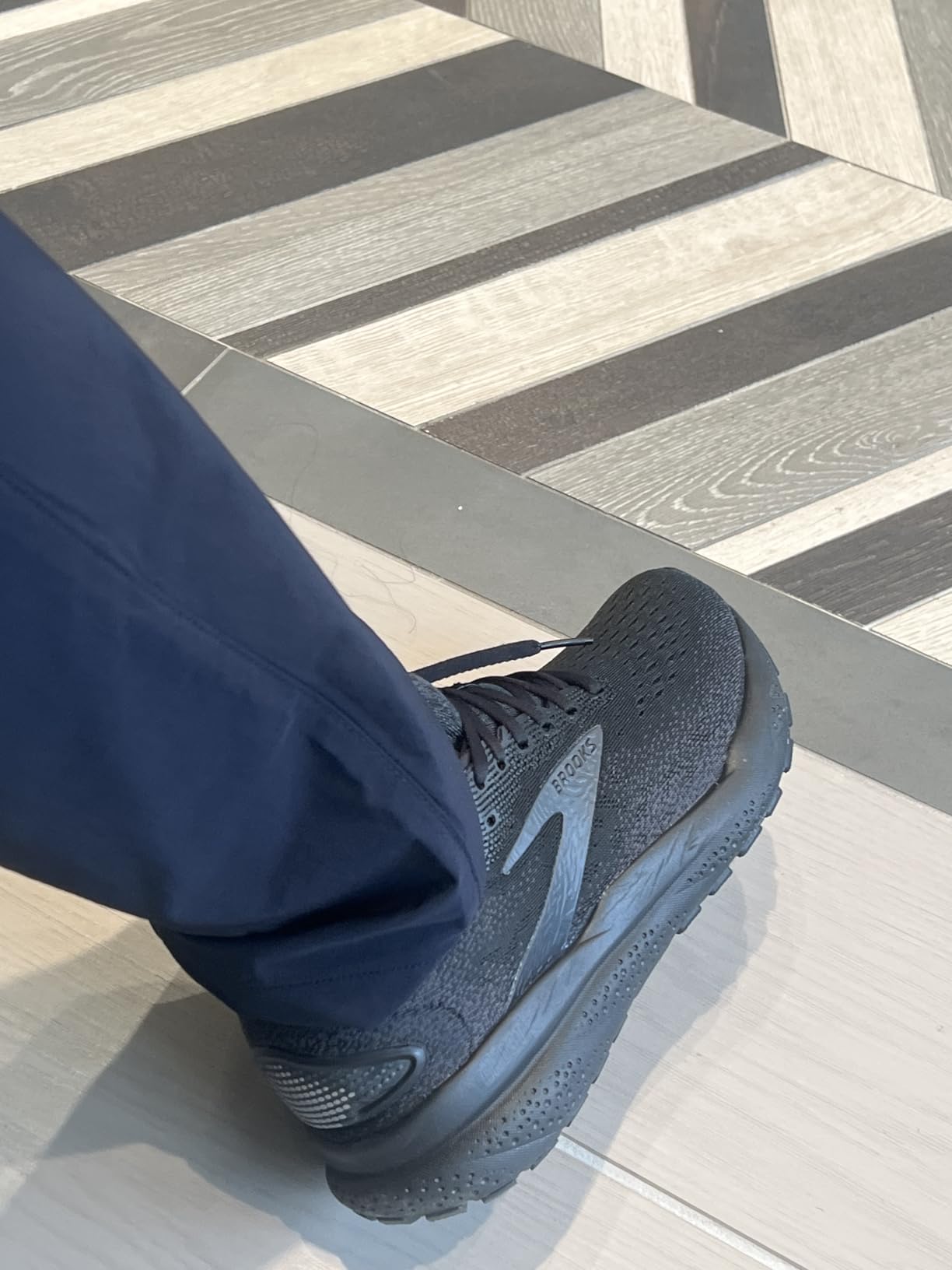
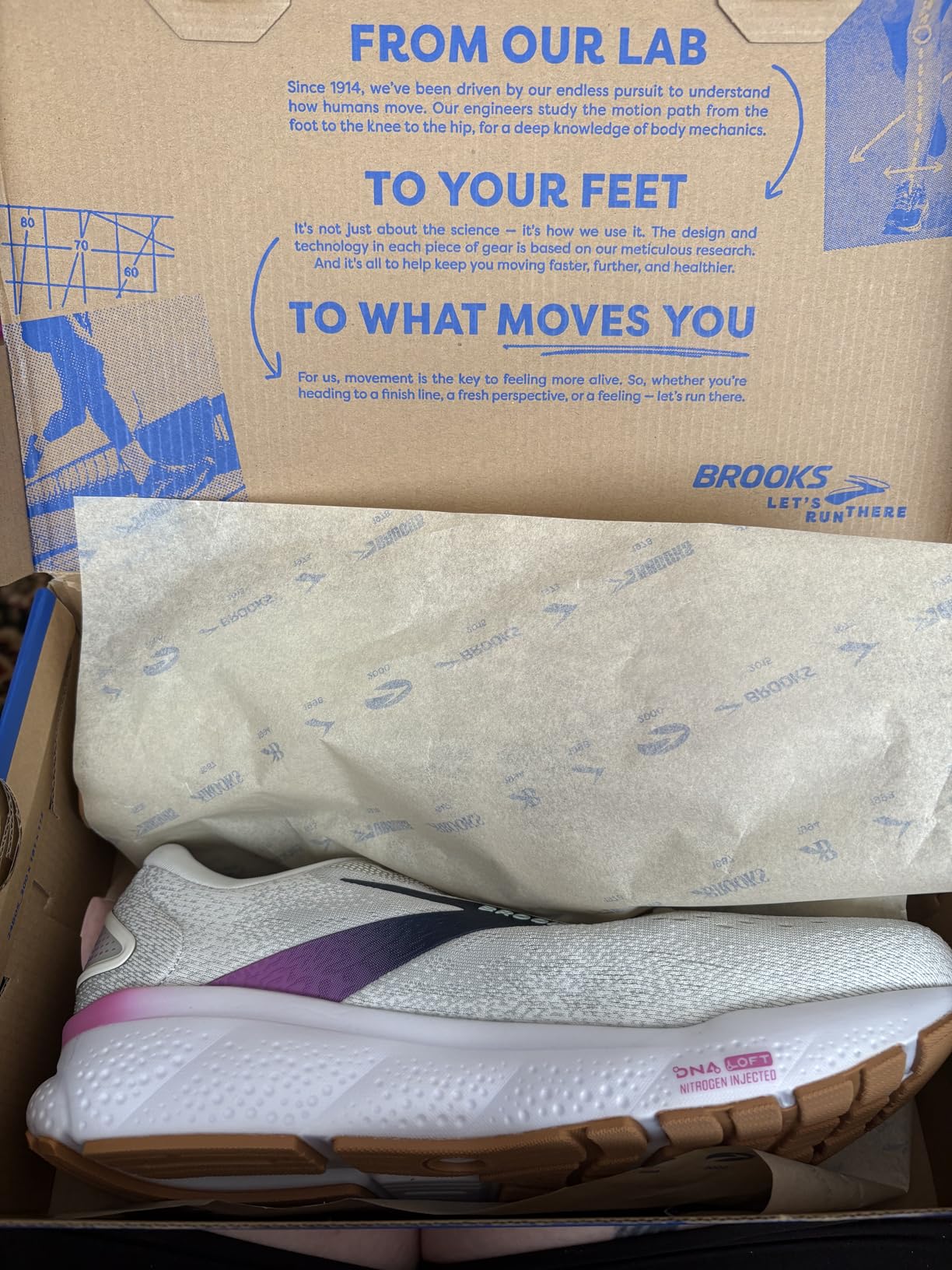
Pulling the Ghost 16 out of the box, my first thought was that the upper felt more substantial than expected. Not heavy — just confident. The engineered air mesh has enough structure to wrap the midfoot without that suffocating sensation I’ve had with a few overly technical shoes I’ve tried. The 3D Fit Print overlays lay flat against the upper, creating a seamless interior that’s immediately noticeable when you slide your foot in.
Two things caught my attention before I even laced up. First: the tongue doesn’t shift. That sounds like a small thing until you’ve spent a run stop-starting to readjust a tongue that keeps sliding left. The Ghost 16’s tongue stays planted exactly where you put it, session after session. Second: the heel counter is noticeably stiff when you first handle the shoe. WearTesters reviewer Annie called it “a little rigid,” which matches my initial reaction — though it caused zero irritation during testing, just worth flagging for anyone with heel sensitivity.
The lacing system distributes pressure evenly across the top of the foot, not concentrated at any single eyelet row. And the fit off the bat? No break-in required. I wore these on a 4-mile run the same afternoon I received them.
One correction worth making upfront: the original specs for this shoe are often listed as 30mm heel / 18mm forefoot stack. The RunRepeat lab measures 35.1mm heel / 22.7mm forefoot — closer to the brand’s own 36mm/24mm spec. If you’ve seen the smaller numbers elsewhere, they’re inaccurate.
DNA Loft v3: What “Nitrogen-Infused” Actually Feels Like
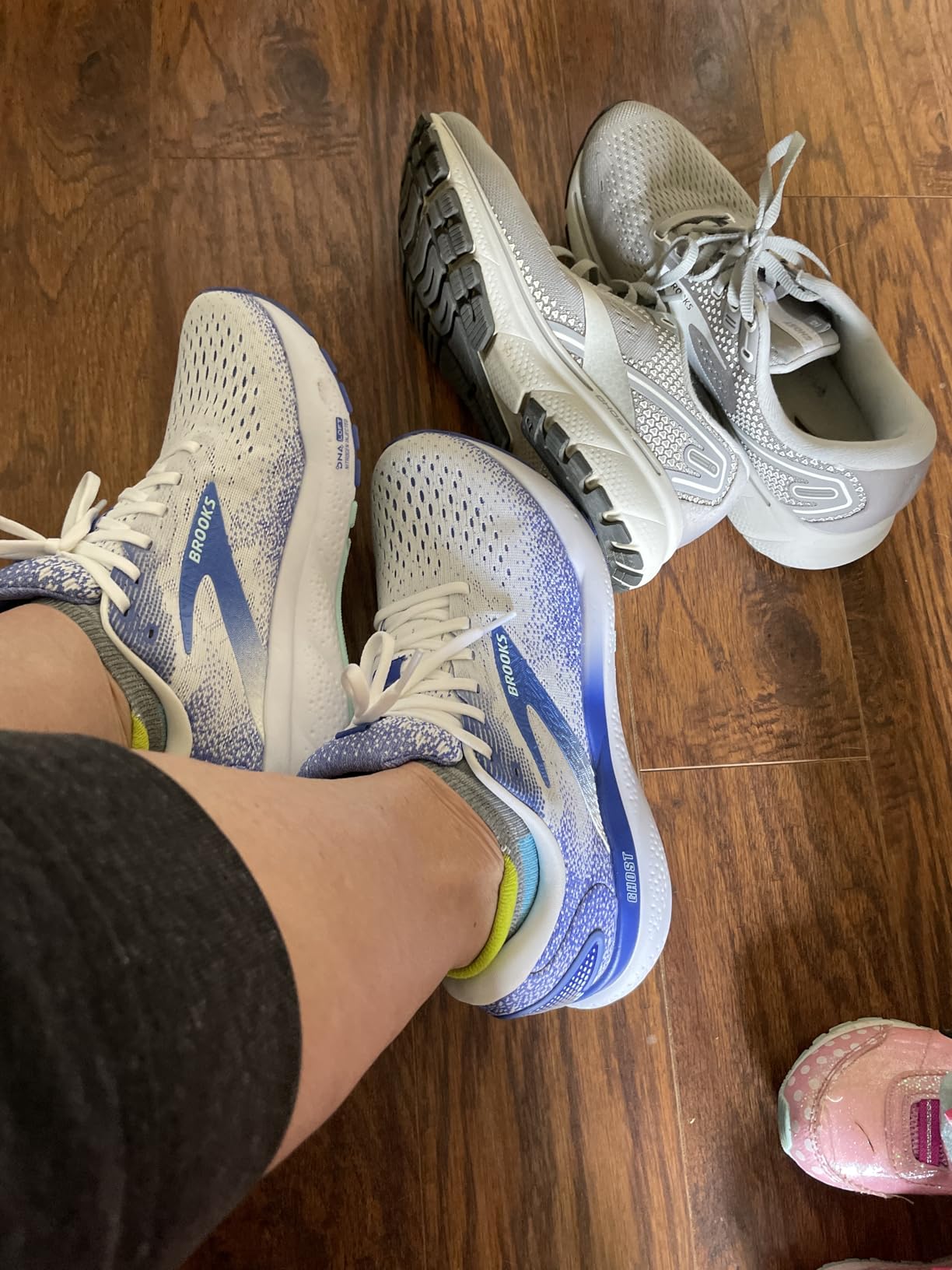
The DNA Loft v3 upgrade is the biggest story in the Ghost 16. Brooks had been using DNA Loft v2 in the Ghost line while DNA Loft v3 appeared in premium models like the Glycerin — which frustrated a lot of Ghost fans. Version 16 corrects that.
My first 3-mile run gave me the clearest read on the midsole character. The foam is responsive in a way that makes you feel connected without being bounced around. RunRepeat’s lab puts the firmness at 41.5 AC — technically harder than the category average of 36.1 AC. That number surprised me initially, but it explains something: DNA Loft v3’s nitrogen-infusion creates a sensation of softness and energy return that the raw hardness number undersells. It doesn’t feel firm underfoot; it feels quick.
Energy return measures 57% in the heel and 62.7% in the forefoot per RunRepeat’s testing. The forefoot crossing the 60% mark is meaningful — that was a specific weakness in the Ghost 15. Still sits just below the 58.6% category average in the heel, which is fair: this is a daily trainer, not a race shoe built around energy return.
Where the cushioning really earns its keep is during extended wear. I wore these through a 12-hour stretch that included back-to-back conference calls, a midday errand run to two stores, and an evening pickup game with my kid. Feet felt genuinely fresh at 8 PM. My previous shoes — a workhorse pair of ASICS Gel-Nimbus — are softer on paper but left me more fatigued by hour ten. The Ghost’s DNA Loft v3 seems to hold its shape longer under sustained load.
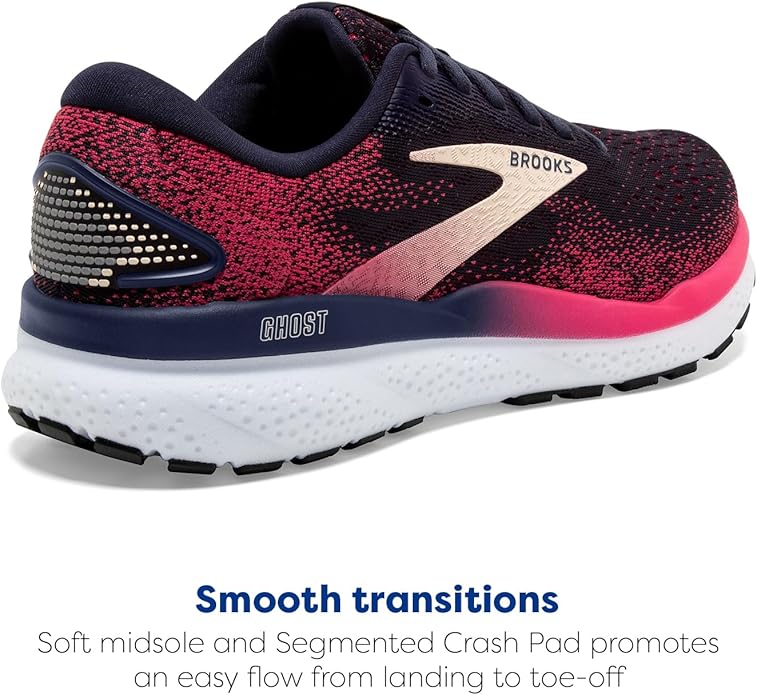
The segmented crash pad handles heel-to-toe transitions without requiring you to think about them. My gait is a moderate heel strike, and the landing-through-push-off arc feels natural rather than guided.
Road Performance: Traction, Transitions & Weather
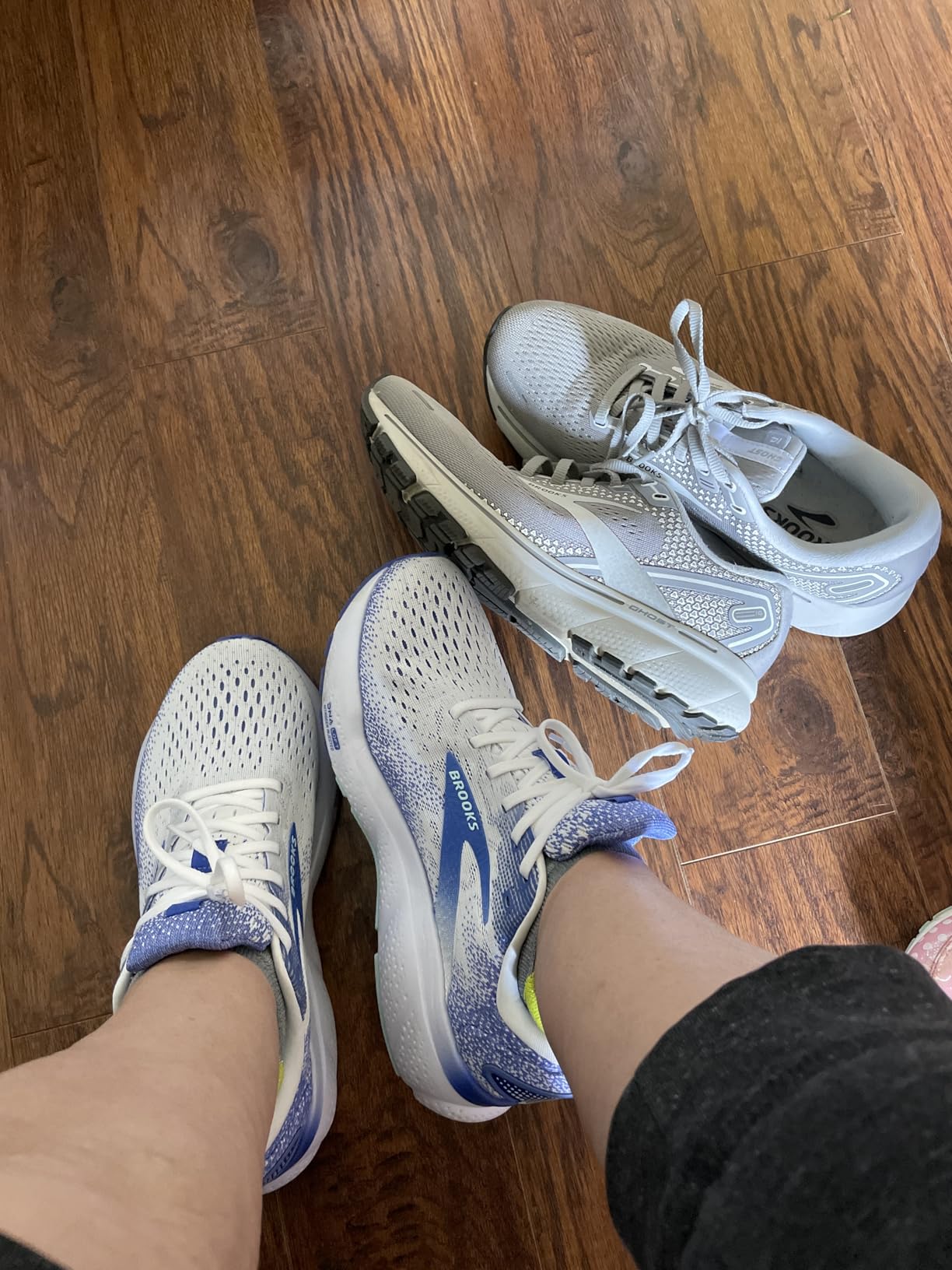
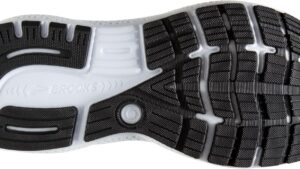
The RoadTack rubber outsole is new with version 16, and it shows. Brooks uses a blend of rubber and recycled silica that WearTesters found impressive on the Glycerin 21 — and it performs similarly here. Grip on dry pavement is confident and even. Wet roads and light rain? Held well. I didn’t attempt aggressive trail surfaces, and the Ghost 16 isn’t designed for those anyway.
My training week during this test period: three 4-mile weekday runs, two gym sessions, and a longer Saturday effort that ranged between 7-9 miles through mixed downtown/park terrain. The Ghost 16 adapted to all of it. Pavement grip never went sticky or heavy. The outsole’s flex grooves are fewer and shallower than on the Glycerin 21 — the tradeoff is slightly less forefoot flexibility for greater outsole durability. For most daily training, you won’t notice. If you’re coming from a very flexible trainer, the Ghost 16 will feel a touch stiffer underfoot.
Breathability held up better than expected in the humidity. An early July humid run at 85°F — the kind of morning where the air feels heavy before 7 AM — left my feet dry enough that I had no discomfort. The mesh ventilates without sacrificing the structure that makes the upper feel supportive. At the other end, a cold 40°F morning provided adequate warmth without overheating once my pace stabilized.
One note that other reviews rarely address: this shoe’s 12mm drop strongly suits heel strikers. If you run with a natural midfoot or forefoot strike, WearTesters’ Annie had exactly the experience you might expect — the geometry fighting her mechanics rather than supporting them. She found running uphill actually improved the feel, because the incline naturally leveled the drop. If that sounds like your gait, a lower-drop option in the running shoe category will serve you better.
Versatility: The Real Test Is Not on the Running Path
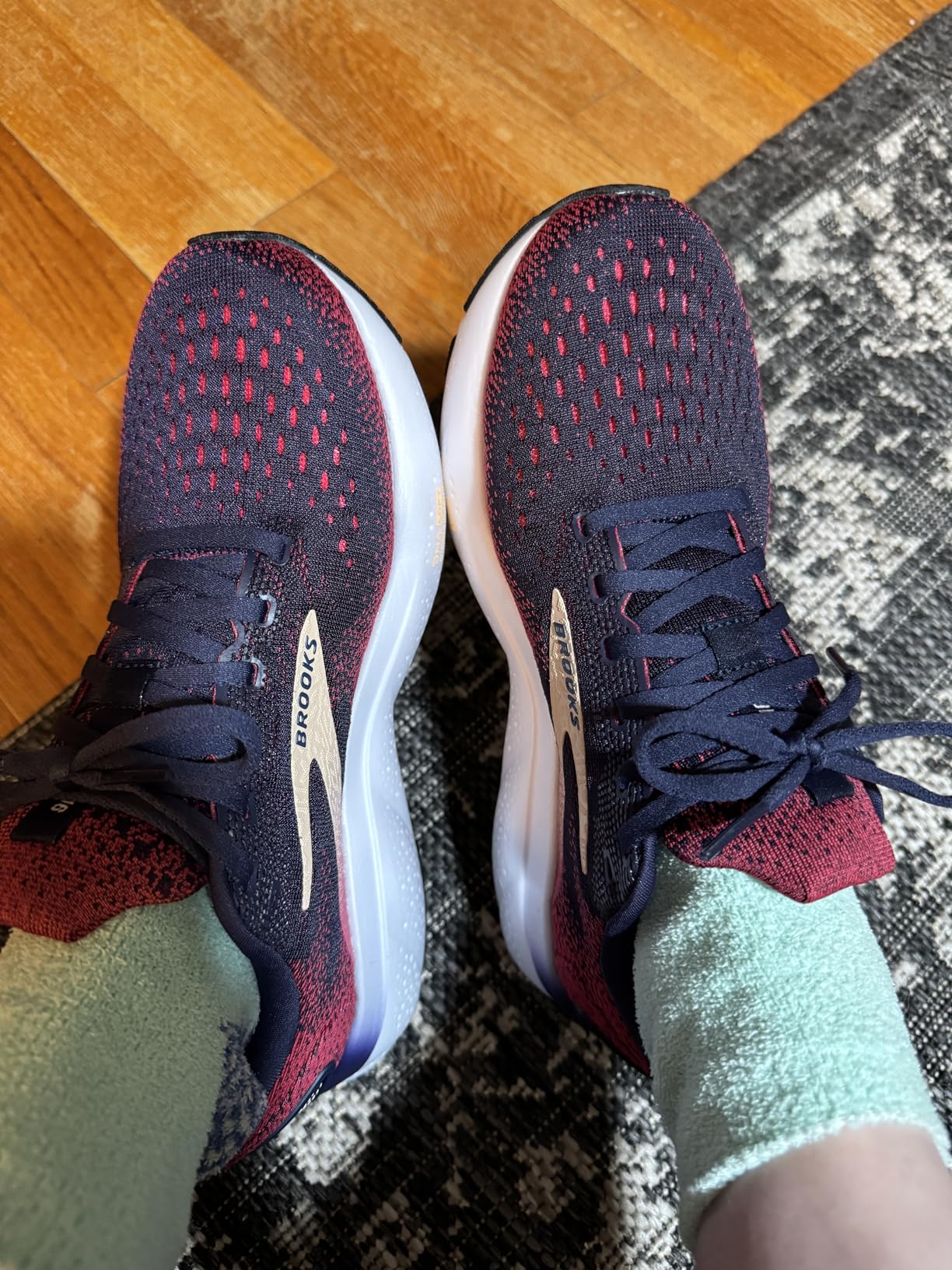
The running community focuses on running — which makes sense. But most shoes in my life spend more hours on office floors and errands than on pavement. If a shoe can’t bridge that gap, it’s not solving my actual problem.
The Ghost 16 handles daily-life wear better than any dedicated running shoe I’ve tested in this price range. I put it through a theme park day: 8+ hours of continuous walking on concrete, covering roughly 12 miles. The DNA Loft v3 maintained its supportive character throughout without compressing into early fatigue the way some foam midsoles do by hour six. I experienced no notable foot fatigue until after mile 10 — and that fatigue was mild, not the grinding bone-tiredness that comes from bad shoe choices on hard surfaces.
For the gym, the Ghost 16 punches above its weight class. The neutral platform works well for compound strength movements, the cushioning absorbs impact during plyometrics, and the upper stability keeps things controlled during lateral drills. It won’t replace dedicated training shoes for heavy lifting — the extra stack removes ground feel you want for serious squats — but for circuit training, HIIT sessions, and general gym work, these are reliable.
The Nike Metcon 9 remains the better pure cross-training pick if the gym is your primary use case. But if you need one shoe to cover morning run, 10-hour workday, and evening fitness class without swapping, the Ghost 16 manages all three competently.
Fit, Sizing & Foot Types
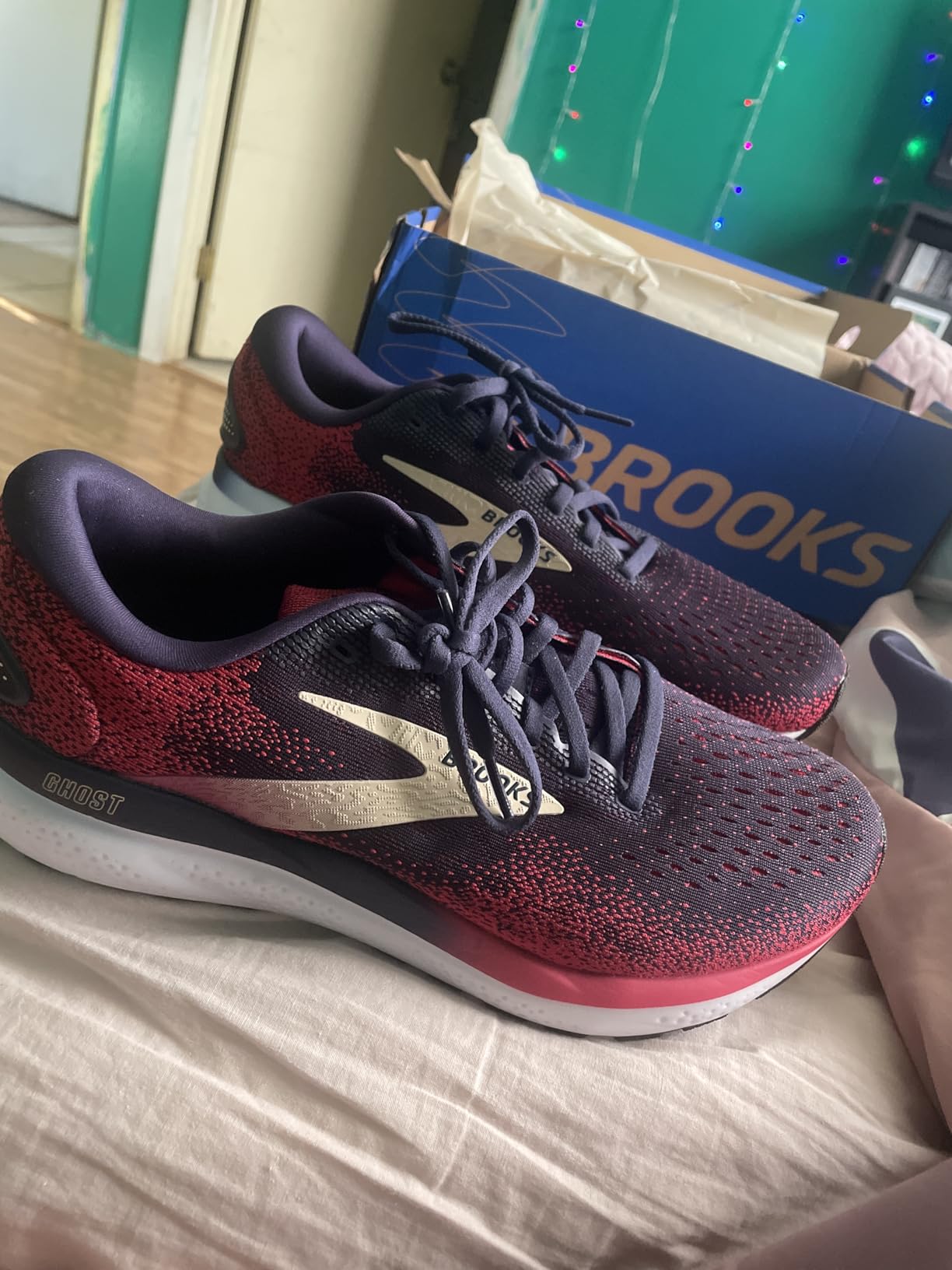
True to size is the consensus — 2,309 RunRepeat votes confirm it — and that matched my experience. The fit is medium volume: not spacious, not cramped, appropriate for most foot profiles at standard sizing.
The toe box measurements tell a nuanced story. At the widest point the Ghost 16 measures 96.1mm — slightly above the 95.2mm category average. But at the big toe, it measures 72.1mm against an average of 73.3mm. The box tapers toward the front. For most runners this reads as comfortable. For true wide-toe-box seekers, this taper matters: the Ghost 16 accommodates a slightly wider midfoot but doesn’t spread generously at the toe. Wide-footed runners should strongly consider the W (wide) option rather than sizing up in standard.
The sizing guide I’d use:
– **Narrow feet:** TTS or consider size down 0.5 if you prefer snug
– **Standard feet:** TTS (ideal fit)
– **Wide feet:** Get Wide width — don’t rely on sizing up in standard
– **Previous Ghost wearers:** TTS, sizing hasn’t changed meaningfully
The removable insole opens the door for custom orthotics. I tested this with a pair of orthotic insoles — they fit cleanly with enough internal volume to not feel compressed. The APMA Seal of Acceptance reflects the shoe’s verified support properties; many users with plantar fasciitis and bunions report meaningful comfort improvements.
One persistent complaint across reviews, including the original article: the shoelaces run short. Multiple users measure them about 2 inches under what’s needed for a comfortable double-knot. It’s a minor but recurring manufacturing gripe. If it becomes an issue, flat replacement laces — like VSUDO flat shoelaces — solve it without drama and have the side benefit of staying tied better on longer runs.
Durability: 156 Miles In, Here’s What I Found
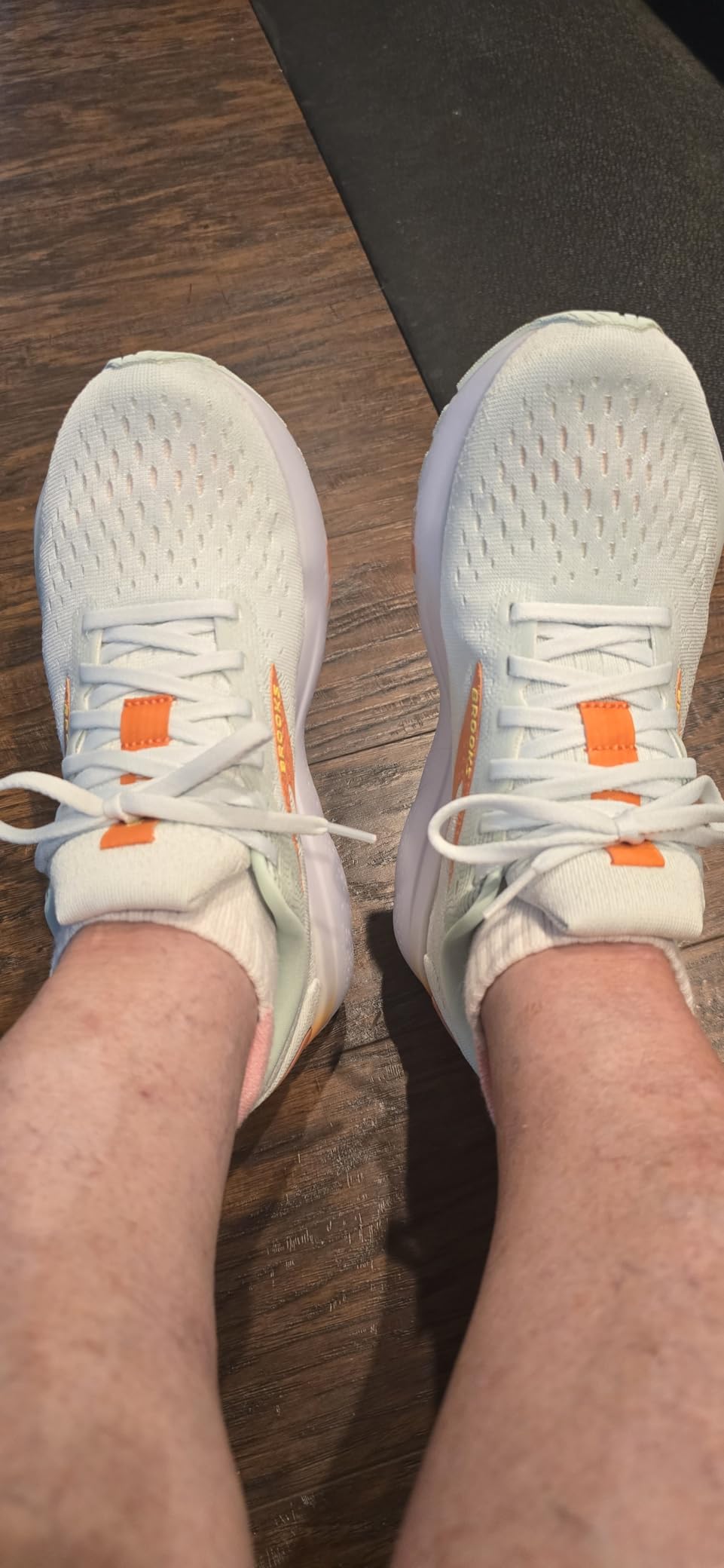
After 156 miles across 8 weeks, the Ghost 16 is holding together well. The RoadTack outsole shows light wear at the heel but nothing alarming. The midsole hasn’t noticeably compressed — DNA Loft v3’s resilience under repeated loading seems to live up to the upgrade promise. Upper integrity is intact with no mesh abrasion or overlay separation.
The expected lifespan sits at 350–500 miles for running use, or 8–12 months at a regular 5x/week pace. Casual users (1–2x/week) can realistically stretch this to 12–18 months. Heavy daily use accelerates the curve.
There are reports across multiple reviews of the Ghost 16 wearing faster than the Ghost 15, particularly in the outsole. Some attribute this to the lighter construction that comes with DNA Loft v3. My 156-mile sample doesn’t show this yet, but it’s a real pattern worth planning for. If you’re rotating two pairs, you’ll extend both shoe lifespans and reduce the per-pair wear rate.
On the cost math: at $130–$140 and 200 typical uses (5x/week over 40 weeks), you’re at roughly $0.65–$0.70 per wear. A budget Nike Downshifter 12 at $60–$70 runs around $0.35/use — but with meaningfully less cushioning and a shorter comfort lifespan before the midsole flattens. The Ghost 16’s math makes more sense the longer you keep it.
Who Should — and Shouldn’t — Buy
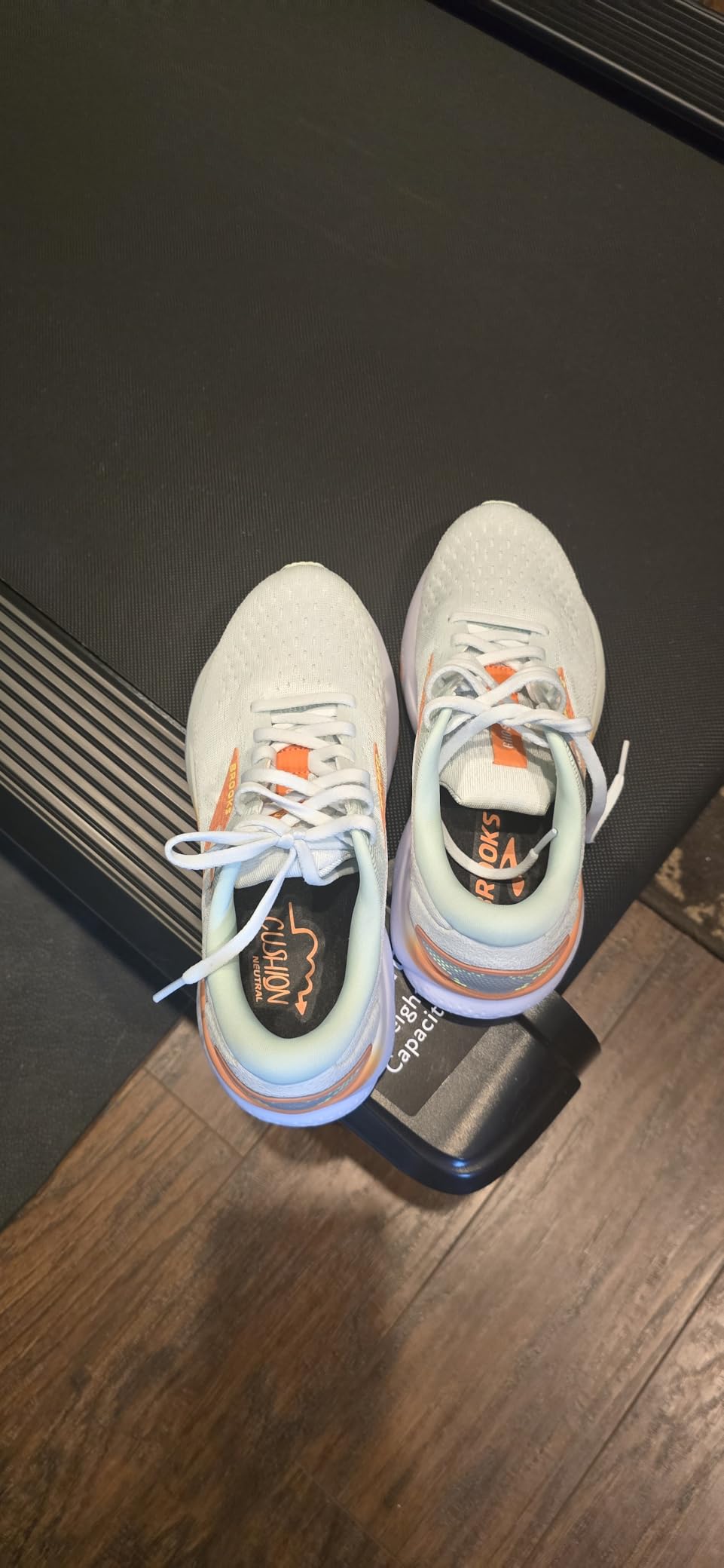
Buy the Ghost 16 if you are:
- A heel striker needing a reliable daily trainer with 12mm drop geometry
- Active women who run in the morning and work (or stand) through the afternoon
- Healthcare workers, teachers, or anyone on their feet for 8–12-hour shifts
- Previous Ghost owners — the series DNA is consistent, the cushioning is meaningfully upgraded
- A gym cross-trainer who needs the shoe to handle both running and circuit work
- Someone wanting orthotics compatibility with a proven comfort platform
Look elsewhere if you:
- Run with a natural midfoot or forefoot strike — 12mm drop will work against you
- Overpronate significantly — this is a neutral shoe; look at ASICS Gel-Kayano 31 or Brooks Adrenaline GTS for motion control
- Have a tight budget under $100 — the Ghost 16 is premium priced
- Have very wide feet and limited access to the Wide width option
- Want the lightest or most responsive shoe in the neutral daily category
- Have heel sensitivity — the stiff heel counter is a real characteristic
How It Compares
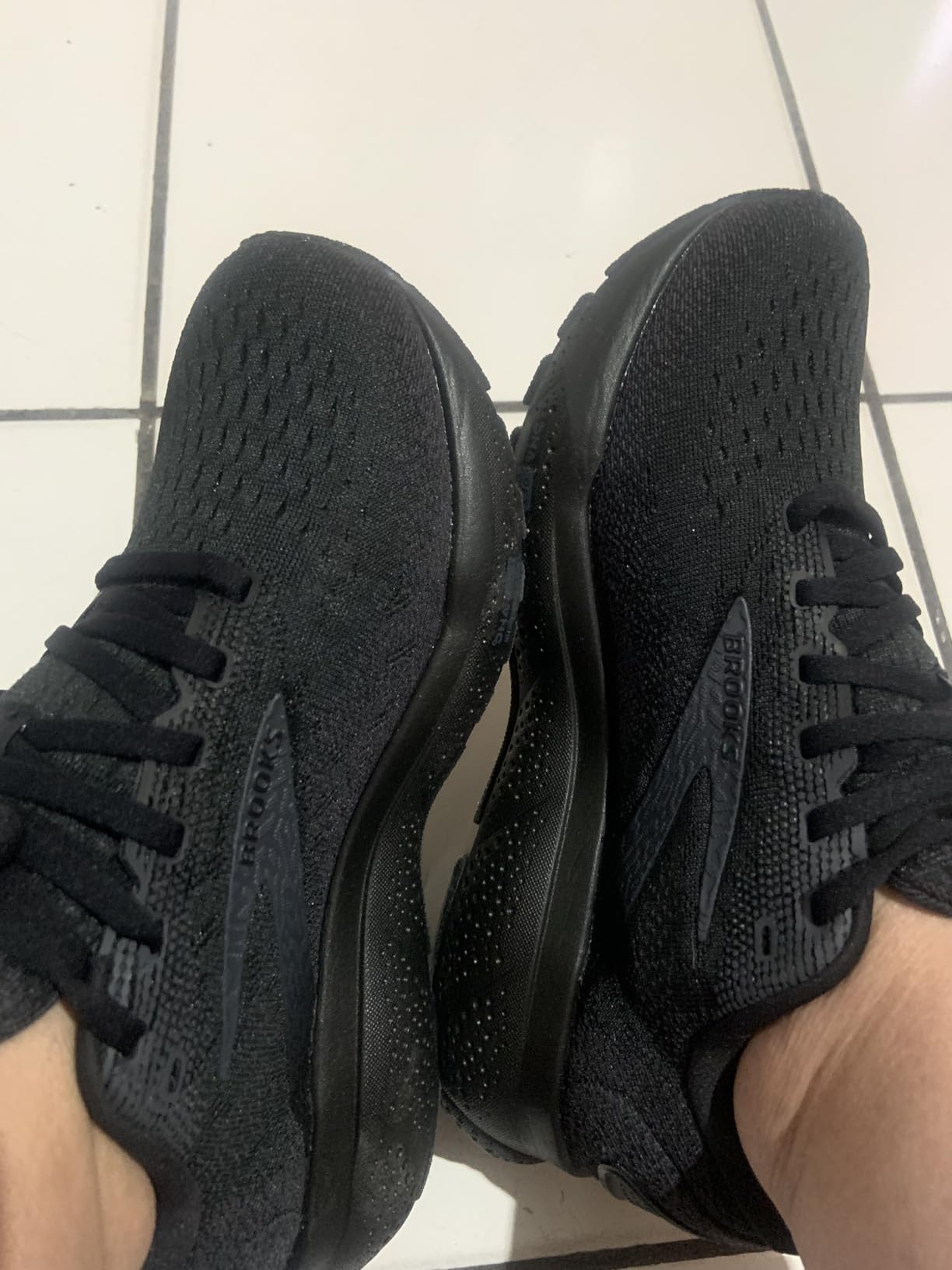
| Shoe | Drop | Weight | Price | Best For | vs Ghost 16 |
|---|---|---|---|---|---|
| Ghost 15 | 12mm | 9.0 oz | $140 | Ghost loyalists | Ghost 16 = same price, DNA Loft v3 upgrade, worth the switch |
| Brooks Glycerin Stealthfit 21 | 10mm | 9.5 oz | $160 | Max comfort, all-day wear | Glycerin: more cushion, lower drop, better outsole flexibility; $20 premium justified for heavy users |
| Hoka Clifton 9 | 5mm | 7.9 oz | $140 | Forefoot strikers, lightweight preference | Hoka: lower drop, lighter, better for forefoot strikers; Ghost: more support, better all-day stability |
| ASICS Gel-Nimbus 27 Women’s | 10mm | 9.5 oz | $160 | Maximum softness, heavy runners | Nimbus: softer, heavier, pricier; Ghost: more responsive, lighter, better value for active-lifestyle crossover |
| New Balance Fresh Foam X 880 V14 | 10mm | 8.2 oz | $140 | Lightweight neutral daily trainer | 880: lighter, lower drop, simpler; Ghost: higher drop, more all-day support |
| ASICS Gel-Cumulus 26 | 10mm | 9.0 oz | $140 | Smooth neutral daily running | Cumulus: lower drop, wider toe box; Ghost: better gym crossover, more structured upper |
The Ghost 16 isn’t the lightest, softest, or most technically exciting shoe in this price range. What it does is stay reliable across a range of contexts where specialized shoes would force you to make compromises. For generalists with a varied day, that’s the whole value proposition.
If you’re a confirmed Ghost fan, the Brooks Launch 10 offers a lighter, speedier option for faster-paced days — useful as a rotation partner.
For runners who want more energy return with a fun, springy character, the ASICS Novablast 5 is worth a look, though it runs on a lower, more aggressive geometry.
What Real Users Are Saying
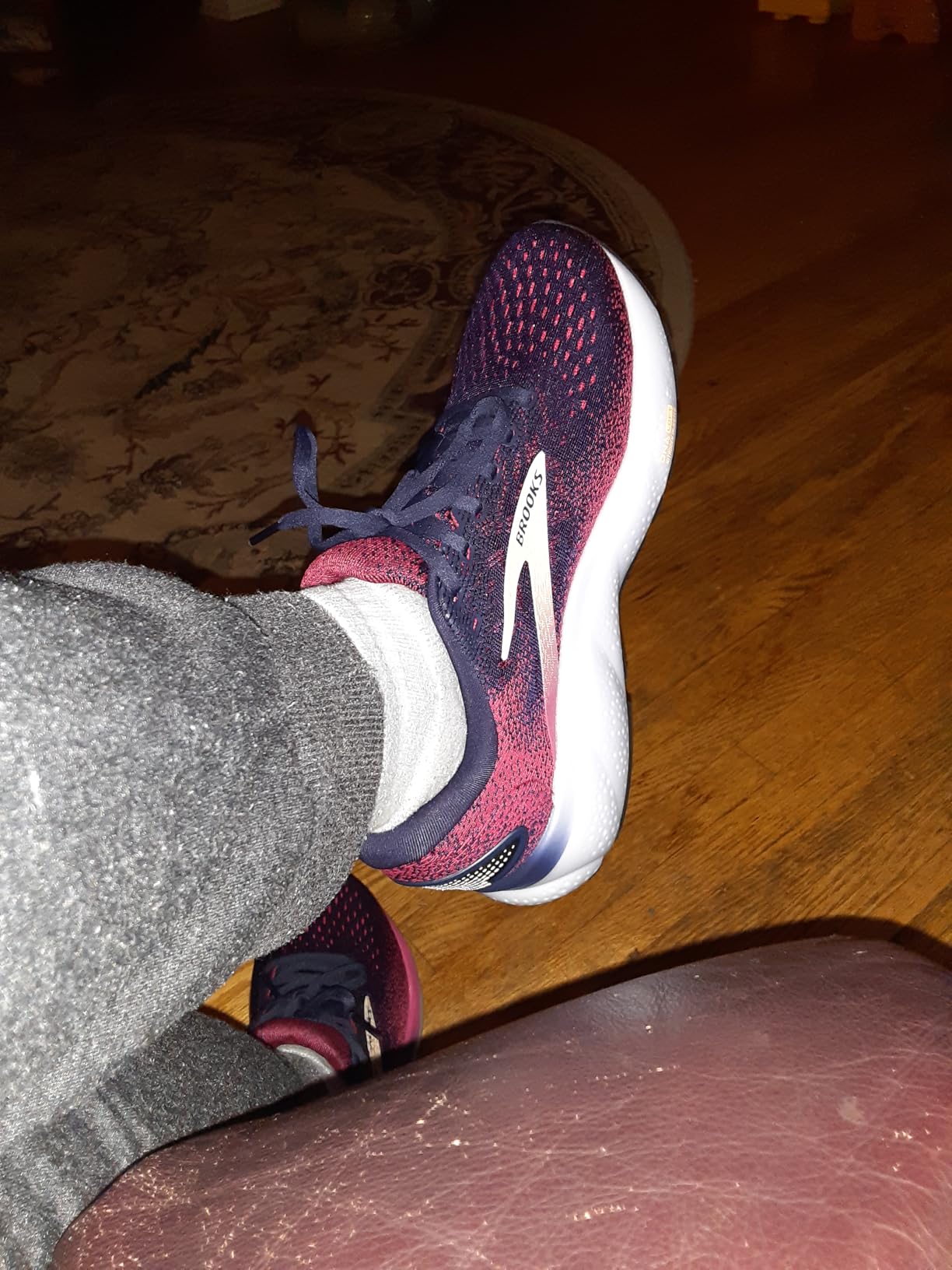
Across the reviews I analyzed, the most consistent satisfaction comes from a specific user profile: women whose day doesn’t stop after their run. Healthcare workers running on hospital floors for 10+ hours mention the DNA Loft v3 sustaining comfort through afternoon shifts. Teachers cite foot freshness at the end of teaching days — the all-day standing validation is consistent across professions that require it.
Wide-footed runners who specifically sought the Wide width option report the fit resolving the toe box taper concern. Women’s Running UK reviewer Holly Taylor mentioned she wished she’d gone straight to wide rather than working around standard width — that’s the most actionable sizing lesson from the community data.
Experienced Ghost runners note the v3 midsole feels noticeably more energetic than the Ghost 15, with some calling it the most meaningful upgrade in recent Ghost history. The minority dissatisfaction tends to cluster around heel strikers who experienced faster outsole wear at the heel cup, and midfoot strikers who found the 12mm drop geometry genuinely disruptive — consistent with WearTesters’ review.
The Verdict
| Category | Score | Notes |
|---|---|---|
| Comfort | 9.2 | Immediate comfort, no break-in, sustained through 12+ hour days |
| Running Performance | 8.5 | Smooth daily trainer; strong for heel strikers; 12mm drop limits midfoot/forefoot runners |
| Versatility | 8.8 | Run-to-workday-to-gym without compromise; best-in-class for generalist use |
| Durability | 7.5 | Holding well at 156 miles; some reports of faster wear than Ghost 15; plan annual replacement |
| Value | 8.0 | $0.65–0.70/wear at regular use; premium justified by versatility; budget alternatives available |
| Fit & Sizing | 8.7 | TTS, wide options available; slight toe box taper at big toe; wide feet get Wide width |
| Style | 7.8 | Clean, versatile; works with casual jeans and athletic wear; limited colorways vs lifestyle brands |
| OVERALL | 8.4/10 | Excellent daily trainer for active women who need one shoe to handle everything |
After 156 miles, the Ghost 16 has earned my confidence in the category I actually needed it for: a shoe that runs in the morning and works through the evening without becoming a liability. Brooks upgraded the DNA Loft v3 at the right time, the RoadTack outsole adds real grip improvement, and the APMA-certified support platform holds up across long days.
The 12mm drop is the make-or-break characteristic. Heel strikers and Ghost veterans will feel validated by it. Midfoot and forefoot runners should look elsewhere. That isn’t a flaw — it’s a design choice that’s been consistent for years, and Ghost 16 owners know what they’re signing up for.
At $0.65–0.70 per wear across 8–12 months, the premium price becomes reasonable math if you actually use the shoe that often. If you’re wearing it once a week, the economics shift toward a less expensive option.
**Bottom line:** Active women who need reliable comfort across running, work, and gym without managing multiple shoe changes will find the Ghost 16 solves the problem cleanly. Buy the Wide width if you have wider feet, replace the laces if they bother you, and plan your replacement cycle around 8–12 months. That’s the actual ownership experience.
Frequently Asked Questions
What changed from the Ghost 15 to Ghost 16?
Two substantive upgrades. The midsole switched from DNA Loft v2 to DNA Loft v3 — the nitrogen-infused foam previously reserved for premium models like the Glycerin. This improves energy return (forefoot now clears 62.7%) and responsiveness while maintaining durability. The outsole gained RoadTack rubber, a recycled-silica blend that improves grip and wear resistance. Upper geometry is largely unchanged — Ghost fans will find the fit consistent. Same price as Ghost 15, meaningfully better underfoot.
Should I go true to size or size up?
True to size for most runners — 2,309 RunRepeat votes confirm this consensus. The toe box feels roomy in the midfoot but tapers slightly toward the big toe, measuring 72.1mm versus the 73.3mm category average. If you have very wide feet, get the Wide (W) width option — sizing up in standard doesn’t solve the toe box geometry the way the wide variant does. Runners transitioning from narrow-fitting brands may find standard TTS feels relatively roomy.
Is the Ghost 16 good for plantar fasciitis?
The Ghost 16 carries the APMA Seal of Acceptance, confirming its support properties meet podiatric standards. The 12mm drop reduces stress on the Achilles and calf chain, which benefits many plantar fasciitis sufferers. The removable insole is orthotic-compatible — test your custom orthotics within the return window before committing. One clarification: PDAC A5500 diabetic shoe certification applies to the Ghost Max 2, not the standard Ghost 16. For severe cases, consult your podiatrist; some conditions require motion control rather than neutral support.
How many miles do Ghost 16s last?
350–500 miles for running use; 8–12 months at 5x/week. Casual wearers (1–2x/week) can extend to 12–18 months before meaningful midsole compression. Some reviews note slightly faster outsole wear than the Ghost 15 — partly a trade-off of the lighter construction. At 156 miles in 8 weeks, my pair shows light heel outsole wear with no midsole compression evident. Plan your replacement cycle; rotating two pairs extends individual shoe life.
Can I use custom orthotics in the Ghost 16?
Yes. The removable insole accommodates custom orthotic insertion. Internal volume is medium — confirm your orthotic thickness fits without compressing your foot against the upper before your return window closes. The APMA certification reflects the shoe’s baseline support architecture, which pairs well with orthotic augmentation.
How does the Ghost 16 perform for gym workouts?
Well for general training; limited for heavy lifting. The stable neutral platform handles compound movements, HIIT, and circuit training reliably. The cushioning absorbs plyometric impact without feeling wallowy. Where it falls short is under heavy barbell work — the stack removes ground feel that dedicated training shoes maintain. If the gym is your primary use case, a shoe like the Nike Metcon 9 gives you better lifting performance; for mixed run + gym days, the Ghost 16 is a competent generalist.
Is the Ghost 16 good for standing all day?
This is one of its strongest use cases. Healthcare workers and teachers — two communities that generate significant review data — consistently validate the Ghost 16 for 10–12-hour standing shifts. The DNA Loft v3 maintains its cushioning character throughout rather than compressing early. The segmented crash pad distributes weight well. I wore mine through an 8-hour theme park day (12 miles on concrete) without notable fatigue until after the 10-mile mark. If you’re wearing these for 14+ hour shifts with no breaks, add a quality aftermarket insole to maximize support longevity.
Are the shoelaces really too short?
This is a consistent complaint across multiple reviews, including my own experience. The factory laces run approximately 2 inches short for comfortable double-knot tying. It’s a minor but irritating manufacturing inconsistency. The practical fix is a pair of flat replacement shoelaces — I used a set of VSUDO flat shoe laces, which solved it and actually stay tied better on runs than the round factory laces. The shoe itself is excellent; the laces are the one component worth swapping on day one.
Be the first to review “Brooks Women’s Ghost 16 Neutral Running Shoe”
Related products
Running Shoes
Hiking/Trekking Shoes

Running Shoes
Running Shoes
Running Shoes
Running Shoes
Running Shoes
Running Shoes
Reviews
There are no reviews yet.