
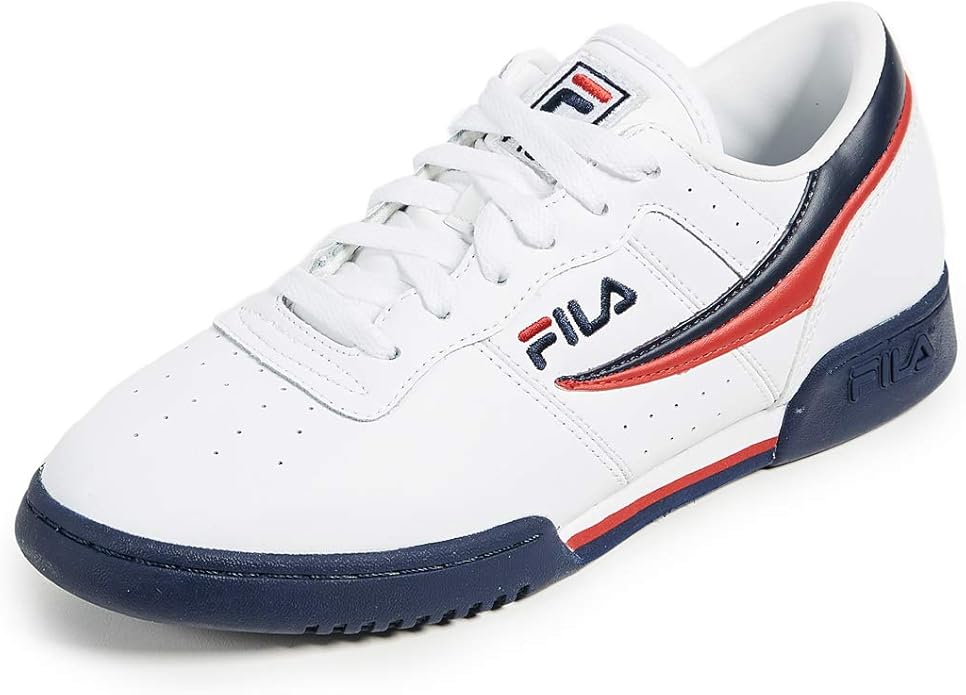
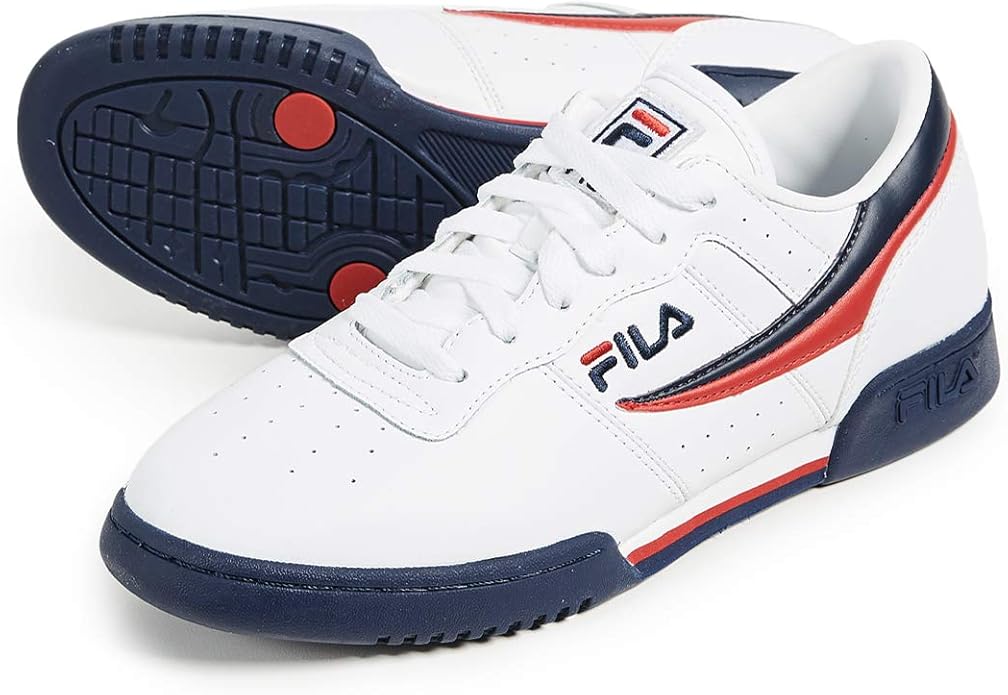
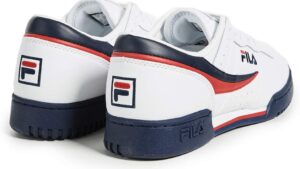
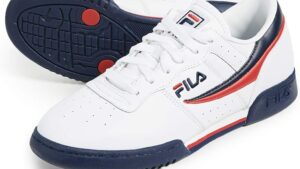
Last Tuesday I was scrolling through old high school photos when one shot stopped me cold — a buddy’s feet in a pair of Fila Original Fitness sneakers I spent most of sophomore year wishing I could afford. Four decades and a spontaneous Amazon cart later, I’m Mike, and I wore these for six weeks across 45+ sessions to answer the only question that matters: was the dream better than the shoe?
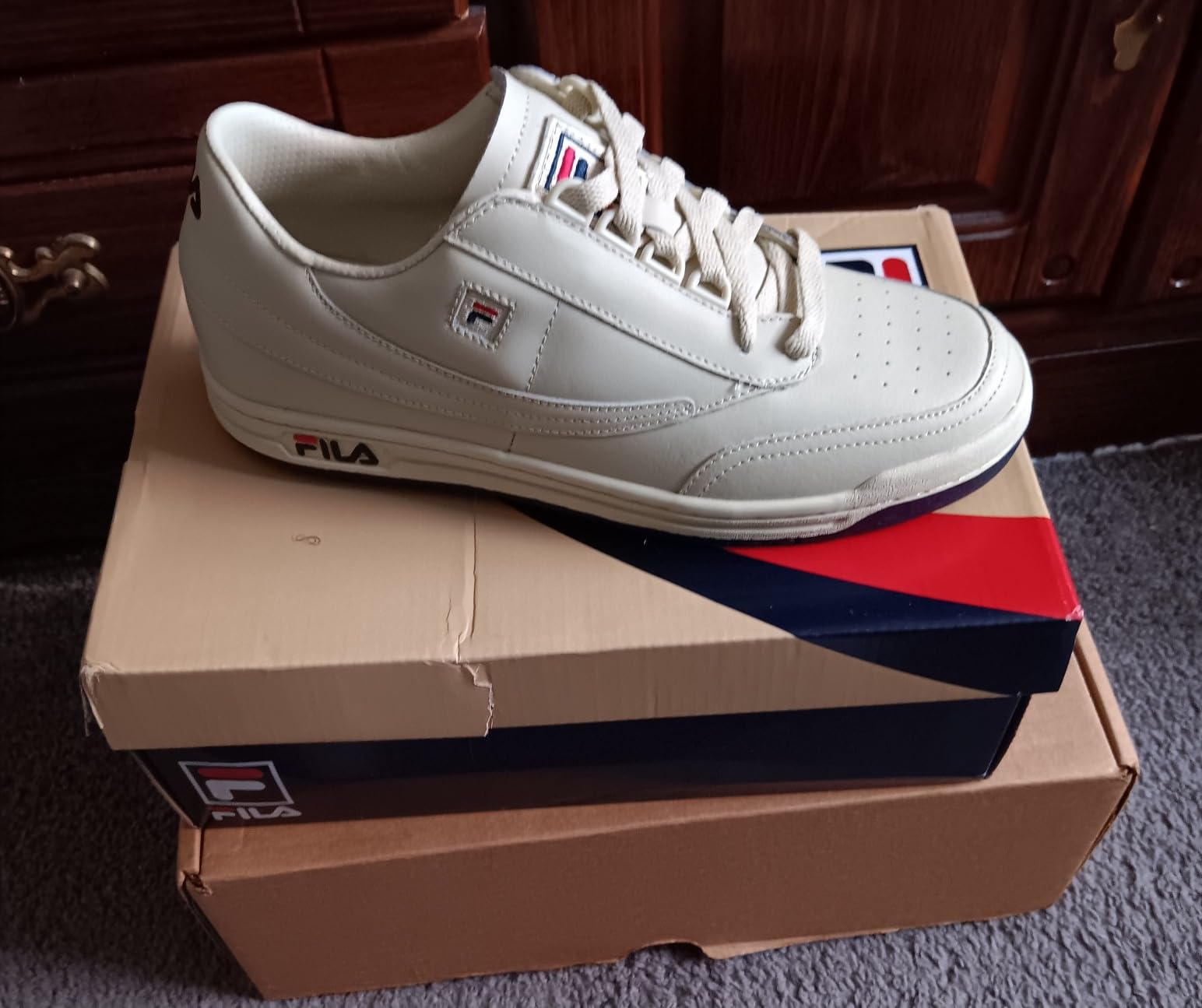
Quick Specs
- 💰 Price: $70
- ⚖️ Weight: 14.2 oz (men’s size 9)
- 🧪 Midsole: Die-cut EVA foam
- 👟 Upper: Full grain leather with synthetic accents (not 100% leather)
- 🔩 Insole: Cushioned EVA footbed — removable
- 🏃 Outsole: Gum rubber, multi-tread
- 🎯 Category: Lifestyle / Casual sneaker
- 📏 Sizing: Runs small AND narrow — size up 0.5 minimum
- ⏱️ Testing: 6 weeks, 45+ sessions
Bottom line upfront
The Fila Original Fitness earns its 7.2/10 on the strength of one genuinely exceptional score — Style 9.0/10. The design is authentic, the nostalgia is real, and people will notice you’re wearing them. The tradeoffs are equally real: runs small and narrow, needs a two-week break-in, and the leather coating starts peeling by month three of regular wear. For nostalgic casual wearers who want something different from Air Force 1 or Stan Smith crowds, these work. For wide-footed guys, daily standers, or anyone who hates break-in periods — skip it.
Design, Heritage & First Impression
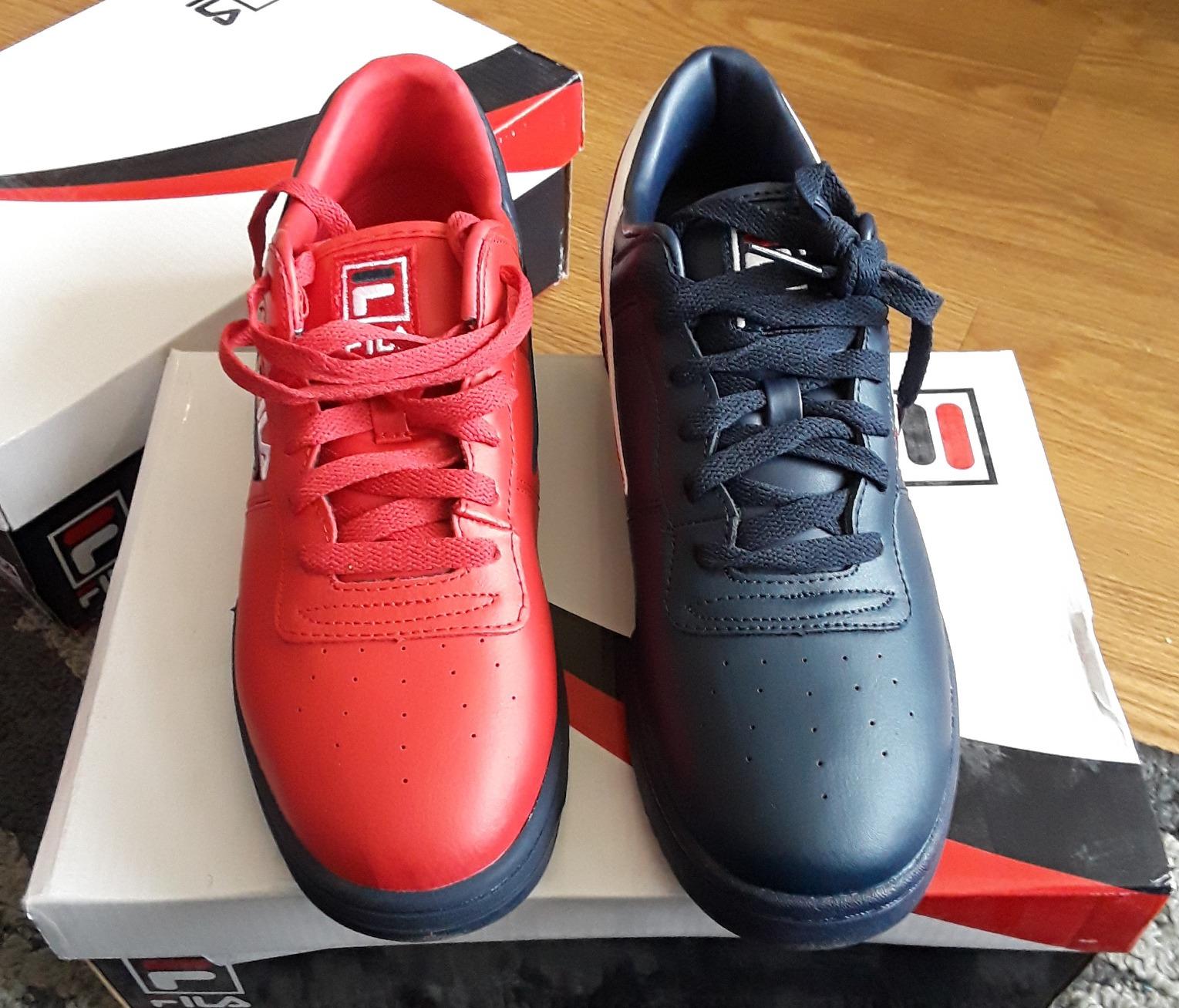
Fila says these were “pulled from 1987 design archives” — the brand’s first fitness shoe, back when aerobics was peak culture and court sneakers were considered athletic gear worth aspiring to. The brand started in Biella, Italy in 1911, making luxury textiles before pivoting to sportswear in the early 1970s. Their tagline runs somewhere between “bold and provocative” and “vintage but never conventional,” which is either pretentious or accurate depending on how the shoe actually looks on your feet.
Honestly? It looks accurate.
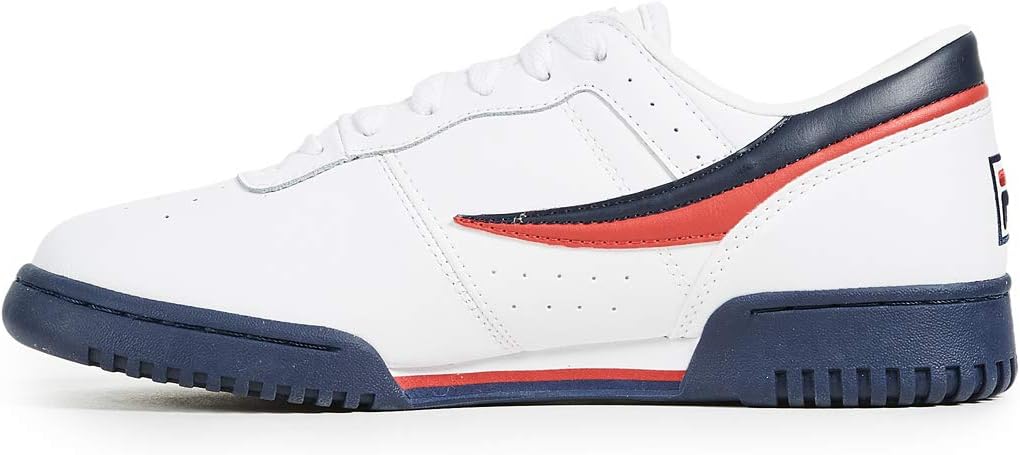
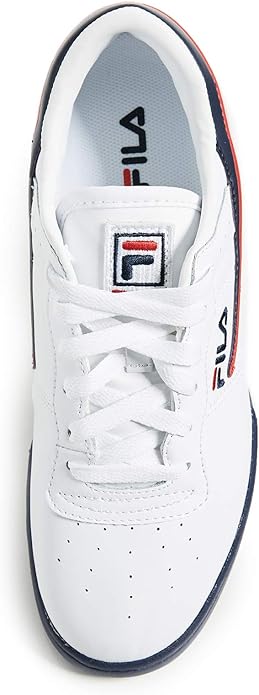
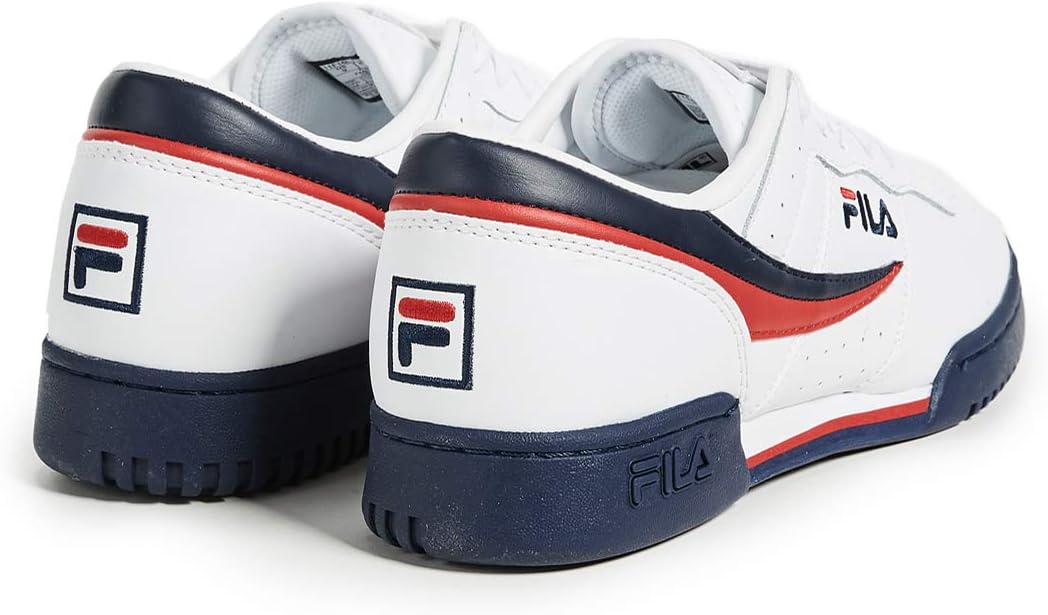
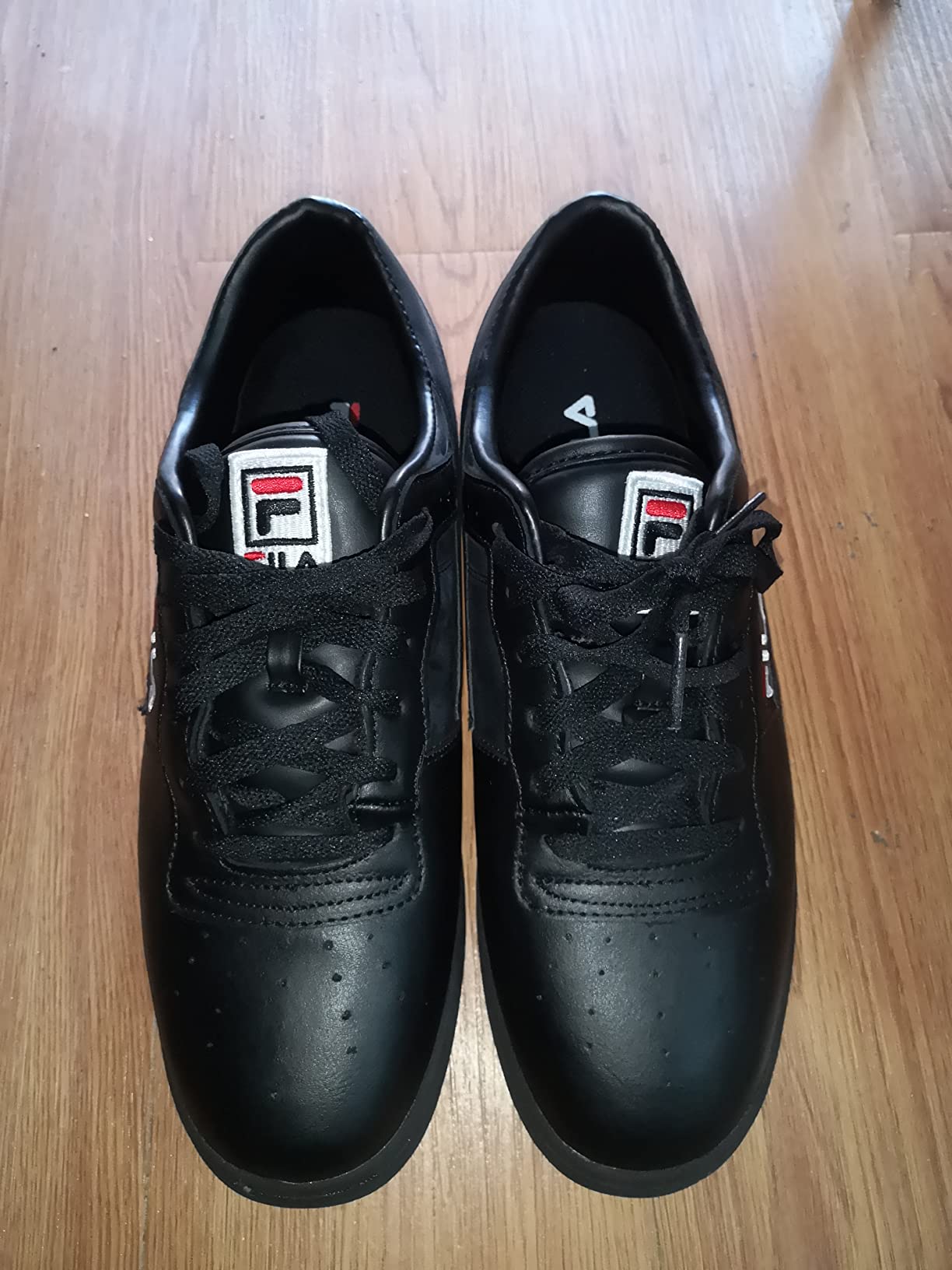
The classic low-top silhouette hits that specific late-80s court aesthetic — not running shoe, not basketball high-top, but fitness class. The Fila flag logo on the lateral side is understated compared to swoosh culture. White/Navy/Red is the definitive colorway, though several others exist (Black, White/Gum, White/Green if you want to go slightly left of center).
The upper feels substantial in hand. There’s real leather here — full grain tumble construction — though some Amazon listings claiming “100% leather” are overselling it. There’s synthetic material at the collar and accent areas, which is standard for this price point. At 14.2 oz for a men’s size 9, these are on the heavier side for a lifestyle shoe. That’s a consequence of the rubber outsole and leather construction, not a defect.
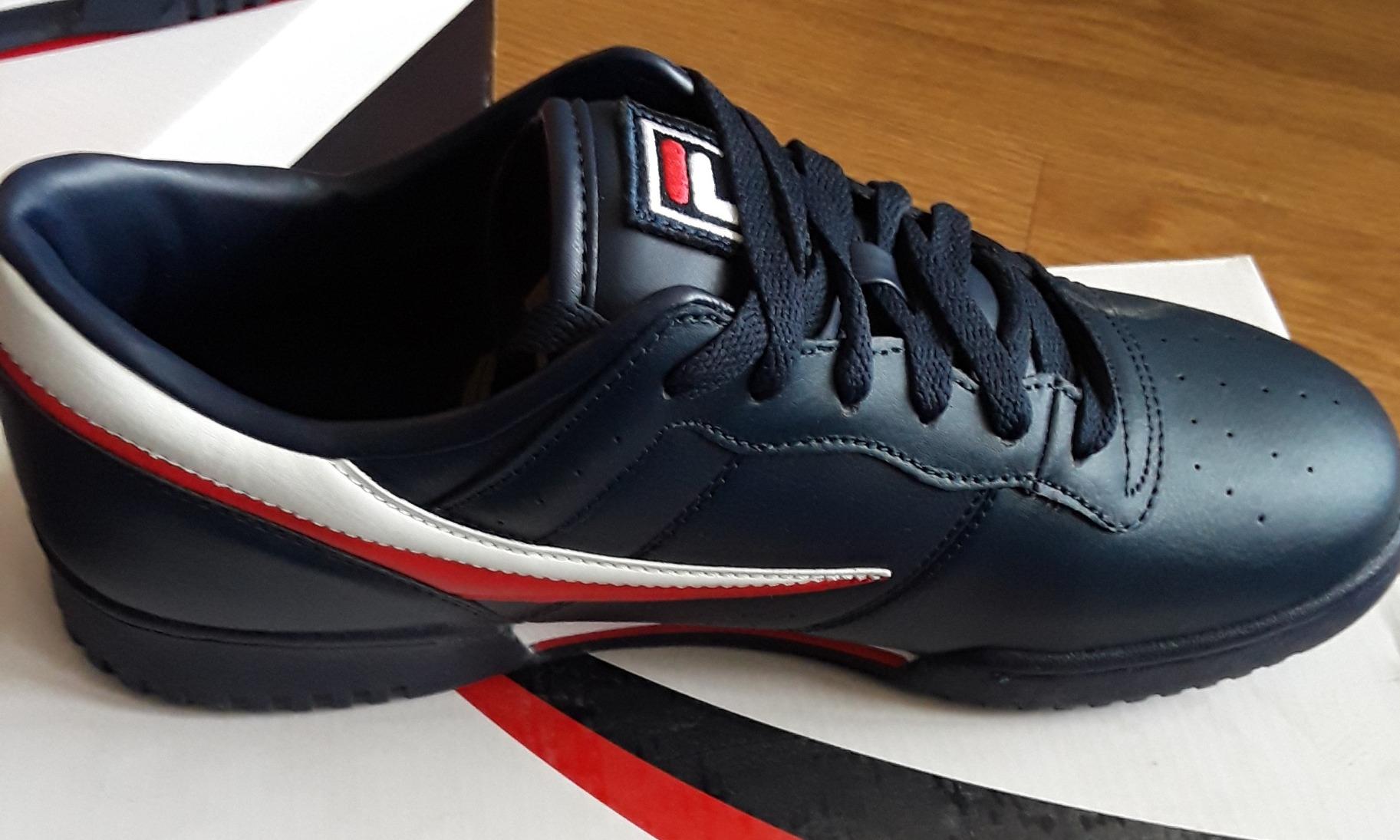
One thing worth flagging before you commit to a colorway: the leather has a factory shiny coating that contributes to the fresh-out-of-box look. That coating is a plot point we’ll return to in the durability section. For now, it looks sharp. That part’s not in question.
Fit & Sizing — The Part That Surprises Most Buyers
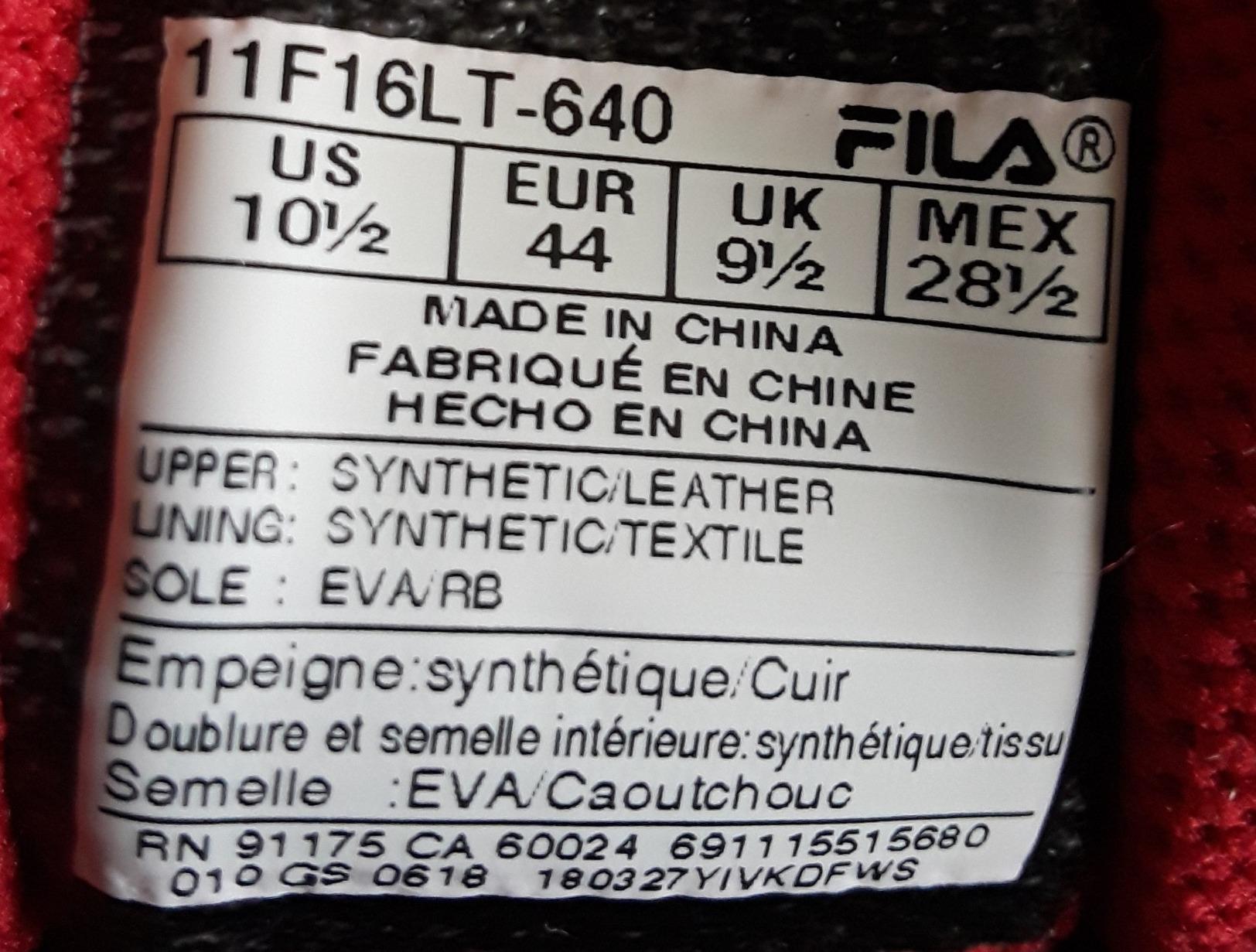
Here’s where nostalgia met a reality check faster than expected: they run small AND narrow. Not just snug — genuinely undersized in both dimensions simultaneously. I’m a true-to-size 10 in most shoes. These fit like a 9.5 at full width and a medium at that. By day two, my left heel had a small blister from the collar, and my toes were actively negotiating for space.
Spanish-speaking buyers on Amazon put it succinctly: “la talla corre pequeño.” Across multiple reviews, the sizing surprise is consistent — this isn’t a Mike problem, it’s a Fila Original Fitness problem.
One clarification worth making: if you’ve seen reviews saying these run large, those are typically from the women’s or girls’ variants. The men’s version runs small. Opposite patterns, same shoe family. Don’t cross-reference sizing between models.
Here’s a practical decision guide:
| Foot Type | Sizing Recommendation | Risk to Watch |
|---|---|---|
| Standard width, between sizes | Size up 0.5 | Low — most reliable fix |
| Narrow feet | Size up 0.5 to full size | Heel slippage possible if oversized |
| Wide feet | Size up 1 full size (wide variant) | Toe box still snug even in wide |
| Custom orthotics | Wide variant + 1 full size up | Insole space is limited |
The insole is removable, which helps if you need to swap for orthotics. I didn’t test with custom insoles, but the Sof Sole Athlete Insoles fit confirmed removability — the factory footbed pulls out cleanly. Sizing up does create some heel volume you’ll need to manage with thicker socks or a lace lock technique.
The Break-In Reality — Two Weeks You Need to Know About
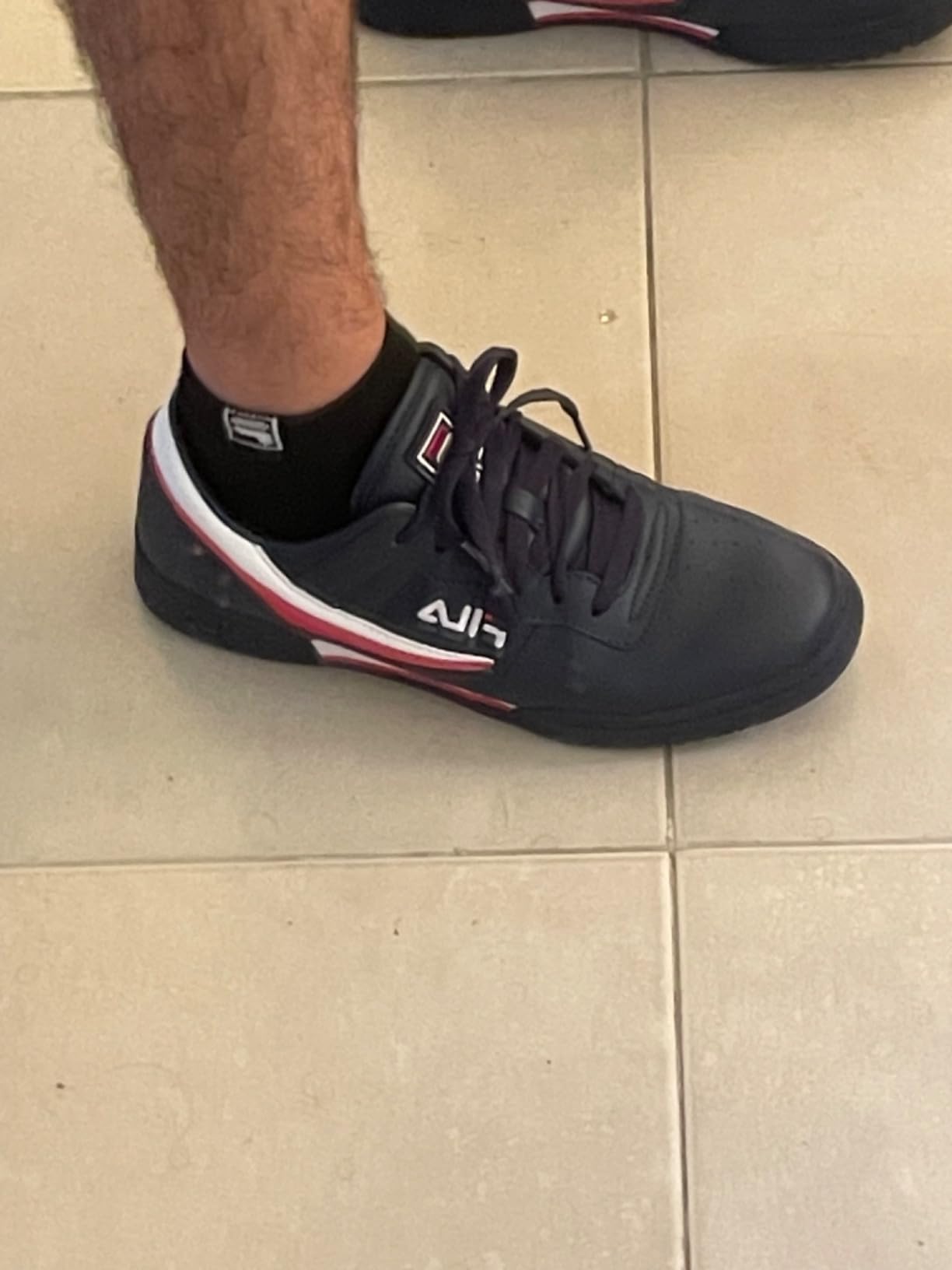
I’ll be direct about this: the break-in period is real, it’s uncomfortable, and it’s worth knowing before you buy. The leather upper starts rigid. Not “stiff in a good supportive way” but “stiff in a way that will leave a small blister on your inner ankle by day three” way.
Here’s how it actually progressed:
Days 1-3: The heel collar grabs the Achilles area with a firm, unyielding grip. Blister risk is real on the inner ankle, especially if you’re wearing thinner socks. Walking more than three hours at a stretch isn’t comfortable yet.
Days 4-7: The leather starts working with your foot instead of against it. The collar softens slightly at the contact points. Blister risk drops if you switch to slightly thicker crew socks and loosen the top two lace eyelet loops.
Days 8-14: This is the transition point. Crease lines form at the natural flex points across the forefoot, which actually signals the leather is breaking in correctly. Around day ten, I wore these for a full casual Friday — six hours total — without significant discomfort. That felt like a win.
Week 3 and beyond: The shoe has fully conformed to your foot shape. Flexibility improves noticeably. Day-long casual wear becomes straightforward rather than aspirational.
The patience requirement is worth factoring into your purchase decision. If you hate break-in periods — if you want out-of-box comfort as a baseline — these aren’t the right shoe. There are better casual options in the retro category that don’t demand this trade-off. But if you’re willing to do two weeks, the leather does deliver a customized fit that works well for moderate daily use.
Comfort & Cushioning — The Honest Hour Count
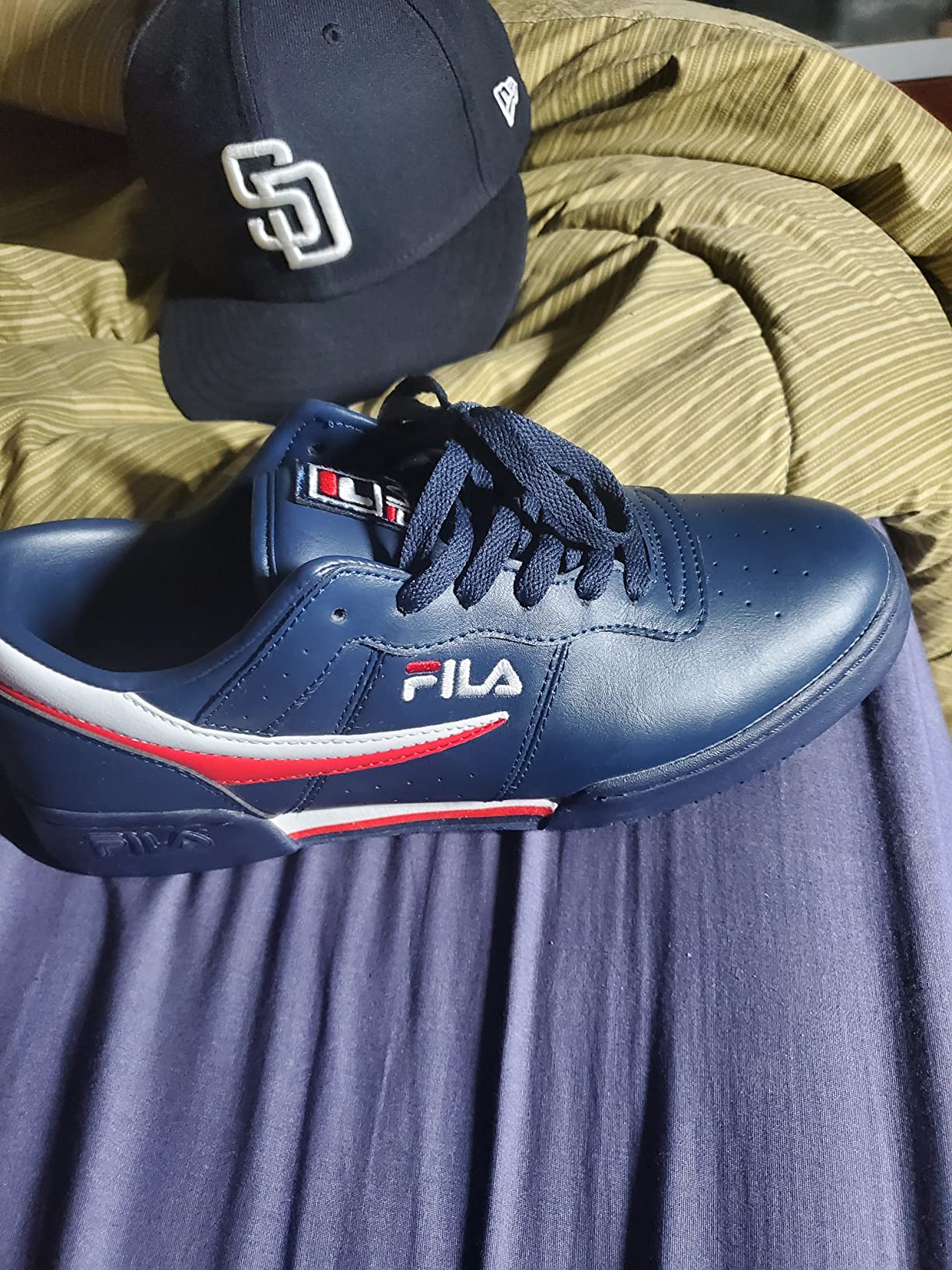
The die-cut EVA midsole delivers what 1987 considered adequate cushioning — which is to say, enough for casual use with honest limitations on extended wear. Around the six-hour mark across multiple sessions, my feet started sending clear feedback. Not pain, but the kind of low-level fatigue that tells you the cushioning has delivered what it can.
Here’s the comfort arc as I tracked it through testing:
| Duration | Comfort Level | Activity Context |
|---|---|---|
| 0–2 hours | 9/10 — excellent | Errands, office desk work |
| 2–4 hours | 8/10 — comfortable | Extended shopping, walking |
| 4–6 hours | 7/10 — adequate | Long grocery run, standing meetings |
| 6–8 hours | 6/10 — noticeable fatigue | Full workday casual wear |
| 8+ hours | 4/10 — not recommended | All-day standing, retail, events |
The arch support is minimal by modern standards. There’s cushioning, but it’s a fairly firm platform — responsive in the sense that your foot feels the ground, not springy in the way a modern foam stack absorbs it. For the target use case — desk job, casual Friday, grocery run — it holds up fine. For nurses, retail workers, restaurant staff, or anyone spending sustained hours on their feet, these aren’t the right tool.
One thing I noted at week six: the EVA hadn’t noticeably compressed yet. The cushioning felt roughly the same as day one. That’s a reasonable performance expectation for light-to-moderate use.
Build Quality & Durability — The Leather Coating Problem
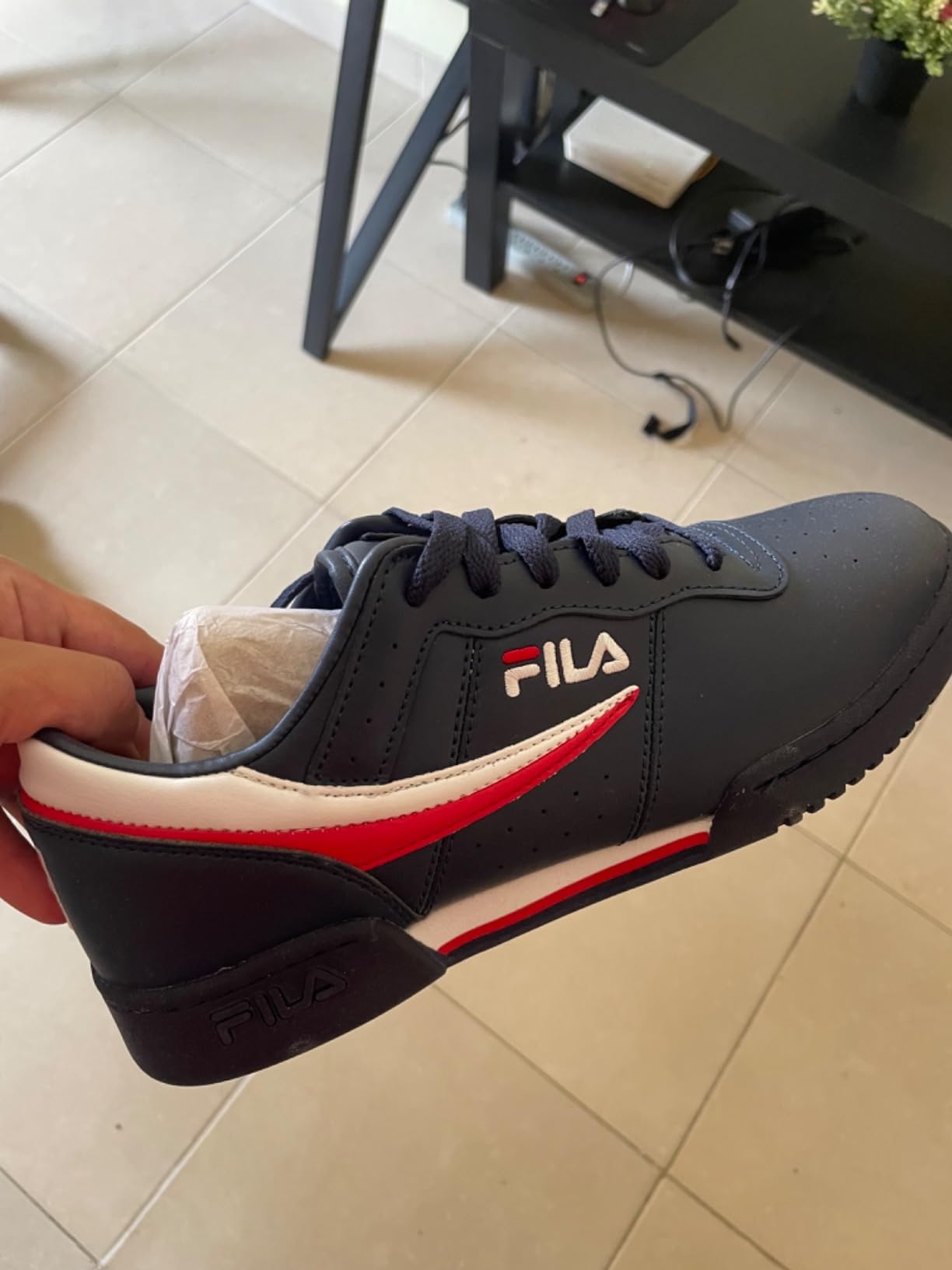
Here’s the honest durability picture: the shoe holds up adequately for its first few months. After that, the primary failure mode kicks in.
The leather has a factory-applied shiny coating. It looks polished, it photographs well, and for the first six weeks to two months of casual use, it looks sharp. Then it starts to peel. Amazon reviewers document this consistently: “the shiny coating on the leather has peeled off, making the whole shoe look unattractive — although doesn’t affect the performance.” That last qualifier is accurate — peeling coating doesn’t make the shoe unwearable, just visually rough.
The underlying leather beneath the coating is adequate but not premium. Once the coating flakes, the bare leather ages quickly. This is the primary reason the Durability score lands at 6.0/10.
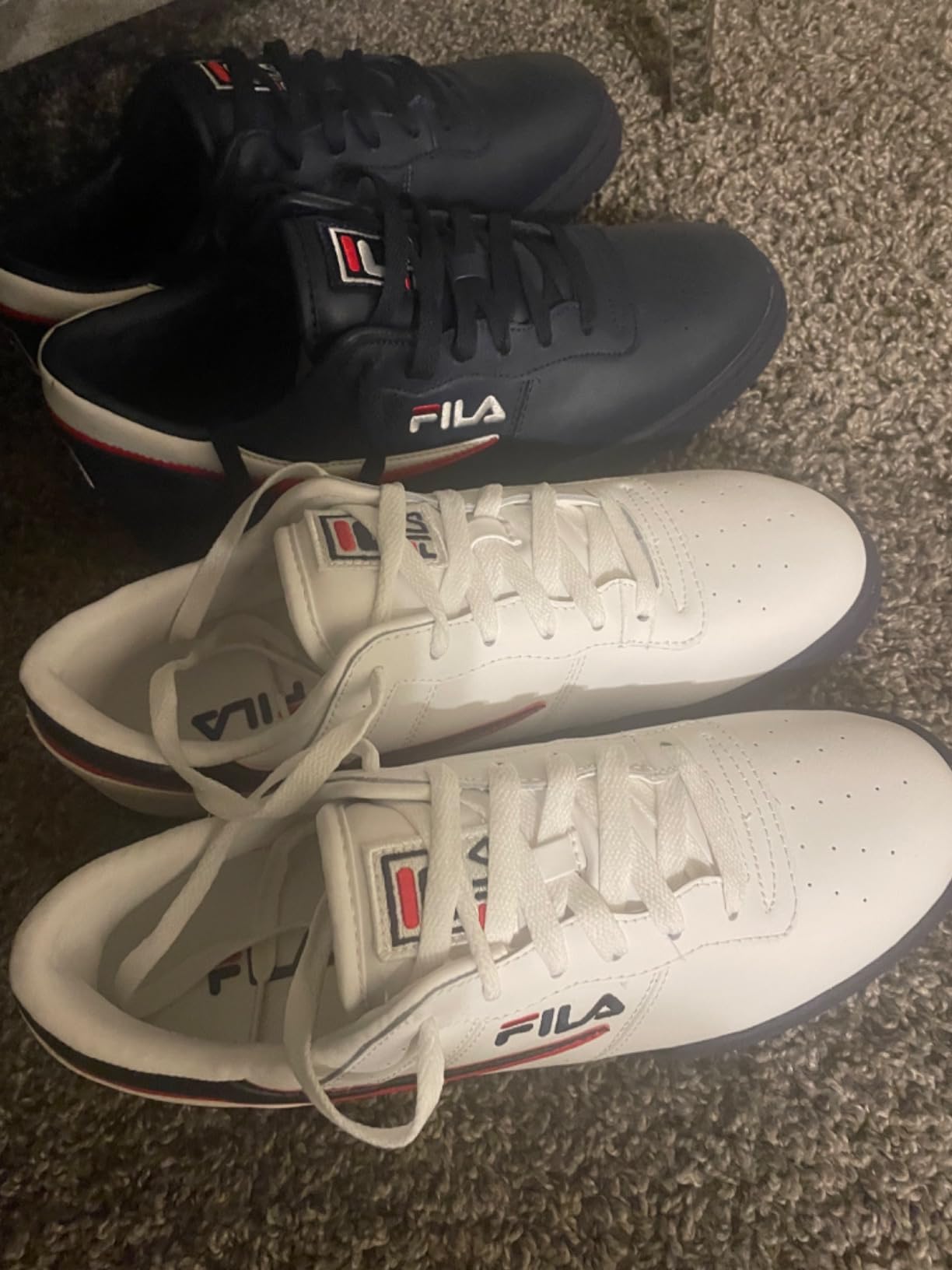
Sole attachment held throughout my six weeks of testing — no separation observed. But longer-term buyer feedback includes sole separation as a pattern at the 6-12 month mark under regular use. The gum rubber outsole itself wears adequately on pavement; it’s not designed for abrasive surfaces or trail terrain.
Realistic lifespan by use intensity:
– Casual 1-2×/week: 12-18 months
– Moderate 3-4×/week: 6-9 months
– Heavy daily use: 3-6 months
Cost-per-month math: $70 ÷ 9 months (moderate use midpoint) = $7.78/month. Not terrible for a lifestyle shoe, but the Reebok Club C 85 Vintage typically stretches further before its failure modes kick in, which affects the value comparison.
Maintenance recommendations: leather cleaner and conditioner monthly, avoid soaking, and accept the coating will eventually go regardless of care.
On the Street — Style Performance & Traction
The reaction I wasn’t expecting: people consistently noticed. “Dude, I had those exact shoes in high school” came up at least four times across six weeks of wearing these at the office, grocery store, and casual social situations. That’s a level of brand recognition that surprised me — Fila’s retro credibility is real even among people who aren’t deep into sneaker culture.
The shoe reads as authentic heritage rather than cheap retro imitation. Paired with raw denim or dark chinos, the White/Navy/Red colorway looks deliberately chosen rather than randomly grabbed. That aesthetic confidence is worth the Style 9.0 rating.
Traction on typical surfaces — grocery store tile, office carpet, light outdoor pavement — was adequate. The gum rubber provides reasonable grip on dry surfaces. I didn’t test wet pavement extensively, and I’d note that a casual lifestyle sole isn’t designed for it; don’t expect hiking boot grip.
What these aren’t built for: athletic performance of any kind, formal events, sustained outdoor terrain, or anything requiring significant ankle support. They’re lifestyle shoes, designed for exactly that scope.
How It Compares to the Obvious Alternatives
Most reviews compare the Original Fitness against the Nike Air Monarch IV or Puma RS-X — neither of which is really a direct competition. Here’s a more useful comparison set for 2026:
| Shoe | Price | Comfort | Durability | Break-In | Best For |
|---|---|---|---|---|---|
| Nike Air Force 1 | $90-110 | Better (Air cushioning) | Longer (2+ years) | Minimal | Daily all-around use |
| Adidas Stan Smith | $85-100 | Similar ceiling | Similar range | Minimal | Minimalist retro aesthetic |
| Reebok Club C 85 Vintage | $80-95 | Comparable | 12-18 months typical | Minimal | Understated 80s/90s look |
| Fila Original Fitness | $70 | 6-8hr ceiling | 6-12 months typical | 2 weeks required | Underrated 80s heritage |
The honest framing: Nike Air Force 1 outperforms on comfort, durability, and zero-break-in convenience. But it’s also worn by roughly 40% of the casual sneaker market at any given moment. The Fila wins on distinctiveness — the “I know something you don’t know” energy that sneaker collectors describe when they pick a shoe the AF1 crowd hasn’t co-opted.
Reebok’s Club C 85 Vintage is the closest honest comparison in terms of heritage positioning and price band. The Club C wins on ease of wear (no break-in) and cleaner styling; the Fila wins on bold statement-making and that specific late-80s athletic aesthetic. Neither is objectively better — they serve slightly different aesthetic intentions.
If you want another Fila option with more athletic performance, the Fila Volley Zone offers improved cushioning within the brand family.
What Works
- Authentic retro design: True to 1987 original, recognizable, distinctive
- Style impact: Consistently generated positive reactions and conversation
- Break-in payoff: Leather conforms well after two weeks, comfortable for casual use
- Price: $70 is reasonable for leather-upper heritage styling
- Removable insole: Orthotic-compatible once you find the right size
- Build quality: Initial construction feels solid for the price point
What Doesn’t
- Sizing trap: Runs small AND narrow — most buyers get surprised by this
- Break-in requirement: Two weeks of discomfort before the leather settles
- Leather coating peels: Factory shiny finish deteriorates months 2-4 of regular use
- Comfort ceiling: 6-8 hours is the practical limit for standing/walking
- Durability lifespan: 6-12 months typical with regular wear
- Not for wide feet: Even wide variants run narrow in the toe box
Who Should Buy This — And Who Shouldn’t
These work well for you if:
You lived through the late ’80s and want that specific court-fitness aesthetic without paying premium retro prices. You wear shoes casually — desk job, errands, social situations — rather than standing on your feet for 10-hour shifts. You’re willing to invest two weeks in break-in and accept that the shoe has a realistic 9-12 month lifespan before the coating situation becomes visually problematic. You want something that generates “I remember those” reactions rather than blending into AF1 territory.
Skip these if:
You have wide feet — even going up a full size in the wide variant leaves the toe box snug. You need all-day comfort without rotation (nurses, retail workers, teachers). You’ve developed enough of a routine that break-in periods are a dealbreaker. You prioritize durability above aesthetics and want a shoe that lasts two years without significant visual deterioration. If modern cushioning standards are your baseline, the EVA here will feel antiquated.
There’s also a between-size consideration worth raising: if you’re at the half-size border (10 vs 10.5, for example), the sizing up recommendation might land you in too much shoe rather than too little. The heel can get loose in that scenario. If you’re in this situation, the sizing risk is higher than average.
My Overall Assessment
| Category | Score (1-10) | Comments |
|---|---|---|
| Style & Design | 9.0 | Authentic retro that stands out — earned, not marketed |
| Comfort | 6.5 | Adequate for 6-8 hours casual wear, ceiling confirmed by testing |
| Build Quality | 7.0 | Solid construction undermined by leather coating durability issue |
| Value for Money | 7.5 | $70 is fair for leather-upper heritage styling at this aesthetic level |
| Durability | 6.0 | Leather peel at 2-4 months, 6-12 month realistic lifespan with regular wear |
| Versatility | 7.0 | Excellent casual use, limited athletic application, niche but effective |
Overall Score: 7.2/10
Style wins. Durability costs. That’s the honest summary. The Fila Original Fitness is a well-designed heritage shoe that delivers exactly what it promises — authentic retro aesthetic that people recognize and react to — while being transparent about what it doesn’t: modern comfort benchmarks, long lifespan, or universal sizing ease.
Frequently Asked Questions
Do Fila Original Fitness sneakers run true to size?
No — men’s sizing runs about half a size small and noticeably narrow. Order 0.5 up from your normal size. If you have wide feet, size up a full size in a wide variant, though the toe box will still feel snug. Women’s variants run large in the opposite direction — don’t cross-reference sizing between models.
How long does the break-in period take?
Realistically two weeks for comfortable daily wear, closer to four weeks for the leather to feel fully settled. Days 1-3 are the hardest — the heel collar creates ankle blister risk. Thicker crew socks and loose lacing on the top eyelets help significantly during that window. If you stick with it through day ten, the shoe transforms noticeably.
Are these suitable for office wear?
Yes for business-casual desk jobs with 6-8 hour workdays. The style works for casual Friday environments. Not recommended for jobs that require sustained standing — the comfort ceiling doesn’t support retail, nursing, restaurant, or hospitality use cases effectively.
What’s the realistic lifespan?
Casual use (1-2×/week): 12-18 months before the leather situation becomes aesthetically significant. Moderate use (3-4×/week): 6-9 months. Heavy daily use: 3-6 months. The leather coating starts peeling around months 2-4 of regular wear — that’s cosmetic, not structural, but it affects appearance significantly.
Can I use custom orthotics in these?
The insole is removable, which makes orthotic compatibility possible — that’s a genuine differentiator at this price point. However, you’ll likely need to size up a full size (and possibly wide variant) to accommodate both the orthotic and your foot without the toe box becoming too restrictive.
Are these waterproof or water-resistant?
Neither, really. The leather upper can handle brief light rain without soaking through immediately, but sustained wet exposure will get through. These aren’t built for wet weather and should be treated accordingly — basic leather conditioning helps maintain some water repellency.
Should I buy in a lighter or darker colorway?
Dark colorways (Navy/Red on white base) show the leather coating peel less visibly as the shoe ages. White/White/Gum variants will show aging earlier and more obviously. If longevity of visual appearance matters to you, the darker accent colorways are the more practical choice.
How do these compare to Adidas Stan Smith for everyday wear?
Stan Smith wins on immediate out-of-box comfort (no break-in), cleaner minimalist aesthetic, and lighter weight. Fila wins on distinctive heritage character, stronger leather-feel quality at the price, and the specific late-80s athletic aesthetic that Stan Smith doesn’t occupy. They serve different retro niches — choose based on whether you want understated or statement-making.
Final Verdict
Four decades of wondering whether the Fila Original Fitness deserved the hype ended with a clear answer: the design absolutely lives up to it, and the durability mostly doesn’t. That’s not a contradiction — it’s just an accurate description of what this shoe is.
At $70, you’re buying authentic retro credibility in a market full of imitations. The leather feels real, the aesthetic is genuine, and the social proof came through my six weeks of testing: people recognize these and react to them positively. The fact that the comfort ceiling lands at six to eight hours and the leather coating begins deteriorating around month three isn’t a secret — it’s just what happens when you prioritize design fidelity to a 1987 original over modern material engineering.
Size up half a size. Plan for the break-in. Accept the lifespan. If those terms work for you, the Fila Original Fitness earns its place in your rotation.
Review Scoring Summary
| Category | Score | Weight | Weighted Score |
|---|---|---|---|
| Style & Design | 9.0 | 20% | 1.80 |
| Comfort | 6.5 | 20% | 1.30 |
| Build Quality | 7.0 | 15% | 1.05 |
| Value for Money | 7.5 | 15% | 1.125 |
| Durability | 6.0 | 15% | 0.90 |
| Versatility | 7.0 | 15% | 1.05 |
| OVERALL SCORE | 7.2/10 | GOOD | |
Be the first to review “Fila Men’s Original Fitness Lea Classic Sneaker”
Related products
Running Shoes

Sneaker
Running Shoes
Sneaker
Sneaker
Reviews
There are no reviews yet.