




My coworker Jen wore hers through a 10-hour hospital shift, came home, and immediately ordered two more pairs. That’s the kind of endorsement that makes you take a $30 shoe seriously. I’m Sarah — working mom, Florida resident, and someone who has been burned enough times by budget footwear to approach any “under $30 walking shoe” with healthy skepticism. Six weeks and 40-plus wear sessions later, here’s everything the konhill Women’s Walking Shoes actually deliver — and where they fall short.
What You’re Actually Getting for $30
Quick Specs
- 💰 Price: ~$25–30 (Amazon; varies by color and size)
- 🧪 Upper: Breathable stretch mesh textile
- 👟 Outsole: Rubber (patterned for traction)
- 🛏️ Insole: Cushioned, removable (orthotic-compatible)
- 🔒 Closure: Slip-on pull design, elastic topline
- 📐 Sizes: US 5–11 standard; wide variants available on select models
- 🎨 Colors: 31+ colorways (neutrals to bolds)
- 🧺 Care: Machine washable (gentle cycle, air dry)
- ⏱️ Testing period: 6 weeks, 40+ wear sessions
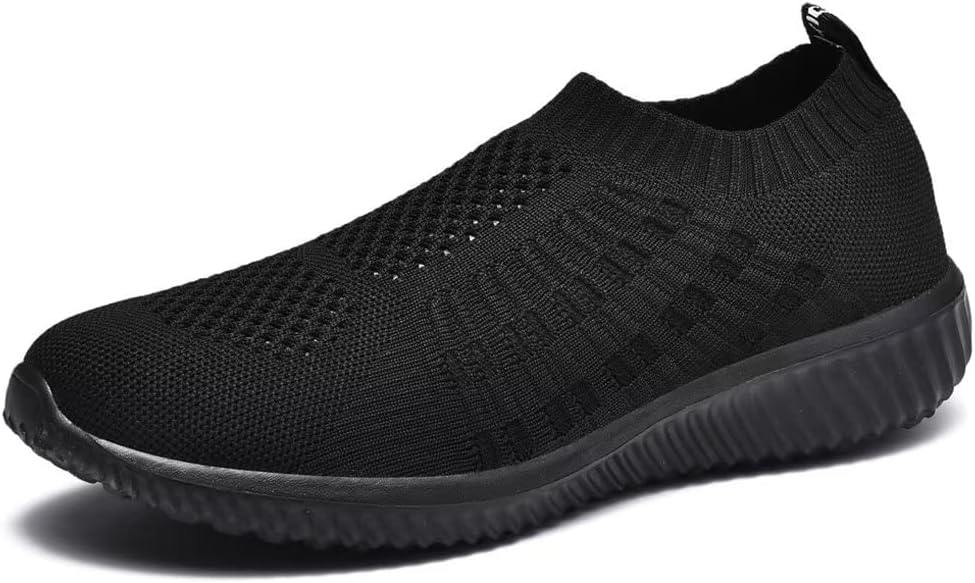
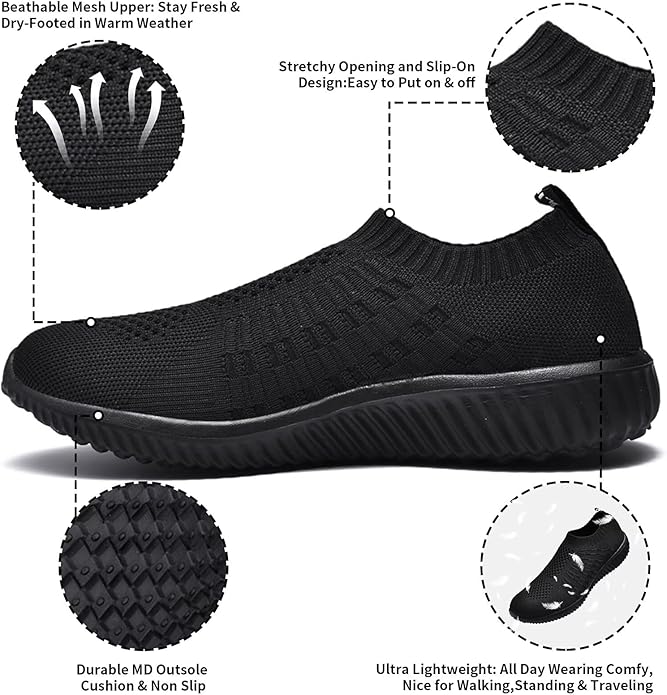
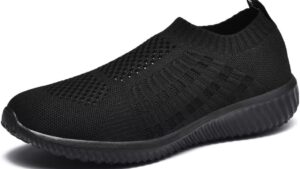
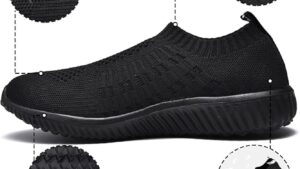
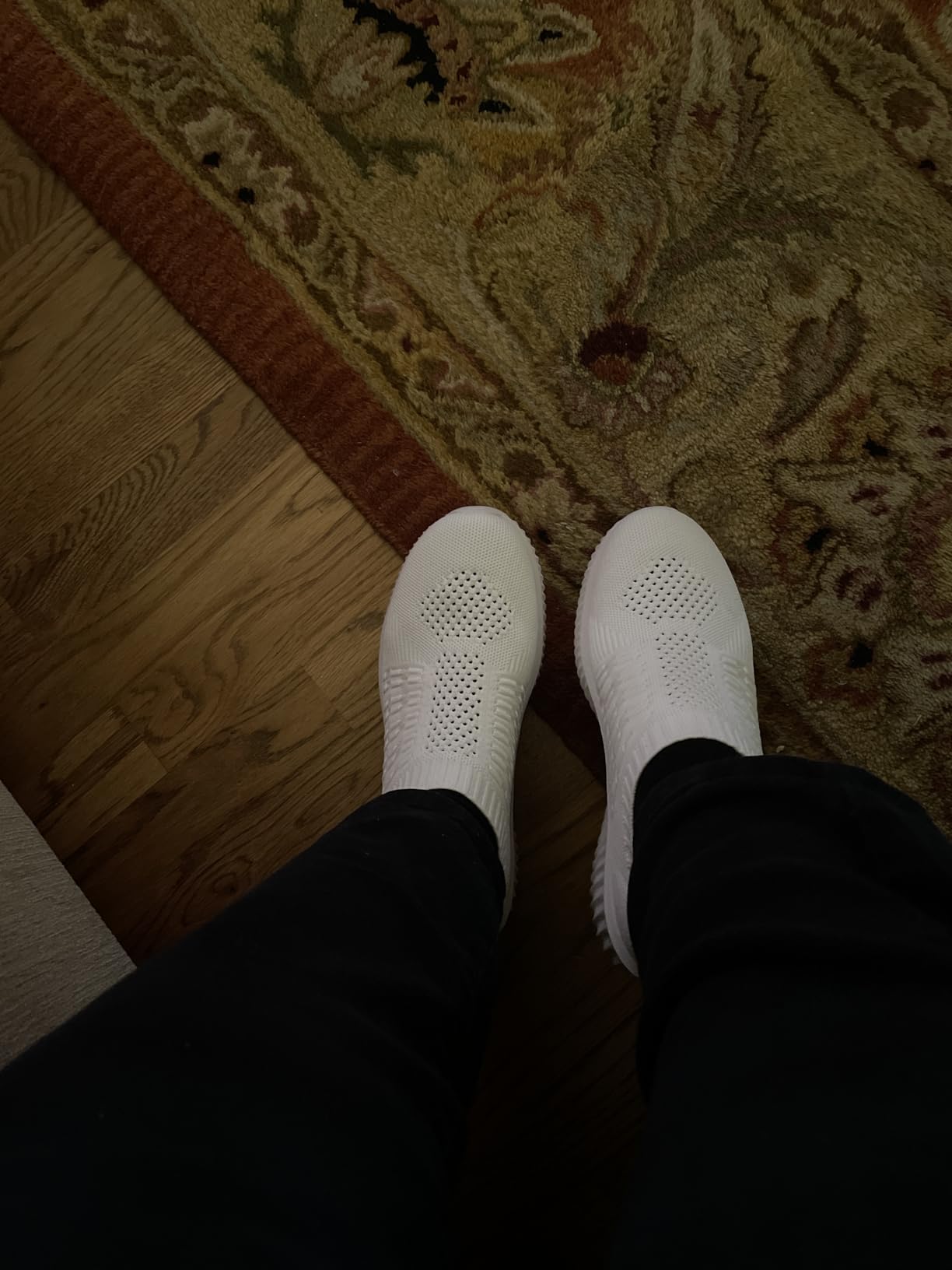
The first thing you notice picking these up is how little they weigh. Not in an “oh, that’s light” way — more like picking up a stuffed animal that happens to have a rubber sole. The mesh upper has a stretchy, sock-like construction that’s consistent across colors (though I noticed the weave density varies slightly between colorways, which is common for mesh production runs at this price point).
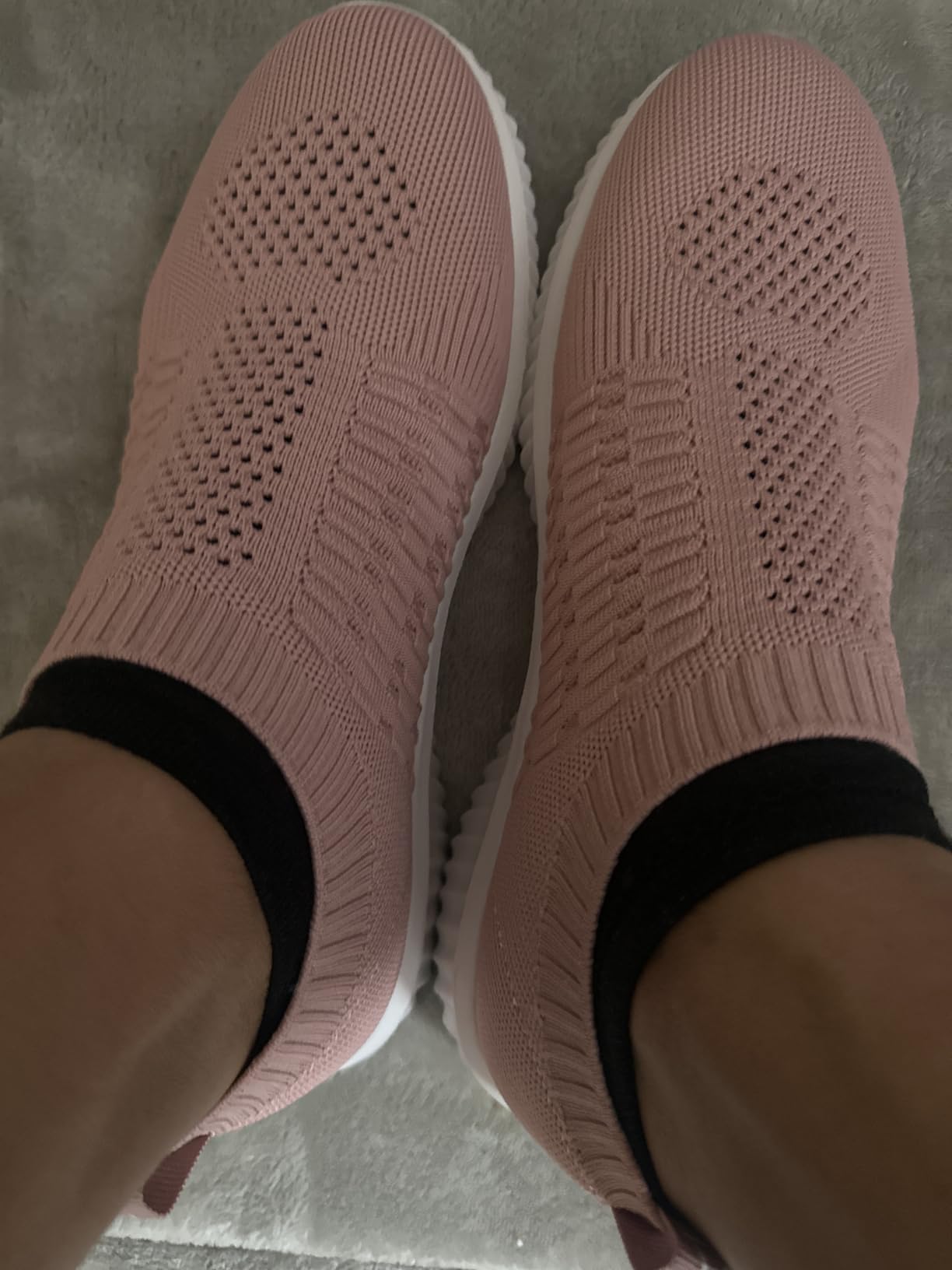
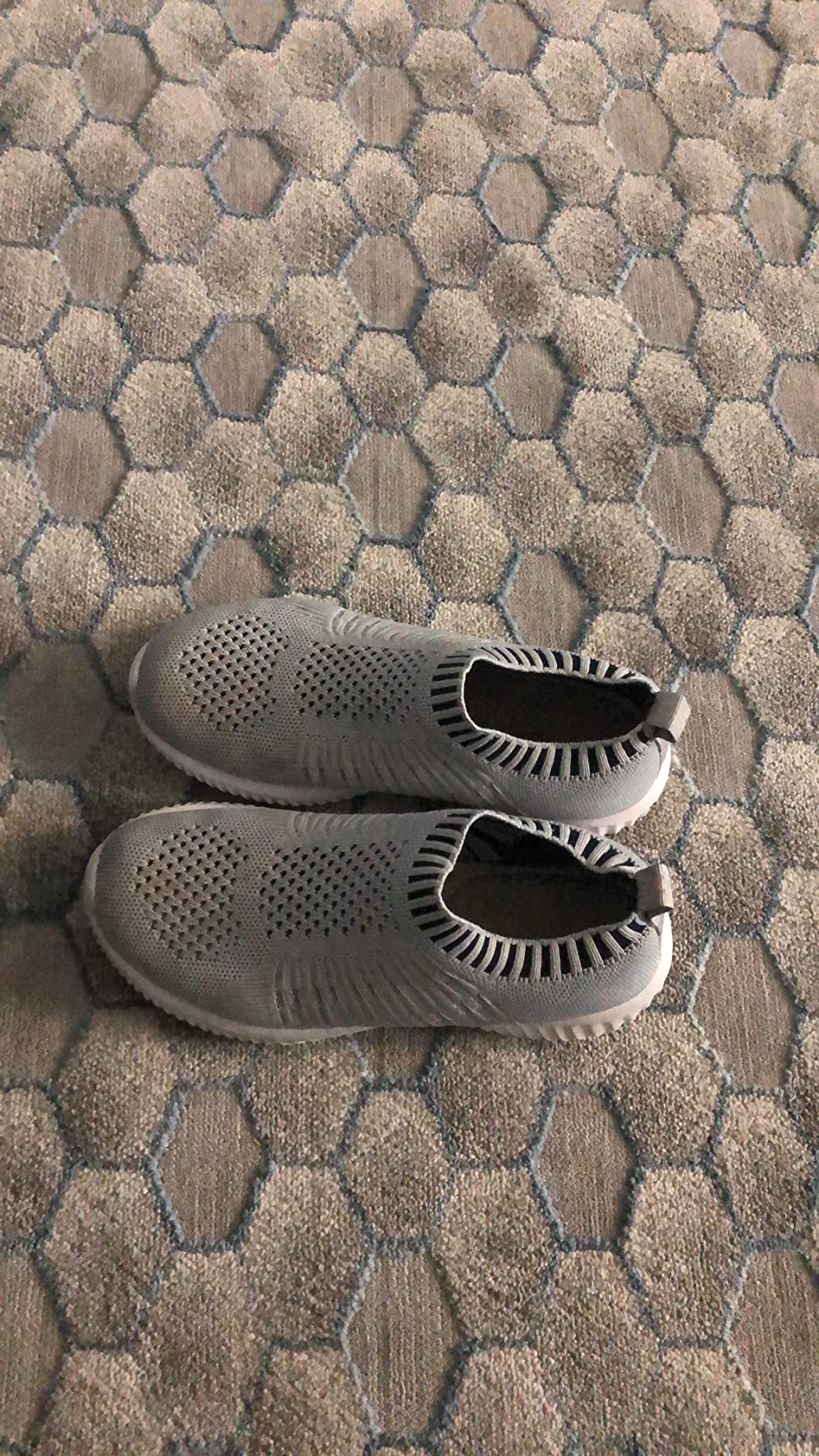
Build quality is honest for the price. The rubber outsole has a patterned design and feels solid underfoot. The upper mesh is well-stitched at the elastic topline, and after six weeks of daily wear, I haven’t seen any separation or fraying at the seams — which is more than I can say for some shoes twice this price that I’ve worn through faster. The slip-on design is genuinely simple: one pull, foot in, done.
Comfort — The Good, the Limits, and the Hours
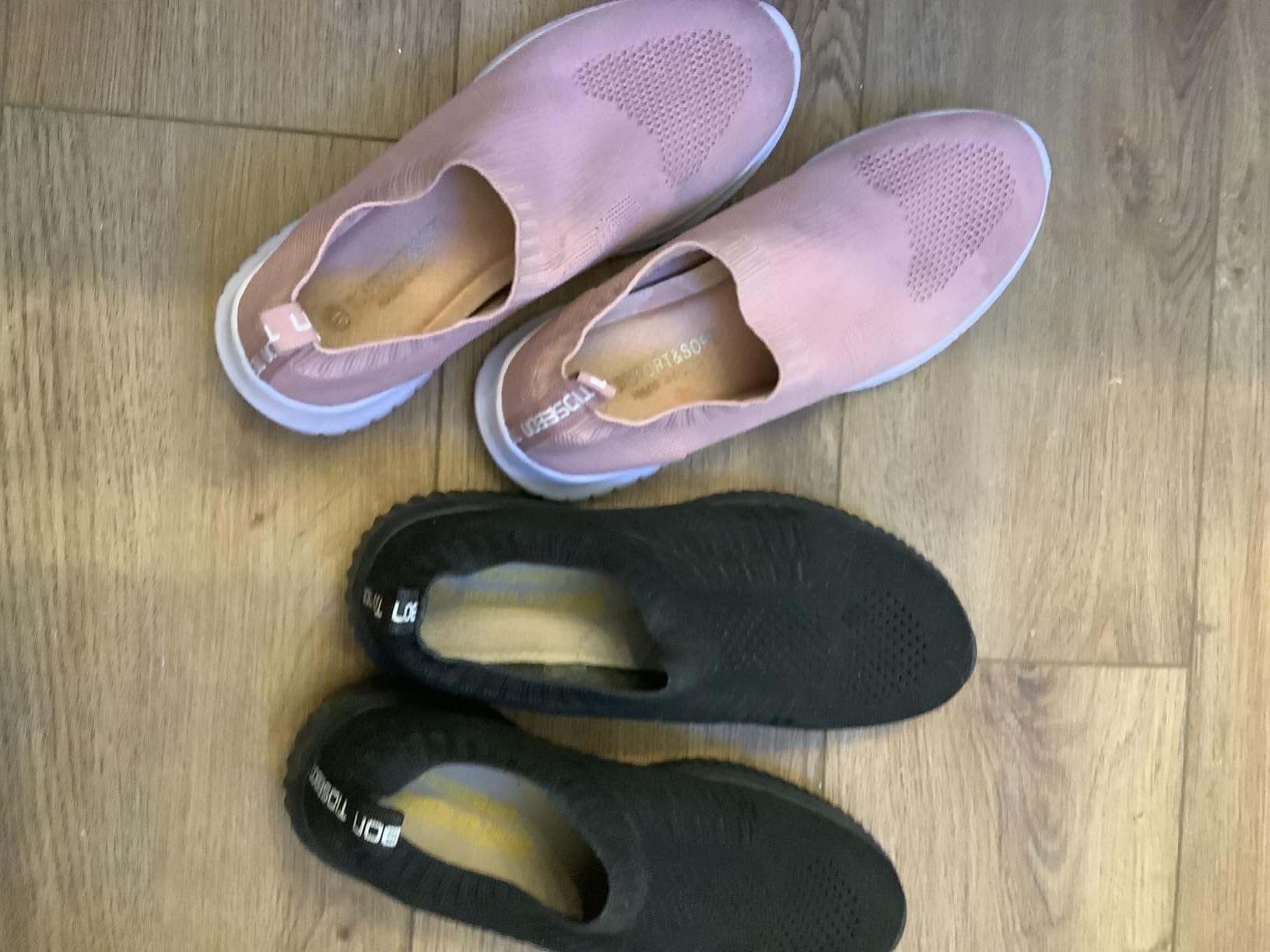
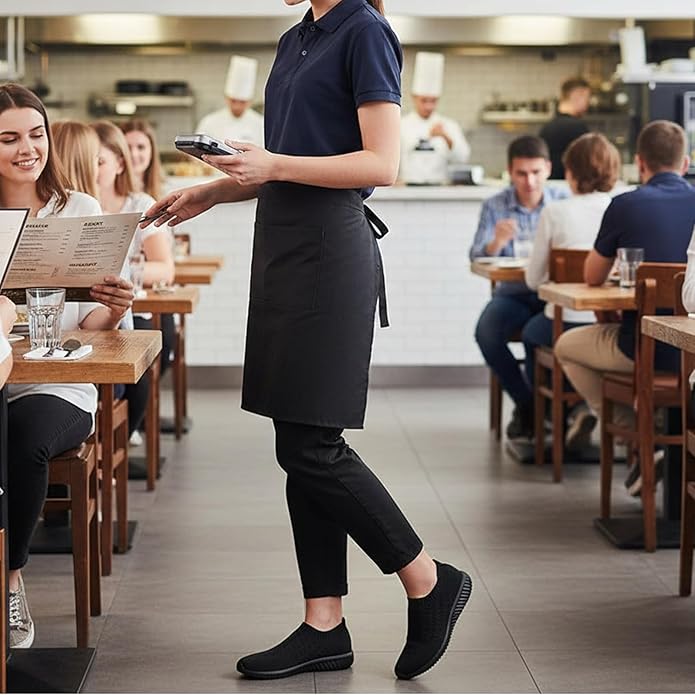
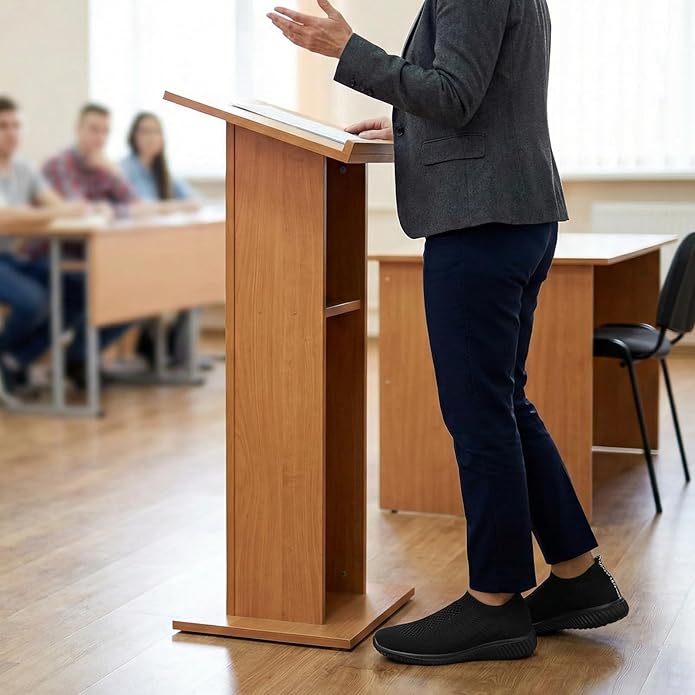
For hours one through eight, these shoes are genuinely excellent. The mesh feels like wearing a soft sock with a sole — no hot spots, no break-in friction, no adjustment period. My typical day involves standing meetings, walking between buildings, and a grocery run or two, and these handled all of it without complaint.
The 12-hour wall is real, though. During a conference that ran longer than expected — hard floors, minimal seating, late afternoon — I felt my feet start to fatigue around hour ten. Not pain, just that cumulative tiredness you get when there’s not enough cushion between you and the floor. If your work regularly puts you on hard surfaces for 10+ hours straight, either plan to swap in an aftermarket insole (more on that below) or budget for a shoe with more structured cushioning in that $60–80 range.
One quirk that comes with the territory: the insole isn’t glued down, so it tends to slip out when you pull the shoe off at the end of the day. Not a malfunction — just the nature of removable insoles in slip-on construction. Takes about two seconds to push back into place, but worth knowing before you’re expecting a tidy removal experience.
Arch support is minimal. This isn’t a design flaw; it’s the design. For women with neutral arches doing casual activities, it’s perfectly adequate. But if you have flat feet, high arches, or plantar fasciitis, you’ll want to add support. Podiatrist Dr. Dana Canuso has specifically cited this style as “very accommodative for common foot problems like bunions and hammertoes” — the wide toe box and flexible mesh earn that distinction — but she’d be the first to tell you that accommodative isn’t the same as supportive. A Sof Sole Athlete Insoles or Valsole Orthotic Insoles swap extends the comfort ceiling to 12+ hours for most people and costs under $20.
The Mesh Upper — Breathability Has a Price
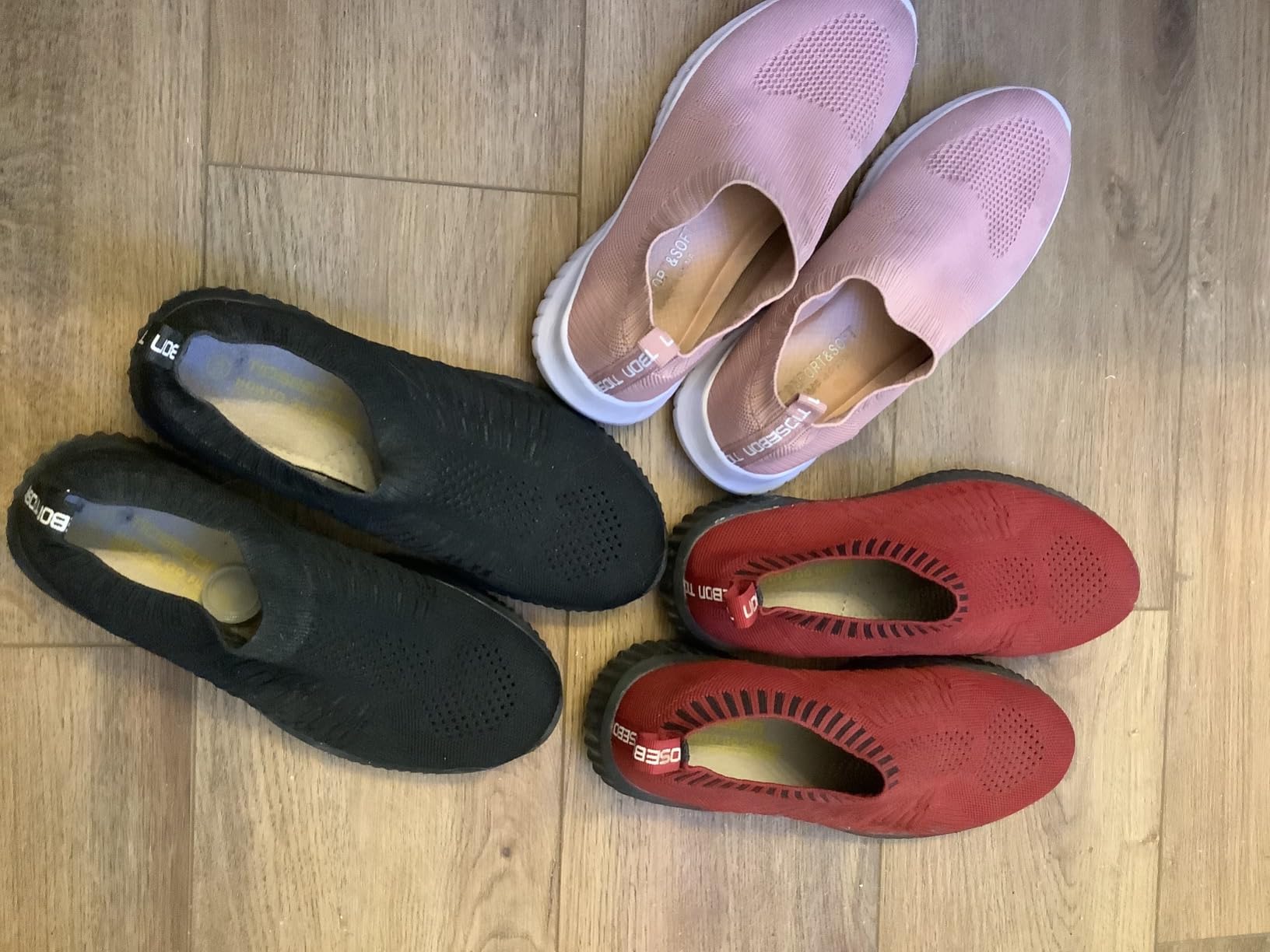
Here’s where the konhill genuinely outperforms shoes at double its price point. On a Florida morning walk around 7 AM — already 78°F, humidity doing its worst — I could actually feel airflow through the mesh. Not just “the shoe isn’t making things worse,” but active ventilation. My feet arrived home less damp than they left, which is remarkable for a non-athletic shoe in that heat.
The trade-off is physics, not a flaw. That same mesh that breathes beautifully in July is essentially a ventilated barrier in January. The first time I wore them during a cold snap (low 50s, Florida standards), I felt the temperature through the shoe within minutes. Below about 55°F, you’re going to need thick socks or a warmer shoe. These aren’t cold-weather footwear — they’re spring/summer/indoor shoes, and calling them anything else sets you up for disappointment.
Wet performance deserves a direct mention because I’ve seen too many reviews skip it. This mesh has zero water resistance. Caught in a light rain for a few minutes walking from the car to a store entrance? Feet will be wet. Not soaked, but noticeably damp. These are warm-weather shoes or indoor shoes — not commute-in-the-rain shoes. If your daily routine involves navigating wet environments, the Nortiv 8 Women’s Walking Shoes or the Binham Walking Shoes offer better weather protection at comparable price points.
As for traction: the rubber outsole grips well on dry surfaces — pavement, tile, office floors — without any squeaking. I’ve never had a slip incident on normal dry conditions. Wet tile, though, is a different story. The rubber loses grip quickly on wet smooth surfaces, which is expected for non-performance rubber at this price but worth knowing if your route includes wet floors.
Six Weeks of Real-Life Testing
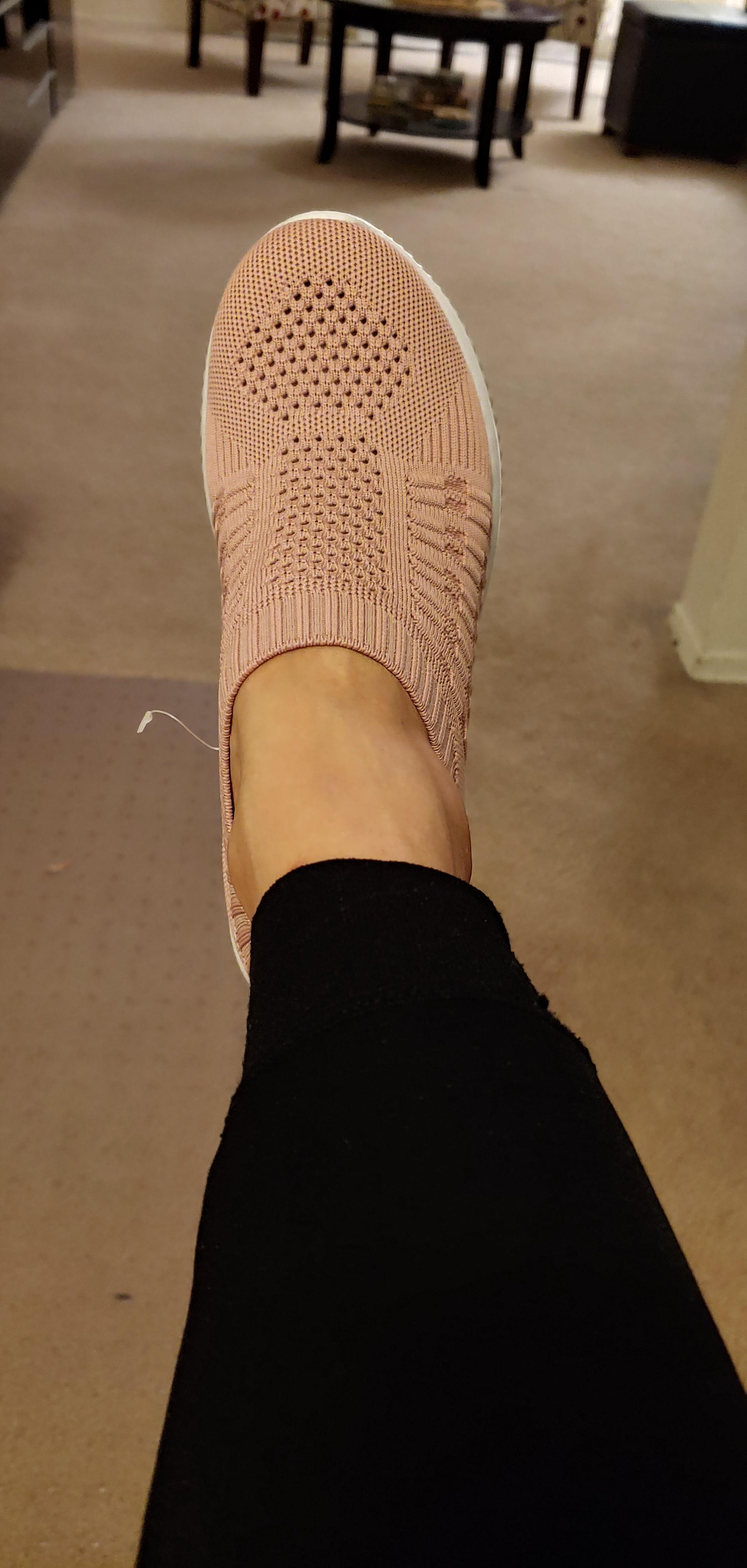
I ran these through every scenario that shows up in a busy week:
School morning rush: This is where slip-on design earns its keep. Somewhere between pouring coffee and locating the missing library book, I’m also putting on shoes — and being able to step into these in about three seconds while fully distracted is not a small thing. Three weeks in, I stopped thinking about it, which is exactly what you want from everyday footwear.
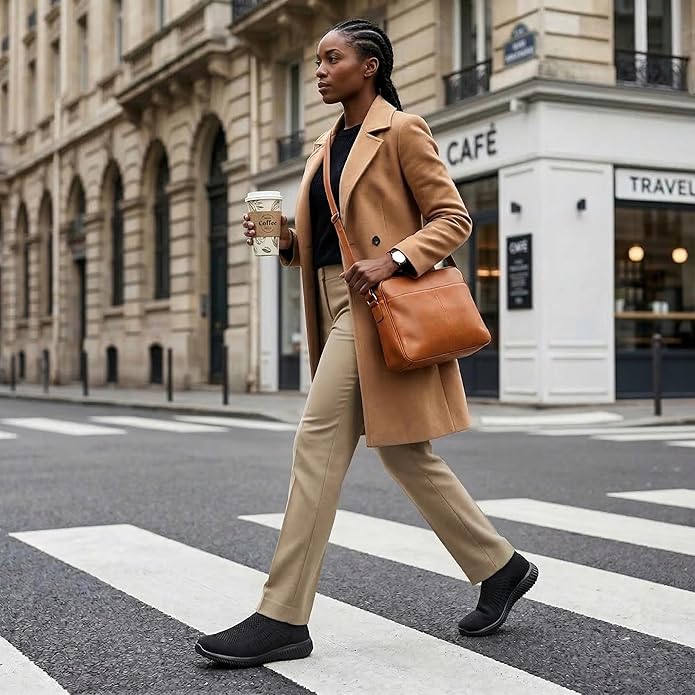
Office wear: Professional enough for casual Fridays (clean silhouette, neutral color options), comfortable for standing meetings, and quiet on tile floors. They don’t have the visual weight of a sneaker, which lets them pair with more than just athleisure.
Grocery and errands: This is their home turf. The lightweight design means your feet aren’t working against the shoe on long Target runs. After two hours of walking on hard store floors, I felt less foot fatigue than in cushioned sneakers I’ve paid significantly more for.
Light gym use: Fine for walking on a treadmill, light stretching, or a yoga class. Not suitable for anything with lateral cutting, jumping, or load-bearing lifts — the slip-on construction doesn’t provide the lateral stability you need.
Travel: Excellent. These pack flat, weigh almost nothing, slip off at airport security without breaking stride, and handle a long walking day better than many travel shoes at three times the price.
Durability by use frequency:
Based on six weeks of observation plus the broader community data, here’s a realistic lifespan breakdown:
- Light use (2–3 days/week, varied activities): 18–24 months
- Moderate use (daily wear, mostly casual surfaces): 10–14 months
- Heavy daily use (all-day standing on hard floors): 6–9 months
The primary failure mode across all use levels is sole-upper adhesion at the toe box flex point — and it’s accelerated significantly by frequent machine washing. If you machine wash, keep it to once a month maximum on gentle cycle, always air dry. For regular cleaning, a damp cloth and mild soap extends the bond considerably.
Sizing — Most Get It Right, Some Get Surprised
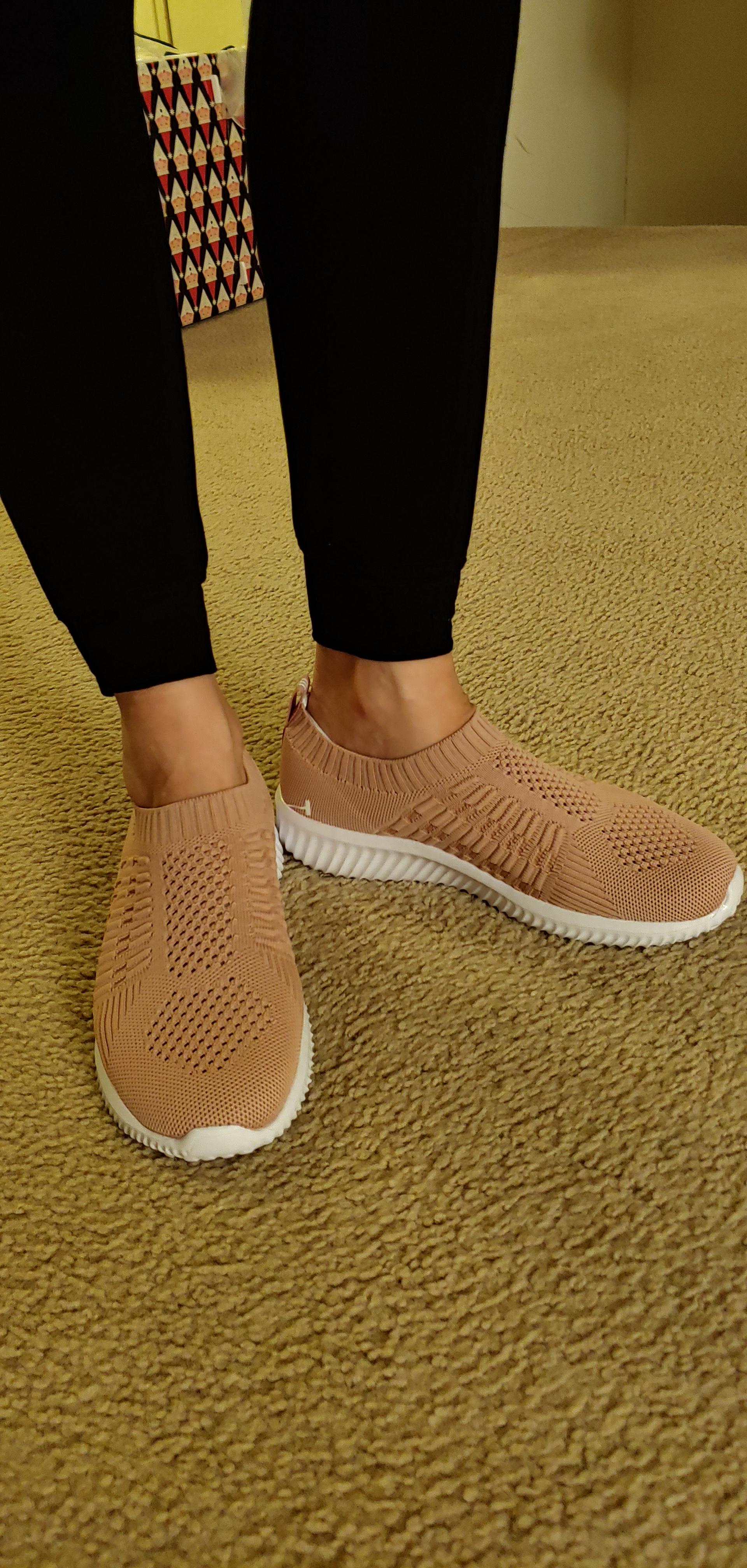
General sizing is true to size — I wear an 8.5 and the 8.5 fits precisely with thin socks, with just enough room not to feel compressed. The stretch mesh accommodates foot swelling through the day well, which is why healthcare workers specifically praise these for long shifts.
But there’s a sizing detail that every competitor review misses, and I’d feel irresponsible not to mention it: certain colorways run a full size small.
Pink, Mint Green, Lake Blue, and Brown variants have a consistent pattern in the community data — buyers who order their standard size report the fit as tight to unusable, while sizing up one full size fits correctly. This appears to be a dye/manufacturing batch difference, not random QC variance. If you’re ordering any of those four colorways, go up one full size from your normal. For all other colors, your regular size is right.
Quick sizing guide:
- Standard width + thin socks: True to size
- Wide feet or thick socks: Size up half
- Pink, Mint Green, Lake Blue, or Brown colorways: Size up one full size regardless
- Afternoon foot swelling: The stretch mesh handles this well — TTS still works
I’ve already ordered a second pair in black based on my experience with the first. My nurse colleagues who’ve been wearing these for 12-hour shifts tell me the TTS guidance holds, specifically because the elastic topline accommodates the natural foot expansion that happens over a long standing shift.
What konhill Claims vs. What Testing Found
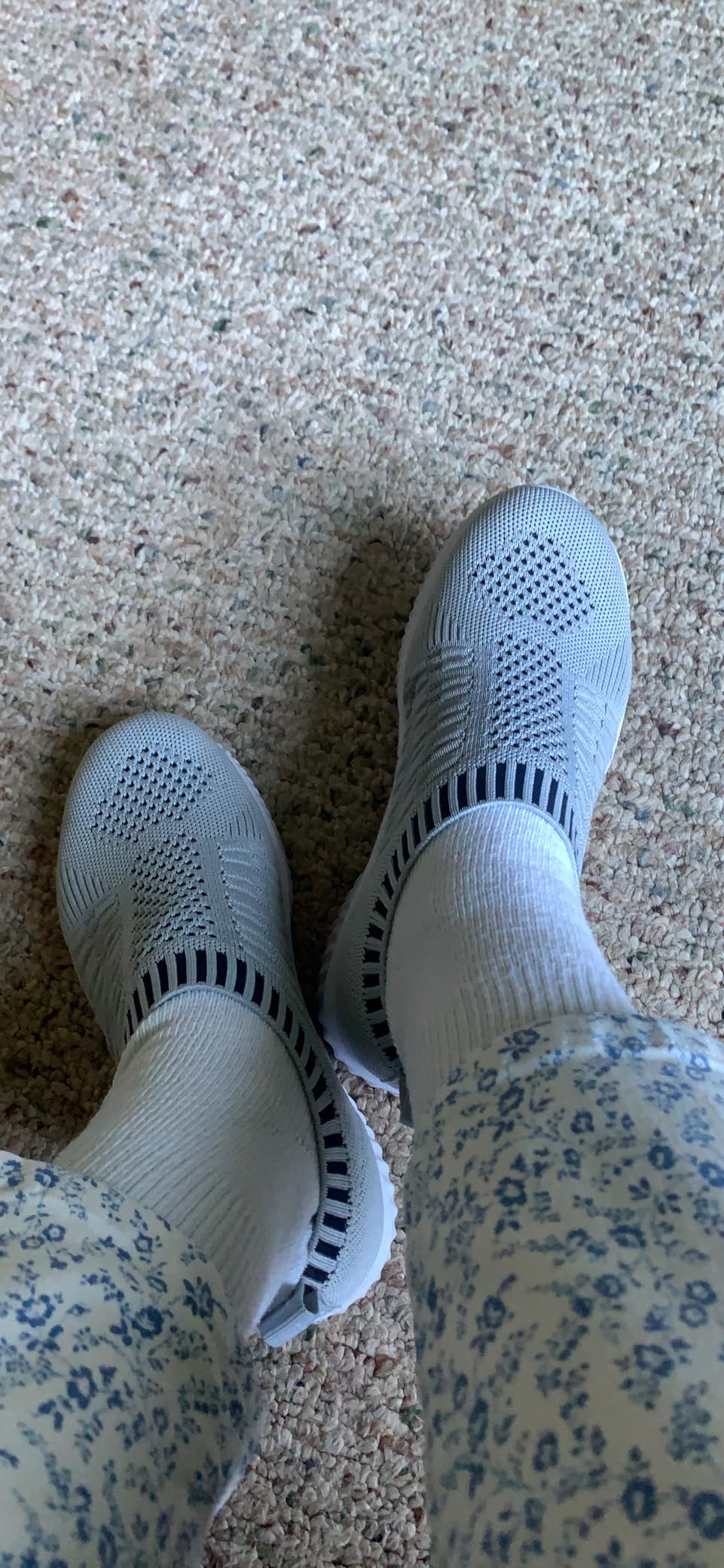
Claim: “Ultra lightweight shoes, realize a feeling as if not wearing”
Verdict: Accurate. The mesh construction and overall weight genuinely create a near-barefoot sensation that you feel on the first wear. Not marketing overreach.
Claim: “Breathable mesh vamp allows your feet to breathe freely”
Verdict: Accurate — with one honest asterisk. Breathability is genuinely exceptional in warm conditions. In cold weather, that breathability becomes a liability. The claim is true; it just omits the seasonal context.
Claim: “Excellent fit and speed feeling, familiar to the feet”
Verdict: Half credit. The fit is excellent. “Speed feeling” is a translation artifact that doesn’t really land — these are comfort shoes, not performance shoes. Nobody is running a tempo pace in these, and that’s fine.
Claim: “Perfect for walking, running, outdoor, sports, traveling”
Verdict: Partially accurate. Walking (casual) — yes. Traveling — absolutely yes. Outdoor activities in mild, dry conditions — yes. Running and sports? No. The slip-on construction and minimal cushioning aren’t built for impact activities. These are lifestyle shoes that do lifestyle things excellently; don’t ask them to be training shoes.
How It Compares to Similar Options
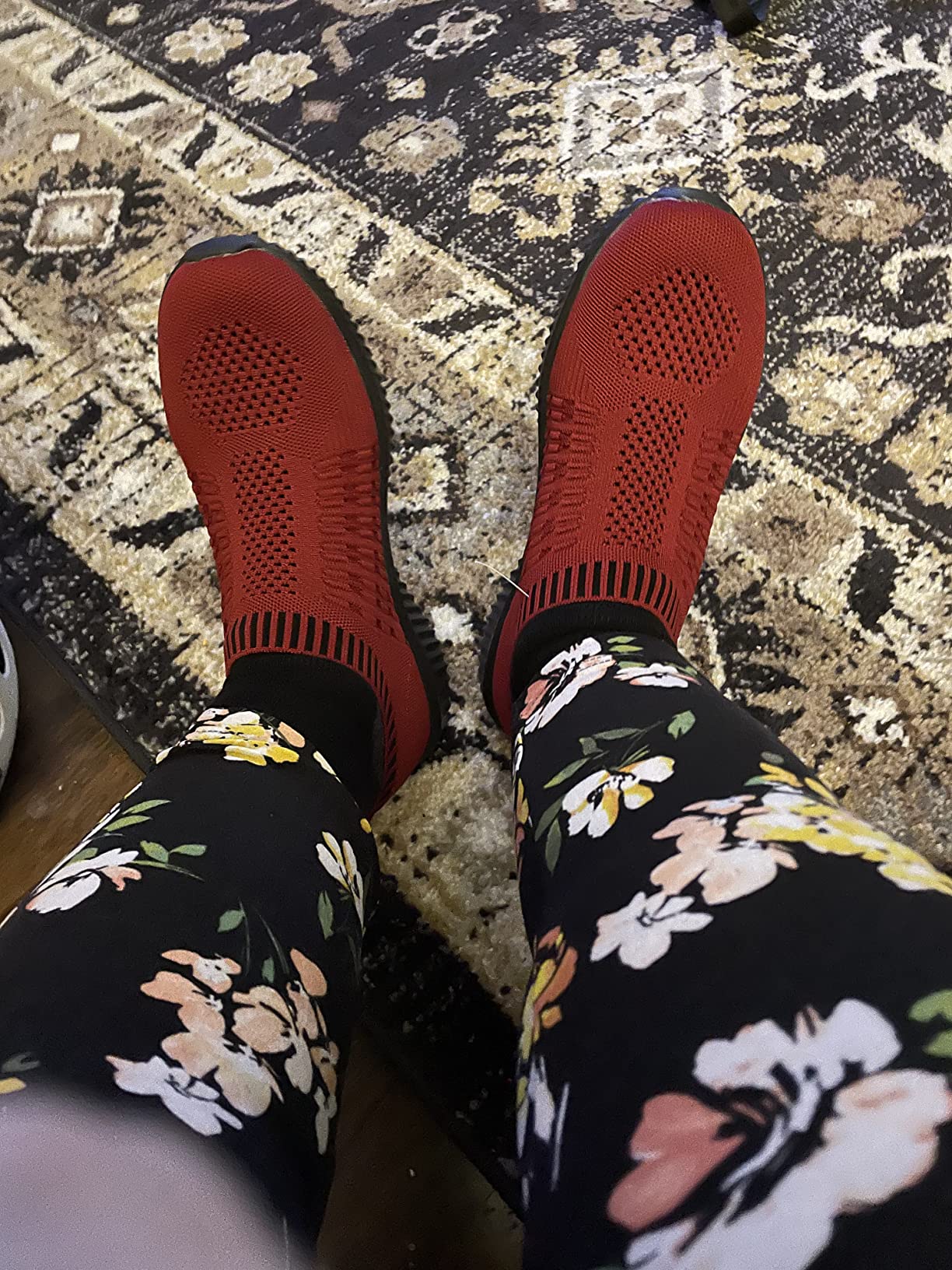
vs. Skechers Go Walk Joy (~$40–50): The GoWalk Joy has more documented cushioning technology (5GEN midsole + Goga Mat insole), slightly better arch response, and a lower confirmed weight. It also runs large — you need to size down half, which is opposite to konhill’s TTS. At $15–20 more, you’re paying for slightly better cushioning tech and a brand name. For most casual wearers, the konhill’s real-world comfort is close enough that the price difference matters.
vs. Wonesion Walking Running Shoes (~$30): Direct budget competitor in the same price bracket. The Wonesion has lace closures (more adjustability, less slip-on convenience) and slightly more structured cushioning. For people who prefer laces or have narrower feet, it’s a solid alternative. The konhill’s pure slip-on convenience gives it the edge for anyone who values that specifically.
vs. New Balance Fresh Foam Arishi V4 (~$65–80): Not really the same category. The NB brings actual structured cushioning, better arch support, and a proper running chassis. If you’re doing serious daily walking distances (3+ miles) or need orthopedic-level support, the price jump is justified. The konhill is for casual daily life; the NB is for people who treat their footwear as a health investment.
When $30 is the right call: If your activities are primarily casual — errands, office, light walking, travel — and you live somewhere warm, the konhill is genuinely all you need. The cost-per-wear math is striking: at 300 days of use over a year, you’re paying about 8–10 cents per day. For a shoe that feels this good doing what it’s designed for, that’s hard to argue with.
Final Verdict
Scoring
| Category | Score | Notes |
|---|---|---|
| Comfort | 8.5/10 | Excellent through 8 hours; fatigue onset at 10-12 hours without insole upgrade |
| Style & Versatility | 8.5/10 | Clean silhouette, 31+ colors, works beyond athleisure |
| Breathability | 9.0/10 | Outstanding in warm weather; penalized for cold/wet vulnerability |
| Support | 6.0/10 | Minimal — adequate for casual use, not for flat feet or intensive standing |
| Durability | 7.0/10 | Solid at casual-moderate use; sole bond vulnerable to frequent machine washing |
| Value | 9.5/10 | Exceptional at $25–30; ~$0.08–0.10/day at one year of use |
| Ease of Use | 10.0/10 | Slip-on in 3 seconds, no lace management, zero break-in |
| Overall Rating | 8.0/10 | Excellent casual daily shoe; knows exactly what it is |
The konhill Women’s Walking Shoes do their job with conviction. They’re not trying to be a running shoe, a hiking boot, or a structured orthopedic sneaker — and that self-awareness is part of why they work. At $30 for a shoe that handles 8-hour days, packs flat for travel, breathes through Florida summers, and comes in 31 colors, the math is straightforwardly good. The caveats are real (cold weather, rain, arch support gaps) but they’re predictable from the design, not surprises.
My second pair arrives this week. I’ll probably order a third.
Who Should Buy — And Who Shouldn’t
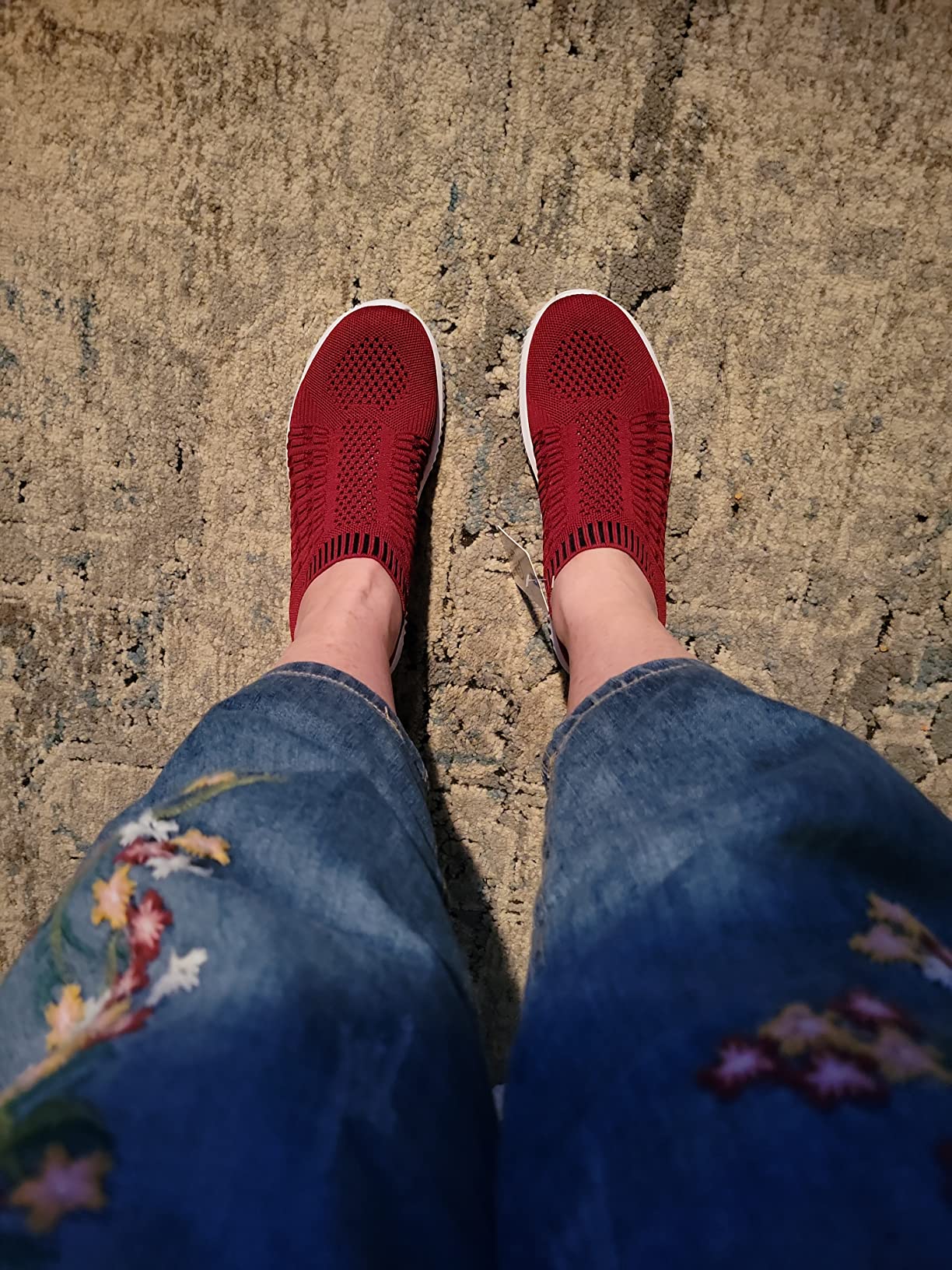
These shoes are for you if:
- Your primary activities are casual daily errands, light office use, or casual walking
- You live somewhere warm or primarily wear shoes indoors
- Slip-on convenience matters — kids, chaos, or just hating laces
- You’re a healthcare worker or teacher with neutral arches (consider an insole add for 12+ hours)
- You travel frequently and want packable, versatile footwear
- You have foot volume issues — bunions, hammertoes, mild swelling — and need an accommodating fit
- $30 is the right budget and you’re not willing to compromise on comfort within that
Skip these if:
- You’re in cold or rainy climates and need your daily shoes for outdoor commuting in weather
- You have flat feet, high arches, or plantar fasciitis without plans to add insoles
- Your activities include running, HIIT, court sports, or hiking
- You need shoes that can double as wet-condition footwear
- You require structured lateral support
Upgrade path: If you love the concept but need more support, the Skechers Go Walk Joy adds cushioning technology at $40–50. For serious all-day walkers, the Ryka Devotion Plus 3 or New Balance Fresh Foam Arishi V4 bring proper walking shoe structure at $60–80. And for something similar in the women’s sneaker category with more color personality, check the konhill Women’s Slip-On Loafers — same brand, different silhouette.
Frequently Asked Questions
Are these true to size?
For most colors, yes — true to size is accurate for standard and wide widths. The important exception: Pink, Mint Green, Lake Blue, and Brown colorways run a full size small. If you’re ordering those four colors specifically, go up one full size. Wide feet and thick-sock wearers should size up half regardless of color.
Do they provide enough arch support?
Honestly, no — not for demanding use. The cushioning is adequate for 6–8 hour casual days, but minimal arch structure means flat feet or high arches will notice the gap sooner. The good news: the insole is removable, so you can swap in your preferred aftermarket support. Sof Sole Athlete Insoles and Valsole Orthotic Insoles both fit well and extend the comfort window significantly.
How do I clean them?
For regular cleaning, a damp cloth with mild soap works well and protects the sole bond. Machine washing on gentle cycle with air dry is possible, but limit it to once a month maximum — frequent machine washing accelerates the sole-upper separation that’s the main failure mode. Never put these in the dryer.
Are they good for nurses or people who stand all day?
For 8–10 hour shifts with neutral arches: yes, genuinely. Multiple healthcare workers specifically recommend them for long shifts, and the stretch mesh accommodates foot swelling through a shift better than most structured shoes. If your shifts run 12+ hours on hard floors consistently, add an aftermarket insole for the last few hours of comfort. Flat-footed healthcare workers should invest in a more structured shoe or commit to insole support from day one.
Can I wear them in the rain or cold weather?
Rain: not really. The mesh saturates quickly in even light rain — a few minutes of walking in drizzle will leave your feet noticeably damp. Cold weather: below about 55°F, the breathable mesh stops being an asset. These are genuinely warm-weather or indoor shoes.
Can I wear these without socks?
Yes. The mesh is soft against bare skin and breathes well enough barefoot. Some buyers find that thin no-show socks prevent the removable insole from sticking to the foot and simplify the end-of-day insole-back-in routine. Either way works.
How long do these typically last?
Depends heavily on use frequency. Light use (2–3 days a week, varied surfaces): 18–24 months. Daily casual wear: 10–14 months. Heavy daily use on hard floors: 6–9 months. The upper mesh holds up well; sole-upper adhesion at the toe box is the first thing to watch.
Are they non-slip?
On dry surfaces — pavement, office floors, indoor tile — the rubber outsole grips well with no squeaking. Wet smooth surfaces (wet tile, rain-slicked floors) are a different story; the grip drops off quickly. Good for normal dry conditions; not for environments where wet floors are routine.
Be the first to review “konhill Womens Walking Shoes Slip On Sneakers”
Related products
Sneaker
Running Shoes
Sneaker

Running Shoes
Reviews
There are no reviews yet.