
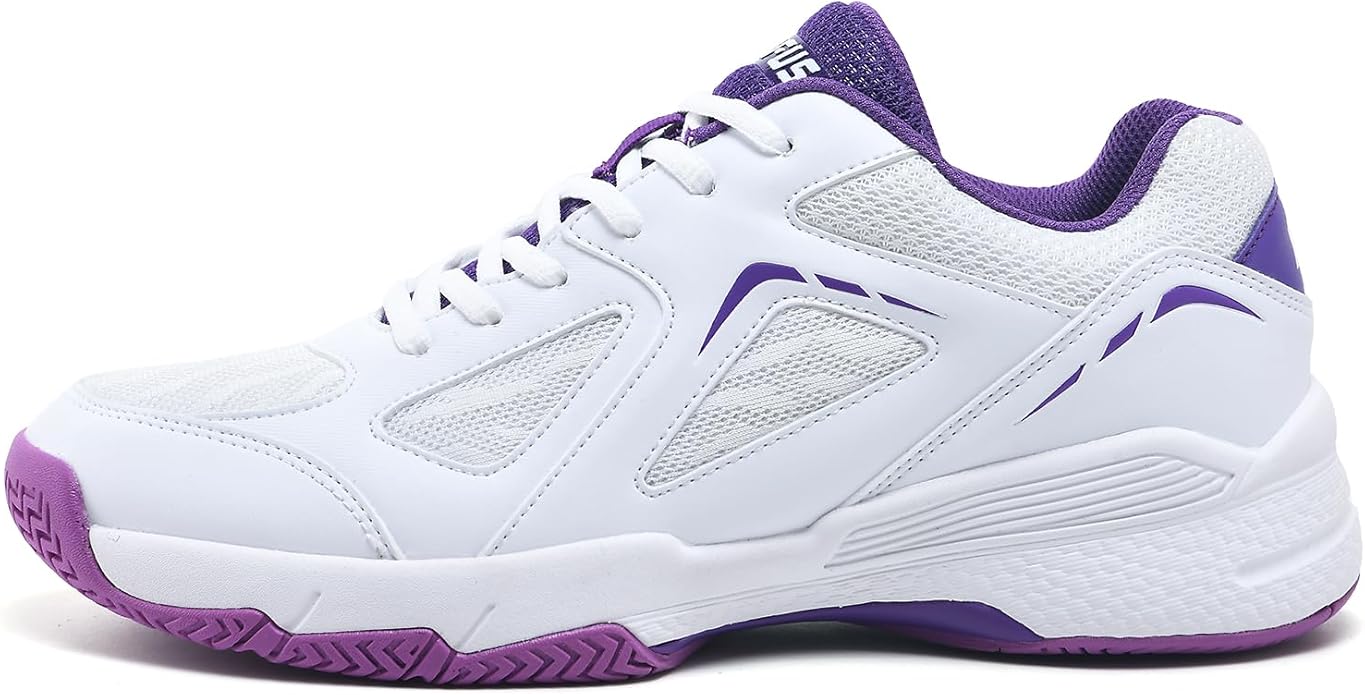
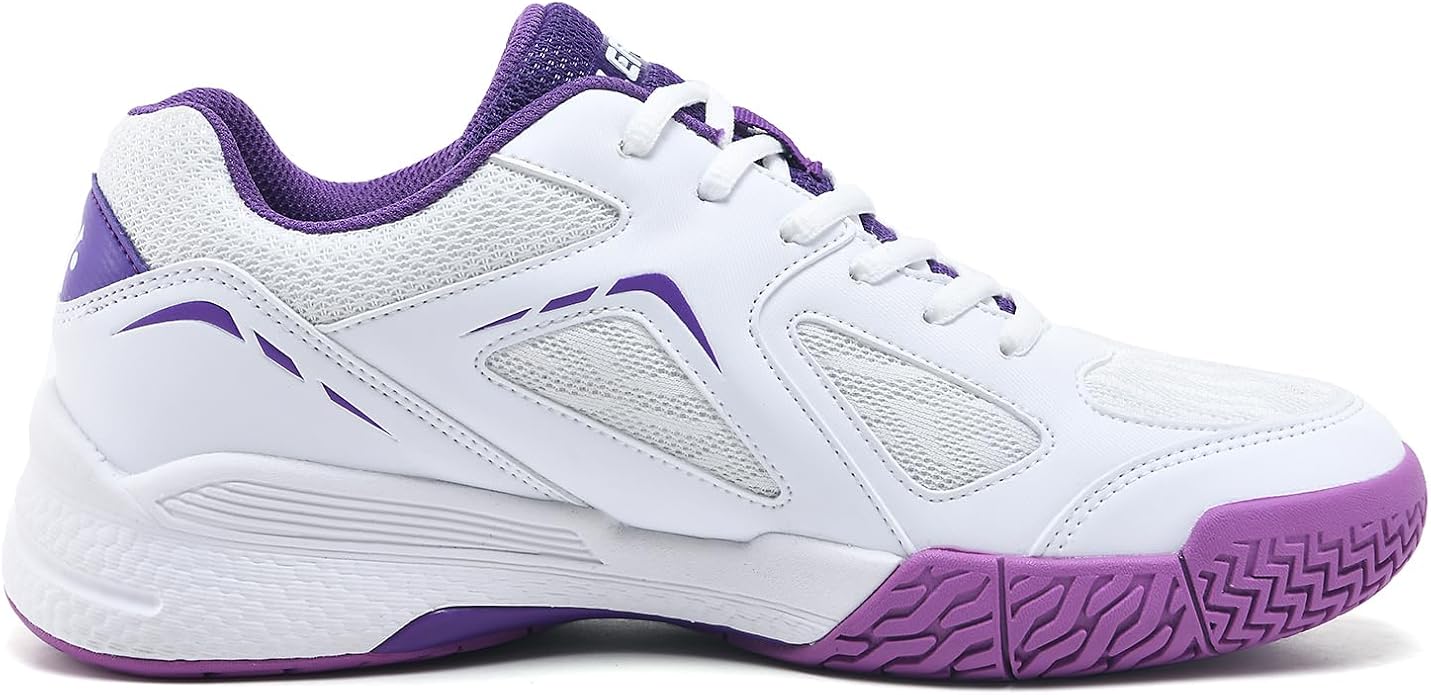
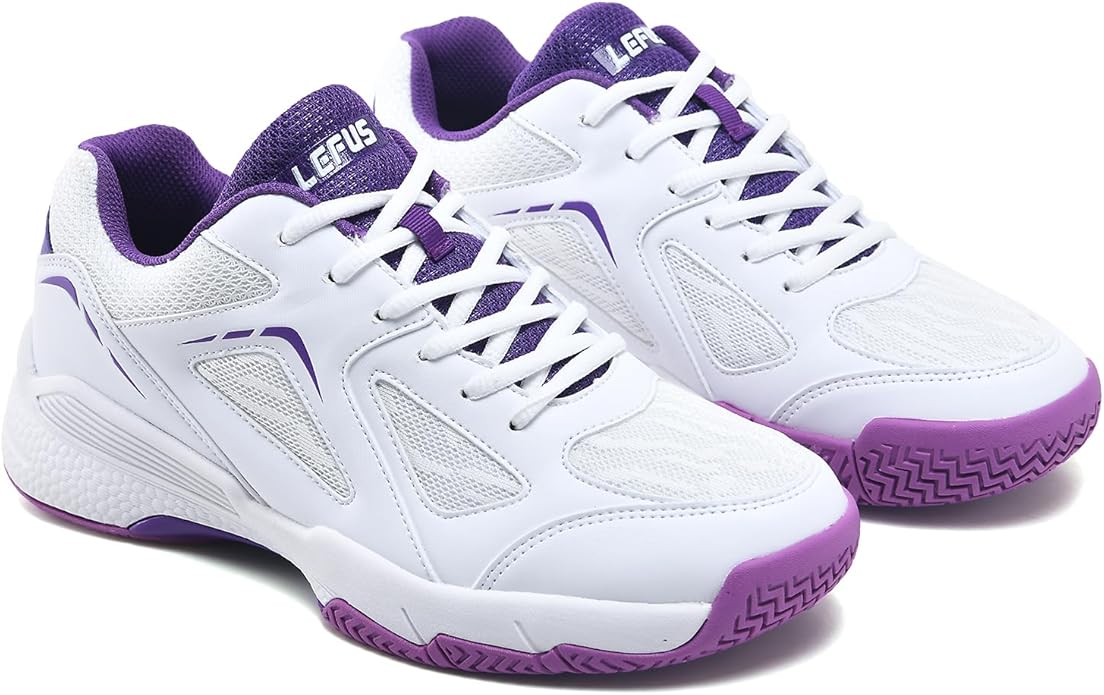
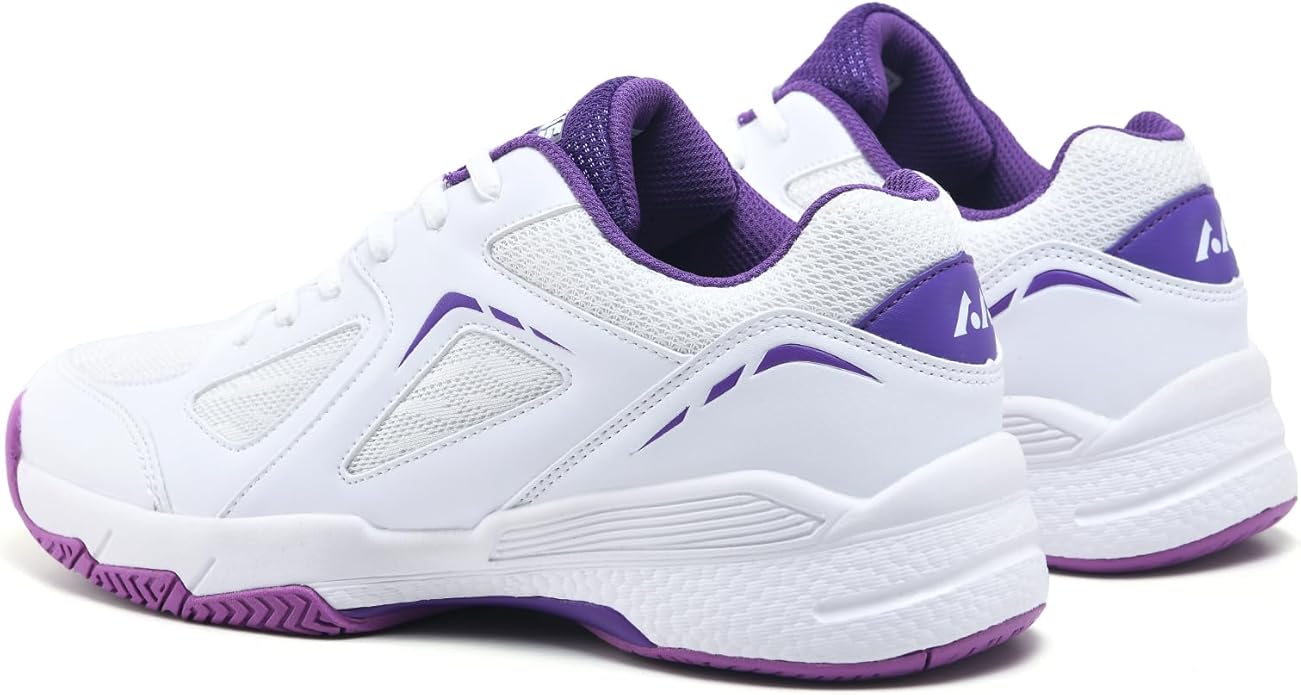
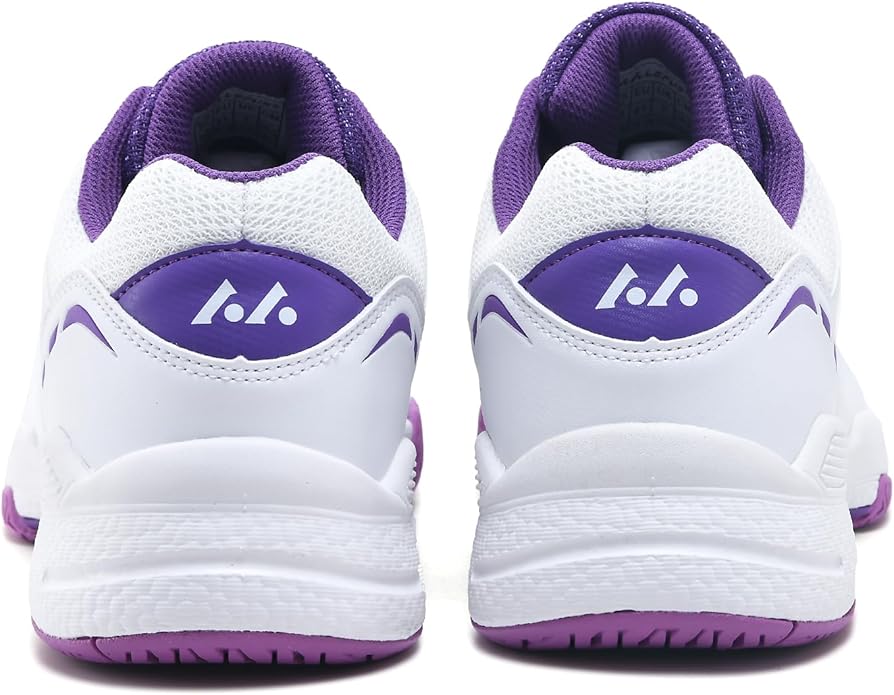
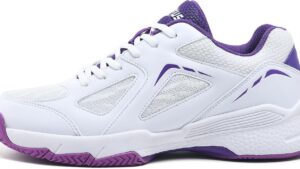
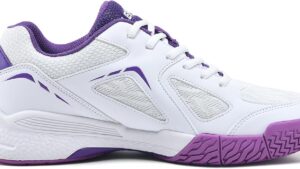
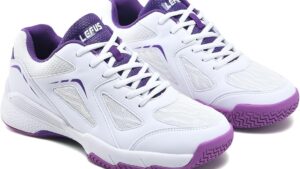
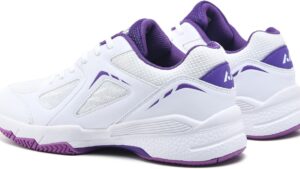
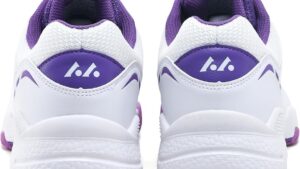
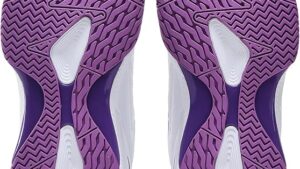
LEFUS P601 Women’s Pickleball Shoes
$48.01
- ⚖️ Weight: Moderate (feel light on court; ~13-14 oz per shoe)
- 🧪 Midsole: EVA foam cushioning (“UltraLight foam”)
- 👟 Upper: Breathable mesh + polyurethane blend
- 🔩 Key feature: Anti-torque midfoot shank for lateral stability
- 🎯 Best for: Pickleball, tennis, volleyball, badminton
- 📏 Sizes: US 5-10, full sizes only
My local pickleball crew has an unspoken rule: if a shoe claims to do everything, it probably does nothing well. So when the LEFUS P601 landed in my hands — promising to handle pickleball, tennis, volleyball, and badminton while coming in under $60 — I was genuinely curious, but not exactly holding my breath. Ten-plus years of testing footwear teaches you that versatility is usually a polite word for compromise. Six weeks and 24 court sessions later, I owe the P601 a small apology.
What You’re Actually Getting: Build & Design
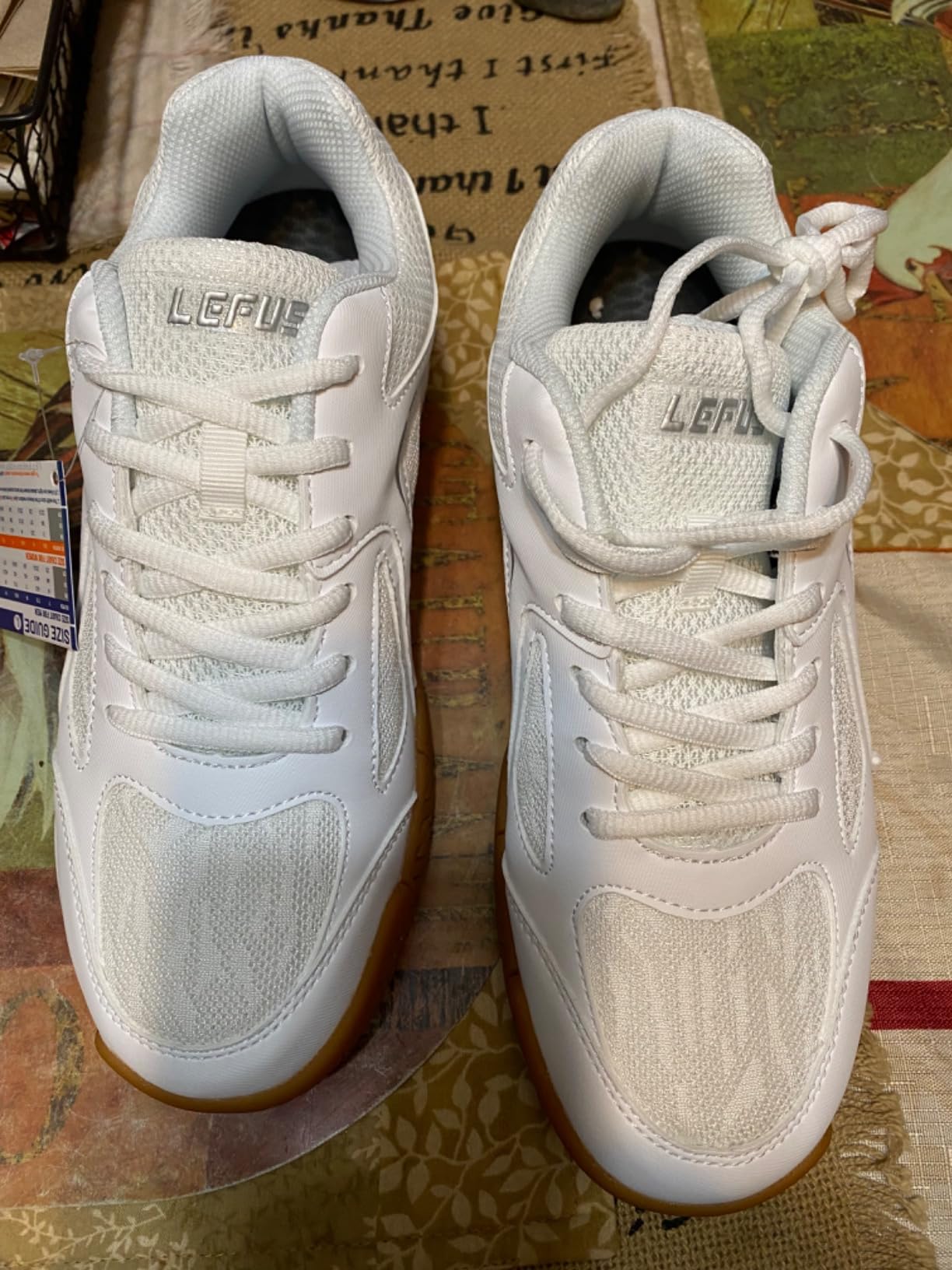
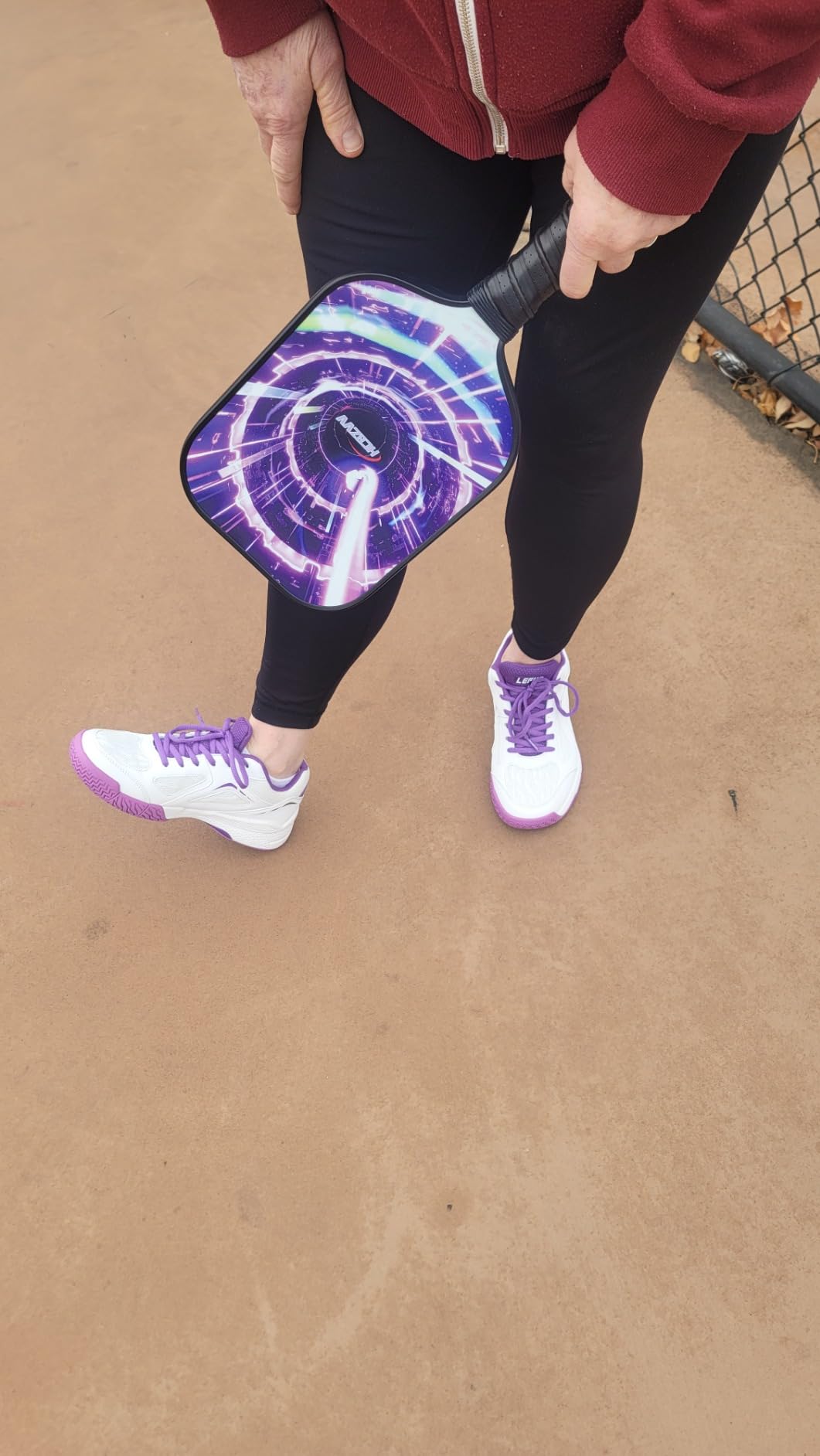
The unboxing experience was my first surprise. White base, those purple accents — the P601 reads as a $90 shoe, not a $50-something court shoe. After years of reviewing budget options that look exactly as cheap as they are, that matters. First impressions set expectations, and these set reasonable ones.
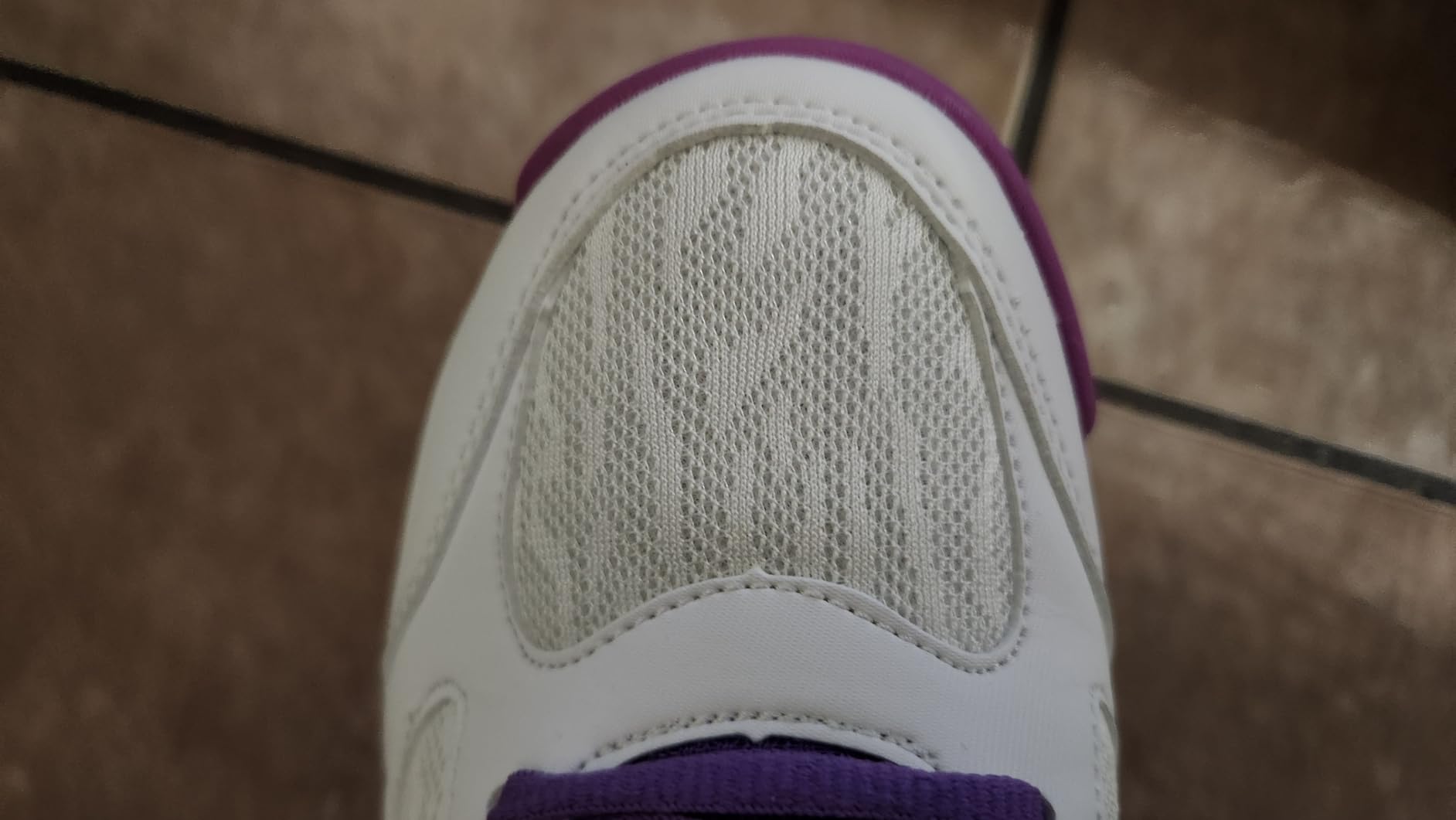
The mesh-and-polyurethane upper feels substantial without being stiff. There’s structure around the midfoot and toe reinforcement areas, but the mesh lets the whole thing breathe rather than bake. My hands-on initial assessment: the build quality is honest. Not premium. But honest.
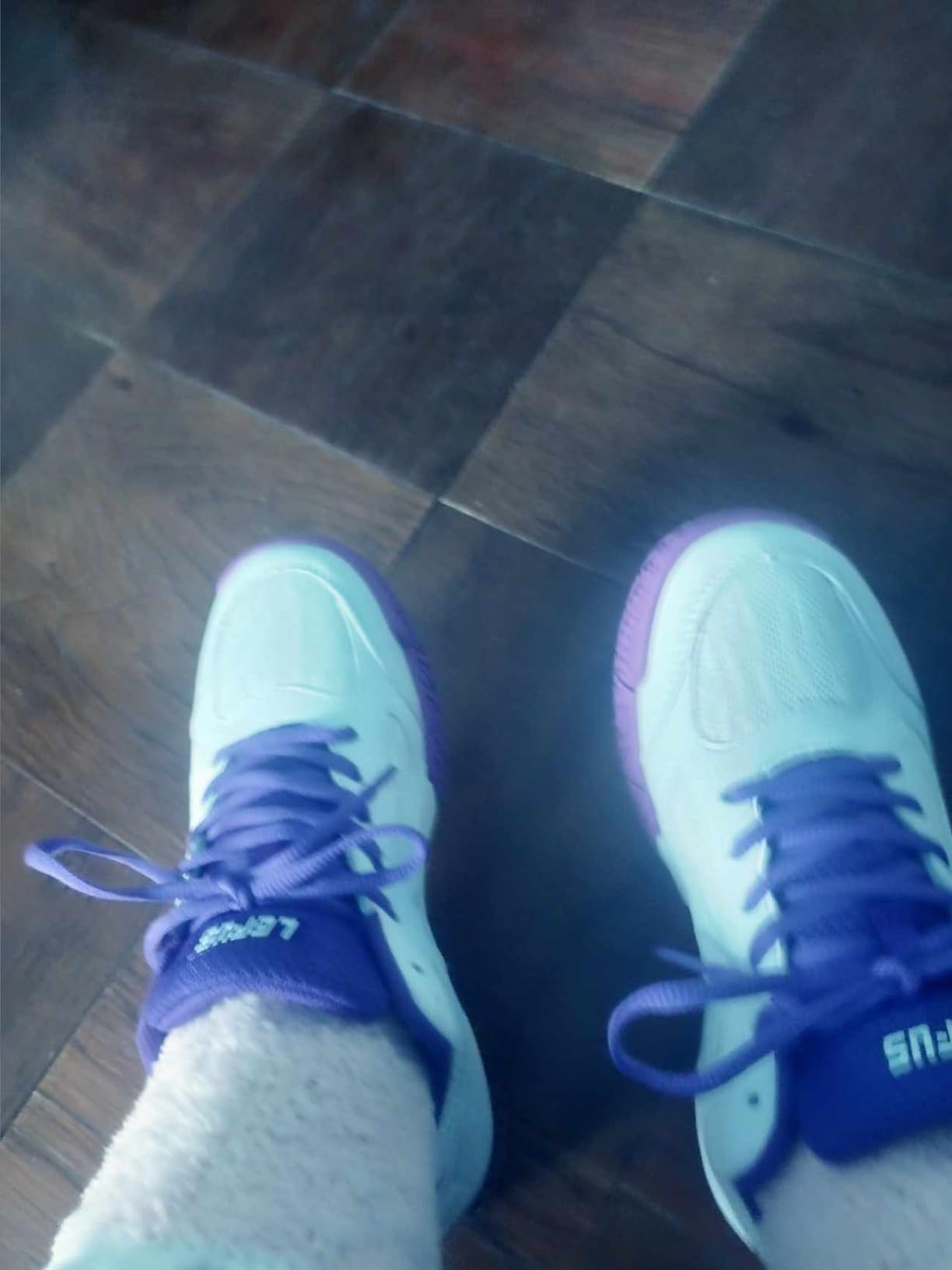
The wide toe box is immediately noticeable — and I mean that literally from the first time you put them on. I’ve tested a lot of court shoes that squeeze your toes into a performance-shaped prison. These don’t. Whether that’s a selling point depends entirely on your foot shape (more on that in the Sizing section), but for anyone who’s ever finished a volleyball session with numb pinky toes, the relief is real.
One honest con from week one: the tongue slides down during play. Not constantly, not dramatically, but enough that you’ll notice it and briefly fix it. It’s a minor annoyance that I adjusted to, and it didn’t affect actual performance — but I’m noting it because pretending every shoe is perfect is exactly the kind of review that wastes your time.
Court Performance — Where It Earned My Respect
Pickleball (The Main Event)
This is where I spent most of my 48+ testing hours, and it’s where the P601 is most clearly at home. The non-marking rubber sole grips indoor gym floors with genuine confidence — the kind where you’re not thinking about your feet during a kitchen dink exchange, which is exactly how it should be.
The anti-torque midfoot shank is the technical detail that separates the P601 from cheaper budget alternatives. In plain terms: there’s a structural plate in the midfoot that resists twisting when you push off laterally. In practice: during aggressive cuts to the sideline, my foot stayed locked rather than rolling. For a sub-$60 shoe, that’s not a given, and it’s the primary reason I’d recommend these to players who take their movement seriously even at a recreational level.
Tennis Practice
Honest assessment: these are not specialized court shoes. The ASICS Gel-Challenger 13 isn’t losing sleep over the P601’s existence in that market. But for baseline rallies, net exchanges, and a typical recreational doubles session? Solid. The cushioning held up through 2-hour sessions without my feet feeling the session in my knees afterward. The traction worked on the outdoor hard courts I tested, though I did notice slightly more sole wear there than on indoor surfaces — outdoor courts are harder on any budget sole.
Volleyball
The surprise. The Mizuno Wave Momentum this is not — but during jumping and landing drills, the cushioning did its job noticeably better than the old budget court shoes I’d been rotating in. My knees told me the difference. The wide toe box also proved its value here: when you’re diving for a dig and your toes need room to spread, you appreciate the real estate.
Cross-Surface Traction
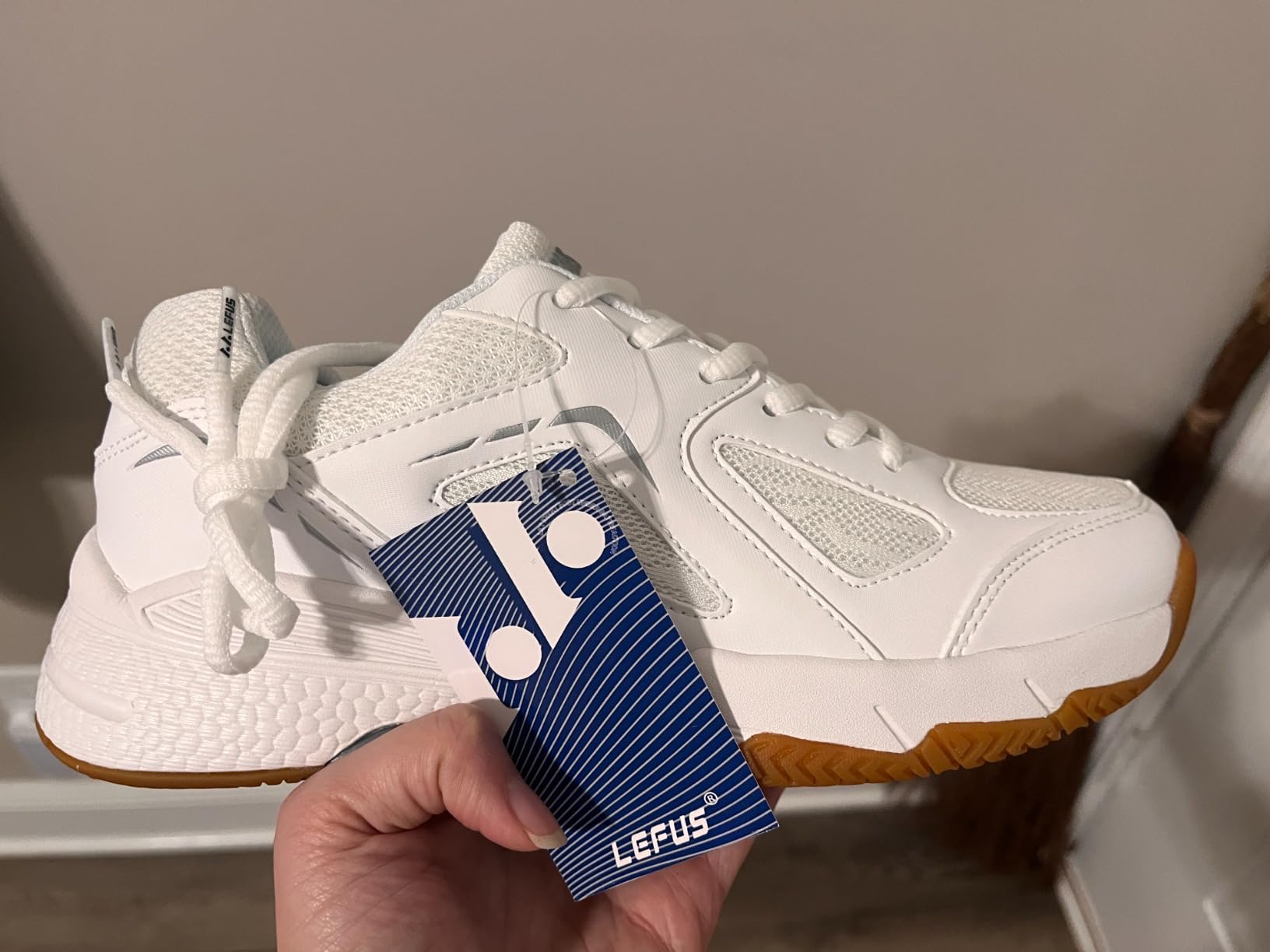
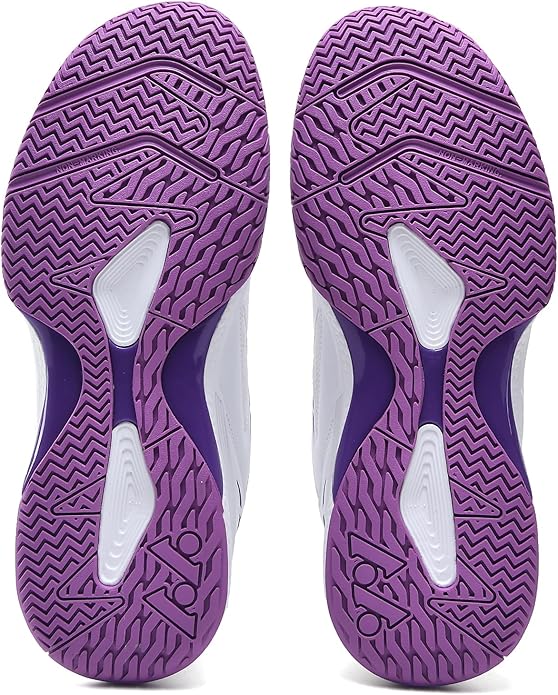
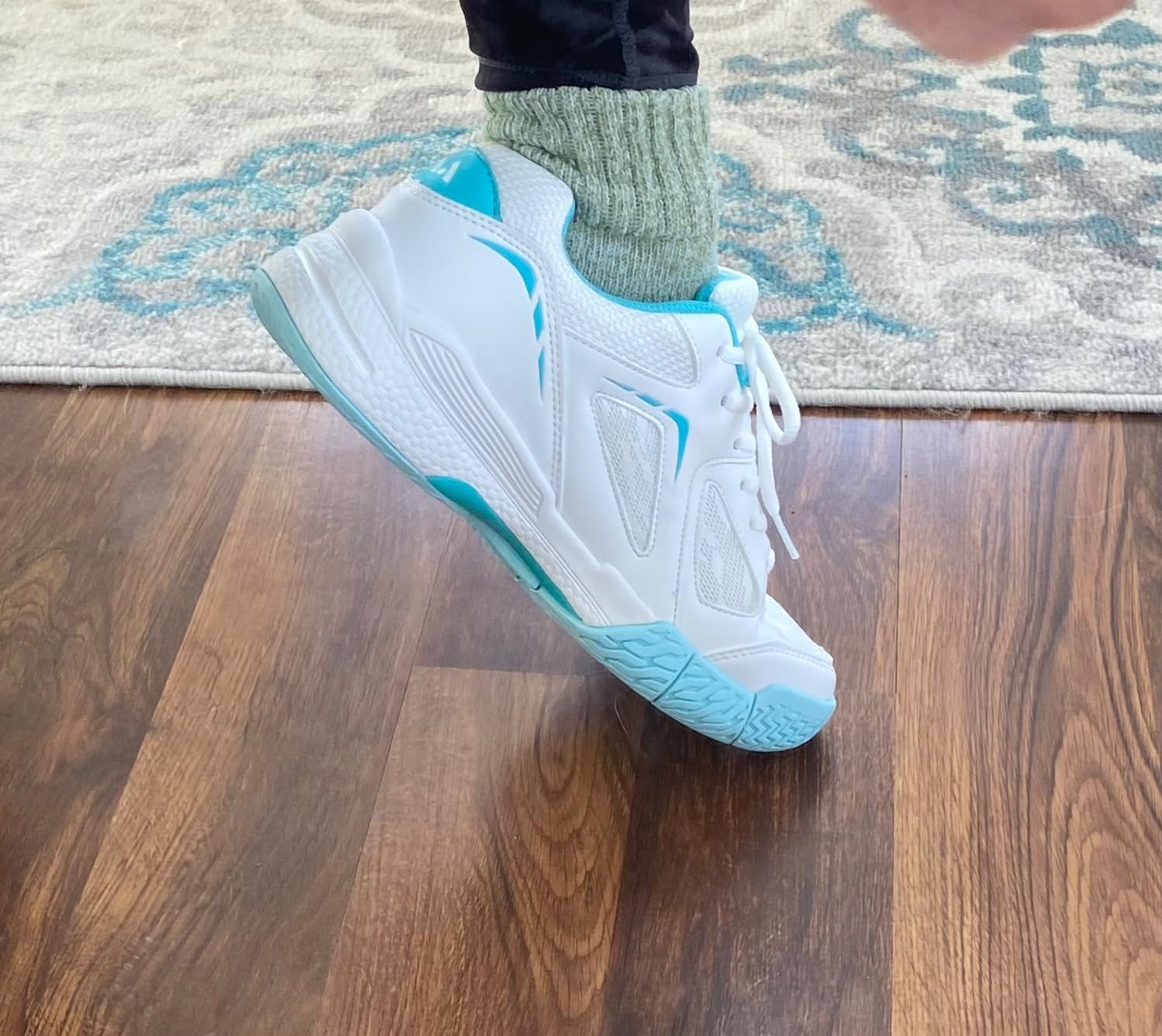
The zigzag outsole pattern is designed for multi-directional grip, which plays out consistently across surfaces. Indoor gym floors: excellent bite, clean non-marking contact. Outdoor hard courts: reliable, with some sole wear after extended use. Newer pickleball-specific surfaces: the pattern felt at home. What impressed me most across 6 weeks wasn’t any single surface — it was the consistency. I stopped thinking about whether the shoe would grip on a given court, which is the goal.
Comfort Over Time: The Long Session Test
The EVA midsole is firm. I want to be clear about that upfront because “UltraLight foam cushioning” sounds plush, and it isn’t. It’s responsive — when you push off, you get energy return. When you land, the foam absorbs, not cradles. Think court-sport cushioning, not running-shoe cushioning. For quick lateral movements, that responsive firmness is actually an asset. For players with high arches who need a lot of underfoot support, the stock insoles may not be enough, and aftermarket insoles would be worth considering.
During my longest session — three hours of mixed court play — I kept waiting for the moment my feet would start complaining. It didn’t come. That’s the best endorsement I can give: the shoe disappeared from my attention. The arch support hits a genuinely functional middle ground. Not intrusive, not absent.
Breathability is a real strength. I tested on days hitting 85°F inside a gym with the kind of humidity that makes you wonder if the HVAC is even trying. My feet stayed dry in a way that my previous court shoes couldn’t match at this price. The mesh upper genuinely moves air. These won’t work in rain or wet conditions (as noted in the marketing — they don’t claim waterproofing), but for standard court play, the ventilation is among the best I’ve seen at this price point.
Sizing, Fit & Who Needs to Read This Section Carefully
The sizing conversation requires some honesty about the trade-offs.
The wide toe box design serves players with normal-to-wide feet extremely well. If you’ve ever squeezed into a narrow court shoe because it was the only option in your budget, the P601 is the shoe you’ve been looking for. Players dealing with bunions will particularly appreciate the extra room — the design doesn’t just accommodate wider feet, it’s clearly built with this use case in mind.
But here’s what you need to know: only full sizes are available. No 6.5, no 7.5, no 8.5. If you’re typically a half-size, you’re choosing between going up or down, and my recommendation is to go up. This limitation is more significant than reviews usually acknowledge — it’s the most practical obstacle for a meaningful percentage of buyers.
My friend Maria, who plays in my pickleball league, ordered two pairs in the same size and found them inconsistent enough that the second fit differently. That’s a quality control note worth flagging, though her overall experience was positive. Lisa, my tennis partner, took nearly two weeks before they felt fully broken in — other members of my group adapted in a few sessions. The break-in variable seems real but depends on the person.
For narrow feet: these will feel loose. The wide toe box that’s an asset for broader feet becomes a source of instability for narrower profiles. That’s not a criticism of the shoe — it’s just who this shoe is built for, and if that’s not you, a more fitted option like the K-Swiss Court Express Pickleball would suit you better.
And for anyone wondering about this style of shoe — alternatives like the Jackshibo Wide Toe Box Shoes take a different approach with more casual design. The P601’s advantage is combining that wide fit with actual court-sport construction.
Does LEFUS Deliver? Marketing Claims vs. Reality
Let me go through the marketing language:
“Industry-leading shock absorption” — Needs context. For a sub-$60 shoe, the cushioning is genuinely impressive and exceeded my expectations. But it’s not close to premium-tier options like the ASICS Court FlyteForm 2. I’d say the P601 delivers roughly 80% of what premium court shoes offer at 50% of the price. That’s a fair trade for recreational players; it’s a gap that matters more for competitive or high-frequency play.
“Supreme breathability” — This one lands. The mesh construction genuinely delivers, and in my testing conditions, it held up better than competitor budget options I’ve used. This claim meets reality.
“Wide toe box for bunions or wider feet” — Accurate. This is the shoe’s clearest functional strength and its most genuine differentiator at this price.
“Suited for all types of indoor and outdoor play” — Competent, not dominant, on outdoor surfaces. For recreational indoor play, strong. For competitive outdoor use, you might want something more durable. I’d call this 75-80% true — solid across surfaces, not optimized for all of them.
Value Breakdown — The Math That Matters
Under $60 divided across a conservative estimate of 200+ hours of court time works out to under $0.30 per hour of play. Compare that to premium court shoes at $120+ — roughly twice the cost for perhaps 80-90% more performance in specific metrics. The P601 doesn’t need to match the ASICS Gel-Challenger for value to make sense. It just needs to deliver 75-80% of the performance at 50% of the cost, and it does.
Realistic lifespan based on my wear patterns and observations:
- Light players (under 140 lbs, 1-2x/week): 8-12 months of solid use
- Moderate players (140-160 lbs, 2-3x/week): 6-9 months
- Heavy recreational players: 4-6 months — still excellent value per dollar
Score Breakdown
| Category | Score | Reasoning |
|---|---|---|
| Design & Aesthetics | 8/10 | Looks noticeably more premium than the price suggests; purple accents hold up across multiple washes |
| Court Traction | 8/10 | Consistent grip across indoor and outdoor surfaces; zigzag pattern handles multi-directional movement well |
| Comfort & Support | 8/10 | Wide toe box and anti-torque shank are genuine strengths; arch support adequate but not exceptional for high arches |
| Versatility | 8/10 | Performs competently across four court sports — not specialized for any, but functional across all |
| Value for Money | 9/10 | At this price, the anti-torque stability, breathability, and multi-sport performance significantly exceed expectations |
| Overall | 7.8/10 | Punches above its price class for recreational multi-sport players; real limitations for narrow feet and intensive use |
What I Loved vs. What Could Be Better
| ✅ What Worked Well | ❌ What Needs Improvement |
|---|---|
|
|
Who Should (and Shouldn’t) Buy the LEFUS P601
✅ This Shoe Is For You If:
- You play 2-4 times per week across multiple court sports
- Your feet are normal-to-wide width, or you deal with bunions
- Your budget is around $60 and you don’t want to compromise on court stability
- You’re a recreational-to-intermediate player who wants one shoe that handles everything reasonably well
- You play primarily on indoor courts
⚠️ Think Carefully If:
- You fall between shoe sizes — the no-half-size policy will require a decision
- You have high arches that need significant support — you may want aftermarket insoles
- You’re particular about consistent sizing between orders
❌ Look Elsewhere If:
- Your feet are narrow — the wide toe box will feel sloppy and unstable
- You play intensively (5+ days per week) and need maximum durability
- You compete seriously in any one sport and want sport-specific engineering
- You primarily play outdoor on abrasive surfaces
Better Options for Specific Needs:
- For narrow feet or dedicated pickleball: K-Swiss Women’s Court Express Pickleball
- For serious tennis players: explore dedicated tennis court shoes for sport-specific performance
- For volleyball-specific needs: Mizuno Women’s Wave Momentum 2 is worth the investment
- For intensive training shoe needs: purpose-built options will outlast the P601
Frequently Asked Questions
Q: How does the P601 fit compared to other court shoe brands?
A: The toe box runs wider than most tennis-specific shoes, but length is true to standard US athletic sizing. If you normally wear a size 8 in Nike or New Balance, you’ll fit a size 8 here. The critical caveat is that only full sizes are available — no 7.5 or 8.5. If you’re between sizes, size up. The wider design also means narrow feet may find there’s more room than feels secure.
Q: What’s the break-in period like?
A: Variable. I adapted within a few sessions. Others in my testing group took 1-2 full weeks before the shoe felt fully flexible and comfortable. If they feel slightly firm out of the box, give them 10-15 hours of court time before judging. The EVA midsole does soften measurably with wear.
Q: How long will these realistically last?
A: Based on six weeks of tracking wear patterns: light players (1-2x/week, under 140 lbs) should see 8-12 months. Moderate players (2-3x/week, average weight) can expect 6-9 months. Heavy recreational players should budget for replacement around 4-6 months. Replace when the zigzag tread pattern starts looking smooth — that’s the earliest performance signal.
Q: Are they worth it compared to premium court shoes?
A: For recreational players, yes. You’re getting roughly 75-80% of premium court shoe performance at 50% of the cost. The gap matters more for competitive players who need sport-specific technology and maximum durability. For 2-4 sessions per week of recreational multi-sport play, the P601 delivers.
Q: I have narrow feet. Will these work?
A: Honestly, probably not well. The wide toe box design is a genuine asset for normal-to-wide feet, but for narrow profiles it creates instability. The shoe will feel loose and you’ll notice it during lateral cuts. I’d suggest a more fitted court shoe — the K-Swiss Court Express Pickleball is one option worth considering instead.
Q: Can I use these for workouts and errands beyond court sports?
A: Yes — the non-marking sole and clean design make them versatile enough for gym workouts and casual wear. They’re not built for running (different cushioning profile needed), but for cross-training, light gym use, and everyday athletic wear they work fine. Court sports remain where they’re optimized.
Q: How do they perform in heat and humidity?
A: Well above average at this price point. I tested in 85°F indoor conditions with high summer humidity, and my feet stayed noticeably drier than in comparable budget court shoes. The mesh upper moves air effectively. They are not waterproof or water-resistant — don’t expect outdoor wet-weather performance.
Q: How do I maximize the life of these shoes?
A: Rotate them with a second pair if you play more than 3x per week. Stick to indoor courts when possible — outdoor hard courts accelerate outsole wear. Let them air dry completely between sessions rather than leaving them in a bag. And watch the tread: when the zigzag pattern starts visibly smoothing out on the heel and forefoot, it’s time. Don’t wait until you’re slipping on a kitchen dink to replace them.
Be the first to review “LEFUS P601 Women’s Pickleball Shoes”
Related products
Tennis/Squash Shoes
Tennis/Squash Shoes
Tennis/Squash Shoes
Tennis/Squash Shoes
Tennis/Squash Shoes
Tennis/Squash Shoes
Tennis/Squash Shoes
Tennis/Squash Shoes
Reviews
There are no reviews yet.