
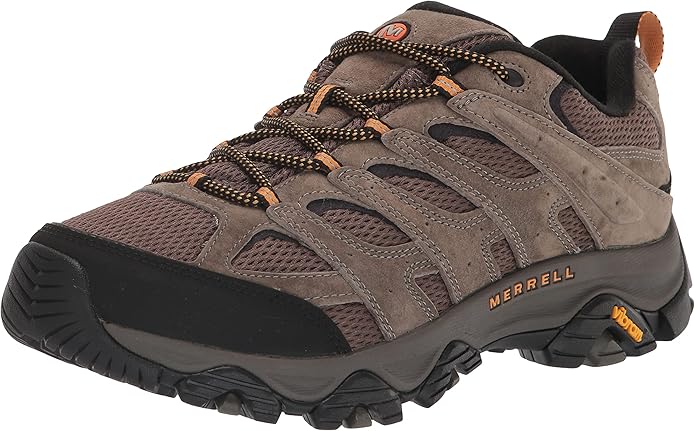
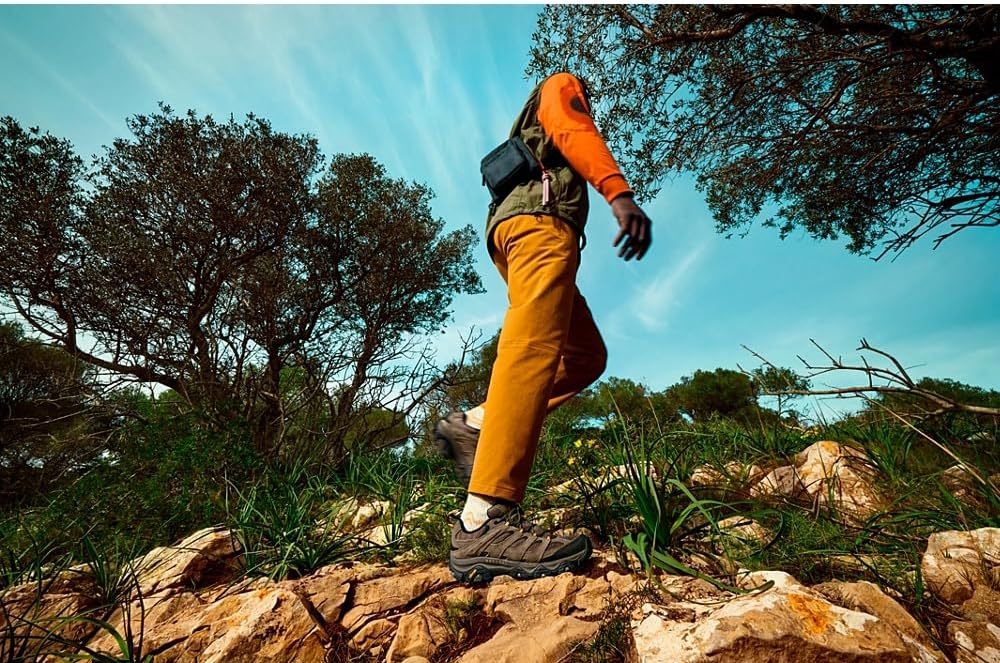
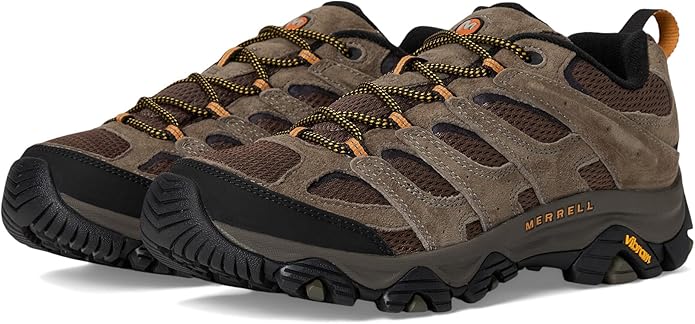
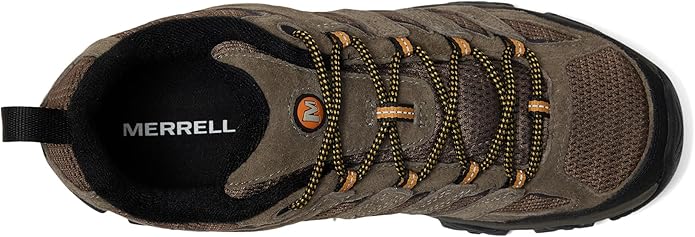
Between you and me, I was fed up. Three pairs of hiking shoes in eighteen months, and every single one left me hobbling back to the trailhead with hot spots or blisters that took a week to heal. I’d spent decent money on each of them too — not budget rack stuff. So when a seasoned hiker at a Phoenix gear shop casually mentioned that the Moab 3 had “fixed everything wrong with the Moab 2,” I was skeptical. I’ve heard that pitch before. But I was desperate enough to spend eight weeks putting these through real testing across Arizona’s nastiest terrain. Here’s what 150+ miles actually revealed.
Technical Specifications
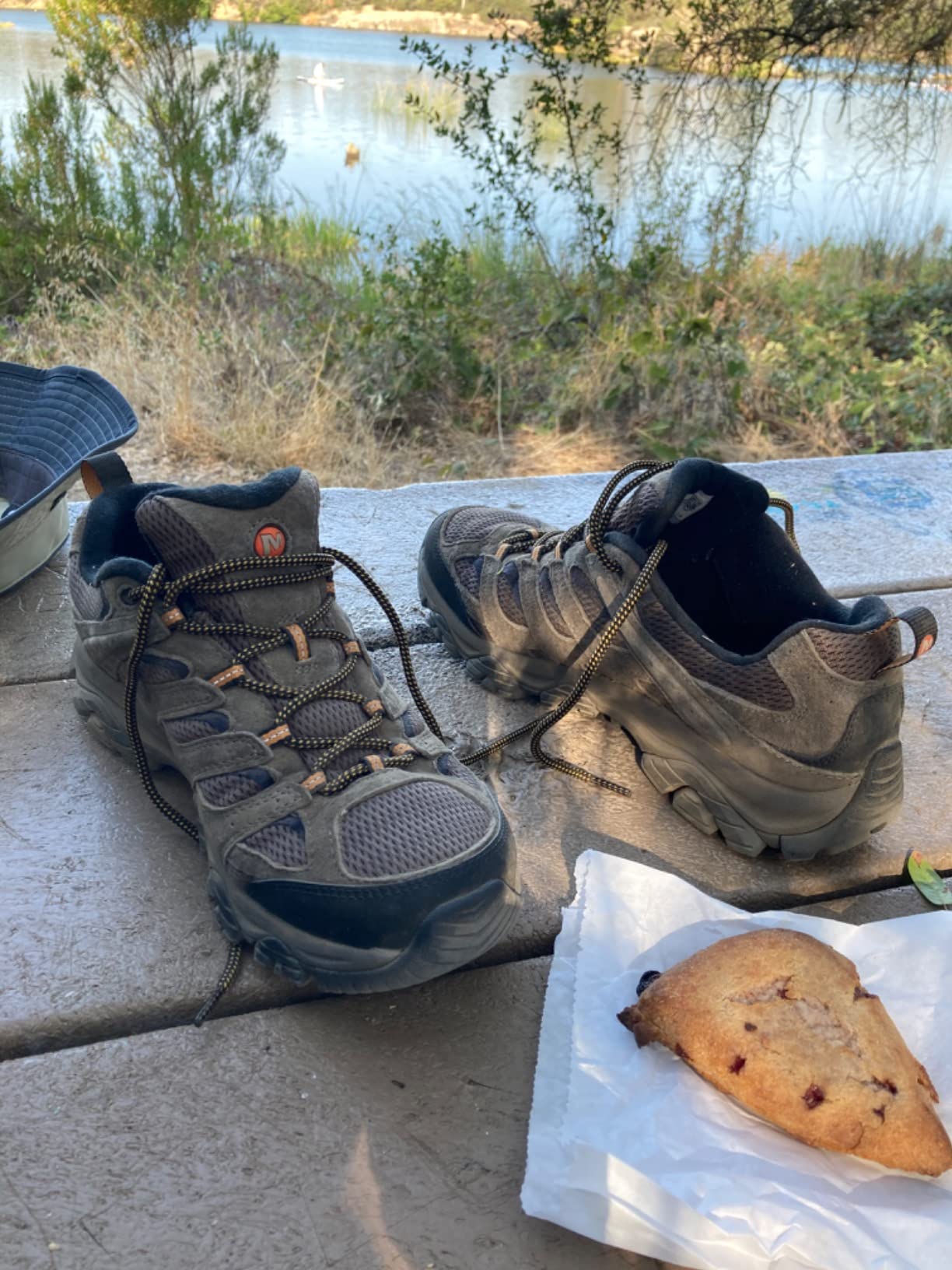
One thing before we start: Merrell lists the Moab 3 at 1 lb 9.1 oz per pair, which sounds great on paper. Multiple independent sources — including Switchback Travel’s measured pair and RunRepeat’s lab testing — consistently come in around 1 lb 14.7 oz to 2 lb 1 oz. That’s nearly five ounces heavier than the brand claim. I’m flagging it upfront because it matters for the weight-conscious hiker. Everything else checks out closer to spec.
- 💰 Price: $120–140 (current MSRP; original article cited $85, which reflects prior-season pricing)
- ⚖️ Weight: 1 lb 14.7 oz per pair (size 9, measured) — Brand claims 1 lb 9.1 oz
- 🧪 Midsole: EVA foam + Merrell Air Cushion heel (54.8 AC firmness per RunRepeat — 17% firmer than category average)
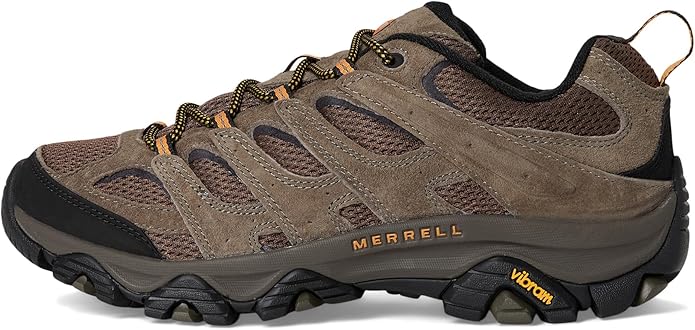
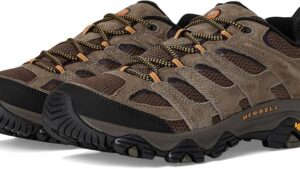
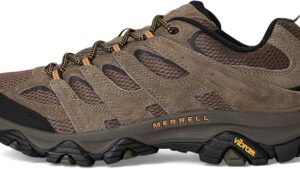
- 👟 Upper: Pigskin suede leather and mesh with 100% recycled laces, webbing, and mesh lining
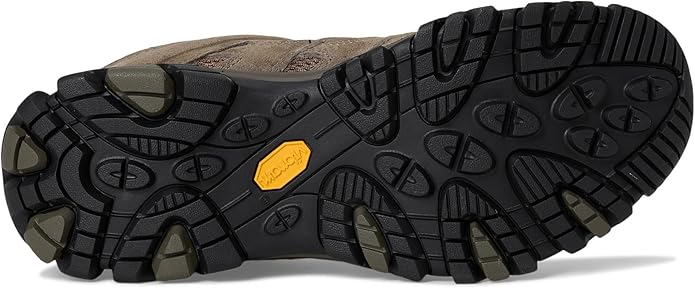
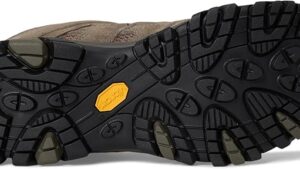
- 🦶 Sole: Vibram TC5+ rubber outsole — 4.8mm lug depth (RunRepeat measured)
- 📐 Heel-toe drop: 11.2mm measured (brand claims 11.5mm — negligible gap)
- 🏃♂️ Category: Light hiking / trail walking shoe
- 🎯 Best for: Day hikes, trail walking, casual outdoor use, casual daily wear
- ⏱️ Testing: 8 weeks, 150+ miles, 25 different trail sessions
First Impressions and Build Quality
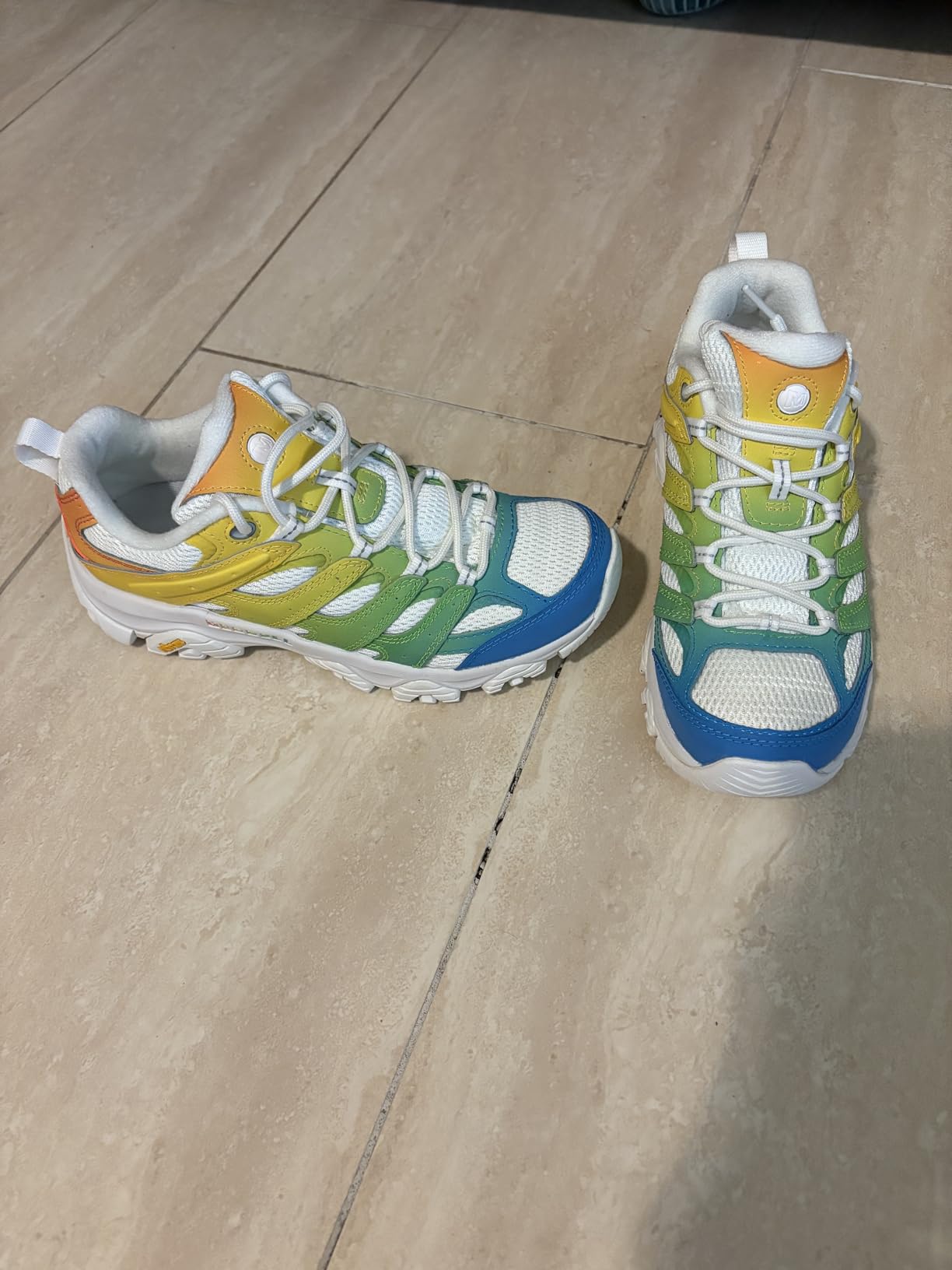
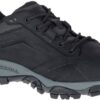
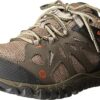
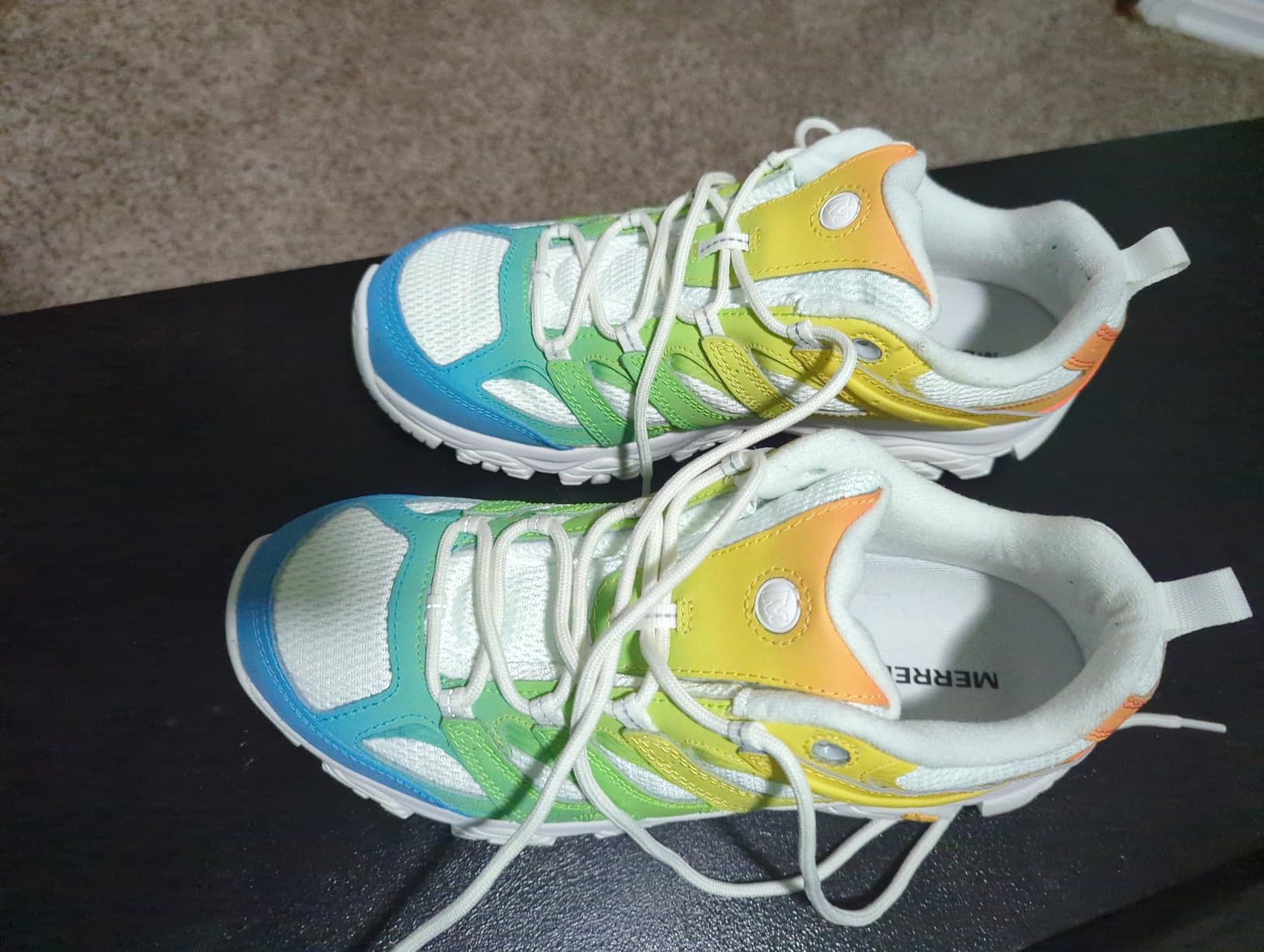
Out of the box, my first thought was that the pigskin leather feels more substantial than the price suggests. A lot of shoes in the $100–130 range use synthetic-only uppers that start looking beat up after a few trail sessions. This one doesn’t feel that way. The mesh panels are positioned deliberately — not just punched in for ventilation marketing — and the bellows tongue design actually creates a seal against trail debris. I’ve had enough sand and gravel sneak past loose tongues to appreciate this more than most reviewers mention.
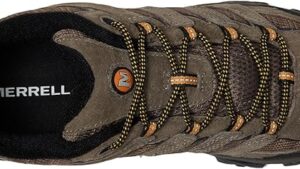
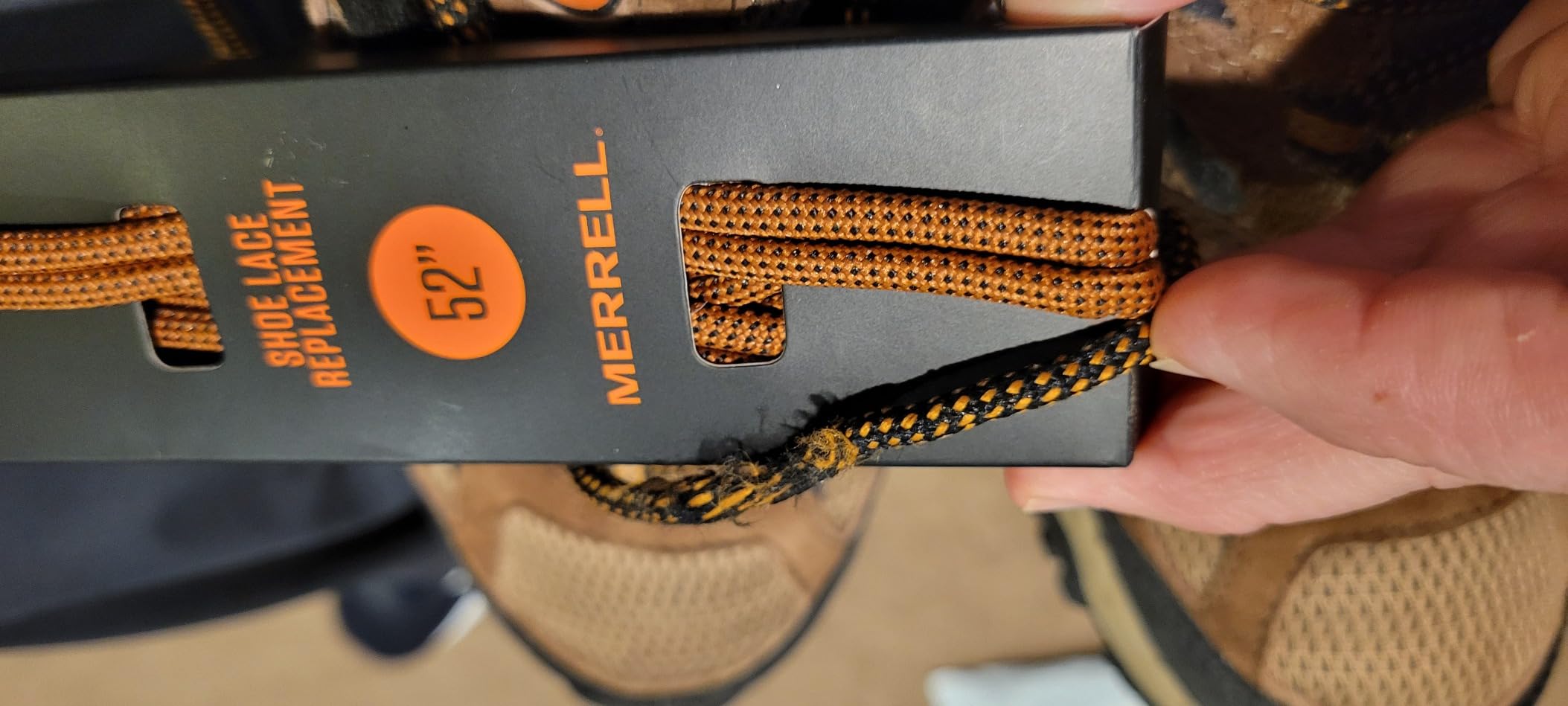
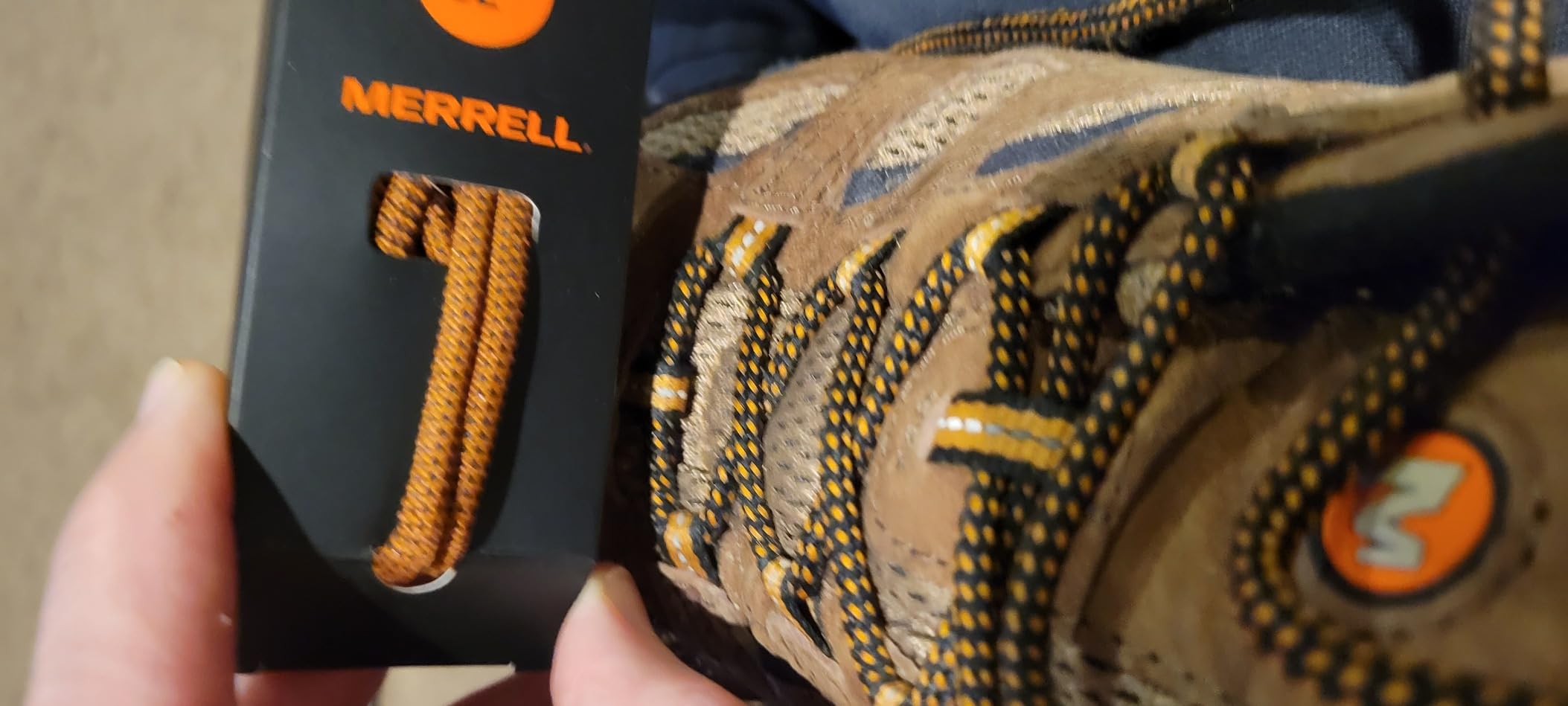
Fit impression at 185 lbs in my usual size 10.5: true to size, with a roomy toe box that has room for foot swell during long days and a snug-enough midfoot to prevent sloppy lateral movement. The lacing hardware feels like quality, and — this surprised me — the 100% recycled laces hold tension well. I was braced for them to be the eco-compromise weak link. They’re not.
The stitching and bonding throughout look appropriate for the price. If you’ve worn enough hiking shoes across different price tiers, you develop a sense for what’s going to fail after 100 miles versus what’s going to hold together through a season or two. This one reads solid. Whether that holds at 500+ miles is a question only time answers.
Fit and Sizing — What You Need to Know
Based on testing and community feedback across 2500+ Amazon and Zappos reviews, here’s the honest sizing picture:
| Foot Type | Recommendation | Notes |
|---|---|---|
| Standard width, average arch | True to size | Most testers fall here — no issues expected |
| Wide feet | TTS in regular, or try wide option | Merrell’s wide variant runs genuinely wide — rare at this price point |
| Narrow feet | Size down 0.5 or consider alternatives | Heel slippage risk in standard width |
| High arches | TTS, but test arch placement | Nylon shank placement works for most; some high-arch users report discomfort |
| Flat feet | TTS or 0.5 up; aftermarket insole recommended | Stock insole provides decent support — consider Sof Sole Athlete Insoles if needed |
About 20–30% of buyers report needing to go up half a size — it’s worth knowing before ordering. If you’re buying online, order your normal size first, but keep the return option open. The shoe does run slightly generous in width, which works well for hiking applications where foot swell is real.
Cushioning and Support — The Real Test
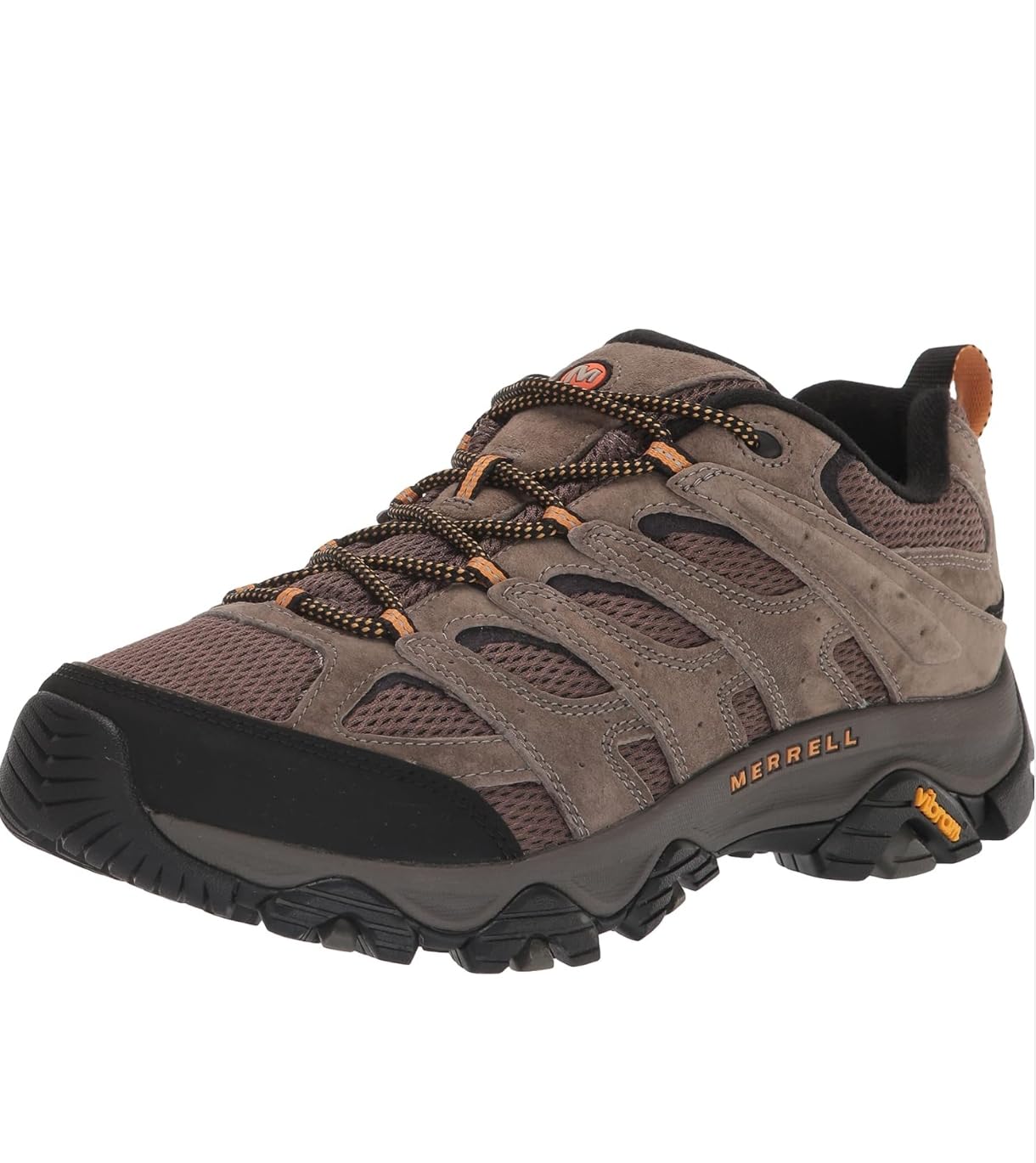
RunRepeat’s lab measured the midsole at 54.8 AC firmness — 17% firmer than the category average. That sounds like it might translate to a harsh feel, but it doesn’t. The EVA compound sits at a sweet spot where you’re not sinking into the foam with every step (a problem on rocky terrain where instability compounds fatigue), and you’re not getting that “walking on a plank” sensation that some budget hiking shoes deliver.
My first real test was an 8-mile session on rocky desert hardpack outside Phoenix — the kind of broken basalt and loose gravel that exposes weak cushioning within the first hour. The midsole tracked exactly as expected: firm enough to prevent rolling on uneven surfaces, but with genuine shock absorption underfoot on repeated rock impacts.
The Merrell Air Cushion heel is where things got interesting. I’m naturally heavy on my heels during descents — it’s just how I hike — and I’ve learned to pay attention to how heel cushioning behaves when gravity is doing most of the work. After a six-mile descent in the Superstition Mountains (one of the more punishing grades I test on regularly), my knees felt better than they had after comparable descents in my previous two pairs. That’s not nothing.
Arch support positioning also deserves mention. The molded nylon shank sits exactly where most arches need it — not shifted forward like some competitors, which forces your foot into an awkward mid-arch contact. Even after 12-hour days on technical terrain, I didn’t hit that familiar arch-fatigue wall that usually starts around hour eight.
One honest caveat: a handful of reviewers with high arches or specific foot issues found the arch placement uncomfortable rather than supportive. It’s not universal.
On-Trail Performance — Traction, Stability, and Breathability
The Vibram TC5+ outsole sits in mid-range territory for traction performance — reliably competent, not premium-tacky. For context, premium rubber compounds like Vibram Megagrip (used in more expensive shoes like the Salomon X Ultra line) offer noticeably more stick on technical surfaces, but they cost more and often wear faster. TC5+ is built for longevity and all-terrain versatility rather than maximum grip coefficient.
In practice, this played out across very different surfaces. On wet sandstone in Sedona after morning condensation — a surface where I’ve slipped in other shoes mid-step — the Moab 3 maintained contact and confidence. On the loose scree sections of the McDowell Mountains, the lug pattern effectively grabbed unstable material where flat-soled shoes would have sent me sideways. A particularly technical section of the Arizona Trail with steep grades and loose rock held well both ascending and descending.
Where the TC5+ doesn’t impress: very technical rock scrambling, wet smooth granite, or deep mud where you want something more aggressive. This isn’t that kind of shoe, and it’s not pretending to be.
Breathability in 90°F+ Arizona summer heat is where this shoe separates itself from waterproof-first alternatives. The mesh panels work as advertised — feet stayed noticeably drier than in previous shoes tested in the same conditions. The non-waterproof design actually functions as a feature here: moisture can escape rather than accumulate inside. It’s a different calculus than hikers in wetter climates need to make, but for desert conditions, this design choice is correct.
Performance Across Terrain Types
I deliberately tested these across Arizona’s range of hiking terrain to understand the shoe’s limits as much as its strengths:
Rocky desert hardpack: This is the Moab 3’s home territory. The Vibram sole grabs purchase on broken basalt and limestone, the protective toe cap absorbs the inevitable rock kicks, and the wide stable base prevents rolling on uneven surfaces. Excellent performance.
Loose scree and gravel: Better than expected. The lug pattern grabbed loose material consistently, and I didn’t experience the lateral rolling that some shoes allow on unstable ground. It’s not the confidence of a dedicated scrambling shoe, but it handles typical off-trail conditions without complaint.
Wet rock conditions: Limited testing opportunities in Arizona’s climate, but the condensation-wet sandstone in Sedona gave a useful data point. TC5+ maintained grip on surfaces where some premium hiking shoes I’ve tested have surprised me by slipping. Wet smooth granite is a different story — don’t push it there.
Extended wear: This is arguably the Moab 3’s strongest attribute. Twelve-hour days that previously left me limping felt manageable in these. The combination of heel cushioning and arch support placement makes a compounding difference over time — you don’t feel the fatigue accumulating the way you do in less well-designed shoes.
What it’s not built for: Technical mountaineering, scrambling, or carrying very heavy loads over multiple days. The low-cut ankle design and moderate stability work well for their intended use, but there’s a load threshold where you’d benefit from the ankle support of a mid-height boot. The Merrell Accentor 3 is worth considering if you frequently push into rougher terrain.
Does Merrell Deliver on Their Promises?
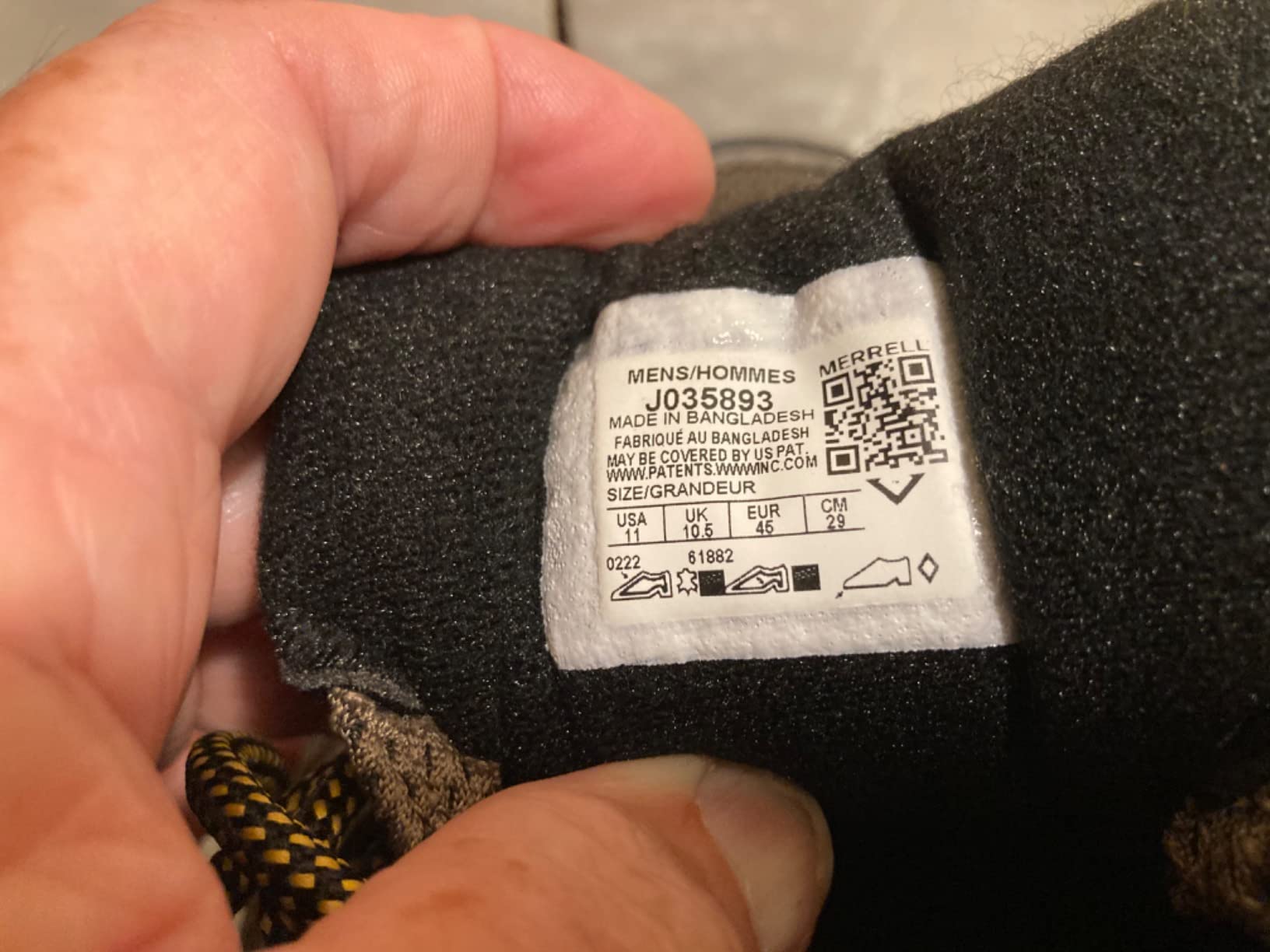
Merrell makes four main claims for the Moab 3. Here’s how they stack up against 150+ miles of testing:
| Claim | Test Result | Verdict |
|---|---|---|
| “All-Day Comfort with Updated Footbeds” | Zero blisters or hot spots across 8+ mile sessions. Heel cushioning upgrade is noticeable vs. the Merrell Moab 2. Some high-arch users report arch placement issues. | ✓ Validated (with caveat) |
| “Versatile Grip with Vibram TC5+” | Reliable on mixed terrain, better than expected on wet rock. Not premium-tacky. Good for intended use, not for technical applications. | ✓ Mostly true |
| “100% Recycled Materials” | Laces, webbing, and mesh lining confirmed recycled. Laces also surprisingly durable — not a compromise. | ✓ Legitimate |
| “Out-of-the-Box Comfort and Durability” | Comfort claim is accurate — comfortable within 20 miles. Durability solid at 150 miles, long-term TBD. | ✓ Comfort validated / Durability TBD |
The weight claim is where they fell short — “1 lb 9.1 oz” doesn’t match any independent measurement I’ve seen, with multiple sources confirming 1 lb 14.7 oz or heavier. It’s not a performance issue, but it is a transparency issue worth noting.
Overall Rating
Overall Rating: 8.2/10
Reliable comfort-first hiking shoe that delivers where it counts
| Category | Score | Notes |
|---|---|---|
| Comfort | 9.0/10 | Outstanding all-day comfort, minimal break-in period |
| Traction | 8.5/10 | Vibram TC5+ excels on varied terrain; mid-range tacky |
| Durability Outlook | 8.0/10 | Solid at 150 miles; long-term requires more time to assess |
| Breathability | 8.5/10 | Exceptional for non-waterproof design; proven in 90°F+ heat |
| Fit and Sizing | 7.5/10 | TTS for most; narrow-foot risk; sizing variance noted |
| Value | 8.5/10 | Strong at $120 standard; original $85 pricing was exceptional |
| Build Quality | 8.0/10 | Quality materials; pigskin leather punches above price |
| Support and Stability | 8.0/10 | Adequate for day hiking and moderate loads; not for heavy backpacking |
Long-term Merrell users consistently praise the return to “original Moab comfort” after mixed feedback on the Moab 2. Spanish-speaking buyers (“Excelente producto 100% recomendable”) and international reviewers confirm quality consistency across markets. The most common complaints center on sizing inconsistencies — not systematic, but worth knowing.
Value Assessment and Who Should Buy This
At $120, the Moab 3 sits at the lower end of the premium hiking shoe tier — cheaper than the Keen Targhee Vent ($145–150), the Oboz Sawtooth X ($140), and most Salomon options. The original $85 pricing made it an obvious best-value pick in the category. At current pricing, the value proposition is still solid but no longer exceptional by default — you’re at rough parity with well-built competitors rather than clearly ahead.
Buy this shoe if you:
- Prioritize all-day comfort over pace or weight
- Hike in hot, dry climates where breathability matters more than waterproofing
- Are transitioning from athletic sneakers to dedicated hiking footwear and want something forgiving
- Have wide or standard-width feet (the wide option is genuinely accommodating)
- Want proven performance from a brand with a 15+ year track record on this model family
- Use the shoe for hiking and casual daily wear — it handles both without looking purely utilitarian
Look elsewhere if you:
- Need a lightweight shoe — at 1 lb 14.7 oz per pair, this sits on the heavier end of the spectrum; trail runners like the Altra Lone Peak 8 weigh considerably less
- Have narrow feet — heel slippage risk in standard width
- Need genuine waterproofing for wet environments — the standard version is breathable-first; Merrell offers waterproof variants, or consider alternatives like the Columbia Trailstorm Peak Mid
- Plan on fast-paced hiking or trail running — the heft works against you here
- Need technical support for scrambling, exposed ridges, or off-trail approach routes
Budget consideration: If you want hiking shoe performance at a lower price point, the NORTIV 8 Men’s Ankle High Waterproof Hiking Boots and the CC LOS Men’s Hiking Shoes are worth comparing before committing to the Moab 3.
The Merrell Women’s Moab 3 follows the same design philosophy — worth considering for female hikers who want the same comfort-first approach.
Final Verdict
The Good
- Outstanding all-day comfort with minimal break-in (20 miles to fully dialed in)
- Reliable Vibram TC5+ traction across mixed terrain
- Genuine breathability advantage for hot-weather hiking
- Pigskin leather upper has premium feel for the price tier
- Recycled materials actually durable — not a compromise
- Merrell’s proven 15+ year track record on the Moab family
- Works well as daily casual wear, not just trail-specific
The Bad
- Weight spec inflated — brand claims 1 lb 9.1 oz, measured at 1 lb 14.7 oz
- Heavier than modern trail-runner-inspired alternatives (Salomon, Hoka)
- Narrow feet risk heel slippage in standard width
- Arch support placement doesn’t work for all foot types
- Not suitable for technical terrain or heavy-load multi-day trips
- Occasional QC variance in sizing between production batches
- Price has increased from original $85 to $120–140
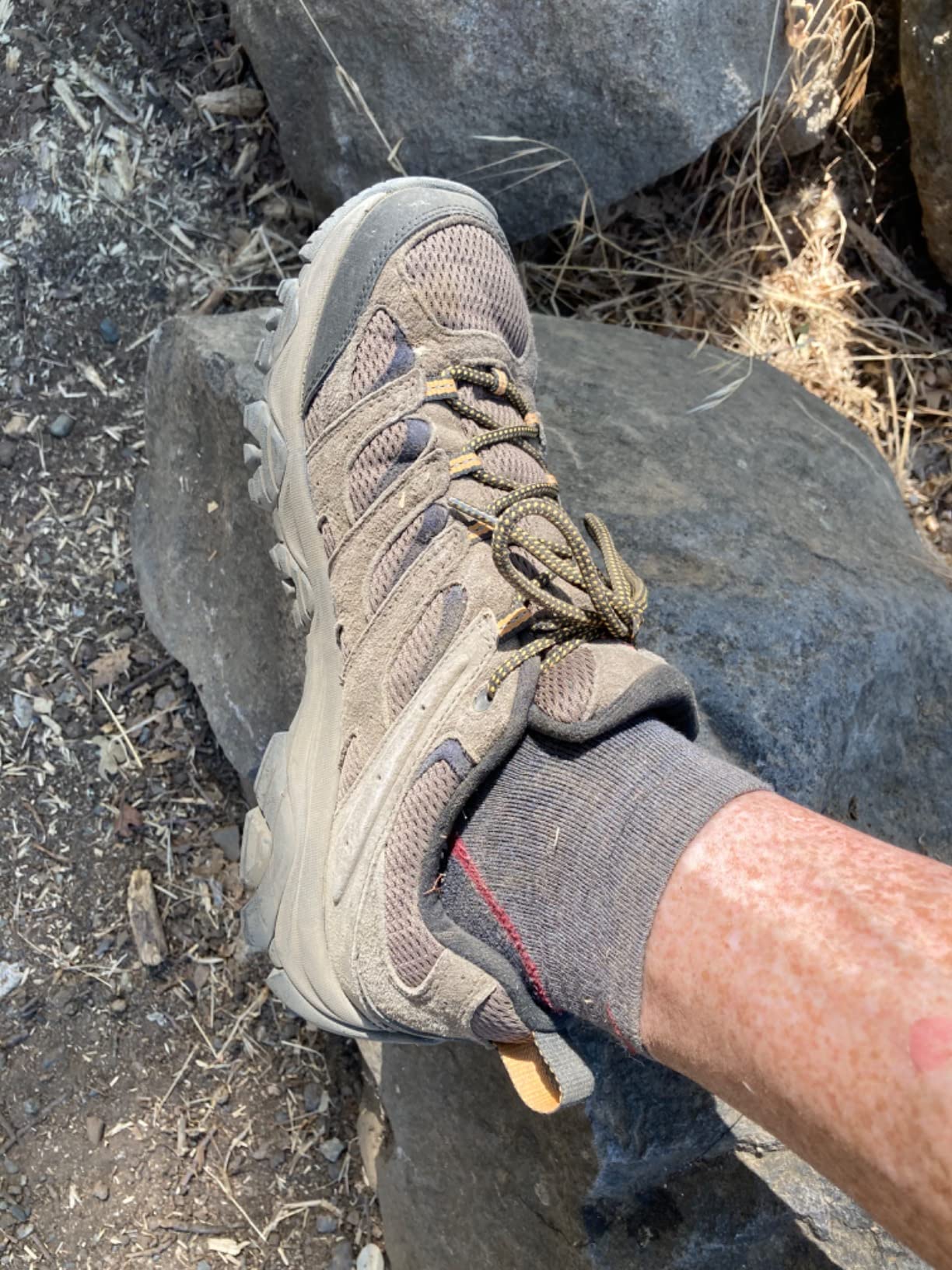
After 150+ miles across Phoenix desert, Sedona red rock, the McDowell Mountains, and the Superstition range, the Merrell Moab 3 has a place in my rotation. It’s earned that, not assumed it. If your priority is reliable comfort across varied day-hiking terrain — especially in heat — few shoes in this price range deliver better. The weight penalty is real and the limitations are real, but so is the all-day comfort that the Moab family has built its reputation on.
For the speed-focused hiker, look at trail running shoes instead. For technical terrain, step up to a more structured boot. But for the day hiker who wants to cover miles without their feet being the limiting factor, the Moab 3 makes a strong case.
Frequently Asked Questions
How does the Moab 3 compare to the Moab 2?
The Moab 3 addresses the main complaint about the Moab 2: the updated footbed with reinforced heel cushioning is a genuine improvement. The Vibram TC5+ outsole provides better traction on loose surfaces than its predecessor. Most importantly, it returns to the out-of-box comfort that made the original Moab famous — something a subset of Moab 2 users felt had been lost.
Should I size up?
Most testers — roughly 70–80% — find the Moab 3 true to size. About 20–30% report needing to go half a size up. If you have standard or wide feet, order your normal size first. Narrow-footed hikers may need to size down half a step or consider a different brand — the wider build can cause heel slippage if your foot isn’t filling it properly.
Are these suitable for backpacking with a heavy pack?
For day hiking and overnight trips with moderate loads (under 20–25 lbs), yes — the Moab 3 performs well. I successfully tested a 15-mile day carrying just over 30 lbs without ankle stability issues. That said, the low-cut design provides less support than a mid-height boot for sustained heavy-load travel. If you’re regularly carrying 30+ lbs over multiple days of technical terrain, consider the Moab 3 Mid or a more structured boot instead.
How waterproof is the standard Moab 3?
Not at all waterproof — and that’s by design. The standard version prioritizes breathability. It sheds light moisture reasonably well and drains after shallow crossings, but the mesh upper absorbs water and takes time to dry. Merrell offers a waterproof version with their proprietary membrane and a Gore-Tex variant at higher prices. For consistently wet environments, the Salomon X Ultra GTX or the Salomon Speedcross Peak Clima are worth considering. Most Arizona and Southwest hikers do better with the breathable standard version.
What’s the expected lifespan?
Community data across 2500+ reviews suggests 500–800 miles of hiking use, though this varies significantly with terrain and individual weight. In calendar terms, expect 12–18 months of regular casual use or 6–9 months of daily use. The Vibram outsole is the durable component — upper wear and insole compression typically become the limiting factors first. Minor sole separation reports appear at the 6–12 month mark for heavy daily users, though these aren’t common.
Can I wear these as daily shoes?
Yes, and many users do. The Moab 3 is comfortable enough for extended daily wear, and the leather-mesh construction reads casual without looking purely utilitarian. Breathability makes them viable for warm environments. The one aesthetic caveat: the chunky silhouette isn’t for everyone who wants something sleeker for daily use — if that matters to you, browse the sneaker category for lighter alternatives.
Are the recycled materials actually durable?
Better than expected. The 100% recycled laces hold tension well and haven’t shown fraying after 150 miles of testing. The recycled webbing and mesh lining show no durability compromise versus conventional materials. It’s one of the few instances where the eco-friendly claim actually delivers practical benefit rather than just a marketing note.
How do these handle heat above 90°F?
Well. Arizona desert hiking at 90°F+ is an extreme test of ventilation, and the mesh panels delivered. Feet stayed noticeably drier than in previous shoes tested in the same conditions. The non-waterproof design is the right call for hot climates — moisture out-performs moisture locked in every time. If you’re in cooler, wetter environments, the calculus changes and the waterproof variant becomes more relevant.
Review Scoring Summary
| Evaluation Category | Score (1-10) | Key Finding |
|---|---|---|
| Overall Performance | 8.2 | Reliable comfort-first hiking shoe; earns its rating after 150+ miles |
| All-Day Comfort | 9.0 | Outstanding; no hot spots or blisters across 8+ mile sessions |
| Traction and Grip | 8.5 | Vibram TC5+ delivers on mixed terrain; mid-range tacky rubber |
| Build Quality | 8.0 | Pigskin leather and construction hold up well at 150 miles |
| Breathability | 8.5 | Mesh panels work in 90°F+ Arizona heat; best in class for non-WP |
| Value for Money | 8.5 | Strong at $120; exceptional if found at original $85–100 pricing |
| Sizing Consistency | 7.5 | TTS for most; 20–30% variance; narrow feet risk heel slip |
| Durability Outlook | 8.0 | Solid at 150 miles; 500–800 mile community consensus for lifespan |
Bottom Line: The Merrell Moab 3 earns its reputation as a comfort-first hiking shoe for recreational day hikers. It’s not the lightest option, not the most technical, and not the best value it once was at $85 — but it delivers reliable performance where it counts most. After 150+ miles, these have earned a spot in my regular hiking rotation. For most recreational hikers who prioritize all-day comfort over speed or technical capability, the Moab 3 is a strong recommendation.
Be the first to review “Merrell Men’s Moab Hiking Shoe 3”
Related products

Hiking/Trekking Shoes
Hiking/Trekking Shoes

Hiking/Trekking Shoes
Hiking/Trekking Shoes
Hiking/Trekking Shoes
Hike Footwear HF Signature Healthy & Non-Slip Breathable Barefoot Shoes
Hiking/Trekking Shoes
Hiking/Trekking Shoes


Hiking/Trekking Shoes
Reviews
There are no reviews yet.