
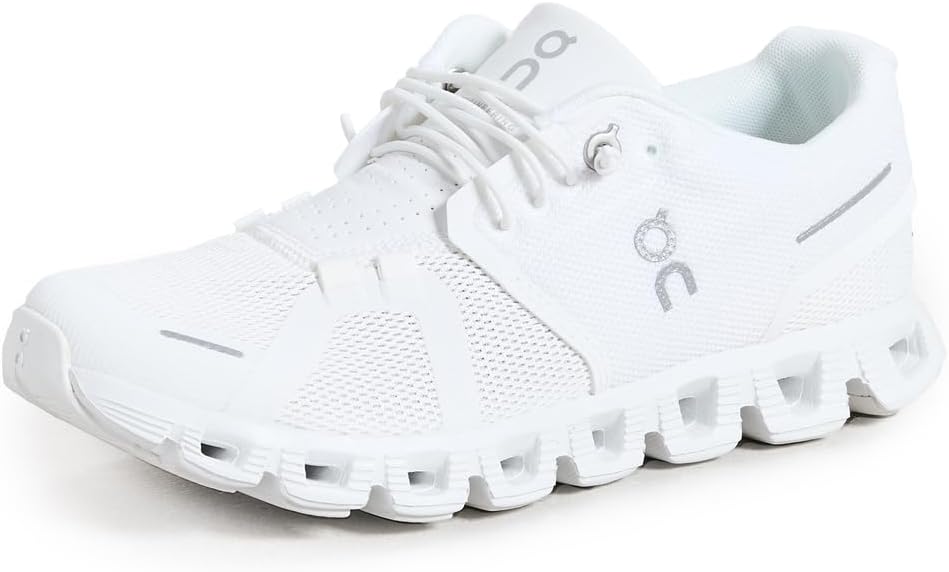
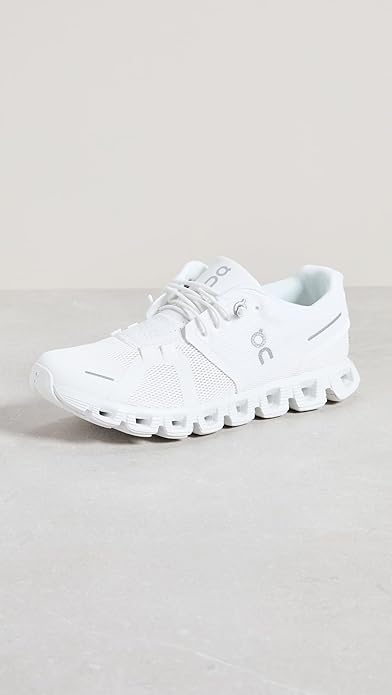
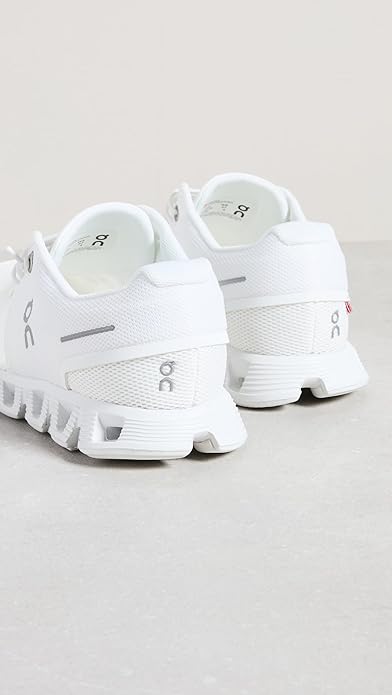
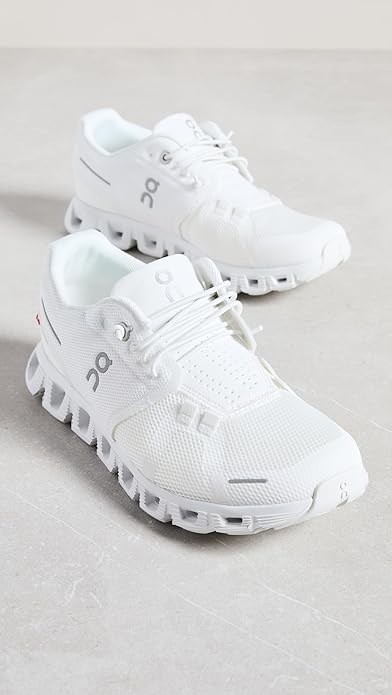
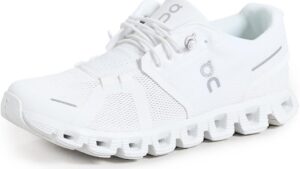
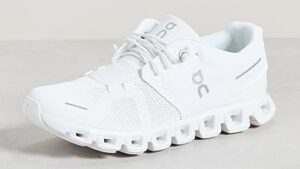
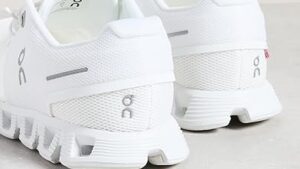
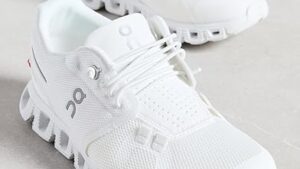
On Women’s Cloud Sneakers Low-Top Pearl
$149.95
- 💰 Price: $160 (On.com direct) — avoid Amazon if you want warranty coverage
- ⚖️ Weight: ~7.2 oz (Women’s standard size)
- ↕️ Drop: 8mm heel-to-toe
- 🧪 Upper: Engineered mesh, 70% recycled content
- 👟 Midsole: CloudTec pods + Speedboard propulsion plate
- 🎯 Category: Lifestyle sneaker (not a running shoe)
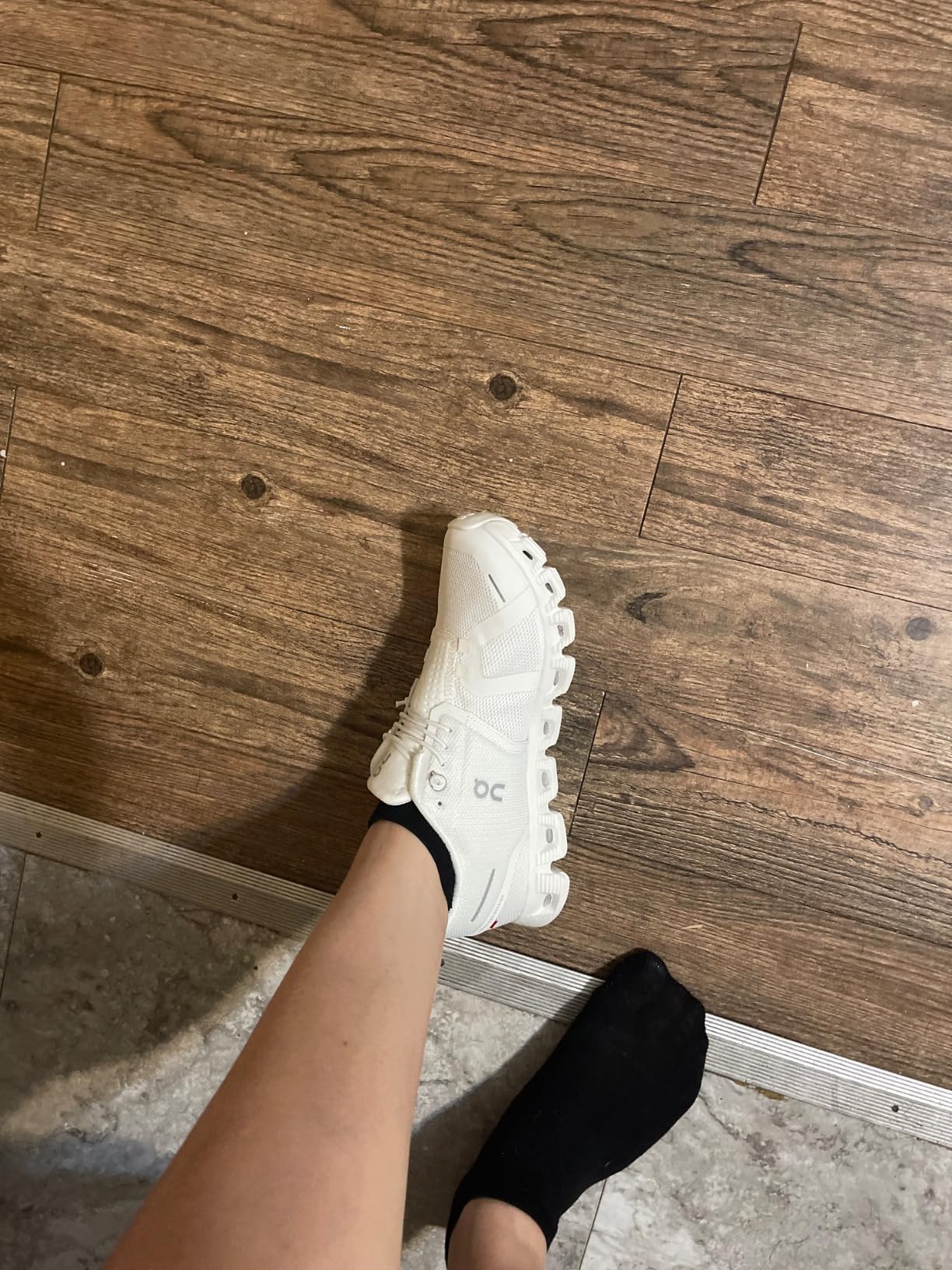
- 🔧 Closure: Elastic speed lace (traditional laces included in box)
- 📦 Insole: Removable
There’s this woman at school pickup — she shows up every morning in these sleek white sneakers, and for three months straight I watched her glide across the parking lot looking completely unbothered while I shuffled along in my old running shoes that had seen better days. One Tuesday she caught me staring. “On Cloud 5,” she said, before I even asked. “You’ll never go back.” I’m Sarah, and I bought a pair the following weekend. Six months, hundreds of school pickups, one office move, and two yoga classes a week later — here’s the full truth, including the part she didn’t warn me about.
What Makes the On Cloud 5 Different
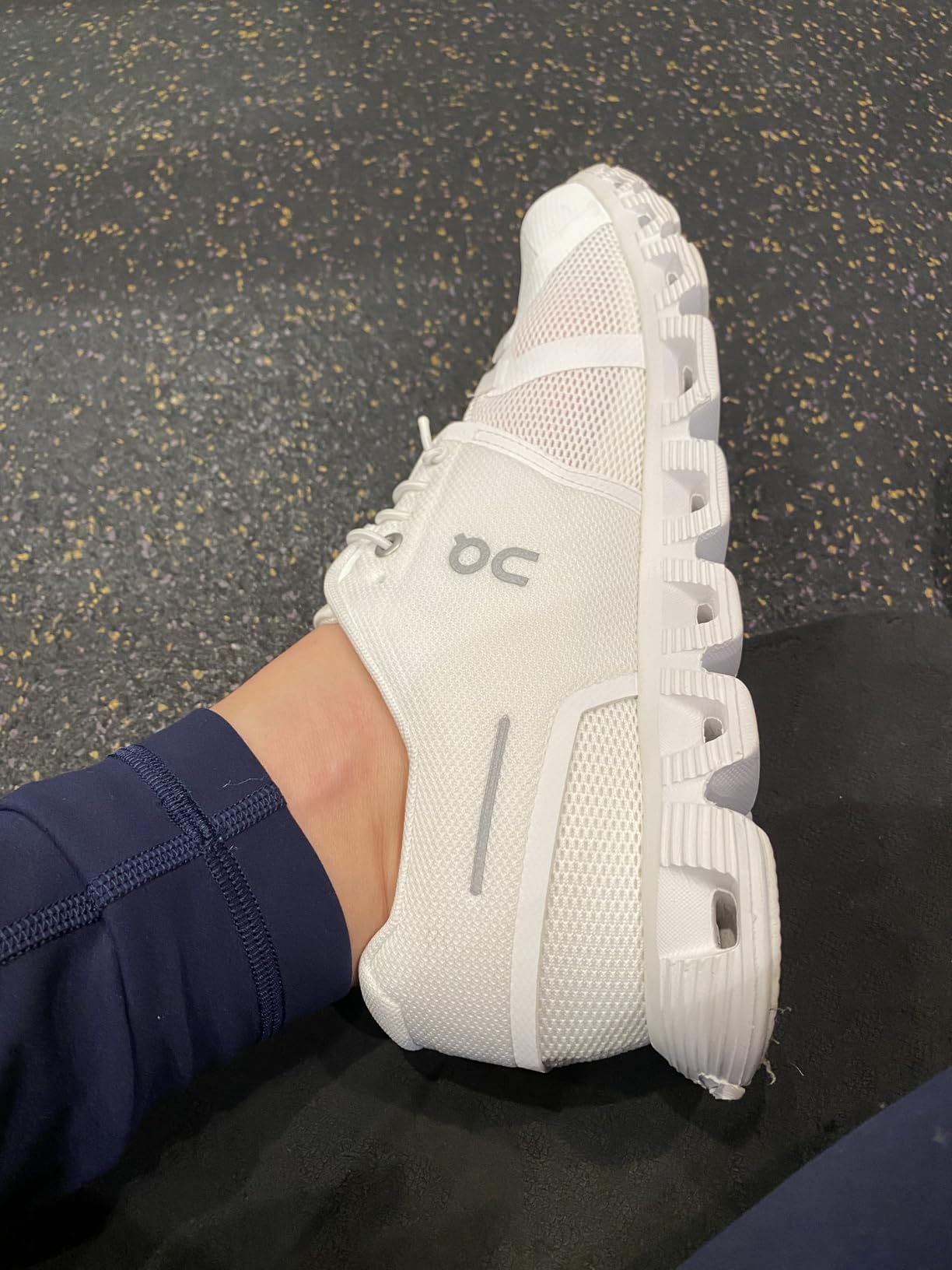
On Running is a Swiss brand, and the Cloud 5 is built around their patented CloudTec technology — hollow rubber pods on the outsole that compress under your weight and spring back as your foot lifts. Paired with the Speedboard (a semi-rigid plate embedded in the midsole that channels energy forward), the system is designed to make each step feel cushioned on landing and energized at toe-off.
One thing to understand upfront: the Cloud 5 is a lifestyle sneaker, not a performance running shoe. On originally marketed the Cloud line for running back in 2014, but the Cloud 5 has since been repositioned for everyday wear. That matters for how you evaluate everything else in this review — comfort is the primary design goal, not biomechanical efficiency for high mileage.
The Slip-On Design That Changes Your Morning
Speed Lace System
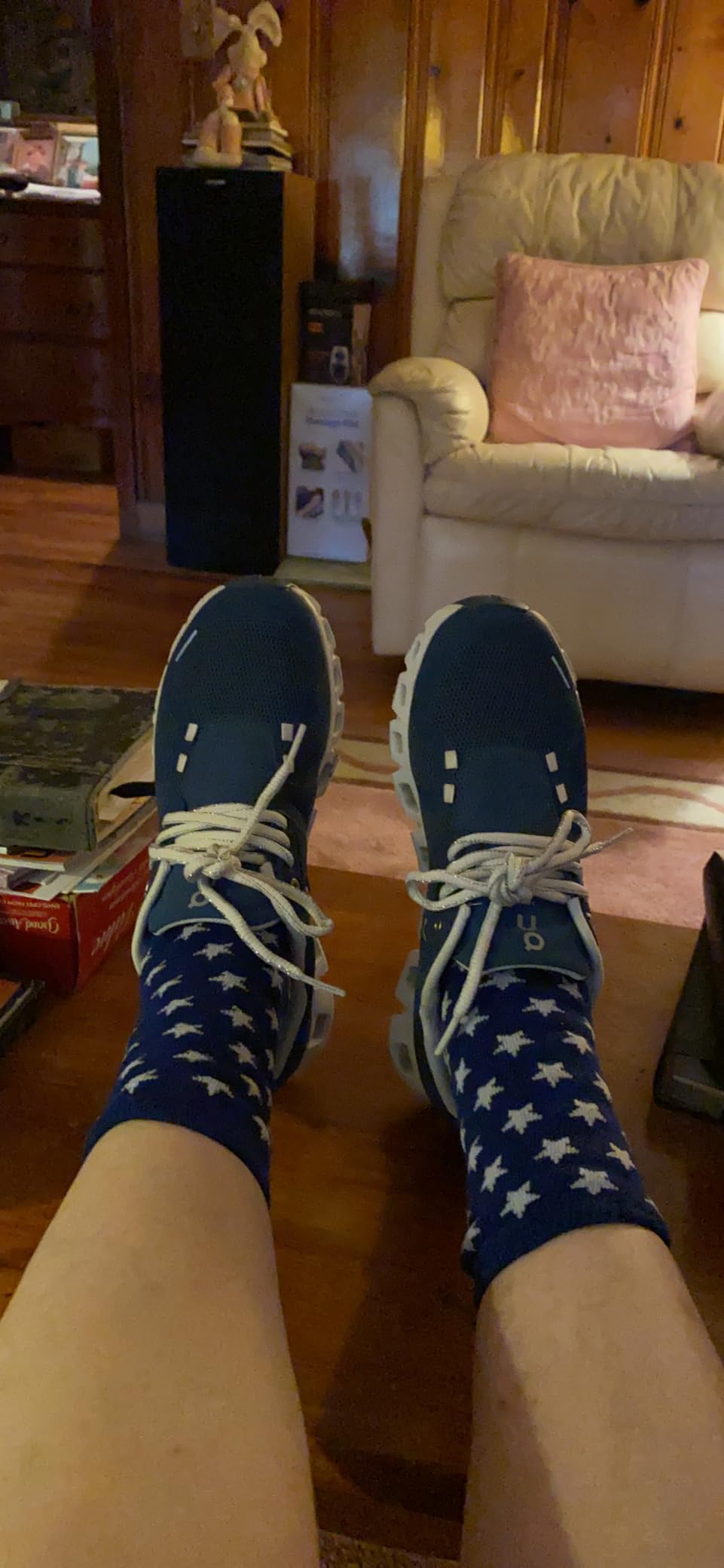
I underestimated this feature before I owned them. The elastic laces sit in the eyelets with a small knot — you slide your foot in, the elastic gives, and you’re wearing shoes. No bending, no tying. On a morning when you’re simultaneously answering a work Slack message and reminding a seven-year-old to grab their backpack, that’s not a small thing.
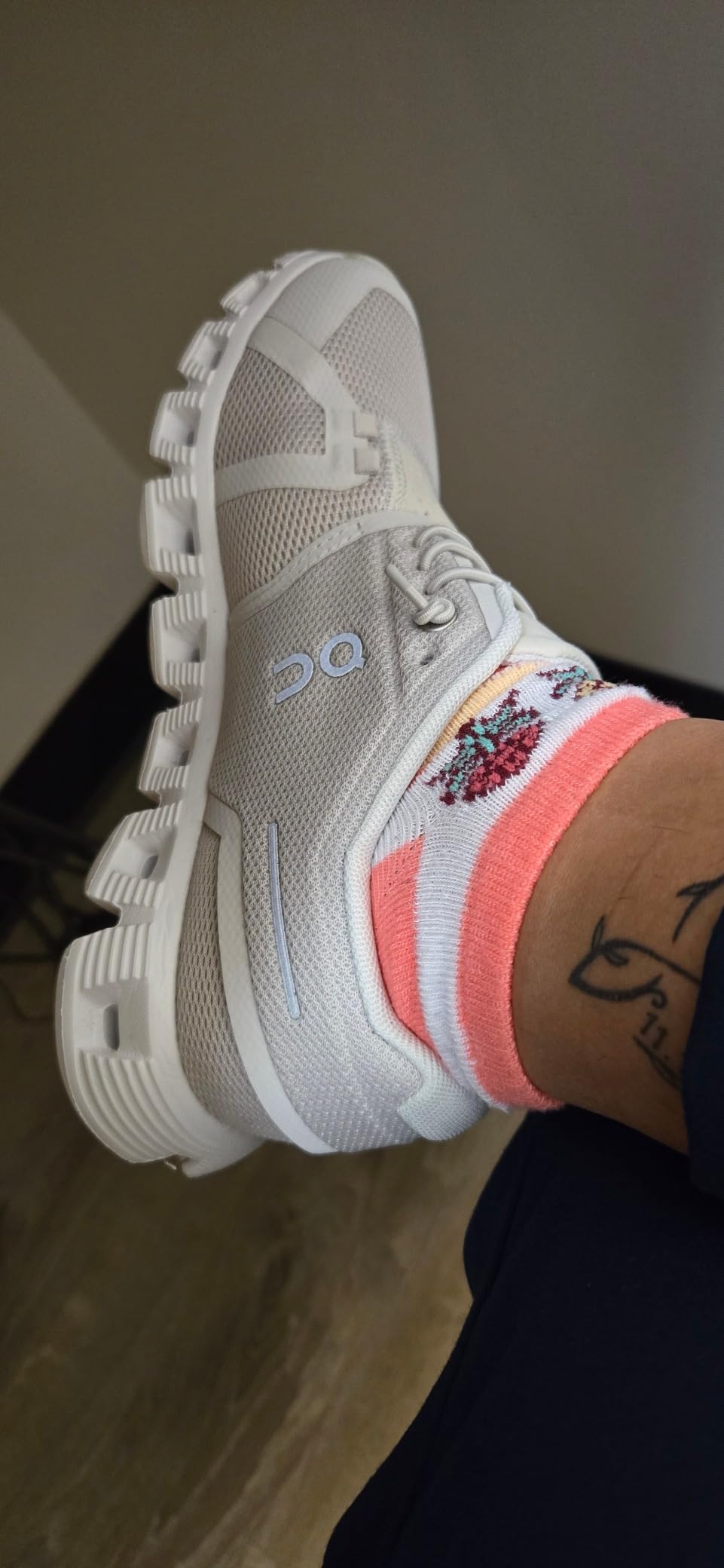
The laces are adjustable — there are additional eyelets at the top of the shoe, and you can tighten the fit by pulling the elastic through and tying a new knot. I had to do this in the first two weeks because the default setting felt slightly loose across the midfoot. Once adjusted, the fit felt secure and stayed that way. If you have very high arches, know that the elastic can create pressure across the top of the foot. On includes traditional laces in the box specifically for this reason, and there are extra eyelets to route them through.
Airport security, by the way, is where these become genuinely useful. Slip them off at the TSA bin, slip them back on in fifteen seconds. I’ve started bringing them specifically for travel days.
Upper Construction
The engineered mesh upper is noticeably thinner at the toe and forefoot — breathable and lightweight, but a fact I’ll return to shortly in the durability section. The midfoot and heel wrap in thicker, more structured material that holds the foot in place. Aesthetically, the Cloud 5 reads as a clean lifestyle sneaker, not as athletic gear. I’ve worn them with slim jeans for a dinner out and with leggings for grocery runs and they worked for both without looking out of place.
Comfort — Six Months of Evidence
Right Out of the Box
No break-in period. This is rare and worth stating directly: I put these on for the first time on a Saturday, wore them for eleven hours including a two-hour museum visit and a long dinner, and had zero hot spots, blisters, or pressure points. Most shoes at this price point need at least a week or two before they fully settle. The Cloud 5 is comfortable on day one.
The sensation underfoot is distinct. It’s not the plush sink-in feel of Hoka’s foam. It’s more like the ground has a slight give — each CloudTec pod works individually, so you feel a consistent cushioning response rather than one uniform midsole. It’s firm enough to be stable, soft enough to make concrete feel manageable.
All-Day Wearability
My test days routinely ran 10–12 hours: school pickup at 8am, office until 5pm (mostly on my feet — I’m not at a sit-down desk), grocery store, and occasionally a 7pm yoga class. Through months two and three, my feet consistently felt better at the end of these days than they did in my previous everyday shoes.
The arch support is genuinely neutral — it’s not going to overcorrect, which I appreciate, but it’s also not going to provide the kind of structured support that overpronators typically need. If you have a specific gait issue, a dedicated training shoe or insole is still going to matter.
Custom Orthotics Compatibility
The insole lifts out cleanly with no adhesive — I tried this myself after reading about a woman with plantar fasciitis who used her custom orthotics in the Cloud 5 with good results. My custom orthotics (mild arch support, prescribed about two years ago) fit without any stacking issue, and the depth of the footbed was enough to accommodate them without making the shoe feel tight. If you’re managing a foot condition and rely on specific insoles or aftermarket insoles, the Cloud 5 is a viable candidate. Worth confirming with your podiatrist, but the removable insole is a genuine practical advantage.
Style Versatility — More Than You’d Expect
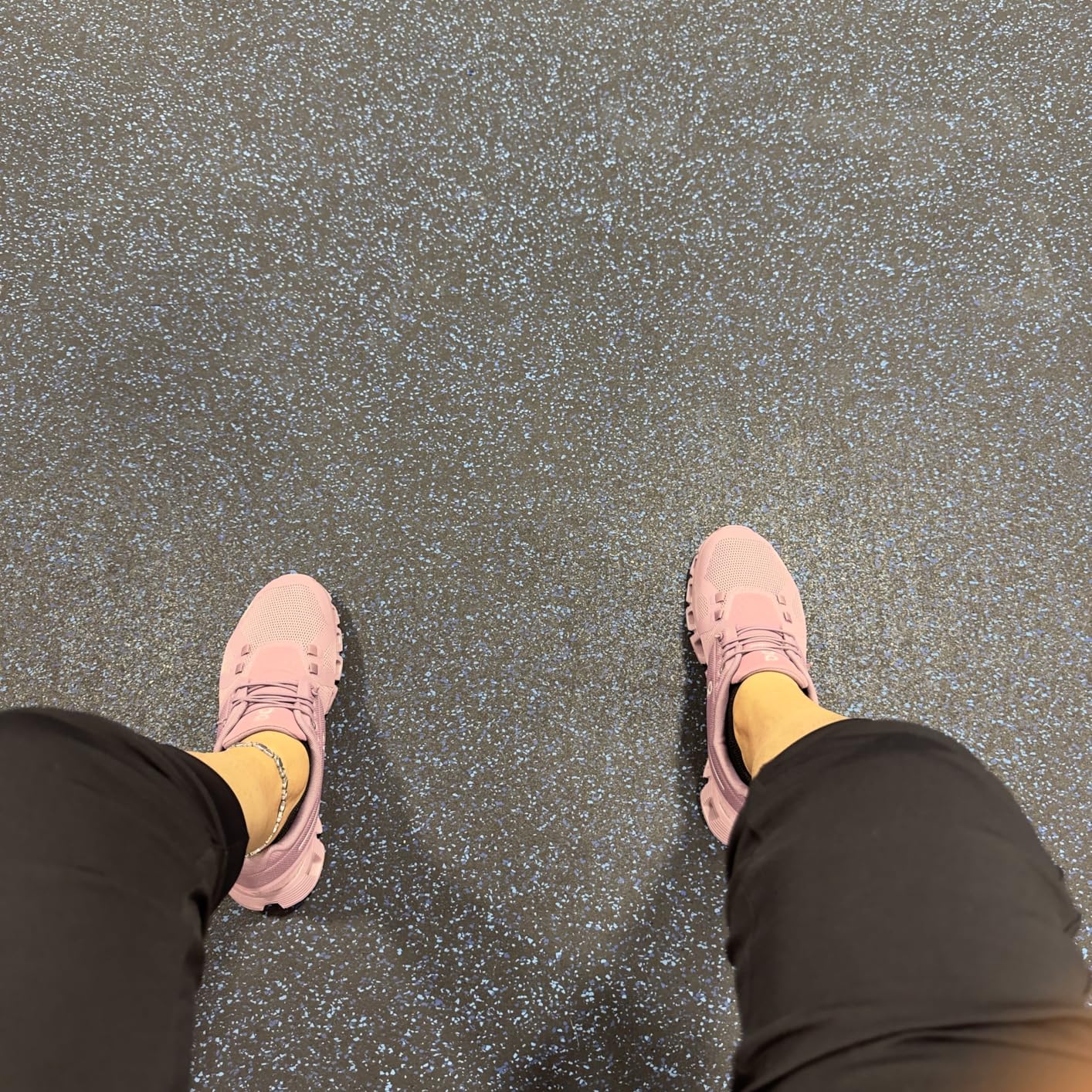
The Cloud 5 comes in a wider range of colorways than most sneakers in this category — especially the women’s version, which has significantly more options than the men’s line. I chose a light neutral (works with nearly everything), but there are bolder colors if that’s your preference.
The silhouette is low-profile and clean. It looks intentional next to work-appropriate outfits without screaming “athletic shoe.” That said, the white colorways are beautiful and demanding — they show everything. I cleaned mine with warm soapy water every couple of weeks and it kept them looking decent, but if you’re not a regular sneaker-cleaner, go with a darker color.
For actual yoga practice, I wouldn’t recommend wearing them — the outsole doesn’t offer the grip you need for anything requiring floor stability. For walking to and from class, they’re fine.
Performance on Real Surfaces
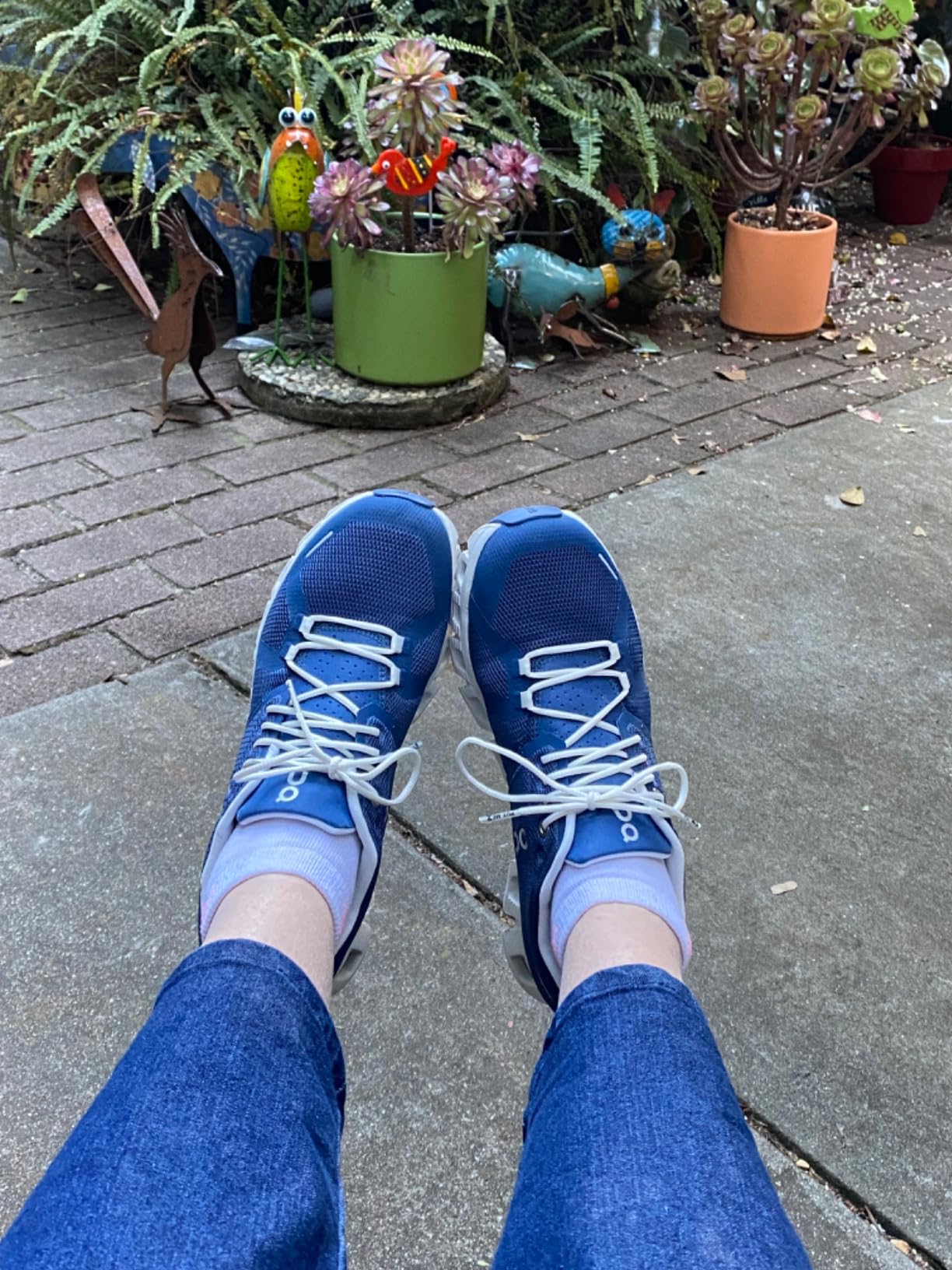
Concrete and Indoor Floors
This is where the Cloud 5 excels. Daily hard-surface walking — concrete sidewalks, tile office floors, mall floors — is the exact use case it’s built for. The cushioning holds up through full workdays without the pods losing their response.
Wet Conditions
The engineered mesh dries reasonably fast after light rain — caught in a drizzle during school pickup, the shoes were back to comfortable within thirty to forty minutes. But they are not waterproof, and they don’t pretend to be. Puddles will soak through. If wet-weather protection is a regular need, you’ll want a different shoe — something like the KEEN Women’s Circadia Waterproof or a dedicated waterproof option. Wet tile traction also becomes less reliable — worth knowing if you’re often in wet grocery store entrances or rainy parking structures.
Gravel and Uneven Ground
A finding from OutdoorGearLab’s lab testing that no other review seems to mention practically: the CloudTec pods trap small rocks and pebbles on gravel paths. It’s not dangerous — you feel the pebble before it becomes a problem — but on a regular gravel path, you’ll stop multiple times to shake them out. If your daily walks include gravel sections, factor this in. The Cloud 5 is not a hiking shoe, and it’s not designed for trail surfaces.
The Durability Problem — What No One Warned Me About
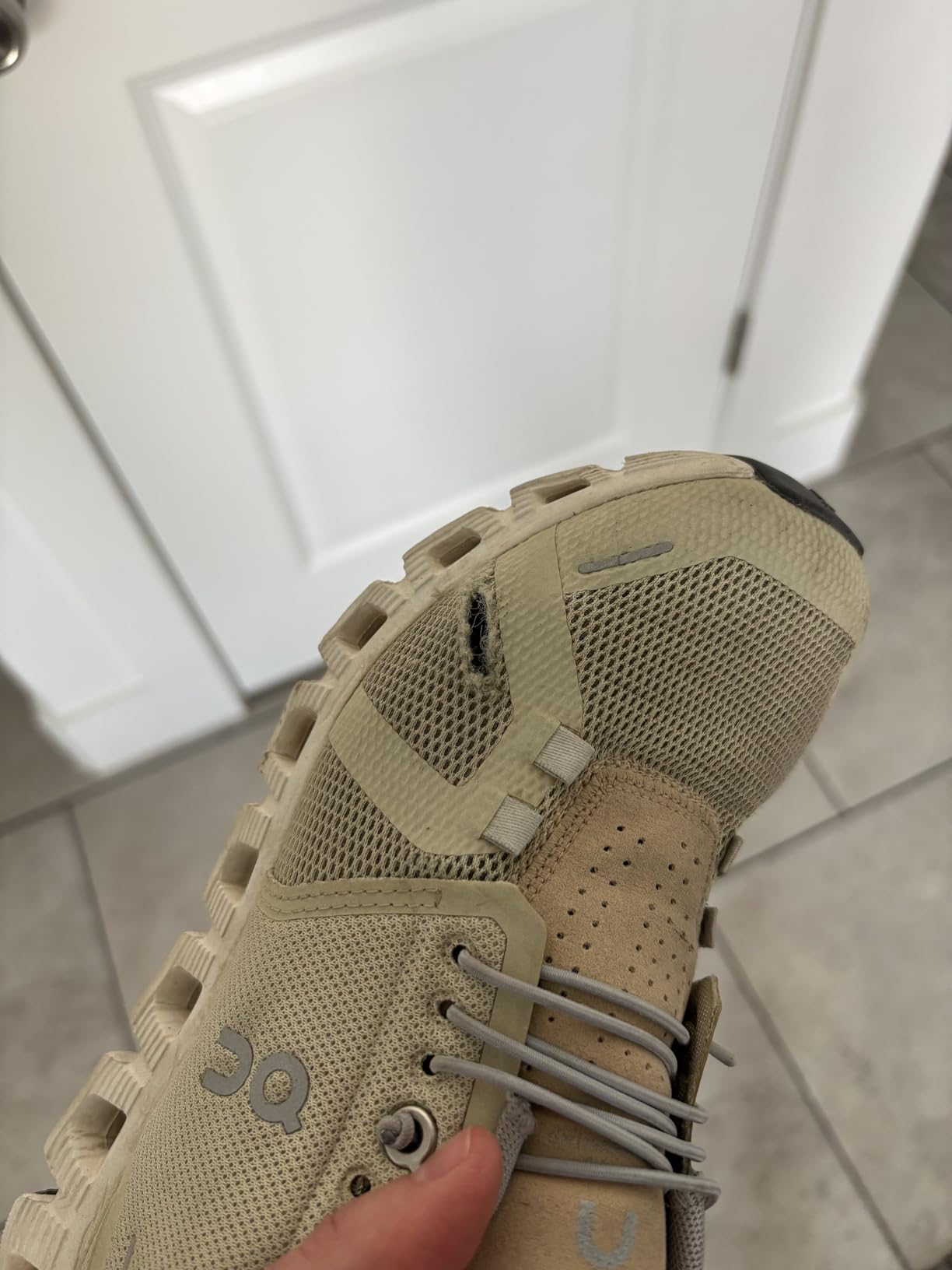
I want to be clear about this section because it’s the most important thing I can tell you before you spend $160.
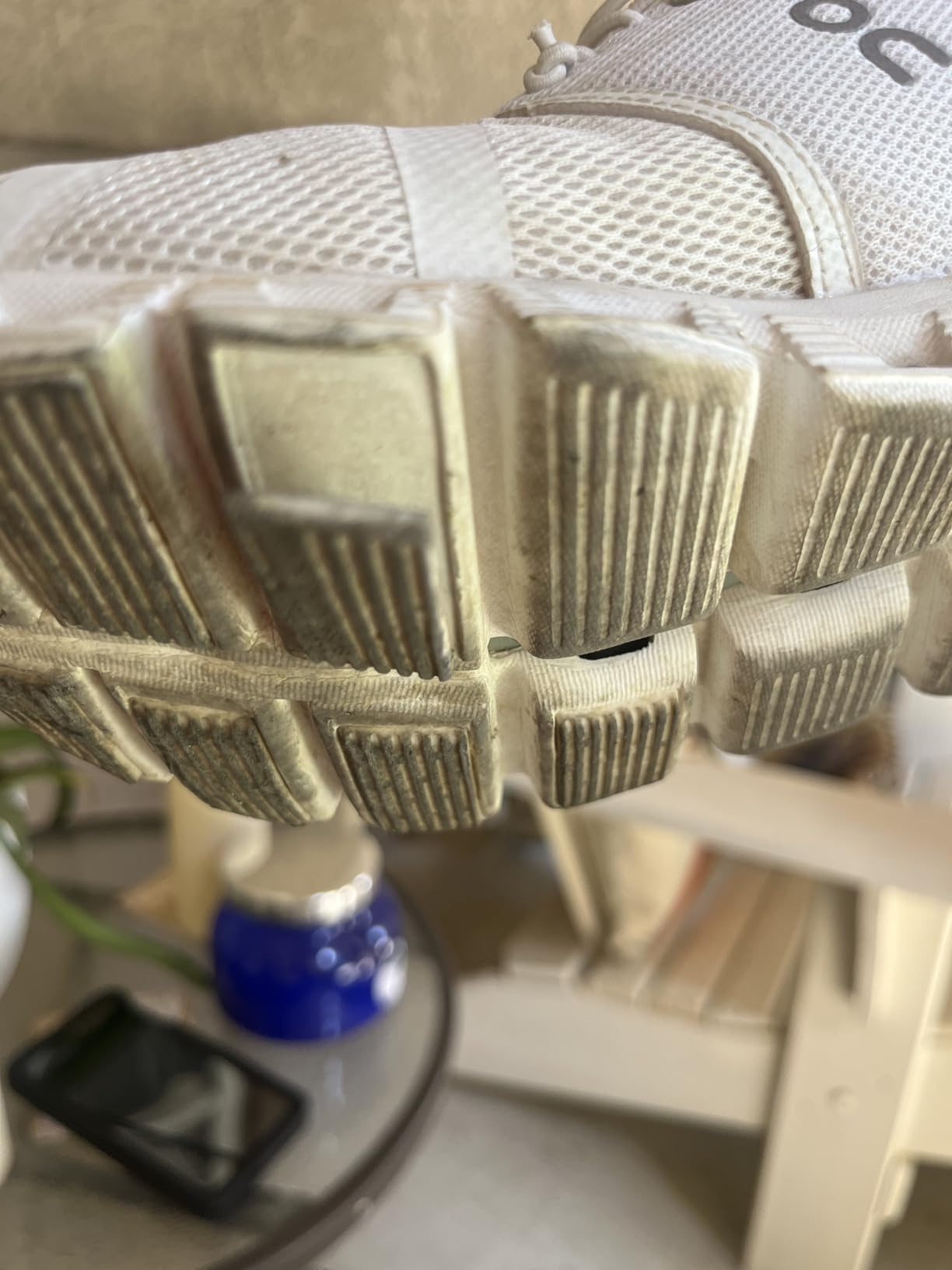
At around the two-month mark, I noticed the mesh in the toe box — specifically at the flex point on my right foot (my dominant push-off side) — looked thinner than it did when I bought the shoes. I didn’t think much of it initially. By month four, there was a visible hole.
The Timeline
Based on my experience and a consistent pattern across user reports:
- Weeks 1–8: No visible wear, comfort is excellent
- Months 2–3: Mesh thinning begins at the toe stress point
- Months 4–7: Visible hole develops at the same location — the toe-push-off seam
This isn’t a one-off manufacturing defect. The failure point is consistent across colors, sizes, and purchase dates in user reviews. OutdoorGearLab flagged the thin mesh in this region as a “potential wear concern” during their initial review — they just didn’t have the long-term data to confirm what would happen. Six months of daily wear answers the question.
Why It Happens
The thin engineered mesh that makes the Cloud 5 breathable and lightweight is not reinforced at the toe-push-off zone. That area flexes with every step. Daily use at 3–4 days per week over several months generates repetitive stress the mesh wasn’t built to withstand at this thickness. It’s a design trade-off between comfort/weight and durability that On hasn’t adequately disclosed.
The Amazon Warranty Trap
This section matters most if you’re about to open a browser tab and search for the Cloud 5 on Amazon.
On Running does not honor their warranty for shoes purchased through Amazon. Amazon is not an authorized On retailer, and if your shoe develops the toe-hole issue (or any other defect) within the warranty period, you have no recourse if you bought through Amazon. On’s position is that they can’t verify authenticity for third-party marketplace purchases.
| Purchase Channel | Warranty Coverage | Notes |
|---|---|---|
| On.com (direct) | ✅ Yes | Recommended — full warranty, same price |
| REI | ✅ Yes | Authorized retailer + REI’s own return policy — best consumer protection |
| Running specialty stores | ✅ Yes | Authorized retailers |
| Amazon | ❌ No | Convenient but warranty void — risky for a $160 shoe |
Given the durability pattern I’ve described, buying without warranty protection on a $160 shoe is a meaningful financial risk. The price on On.com is typically the same as Amazon. Go direct.
Sizing — The Half-Size Rule
Order 0.5 size up from your normal size. This is consistent across my experience and the majority of long-term user reports. The toe box runs slightly short and the width is medium — not narrow, but not accommodating for wider feet either. On does not offer a wide-width version in the standard Cloud 5 lineup.
One nuance: Fleet Feet’s reviewers noted the Cloud 5 felt slightly looser than the older Cloud 2.0. If you’re upgrading from a previous Cloud generation, try your usual size first before automatically sizing up.
The mesh softens a little over the first two weeks, which can shift the fit slightly. Don’t size up based purely on how they feel on day one — give it a week.
Who the Cloud 5 Is — and Isn’t — For
Buy These If You:
- Need all-day comfort for office work, school logistics, healthcare, or teaching — any situation where you’re on your feet for 8–12 hours on hard floors
- Prioritize immediate comfort and zero break-in period
- Use custom orthotics — the removable insole makes this compatible
- Value style that works from casual to semi-dressed settings
- Walk primarily on pavement, concrete, and indoor surfaces
- Buy from On.com or an authorized retailer (not Amazon)
Look Elsewhere If You:
- Plan to run in them — the Cloud 5 is not designed for running, full stop
- Need shoes to last 12+ months of regular daily wear (the toe mesh won’t)
- Frequently walk on gravel, trails, or wet outdoor surfaces
- Have wide feet — there’s no wide option in this model
- Need motion control or significant arch support for overpronation — consider the ASICS Gel-Kayano 31 or a dedicated stability shoe instead
Worth Considering Instead:
For maximum durability at a similar comfort level: The Brooks Glycerin Stealthfit 21 has a stronger long-term durability track record and comparable all-day comfort.
For all-day comfort at a lower price point: The Skechers Summits delivers solid everyday comfort at roughly half the Cloud 5’s price — less stylish, more practical.
For wet-weather or trail use: The Merrell Women’s Antora 3 handles mixed outdoor terrain with better traction and durability.
For actual running: Look at dedicated running shoes — the New Balance Fresh Foam Arishi V4 is a solid everyday runner at a more accessible price point.
For gym training specifically: The Nike Metcon 9 Women’s is purpose-built for cross-training where the Cloud 5’s flexible Speedboard isn’t optimal.
Overall Verdict
Detailed Scores
| Category | Score (1-10) | Notes |
|---|---|---|
| Immediate Comfort | 9.2 | No break-in period, CloudTec delivers on day one |
| All-Day Wearability | 8.8 | Holds up through 10–12 hour days consistently |
| Style Versatility | 8.5 | Works across casual and semi-dressed settings |
| Durability | 4.2 | Toe mesh failure at 4–7 months of regular wear |
| Value for Money | 5.5 | Comfort justifies the price; longevity doesn’t |
| Customer Service/Warranty | 3.0 | Amazon purchases not covered — policy creates real consumer risk |
| Overall | 6.8/10 | Would be 8.5+ if durability matched comfort |
The Cloud 5 is a genuinely excellent shoe for the first five months. If you go in knowing the durability timeline — and you buy from On.com or an authorized retailer so you have warranty protection — it’s a reasonable purchase for the lifestyle it’s built for. If you’re expecting two-plus years of daily wear from a $160 shoe, this isn’t it.
That woman at school pickup is still wearing hers. She mentioned she replaces them every eight months or so. “Worth it,” she said. Whether that math works for you is the question only you can answer.
Frequently Asked Questions
Do On Cloud 5 sneakers run true to size?
They tend to run small. Most wearers — including my own experience — recommend ordering 0.5 size up, particularly if you’re between sizes or have a wider toe box. The medium-width fit also makes a difference if you have broader feet. If you’re switching from an older Cloud generation, try your normal size before automatically sizing up, as Cloud 5 reportedly fits slightly looser than the Cloud 2.0.
How long do On Cloud 5 sneakers typically last?
With regular daily wear (3–4 days per week), expect visible mesh thinning in the toe area by month two to three, and an actual hole by month four to seven. Lighter use extends this timeline. The comfort performance holds up right until the structural failure — which makes the experience more frustrating, not less.
Can I use the Cloud 5 for running?
No. This is categorized as a lifestyle sneaker, and every retailer and independent review source agrees on this. The CloudTec pods and Speedboard work well for walking and daily wear, but the shoe isn’t engineered for the biomechanical demands of running. You’ll want a proper running shoe for anything beyond a quick jog.
Are On Cloud 5 sneakers good for plantar fasciitis?
The removable insole makes them compatible with custom orthotics, which is a real practical advantage for plantar fasciitis sufferers who rely on prescription footbeds. The neutral arch support helps some people with mild plantar fasciitis symptoms. That said, anyone with an active plantar fasciitis diagnosis should confirm fit with their podiatrist before relying on these as their primary shoe.
Is the On Cloud 5 waterproof?
No. The engineered mesh dries reasonably fast after light rain, but it’s permeable — puddles or sustained wet conditions will soak through. On makes a Cloud 5 Waterproof variant with a different membrane upper if wet-weather performance is important to you.
Does On Running cover the durability issue under warranty?
Only if purchased from On.com or an authorized retailer. Amazon purchases are not covered. Given the consistent durability pattern I’ve described, this is a meaningful distinction — buy through an authorized channel if you want any recourse when the toe mesh fails.
Should I size up in On Cloud 5 sneakers?
Yes, as a default recommendation — half a size up from your normal. The fit is slightly short in the toe box, and the elastic lacing system doesn’t offer the same fine-tuned length adjustment as traditional laces. Going half a size up gives the toe box the room it needs, especially after a long day when feet naturally expand slightly.
Be the first to review “On Women’s Cloud Sneakers Low-Top Pearl”
Related products

Running Shoes
Sneaker
Sneaker

Sneaker
Reviews
There are no reviews yet.