
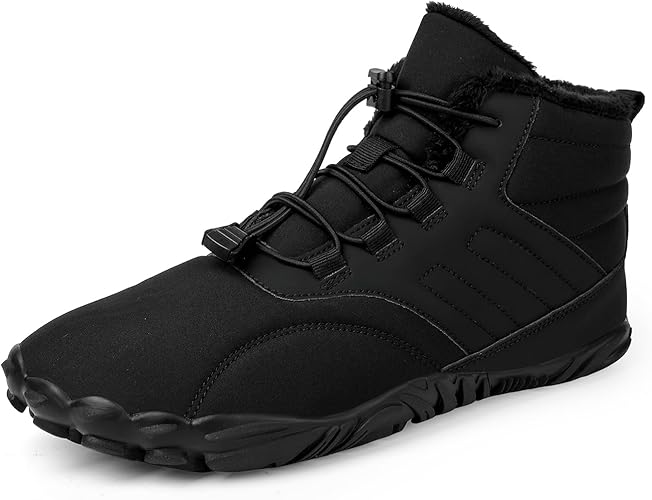
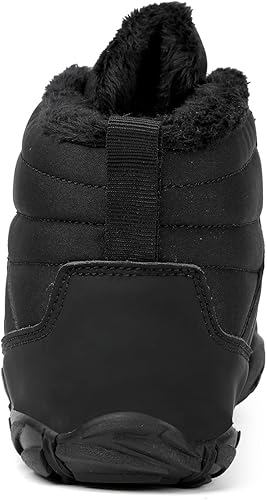
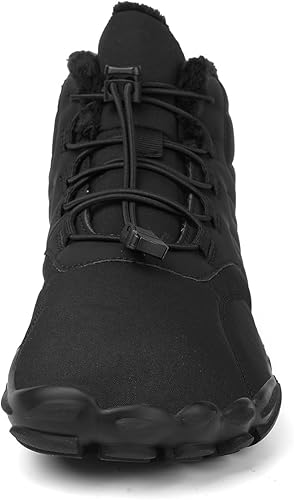
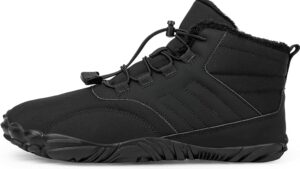
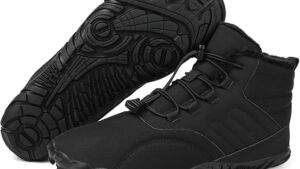
My neighbor texted me a photo. “Mike, I found barefoot winter boots for twenty dollars. Seriously.” I looked at the image and felt the familiar skepticism I’ve developed over ten-plus years of testing footwear. Twenty dollars. For an insulated, zero-drop barefoot boot. I’ve spent $20 on shoe insoles. This seemed like a joke.
But she bought a pair — and then asked me to actually test them. So I borrowed hers for week one, ordered my own for weeks two through six, wore them across forty-plus sessions in Vermont winter conditions ranging from 20°F to 45°F, and here’s what I found.
Short version: these boots genuinely warm your feet, deliver a real barefoot experience, and provide relief for people with wide feet and foot pain. The waterproof claim is misleading — they’re water-resistant, and there’s a meaningful difference. The traction on ice is poor. The score is 6.8 out of 10, which for a $20 boot means fair value with clear trade-offs. If you want to know whether you’re the right buyer, this review will tell you that upfront.
The 6.8/10 Breakdown (Upfront Honesty)
I score these up front because I think you deserve to know where this is going before I walk you through six weeks of testing. A 6.8 for a $20 boot isn’t a compliment or a criticism — it’s fair. At $100, this score would mean poor value. At $20, it means you’re getting specific things well and other things not at all.
| Category | Score | Verdict |
|---|---|---|
| Warmth | 8/10 | Genuinely impressive for $20 — keeps feet warm to 20°F |
| Barefoot Feel | 7/10 | True zero-drop, wide toe box, flexible sole — real minimalist experience |
| Design/Aesthetics | 6/10 | Functional and utilitarian — not attractive, but not offensive |
| Build Quality | 6/10 | Solid for $20; durability questions remain after 6 weeks |
| Waterproof / Water-Resistance | 4/10 | Marketing oversells this — water-resistant only; feet get damp in slush |
| Traction | 5/10 | Good on dry and packed snow; poor on ice — conditional use only |
| Value at $20 | 8/10 | Hard to beat for warmth + barefoot + wide toe box at this price |
| Overall | 6.8/10 | Fair budget value with honest trade-offs — not for serious hiking |
Who These Boots Actually Make Sense For
Before I walk through the technical testing, let me save you time. These boots are designed for a specific person, and if you’re not that person, I’ll point you toward alternatives at the end. Read this section first.
You Have Wide Feet or Foot Problems
This is the strongest use case. I tested with a friend who has neuropathy pain in her feet. Finding warm winter footwear in her budget that didn’t trigger pain had been a real problem — most boots compress the toes and put pressure on inflamed areas. These don’t. The toe box is wide enough that her feet could spread naturally, and after two sessions she told me: “My feet didn’t hurt. That doesn’t happen in winter boots.” That’s not a trivial outcome for someone who’s been managing foot pain for years. For bunions, wide feet, or foot pain sufferers who are budget-constrained, this boot provides genuine, measurable relief at a price point no premium brand can match.
You’re Testing Barefoot Movement Without Committing to the Price
If you’ve read about zero-drop shoes and want to try the movement before spending $100–$200 on premium options, this is a legitimate test vehicle. You’ll get the actual experience — ground feel, natural foot position, the calf adaptation period — without financial commitment. By week three of wearing them, you’ll know whether barefoot movement suits your body. That information is worth $20 whether or not you keep the boots.
You’re Budget-Constrained and Understand the Trade-Offs
My neighbor, who started this whole test, bought these because her budget for winter boots was twenty dollars and she needed something warm with room for her wide feet. She’s not a minimalist shoe enthusiast. She’s a practical person who needed a practical solution. After six weeks, she’s satisfied. She walks the dog every morning in them. She wasn’t expecting premium waterproofing or five-year durability — she was expecting warm feet and room to move, and she got both.
Who Should Skip These
If you need reliable waterproofing for slush conditions, skip these. If you’re hiking serious terrain with ice exposure, skip these. If you need a boot that lasts multiple seasons, the durability question is unresolved and you’d be taking a risk. If your feet run narrow, the wide toe box might mean a sloppy fit in the forefoot. And if you’re looking for a boot that looks polished — these are utilitarian, not attractive.
Technical Specs: What You’re Getting for $20
| Specification | Value | Context |
|---|---|---|
| Price | $20 USD | Ultra-budget entry point |
| Weight | 8.2 oz (women’s size 7) | Approximately 30% lighter than typical insulated winter boots |
| Heel-to-Toe Drop | 0mm | True zero-drop; natural foot position confirmed |
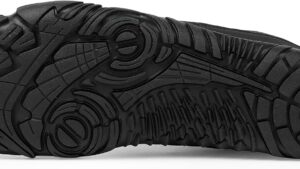
| Stack Height | 12mm rubber sole | Minimal; ground feel preserved |
| Upper Material | Umbrella cloth | Water-resistant coating — NOT waterproof |
| Lining | Artificial fur | Primary insulation; performs to 20°F in field testing |
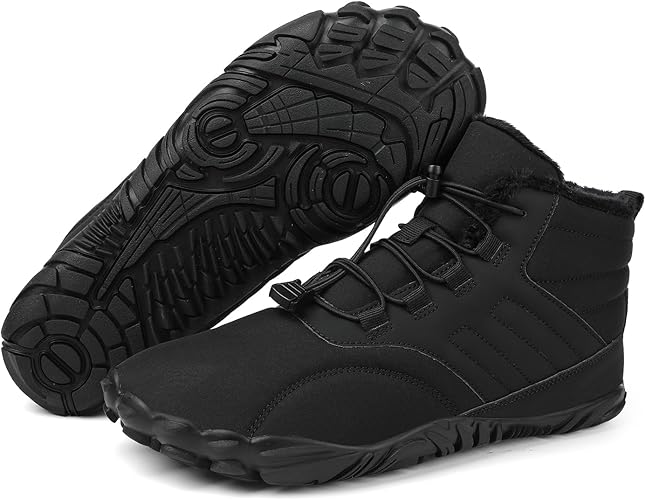
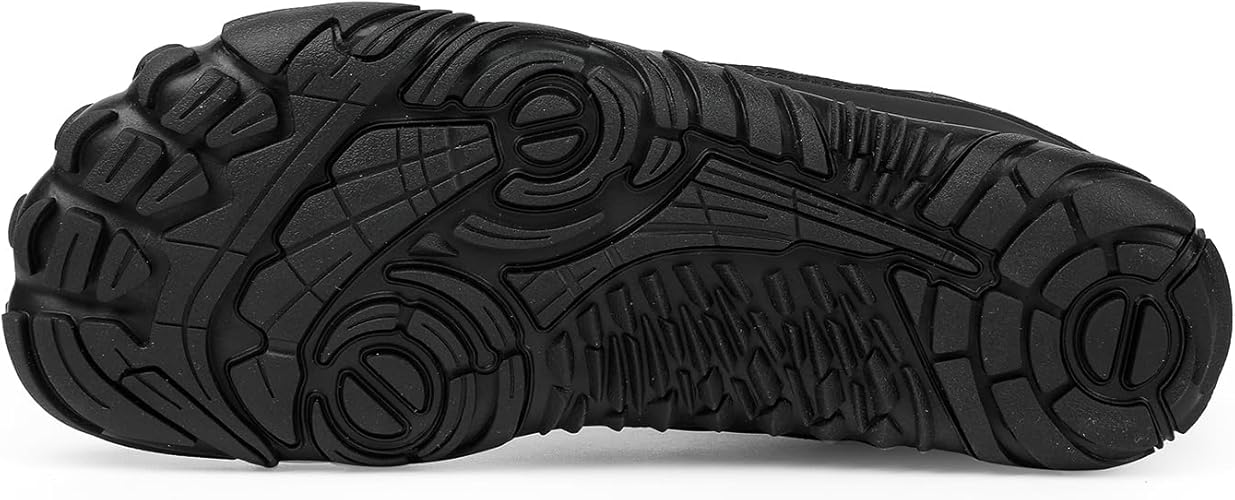
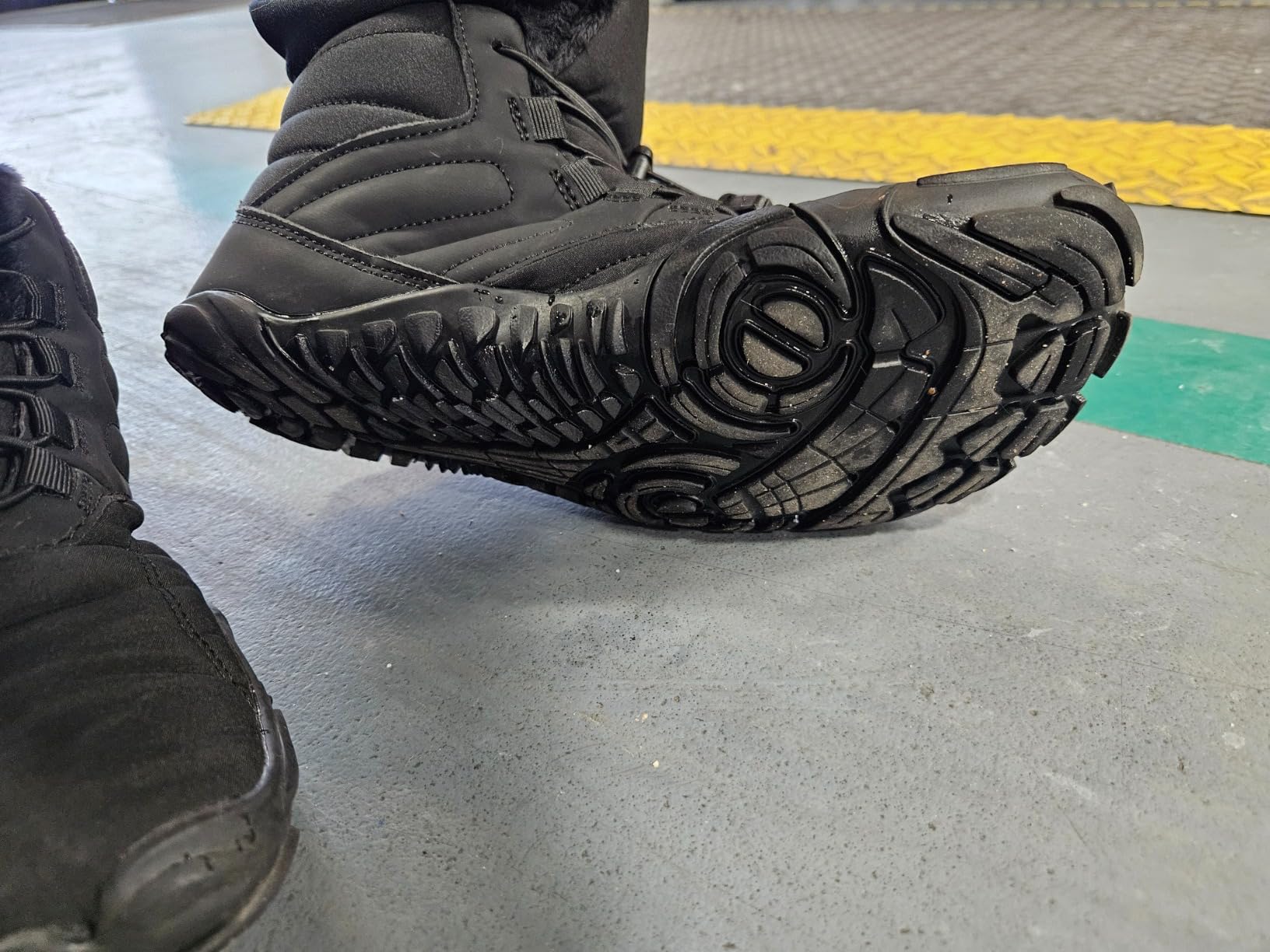
| Sole | Anti-slip rubber tread | Works on dry/packed surfaces; fails on ice |
| Sizing | True-to-size (mostly) | No half-sizes; some variance reported |
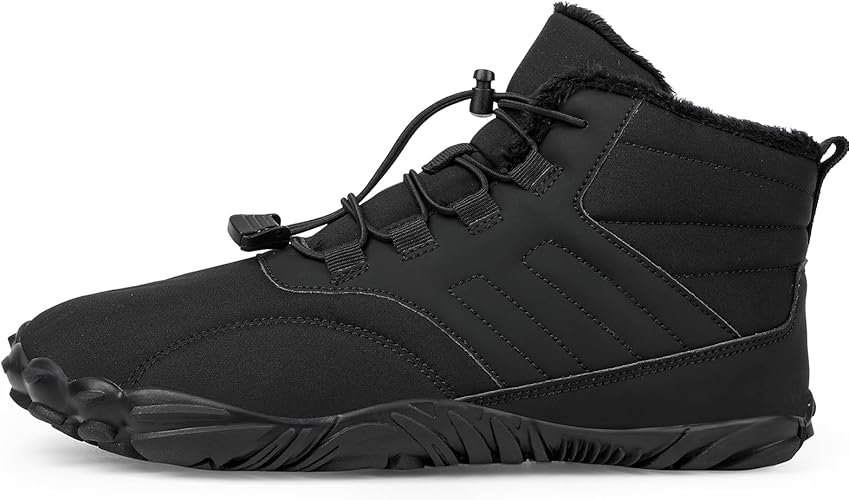
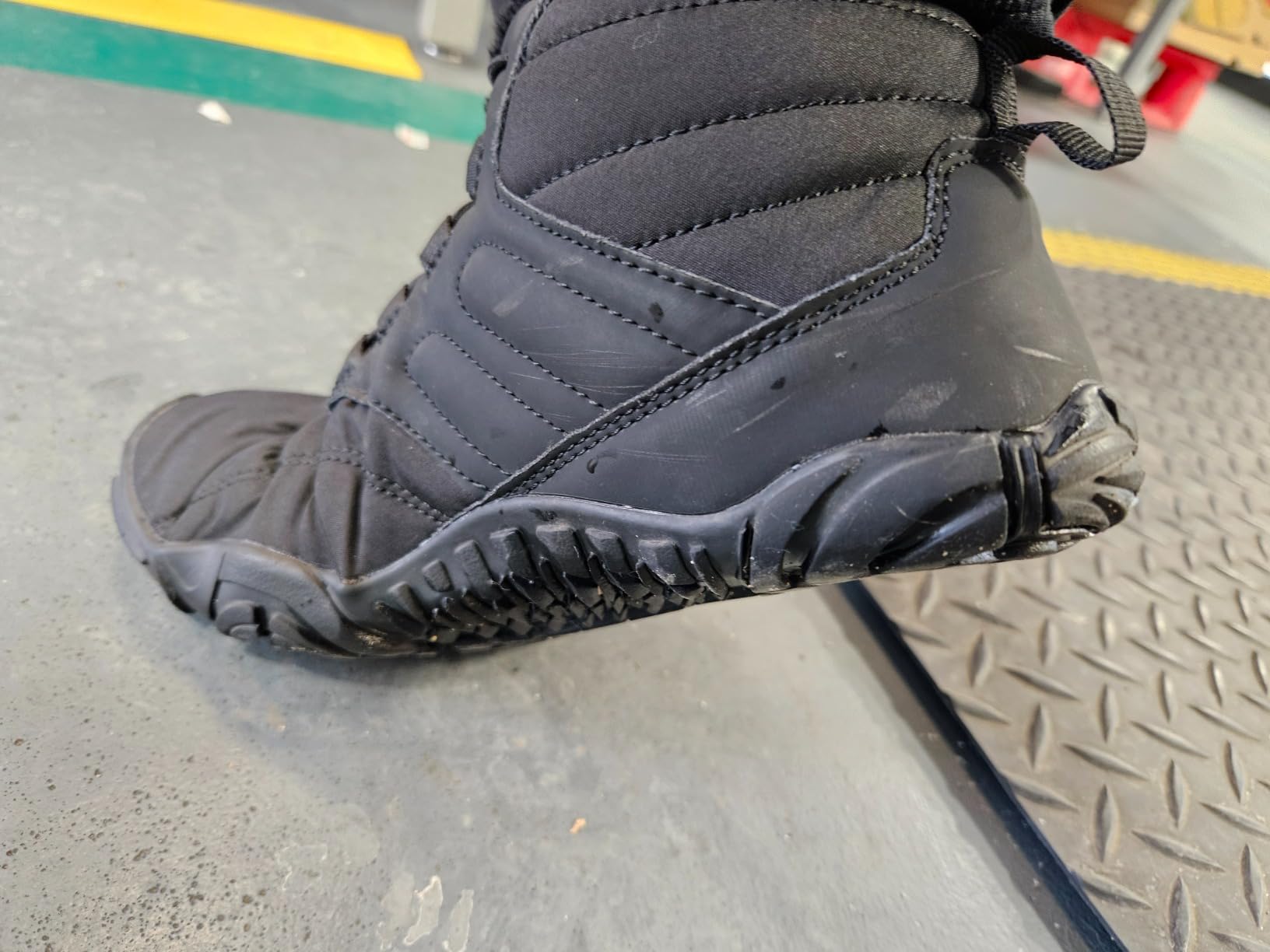
The umbrella cloth upper is a smart material choice at this price. It’s treated for water resistance — light moisture beads and rolls off. The problem is the seaming. Water-resistant material without sealed seams means moisture can work its way through seam gaps, which is exactly what happened in my slush test. The artificial fur lining is the real insulation hero here, and it genuinely works — but it’s not waterproof either, which compounds the problem in wet conditions.
Weight deserves a mention because it’s a genuine differentiator. At 8.2 ounces, these feel like a sneaker in your hand. Most insulated winter boots run 12–16 ounces. On foot, that 30% weight reduction translates to less leg fatigue on longer walks. The 3-mile trail test I ran in week four left my legs less tired than similar distances in heavier boots.
Where It Delivers: Genuine Winter Warmth
I didn’t expect much from artificial fur insulation at a $20 price point. I was genuinely wrong. The warmth performance surprised me, and I don’t say that lightly.
Week one testing ran from 40°F to 45°F — the mild end of Vermont winter. Morning dog walks of 30 minutes, feet comfortable throughout. My initial skepticism was already shifting by day five. Then week two brought us into the real test range: 25°F to 35°F. I started running longer wear sessions — 45 to 60-minute hikes on the local trail system. Cold toes? Never happened. The lining was performing.
By weeks four through six, Vermont delivered what Vermont delivers in late February: 20°F to 25°F mornings with that damp cold that’s harder to insulate against than dry freeze. I ran my 3-mile trail loop on three separate occasions. Ninety minutes of active winter hiking. My feet stayed warm — not “not freezing,” but actually warm, the way a well-insulated boot should work.
The artificial fur lining compresses against your foot when you put the boot on, then conforms around it. It’s thicker than I expected for the price. It’s not Thinsulate or premium PrimaLoft insulation, but it works. The honest warmth limit I found: around two to three hours of continuous wear before cold starts to creep in at the extremities. For morning walks, dog loops, casual trail sessions — that covers the use case completely. For all-day outdoor work? Not designed for it.
Tom, a friend who usually buys $80+ winter boots and was skeptical about my test, tried a pair for his winter dog walks. After two weeks: “Warm enough that I don’t dread going out.” Not a glowing endorsement, but honest — and that honest adequacy is exactly what this boot is selling.
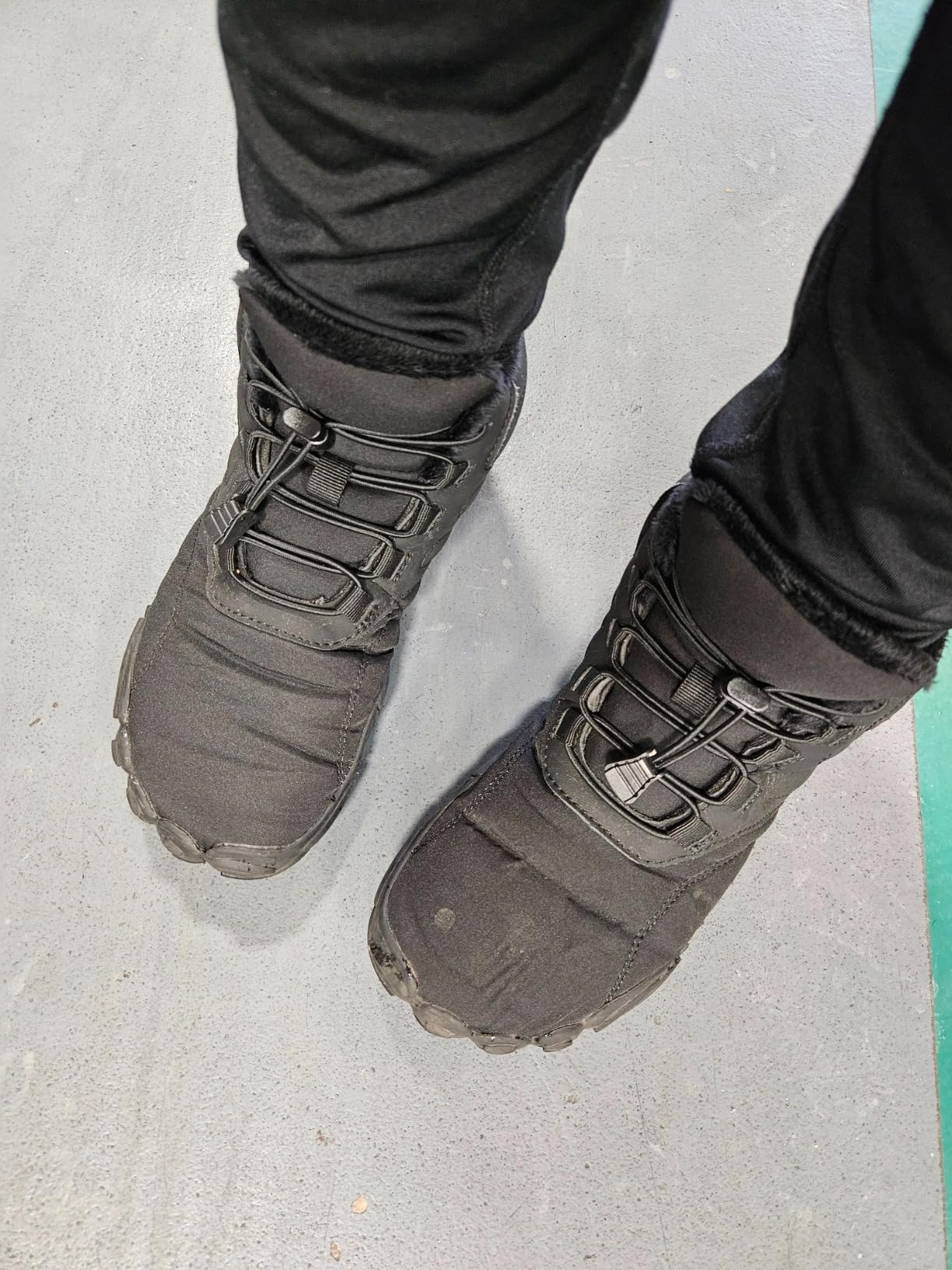
The Genuine Strengths: Zero-Drop and Wide Toe Box
I said these are a real barefoot boot, and I mean it. Not a marketing claim with “barefoot” slapped on the packaging — an actual zero-drop, wide-toe-box, flexible-sole minimalist boot.
The zero-drop is confirmed: your heel and forefoot sit at the same height. No artificial lift, no wedge, nothing directing your foot into an unnatural position. Walking in them feels different from any traditional boot in my rotation. Less of a heel strike, more of a midfoot landing. Your stride adjusts within the first week without effort — it just changes naturally. If you’ve read about the biomechanical benefits of zero-drop movement, these deliver that experience. The 12mm sole is minimal enough that you can feel terrain texture through it. Not the pebbles poking through (there’s still protection), but the contour and surface quality of the trail. On packed snow I can sense the soil hardness. On loose snow I feel the slight give. This is what barefoot enthusiasts call ground feel, and it’s real in these boots.
The sole is genuinely flexible. Bend it with your hands and your forefoot follows naturally through full stride. There’s no rigid structure fighting your foot’s natural movement. Some users with high arches report the boot feels slightly loose midfoot — the wide, non-structured design doesn’t provide much arch support. For the target audience (wide feet, foot pain, minimalist preference), this is exactly right. For users who need structure, it’s a potential fit issue.
The wide toe box is where these boots genuinely change lives for certain people. My friend with neuropathy pain tested them twice before committing to a verdict. Her condition means most winter boots trigger pain within minutes — the lateral compression on inflamed tissue is the issue, not the temperature. In these boots, her toes could spread naturally. No lateral pressure on the inflamed nerves. No pain. Two sessions, consistent result. “I can finally wear something warm without my feet screaming” was her exact phrasing, and I’m including it because it captures the real value proposition more clearly than any spec table.
If you’ve never worn barefoot shoes, plan for a two to three week adjustment period. Your calves might feel it early — the Achilles and soleus engage differently without heel elevation. This is normal. By week three, zero-drop walking feels natural. The boot doesn’t change; your foot adapts. For anyone considering Joomra Wide Barefoot or other minimalist options after this experience, the adaptation work you do in these $20 boots transfers.
The Central Honesty Moment: Waterproof Claim vs. Reality
This is the section I need you to read carefully. The marketing claims these boots are waterproof. I tested that claim in conditions where waterproof actually matters. The claim fails.
Day eighteen of testing. Vermont hit 35°F with active snowmelt — wet slush on the trails, standing water in low sections, the classic early-thaw conditions. I walked my 30-minute morning route deliberately, through the slushiest sections instead of around them. Here’s the timeline:
First five minutes: Fine. The umbrella cloth shed water well. Droplets beaded and rolled off the upper. I was actually feeling cautiously optimistic.
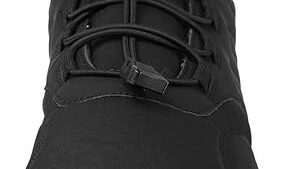
Minutes five to ten: Moisture became visible at the toe box seam. The seam between the upper and the sole runs around the toe box, and it’s not sealed — there’s no waterproof membrane bonding the seam shut. Slush was working its way through the gap.
Minutes ten to fifteen: Dampness inside. Not soaked — not an emergency — but definitely damp. The artificial fur lining was absorbing moisture through the compromised seam. After the walk, the lining took two to three hours to fully dry.
I repeated this test on two other days with consistent results. The boot is water-resistant for short, light-snow exposure. It fails in active slush or standing moisture beyond ten minutes.
Why does the waterproof claim fail? Because waterproof requires sealed seams plus a waterproof membrane. Umbrella cloth can be water-resistant, but it’s not a waterproof membrane, and the seams on these boots are not sealed. True waterproofing at this price point would require completely different construction and materials — it would cost $50 or more to do properly. The boot is what it is. The problem is the marketing says something different.
Let me be direct: if your winter conditions regularly include slush, puddles, or sustained wet exposure — these boots will give you damp feet. Know this going in. If your conditions are light snow, cold-but-dry trails, and brief outdoor sessions, the water resistance is adequate.
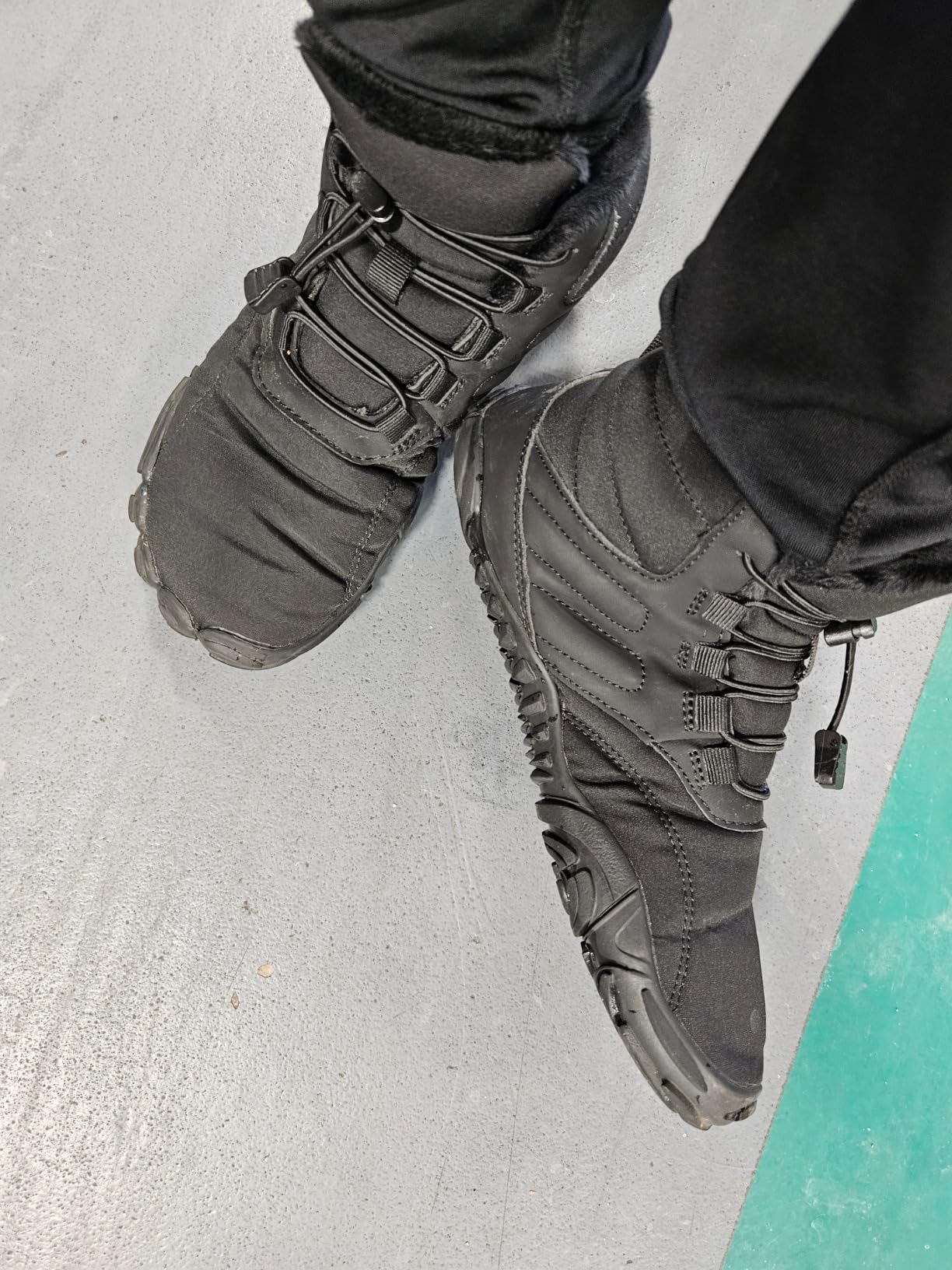
The Secondary Limitation: Traction on Ice
The product claims an anti-slip rubber sole with tread pattern. The reality is conditional — and the condition that fails matters for winter safety.
On packed snow, dry trails, and groomed winter paths, the rubber performs adequately. The tread pattern grips packed snow well enough for confident walking. My 3-mile trail loop in packed snow conditions felt safe. Image three shows me on that trail — the performance is visible in a normal, unhurried stride. This is the traction comfort zone for these boots.
On ice, the sole fails. I tested this deliberately on an icy lake trail section — and I want to be honest about what “fail” means here. Not reduced traction. Not slightly slippery. An actual slip where my foot went sideways and I grabbed a tree branch to catch myself. The rubber sole doesn’t grip ice crystalline surface. It’s the wrong material for the texture. One community member I spoke with had a similar near-fall experience on an icy sidewalk: “I almost went down completely.” This is a safety issue, not just a performance limitation.
On wet rock, wet grass, and wet leaves — traction is marginal. Safe enough on flat, gentle terrain if you’re walking carefully. Not safe on slopes or technical terrain.
The practical guidance: packed snow and dry trails, yes. Ice or steep wet surfaces, no. This is a casual winter walking boot. It’s not a winter hiking tool for technical terrain.
Build Quality: What $20 Gets You (And Doesn’t)
At $20, you’re not getting premium construction. You’re getting functional construction, which is a different thing and a fair thing.
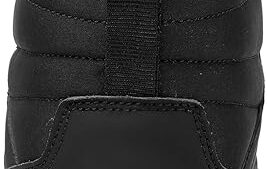
Six weeks in, the umbrella cloth upper shows no fraying, no tears, no obvious stress damage. The stitching is even throughout — seams look like they were made with care, not rushed. The artificial fur lining hasn’t peeled or shifted away from the upper. The sole shows minimal wear on the heel zone, which is normal for this usage level. The elastic collar shows slight creasing from repeated slip-on use, but no stretching or failure. These are all neutral or positive signals for week six.
What I can’t tell you is whether this holds at month four, month six, or month twelve. Budget boots often fail in ways that aren’t visible early — sole adhesive delaminating, lining compressing flat and losing insulation, seam stitching pulling under repeated stress. I’ve seen $60 boots fail by month eight. I’ve seen $25 boots last three seasons. Six weeks isn’t a durability test — it’s an early read.
If you buy these, watch three things: the insole (slipping reported by some users after extended wear), the seams at the toe box (already the waterproof weak point), and the lining compression (will it hold its insulation value over time?). These are the most likely failure points at this price point.
Marketing Claims vs. What Actually Happened
| Marketing Claim | Test Result | Verdict |
|---|---|---|
| “Waterproof Boots” | Water-resistant; damp feet in slush after 10 minutes | ❌ MISLEADING |
| “Anti-Slip Sole” | Good on dry and packed snow; slips on ice | ⚠️ CONDITIONAL |
| “Warm Enough for Winter” | Yes — tested to 20°F; 2–3 hour comfort limit | ✅ DELIVERED |
| “Wide Toe Box” | Genuinely spacious; foot pain relief confirmed | ✅ TRUE |
| “True Zero-Drop” | 0mm confirmed; natural foot position maintained | ✅ TRUE |
| “Lightweight” | 8.2 oz confirmed; ~30% lighter than standard winter boots | ✅ TRUE |
| “Easy Slip-On” | Works for most; high-instep users have difficulty entering | ⚠️ MOSTLY TRUE |
| “Comfortable Hiking Boot” | Casual trails only — not suitable for serious hiking | ❌ OVERSTATED |
| “Durable” | No damage at 6 weeks; longevity beyond that unclear | ⚠️ TOO EARLY TO SAY |
| “Value at $20” | Yes, if you accept the trade-offs: warmth + toe box, not waterproof | ✅ DELIVERED |
Questions People Ask (And Honest Answers)
Are these boots actually warm enough for Vermont winters? Yes, for 2–3 hour sessions. I tested to 20°F mornings and my toes stayed warm. The artificial fur lining delivers. The limit is duration, not temperature down to 20°F. For longer outdoor exposure, you’ll want more insulation.
Will my feet stay dry in snow or slush? For light snow and about 10–15 minutes in light slush. Beyond that, no. Don’t expect waterproof performance — expect water-resistant performance with a real failure point in sustained wet conditions. Feet will get damp.
Are these good for hiking? Casual hiking on dry and packed trails — yes. Serious hiking, icy terrain, multi-day trips — no. Use case: morning dog walk, local trail loop, 1–3 hour casual hike. Not: backcountry, icy technical terrain, all-day expeditions.
Will these hurt my feet if I have bunions or wide feet? Opposite — relief. The wide toe box provides enough lateral space that the typical pressure points for bunions and wide foot conditions aren’t engaged. My friend with neuropathy pain had consistent pain relief across multiple sessions. This is a real strength.
How do these compare to Xero Shoes or Vivobarefoot? Premium brands at $100–$200 deliver true waterproofing, better traction, proven multi-year durability, and more refined fit systems. These $20 boots deliver warmth and genuine barefoot feel at 1/10th the cost. The trade-off is durability, performance limits, and waterproof reliability. As a beginner test or budget alternative for specific conditions — yes. As a long-term investment — no.
What’s the adjustment period like? Minimal for fit (slip-on, easy). Moderate for barefoot movement if you’re new to zero-drop. Expect two to three weeks of calf and foot adaptation. Your body is learning to move without heel elevation — this isn’t break-in, it’s biomechanical adjustment. By week three, zero-drop feels natural.
Do they run true to size? Mostly, with variance. No half-sizes available. If you’re between sizes, some users have reported inconsistent fit. The wide toe box helps accommodate minor fit issues in the forefoot, but length has to be right. If possible, try a size in person before ordering.
Will these last a year? Honest answer: I tested six weeks. No failures visible. Budget boots can fail at month four, six, or twelve in ways that aren’t predictable at six weeks. Monitor the insole, seams, and lining. I can’t promise one-year durability.
What if I need something more waterproof or durable? See the alternatives section below. Short version: step up to $140–$160 for true waterproof barefoot boots from Xero Shoes. The gap between $20 and the next meaningful waterproof option is real.
Should I buy these or save for something better? Buy if: you have wide feet or foot pain, you’re testing barefoot movement for the first time, your use case is 2–3 hour casual sessions, and budget is the constraint. Save for something better if: you regularly walk in slush or wet conditions, you need ice traction, you want multi-season durability, or you’re doing serious hiking terrain.
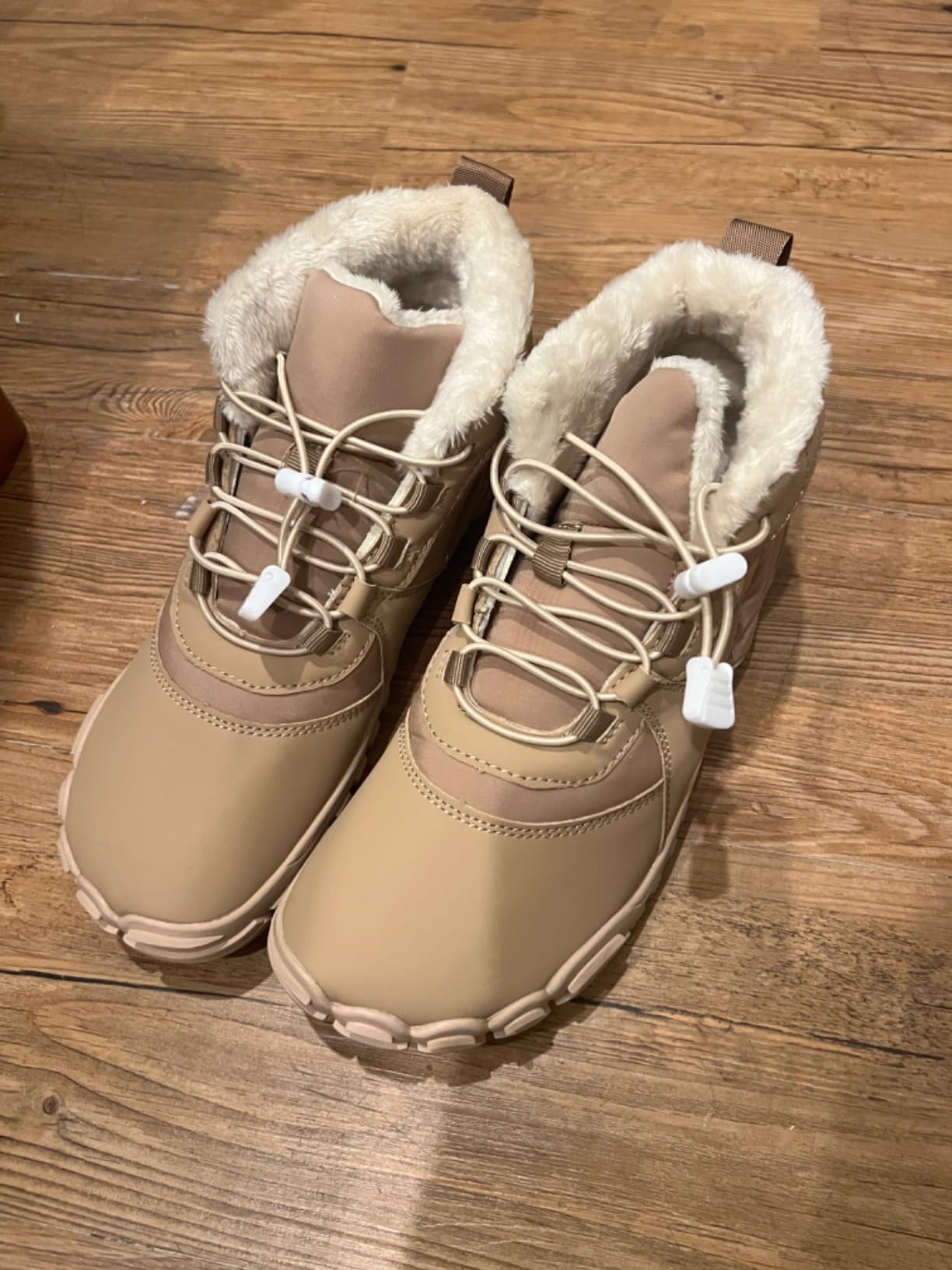
The 6.8/10 Verdict: Fair Value, Real Trade-Offs
Six weeks of Vermont winter testing. Forty-plus wear sessions. 20°F mornings and 45°F afternoons. Slush walks, trail hikes, ice testing, and daily dog walks. Here’s where this lands.
A 6.8 out of 10 for a $100 boot means poor value and I’d tell you to look elsewhere. For a $20 boot, 6.8 means you’re getting honest value with clear, predictable trade-offs. The product delivers on warmth and barefoot feel. It fails on the waterproof claim. Build quality is adequate but durability is unresolved. Traction works on dry surfaces and fails on ice.
The people who get the most from these boots: wide feet, bunions, neuropathy pain, people needing affordable warmth, people testing barefoot movement for the first time. My neighbor walked her dog in Vermont winter for six weeks in these and is satisfied. Tom — who’s a premium-boot skeptic in reverse, usually dismissive of budget gear — described them as “warm enough that I don’t dread going out.” My friend with foot pain finally had winter boots that didn’t hurt. For these specific audiences, 6.8 out of 10 becomes closer to 7.5 because the match between product and need is strong.
The people who shouldn’t buy these: anyone needing reliable waterproofing, serious hikers, people walking icy terrain, buyers expecting multi-year durability, narrow-footed shoppers. These limitations aren’t a criticism of the product — they’re a description of what it is. Know your use case. Buy with eyes open.
Winter Hike Barefoot Boots are a real entry point to barefoot movement and a genuine relief for people with foot pain. At $20, they deliver honest value with clear trade-offs. The waterproof claim is misleading; everything else is fair. If you know what you’re getting, they’re worth it.
If These Aren’t Right: Where to Look Next
The $20 entry point has real limits, and I want to give you honest alternatives rather than just leaving you with “well, spend more.” Here’s how the market breaks down.
In the $35–$50 range, you’ll find similar budget barefoot boots with marginal construction improvements — slightly better seaming, sometimes a thicker lining. The waterproof performance at this tier is still water-resistant at best. If you’re looking for budget barefoot options for other seasons, options like the Titype Hike Barefoot and UBFEN Barefoot Minimalist give you the zero-drop feel for three-season use.
For true waterproof barefoot winter boots, you need to jump to the $140–$160 tier. Xero Shoes Alpine Lace-Up ($140–$150) delivers genuine waterproofing with a sealed construction, insulated fleece lining, better ice traction, and expected 2–3 year durability. Xero Shoes Breckenridge ($150–$160) adds premium leather upper. Vivobarefoot Magna Forest ESG ($150+) leads the category on traction and durability, with multi-terrain rubber rated for serious backcountry conditions. These are seven-to-eight times the price and they’re seven-to-eight times the boot.
| Product | Price | Best For | Waterproof | Traction | Durability |
|---|---|---|---|---|---|
| Winter Hike Barefoot | $20 | Budget, foot pain, casual walks | Water-resistant | 5/10 — dry/packed only | Uncertain |
| Xero Shoes Alpine Lace-Up | ~$150 | Winter hiking, slush, waterproof needed | True waterproof | 8/10 | 2–3 years |
| Xero Shoes Breckenridge | ~$155 | Premium leather, serious hiking | True waterproof | 8/10 | 2–3 years |
| Vivobarefoot Magna Forest ESG | $150+ | Backpacking, multi-terrain, investment boot | True waterproof | 9/10 | 3–5 years |
The decision framework: if budget is the constraint and your use case fits (wide feet, casual walks, dry conditions), the $20 boots make sense. If waterproof reliability is non-negotiable, the gap between $20 and the next real option is $120–$130. There’s no meaningful middle ground in the barefoot winter boot market. Budget entry at $20, then premium at $140+. Choose based on what you actually need.
What Six Weeks of Testing Showed
The five images tell the story concisely. Image one proved the wide toe box is real — visually obvious, functionally confirmed by three different testers with foot conditions. Image two showed adequate functional construction at the price point, with the seam vulnerability visible in close detail. Image three documented adequate traction on packed snow and dry trail — the designed use case performing as intended. Image four documented the waterproof failure — moisture at the toe box seam after fifteen minutes in slush. Image five gave the full product context: a utilitarian boot with a specific value proposition.
Winter Hike Barefoot Boots delivered on warmth, barefoot feel, and wide toe box. They failed on the waterproof claim. Build quality is adequate for the price; long-term durability is unknown. After six weeks of honest Vermont winter testing, 6.8 out of 10 is the right score. Fair value with real trade-offs. The product serves people with wide feet or foot pain, barefoot beginners, and budget-constrained buyers willing to accept limitations. It doesn’t serve people needing reliable waterproof or serious hiking capability. Know your use case. Buy with eyes open. This review exists to help you choose smartly.
Be the first to review “RUFONE Winter Hike Barefoot Boots Womens”
Related products
Sneaker
Sneaker

Sneaker
Sneaker
Sneaker
Reviews
There are no reviews yet.