
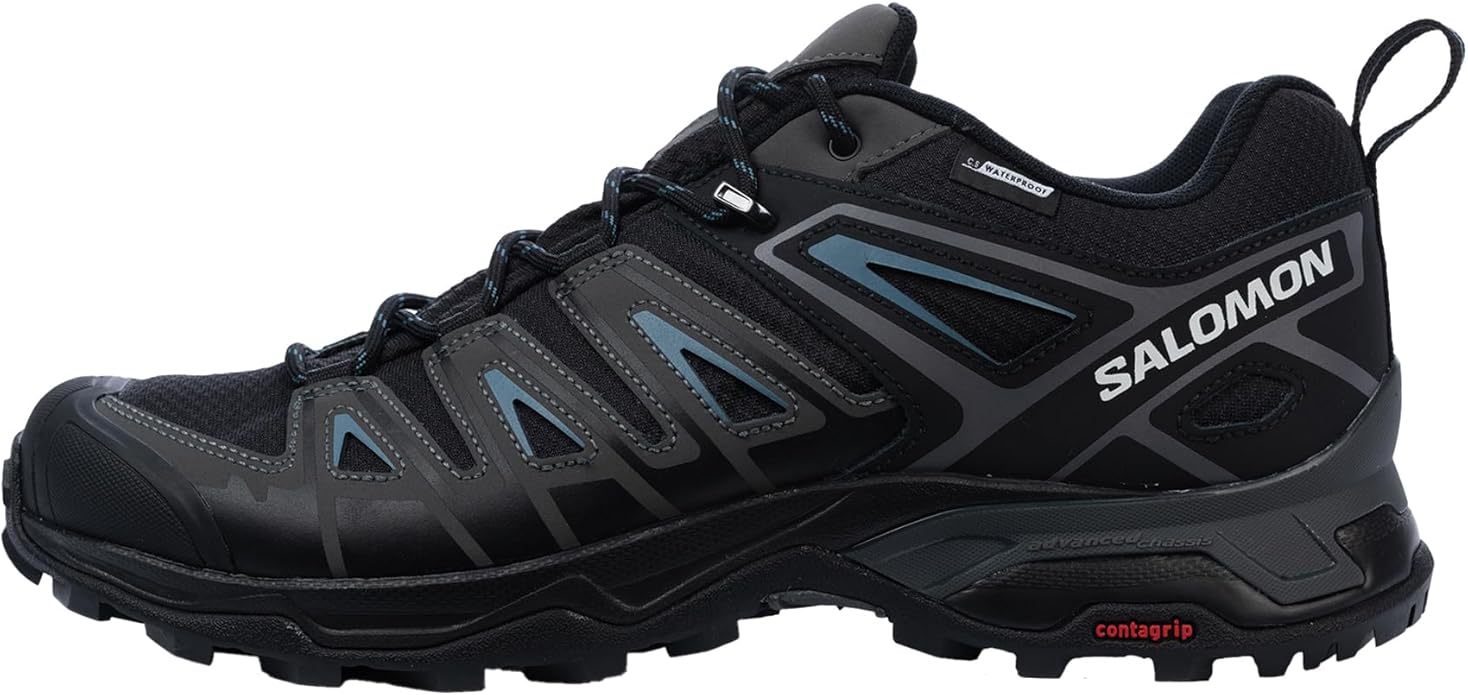
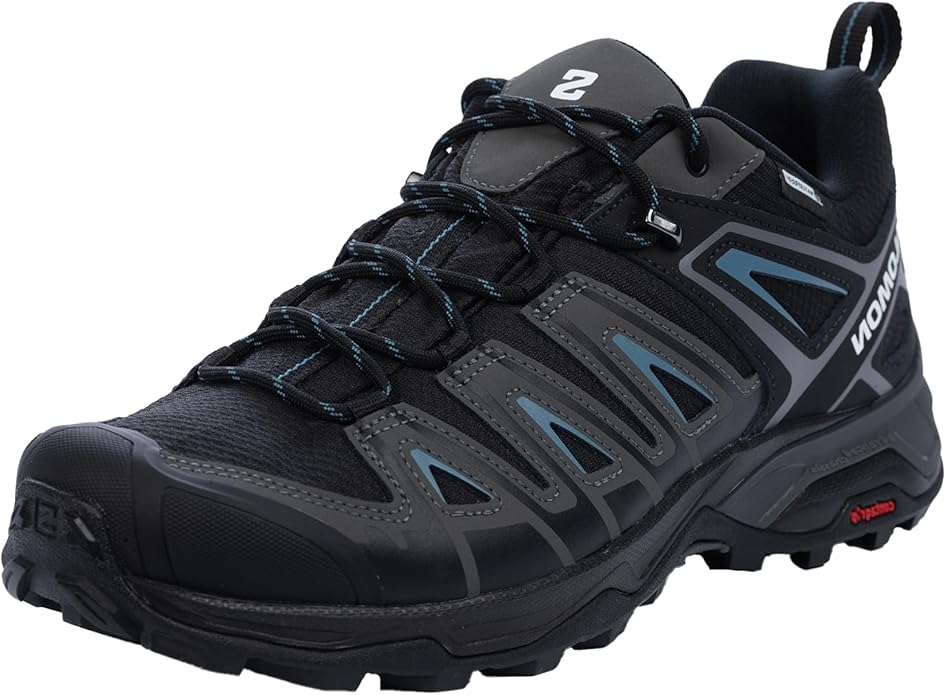
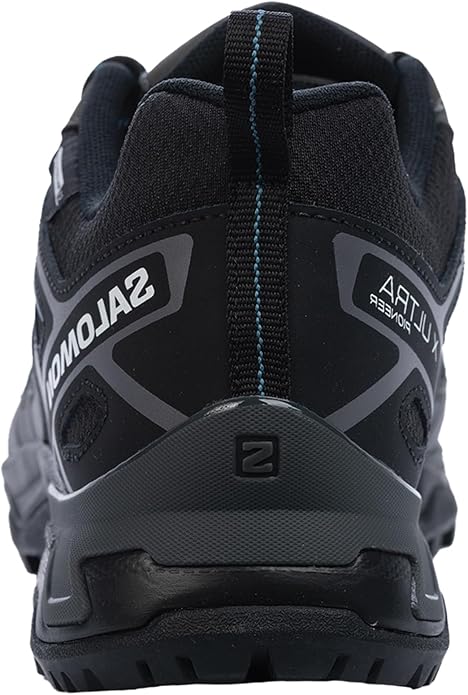
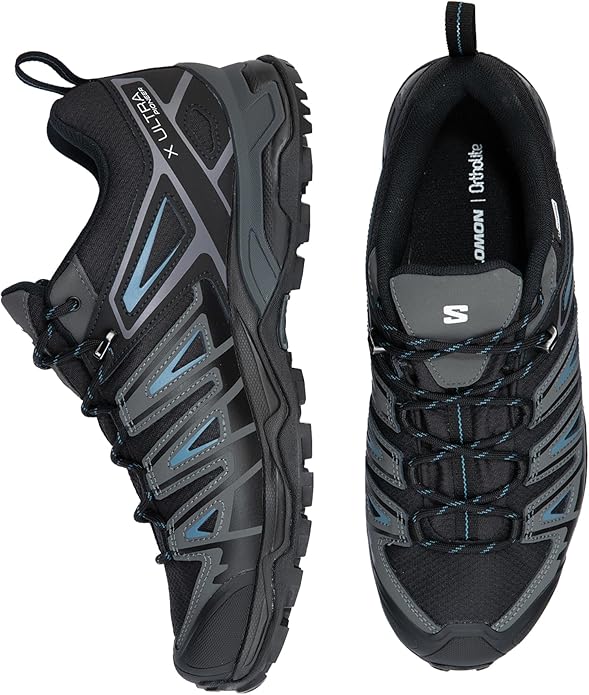
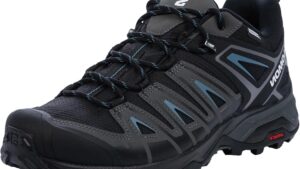
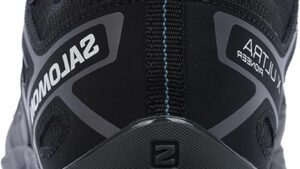
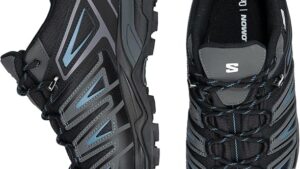
Salomon Men’s X Ultra Pioneer Climasalomon Waterproof Hiking Shoe
- ⚖️ Weight: 1.77 lbs per pair (men’s size 9) / approximately 14 oz (men’s size 10)
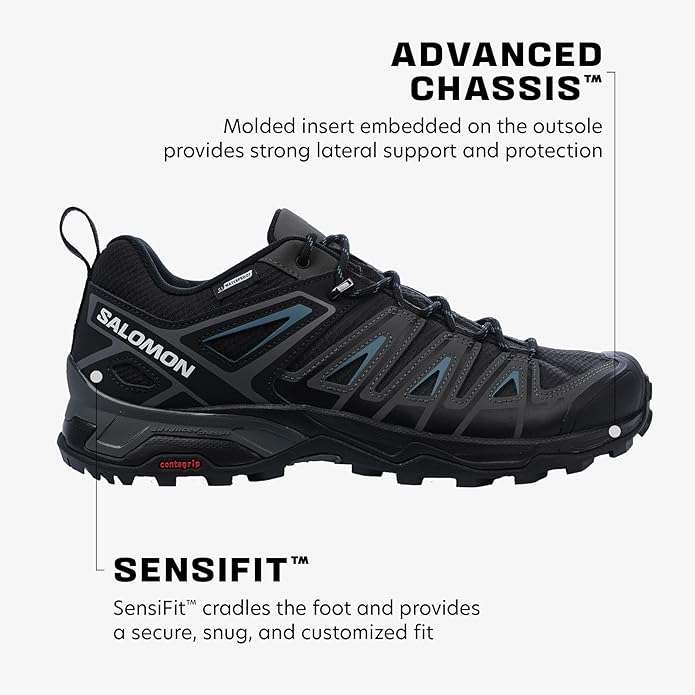
- 🧪 Midsole: Advanced Chassis with foam cushioning (placed between outsole and midsole)
- 👟 Upper: Leather/Textile with ClimaSalomon Waterproof membrane (fully gusseted)
- 🔒 Closure: Traditional lace-up system with eyelets
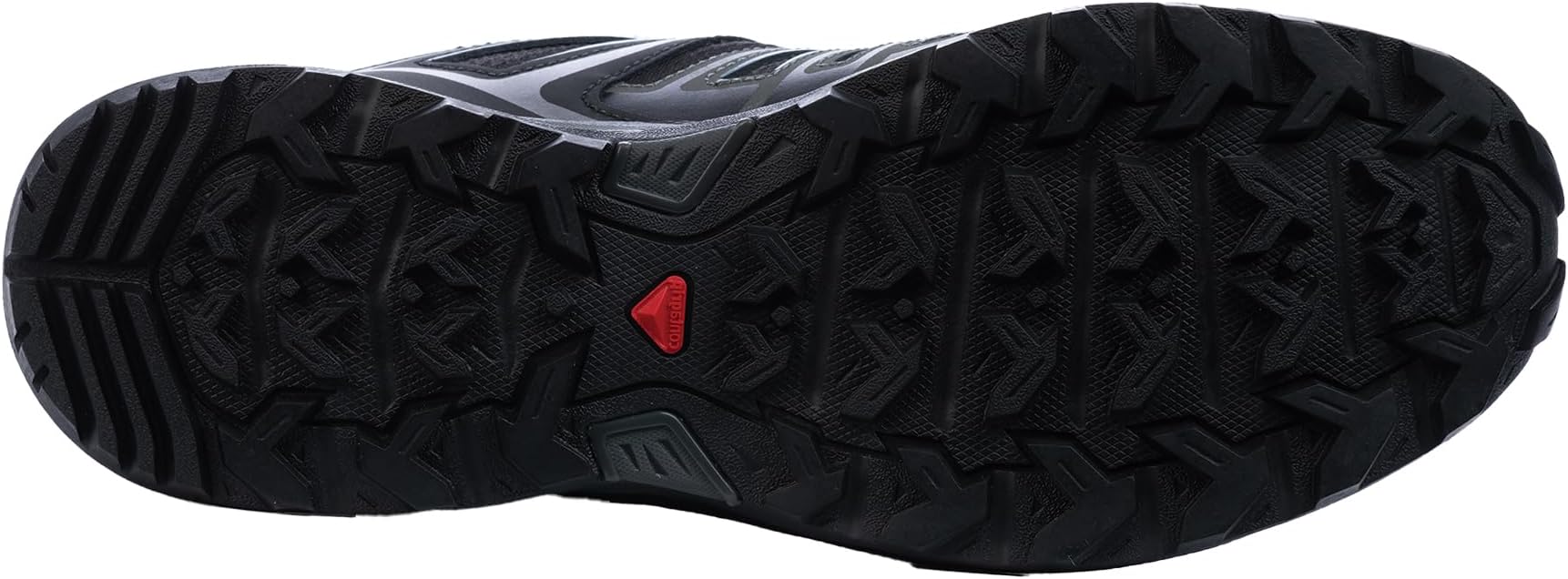
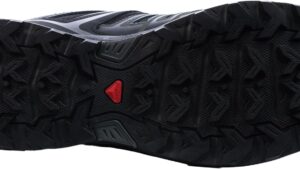
- 🧲 Outsole: Contagrip synthetic rubber with aggressive lug pattern
- 🦶 Insole: OrthoLite (removable, springy, antimicrobial)
- 🏔️ Category: Waterproof hiking/trekking shoe
Three pairs of “waterproof” hiking shoes in the past four years — and every single one of them soaked through at the worst possible moment. The creek crossing on day two of a family trip. The surprise downpour at mile seven. The wet grass meadow that looked innocent until it wasn’t. So when the Salomon X Ultra Pioneer Climasalomon Waterproof landed on my workbench, I wasn’t optimistic. I’m Mike, and I’ve been testing outdoor gear for family hikes with my two teenagers long enough to develop what I’d call productive skepticism. Eight weeks, 45+ miles, and 12 hiking sessions on Pennsylvania’s famously rocky terrain later — here’s whether the X Ultra Pioneer earns a spot in my gear rotation or joins the pile of expensive disappointments.
Design and Build Quality: First Impressions That Hold Up
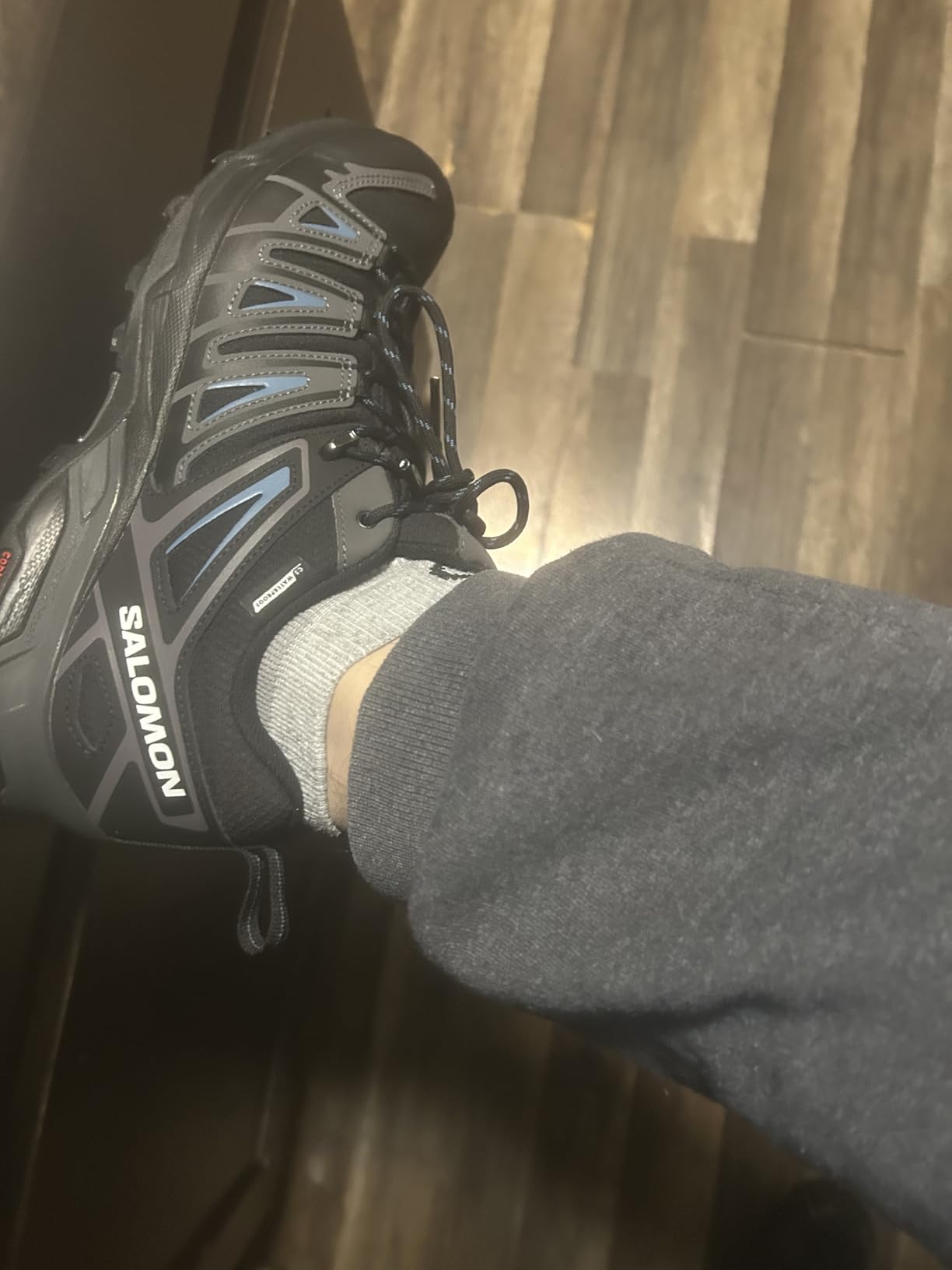
The box-to-hand transition tells you something immediately: this isn’t a budget hiking shoe inflated with marketing claims. The leather-textile hybrid upper feels dense and purposeful, the stitching is clean and consistent, and nothing flexes or shifts in ways that suggest structural weakness. Compare that to the two sub-$80 “waterproof” shoes I tested before this — both showed fraying seams within three months.
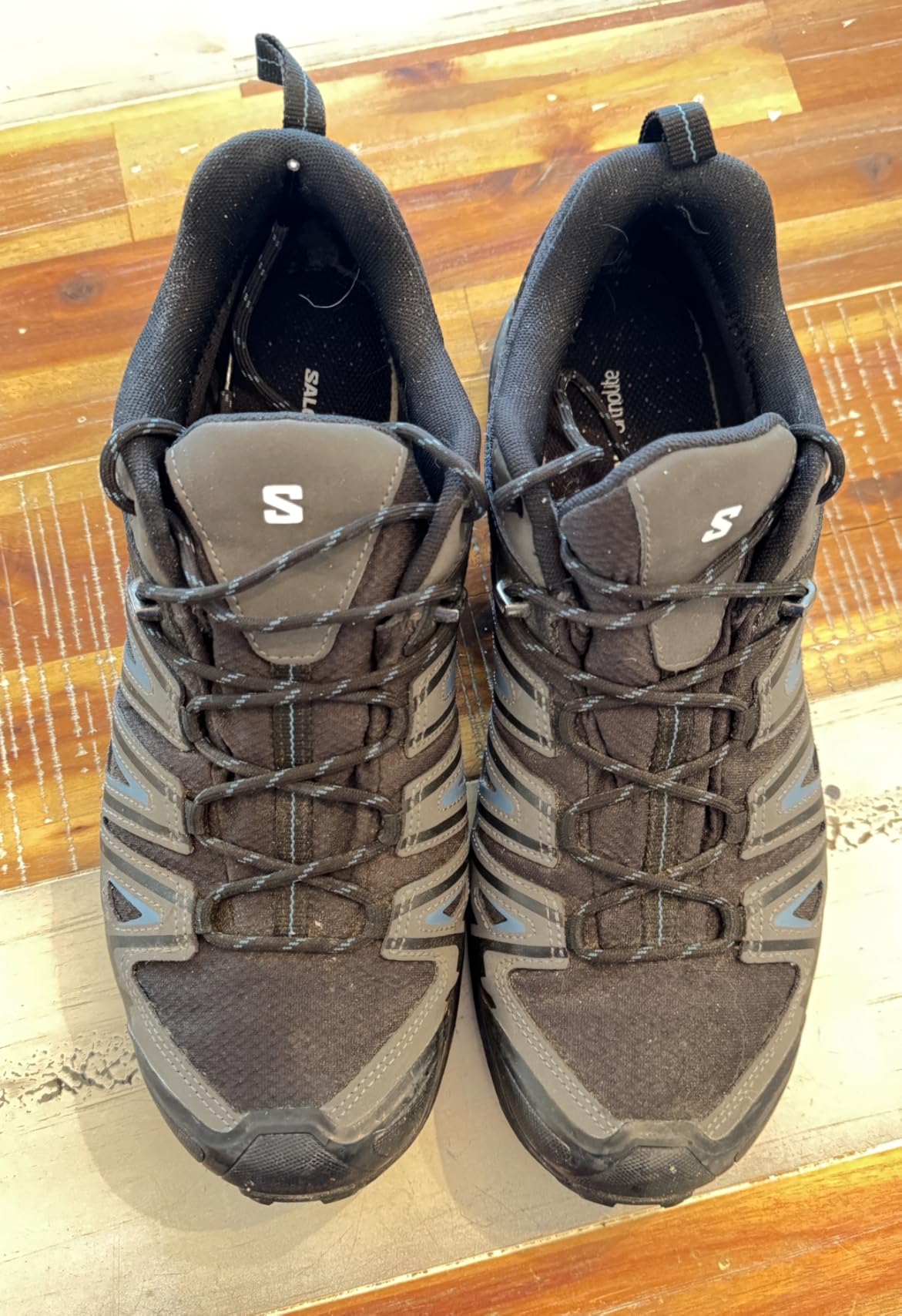
The ClimaSalomon Waterproof membrane is the centerpiece of the design, and Salomon built it as a full bootie — a seamless waterproof sleeve that wraps the foot entirely, including a gusseted tongue with zero water entry points. That’s the difference between real waterproofing and the splash-resistant coating that most budget shoes call “waterproof.” Real waterproofing is heavier, less breathable, and more expensive to build properly. Salomon made that choice deliberately, and you feel it in the weight (1.77 lbs per pair) and the thermal retention.
Two things caught my eye regarding durability signals: the seam quality around the toe cap is excellent, and the ankle padding shows no signs of compression or uneven material distribution. One thing worth flagging — ClimaSalomon is Salomon’s proprietary membrane, not Gore-Tex. The functional performance is strong (more on that shortly), but long-term degradation data is thinner for ClimaSalomon than it is for Gore-Tex, which has a decades-long track record in the hiking community.
The Advanced Chassis — the structural backbone placed between the midsole and outsole — gives the shoe a planted, purposeful feel underfoot. Not stiff in the way that traditional hiking boots resist natural foot movement, but grounded enough that you feel connected to the terrain.
Sizing and Fit: The Part Nobody Gets Right Until It Hurts
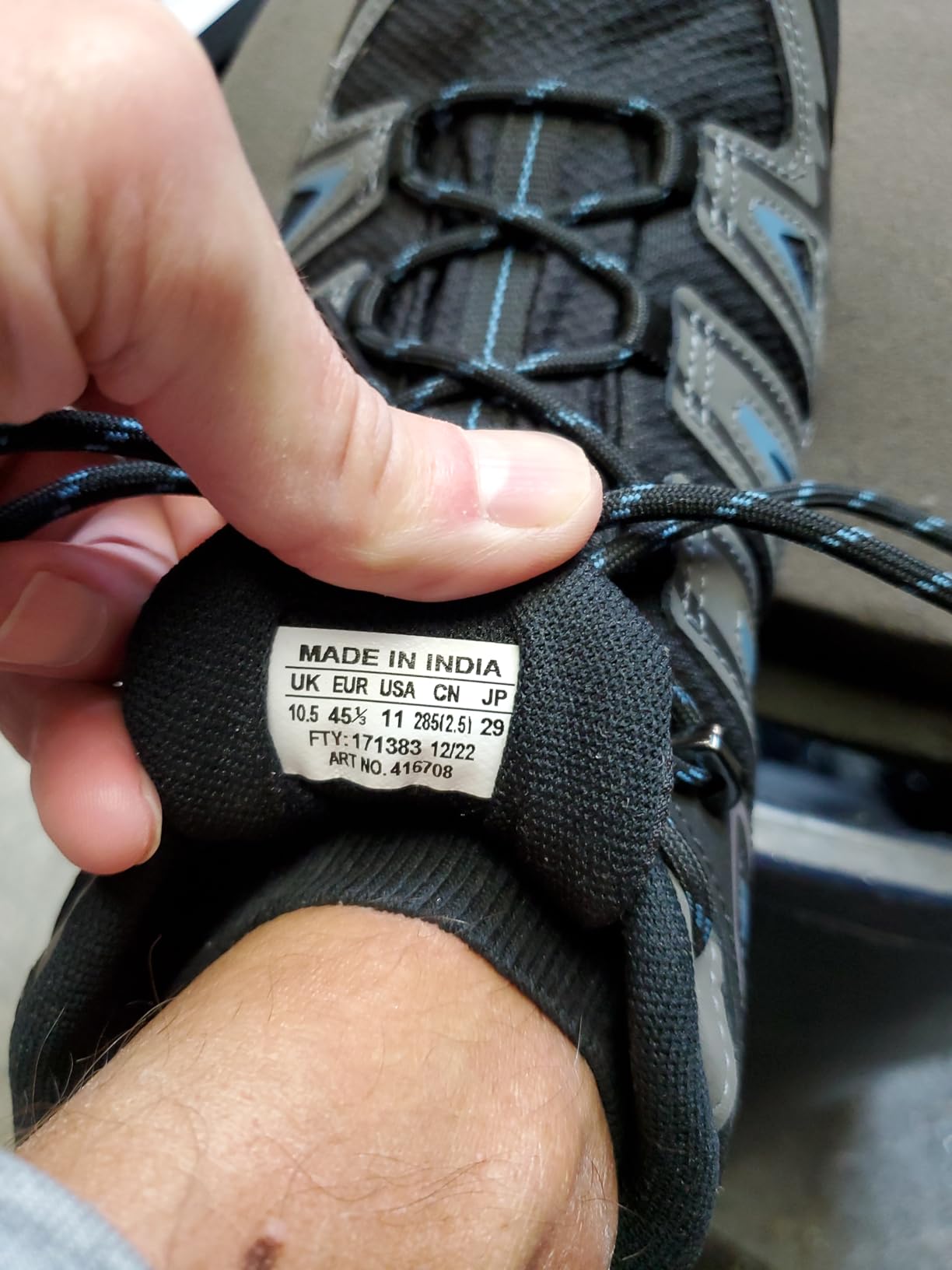
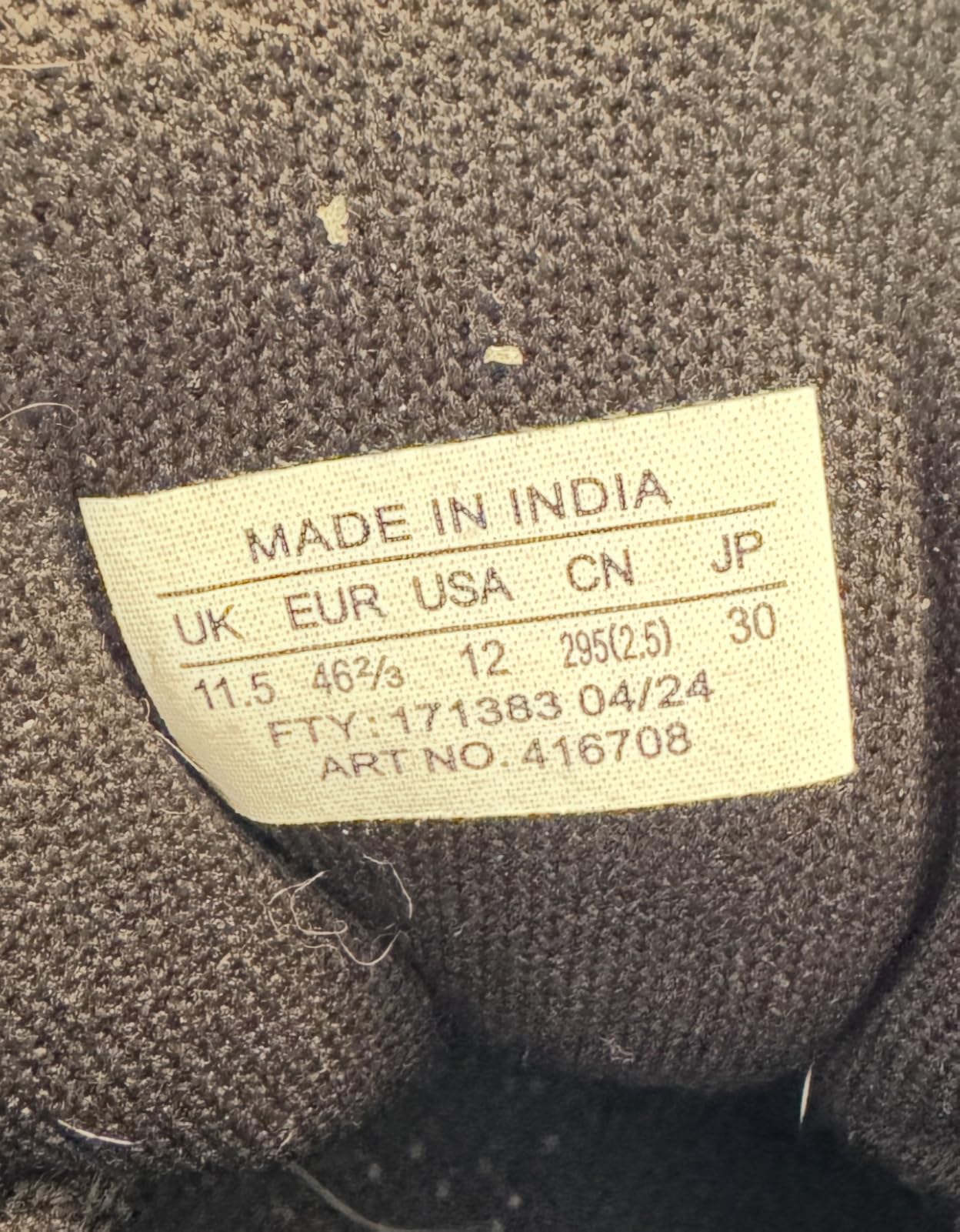
Let me be direct: this shoe runs narrow. I wear size 10.5 across most footwear. At my normal size, the X Ultra Pioneer squeezed my midfoot and toe box in a way that would’ve made a 6-mile hike genuinely miserable. The length was fine — the width wasn’t anywhere near it. I exchanged for an 11, which gave me room to work with but still required a two-week break-in before anything resembling comfort emerged.
Here’s the sizing framework I’d use if I were buying again:
Standard width feet: Size up half to a full size. The toe box narrows significantly compared to competitors like the Merrell Moab 2, which runs appreciably wider. Don’t trust the length — focus on the midfoot width when trying them on.
Wide feet: Size up a full size minimum, and even then, this may not solve the problem. The L-RUN Wide Hiking Shoes or the North Face Fastpack Hedgehog 3 are built on more accommodating lasts and may serve wide-footed hikers better at this price point.
Narrow feet: True-to-size is likely the right call. Geerly’s data suggests the Pioneer fits narrow feet better than average — the snugness that’s a problem for wider feet can actually work in your favor here.
The break-in timeline is longer than what you’d expect from a $115 shoe. Days one through three feel restrictive around the midfoot. By day five to seven, the leather begins to yield in the right places. The heel slippage I noticed during the first few outings — where the shoe would lift slightly during push-off on slopes — resolved completely by week two. After break-in, the heel cup became one of the standout features, holding firm on steep descents without any noticeable slip.
The OrthoLite insole is removable, which matters if you use custom orthotics. Good news for plantar fasciitis sufferers — the shoe accommodates aftermarket insoles without significant volume loss.
Waterproofing Performance: The Core Claim, Tested Hard
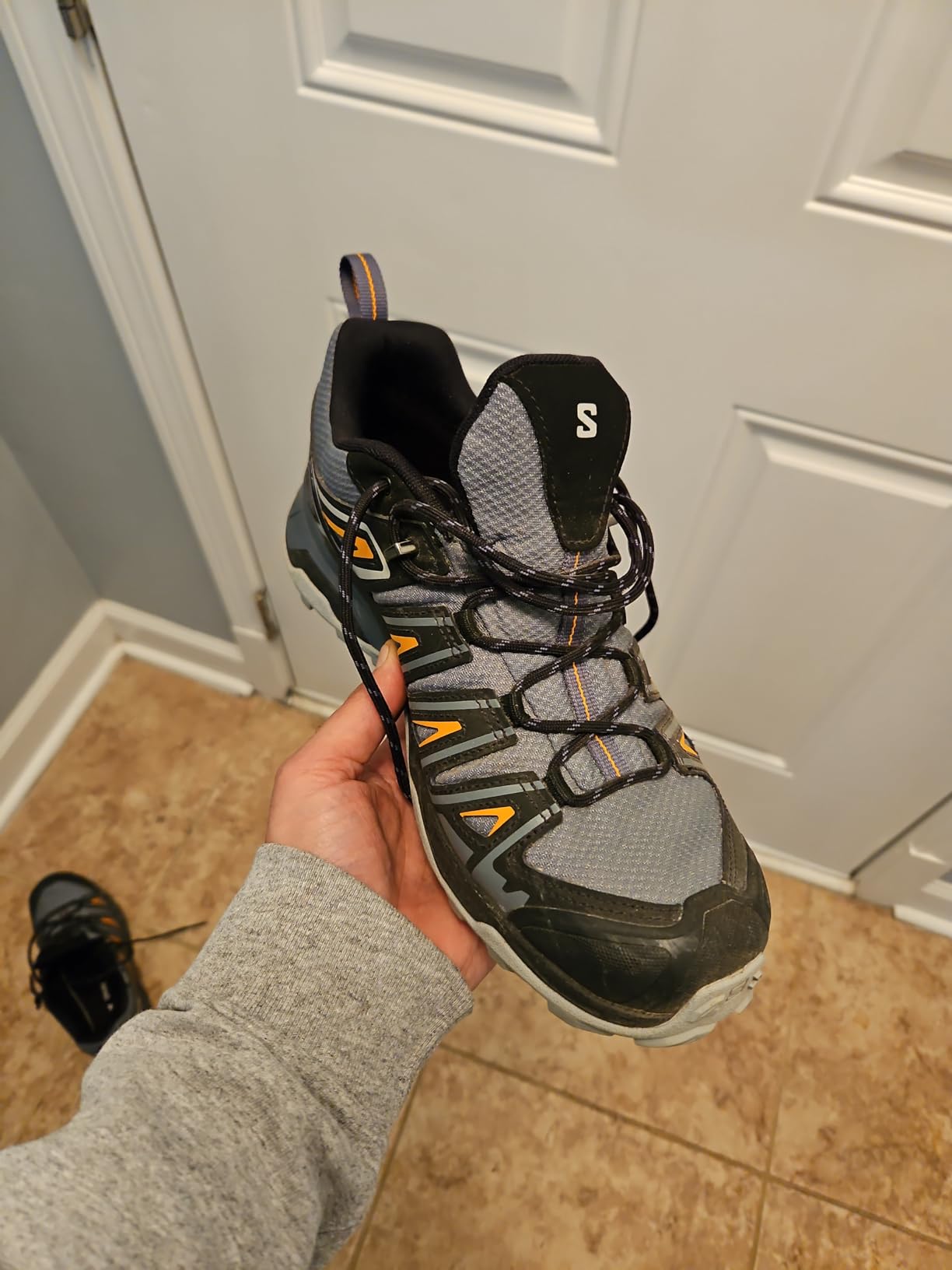
Eight weeks of deliberate abuse, and the ClimaSalomon membrane never let in a drop.
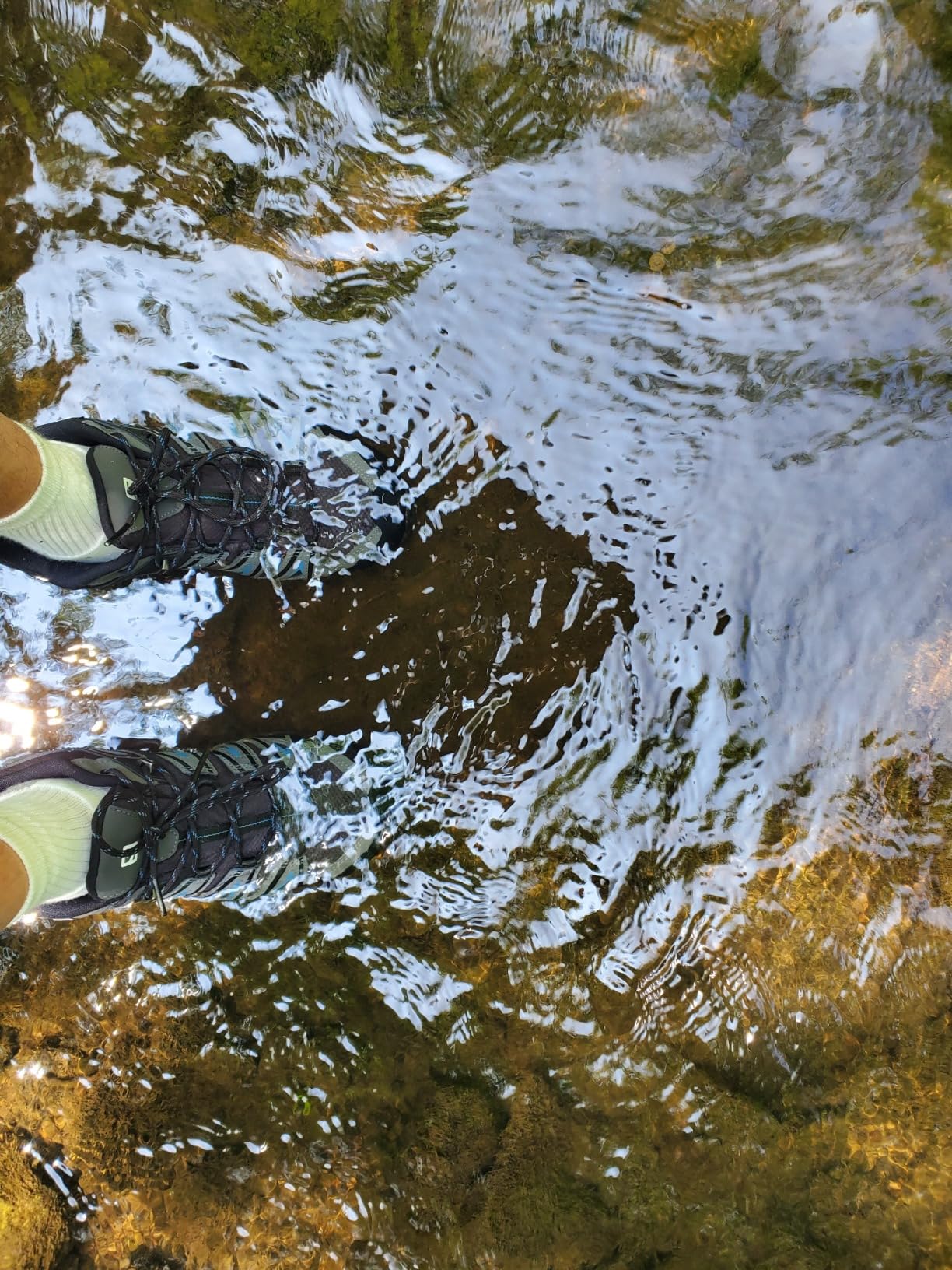
Creek crossings at mid-ankle depth — dry. An hour of walking through tall wet grass that saturated everything from my ankles up — dry. A family camping weekend that included three days of varied terrain, from muddy forest trails to rocky scrambles to multiple stream crossings — the inside of the shoe stayed dry through all of it.
The most definitive test happened on the second day of that camping trip. My son and I got caught in a surprise downpour while navigating a stretch of trail with nowhere to shelter. We spent about 45 minutes moving through ankle-deep puddles and mud. His shoes — another brand, marketed as waterproof — were completely soaked within the first 10 minutes. Mine remained dry when we reached the car. That single incident confirmed what the spec sheet claimed.
What the spec sheet doesn’t tell you is the breathability cost. The fully gusseted ClimaSalomon membrane seals water out completely, but it seals internal moisture in almost as efficiently. My feet run warm at baseline, and during anything above moderate hiking pace, the interior of these shoes turns into a sauna. Feet stay dry from external water, then get damp from sweat — which, in summer heat, amounts to the same result by hour three.
The optimal temperature envelope for these shoes is roughly 40–65°F. Below that, the waterproofing keeps you warm and the reduced sweat output is manageable. Above 70°F with sustained effort, you’ll be wishing for a mesh upper.
This is also where the ClimaSalomon vs. Gore-Tex distinction matters: both block water, but Gore-Tex is tested to far more rigorous long-term durability standards, and its degradation timeline is well-documented. ClimaSalomon’s longevity beyond one or two seasons is harder to predict. Eight weeks of testing isn’t enough to answer that question.
Traction: Where It Dominates and Where It Doesn’t
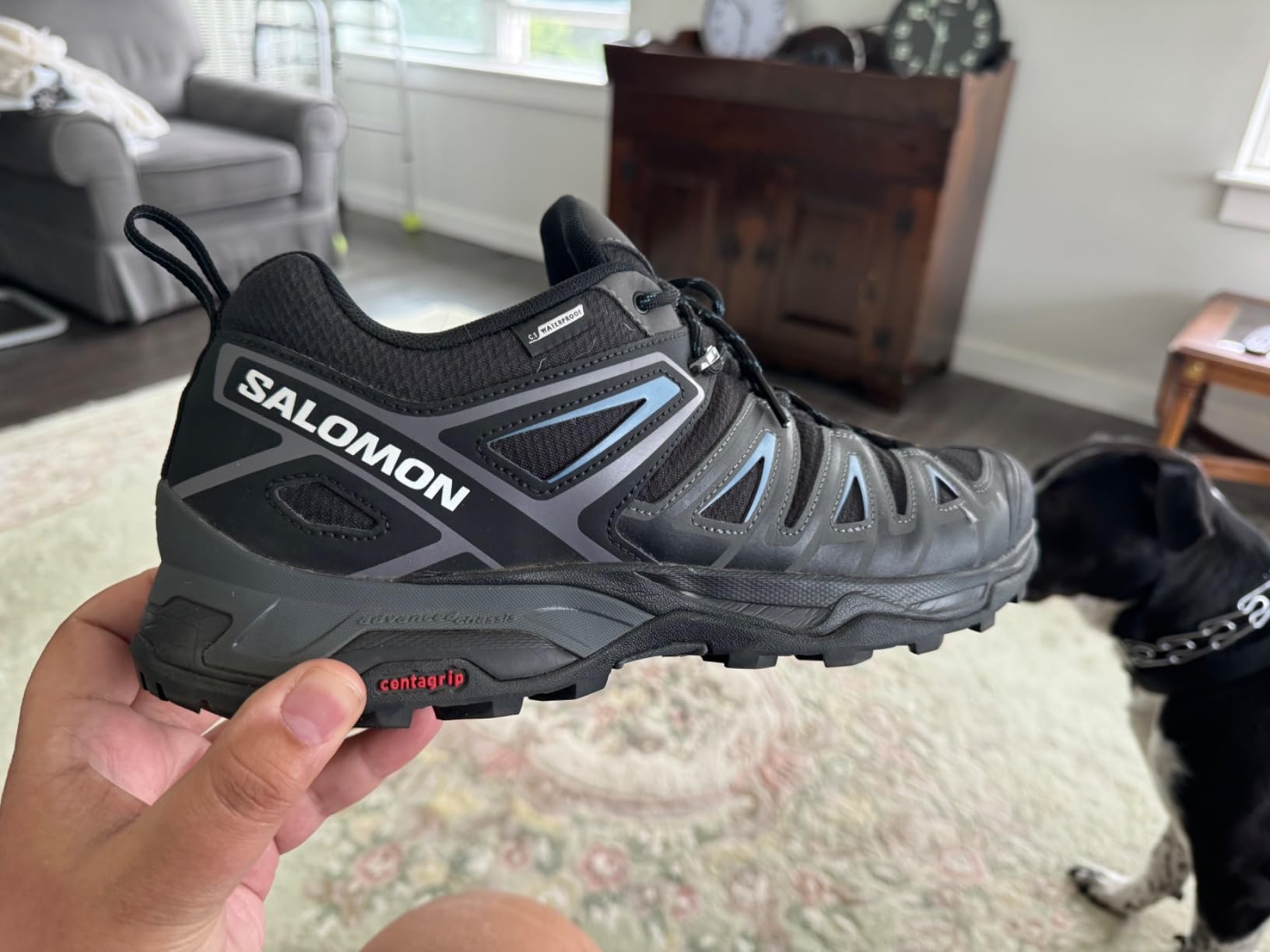
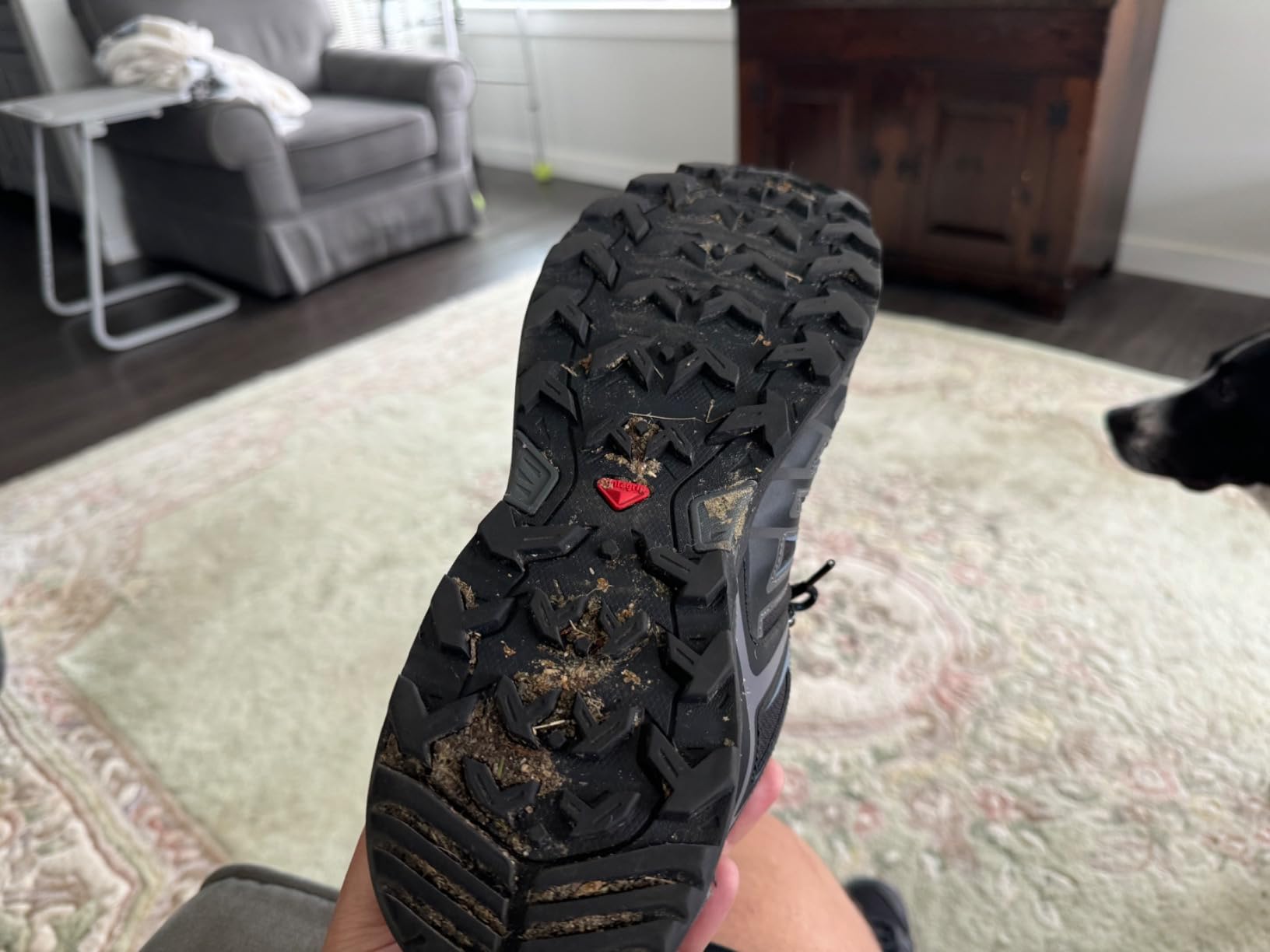
The Contagrip rubber outsole is where this shoe earns its hiking credentials. On loose rock, packed dirt, moderate mud, and root systems, the lug pattern performs exactly as advertised — confident, secure, and grip that doesn’t require you to think about foot placement constantly.
Breaking it down by surface:
Loose rock and dry dirt (8.5/10): The sweet spot. Pennsylvania’s rocky trails are notorious, and through 12 sessions covering everything from talus to packed gravel, the Contagrip gave me zero traction failures. Aggressive lug geometry means the outsole cuts into loose surfaces rather than skating across them.
Moderate mud (8/10): Good. Lugs are wide-spaced enough to shed mud rather than pack it. Not ideal for thick clay mud, but handles trail mud after rain without issue.
Wet logs and smooth wet rock (5.5/10): This is where you pay attention. Twice on wet logs, I had to consciously slow down and place my feet more deliberately than I would have wanted to. Wet limestone was the worst offender — one surface where the Contagrip rubber felt more like skating than gripping. For context, my old Merrell Moab IIs behaved similarly on smooth wet surfaces; this isn’t unique to Salomon, but it’s worth knowing before you plan a trail with lots of stream crossings over smooth rock.
Pavement (6.5/10): The aggressive tread pattern feels awkward on hard flat surfaces and wears faster than it should. These aren’t meant for pavement, and the shoe design makes that obvious.
If your typical trail involves lots of wet rock, wet moss, or smooth creek beds, be cautious. The traction profile is excellent for mixed natural terrain in moderate conditions but falls to merely adequate when surfaces get both wet and smooth simultaneously.
Advanced Chassis and Cushioning: Honest Multi-Day Assessment
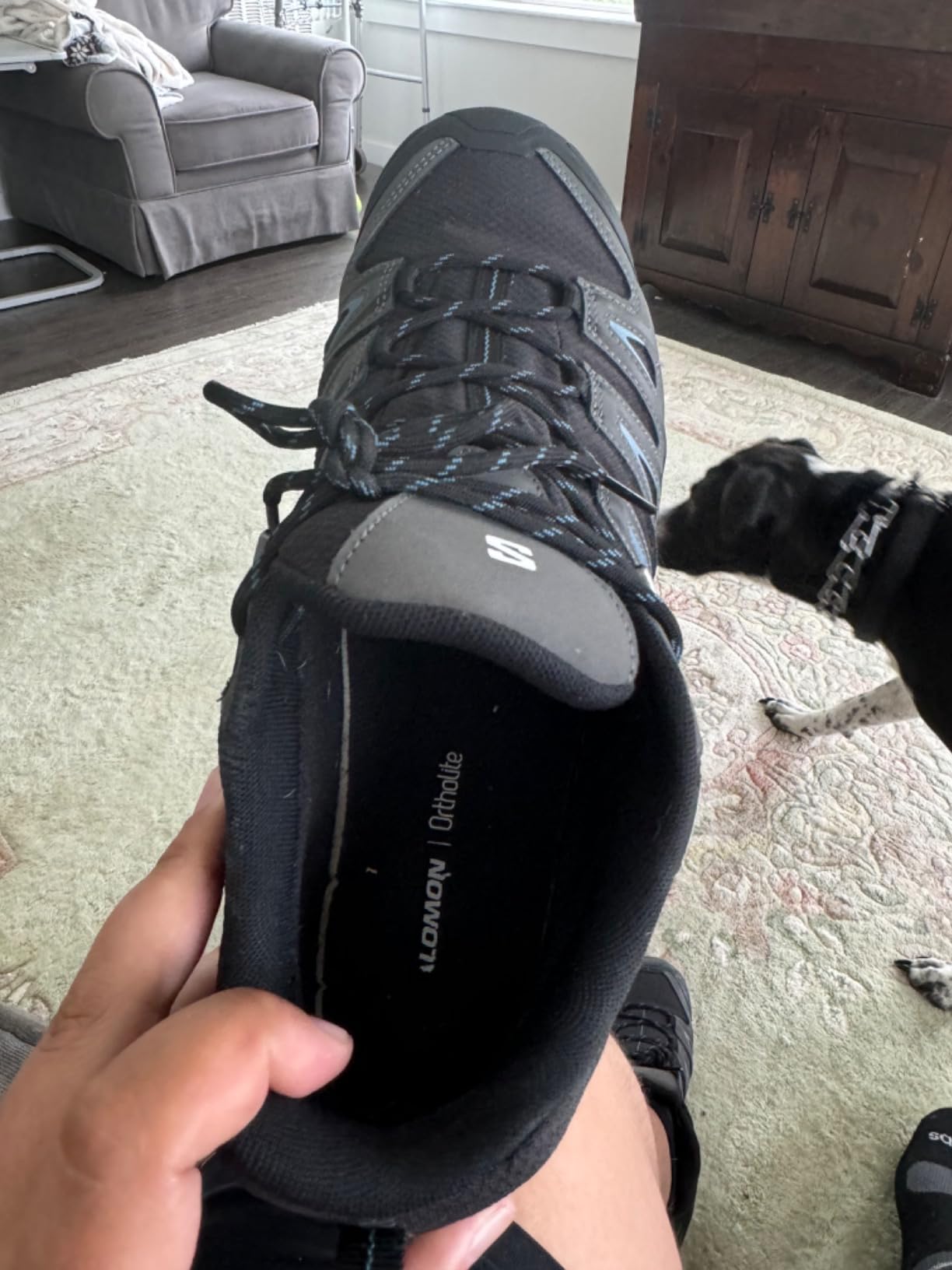
The Advanced Chassis system — positioned between the midsole and outsole — is the most technically interesting component of this shoe, and it delivers on its primary promise. On rocky Pennsylvania terrain, I could feel the chassis managing the energy distribution when landing on awkward angles: the shoe absorbs the variance without transmitting it directly to my ankle, which at 185 lbs carrying a 20-pound day pack matters more than it might for lighter hikers.
The support-without-rigidity balance is real. Unlike traditional hiking boots with full shank support, which can feel like walking in a cast on anything technical, the X Ultra Pioneer flex naturally during push-off while maintaining the structural integrity you need at heel strike.
Comfort timeline across a typical day hike:
Hours 1–3: Comfortable and responsive. The foam cushioning absorbs impact well at moderate pace.
Hours 3–6: Sweet spot. Support feels dialed in, no pressure points if break-in is complete.
Hours 6–8: Firmness begins. The cushioning doesn’t bottom out, but you feel it working harder.
Hours 8+: You notice it. Still functional, but no longer the comfortable tool it was at hour two.
The more revealing test was consecutive multi-day hiking. On the three-day family camping trip, day one and day two were solid. Day three, the cushioning had compressed enough that I was aware of the firmness in a way I hadn’t been before — the toe box tightness (already narrow) compounded with minor foot swelling from two days of hiking, and the combination made the last morning feel noticeably different from the first. After a full rest day back home, the cushioning recovered. This suggests temporary compression rather than permanent foam collapse, but it also signals a ceiling on extended consecutive use.
For day hikes in the 6–8 mile range, the X Ultra Pioneer performs well. Pushing into multi-day backpacking territory, the cushioning will start to feel insufficient, particularly on days three and beyond.
The Lace Problem Nobody Else Mentions
Worth a dedicated section: the laces come undone.
Salomon is known for their Quicklace speed system — a pull-and-lock design that stays secure across demanding terrain. The X Ultra Pioneer uses traditional round laces instead, a design choice that feels retrograde in practice. Despite double-knotting before every outing, I was retying these shoes every mile or so on technical trails. The lace-eyelet interface doesn’t generate enough friction to hold under the constant movement of active hiking.
BootWisdom noted that “eyelets need improvement,” which is a diplomatic way of describing the same problem. The fix isn’t dramatic — flat laces grip eyelets better than round, and thicker aftermarket laces solve this almost entirely. But spending extra money to fix a lacing system on a $115 shoe is the kind of thing that shouldn’t be necessary.
This isn’t a deal-breaker. It’s more like a persistent minor annoyance that accumulates over a long day. On easy terrain, it’s a minor irritation. On technical sections where stopping to retie means pausing on an exposed ledge, it becomes a legitimate distraction.
On the Trail: Testing Across Real Conditions
The 8-week test included a range of conditions that covered most of what a casual-to-intermediate hiker encounters in the northeast:
Dry rocky trails — the shoe’s home turf. Contagrip excels here, and the Advanced Chassis manages the energy load comfortably on hikes up to 8 miles.
Creek crossings ranging from ankle-depth to mid-calf-depth wading — waterproofing held across all of them without exception.
Rocky scrambles requiring foot placement precision — the Advanced Chassis prevented the shoe from folding on awkward angles, which is a specific and real benefit on technical terrain.
Muddy forest trails after significant rain — traction held well, mud shed cleanly.
Steep descents — after break-in, the heel cup held firm and provided genuine confidence. Before break-in (week one), there was enough heel lift to feel destabilizing.
The family trip provided the most genuine stress test: three teenagers (my two plus a friend) hiking with mixed fitness levels and widely varying pace means lots of starts, stops, and awkward terrain management. The shoes performed consistently across that range.
Marketing Claims vs. What Actually Happened
ClimaSalomon Waterproof — “Flexible, lightweight, full waterproof bootie”: DELIVERED (with caveats). Waterproof is genuine and verified. Flexible is true post-break-in. Lightweight is debatable — 1.77 lbs is moderate, not light. The “full bootie” construction is real, and that’s why the waterproofing works.
Advanced Chassis — “Optimizes motion control, energy management, and protection”: DELIVERED. Motion control works as described. Energy management is detectable at the heel strike. Protection on rocky terrain is genuine. This is the most honest claim Salomon makes about this shoe.
“Versatile enough to adapt your daily life”: PARTIALLY TRUE. The shoe works for casual daily wear and can transition from trail to car without issue. The aggressive tread looks and feels out of place on polished floors or extended pavement use. Think of it as a trail shoe that tolerates daily wear, not a daily sneaker that handles trails.
Traditional lacing system: ACCURATE BUT INCOMPLETE. Yes, it has traditional laces. No, Salomon didn’t mention that those laces come untied mid-hike despite double-knotting.
Overall Ratings
Who Should Buy This — And Who Shouldn’t
✅ Buy If You:
- Regularly hike in wet conditions (creek crossings, rain, dew-heavy trails) and staying dry matters
- Hike primarily in cooler temperatures — 40–65°F is this shoe’s comfort zone
- Prioritize stability on rocky mixed terrain over max cushioning
- Have standard-to-narrow feet and are willing to size up half to one full size
- Plan day hikes in the 5–10 mile range, not extended multi-day backpacking
- Value build quality and premium materials over lightweight minimalism
❌ Skip If You:
- Have wide feet — the narrow last will cause problems even after sizing up
- Hike primarily in hot or humid climates where breathability is critical
- Want a quick-lace or lock-lace system that stays put without constant attention
- Need consistent performance on extended consecutive days (3+ day backpacking trips)
- Don’t need waterproofing — you’re paying a significant premium for that membrane
- Are impatient with break-in — this shoe takes 2 weeks to reach its comfort potential
Alternatives Worth Considering
For wide feet: The Merrell Moab 3 is the standard comparison at a similar price point, and its wider last accommodates broader feet more comfortably. The Oboz Sypes Low Leather B-DRY is another option with a more accommodating fit profile.
For hot weather: The Salomon Speedcross Peak Clima offers trail capability without the full waterproof bootie, trading dry-feet performance for significantly better ventilation. Or step away from waterproofing entirely with something like the Salewa Mountain Trainer Lite for warm-season day hikes.
For KEEN fans: The KEEN Circadia Waterproof is worth a direct comparison — KEEN typically runs wider and offers a comparable waterproof performance tier.
For trail runners who want waterproof: The Altra Lone Peak 8 sits in a different performance category but offers the zero-drop experience with wide toe box for runners moving into wet terrain.
For true waterproof boots: If you need ankle support and long-term ClimaSalomon durability concerns matter to you, consider stepping up to the Pioneer Mid variant or the NORTIV 8 Ankle High Waterproof Hiking Boots as a budget-conscious alternative.
Final Verdict
Eight weeks in, 45+ miles logged, and the X Ultra Pioneer sits in an honest position: genuinely excellent at the specific thing it was designed for, with real limitations that matter depending on who you are.
The waterproofing is the best I’ve tested in this price category. Not good for the price — just good, period. The Advanced Chassis works as described. The build quality communicates longevity. For rocky cool-weather day hikes where keeping your feet dry is the priority, this shoe earns its $115.
The issues — narrow fit, poor breathability, unreliable laces, cushioning that reaches its ceiling on consecutive multi-day hiking — are real and worth understanding before you buy. They don’t disqualify the shoe; they define its niche. Buy it knowing those limitations, and it’ll serve you well. Buy it expecting a versatile do-everything shoe, and you’ll be disappointed.
My overall rating: 7.5/10
The X Ultra Pioneer is a specialized tool, not a generalist. If wet rocky terrain is your regular environment, it’s one of the better options at this price. If you’re looking for something warmer-weather capable, wide-foot friendly, or built for multi-day comfort, look elsewhere.
Key Strengths
- Waterproofing: Genuinely excellent — ClimaSalomon bootie passes every real-world test
- Traction: Outstanding on loose rock, dirt, and mud; Contagrip delivers
- Build quality: Premium materials, tight construction, durable feel
- Advanced Chassis: Real stability benefit on technical rocky terrain
- Orthotic-friendly: Removable OrthoLite insole accommodates custom inserts
Key Weaknesses
- Narrow fit: Runs small in width; requires size-up and extended break-in
- Breathability: Poor — waterproof membrane traps heat and moisture internally
- Lace system: Traditional laces come undone mid-hike; aftermarket flat laces fix it
- Multi-day cushioning: Compression noticeable by day three of consecutive hiking
- Wet smooth surfaces: Traction drops significantly on wet limestone and logs
Frequently Asked Questions
Do Salomon X Ultra Pioneer shoes run small?
Yes, and more specifically, they run narrow. The length is generally accurate, but the midfoot and toe box are significantly narrower than competitors like the Merrell Moab 3 or KEEN Targhee. For standard width feet, size up half to one full size. Wide-footed hikers should consider alternative hiking shoes altogether, as even sizing up may not provide enough room.
Is the ClimaSalomon waterproofing actually waterproof?
In 8 weeks of deliberate testing — including creek crossings at mid-ankle depth, extended puddle walking, and a 45-minute surprise rainstorm — the ClimaSalomon membrane never let water in. It’s genuinely waterproof for day hiking purposes. The caveat: it’s not Gore-Tex, and long-term degradation data is thinner. Expect strong performance for at least one full hiking season; beyond that is less well-documented.
How bad is the breathability?
Bad enough to matter. The fully gusseted waterproof bootie blocks air circulation almost entirely. Feet stay dry from external water but get damp from sweat above moderate exertion. In temperatures above 70°F or during sustained uphill effort, expect significant heat buildup. These perform best in the 40–65°F range. If you’re hiking in summer heat, the non-waterproof alternatives will serve you better on warm days.
What’s the break-in period like?
Longer than expected for a $115 shoe — roughly two weeks of regular use before the leather fully yields to your foot shape. The first three to five outings involve noticeable midfoot pressure and some heel slippage on slopes. By week two, both issues resolve. Don’t judge these shoes on day one; they’re materially different at week three.
Can I use custom orthotics?
Yes. The OrthoLite insole is removable, and the shoe’s volume accommodates most standard orthotic inserts. If you’re sizing up (which most people will need to do), the additional volume from the larger size works in your favor when inserting aftermarket insoles.
How do the laces hold up?
Poorly. The traditional round laces come undone during active hiking despite double-knotting. This is a consistent issue, not an isolated problem. The fix is straightforward — flat waxed laces or wider flat shoelaces grip the eyelets far better and stay tied. Budget $8–12 for aftermarket laces if you buy these shoes.
Are these suitable for trail running?
Not really. The waterproof membrane and construction weight (1.77 lbs per pair) put these firmly in hiking territory rather than trail running. They can handle a light jog on maintained trails, but dedicated trail runners like the Altra Lone Peak 8 offer significantly better responsiveness and lighter weight for running purposes.
How does it compare to the Merrell Moab 3 Waterproof?
Both sit at similar price points and offer comparable waterproof performance. The Merrell Moab runs wider and is generally more comfortable out of the box with less break-in time. The X Ultra Pioneer is narrower but lighter, and the Advanced Chassis delivers better stability on technical rocky terrain. Wide feet: Merrell. Narrow feet on technical trails: X Ultra Pioneer.
What’s the realistic lifespan?
For casual to moderate hiking (1–3 times per week, day hikes under 10 miles), expect 12–18 months before significant wear. For frequent use or aggressive terrain, 8–12 months is more realistic. The primary wear concern based on 8-week testing is sole edge wear and lace durability, not upper construction.
Is it worth $115?
If waterproofing is your primary requirement and you’re hiking in cool weather on rocky terrain, yes. The waterproof performance alone justifies the price relative to alternatives. If waterproofing isn’t a priority, you can find better all-around comfort and breathability at the same price point in non-waterproof options. Know what you’re buying it for.
Be the first to review “Salomon Men’s X Ultra Pioneer Climasalomon Waterproof Hiking Shoe”
Related products
Hiking/Trekking Shoes

Hiking/Trekking Shoes
Hiking/Trekking Shoes
Hiking/Trekking Shoes
Hiking/Trekking Shoes

Hiking/Trekking Shoes

Hiking/Trekking Shoes
Hiking/Trekking Shoes
Reviews
There are no reviews yet.