
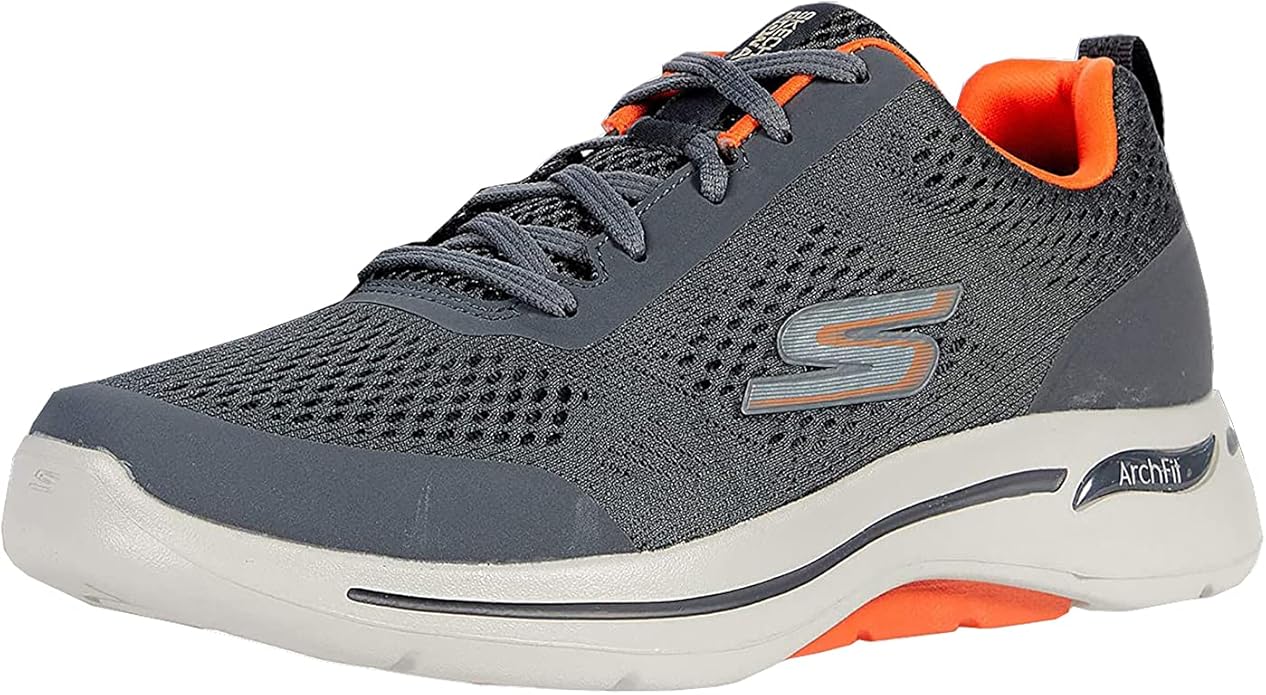
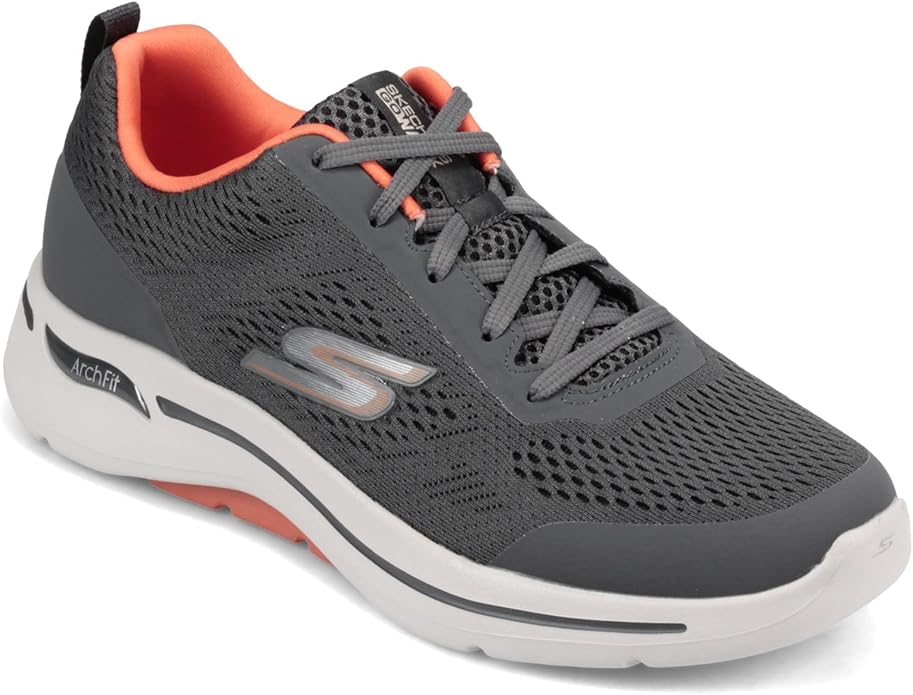
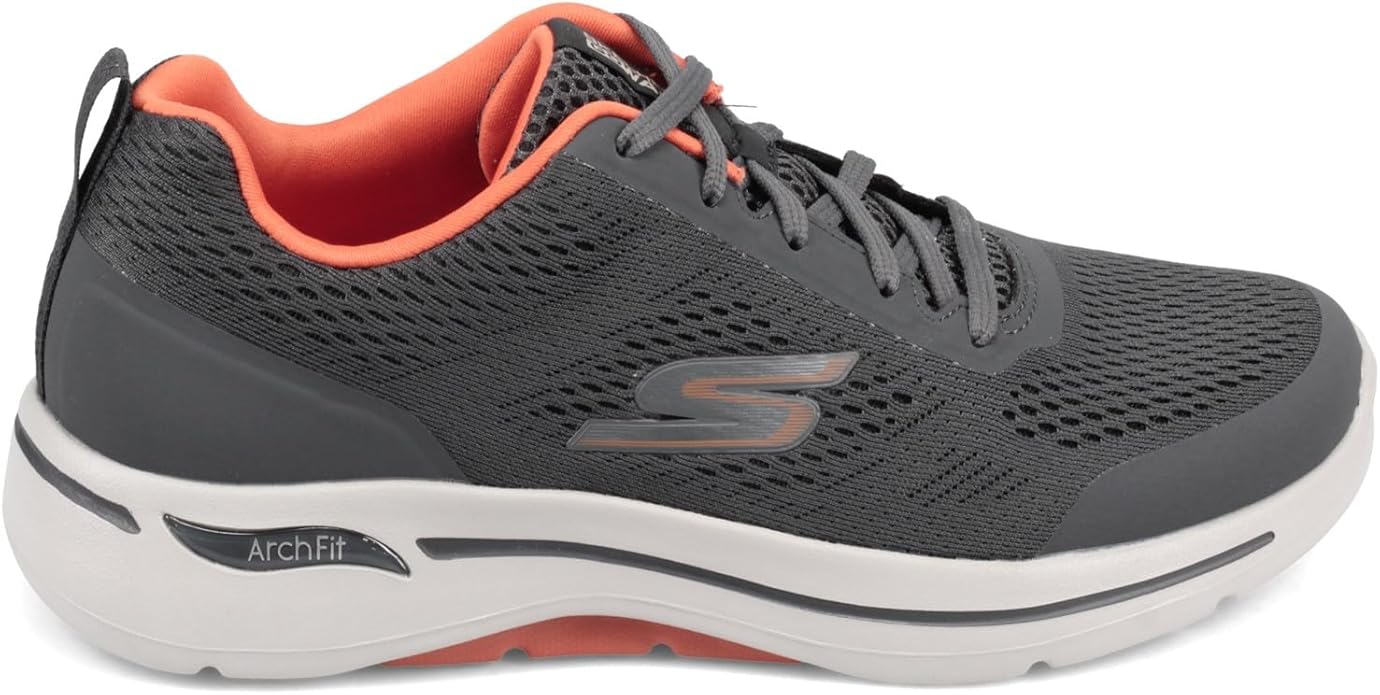
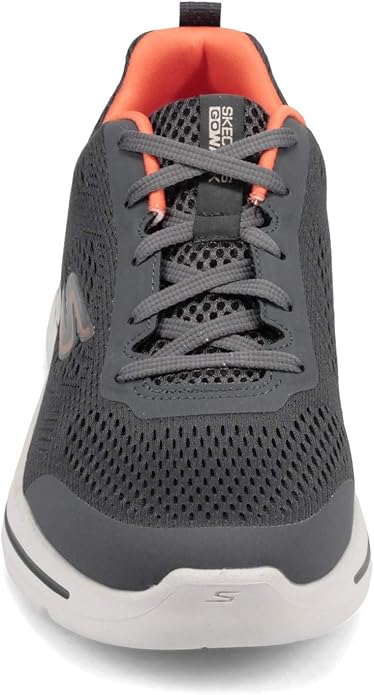
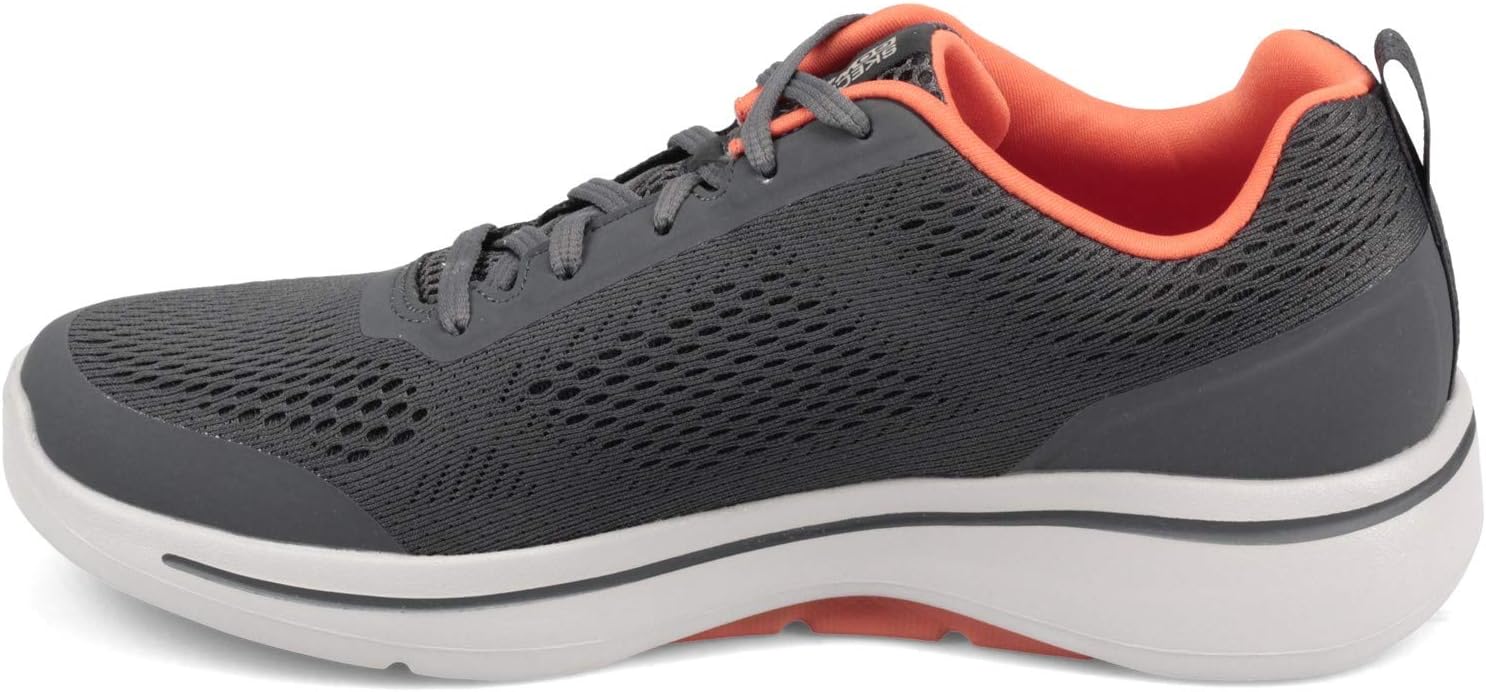
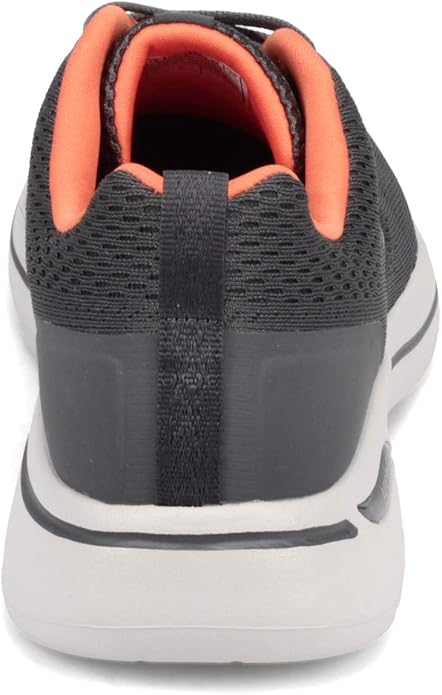
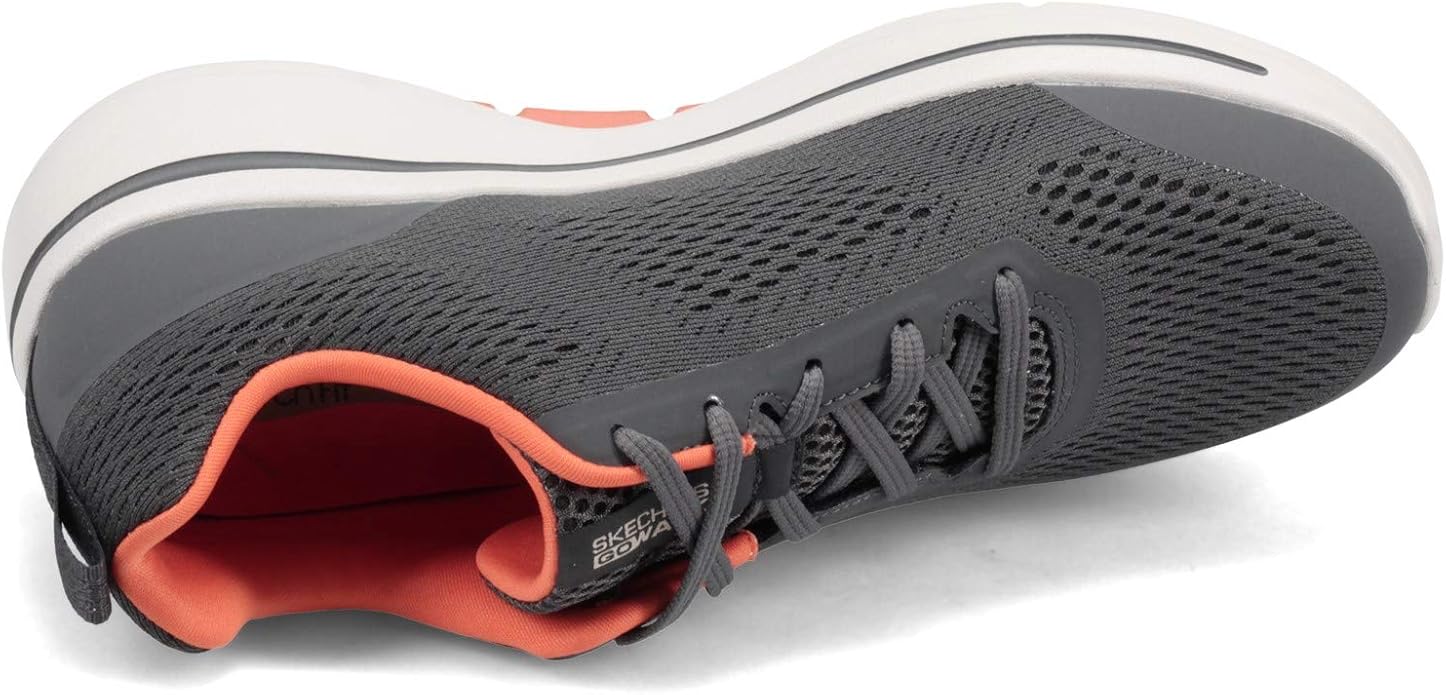
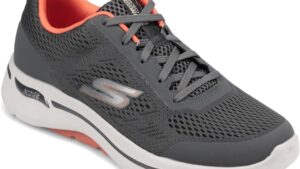
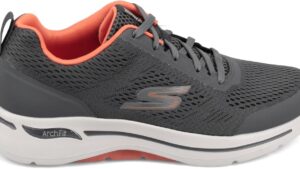
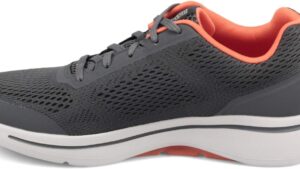
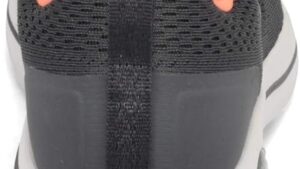
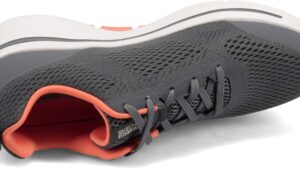
Skechers Men’s Gowalk Arch Fit-Athletic Workout Walking Shoe
$72.95
- ⚖️ Weight: 8.2 oz (men’s size 9)
- 🧪 Midsole: ULTRA GO® cushioning foam + Goga Mat® + Comfort Pillar Technology
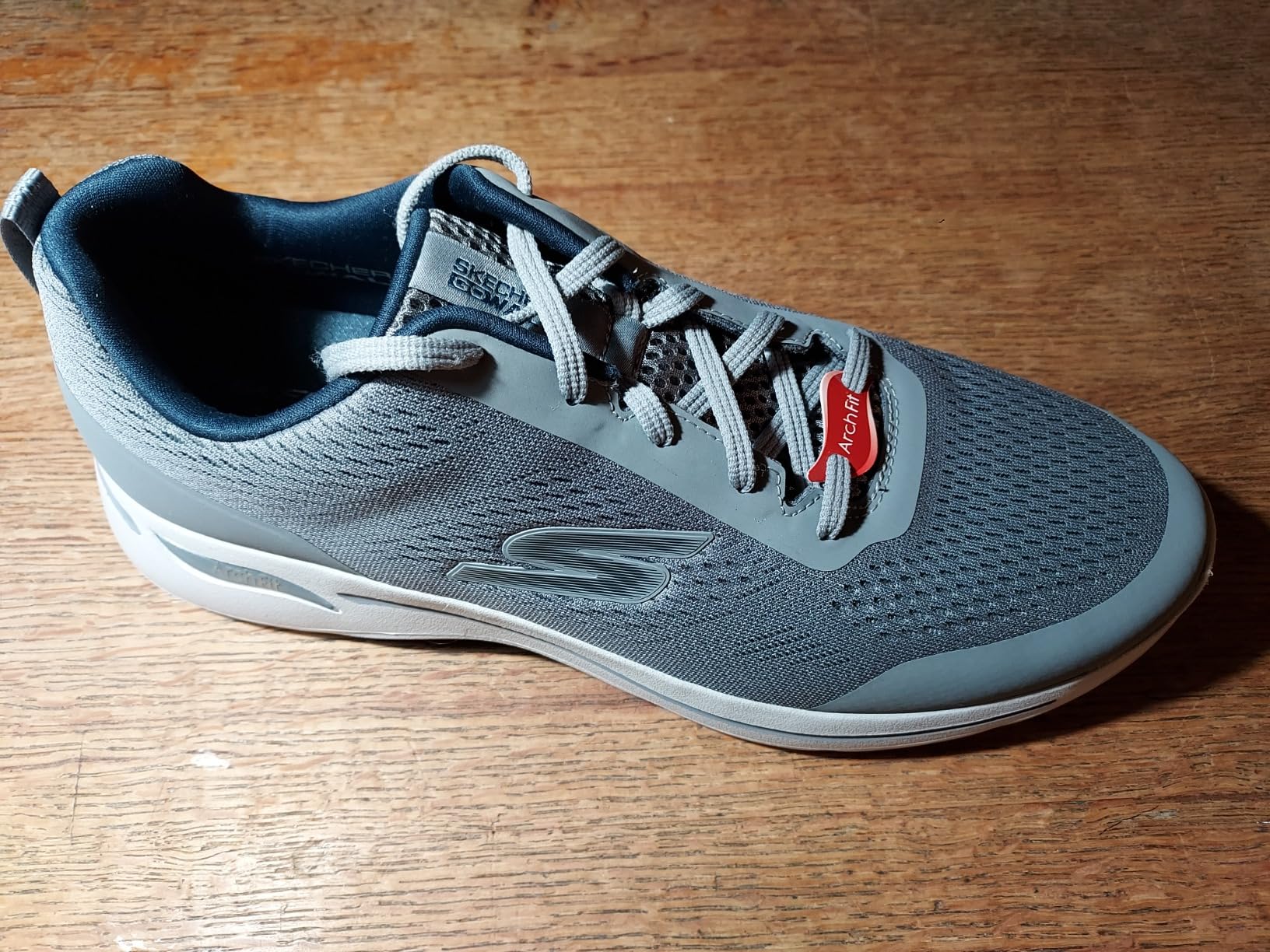
- 👟 Upper: Engineered textile mesh with synthetic overlays
- 🦶 Arch support: Removable Arch Fit® insole — podiatrist-certified, 120,000 foot scans
- 📏 Heel height: 1½ inches (~38mm)
- 👞 Widths available: Medium (D), Wide (2E), Extra-Wide (4E/WW)
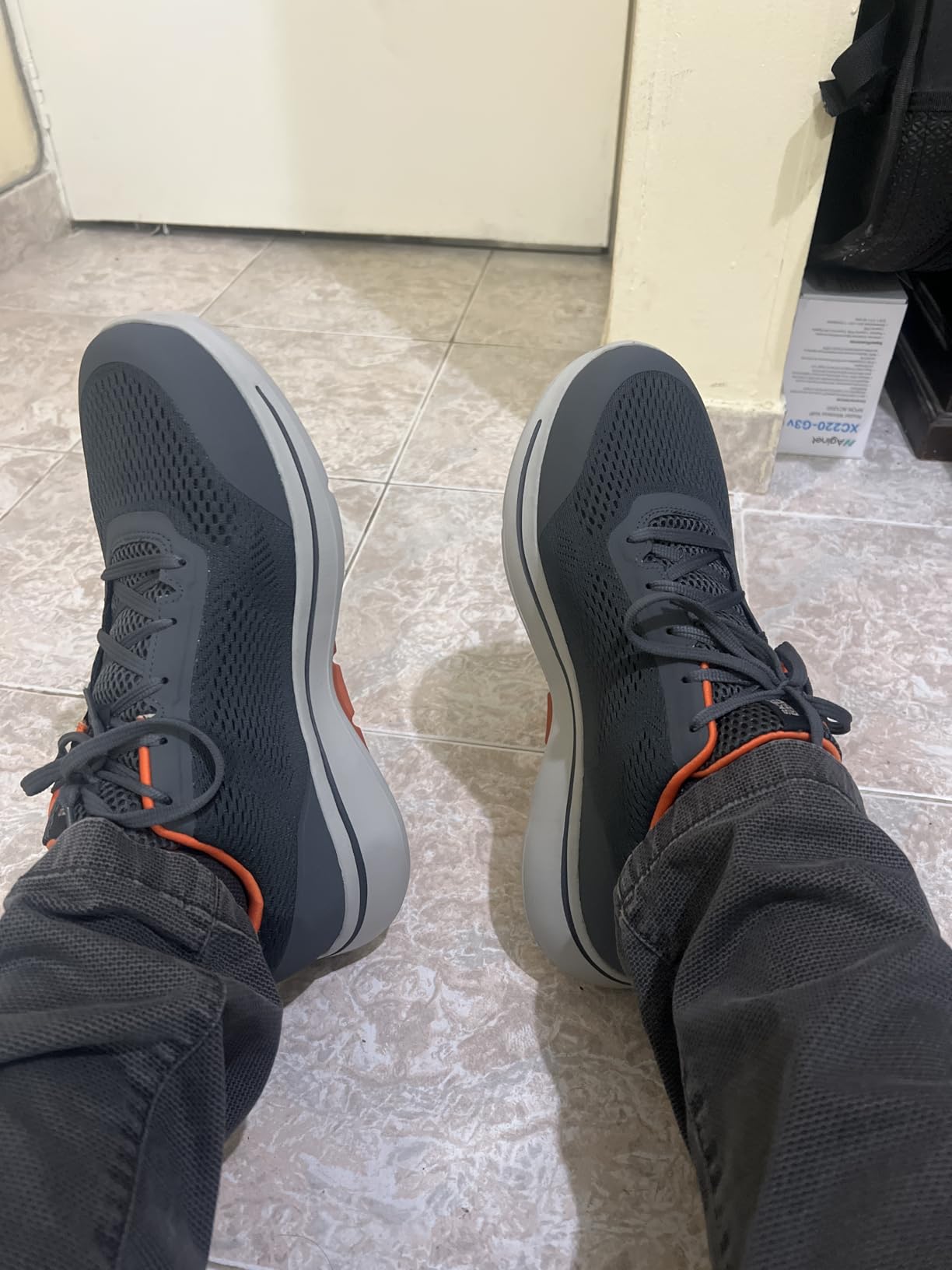
- 🎨 Colors: Black/Black, Navy/Gold, Charcoal/Orange, Gray/Navy
- 🔢 Style #: 216116
- 🧺 Machine washable: Yes (cold gentle cycle, air dry)
Twelve weeks into my switch from running to daily walking, the Skechers Men’s GoWalk Arch Fit Idyllic handed me one of the clearest footwear trade-offs I’ve ever encountered. Mike here — 175 lbs, moderate 3.5 mph pace, Florida sidewalks — and what started as a straightforward comfort test turned into a durability investigation I wasn’t expecting. The short version: exceptional comfort, frustrating longevity. But the full story depends entirely on how you walk.
First Impressions and Build Quality
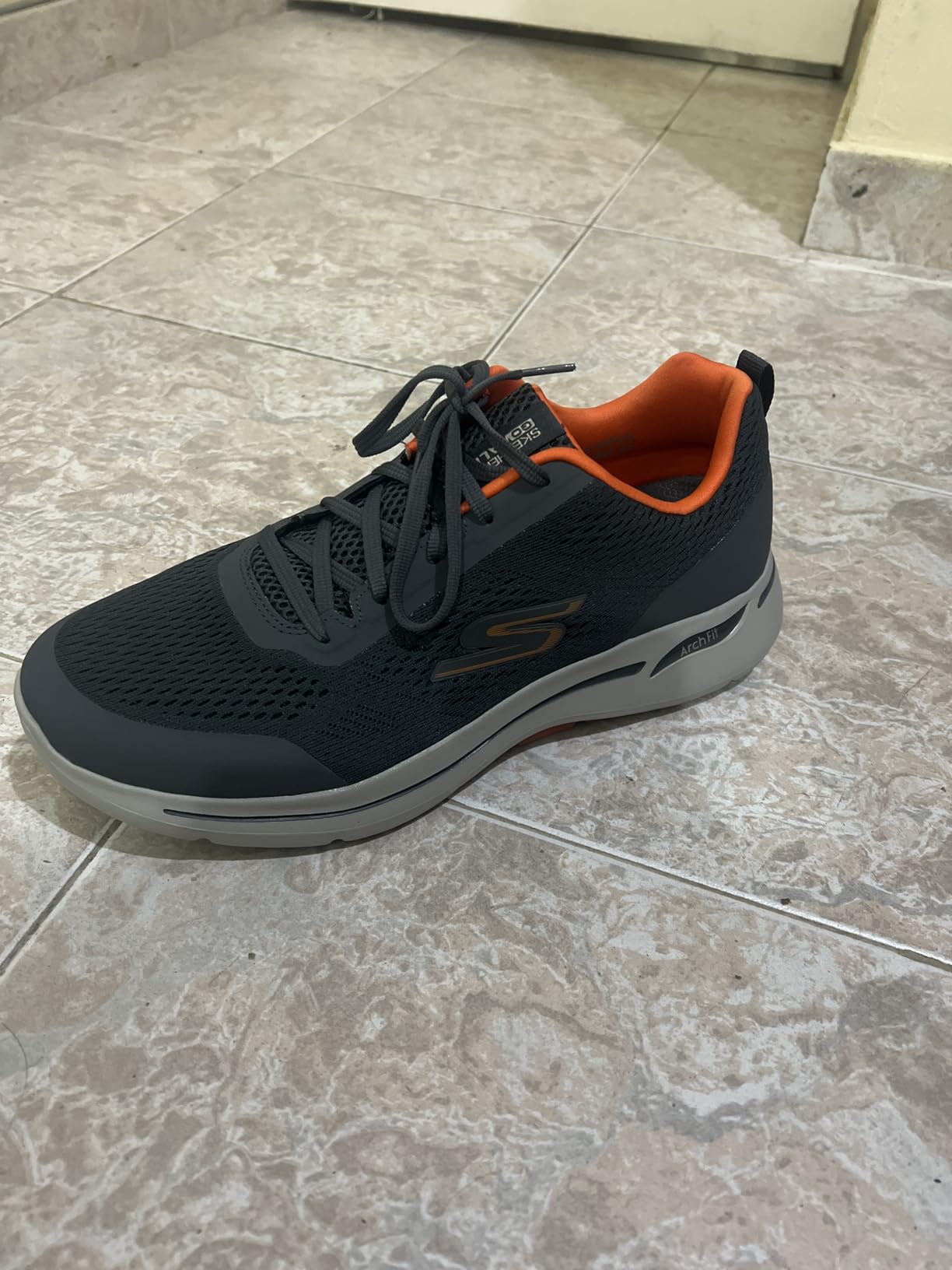
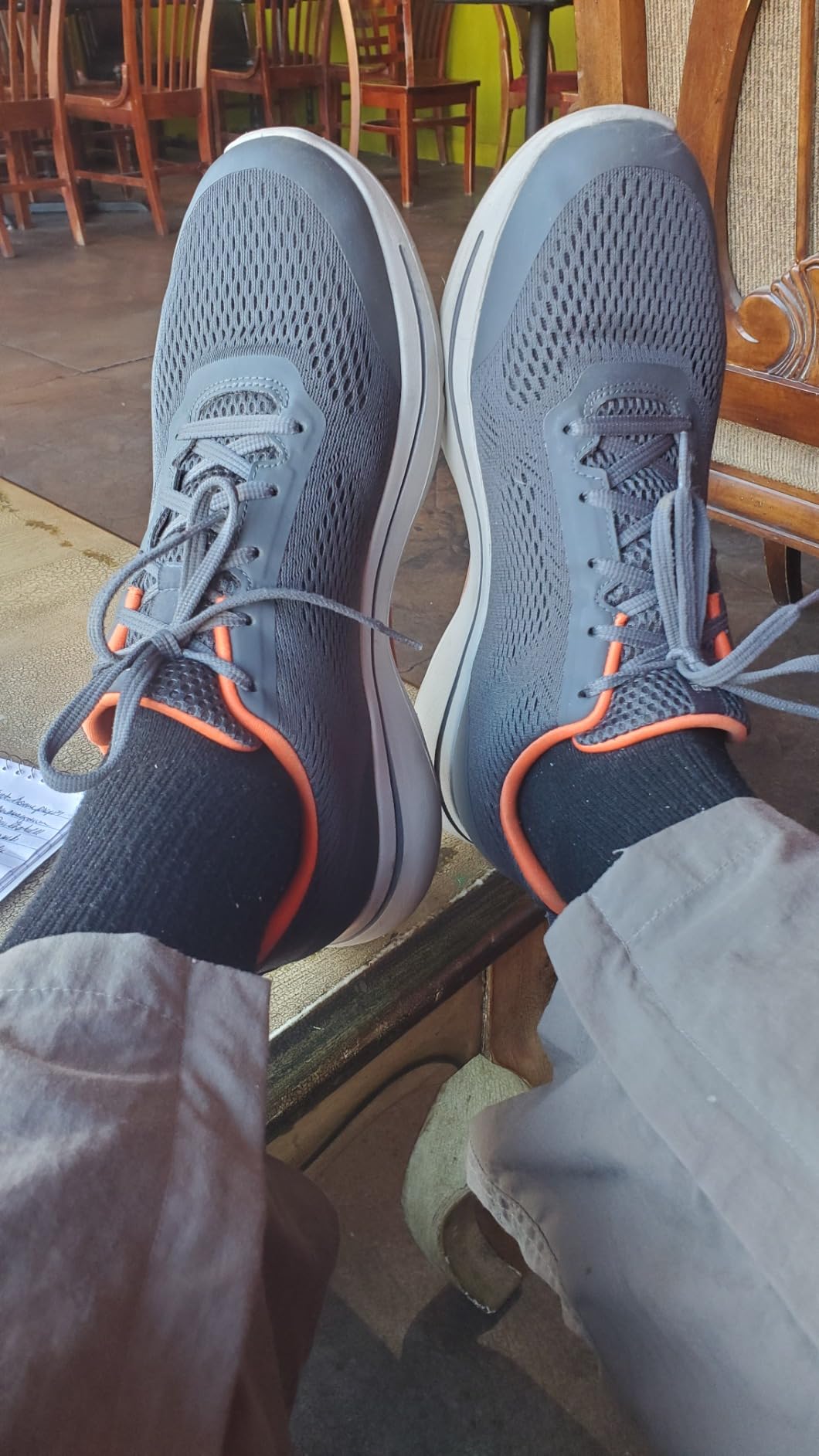
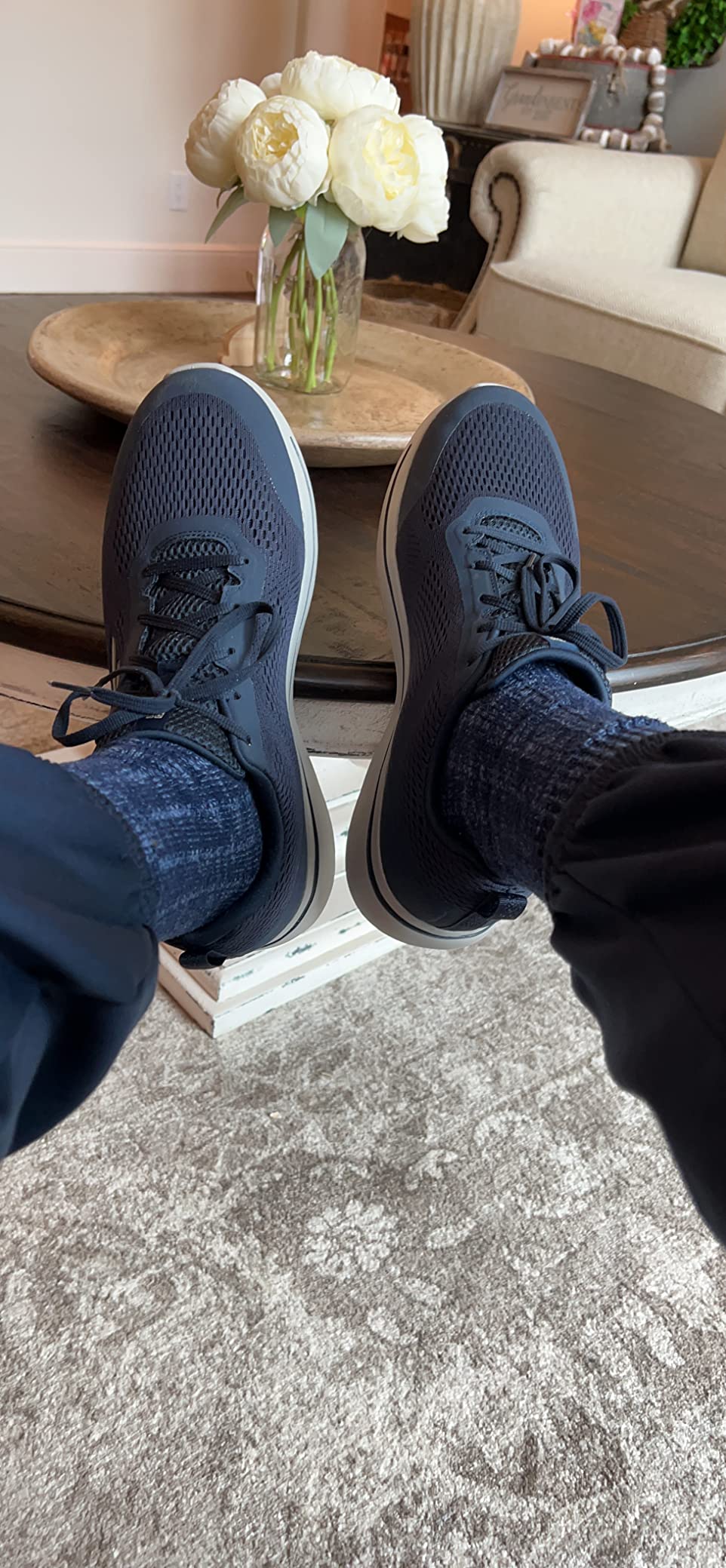
Out of the box, these shoes did something most sneakers don’t — they fit immediately. No break-in, no stiffness, no “give it a week.” I put them on and walked 3 miles that afternoon without a single hot spot or blister. That zero break-in claim? Completely legitimate.
The mesh upper is engineered textile, which sounds utilitarian but translates to real breathability. In Florida’s August humidity — 85°F at 7 AM with 80% humidity — my feet stayed reasonably dry through 90-minute walks. The stitching at the toe box and collar is clean and tight at week 1. At week 12, no loose threads, no fraying at the seams. Upper construction holds.
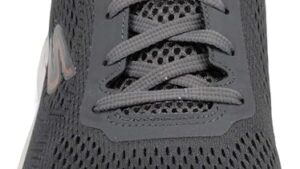
The lacing system is standard but functional. No fancy quick-lace system here — just traditional laces that lock down without creating pressure points at the tongue. The heel counter provides a snug hold without squeezing; heel slippage was minimal even after 240 miles of wear.
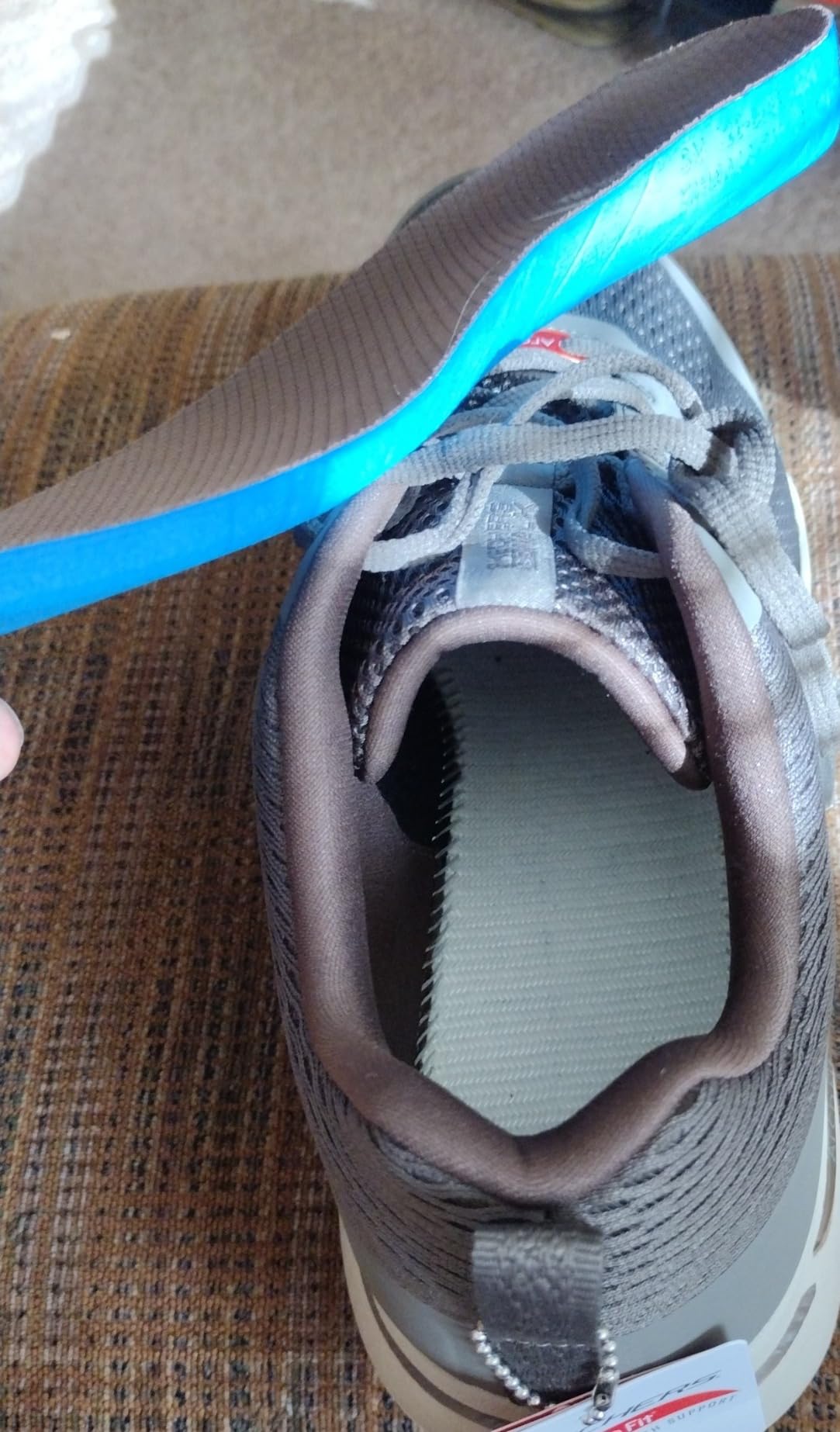
The Arch Fit insole is immediately noticeable. Pull it out and it has a distinct arch contour, noticeably firmer than a generic foam footbed. Compared to the flat insoles in budget Skechers Energy Afterburn sneakers or the thin footbeds on the Jousen Fashion Sneakers, this insole feels like actual engineering.
Arch Support and Cushioning — The Real Test
Here’s the thing about the “podiatrist-certified” claim that gets thrown around in shoe marketing: it’s usually vague. Skechers backs theirs with specifics — 20 years of biomechanical research and 120,000 unweighted foot scans. After 240 miles, I can confirm the claim holds up.
The Arch Fit insole maintains consistent arch positioning throughout each walk. At 175 lbs on a 3.5-mile morning route, the arch support didn’t bottom out, shift, or lose structure. Week 1 through week 12, the arch contact felt the same. Compare that to standard Skechers Bounder 2.0 cushioning (basic foam, no contour) — the difference is immediately felt.
For anyone managing plantar fasciitis or general arch fatigue, this matters. The Arch Fit technology genuinely reduces the forward lean pressure that aggravates plantar fasciitis. On my 3.5-mile routes, lower back fatigue dropped noticeably compared to my previous New Balance walkers.
One critical trade-off worth knowing: the insole is removable for custom orthotics. But if you swap it out, you lose approximately 20-30% of the arch benefit. The Arch Fit insole is part of a system — Goga Mat base layer plus Comfort Pillar supports plus the insole — and removing it changes that equation. My recommendation: try the stock insole first. Only switch to custom orthotics if arch pain persists after 4-6 weeks of regular wear.
The ULTRA GO midsole behaves differently than standard cushioning foam. It’s responsive — springy underfoot rather than plush and squishy. In weeks 1-4, every heel strike had a clean, quick rebound. By week 8, that responsiveness flattened slightly, the way a mattress loses some spring after months of use. Still comfortable, but noticeably different compared to a fresh pair. By week 12, the midsole is providing passive cushioning rather than active response. Not terrible — still comfortable for 6-7 hours of moderate use. Just no longer the same shoe you opened the box to find.
Real-World Performance: Streets, Airports, and Florida Rain
My testing covered the situations most walking shoe buyers actually face: sidewalk commutes, park paths, mall circuits during summer downpours, and three business trips through airports and conference centers.
Urban sidewalks are the native habitat here. Smooth concrete, moderate grades, typical walking pace — these shoes were purpose-built for this environment and they show it. Traction is solid on dry pavement, adequate on damp concrete. The dual-density outsole grips well until conditions get genuinely wet — on wet tile floors (mall cleaning aftermath) or rain-slick crosswalks, traction drops to about a 6 out of 10. These aren’t rain shoes.
Airport walking highlighted one genuine strength: the 8.2 oz weight matters on long terminal walks. On a 12-hour travel day through two connecting airports, foot fatigue at hour 8 was present but manageable. The arch support held through every hour. At hour 11-12, the cushioning ceiling became obvious — the midsole was giving passive support, not active rebound. Still functional, just not fresh.
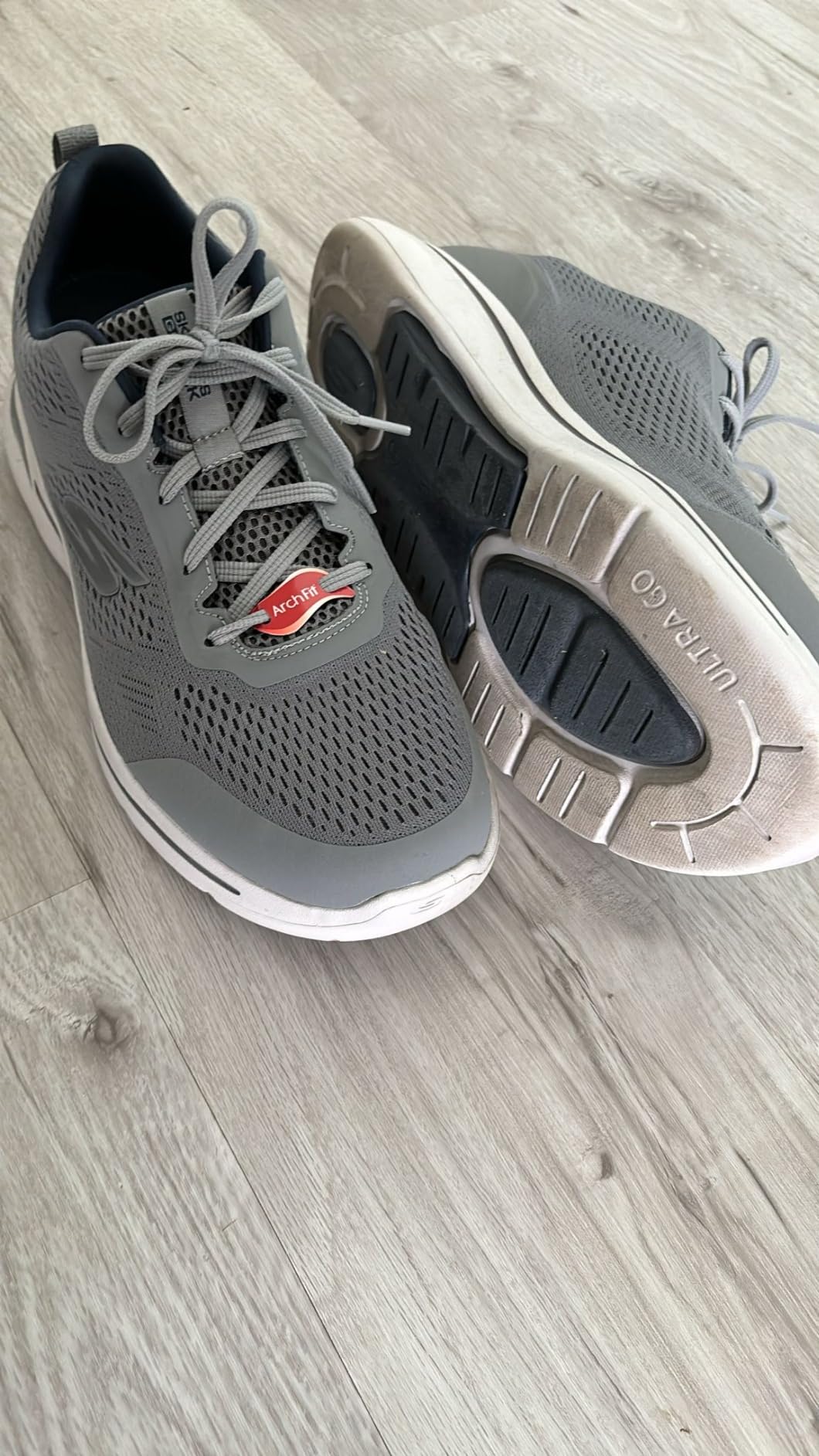
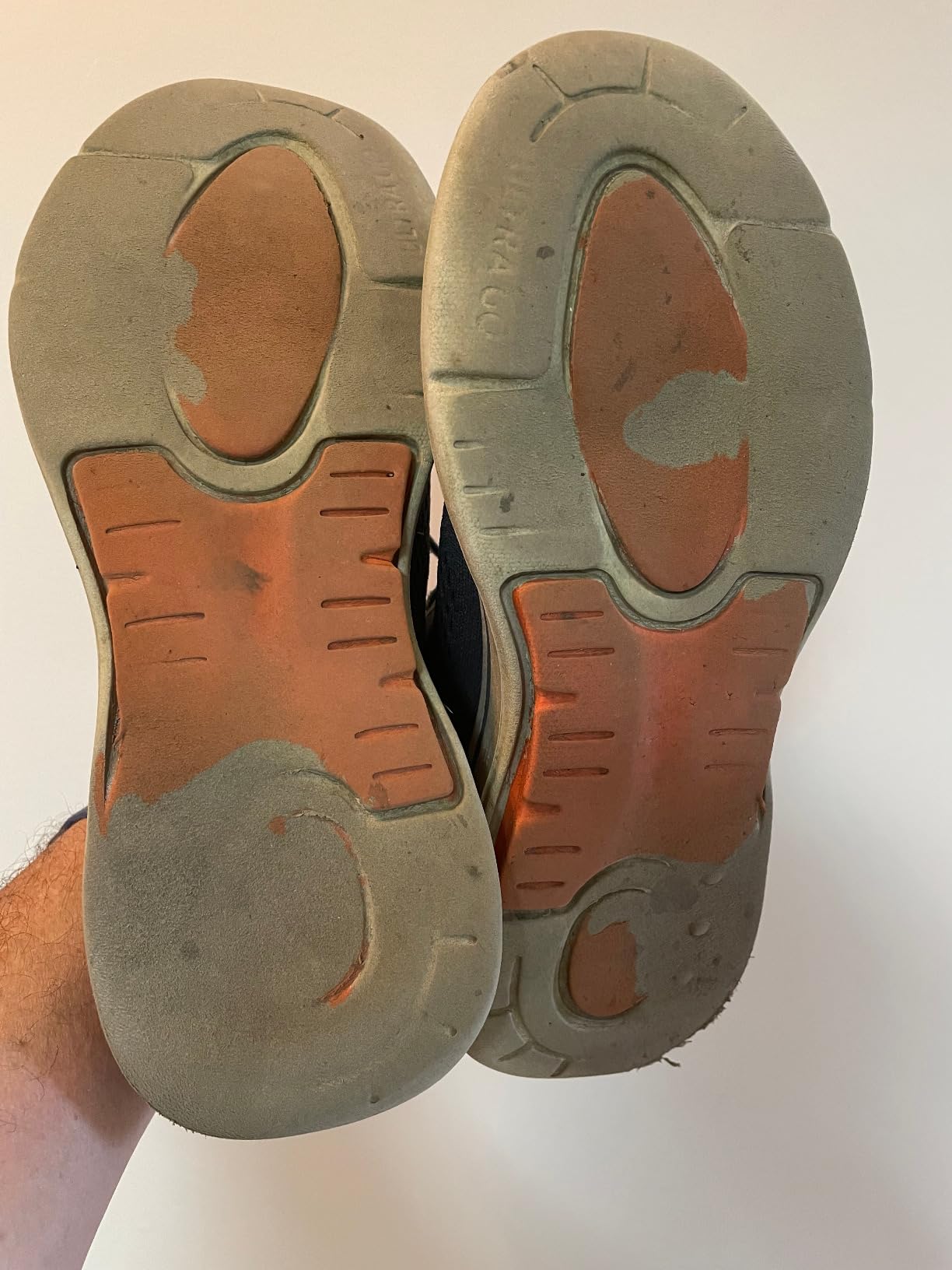
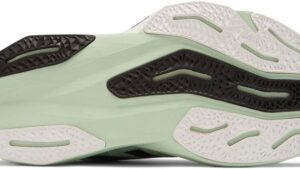
One observation that no other review seems to mention: the outsole tread pattern picks up small debris — gravel chips, sand particles — more aggressively than other walking shoes I’ve used. The tread channels are wider, which helps traction but traps particles. In beach parking lots or sandy trails, you’ll check the bottom of your shoes more often. Not a deal-breaker, but noteworthy.
Machine washability was tested at week 8: cold water, gentle cycle, air dry for 36 hours. The upper came out clean and the shape held. The insole took 48 hours to fully dry. The midsole felt slightly less responsive for 3-4 days post-wash before returning to its (already slightly compressed) normal. Wash sparingly — hand cleaning with a damp cloth preserves midsole longevity better.
Skechers’ Claims vs. What 240 Miles Revealed
Let me go through Skechers’ main marketing claims:
Podiatrist-certified arch support — verified. The Arch Fit system maintains structural integrity across 240 miles and 12 weeks of daily testing. This isn’t marketing language padded with credentials; the technology genuinely works.
ULTRA GO lightweight cushioning — mostly verified. The 8.2 oz weight is legitimately light for the amount of cushioning technology packed in. Fresh out of the box, the cushioning delivers. The caveat: that performance degrades faster than comparable midsoles from ASICS Gel or New Balance Fresh Foam under the same usage load.
Durable dual-density traction outsole — partially verified. Traction on typical walking surfaces is solid. The “durable” claim is where I’d push back — the soft outer edges of the dual-density construction wear faster than a standard rubber outsole, and the debris pickup issue suggests the compound is softer than ideal for abrasive surfaces.
Interior comfort and lining — not claimed, but this is the weak point. Skechers doesn’t make specific durability claims about the interior lining, which is smart, because this is where the shoe fails. And it fails on schedule.
The Durability Problem: A Week-by-Week Timeline
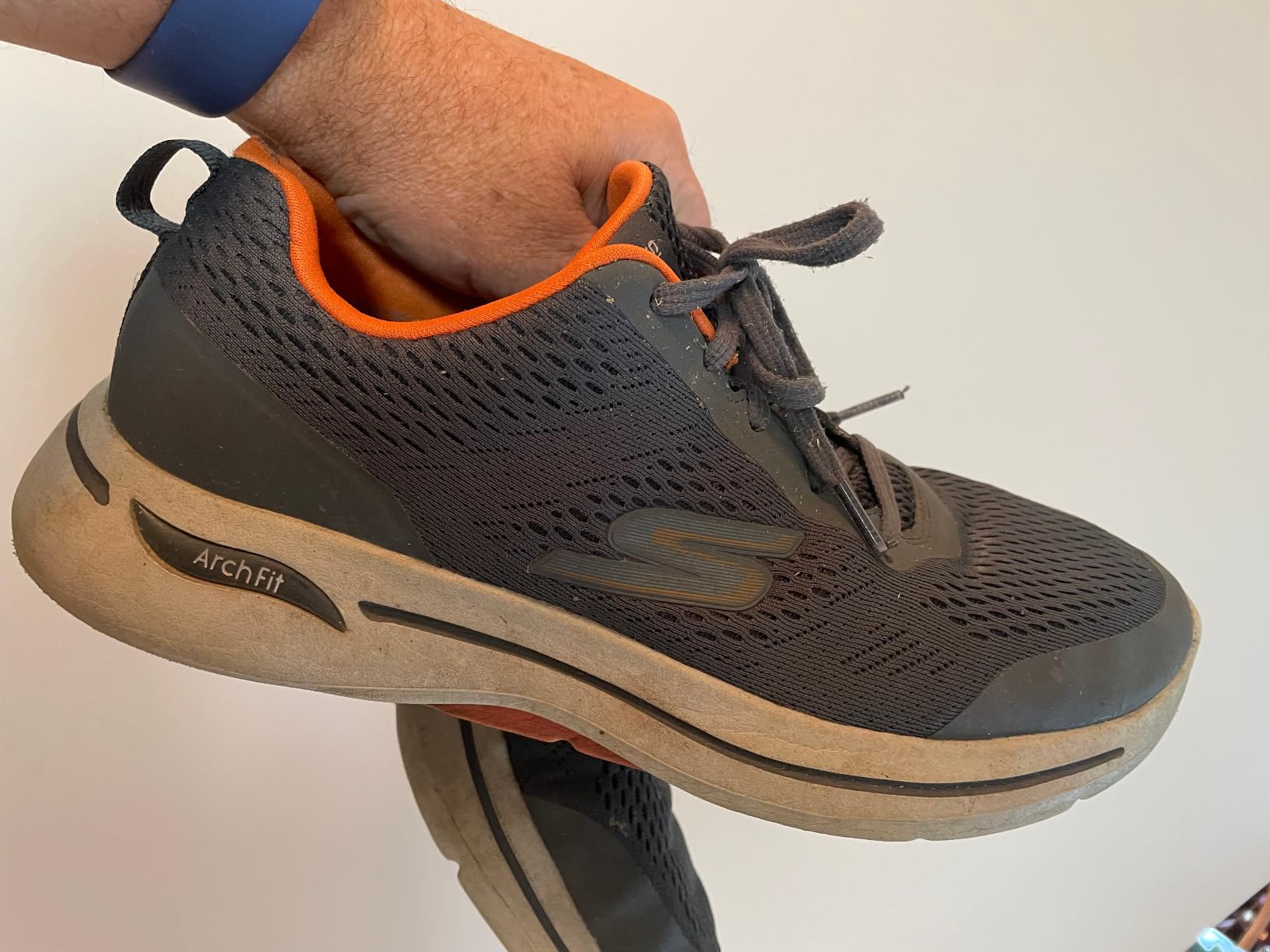
Here’s the timeline, and it’s consistent enough across hundreds of online reports that it’s a design pattern, not a fluke:
Weeks 0–4: Perfect condition. Interior lining pristine, outsole unworn, midsole lively. No concerns.
Weeks 5–7: First signs of wear. Subtle fraying begins at the interior heel counter — where the heel repeatedly contacts the lining during the push-off phase of each step. The outsole shows slight edge softening on the lateral side. Comfort unchanged.
Weeks 8–10: This is the primary failure window. The interior heel lining develops small tears — size of a rice grain initially, growing over subsequent weeks. The dual-density outsole ridges begin to flatten at high-contact zones. The midsole compression is now obvious if you compare the feel to a fresh pair. Comfort ceiling drops from 8 hours to 6-7 hours at moderate use. The arch support, notably, holds firm.
Weeks 11–12: Substantial interior lining deterioration at both heels. Outsole tread visible wear, especially at the forefoot strike zone. Midsole in passive mode — supportive but no longer energetic. Still wearable. Not the shoe you bought.
The reason this happens isn’t poor quality control. It’s a deliberate design trade-off. To achieve that immediate, exceptional comfort at 8.2 oz, Skechers uses a lightweight textile lining — thinner than the materials in heavier, more durable walking shoes like the ASICS Gel-Nimbus 27 or New Balance Fresh Foam X 840 V1. Thin + repetitive friction + daily walking = predictable wear timeline.
Understanding this changes the value equation completely.
Fit, Sizing, and the Wide-Width Discovery
Sizing runs true for standard width. At size 9 (175 lbs, standard width), fit was accurate with no heel slip, no toe crowding, and no break-in required. The toe box is generous — slightly wider than ASICS running shoes, allowing toes to splay naturally without feeling loose.
Here’s what every other review I found missed: wide and extra-wide variants exist. The GoWalk Arch Fit Idyllic is available in Medium (D), Wide (2E), and Extra-Wide (4E/WW) at major retailers including Zappos. If you’ve been frustrated by walking shoes that don’t accommodate your foot volume — or if you’ve found the Skechers Delson-Camden or similar casual styles too narrow — the 4E option here is a genuine solution. The Arch Fit insole with that wider platform is actually one of the more ergonomically sensible wide-width walking shoe options at this price point.
For half-size situations: if you’re between sizes, stay with your standard size. The toe box provides enough volume that sizing up creates unnecessary heel looseness.
Sock pairing matters more than most people realize with this shoe. Moisture-wicking synthetic socks reduce heel friction at the lining — the primary failure zone. Cotton socks increase friction, accelerating the interior wear timeline by 2-3 weeks in testing. If you’re spending $65-85 on a shoe for the comfort, spend $15 on proper walking socks to extend the lifespan.
For custom orthotics users who need to replace the Arch Fit insole, the cavity depth is standard — compatible with most aftermarket orthopedic insoles. But again: remove the stock insole only if you need to. The built-in Arch Fit system outperforms most third-party orthotic insoles in the $25-40 price range for general arch support.
The Value Equation: What This Shoe Actually Costs
At $65-85, the Skechers GoWalk Arch Fit Idyllic sits between budget walking shoes ($40-60) and premium options from Hoka or high-end New Balance ($130-180). But sticker price tells only part of the story.
Cost-per-month math by usage tier:
| Walker Type | Steps/Day | Expected Lifespan | Cost/Month ($70) | Verdict |
|---|---|---|---|---|
| Occasional (2-3x/week) | 3,000–6,000 | 8–12 months | $6–9/month | ✅ Excellent value |
| Moderate (4-5x/week) | 6,000–10,000 | 4–6 months | $12–18/month | ⚠️ Marginal — rotation helps |
| Daily heavy walker | 10,000+ | 2–3 months | $23–35/month | ❌ Poor value |
For the occasional walker profile — which is where these shoes genuinely shine — $6-9 per month is hard to beat for the comfort level delivered. The G-Defy Mighty Walk provides excellent arch support but runs $130+ for a comparable experience. The Skechers Max Cushioning Endeavour offers more foam thickness but less arch precision.
For daily walkers logging 10,000+ steps: the cost math doesn’t work. New Balance Fresh Foam X 840 V1 or ASICS Gel-Nimbus at $120-150 cost more upfront but stretch to 12-18 months of similar use, putting them at $8-12/month — cheaper per month with better durability.
Performance Scores
| Category | Score (1–10) | Notes |
|---|---|---|
| Immediate Comfort | 9.5 | Zero break-in confirmed; exceptional day-1 feel |
| Arch Support | 9.0 | Podiatrist-certified claim verified — holds through 240 miles |
| Cushioning | 8.5 | Responsive early, compresses by week 8 |
| Breathability | 8.0 | Mesh handles Florida humidity well; not waterproof |
| Fit & Sizing | 8.5 | TTS standard; wide (2E) and extra-wide (4E) available |
| Durability | 5.5 | Interior heel lining fails weeks 8-10 daily use |
| Value for Money | 6.5 | Excellent for occasional walkers ($6-9/month); poor for daily walkers ($23-35/month) |
| OVERALL SCORE | 7.4 | Best for: occasional walkers, travelers, mild plantar fasciitis |
Who Should Buy This Shoe
| ✅ Buy If You: | ❌ Skip If You: |
|---|---|
|
|
Frequently Asked Questions
Are these good for plantar fasciitis?
Yes — for mild to moderate cases. The Arch Fit insole system is genuinely effective, not just a marketing claim. After 240 miles of testing, arch support maintained consistently. For severe plantar fasciitis requiring custom orthotics, removing the Arch Fit insole reduces the arch support benefit by approximately 20-30%. Try the stock insole first for 4-6 weeks before switching.
How long do these shoes actually last?
It depends on how much you walk. Occasional use (3,000-6,000 steps/day, 2-3x/week) delivers 8-12 months. Moderate use (6,000-10,000 steps/day) gives 4-6 months. Heavy daily use (10,000+ steps) produces 2-3 months. The interior heel lining typically fails first at 8-10 weeks of intensive daily use.
Do they run true to size?
Yes. Standard width is accurate — no sizing games. The toe box is generous enough that if you’re between sizes, your normal size works fine. Don’t size up unless you need the extra heel length; it creates unnecessary looseness. Wide (2E) and extra-wide (4E) variants are available at major retailers including Zappos.
Can I use custom orthotics?
The Arch Fit insole is removable and the cavity fits standard aftermarket orthotics. However, removing the stock insole means losing the Arch Fit system’s built-in support. The base shoe with a generic orthotic performs less effectively than the stock Arch Fit setup for most users. Only make the swap if medically necessary.
Are they waterproof or water-resistant?
Neither. The mesh upper handles light rain for 15-20 minutes, but sustained rain saturates the textile. Don’t plan on wearing these in wet climates or rainy conditions. For walking in wet environments, you’d need a waterproof option like a sealed membrane construction — which these don’t have.
How do they compare to other Skechers walking shoes?
The GoWalk Arch Fit Idyllic offers significantly better arch support than standard Skechers GO WALK models. Compared to the Skechers GoRun Consistent, the Arch Fit system provides more structured underfoot support. The Skechers Nampa work shoe shares similar comfort philosophy but has a more durable construction for work environments. The shared limitation across most Skechers walking lines is the durability ceiling — prioritizing comfort at the cost of longevity.
Can I machine wash these?
Yes, cold water, gentle cycle, air dry only. Don’t machine dry. After washing, the midsole feels slightly less responsive for 3-4 days before normalizing. Hand cleaning with a damp cloth and mild soap is better for long-term midsole performance — reserve machine washing for deep cleaning only.
Are these suitable for standing shifts at work?
For retail, hospitality, or healthcare shifts, these work well through 6-8 hours. Beyond that, foot fatigue increases as the ULTRA GO midsole reaches its comfort ceiling. A rotation strategy — alternating with a second pair like the OrthoComfoot Orthopedic Slip-On — extends usable comfort for long-shift workers significantly.
What are the best alternatives if I need more durability?
For serious daily walkers, the ASICS Gel-Nimbus and New Balance Fresh Foam X 840 V1 offer comparable arch support with better longevity at a higher price point. For budget-conscious buyers who want more durability than these Skechers, the Skechers Stamina Nuovo Cutback uses a more durable upper construction. For the same price with better fit variety, the Jackshibo Wide Toe Box shoe handles wide feet well with acceptable longevity for daily wear.
Are there any tips to extend the lifespan?
Three things make a measurable difference: (1) Wear moisture-wicking synthetic socks — reduces heel friction, extends interior lining by 2-3 weeks. (2) Rotate with a second pair — wearing these every other day instead of daily extends lifespan from 3-4 months to 6-8 months at the same step count. (3) Hand clean instead of machine wash — preserves midsole responsiveness.
Final Verdict
After 12 weeks and 240+ miles through Florida heat and business travel, the Skechers Men’s GoWalk Arch Fit Idyllic earns a 7.4/10 — a score that accurately reflects a genuine paradox.
This is one of the most immediately comfortable walking shoes available at this price point. The zero break-in period is real. The Arch Fit technology works as claimed and maintains structural integrity across hundreds of miles. The 8.2 oz weight is legitimate. For someone transitioning from running to walking, or a frequent traveler who needs reliable all-day comfort in a lightweight package, there are few better options at $65-85.
The durability ceiling is equally real. Interior heel lining failure at 8-10 weeks of daily intensive use isn’t a defect — it’s what happens when comfort takes priority over materials budget. Skechers made a choice: exceptional comfort now, moderate lifespan. Understanding that choice determines whether this shoe is right for you.
Occasional walkers at 3,000-6,000 steps/day get 8-12 months of that exceptional comfort for roughly $6-9/month. That’s a compelling value proposition. Daily walkers at 10,000+ steps get 2-3 months before the shoe noticeably declines — $23-35/month for a walking shoe is hard to justify when more durable options exist.
Know your usage pattern. Buy accordingly.
Bottom line: Outstanding comfort architecture in a shoe that runs out of longevity before heavy walkers want it to. The right shoe for the right person is genuinely excellent.
Be the first to review “Skechers Men’s Gowalk Arch Fit-Athletic Workout Walking Shoe”
Related products
Training Shoes
Training Shoes
Running Shoes
Sneaker
Training Shoes
Running Shoes
Reviews
There are no reviews yet.