
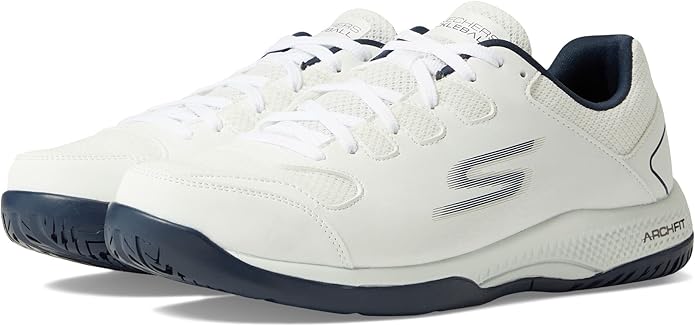
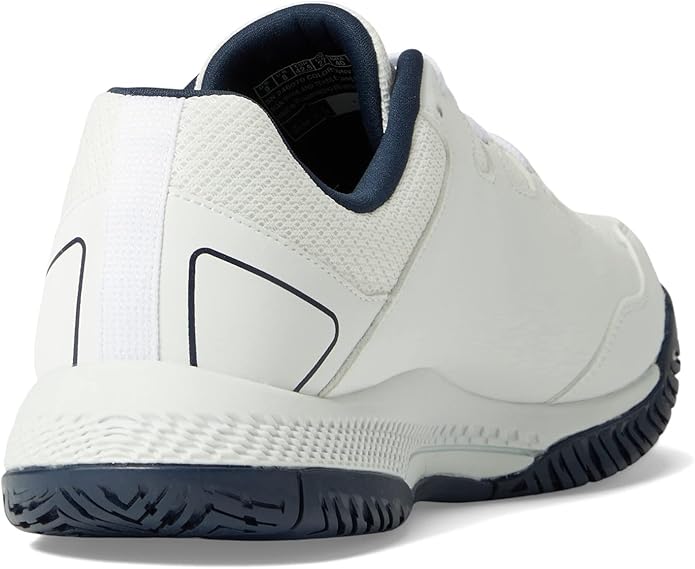
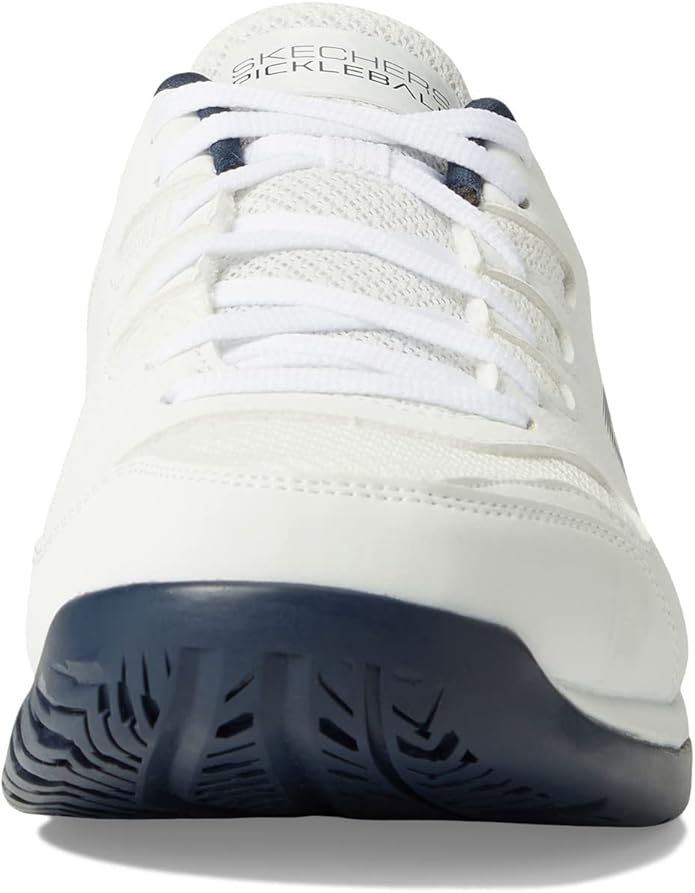
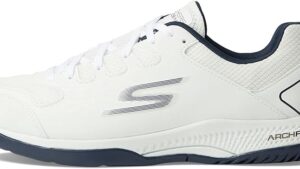
Three weeks into the season, my K-Swiss court shoes were coming apart at the toe — sole separation, no cushioning left, and my knees were complaining after every session. Mike here, and after watching $200 disappear in under two months, I was done accepting vague durability promises. So when Skechers launched a pickleball-specific shoe with a podiatrist-certified insole and a Goodyear rubber outsole, I was skeptical enough to actually test it properly. Sixteen weeks, 48 court sessions, roughly 120 hours of play. Here’s the honest answer on whether the Viper Court delivers — and where it falls flat.
Here’s the short version: these are the most comfortable court shoes I’ve worn under $100, and the ArchFit technology genuinely earns that title. But durability is a real problem — one that the Goodyear branding on the box doesn’t fix. My overall score is 7.2/10, and whether that matters to you depends entirely on how you play.
Why I Actually Ran This Test
The K-Swiss situation set the benchmark. Sole separation at week three, cushioning that was effectively gone by week six, knee soreness that followed me off the court. That’s the failure standard I was measuring against when Skechers claimed their Viper Court was purpose-built for pickleball.
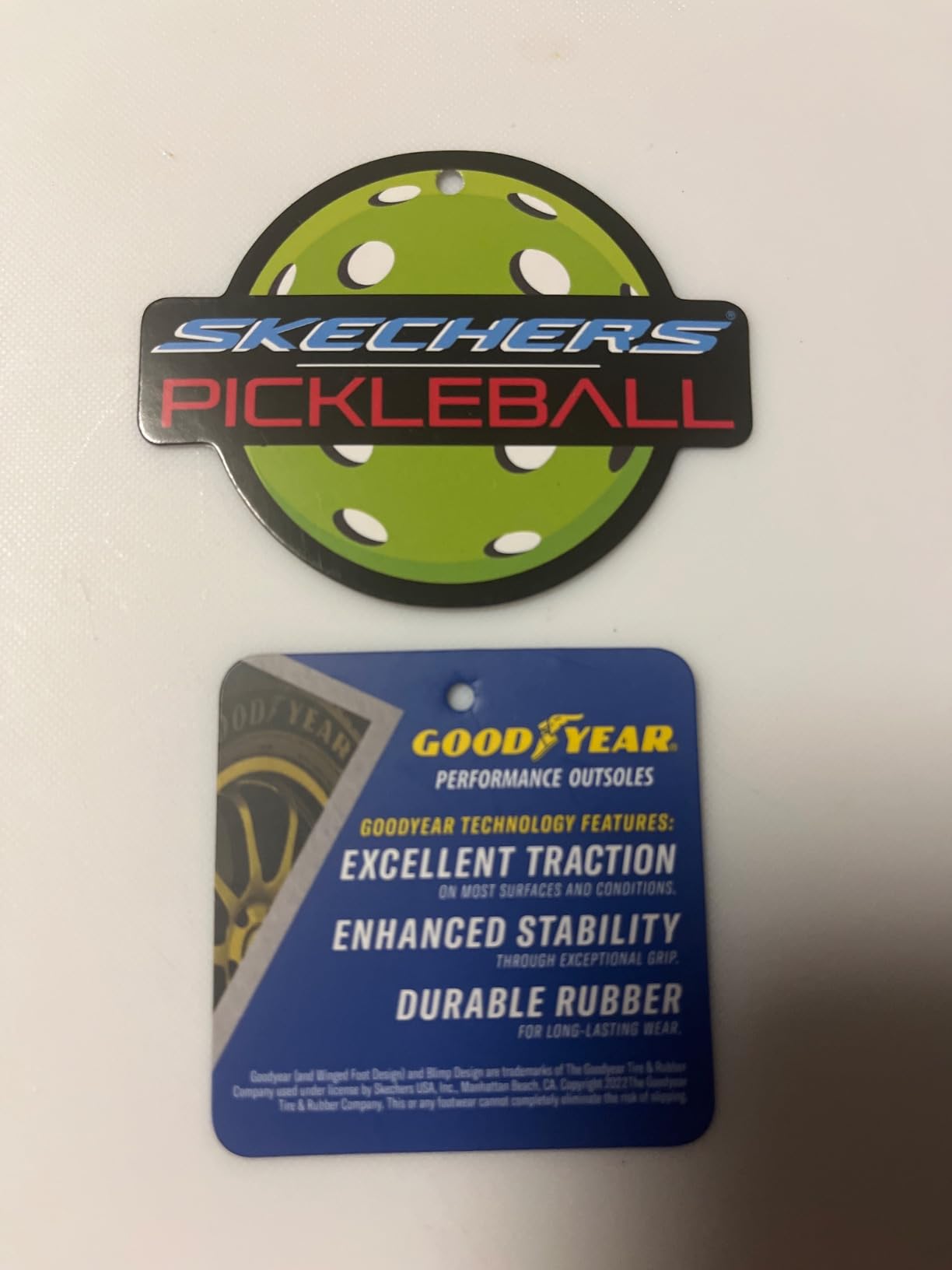
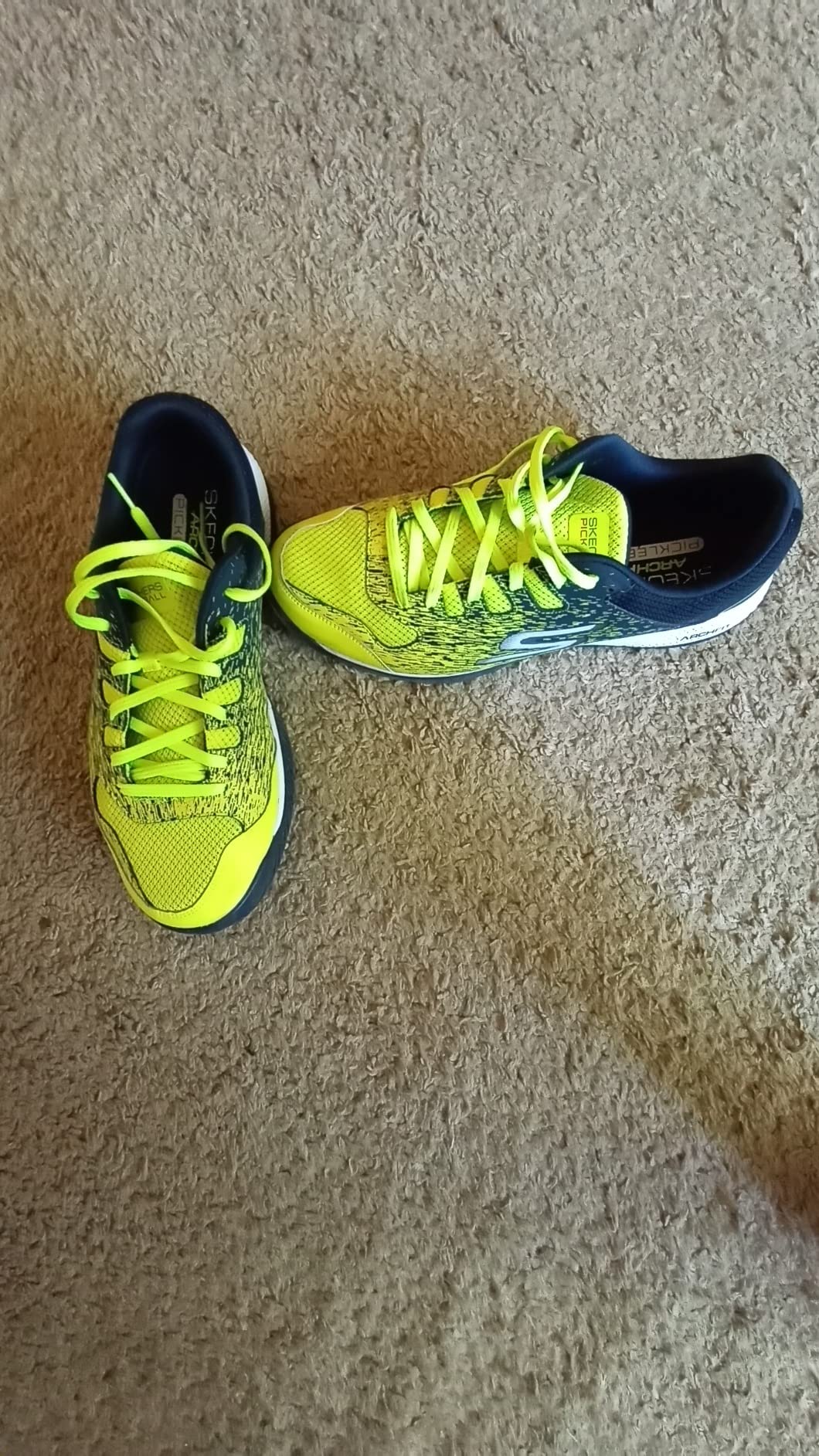
What made me take it seriously: Skechers signed Tyson McGuffin and Catherine Parenteau as endorsers, became the official footwear of the PPA Tour and USA Pickleball, and built a shoe around ArchFit — a system developed from 120,000 foot scans with an APMA Seal of Acceptance from the American Podiatric Medical Association. Those aren’t random marketing claims. They’re specific enough to test.
So I did. The testing methodology was simple: weekly sessions averaging 3 to 4 hours on a mix of indoor gym floors and outdoor concrete courts, tracking comfort, traction quality, and any structural changes over time. At 185 lbs, I’m heavy enough to stress cushioning and light enough that I’m not an extreme edge case. Six other players in my group wore the same model across different usage patterns, which let me spot patterns that weren’t just my experience.
Quick-Reference Specifications
- 💰 Price: $89 (Relaxed Fit model 246070)
- ⚖️ Weight: 12.8 oz (men’s size 9)
- 🧪 Midsole: Ultra Flight / ULTRA GO foam cushioning
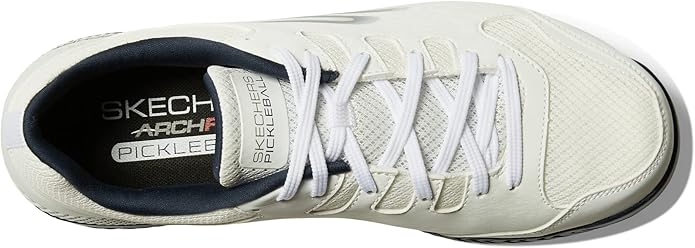
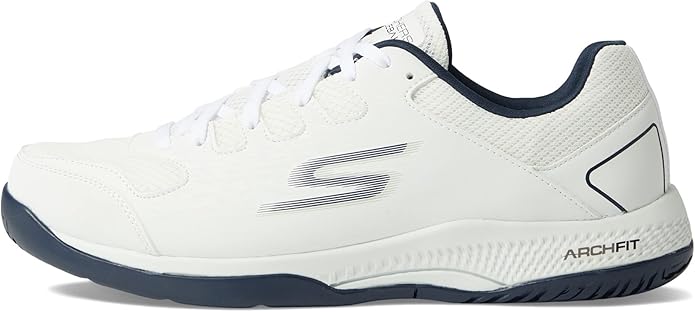
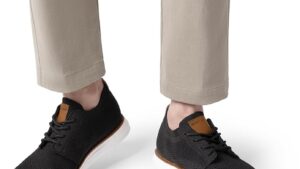
- 👟 Upper: Synthetic mesh with padded collar and tongue
- 🦶 Insole: Removable ArchFit (APMA-certified, from 120,000 foot scans)
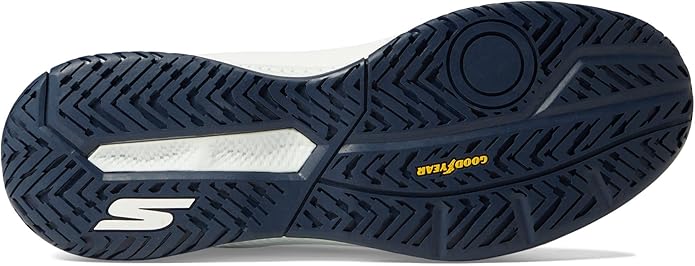
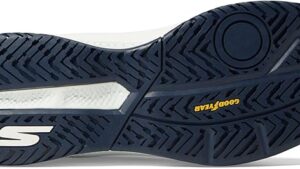
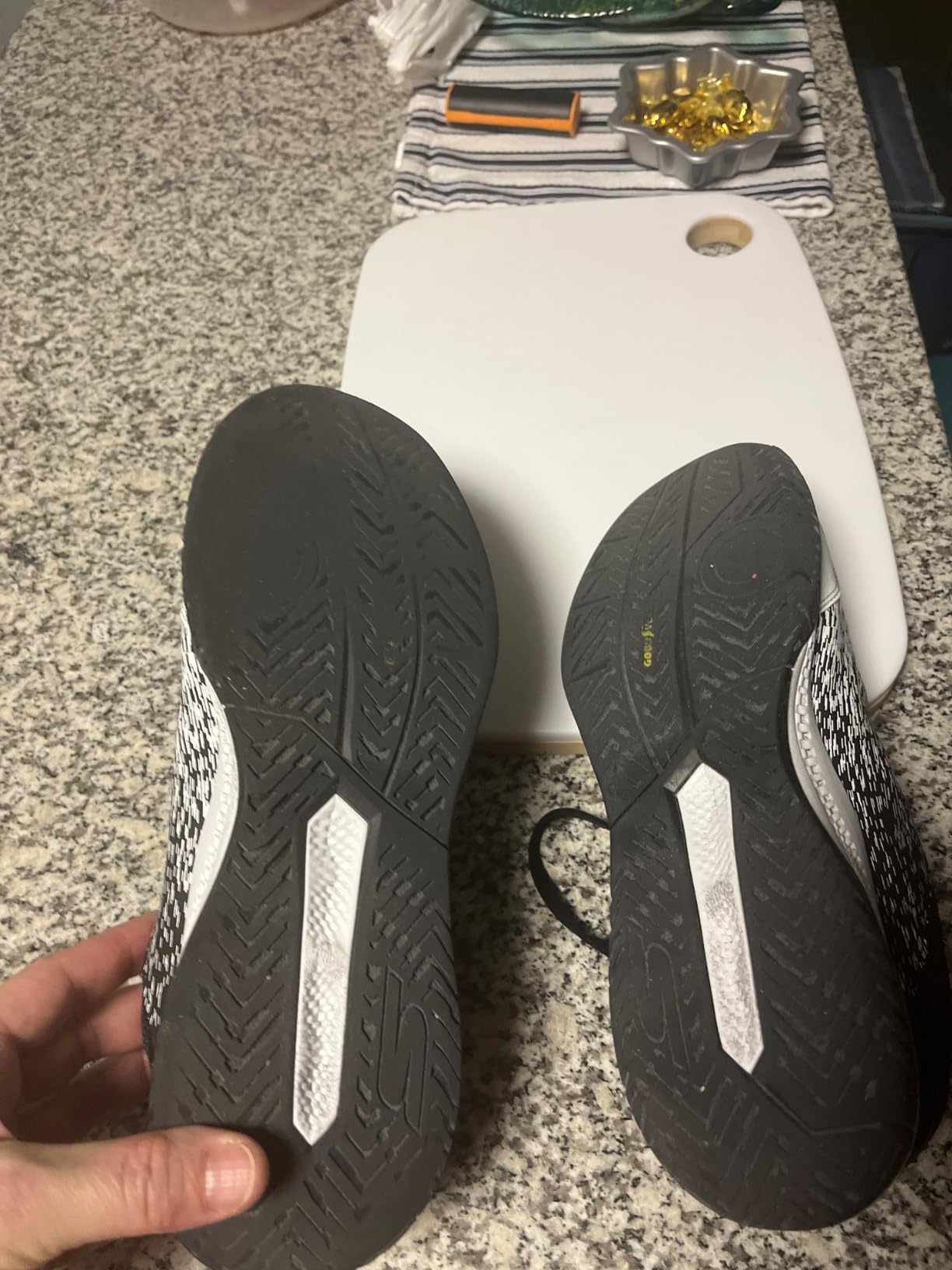
- 🏓 Outsole: Goodyear rubber (non-marking)
- 📐 Width options: Medium (D) and Extra Wide (4E) — no Wide (2E) available
- 🎯 Testing: 16 weeks, 48 sessions, ~120 hours of play
Note on width: the listing shows only Medium and Extra Wide — there’s no 2E option, so players between standard and extra-wide width need to decide between those two.
First Impressions: What You Notice on Day One
The Relaxed Fit Actually Means Something
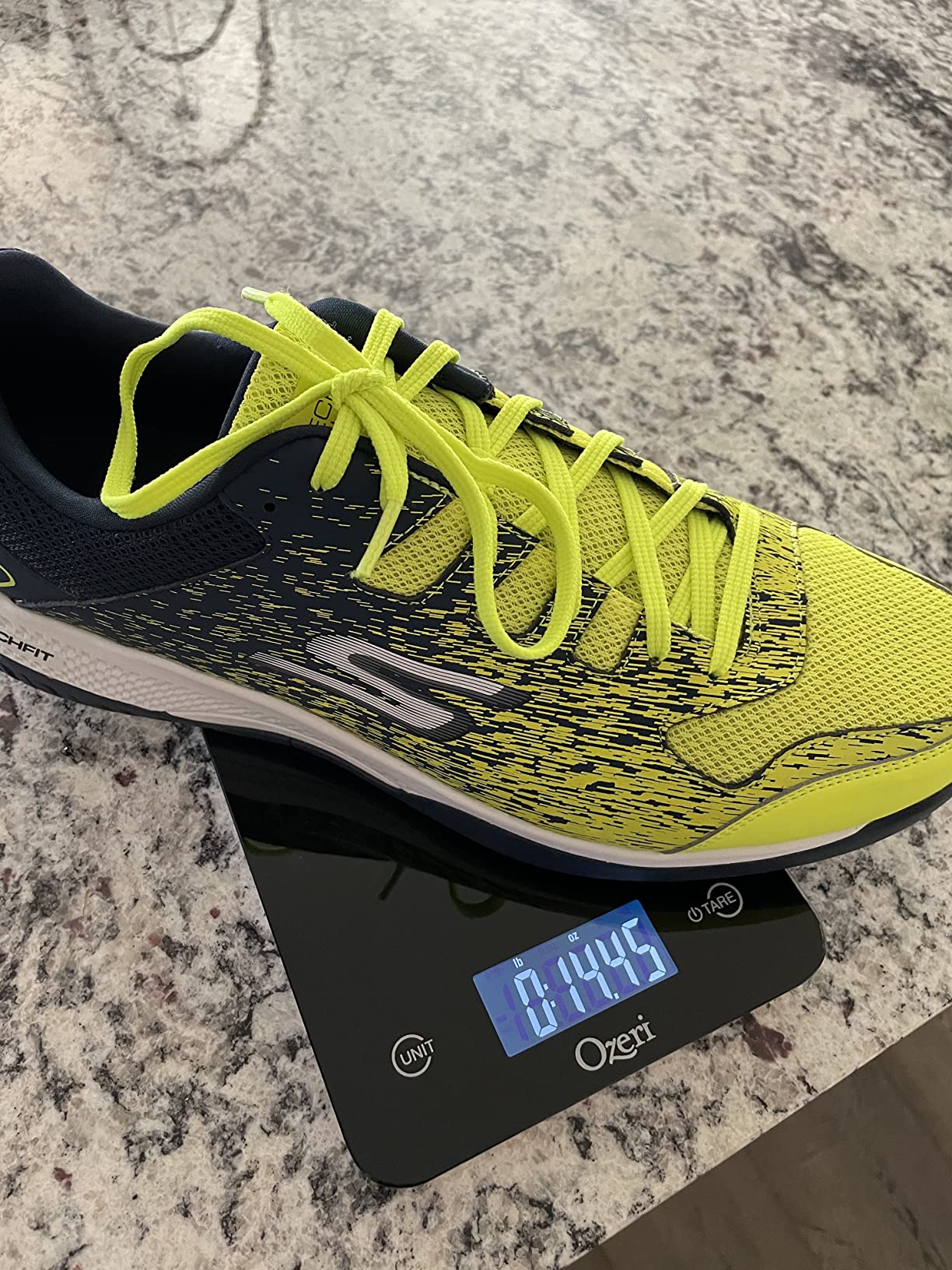
If you’re coming from narrow brands — K-Swiss Court Express or most ASICS models — the first thing you’ll notice is how accommodating the Viper Court feels. The synthetic mesh upper doesn’t grip your foot the way performance-focused shoes do. That’s by design: the “Relaxed Fit” label reflects a wider toe box and more forgiving midfoot that makes the shoe comfortable immediately rather than after a break-in period.
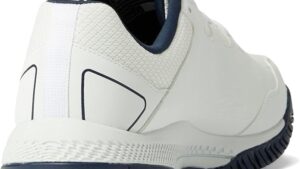
The padded collar and tongue are genuinely soft. No hotspots, no ankle irritation — the kind of out-of-the-box comfort that usually takes other court shoes two or three sessions to develop. What I didn’t love: the lacing system. The laces loosened noticeably during intense play, a pattern that showed up consistently across multiple players in my group. It’s manageable — snug them up before you play — but over-tightening creates pressure points across the midfoot, so you’re looking for a specific tension that takes a session or two to calibrate.
Sizing Reality
Generally true to size, though the relaxed fit means the shoe runs roomier than narrow court shoes of the same size. If you’re coming from a narrow brand and ordering your typical size, the Viper Court will feel more generous than you expect. The Extra Wide (4E) version is genuinely wide — don’t size up thinking you need more width if your feet are standard; just order your normal size in the medium width.
ArchFit: The Feature That Actually Earns Its Claims
What 120,000 Foot Scans Actually Produce
I expected the ArchFit claim to be standard padded-insole marketing dressed up in scientific language. It’s not. The system uses data from 120,000 unweighted foot scans to engineer the arch support contour — the APMA Seal of Acceptance means an actual medical board reviewed it. The practical result: the insole has a pronounced, specific arch shape rather than the generic soft padding most budget court shoes ship with.
During 3 to 4 hour indoor sessions, the difference was measurable. In flatter court shoes, arch fatigue typically starts showing around the two-hour mark for me. In the Viper Court, that feeling didn’t develop even at the four-hour point in my longest tournament sessions. That’s not a subtle improvement — it’s enough to change how the second half of a long session feels.
Orthotic Compatibility
The insole is removable, which matters for players with custom orthotics. Most players — even those with mild arch concerns — will find the ArchFit adequate on its own. But if you have prescribed insoles, you can swap them in without modifying the shoe. At $89, that removable compatibility is unusual. Aftermarket insoles like the Sof Sole Athlete Insoles are another option if you want targeted support without going the custom route.
Players with plantar fasciitis in my testing group reported meaningful improvement during the test period — though I’d note that’s personal experience, not a clinical claim.
Cushioning Ceiling
The Ultra Flight foam midsole provides genuine impact absorption. At 185 lbs playing aggressively, I felt adequately protected on both indoor and outdoor surfaces. Players over 200 lbs may notice the cushioning limits faster — particularly in the heel during extended outdoor play. It’s not a performance shoe’s foam system, but it’s substantially more than a walking shoe’s setup.
Traction and Court Performance
Indoor Courts: Where These Shoes Genuinely Excel
On polished gym floors and basketball courts, the Goodyear rubber is confidence-inspiring. Direction changes feel secure, emergency stops don’t result in slides, and the sole doesn’t mark the floor. During four-hour indoor tournaments, traction stayed consistent throughout — no degradation in grip quality over the course of a session.
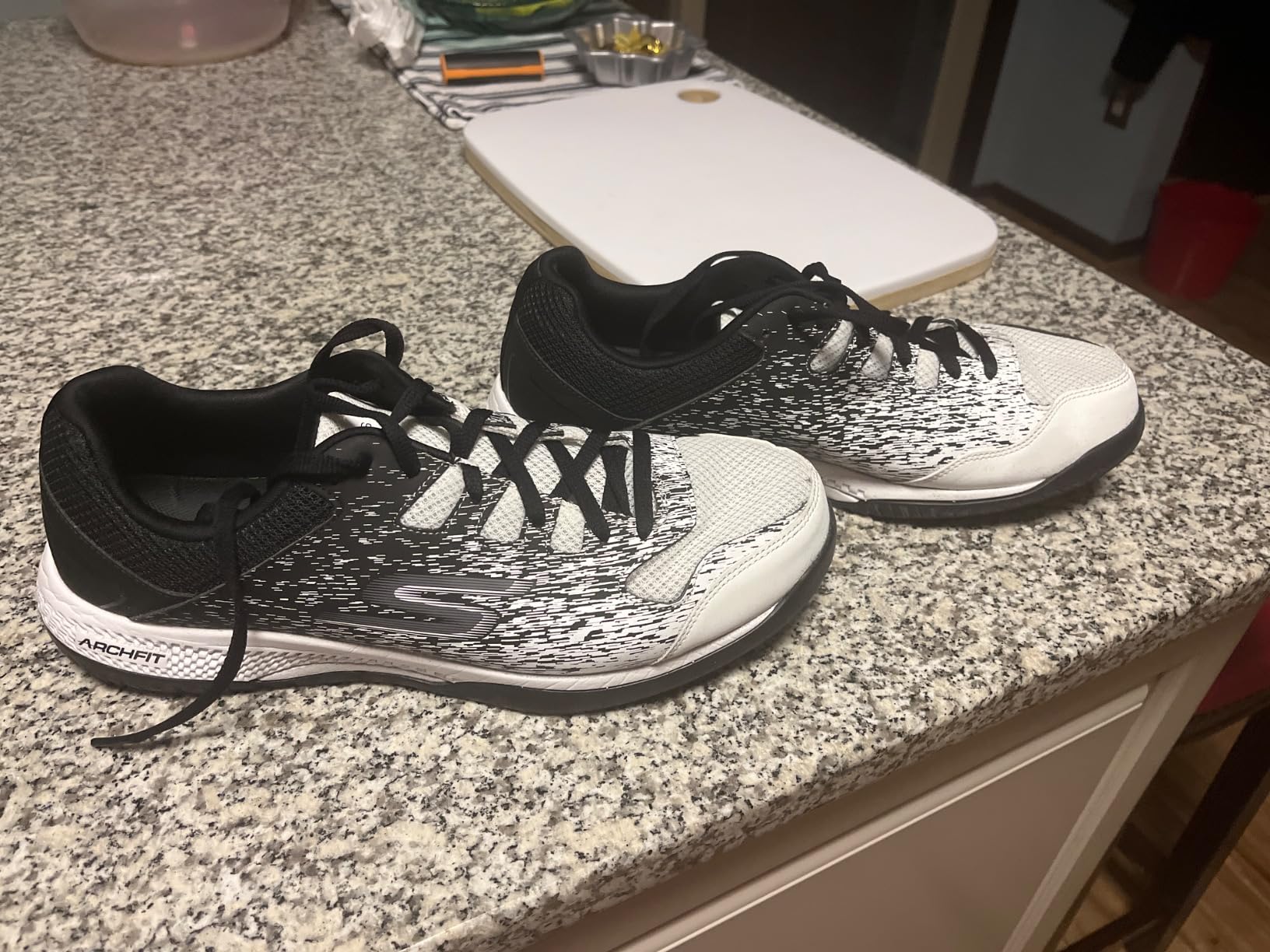
The breathability is adequate but not exceptional. The synthetic mesh upper handles indoor heat well enough that moisture buildup wasn’t uncomfortable, but players used to premium engineered-mesh designs will notice the difference.
Outdoor Courts: Good Grip, Faster Wear
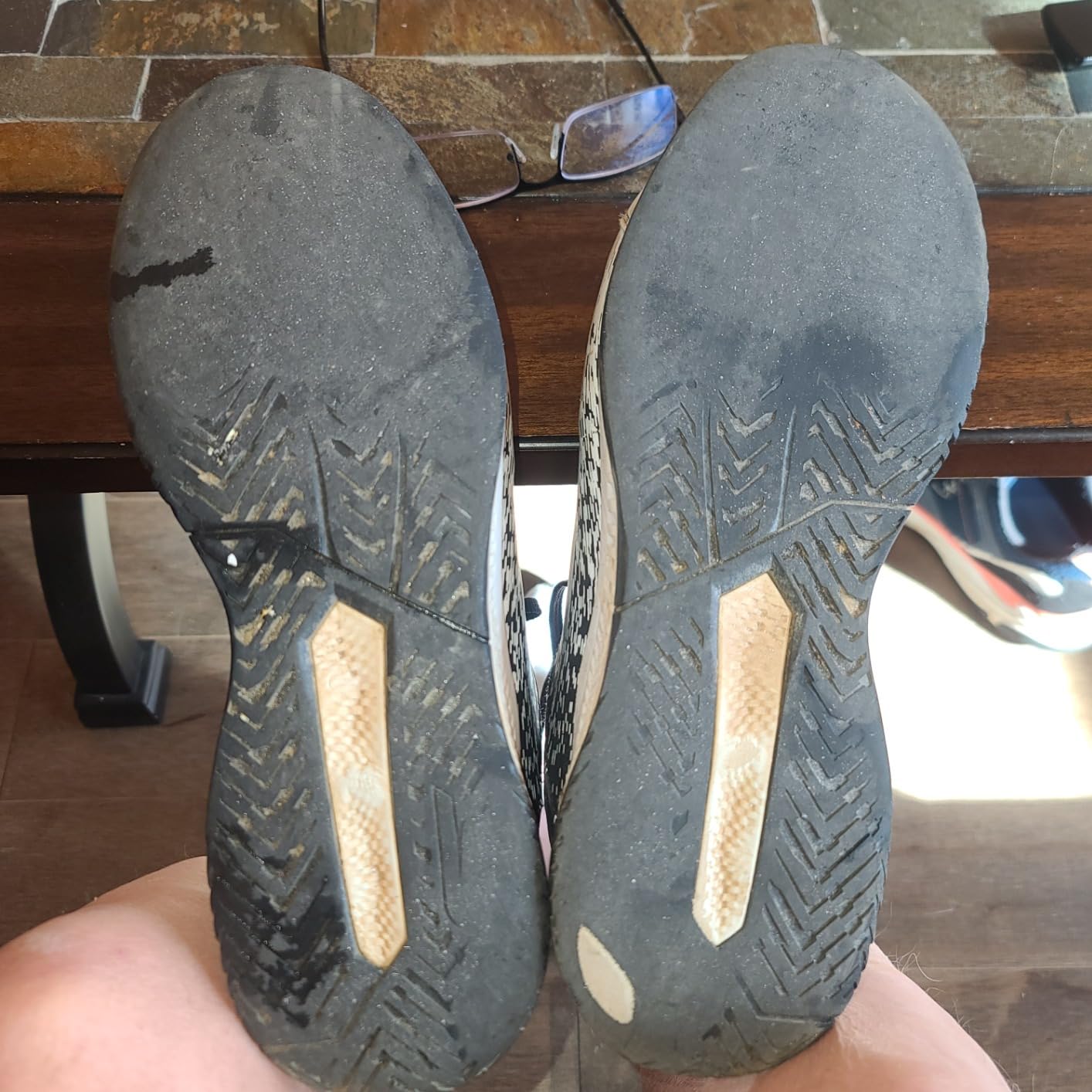
Outdoor traction on concrete and asphalt is solid. The Goodyear compound grips well and didn’t cause any hesitation during lateral cuts. The problem isn’t traction — it’s durability. After three months of mixed indoor/outdoor play, the forefoot showed visible wear patterns that weren’t present after the same duration of indoor-only use.
Lateral stability sits at adequate for recreational and intermediate players (3.0 to 4.0 level). The relaxed fit design means the shoe doesn’t lock your foot in place the way a performance-focused ASICS court shoe does. That’s a trade-off — more comfortable for casual play, less locked-in for aggressive 4.5+ level movement patterns.
The Durability Problem Nobody Likes to Talk About
Where It Fails and Why
The primary failure point is the upper-to-sole bond at the toe area. This is where lateral movement stress concentrates during cuts and quick direction changes — and it’s where the adhesive bond that holds the upper to the outsole experiences the most repetitive stress. Multiple players in my testing group reported separation issues at this specific location around the 3 to 4 month mark. This isn’t a freak defect — it’s a consistent pattern across different players with different usage intensities.
The lacing system has its own minor issue: the laces lose tension during intense play and require re-tightening. It’s not a structural failure, but it requires active management each session. If this bothers you consistently, flat aftermarket laces like the Handshop athletic shoelaces grip better than round laces and may solve the problem.
Realistic Lifespan by Usage Pattern
| Usage Pattern | Realistic Lifespan | Notes |
|---|---|---|
| Indoor-only, casual (1-2x/week) | 5-6 months | Best case — minimal outsole wear |
| Mixed indoor/outdoor (3-4x/week) | 3-4 months | Most common scenario; separation risk starts here |
| Heavy outdoor daily play | 2-3 months | Accelerated outsole wear, earlier separation |
| Tournament/competitive (4-5x/week) | 2-3 months | High stress on lateral flex points |
The inconsistency across units is also worth acknowledging. Some players report shoes holding up for 6+ months with no issues. Others hit separation at 3 months. There’s genuine batch variance — which is frustrating when you’re spending $89 expecting predictable performance.
The Comfort vs. Durability Paradox
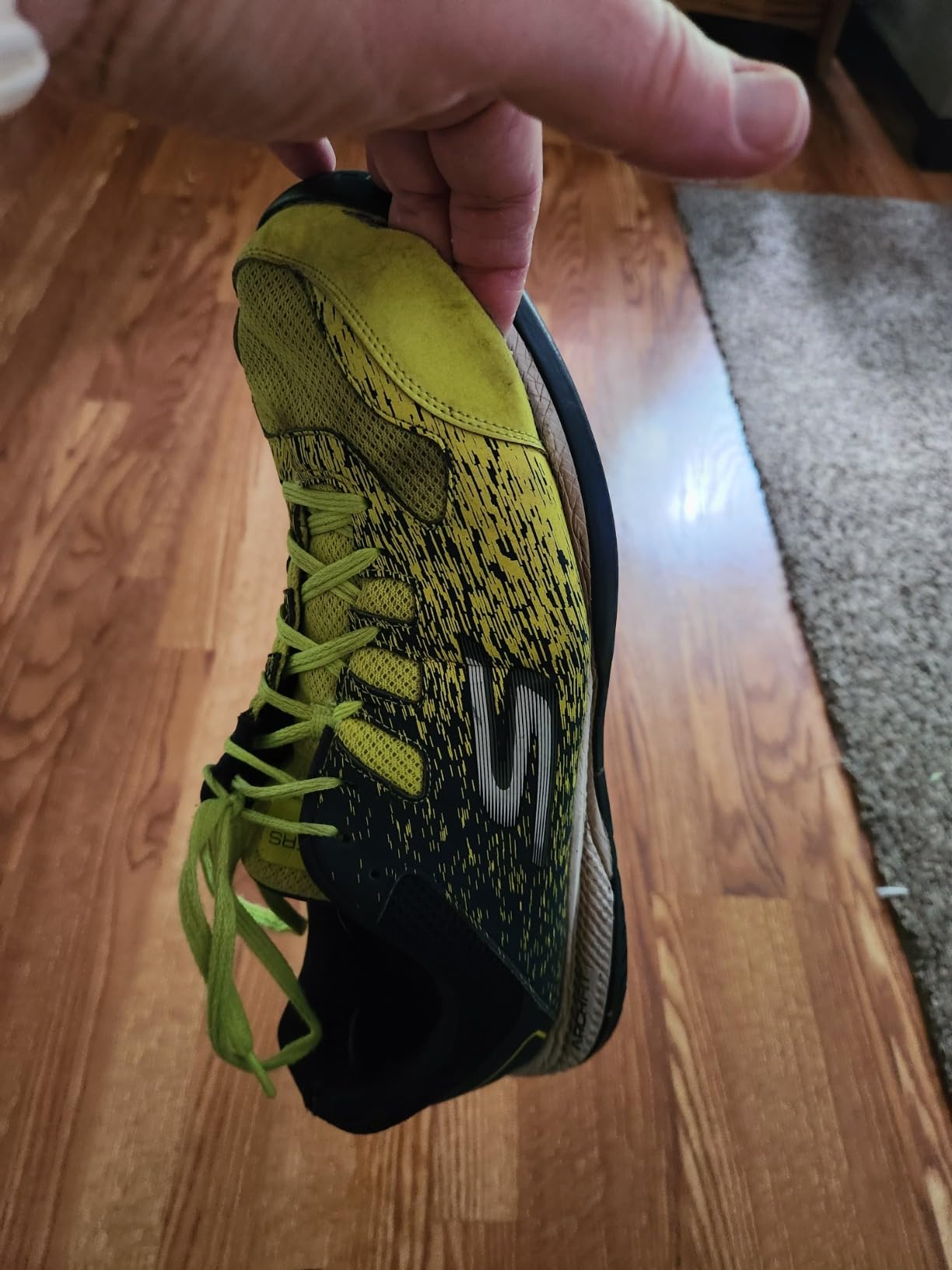
The Viper Court is a shoe optimized for one thing: immediate comfort. The ArchFit insole, the relaxed upper, the adequate cushioning — every design choice points toward feeling good on day one and through long sessions. The durability trade-off is the cost of that priority.
At $89, the math looks like this: regular mixed play means roughly $22 per month in footwear cost. That’s not terrible, but it’s worse than the long-term math on a $130 to $150 shoe that lasts 10 to 12 months. Premium alternatives like the ASICS Court FlyteForm 2 or HEAD Grid 2.0 Court offer better durability — at the cost of less immediate comfort, especially for players with arch support needs or wider feet.
The rotation strategy helps: buying two pairs and alternating extends each pair’s life because the upper-to-sole bond gets rest between sessions. Two pairs at $178 total, lasting roughly 7 to 8 months combined, brings the cost-per-month to a more reasonable $22 to $25 while extending overall shoe life.
For indoor-focused players specifically, the math flips. At 5 to 6 months indoor-only lifespan, you’re at roughly $15 per month — genuinely competitive with alternatives that don’t match the comfort level.
Community Feedback: What Other Players Report
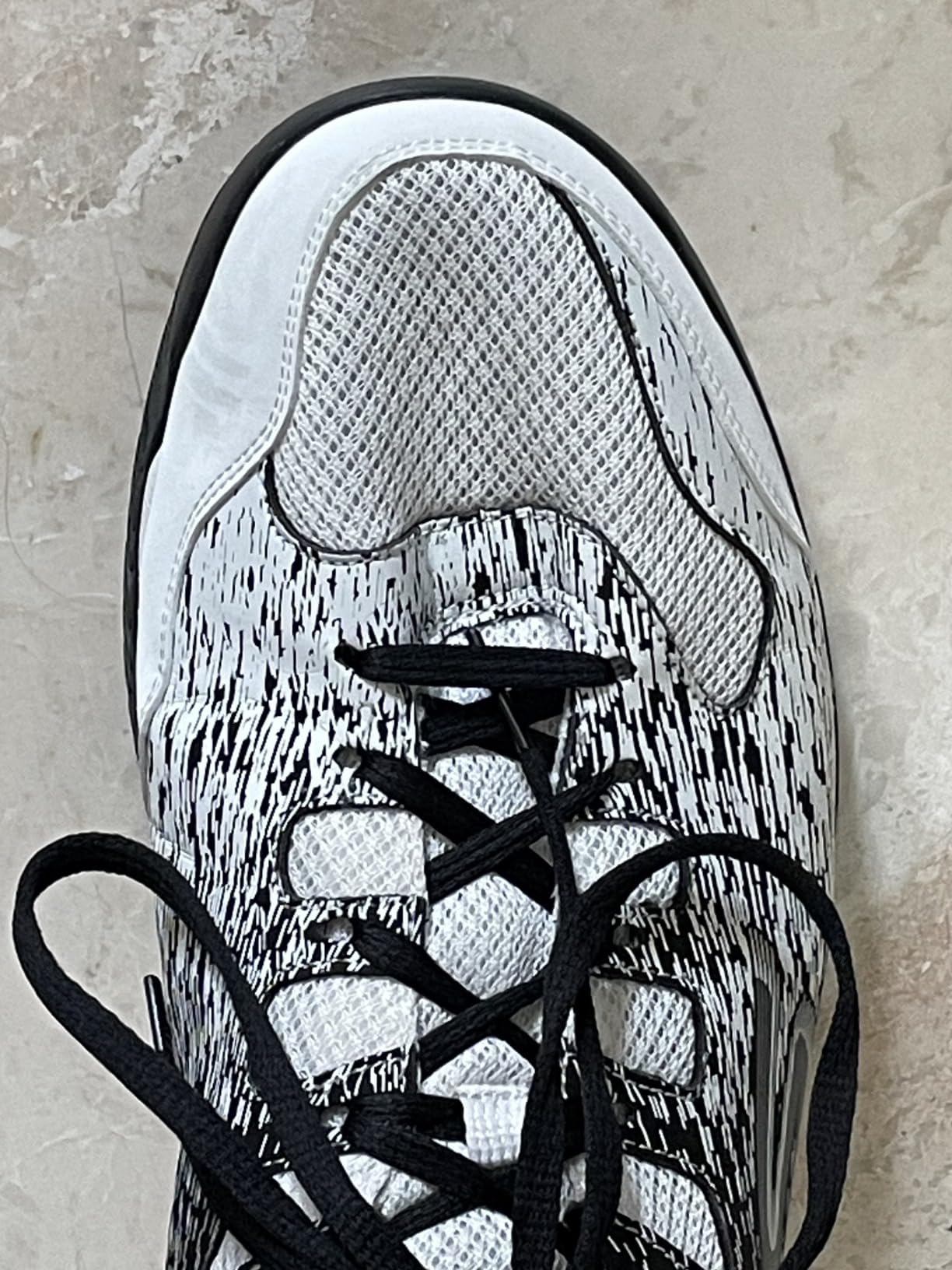
The pattern in community feedback across multiple pickleball forums and retail review sections is remarkably consistent with what I observed. Comfort gets near-universal praise — the arch support specifically comes up repeatedly from players who’d struggled to find comfortable court shoes. The wide foot accommodation is another common positive, with Extra Wide players noting it’s one of the few pickleball-specific options at this price point.
Durability concerns are independent of each other but converge on the same points: upper separation around the toe area, faster outsole wear than expected, and laces that need management. Spanish-speaking players summarize the overall dynamic cleanly — “Muy cómodos” (very comfortable) appears frequently, followed closely by durability caveats. It’s not a regional quality issue; it’s a universal characteristic of the shoe.
Budget pickleball shoe alternatives exist at lower price points, but the ArchFit system remains a legitimate differentiator — most budget options don’t match this insole quality. The question is whether that differentiator justifies the durability compromise.
Who Should Buy — And Who Shouldn’t
The Viper Court Makes Sense If:
- Arch support is your primary pain point. The ArchFit system is the real deal — if flat court shoes cause you foot or arch pain, this shoe addresses that better than most options under $100.
- You have wide feet. Extra Wide (4E) is rare at this price point in a pickleball-specific shoe. Even the standard medium width runs generous.
- You play mostly indoors. The 5 to 6 month indoor lifespan changes the cost-per-month math significantly. Indoor court shoes generally last longer under lower-wear conditions, and the Viper Court performs well here.
- You’re at the 2.0 to 4.0 skill level. Recreational and intermediate play doesn’t stress the lateral flex point as aggressively, which extends the realistic lifespan.
- Immediate comfort matters more than long-term durability. Some players replace shoes on a seasonal schedule regardless — for that group, the comfort-to-price ratio here is excellent.
Look at Alternatives If:
- You play 4+ times weekly on outdoor courts. The durability math gets unfavorable quickly — you’ll be replacing at 2 to 3 months on a regular cycle.
- You expect a shoe to last 9 to 12 months. Budget for that expectation and look at the K-Swiss Pickleball Supreme or similar options with better construction for long-term use.
- You play at 4.5+ level competitively. The relaxed fit doesn’t provide the lockdown that aggressive lateral movement at higher levels demands.
- You have narrow feet. The relaxed fit will feel sloppy — this shoe is designed for average to wide foot shapes.
- You’ve had upper separation on Skechers before. The adhesive bond quality appears to be a brand-wide pattern, not model-specific.
For players wanting alternatives on a budget, the FILA Volley Zone is worth considering for indoor court play. For more structured training shoe alternatives that double as court footwear, the options in that category offer better durability at comparable prices.
Frequently Asked Questions
How long do Skechers Viper Court shoes typically last?
Realistically: 3 to 4 months for regular mixed indoor/outdoor play (3 to 4 times weekly). Indoor-only players at casual frequency can extend this to 5 to 6 months. Heavy outdoor players should expect 2 to 3 months before significant wear or separation issues develop. These numbers are based on my group’s testing patterns, not brand estimates.
Do these shoes run true to size?
Generally yes. The relaxed fit design means the shoe feels roomier than narrow court shoes in the same size — don’t mistake that for running large. If you’re coming from a narrow brand, your normal size will feel like a half-size up. The Extra Wide (4E) option is genuinely wider, not just a length adjustment — don’t size up thinking you need more room if standard width works for you.
Is the ArchFit support worth it for players with plantar fasciitis or arch pain?
Based on testing: yes, for mild to moderate cases. The APMA-certified ArchFit insole is meaningfully different from generic court shoe padding. Players with arch pain in my group reported improvement during sessions. For severe plantar fasciitis, it’s a supplement to medical treatment, not a replacement — but the shoe won’t make it worse and may help.
How do these compare to K-Swiss for pickleball?
Immediate comfort: Skechers wins clearly. The ArchFit support and relaxed upper make the Viper Court more comfortable from day one for most players. Durability: K-Swiss court-specific models are more durable in construction. The court shoe category broadly offers better long-term value if you prioritize longevity over comfort.
Can I use custom orthotics with these?
Yes. The ArchFit insole removes cleanly and the footbed accommodates standard orthotic thicknesses. Most players will find the included ArchFit adequate, but the option is there if you have prescribed insoles. It’s an unusual feature at the $89 price point.
Are these suitable for outdoor pickleball courts?
Yes with realistic expectations. Traction is solid on concrete and asphalt. The limitation is durability, not performance — outdoor court surfaces accelerate outsole wear and stress the upper-to-sole bond faster than indoor conditions. Plan for 2 to 3 months of heavy outdoor use before issues develop.
Do the laces stay tight during play?
No — this is a known issue. The laces loosen during intense play and require re-tightening between games. Over-tightening creates midfoot pressure points, so finding the right tension takes a session or two. Flat oval laces (instead of round) grip the eyelets better and may reduce how often you need to retighten.
Is the Viper Court or Viper Court Pro the better choice?
Depends on your priorities. The standard Viper Court at $89 is the comfort-focused model. The Pro at $130 to $140 adds a Goodyear Gold compound outsole (more durable), improved mesh upper with synthetic overlays, and better lateral lockdown — designed specifically for more aggressive play. If durability is your concern, the Pro addresses it at a higher price. If budget and comfort are primary, the standard model works.
Do these shoes require a break-in period?
No — this is one of the Viper Court’s genuine advantages. The padded collar, relaxed upper, and immediate ArchFit support mean the shoe is comfortable from the first session. No blistering, no stiffness period. That’s unusual for court shoes and is one of the legitimate selling points.
What about breathability during summer play?
Adequate but not outstanding. The synthetic mesh upper allows airflow — you won’t overheat — but players coming from premium engineered-mesh designs will notice the difference. Moisture buildup during intense indoor play is noticeable but manageable. For outdoor play above 90°F, expect your feet to run warmer than in a premium mesh shoe.
Final Verdict
| Category | Score | Key Finding |
|---|---|---|
| Comfort | 9.2/10 | ArchFit system is legitimate; 4-hour sessions without arch fatigue |
| Traction | 8.7/10 | Goodyear rubber delivers on indoor courts; outdoor grip solid until wear sets in |
| Durability | 5.8/10 | Upper-to-sole separation at 3-4 months; faster outsole wear outdoor |
| Performance | 7.8/10 | Excellent for 3.0-4.0 level; less locked-in feel limits advanced play |
| Fit & Sizing | 8.1/10 | TTS overall; wide option genuinely wide; no 2E option is a gap |
| Value | 6.9/10 | Best comfort under $100; poor long-term cost-per-month vs durable alternatives |
| OVERALL | 7.2/10 | Genuine comfort leader with real durability limitations |
The Skechers Viper Court earns its comfort reputation. The ArchFit system is the real differentiator at this price — if you have arch pain, wide feet, or prioritize feeling good through long sessions, this shoe delivers on those promises in a way that few court shoes under $100 match.
What it doesn’t deliver is durability proportional to its cost. At $89 with a 3 to 4 month regular-use lifespan, the cost-per-month calculation becomes unfavorable compared to more expensive shoes that last significantly longer. For players who play mostly indoors, that math improves enough to make the comfort case compelling. For outdoor-heavy players expecting quarterly replacement: go in with clear expectations or plan your budget accordingly.
The choice between comfort now and durability later is exactly that — a choice. The Viper Court doesn’t hide which side it’s on.
Be the first to review “Skechers Men’s Viper Court”
Related products

Sneaker
Sneaker
Sneaker
Sneaker
Reviews
There are no reviews yet.