
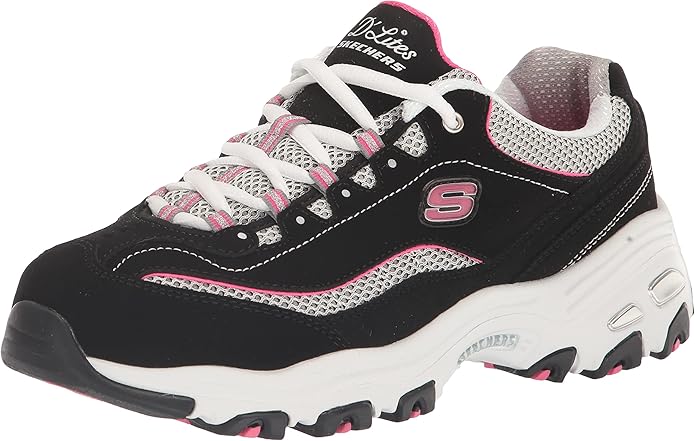
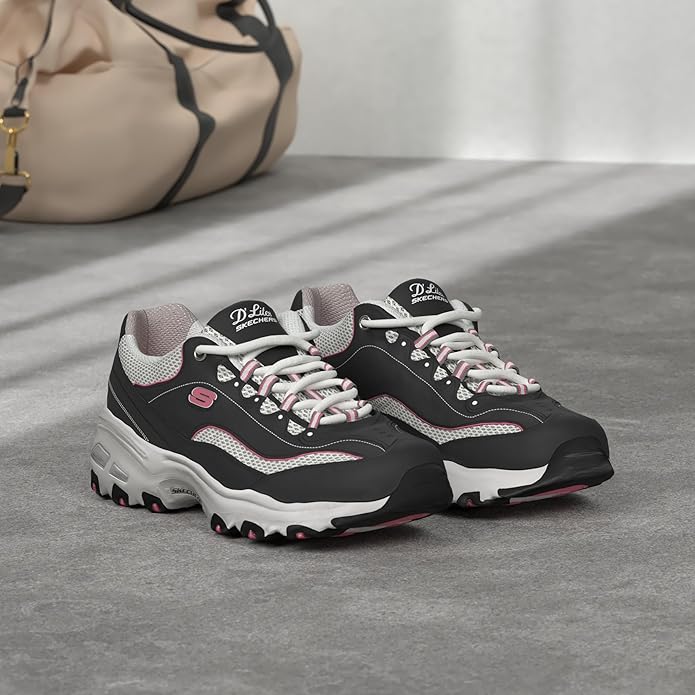
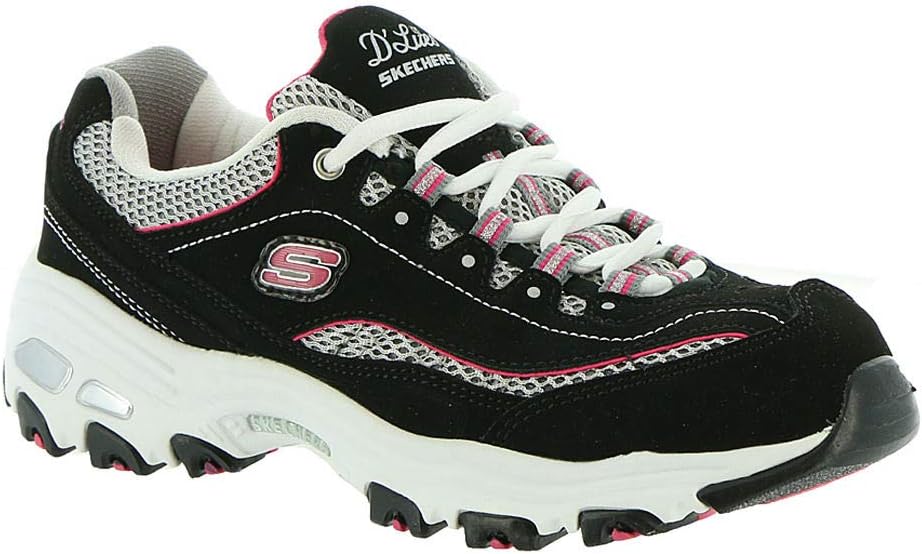
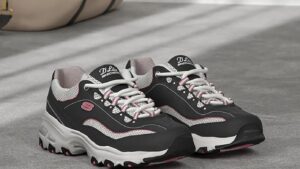
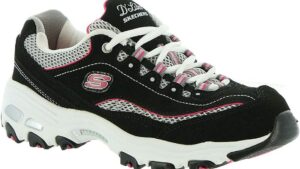
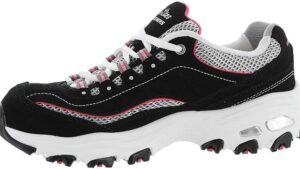
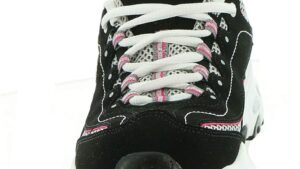
Skechers Women’s D’lites Life Saver Memory Foam
$56.44
- ⚖️ Weight: 9 oz per Skechers (10.6 oz per Amazon product listing — see note in review)
- 📐 Platform Height: 1 inch
- 📏 Built-in Heel: 1.25 inches
- 🧪 Insole: Air-Cooled Memory Foam (glued in — important caveat below)
- 👟 Upper: Leather + Synthetic overlays
- 🏃♀️ Category: Lifestyle / Casual / Walking Sneaker
- 🎯 Best for: Daily errands, casual workdays, standing jobs, light walking
My neighbor wears the same pair of Skechers D’Lites to every school pickup, every soccer Saturday, every grocery run — and she’s been wearing them for two years. I always figured she just didn’t care about shoes. Then my feet started protesting everything I put on them, and I finally asked her what the deal was. “Order a half size up,” she said, like that was all I needed to know. Three months later, after enough daily testing to give me opinions nobody asked for, I understand why she keeps buying them — and I also understand something she probably doesn’t want to hear about durability. Sarah here, and this is the honest version of the Skechers Women’s D’Lites-Life Saver review.
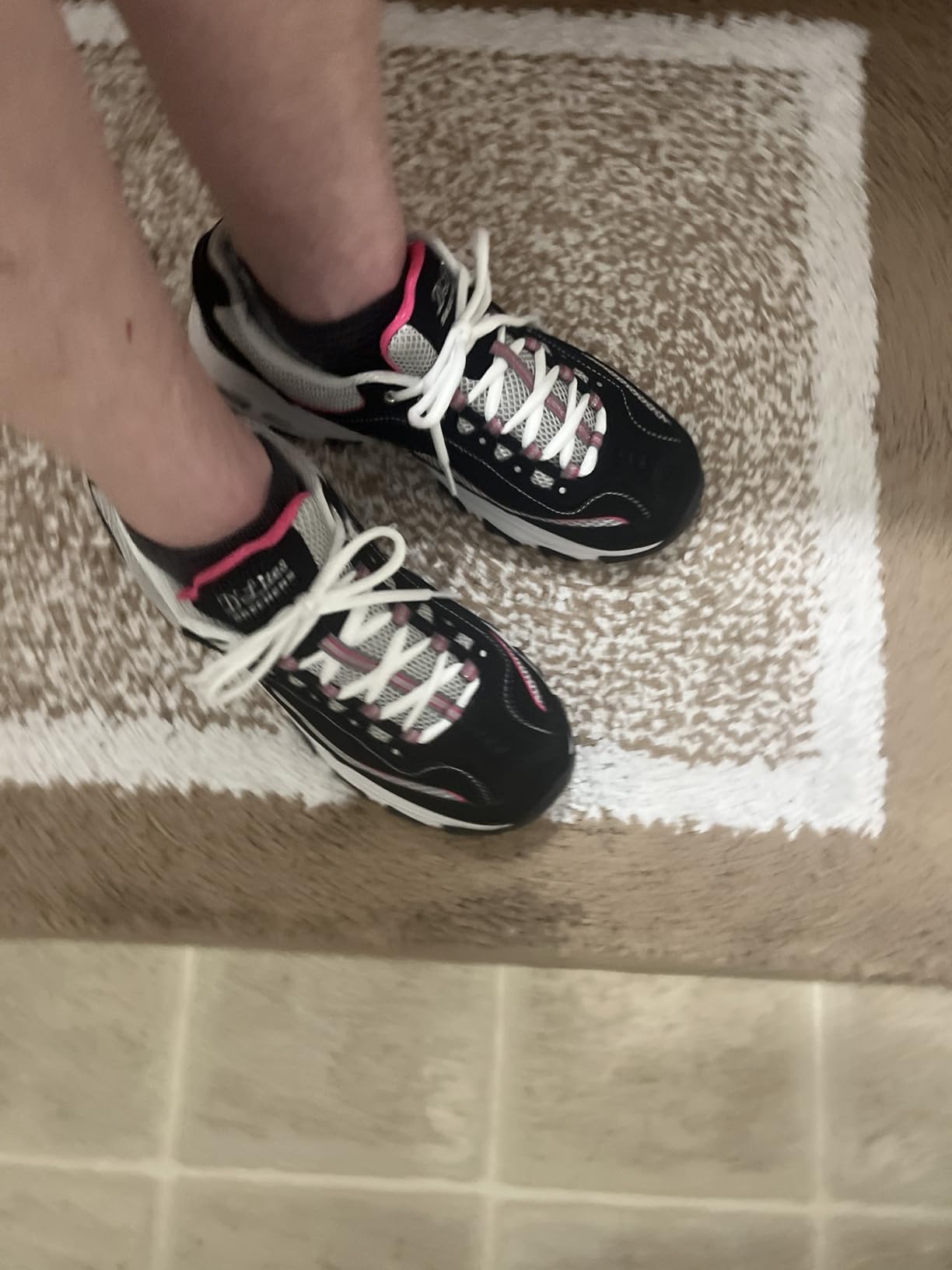
First Impressions — The Retro Look and the Sizing Conversation We Need to Have
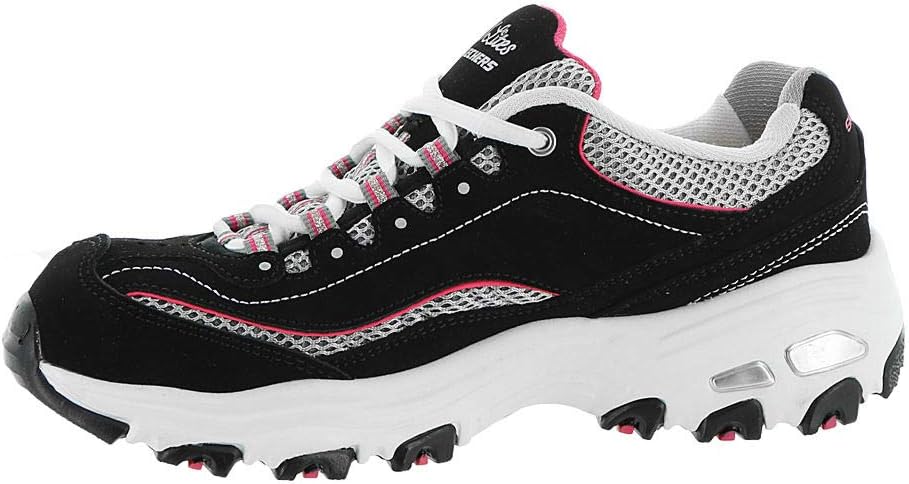
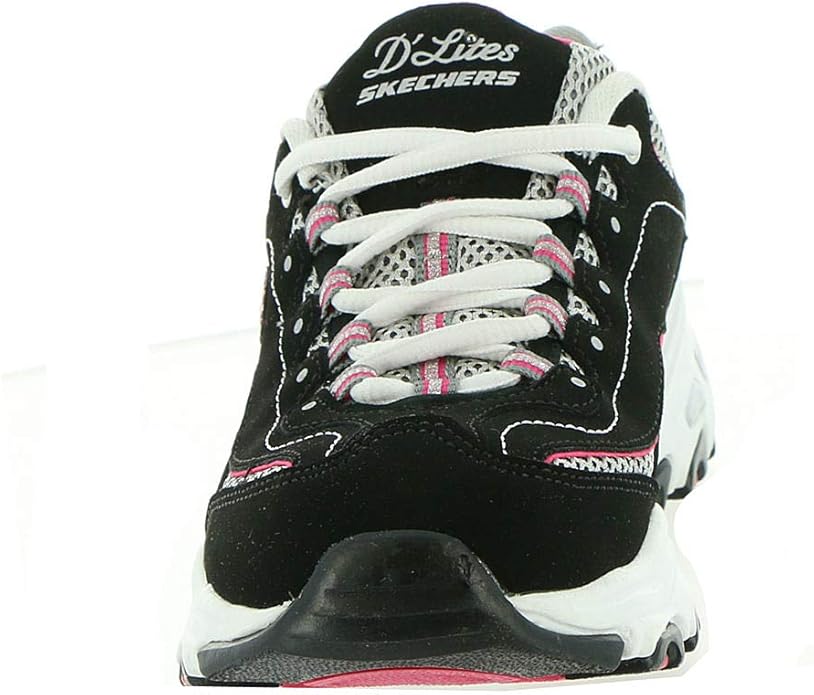
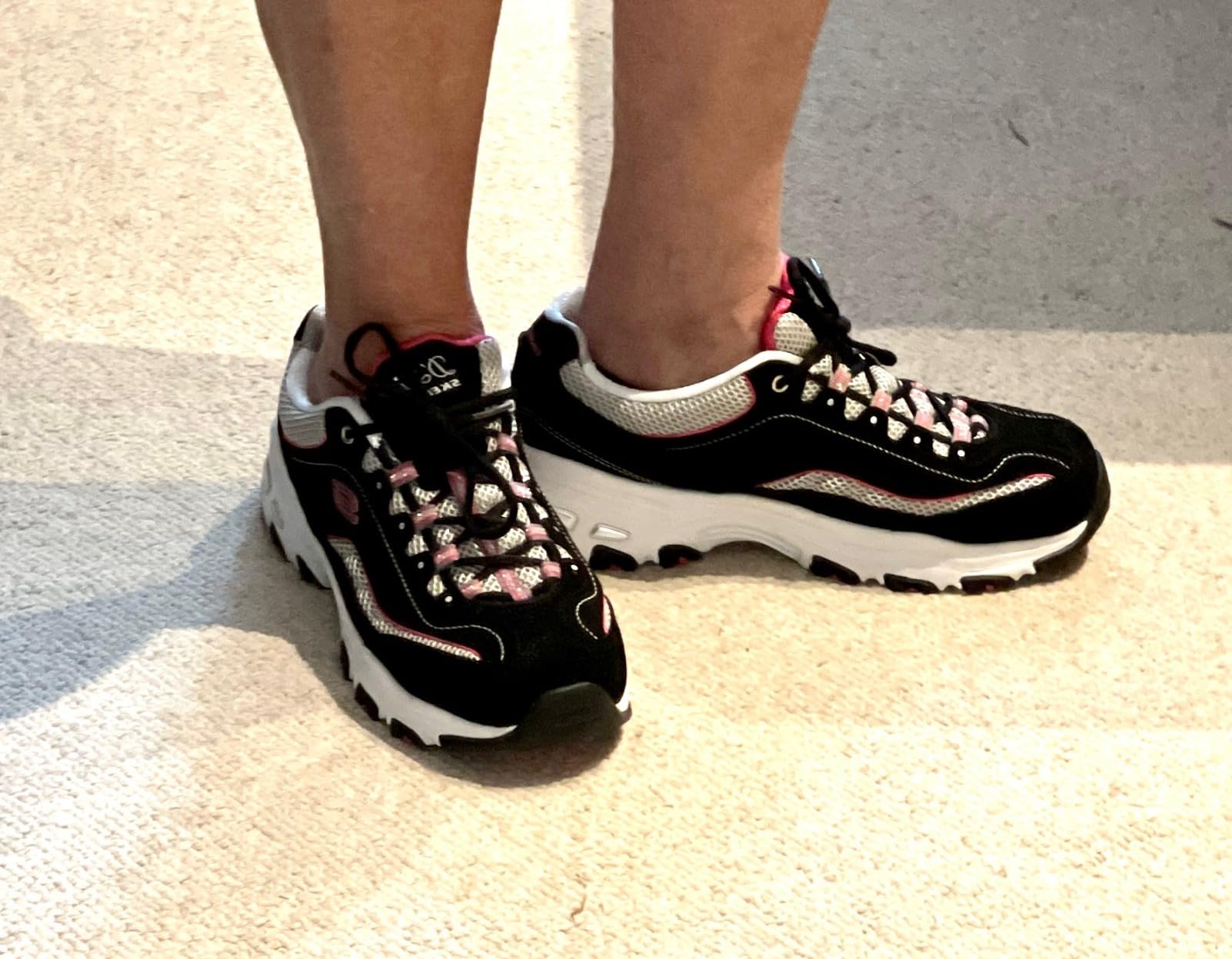
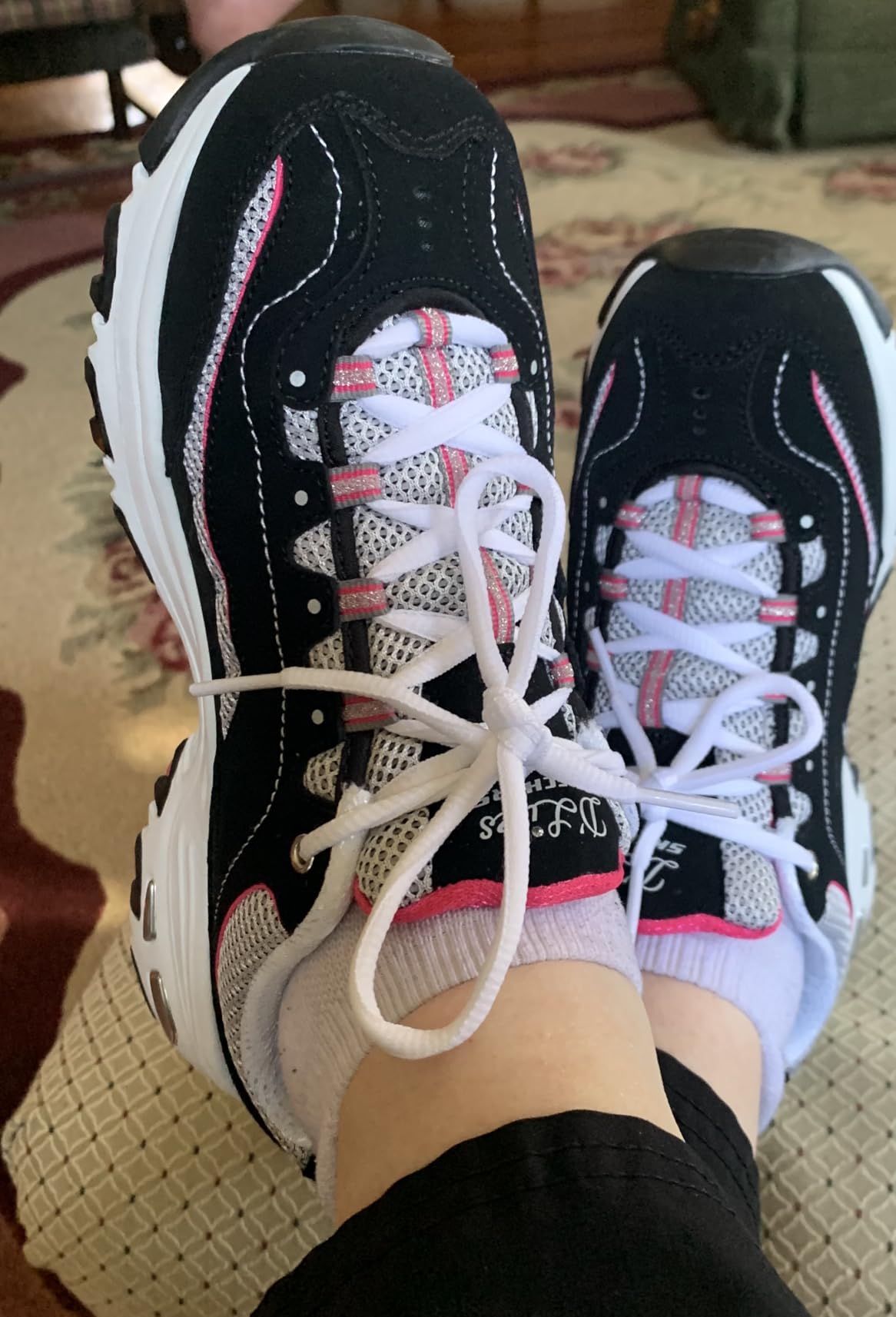
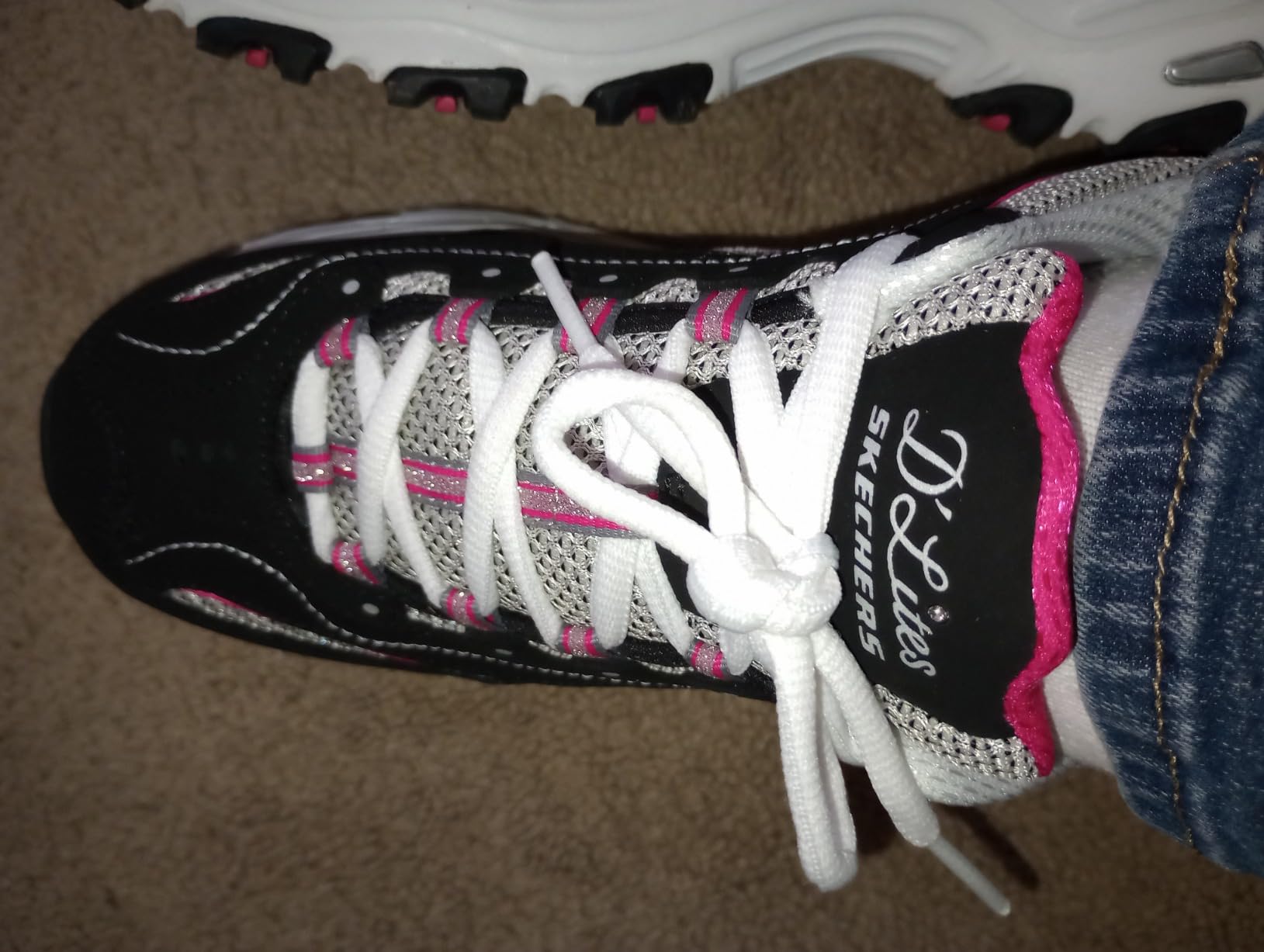
The D’Lites have a silhouette you either clock immediately or take a few wears to fully commit to. Chunky, platform-forward, layered in leather and synthetic panels with visible contrast stitching — it’s a look that’s been polarizing people since 2015 and is apparently still going strong. If you’ve seen the “dad shoe” trend cycle through fashion blogs and your Instagram feed, you already know where you stand on this aesthetic. I came around to it. The navy and white colorway specifically has a clean vintage quality that works surprisingly well with jeans, casual dresses, and leggings without looking like you’re trying too hard.
Out of the box, the first thing I noticed was how light they were. Given the thick platform and layered upper, I expected something that would feel substantial in hand — but they’re genuinely light. Skechers lists them at 9 oz for a women’s size 8, while the Amazon product listing shows 10.6 oz, which is probably the packaged per-pair weight. Either way, for a chunky lifestyle sneaker, the heft is not an issue. They felt easy to pick up, and that translated to how they felt on foot all day.
Here’s what matters most before you order: the sizing. Read this part before anything else.
These shoes run small — and specifically, they run narrow through the toe box. I wear a size 8 in most brands and normally wouldn’t think twice about ordering my usual size. But I’d read enough reviews saying “size up” that I ordered an 8.5, and it was the correct call. My toes have room to move without the shoe feeling sloppy around my heel. If I’d ordered my standard 8, the forefoot area would have been uncomfortably snug by hour three.
The pattern is consistent across sources: users with average feet report needing a half size up; users with wide feet sometimes need a full size up, even in the wide version. The toe box is the problem area — the leather and synthetic upper panels create a structured shape that doesn’t have much give. One user on BuyWithOffers noted she needed an 8.5 wide and still found the shoe slightly snug across the forefoot. If you’re between sizes, go up. If you have genuinely wide feet, order in-store or be prepared to use the return window.
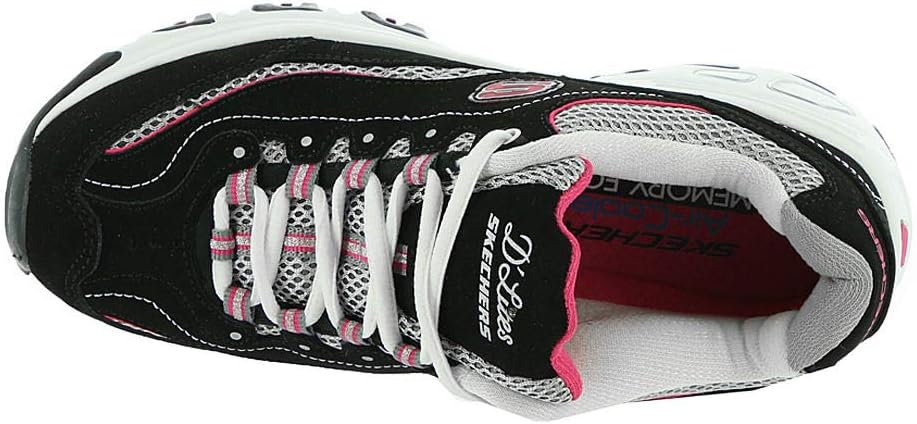
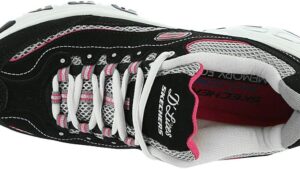
Some colorways include a second pair of laces in a contrasting or glittery color — a small detail that’s more fun than functional, but it lets you personalize the look. The collar and tongue are padded generously, which helps prevent ankle rubbing on longer wear days. First step on foot: soft, cushioned, immediately comfortable. We’ll get into how that feeling evolves.
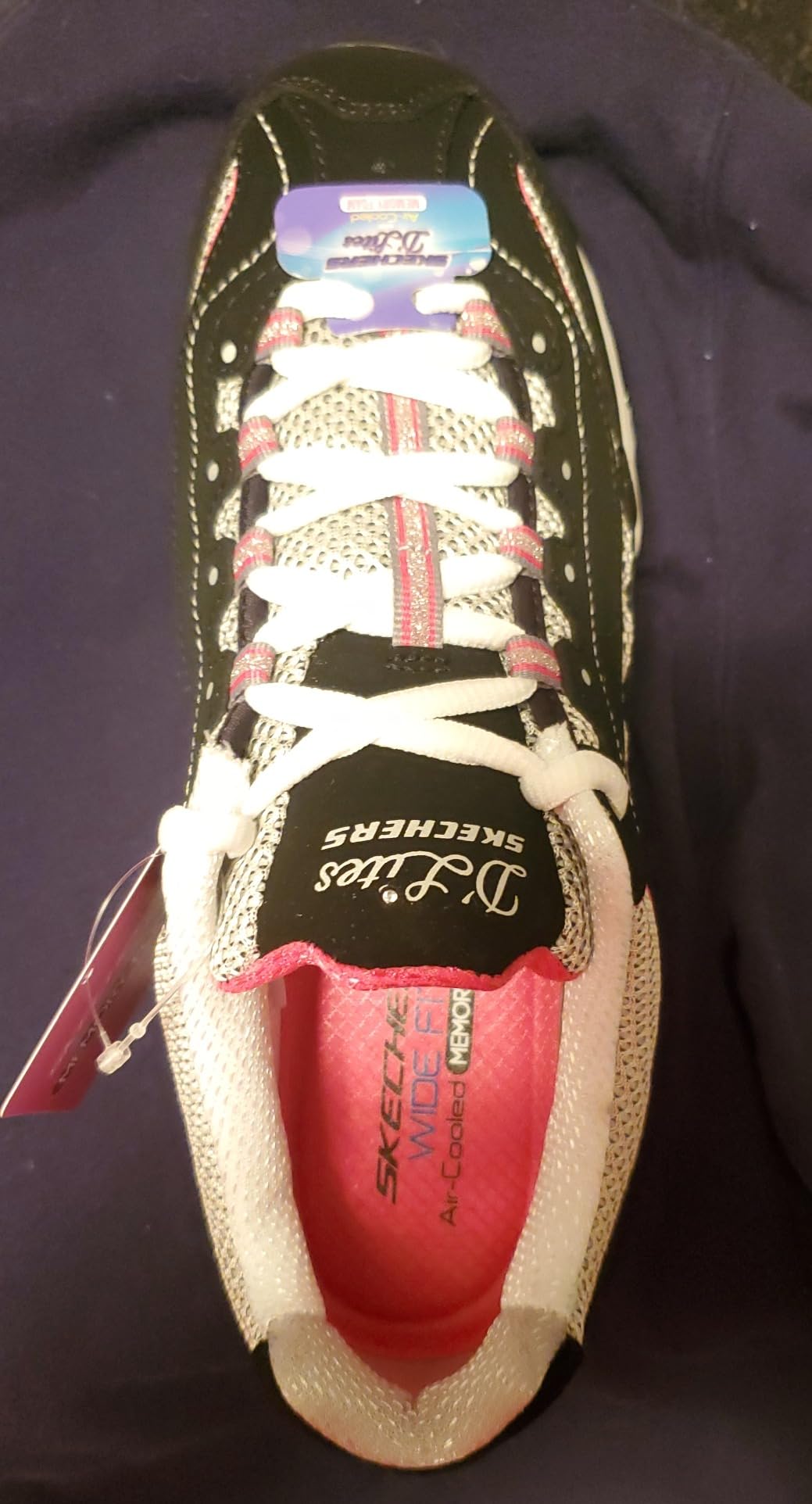
What Air-Cooled Memory Foam Actually Delivers
The “Air-Cooled Memory Foam” insole is the centerpiece of Skechers’ marketing for this shoe — and the initial experience genuinely earns that attention. The first time you slip your foot in, the foam molds around the contours of your foot in a way that immediately softens the connection between your foot and the ground. It doesn’t feel like standing on a standard flat insole; it feels forgiving and plush. During the first two to three hours of any given day, whether I was at my standing desk or walking around Target, my feet were notably comfortable. That’s the experience that makes people loyal to this shoe.
The honest follow-up is that memory foam, by nature, compresses over time — and it doesn’t bounce back the way EVA or traditional foam does. By hour five or six on days when I was on my feet continuously, the sensation was still fine, but the initial softness had dialed down. And by month two of daily wear, I noticed the cushioning felt slightly less responsive than it had on day one. Not dramatically worse, but different — like the foam had learned the permanent shape of my foot and stopped adapting around it. This is a normal characteristic of memory foam, not a defect, but it’s worth knowing going in.
Whether this matters to you depends heavily on how you wear them. Many nurses and retail workers report excellent all-day comfort across 8-to-12-hour shifts — and that feedback is consistent and genuine. If your foot load is lighter — errands, casual work, school pickup — the foam holds up well for the duration. If you’re on hard surfaces for 10+ hours, the experience by end of shift will be more fatigued than fresh.
There’s a separate issue for anyone who needs custom orthotics: the insole is glued in. It’s not designed to be removed, and attempting to lift it risks damaging the shoe structure. This is a detail that most reviews either miss entirely or mention only briefly, but for women with plantar fasciitis, high arches, or prescribed inserts, it’s a dealbreaker. The memory foam provides standard cushioning, not structured arch support — it conforms to your foot shape, but it doesn’t replace a custom orthotic. If inserts are non-negotiable for you, look at other options. The Sof Sole Athlete Insoles are one option that some users layer over the glued insole with mixed results, though this isn’t an ideal fix. For a shoe designed around orthotic compatibility, the G-Defy Mighty Walk is a better starting point.
For those with average arch needs who aren’t orthotic-dependent, the memory foam delivers real comfort in a way that justifies its reputation. Just go in knowing the feeling is strongest in months one through two and gradual from there.
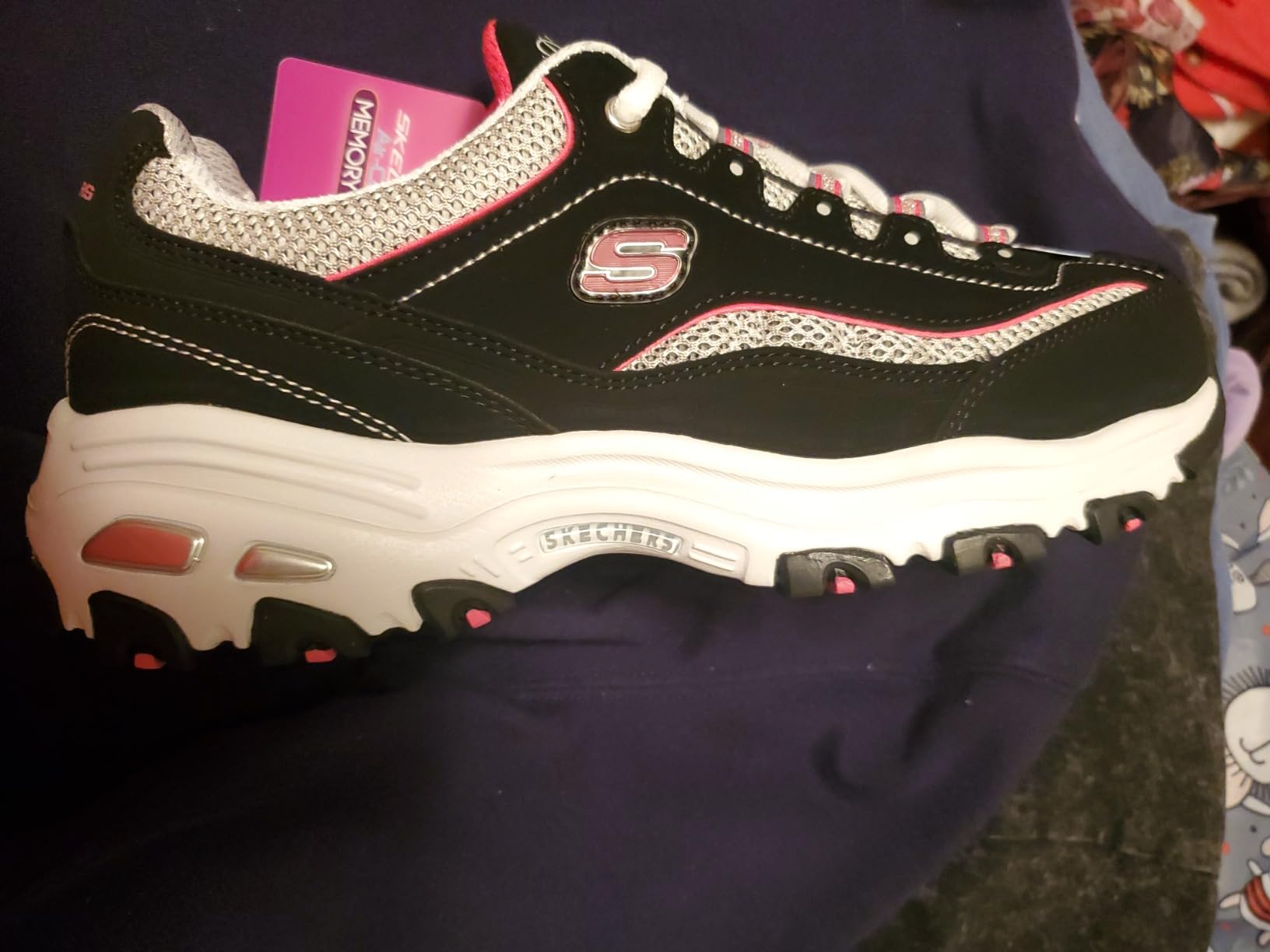
Three Months of Real-World Testing — What Actually Happened
I wore these through a full Midwest spring: sun, rain, cold mornings that turned warm by afternoon, and one muddy park afternoon that tested the outsole cleanup situation (easy, for the record). Here’s what the testing actually looked like across different scenarios:
Standing desk workdays: My go-to test. After six hours on my feet at my desk, the D’Lites felt comfortable throughout and ready to come off by hour seven — not painful, just the normal “feet are done for the day” signal. No achilles rubbing, no toe compression from the narrower toe box (because I sized up), and no unusual fatigue in my arches. On days where I alternated sitting and standing, comfort held up reliably well through a full eight-hour day.
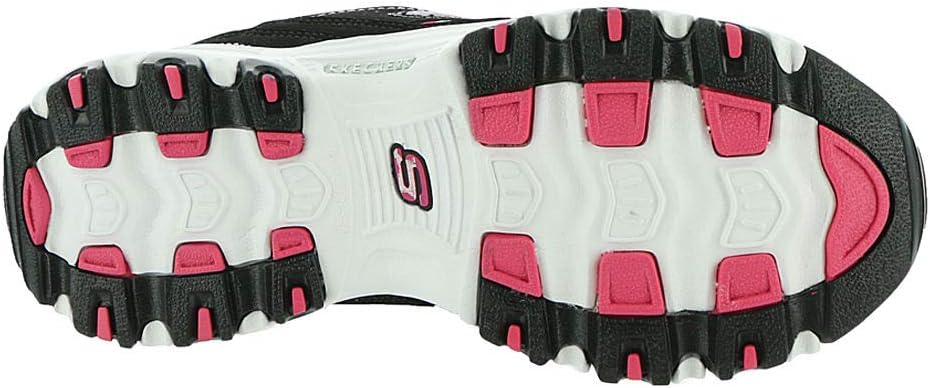
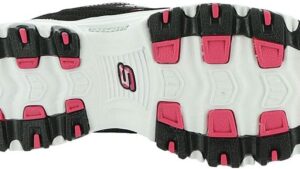
Errands and grocery runs: Excellent. The rubber outsole gripped wet grocery store tiles without any slipping, which matters more than it should because I’ve done the embarrassing semi-slide in smooth-soled shoes. On pavement and concrete sidewalks, the platform provides a solid, stable contact — not springy, but grounded. I never once felt uncertain footing.
Park and outdoor activities with kids: The flexibility of the outsole handles the unpredictability of park terrain well. I chased a four-year-old across uneven grass, scrambled over a muddy patch near a playground, and walked across a paved parking lot all in one outing. No issues, and my feet were comfortable throughout. The 1.25″ heel creates slight added height but doesn’t make the shoe feel unstable on uneven ground.
5-mile city walk: The largest endurance test. By mile four, I noticed slight pressure building across the forefoot — not painful, but present. Mile five was fine to complete. After the walk, no blisters and no next-day soreness, which is genuinely impressive for a three-hour walk in any shoe. The cushioning degrades slightly over sustained long distances, but for anything under four miles, performance is excellent.
Weather resistance: A rainstorm caught me during a grocery run about six weeks in. The leather upper repelled light rain effectively — no soaked socks, no immediate waterlogging. These won’t survive a deliberate puddle-stomp, but light precipitation doesn’t penetrate quickly. That’s more than most casual leather sneakers offer.
Three-month durability checkpoint: At the three-month mark, the outsole showed minor inner heel compression but no separation. The upper leather and synthetic panels remained intact with no cracking or visible fading. The inner heel lining showed slight wear where the foot makes consistent contact — which is normal. The foam cushioning, as mentioned, feels slightly different from day one but not noticeably degraded in function. My pair, at three months, is holding up well. But I’ve read enough user reports to know this isn’t a guarantee — and that’s where the larger durability story gets complicated.
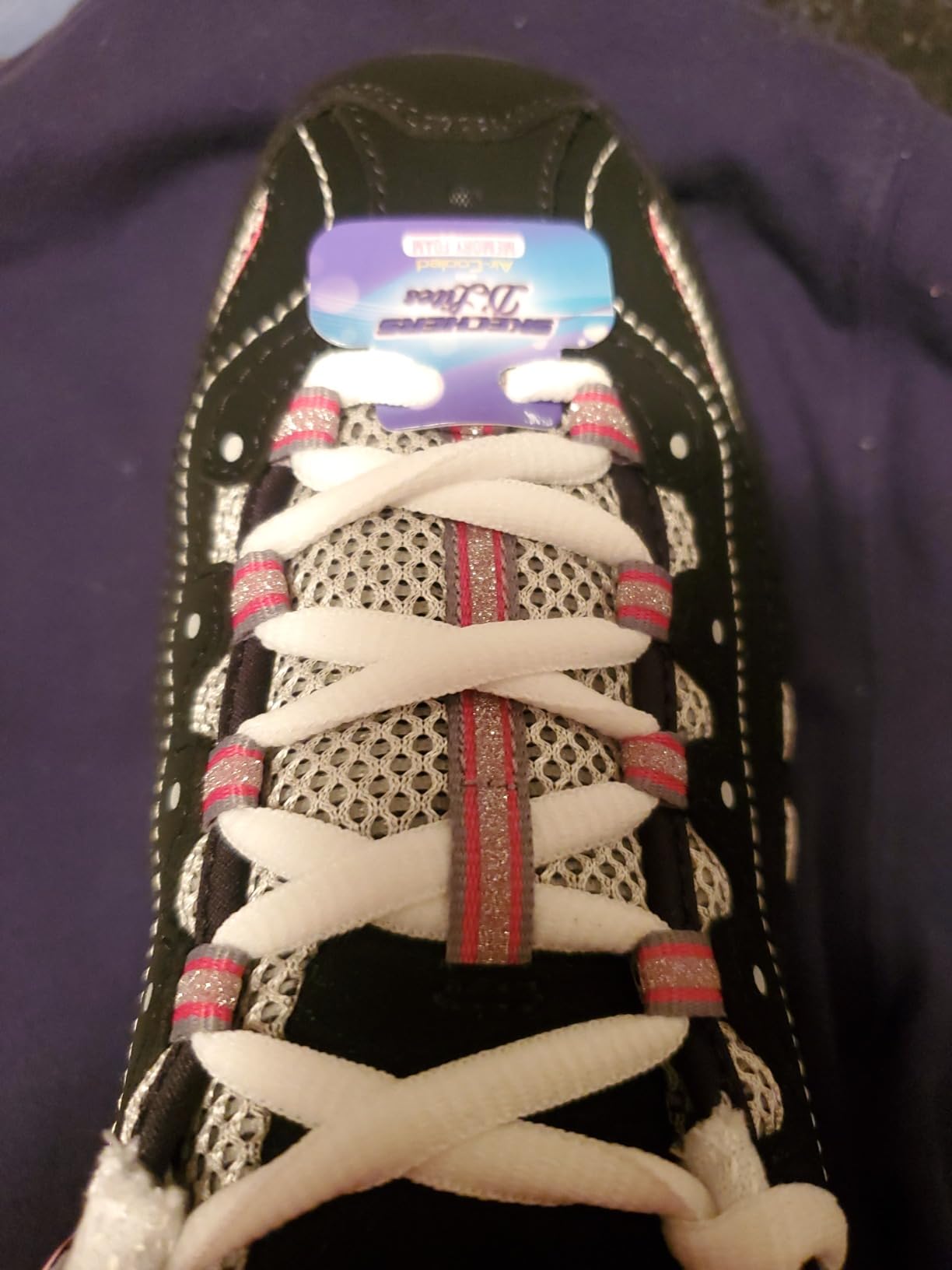
The Durability Question — Why the QC Lottery Matters
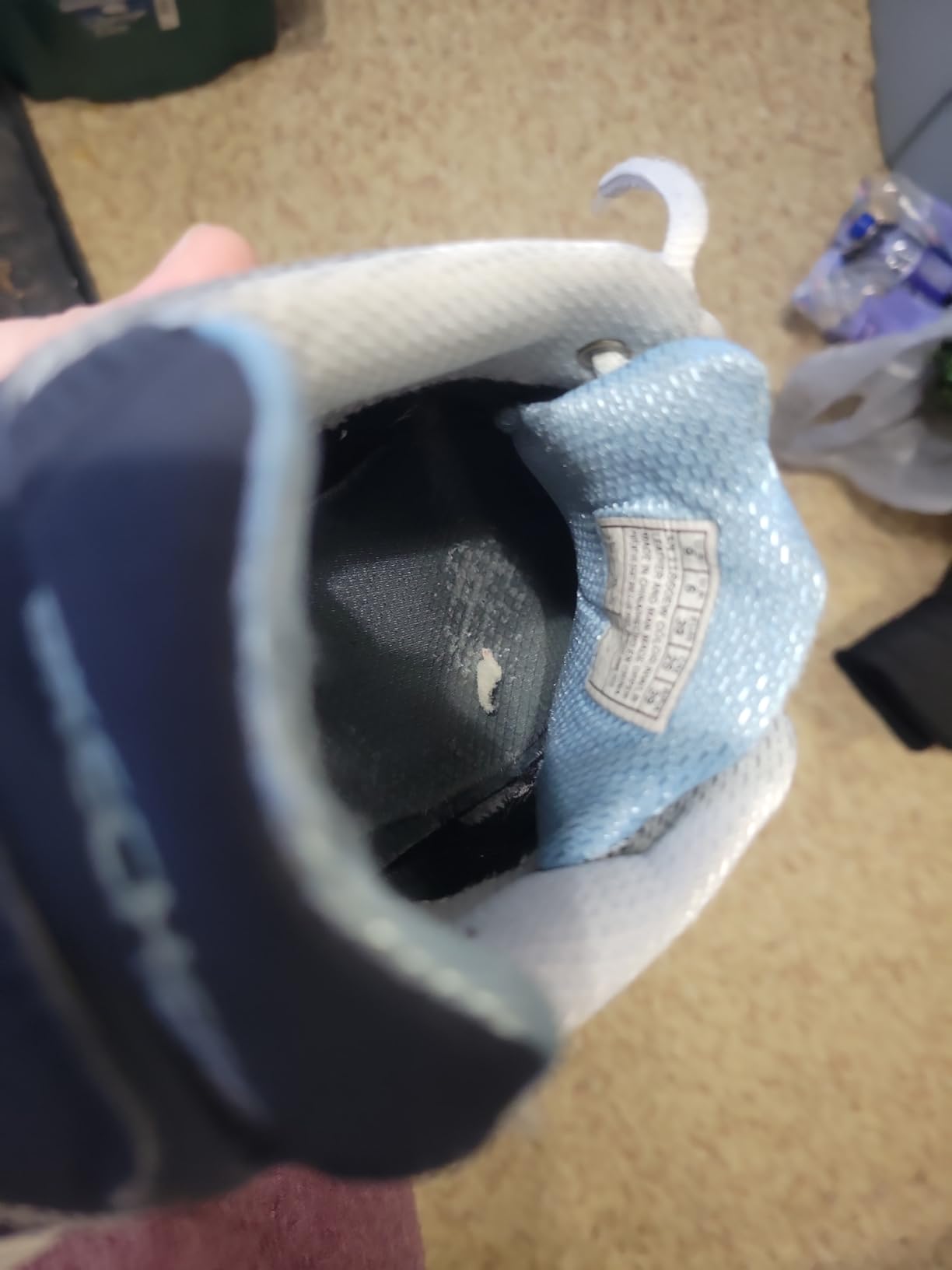
Here’s the thing about the Skechers D’Lites that most reviews either downplay or avoid entirely: durability is genuinely unpredictable. Some pairs last three years of daily wear with no significant issues. Others show sole separation, inner lining deterioration, and foam compression so severe the shoe becomes uncomfortable — all within six months of regular use. This variance is documented across hundreds of reviews, not a few outliers.
The specific failure modes that appear consistently in user complaints: inner heel sole separation (the sole lifts away from the upper at the heel area), holes in the inner fabric lining where the foot makes repeated contact, and foam compression that progresses past “broken in” territory into “flat and unsupportive.” One user on the original shoeexpert.net review provided photos showing inner fabric that had completely deteriorated — a stark contrast to her older pair from years prior that held up fine. That gap suggests a manufacturing change somewhere in recent production runs.
The weight discrepancy I mentioned earlier — 9 oz by Skechers versus 10.6 oz on the Amazon listing — doesn’t directly explain the durability variance, but it’s worth flagging that specifications across retailers aren’t fully consistent for this shoe, which suggests less rigorous standardization in how the product is documented and potentially manufactured.
Does this durability uncertainty matter? It depends on how you frame the math. At $75:
- Best case (3-year lifespan): $75 ÷ 36 months = roughly $2.10 per month. That’s exceptional value for a daily comfort shoe.
- Average case (12-month lifespan): $75 ÷ 12 months = $6.25 per month. Still reasonable.
- Bad case (6-month lifespan): $75 ÷ 6 months = $12.50 per month. At that rate, you’re effectively paying $150 per year for daily footwear — which undercuts the value argument significantly.
If you buy these thinking “I’ll get a couple of years out of them,” you might be right, or you might be replacing them before summer is over. The fair framing is: budget for a 6-to-12-month replacement cycle and treat any longevity beyond that as a bonus. Healthcare workers doing 12-hour shifts daily — which is probably the hardest use case for any shoe — may see faster wear given the intensity of use. The Skechers Ghenter Bronaugh Work Shoe and the Skechers Women’s Squad SR Food Service Shoe are both designed specifically for shift-intensive use cases, with durability engineering that the D’Lites lifestyle line doesn’t prioritize in the same way.
On care: machine washing is not recommended for this shoe. The leather upper and adhesive bonds that hold the insole and sole are both vulnerable to washing machine agitation and heat. Hand washing with mild soap and air drying is the right approach — it takes five minutes and meaningfully extends the life of the shoe.
What Skechers Claims vs. What Testing Shows
“Air-Cooled Memory Foam delivers all-day comfort” — Partially true. The comfort is genuine and excellent for hours one through six on most days. “All-day” overstates how the foam holds up for people on hard floors for 10-plus hours, and it definitely overstates what the foam does after several months of daily compression. The “air-cooled” element helps initially, but body heat normalizes the temperature quickly. More accurate framing: delivers excellent comfort for the first half of a long day, good comfort for the second half, with gradual degradation over the shoe’s lifespan.
“Lightweight design” — True. Whatever the exact figure, these shoes feel light relative to their visual weight, and that translates to genuine fatigue reduction over long wear days. This claim holds up.
“Flexible traction outsole” — True. The outsole grips adequately on most casual surfaces. It’s not engineered for trail use or aggressive performance, but for the lifestyle context these shoes are designed for, the traction is reliable. The flexibility also makes them comfortable rather than rigid underfoot.
“Designed for everyday lifestyle” — True. This is where Skechers’ positioning is most accurate. The D’Lites are genuinely excellent daily drivers for the use cases they’re built for: errands, casual work, casual travel, outdoor events. Where the brand positioning gets murky is the implication that comfort and durability are both guaranteed. Comfort is real. Durability is variable.
Who Gets Real Value From These?
Buy these if you are:
- A busy parent or everyday lifestyle wearer who needs comfortable shoes for the unpredictable schedule of actual life — parks, school runs, errands, light travel — and you’re not putting in 10-hour standing shifts.
- Someone who works in healthcare or retail and needs accessible comfort at the $75 price point, understanding the durability trade-off means you may replace them annually.
- A fan of the chunky retro aesthetic who wants function alongside the look — these deliver both at a price point well below comparable styles from Nike or New Balance.
- Someone with wider feet who orders in the wide version and sizes up half a size — the toe box still runs snug, but the combination gives most wide-foot wearers enough room to be comfortable.
- A budget-conscious comfort buyer for whom $75 for genuine daily comfort represents good value even if the lifespan runs toward the shorter end of the range.
Skip these if you:
- Need custom orthotics or have plantar fasciitis — the glued insole is a genuine barrier to adding proper support. Look at the G-Defy Mighty Walk or similar options built around removable insoles and structured arch support.
- Prioritize durability as your primary criterion — if you need a shoe that consistently lasts two or more years under daily wear, the D’Lites QC variability makes them a risky choice.
- Plan to use these for running or hiking — they’re not engineered for it. Browse dedicated running shoes for those use cases.
- Have very wide feet (beyond standard wide sizing) — even in the wide version, some users with extra-wide feet report the toe box remaining tight.
- Live somewhere hot in summer — the leather upper is less breathable than mesh, and in high humidity or heat, foot temperature becomes uncomfortable over long days.
Consider carefully if you:
If you’re looking for something in the same Skechers family with a different durability-to-comfort profile, the Skechers Women’s Summits line offers a lighter, mesh-dominant construction with Skechers’ comfort technology in a more breathable package. For retro-adjacent style with better documented longevity, the New Balance Women’s 237 V1 is worth a look, though it trades the memory foam cushioning for a firmer, more traditional foam setup. If the chunky platform aesthetic is what you’re after and you want to see how other brands execute it, Dream Pairs Platform Chunky Fashion Sneakers and the Lucky Step Women’s Retro Fashion Sneakers occupy similar style territory at comparable price points.
For all-day walking specifically, the NORTIV 8 Women’s Walking Shoes and HKR Women’s Walking Shoes are purpose-built for extended walking with removable insoles that make orthotic use straightforward.
Scoring Breakdown
- Comfort (8.0/10): Initial out-of-the-box comfort is genuinely excellent — the memory foam molds well and the padded collar prevents rubbing. Points lost because the foam compresses over months, “all-day” comfort depends heavily on activity level, and the glued insole locks out orthotic users entirely.
- Style (8.5/10): The chunky retro platform is on-trend without being costume-y. Versatile across casual outfits. Available in multiple colorways. If the dad-shoe aesthetic isn’t for you, this score doesn’t apply — but within its intended aesthetic, it executes well.
- Durability (6.5/10): Three months of personal testing shows no issues. But the broader pattern is too consistent to ignore — sole separation and lining deterioration within 6 months is a real pattern for a meaningful portion of buyers. The QC lottery pulls this score down even when individual pairs perform fine.
- Value (9.0/10): At $75, the out-of-the-box comfort-to-price ratio is strong. Even assuming a 12-month lifespan under daily wear, the value holds. It’s only the worst-case 6-month failure scenario that undercuts the value math, and that scenario isn’t guaranteed.
- Overall: 8.0/10
Frequently Asked Questions
- Do Skechers D’Lites run true to size?
No — they run approximately a half size small, specifically in the toe box width. If you’re a true size 8, order an 8.5. If you’re between sizes, size up. Wide-foot wearers should order the wide version AND size up at least a half size. The sizing feedback across hundreds of reviews is consistent on this point. - Are Skechers D’Lites good for standing all day?
Yes, for most people — with a time-based nuance. Memory foam comfort is excellent for hours one through six. By hour eight or longer on hard floors, some fatigue accumulates. Nursing and retail workers consistently report good comfort for 8-to-12-hour shifts, though the experience by end of shift varies by individual and usage intensity. Healthcare professionals who want a shoe purpose-built for shift work should also consider dedicated work footwear like the Skechers Ghenter Bronaugh Work Shoe, which is engineered specifically for slip-resistance and prolonged standing. - How long do Skechers D’Lites last?
Expect anywhere from 6 months to 3 years, depending on manufacturing batch and usage intensity. Daily heavy-use wear shortens lifespan; weekend-only casual wear extends it. The safe mental model: budget for a 12-month replacement cycle. If they last longer, that’s a bonus. If they fail at month 7, you budgeted for it. Machine washing consistently shortens lifespan — hand wash only. - Can I add custom orthotics to the D’Lites?
Not easily — the insole is glued down and not designed to be removed. Some people attempt to cut and peel the insole, but that risks structural damage to the shoe. If you rely on custom orthotics for plantar fasciitis, high arches, or other podiatric needs, this shoe is not a practical fit. Look for shoes with removable insoles in the lifestyle sneaker category instead. - Are they good for wide feet?
Better than average for wide feet, but not perfect. Skechers offers a wide version, and the sizing helps. However, the toe box construction remains relatively structured — some users with wide feet in the wide version still report snugness across the forefoot. Test with a return window if ordering online, or try on in-store if possible. - Can you machine wash Skechers D’Lites?
Skechers and most shoe care guidelines advise against machine washing leather shoes. The leather upper can warp with water and heat, and the adhesive bonds — already a durability concern for this shoe — are especially vulnerable in a washing machine cycle. Hand wash with mild soap, rinse, and air dry at room temperature. - How do D’Lites compare to Skechers Go Walk?
Different products for different priorities. D’Lites prioritize style and initial comfort; Go Walk prioritizes walking performance and durability. Go Walk uses Skechers’ Goga Mat technology and is engineered for sustained walking activity. D’Lites use Air-Cooled Memory Foam and are engineered for lifestyle versatility and retro aesthetic. D’Lites win on style and immediate plushness; Go Walk wins on consistent durability and walking-specific comfort over time. Price-wise, both sit around $75-100. - Do they need a break-in period?
Minimal. The memory foam is soft from day one, and the padded collar prevents the ankle rubbing that creates break-in discomfort in stiffer shoes. Most users report comfort from the first wear. If you want to be cautious, wear them for short stints (2-3 hours) for the first few days before committing to a full day — but blister risk is low and most people won’t feel any adjustment period.
Final Thoughts
After three months of putting these through daily life in all its unglamorous detail, I understand exactly why the Skechers D’Lites have staying power. The initial comfort is real, the price is accessible, and for the lifestyle use cases they’re built for, they deliver. My neighbor was right about them — and I get it now.
What I’d add to her advice is this: go in with realistic expectations about durability. Not pessimistic ones — the D’Lites are not a bad shoe. But the QC variability means you’re rolling the dice to some degree on how long yours will hold up. If you can absorb an annual replacement at $75, these deliver genuine value. If you need a shoe to last five years, this isn’t the right risk to take.
Size up half a size. Hand wash only. Don’t expect custom orthotic compatibility. And if the memory foam starts feeling less supportive after a few months, that’s normal — not a defect, just the nature of the material.
At 8.0/10, the D’Lites earn their spot as a reliable everyday shoe with a genuinely good comfort story and a style that’s held up longer than most trends. They’re not perfect — but for daily life at $75, they’re hard to argue with if you know what you’re signing up for.
Who Should Buy
- Women looking for immediate, cushioned lifestyle sneaker comfort at an accessible price
- Healthcare and retail workers who prioritize daily comfort and can budget for periodic replacement
- Fans of the chunky retro platform aesthetic who want function alongside the look
- Buyers who don’t need custom orthotics and have average-to-wide feet
Who Should Look Elsewhere
- Anyone requiring custom orthotics or specialized arch support
- Buyers who prioritize multi-year durability over comfort and style
- Women planning to use these for running or hiking — consider dedicated running shoes instead
- Very wide-foot wearers who have struggled with even wide-version toe boxes before
Frequently Asked Questions (Summary)
- Size up 0.5 — this is the single most important thing to know before ordering.
- Great for all-day standing, but comfort dials down over very long shifts.
- Expect 6-36 months lifespan depending on use and QC batch.
- Not compatible with custom orthotics — insole is glued in.
- Hand wash only; no machine washing.
Be the first to review “Skechers Women’s D’lites Life Saver Memory Foam”
Related products

Running Shoes

Sneaker
Sneaker
Reviews
There are no reviews yet.