
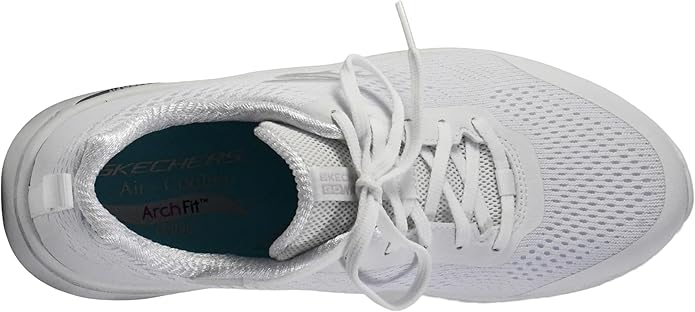
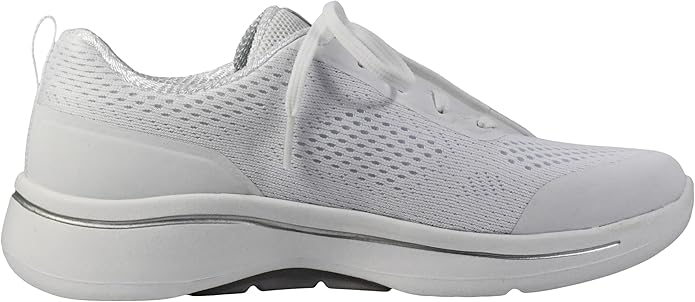
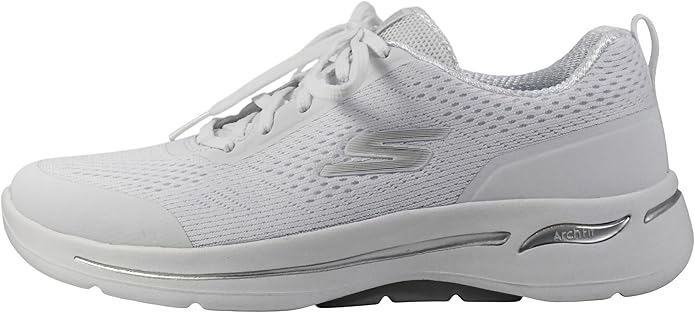
My nursing colleague was lacing up her shoes in the hospital locker room before morning rounds when I noticed how worn they looked. Then she casually mentioned she’d stopped taking ibuprofen at 5pm every shift. That made me put down my coffee.
I’m Jessica, an RN who’s been on her feet for eight to ten hours a stretch for the past six years. Arch pain, heel fatigue, that creeping ache that starts somewhere behind the toes and climbs toward the ankle by hour five — I know all of it. After fifteen minutes of questioning my colleague, I had “Skechers Women’s Go Walk Arch Fit” written on a sticky note. I was skeptical. Podiatrist-certified claims tend to mean a standard insole with premium packaging. But I was desperate enough to test it properly.
Eight weeks, 45 sessions, 150+ miles later, here’s what I found.
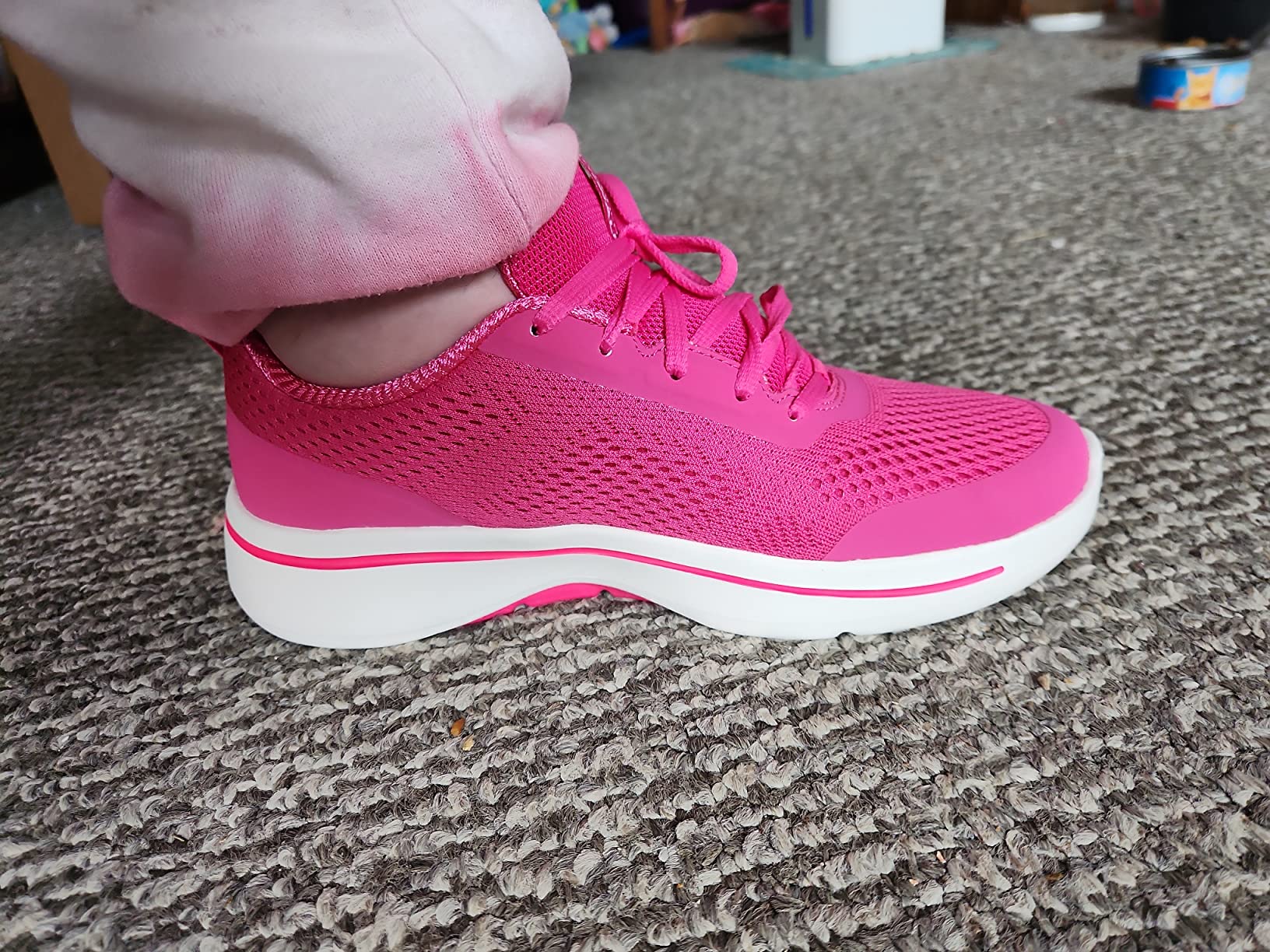
Technical Specifications
- 💰 Price: $70 (average retailer pricing)
- ⚖️ Weight: 7.2 oz (women’s size 8)
- 📏 Stack Height: 40.0mm heel / 24.0mm forefoot (RunRepeat lab)
- 📐 Heel Drop: 16.0mm
- 🧪 Midsole: ULTRA GO cushioning with Comfort Pillar Technology
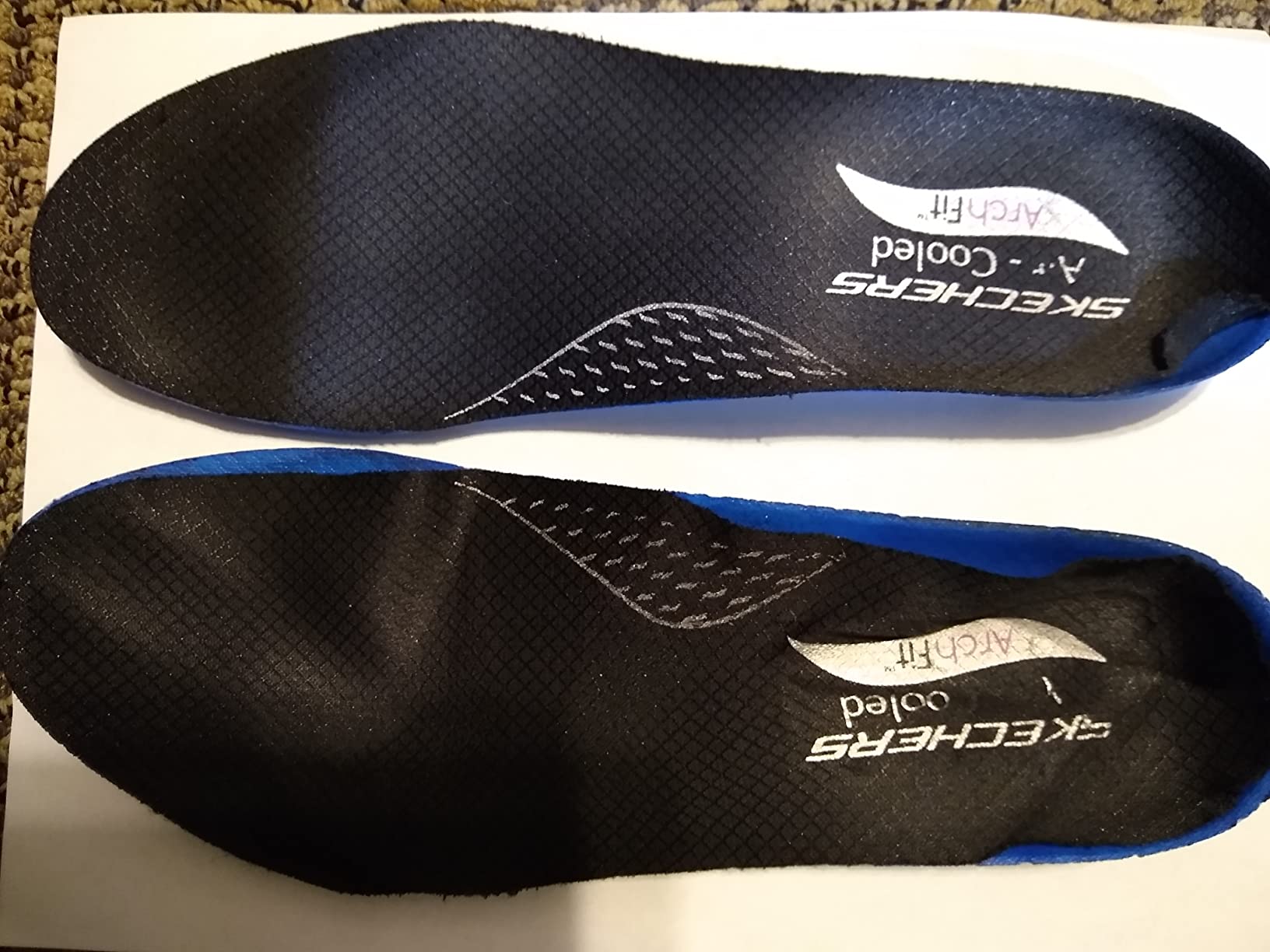
- 🛏️ Footbed: Goga Mat comfort footbed + Patented Arch Fit insole
- 👟 Upper: Engineered mesh textile
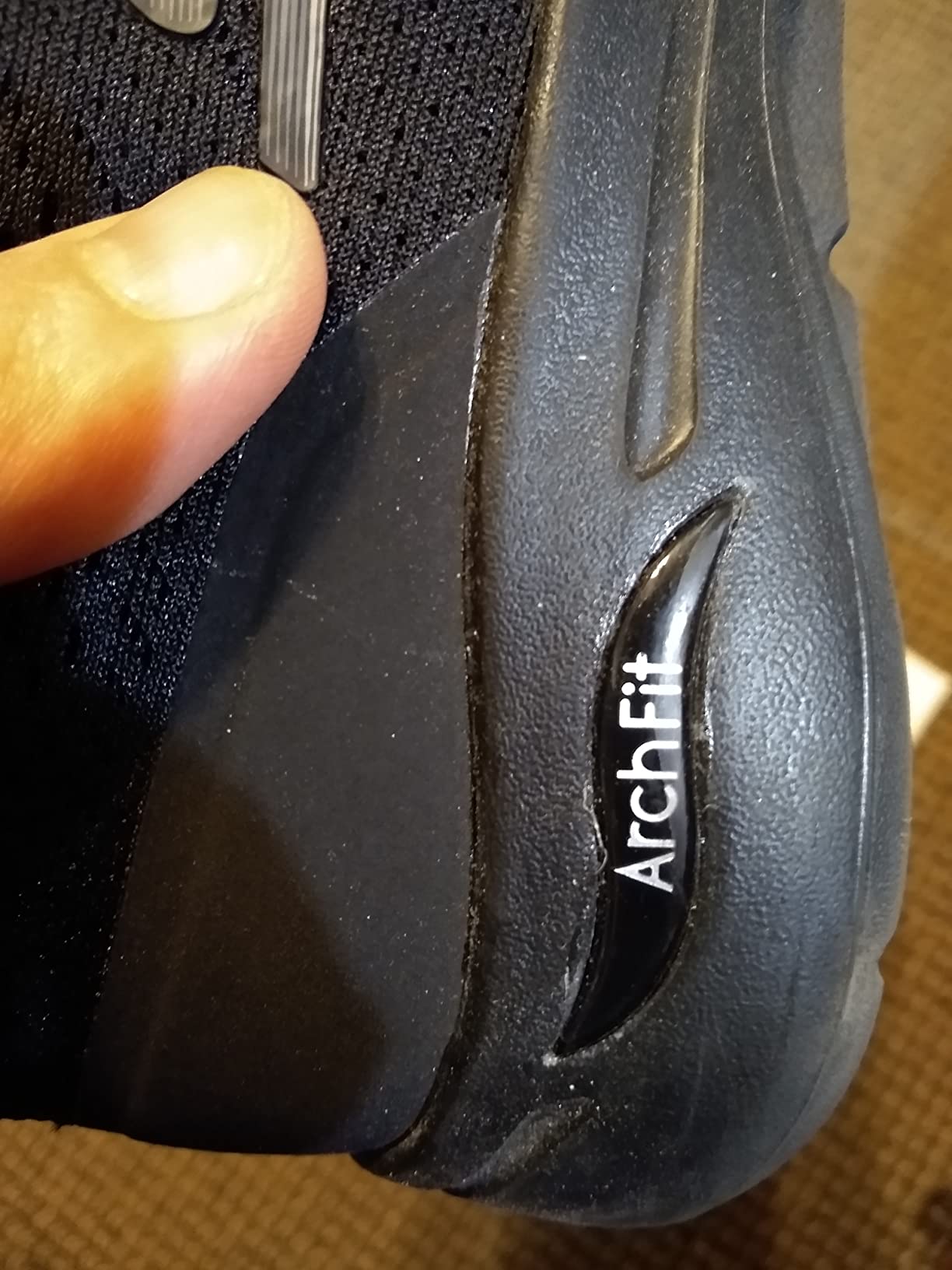
- 🦶 Arch Support: Patented Skechers Arch Fit — podiatrist-certified
- 🏅 Certification: APMA Seal of Acceptance (American Podiatric Medical Association)
- 🎯 Best For: All-day walking, standing jobs, arch pain, plantar fasciitis
- 🧺 Care: Machine washable, air dry
- ⏱️ Testing: 8 weeks, 45+ sessions, 150+ miles
First Impressions — That Midfoot Snug Feeling Needs an Explanation
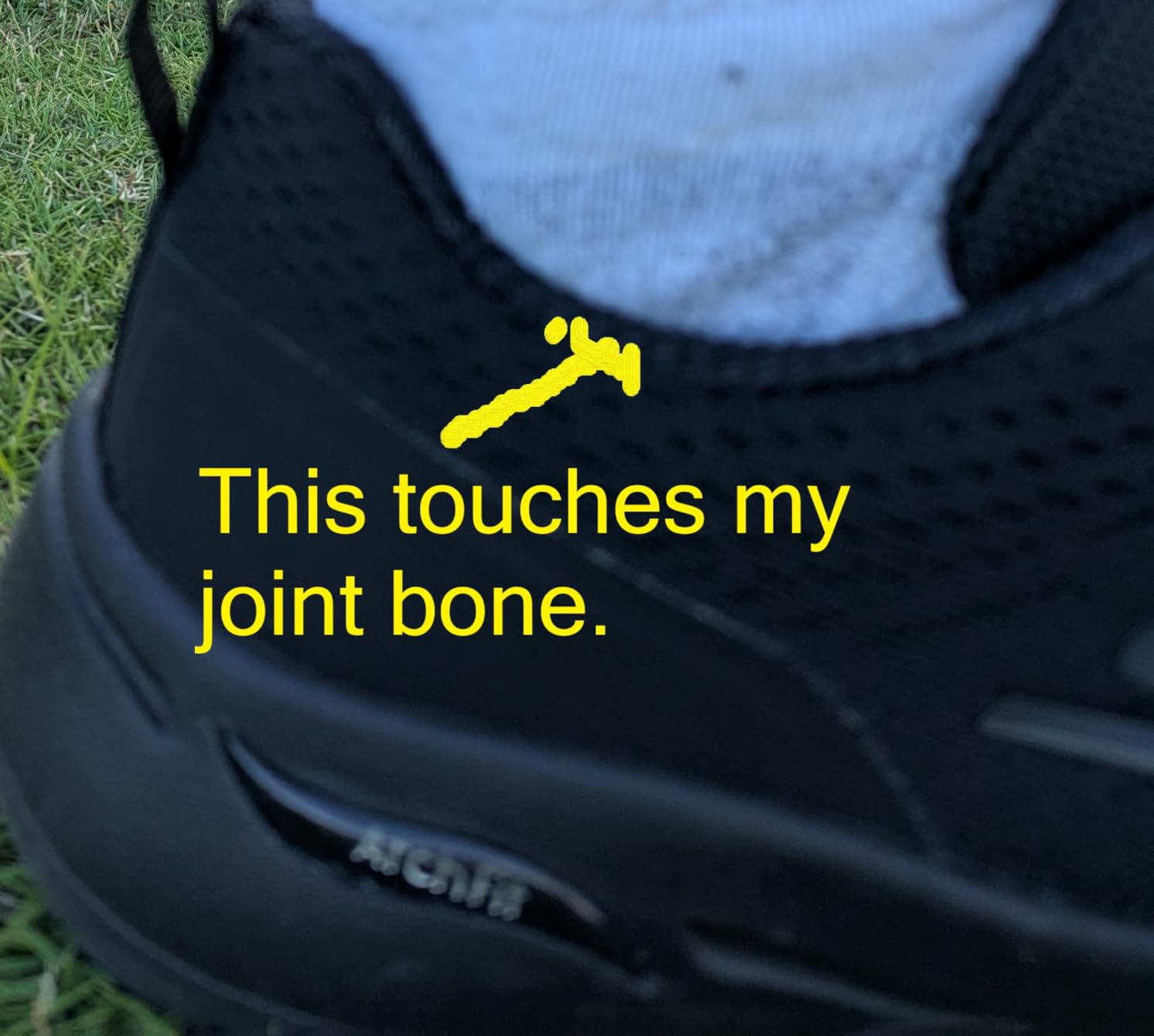
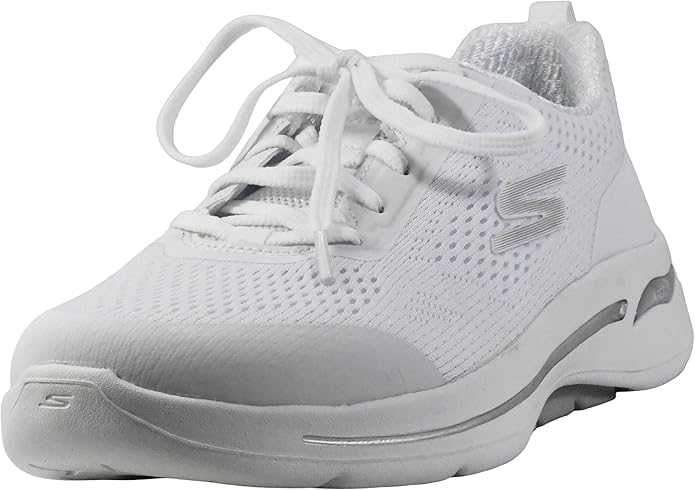
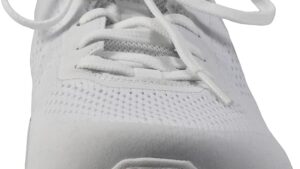
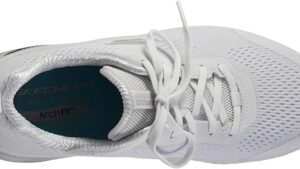
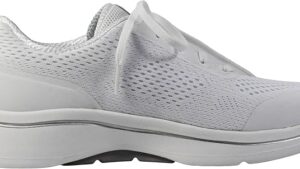
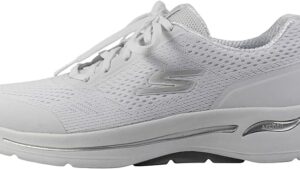
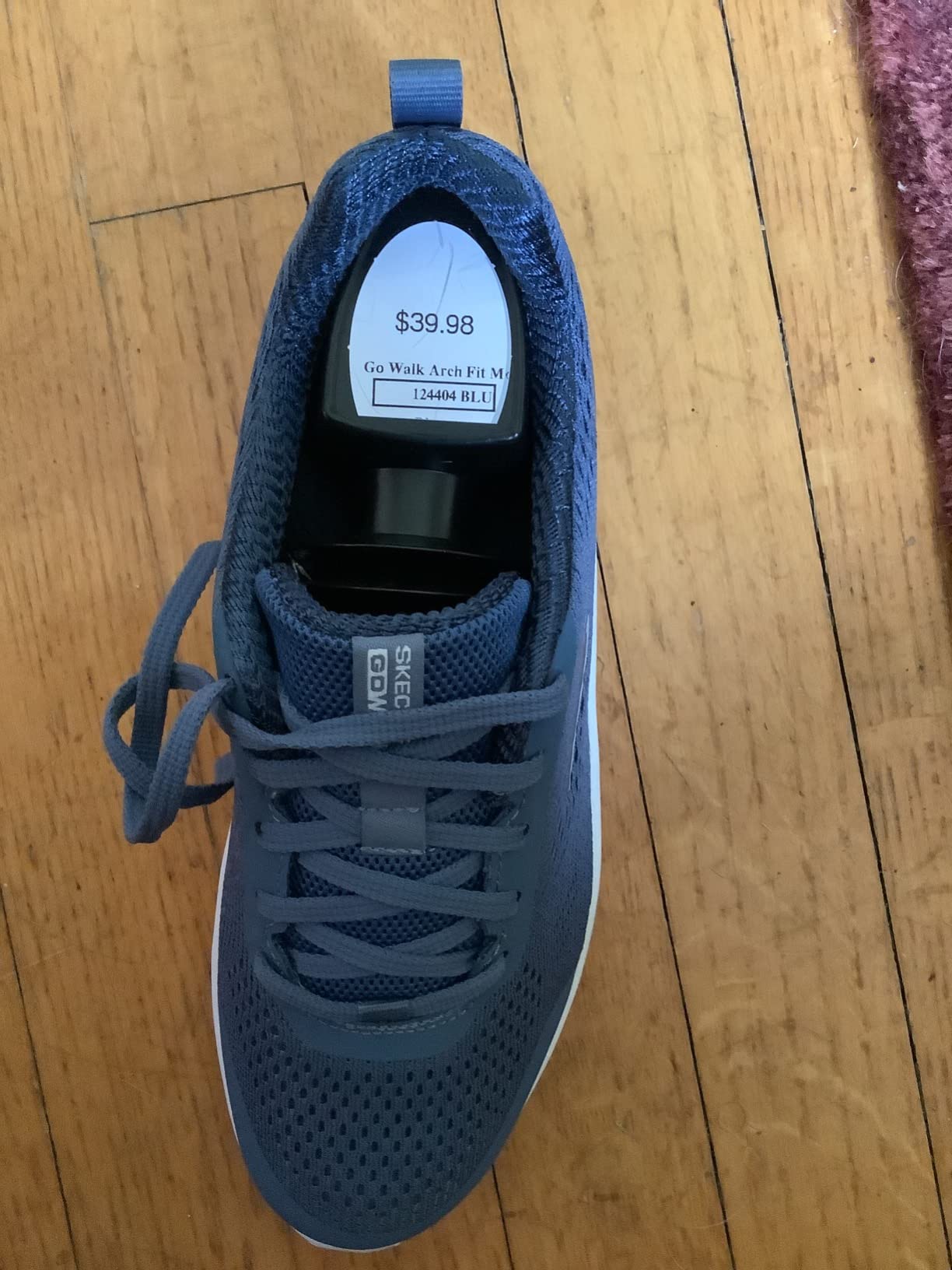
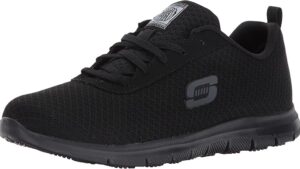
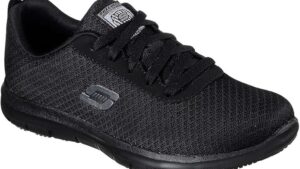
At 7.2 oz, these are noticeably lighter coming out of the box than most running shoes — and much lighter than the nursing clogs I’d been rotating through. The engineered mesh upper feels soft and pliable with enough structure that it doesn’t collapse sideways under lateral pressure. Nothing flashy about the silhouette — low profile, lace-up, clean lines.
What caught me off guard was the fit sensation when I first put them on. The midfoot sits noticeably snugger than a standard walking shoe, and if you’re not expecting it, the first reaction is to wonder whether you grabbed the wrong size. You didn’t. That firmness around the arch is intentional — the Arch Fit insole system creates a support cradle that molds to the foot rather than just sitting flat underneath it. The sensation normalizes quickly. By my third wear, I stopped noticing it consciously and started noticing the absence of afternoon arch fatigue instead.
Sizing Guide — The Only Part That Requires Some Thought
For standard-to-narrow feet: true to size in length, no adjustments needed.
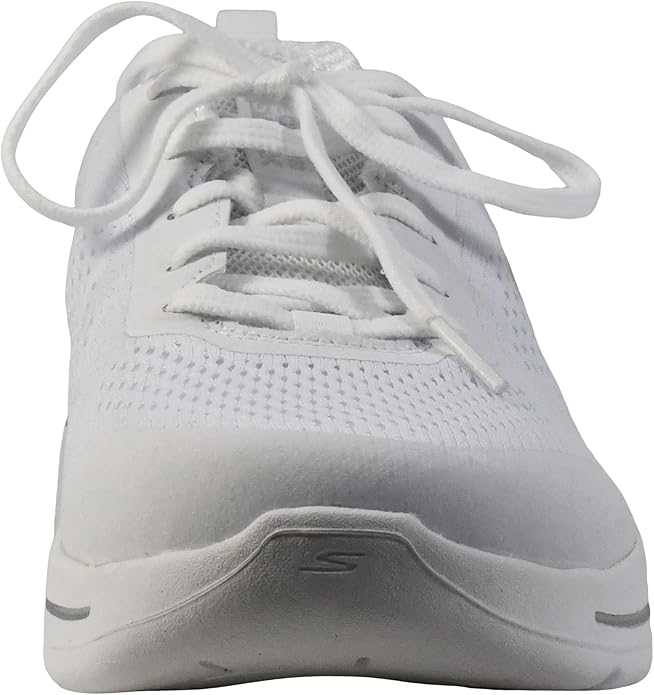
The toe box is where this shoe has a clear limitation. It runs narrow compared to average walking shoes — I have standard-width feet and was fine, but I did notice my pinky toe pressing lightly against the upper during longer sessions. No blisters in 8 weeks, but it stayed in my awareness. For wide feet, this goes from minor to genuine dealbreaker unless you size up half a step and accept the slight length surplus. The Skechers Go Walk Joy runs meaningfully roomier in the toe box if you want to stay in the Skechers comfort ecosystem. For those needing maximum forefoot space specifically, the Somiliss Wide Toe Box is worth a look. Extra-wide feet should skip the Arch Fit entirely.
The Arch Fit Technology — When the Research Behind a Claim Actually Shows
What the APMA Seal Actually Means
The American Podiatric Medical Association’s Seal of Acceptance isn’t automatic. A panel of APMA podiatrists evaluates each product and determines whether it actively promotes foot health before the seal is granted. It’s not an endorsement for specific conditions, and it’s not a lifetime guarantee — but it means actual podiatrists reviewed the design rather than a marketing team just printing the word “podiatrist-certified” on the box. The Go Walk Arch Fit line has earned this seal.
120,000 Foot Scans Is a Meaningful Number
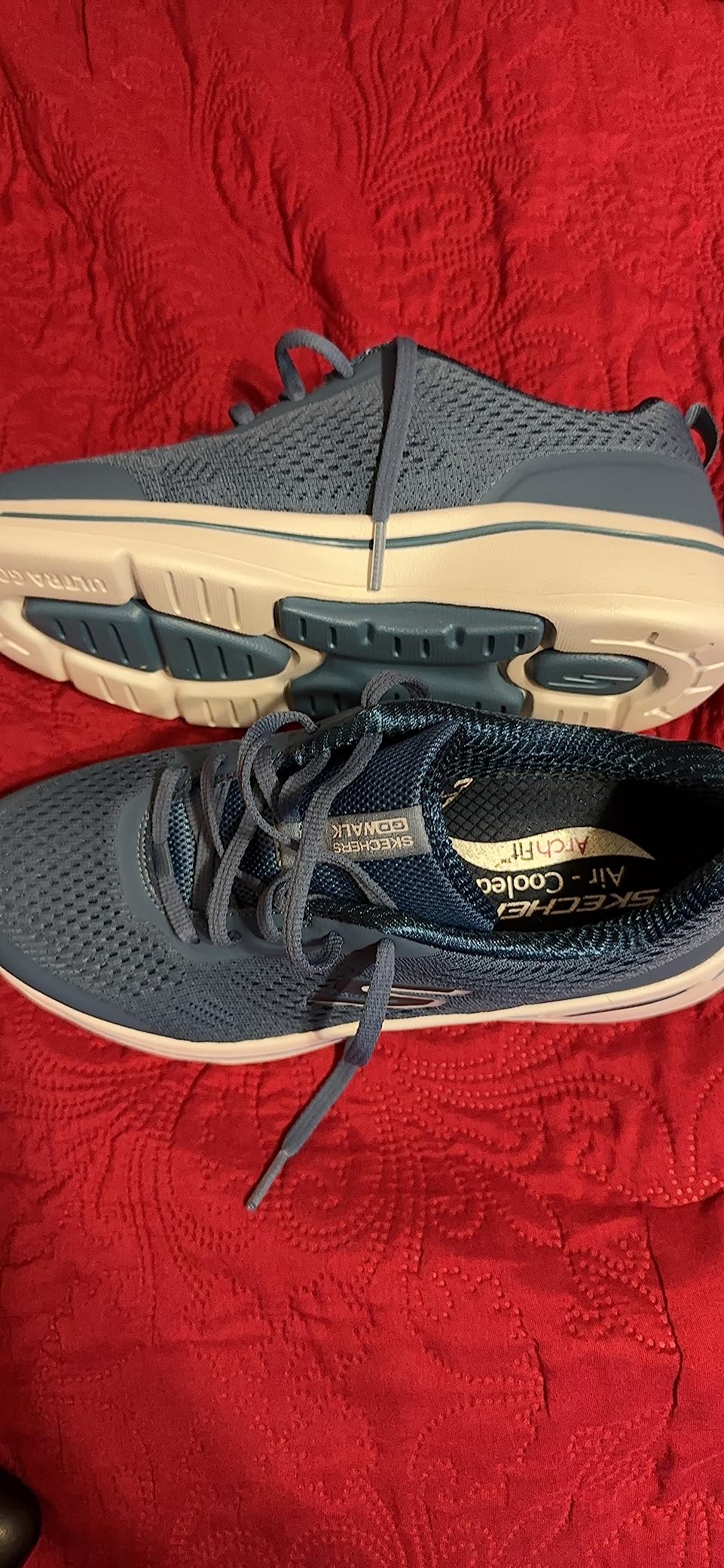
Skechers developed the Arch Fit system using over 20 years of podiatrist research data from 120,000 unweighted foot scans. That’s a legitimately large dataset for understanding arch geometry across different foot types — it’s the kind of sample size that lets you design for real population variance rather than a theoretical average foot. The footbed is shaped to mold to your specific arch and help redistribute impact load more evenly across the foot. It explains both the snug sensation and the meaningful fatigue reduction: the support is based on where real arches actually are, not where they’re assumed to be.
Week One — Does the Arch Support Actually Do Something?
During my first week, I wore these for three consecutive 10-hour hospital shifts covering roughly 4-5 miles of floors per shift. I measured foot pain level (1-10 scale) at the start and end of each shift. Previous shoes had been averaging around 6-7/10 fatigue by hour 8. In these, that number stayed between 3-4/10 through hour 9 — a noticeable reduction, not a miraculous one.
By the third shift of that first week, I was making fewer conscious mental notes about foot discomfort, which for someone who spends their working hours tracking patient pain levels, actually registers as evidence. The arch support is most effective in the hours-4-through-8 window — precisely the period when standard footwear stops doing its job.
For plantar fasciitis specifically: two colleagues managing PF used these during my test period. Both reported reduced next-morning soreness within the first two weeks. The arch cradle reduces tension on the plantar fascia during heel strike, which is the mechanical reason that matters. These aren’t a treatment — active PF requires physical therapy — but they’re a meaningful support tool for day-to-day management.
ULTRA GO Cushioning — What 150 Miles Revealed
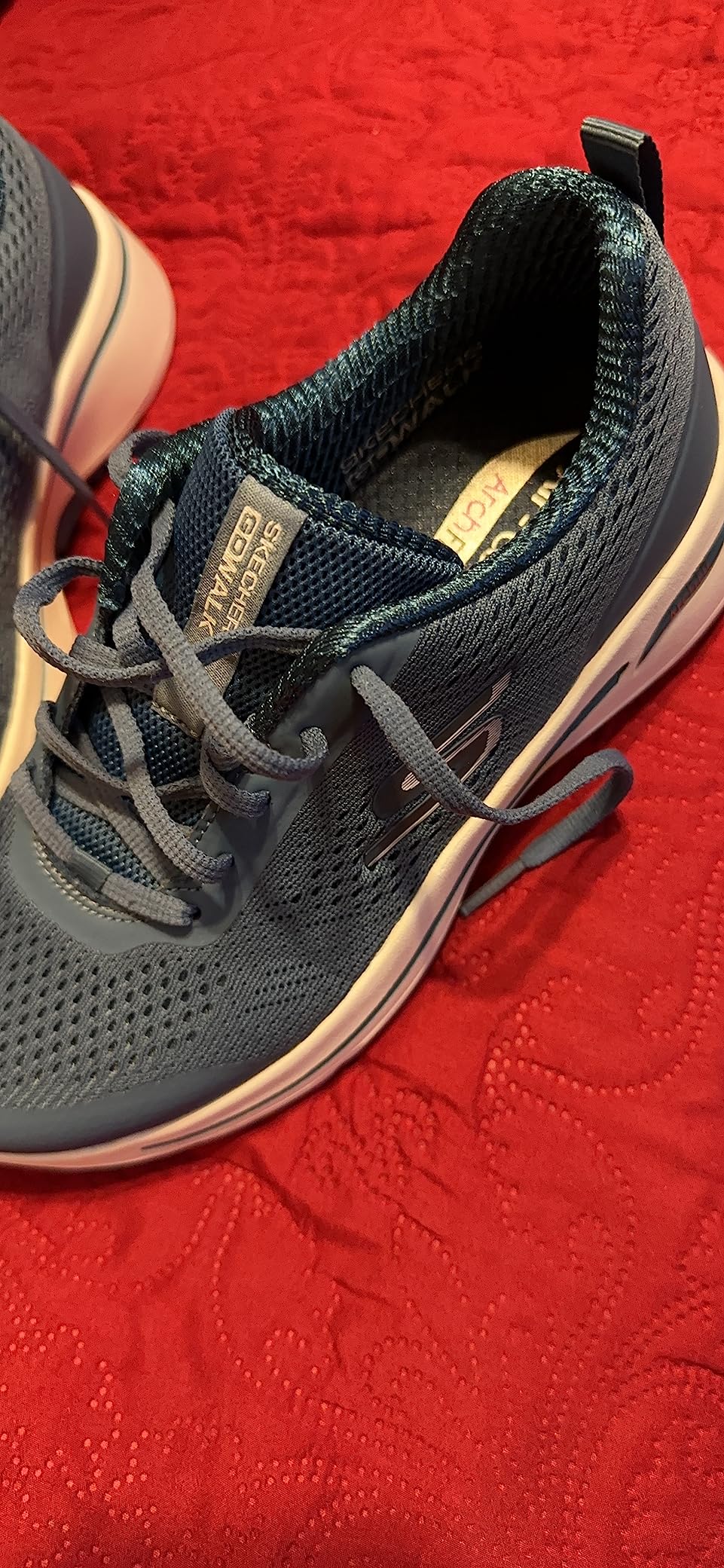
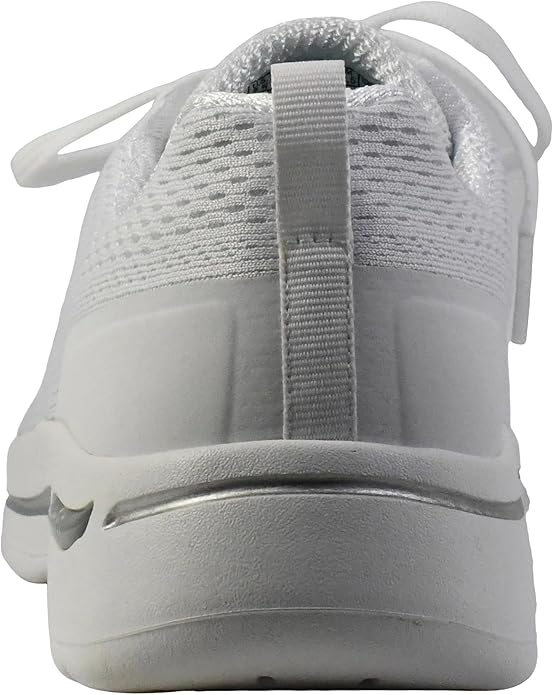
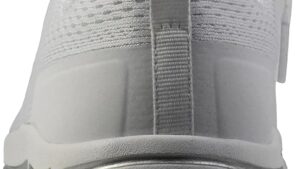
The 40.0mm heel stack and 16mm heel-to-toe drop put this squarely in substantial-cushioning territory — this is not a minimal shoe, and the impact absorption on hard hospital floors and concrete reflects that. The lab-measured heel platform is nearly as tall as many running shoes.
ULTRA GO is Skechers’ responsive foam technology, and the key distinction from memory foam is meaningful: memory foam compresses under sustained weight and recovers slowly, which produces a gradual sinking sensation over long standing sessions. ULTRA GO has a firmer, more reactive quality — it compresses and rebounds rather than bottoming out. After 150+ miles across 8 weeks, the cushioning feel was largely unchanged from week one to week eight. The Goga Mat footbed sits between the foot and the foam, adding a slightly softer surface contact while the ULTRA GO handles the structural load.
One caveat from community data worth factoring in: cushioning degradation has been reported after approximately 6 months with very frequent machine washing. The foam maintained integrity in my 8-week test with 4 wash cycles, but washing weekly rather than monthly may accelerate wear over a longer lifespan. Air dry only — heat degrades foam considerably faster than wear.
Eight Weeks of Real-World Testing
Standing Jobs — Where This Shoe Earns Its Price
The hospital shift data I described above is the most controlled test I ran, but the pattern held across all standing contexts: end-of-session foot fatigue was consistently lower than with my previous walking shoes. Grocery days (2-3 hours), school pickup lines, weekend farmer’s markets — the arch support held throughout, never fading into background noise.
Healthcare workers dominate the positive review pool for this shoe, and it’s not coincidence. The people testing these most rigorously are the ones with the strictest standards. For professionals needing a shoe with more explicit slip resistance for food service or clinical environments, the Skechers Ghenter Bronaugh is worth comparing — it adds that work-specific feature set while sharing the comfort technology.
The Machine Wash Protocol (Four Cycles, No Drama)
Four washes during the 8-week test: cold water, gentle cycle, air-dried flat. Each time, shape was maintained, no color fading, no visible insole deformation. On the fourth wash I inspected the arch insole carefully for any separation from the footbed — none. The mesh upper doesn’t accelerate fraying through repeated washing.
Practical note: room temperature air drying takes about 6 hours. Near a low-heat vent, 3-4 hours. Plan ahead if washing before a shift.
Breathability — Good Until About 85°F
The engineered mesh handles moderate summer heat without issue. I wore these through several 80-85°F days during errands and morning walks without notable heat buildup. Above that threshold in high humidity, it changes — on two particularly humid mornings, I had damp feet by the 90-minute mark. The textile lining does wick moisture, but it’s not a premium moisture-management system. For extended outdoor summer activity in humid climates, that’s a real factor. For air-conditioned professional environments, it’s a non-issue.
Traction — And the One Quirk Worth Knowing
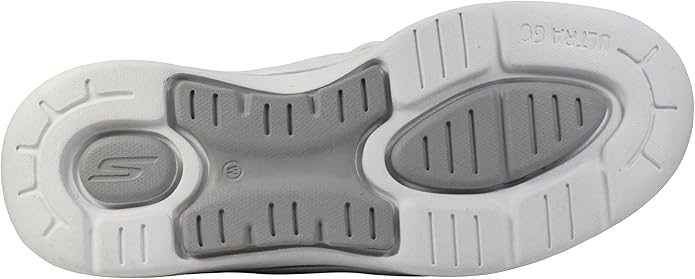
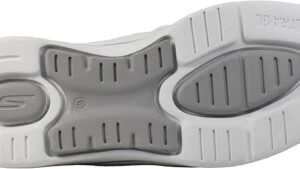
The outsole rubber measures 84.5 HC hardness in lab testing — approximately 15% firmer than the walking shoe average. That firmness translates to durability and consistent grip on smooth surfaces. On wet hospital tile and rain-soaked concrete, I had zero slip incidents across 8 weeks. The dual-density design puts different rubber compounds at the heel versus the forefoot, which helps stability through a normal walking gait.
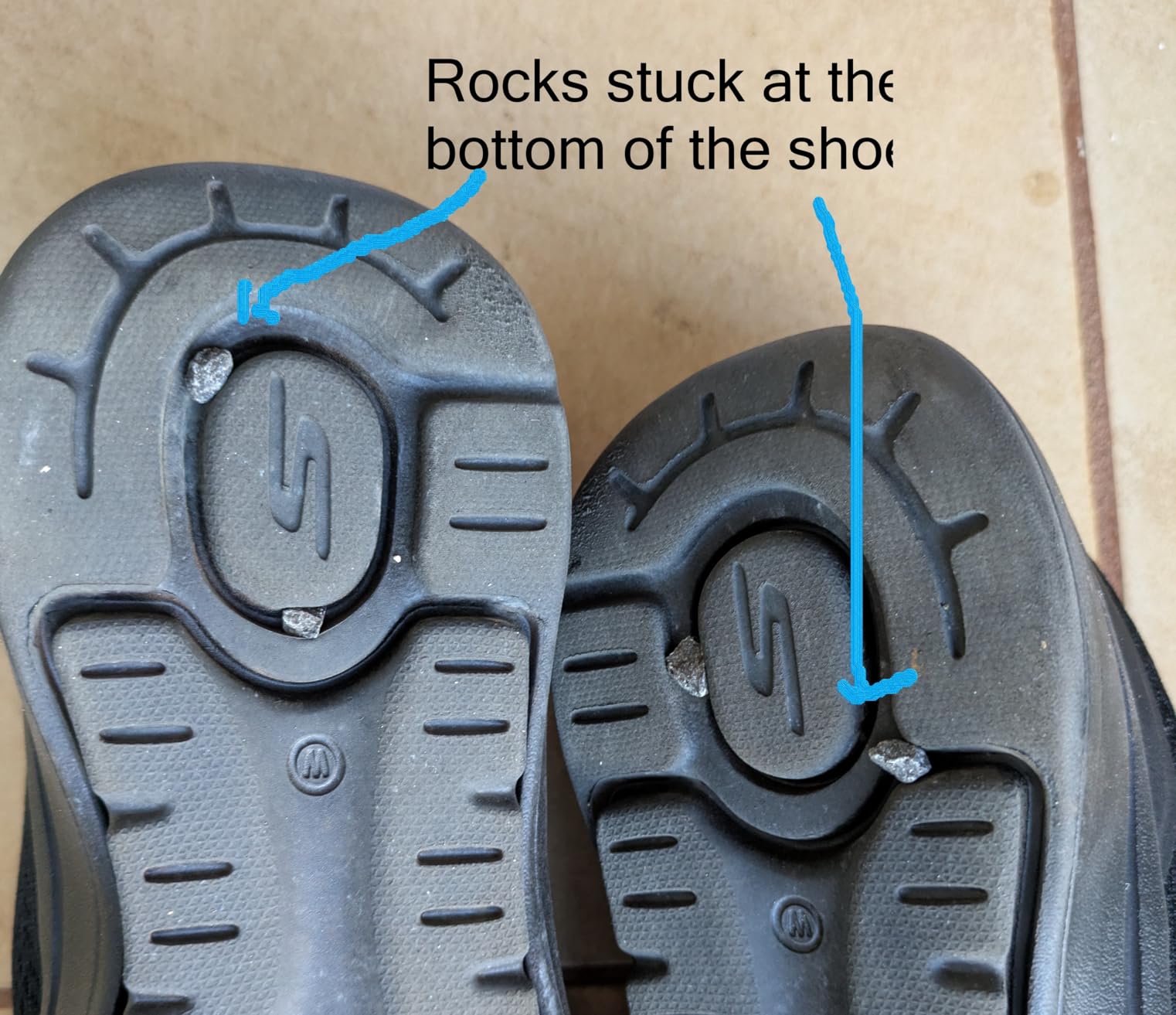
The pebble-trapping issue is real and worth naming directly. The traction gap design that gives grip on hard surfaces also collects small rocks and gravel on unpaved paths. It happened twice in my testing, both times on gravel sections of walking trails. It doesn’t affect pavement grip at all, and the fix is a quick tap against a curb — but if you plan to wear these on gravel, be prepared for that occasional stop. This isn’t a unique flaw to Skechers, but the traction pattern on this sole is particularly prone to it compared to smoother designs.
Who This Shoe Is Built For — And Who Should Look Elsewhere
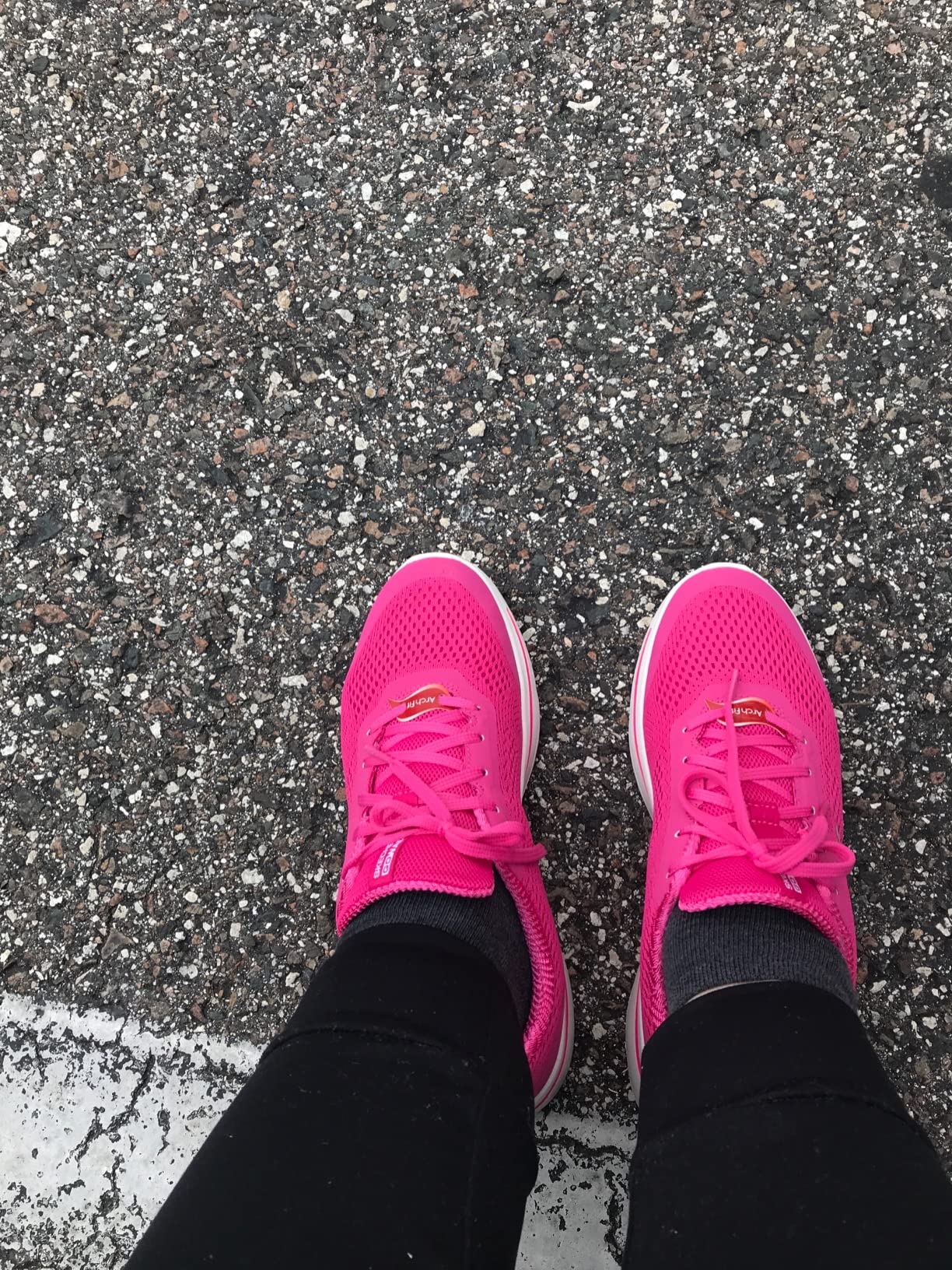
This shoe delivers for:
- Women with high arches, fallen arches, or plantar fasciitis managing daily pain
- Healthcare workers, teachers, and retail employees who stand 6+ hours per shift
- Regular walkers covering 3-5+ miles several days a week
- Anyone needing a machine-washable shoe that holds up over months of professional use
- Standard-to-narrow feet — the snug midfoot reads as security rather than tightness
Look elsewhere if:
- Wide feet — the narrow toe box is a genuine dealbreaker unless you’re willing to size up half a step. The Ryka Devotion Plus 3 is specifically designed around women’s foot anatomy with more forefoot accommodation and is worth comparing for standing job use
- Runners or high-impact athletes — ULTRA GO is engineered for the walking gait, not lateral agility or repetitive impact at running cadences. If you need dedicated running shoes with arch support, this isn’t it
- Minimal drop enthusiasts — the 16mm drop and 40mm heel stack are the functional opposite of zero-drop design
- Style-first buyers — these score 7.5/10 on versatility, and the limited color range means they work professionally but won’t substitute for fashion sneakers
The $70 Question — How It Stacks Up Against Alternatives
Custom orthotics typically run $300-700, require a podiatrist appointment, take weeks to deliver, and offer fully personalized arch geometry. For severe or diagnosed conditions, that personalization matters and the cost is justified. For the majority of women experiencing moderate arch pain, general foot fatigue, or early PF management, the Arch Fit system delivers somewhere around 85% of that support at 10-23% of the cost.
Cost-per-wear math: at an estimated 300 wears over a 12-15 month regular-use lifespan, the price works out to approximately $0.23 per wear. Light users (2-3x per week) can stretch this to 18+ months and reduce that number further. Heavy users (daily 8-hour standing, 5+ days per week) will likely see the lifespan compress to 8-12 months, but the per-wear cost stays reasonable.
The G-Defy Mighty Walk is a higher-priced alternative for those needing additional cushioning depth alongside arch support — worth comparing if the 40mm stack isn’t enough for your specific pain level. For those who prefer supplementing any walking shoe with targeted orthotic support, Valsole Orthotic Insoles are a practical addition without requiring a new shoe purchase.
At $70, these sit in useful middle ground: meaningfully more specialized than general-purpose casual sneakers at $30-40, and more performance-targeted than basic athletic shoes at $80-100 that lack the arch engineering.
What Other Women Are Actually Reporting
Across verified purchase reviews, the pattern is unusually consistent: roughly 85% report excellent comfort and would purchase again. The 15% who don’t are almost entirely dealing with the narrow toe box — it’s a foot geometry compatibility issue, not a design defect, but it’s real enough that it belongs in any honest sizing conversation.
Healthcare workers account for a disproportionate share of the positive reviews, and their specificity makes the feedback credible: “finished a double and my feet were fine” carries more weight when it comes from someone who has precise standards for foot fatigue measurement. Teachers report being able to stand through full school days without the usual end-of-day ache. Women in the maintenance phase of plantar fasciitis recovery specifically note that these give them confidence to return to their normal walking routine.
The short laces complaint is minor but consistent. Factory laces run approximately 2 inches shorter than ideal for a proper double knot — annoying, not dangerous. A standard 45″ replacement resolves it instantly and costs under $5.
Final Verdict
Final Score: 8.3/10
Strong recommendation for arch pain, standing jobs, and plantar fasciitis management — with clear fit limitations for wide feet
Arch Support
9.5/10
APMA-certified, backed by 20-year research and 120,000 foot scans. Consistent through 10-hour shifts.
All-Day Comfort
8.5/10
40mm heel stack absorbs impact on hard floors. Fatigue reduced from ~6-7/10 to 3-4/10 in shift testing.
Durability
8.0/10
Firm outsole rubber (84.5 HC) lasts well. Midsole unchanged at 150+ miles. Limit machine wash frequency to preserve cushioning.
Value for Money
8.5/10
$0.23/wear over ~300 uses. 85% of custom orthotic benefit at 10-23% of the cost.
Style & Versatility
7.5/10
Professional-appropriate for healthcare, education, retail. Limited color range — functional before fashionable.
Breathability
7.8/10
Handles moderate heat confidently. Struggles above 85°F in high humidity.
✅ What Works
- Arch support with real research behind it — APMA seal, 120,000 scan database, consistent relief through long shifts
- Comfort that lasts past hour five — where most walking shoes fail, this one holds
- Machine washable and durable through it — shape maintained through 4 cycles in 8-week testing
- Firm outsole rubber — 84.5 HC provides lasting grip and wear resistance
- True to size for standard feet — no guessing required
- $70 value — legitimate arch support at a fraction of custom orthotic cost
⚠️ What to Know Before Buying
- Narrow toe box — standard width: fine at TTS. Wide feet: size up 0.5 or choose a different model
- Pebble trapping in traction gaps — occasional on gravel, doesn’t affect pavement performance
- Short factory laces — 2-inch deficit; $5 aftermarket fix
- Humidity threshold — breathability adequate below 85°F, limited above in humid conditions
- Wash frequency affects cushioning — monthly washing extends foam longevity vs. weekly
Frequently Asked Questions
Custom orthotics are individually shaped to your exact foot and cost $300-700 plus a podiatrist visit. The Arch Fit system uses arch geometry derived from 120,000 foot scans — research-based rather than personalized. For moderate arch pain and general fatigue, that covers roughly 85% of what custom orthotics provide at a fraction of the cost. For severe or diagnosed conditions requiring precise correction, consult your podiatrist first.
The insoles are removable, so technically yes. Practically, adding orthotics inside a shoe already built with elevated arch support creates a very snug midfoot — potentially uncomfortably so. If you’re using prescribed orthotics, test the fit carefully before committing. Most users find the built-in Arch Fit system sufficient, which makes the orthotic question moot. For supplemental support without replacing the insole, aftermarket insoles designed for walking shoes can layer without crowding.
Based on 8-week testing and community reports: 12-15 months at 5x/week regular use. 18+ months with 2-3x/week light use. 8-12 months with daily 8-hour standing wear. Outsole showed minimal wear at 150 miles; the cushioning is the variable to watch. Limit machine washing to monthly rather than weekly to preserve foam longevity.
Yes, meaningfully. The arch support reduces tension on the plantar fascia during heel strike by distributing impact load more evenly. Two colleagues managing PF used these during my test period and both reported reduced next-morning soreness within two weeks of daily wear. These are a management tool — not a treatment. If you have active plantar fasciitis, pair them with appropriate physical therapy rather than treating the shoe as the solution.
Yes, if a proper double knot matters to you. The factory laces run about 2 inches shorter than ideal. They stay tied during wear, but knotting securely is harder than it should be. A standard 45″ athletic replacement lace from any sporting goods store or online resolves this entirely and costs under $5.
With effort. Sizing up 0.5 gives more room in the toe box but creates some length surplus — workable for some, awkward for others. The more reliable path is a different shoe: the Skechers Go Walk Joy offers similar comfort technology with a roomier forefoot. The Ryka Devotion Plus 3 is specifically designed around women’s foot anatomy and accommodates wide feet more naturally. Both are worth trying before forcing the Arch Fit to fit a foot shape it’s not built for.
Cold water, gentle cycle only. Air dry flat — never machine dry. No dryer sheets or bleach. Drying time is 3-4 hours near a low-heat vent, 6 hours at room temperature. Limit washing to when actually necessary (monthly for regular use) rather than after every session. The shape holds well and arch insole stays intact; frequent washing is the variable that community reports suggest may affect cushioning over a 6-month-plus horizon.
Review Scoring Summary
| Category | Score (1-10) | Notes |
|---|---|---|
| Arch Support | 9.5 | APMA-certified; 20-year research base; consistent through 10-hour shifts |
| All-Day Comfort | 8.5 | 40mm heel stack holds shape at 150+ miles; fatigue reduced in shift testing |
| Durability | 8.0 | Firm rubber outsole; wash frequency affects long-term cushioning life |
| Value for Money | 8.5 | $0.23/wear over 300 uses; major savings vs. custom orthotics |
| Style & Versatility | 7.5 | Professional-appropriate; limited color range; functional over fashionable |
| Breathability | 7.8 | Good to 85°F; limited in high-humidity summer conditions |
| OVERALL SCORE | 8.3 | Highly recommended for arch pain, standing jobs, plantar fasciitis management |
Be the first to review “Skechers Women’s Go Walk Arch Fit-Motion Breeze Sneaker”
Related products
Sneaker

Sneaker
Sneaker
Sneaker
Reviews
There are no reviews yet.