

First Impressions: Familiar Territory with Subtle Upgrades
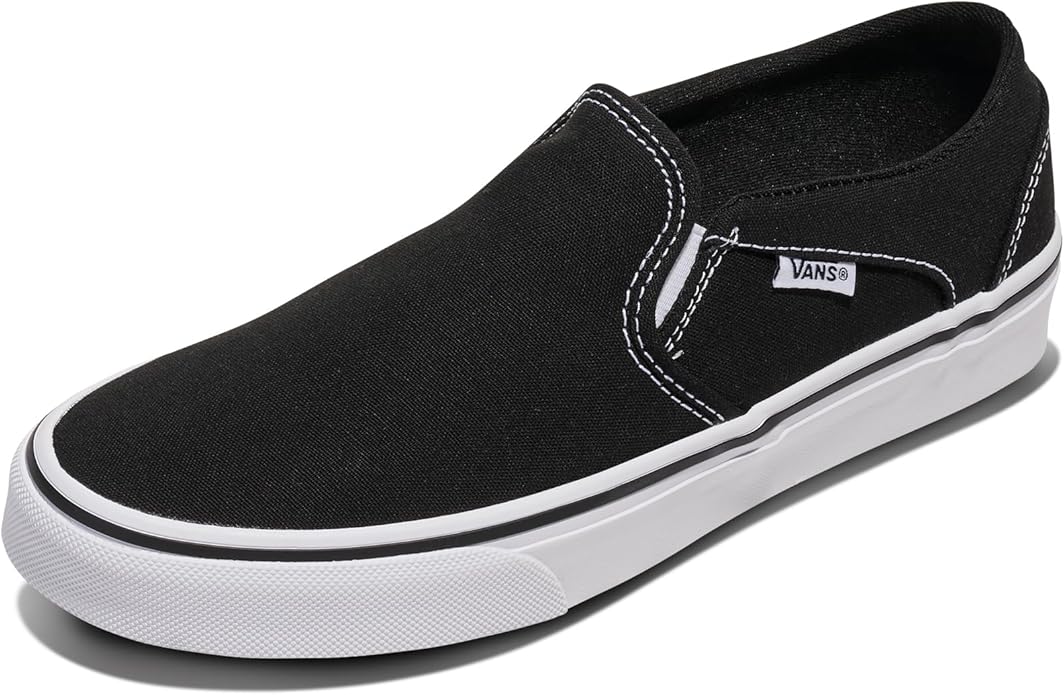
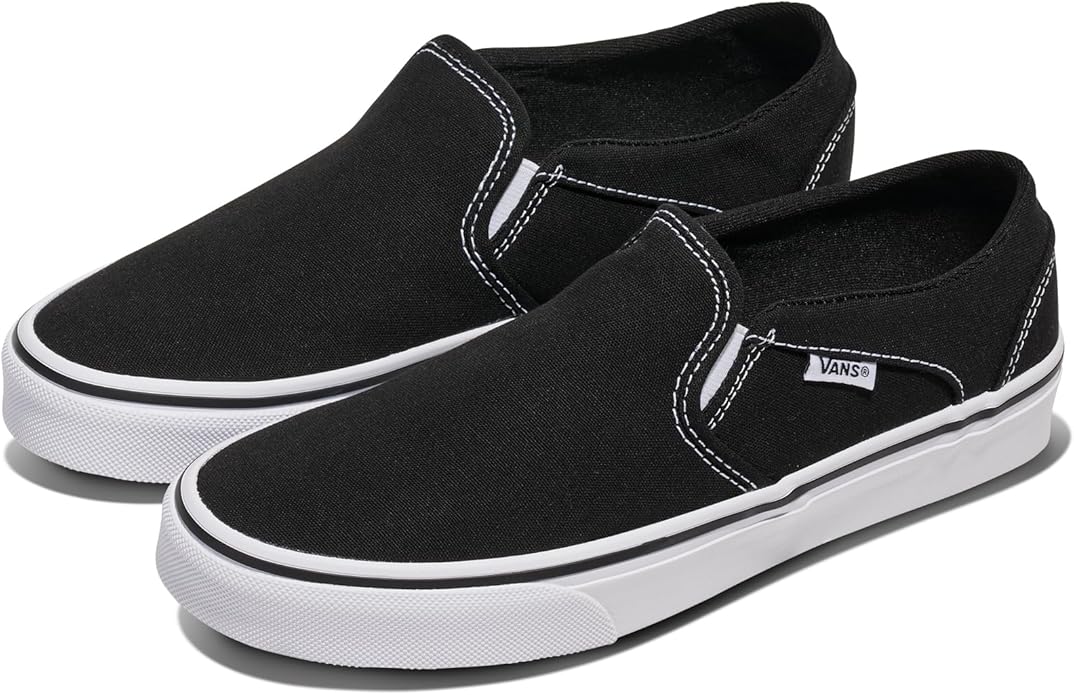
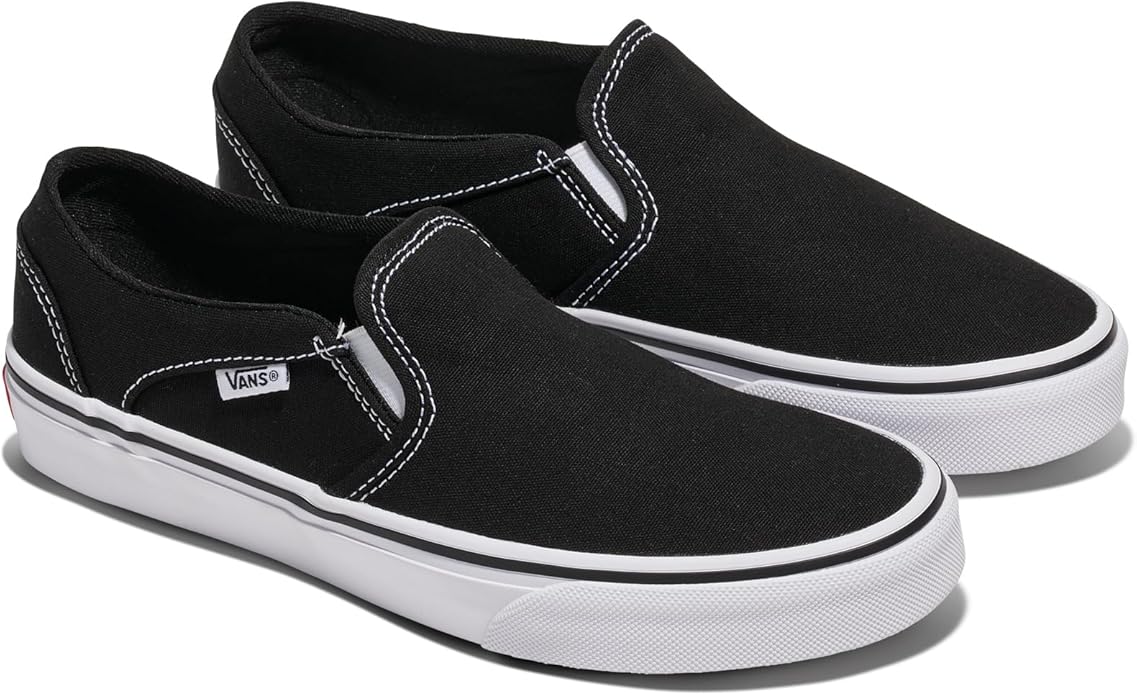
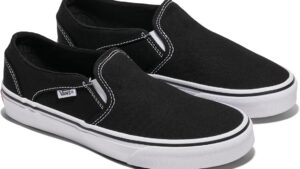
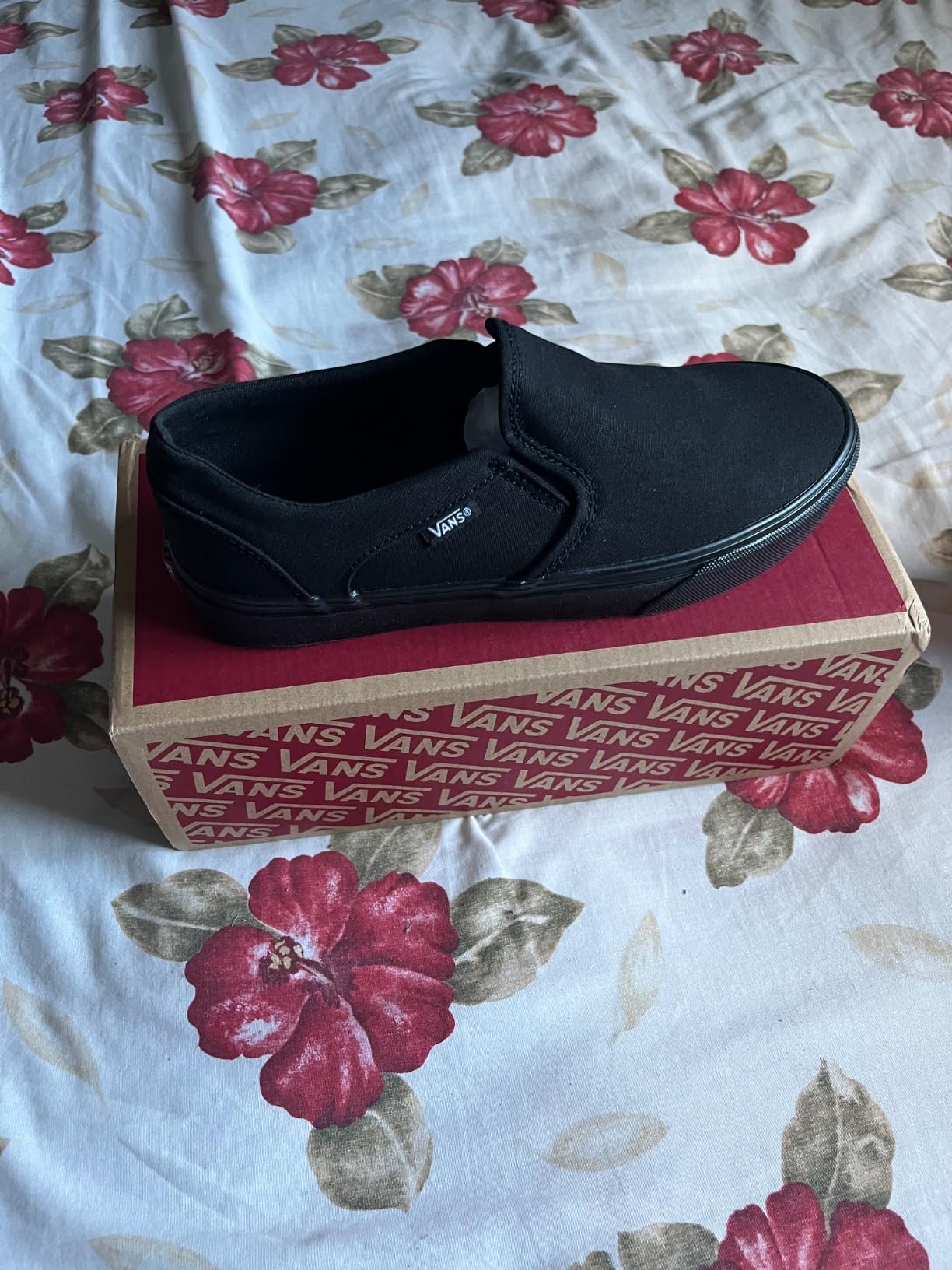
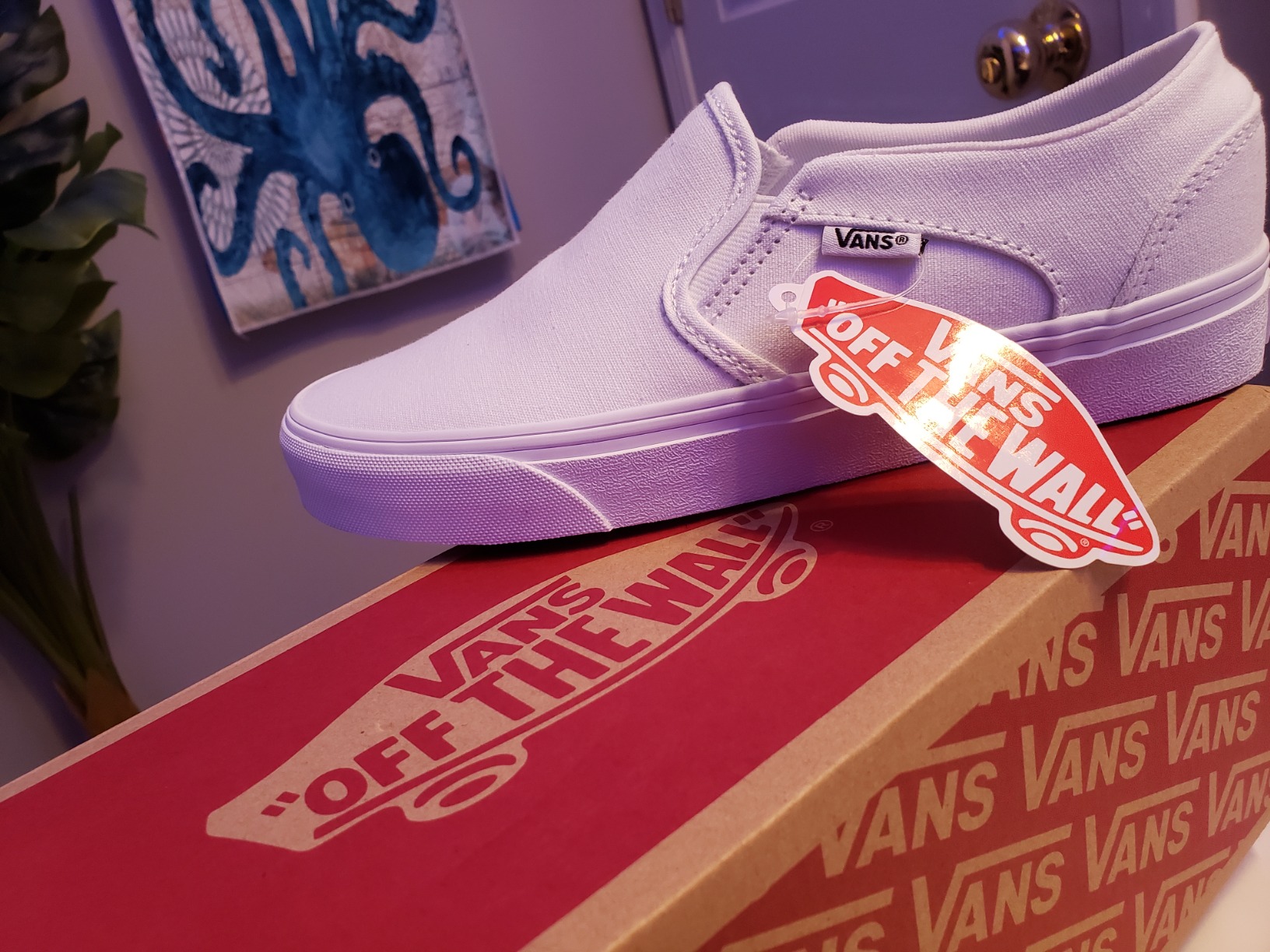
Right out of the box, the Vans Asher gave me that instant recognition moment. If you’ve ever owned classic sneakers from Vans, you’ll immediately recognize the quality canvas construction and that distinctive new-shoe rubber smell. The black and white colorway I tested walks the line between sporty and versatile—equally at home with jeans for a grocery run or leggings for school pickup duty.
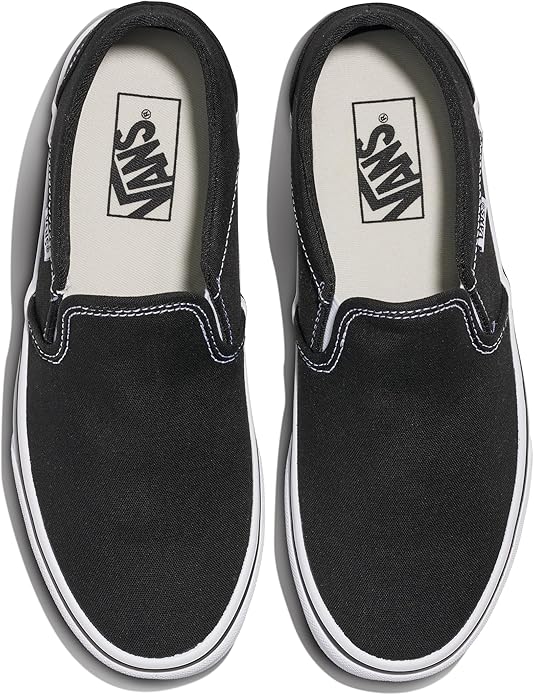
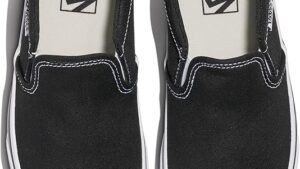
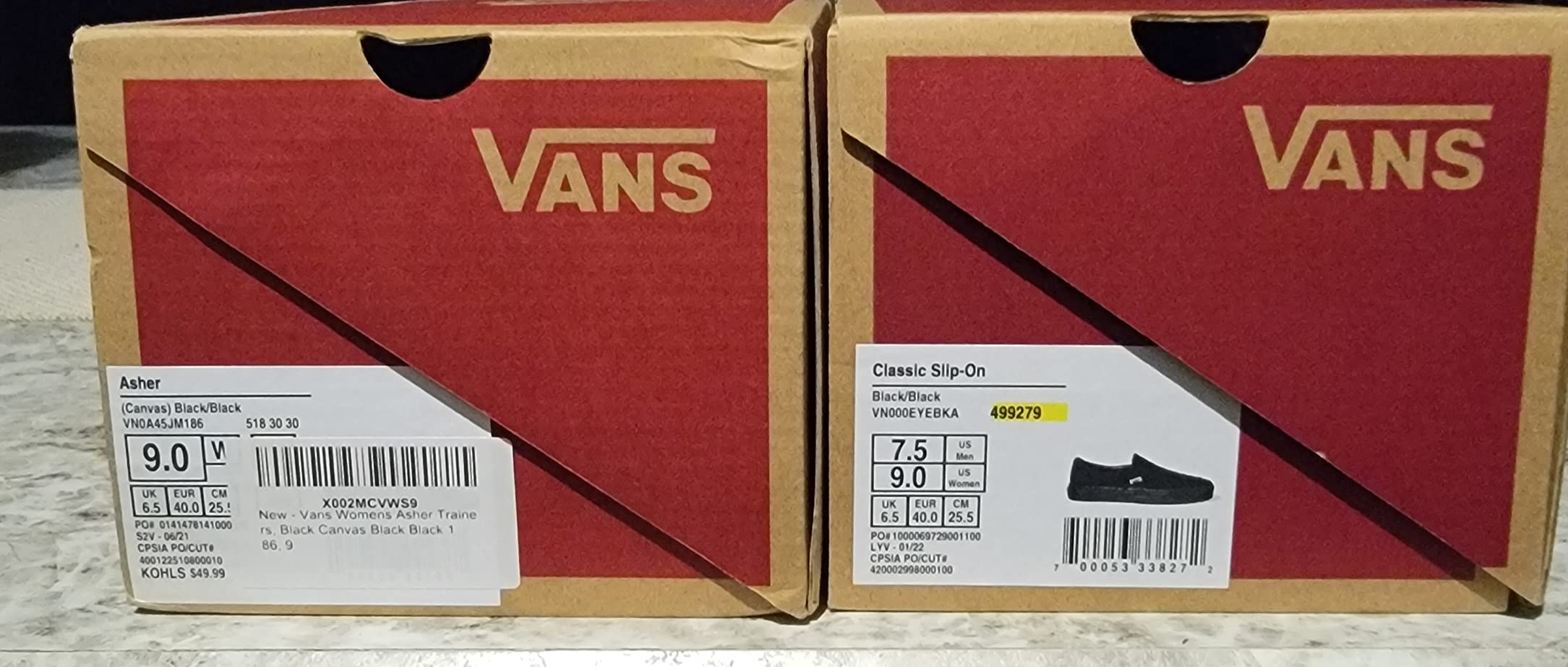
What caught my attention right away was how these differ from the traditional Classic Slip-On. The Asher features what Vans markets as “enhanced comfort,” and there’s definitely more going on underfoot compared to the flat, minimalist feel of their classics. The canvas upper feels substantial without stiffness, and those elastic side accents aren’t just decorative—they actually help the shoe flex naturally as you walk.
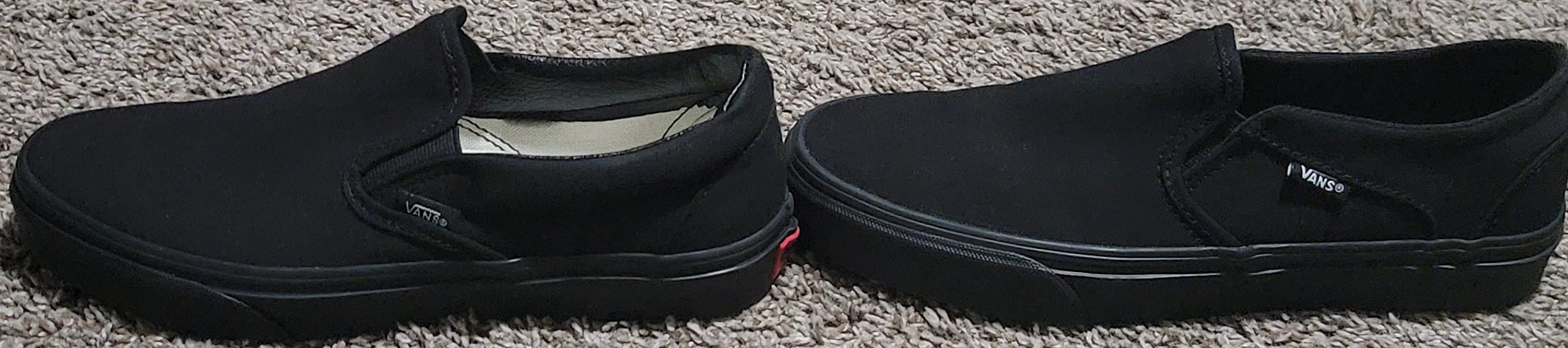
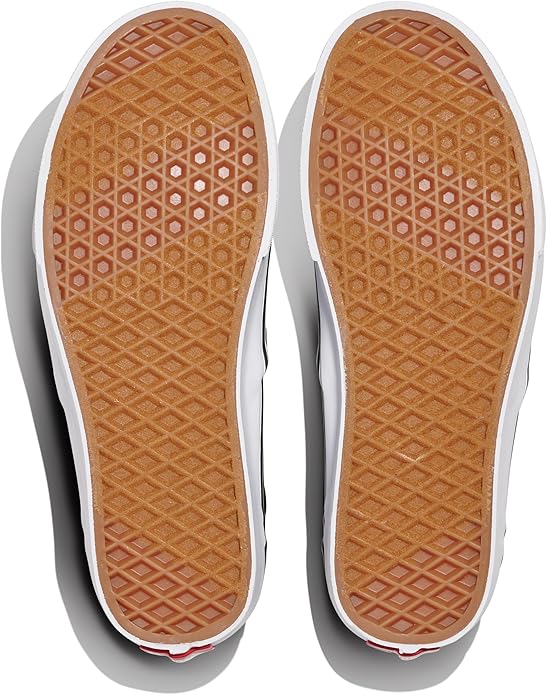
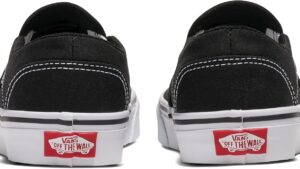
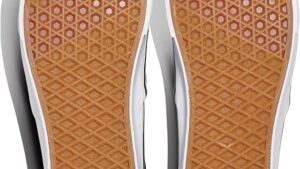
The double-stitched toe cap and vulcanized rubber waffle outsole are signature Vans touches, but the padded collar around the ankle was a pleasant surprise. My history with Vans has been a bit rocky—I’ve loved the look but never found them comfortable enough for extended wear. These immediately felt different, though my initial skepticism remained: would they actually hold up to all-day use?
Design That Works Without Trying Too Hard
There’s something to be said for a shoe that doesn’t demand attention but still works with everything. The Asher’s minimalist design philosophy means no loud logos, no chunky soles trying to make a statement, just clean lines and that low-profile silhouette Vans is known for. The black and white colorway proved surprisingly versatile—I found myself reaching for these more often than expected because they worked with casual jeans, athleisure leggings, even cropped dress pants for a smart-casual look.
The construction details serve function as much as form. Those elastic side accents provide just enough flex for easy entry while maintaining structure. The padded collar prevents the typical slip-on problem of heel rubbing. The toe cap reinforcement isn’t just aesthetic—it’s where most canvas shoes show wear first, so the double stitching makes practical sense.

Is this a trendy shoe? No, and that’s actually a strength. The timeless quality means they won’t look dated next season. But there is a trade-off here—if you’re after bold colorways or fashion-forward design, the Asher plays it safe. The color selection tends toward basics, which works for building a versatile wardrobe but won’t help you stand out in a crowd.
The Fit Reality: True-to-Size with Important Caveats
Here’s where slip-ons get tricky. Without laces to adjust, the fit needs to be right from the start. I stuck with my usual size 8, and they felt snug initially—not uncomfortably tight, but definitely a close fit. This is where the elastic side panels earn their keep, providing just enough give during that first week of wear.
The break-in period was real but manageable. For the first few days, the canvas felt stiff, especially around the collar and toe box. By the end of week one, they’d softened noticeably. By week two, they felt molded to my feet. Several customers I’d read about had ordered a half size up for extra toe room, and I can see why—if you’re between sizes or prefer a roomier fit, that’s worth considering.
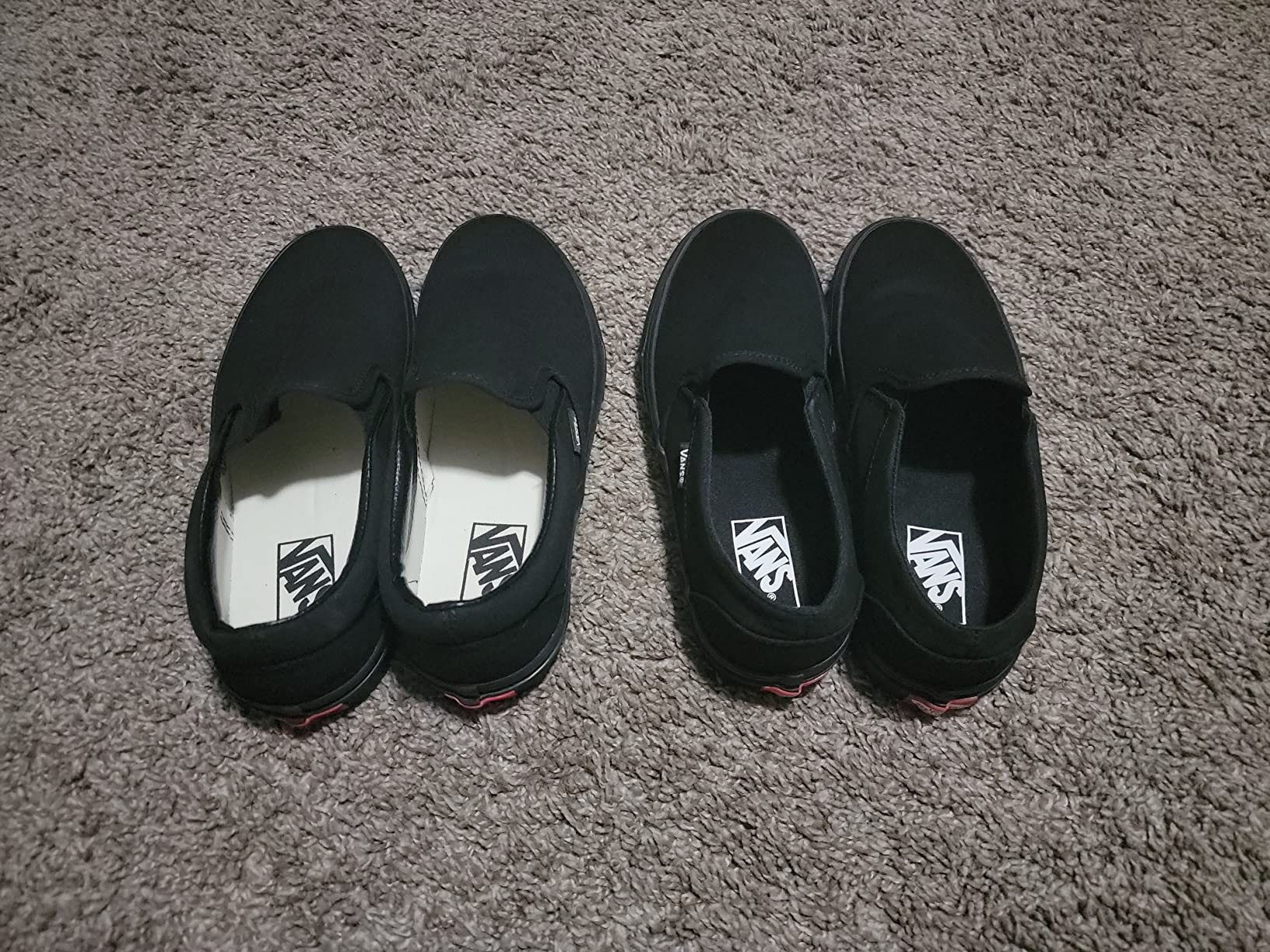
The elastic side accents turned out to be more functional than I’d expected. Throughout the day, as my feet naturally swell slightly (something most people experience but rarely discuss), that stretch accommodation made a real difference. They stayed secure during normal walking—even brisk walking to catch up with my kids at the park—though I wouldn’t recommend them for actual running. The combination of the snug canvas upper and those elastic panels creates enough security that I never worried about them slipping off.
Compared to Classic Slip-Ons, the Asher fits slightly less snug thanks to that elastic. If you’ve struggled with Classics feeling too tight, the Asher might work better for you. But if you loved the sock-like fit of Classics, these might feel a touch looser than you prefer.
Comfort: Where the Asher Actually Delivers
Let me be honest: traditional Vans have never been my first choice for comfort. They’re stylish, iconic, undeniably cool—but after a few hours on your feet, that flat sole makes itself known. The Asher changes that equation significantly.
That cushioned insole Vans talks about makes a real difference during extended wear. Testing this meant putting the shoes through actual daily scenarios: standing in line at the DMV for nearly an hour, multiple Target runs involving slow wandering up and down aisles, chasing my kids around the park, waiting at school pickup. In each scenario, my feet felt noticeably better than they would have in Classic Slip-Ons.
The cushioning isn’t revolutionary—we’re talking about enhanced insoles, not athletic-shoe-level cushioning systems. But for typical daily activities, it works. The comfort improved as the shoes broke in, with the canvas upper softening and conforming to my foot shape. The padded collar prevented the chafing I’d experienced with other slip-ons, and even after full days of wear (8-10 hours), I didn’t experience the foot fatigue I associate with flat-soled shoes.
That said, let’s set realistic expectations. These are casual sneakers, not running shoes or dedicated walking shoes. If your day involves serious distance walking or standing for hours on hard concrete, you’ll want something with more substantial cushioning and arch support. The Asher has limited arch support—it’s there, but subtle. For my normal-arched feet and typical daily use, it was fine. If you need orthopedic features or have specific foot issues, these probably aren’t your answer.
Vans positions the Asher as having “enhanced comfort for all-day wear,” and after six weeks of testing, I’d say they largely deliver on that promise—with the caveat that “all-day” needs to mean typical daily activities, not marathon walking sessions. They handled everything from morning coffee runs to evening dinners out without complaint. But when I wore them for a full day at an outdoor festival involving 5+ miles of walking on pavement, I felt it. Know what you’re signing up for.
Materials & Build Quality: The Elephant in the Room
The canvas upper on my pair feels substantial—not the thin, flimsy canvas you sometimes encounter on budget shoes. The vulcanized rubber sole has good grip with that classic Vans waffle pattern. The double-stitched toe cap shows thoughtful reinforcement where shoes typically fail first. On paper, these check all the boxes for quality construction.
And yet.
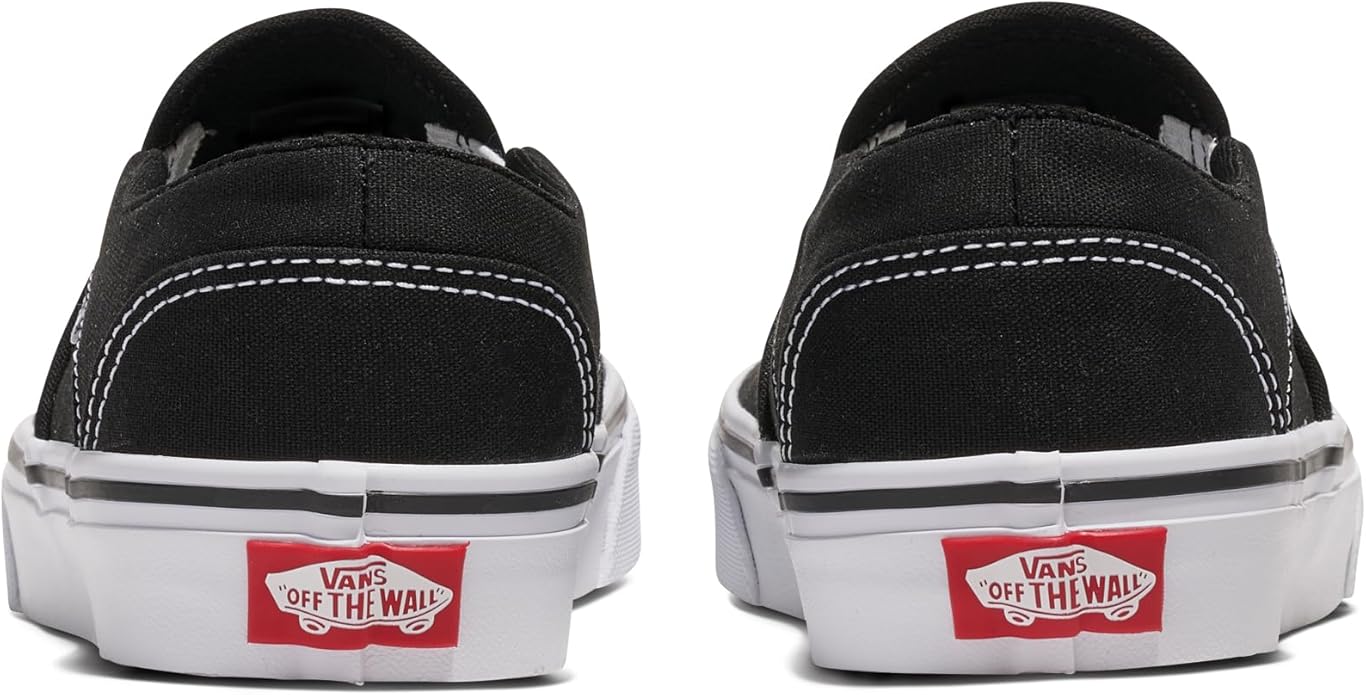
After researching hundreds of customer reviews and experiences, I can’t ignore the elephant in the room: quality control with Vans has become inconsistent. Some customers receive pristine pairs that last 18 months of daily wear. Others report shoes showing significant wear after just 8 months, with common failure points at the heel (where canvas rubs against rubber) and the foxing tape (the rubber strip connecting upper to sole).
After six weeks, my pair is holding up well. The canvas shows minimal wear, the sole grip remains intact, and I haven’t experienced any of the separation issues others have reported. But it’s early days, and I’m aware that time will tell the full durability story. The 8-18 month range reported by users suggests a quality control lottery more than consistent manufacturing standards.
There’s also the authenticity concern. Multiple Amazon reviewers mentioned receiving what appeared to be fake Vans or used pairs repackaged as new—visible stains, glue marks, signs of previous wear. When I purchased mine, they came in proper Vans packaging and appeared genuinely new, but this inconsistency is worth noting. Buying directly from Vans or established shoe retailers like FootGearUSA reduces this risk but doesn’t eliminate the QC variability entirely.
The trade-off here is clear: at $50-65, you’re getting accessible pricing, but that comes with some manufacturing inconsistency risk. It’s not a dealbreaker for everyone, but it does mean you should inspect your pair carefully upon arrival and know your return window.
Real-World Performance: Everyday Scenarios
Six weeks of testing meant putting these through the actual situations women encounter daily. School pickup? They worked—easy to slip on when running late, comfortable enough for standing and chatting with other parents. Target runs? Perfect for the extended slow-walking-through-aisles experience. Date night at casual restaurants? The black and white colorway dressed up enough with dark jeans and a nice top.
Weekend farmers market walks revealed both strengths and limits. On concrete and asphalt, the rubber waffle sole provides decent traction and confident walking. But I did notice they felt slightly slippery on smooth indoor floors when brand new. This improved after a few days of wear as the sole roughened up, but it’s worth being aware of initially.
Weather testing was limited but revealing. Canvas shoes aren’t weatherproof, and the Asher doesn’t pretend to be. Light rain? You’ll be fine for quick dashes from car to store. But these are definitively fair-weather shoes. The good news is they dry relatively quickly if they do get wet, and the canvas construction means they won’t trap moisture and develop that terrible wet-shoe funk. I wouldn’t plan on wearing these during winter in wet climates or for extended outdoor exposure to rain.
The styling versatility exceeded my expectations. I found myself reaching for these more frequently than my other casual shoes because they worked with so many different outfits without requiring thought. Jeans and a t-shirt? Obviously. Leggings and an oversized sweater? Worked. Cropped pants and a blouse for a casual work-from-home video call? Still looked appropriate. This kind of versatility has real value for people building minimalist wardrobes or those who don’t want to think too hard about shoe choices.
Honest Performance Scoring
| Category | Score (1-10) | Notes |
|---|---|---|
| Comfort | 7.5 | Significant improvement over classic Vans; good for typical daily wear but not athletic-level cushioning |
| Style/Versatility | 8.5 | Classic design works with almost everything; timeless aesthetic won’t look dated |
| Convenience | 9.0 | Truly easy slip-on design that stays secure; perfect for busy lifestyles |
| Build Quality | 7.0 | Good initial quality, but QC inconsistency across pairs is real concern; time will tell on long-term durability |
| Value for Money | 7.5 | Fair pricing for the comfort upgrade if you receive a quality pair; QC lottery affects overall value |
| Sizing Consistency | 7.0 | Generally true to size but snug initially; some need half size up |
| Overall Rating | 7.7 | Solid choice for women wanting comfortable, stylish slip-ons with realistic expectations |
Who Should (and Shouldn’t) Buy These
Perfect for:
Busy women who genuinely value slip-on convenience—if you’re constantly running between activities and can’t be bothered with laces, this is your shoe. Anyone who loves the classic Vans aesthetic but has found traditional Vans too uncomfortable for extended wear will appreciate the cushioning upgrade. These work particularly well for people building minimalist wardrobes, as the versatile design eliminates decision fatigue. Students, creative professionals, and frequent travelers benefit from the easy on/off and packability. If your daily routine involves moderate walking on paved surfaces (errands, light commuting, casual social activities), the comfort level handles it well.
Skip if:
You need serious arch support or orthopedic features—these have minimal arch support and won’t address specific foot issues. Heavy daily walking (8+ miles) or standing for extended periods on hard surfaces requires more cushioning than the Asher provides. Anyone needing weatherproof footwear should look elsewhere; canvas and wet weather don’t mix well. If you’ve had sizing issues with Vans in the past, that’s unlikely to change here. Athletic or performance needs? These aren’t athletic shoes, despite sometimes being listed in that category. And if guaranteed build quality matters more to you than price point, the QC inconsistency might frustrate you.
Consider carefully if:
Durability is your top priority. The 8-18 month range for daily wear and the QC concerns mean some people will be disappointed. If you’re between sizes, the fit becomes trickier—you might need to try both your usual size and a half size up to see which works better after break-in. If you want slip-ons specifically for all-day standing at work or athletic activities, you’ll probably be disappointed by the comfort ceiling. These are casual shoes first, and pushing them into roles they weren’t designed for tends to expose their limits.
Practical Quality Control Mitigation
Given the inconsistency reports, here’s what to check when your pair arrives:
Immediate inspection:
- Look for bleach spots, stains, or dirt that suggest previous wear
- Check for visible glue marks around seams and where sole meets upper
- Inspect the insole for damage, gaps, or missing chunks
- Examine the foxing tape (rubber strip connecting upper to sole) for any separation
- Check all seams for poor stitching or separation starting
- Look for heel creasing that would indicate someone wore them before
Red flags that warrant immediate return:
- Any visible defects or damage upon opening
- Signs of previous wear (scuffed soles, heel creases, insole indentations)
- Sole separation already starting
- Significant glue marks or sloppy stitching
- Missing or damaged components
After break-in period:
- If they’re still uncomfortable after 2 weeks of regular wear, something’s wrong
- Canvas should soften, not remain stiff
- No separation should be visible at seams or sole
Longevity care tips:
- Spot-clean canvas regularly to prevent deep staining (canvas shows dirt easily)
- Rotate with other shoes rather than wearing daily—this extends wear life significantly
- Store in a cool, dry place; heat and moisture accelerate canvas breakdown
- Monitor seams and foxing tape; catching separation early might allow repair
- Consider professional shoe cleaning if they get heavily soiled; DIY cleaning can work but risks damaging canvas if done incorrectly
Frequently Asked Questions
Do these run true to size?
Generally yes, though they feel snug initially. I wear a size 8 normally and stuck with 8, which worked fine after about a week of breaking in. However, if you’re between sizes, prefer a roomier fit, or have wider feet, consider going up a half size. International customers (particularly from Germany, based on reviews I read) consistently mentioned needing to size up, which might reflect different fit preferences or regional sizing expectations. The elastic side panels provide some accommodation, but without laces to adjust, getting the size right matters more than with traditional sneakers.
How do these compare to classic Vans slip-ons?
The Asher features noticeably more cushioning thanks to a thicker insole—you’ll feel the difference immediately if you’re familiar with the Classic Slip-On’s flat, minimalist feel. They’re also slightly less snug overall due to the elastic side panels, which some people prefer and others find less secure-feeling. Neither is objectively better; it depends on whether you prioritize comfort (Asher) or that classic minimalist aesthetic and tighter fit (Classic Slip-On). The Asher takes about the same time to break in but ends up more comfortable for extended wear. Style-wise, they’re nearly identical—both have that iconic Vans look.
Are these good for walking long distances?
Define “long distances.” For normal daily walking around town, shopping trips, casual strolls—they’re fine. Better than Classic Slip-Ons, certainly. But if you’re planning a day involving 5+ miles of walking or serious urban exploration, you’ll probably regret not wearing dedicated walking shoes or athletic sneakers. The cushioning helps, but the limited arch support and relatively flat sole design mean they’re not built for serious distance. I wore mine for an all-day festival involving lots of walking and definitely felt it by evening. For typical errands and moderate walking, they’re perfectly adequate.
How should I clean these shoes?
Canvas is relatively forgiving but also shows dirt easily. Spot-cleaning with mild soap and a damp cloth works for minor marks and is the safest approach. Some people successfully machine wash them on a gentle cycle with cold water, but this risks damaging the glue bonds and should be a last resort for heavily soiled shoes. Always air dry—never put them in a dryer, as heat damages both canvas and rubber. For the rubber sole and foxing tape, a magic eraser or specialized rubber cleaner works well. Regular light cleaning beats occasional heavy cleaning; canvas absorbs stains more deeply over time, so address spills and marks quickly.
Do they come in other colors?
Yes, Vans offers the Asher in multiple colorways, though availability varies by season and retailer. The black/white combination I tested is the most consistently available option. You’ll find variations like all-black, gray, navy, and occasional seasonal colors. Check the Vans website or major retailers for current options. Color availability tends to be more limited than with Classic Slip-Ons, so if you want something specific beyond basic colors, your options might be restricted.
How long do they typically last with daily wear?
Based on customer reports and community consensus, expect 8-18 months of regular wear—a wide range that reflects the QC inconsistency. Some people get lucky with pairs that last well beyond a year; others report significant wear (especially at the heel where canvas meets rubber) within 8-10 months. The canvas typically shows wear before the sole wears out in most cases. Daily wear accelerates this; rotating them with other shoes extends their life. Proper care (cleaning, not wearing in wet conditions, rotating use) pushes toward the longer end of that range. At six weeks, mine are holding up well, but it’s too early to predict where they’ll land in that durability spectrum.
What’s the break-in period like?
The canvas starts out stiff, particularly around the toe box and collar. For the first few days, you’ll definitely notice this—not painfully so, but noticeably firm. By the end of week one, they soften considerably. By weeks two or three, they should feel natural and molded to your foot shape. This is pretty typical for canvas shoes and matches the break-in timeline of Classic Slip-Ons. The comfort improves noticeably after that initial week, so don’t judge them too harshly based on day one or two. If they’re still uncomfortable after two weeks of regular wear, something’s wrong—either the size isn’t right for you, or you got a defective pair.
What about authenticity concerns?
This is unfortunately a real issue, particularly on Amazon. Multiple reviewers reported receiving what appeared to be counterfeit Vans or used pairs repackaged as new—tell-tale signs include improper packaging, missing tags, visible wear or staining, or construction quality that doesn’t match Vans standards. When buying online, purchase from Vans directly or authorized retailers when possible. If buying from Amazon, check the seller reputation carefully. Upon arrival, verify proper Vans packaging (shoebox with correct labeling, tissue paper, tags), inspect for any signs of previous wear, and check construction quality against Vans standards. If anything seems off, use your return window immediately. The pair I received appeared authentic and came in proper packaging, but this inconsistency is frustrating and shouldn’t be something buyers have to worry about.
My Overall Assessment
After six weeks of daily testing across the chaotic landscape of errands, appointments, and family obligations, the Vans Women’s Asher Slip-On has earned its place in my regular rotation. They’ve become my default choice for busy days when I need shoes that work without requiring thought—grabbing them from the closet means instant versatility without sacrificing comfort.
The comfort improvement over classic Vans is real and appreciated. These have genuinely better cushioning for extended wear, which makes them viable for full days out rather than just short stints. That might not sound revolutionary, but for anyone who’s loved the Vans aesthetic while finding the Classic Slip-On too flat for all-day comfort, it’s a meaningful upgrade.
That said, let’s be clear about what these are and aren’t. They’re casual shoes optimized for convenience and moderate daily wear. They’re not athletic shoes, not dedicated walking shoes, not weatherproof shoes. The quality control inconsistency is a real concern—some buyers will love their pairs for over a year while others deal with premature wear or arrive with defects. At $50-65, you’re getting fair value IF you receive a quality pair, which feels like a frustrating caveat to have to make.
I’m keeping mine because they solve a specific problem in my life: I need shoes that work with everything, go on and off easily, and don’t kill my feet during typical daily activities. They deliver on that promise. But inspect yours carefully when they arrive, know your return window, and set realistic expectations about what you’re getting. These are very good casual slip-ons with some annoying quality control asterisks attached.
For busy women who value the convenience of slip-ons, appreciate classic Vans style, and have realistic expectations about comfort levels and durability, the Asher delivers enough value to recommend—with the important caveat that you should verify your pair’s quality upon arrival and be prepared to exchange if needed.

Reviews
There are no reviews yet.