
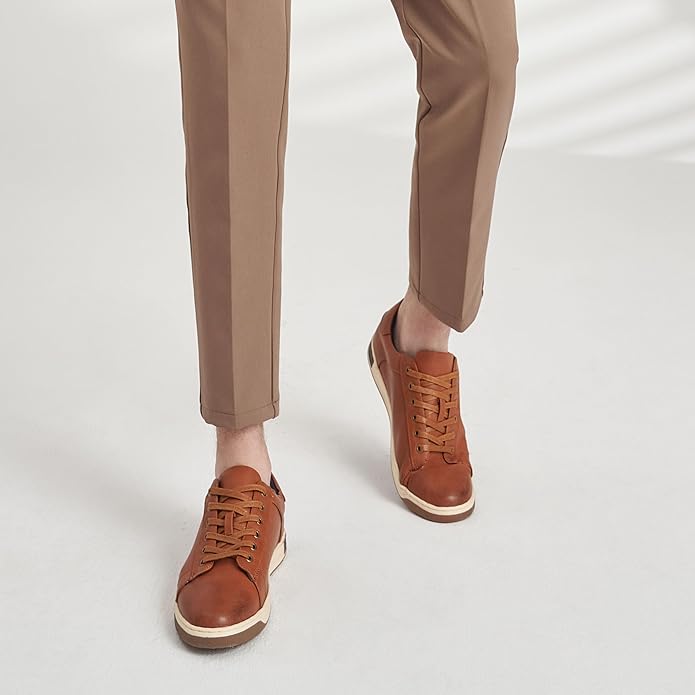
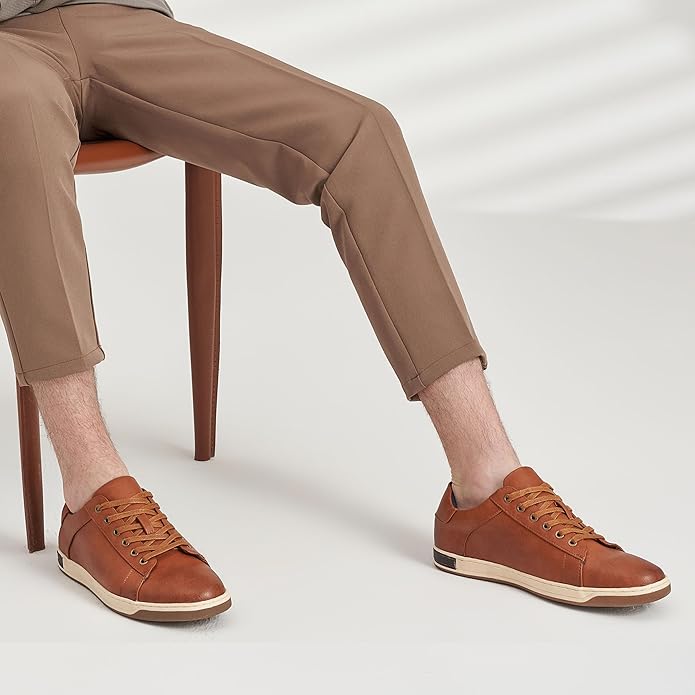
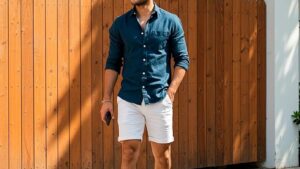
Shopping for my teenager’s dress shoes last fall while realizing my own office pair had seen better days, I stumbled across the Vostey Men’s Sneakers sitting at $35 on Amazon. Mike here — and after enough budget shoe disasters to fill a closet, I know the difference between a deal and a disappointment. So instead of trusting the listing photos, I wore these for eight weeks straight: 40-plus sessions across office environments, weekend errands, outdoor concrete, and one unfortunate rainy-day lobby test. Here’s what $35 actually delivers.
Quick Specs
- 💰 Price: $35
- ⚖️ Weight: 12.8 oz (men’s size 10)
- 🧪 Upper: Polyurethane (PU) synthetic
- 👟 Sole: Rubber, textured tread
- 🔒 Closure: Traditional lace-up
- 📐 Style: Oxford-inspired casual dress sneaker hybrid
- 📏 Sizing: Standard US; EU 39.5–49.5 available
- ⏱️ Testing: 8 weeks, 40+ sessions, office and casual use
First Look: Design, Build, and That Oxford Silhouette
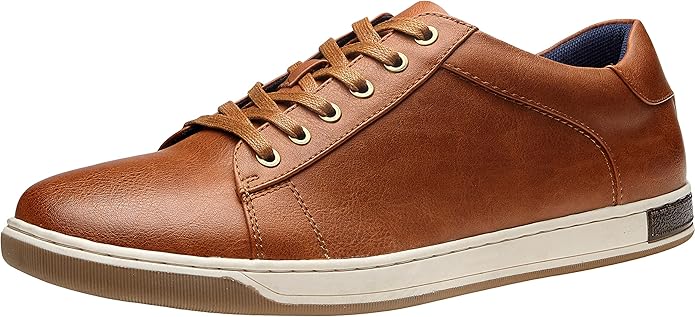
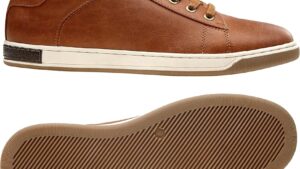
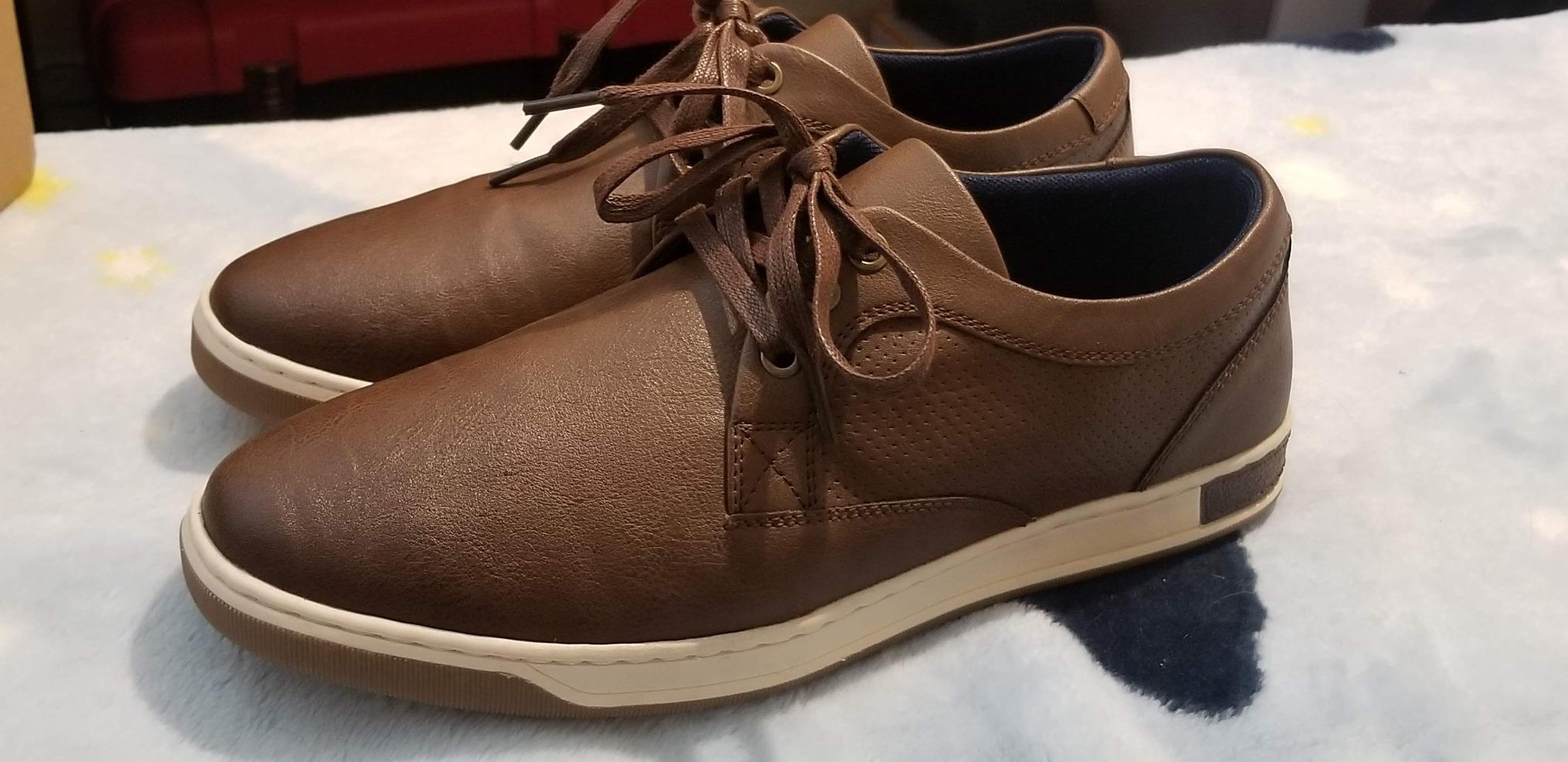
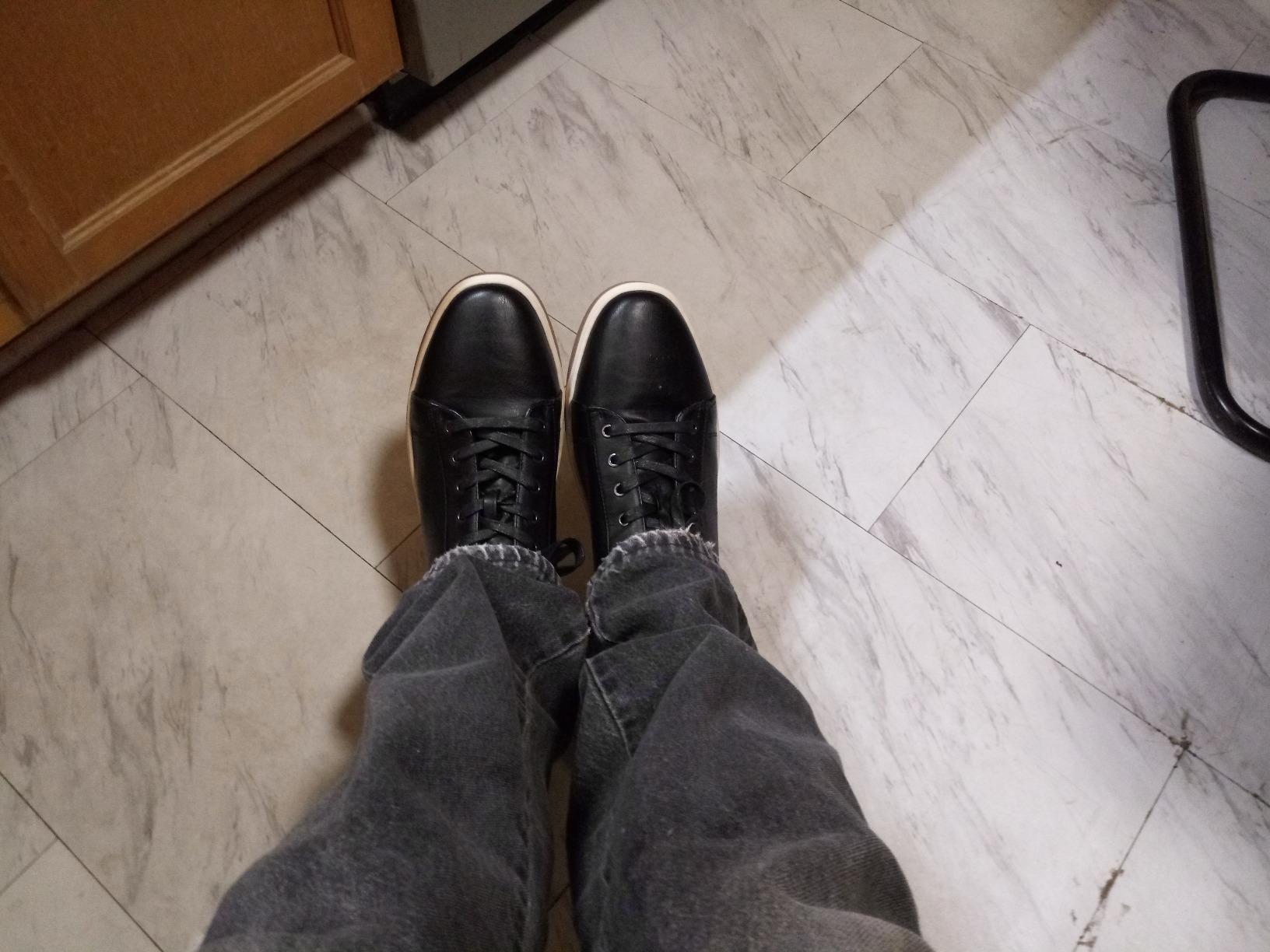
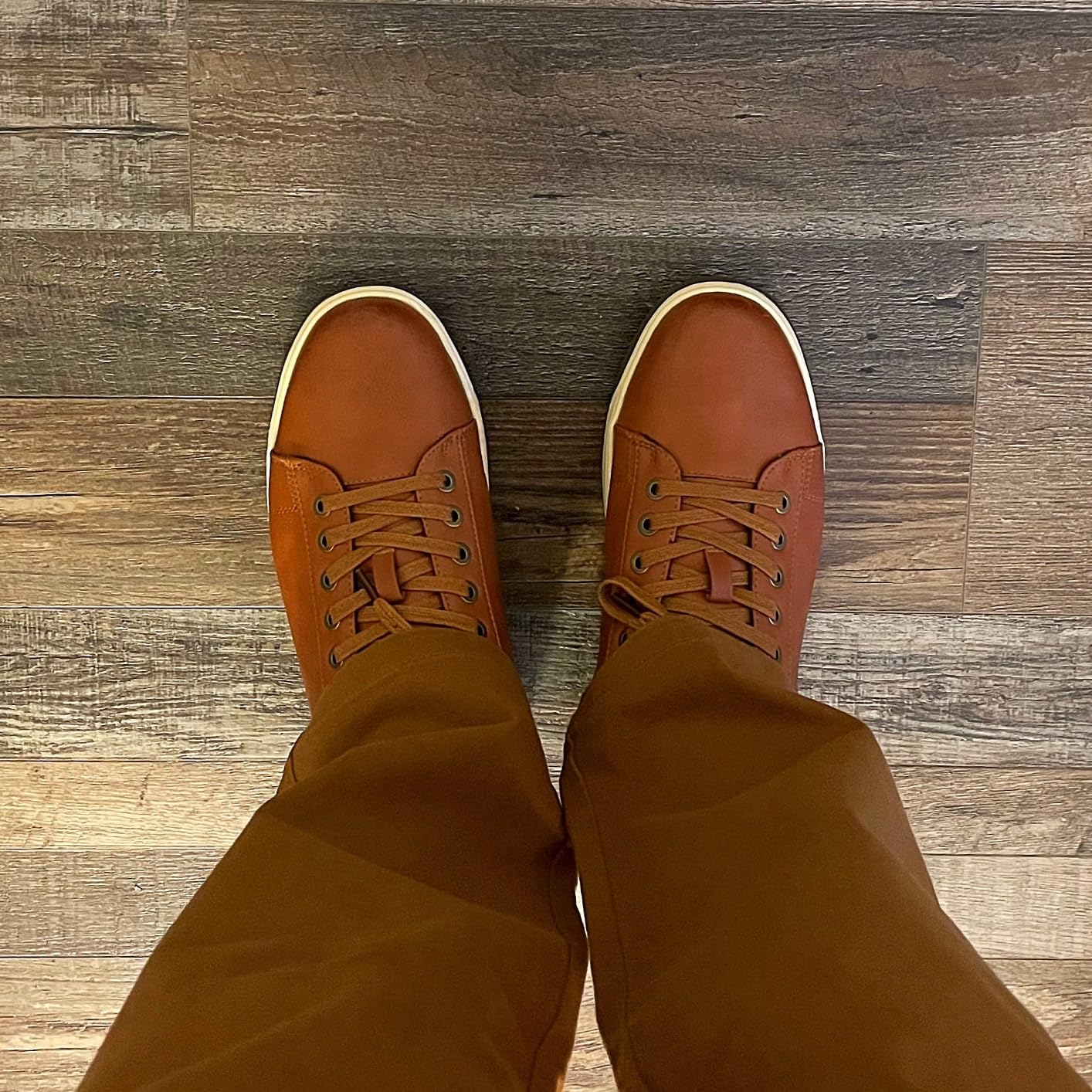
Week one, unboxing: these looked better than I expected. The yellow-brown colorway has a warm, rich tone that translates well from the listing photos into real life — it photographs well and looks even warmer in person under office lighting. The oxford-inspired silhouette with traditional lacing reads as smart-casual rather than athletic, which is the whole point for someone shopping this category.
The PU (polyurethane) upper is the trade-off you’re accepting for the price. Lighter and more flexible than genuine leather — run your hand across the surface and the difference from leather is immediately apparent — but that same lightness means no break-in time. Day one in the office was comfortable without the stiffness that comes with a new leather shoe.
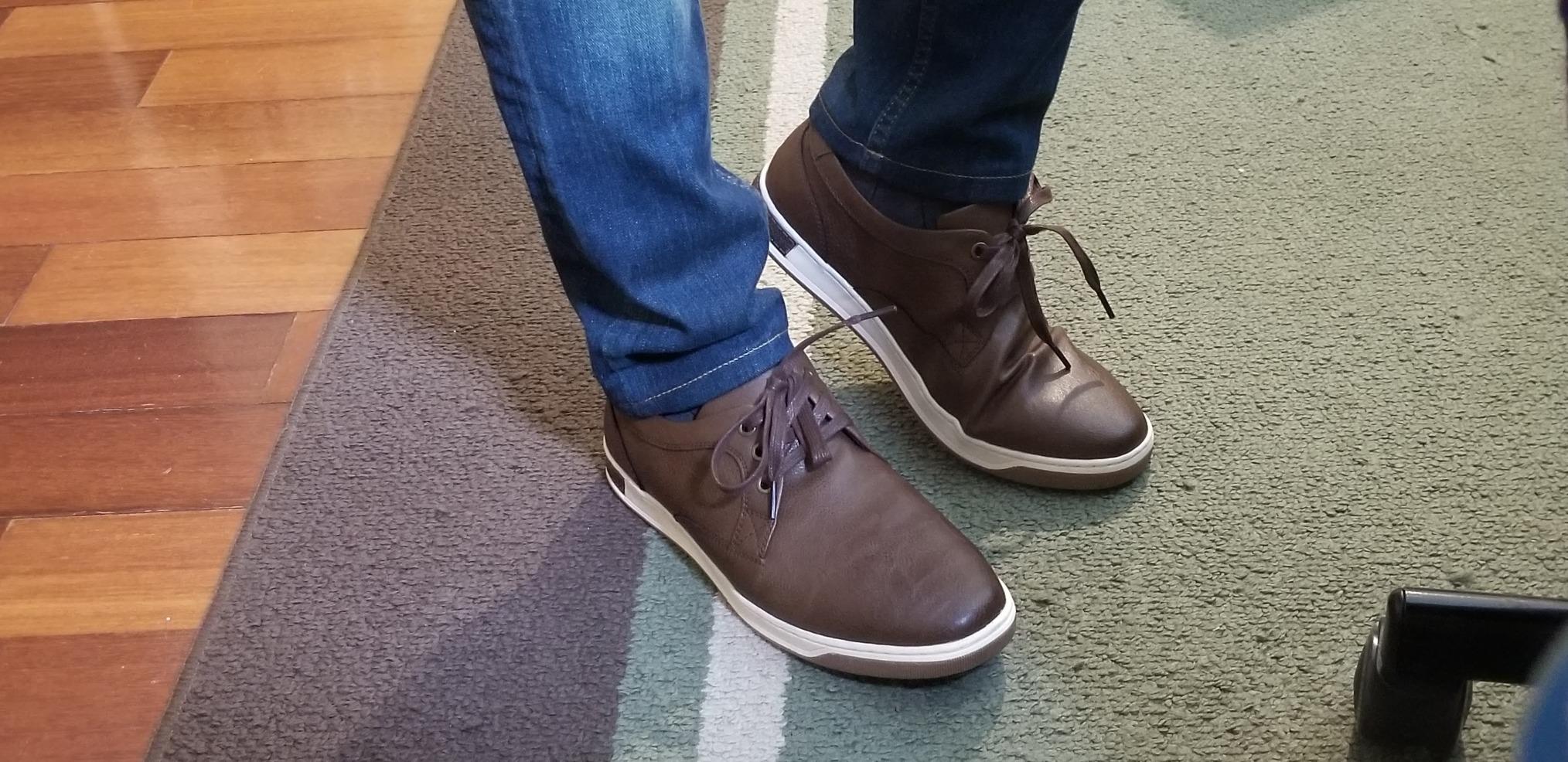
Fit at size 10 was accurate — adequate toe room, no heel slip, tongue stayed put throughout the test. The lace-up system runs smoothly, and the traditional metal eyelets function exactly as expected. Worth noting: Amazon reviews across batches show some sizing inconsistency. My unit was true to size, but I’d cross-reference the foot girth chart before ordering if you’re between sizes (size 10 = 10.0-inch girth per the official chart).
For context on what a modest step up gets you at this silhouette, the SVNKE Mesh Dress Oxford and Jousen Fashion Sneakers both hit similar oxford-style territory at a slightly higher price with noticeably sturdier upper-to-eyelet construction. At $35, though, Vostey’s design quality is competitive — the styling holds its own.
The Comfort Story, Week by Week
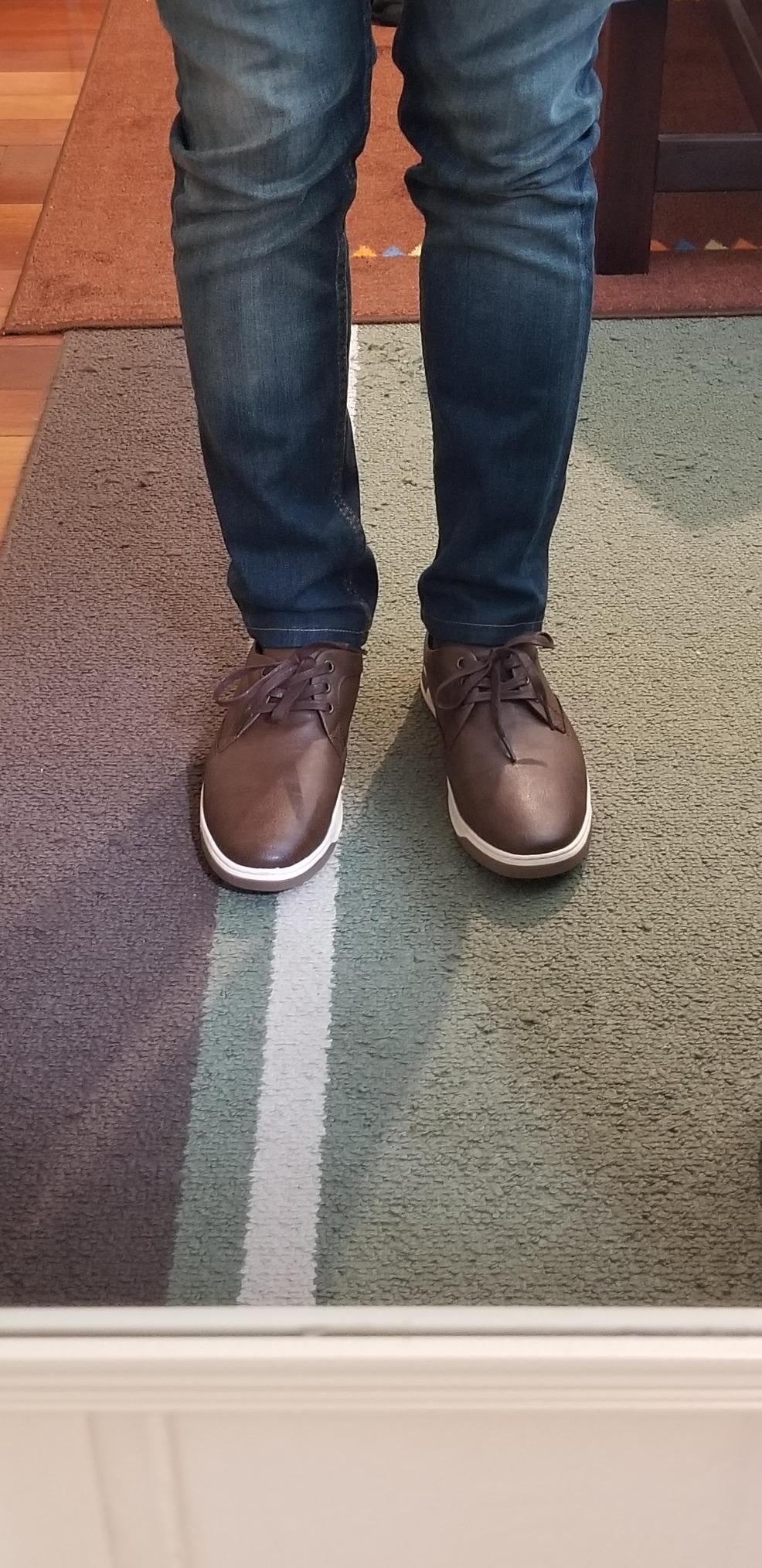
The first two weeks genuinely delivered. At 175 pounds, I walked several hours a day without significant fatigue — the soft insole provided adequate cushioning for office use, and the 12.8 oz weight kept my feet from dragging by mile three of a shopping trip. No break-in friction meant I could drop these straight into rotation.
Week three is where things shifted. The insole — thin to begin with, which is predictable at this price — began compressing noticeably under regular wear. The arch support, minimal from day one, essentially flattened out. By the end of week three, standing for more than four hours started registering in the ball of my foot.
My fix: around week four, I picked up a pair of Sof Sole Athlete Insoles and the difference was immediate. Comfort extended back toward week-one levels, and full eight-hour office days became comfortable again. If you plan to wear these regularly, budget $15–25 for an aftermarket upgrade proactively — treat it as part of the total cost. If you need more structural arch support specifically, Valsole Orthotic Insoles are a stronger option for heavier arch load.
With the insole upgrade in place: six-plus hour comfort ceiling on hard surfaces. Without it: about four hours before noticeable fatigue. For desk work with regular walking, these hold up. For sustained standing — retail environments, service work — the four-hour ceiling without insoles becomes a real problem fast.
Six Weeks of Office Wear: Real-World Performance
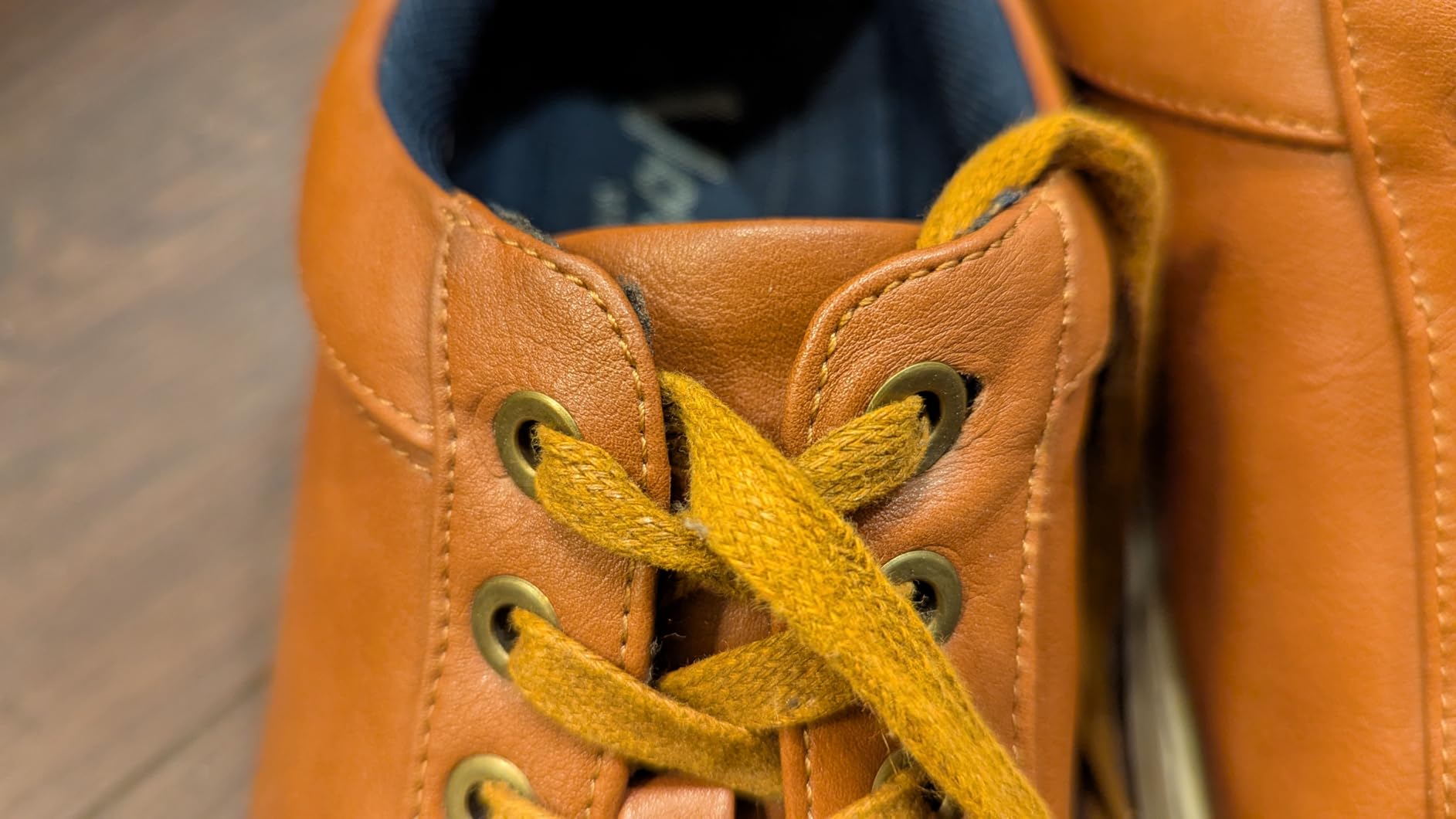
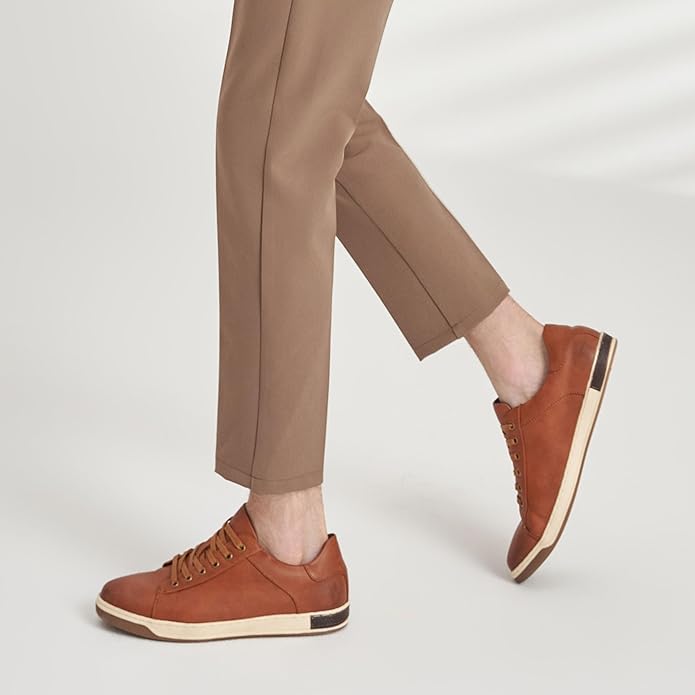
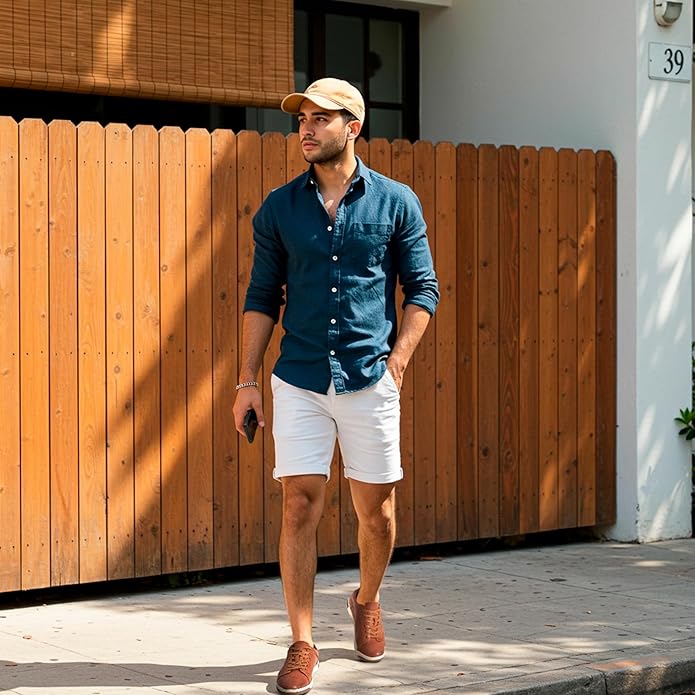
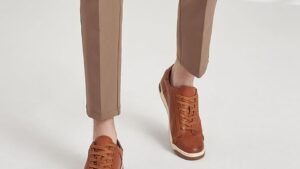
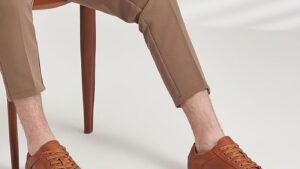
For six weeks I wore these three to four days per week in a business casual office. The dress code held — colleagues noticed them once and commented positively on the styling. The warm brown tone pairs well with both dress pants and dark jeans, and the oxford profile reads as intentional rather than default sneaker. Nobody clocked these as budget footwear from across the room.
Testing environments beyond the office included outdoor concrete and asphalt, grocery store floors, restaurant dining, and light yard work around the perimeter of the house. The rubber sole delivered adequate grip on dry surfaces across all of these — not exceptional, but functional for normal daily movement. Carpeted office: comfortable and no traction issues. Hard tile, dry: fine.
Wet conditions are the significant exception. On a rainy morning, I walked through a building lobby with wet tile — and experienced noticeable grip loss. The kind of slip that doesn’t bring you down but definitely gets your attention. The rubber tread pattern doesn’t evacuate water efficiently enough for confident grip on polished surfaces. These aren’t wet-weather shoes, and the PU upper offers zero water resistance. A soaked sidewalk and thin synthetic material don’t coexist well.
The weight advantage (12.8 oz) is real for extended errands. Light enough that foot fatigue from the shoe itself isn’t the issue on a long shopping day. The trade-off — and this becomes clearer in the durability section — is that lighter often means thinner, and thinner materials have a shorter lifespan under stress.
The Durability Reckoning: Weeks Five Through Eight
This is where the honest conversation starts.
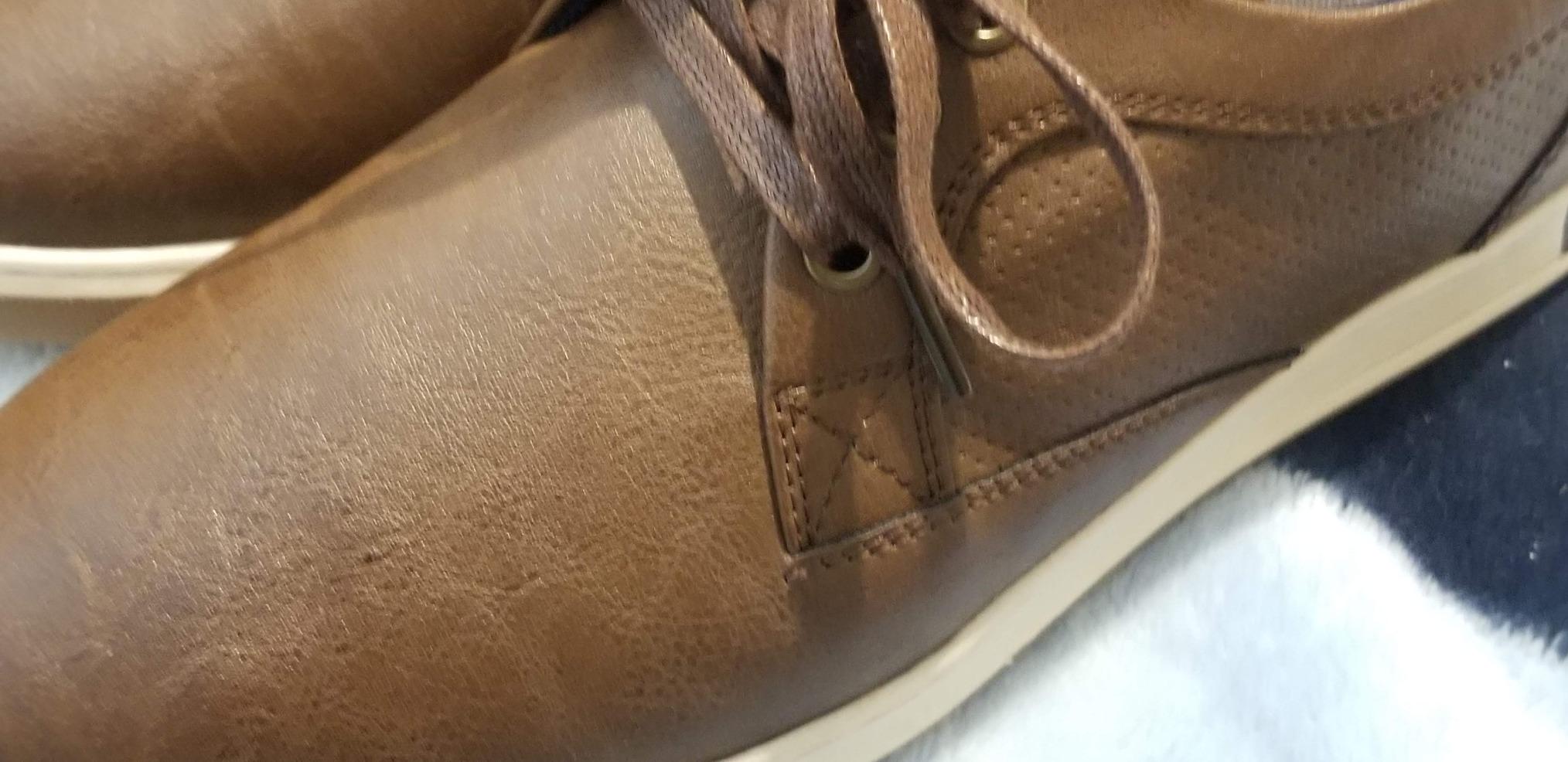
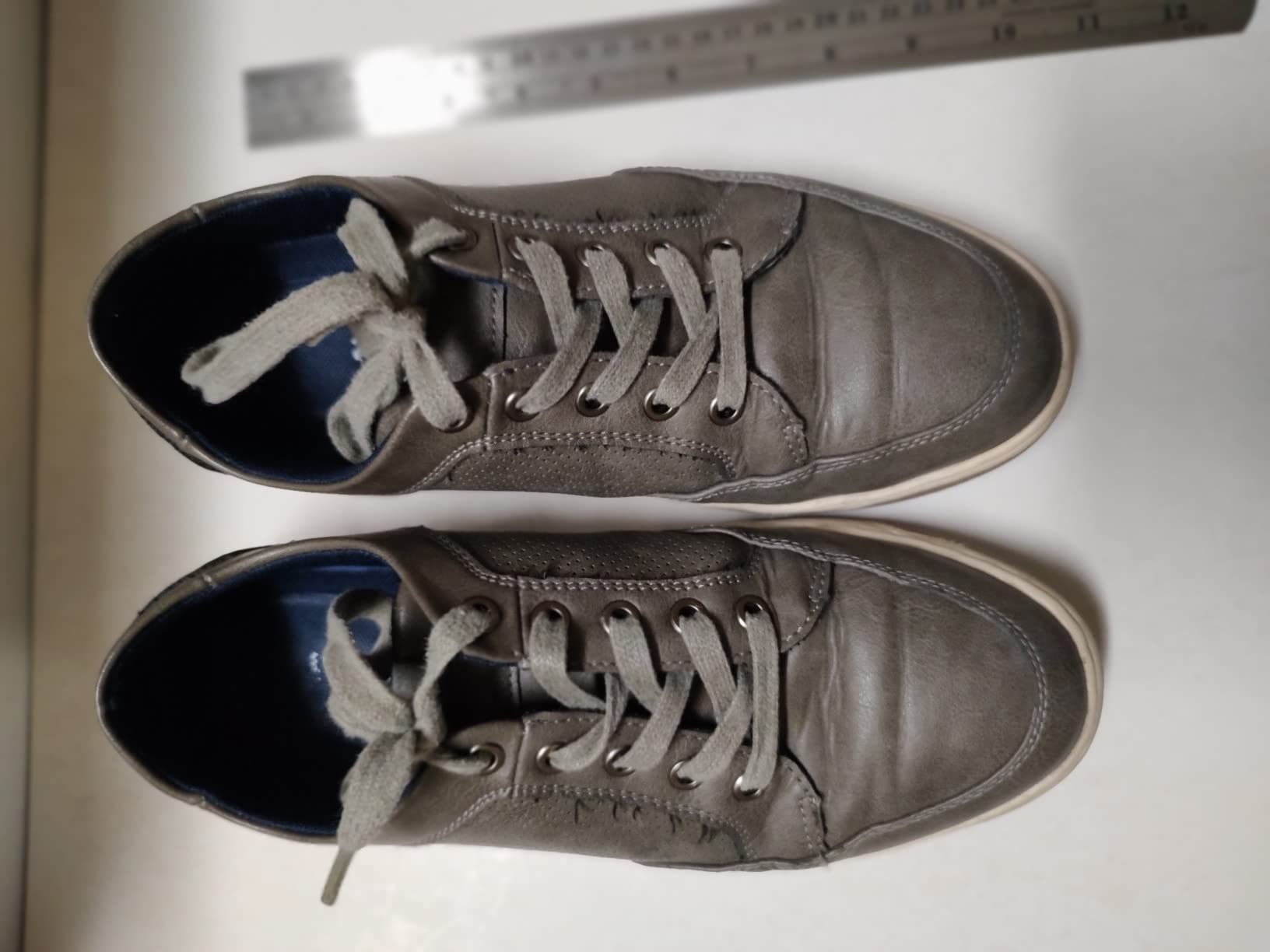
Around week five, I noticed the eyelets on the right shoe beginning to pull away from the upper. A small gap at first — the kind you’d spot when relacing rather than notice casually. But it progressed. The mechanism makes sense once you see it: metal eyelets bonded to flexible PU, with repeated lace tension creating a stress cycle the bonding adhesive wasn’t reinforced to handle. By week eight, two of four eyelets on the right shoe had visible separation. Still functional, but the kind of wear that makes a $35 shoe look its age.
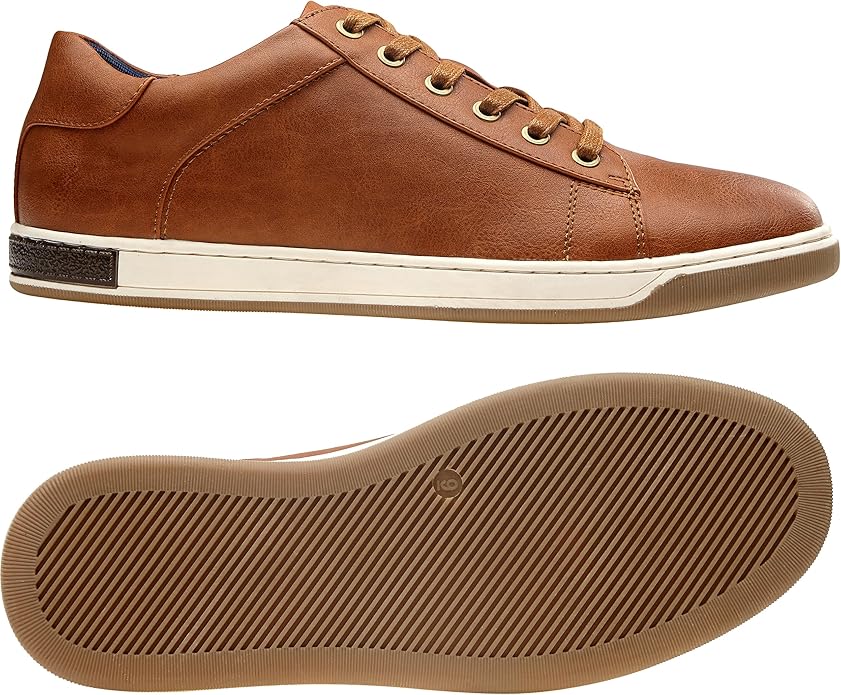
Week seven brought a more significant discovery. The sole, which had appeared to be solid rubber, turned out to be a laminated construction — multiple layers bonded together. The tan-colored top layer began wearing through at the heel, revealing a lighter, cheaper-looking material underneath. At 175 pounds with moderate daily use on hard surfaces, this level of sole wear at seven weeks is premature. The construction isn’t defective exactly; it’s how budget manufacturing reduces cost. But it compresses the expected lifespan.
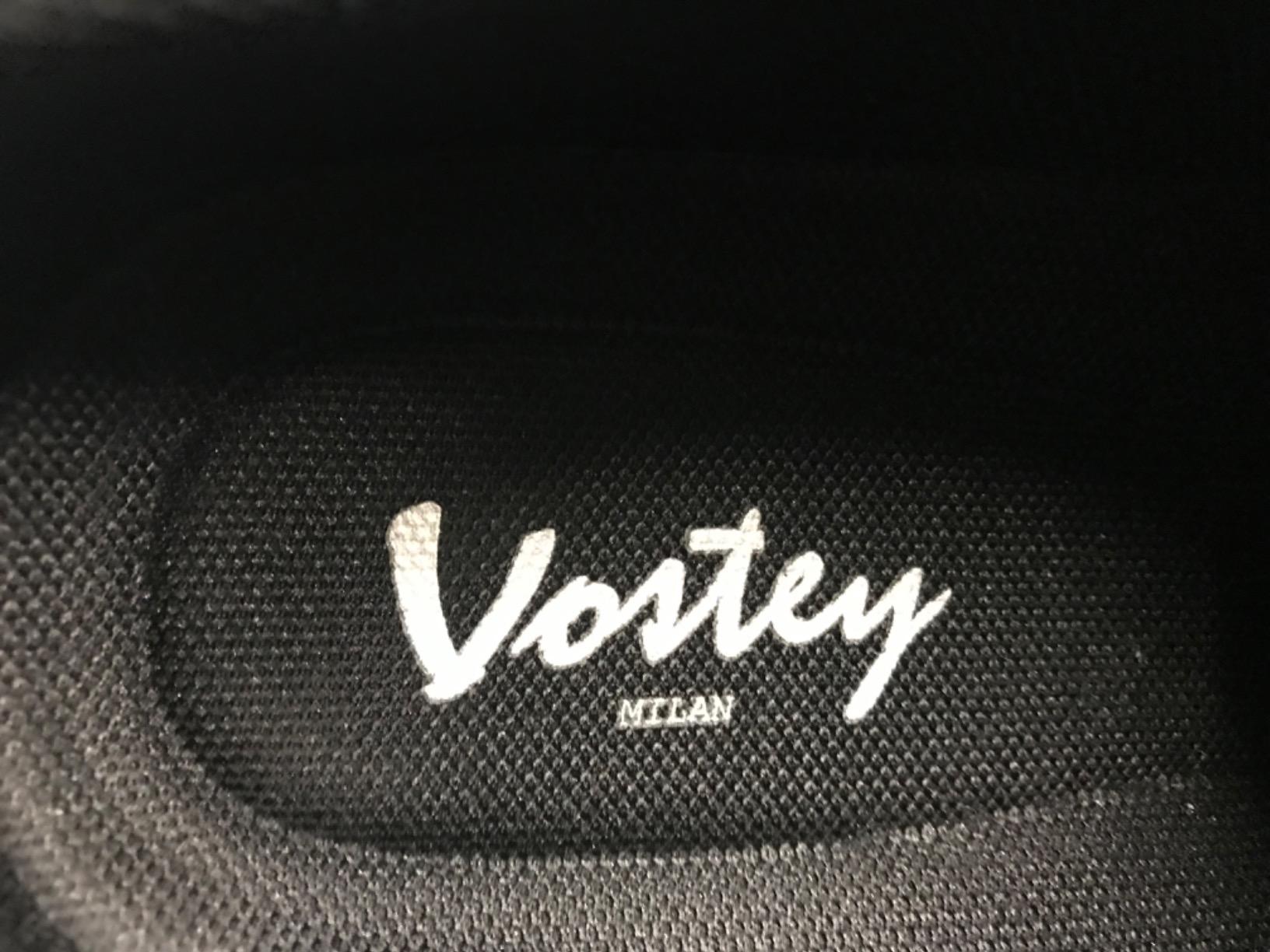
The QC variability is the most complicated part. Looking at Amazon data across listings, there’s a real discrepancy: Cherry Picks shows the Vostey seller at 4.8/5 aggregate across all products, but the specific Fashion Sneakers ASIN (B07LGY8YXM) sits at 2.2/5 stars. That’s not a minor rounding difference — it indicates genuine batch inconsistency across production runs. Some units appear to hold up six-plus months with lighter use; others show the same eyelet separation I documented by week two or three. You’re buying into a quality lottery with no reliable way to know which batch you’ll land in before it ships.
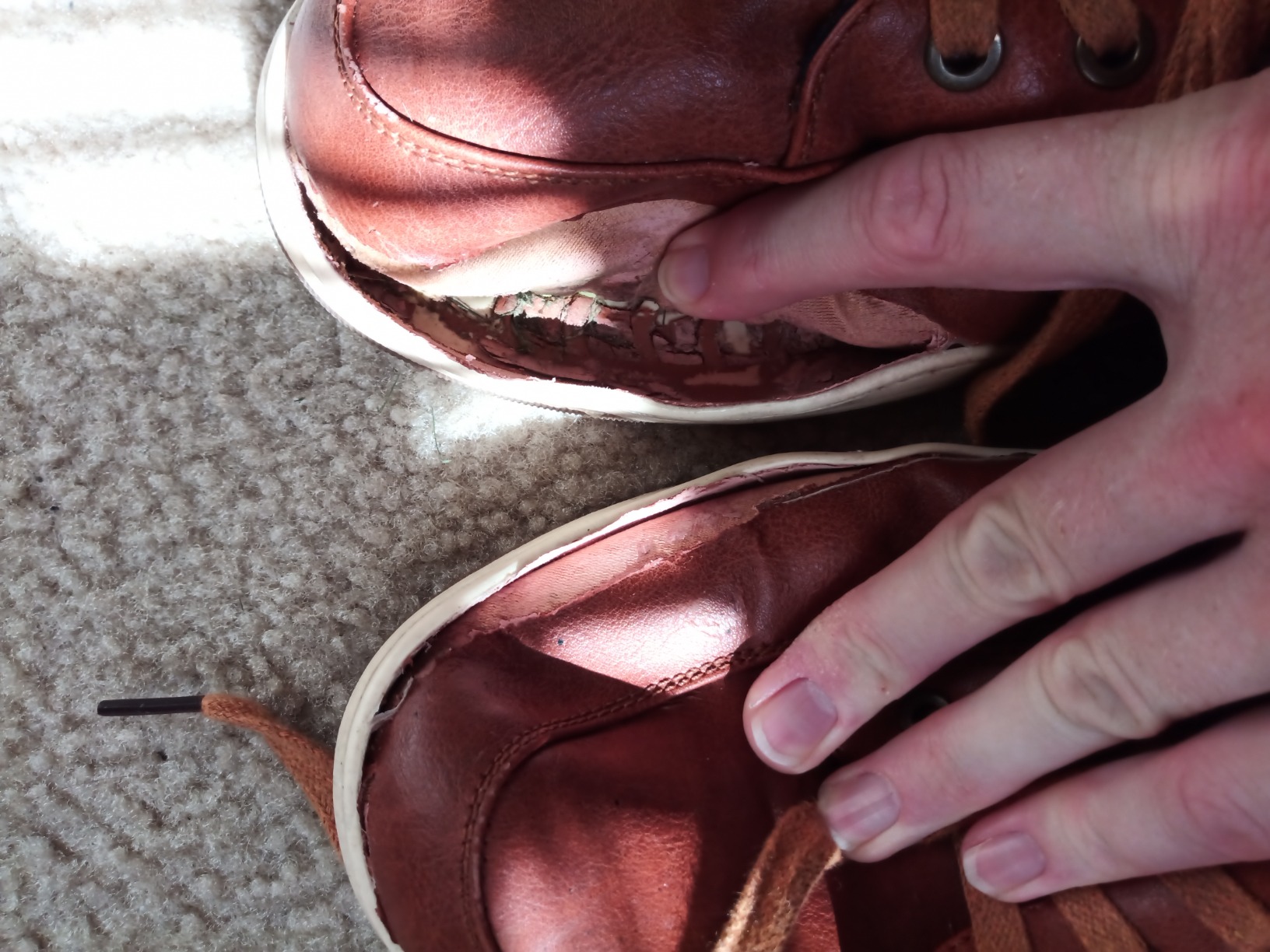
That QC uncertainty is what drops the durability score. A shoe that might last five months or might fail in five weeks can’t be recommended for daily professional wear, regardless of which cohort your unit falls into.
The Marketing Claims, Pressure-Tested
Claim: “Pure handmade” construction
Reality: These are machine-manufactured using standard factory methods. The seam consistency, eyelet pressing, and sole attachment all point to mass production. “Handmade” is common marketing language in budget footwear — it implies craftsmanship that the construction doesn’t reflect.
Claim: “Flexible rubber sole can effectively prevent slippage”
Reality: The sole is flexible, and dry surface traction is adequate. But “effectively prevent slippage” is a wet-conditions claim that my testing doesn’t support. Wet smooth tile produced noticeable grip loss. Flexibility doesn’t substitute for grip pattern depth.
Claim: “Breathable fine textile lining keeps feet cool”
Reality: Reasonably breathable for a PU-lined shoe — better than a sealed synthetic interior. But “fine textile” sets expectations closer to a mesh shoe, which this isn’t. Adequate for cool to moderate temperatures; warm weather and extended wear will stress the breathability.
Claim: “Using standard US size”
Reality: Accurate for my unit — size 10 fit as expected. Community reviews suggest occasional batch inconsistency, so use the foot girth chart as a reference if you’re between sizes.
The pattern isn’t deception — it’s marketing language that amplifies genuine features while glossing over limitations. Pressure-testing claims before deciding is just good practice.
Scoring and Assessment
| Category | Score | Notes |
|---|---|---|
| Initial Comfort | 7.5/10 | Solid weeks 1–2; insole compression begins week 3 |
| Style / Appearance | 7.0/10 | Oxford silhouette holds in business casual; colleagues responded positively |
| Durability | 4.0/10 | Eyelet separation week 5, laminated sole visible week 7, QC batch lottery |
| Value for Money | 6.0/10 | Reasonable at $35 for 3–6 month lifespan; aftermarket insoles add ~$20 to total |
| Versatility | 8.0/10 | Works across office casual, weekend errands, restaurant outings, light outdoor use |
| Construction Quality | 4.5/10 | Laminated sole + PU-to-eyelet bond failure indicate cost-cutting in materials and bonding |
| Sizing Accuracy | 7.5/10 | TTS confirmed (size 10); some batch variability in community reviews |
| OVERALL | 6.3/10 | Decent entry-level casual dress shoe; durability is the honest limitation |
✅ What Works
- Oxford design reads well in business casual — colleagues didn’t question the price
- No break-in required; comfortable from day one
- 12.8 oz weight keeps extended walking manageable
- True to size for most buyers (use girth chart if between sizes)
- Versatile across office, weekend, and casual outings
- Aftermarket insole fix is easy and transforms comfort beyond week three
❌ What Doesn’t
- Eyelet separation begins around week 5 — systematic construction limitation
- Laminated sole shows wear-through at week 7 under moderate use
- Insole compresses within three weeks; aftermarket upgrade required for all-day wear
- Wet surface traction inadequate — slipping on smooth wet tile
- QC batch lottery: your unit may perform better or worse than average
- Not viable for daily professional environments requiring long lifespan
Who Should Buy — and Who Should Look Elsewhere
These make sense for:
Teenagers who need presentable footwear for an event, interview, or occasional occasion — the 3–6 month lifespan lines up with how quickly kids outgrow shoes anyway. Budget-conscious adults who need a backup or occasional office pair without serious financial commitment. Anyone rotating these one or two days per week alongside other footwear will likely get 6-plus months from them. If you’re buying aftermarket insoles from day one and treating these as a seasonal shoe rather than a multi-year investment, the value proposition holds up.
Skip these if you need:
Daily professional wear in a formal office environment — the eyelet and sole issues will become visible before you hit six months of regular use, and the appearance decay will undercut the credibility the oxford design provides initially. Anyone needing genuine leather construction: PU doesn’t age gracefully. Leather develops character; PU develops stress cracks. Wide feet are a gamble — no wide-width option exists, and the standard design may or may not accommodate you.
Budget alternatives worth considering:
If your budget stretches to $45–60, the Bruno Marc Dress Sneakers and Bruno Marc Maxflex Dress Sneakers offer meaningfully better sole construction and eyelet bonding. The Jousen Leather Casual Sneakers step into actual leather territory for a modest premium — the kind of construction quality that holds up through a real year of office rotation. At a comparable budget tier, the Kvovzo Men’s Casual Dress Shoes and Yolark Casual Dress Shoes offer similar silhouette options with different trade-offs worth comparing. If you prefer a slip-on style, the Cosidram Casual Loafers cover the casual dress loafer territory.
At $60–70, Skechers Energy Afterburn provides substantially better outsole durability for daily wear. If you’re comparing across the full range of casual sneakers, the price-to-lifespan math generally tilts toward spending $20–30 more for something that lasts twice as long.
A quick care tip: a pair of FootFitter Cedar Shoe Trees kept in these when not wearing slows the PU upper’s compression and helps maintain the oxford shape between wears. It’s one of those small investments from the shoe care accessories category that actually extends the useful life of synthetic-upper shoes.
The Monthly Cost Calculation
Budget shoe math is more nuanced than the sticker price:
- $35 ÷ 3 months (daily office use) = $11.67/month
- $35 ÷ 6 months (moderate 3–4x/week) = $5.83/month
- $35 ÷ 9 months (occasional 1–2x/week) = $3.89/month
Compare that to a $65 shoe lasting 15 months: $4.33/month. Or a $90 pair lasting two years: $3.75/month. The Vostey makes financial sense as an occasional-use shoe or for buyers on a strict budget who accept the lifespan. For daily wear, spending more upfront produces better monthly cost outcomes. Add $20 for aftermarket insoles and the effective entry cost becomes $55 — which shifts the value calculation against daily use alternatives at that price point.
Frequently Asked Questions
Q: How long do these typically last?
A: Based on my testing and Amazon community data: 3–5 months with regular office wear (3–4 days/week), 4–6 months at moderate use (2–3 days/week), and potentially 8–12 months as occasional backup footwear (once a week or less). QC batch variability means some units perform better or worse than these averages.
Q: Are they true to size?
A: For my size 10, yes — accurate fit with adequate toe room. The official size chart shows size 10 with a 10.0-inch foot girth and 10.7-inch heel-to-toe length. Use these measurements to confirm before ordering if you’re between sizes. Some Amazon reviews report batch inconsistency, so TTS isn’t guaranteed across all production runs.
Q: Do I need aftermarket insoles right away?
A: Not immediately — weeks one and two are comfortable without modification. By week three you’ll notice compression, especially on longer wear days. My recommendation: buy the insoles when you order the shoes and swap them in proactively at week three rather than waiting until they become uncomfortable.
Q: Can these handle wet weather?
A: No. The PU upper isn’t water resistant, and the rubber sole loses grip on wet smooth surfaces. Light drizzle walking quickly to a car is manageable; active rain or wet tile lobbies are where I experienced noticeable slip. Plan around this or choose a shoe with waterproof membrane construction if wet weather is a regular concern.
Q: Are they appropriate for a job interview or professional setting?
A: For business casual or smart casual: yes, for occasional appearances. The styling is credible enough for a first impression. For a professional environment where you’re wearing them daily and longevity matters, the eyelet and sole issues will undercut the credibility by month four or five.
Q: What about wide feet?
A: No wide-width variant is available. The standard fit accommodated my foot reasonably at size 10. Customers with genuinely wide feet report mixed results. Order during a window with an easy return option if wide width is a concern.
Q: Should I add insoles, and which ones?
A: Absolutely, and proactively rather than reactively. For general cushioning and light arch support, Sof Sole Athlete Insoles worked well for me. If you need more structured arch correction, the Valsole Orthotic Insoles are built for heavier support demand.
Q: What’s the return policy?
A: Standard Amazon return policy applies — typically 30 days. Note that the eyelet and sole issues I documented emerge at weeks 5–7, which is past the return window for most buyers. That’s part of why the QC lottery concern is real: the failures happen after you can typically do anything about a problematic unit.
Be the first to review “Vostey Men’s Sneakers Fashion Casual Shoes Dress Sneaker Oxford Shoes”
Related products
Tennis/Squash Shoes
Running Shoes
Football Shoes
Running Shoes

Hiking/Trekking Shoes
Training Shoes
Basketball Shoes
Hiking/Trekking Shoes
Reviews
There are no reviews yet.