
It started at the gym. Mid-set on Romanian deadlifts, I noticed the guy at the next rack pulling in nothing but socks. Another lifter nearby was in suspiciously flat canvas shoes — zero heel, wide foot, moving serious weight with clean form. That set off a rabbit hole into barefoot footwear. What I found: quality zero-drop options start at $89 with Xero Shoes, climb past $150 with Vivobarefoot. After an hour on Amazon that same night, I found WHITIN’s canvas barefoot sneakers at $45. Same zero-drop principle. One-third the price. I’m Mike, and I’ve been burned enough times by overhyped gear that I needed to verify this before recommending it. So I spent eight weeks — 40+ days, 120+ hours — putting these through gym sessions, all-day office use, weekend errands, and one very unhelpful rainy commute. Here’s the unfiltered result.
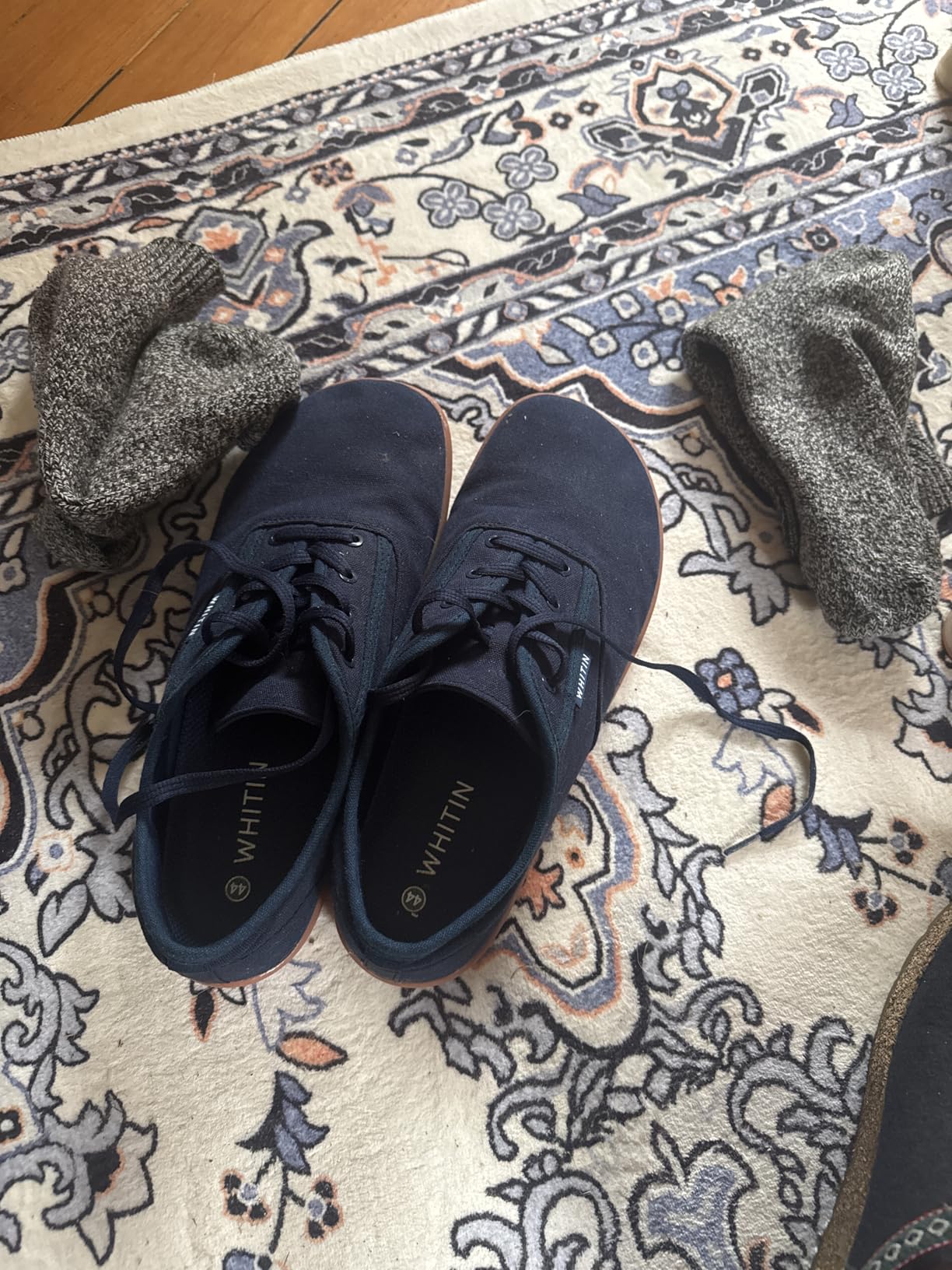
Quick Specs at a Glance
- ⚖️ Weight: 8.2 oz (men’s size 9)
- 📏 Heel-to-toe drop: 0mm (true zero drop)
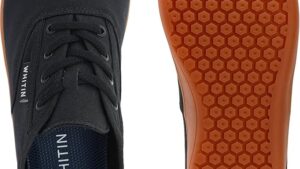
- 🧪 Sole material: Flexible rubber (polka-dot outsole pattern)
- 👟 Upper material: Canvas with EVA insole (removable)
- 🏃 Category: Minimalist lifestyle / casual
- 🎯 Best for: Daily casual wear, weightlifting, all-day walking
- ⏱️ Testing period: 8 weeks, 40+ days, 120+ hours across gym, office, errands, and varied weather
First Impressions: What $45 Actually Gets You
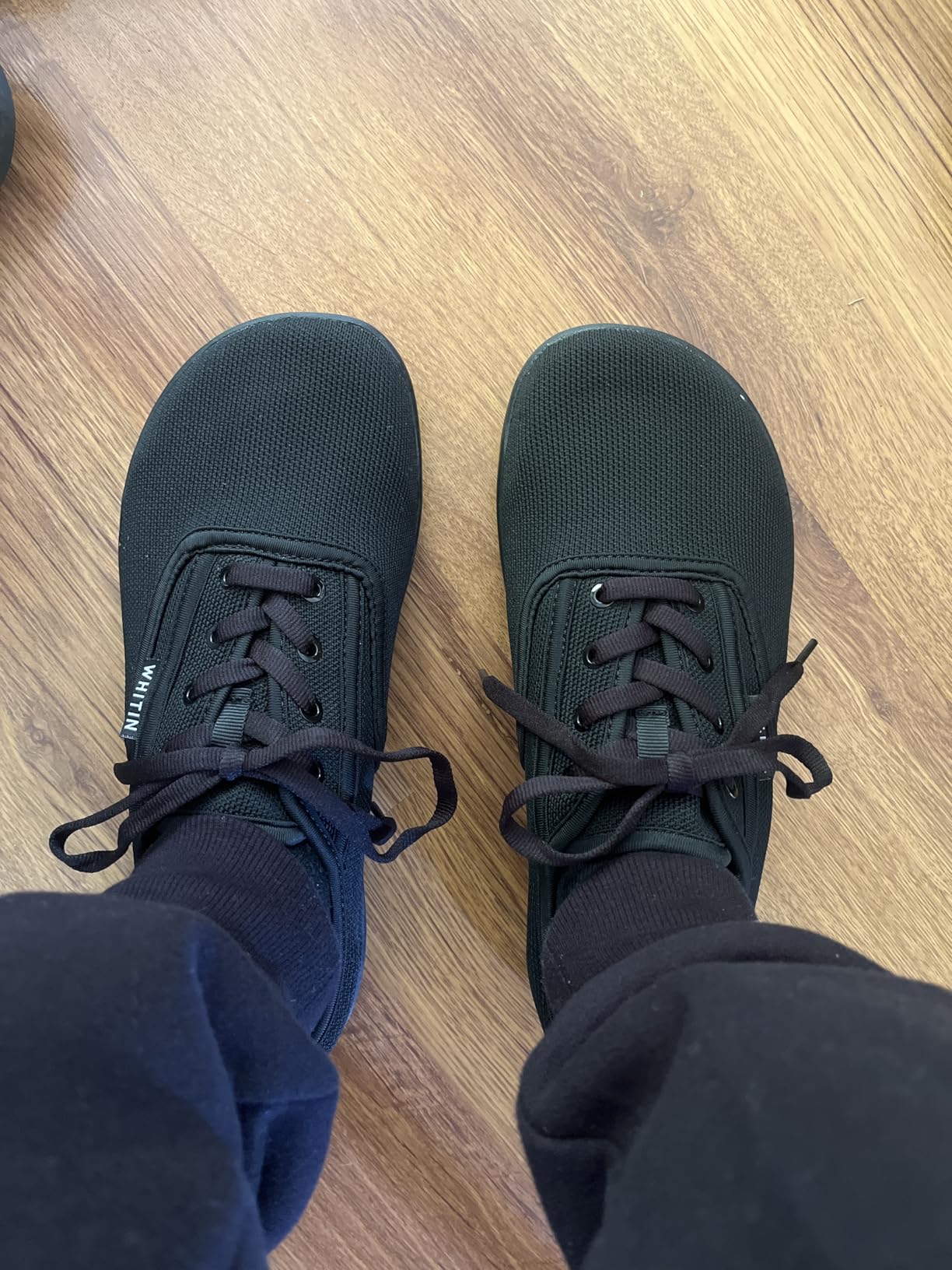
These arrived in a plain poly bag — no box, no tissue paper, just the shoes. That’s not a complaint; it’s a signal about where WHITIN invests. The product, not the packaging.
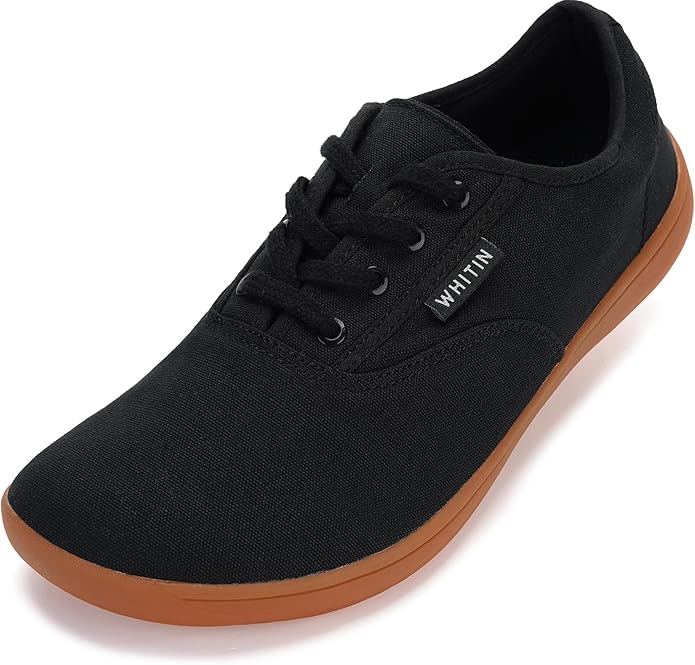
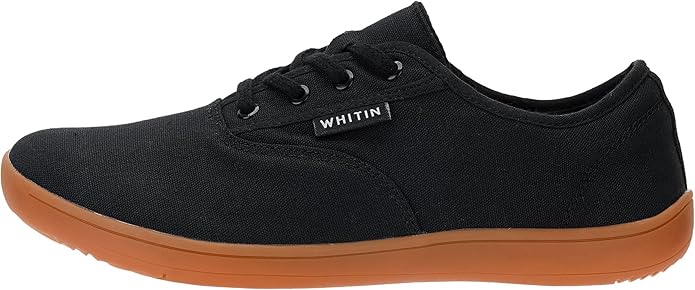
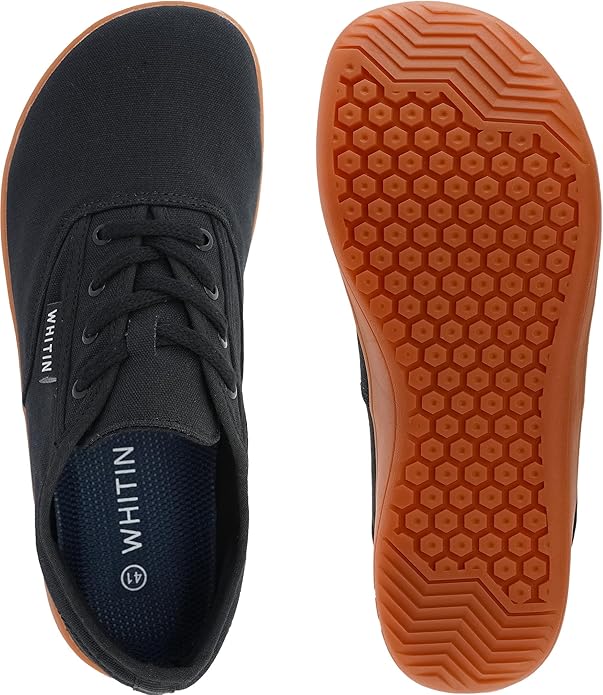
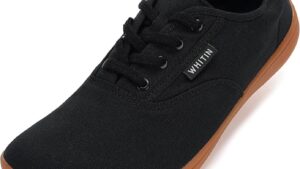
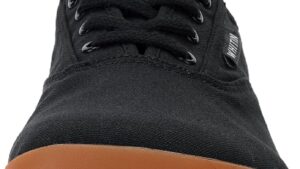
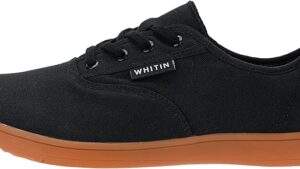
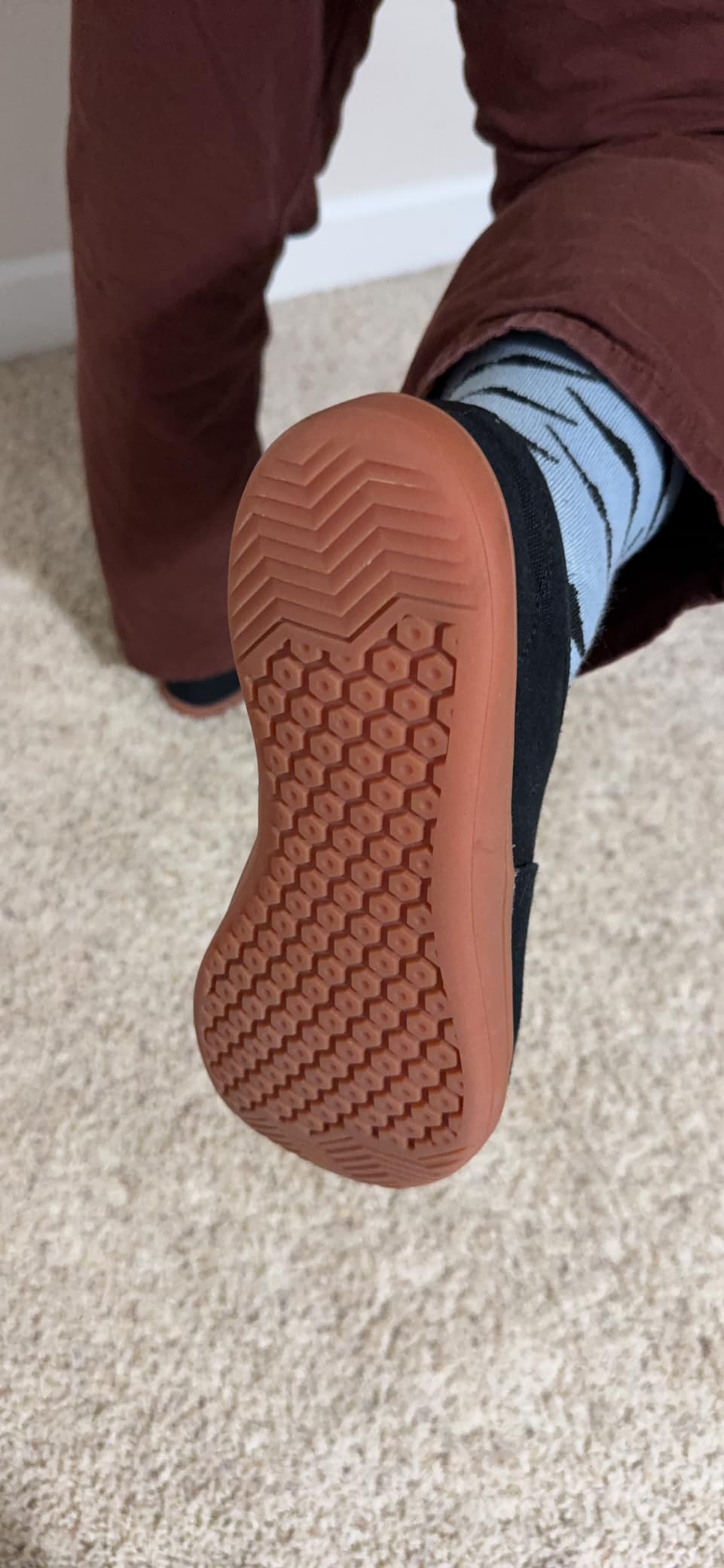
Out of the bag, the black and gum colorway is genuinely clean. The silhouette reads like a canvas sneaker — low-profile, flat, versatile — but the front end is noticeably wider than any standard shoe I own. The gum rubber sole has a polka-dot pattern that’s functional (aids traction differentiation) and adds some visual character to the otherwise minimal design.
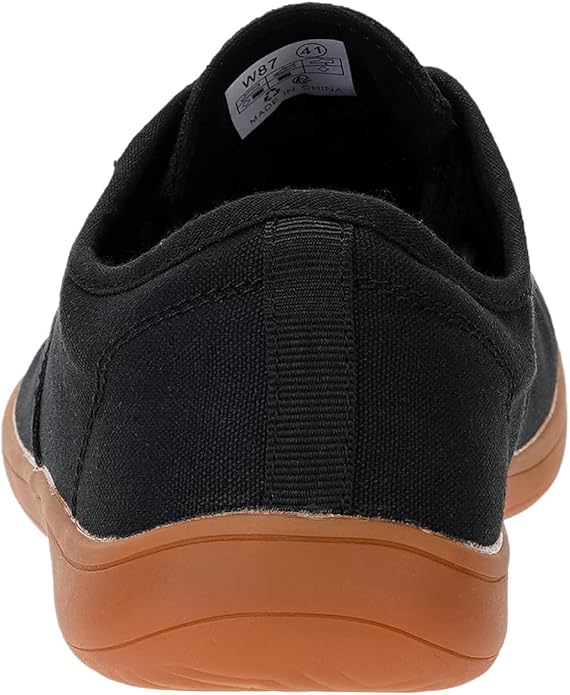
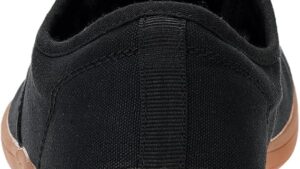
For construction at this price, things look competent. Stitching runs consistently around the canvas panels with no obvious skipped sections. The canvas-to-rubber bond at the midsole line felt solid out of the box. The tongue padding and heel collar land in the “just enough” zone — adequate to prevent friction hot spots during long wear, not plush by any measure.
What you won’t find here: reinforced toe caps, premium canvas weave, or any of the construction details that justify $90+ in footwear. The canvas is mid-weight for the material — roughly comparable to budget Vans territory — which means it will flex and wear at stress points over time rather than resisting them. That’s not a design flaw; it’s canvas at $45 behaving like canvas at $45.
The overall first impression is honest: these are a barefoot shoe built to deliver a specific set of functional benefits without premium materials. They succeed at that scope.
The Wide Toe Box: Here’s Where Your Decision Gets Made
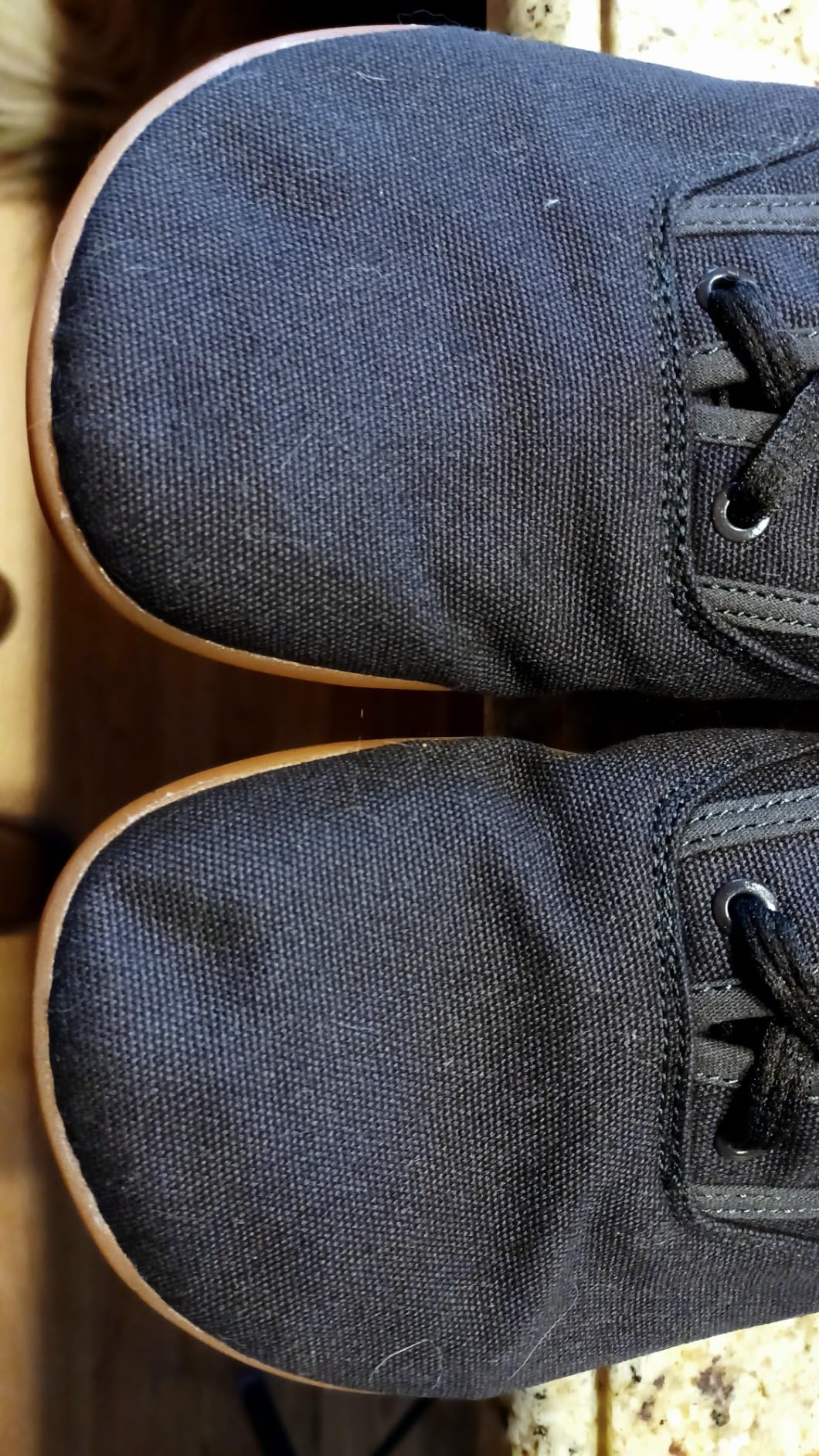
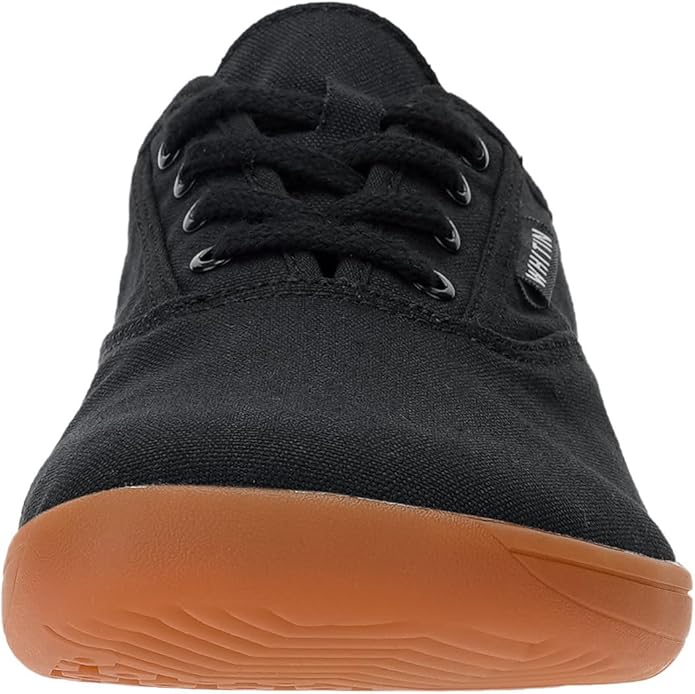
The wide toe box is the central feature — and it genuinely delivers. From a standard sneaker, the difference is immediate and measurable: my toes can spread fully without making contact with the sides of the shoe. That spreading sensation felt unusual on day one. By day ten, it felt normal. By week four, going back to narrow sneakers felt actively cramped.
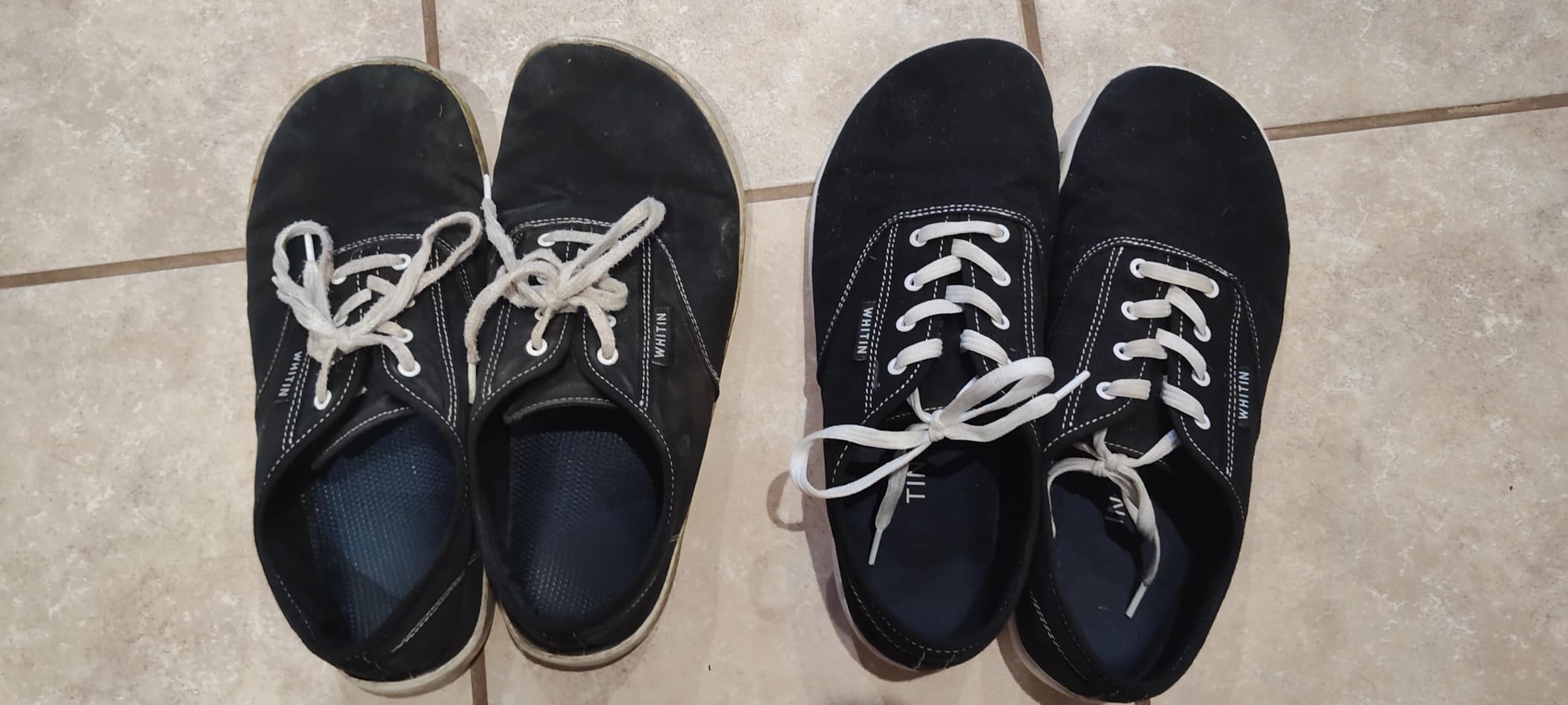
The visual trade-off is real and worth being direct about. From above, the wide forefoot creates a broader silhouette than conventional shoes. The association some reviewers make with a “duck foot” look isn’t exaggerated. If the appearance of a traditional tapered sneaker matters significantly to you, this is a genuine consideration.
After eight weeks, my honest position: the comfort wins the argument. But that’s my preference. You should go in knowing the aesthetic is unconventional.
**Sizing decision guide:**
– **Narrow feet:** Consider half a size down — the wide box may feel sloppy in length
– **Standard width:** True to size
– **Wide feet:** True to size; this is a meaningful benefit at the price point
– **Between sizes:** Stay with your regular size — the wide forefoot absorbs the extra room comfortably
Heel fit is secure throughout — no slippage during multi-hour wear sessions. Sockless wear works; the EVA-based inner lining prevents direct canvas chafing. That said, sockless use accelerates inner lining wear, so factor that into your lifespan expectations if you run warm.
Zero-Drop Adaptation: A Week-by-Week Account
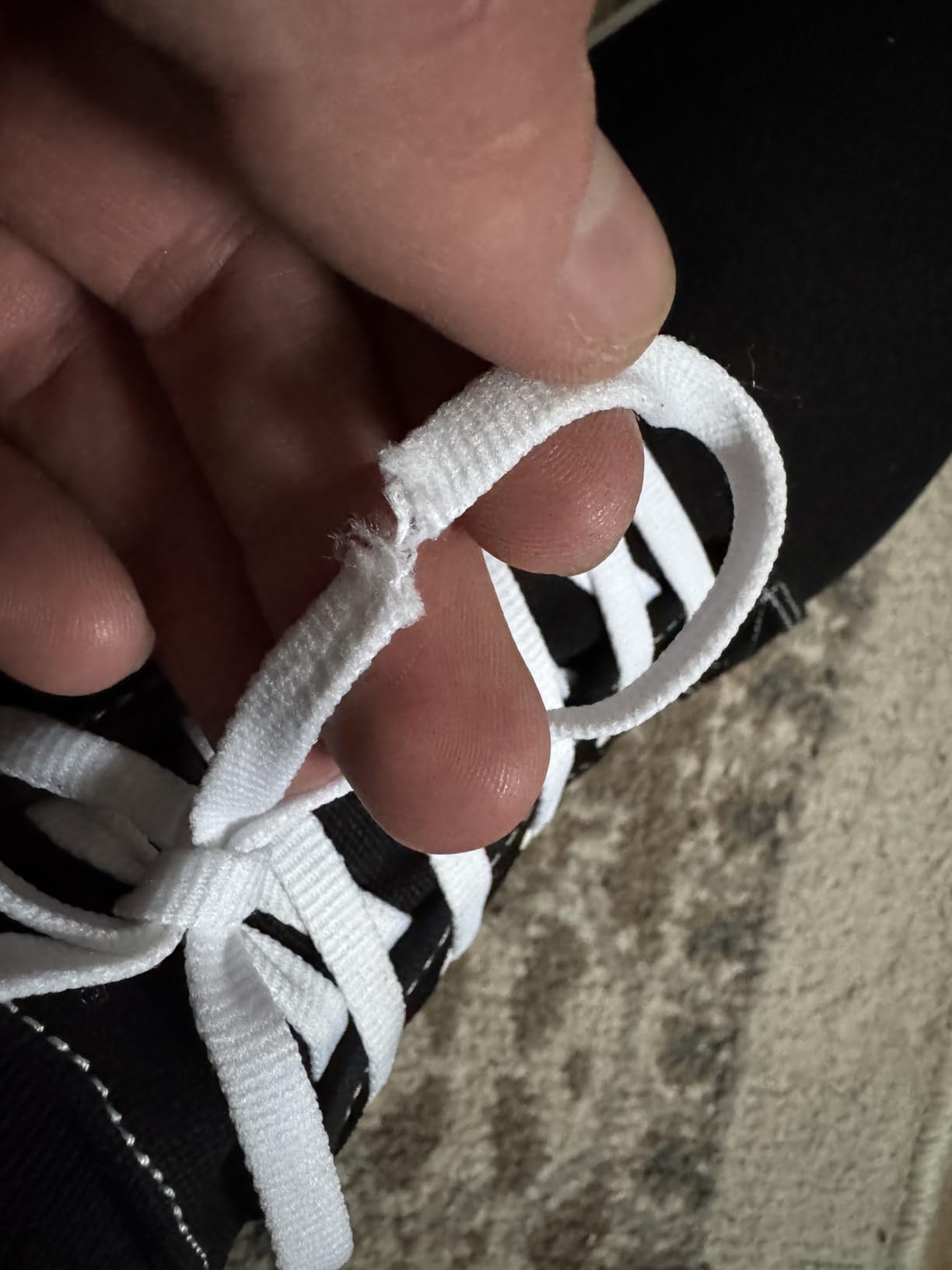
The zero-drop design is not marketing filler — the flat heel-to-toe platform produces a measurable change in how your foot contacts the ground and how your lower leg responds. There’s an adaptation curve that deserves honest treatment.
**Days 1–3:** Calf awareness — I’d call it a 5 or 6 out of 10, not pain, more like delayed onset muscle soreness from muscles that haven’t been working in that range. The first day I wore these for three hours; by evening I felt it in my calves and Achilles. That’s the expected response.
**Days 4–7:** The awareness dropped significantly. My footstrike was already shifting — without consciously choosing to, I was landing more toward my midfoot and forefoot rather than heel-first. That’s the fundamental biomechanical benefit zero-drop proponents point to.
**Week 2 onward:** Normalized. The adaptation was real but short-lived. By week three, all-day wear produced no calf fatigue.
The ground feedback from the ~8mm rubber sole is the other element worth addressing. You’ll feel small rocks, surface texture changes, pavement joints — the tactile detail that thick midsoles mask completely. Some users value this as proprioceptive feedback; others find it tiring on unrelenting hard concrete over long periods. That’s a genuine fork in user experience.
There’s also an interesting connection to the broader concept of grounding — the idea that direct contact with natural surfaces through thin soles provides sensory and potentially health benefits. The science on this is still developing, but the proprioceptive benefits of ground-feel footwear are well-established.
Eight Weeks of Real Testing: What Actually Happened
I structured testing across five distinct scenarios. Results varied meaningfully by use case.
Deadlifts, Squats & Gym Lifts: This is the strongest use case for these shoes as training shoes. Zero heel elevation means no rocking backward during a deadlift — you pull in a more anatomically stable position. Squats benefited from the same: more hip crease depth without fighting a built-in forward lean from heel rise. Goblet squats, Romanian deadlifts, and hip thrusts all felt more grounded than in my previous gym shoes.
The hard limit: lateral movement. Box jumps, agility ladders, or any side-to-side cutting are not what these were made for. The sole’s minimal lateral support becomes a real issue for dynamic movements. These are deadlift shoes that happen to be casual sneakers — not all-purpose gym footwear.
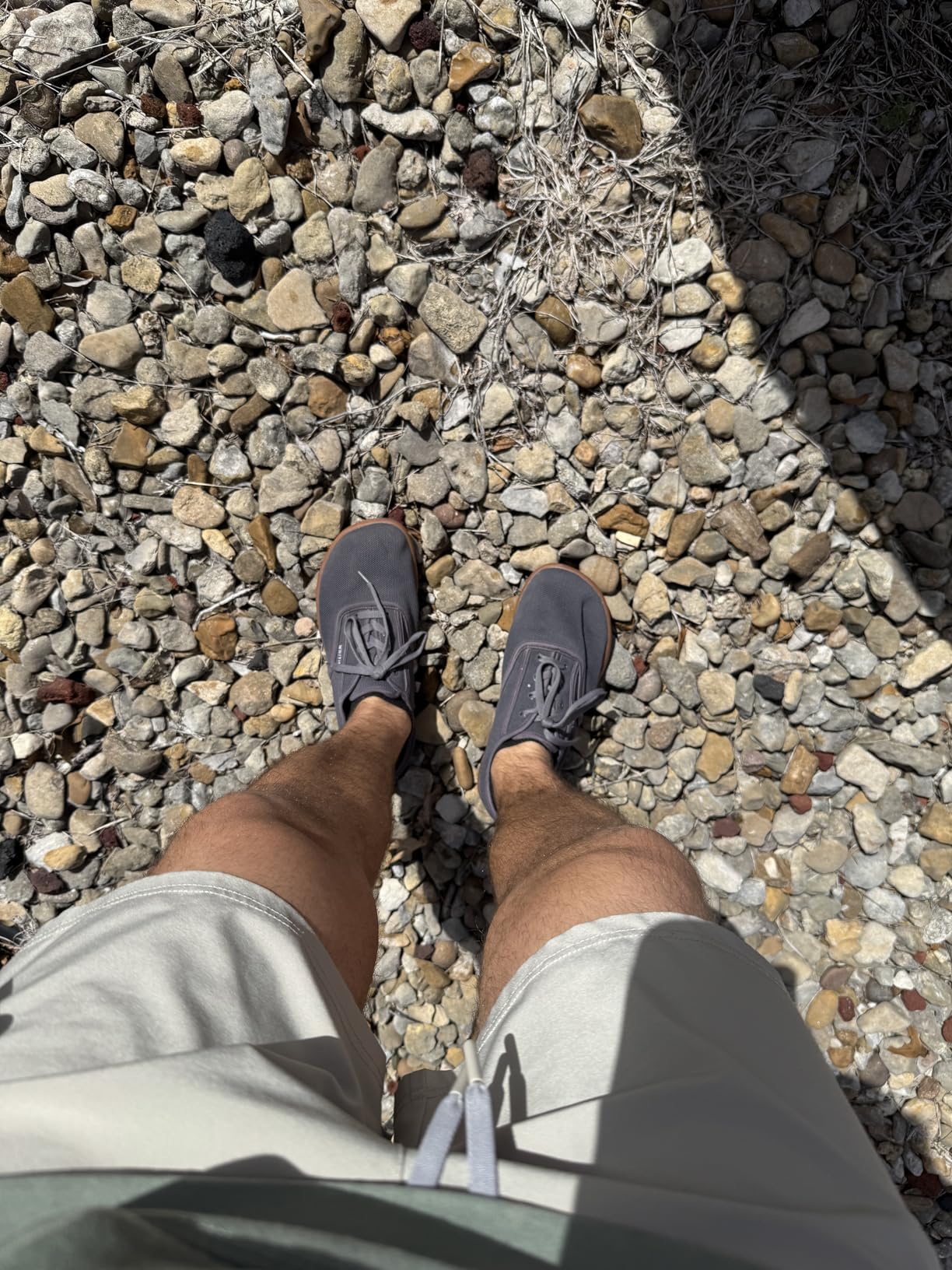
Daily Errands and Walking (2–4 Hour Outings): Excellent performance here. The 8.2 oz weight is genuinely light — you feel the difference from heavier footwear over a 3-hour farmer’s market and grocery run. The wide toe box prevents the hot-spot pressure that builds along the outer toes in tapered shoes during extended walking. No discomfort throughout typical errand runs.
Office and Standing Desk Use (6+ Hours): All-day comfort is accurate for this use case. The EVA insole handles low-impact stationary use well. Under pants these read as flat casual sneakers — a colleague asked if they were “new Vans,” which is basically an accurate characterization. For casual office environments they blend in without issue; for formal dress codes they fall short.
Rain and Wet Weather: The hard limit that matters most for daily wearers: canvas provides zero water resistance. A 10-minute walk through light rain left my feet fully wet. The canvas soaks through fast — within 2–3 minutes of sustained rain contact — and drying takes 4+ hours completely. These are dry-weather shoes, full stop. A canvas waterproofing spray extends the window slightly but doesn’t change the fundamental material limitation.
Surface Variety: Dry concrete and asphalt — reliable, consistent grip. Hardwood and gym floors when dry — solid traction. Wet tile — a genuine slip risk; I caught myself on a damp bathroom tile and stepped carefully from that point. The polka-dot rubber outsole performs well in dry conditions and significantly worse when wet. Don’t treat the patterned sole as equivalent to rubber compounds designed for wet grip.
WHITIN’s Marketing Claims vs. Eight Weeks of Reality
Five core claims. Here’s the verdict on each:
“Wide toe box for natural toe splay” → DELIVERED. The toe box is genuinely wide enough for toes to spread without restriction. No qualification needed here — this claim holds.
“Zero drop for natural posture” → MOSTLY DELIVERED. The design functions as intended. The gap is in expectation-setting: natural posture improvement happens gradually through adaptation, not immediately on day one. Don’t expect to feel different on the first wear.
“Flexible rubber sole for natural range of motion” → DELIVERED. The sole flexes with the foot rather than against it. No artificial stiffness limiting walking mechanics — this is accurate.
“All-day comfort” → CONTEXT DEPENDENT. For office use, casual walking, and gym work: genuinely accurate. For extended hard-surface standing beyond 4–5 hours: the minimal cushioning becomes a limiting factor. The claim is true for the intended use cases and overstated for high-demand ones.
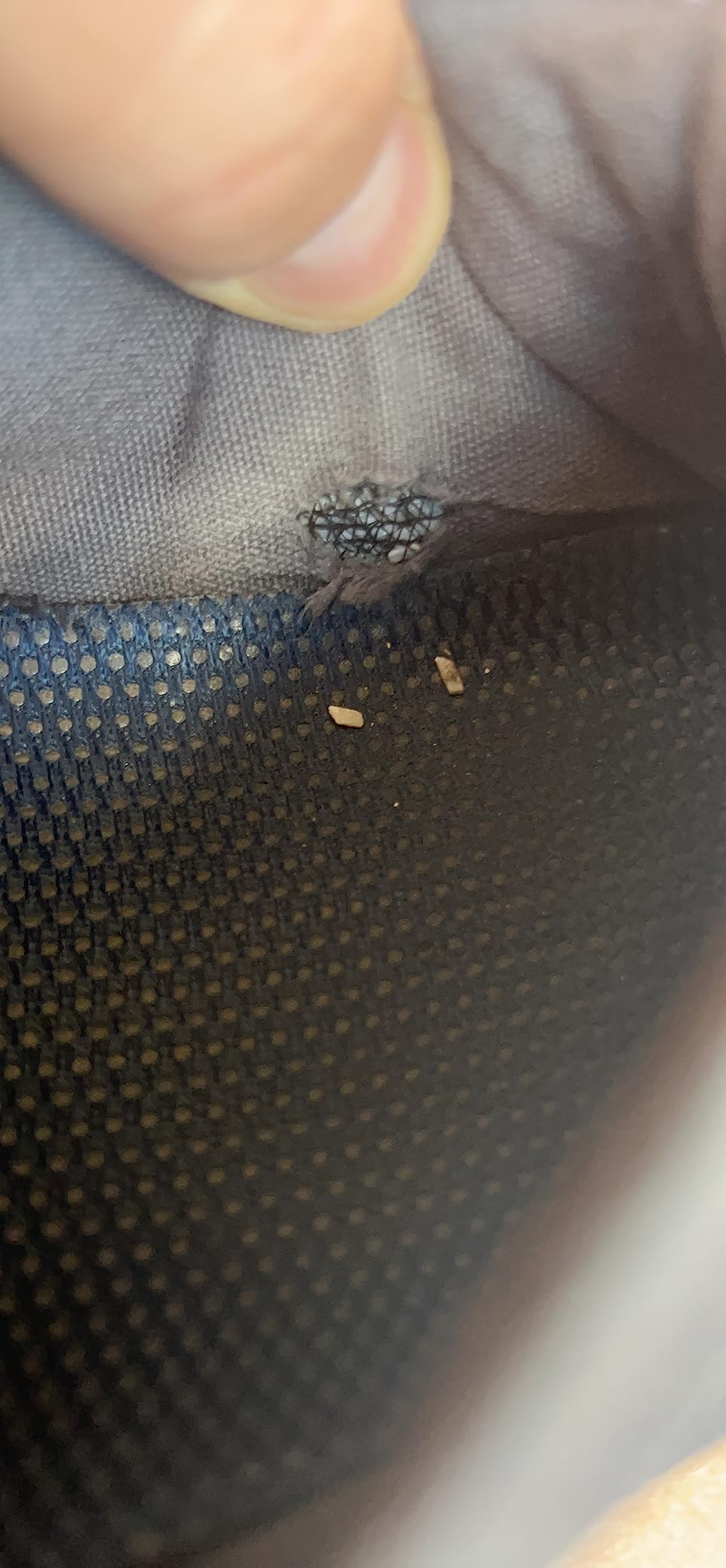
“Superior durability” → OVERSTATED. Construction is solid for $45. But “superior” implies an above-average lifespan, which the canvas material doesn’t support under daily intensive use. Early wear signs at stress points by week 8 are consistent with the material and price tier — not surprising, but not superior either.
How Long Will These Actually Last?
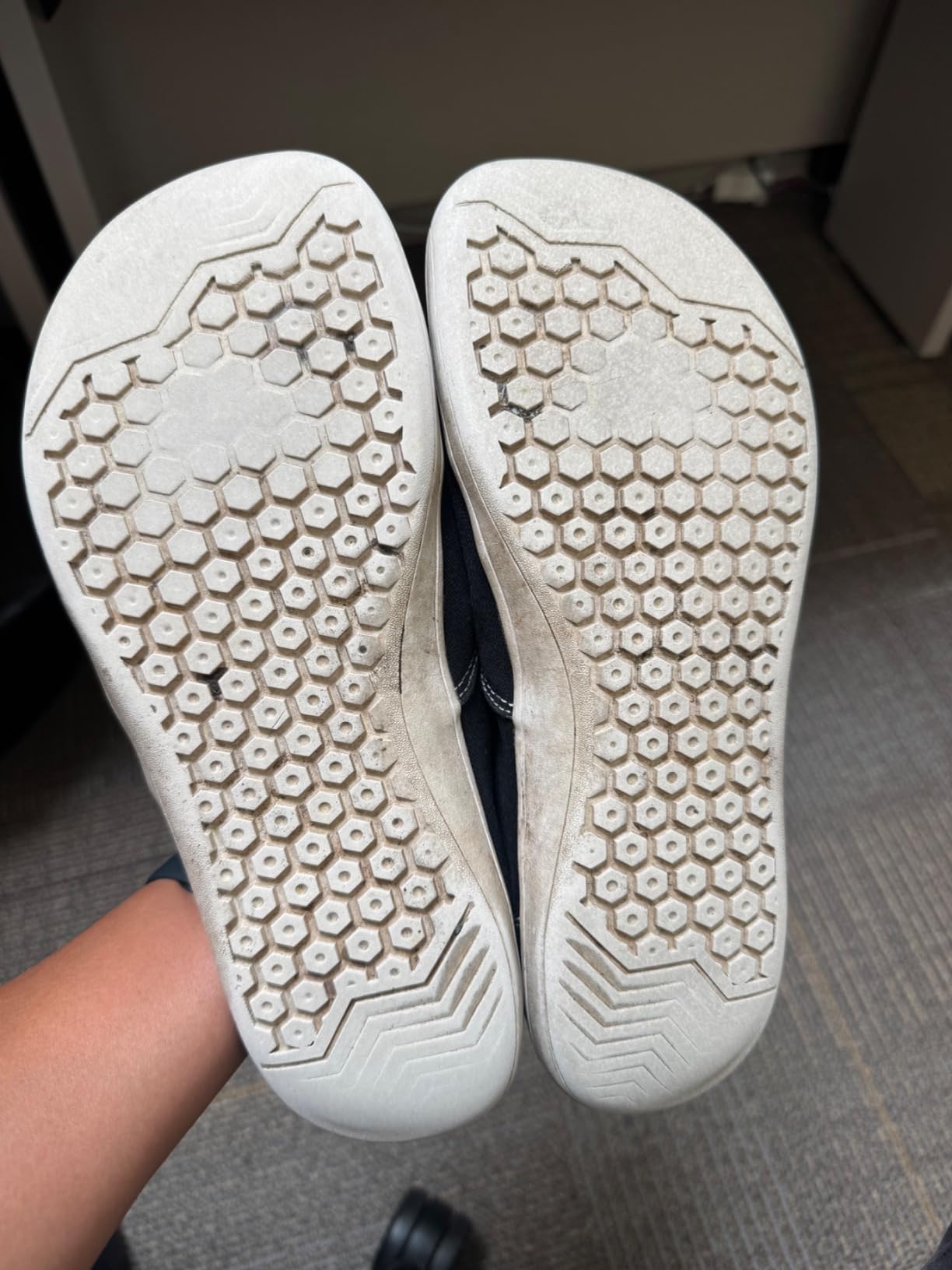
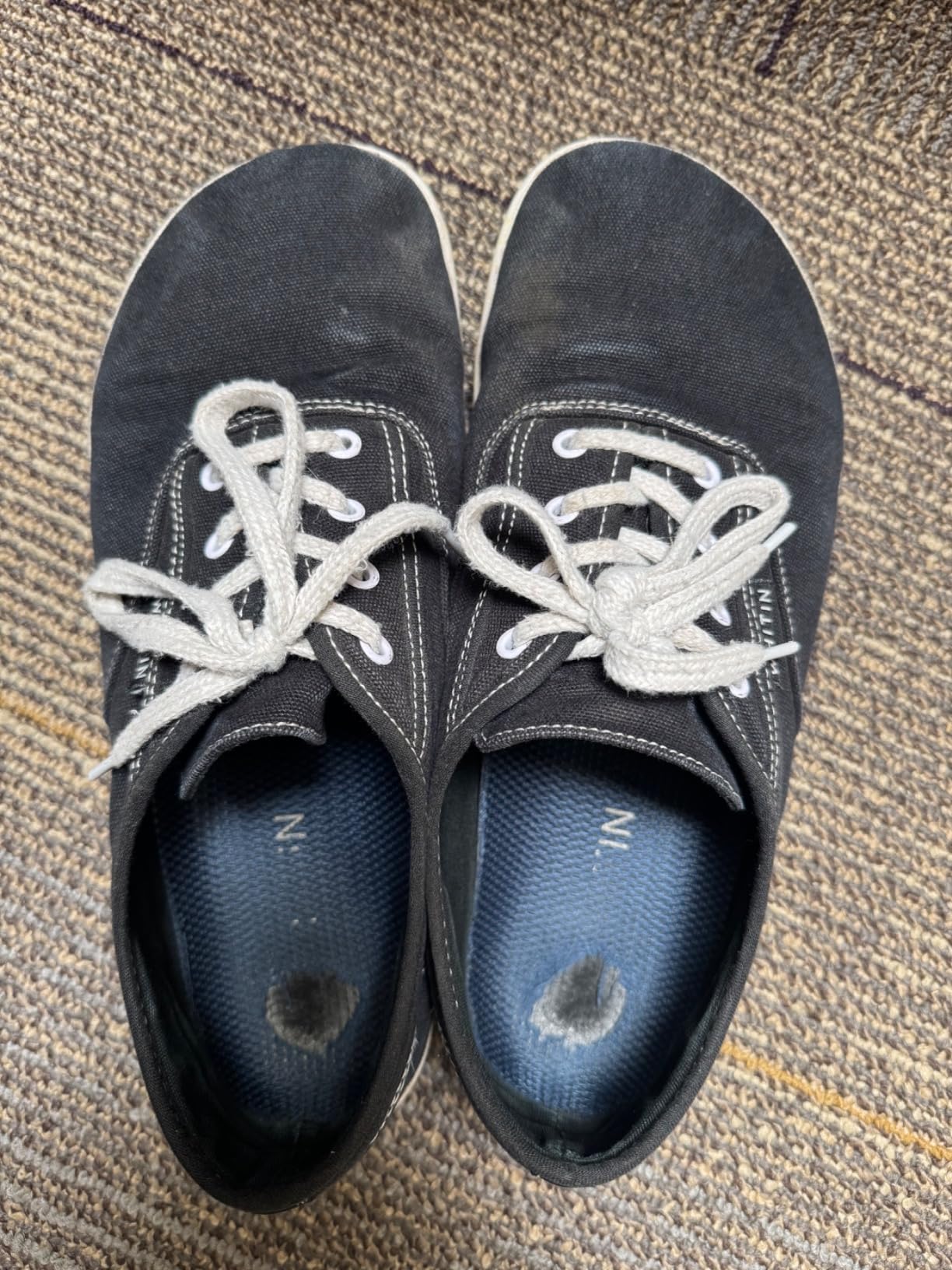
After eight weeks, here’s where wear is showing: the toe crease — where the shoe bends with every step — shows the earliest canvas stress. The outer heel edge has light surface marking from ground contact. By week six, the inner EVA insoles had compressed noticeably, particularly in the heel. Removing them (they’re fully removable) revealed the canvas base underneath — some users intentionally go insole-free for a more direct barefoot feel.
The rubber outsole fared better. The polka-dot tread showed minimal wear through week 8, suggesting the sole outlasts the canvas upper under most use patterns.
Expected lifespan by use intensity:
– **Light office and casual use:** 12–18 months
– **Moderate mixed daily use:** 8–12 months
– **Heavy daily (gym + outdoor daily):** 5–7 months
Cost math at the moderate end: $45 over 300 days of use = $0.15 per day. For an entry-level sneaker delivering genuine functional benefits, that’s a reasonable exchange.
Care extends the lifespan: machine wash cold in a laundry bag works. Air dry only — heat damages the canvas-to-rubber bond at the midsole seam, which is the most likely separation point if the shoe fails before the canvas wears through.
Detailed Scoring Breakdown
| Category | Score | Notes |
|---|---|---|
| Comfort | 8.2/10 | Wide toe box + zero-drop = genuine casual and gym comfort; minimal cushioning limits hard-surface duration |
| Style / Appearance | 6.8/10 | Clean, versatile colorways; wide toe box creates distinctive silhouette that reads as unconventional |
| Durability | 6.5/10 | Canvas stress marks at toe crease by week 8; acceptable for price tier, not multi-year footwear |
| Performance | 7.1/10 | Excellent for deadlifts, walking, office use; genuine barefoot experience within realistic limitations |
| Value for Money | 8.7/10 | Real barefoot benefits at $45; most accessible entry point in the category |
| OVERALL RATING | 7.6/10 | Solid entry-level barefoot sneaker with appropriate trade-offs for its price |
Who Gets the Most Out of These — And Who Shouldn’t Bother
| 👍 The Good | 👎 The Challenges |
|---|---|
| • Genuinely wide toe box — toes spread without restriction • True zero-drop sole promotes natural foot position • Excellent gym base for deadlifts and squats • Lightweight at 8.2 oz reduces walking fatigue • Removable EVA insole for customization • Machine washable for easy care • Outstanding value at ~$45 |
• Canvas soaks through immediately in rain • Wide toe box creates a broader silhouette • Minimal cushioning on hard surfaces over 4+ hours • Slippery on wet tile and polished floors • Adaptation period for zero-drop newcomers (1–2 weeks) • Canvas durability ceiling at daily intensive use • No lateral support for dynamic sport movements |
These work well for:
- Barefoot shoe beginners exploring zero-drop without a premium investment
- Men with wide feet who routinely experience toe cramping in standard footwear
- Gym users focused on deadlifts, squats, and stable compound lifting
- Office workers in casual environments wanting all-day foot freedom
- Budget-conscious buyers who want 80% of the barefoot benefit at 30% of the cost
Skip these if you need:
- Multi-year durability under daily hard use
- Any water resistance or rain protection
- Heavy cushioning for long-distance running — look at dedicated running shoes for that use case, or the Joomra WHITIN Men’s Running Shoes which are built specifically for it
- Lateral support for agility sports
- Formal or business-casual styling
If the WHITIN Canvas Isn’t Enough: What’s Next
These serve a specific role: the lowest-cost genuine entry into barefoot footwear. If eight weeks convinces you the concept works for your feet, here’s where to invest:
More durability: Xero Shoes Prio ($89) uses abrasion-resistant materials and a construction profile that holds up significantly longer under daily use.
More cushioning, same zero-drop: Altra builds zero-drop into trail and road running shoes with real midsole cushioning — for those who want the drop without the minimal sole feel ($120–$150).
Premium materials and build: Vivobarefoot Primus Lite ($120+) steps up the construction quality significantly. Longer lifespan, thinner sole profile, more refined aesthetic.
Ultra-minimalist alternative: The Flux Adapt Runners occupy a similar budget tier with a different aesthetic approach for those who want stripped-down feel over the canvas casual look.
The WHITIN canvas sneaker isn’t trying to compete with any of these at their price points. It’s the proof-of-concept purchase that tells you whether barefoot is worth further investment.
Frequently Asked Questions
Do WHITIN Canvas Barefoot Sneakers run true to size?
For length, yes — sizing runs true to standard US measurements. The wide toe box provides extra room width-wise, so standard-width wearers don’t need to adjust. Narrow-footed buyers should consider going half a size down. If you’re between sizes, stay with your regular size; the wide forefoot handles it comfortably.
How long do these realistically last with regular wear?
Expect 8–12 months for mixed daily use (gym plus errands plus occasional office). Office-only wear can push to 12–18 months. Heavy outdoor daily use trends toward 5–7 months. One long-term user documented 6 months of consistent daily wear with minimal degradation, which aligns with moderate-use expectations at the material tier.
Are these good for running?
No. The minimal cushioning provides no meaningful impact absorption for running on hard surfaces. The zero-drop design and flat sole are assets for lifting and walking, not shock attenuation over distance. For running, look at purpose-built running footwear — the impact forces involved are a different category of demand.
How do they compare to Vans or Converse?
Visually similar silhouette, meaningfully different construction. Vans and Converse use a thin vulcanized rubber sole with slight heel rise. WHITIN uses a true zero-drop platform with the wide toe box as the design priority. These are lighter than standard Vans, more foot-friendly in terms of toe spread, and generally less durable than quality Vans at equivalent wear intensity.
What’s the actual break-in like?
The shoe itself has no break-in — the canvas is soft from day one. The adjustment is your foot and calf adapting to zero-drop. Expect 7–14 days of calf awareness if you’re transitioning from traditional shoes with heel elevation. Start with 1–2 hours on day one, not a full workday. By week two, most users are wearing them all day without any lower-leg fatigue.
Can these be worn without socks?
Yes. The EVA-lined interior prevents direct canvas friction against skin. Most users find sockless wear comfortable from the start. Worth noting: sockless use accelerates interior lining wear and increases odor retention. A moisture-wicking liner sock extends both the comfort window and the usable lifespan of the interior.
Are they suitable for flat feet or high arches?
The zero-drop design allows natural foot mechanics rather than correcting them artificially — which theoretically benefits both flat and high-arch feet. If you currently rely on arch support, expect an adaptation period and start with short daily sessions. The insoles are removable, so you can swap in orthotic insoles if your feet need the support during transition.
Any care tips to extend the lifespan?
Machine wash cold in a mesh laundry bag — it works and doesn’t damage the canvas. Air dry completely before next wear; heat from dryers damages the canvas-to-rubber bond at the midsole seam. Spot-treating early signs of seam separation with fabric glue can meaningfully extend the shoe if you catch it early. Keep out of prolonged direct sun when storing — UV exposure speeds canvas degradation.
Final Verdict
Eight weeks. 40+ days. 120+ hours of real use across five distinct contexts. Here’s what that time established:
The wide toe box is real. The zero-drop benefit is real. The barefoot ground-feel is real. The value at $45 is genuinely strong. And the durability ceiling, zero water resistance, and slippery wet-surface performance are equally real.
This is not a shoe for every buyer. It’s specifically right for someone who wants to test barefoot principles without committing $120+, or who needs wide-toe-box comfort in a casual-looking package without paying specialty pricing.
For that buyer — and I’m one of them — these earn an honest recommendation. They shifted how I think about zero-drop footwear and convinced me the adaptation is worth it. Whether they’re worth $45 to you depends entirely on which column of the pros-and-cons table you’re reading from.
Overall Rating: 7.6/10
Review Scoring Summary
| Category | Score | Notes |
|---|---|---|
| Comfort | 8.2/10 | Wide toe box + zero-drop = genuine all-day comfort for casual and gym use |
| Style / Appearance | 6.8/10 | Clean and versatile, but wide silhouette reads as unconventional |
| Durability | 6.5/10 | 8–12 months moderate use; canvas stress points visible at toe crease by week 8 |
| Performance | 7.1/10 | Excellent for deadlifts, walking, office use; limited for dynamic sport and running |
| Value for Money | 8.7/10 | Outstanding at $45; delivers legitimate barefoot benefits at entry price |
| OVERALL RATING | 7.6/10 | Recommended for barefoot beginners and wide-foot wearers on a budget |
Be the first to review “WHITIN Men’s Wide Canvas Barefoot Sneakers”
Related products
Sneaker
Sneaker
Sneaker
Running Shoes
Running Shoes
Reviews
There are no reviews yet.