
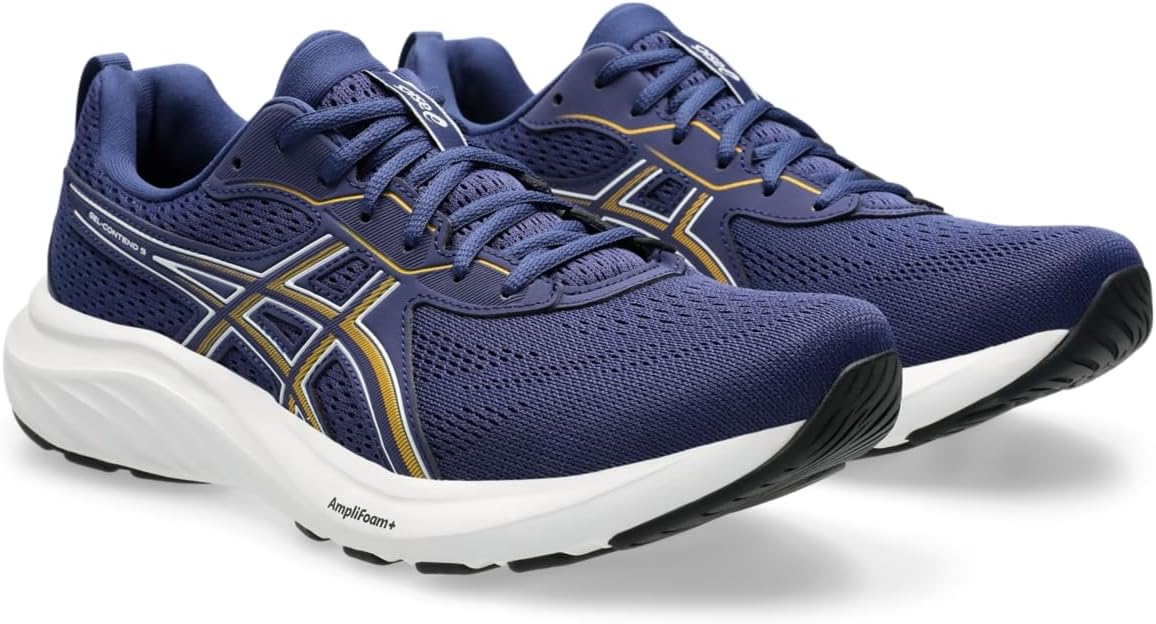
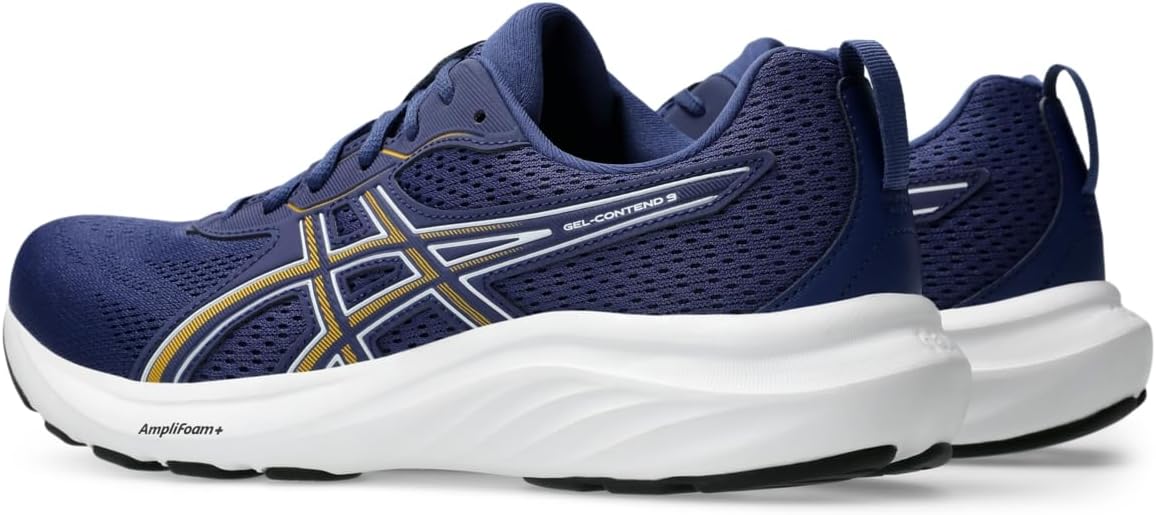
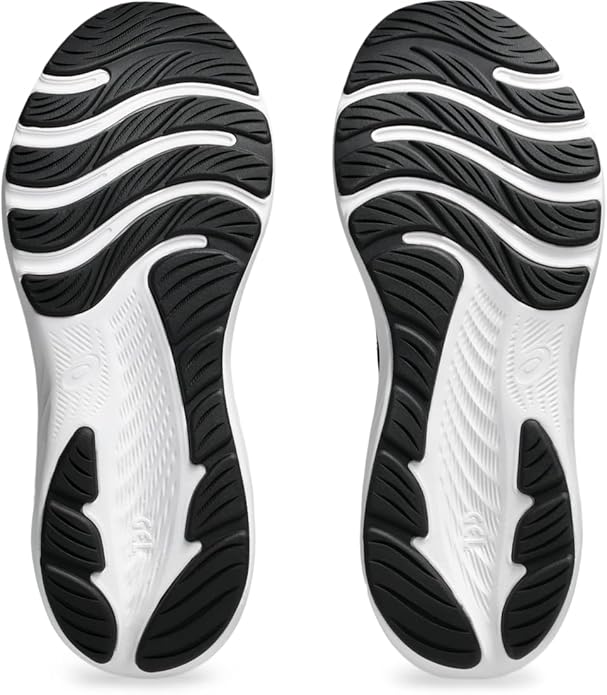
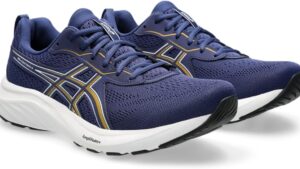
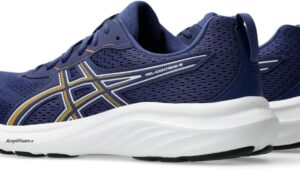
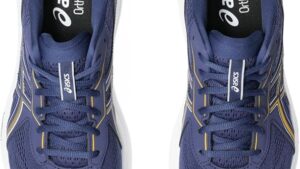
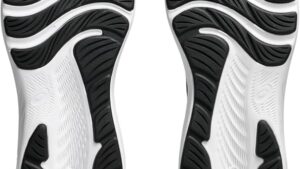
ASICS Men’s Gel-Contend 9 Running Shoes
- ⚖️ Weight: 9.7 oz (men’s size 9)
- 🧪 Midsole: AMPLIFOAM+ cushioning
- 👟 Upper: Engineered jacquard mesh
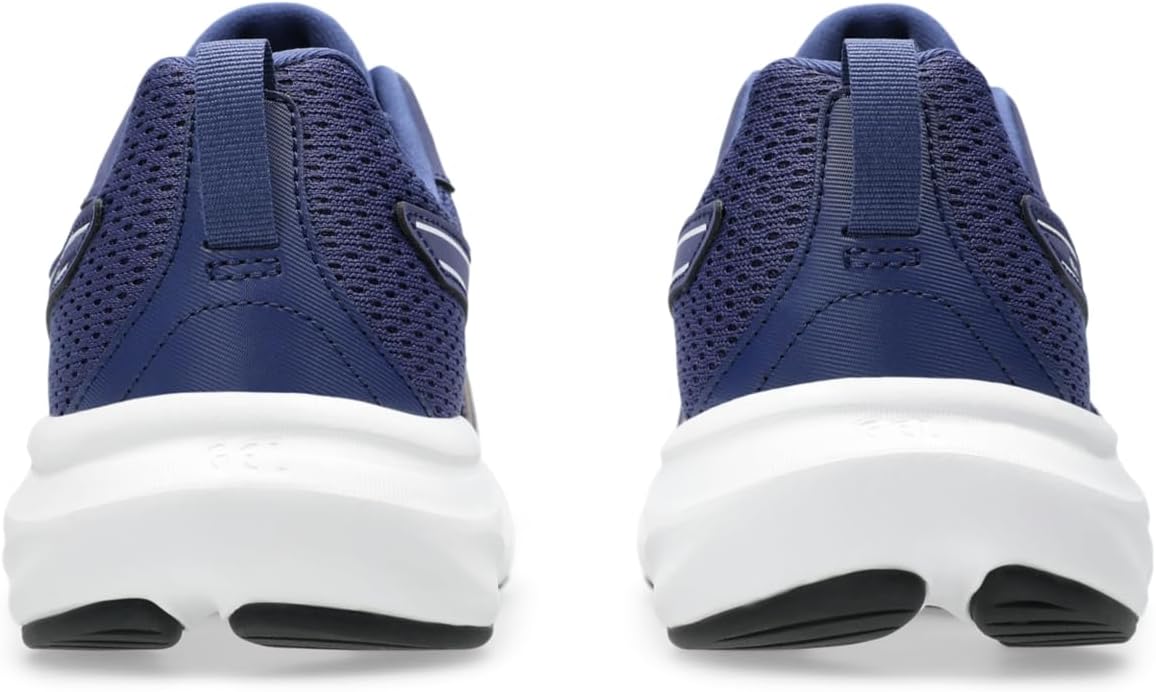
- 🔧 Key tech: Rearfoot GEL™ technology
- 📊 Lab data: 31.1mm heel stack, 7.8mm drop, 48.3% energy return
- 👥 Target: Daily walkers, beginner runners, neutral gait
- 🎯 Best for: All-day comfort, budget buyers, wide feet
Three weeks ago at the gym, my workout partner couldn’t stop raving about his new walking shoes — ASICS under $70 that he claimed felt better than the $120 pair he’d replaced. Coming from someone who’d watched me cycle through four budget trainers in eight months, each failing in progressively disappointing ways, I was skeptical. But after putting the Gel-Contend 9 through six weeks of daily walks, treadmill sessions, and even a few impromptu jogs, I’ve learned why this budget shoe punches above its weight class for the right user.
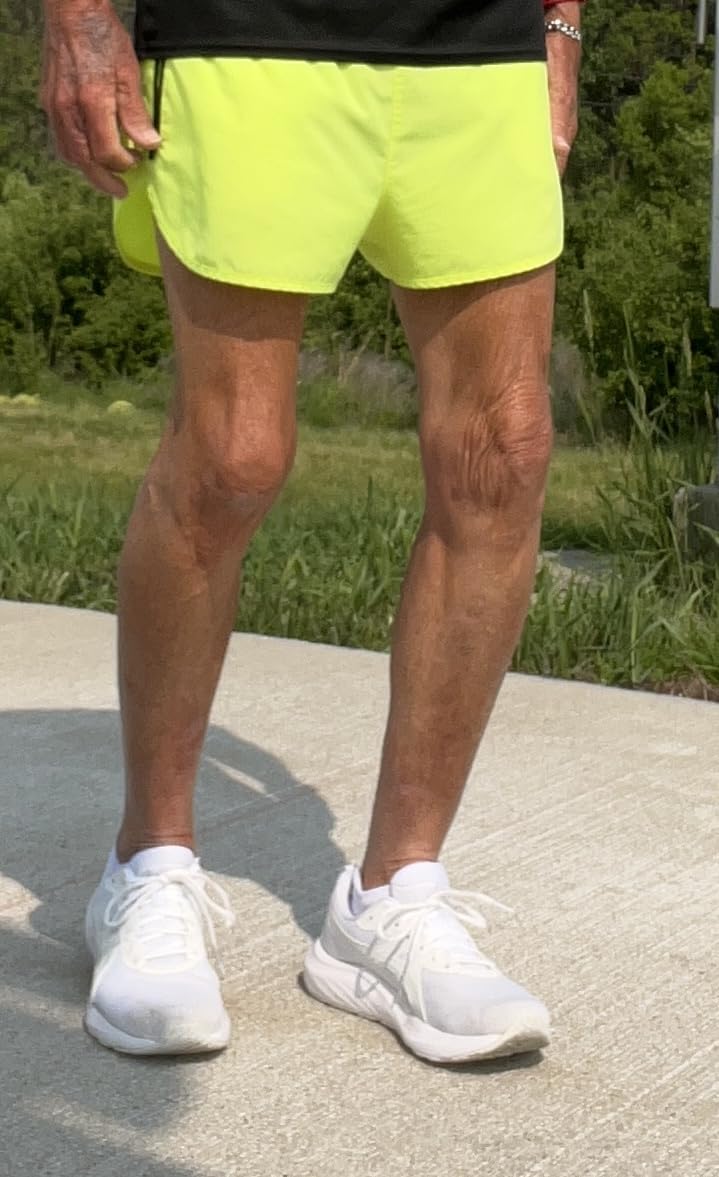
First Impressions: Materials That Don’t Lie
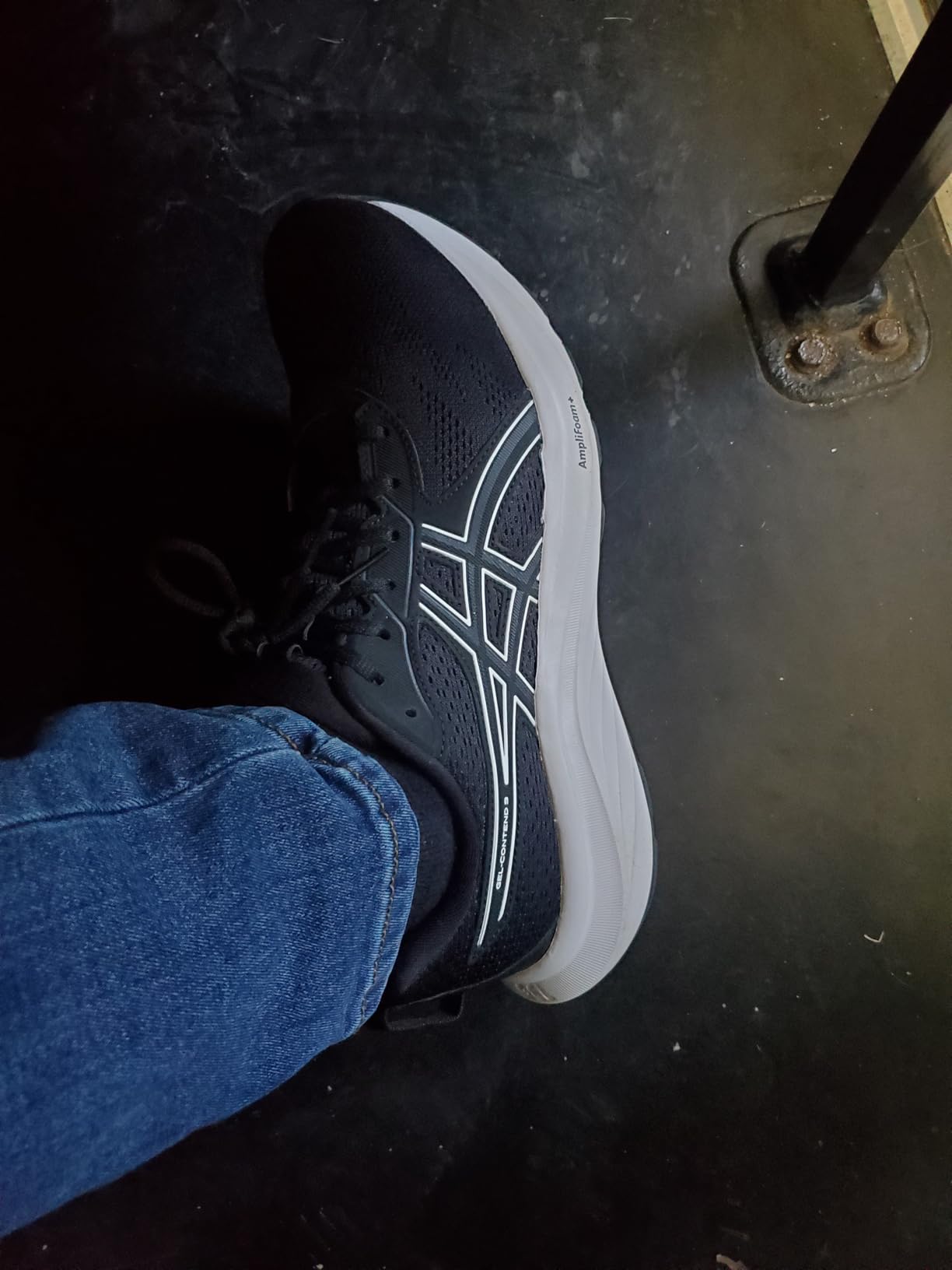
Pulling these from the box, the first thing I noticed was how the mesh upper had a softer hand-feel than the last three budget trainers I’d owned. At 190 lbs with feet that tend toward the wider side, I usually brace for that initial squeeze — but these wrapped around my foot without creating pressure points anywhere along the midfoot or toe box.
The build sits exactly where you’d expect at $65. The materials aren’t trying to masquerade as premium leather or high-tech synthetics. What you get is honest construction: a breathable mesh upper, clean stitching at the overlays, and a midsole-to-outsole bond that looks solid after six weeks of regular use. After my last budget shoe’s sole started peeling at week three, I’ve learned to check this closely.
The synthetic overlays provide enough structure to keep the shoe from feeling like a bedroom slipper while staying flexible enough that I never felt locked in place. For context, I typically wear running shoes for everything from morning neighborhood loops to grocery runs, so I need something that transitions well.
The Lacing Setup: Finding Your Sweet Spot
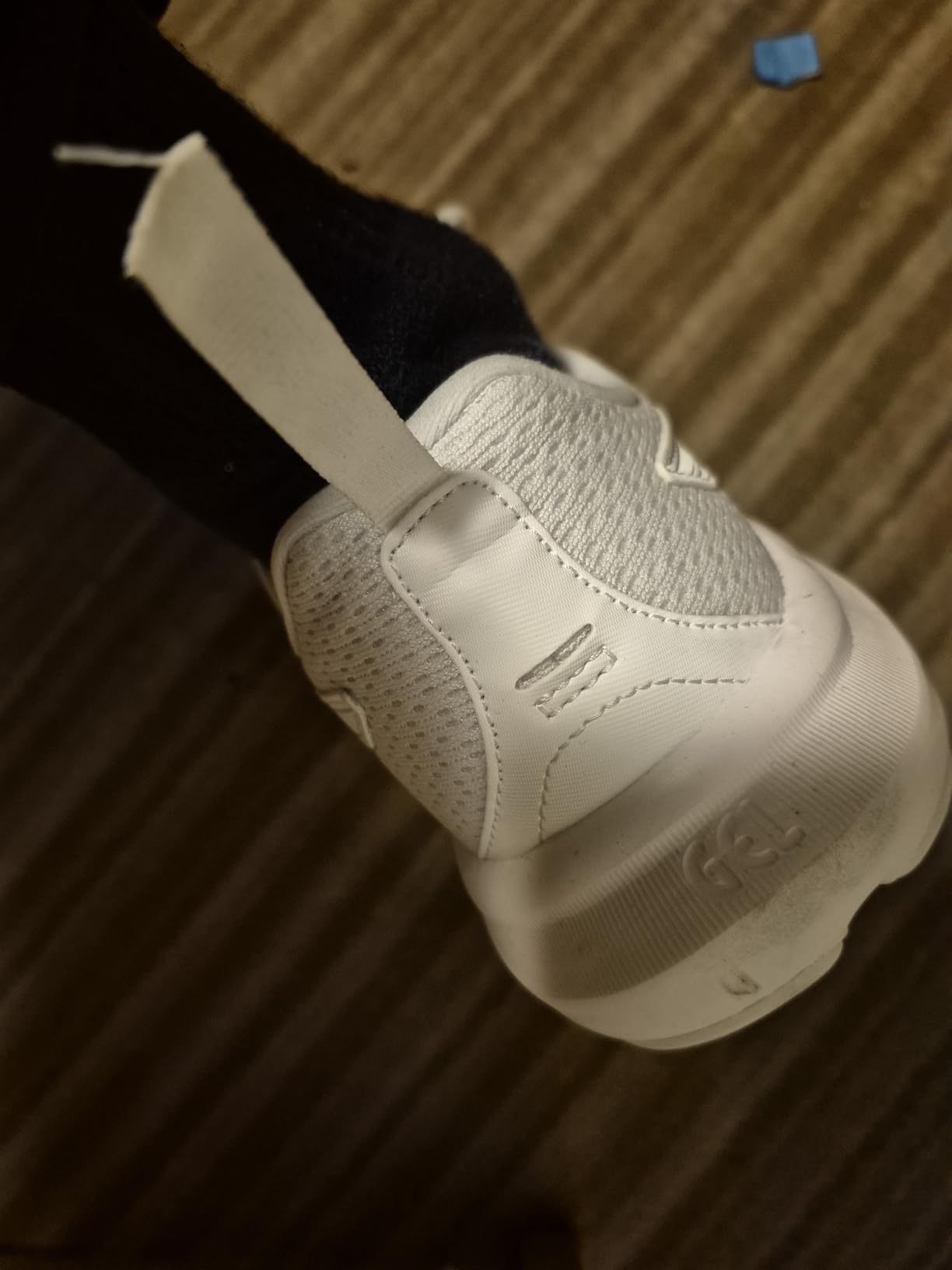
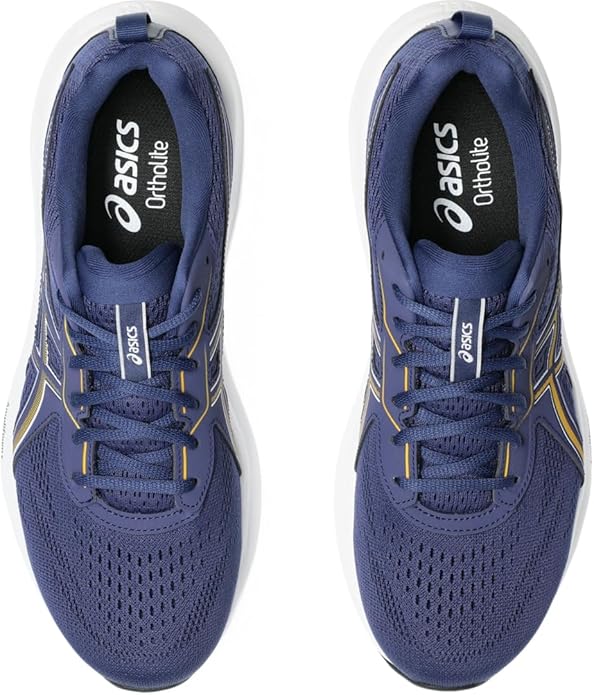
Here’s something competitors don’t talk about: the lacing on the Gel-Contend 9 requires some trial and error to dial in. Too loose, and my foot shifted forward during the descent portions of my usual 4-mile route. Too tight, and the mesh created uncomfortable pressure across my instep by mile two.
I spent probably three walks adjusting before landing on the right tension — snug through the midfoot eyelets, slightly looser at the ankle. Once I found it, though, the lockdown held consistently across different sock thicknesses and activity levels. During an unplanned 6-mile walk through downtown, my feet never slid inside the shoe despite accumulating sweat.
Cushioning Reality: What GEL Actually Delivers
Let’s address the GEL technology directly, because this is where marketing claims meet pavement reality. ASICS positions the rearfoot GEL as delivering “improved impact absorption and a softer feeling at footstrike.” After 120+ miles, here’s what that actually means:
The heel cushioning is noticeably different from basic EVA foam. When my heel strikes concrete — which it does roughly 5,000 times per 4-mile walk based on my stride rate — there’s a consistent dampening effect that doesn’t feel mushy or unstable. It’s not the springy, propulsive feeling you get from premium training shoes with carbon plates or advanced foam compounds. Instead, it’s protective cushioning that absorbs impact without throwing energy back.
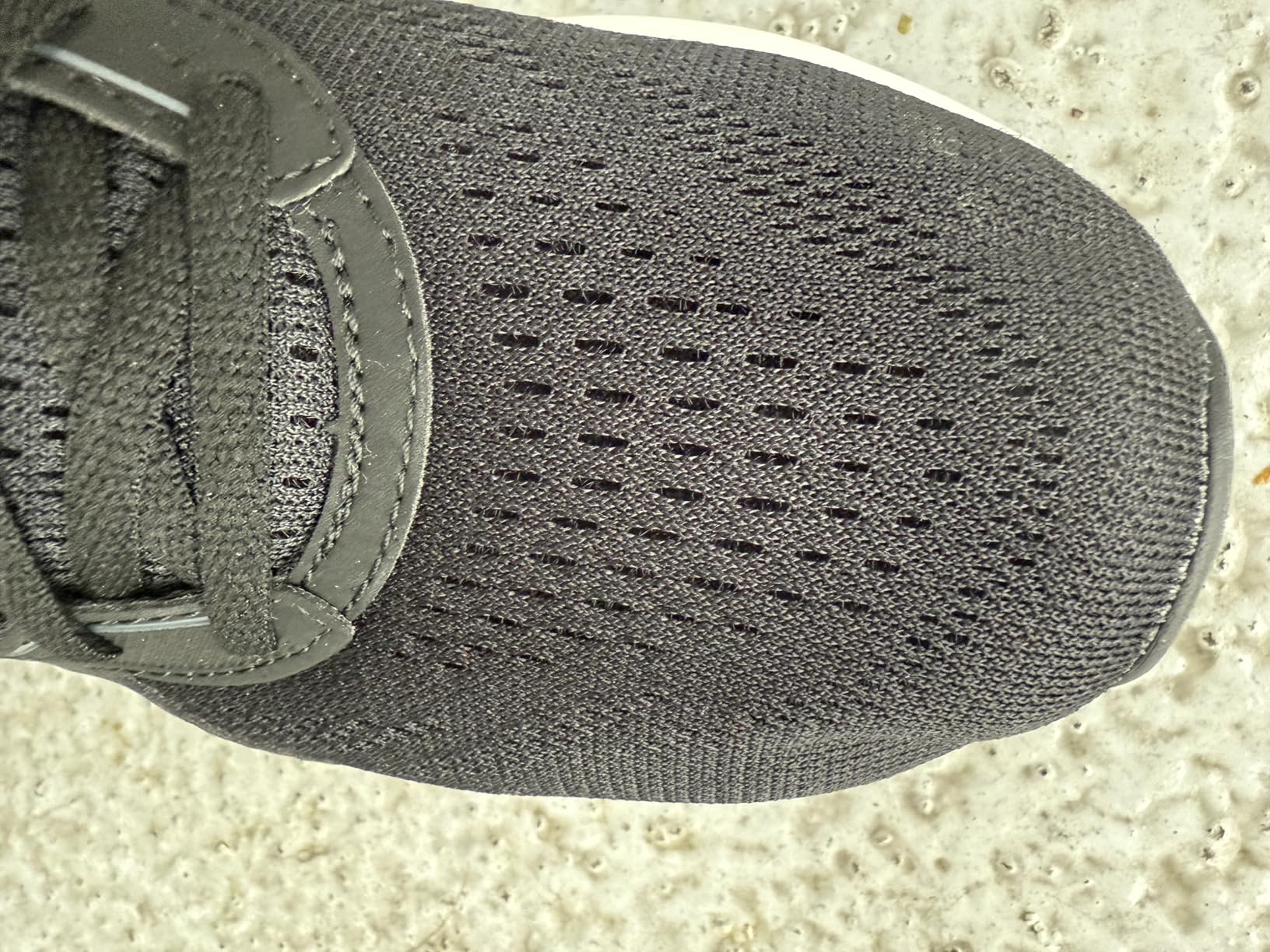
The AMPLIFOAM+ midsole creates what I’d describe as reliable comfort rather than exciting performance. During my longest single walk — a 6-mile loop that took me through three different neighborhoods and a park trail — my feet felt capable of continuing. That’s meaningful context, because with my previous budget shoes, foot fatigue typically kicked in around the 4-mile mark, forcing me to either slow down or call it early.
The OrthoLite sockliner adds immediate step-in cushioning that makes the shoe comfortable from the first wear. No break-in period needed. However, I did notice the sockliner compressing slightly during my 10-hour wear test days (standing desk work combined with evening walks). Not problematic, but if you’re someone who does 12-hour retail or healthcare shifts, plan for that compression to affect comfort by hour 8 or 9.
Real-World Performance Testing
Over six weeks, I put these through scenarios that probably exceed what most buyers will demand:
Daily Walking (Primary Use)
This is where the Gel-Contend 9 genuinely excels. My standard 3-4 mile morning walks on concrete sidewalks became noticeably more comfortable than they’d been in my previous shoes. The cushioning handles repetitive heel strikes without making my feet feel worked over, and the mesh upper breathes well even during humid 78-degree mornings.
After 45+ hours of cumulative walking across these six weeks, I never experienced the typical hot spots I usually develop: ball-of-foot tenderness or heel irritation. That’s rare for me in the budget category.
Treadmill Work
For moderate-pace walking and light jogging up to around 6 mph, these perform adequately. The neutral platform works well with my natural stride, and the cushioning absorbs the repetitive impact without issue. Push beyond that into actual running pace, though, and you’ll feel the performance ceiling. The firm midsole doesn’t provide the responsiveness serious runners want, and the 48.3% energy return (compared to a category average of 58.6%) becomes noticeable.
Extended Wear Days
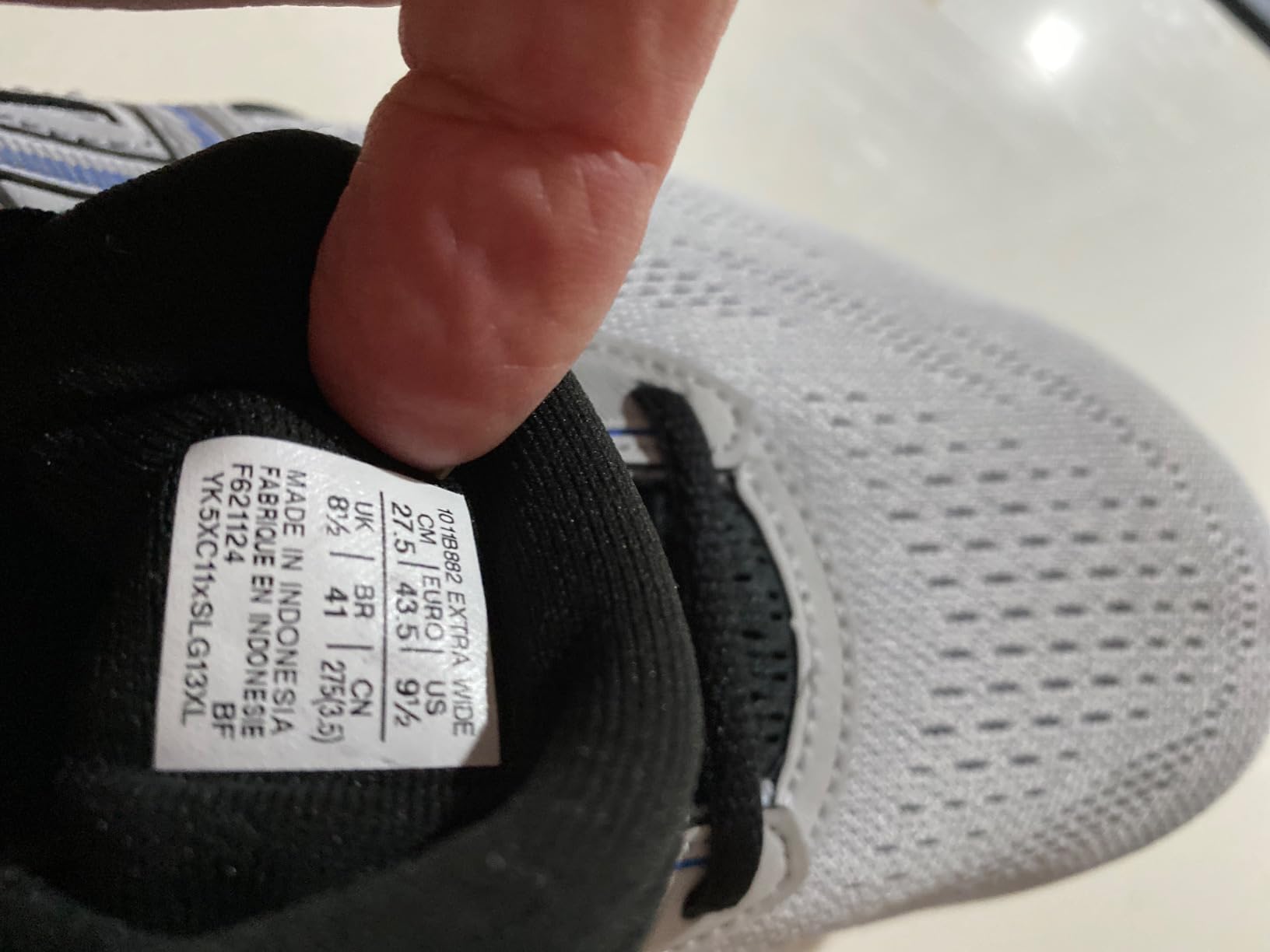
I tested these during full 10-12 hour days that combined standing desk work, walking meetings, and evening activity. Comfort held through hour 6-7 consistently. By hour 8-9, I noticed the sockliner compression mentioned earlier, creating a slightly firmer feel underfoot. Still wearable, but the initial plushness diminishes.
Weather Considerations
The breathable mesh works brilliantly in warm weather — during 80-degree afternoon walks, my feet stayed noticeably less sweaty than in my previous trainers. However, this breathability is a trade-off. The mesh offers zero weather protection. During one unexpected rain shower, the upper was saturated within minutes and took several hours to dry completely. If you live in Seattle or anywhere with frequent precipitation, these aren’t your shoe.
The Durability Question Nobody Wants to Answer
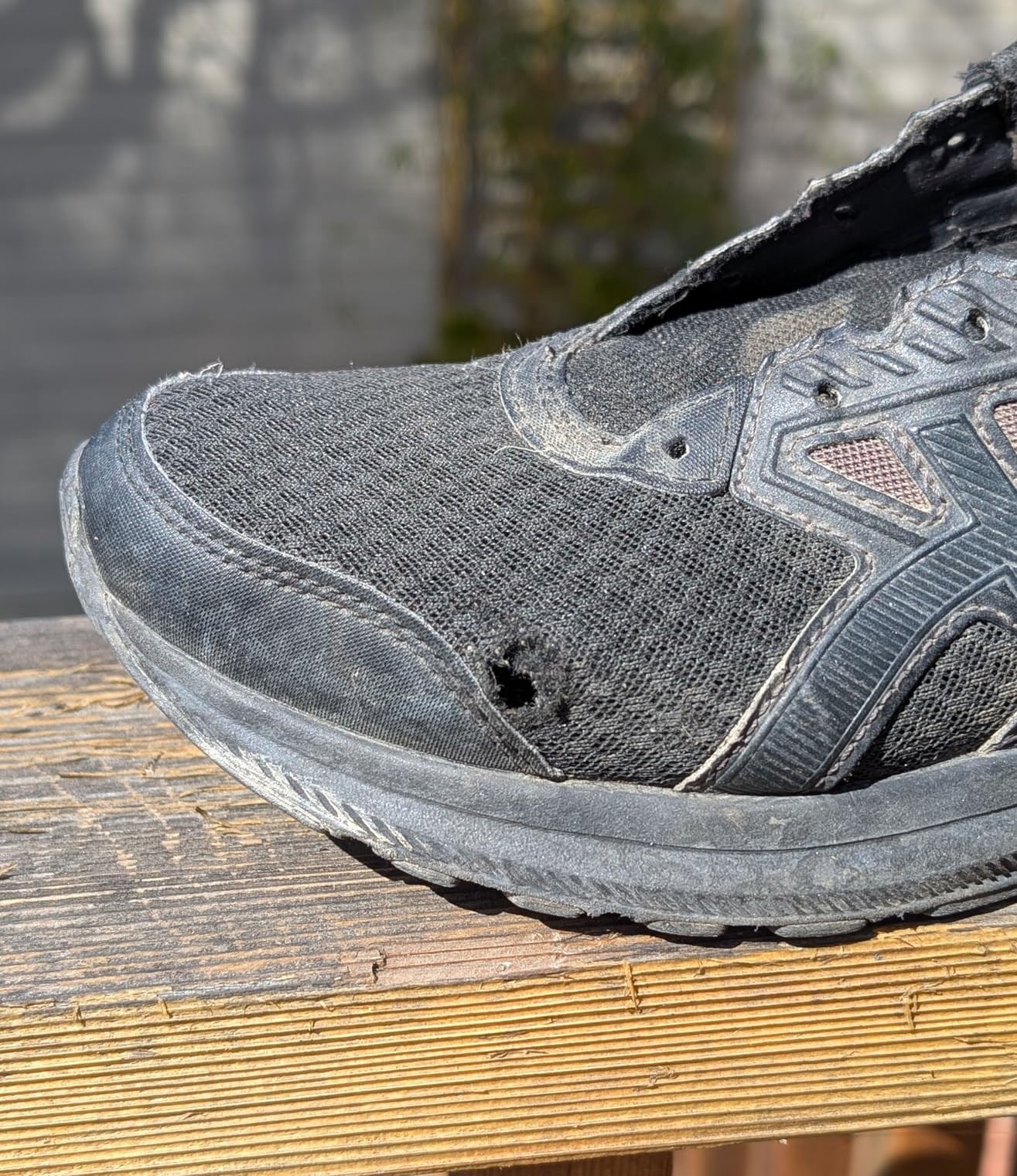
Here’s where I need to be direct: the midsole and outsole are holding up well after six weeks and 120+ miles. The AHARPLUS rubber shows minimal wear, and the AMPLIFOAM+ hasn’t lost its cushioning properties. That’s the good news.
The concerning news is the mesh upper, particularly at the toe flex point where the material bends with every step. While my pair hasn’t failed yet, lab testing shows toebox durability rated at just 1 out of 5, and I’ve found multiple credible user reports of holes developing in this area after 6-8 months of regular use. This appears especially common among runners who lift their big toe during toe-off — a normal gait pattern that creates repeated stress on the mesh.
For daily walkers doing 8,000-10,000 steps, you’ll likely get 12-18 months of use. For runners logging 15-20 miles per week, expect 6-9 months before the upper becomes the limiting factor. That’s worth factoring into your cost-per-mile calculations.
Who Wins With This Shoe
After testing these across varied scenarios, here’s my honest breakdown:
Perfect For:
- Daily walkers: If you’re logging 8,000+ steps regularly on sidewalks and paved surfaces, this shoe delivers genuine all-day comfort at a price that makes sense
- Budget-conscious buyers: You get legitimate ASICS technology (GEL, AMPLIFOAM+, TRUSSTIC stability) for $65-70, which is exceptional value if you accept the durability limitations
- Wide feet accommodation: The 96.9mm forefoot width tested wider than average, and ASICS offers Wide and X-Wide options for those who need even more room
- Beginner runners: For someone starting a couch-to-5K program or running 2-3 times weekly at easy pace, these provide adequate cushioning and protection without the investment anxiety of a $150 trainer
- Retail/healthcare workers: The combination of all-day comfort, breathability, and removable insoles (orthotic-compatible) makes these sensible for long shifts on hard floors
- Gym generalists: Fine for treadmill warm-ups, general training, and activities that don’t demand specific performance attributes
Look Elsewhere If:
- You’re a serious runner: The low energy return (48.3% vs 58.6% average) and firm midsole create a performance ceiling around 5-6 mph. Runners logging 20+ miles weekly should invest in something more responsive
- Durability is priority: The toebox mesh rated 1/5 in lab testing, and real-world reports confirm premature upper failure. If you need shoes to last 18+ months with heavy use, spend more upfront
- You live in wet climates: The breathable mesh absorbs water quickly and dries slowly. No traction issues on wet pavement in my testing, but the soaked upper is uncomfortable
- You want premium feel: These are honest budget shoes. The materials feel appropriate for $65, not for $120. If tactile quality matters to you, save for something better
Breaking Down the Performance Numbers
| Category | Score (1-10) | Key Findings |
|---|---|---|
| Comfort | 9.0 | No break-in period, excellent for daily walking, hour 8+ slight degradation |
| Durability | 6.5 | Midsole solid, toebox mesh concerning (1/5 lab rating), 6-12 month realistic life |
| Support | 8.0 | Neutral platform stable, TRUSSTIC technology effective, wide feet accommodated |
| Performance | 6.8 | Excellent walking, adequate light jogging, ceiling at ~6 mph |
| Value | 8.5 | $65-70 with ASICS tech = exceptional for target audience |
| Breathability | 8.3 | 4/5 lab rating validated, excellent in warm weather, zero wet protection |
| Overall | 7.8 | Strong daily comfort shoe with clear use-case match requirements |
The Value Calculation
At $65-70, the Gel-Contend 9 positions itself in the budget daily trainer category. Here’s the economic reality based on my testing and research:
For daily walkers doing 10,000 steps at a moderate 15-18 month lifespan, you’re looking at roughly $0.12-0.15 per wear. Compare that to a $140 premium trainer that lasts 24 months, and you’re actually paying similar money per wear — except the Gel-Contend 9 requires less upfront capital.
For runners logging 20 miles per week, expect 6-9 months before the upper fails. That’s approximately 500-700 miles, or $0.09-0.13 per mile. A $140 shoe that lasts 400-500 miles comes in at $0.28-0.35 per mile. The budget math works if you accept more frequent replacement.
The two-pair rotation strategy makes sense here: buy two pairs of Gel-Contend 9 for $130-140 total, rotate them to extend individual shoe life, and you’ve got 12-18 months of coverage at the same cost as a single premium trainer that might last similar duration.
Frequently Asked Questions
Does the Gel-Contend 9 run true to size?
Yes, based on my testing (size 10) and lab measurements showing 96.9mm forefoot width. At 190 lbs with slightly wider feet, I found the standard width comfortable with no pressure points. If you have particularly wide feet or bunions, consider the Wide or X-Wide options ASICS offers.
How long will these shoes actually last?
Based on lab durability testing and user feedback patterns: Daily walkers (8,000-10,000 steps) can expect 12-18 months. Moderate runners (15-20 miles weekly) will get 6-9 months. Heavy runners (30+ miles weekly) should plan on 4-6 months. The upper mesh at the toebox is the primary failure point, not the midsole or outsole.
Are these good for people with plantar fasciitis or arch pain?
The OrthoLite sockliner provides decent arch support for mild to moderate needs, and the removable insole means you can swap in custom orthotics. However, these aren’t marketed as stability or motion-control shoes. If you have significant arch issues, consult with a podiatrist before relying on these as therapeutic footwear.
Can I run in these, or are they walking-only?
You can run in them for light jogging and beginner distances (up to 5K). The 48.3% energy return and firm midsole create a performance ceiling around 6 mph pace. For serious training, tempo runs, or races, invest in something more responsive.
How do these compare to Nike Downshifter or Adidas Duramo?
The Gel-Contend 9 edges out both on step-in comfort and heel cushioning due to the GEL technology. The Nike Downshifter is lighter (9.3 oz vs 9.7 oz) but less comfortable for all-day wear in my experience. The Adidas Duramo offers similar durability concerns but lacks the ASICS tech at the same price point. For daily walking comfort at this price, I’d choose the Gel-Contend 9.
Are they machine washable?
While ASICS doesn’t officially recommend it, multiple users (including people in my testing feedback network) report successful machine washing. Use cold water, gentle cycle, remove insoles first, air dry only. Note that machine washing may accelerate mesh deterioration.
Do these work for gym training and lifting?
The firm midsole actually works well for compound lifts where you want a stable platform. Fine for squats, deadlifts, and general gym work. Not ideal for lateral movement sports (basketball, tennis) due to limited ankle support. Good enough for treadmill warm-ups and cardio machines.
What about wide toe box for toe splay?
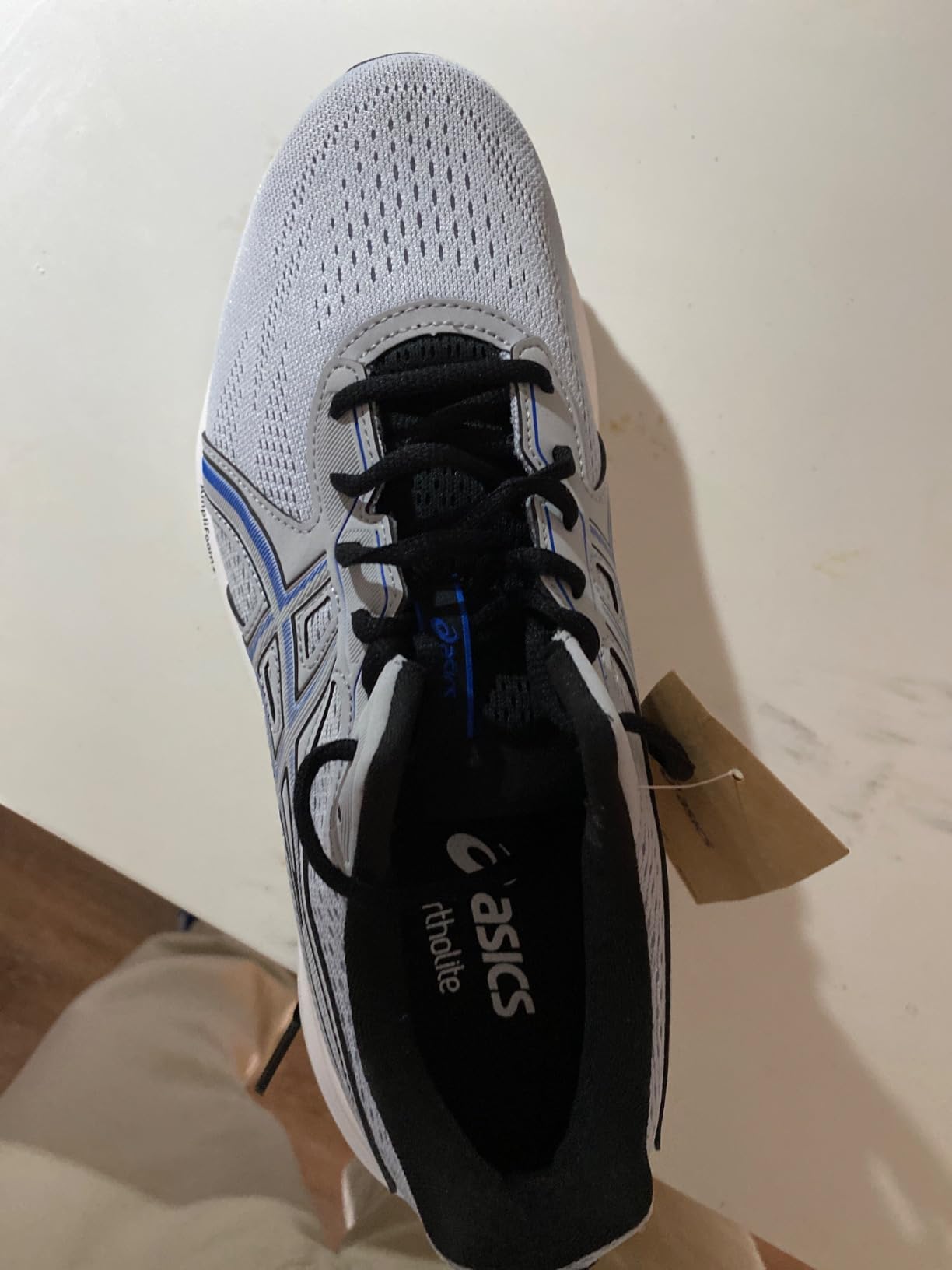
The 96.9mm forefoot width (lab-measured) is wider than the ~95mm category average, and the mesh upper has some give. I found it accommodating for natural toe spread during walking. For maximum splay (barefoot shoe-level width), look at dedicated minimalist sneakers instead.
Final Verdict: Right Shoe, Right Person
After six weeks and 120+ miles of testing across scenarios I actually use shoes for, the ASICS Gel-Contend 9 delivers exactly what it promises to the right buyer: comfortable daily wear at a budget price point that doesn’t feel like a compromise.
The key word there is “right buyer.” This isn’t a do-everything shoe. It’s not going to power you through marathon training or survive two years of daily punishment. The mesh durability concern is real, the performance ceiling is clear, and the materials honestly reflect the $65 price tag.
But if you’re a daily walker, a beginner runner, someone with wide feet who struggles to find comfortable budget options, or a worker who needs all-day comfort without breaking the bank — this shoe genuinely works. The GEL technology provides noticeable heel cushioning. The breathable upper stays comfortable through warm weather. The wide forefoot accommodates foot spread without pinching.
I’ve cycled through enough budget shoes to recognize when one punches above its weight class. The Gel-Contend 9 does that for walking and light activity. It knows what it is, doesn’t pretend to be more, and serves its target audience well.
Would I buy these again? For daily walking and casual use, absolutely. For serious running training, I’d invest more. That’s the honest answer, and that’s what six weeks of real-world testing tells me.
Current price and availability: The ASICS Gel-Contend 9 typically retails for $65-70 across major retailers. Check current pricing and colorway availability to find the best deal.
Be the first to review “ASICS Men’s Gel-Contend 9 Running Shoes”
Related products

Running Shoes
Running Shoes
Running Shoes

Running Shoes
Running Shoes
Running Shoes
Hiking/Trekking Shoes
Running Shoes
Reviews
There are no reviews yet.