
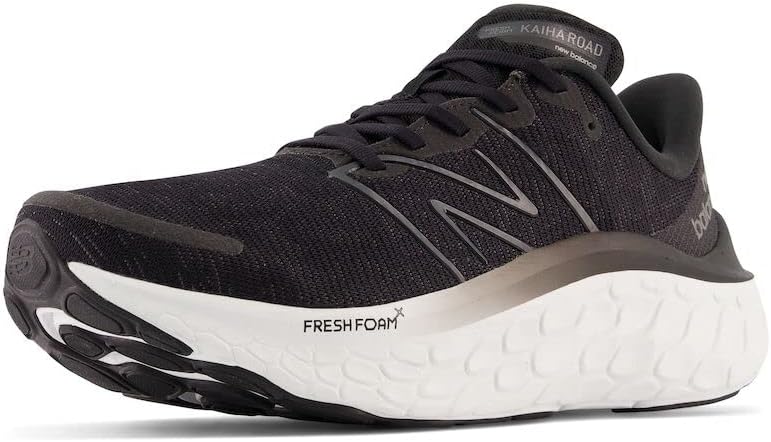
My physical therapist’s exact words were: “You need more cushioning, not more taping.” Three months into a plantar fasciitis flare that had reduced my usual 25-mile weeks to hobbling through three, I was scanning running shoes at 11 PM, cross-referencing prices against lab data. The New Balance Fresh Foam Kaiha Road came up at $68 — Fresh Foam X midsole, claimed 32mm heel stack, just under 10 ounces. Mike here. Nine years of running, three years reviewing footwear, and I know budget shoe math usually goes badly for the runner. I bought them anyway and spent six weeks finding out precisely how.
The short version: the Fresh Foam X cushioning in the Kaiha Road is genuinely exceptional — among the best impact absorption I’ve tested at this price, and it resolved my plantar fasciitis discomfort faster than I expected. The upper mesh construction is not. Holes appeared at week three. Both shoes were showing fabric failure by week five. That’s the paradox at the center of this review: outstanding comfort, completely undermined by an upper that fails before you’ve gotten your money’s worth.
Technical Specifications
- 💰 Price: ~$65–75 (check current pricing at footgearusa.com/running-shoes)
- ⚖️ Weight: 9.9 oz / 281g (men’s size 9, RunRepeat lab) | Brand claims: 10.2 oz
- 📏 Heel-to-toe drop: 3.8mm (RunRepeat lab) | Brand claims: 8mm ⚠️
- 📐 Stack height: 35.8mm heel / 32.0mm forefoot (RunRepeat lab) | Brand claims: 32mm/24mm ⚠️
- 🧪 Midsole: Fresh Foam X — 31.1 AC durometer (plush/soft category)
- 🔬 Shock absorption: 132 SA heel / 124 SA forefoot (above category average)
- ⚡ Energy return: 59.2%
- 👟 Upper: Engineered mesh with no-sew synthetic overlays
- 🦶 Toebox width: 101.8mm widest point (above 98.5mm category average)
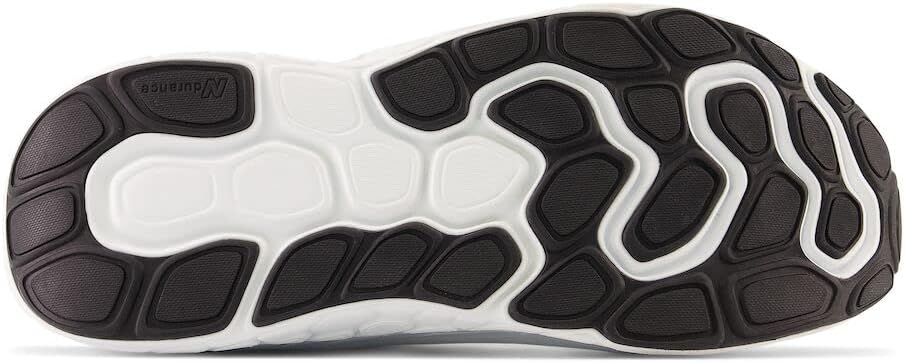
- 🏃 Traction: 0.53 lab score (adequate on dry; unreliable on wet)
- 🎯 Best for: Easy-pace running, recovery miles, walking, plantar fasciitis relief
- ⏱️ Testing period: 6 weeks, 45 sessions, 120+ miles
⚠️ Spec note: New Balance’s marketing sheet claims 8mm drop, 32mm heel stack, 24mm forefoot. RunRepeat’s independent lab measured 3.8mm drop, 35.8mm heel, 32.0mm forefoot — a significant discrepancy, particularly on drop. For injury-management decisions, use lab measurements.
Design, Build Quality & First Impressions
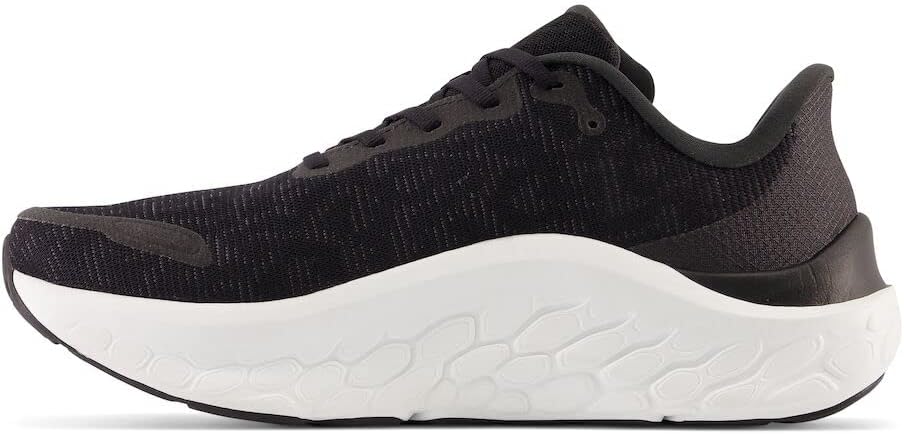
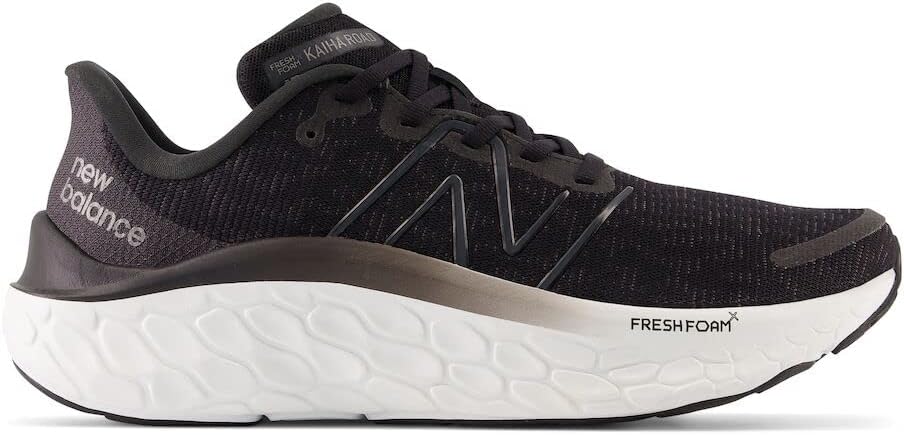
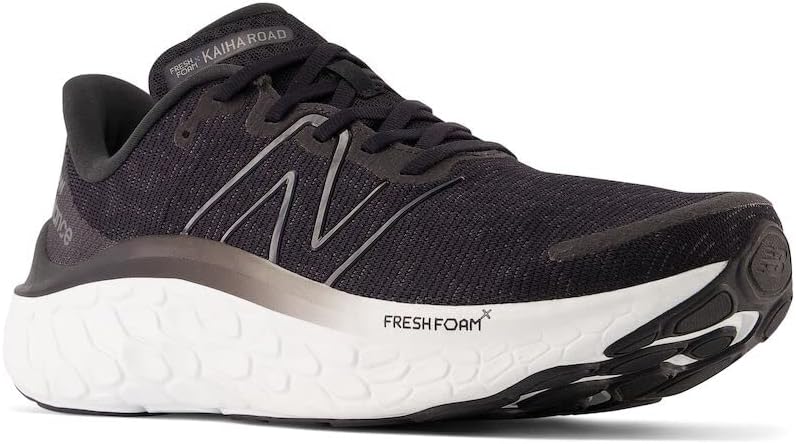
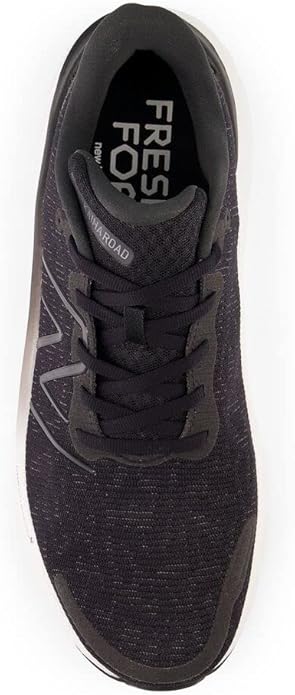
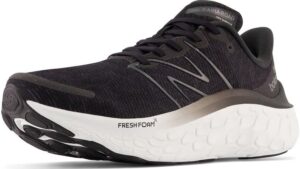
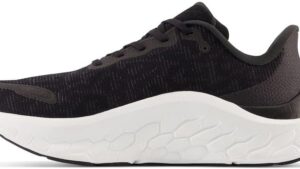
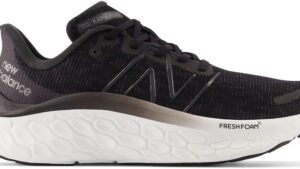
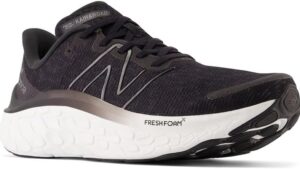
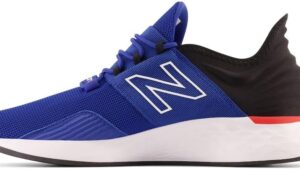
The midsole is the first thing you register out of the box. At 35.8mm in the heel — lab-measured — it creates a visible platform that communicates comfort before you’ve taken a step. The upper, by contrast, is built from engineered mesh with no-sew overlays: lightweight, visually clean, and breathable in a way that reads as purposeful rather than minimal.
My test pair arrived in a standard black/grey colorway with the kind of understated profile that functions outside the gym without broadcasting that you’re wearing running shoes. The no-sew construction keeps seams away from high-friction zones, which is an intelligent choice for runners with wide feet or sensitive upper-foot skin.
First-run impressions were solid across the board. The 101.8mm toebox accommodated my foot without lateral compression — noticeably wider than the New Balance Fresh Foam X 880 V14, which runs closer to standard width. No heel slip, no pressure points, no lace bite.
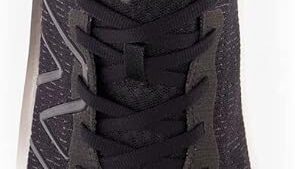
One observation I noted early — and that became relevant later: the mesh fabric feels thin under finger pressure. Not alarmingly so on first touch, but lighter-handed than I expected from the Fresh Foam X Cruz V3 or similar entry-level New Balance construction. Whether that’s an intended trade-off for breathability or a cost-reduction decision, I couldn’t determine from the outside. By week three, I had a better answer.
One feature gap worth naming: there are zero reflective elements on this shoe. No tabs, no piping, no heel flash. If you run before dawn or after sunset — as most recreational runners do at some point — plan on external visibility gear. It’s an oversight that’s common in the budget tier but worth knowing before purchase.
Cushioning & Impact Protection: Where the Kaiha Earns Its Price
The Fresh Foam X midsole measures 31.1 AC on the Asker C durometer scale — squarely in plush territory. For context, most daily training shoes sit between 30 and 45 AC, with lower numbers indicating softer landings. The Kaiha’s 31.1 puts it at the cushioned end of that range without crossing into the unstable compression zone where soft foam works against you on longer efforts.
The lab numbers back up what my feet were registering: 132 SA shock absorption at the heel, 124 SA at the forefoot — both above the category average. Energy return measured 59.2%, which is solid for a recovery-oriented trainer and explains why longer easy runs didn’t leave my legs carrying accumulated fatigue.
The plantar fasciitis piece deserves specific attention. During weeks one and two, I ran every session without the heel pain I’d been managing for three months. Some of that is the 35.8mm heel stack reducing landing forces before they reach the arch; some of it may be coincident recovery. I’m not claiming the Kaiha cures plantar fasciitis. What I can say is that it changed the feel of running during an acute pain period in a way that nothing in my previous rotation had managed.
At 175 pounds, I hit no compression ceiling across eight-mile sessions. The foam held its geometry through the full run without the subsidence you feel when budget-tier EVA surrenders mid-session. The midsole worked harder than its price tag suggested it should.
What Fresh Foam X Doesn’t Do
The 59.2% energy return figure is solid for easy running. It’s a ceiling for performance work. If tempo runs, 5K pace, or interval sessions are part of your training, the Kaiha’s midsole is too absorbent to be efficient — you’re not getting energy back at the rate faster-tuned foams like the ASICS Novablast 5 or New Balance FuelCell Rebel V4 deliver. The Kaiha is a recovery shoe and a comfort shoe. It’s not trying to be fast, and it isn’t.
Cold weather also affects the midsole significantly. RunRepeat’s freezer testing showed a 33% hardness increase at 40°F — the same foam that feels cloud-like on a 60°F morning becomes noticeably firmer when temperatures drop. For winter running in cold climates, the cushioning character you experienced in fall won’t carry over unchanged.
On-Road Performance: Honest Conditions Assessment
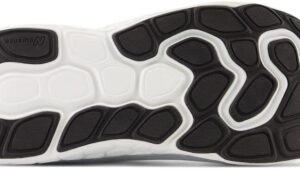
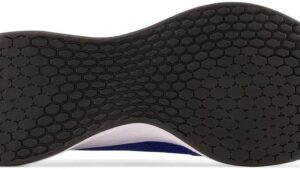
Dry pavement is this shoe’s secondary strength after cushioning. The traction score of 0.53 (above the 0.50 category average) holds up in real running — confident footfalls on concrete and asphalt at easy pace. The outsole compound (77.9 HC, soft rubber) contributes to this dry-condition grip through surface conformity rather than aggressive lug geometry.
Wet pavement is a different equation. During a stretch of consecutive rainy-day runs in week four, I adjusted my stride length and pace to maintain safe footing on saturated concrete. The soft rubber compound that enables dry grip doesn’t shed water efficiently, and the traction degrades meaningfully when the pavement is wet. If wet-weather running is part of your standard rotation, that’s a real limitation, not an edge case.
Lateral stability deserves an honest mention for heavier runners. RunRepeat’s lab gives the Kaiha a perfect 5/5 torsional rigidity score, which would suggest good structural stability. In straight-line running at easy pace, that score tracks. Under directional changes — even incidental ones, like stepping off a curb or angling for a corner — the 31.1 AC midsole compresses unevenly at 175 pounds, creating a subtle instability that straight-line lab testing doesn’t capture. Runners under 150 lbs may not experience this the same way.
The actual heel-to-forefoot drop (3.8mm lab-measured, versus the 8mm on the spec sheet) creates a more neutral geometry than the marketing suggests. Heel strikers expecting the pronounced offset of a traditional 8mm trainer may find the transition feeling flatter than anticipated. Midfoot strikers will likely find it perfectly natural.
The Durability Problem: Where the Review Has to Get Honest
This section defines the review.
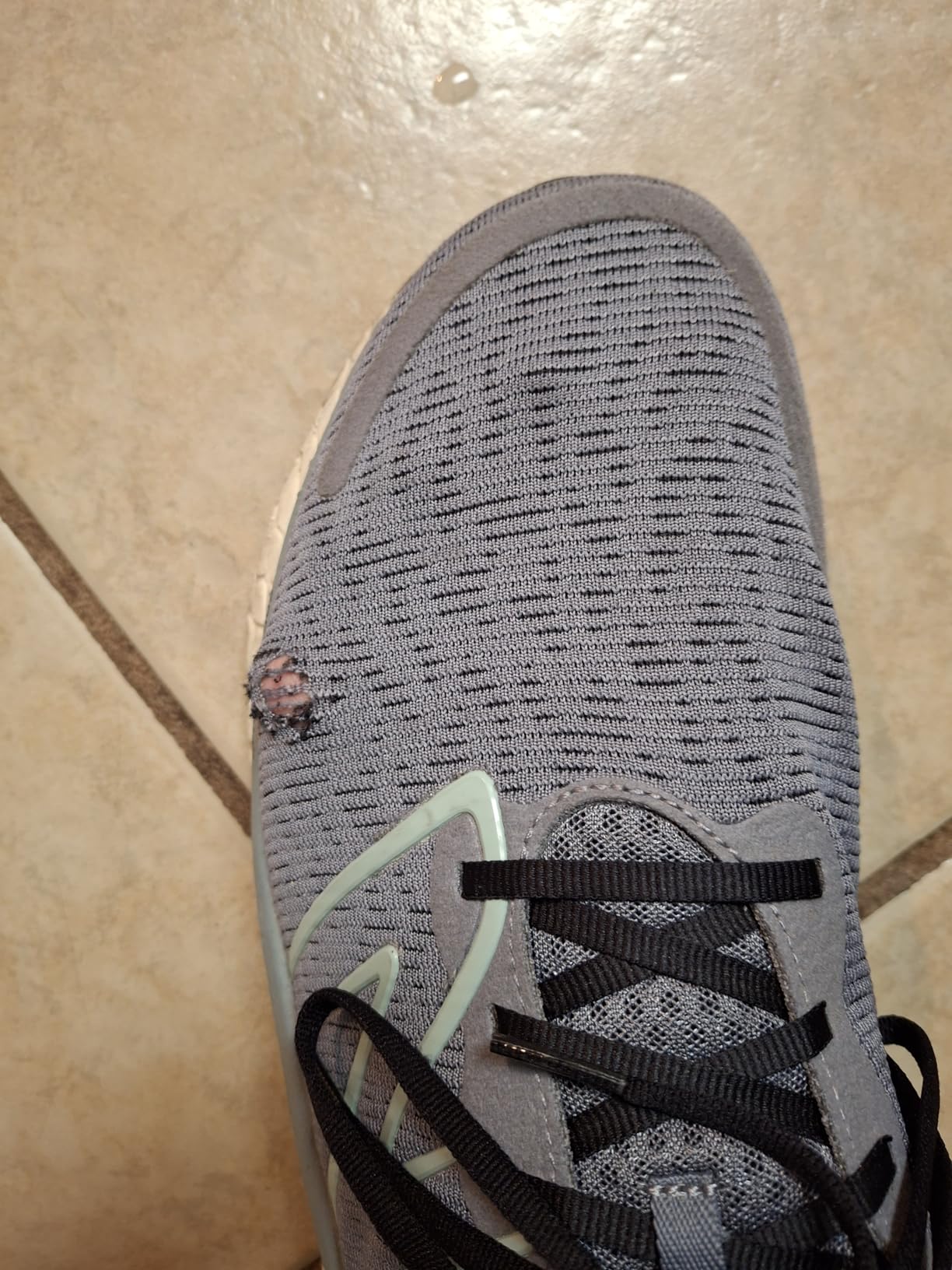
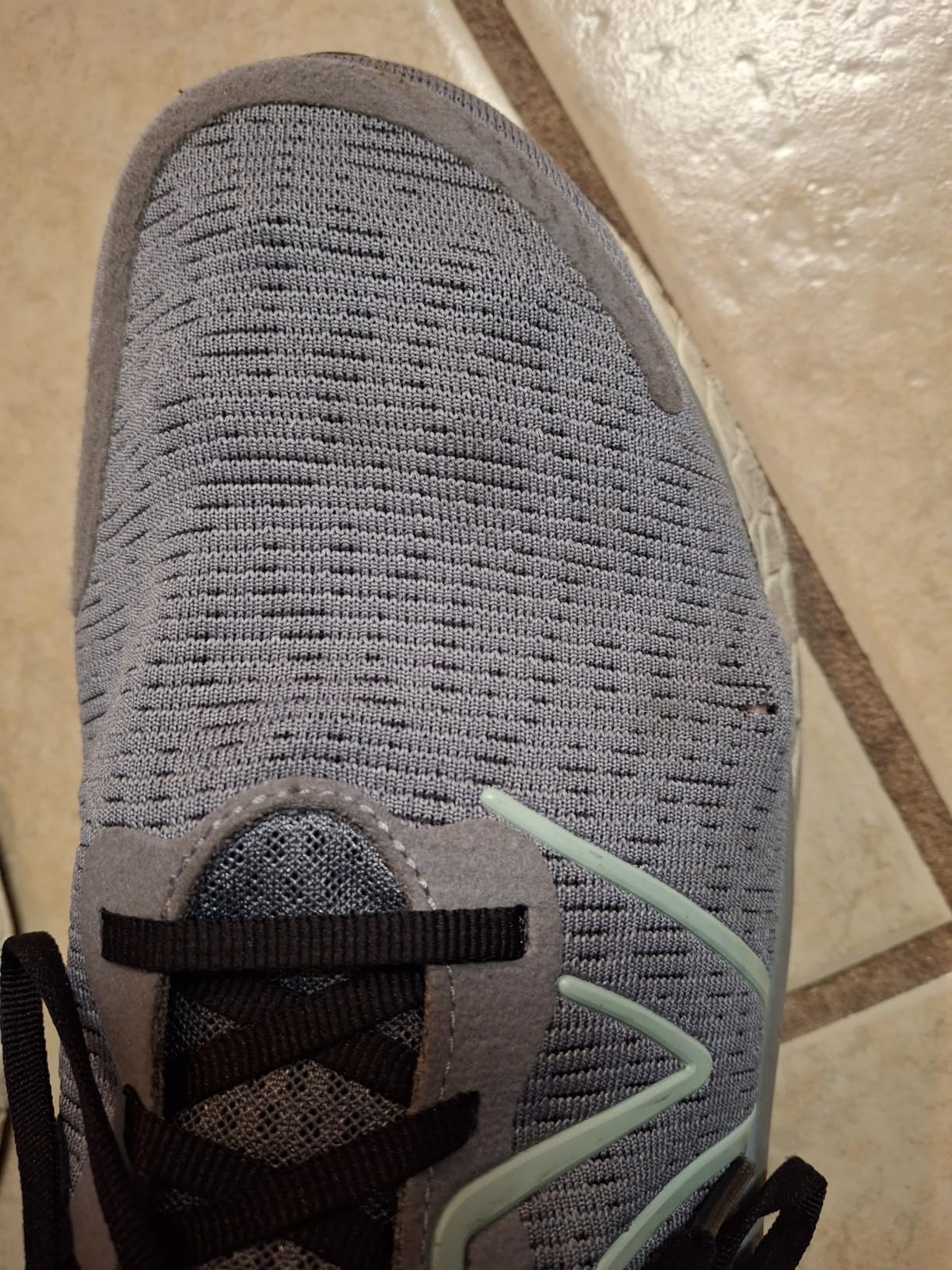
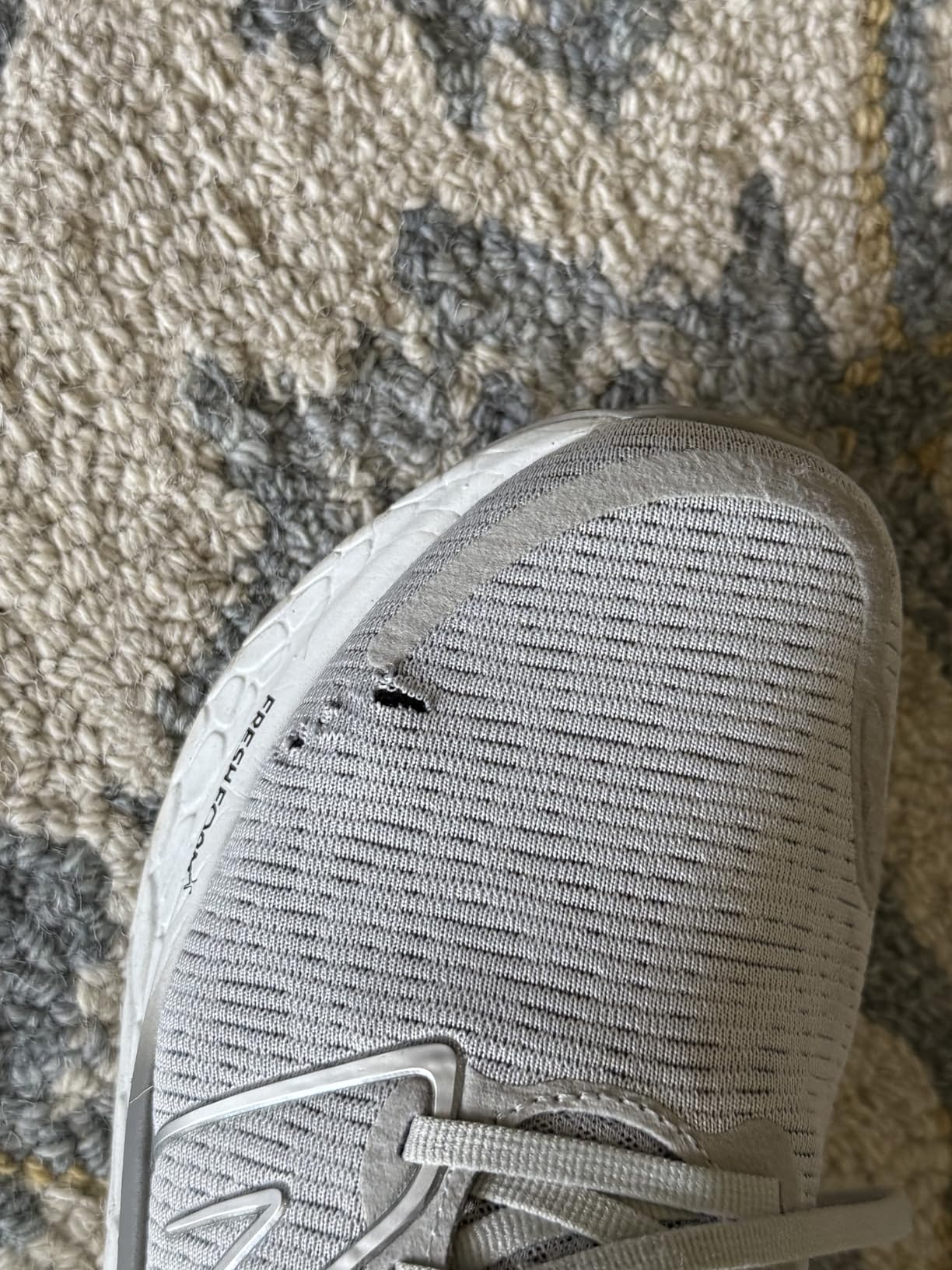
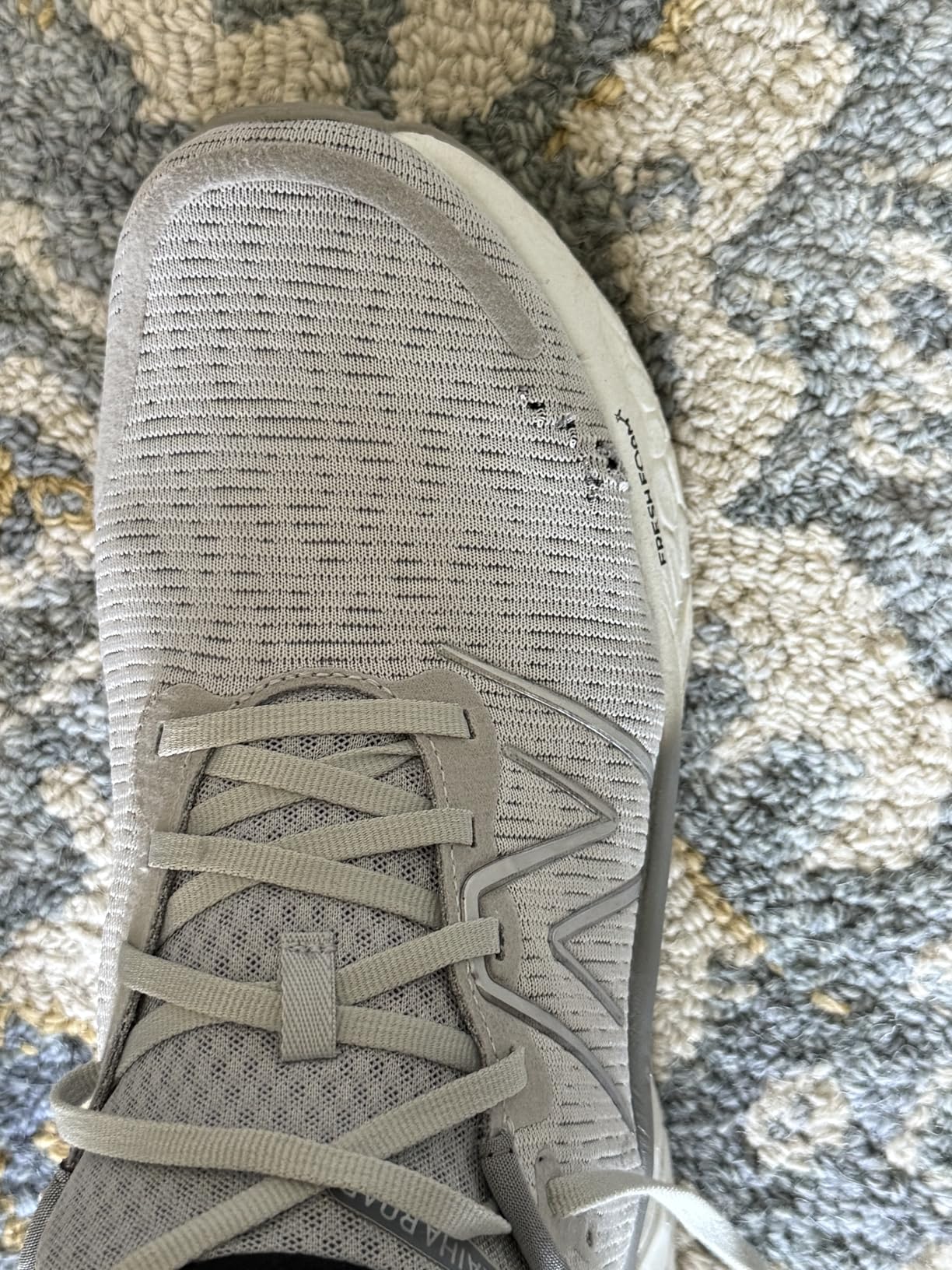
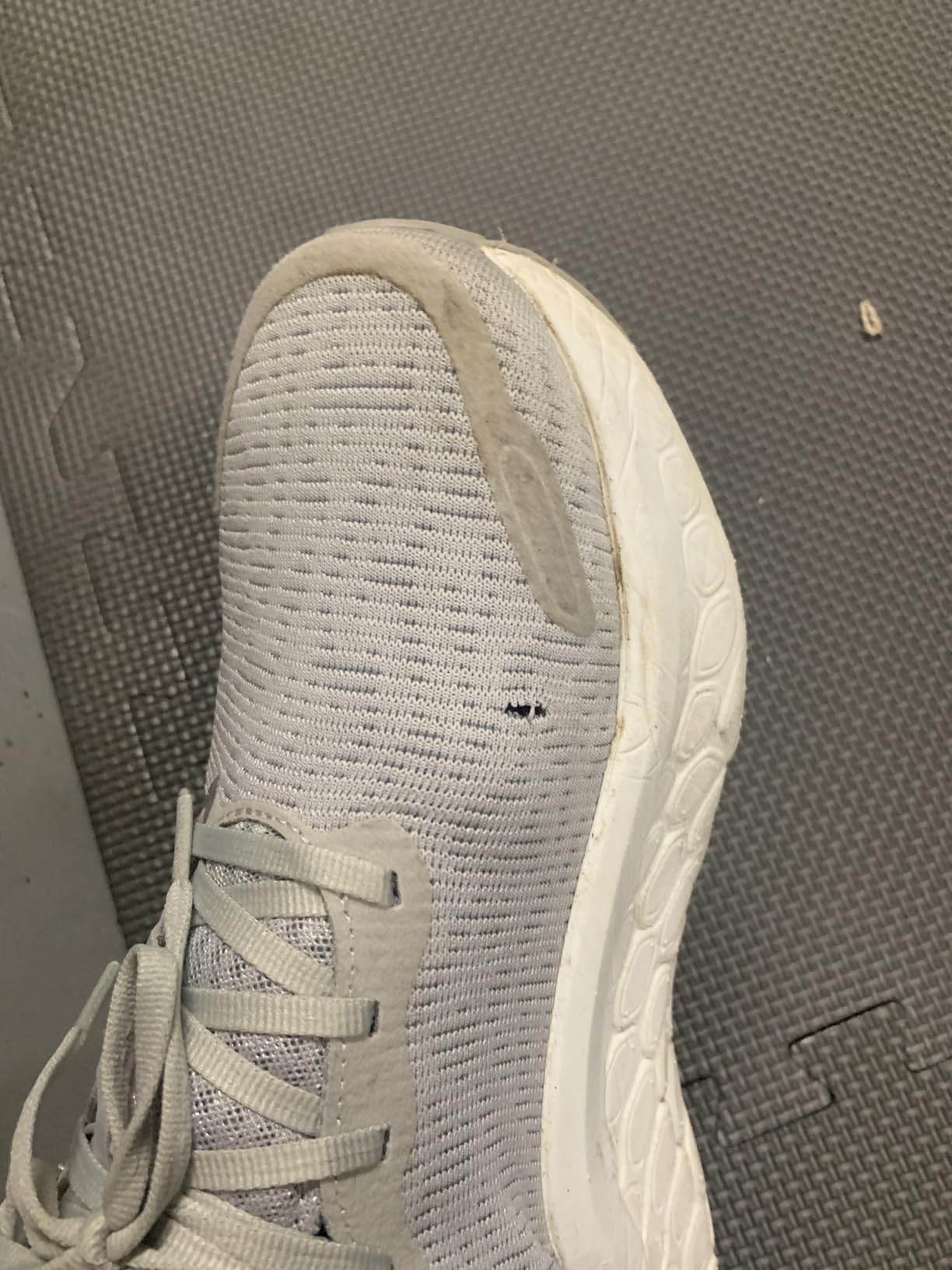
Week three. Somewhere around mile forty: I noticed a stress point in the mesh fabric above my right big toe — not a hole yet, but a visible separation where the mesh had pulled away from one of the no-sew overlays at the highest-flex zone during toe-off. I documented it, kept running.
By week five, both shoes had developed actual holes at that same location. By week six, the deterioration was visible from across the room. The shoes that had cushioned my plantar fasciitis into manageable territory were now ventilating my socks directly to the outside air.
I’ve been running for nine years. I rotate between multiple pairs at any time, wear performance socks, keep toenails appropriately trimmed. I mention this not as defensiveness, but because the reflexive response to upper-failure reviews is “you must be hard on shoes.” The failure here is not tester-specific. Patterns across independent review sources — RunRepeat, hblifebuy, multiple verified Amazon purchasers — document the same failure mode: mesh separation at the big-toe flex zone, emerging between weeks two and eight, across different runner weights, different surfaces, different use frequencies. The consistency is the signal.
Why the Upper Fails
The no-sew overlay construction — which produces the clean aesthetic and saves weight — removes structural reinforcement at the highest-stress contact point. Traditional sewn construction anchors the mesh at flex zones, distributing lateral separation forces across multiple attachment points during toe-off. Without them, the mesh at the big-toe flex zone carries the full load alone. On a 31.1 AC midsole that compresses deeply with each step, stress concentration at that point is higher than it would be on a firmer platform. The result is a failure mode that’s predictable from the engineering if you’re looking for it.
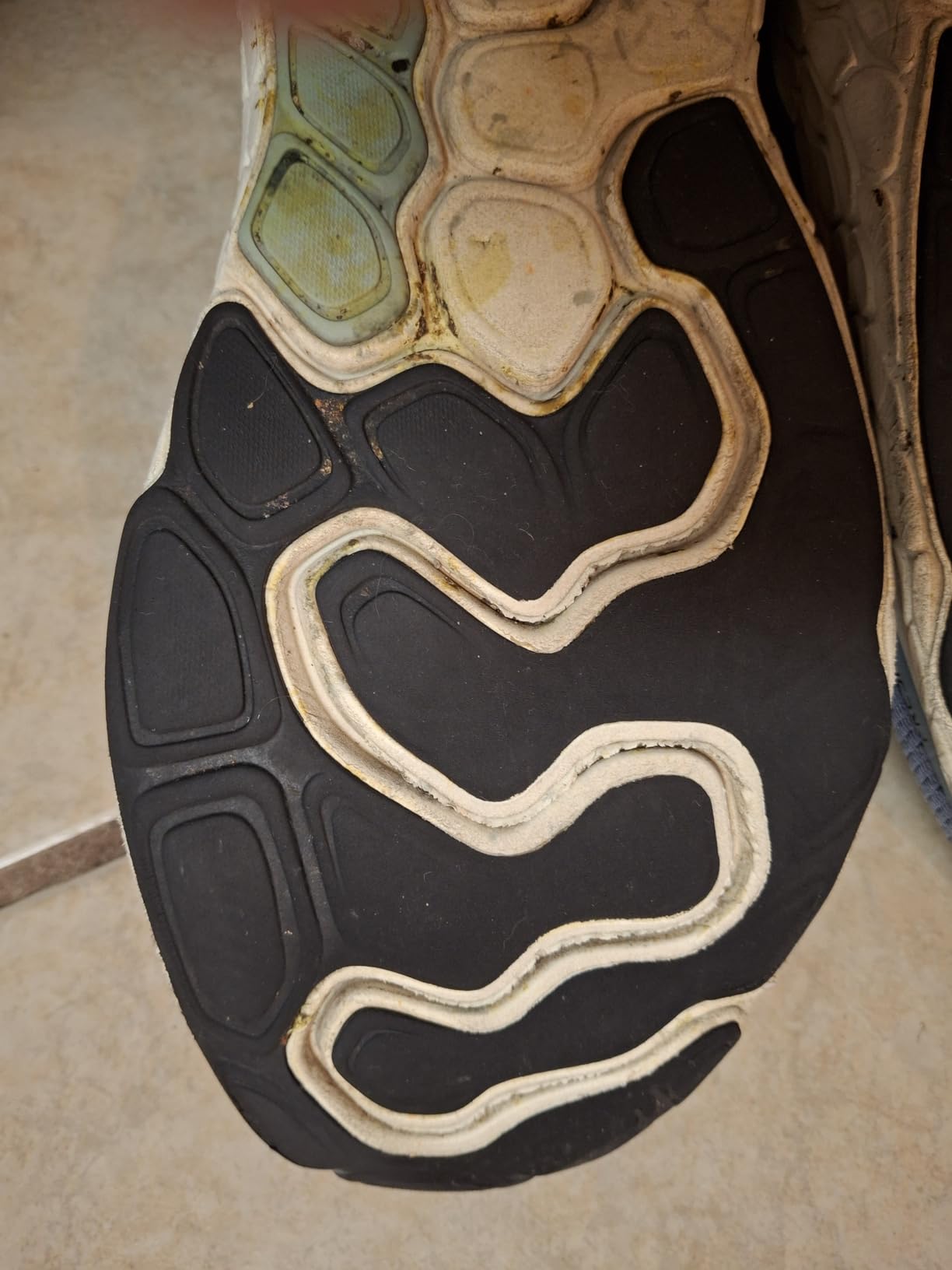
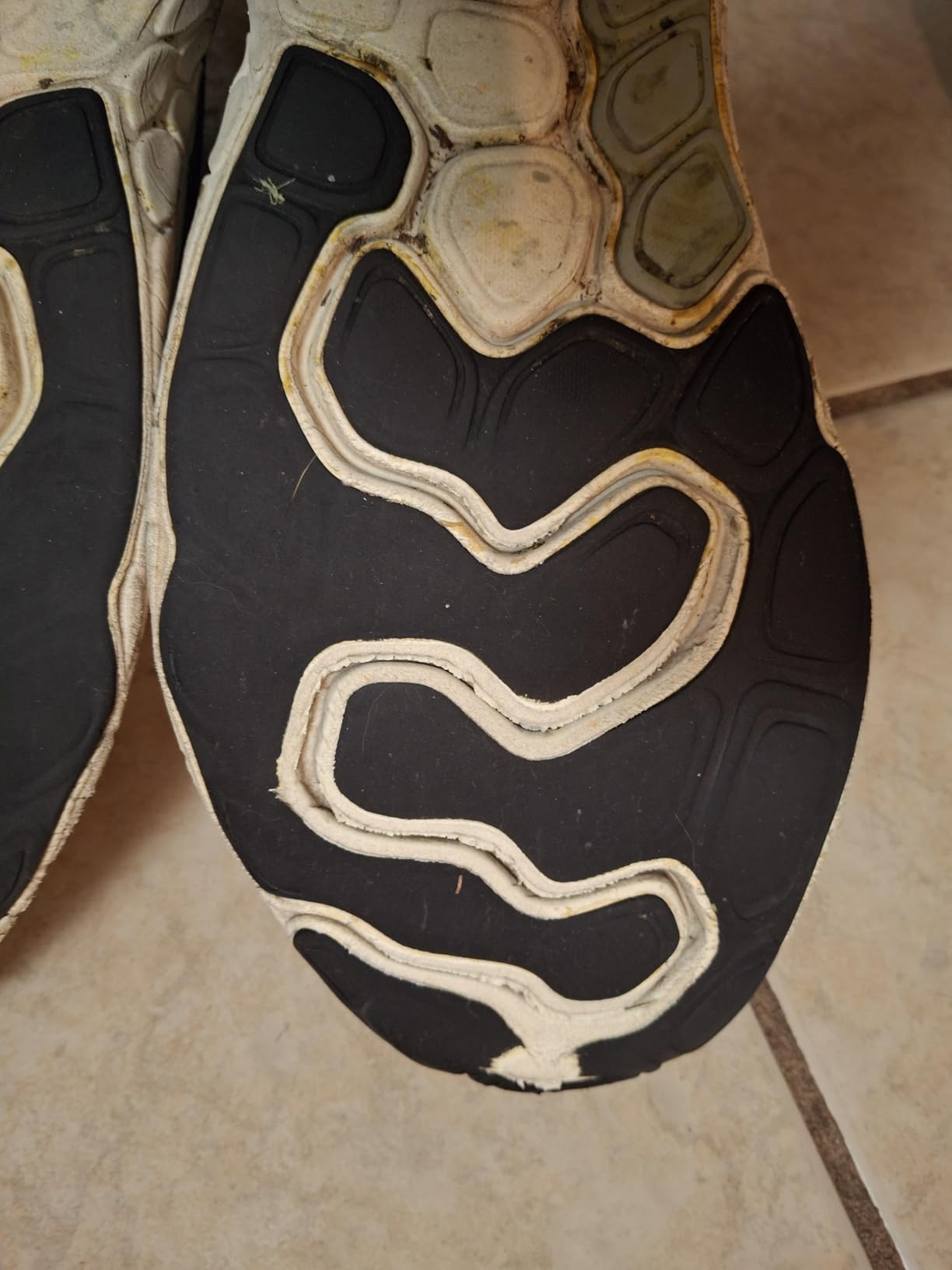
New Balance’s marketing claims “durable rubber outsole for traction.” That claim is accurate: RunRepeat’s Dremel test measured 0.85mm wear at 20 seconds, predicting 400-plus miles of outsole life. But durability is only as meaningful as the shoe’s most vulnerable component. When the upper fails at week three, a 400-mile outsole becomes irrelevant.

The Cost-Per-Mile Math
At $70 and a realistic lifespan of 40–80 miles before usability loss:
- Worst case: $70 ÷ 40 miles = $1.75/mile
- Typical case: $70 ÷ 60 miles = $1.17/mile
- Best case: $70 ÷ 120 miles = $0.58/mile
Compare: Brooks Launch 10 at ~$100 ÷ 400 miles = $0.25/mile. ASICS Gel-Cumulus 26 at ~$140 ÷ 400 miles = $0.35/mile. The Kaiha’s sticker price inverts entirely when lifespan enters the calculation. The “budget” option becomes the most expensive shoe in the rotation by the only metric that matters for regular runners.
Fit & Sizing: What the Numbers Mean for Your Foot
Sizing is the uncomplicated part of this review. True to size for length — my size 9 in most running shoes translated directly to the Kaiha 9 with appropriate room for a medium-weight running sock. The 101.8mm toebox width at the widest point sits 3.3mm above the category average (98.5mm), which is a genuine accommodation for wider feet rather than marketing copy.
For wide-foot runners, this is a real advantage at the price point. The forefoot doesn’t compress laterally, and the toe splay feels natural without the boxing-in sensation that affects many standard-width shoes. Width variants — Standard/Wide/X-Wide — extend the range further for runners who need it.
For narrow-foot runners, the standard width may feel loose in the forefoot, with potential for lateral movement during directional changes. If that describes your foot profile, a half-size down or trying before committing is the right approach.
The insole is fully removable across all size variants — confirmed across multiple independent sources. If you’re managing a foot condition requiring custom orthotics, the Kaiha accommodates them without layering complications. This is one area where the Kaiha genuinely has an edge over some competitors at the same price.
One note for New Balance loyalists: the Kaiha runs noticeably wider in the forefoot than the Fresh Foam Roav V1 or the Fresh Foam X 880 V14. If you’ve sized those models, expect the Kaiha to feel roomier at the front.
Who Should Buy — and Who Shouldn’t
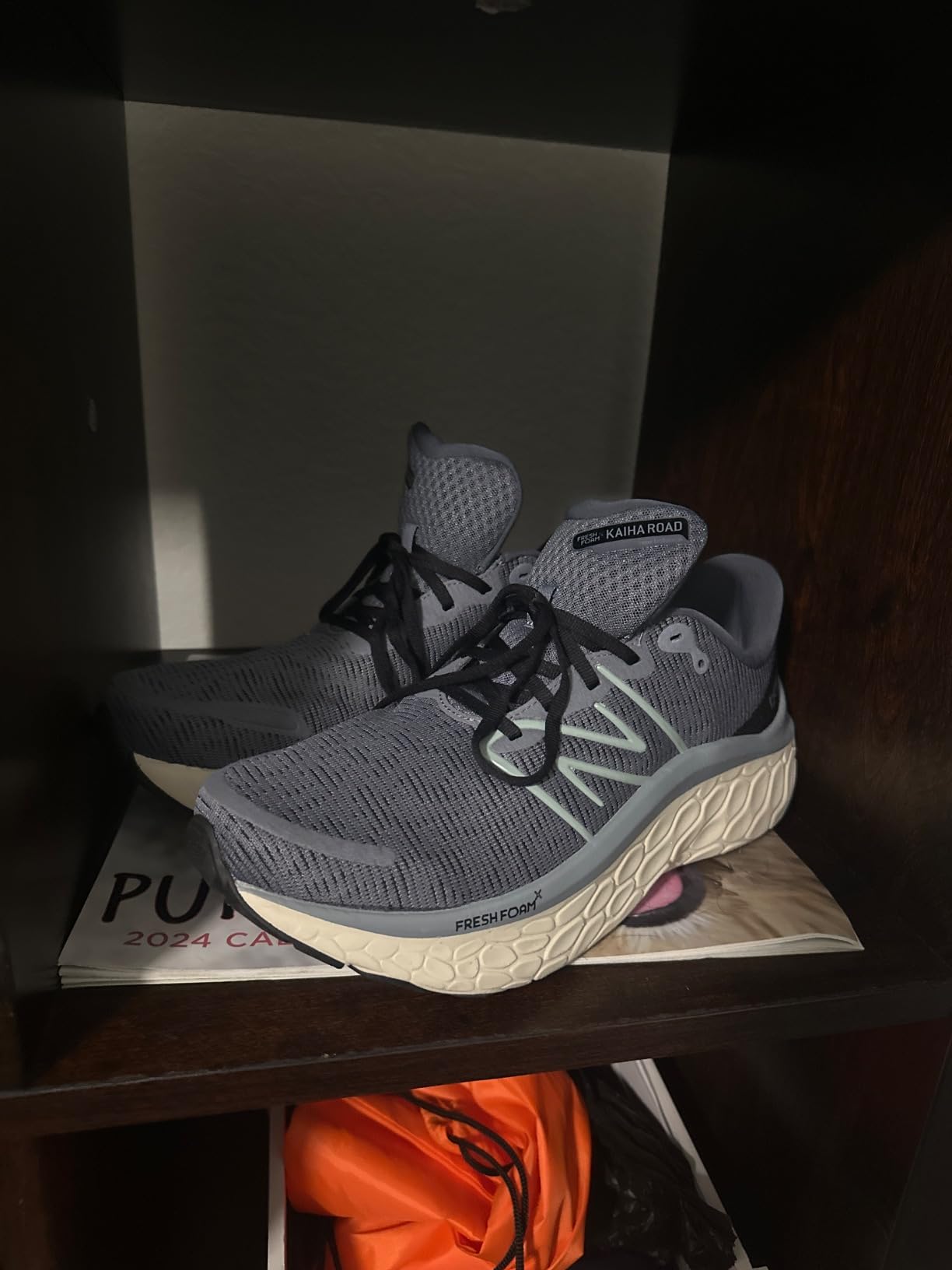
This shoe makes sense for:
- Plantar fasciitis sufferers needing short-term relief. The cushioning is genuine and immediate. Go in understanding this is a temporary tool for an acute flare, not a long-term management strategy.
- Wide-foot runners struggling with narrow fits. The 101.8mm toebox is unusual at this price tier. If width has been your recurring problem, the Kaiha solves it.
- Casual runners under 20 miles per week who want recovery-level comfort for easy miles without performance expectations.
- Treadmill or gym runners where indoor surfaces reduce the wet-traction risk and lighter use may extend the upper’s functional window.
- Anyone who can purchase within a return window and commit to checking the toe-box mesh at the 30–40 mile mark. The return safety net changes the risk calculation meaningfully.
Look elsewhere if:
- You’re logging 30-plus miles per week. At that volume, you’ll exhaust the shoe’s functional life before the two-month mark.
- Wet-weather running is regular. The outsole isn’t reliable on saturated pavement.
- Long-term value is the priority. At typical lifespan, cost-per-mile is worse than shoes costing twice as much upfront.
- You need cross-training or lateral stability. Soft midsoles and direction changes are a poor combination at 175-plus pounds.
- You’re running through winter. The 33% midsole stiffness increase at 40°F significantly changes the comfort equation.
Alternatives Worth Considering
For durability at a budget: Brooks Launch 10 delivers proven 400-mile upper longevity at comparable pricing. The cushioning isn’t as plush as the Kaiha, but the shoe exists at the end of a training block rather than the beginning.
For maximum cushioning that actually lasts: Brooks Glycerin Stealthfit 21 is the premium answer to this category. The cost-per-mile math ($0.25/mile at 400-mile lifespan versus the Kaiha’s $1.17/mile typical case) makes it genuinely cheaper over a full year of regular running.
For a better New Balance experience: The Fresh Foam X 880 V14 uses similar Fresh Foam X cushioning DNA with substantially more robust upper construction. Different price tier, but you get the New Balance cushioning character without the durability gamble.
For runners needing stability alongside cushioning: ASICS Gel-Kayano 31 and ASICS Gel-Cumulus 26 have demonstrated wide-foot track records with significantly better upper longevity across multiple independent test cycles.
Frequently Asked Questions
How long does the Fresh Foam Kaiha Road actually last?
Based on six weeks of testing and cross-referenced patterns across independent review sources: expect 40–80 miles before mesh failure becomes visible, with some units reaching 120 miles before the upper deteriorates significantly. The outsole, ironically, would last 400-plus miles. The upper terminates the shoe’s functional life long before the sole wears through.
Are these good for plantar fasciitis?
Genuinely effective during the window they hold together. The 132 SA heel shock absorption and 35.8mm heel stack provide real relief from PF symptoms. The practical constraint: plantar fasciitis is typically managed for months or years, and a shoe that fails at six to twelve weeks isn’t a sustainable primary solution. Use the Kaiha for relief during an acute flare while building a more durable rotation.
How does sizing compare to other New Balance models?
True to size for length, wider in the forefoot than most NB models at this tier. If you’re coming from the Fresh Foam Roav V1 or the 880 V14, size the same but expect a noticeably roomier toe box. Wide-foot runners coming from narrow-toed competitors can typically stay true to size without issue.
Can I extend the lifespan by walking instead of running?
Unlikely to make a meaningful difference. Multiple verified sources report mesh failures in walking-only use, which suggests the failure mechanism is toe-flex stress rather than running-specific impact. The upper material limitation appears to be intrinsic to the construction, not use-specific.
What do the actual specs say — brand versus lab?
New Balance markets the Kaiha with 8mm drop, 32mm heel stack, 24mm forefoot. RunRepeat’s independent lab measured 3.8mm drop, 35.8mm heel, 32.0mm forefoot. The brand measurements appear to use a different methodology. For technical decisions — injury management, transition planning, biomechanical matching — use the lab measurements. The 4.2mm drop discrepancy matters if you’re managing heel or Achilles conditions.
How does it perform in cold weather?
Poorly relative to moderate temperatures. RunRepeat’s freezer testing showed a 33% midsole hardness increase at 40°F, meaning the plush character you experience at 55–65°F becomes noticeably firmer in cold conditions. The traction chemistry of the outsole is also optimized for moderate temperatures. Not a winter-primary shoe.
Can I use custom orthotics?
Yes. The insole is fully removable across all size variants — confirmed by multiple independent sources. Standard-height custom orthotics fit without volume issues. This is one of the Kaiha’s genuine practical advantages for runners managing foot conditions through custom support.
How does it compare to the Nike Air Winflo 10 or Under Armour Charged Assert 9?
The Kaiha is softer and more cushioned than either. Neither the Winflo 10 nor the Charged Assert has the upper durability issue documented here — both have more conventional upper reinforcement at the toe-box flex zone. For runners who want comparable cushioning without the durability risk, the Winflo 10 at a similar price point is a straightforward comparison.
Is there anything else in the NB line at this price that holds up better?
The Fresh Foam X Cruz V3 uses similar Fresh Foam X cushioning in a lifestyle-oriented build with more substantial upper construction. If you want the NB foam character at a similar price, that model has fewer documented upper durability complaints. The tradeoff is slightly less cushioning volume.
Final Verdict
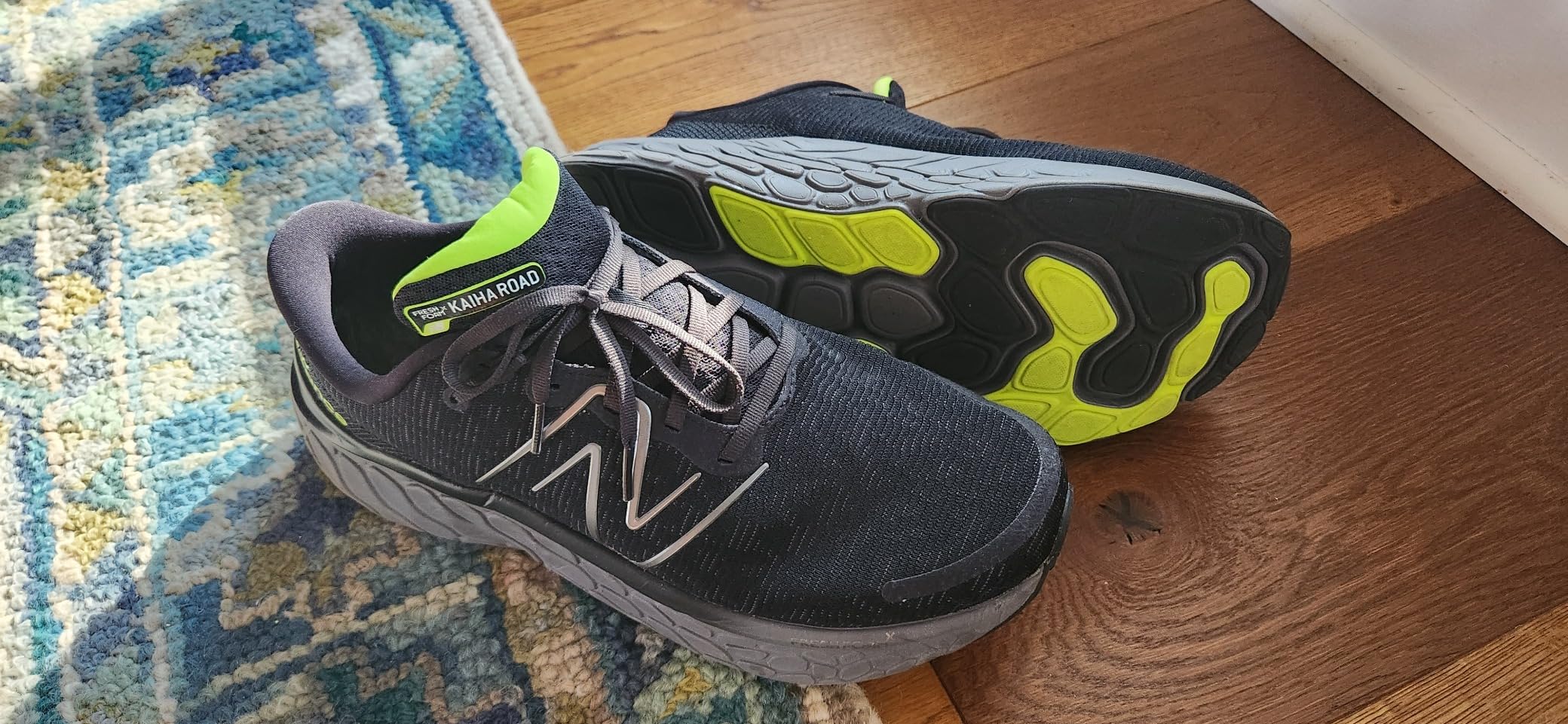
The New Balance Fresh Foam Kaiha Road does one thing at a genuinely high level: it cushions. The Fresh Foam X midsole with 132 SA shock absorption and 31.1 AC softness is impressive for a $70 shoe, and the plantar fasciitis relief it provided during its functional window was real. These facts matter, and they’re what makes this review frustrating to write.
The problem isn’t what the shoe does well. It’s how long it can do it. Mesh upper failure at 40–80 miles — consistent across this review and corroborated by independent sources — puts the Kaiha in a position where its strongest quality becomes irrelevant. Exceptional cushioning stops being a selling point the moment the shoe is ventilating your socks.
| Performance Category | Score (1–10) | Notes |
|---|---|---|
| Comfort & Cushioning | 9.5 | Outstanding Fresh Foam X; genuine plantar fasciitis relief; consistent across 120 miles |
| Durability | 3.0 | Mesh upper fails 40–80 miles; consistent failure mode across multiple sources |
| On-Road Performance | 7.0 | Solid dry-pavement; poor wet traction; lateral stability limited for heavier runners |
| Value for Money | 4.0 | $1.17/mile typical vs. $0.25–0.35/mile for durable alternatives |
| Fit & Sizing | 8.5 | TTS; generous width; fully removable insole; orthotic-compatible |
| Style | 7.5 | Clean, understated aesthetic; multiple colorways; zero reflective elements |
Overall Rating: 5.5/10
Exceptional cushioning technology undermined by upper construction that doesn’t survive normal training loads. Cannot recommend for any runner expecting standard lifespan.
| What Works | What to Know Before Buying |
|---|---|
| Fresh Foam X cushioning — genuine, lab-verified | Mesh upper fails 40–80 miles at flex point |
| Immediate plantar fasciitis relief | Wet-pavement traction unreliable |
| Wide toebox (101.8mm) — real accommodation | Cost-per-mile worse than $150 alternatives |
| True to size, orthotic-compatible | Zero reflective elements — visibility risk |
| Lightweight at 9.9 oz | Midsole loses 33% softness below 40°F |
For most runners, spending an extra $30–50 on a shoe with documented upper durability will return better value per mile and per month. The Kaiha earns its 5.5 from one category alone. That’s not enough.
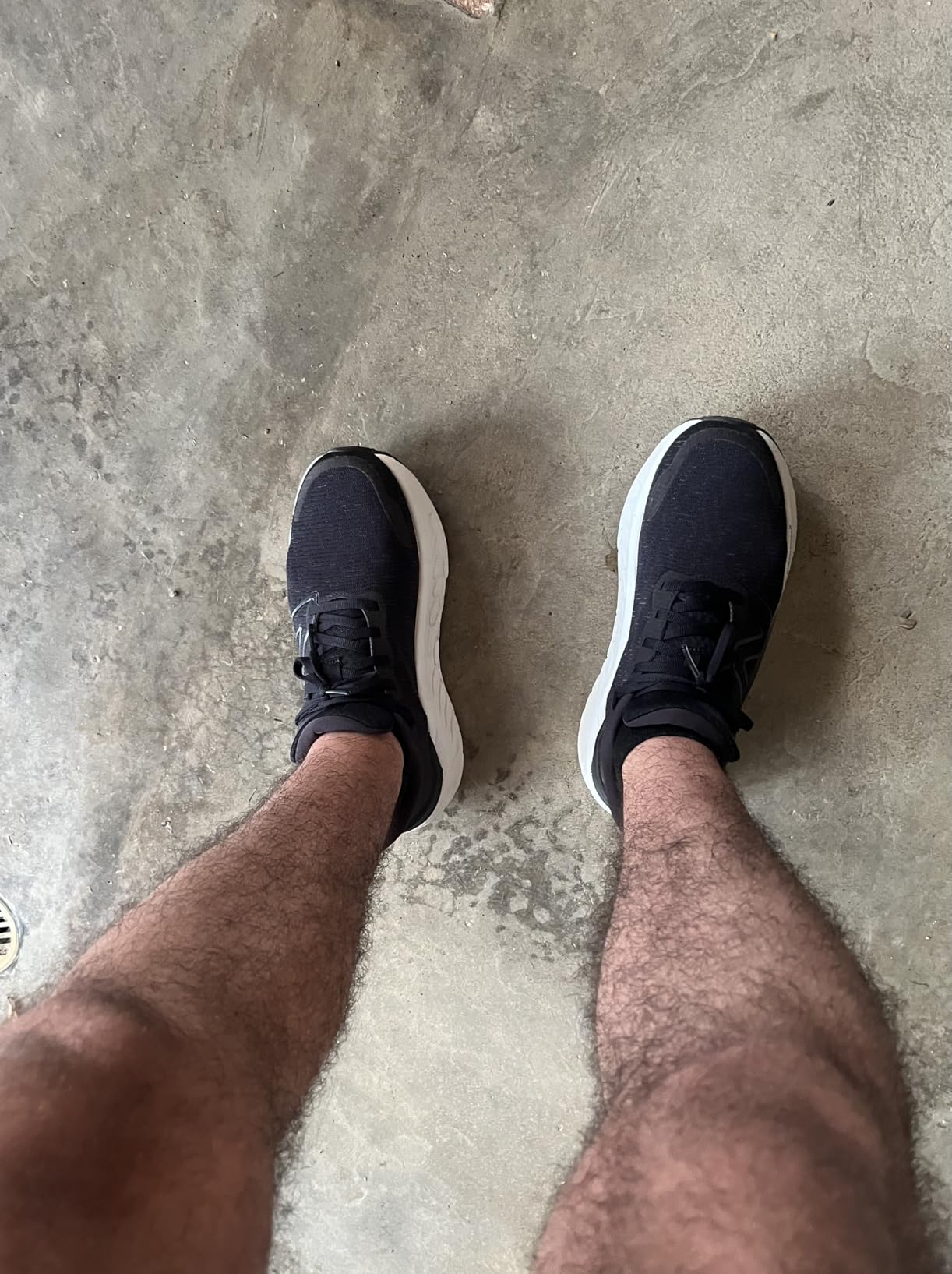
For the full range of running shoes across all price points and durability tiers, browse the complete selection at footgearusa.com.
Be the first to review “New Balance Men’s Fresh Foam X Kaiha Road Running Shoes”
Related products
Running Shoes
Running Shoes
Running Shoes
Running Shoes
Running Shoes
Running Shoes


Hiking/Trekking Shoes
Running Shoes
Reviews
There are no reviews yet.