
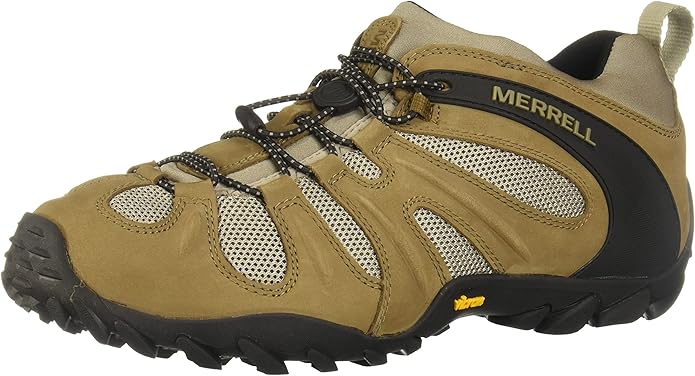
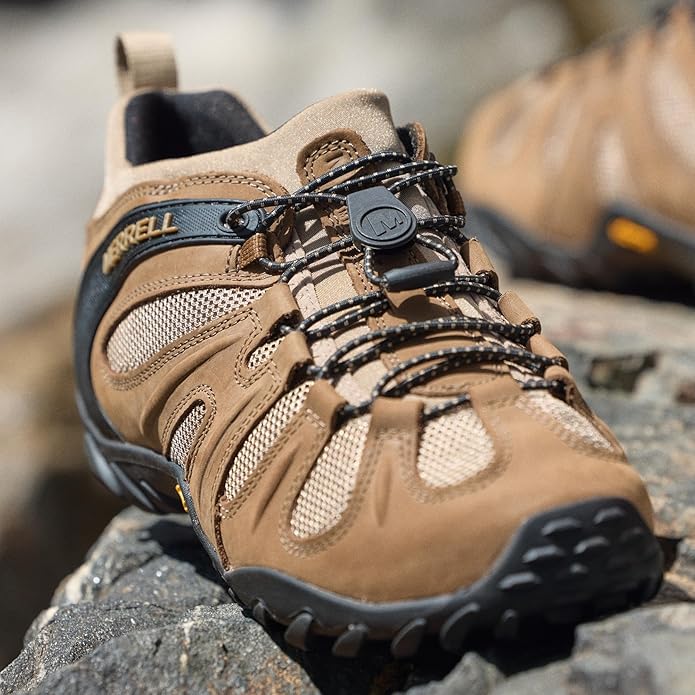
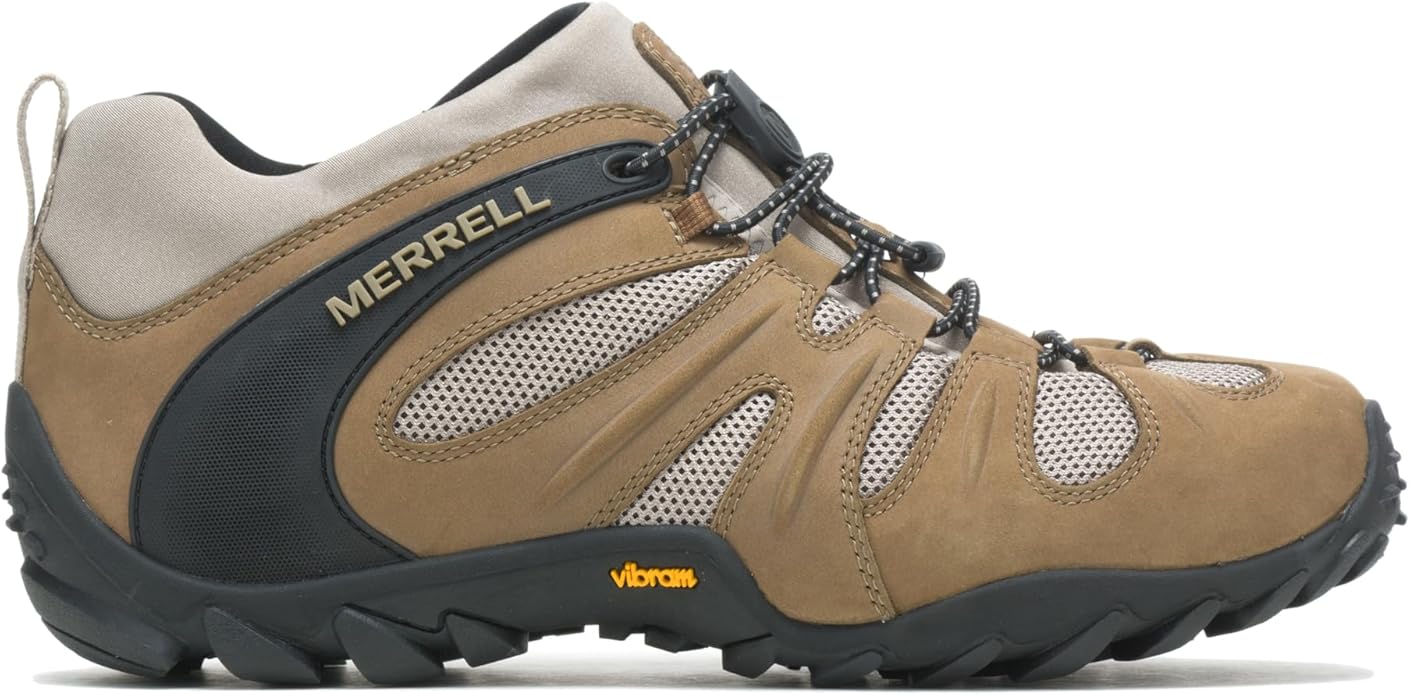
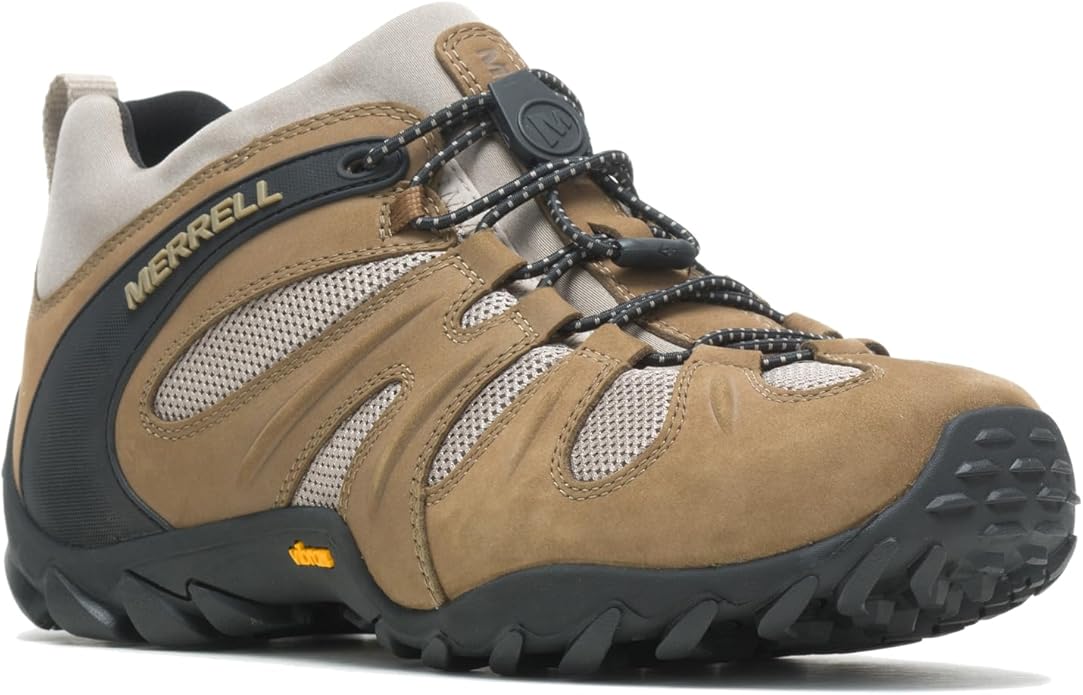
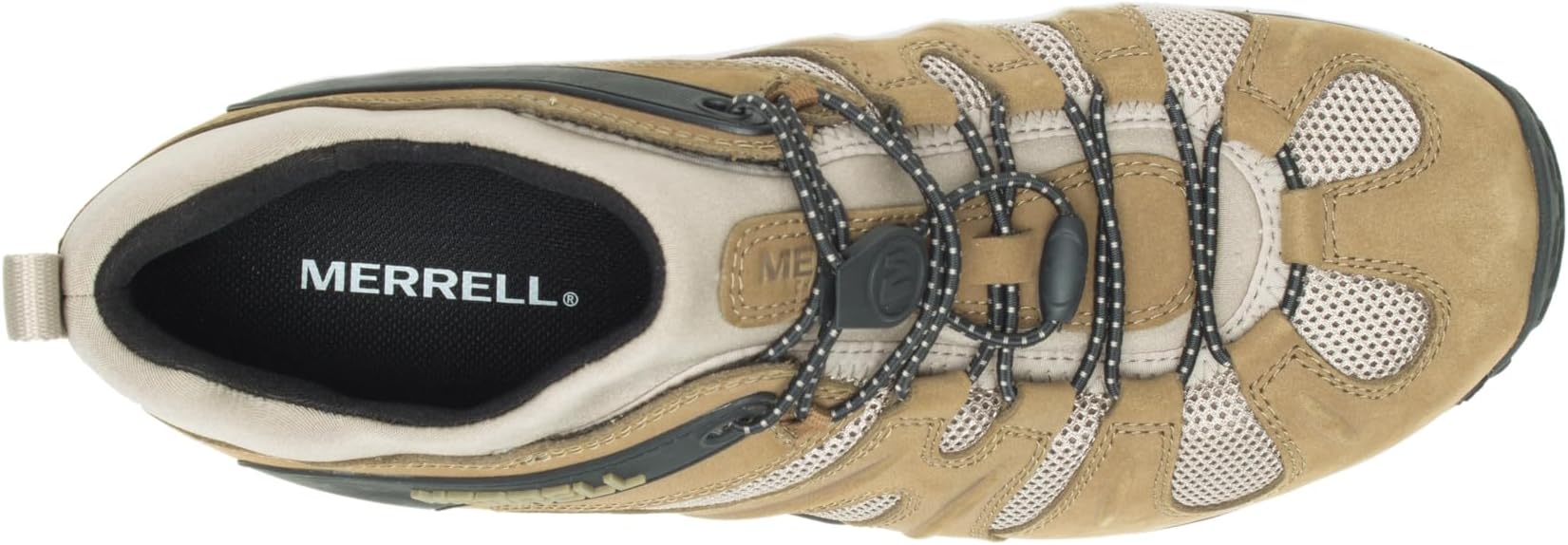
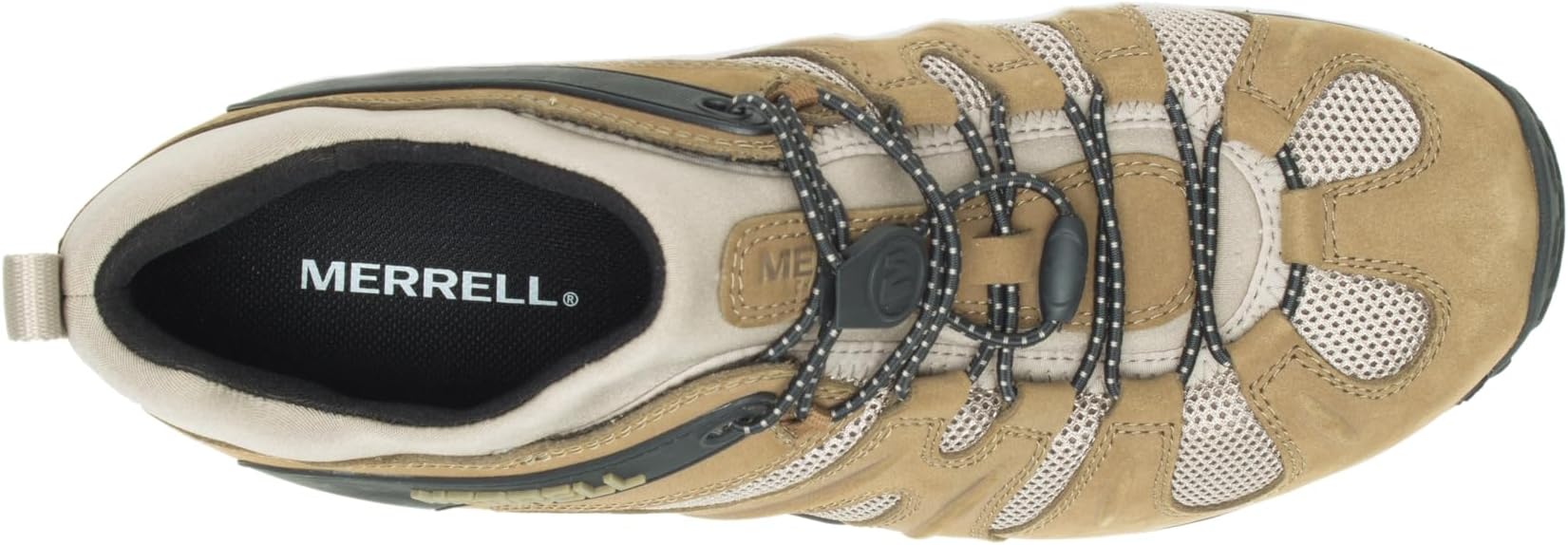
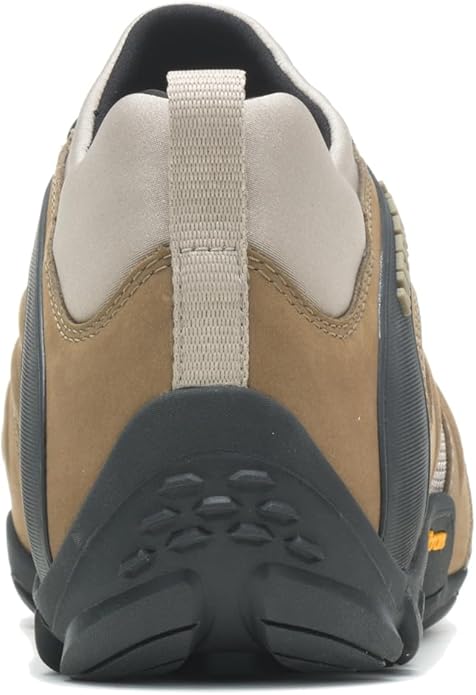
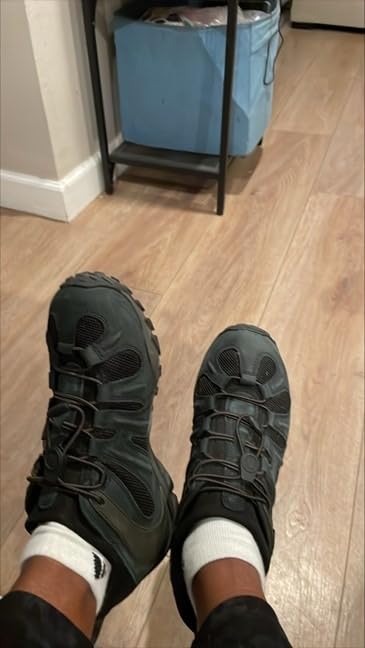
It was a Saturday when I finally had enough. Three pairs of hiking shoes in twelve months — one pair gave up on a Catskill trail, another developed sole separation after six weeks of garage work, and the third just never fit right. Mike here, 180 lbs, and I needed something that could survive daily two-mile walks to the coffee shop, weekend trail runs in the Adirondacks, and Saturdays building deck railings without begging for retirement by spring. The Merrell Men’s Chameleon 8 Stretch landed on my radar. Eight weeks and 45+ sessions later, here’s what actually happened.
Technical Specifications
- 💰 Price: $100 (WP waterproof variant; standard non-WP version runs ~$85-95)
- ⚖️ Weight: ~14.2 oz men’s size 9 (Merrell lists 16.93 oz / 480g for larger sizes — weight is size-dependent, lighter in size 9)
- 🧪 Midsole: Lightweight EVA foam + Merrell Air Cushion in heel + Kinetic Fit™ BASE removable contoured footbed
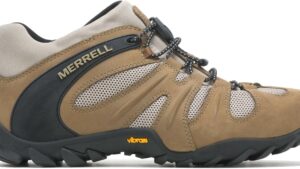
- 👟 Upper: Waterproof nubuck leather + breathable mesh (M Select DRY membrane in WP variant)
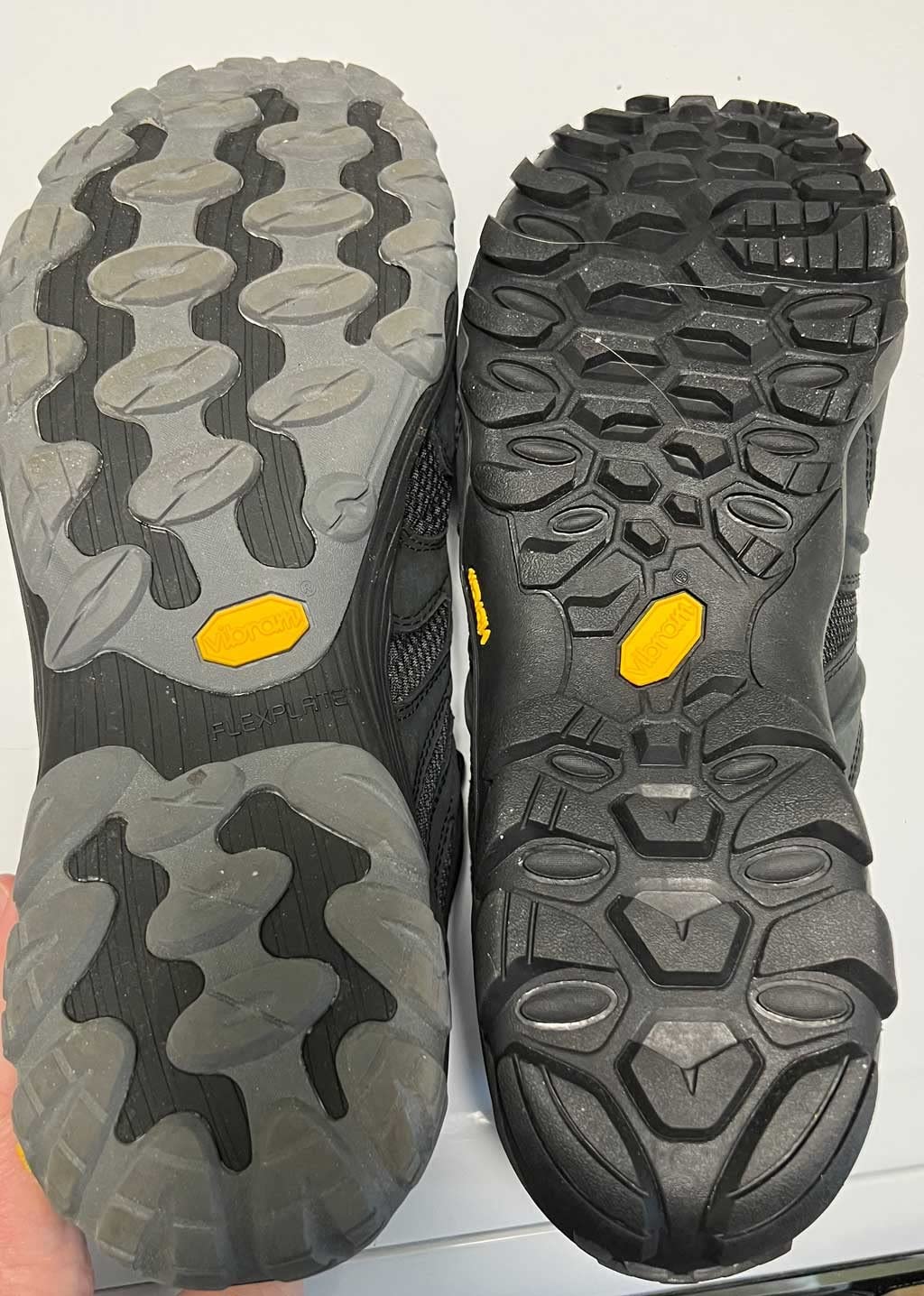
- 🔩 Outsole: Vibram® XS Trek Evo, 5mm lug depth (optimized for wet surface traction)
- 🦺 Heel: TPU molded counter + external rear sling + Bellows tongue for debris exclusion
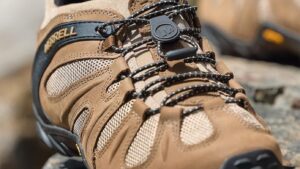
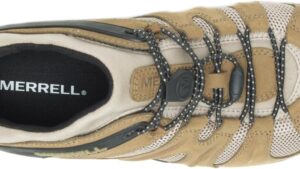
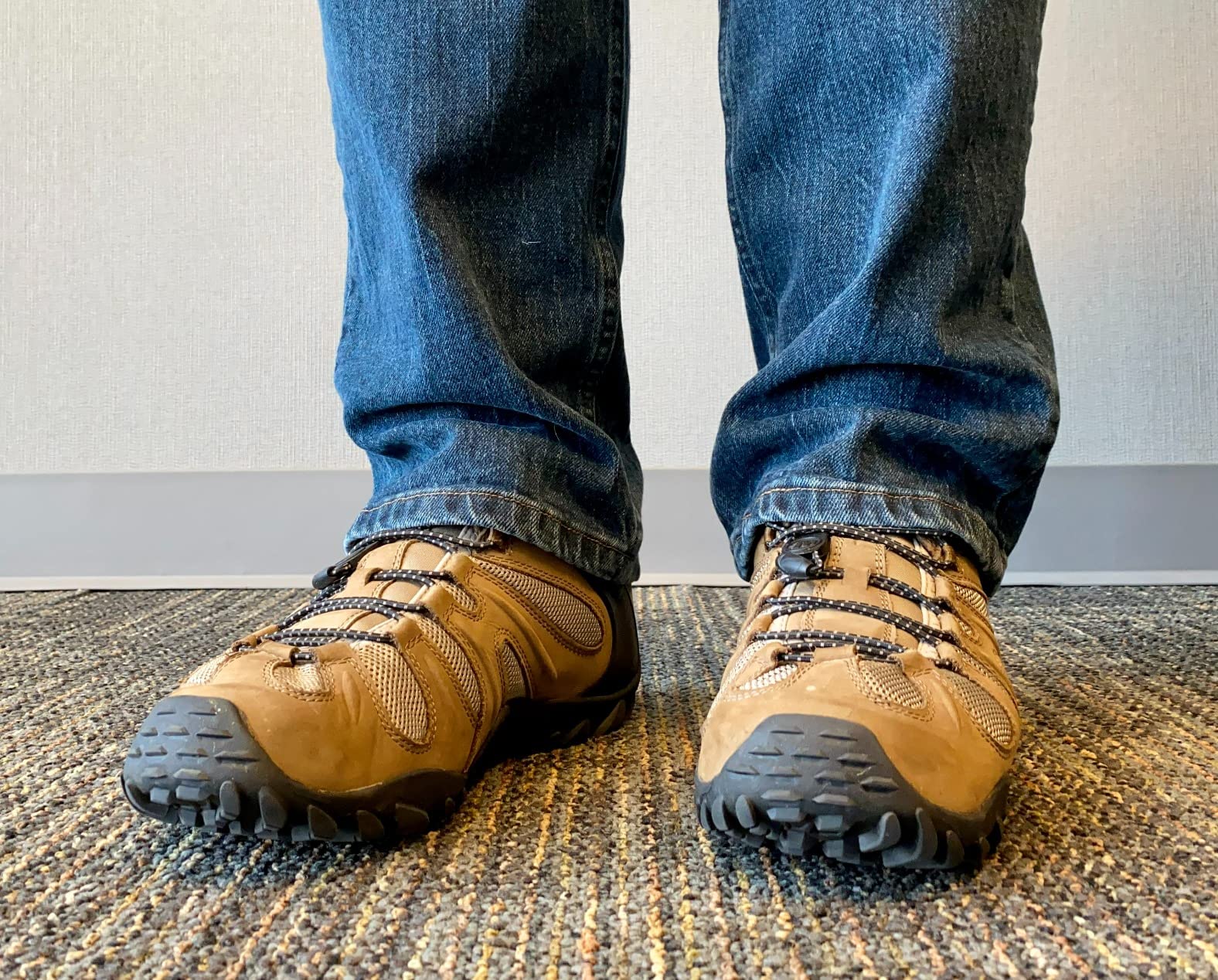
- 🔗 Lacing: Elastic cord + plastic clamp lock system
- 🏃 Category: Day hiking / multi-purpose outdoor (trails, daily walks, work environments)
- ⏱️ Testing: 8 weeks, 45+ sessions — daily walks, Adirondack weekend hikes (4–8 miles), garage construction, stream crossings
Note on the weight discrepancy: Merrell’s official spec sheet lists 16.93 oz (480g) as a half-pair weight, likely measured in a larger size such as size 10 or 11. Men’s size 9 runs noticeably lighter. Both figures are legitimate — they’re just measuring different sizes.
Design and Build Quality: First Impressions Are Complicated
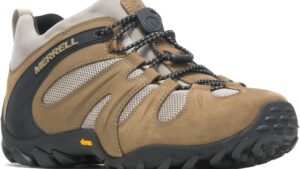
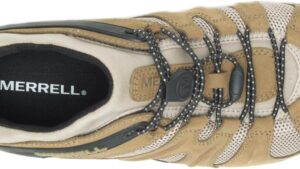
Pull these out of the box and the build quality grabs you immediately. The waterproof nubuck leather sits dense and solid in your hands — not the floppy synthetic you find on budget hikers at this price. The reinforced mesh panels actually feel breathable rather than decorative, which matters once temperatures hit 70°F on the trail. The brown colorway threads that needle between “rugged outdoor tool” and “I’m grabbing coffee” — it doesn’t scream hiker, which is exactly what I needed for a shoe doing double duty.
Then you try to put them on.
The Heel Entry Problem Nobody Warns You About
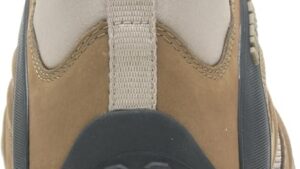
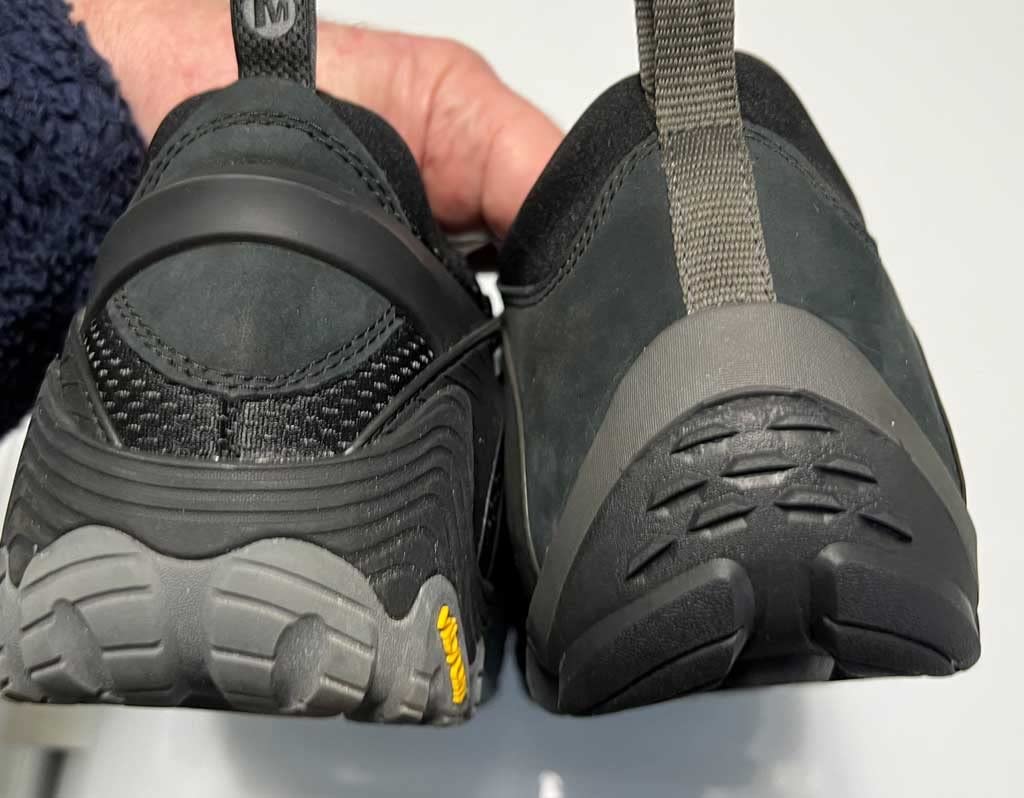
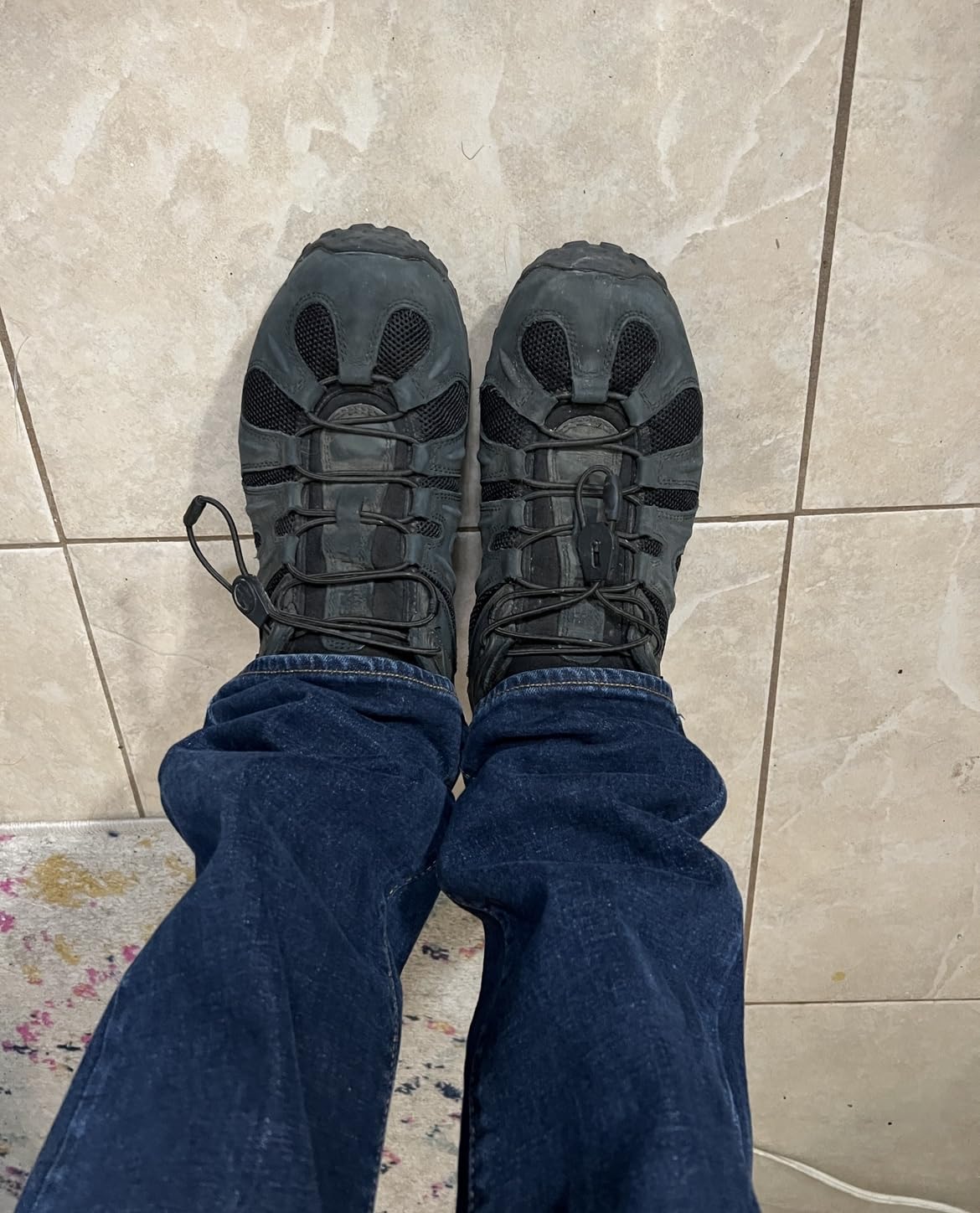
The TPU molded heel counter — Merrell’s security feature — creates an opening so stiff that I needed a Zomake metal shoe horn for the first two weeks straight. At 180 lbs with normal hand strength, working the elastic cord and pull tab still felt like a two-handed operation every single morning. That external rear sling that Merrell advertises as a convenience feature? Useful for pulling, but the heel doesn’t yield easily regardless.
The stiffness eased up by week three, but “easy on/off hiker” — as Merrell markets it — is simply not accurate for anyone who’s never owned a pair. The bellows tongue does its job keeping debris out, and the overall construction looks like it’ll absorb years of abuse. But the entry situation is a real daily friction point that deserves a straight warning.
The Elastic Lacing System: Convenience With Caveats
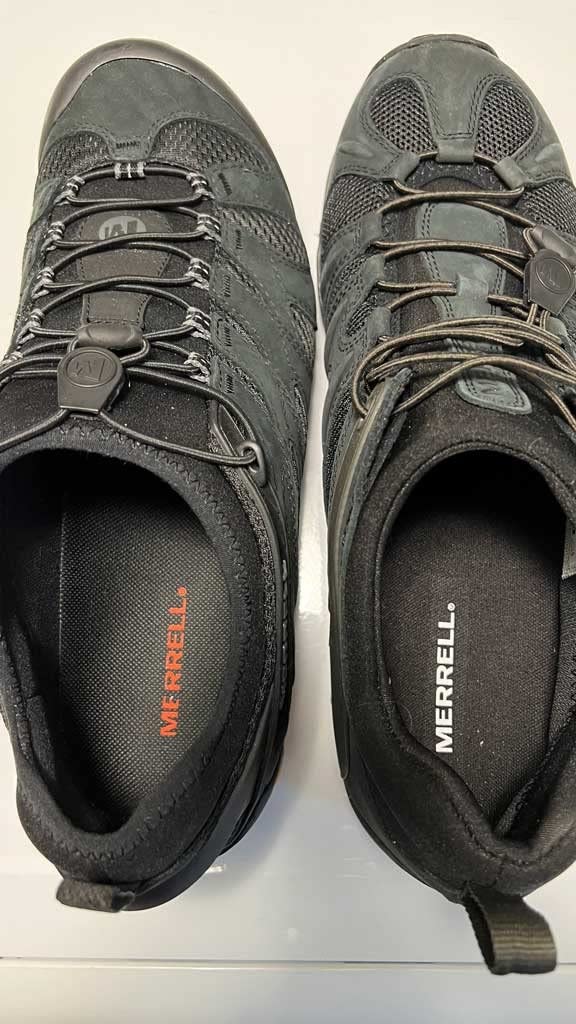
The concept is genuinely useful. Set the tension once, build your entry routine, and these slip on with a fraction of the fuss traditional laces require — once the heel has broken in. The cord lock system works cleanly in dry conditions, and after three weeks the entry friction dropped to “manageable” rather than “I need help.”
Where It Gets Frustrating
That tiny plastic clamp pin. You actuate it by pressing a recessed button on the underside with your fingernail. In summer shorts on a warm day, this is fine. In winter gloves at the trailhead? Forget it. The mechanism requires bare fingers and reasonable dexterity. If you’re planning cold-weather hiking or often wear work gloves, on-trail adjustments become genuinely difficult.
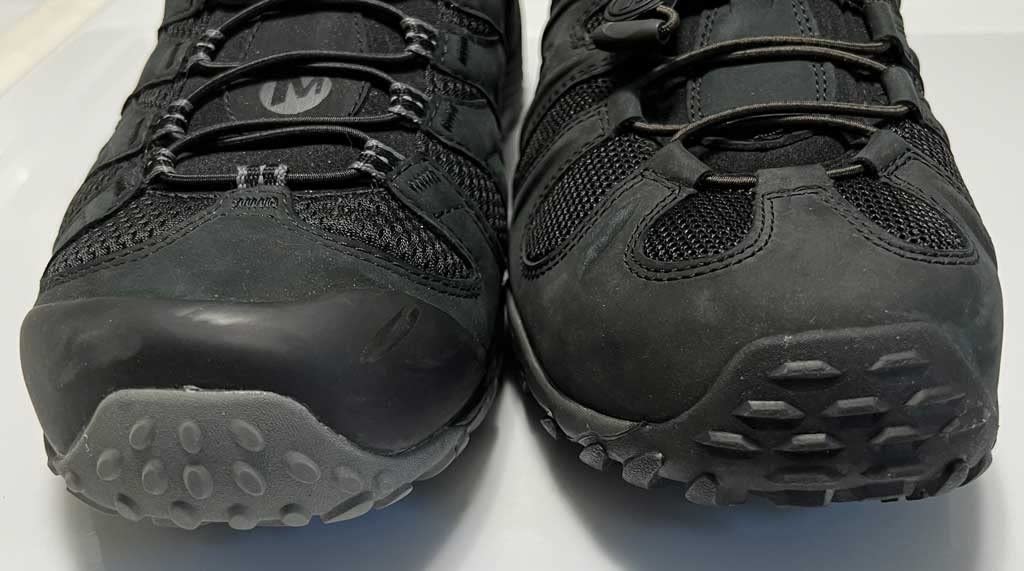
The bigger issue is what happens over time. By week eight, I’d confirmed what several longtime Chameleon owners in my hiking group had warned me about: the elastic cords stretch out, requiring periodic recalibration of your tension setting. This isn’t catastrophic, but it’s an ongoing maintenance task that older Chameleon models — which used more robust hardware — didn’t demand. The plastic clamp mechanism itself feels noticeably cheaper than what Merrell ran in earlier generations, and the quality regression is something frequent Chameleon buyers have been grumbling about on forums for a couple of years now.
The lacing system is still a net positive for its primary use case. Just don’t expect the hardware to age gracefully.
On-the-Trail Performance: Where the Chameleon 8 Earns Its Keep
Getting them on is the hard part. Once they’re on your feet, the equation reverses completely.
Dry Trail Conditions
The Vibram XS Trek Evo outsole — 5mm lug depth, engineered specifically for wet surface performance — delivers confidence on dry rock that borders on the unfair. Two weekend hikes in the Adirondacks, one with a 1,400-foot elevation change, and I never second-guessed my footing on loose rock or packed dirt. The tread picks up some mud in soft conditions but sheds it adequately on harder surfaces. Dry trail performance sits solidly at 9/10 for a shoe at this price.
Wet and Stream Crossing Conditions
The M Select DRY membrane in the waterproof variant genuinely works. I crossed four streams over two months — up to mid-ankle depth — and my feet stayed dry every time. Two rainy five-mile hikes added to the dataset with the same result: no moisture penetration from above. The one caveat is worth flagging clearly: the smooth transitional areas of the sole can be slippery on polished wet rock. On wet granite slabs specifically, step carefully. The XS Trek Evo compound handles wet mud and gravel well, but wet stone with limited lug engagement is a different story.
Daily Walking Performance
For two-mile flat pavement walks, these perform without complaint up to about 90 minutes. That’s a specific number because it’s where I reliably noticed the hard heel beginning to register. Below that threshold, the combination of EVA foam cushioning, Air Cushion heel technology, and the Kinetic Fit BASE insole creates comfortable, neutral walking. Beyond it, the TPU heel counter starts to remind you it’s there.
Work and Construction Environments
This is where the Chameleon 8 Stretch surprised me most. Several weekends building deck railings — concrete work, ladder climbs, kneeling on rough surfaces — and both the toe protection and outsole grip held up impressively. The upper showed zero deformation under point-pressure stress. For light construction and garage work, this performs better than most dedicated work shoes I’ve tried at twice the price.
Comfort Deep Dive: The Hard Heel, Soft Forefoot Paradox
The comfort experience here is genuinely strange, and I want to describe it precisely because it’s something no other Chameleon 8 review I’ve found addresses directly.
The heel area — driven by that stiff TPU counter plus the Air Cushion system’s firm heel platform — feels distinctly hard. Not painful, but hard. Like the back half of your foot is riding on a structured platform rather than cushioned support. The forefoot, meanwhile, uses the EVA midsole’s softer properties and the flexible Kinetic Fit BASE insole to deliver a noticeably softer, more yielding feel.
How Long Does Adaptation Take?
Three weeks. That’s my honest measurement. In weeks one and two, the hard heel/soft forefoot contrast creates a borderline disorienting sensation — like your foot is being asked to interpret two different shoes simultaneously. By week three, the break-in had progressed enough that the sensation normalized. After that, I wore them for 4–8 mile weekend hikes without specific foot fatigue.
The comfort ceiling on pavement is firm at 90 minutes of continuous walking. For trail hiking at varied pace, the limit extends considerably — probably to 4–5 hours before heel discomfort becomes noteworthy. For all-day standing on hard surfaces (concrete work, etc.), you’ll notice the heel by hour two.
This isn’t a flaw so much as a design characteristic. The stiff heel provides real stability on uneven terrain. The tradeoff is that all-day walking comfort isn’t this shoe’s strong suit.
Merrell’s Marketing Claims: Honest Assessment
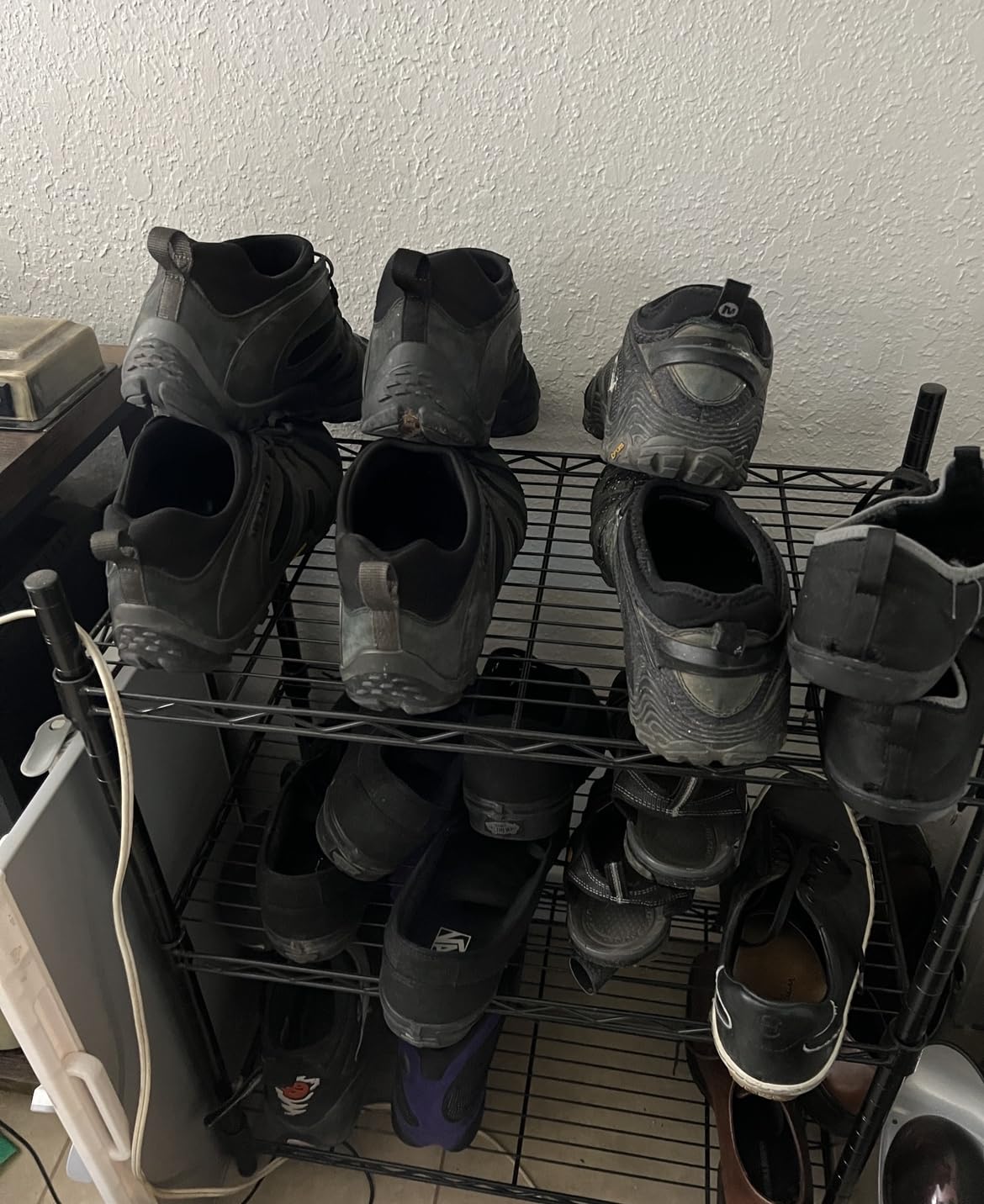
Merrell makes four core claims about the Chameleon 8 Stretch. Here’s how they held up against eight weeks of testing:
“Easy On/Off Hiker”
Verdict: False. These are among the most resistant-to-entry shoes I’ve tested from any brand marketing the slip-on convenience angle. The stiff TPU heel requires a shoe horn or two-handed effort for the first two weeks minimum, and even after break-in, entry takes more physical engagement than any casual slip-on comparison warrants. Merrell is describing the intended design, not the actual user experience.
“Protection, Stability, and Ultra-Lightweight Construction”
Verdict: 2 out of 3. Protection (toe cap, upper durability) — solid, genuinely tested. Stability (heel counter, outsole platform) — excellent on trail and work surfaces. Ultra-lightweight at 14.2 oz in size 9? Modern hiking shoes from Hoka, Salomon, and KEEN are running 10–12 oz. The Chameleon 8 Stretch sits in the middle-weight category. “Ultra-lightweight” is marketing stretch.
“Waterproof Nubuck Leather and Mesh Upper”
Verdict: True, for the WP variant. Multiple stream crossings and rainy hikes confirmed the M Select DRY membrane performs as advertised. Important clarification: the standard non-WP Chameleon 8 Stretch ($85–95) uses plain nubuck without the waterproof membrane — water-resistant, not waterproof. Make sure you’re buying the right variant for your use case.
“Kinetic Fit BASE for Flexible Support”
Verdict: Adequate, not exceptional. The removable contoured insole provides neutral arch support that works for standard-arch feet. It’s compatible with aftermarket orthotics since it lifts out cleanly — a practical plus for custom insole users. For high-arch feet requiring real support, however, the stock insole will feel insufficient. A Sof Sole insole upgrade at week four would meaningfully improve the comfort floor if you’re in that category.
The Squeaking Problem: Timeline and What We Know
At week six, these started squeaking on hard surfaces. Every step on pavement, hardwood, and tile generates an audible squeak that carries in quiet indoor environments. It started faint, became consistent by week seven, and hasn’t gone away at eight weeks.
The mechanism isn’t fully isolated. Based on what I could replicate by temporarily removing the insole (squeaking persisted), it doesn’t originate at the insole interface. The most likely source is friction between the EVA midsole and the upper’s internal structure as flex cycling compounds over time — though that’s inference, not confirmed diagnosis. Multiple Amazon reviewers report the same onset timing (five to eight weeks), which suggests it’s a consistent manufacturing characteristic rather than a defect in my specific pair.
Whether this indicates structural progression or just auditory annoyance without durability impact is honestly unknown at the eight-week mark. What I can confirm: it doesn’t resolve with conditioning treatments or powder applications that worked on other shoes. It’s a quirk you either accept or don’t.
Sizing and Fit Guidance
For standard-width feet, true-to-size is the right call. The toe box runs neither narrow nor wide by default — there’s adequate lateral space without sloppiness. The heel fit is precise once broken in, though the TPU counter can feel unforgiving on narrow heels during the break-in window.
Sizing decision framework:
- Standard width, standard arch: True to size. Allow 2–3 week break-in for heel.
- Wide feet: Size up 0.5. No wide variant is available, and the elastic lacing doesn’t provide meaningful width adjustment. Wide-specific hiking shoes may serve you better.
- Narrow feet: True to size or consider half-size down — the elastic system can compensate for slight volume reduction.
- High arch / orthotic users: The removable insole is orthotic-compatible. Stock insole works for neutral arches; swap it at week three to four if you have significant arch requirements.
- Heavy users (200+ lbs): The stiff heel counter may be less forgiving. Consider half-size up for additional volume in the heel cup.
Durability and the Quality Regression Question
At eight weeks and 45+ sessions across multiple terrain types, the Vibram XS Trek Evo outsole shows minimal visible wear. The tread pattern remains sharp on the heel and midfoot strike zones. Based on the wear rate observed, a moderate user (three to four sessions weekly on mixed terrain) could reasonably project 14–18 months of outsole life before meaningful performance degradation.
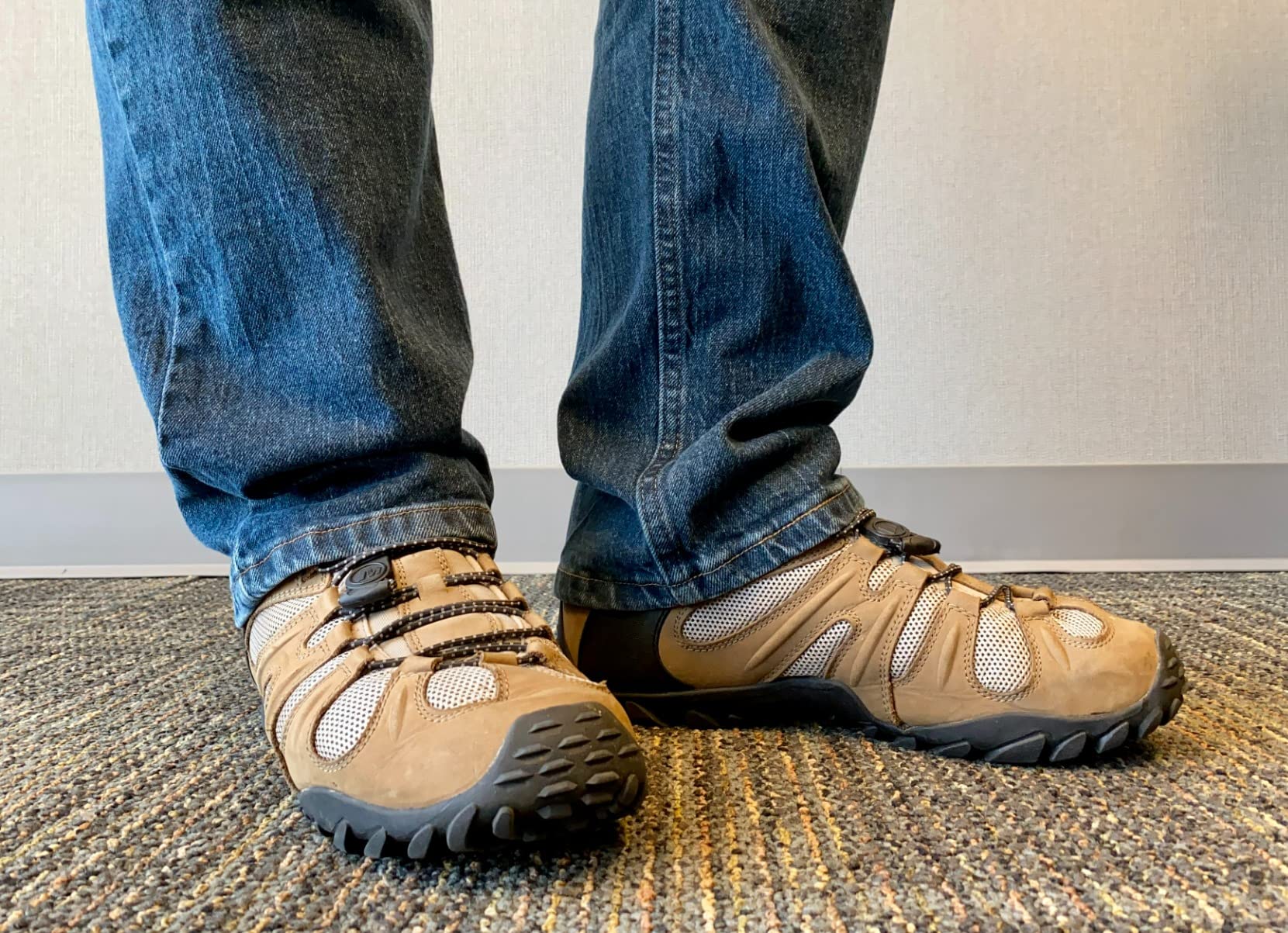
The upper construction — nubuck leather seams, mesh panel stitching, and the waterproof membrane sealing — showed no degradation at the eight-week mark. No delamination, no stitching separation, no upper stress cracks.
The Elephant in the Room: Quality Regression
Multiple longtime Chameleon owners in my hiking group independently flagged the same concern: newer Chameleon 8 models feel noticeably cheaper than the Chameleon 4 and 5 generations. The specific callout is the elastic lacing hardware — the plastic clamp replaced what was previously a metal mechanism, and the elastic cord itself stretches faster than older versions. This isn’t speculation; it’s a consistent pattern across forum discussions dating back to the Chameleon 7 transition.
The core construction (upper, outsole, waterproofing) hasn’t degraded. The lacing hardware has. At $100, that’s a known compromise you’re accepting.
Detailed Performance Scores
| Category | Score | Key Finding |
|---|---|---|
| Comfort | 6.5/10 | Hard heel / soft forefoot paradox; 90-min pavement ceiling; 3-week break-in |
| Durability | 8.0/10 | Vibram sole excellent; upper solid; elastic hardware is weakest link |
| Versatility | 9.0/10 | Best multi-use capability tested at this price — trail, work, and daily wear without compromise |
| Value | 7.0/10 | Fair for versatility; comfort shortfalls and hardware regression reduce score |
| Ease of Entry | 4.0/10 | Marketing says easy on/off; testing says shoe horn required for two weeks minimum |
| Weather Performance | 8.0/10 | Waterproofing holds under real conditions; smooth sole slips on wet rock |
| Break-In Period | 5.0/10 | Heel stiffness requires 2–3 weeks; shoe horn recommended throughout |
| Overall | 7.1/10 | Solid multi-purpose hiker with real design trade-offs you need to know before buying |
Who Should Buy the Merrell Chameleon 8 Stretch
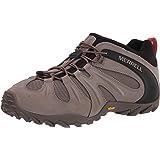
This Shoe Fits If You:
- Need one shoe that handles weekend trail hiking AND weekday walking AND work environments without asking you to choose
- Prioritize durability and waterproofing over all-day cushion comfort
- Can tolerate a 2–3 week break-in and don’t mind keeping a shoe horn by the door
- Aren’t hiking daily (moderate use: three to four times weekly is this shoe’s sweet spot)
- Have standard-width feet — the sizing runs true to size width-wise
Skip It If You:
- Need genuine easy slip-on functionality — the marketing is misleading on this
- Plan to wear these for 8+ hours on hard surfaces daily — the comfort ceiling is real
- Have wide feet and depend on wide-width options
- Are sensitive to the heel cup stiffness (test in-store if you can)
- Want modern lightweight construction — at ~14.2 oz, this isn’t a lightweight hiker
Alternatives Worth Considering
If the Chameleon 8 Stretch doesn’t fit your profile, these comparisons are worth knowing:
For easier on/off with similar durability: The Merrell Jungle Moc offers a more flexible heel opening that actually delivers on the slip-on promise. Less aggressive outsole, but genuinely easier entry.
For more comfort-focused hiking: The Merrell Moab 2 Vent Mid runs notably more comfortable through the heel and midfoot. If you’re covering 8+ miles regularly, the comfort difference is meaningful. Non-waterproof, so factor that in.
For a lightweight trail running approach to hiking: The Salomon Speedcross Peak Clima is waterproof and runs lighter, though the aggressive lug pattern makes it better suited to pure trail use than pavement commuting.
For budget-conscious multi-purpose hiking: NORTIV 8 Men’s Hiking Shoes come in under $60 and handle moderate trail use well. Less Vibram traction and no Air Cushion system, but a reasonable entry point.
For wide-foot hikers: The standard Chameleon 8 Stretch doesn’t accommodate wide feet well. Consider L-RUN Wide Hiking Shoes specifically built for wider toe box needs.
The Merrell Accentor 3 is worth noting for hikers who want to stay in the Merrell family with a lighter build and more traditional lacing system — no elastic hardware concerns. If waterproof mid-cut construction appeals, the Columbia Trailstorm Peak Mid is a comparable option at a similar price with a more traditional lacing setup.
Frequently Asked Questions
How difficult is it really to get these on?
More difficult than any “slip-on” shoe should be. The TPU heel counter creates a rigid opening that requires a shoe horn or strong heel-tab manipulation during the first two weeks. After break-in, it gets manageable — but never as effortless as Merrell’s marketing implies. Budget for the break-in period and keep a shoe horn accessible.
Are they actually waterproof or just water-resistant?
The WP (waterproof) variant with M Select DRY membrane is genuinely waterproof. I tested it across four stream crossings and two rainy multi-hour hikes with zero moisture penetration. The standard non-WP version uses plain nubuck leather — water-resistant, not waterproof. Check your ASIN carefully before purchasing; both variants exist in the same colorways.
Does the squeaking go away on its own?
Based on my eight-week test and reports from other owners, it doesn’t resolve without intervention. Onset is typically weeks five to eight, and it persists on hard surfaces. Some users report marginal improvement with midsole conditioning spray, but I haven’t confirmed this personally. Accept it as a likely long-term characteristic.
How do they size compared to other Merrell models?
True to size. The Chameleon 8 Stretch fits consistently with Merrell’s standard sizing across the Moab and Accentor lines. If you’re between sizes, the elastic lacing provides minor adjustment range — but go TTS as your starting point.
Is the Kinetic Fit BASE insole removable for orthotics?
Yes. It lifts out cleanly without adhesive. Standard orthotic footbeds drop in without modification. If you use custom insoles, this shoe accommodates them without issue — one of its quiet strengths that most reviews don’t mention. For high-arch users, a Valsole orthotic insole is a direct-fit replacement worth considering at week three.
What’s the realistic lifespan?
Based on observed wear at eight weeks across 45+ mixed-terrain sessions: the Vibram outsole projects to 14–18 months at moderate use (three to four sessions weekly). Casual users extending that to once weekly could see 24+ months of outsole life. The elastic lacing hardware is a separate timeline — expect stretch-out requiring recalibration by months three to four, and potential cord replacement by year two.
Can I wear these for construction work or light labor?
Yes, and this is one of the shoe’s genuine strengths. The toe protection and outsole grip handle concrete surfaces, gravel, and ladder climbing impressively. Not a safety-rated work boot, but for light construction and maintenance environments it performs above its pay grade.
How do these compare to the older Chameleon models?
Longtime Chameleon users consistently report that the core construction (upper, outsole, waterproofing) remains solid in the Chameleon 8. The degradation is specifically in the lacing hardware — plastic clamp replacing metal components, and elastic cord with reduced durability vs. earlier generations. If you loved the Chameleon 5 or 6 for durability, the Chameleon 8 delivers that in everything except the lacing mechanism.
Final Verdict
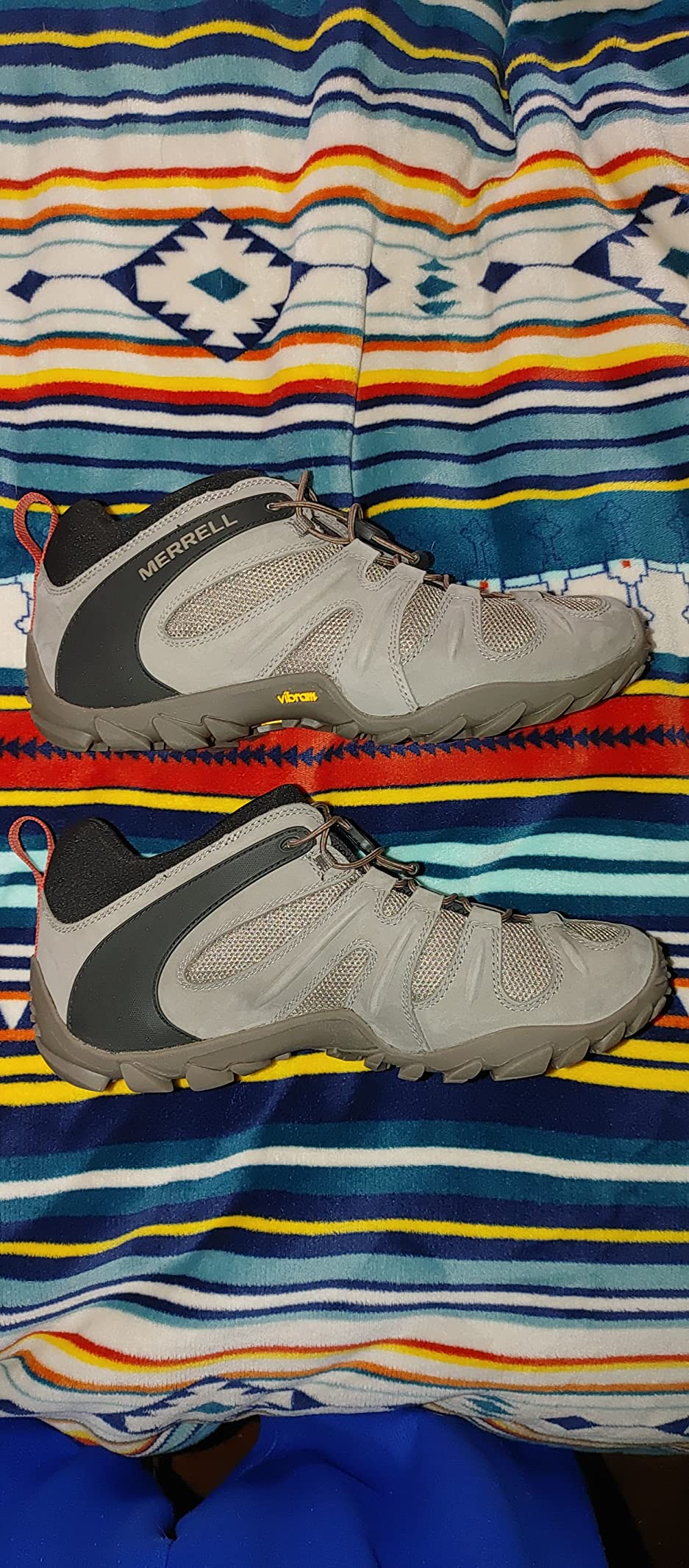
✅ What Works
- Vibram XS Trek Evo traction on dry trail is genuinely excellent
- Waterproofing (WP variant) holds up to real stream crossings and rain
- Multi-use capability — trail, daily walking, and work — without asking you to compromise
- Upper construction quality holds at eight weeks of heavy mixed use
- Removable insole is orthotic-compatible (underrated feature)
❌ What Doesn’t
- Entry is genuinely difficult — “easy slip-on” marketing is misleading
- Squeaking onset at weeks five to eight on hard surfaces
- Hard heel / soft forefoot comfort imbalance — requires 3-week adaptation, 90-min ceiling on pavement
- Elastic lacing hardware has regressed vs. earlier Chameleon generations
- Not a wide-width option despite running TTS
The Bottom Line
The Chameleon 8 Stretch is built around a clear priority: versatility and durability over comfort and convenience. On those terms, it delivers. The Vibram sole handles what you throw at it, the waterproofing works in real conditions, and the construction survives multi-use abuse without complaint.
The compromises are specific and knowable: you’ll need a shoe horn for two weeks, you’ll hear squeaking by week six, and the heel will remind you it’s firm if you’re on pavement for 90+ minutes. None of those are dealbreakers if you match the shoe’s actual use profile. They are dealbreakers if you want a comfortable all-day walking shoe or a genuinely effortless slip-on.
At $100 for the waterproof variant, it’s reasonably priced for what it actually is. Just make sure you know what that is before buying.
Overall: 7.1/10 — Earns its score for versatility and durability. Loses points for comfort trade-offs and misleading marketing.
Be the first to review “Merrell Men’s Chameleon 8 Stretch Hiking Shoe”
Related products

Hiking/Trekking Shoes
Hiking/Trekking Shoes
Hiking/Trekking Shoes

Hiking/Trekking Shoes

Hiking/Trekking Shoes
Hiking/Trekking Shoes
Hiking/Trekking Shoes

Hiking/Trekking Shoes
Reviews
There are no reviews yet.