
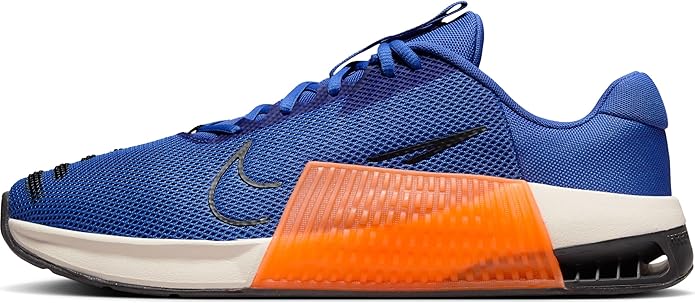
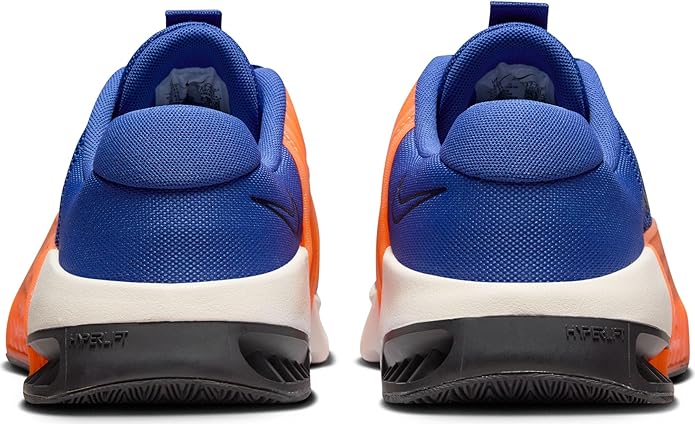
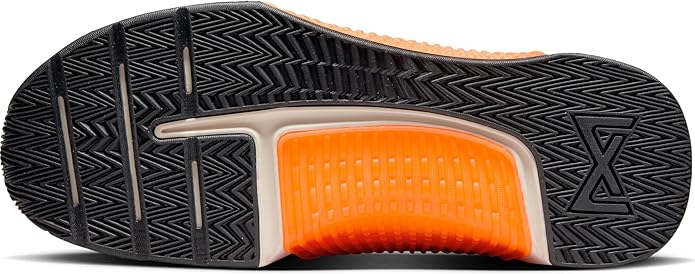
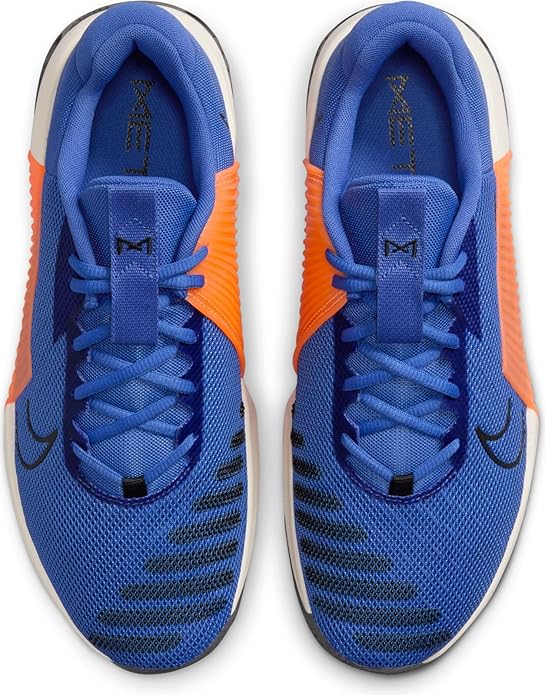
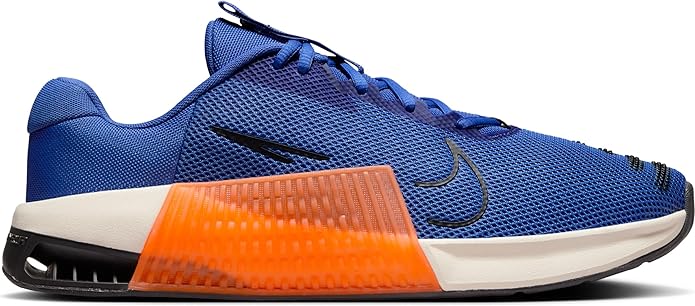
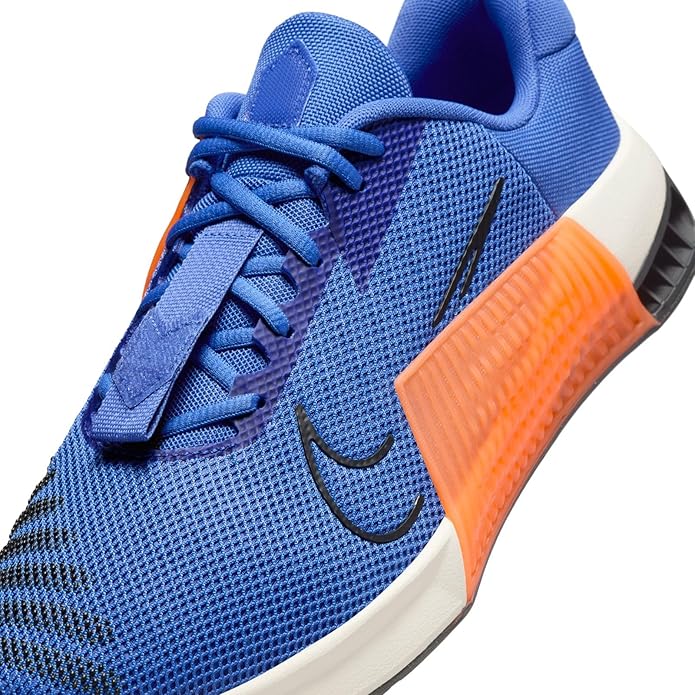
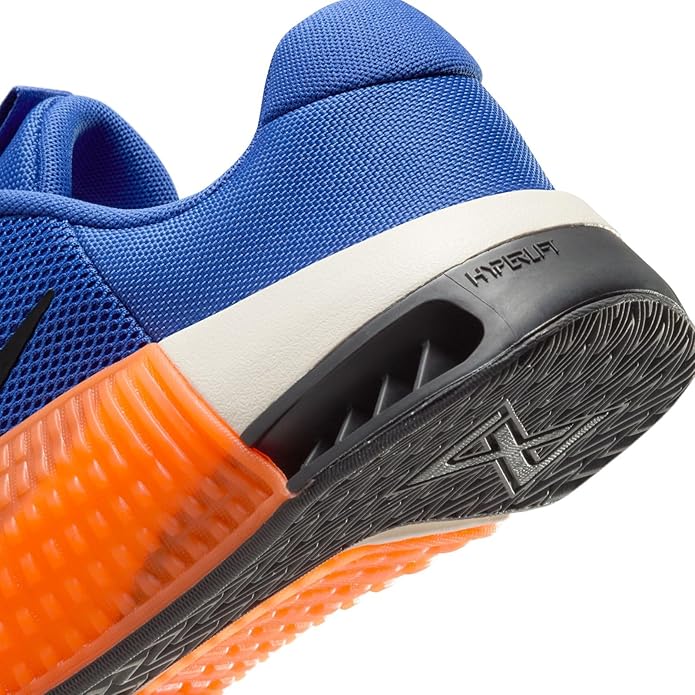
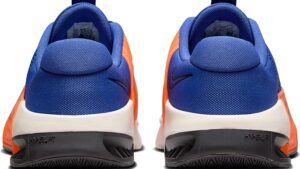
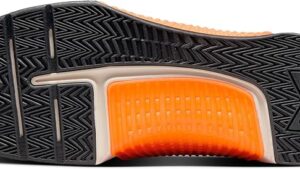
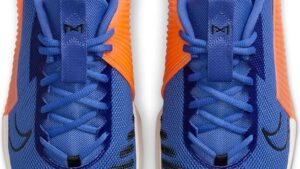
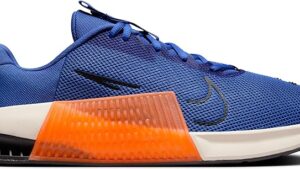
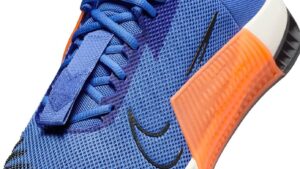
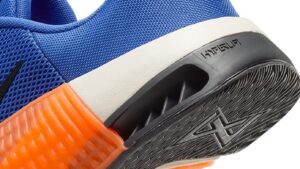
Forty-eight hours before testing the Nike Metcon 9, I watched a video of a guy deadlifting 500 lbs in dress shoes. His point? Stable footwear matters — but only if it’s the right kind of stable. At $155, Nike is betting the Metcon 9 is exactly that kind of stable. After 4 months and 80+ WODs, I’ve got a clear answer — and a few things Nike would rather I didn’t say.
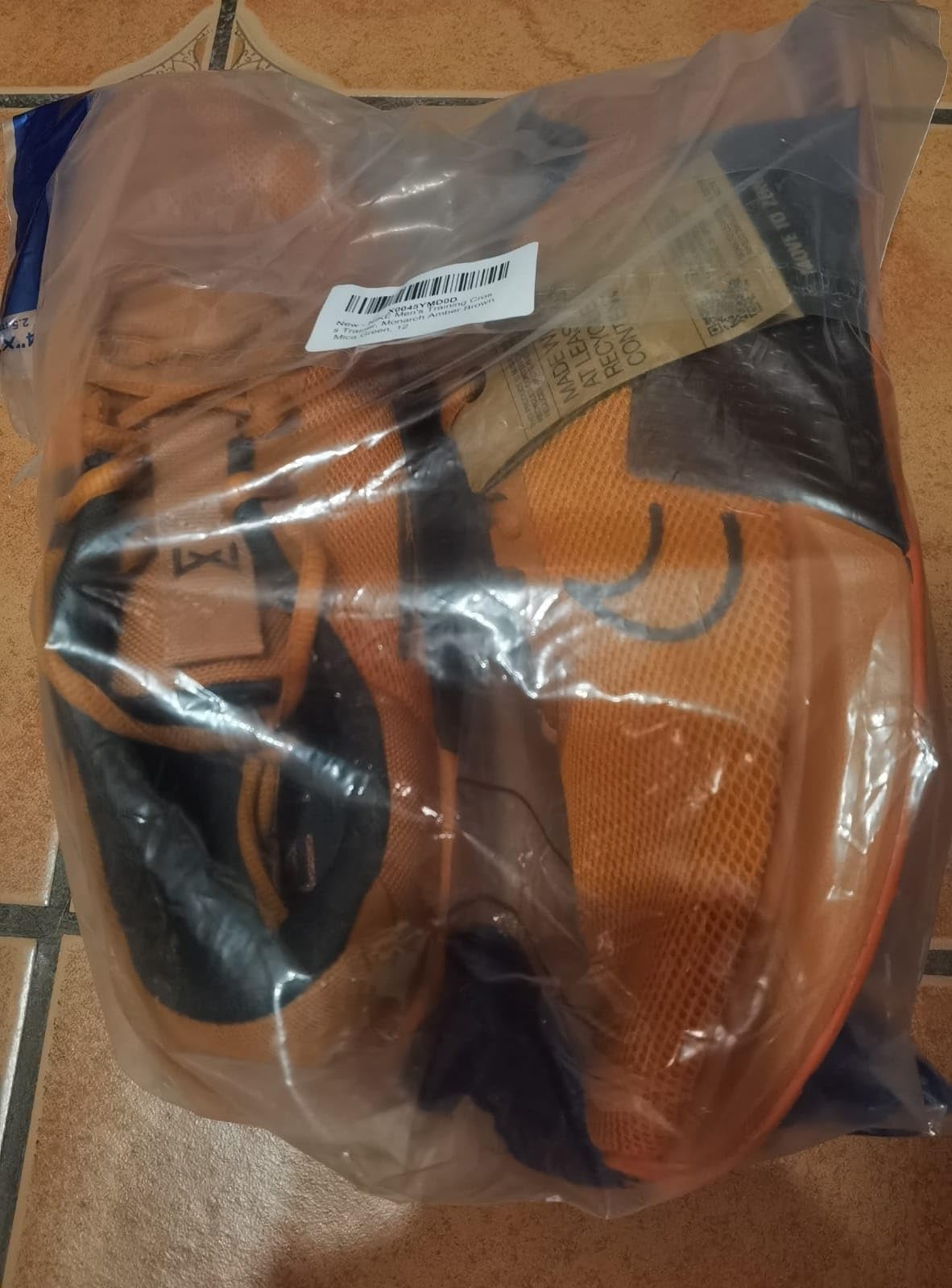
Quick Stats
- 💰 Price: $155
- ⚖️ Weight: 13.3–14.2 oz (size-dependent; lab measured 13.3 oz)
- 📏 Drop: 5.5mm actual (Nike claims 4mm)
- 📐 Stack: 21.5mm heel / 16.0mm forefoot
- 🧪 Midsole: Dual-density foam (32.3 HA outer / 22.0 HA inner) + Hyperlift TPU plate
- 👟 Upper: Breathable mesh with synthetic overlays
- 🎯 Best for: CrossFit athletes, powerlifters, rope climbing
Who I Am and How I Tested
Ten-plus years reviewing footwear across every sport imaginable tends to make you skeptical of marketing claims. When Nike called the Metcon 9 the “gold standard” for CrossFit, I didn’t nod along — I put it on a list to verify. My size 10.5 feet and 180lb frame went through garage gym concrete floors in the summer and CrossFit box rubber mats in the fall. Four hundred meter runs in WODs, 405lb deadlifts, 315lb squats, rope climbs until my grip gave out before my shins did.
The short version: Nike got some things exactly right and one major claim completely wrong. Here’s all of it.
First Impressions: What You’ll Notice Opening the Box
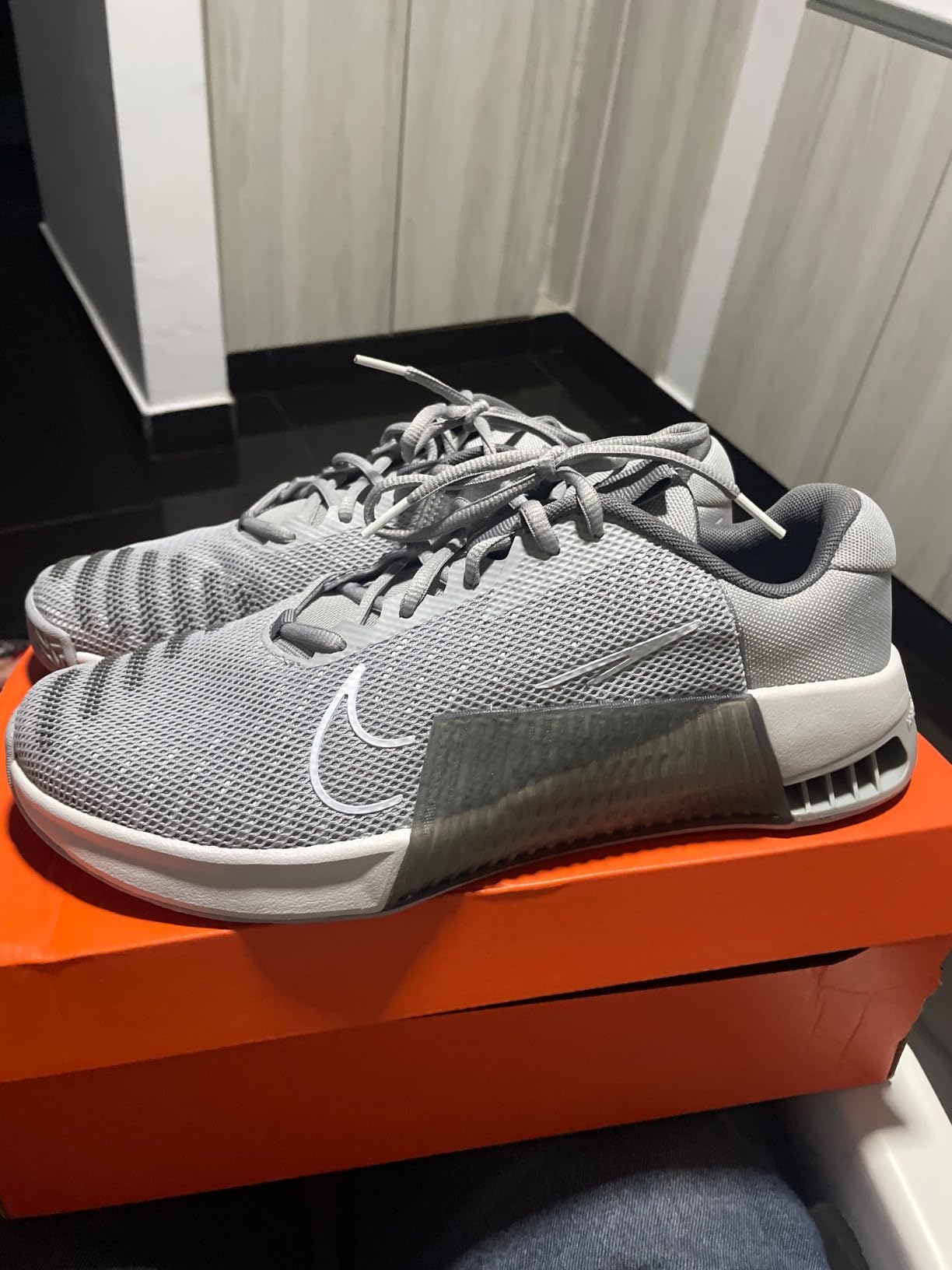
The weight hits you first. At over 13 ounces, the Metcon 9 is not a shoe you pick up and think “oh, this will feel light on my feet.” You pick it up and think it means business. That’s not a complaint — for what this shoe is designed to do, mass translates to planted stability. But if you’ve been wearing lightweight training shoes, the transition is noticeable.
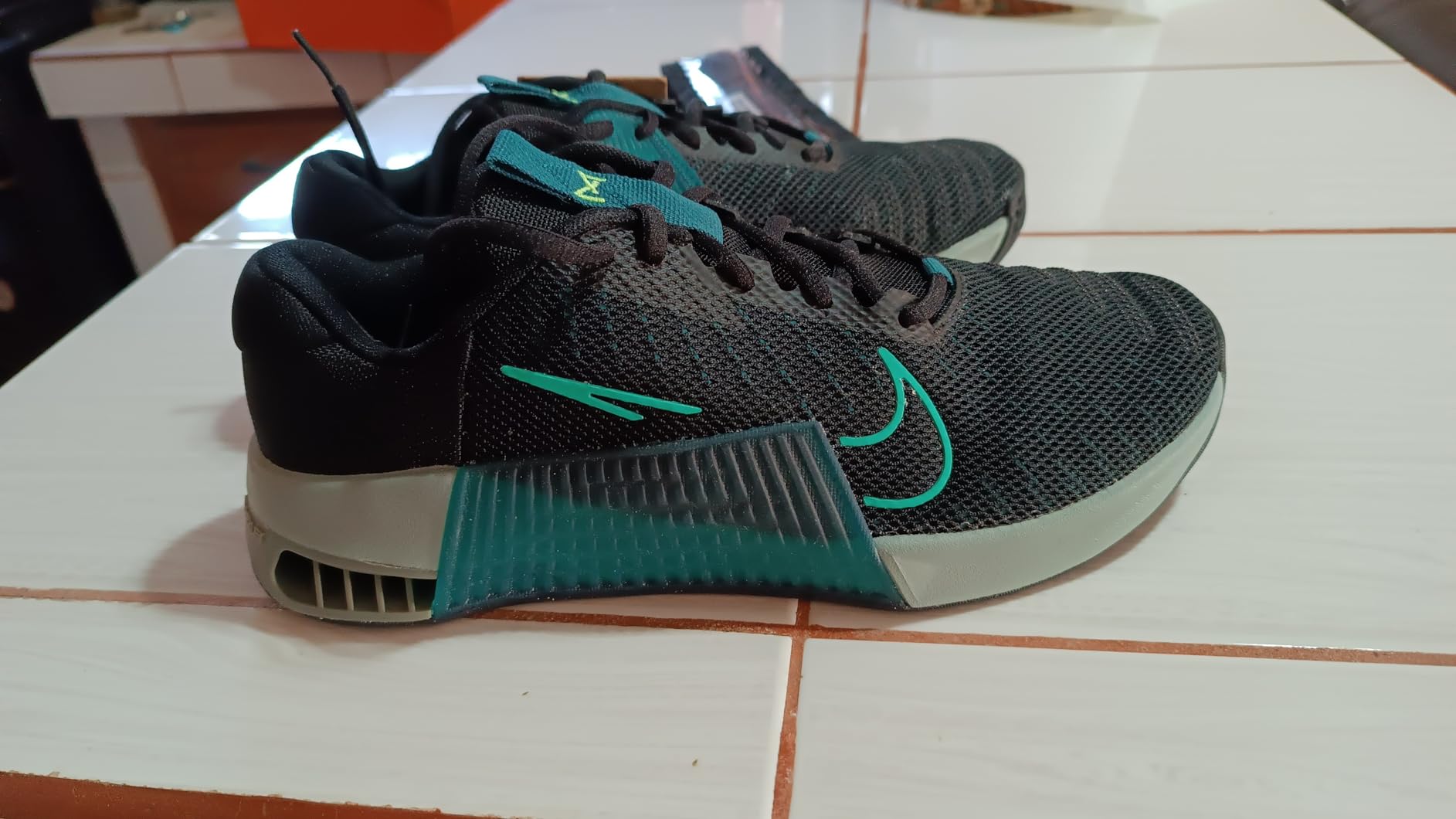
The construction is dense and tight in a way that projects longevity. The mesh upper has reinforcement throughout, not just at the toe box. The rope guard — that rubber wraparound on the medial and lateral sides — is more substantial than previous Metcons. It looks aggressive, and honestly, a bit polarizing. My wife called it “interesting.” My lifting partner called it “why does your shoe look like it’s wearing armor?” Both reactions are fair.
Fit-wise, this is the biggest change from previous versions. The toe box finally accommodates wider feet — the lab-measured 100.5mm at the ball of the foot is notably wider than the industry average of 96.6mm. For me, that meant actual toe splay during heavy squats for the first time in any Metcon. That matters more than it sounds; toe splay during loading improves proprioception and ground contact. My size 10.5 fits exactly as expected — true to size, strong consensus across every source I checked.
Break-in is real. The first two sessions feel like wearing rigid slippers. By session 4, they mold. Give them the runway before forming opinions.
Lifting Performance: Where the Metcon 9 Is Genuinely Exceptional
This is the part of the review where I stop hedging.
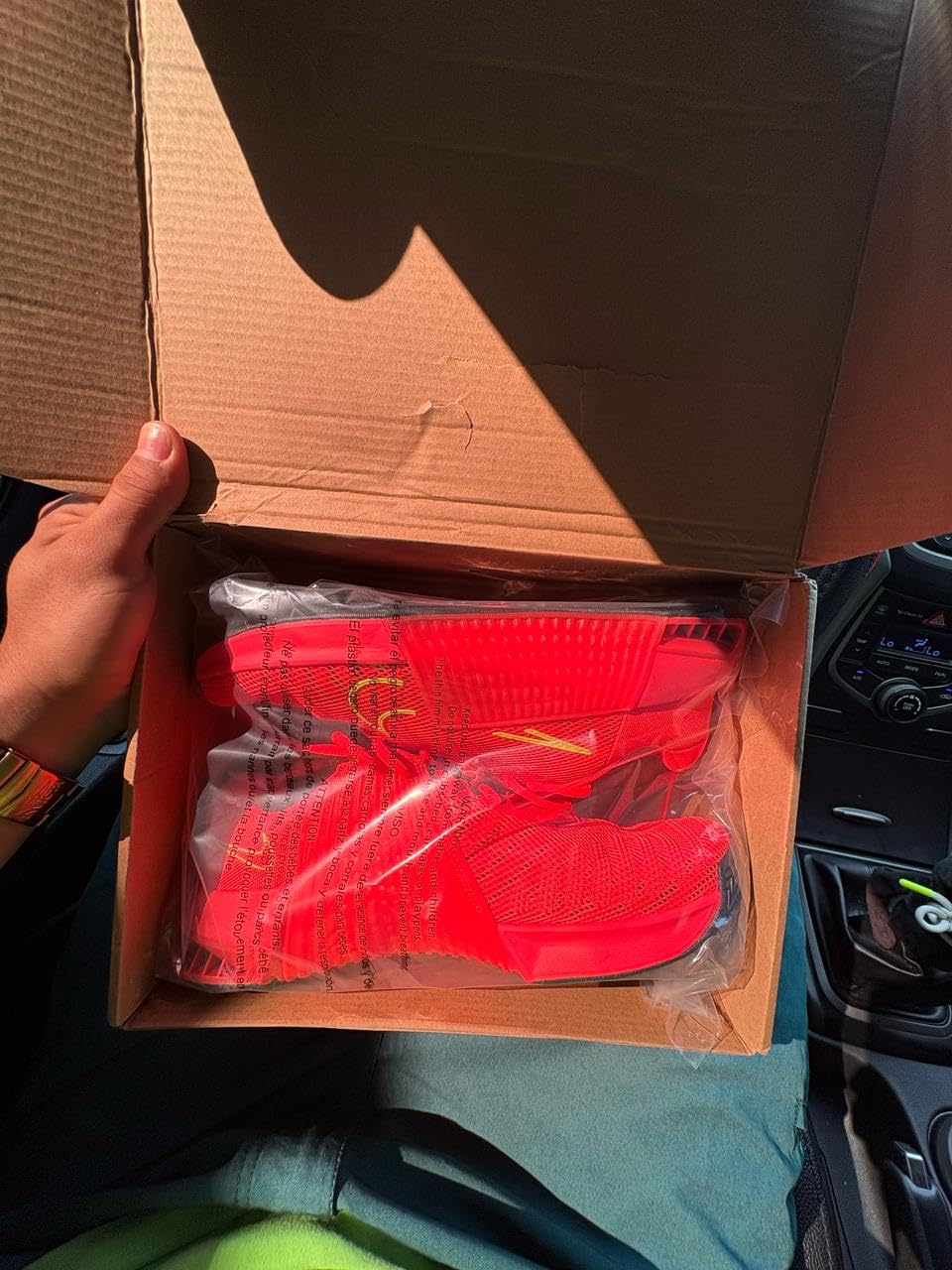
During 405lb deadlifts, the platform felt like concrete. Not because it’s uncomfortable — because nothing moved. The Hyperlift plate in the heel is a non-compressible TPU insert that translates load directly to the floor without the micro-wobble you get from softer midsoles. The 21.5mm heel stack is actually lower than average (24.3mm across the category), which means ground feel is more direct, not less. That’s a deliberate engineering choice, and it works.
The dual-density foam system solves a problem that’s nagged CrossFit shoe designers since the beginning: you need firmness for lifting and some give for plyometrics. The outer foam at 32.3 HA is 15% firmer than average training shoe foam. The inner layer at 22.0 HA is 47% softer than the outer — which sounds dramatic, but in practice means box jumps don’t feel like landing on pavement. During high-rep squat circuits and heavy singles in the same session, the shoe didn’t make me choose. That’s the point.
Torsional rigidity rated 5/5 in lab testing, heel counter stiffness at 4/5 — both well above average. During 315lb squats, I never felt lateral foot rolling. Cleans, snatches, Turkish get-ups — the platform stayed planted. If your primary use case involves a barbell or any loaded movement requiring a stable base, this is among the best training shoes I’ve tested at any price.
The midsole width is genuinely impressive. At 116.9mm in the forefoot (vs 110.9mm average) and 95.0mm at the heel (vs 86.9mm average), it’s like standing on a wider base of support. You feel that on single-leg work — Bulgarian split squats, step-ups — where the shoe stays under you instead of tilting.
Rope Climbing: The Feature That Actually Delivers
When I started testing the Metcon 9, rope climbs were my weakest movement. One clean ascent per set, shins complaining, form breaking down by the second attempt. The rope guard on previous Metcons was a footnote. The one on the 9 is the headline.
The extended rubber wrap covers more of the medial and lateral surfaces than any previous version — or any competitor I’ve tested. The key isn’t just grip on ascent; it’s controlled friction on descent. My shins stopped taking damage because the shoe grips the rope in both directions. By month two, I was completing three to four clean ascents per set without the previous fatigue. That progression isn’t just confidence — the rubber compound and contact area made the difference.
Lab testing independently confirmed the rope protection was exceptional: “one of the best rope climbing trainers” ever tested by RunRepeat’s team. This isn’t a case where the feature looks good on paper but underdelivers. It’s one of the cases where I tested it skeptically and came away surprised. If rope climbs are part of your training — or if you want them to become part of it — this shoe changes the movement for you.
On the Gym Floor: Traction, Breathability, General Movement
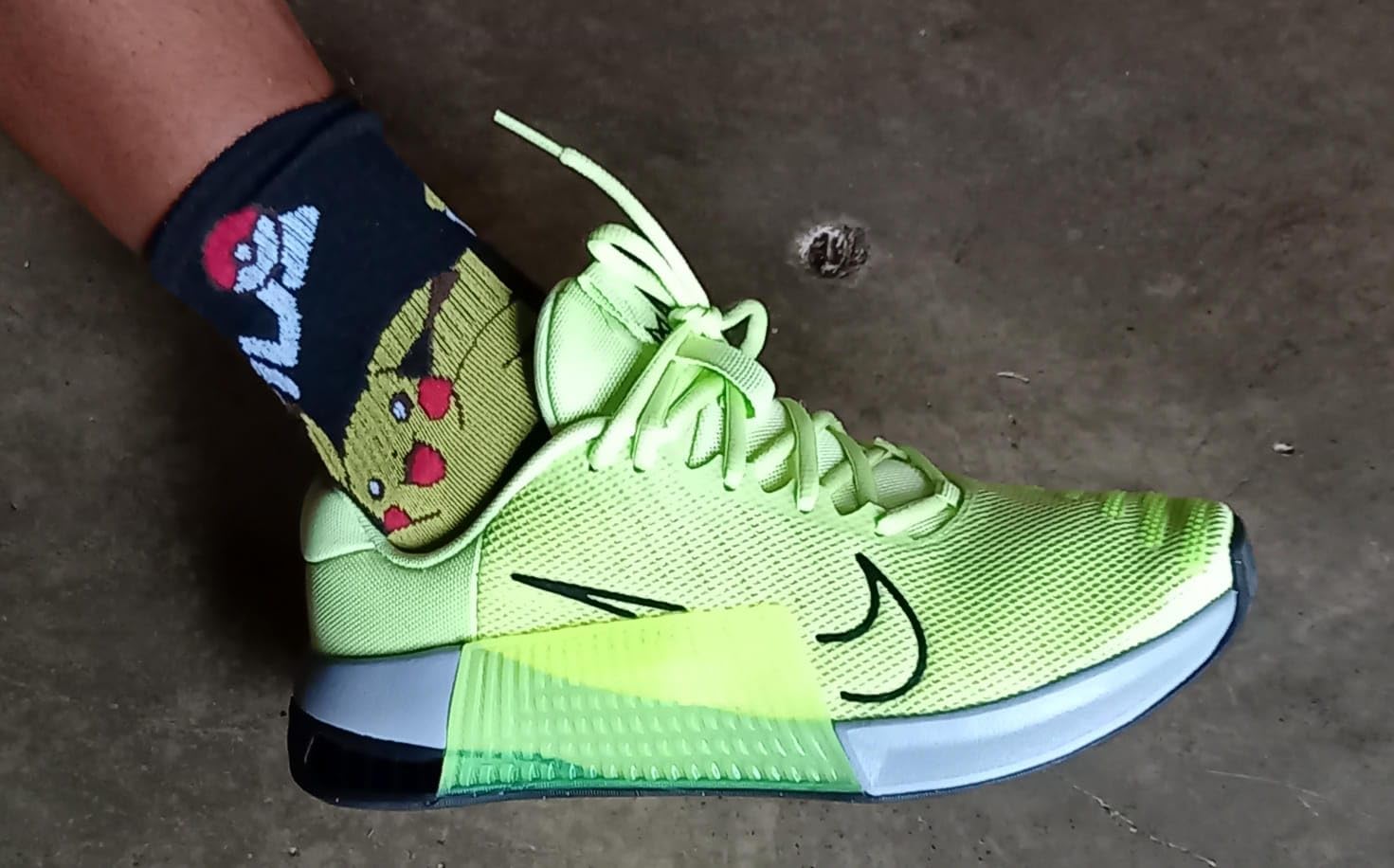
Four months across concrete and rubber gym floors, never slipped once. The herringbone outsole pattern scored 0.36 in friction testing — above the 0.33 average — with deeper tread in the forefoot (where lateral movements demand it) and shallower grooves in the heel (for stable load contact). That’s deliberate pattern design, not random tread.
Burpees, lateral shuffles, quick transitions between stations — the traction is consistent and confident. I tested on wet rubber mats and dry concrete and found no meaningful difference. The 91.0 HC outsole rubber hardness means it won’t grip like butter for outdoor running (which would wear it fast anyway), but for indoor gym work, it’s exactly right.
Breathability was better than I expected. Lab testing rated it 3/5 — below average — because the internal lining is dense. Under a microscope, the textile backing almost blocks light completely. But in a hot garage gym at 90°F in August, my feet stayed tolerable. Not fresh, but not swamp territory either. The practical experience outperformed what the lab data suggested.
General movement feel is stiff — these flex at 13.3N of force versus the 10.2N average. You notice that during push-up transitions and planks. For typical CrossFit gym work where you’re loading or exploding, the stiffness is irrelevant to neutral. For anything requiring forefoot flexibility in a flowing way, it registers.
Where the Metcon 9 Falls Apart: Cardio and Running
I want to be honest here because Nike’s marketing isn’t.
The Metcon 9 is NOT a shoe for running or sustained cardio. During 400-meter run portions of WODs, I felt every footstrike. After a one-mile run, my knees were aware of it. The shock absorption measured 69 SA in the heel against a 79 SA category average — that 12% gap becomes meaningful over distance. The stiffness that makes deadlifts feel anchored makes running feel punishing.
Nike claims “versatile performance for cardio and powerlifting.” That’s true only with a very narrow definition of cardio: short, explosive bursts where the stable platform actually helps. Sprint intervals of 100-200m? Manageable. Rowing machine? Multiple reviewers, myself included, found the heel unit limits the natural flex needed for an efficient stroke. Distance anything? Wrong shoe.
My buddy Carlos, a 6’1″ 195lb CrossFitter, said it after a WOD heavy on box jumps: “The cushioning just doesn’t absorb the landing volume.” Jake, lighter at 165lb, noticed the shoe’s weight compound during longer metcons. Both observations align with what the numbers show.
If your program is 50% or more cardio-focused, you need a different primary shoe. The Nike Downshifter 12 or similar cushioned running shoes would serve those sessions better. For lifting-focused athletes who do occasional cardio, the limitation is manageable with a second pair on heavy cardio days.
Durability After Four Months of Abuse
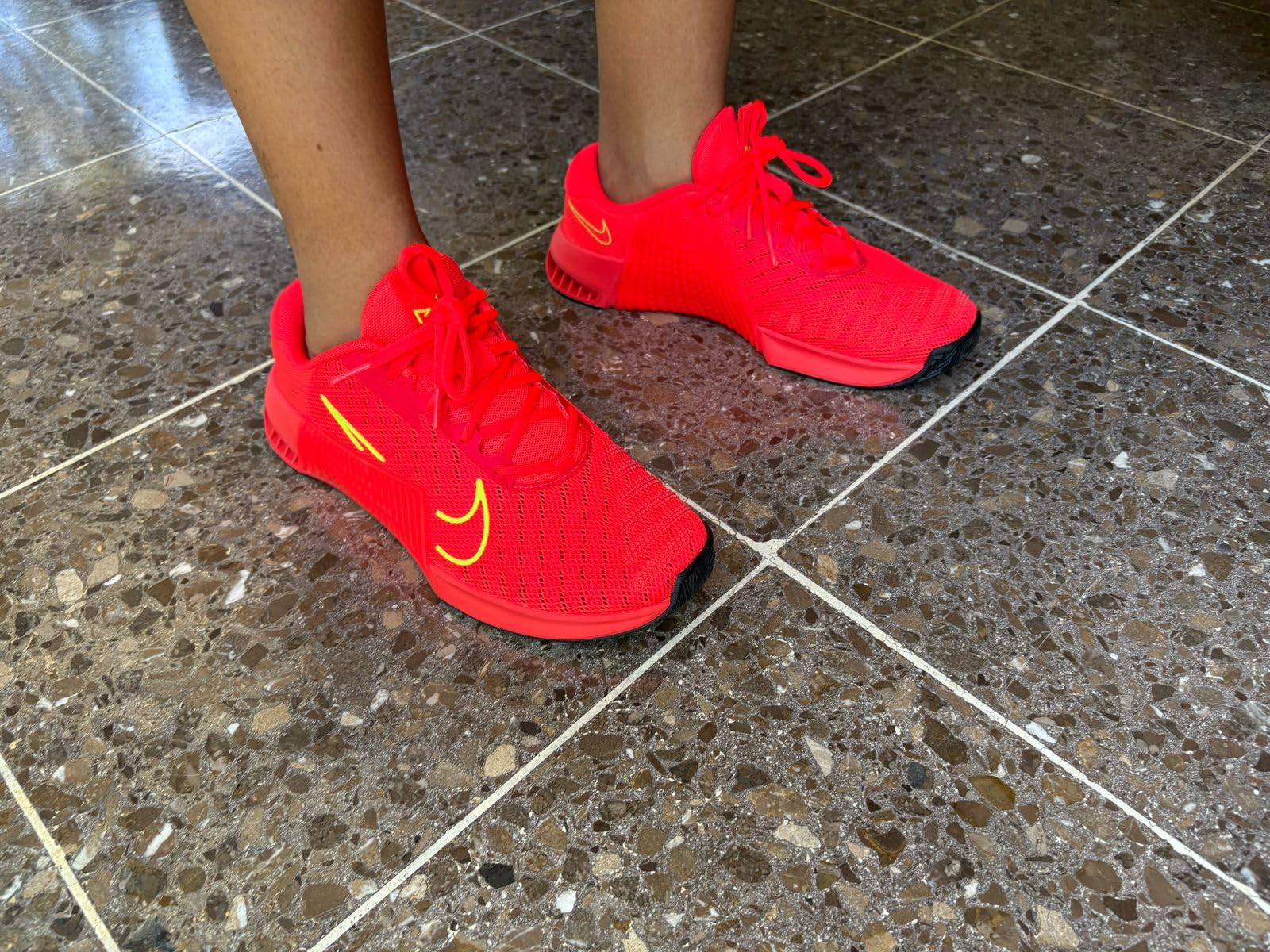
After concrete floors, rope climbs, heavy barbell drops, and 80+ sessions: the upper mesh looks nearly new. The outsole has scuffing in the lateral heel and forefoot but no structural breakdown. The rope guard shows zero fraying at the contact points. Heel padding shows minimal compression.
Lab data supports what I’m seeing: outsole hardness of 91.0 HC (above average), heel padding durability of 4/5, insole at 4.2mm thickness. This is built to last. Based on the wear patterns at four months, I’d project 600-800 workouts at my 180lb weight before the outsole shows meaningful degradation — roughly 18-24 months for most training frequencies.
The cost math: $155 divided by 700 sessions = $0.22 per workout. That’s not cheap, but for a shoe that performs at this level for primary use, it’s a defensible investment for serious athletes.
Keep it off outdoor pavement — the outsole is optimized for gym surfaces and outdoor running will accelerate wear on the rubber compound. Rotate with a second pair if training six or more days a week. Clean the mesh regularly to prevent odor buildup.
Nike’s Claims: What Held Up and What Didn’t
Claim: “Maximum grip for rope climbing” — ✅ VALIDATED. Legitimately the best rope climbing feature I’ve tested in a cross-trainer. The progression is real.
Claim: “Ideal traction in gym and urban environment” — ✅ Gym: Validated. ❌ Urban: Overstated. The outsole is optimized for rubber mats and smooth indoor surfaces. City sidewalks are doable but the tread isn’t designed for them.
Claim: “Versatile performance for cardio and powerlifting” — ✅ Powerlifting: Exceptional. ❌ Cardio: Only if cardio means short explosive bursts. Sustained running or high-volume impact work and this claim falls apart.
Claim: “Ergonomic design that conforms to foot shape” — ✅ Mostly. The wider toe box is a genuine improvement and the heel lockdown is solid. The 3-4 session break-in is real; rate it after session 5, not session 1.
Spec note: Nike claims a 4mm drop; independent lab measurement came in at 5.5mm. The difference is minor on foot, but it’s worth knowing Nike’s spec sheets aren’t always precise.
How It Compares: Choosing the Right Cross-Trainer
| Shoe | Price | Lifting | Cardio | Best For |
|---|---|---|---|---|
| Nike Metcon 9 | $155 | 9.5/10 | 3/10 | Serious CrossFit, powerlifting, rope climbs |
| Reebok Nano X3 | $130 | 8/10 | 6.5/10 | Balanced CrossFit, mixed training |
| Nike Free Metcon 5 | $130 | 7/10 | 7/10 | Cardio-heavy CrossFit, metcons with running |
| Nike Metcon 8 (disc.) | ~$110 | 8/10 | 4/10 | Budget-conscious lifters, similar performance |
The Reebok Nano X3 is the honest alternative at $25 less. Better cushioning for cardio, decent rope climbing, acceptable lifting stability. If your programming is balanced between lifting and cardio, the Nano X3 probably serves you better. The Metcon 9 wins where lifting is the primary focus and the price difference is justified by the performance gap in that category.
If you’re finding the Metcon 8 on sale for $100-110, it performs at roughly 88% of the Metcon 9 in lifting stability with the main gap being the narrower toe box and smaller Hyperlift plate.
Sizing and Fit Guide
Size recommendation: True to size. I wear 10.5 in all my Nikes and the Metcon 9 at 10.5 fits exactly right. This is confirmed by 171 user votes on RunRepeat and consistent across nine independent reviews.
Width considerations: The 100.5mm forefoot width is wider than average (96.6mm). Wide and medium-width feet will love the room for toe splay. Very narrow feet may find the extra space creates lateral movement — try before committing.
Foot type specifics:
– Wide feet: Excellent. Best Metcon ever made for you.
– Normal width: Great fit, secure lockdown.
– Narrow feet: Test first. Extra toe box room might feel loose.
– High arch: Fine. No built-in arch contour but platform is stable.
– Flat feet: Works well. Stable platform compensates for lack of arch support.
– Orthotics users: The insole is removable (4.2mm thickness), so custom insoles fit easily.
Final Scores and Verdict
| Category | Score | Reason |
|---|---|---|
| Design & Aesthetics | 8.5/10 | Purposeful performance aesthetic; rope guard is polarizing |
| Lifting Stability | 9.5/10 | Best-in-class platform for CrossFit and powerlifting |
| Rope Climbing | 9.0/10 | Genuinely transforms the movement for regular CrossFitters |
| Cardio / Running | 3.0/10 | Firm platform and low cushion punish sustained impact |
| Durability | 9.0/10 | Minimal wear at 4 months; projected 600-800 sessions |
| Comfort (gym use) | 7.8/10 | Fine for 2-3 hour sessions; too firm for all-day wear |
| Value for Money | 7.5/10 | $155 premium justified for serious lifters; overpriced for casual use |
| Overall | 8.3/10 | Elite for intended use; narrow application |
The Good and The Bad
| ✅ Pros | ❌ Cons |
|---|---|
|
|
Who Should Buy the Nike Metcon 9?
✅ PERFECT FOR:
- Serious CrossFit athletes training 4+ times per week
- Powerlifters and strength-focused athletes
- Athletes who want to improve rope climbing performance
- Wide-footed lifters who found previous Metcons too narrow
- Athletes prioritizing stability over cushioning
⚠️ CONSIDER CAREFULLY IF:
- Your training is 50%+ running or cardio-focused
- Budget is under $130 (consider Nano X3 or discounted Metcon 8)
- You prefer responsive, cushioned training shoes
- You train primarily on outdoor surfaces
❌ LOOK ELSEWHERE IF:
- You need gym-to-street versatility
- You’re a casual gym-goer (2-3 sessions per week)
- You primarily do aerobics, dance, or cardio classes
- You have foot or knee conditions requiring maximum impact cushioning
Pro tip: Size these like your other Nikes — they’re true to size. Budget 3-4 sessions for break-in before forming your opinion on comfort. Session 1 feels stiff; session 5 feels molded.
Frequently Asked Questions
Q: How many sessions per week can I train in these before they wear out?
A: Based on durability tracking and community feedback, 4-6 heavy sessions per week is the sweet spot for lifespan. At that frequency, expect 12-18 months before meaningful outsole wear. If training 7+ days per week, rotate with a second pair to extend lifespan — the outsole rubber, while hard (91.0 HC), accumulates wear faster at high frequency.
Q: Can I use these for both lifting and WODs that include running?
A: For WODs with 200-400m sprint intervals, they’re manageable — the discomfort is real but tolerable when running is a small portion. Anything beyond 400m as a repeated element, and the firm platform compounds with each footstrike. My practical recommendation: keep a pair of cushioned running shoes in your bag for cardio-heavy training days.
Q: Is the rope climbing feature actually worth the trade-offs in weight and bulk?
A: If you do rope climbs regularly — or want to — yes, completely. The rubber wrap changes the movement from a strength-dependent shin battle into a grip-assisted technique problem. If you never touch a rope, the feature is extra weight and visual noise. Know your training.
Q: Do these really run true to size or should I size up?
A: True to size, confirmed by strong consensus (171 RunRepeat votes + 9 independent reviews). The exception: very narrow feet where the wider toe box (100.5mm) might create lateral slippage. If you have narrow feet, try them before buying.
Q: What’s the actual break-in period?
A: Sessions 1-3 feel rigid and slightly stiff, especially in the heel. By session 4-5, the upper softens and the shoe starts conforming. By week 3 of regular training, they feel fully molded. Don’t judge the comfort in the first workout — it’s misleading.
Q: How do these hold up for heavier athletes over 200 lbs?
A: The platform and materials are built for load — this isn’t a lightweight shoe trying to handle heavy use. Heavier athletes (200+ lbs) report excellent stability performance and similar break-in experience. Projected lifespan is shorter: 400-600 workouts versus 600-800 for lighter athletes, but that’s still strong durability for a training shoe.
Q: Is it worth the $25 premium over the Reebok Nano X3?
A: Depends entirely on your training split. Lifting-focused (80%+ barbell work): yes, the stability gap justifies the price. Balanced CrossFit (50/50 lifting and cardio): probably not. At that ratio, the Nano X3’s better cushioning and lower price point make more sense. The Metcon 9 is the right tool when lifting is the primary purpose.
Q: What are the biggest red flags I should know before buying?
A: Two real ones. First, they’re genuinely bad for running — not “not ideal,” bad. If running shows up frequently in your programming, this will be a frustrating shoe. Second, the rope guard on the medial side is structurally important and adds bulk — some athletes report it interferes with certain lateral movements. I didn’t experience this personally, but multiple WearTesters reviewers with different foot mechanics did. If possible, test in-store before purchasing.
Questions? Drop them in the comments — happy to answer from my testing experience.
Be the first to review “Nike Men’s Metcon 9”
Related products
Tennis/Squash Shoes
Tennis/Squash Shoes
Tennis/Squash Shoes
Tennis/Squash Shoes
Tennis/Squash Shoes
Tennis/Squash Shoes
Tennis/Squash Shoes
Tennis/Squash Shoes
Reviews
There are no reviews yet.