
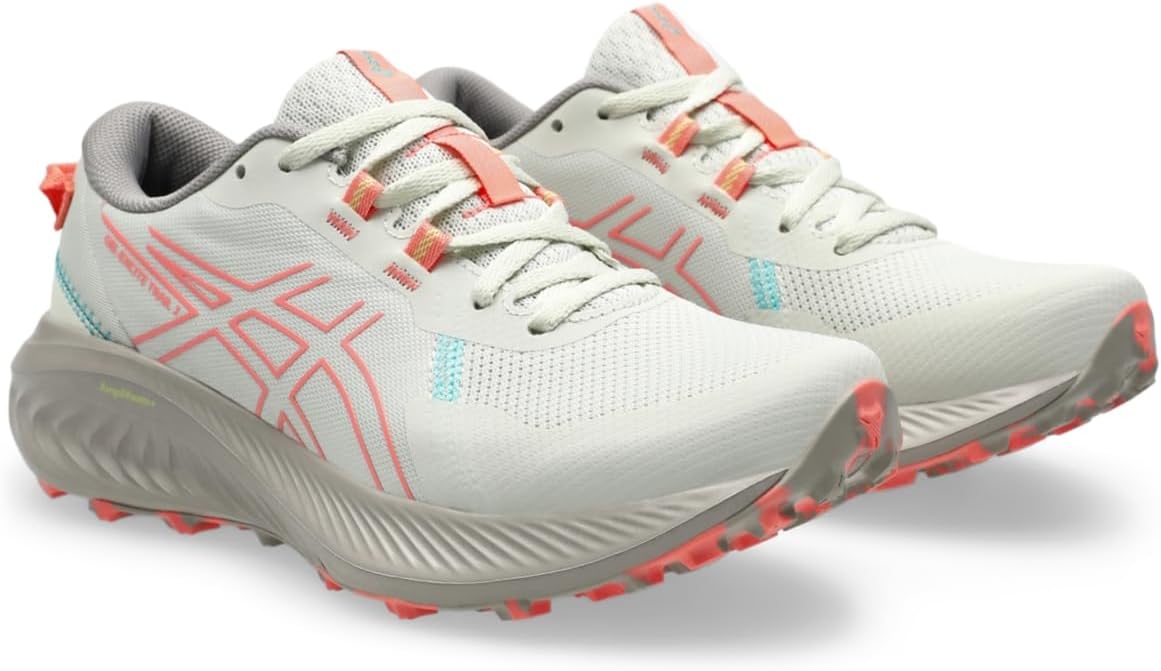
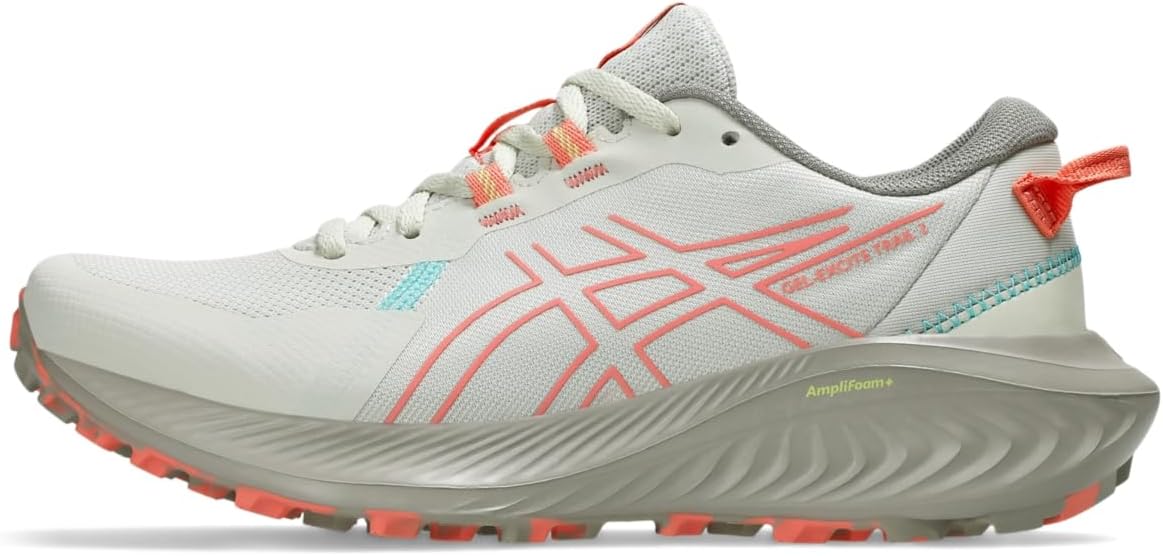
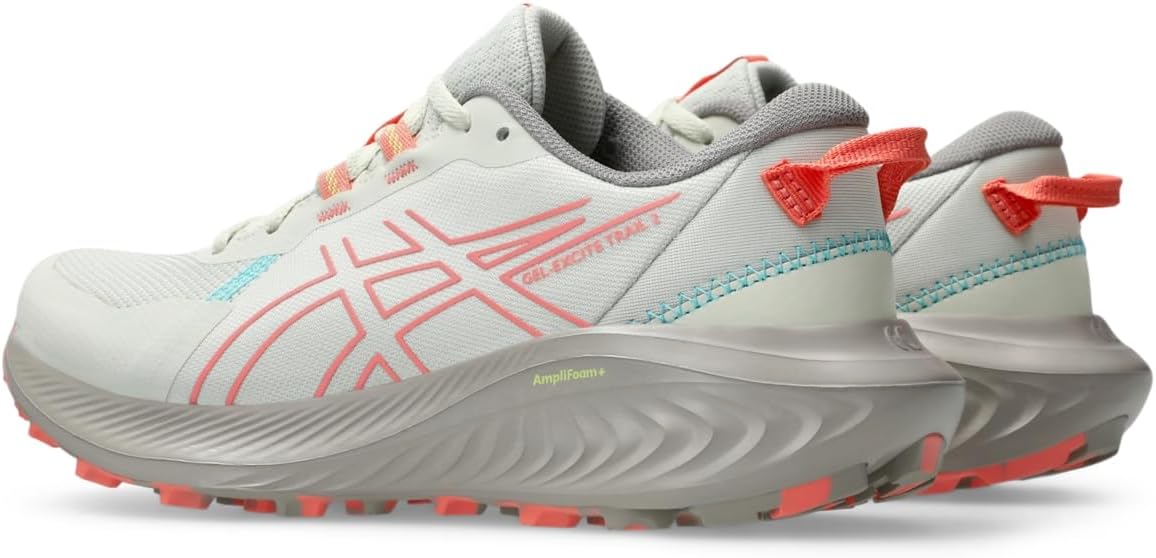
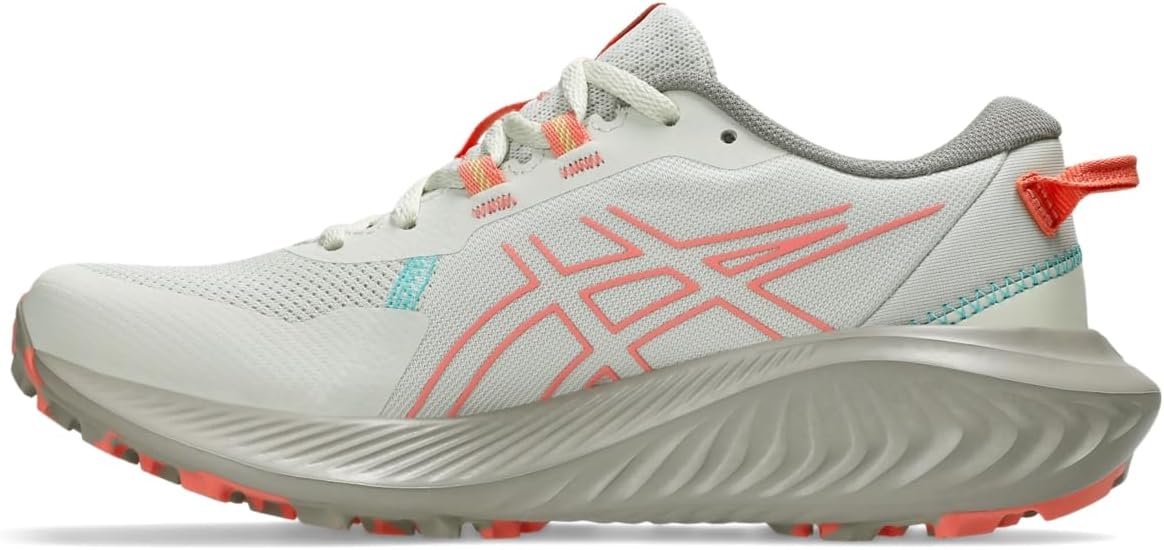
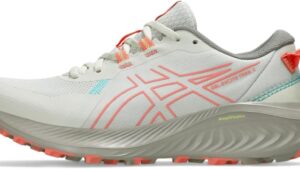
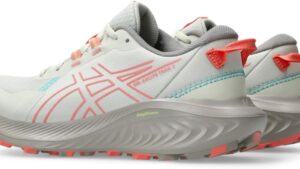
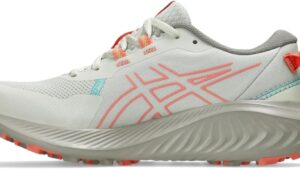
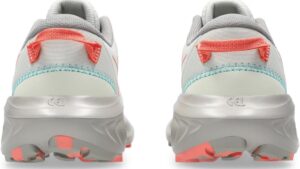
The gravel path was still wet from the night before. It was 6:45 a.m., I had a 10-hour workday lined up after this walk, and the last thing I wanted was to swap shoes twice. I’d been wearing the ASICS Gel-Excite Trail 2 for about three weeks at that point, and I found myself reaching for them without thinking — not because they’re perfect, but because they just handle things. Here’s what six weeks of deliberate testing actually revealed.
The Short Answer — Before the Long One
I’ve been testing footwear for over a decade, which means my skepticism for budget trail shoes runs deep. Most sub-$70 options I’ve tested have a tell — they excel in one environment and quietly fall apart in another. The Gel-Excite Trail 2 at $65 could have gone either way. After 6 weeks, 45+ hours of wear, and every terrain and environment I could throw at it, here’s where it landed: genuinely impressive versatility for the price, real cushioning that holds up across long days, and honest limitations you should know about before buying.
My name’s Sarah. I run trail walks most mornings before work, test gear for a living, and wear a size 8B with a normal-to-narrow foot profile. What follows is what actually happened.
Quick Specs at a Glance
| Spec | Detail |
|---|---|
| Price | $65 |
| Weight | 8.2 oz (women’s size 8) |
| Heel-to-toe drop | 8mm |
| Stack height | 22mm heel / 14mm forefoot |
| Midsole | AMPLIFOAM PLUS + rearfoot GEL technology |
| Upper | No-sew mesh (polyester) + synthetic overlays |
| Sockliner | OrthoLite (removable) |
| Outsole | Rubber with 4mm trail lugs |
| Style code | 1012B412 |
| Best use | Light trail walking, day hikes, long work shifts |
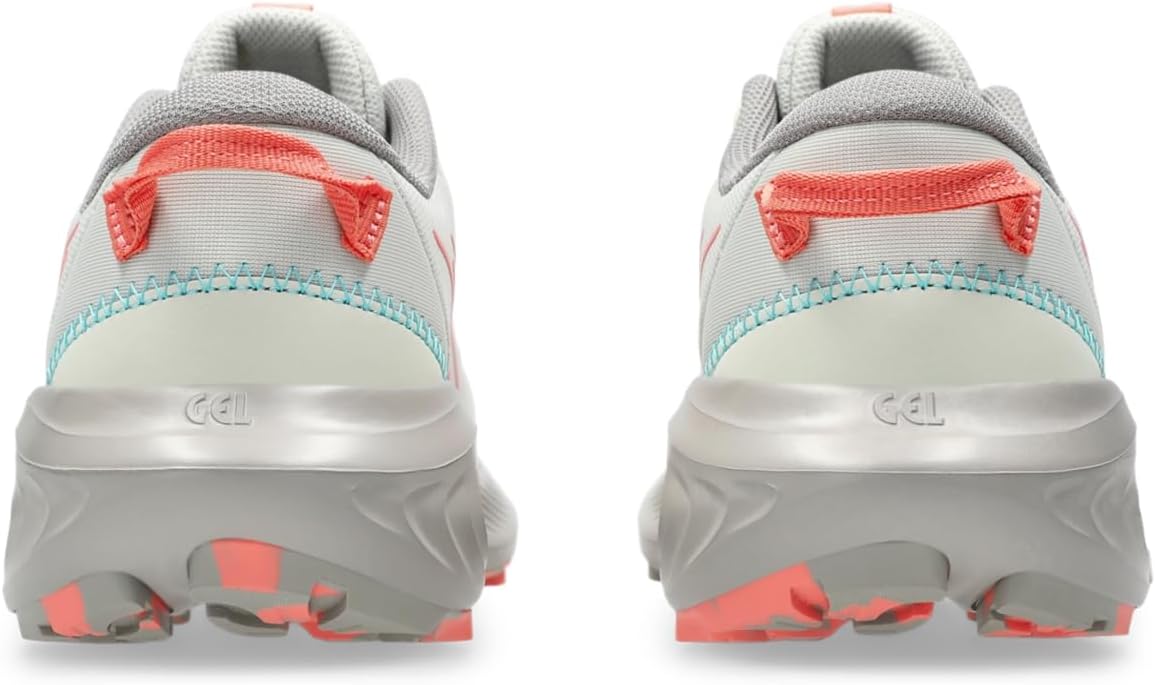
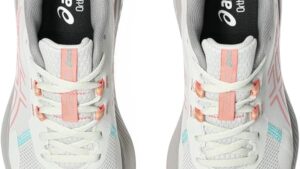
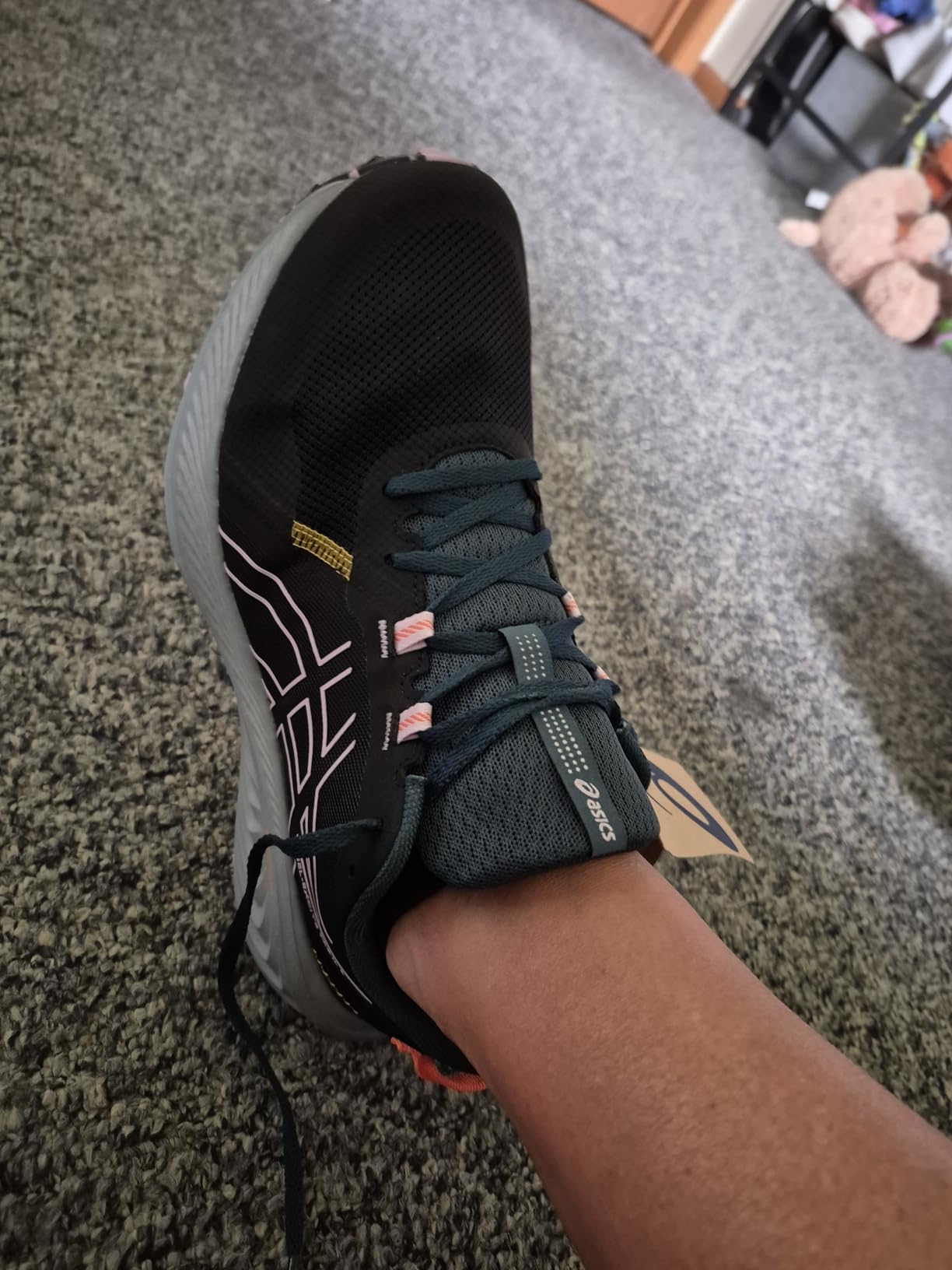
Out of the box, the Lake Grey/Guava colorway looked more polished than I expected — the kind of shoe that reads as athletic without announcing itself as a hiker. I slipped them on without lacing first, just to get a feel. The step-in cushion was immediately noticeable. I went straight into a 4-mile walk that same morning.
Build Quality & Design: What’s Under the Hood
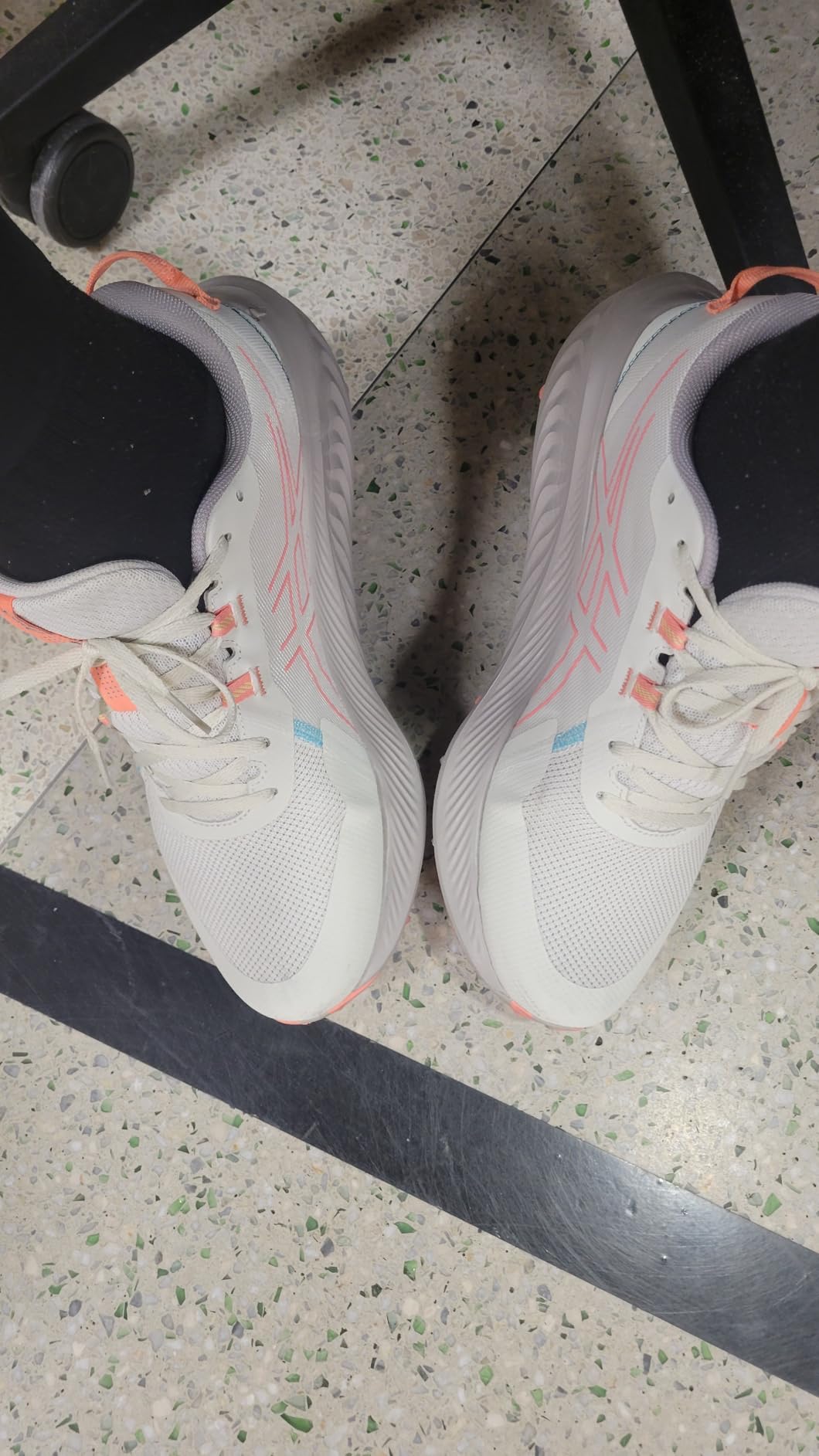
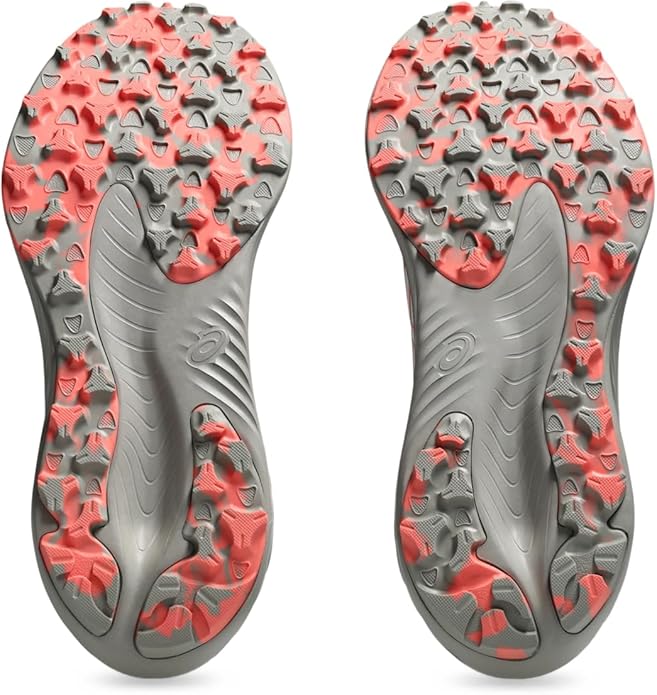
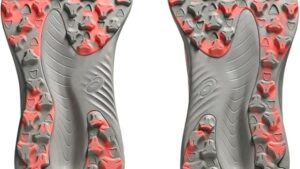
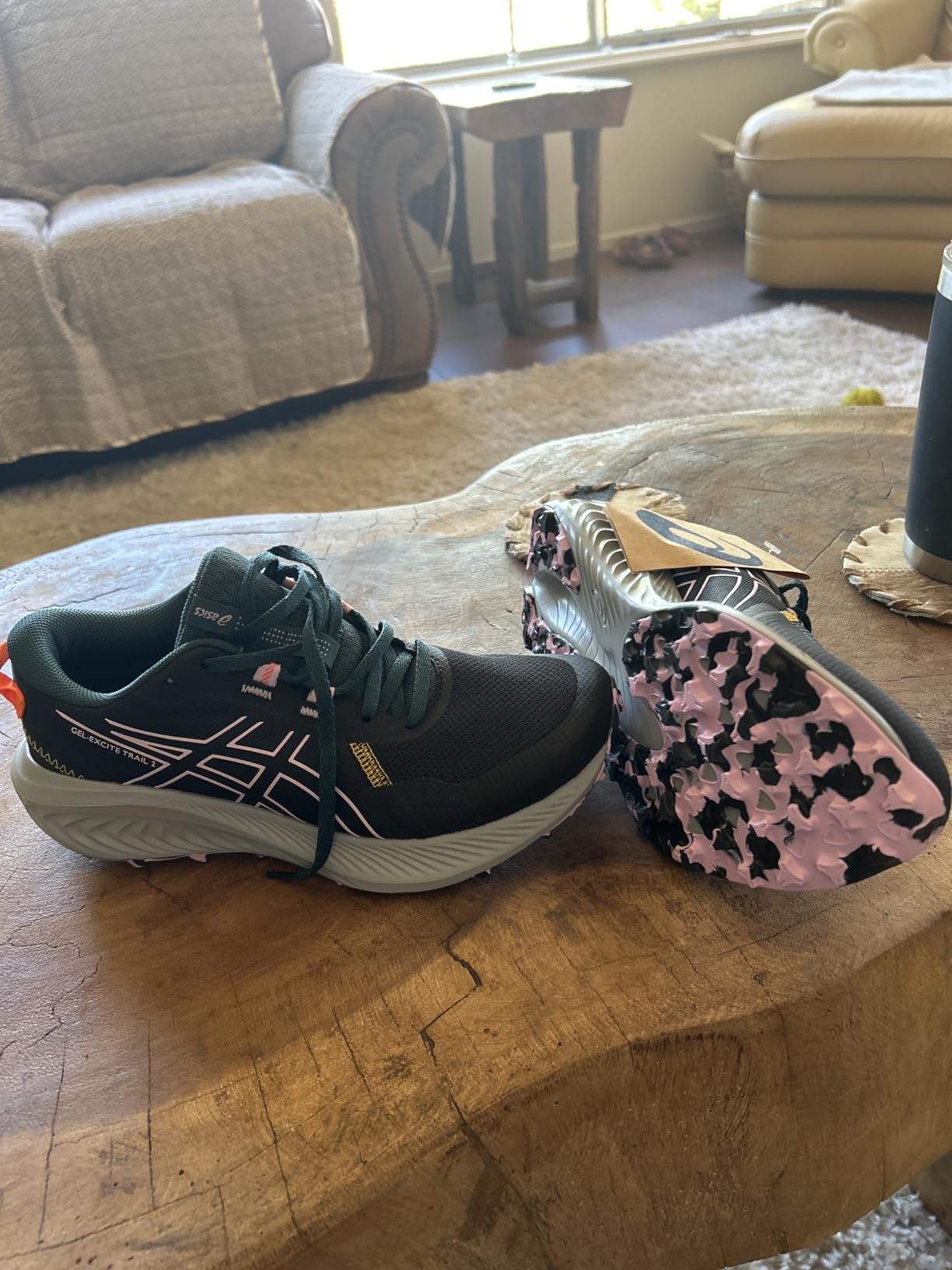
Flip the shoe over and the outsole tells most of the story. The lug pattern isn’t decorative — the rubber teeth are directional, with deeper cuts in the heel zone for braking on descents and multi-directional texture at the forefoot for lateral stability. At 4mm lug depth, these sit solidly in the middle ground between a road shoe with some texture and a dedicated trail runner with truly aggressive cleating.
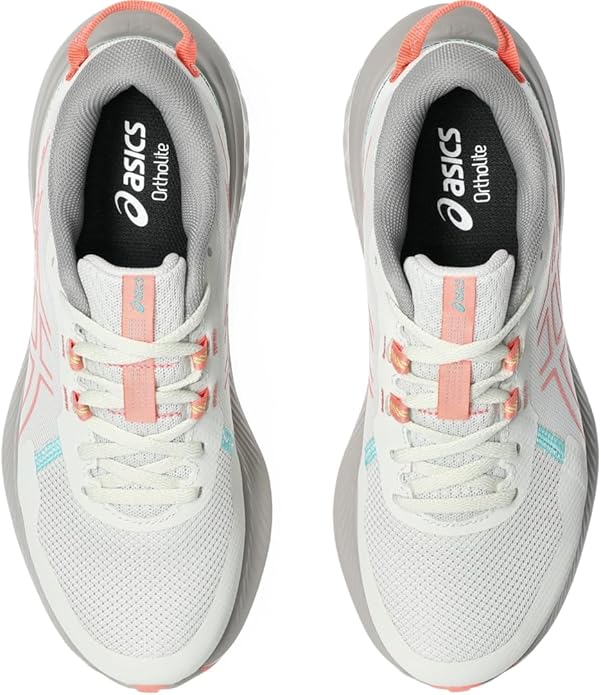
The upper uses a no-sew mesh construction, which matters more than it sounds. Traditional sewn uppers create friction seams right where feet flex — the ball, the pinky toe edge, the heel collar. By eliminating most of those seams, ASICS removed the most common blister triggers. Over six weeks, I had zero hotspot issues from the upper, even on a short Sunday outing where I forgot socks. That’s a meaningful data point.
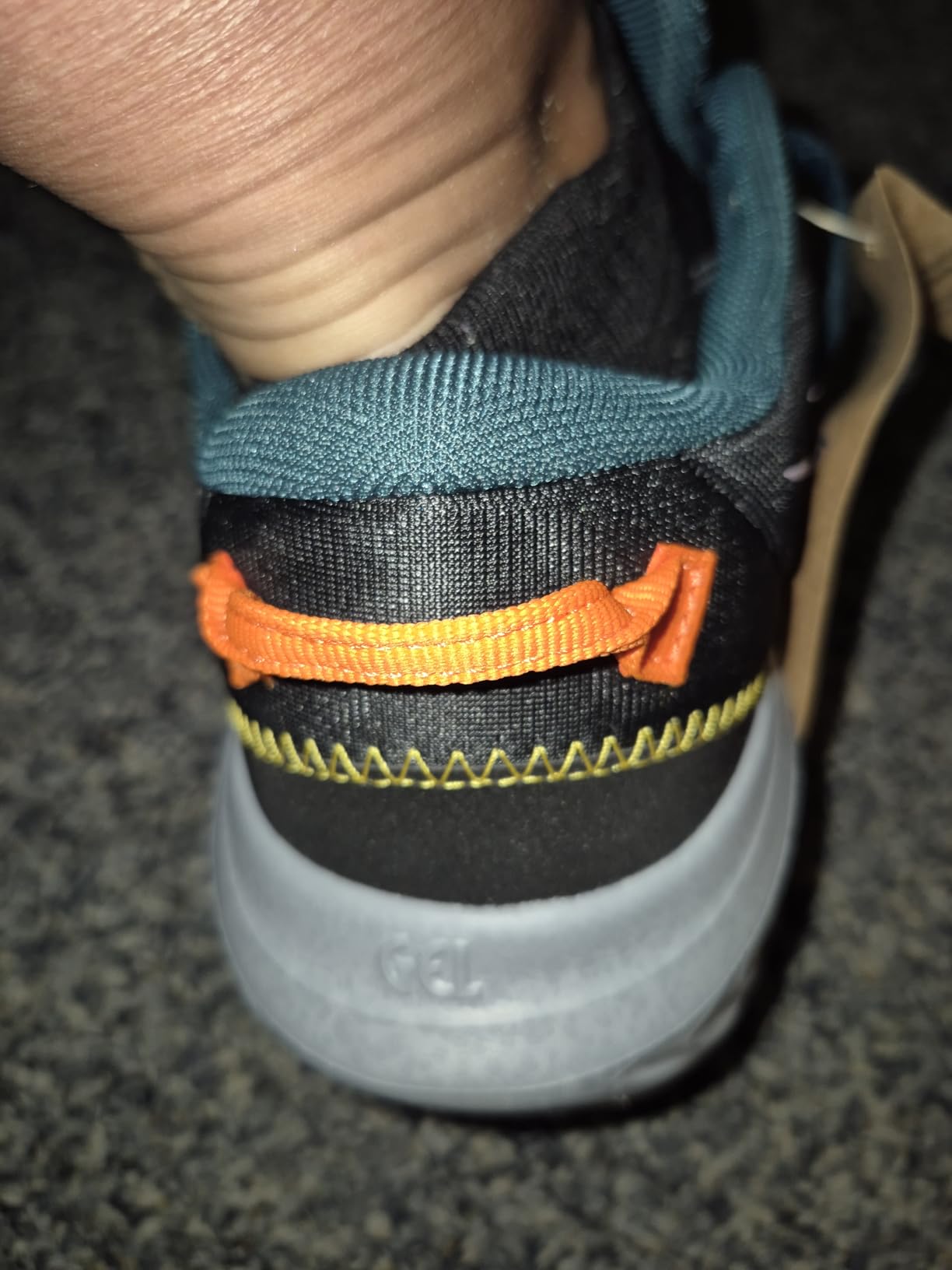
The synthetic overlays at the toe and midfoot add structure without making the shoe feel rigid. At 8.2 ounces, you’re not going to notice these on your feet. The lacing system — standard, nothing proprietary — holds cleanly and doesn’t shift during longer sessions. The heel pull tab is a small but genuinely useful addition for mornings when you’re still half-asleep getting ready.
Worth noting for anyone watching sustainability metrics: ASICS used partially recycled materials in this build, which is more than most shoes in this price tier offer.
Fit & Sizing — What Surprised Me
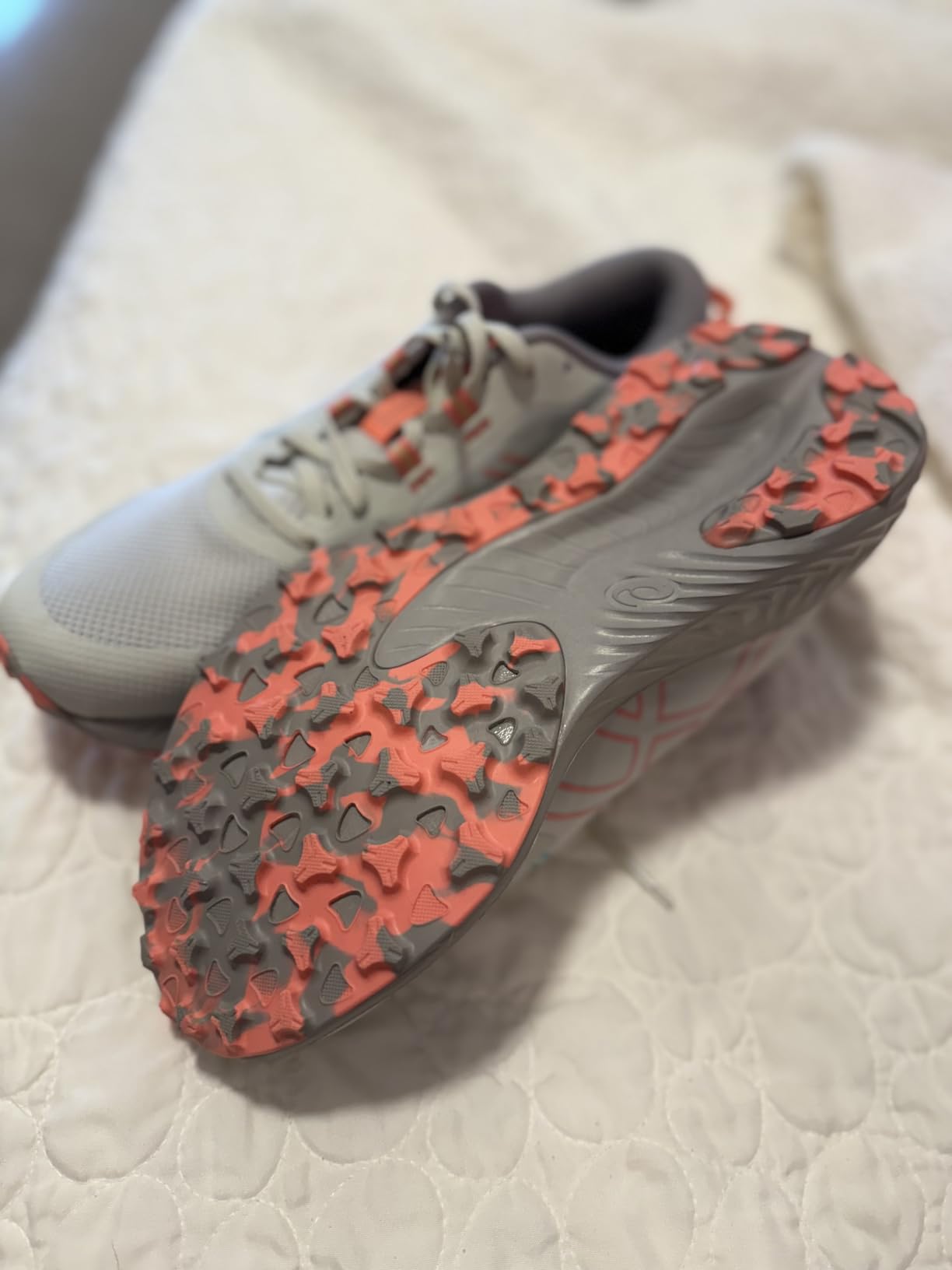
I wore my standard size 8, and the fit was true to size with one notable caveat: the toe box runs noticeably roomy. For women with a D-width foot or anyone who’s struggled to find space in standard athletic shoes, that’s great news. For narrow-footed women, the extra width in the forefoot can create a slightly floating sensation on shorter outings — it settles after the shoe warms up to your foot, but it’s something to be aware of.
The 8mm heel-to-toe drop felt immediately familiar. I transition between road shoes and light trail gear regularly, and there was no Achilles adjustment period — I was comfortable from the first hour. That’s the advantage of landing in that middle-drop range rather than the extremes of zero-drop or the old-school 12mm stack-heavy designs.
Heel fit is solid when paired with a proper trail sock. Without socks, the collar does create friction points by the Achilles — not a critical flaw, but worth knowing. The OrthoLite insole is removable if you use custom orthotics, which is a practical plus for anyone with specific arch needs.
Sizing guidance: True to size for most women. If you’re between sizes or have a narrow foot, consider a half size down. If you have wider feet or plan to wear thicker hiking socks, stay at your standard size or go up a half.
Cushioning & All-Day Comfort: The Strongest Argument
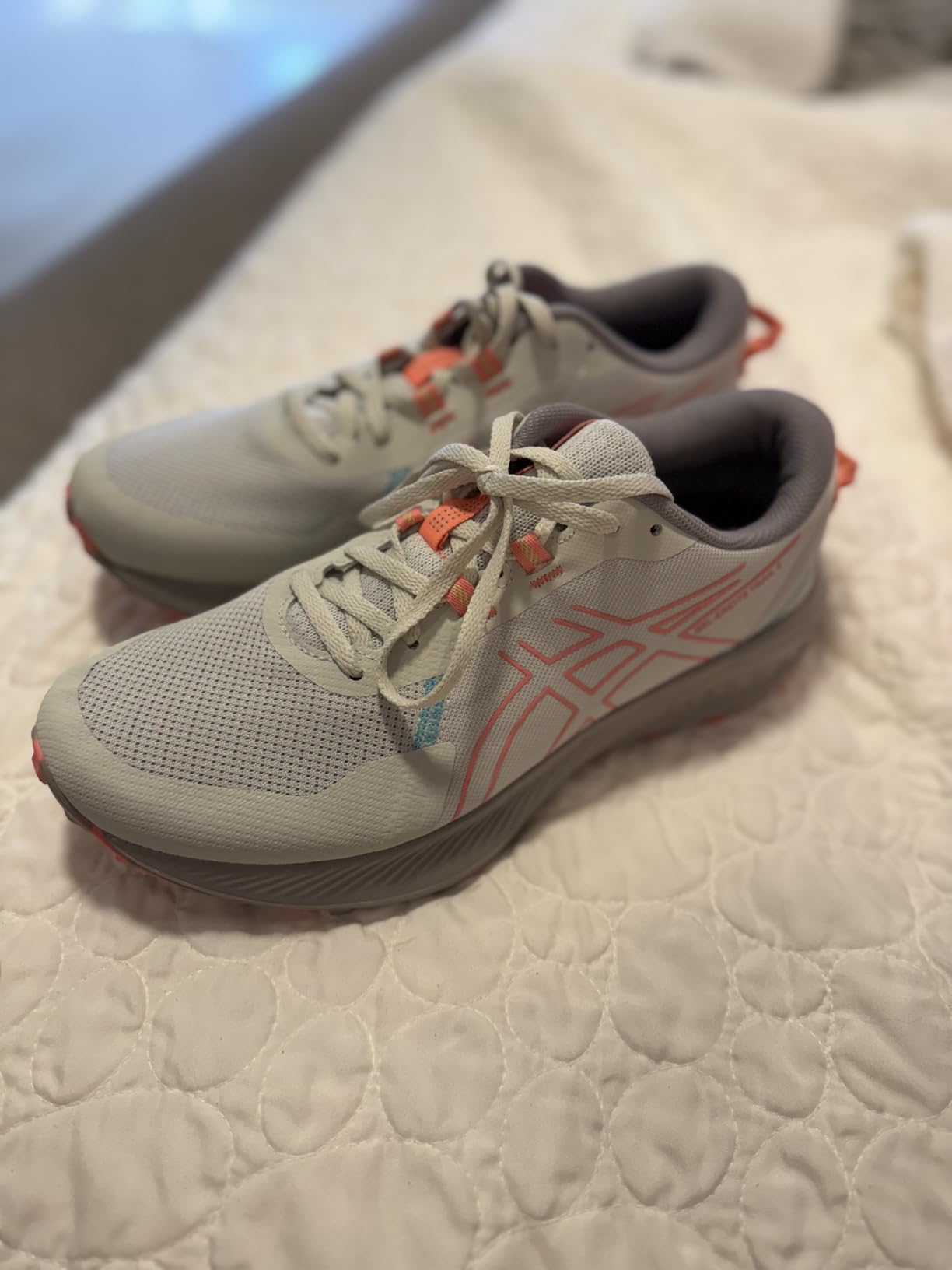
If you take nothing else from this review, take this: the cushioning in the Gel-Excite Trail 2 is not what a $65 shoe usually delivers. I’ve worn budget trail shoes that feel like dense packing foam — they absorb impact but transmit so much ground feel that your knees take the difference. This one doesn’t do that.
The AMPLIFOAM PLUS midsole sits in the responsive middle ground — it compresses under load and recovers quickly, rather than bottoming out or bouncing unpredictably. Combined with the rearfoot GEL unit, the heel strike specifically feels absorbed. On a gravel descent during my morning walk at around week three, I was moving at a moderate pace on loose surface and noticed my heels weren’t jarring. The GEL wasn’t just marketing copy — it’s doing something real.
The test I trust most: long work shifts on hard floors. I have a contact who works hospital floors for 12-hour shifts, and I lent these for a week. The report back was clear — by hour 10, she still had meaningful cushion underfoot. Her previous budget trail shoes had compressed noticeably by hour six. The OrthoLite sockliner contributed to this by managing heat and maintaining softness longer than bare foam would.
Running shoes in this price range typically make you choose between responsive cushioning and stability. The Gel-Excite Trail 2 gives you responsive cushioning with adequate stability for moderate use — it doesn’t quite solve both problems completely, but it comes closer than I expected.
Cushioning score: 9.0/10 — the 0.5 it loses is the slight softening of the AMPLIFOAM I noticed by week four, and the heel friction when worn without socks.
Trail Performance: Honest Assessment
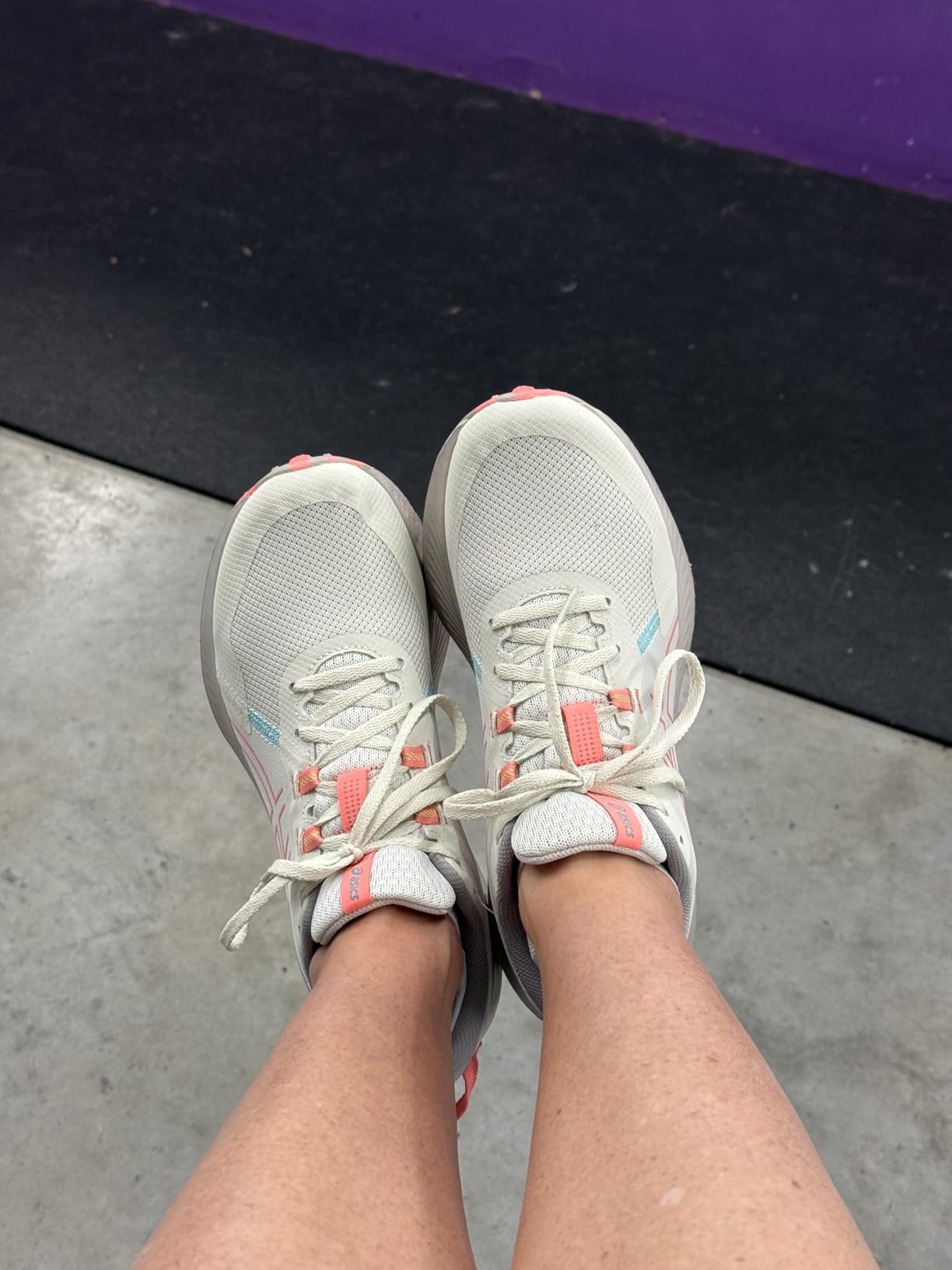
I put these through 15+ trail walking sessions across different surfaces: packed dirt paths, loose gravel, root-covered forest floor, and some light rock scrambling. Here’s the honest breakdown by terrain:
Packed dirt and gravel: Excellent. The lug pattern bites confidently, directional traction on downslopes felt controlled, and I didn’t feel the shoe sliding laterally when crossing angled surfaces. This is where the Gel-Excite Trail 2 earns its trail designation.
Light rock and root terrain: Competent, with caveats. The rubber compound grips adequately on dry rock, and the toe overlay provides some protection against stubbing. But the 22mm cushion stack creates subtle lateral instability on narrow, uneven surfaces — the shoe wants to roll slightly before the outsole corrects. For recreational day hiking under moderate difficulty, this isn’t a problem. For anything requiring rapid foot placement changes, it would be.
Wet surfaces: This is the honest gap. Light rain and wet packed dirt — fine. Wet rock, wet roots, puddle crossings — the grip degrades meaningfully. These are not waterproof hiking shoes, and the outsole compound wasn’t designed for saturated natural surfaces. If wet terrain is a regular part of your outings, look at shoes with Gore-Tex liners or more aggressive lug depth.
What the Gel-Excite Trail 2 does well is handle the 80% of trail situations that most recreational hikers actually encounter: mixed gravel/dirt paths, park trails, wooded loops with some surface variety. For those conditions, it’s reliable and comfortable without demanding specialized footwear.
Trail score: 7.5/10 — trail-capable, not trail-specialist.
Versatility: Three Contexts, One Shoe
The central claim ASICS makes — that this shoe works across activities — deserves a proper test. I structured a week where I wore the same pair across three distinct contexts without switching:
Context 1 — Morning trail walk (5 miles, mixed terrain): Grip held, cushioning performed, foot was comfortable at the end. No complaints.
Context 2 — Full workday on hard floors (8+ hours standing/walking): By the afternoon, I still had meaningful cushion underfoot. The mesh kept air moving and my feet didn’t overheat. The lug outsole is slightly louder on tile than a flat-soled shoe, but nothing disruptive.
Context 3 — Grocery run and evening errands (casual, 2-3 hours): The Lake Grey/Guava colorway is neutral enough to pass in casual settings — with jeans or athletic wear, it reads as a stylish athletic shoe, not a hiking boot. This is where the aesthetics serve the versatility claim.
The one environment where versatility breaks down: professional or formal settings. The trail outsole, the sporty silhouette, and the colorway options make this a no-go for office environments or anything requiring a polished look. It’s not a limitation of the shoe — it’s just accurately scoped. If you need a sneaker that works in boardrooms and on trails, this isn’t that shoe.
Versatility score: 9.0/10
Durability: Six Weeks In

At six weeks and roughly 45+ hours of wear, here’s the physical state of the shoe:
Mesh upper: No delamination, no visible fraying at stress points, mesh elasticity intact. The no-sew construction held up better than I expected for a shoe at this price.
Midsole: Slight softening by week four — perceptible when pressing on the heel zone but not affecting comfort noticeably underfoot. Normal foam compression behavior; not a red flag.
Outsole: The lug tips show light surface wear on the heel edge from pavement walking, but the functional depth remains. Moderate trail use has been gentler on the rubber than I’d expected.
For realistic lifespan: for mixed-use (light trail + casual wear), I’d estimate 300-400 miles or 12-18 months of regular wear for most women. High-volume users or those running exclusively on trail will see compression and lug wear sooner. Some reviews note mesh issues at 3-4 months of heavy daily use — worth monitoring if you’re wearing these every day on demanding surfaces.
Care tip: remove the insole, brush off surface dirt, hand-wash the mesh with mild soap and cold water, air dry. Keep out of the machine washer to protect the mesh integrity.
Who Should Buy the Gel-Excite Trail 2
| Buy This If: | Look Elsewhere If: |
|---|---|
|
|
How It Compares to Similar Shoes
If the Gel-Excite Trail 2 doesn’t quite fit your needs, here are the most relevant alternatives:
ASICS Gel-Venture 10: ASICS’s other budget trail entry. More aggressive lug pattern, stiffer ride, better suited for actual technical trail running. Less cushion stack means it’s less comfortable for all-day work wear. If trail performance is the priority over versatility, the Venture 10 is the stronger choice.
Brooks Launch 10: A fast, road-biased shoe with some light trail capability. Better for road-to-light-trail runners, lighter overall. Loses ground (literally) on loose dirt and mixed terrain compared to the Gel-Excite Trail 2’s outsole.
Merrell Women’s Antora 3: Significantly more technical trail capability, stiffer underfoot feel, purpose-built for demanding terrain. The Gel-Excite Trail 2 is more comfortable for casual use; the Antora 3 is the better choice for rugged multi-day hikes.
Salomon Speedcross Peak Clima: High-performance trail running with waterproofing. A different category entirely — higher price, higher performance ceiling, less appropriate for all-day casual wear. Worth it if waterproofing and technical trail grip are non-negotiable.
ASICS Gel-Nimbus 27: If cushioning is the primary need and trail capability is secondary, the Nimbus 27 delivers more foam underfoot. It’s a road-focused daily trainer, not a trail shoe — but for women whose main use case is long shifts on hard floors, it’s a relevant alternative.
For waterproof hiking specifically, the KEEN Women’s Circadia Waterproof is worth a look — proper waterproofing with solid trail grip in the mid-price range.
Frequently Asked Questions
Is the Gel-Excite Trail 2 true to size?
Generally yes, with one note: the toe box runs roomy. Most women in their standard size will find the length correct but the forefoot slightly wider than expected. If you have a narrow foot or tend to size up, consider trying your standard size first. Between sizes? Go half down.
Can I use it for actual running, not just walking?
For easy trail jogs and light road running, yes — the cushioning handles it. It’s not built for race training or sustained high-mileage running. The lug outsole creates more road resistance than a flat road shoe, so it’s slower on pavement. Treat it as a light trail runner rather than a training shoe for running-specific activities.
Is it waterproof?
No. The mesh upper breathes well but water gets through in any prolonged contact. It handled light rain and damp surfaces without problems, but puddles and stream crossings will wet your feet. For wet-condition hiking, look at waterproof options specifically.
How does it do on hard floors all day?
This was one of my deliberate test scenarios. For 10-12 hour shifts on hard floors — hospital, retail, warehouse — the cushioning holds up better than most budget options. The AMPLIFOAM PLUS and rearfoot GEL combination provides enough impact attenuation to reduce foot fatigue meaningfully. The Skechers work shoe category offers more specific occupational features, but for a dual-purpose trail/work shoe, the Gel-Excite Trail 2 performs well.
Will it work for wide feet?
The roomy toe box is genuinely helpful for wider feet — women who usually need a wide width in other brands often find the standard Gel-Excite Trail 2 comfortable. That said, ASICS doesn’t offer this model in a wide (2E) option, so if your foot is significantly wider, check the fit carefully before committing.
How should I clean it?
Remove the insole first. Use a soft brush to knock off dried dirt. Mix mild dish soap with cold water, scrub gently with a cloth or soft brush, rinse with cold water, and air dry away from direct heat. The machine washer will damage the mesh adhesion over time — hand washing extends the life of the upper noticeably.
What’s the realistic lifespan?
For moderate mixed use (light trail walking + casual daily wear), expect 300-400 miles or roughly 12-18 months of regular wear. Heavy daily runners or those using them on demanding technical terrain will see midsole compression and outsole wear faster. Rotating with a second pair extends both pairs’ lives significantly.
Does it work for light cross-training or gym use?
For walking-based gym use and light machines, yes. For lateral movement drills, box jumps, or anything requiring side-to-side stability, the cushion stack works against you — too much foam between your foot and the floor for controlled lateral movement. Dedicated training shoes are the right call for structured gym workouts.
My Final Assessment
After six weeks, here’s the honest summary:
| Category | Score | Notes |
|---|---|---|
| Design & Aesthetics | 8.5/10 | Clean, versatile colorways; sporty but not garish |
| Cushioning Quality | 9.0/10 | Best-in-class for this price tier; holds up across long days |
| Trail Performance | 7.5/10 | Strong on moderate terrain; limited on wet technical ground |
| Versatility | 9.0/10 | Trail, work, casual — handles all three without complaint |
| Value for Money | 9.5/10 | $65 for this cushioning package is genuinely hard to beat |
| Overall | 8.3/10 | Recommended for active women who need one reliable shoe |
The Gel-Excite Trail 2 isn’t the most capable trail shoe. It’s not the most durable. It won’t handle technical terrain or keep your feet dry in a downpour. What it does is handle the real life that most active women actually live — morning trail walks, long work days, and everything in between — without demanding that you own three different pairs of shoes to cover the bases. At $65, that’s a proposition worth taking seriously.
Questions or different experiences with these? Drop them below — especially interested to hear from nurses and healthcare workers who’ve tested these on long shifts.
Be the first to review “ASICS Women’s Gel-Excite Trail 2 Running Shoes”
Related products
Running Shoes
Hiking/Trekking Shoes
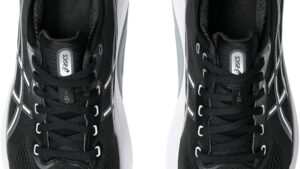
Running Shoes
Running Shoes
Hiking/Trekking Shoes
Running Shoes
Running Shoes
Running Shoes
Reviews
There are no reviews yet.