
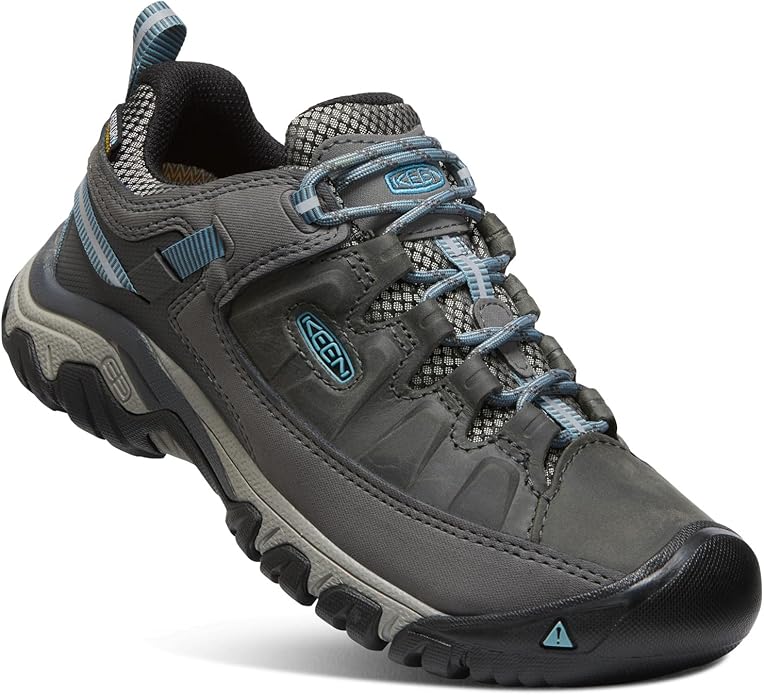
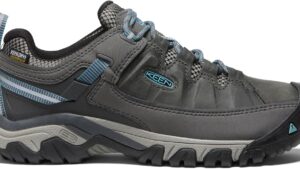
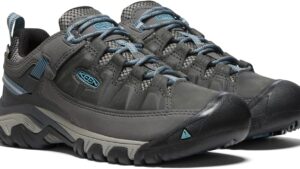
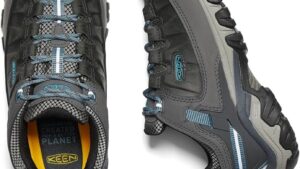
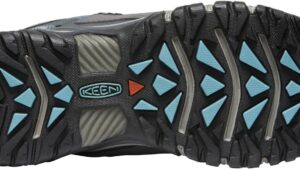
My hiking shoes died a dramatic death on a rainy Saturday — sole separating mid-trail, one soaked sock, two miles from the car. That afternoon I went straight to the hiking forums and the KEEN Women’s Targhee III kept appearing in thread after thread: “best wide toe box,” “waterproof when it counts,” “trail-ready but wearable to brunch.” I’m Sarah, and I spent the next 8 weeks putting a pair through 45+ miles of Pacific Northwest trails, weekday errands, and everything in between. What I found was genuinely impressive in some ways — and genuinely troubling in others.
What the KEEN Targhee III Is (And Isn’t)
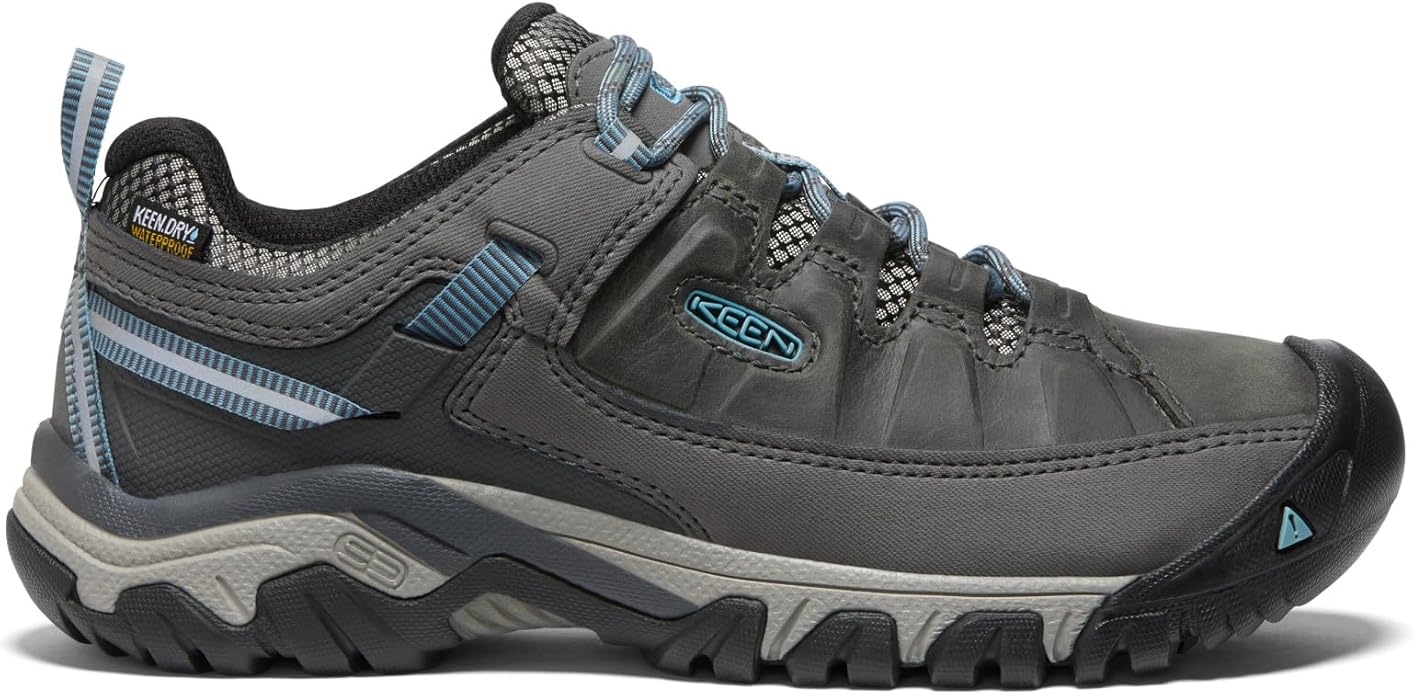
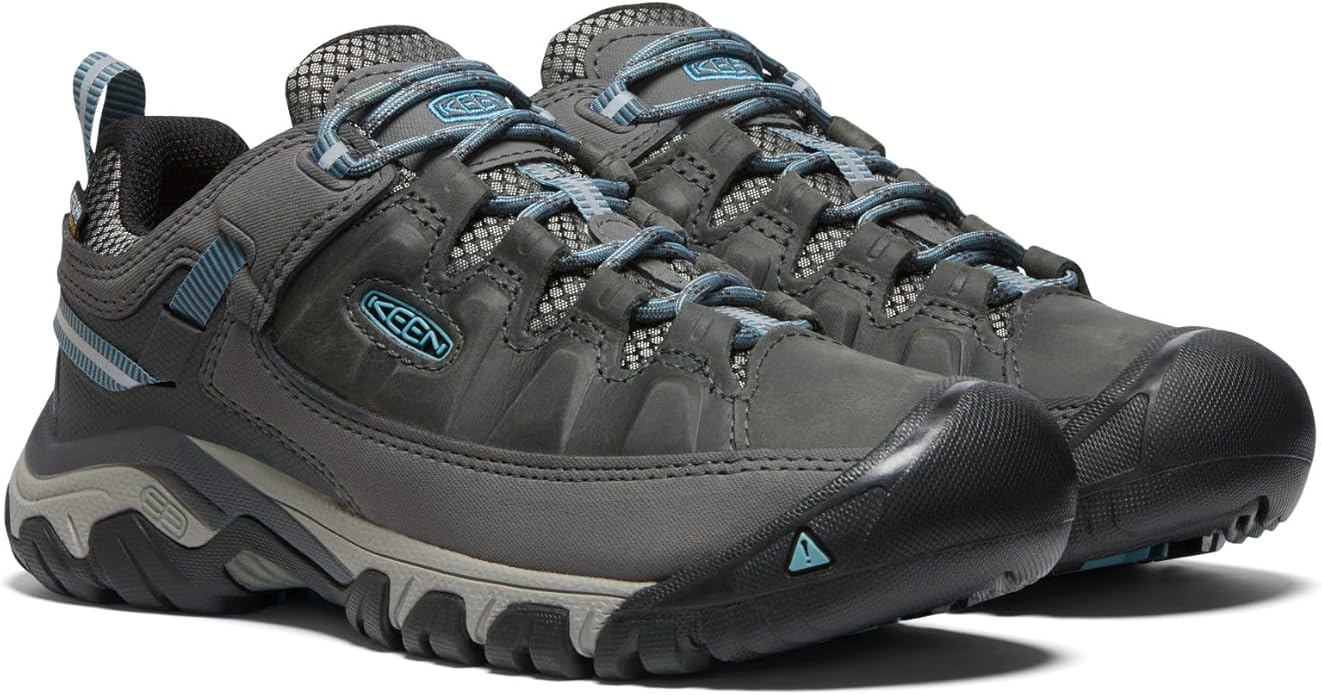
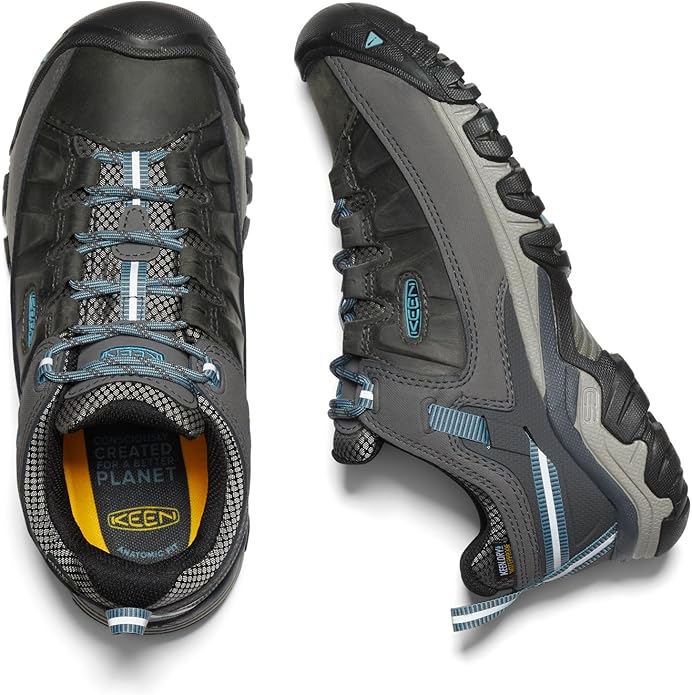
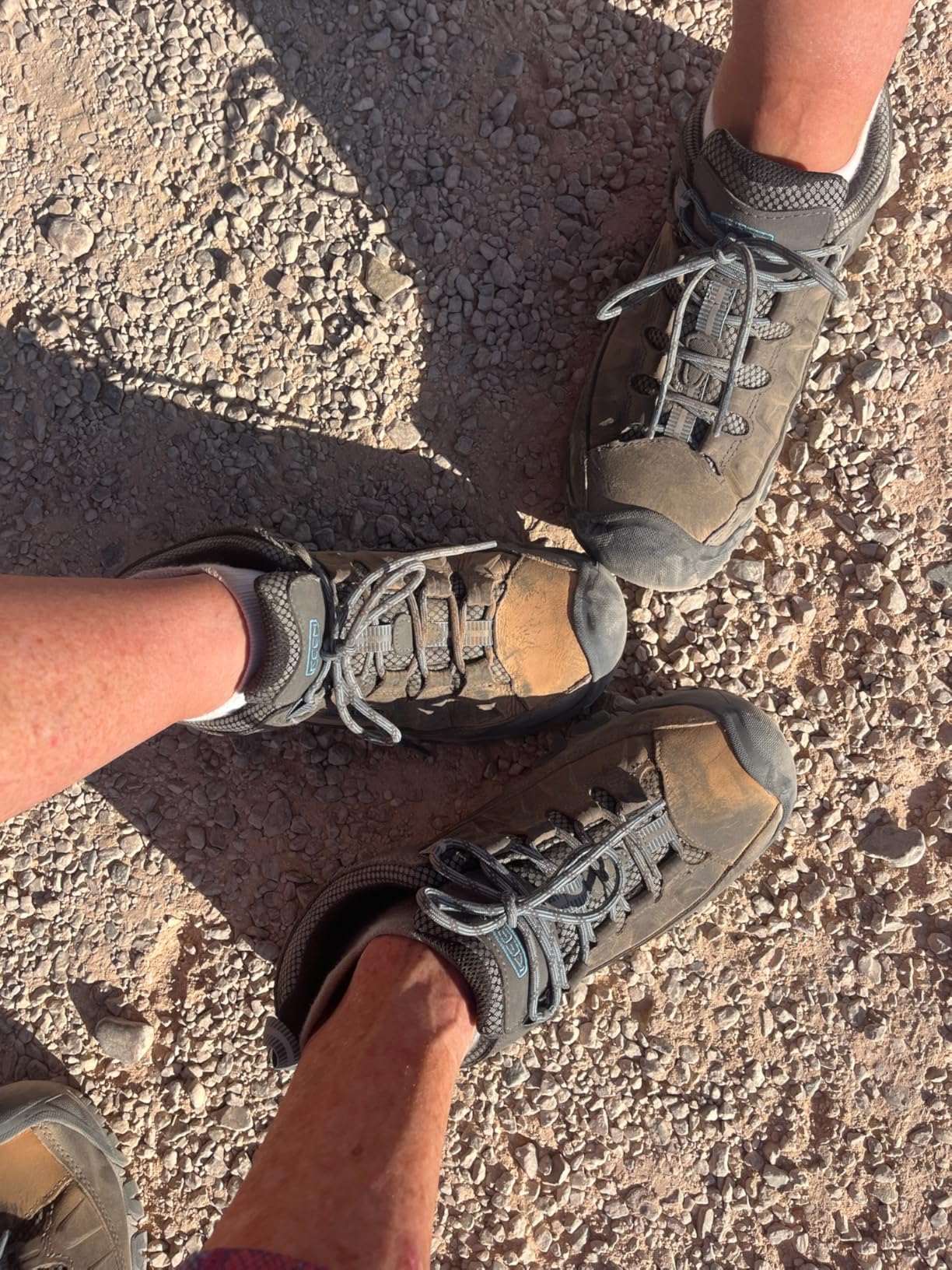
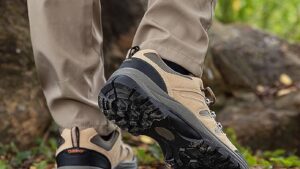
Before anything else: the Targhee III is a low-cut waterproof hiking shoe, not a boot. That distinction matters. It sits below the ankle, which means you get more freedom of movement and a more versatile trail-to-town transition, but less ankle support than a mid-cut would give you. If you’ve seen older KEEN Targhee models and expected something with that traditional chunky boot profile, this version might surprise you — it’s been redesigned to feel more like a trail runner with serious waterproofing credentials.
In KEEN’s lineup, the Targhee III sits between the Targhee II (more traditional, elevated heel) and the KEEN Targhee IV Waterproof (upgraded construction, zero sole separation by design). At $130, it’s pitched at women who need a reliable day hiker that doesn’t require a dedicated “hiking outfit” — you can wear these on a Saturday morning trail and still run errands in the afternoon without looking like you got lost.
Key Specs at a Glance
| Spec | Details |
|---|---|
| Price | ~$130 |
| Weight | 13.9 oz (women’s size 8) |
| Upper | Oiled nubuck leather + performance mesh |
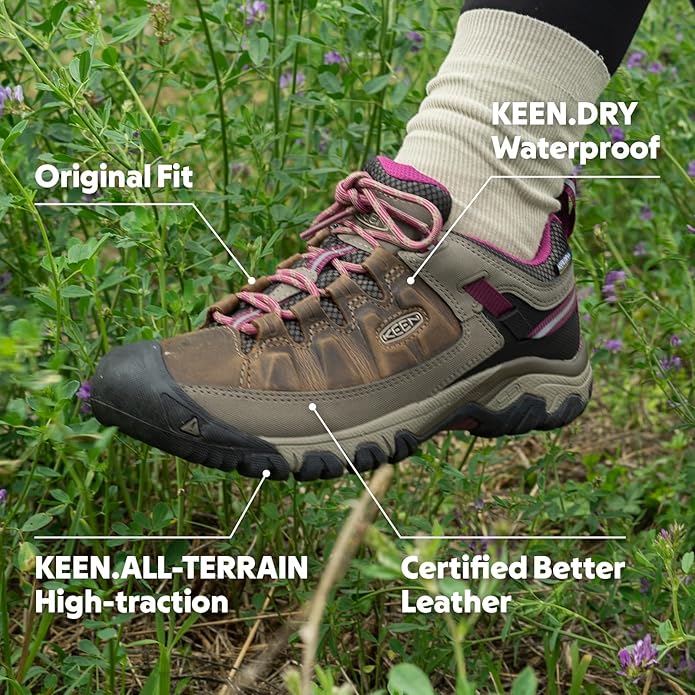
| Waterproofing | KEEN.DRY membrane (PFAS-free) |
| Midsole | Dual-density compression molded EVA |
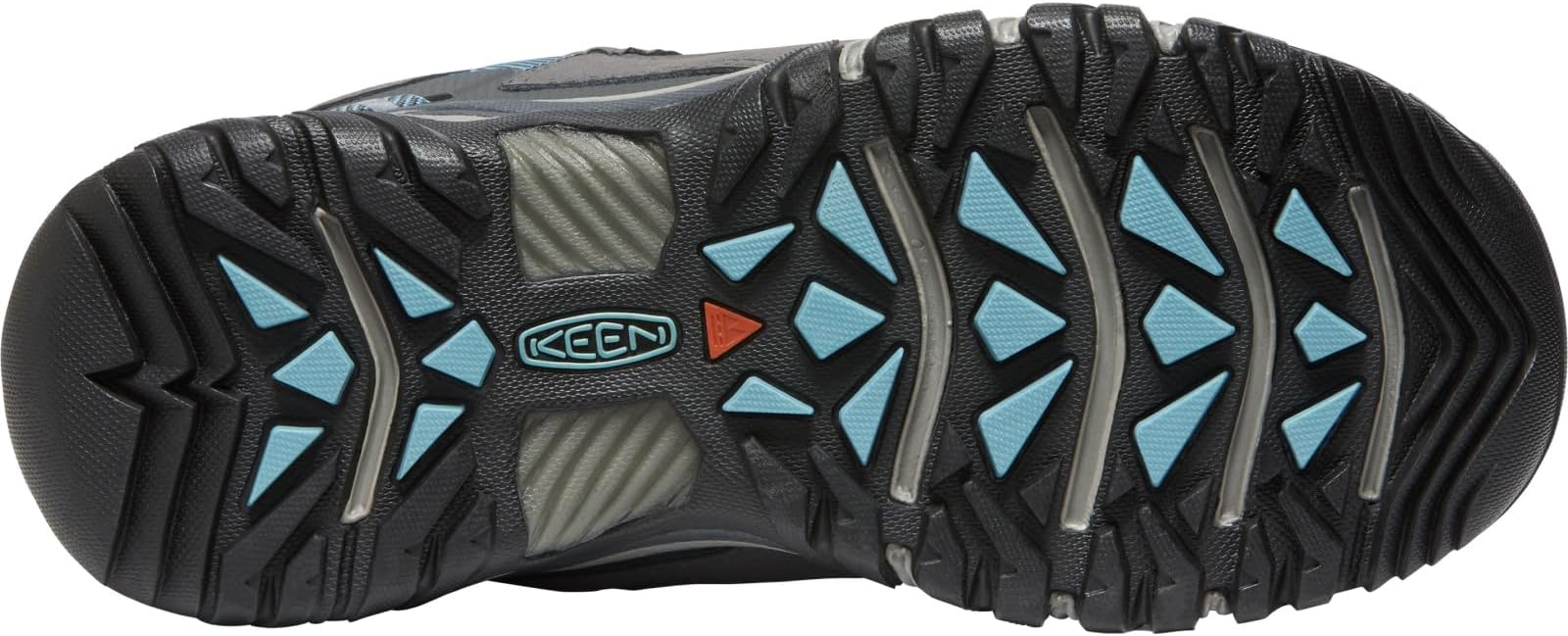
| Outsole | KEEN All-Terrain rubber, 4mm multi-directional lugs |
| Shank | ESS (External Support Shank) |
| Heel | Injected TPU heel capture |
| Insole | Removable with CLEANSPORT NXT odor control |
| Sustainability | LWG-certified leather, PFC-free DWR |
| Testing period | 8 weeks, 45+ miles |
Fit and Sizing — Read This Before You Order
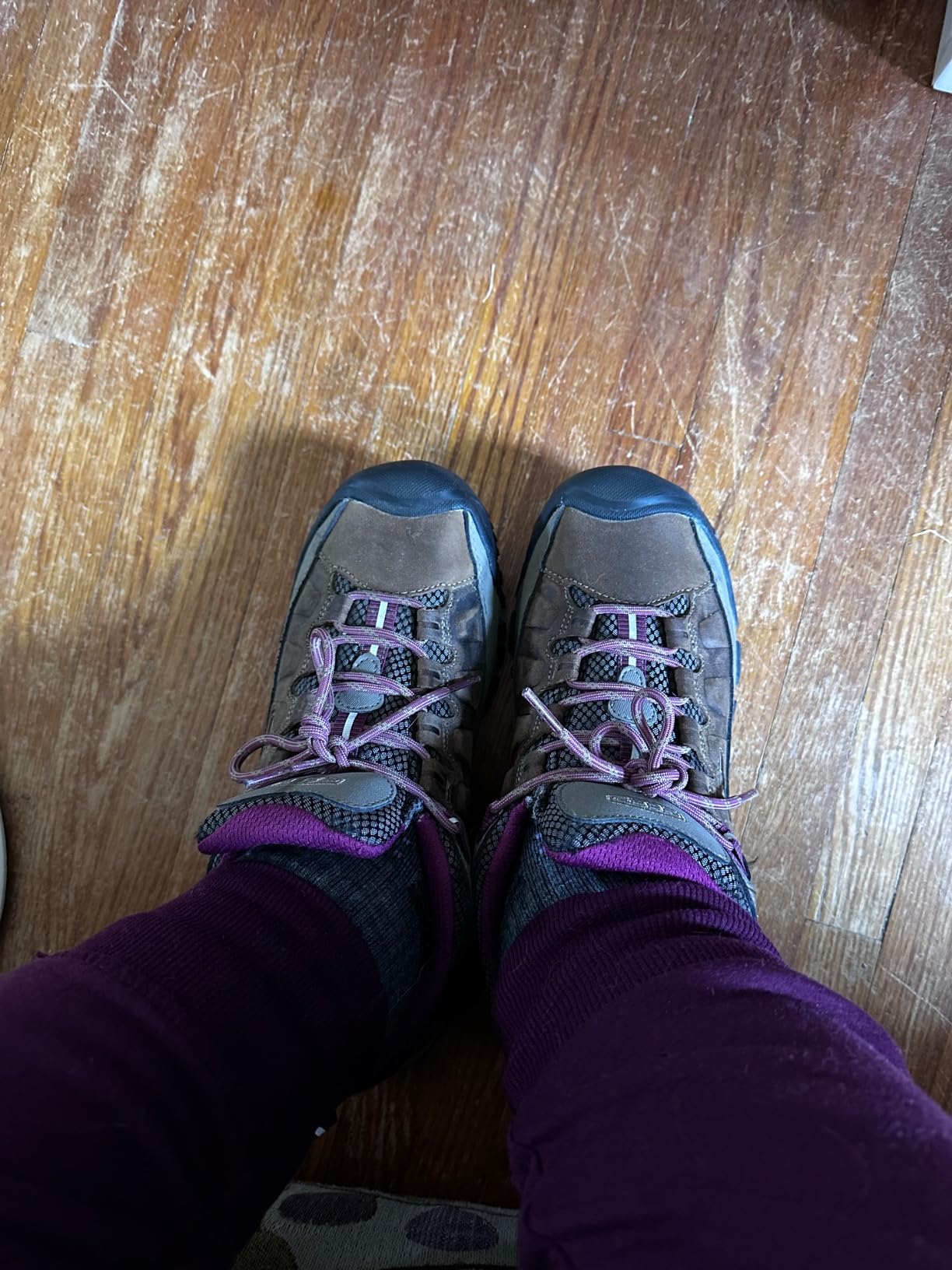
The Targhee III has one of the roomiest toe boxes in women’s hiking shoes, and that’s not marketing copy — it’s the defining physical characteristic of this shoe. My feet run moderately wide, and when I slid these on for the first time I noticed the difference immediately: my toes had actual room to spread out rather than being compressed into a narrow point.
But here’s the practical reality: the shoe runs generous. Several reviewers report that the Targhee III fits like a half size large, and after 8 weeks, I’d agree — I’d recommend either sticking with your exact size if you prefer lots of toe room, or going down a half size if you want a more locked-down heel fit with fewer miles in.
The TPU heel capture helps significantly. Once you dial in the lacing through the speed hooks on the ankle cuff, the heel sits snug even on descents where cheaper hiking shoes turn into blister factories. The one thing that takes adjustment: the ankle collar is firm initially. It softened noticeably after the first few wears, but don’t judge these by the first 30 minutes on-foot.
For narrow feet: this is a meaningful caveat. The wide toe box that’s a gift for medium-wide feet can make narrow feet feel like they’re swimming in the shoe’s forefoot, even with tight lacing. NORTIV 8 Women’s Waterproof Hiking Shoes or the CC-Los Women’s Waterproof Hiking Shoes might fit narrow feet better.
Width options: KEEN does offer the Targhee III in a wide version if you need even more room.
Comfort — The Part That Makes You Want to Love These Shoes
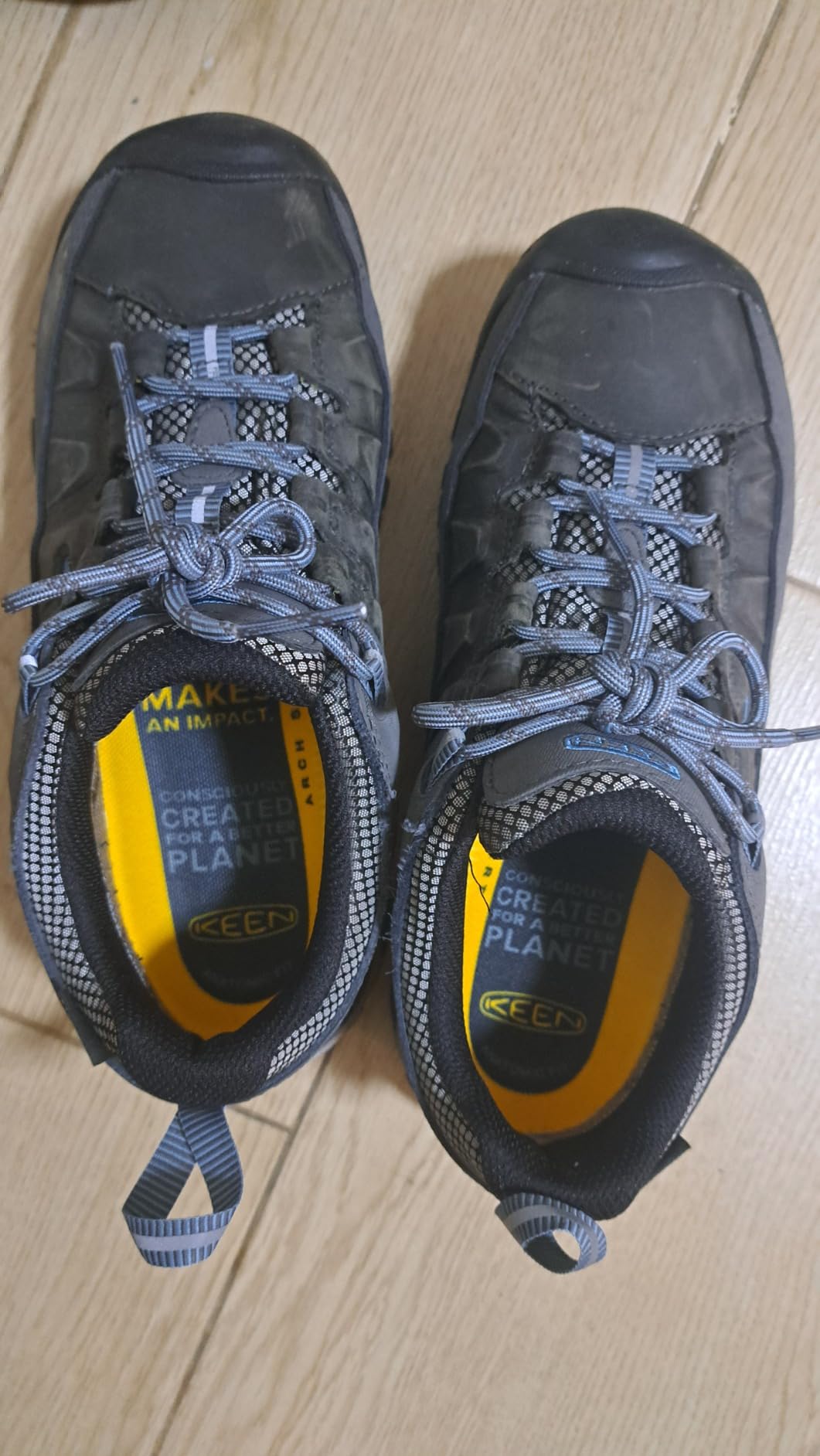
My first day in these shoes was a 6-mile hike on the kind of muddy PNW trails that eat bad footwear. I expected at least some hot spots — that’s just the cost of new leather hiking shoes. There weren’t any. None. I finished that hike with the same level of foot comfort I’d started with, which genuinely surprised me.
The leather molds to your foot over the first few weeks, and by week three, the Targhee III felt noticeably more comfortable than it did on day one. The EVA midsole adapts similarly — it’s on the firmer side (not the plush cushioning you’d get from modern trail runners), but it absorbs impact well and distributes pressure evenly. On 8-hour days on trail, my feet didn’t feel destroyed at the end.
The wide toe box is the real story here. On steep downhills, where most hiking shoes cause toe compression and eventual black nails, the Targhee III just… doesn’t. Your toes have room to move naturally. For anyone who’s ever hiked a long descent in shoes that weren’t built for it, that alone is worth something.
Scored this 8.5/10 on comfort. That score reflects genuinely impressive out-of-box performance and the quality of the fit for medium-to-wide feet.
Waterproofing — KEEN.DRY Where It Counts
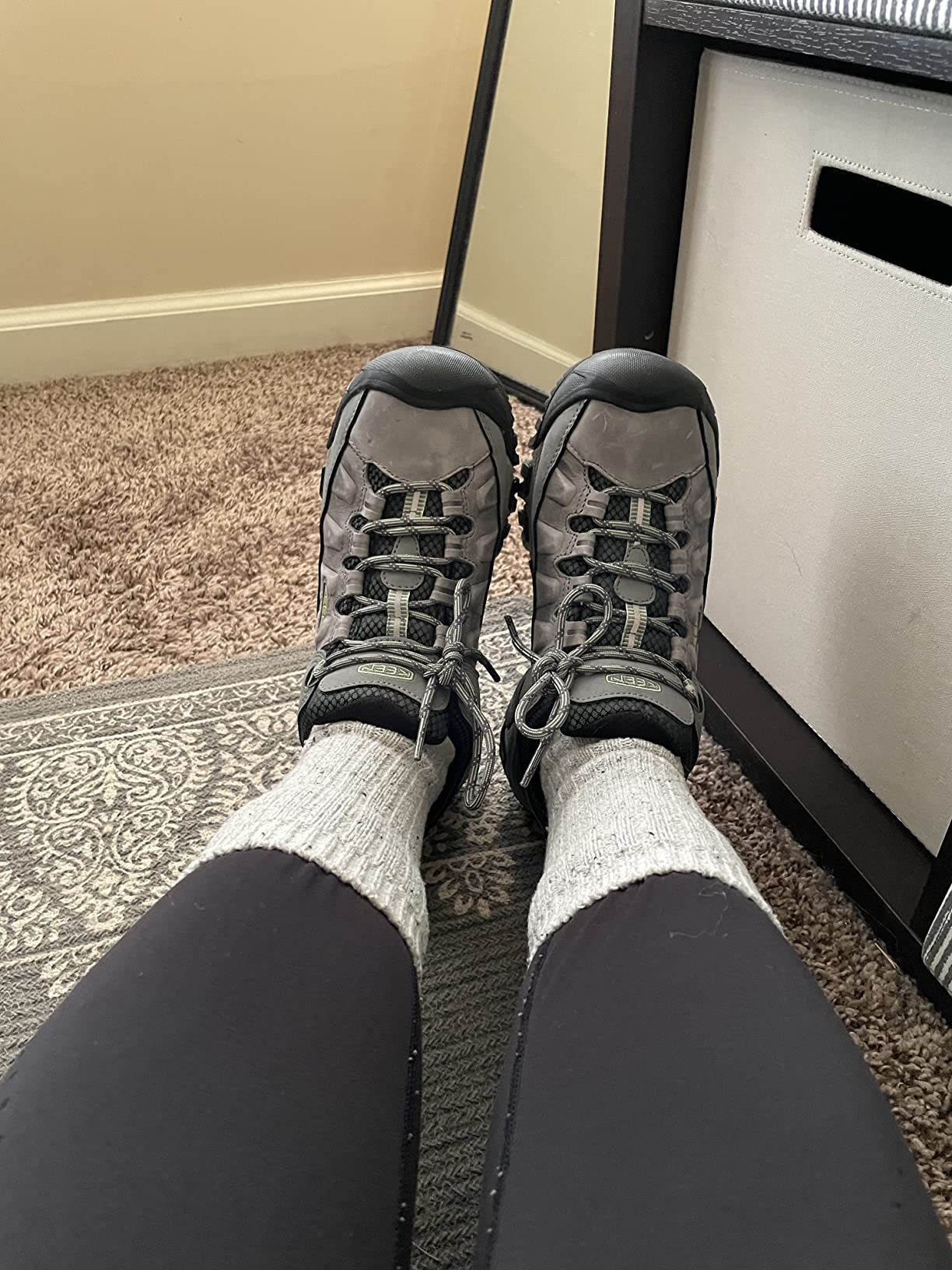
The KEEN.DRY membrane is what separates this shoe from the non-waterproof version of the Targhee III, and it works. During the first several weeks of testing — morning hikes with heavy dew, two separate stream crossings, one sustained rainstorm that caught me about 3 miles from the trailhead — my feet stayed dry. Completely dry.
One thing worth mentioning: KEEN.DRY is more breathable than Gore-Tex alternatives, which sounds like a minor technical distinction but actually matters on a 5-hour summer hike. Less trapped heat, less foot sauna effect. The trade-off is that Gore-Tex is arguably more waterproof under extreme conditions, but for typical day hiking in mixed weather, KEEN.DRY performs well.
Two important caveats: First, the collar sits low enough that deep stream crossings — anything above ankle depth — will let water in over the top regardless of the membrane. Second, and more critically: once any cracking appears at the sole junction (which I’ll cover in detail shortly), the waterproofing is compromised. The membrane itself is solid. The concern is what happens to the shoe around it.
The PFAS-free certification matters for ethical shoppers — KEEN eliminated chemical DWR treatments that persist in the environment. Worth noting alongside the sustainability angle of the LWG-certified leather.
For serious water activities like canoeing or wading, these aren’t the right shoe — the KEEN Voyageur or dedicated water shoes are better suited.
Traction — Where These Shoes Consistently Deliver
The 4mm multi-directional lugs won’t win any depth competitions against dedicated trail runners, but they perform better than the spec suggests. On every wet rock, root-covered switchback, and muddy approach I tested these on, the grip held confidently. The lug placement is designed to provide traction in multiple directions simultaneously, and in practice that translates to a shoe that felt planted even on the sketchiest wet surfaces.
I never experienced that heart-dropping moment of unexpected slippage on wet rock — the experience that makes you suddenly very aware of the drop on one side of the trail. On steep, loose scree or heavily technical rocky terrain (the kind of terrain you’d find in Arches or similar desert environments), the grip is less dependable. But for the kind of hiking most active women actually do — established trails in mixed conditions, Pacific Northwest forests, national park day hikes — it’s genuinely solid.
The KEEN All-Terrain rubber compound deserves credit here. The material grips rather than slides even when the lugs are clogged with mud, which not all outsoles manage. The Salomon Speedcross has more aggressive lugs for technical terrain, but for general hiking, the Targhee III’s traction is among the better performers at this price point.
Scored 8/10 on traction. Would be higher if the lug pattern handled steep technical terrain as well as it handles wet roots and mud.
The Durability Problem — The Most Important Section in This Review
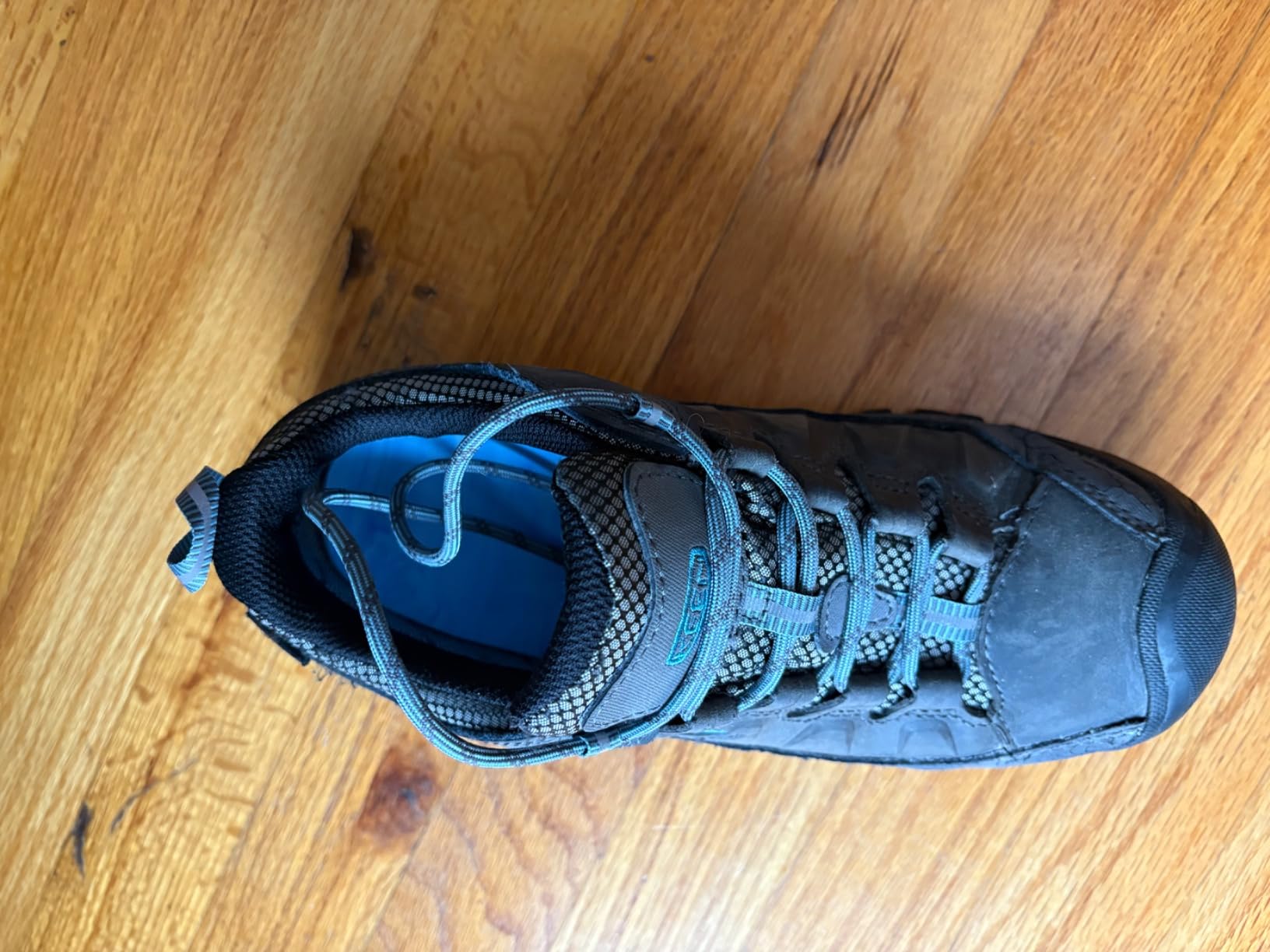
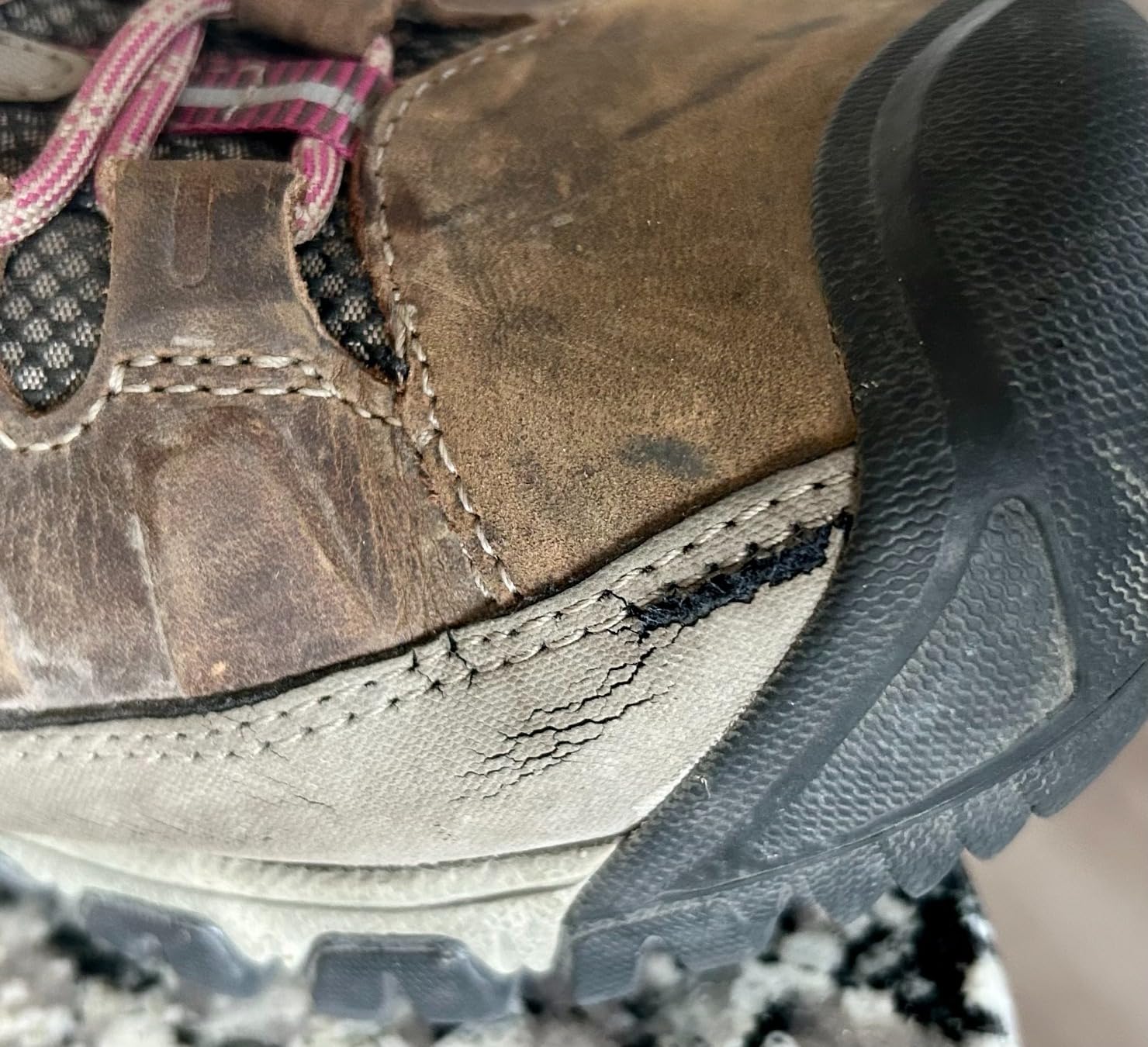
Around week five, I noticed something on the heel of my right shoe. A thin line, maybe an inch long, running exactly where the rubber outsole meets the leather upper. I convinced myself it was just surface scuffing. By week six it was clearly a crack.
This is not a rare complaint. It’s documented across forum threads, review sites, and user reviews with unsettling consistency: the current production run of the Targhee III has a quality control problem at the sole junction. The bonding between the rubber outsole and the leather upper — the structural seam the entire shoe depends on — can fail within 2-8 weeks of regular use. Not intensive expedition use. Regular use. Dog walks. Errands. Weekend trails.
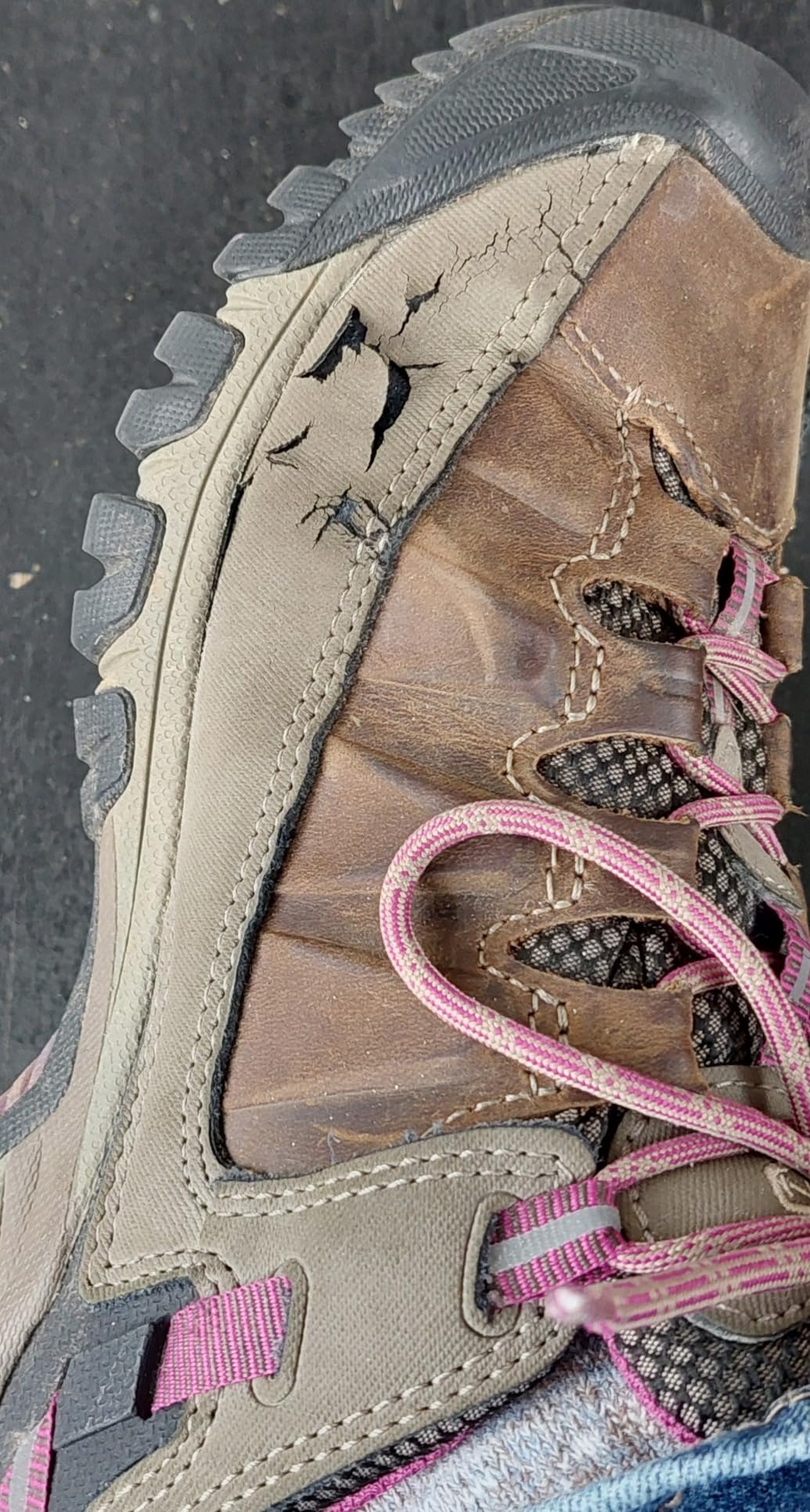
The frustrating part isn’t just that this happened to my pair. It’s the inconsistency. The eurotravelcoach reviewer used a pair for 1,500 miles across Europe and nine countries before retiring them due to seam wear — still waterproof throughout. Some users on Trailspace report 5+ years of durability. Others report sole separation on their first actual hike.
That inconsistency is itself the problem. You can’t know which pair you’ll get. At $130, a $130 gamble is a meaningful gamble.
KEEN appears to have acknowledged this implicitly: the KEEN Targhee IV Waterproof was introduced with KEEN.FUSION construction, which fuses the upper to the sole to achieve — and KEEN specifically markets it this way — “zero sole separation.” The Targhee IV also has a Luftcell midsole that resists compression over time and a more abrasion-resistant outsole. If KEEN is selling a “zero sole separation” shoe as an upgrade, they know the Targhee III has a separation problem.
Scored 4/10 on durability. That score reflects the real risk, not the best-case outcome.
Value for Money — Honest Math
At $130, the Targhee III sits in the upper-middle tier of women’s hiking shoes — not budget, not premium. For the comfort, waterproofing quality (when construction holds), and traction you get, the price feels fair in isolation. The design is genuinely good. The technology works when it works.
The problem is what $130 buys you on a pair-by-pair basis. If you get a pair from a good production run, you’re getting a legitimately excellent hiking shoe at a reasonable price. If you get a pair with the sole bonding issue, you’ve spent $130 on shoes that crack within 6 weeks. There’s no reliable way to know in advance which you’ll get.
Alternatives like the Merrell Women’s Moab 3, Ulogu Waterproof Hiking Shoes, or Columbia Granite Trail Mid offer similar waterproofing and traction with more consistent quality control records. The KEEN Women’s Circadia Waterproof is another KEEN option that’s received better recent durability feedback.
Scored 5/10 on value. Would be 7 or 8 without the QC gamble.
Who Should (and Shouldn’t) Buy the KEEN Targhee III
Buy the Targhee III if you…
- Have wide or medium-wide feet and struggle to find hiking shoes with adequate toe room
- Want waterproof hiking shoes that feel like trail runners rather than clunky traditional boots
- Are doing moderate day hiking — established trails, mixed weather, nothing technical
- Can purchase from a retailer with a good return policy (REI’s policy is excellent for this situation)
- Want a versatile shoe that works from Saturday morning trail to Saturday afternoon errands
- Value breathable waterproofing over maximum waterproofing (KEEN.DRY vs Gore-Tex trade-off)
Look elsewhere if you…
- Need a reliable multi-year hiking shoe you can count on without quality control concerns
- Have narrow feet (the wide toe box will feel imprecise)
- Are doing technical terrain — steep scree, scrambling, serious off-trail routes
- Want genuinely waterproof footwear for water activities (canoeing, wading) — wrong shoe for that
- Can’t afford to replace hiking shoes within a season if the QC gamble goes wrong
For durability-focused buyers, the Merrell Women’s Antora 3 and Women’s Moab 3 are worth considering alongside the KEEN Targhee IV — which addresses the exact construction concern of the III. For wide feet specifically, the Altra Lone Peak 8 has a legendary wide toe box with a strong durability track record, though it’s a trail runner profile rather than a hiking shoe.
How the Targhee III Compares
| Shoe | Price | Waterproofing | Durability | Fit | Best For |
|---|---|---|---|---|---|
| KEEN Women’s Targhee III | ~$130 | KEEN.DRY (PFAS-free) | Variable — QC concern | Wide toe box | Day hiking, wide feet, versatile wear |
| KEEN Targhee IV | ~$165+ | KEEN.DRY | KEEN.FUSION — zero separation | Wide toe box | Long-term use, durability-focused buyers |
| Merrell Women’s Moab 3 | ~$130 | M Select DRY | Good QC record | Medium | All-day hiking, reliable construction |
| Oboz Sypes Low Leather | ~$130 | B-Dry | Good | Medium-wide | Day hiking, leather durability |
| KEEN Circadia Vent | ~$110 | None (mesh only) | Good | Wide toe box | Warm weather, breathability priority |
Final Verdict — 8 Weeks and One Honest Answer
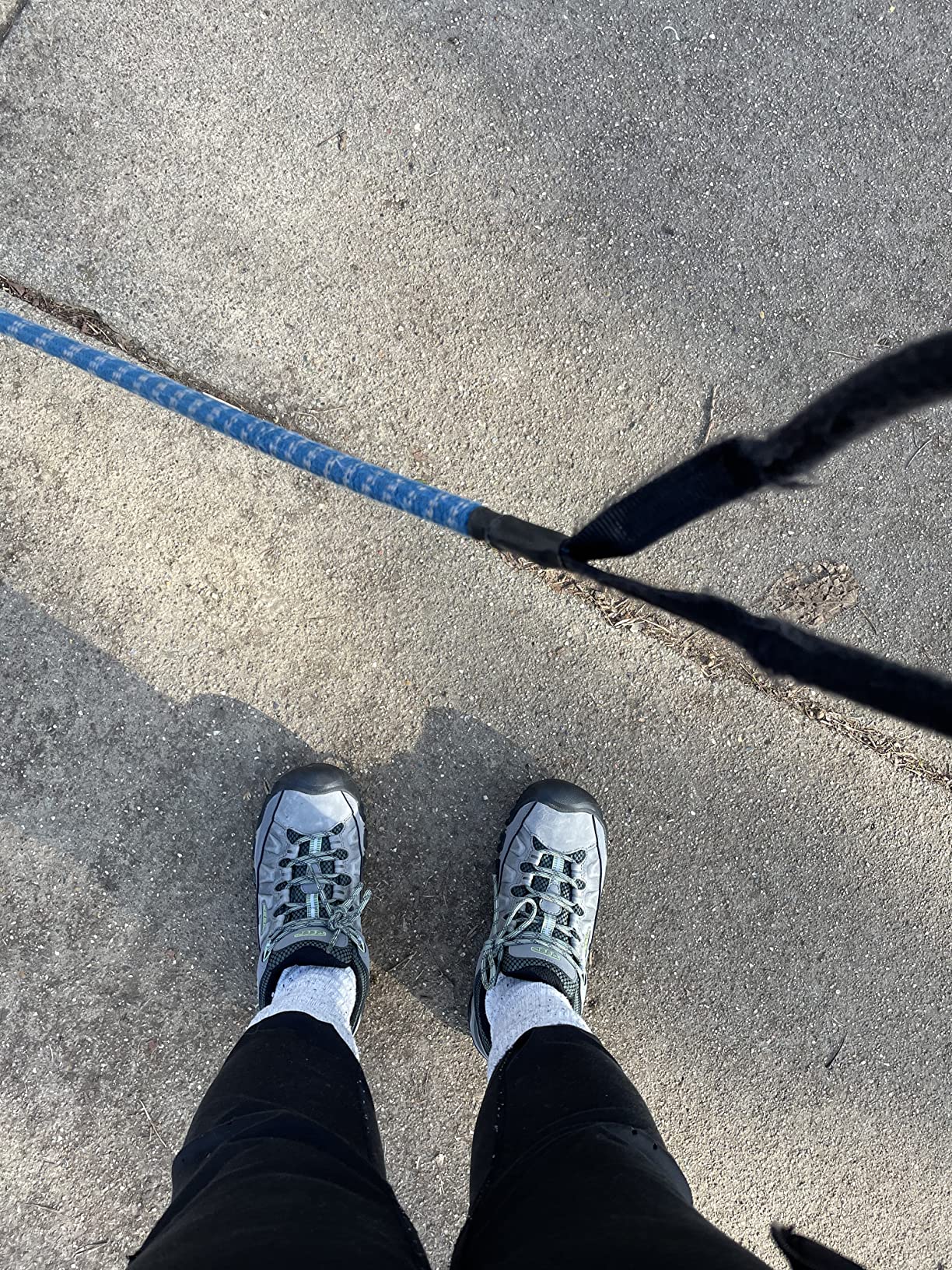
Going back to where I started: I was looking for reliable waterproof hiking shoes that wouldn’t fail me on a muddy trail. The Targhee III delivered on that promise for several weeks — the comfort, the traction, the waterproofing were all genuinely impressive. I understood why the women’s hiking forums kept recommending them.
But the crack that appeared at week five is still there. And knowing what I know now about how common this is across current production runs, I can’t give an unqualified recommendation.
What I would tell a friend: buy from REI or another retailer with a generous return policy. If you get a good pair — and many people do — you’ll have excellent hiking shoes for the money. The design is right. The technology works. KEEN built something well-conceived here. If you get a pair with the bonding issue, return them without hesitation. Don’t try to work around it.
If you need a shoe you can absolutely rely on for a full season or more, the KEEN Targhee IV Waterproof is worth the extra $35–40. That’s what the Targhee III should have been. If budget is a constraint, the Merrell Women’s Moab 3 or Cottimo Waterproof Hiking Shoes offer comparable performance without the quality control uncertainty.
Final Scores
Frequently Asked Questions
Do KEEN Targhee III women’s shoes run true to size?
Generally yes, but the toe box is generous enough that many women — especially those with narrow feet — find them a half-size large. If you prioritize a snug, precise fit, consider going down half a size. If you prefer extra toe room or have wide feet, stay with your normal size or even go true.
What is the actual durability of the Targhee III?
Genuinely inconsistent. Some users report 1,500+ miles over 1–2 years with no structural issues. Others experience sole-upper cracking within 2–8 weeks of regular use. KEEN’s introduction of KEEN.FUSION construction in the Targhee IV (specifically marketing “zero sole separation”) confirms this is a known issue in the Targhee III.
How waterproof are the Targhee III women’s shoes really?
The KEEN.DRY membrane is effective for typical hiking conditions — rain, wet trails, shallow stream crossings, morning dew. It won’t handle deep water crossings (above the ankle collar) or serious water activities. And critically: if the sole separation issue affects your pair, waterproofing will be compromised at the crack.
Are these suitable for wide feet?
Yes — this is one of the Targhee III’s genuine strengths. The wide toe box is a real differentiator from most women’s hiking shoes, which tend to taper aggressively at the toe. KEEN also offers a wide version for even more room. Women with wide feet consistently praise the Targhee III fit.
Can I wear the KEEN Targhee III for everyday activities?
Yes, and this is part of their appeal. The low-cut profile and relatively clean design translate well from trail to pavement. They work for dog walks, errands, and urban walking, not just dedicated hiking. The main limitation is that they’re heavier than true everyday sneakers, and the aesthetic is clearly “outdoor shoe” rather than lifestyle sneaker.
How does the Targhee III compare to the Targhee IV?
The Targhee IV addresses the main weakness of the III. KEEN.FUSION construction bonds the upper to the sole differently (zero separation), the Luftcell midsole resists compression over time, and the outsole is more abrasion-resistant. The Targhee IV costs more (~$35–40 more), but it’s the version I’d recommend if you plan to use these as a long-term hiking shoe. The Targhee III still wins on immediate comfort and price-per-feature if you get a good pair.
Should I buy the Targhee III despite the cracking reports?
Only if you can buy from a retailer with an excellent return policy (REI is ideal). Many pairs are completely fine. But the risk is real enough that you want an easy exit if your pair isn’t one of them. At full price with a strict return policy, I’d steer toward the Targhee IV or the Merrell Women’s Moab 3 instead.
What are the best alternatives to the KEEN Targhee III for women?
For durability: Merrell Women’s Moab 3 or KEEN Targhee IV. For wide feet with better QC: Altra Lone Peak 8 (trail runner profile). For a waterproof KEEN alternative: KEEN Women’s Circadia Waterproof. For budget-conscious buyers: NORTIV 8 Women’s Waterproof Hiking Shoes consistently outperform their price point.
Comprehensive Score Summary
| Category | Score | Notes |
|---|---|---|
| Comfort | 8.5 | No break-in, excellent wide toe box, adapts to foot over time |
| Durability | 4.0 | Sole-upper cracking QC issue; inconsistent production quality |
| Waterproofing | 7.0 | KEEN.DRY works well; PFAS-free; compromised if cracks develop |
| Traction | 8.0 | Excellent on wet trails; less reliable on steep technical terrain |
| Support | 7.5 | Good for day hiking; ESS shank, TPU heel; limited ankle support (low-cut) |
| Value for Money | 5.0 | Design worth the price; QC gamble reduces value significantly |
| Overall | 6.5/10 | Good design, real technology, one serious problem |
Be the first to review “KEEN Womens Targhee 3 Low Height Hiking Shoes”
Related products

Hiking/Trekking Shoes
Hiking/Trekking Shoes

Hiking/Trekking Shoes
Hiking/Trekking Shoes
Hike Footwear HF Signature Healthy & Non-Slip Breathable Barefoot Shoes
Hiking/Trekking Shoes
Hiking/Trekking Shoes
Hiking/Trekking Shoes
Hiking/Trekking Shoes
Reviews
There are no reviews yet.