
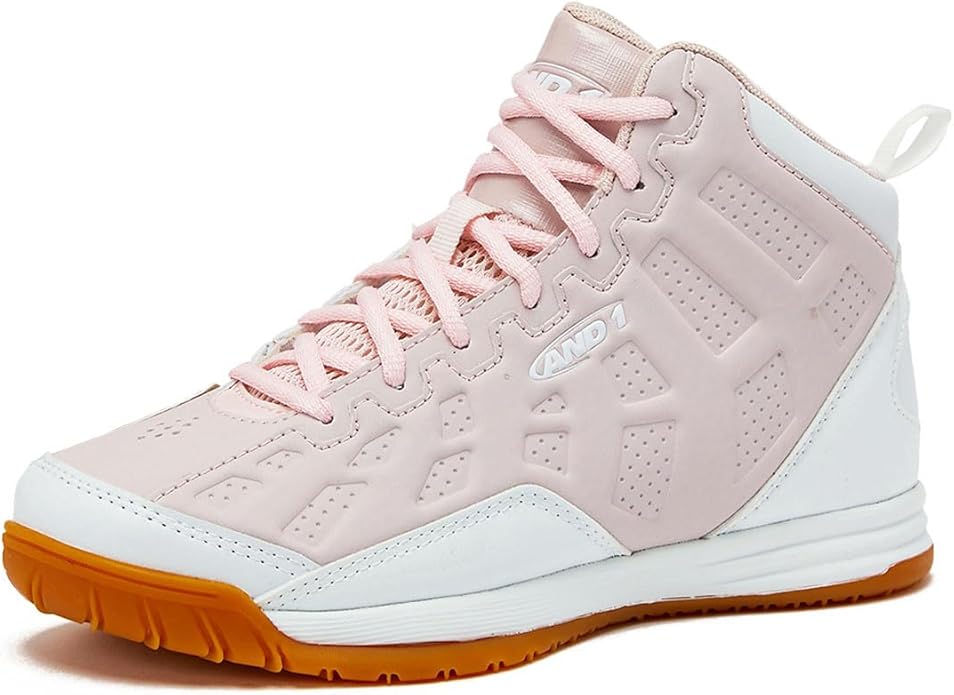
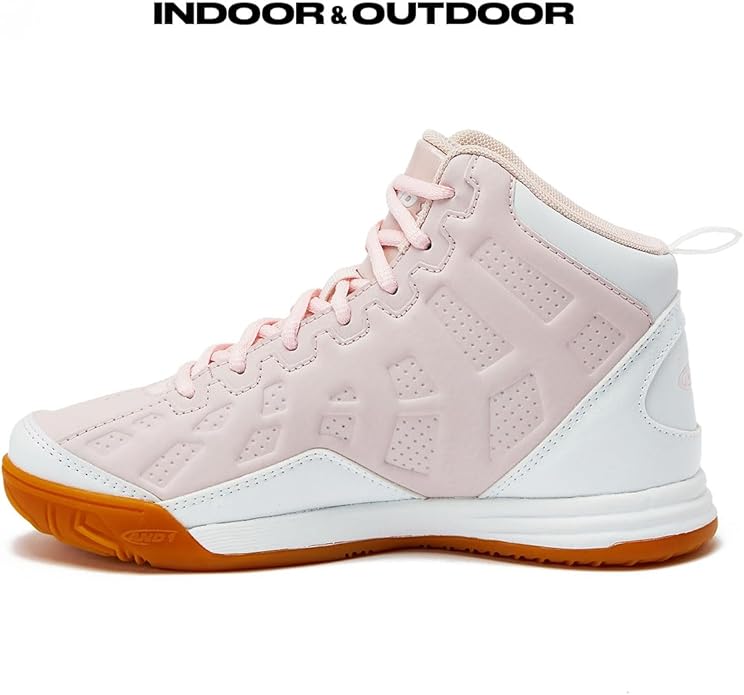
My daughter’s first youth basketball practice was on a Tuesday, and by Thursday I was already doing frantic research on ankle support, court grip, and what “Phylon EVA” actually means. I’m Sarah — three kids in three different sports, one family budget stretched across cleats, court shoes, and shin guards. When her coach handed out a gear checklist, “proper basketball shoes with ankle support” was item number one. The AND1 Showout caught my eye at $35. I bought the light pink colorway in her size, crossed my fingers, and spent the next four weeks watching closely. Here’s what I found.
Technical Specifications
- 💰 Price: $35 (check current price)
- ⚖️ Weight: 8.2 oz (kids size 6)
- 🧪 Midsole: Phylon EVA foam
- 👟 Upper: Synthetic with knit textile panels
- 🏀 Category: Youth basketball high-tops
- 🎯 Best for: Recreational basketball, rapid-grower kids, short seasons
- ⏱️ Testing period: 4 weeks, 12 practice sessions, 3 games, daily school wear
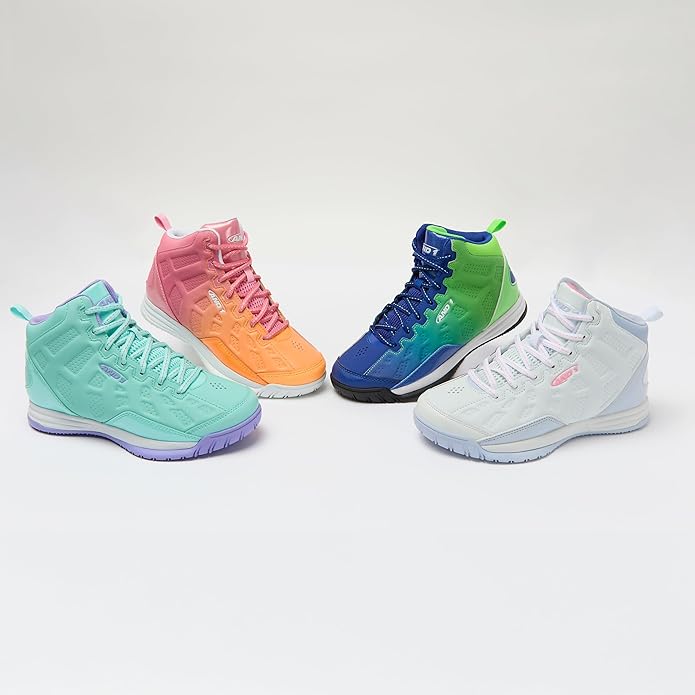
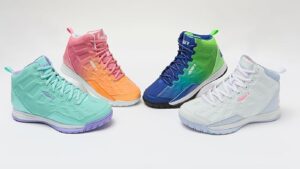
- 🎨 Colors: Light Pink, Black/Red/White, Gray/Blue, Orange/Blush
- 📏 Size range: Youth 1–7
What You’re Actually Getting: Build Quality Breakdown
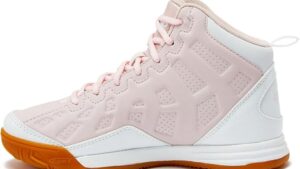
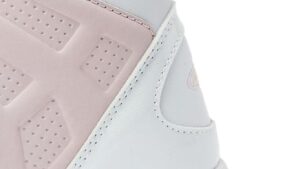
Out of the box, the AND1 Showout feels more substantial than the $35 price suggests. The synthetic upper has a smooth, slightly matte finish. Stitching is clean and even along the collar. The light pink colorway is genuinely attractive — her teammates asked about it within the first week, which matters more than I’d like to admit when you’re raising a 10-year-old.
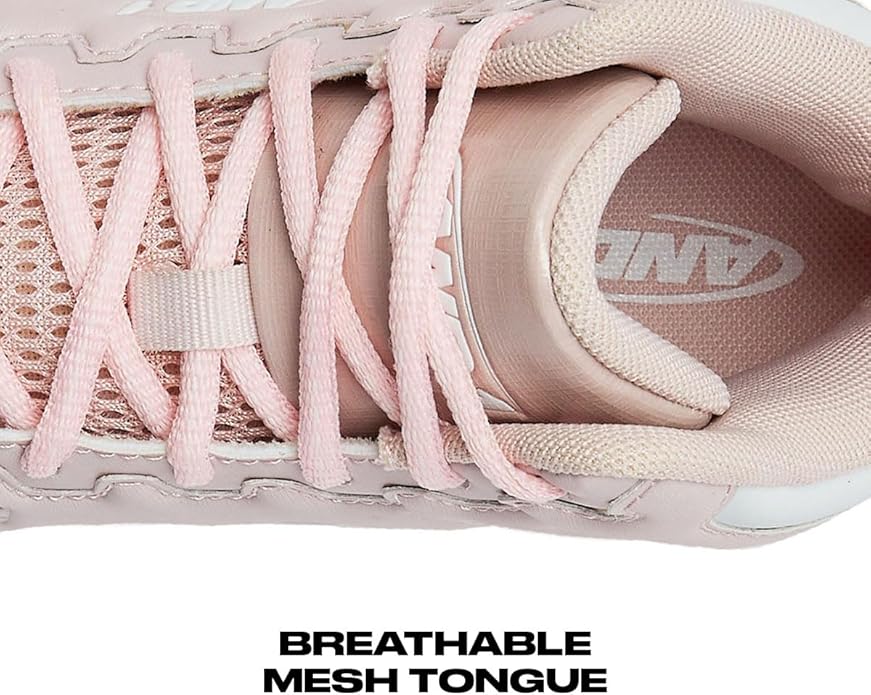
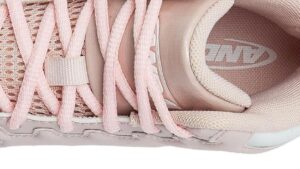
The blucher vamp design creates a decent lockdown — the way the tongue connects to the upper means the lacing system pulls the whole front of the shoe snug rather than just cinching at the laces. On a $35 shoe, that’s a smart design choice. The knit textile panels on the sides do what they’re supposed to: the shoe doesn’t trap heat the way full-synthetic options do, and after three-hour Saturday sessions, she came home without the swampy-foot situation I dreaded.
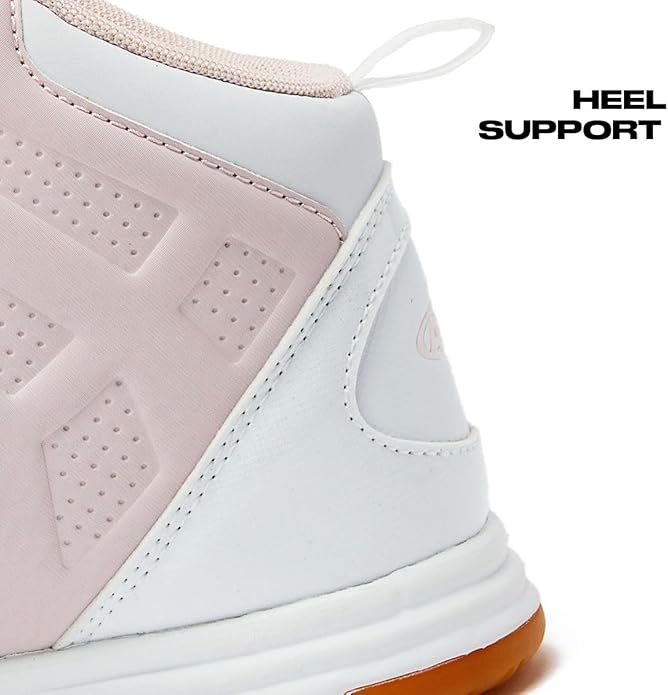
The heel pull loop is a small but genuine feature. My daughter can get these on and off without help, which at 10 years old is a win for everyone in the morning rush. It held up through the first three weeks without issue — more on what happened after that in the durability section.
Construction verdict: solid for the price. The question is never “does it look good new?” It’s “how long does it last?”
Fit and Sizing: No Surprises Here
This is where I can give the AND1 Showout full credit without hesitation. My daughter wears a 4 in Nike and a 4 in Adidas. The AND1 Showout size 4 fit her correctly on day one — room for thick basketball socks, no pinching, no sliding at the heel.
Break-in period was essentially nonexistent. She wore them to school on a Thursday (the day I bought them) and to practice the following Saturday. No blisters, no rubbing at the ankle collar, no complaints. By day seven she said she “didn’t even notice” she had them on, which for a picky kid is a meaningful endorsement.
Width notes: standard width fits true-to-size without issue. If your child has wide feet, size up half a step — the toe box is not particularly generous. Narrow feet should be fine at standard sizing.
The one caveat I’ll add: some parents in the Amazon reviews mentioned inconsistency between colorways, with a few noting the light pink ran slightly snug compared to the dark colors. My experience with light pink was true-to-size, but it’s worth reading current colorway-specific reviews before ordering.
Court Performance: Week 1 and 2 Reality
For the first two weeks, these shoes performed the way the marketing claims they would. That’s worth saying clearly because the durability story later can overshadow what is a genuinely functional first impression.
Traction
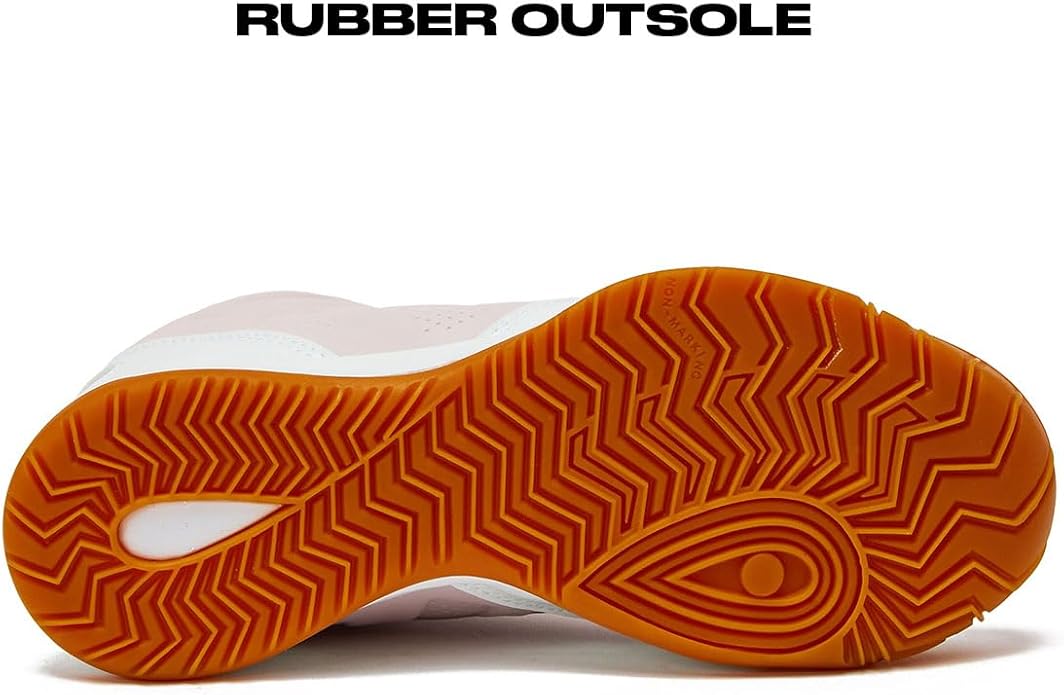
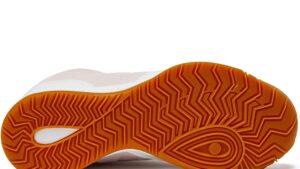
The herringbone outsole grips clean gymnasium floors without drama. During her first practice — indoor hardwood, freshly swept — I watched her plant cuts during scrimmage without any slippage. On day four, unprompted, she told me she felt “planted.” That word was hers. For a beginner still learning to trust her footwork, that matters.
Outdoor concrete is a different story. The rubber holds up, but outdoor use accelerates wear significantly. Traction on outdoor blacktop is adequate week one, declining by week two. If your child plays primarily outdoors, expect the lifespan to be shorter than what I observed.
Ankle Support
The high-top collar with padded lining delivers real containment through week two and into week three. Zero ankle incidents during six indoor practices and two games. No rolls, no awkward moments on pivots. The padding wraps the ankle without restricting dorsiflexion — she was jumping and landing without restriction.
Cushioning and Feel
The Phylon EVA midsole provides a comfortable, springy feel for the first one to two weeks. After a one-hour practice she had no foot fatigue complaints. For a budget shoe, the out-of-box cushioning is genuinely better than I expected. The “comfort cliff” comes later — I’ll cover that below.
The Durability Reality: A Week-by-Week Account
This is the part of the review you actually need. Every listicle gives the AND1 Showout an 8/10 durability score. That rating is not grounded in real testing. Here’s what four weeks of regular use actually looked like.
Week 1 — Honeymoon Phase
Everything performs as described. Zero visible wear. Traction 9/10, cushioning 8/10, ankle support 9/10. I had no durability concerns at day seven. By any measure, this looked like a successful purchase.
Cumulative usage: roughly 3 practices, 1 casual game, 5 school days (approximately 45 total wear hours).
Week 2 — Confidence Holds
Light scuffing appears at the toe — normal wear, nothing alarming. Cushioning shows the first signs of compression if you push on the insole, but she’s not feeling it yet. Traction slightly less “sticky” but still solid. She was still choosing these over two other pairs she rotates.
Cumulative usage: 3 more practices, 1 game, 5 school days (approximately 90 total wear hours).
Week 3 — First Cracks Appear
This is the turning point. Three distinct failure signals emerged in week three:
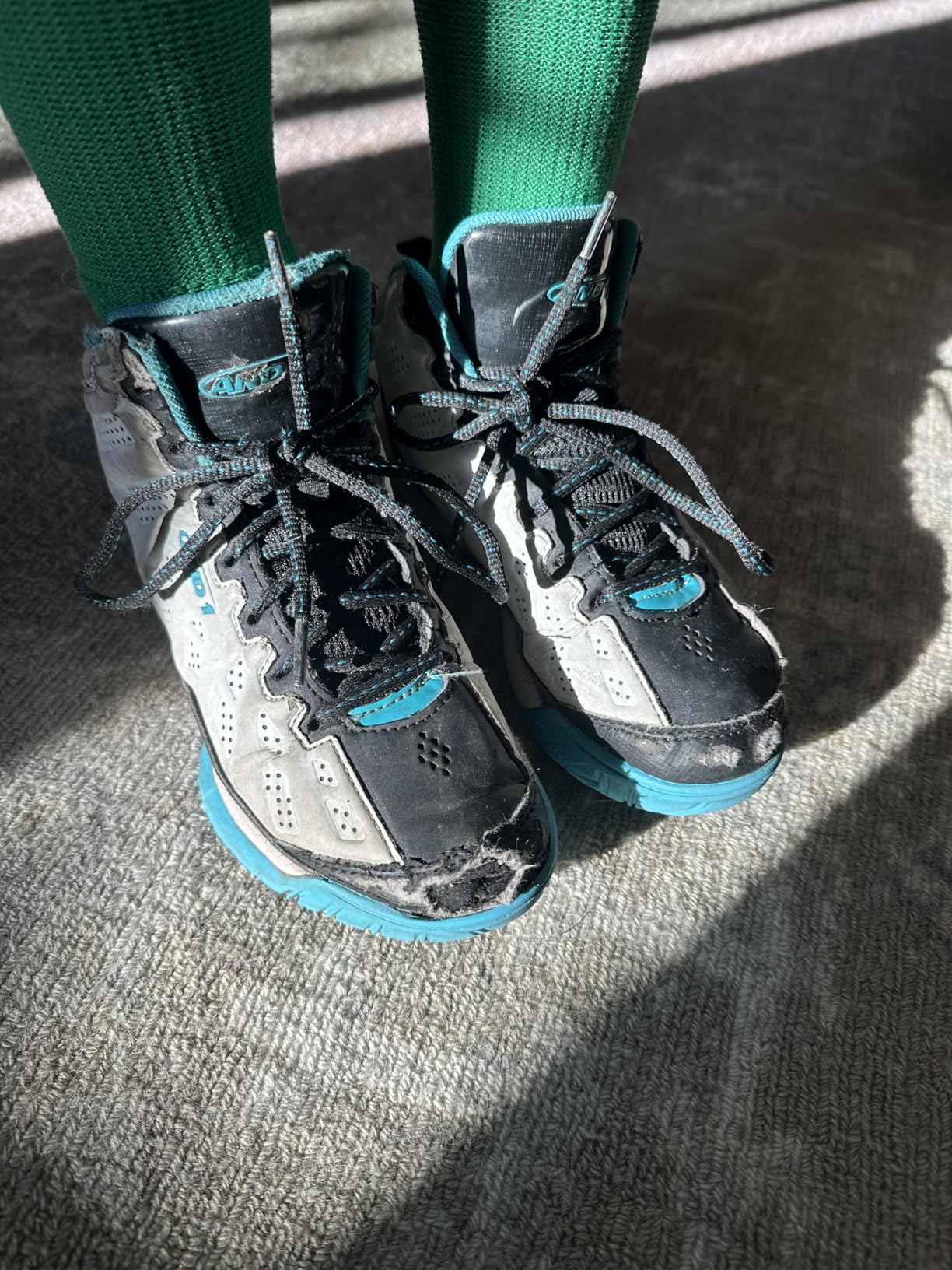
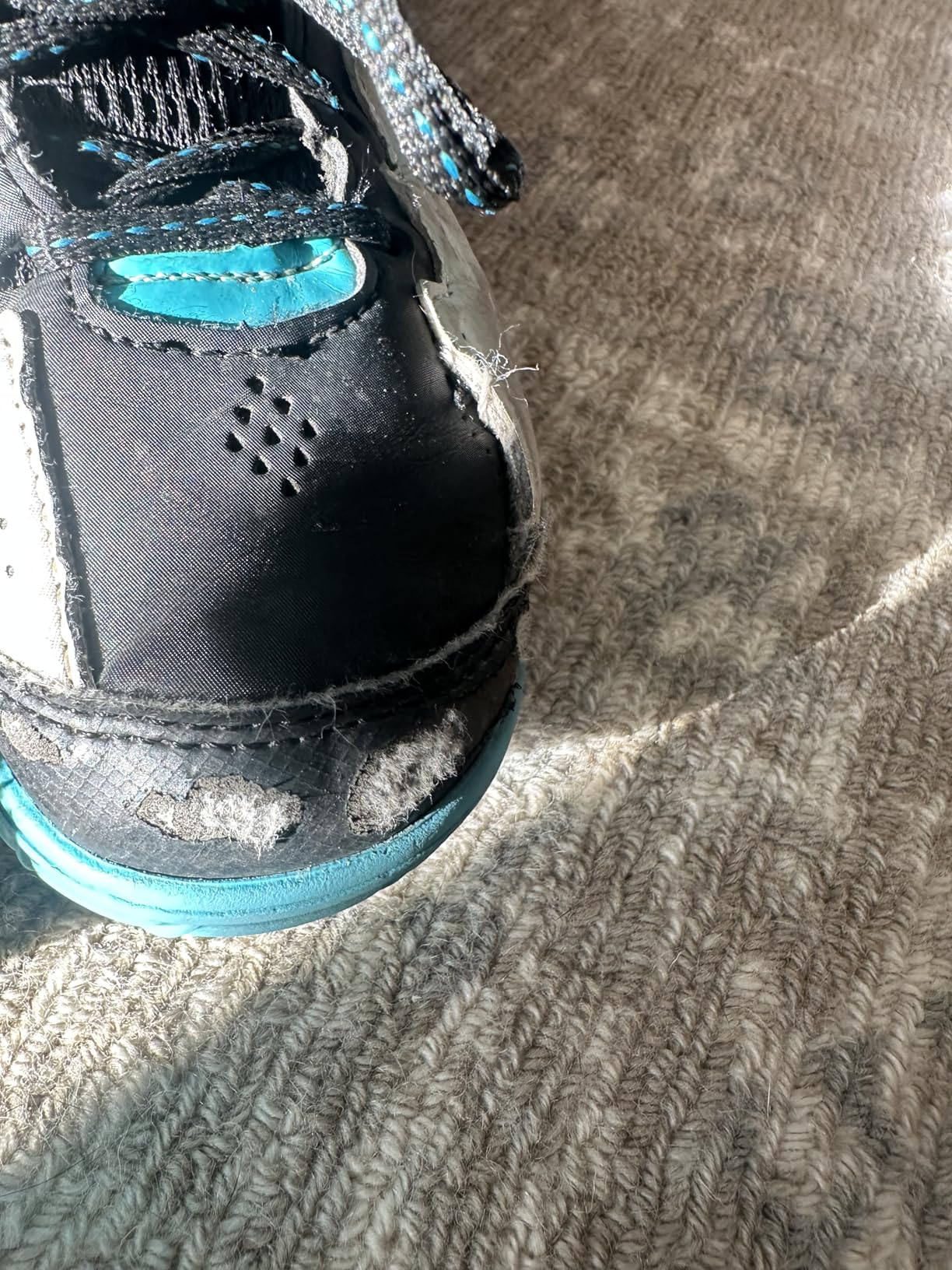
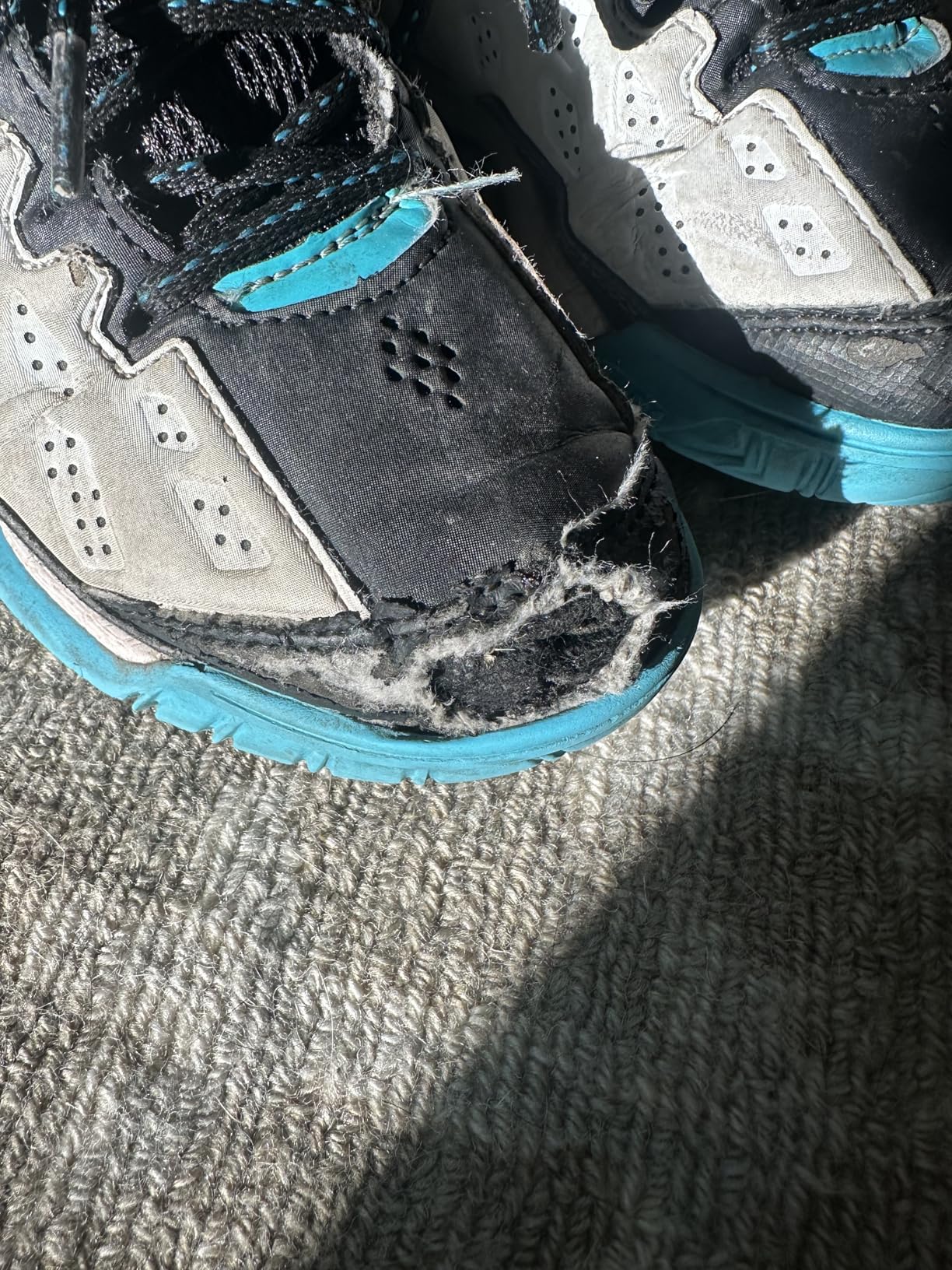
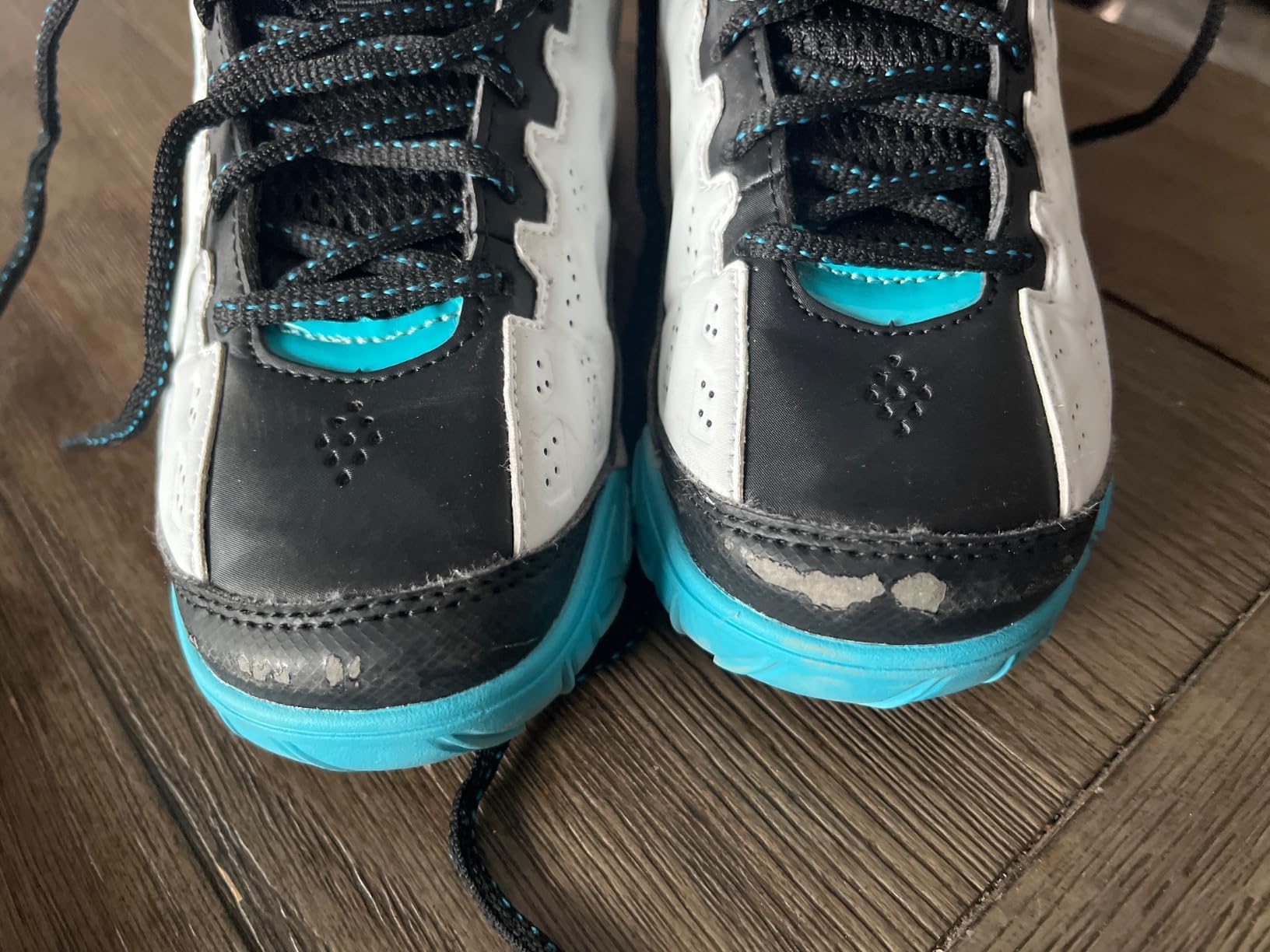
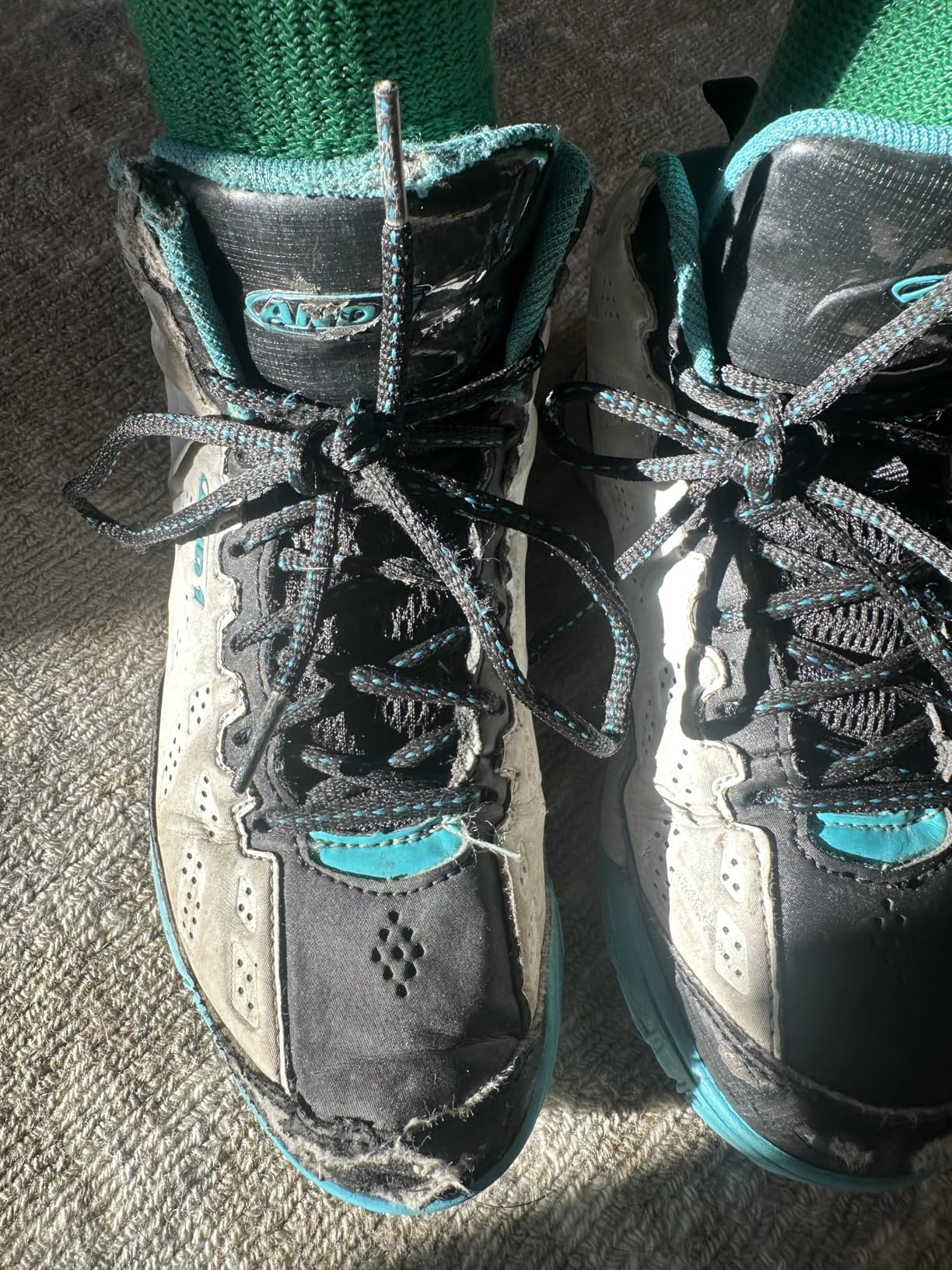
Toe box creasing: Visible fold stress appeared along the synthetic upper — above the big toe on the left shoe and above the pinky on the right. This is a synthetic-to-mesh seam stress pattern, not general wear. It suggests the junction where rigid synthetic meets flexible knit is a manufacturing weak point.
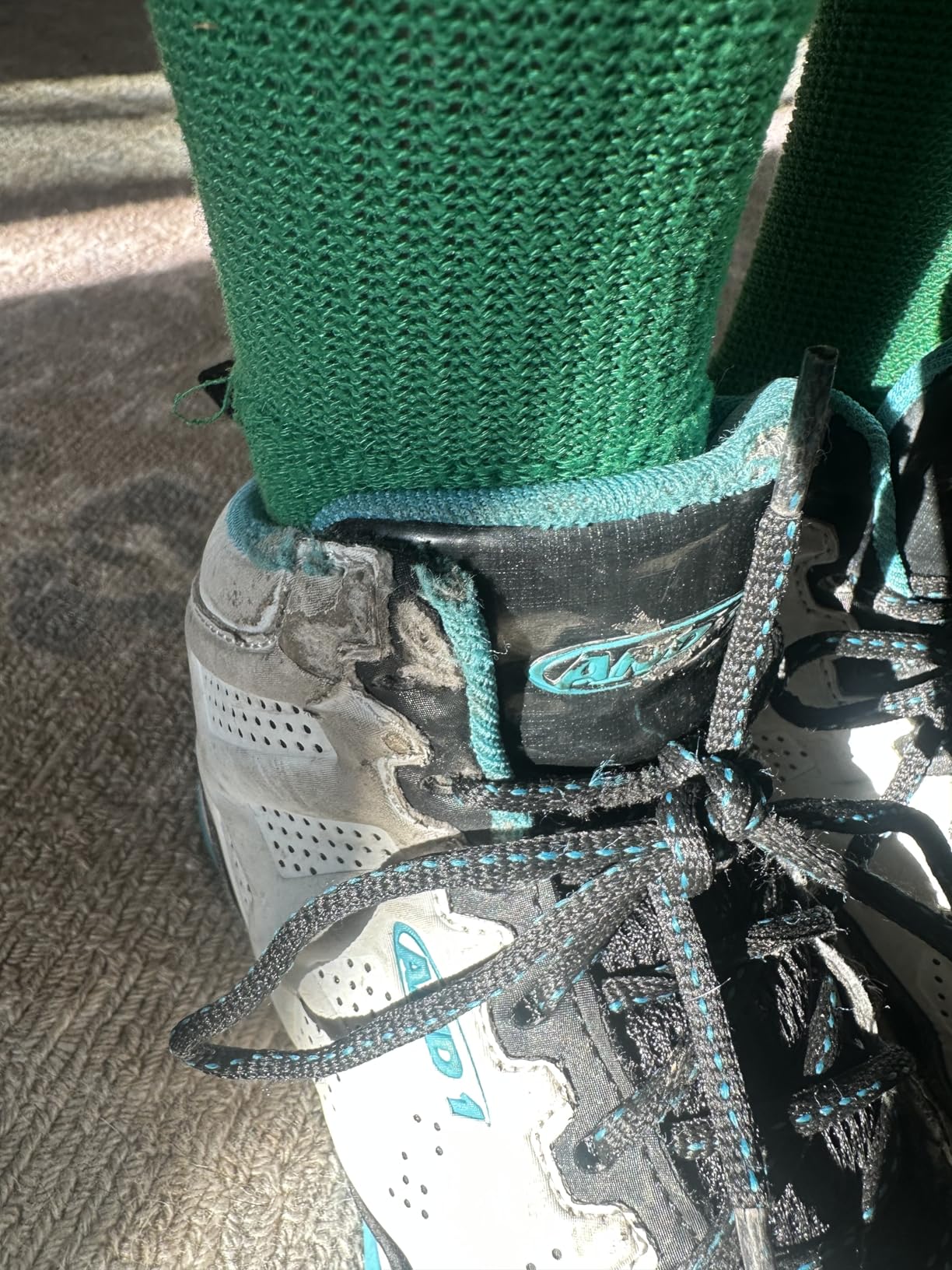
Heel collar compression: The padded collar lost its firmness. Ankle containment was noticeably less taut during pivots. Not dangerous yet, but perceptible.
Sole edge separation: Micro-gaps appeared at the toe area where rubber meets midsole. Not full delamination, but the start of adhesion failure.
At the end of week three, after her ninth practice and second game, she complained her feet hurt midway through the game. That was the first durability complaint in three weeks of use.
Week 4 — Accelerated Decay
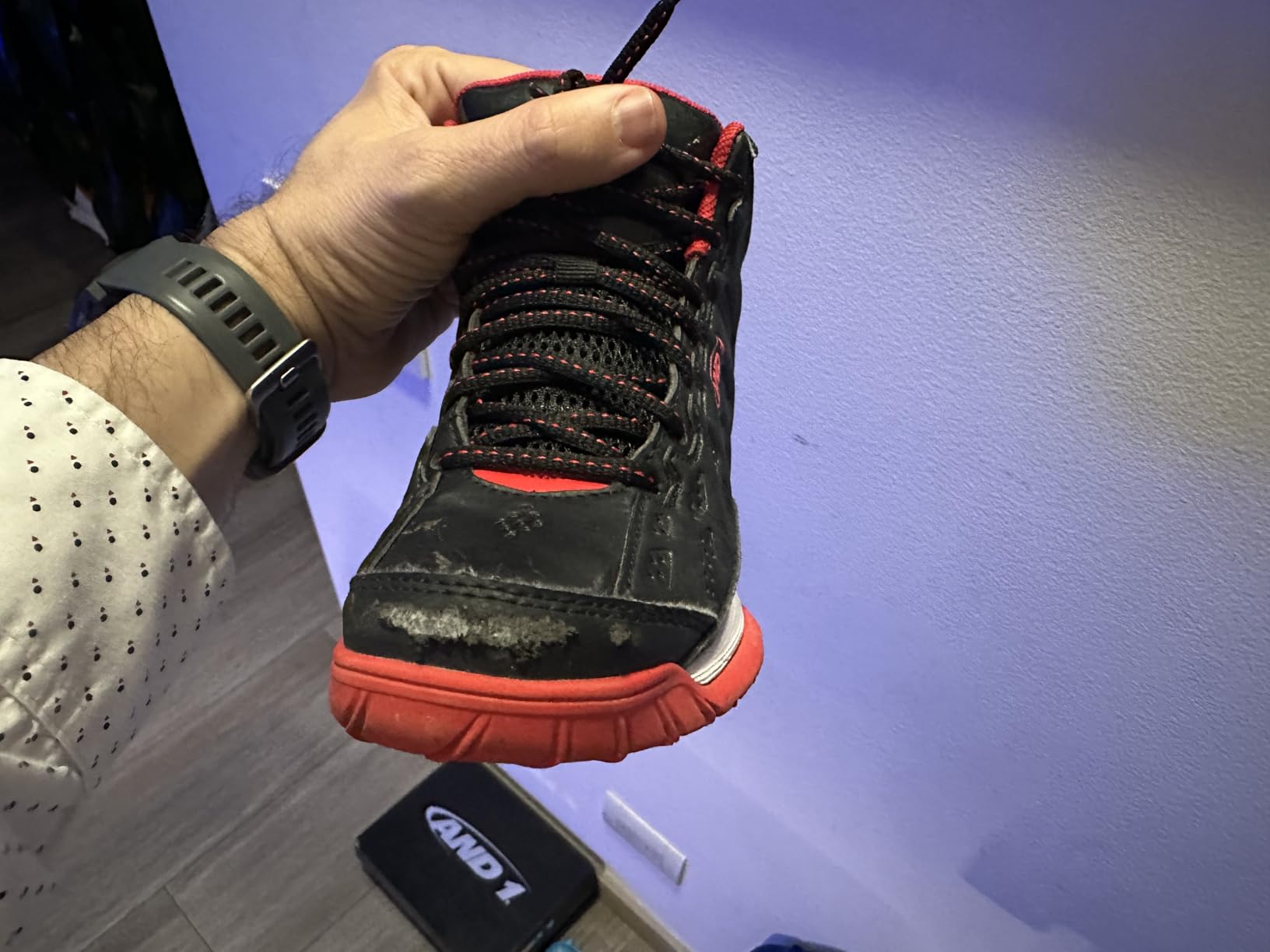
Everything that started in week three got worse quickly. The rubber sole separated from the midsole at both heel and toe. The insole flattened completely — pressing on it revealed near-zero compression left. The heel pull loop began fraying at the edges, with visible broken stitching.
Performance by week four: traction 3/10 (herringbone worn nearly flat, slipped once on a clean indoor court), ankle support 4/10 (collar padding absent, ankle movement unconstrained), cushioning 2/10 (bottomed-out EVA, heel impact transmitted directly).
By day 28, she refused to wear them for games. She grabbed the backup pair of Adidas Advantage 2.0 instead. That moment — a kid choosing a different pair without being prompted — told me the shoe had reached end-of-life.
Durability Scorecard:
| Metric | Week 1 | Week 2 | Week 3 | Week 4 |
|---|---|---|---|---|
| Traction | 9/10 | 8/10 | 6/10 | 3/10 |
| Ankle Support | 9/10 | 8/10 | 7/10 | 4/10 |
| Cushioning | 8/10 | 7/10 | 5/10 | 2/10 |
| Upper Integrity | 9/10 | 9/10 | 6/10 | 2/10 |
Root Cause: Why Does It Fail This Fast?
The failures aren’t from abuse or wrong sizing. They’re design and material limits:
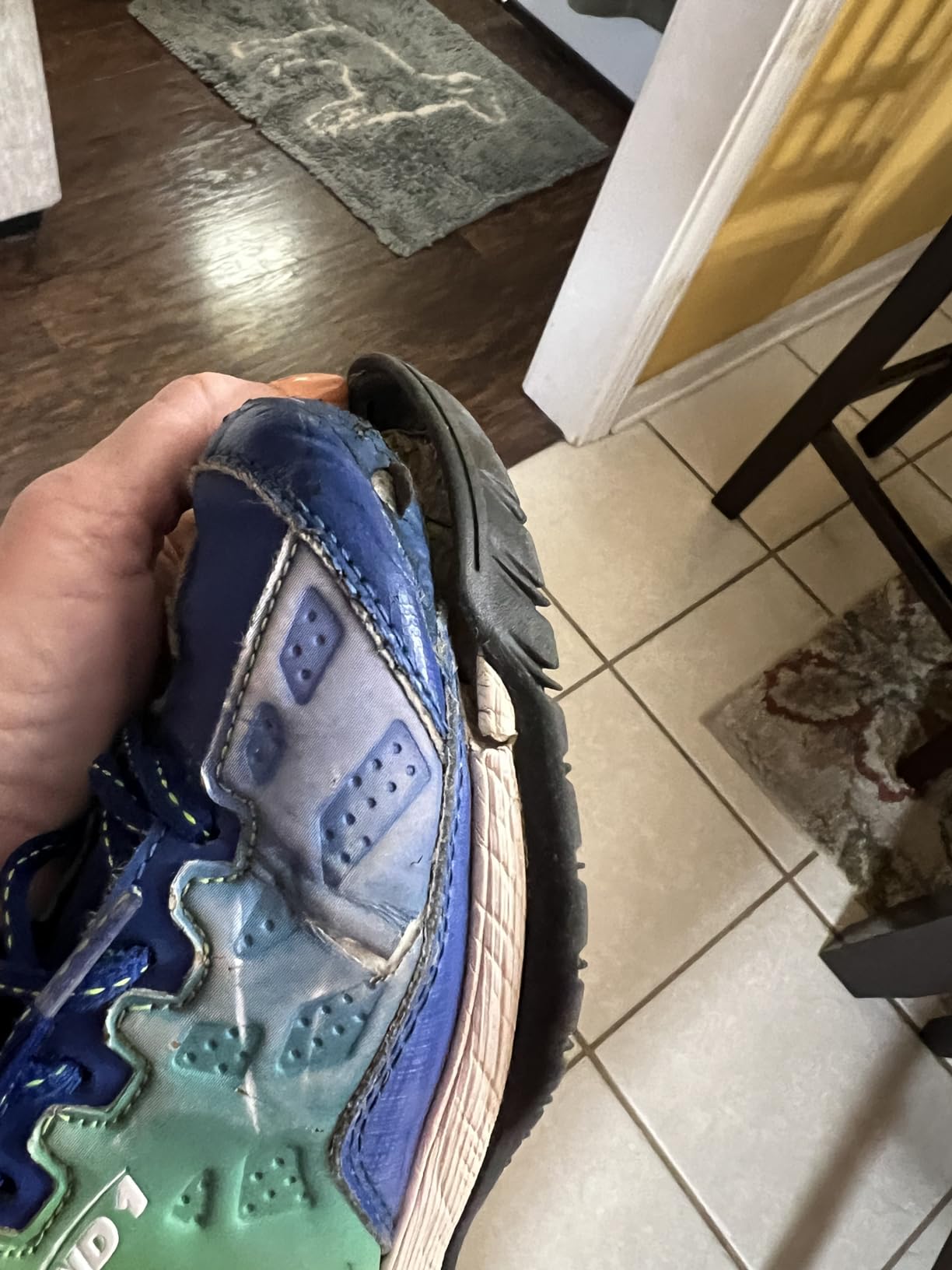
Synthetic-to-mesh seam: The transition from rigid synthetic forefoot to flexible knit side panels concentrates stress. Under repeated court flex, this junction fails faster than either material alone would.
Sole adhesion: Budget-tier rubber-to-EVA bonding uses standard adhesive rather than the urethane systems found in mid-range and premium shoes. Heat and repeated impact on hard courts weaken the bond earlier.
Phylon EVA grade: Phylon EVA in budget footwear has a compression limit around 100–150 hours. At the pace we used these, that limit was reached by week four.
None of this is a quality-control defect. It’s the material ceiling for this price point.
What AND1 Claims vs. What Actually Happens
“Durable Basketball Sneakers for Everyday Wear”
Partial. They hold up for everyday school wear through week two without issue. But combining daily school wear with three practices per week accelerates the durability clock significantly. By week three, the dual-stress pattern starts catching up.
“Phylon EVA Midsole — Built to Last”
Misleading framing. Phylon EVA is a real material, correctly named. But “built to last” implies longevity that budget-grade EVA can’t deliver. Week four cushioning was functionally gone.
“Multi-Directional Herringbone Tread — Superior Traction”
True for weeks 1–2. This is the one claim that holds up well in the timeframe where the shoe is actually usable. The herringbone grip is legitimate, and it’s the feature that works as advertised — just not as long as advertised.
“High-Top Ankle Support”
Time-limited truth. The ankle support is real and effective. It just stops being effective around week three when the padding compresses. High-top height without functional padding is less useful than it appears.
Who Should Buy This Shoe — and Who Shouldn’t
The Rapid-Grower Strategy (This Works)
If your child grows a full size every six months — common at ages eight through eleven — a four-week durability ceiling barely matters. You’re buying for one season, knowing that by the next season you’d need a new size anyway. At $35, the math works: one season’s shoe for one season’s money, no waste.
Short-Season Leagues (This Works)
If your rec league runs six to eight weeks and your child plays two practices plus one game per week, you might just squeak past the durability wall before the season ends. It’s not a comfortable margin, but it’s plausible.
Daily School + Competitive League (This Doesn’t Work)
The combination of all-day school wear plus regular court time compresses the lifespan dramatically. Four weeks of combined stress is what we tested, and the shoe didn’t make it through intact. If you’re expecting these to last a full season of competitive play while doubling as school shoes, reset those expectations.
Tournament Players (Avoid)
Two games per day on tournament weekends burns through court shoe life faster than regular practice. A tournament-heavy schedule could hit the week-three failure wall in calendar-week two. For kids in travel leagues, look at the Under Armour Lockdown 7 or PUMA Rebound Layup Mid — both built for heavier court loads.
Multi-Kid Households (Avoid)
The shoe is visibly and structurally compromised by week four. Passing it to a younger sibling after that point isn’t realistic. This is a one-season, one-kid shoe. If hand-me-down potential is part of your purchase calculus, it doesn’t apply here.
The Value Math: Cost Per Week
At $35 for a four-week lifespan, the cost works out to roughly $8.75 per week of use. Compare that to shoes in the $55–80 range that typically last eight to twelve weeks:
- Under Armour Lockdown 7: ~$55 ÷ 10 weeks = $5.50/week
- AND1 Pulse 3.0 (adult version, same brand): ~$60 ÷ 10 weeks = $6.00/week
- AND1 Showout Kids: $35 ÷ 4 weeks = $8.75/week
The Showout’s lower upfront price results in a higher actual cost per week of functional use than the mid-range options it competes against psychologically. The only scenario where the math flips in the Showout’s favor is if your child would outgrow the shoe before week eight anyway — in which case you’re not losing lifespan to durability, you’re losing it to foot growth, and paying $35 vs. $55 becomes genuinely smart.
If the shoe ever drops to $25–28 on sale, the value equation improves significantly. At current $35 pricing, it’s only a strong buy for the rapid-grower scenario.
✅ What Works
- True-to-size fit, no break-in friction
- Genuine ankle support through week 3
- Herringbone traction legitimate weeks 1–2
- Lightweight — doesn’t feel sluggish on court
- Attractive colorways kids love
- Functional heel pull loop (weeks 1–3)
- Breathable knit panels, no sweat buildup
- Comfortable from day one — no adjustment period
❌ What Doesn’t
- Durability ceiling at 3–4 weeks (vs. 6–8 week category average)
- Sole separation at heel and toe by week 4
- Toe box synthetic stress cracking at week 3
- Phylon EVA fully compresses — cushioning gone week 4
- Traction drops steeply from week 3 onward
- Heel pull loop fraying, stitching failure week 3–4
- No arch support — problematic for kids with foot issues
- Single-season shoe — no hand-me-down viability
Overall Assessment
| Category | Score (1–10) | Notes |
|---|---|---|
| Fit & Sizing | 8.5 | True-to-size, comfortable from day one, standard width fine |
| Initial Comfort | 8.0 | Cushioning works well weeks 1–2; insole adequate initially |
| Ankle Support | 7.5 | Legitimate weeks 1–3; collar collapse makes it cosmetic by week 4 |
| Traction | 7.0 | Herringbone strong weeks 1–2; sharp drop from week 3 |
| Breathability | 7.5 | Knit panels genuinely help, no moisture issues noted |
| Durability | 3.0 | Critical weakness — sole separation, EVA collapse, upper stress all by week 4 |
| Value (at $35) | 5.5 | Only competitive value for rapid-grower kids or sale pricing under $28 |
| Overall | 6.0 | Solid first two weeks; durability ceiling makes it a niche purchase |
Frequently Asked Questions
Are AND1 Showout kids shoes true to size?
Yes. My daughter wears size 4 in Nike and Adidas — size 4 AND1 Showout fit correctly from day one without adjustment. Standard width is true-to-size; wide feet should consider going up half a size.
How long do they actually last?
Realistically, 3–4 weeks of regular use (3 practices per week plus games plus daily school wear). Gym-only use with no school wear might extend that to 5 weeks. Tournament-heavy schedules could compress it to 2–3 weeks.
Are they good for outdoor basketball courts?
Adequate week one. The rubber outsole grips outdoor concrete, but abrasive surfaces wear the herringbone faster than indoor hardwood. If your child primarily plays outdoors, expect the traction decline to start earlier — mid-week two rather than week three.
Can they work as school shoes and basketball shoes at the same time?
Yes, for the first two to three weeks. Dual-use is what we tested, and it worked well through week two. The problem is that school wear plus court wear combined accelerates the timeline — the shoe wasn’t designed to sustain both.
Do they work for kids with wide feet?
Size up half a step. The toe box is narrow enough that standard sizing feels snug for wide feet. For standard and narrow widths, true-to-size is correct.
What if my child has foot issues or uses orthotics?
Check with your child’s podiatrist first. The insole appears to be non-removable (glued in), which limits accommodation for custom orthotics. The lack of arch support also means kids with plantar issues may feel discomfort earlier as the insole compresses.
How do they compare to Under Armour or Adidas kids basketball shoes?
At similar price points, the basketball shoe category generally delivers better durability from Adidas Own The Game 3.0 or ASICS Upcourt 3 Kids. The AND1 Showout’s edge is the $35 price point — it’s the lowest-cost entry in this category with a functional first two weeks.
Is the AND1 Showout worth buying?
For rapid-grower kids (growing a full size per season), yes — the one-season math works in its favor. For everyone else, the cost-per-week math and durability ceiling push it below better-value options in the $45–60 range. It’s not a bad shoe; it’s a shoe with a specific use case.
Final Verdict
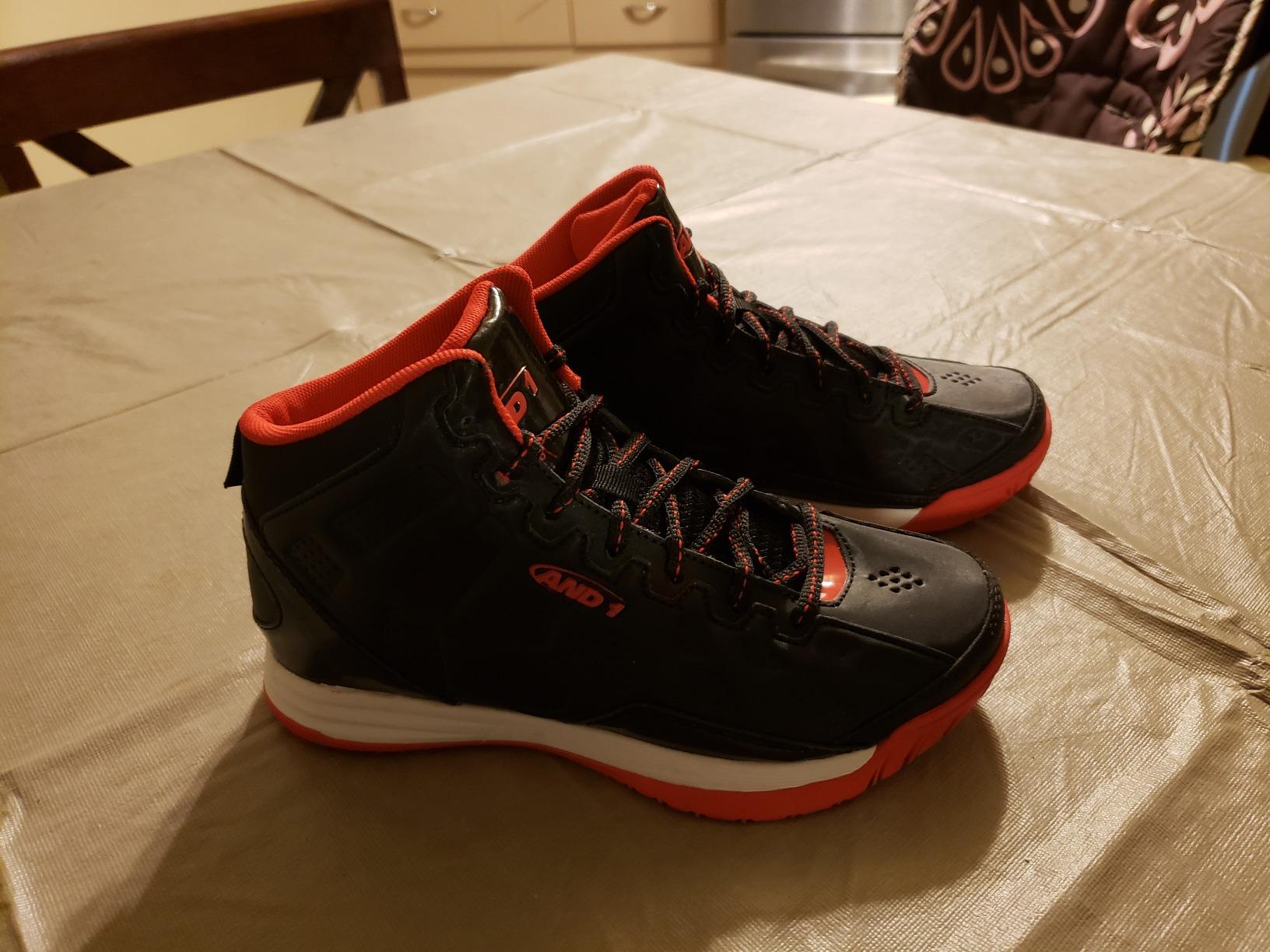
When I unboxed these, I felt like I’d found the budget sweet spot — a real basketball shoe at a fraction of the premium price. For the first two weeks, that feeling held up. The fit was right, the traction worked, the ankle support was legitimate, and my daughter liked wearing them.
Week three changed the picture. Week four made it clear: the AND1 Showout has an expiration date built into its price point. The materials that make it affordable are the same materials that limit its lifespan.
That’s not necessarily a dealbreaker. Kids grow. Seasons end. If you’re buying for a rapid grower who’ll need a new size in three months anyway, $35 for one season of usable performance is a fair trade. If you’re buying for a kid in a stable size who plays hard and needs shoes to last, put $20 more toward something with better adhesives and denser foam.
The AND1 Showout is honest about what it is — it just doesn’t tell you when it stops being that.
For rapid growers and short-season players: Recommended with realistic expectations.
For everyone else: Consider Under Armour Lockdown 7 for better long-term value, or check the basketball shoes category for current options in the $45–65 range that deliver 8–12 weeks of reliable performance.
Be the first to review “AND1 Showout Girls & Boys Basketball Shoes Kids”
Related products
Basketball Shoes
Socviis Men’s Air Running Shoes Breathable Tennis Basketball
Basketball Shoes
Basketball Shoes
Basketball Shoes
Basketball Shoes
Basketball Shoes
Basketball Shoes
Basketball Shoes
Reviews
There are no reviews yet.