
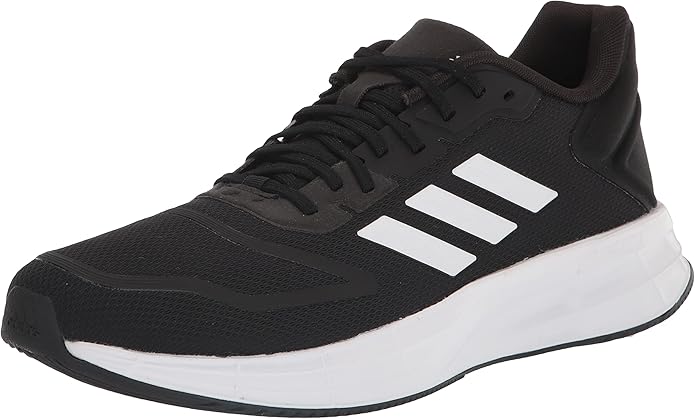
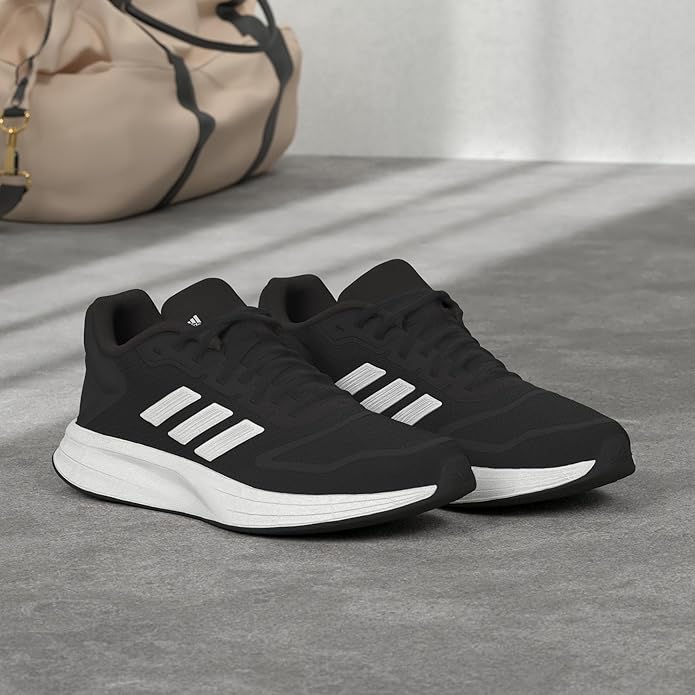
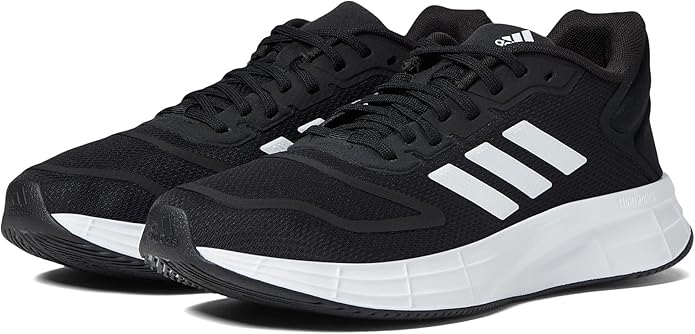
Real talk – after burning through 3 pairs of budget running shoes this year, I was honestly fed up with shoes that promised comfort but delivered disappointment. When my running buddy Jennifer mentioned she’d been wearing the same pair of Adidas Duramo SL 2.0s for months without issues, I had to see what the fuss was about. That’s why I spent 8 weeks putting these through every real-world scenario I could think of – from 5AM neighborhood runs to all-day errands with the kids. Here’s whether they actually deliver on that “lightweight comfort” promise, along with the durability concerns you need to know about upfront.
Technical Specifications
| Specification | Value |
|---|---|
| Price Range | $45-60 |
| Weight | 7.2 oz (women’s size 8) – 8.7 oz reported by some sources |
| Heel-to-Toe Drop | 8-10mm (varies by source) |
| Stack Height | Heel: 22-33mm / Forefoot: 12-24mm |
| Midsole | LIGHTMOTION foam (EVA-based) |
| Outsole | Adiwear rubber |
| Upper | Mesh and textile blend (50%+ recycled content) |
| Category | Neutral daily running/lifestyle |
| Best For | Daily training (3-5 miles), walking, casual wear |
| Testing Period | 8 weeks, 45+ miles, 25+ sessions |
Note: Specifications vary across different sources (Adidas official, Amazon, retail sites). Numbers above reflect the range I found during research.
Design, Build Quality & Real-World Performance
First Impressions & Upper Construction
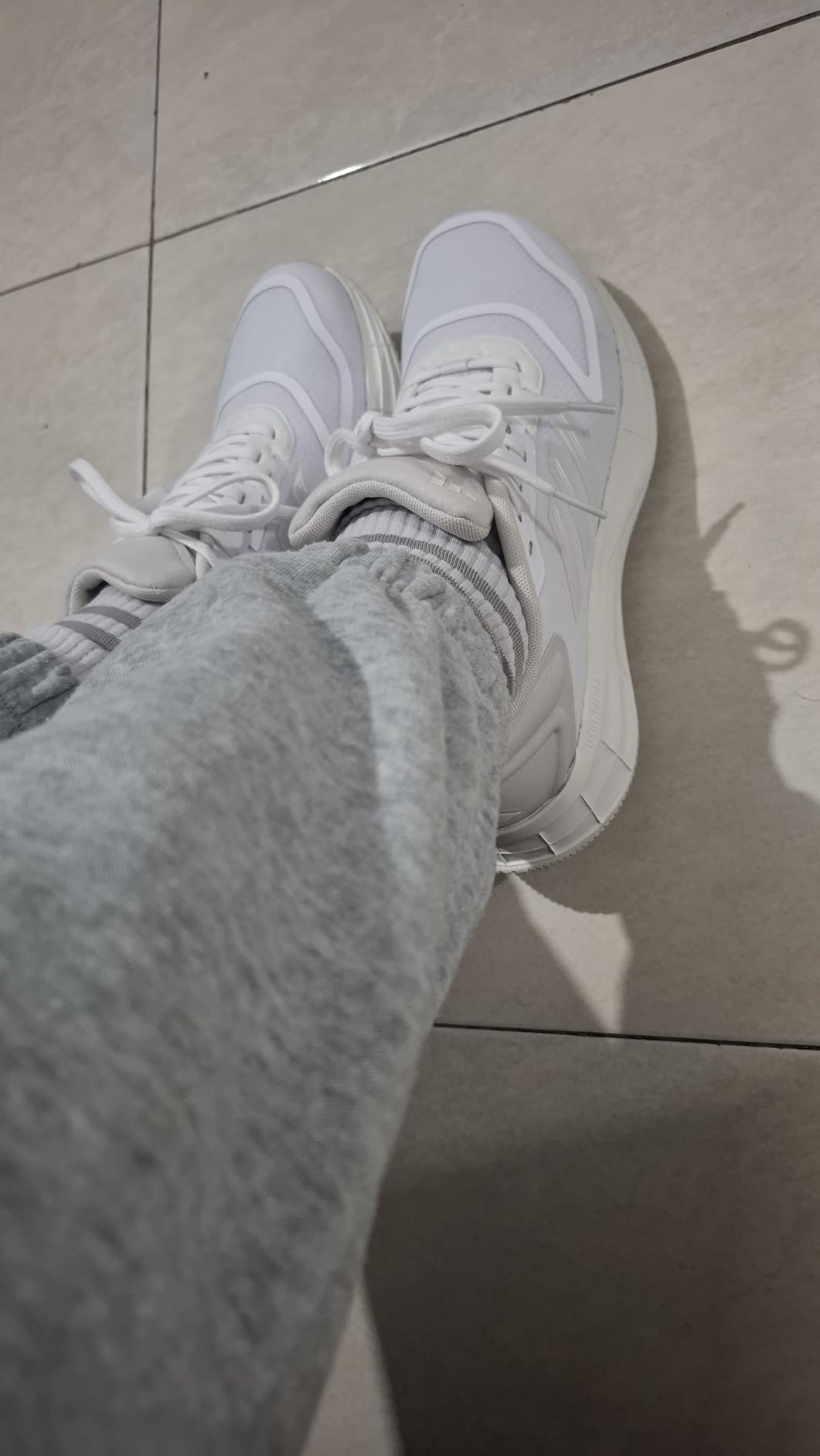
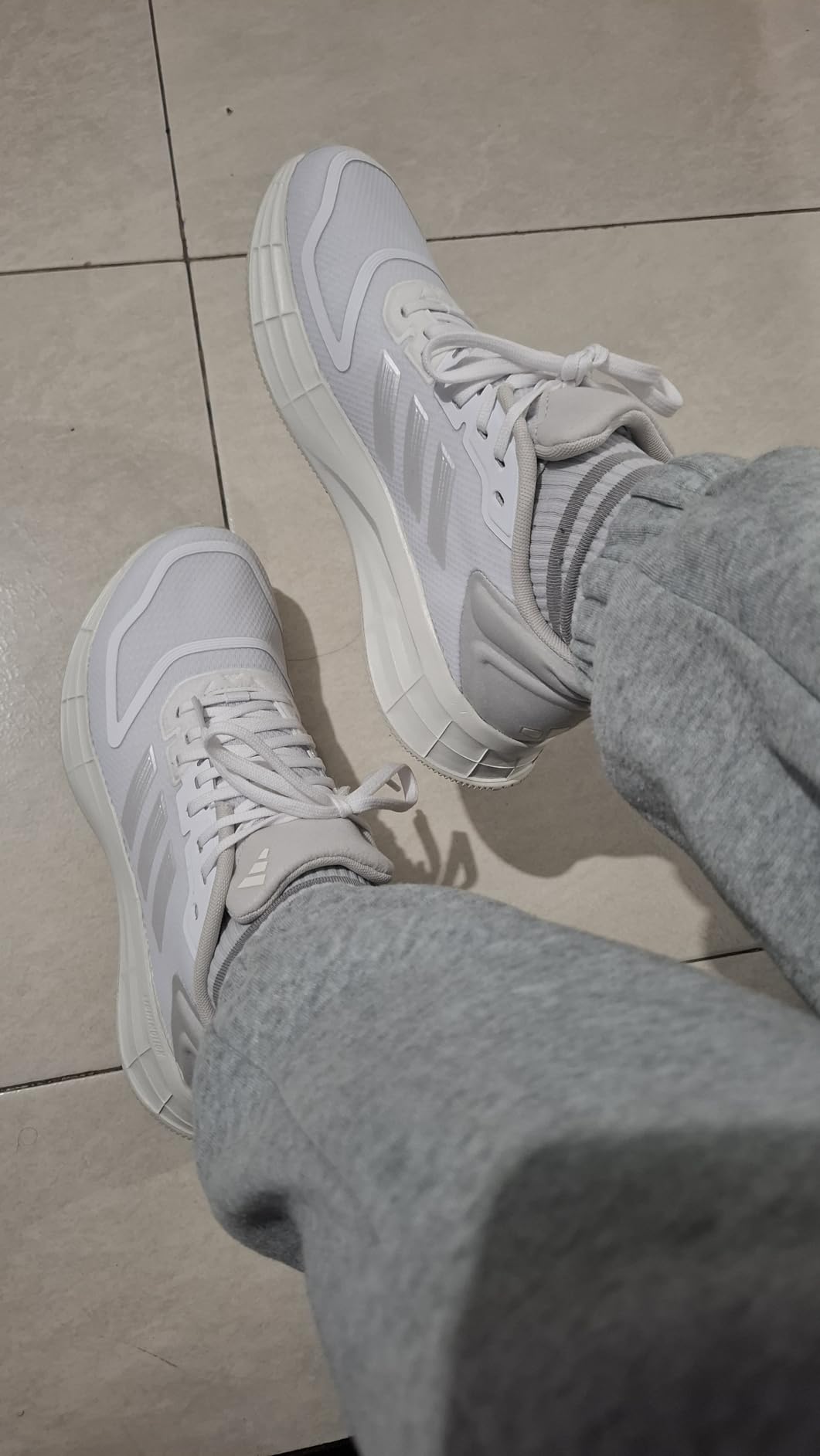
The moment I pulled these out of the box, I was struck by how genuinely lightweight they felt – not “marketing lightweight” but actually noticeable when you pick them up. At 7.2 ounces (some sources report 8.7 oz), these sit comfortably in that budget running shoe sweet spot where weight savings don’t come at the cost of feeling flimsy.
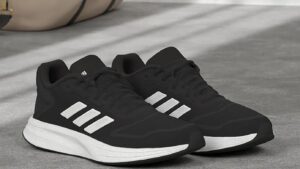
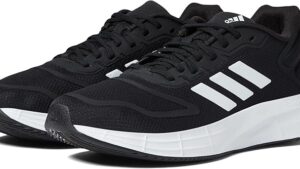
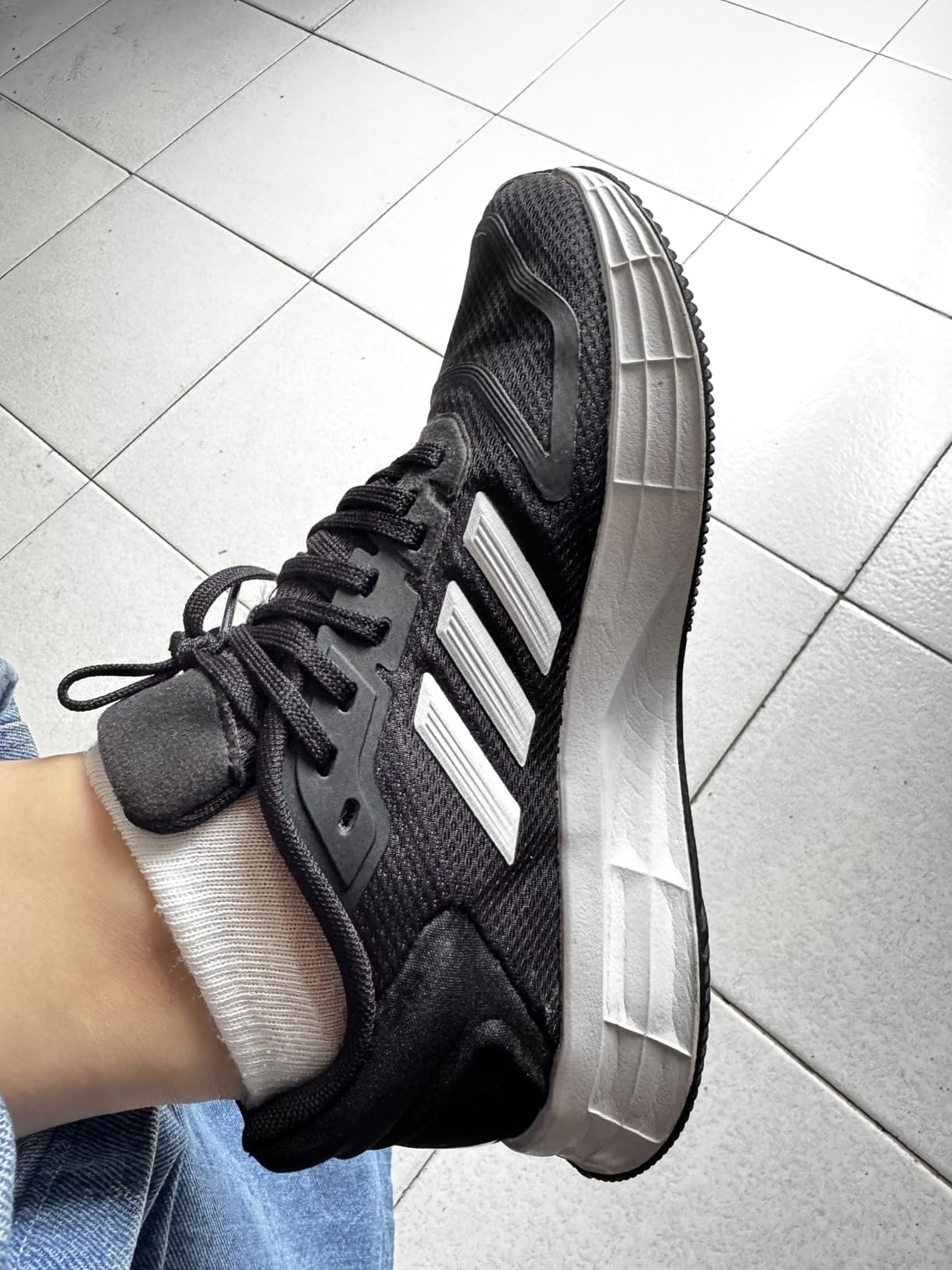
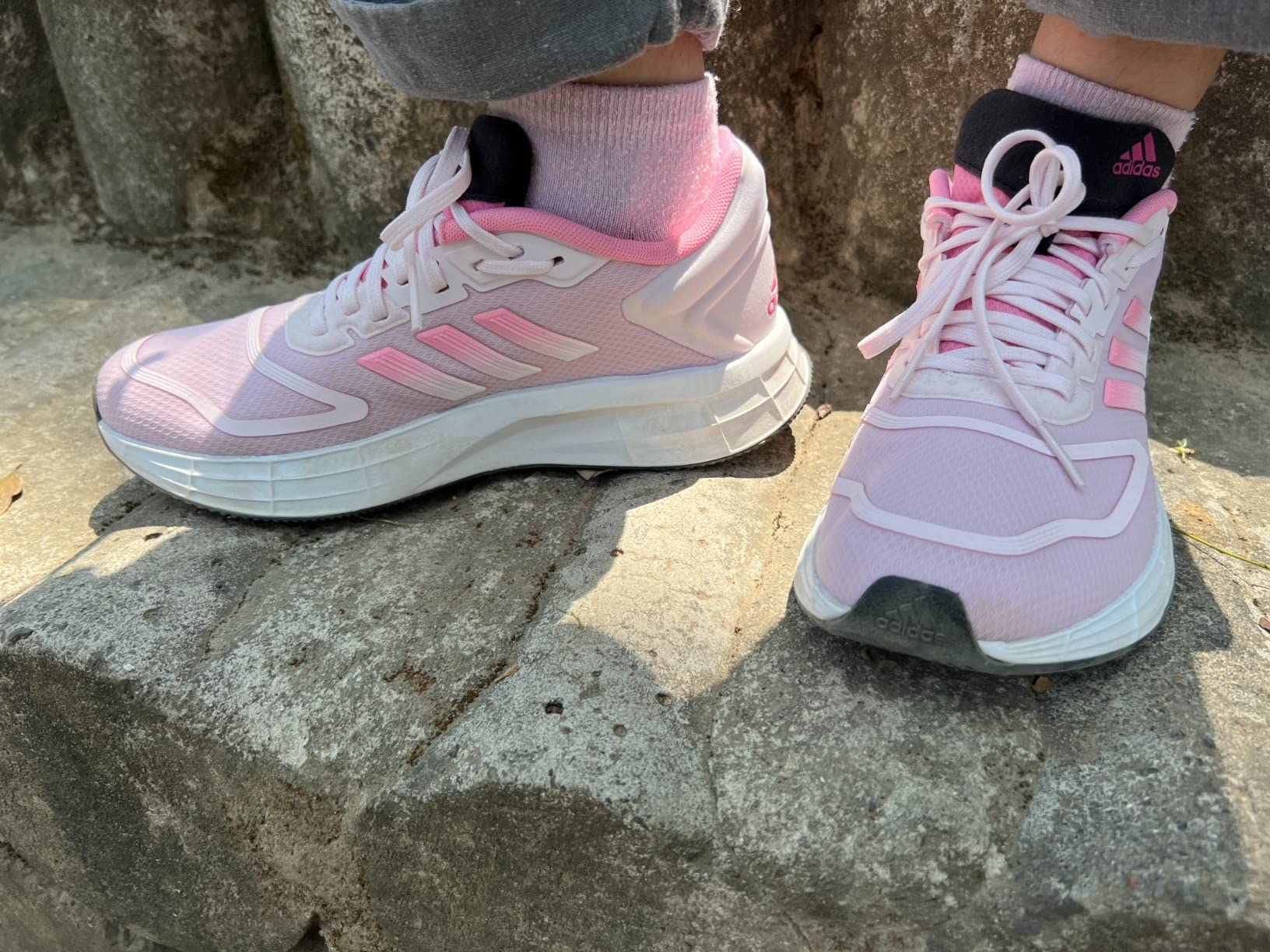
The mesh and textile upper has a clean, modern look that immediately reminded me why I’ve always been drawn to Adidas designs. The black and white colorway I tested is versatile enough to work with everything from workout gear to casual jeans and a sweater – something I validated during multiple school pickups where I went straight from my morning run to dropping off the kids without looking out of place.
What impressed me most about the upper construction was how well thought out it feels for a shoe at this price point. The mesh panels provide obvious breathability zones – you can actually see through parts of the upper when you hold it up to light – while the synthetic overlays add structure where you need it most, particularly around the heel counter and midfoot. I particularly appreciated the seamless toe construction. No weird ridges or thick seams that typically cause hot spots during longer activities, which became evident during a particularly humid 4-mile run where my toes stayed comfortable despite the less-than-ideal conditions.
The three stripes are integrated into the design rather than just slapped on as an afterthought, which gives these a more premium appearance than the $45-60 price point would suggest. Several of my non-runner friends commented that these looked like shoes that cost significantly more, which speaks to Adidas’s design language carrying through even to their budget lineup.
Fit, Lockdown & The Sizing Reality
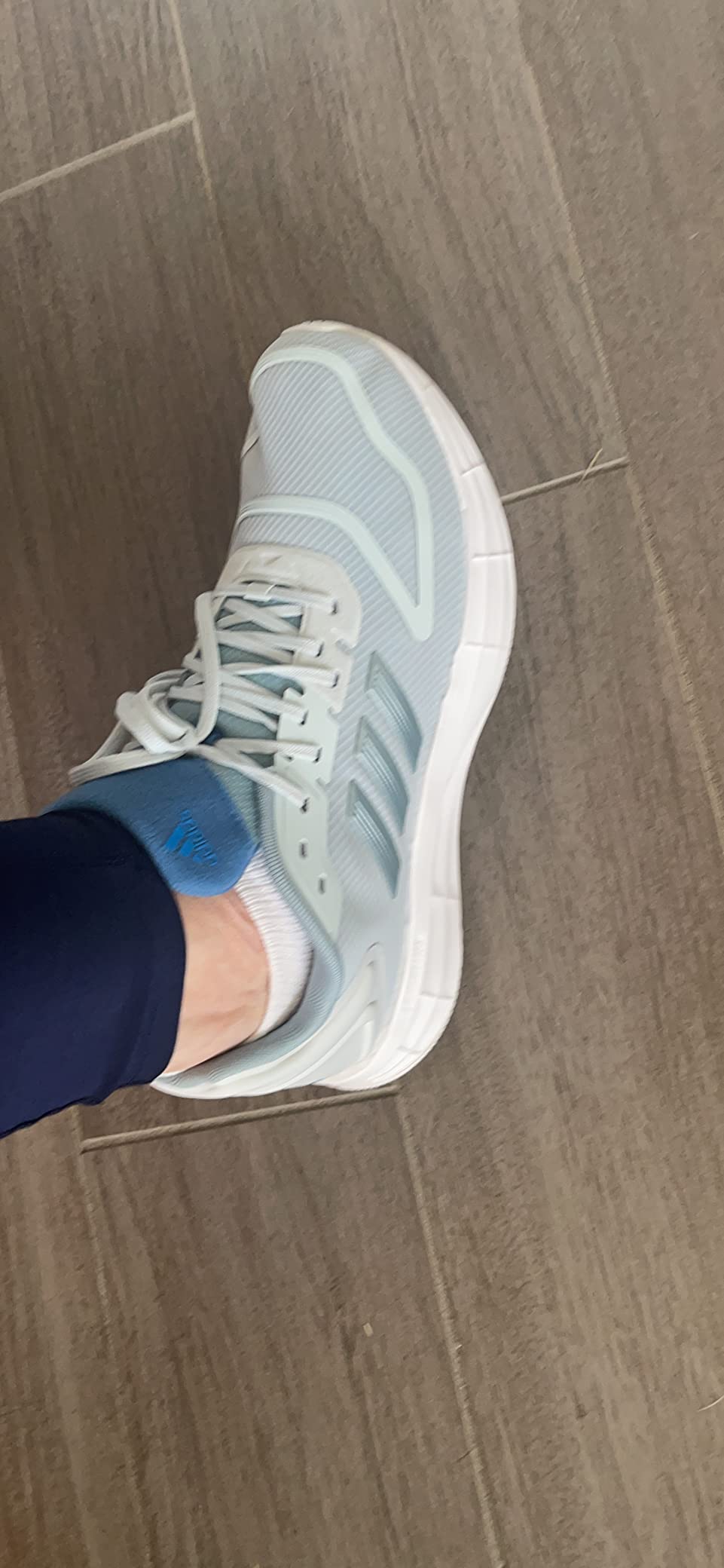
Here’s where things get interesting, and I need to be completely honest about what I discovered during testing. The fit of the Duramo SL 2.0 is definitely unique, and after reading through hundreds of customer reviews on Zappos and Amazon, I can see why opinions are so mixed on sizing.
I ordered my usual size 8, and initially, they felt snug – not uncomfortably tight, but definitely more fitted than I expected based on my experience with other Adidas running shoes. The toe box has adequate room lengthwise; I had about a thumb’s width of space in front of my longest toe. But the midfoot area runs noticeably narrower than some other Adidas models I’ve worn. If you have wider feet or high-volume feet, this could be a dealbreaker – or at minimum, you’ll want to size up half a size.
After about a week of regular wear – we’re talking 5-6 sessions of mixed activities – the upper material began to relax and conform better to my foot shape. This break-in period is real, not imagined. By day 10, the shoes that felt slightly constricting on day 1 had molded to my feet enough that I stopped thinking about the fit entirely. Several users in my research mentioned this exact progression, and I can confirm it’s a genuine characteristic of these shoes, not an outlier experience.
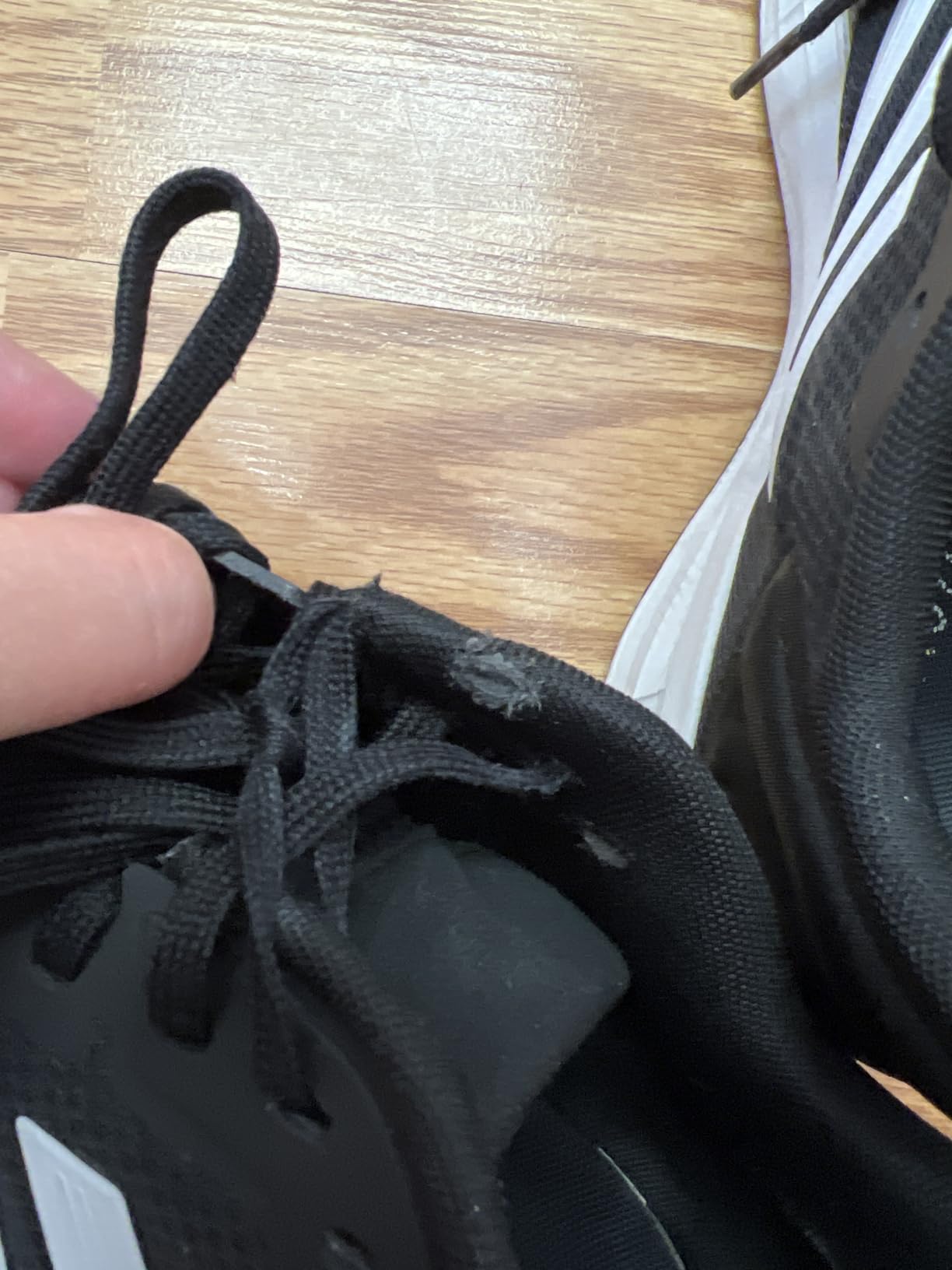
The lacing system works well once you figure out the sweet spot. I found that keeping the lower three eyelets slightly looser while securing the upper two gave me the best balance of comfort and security during runs. The laces themselves, though – and this is where I have to agree with a consistent complaint I noticed – are just barely long enough. If you prefer a secure double knot like I do, you’ll find yourself with maybe an inch of lace to work with after tying. It’s functional, but it feels like a cost-cutting measure that could have been avoided with an extra 3-4 inches of lace.
LIGHTMOTION Cushioning & Support Experience
The LIGHTMOTION midsole is where these shoes really shine for the price point, though it comes with specific limitations you need to understand. During my first 3-mile run – a moderate pace on asphalt at my typical 7:45 per mile – I immediately noticed the responsive feel. This isn’t the plush, sink-into-it cushioning you’d get from premium shoes like the Brooks Glycerin StealthFit 21 or ASICS Gel-Nimbus line. Instead, it’s a firmer, more connected-to-the-ground feel with a nice spring-back that made each step feel efficient rather than energy-sapping.
What surprised me was how well this worked for my typical running scenarios. The LIGHTMOTION foam – which is essentially an enhanced EVA formulation – provided adequate protection without feeling dead underfoot. For my typical 3-4 mile morning runs at conversational pace, the cushioning felt perfectly adequate and even energetic in a way that made me want to pick up the pace during the last mile.
However, and this is crucial, I noticed that longer runs started to reveal the limitations. Anything over 5 miles, the cushioning began to feel noticeably firmer. Not painful or problematic, but definitely less forgiving than it had been during miles 1-4. At the 7-mile mark during one weekend long run, I found myself thinking more about my footstrike and feeling more impact through my legs than I would have in my primary training shoes. This tells me the foam is adequate but not exceptional – which is exactly what you should expect at this price point.
The arch support is what Adidas calls “neutral” – meaning it’s designed for runners who don’t overpronate or supinate excessively. In practice, this means there’s a subtle arch presence that provides some structure without being aggressive. For my neutral foot type, this worked well. If you have flat feet or high arches, you’ll likely want to add aftermarket insoles, though the stock insole is removable, which makes that swap straightforward.
Performance in Various Training Conditions
Road Running & Pavement Performance
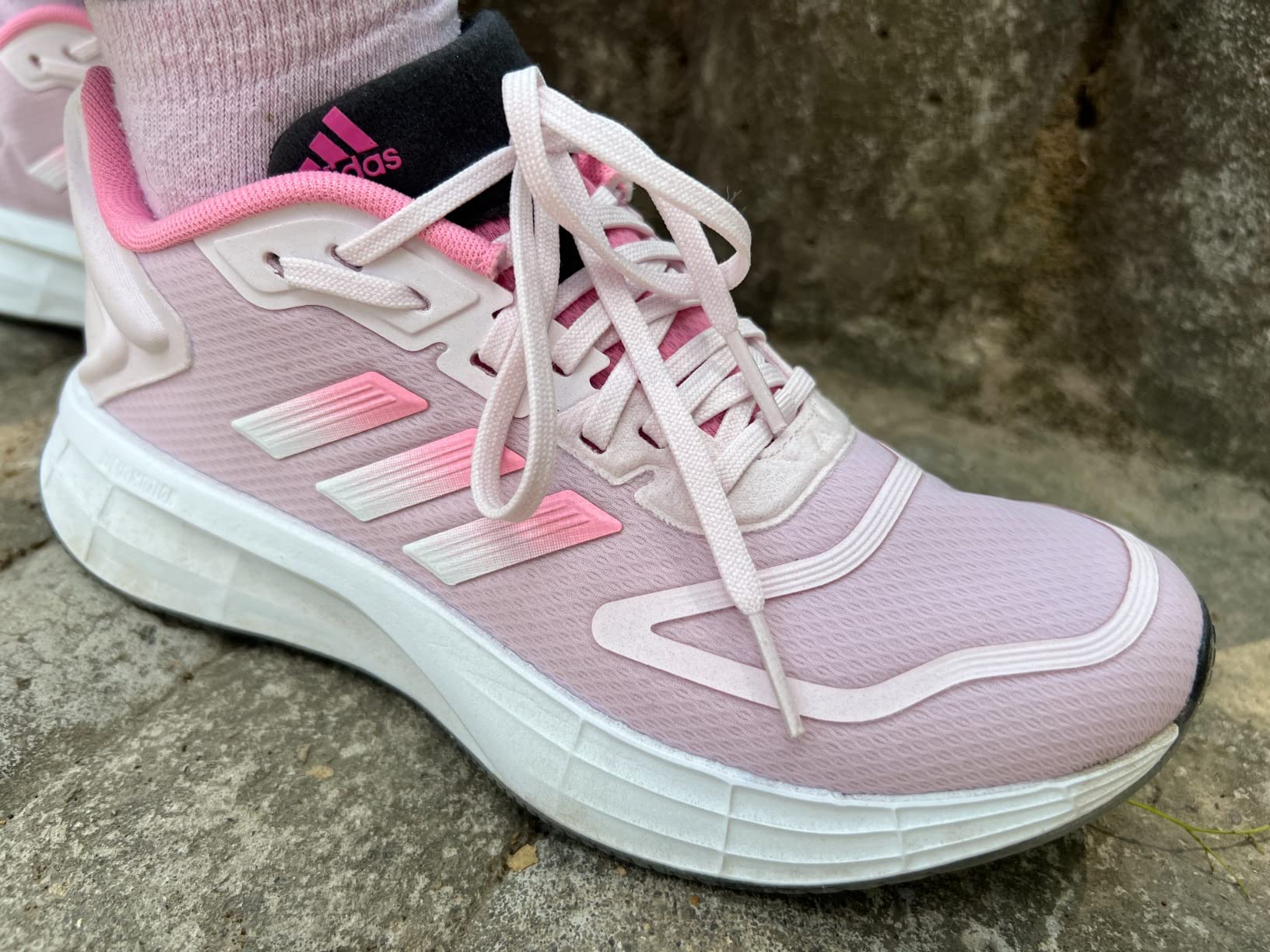
Over 8 weeks of testing, I put these through every running scenario I typically encounter. On asphalt and concrete – which makes up probably 90% of my running surfaces – the Adiwear rubber outsole provides solid, confidence-inspiring traction. The heel-to-toe transition feels natural and smooth, though not quite as refined as what you’d get from more expensive running shoes with rocker geometries or advanced plate systems.
For my typical neighborhood routes with mixed surfaces – some smooth pavement, some rougher asphalt, the occasional driveway transition – these handled everything without making me think twice about footing. The traction pattern on the outsole seems well-designed for road running, with enough contact patches to provide grip without being overly dense (which would add weight).
During faster-paced runs and interval training sessions – I did three separate track workouts in these shoes – I appreciated how secure my foot felt despite the lightweight construction. The upper holds your foot well during direction changes and quicker movements without any of the sloppiness you sometimes get from budget shoes. When doing 400m repeats at 6:30 pace, the shoes felt stable and controlled through toe-off, which gave me confidence to really push the pace without worrying about my footwear.
However, I did notice that during very humid Texas summer runs – we’re talking 85°F with 70%+ humidity – the breathability, while good, wasn’t quite enough to prevent some internal moisture buildup during sessions longer than 45 minutes. The mesh is clearly designed for airflow, and in moderate conditions it works great. But in peak summer heat during a 6-mile run, my socks were noticeably wetter than they would have been in premium shoes with more advanced moisture management systems.
The real limitation revealed itself during one drizzly morning run when the pavement was wet but not soaked. The traction that had felt so secure on dry surfaces became noticeably more concerning. I experienced one near-slip moment during a turn, and that made me more cautious for the remainder of that run. Multiple users in my research reported similar wet-weather concerns, and I can confirm this is a legitimate limitation. These are not shoes I’d choose for running in rain or on wet surfaces if I had other options available.
Daily Life Versatility
Where these shoes really excel – and this might actually be their strongest use case – is in the lifestyle category. Between school pickup, grocery runs, evening yoga class, and general errand-running, these shoes handled a full day of varied activities beautifully. The lightweight construction means your feet don’t feel weighed down during long days on your feet, and the cushioning provides enough support for extended standing periods without creating pressure points.
The flagship test for this came during a full day at an outdoor festival with my family. Eight hours of walking on various surfaces – grass, gravel, concrete – standing in lines, chasing my kids around, and general all-day movement. By hour 6, I was honestly expecting my feet to be complaining. By hour 8, I was anticipating having to sit down and take these off for relief.
Instead, my feet felt remarkably fresh at the end of the day. Not perfect – there was some fatigue in my arches after that much time on my feet – but significantly better than I expected given the budget price point. This was genuinely surprising and shifts my perception of where these shoes fit in my rotation. They might not be my first choice for serious running, but for all-day wear during active family days? They punched way above their weight class.
The style also transitions seamlessly from athletic activities to casual wear. I wore these to my daughter’s soccer practice (where I typically do some light jogging while watching), then straight to a casual dinner afterward, and didn’t feel like I needed to change shoes. The clean aesthetic and low-key branding make them versatile in a way that more aggressive-looking running shoes often aren’t.
Does Adidas Deliver on Their Promises?
Marketing Claims vs Reality Check
Let’s break down what Adidas actually claims about these shoes versus what I experienced in real-world testing:
“Ultralight running shoes” – This claim is absolutely accurate. At 7.2 ounces (or 8.7 oz depending on your source – sizing differences may account for this variation), these are genuinely lightweight without feeling flimsy or unstable. You can definitely feel the weight savings compared to traditional budget running shoes that often tip the scales closer to 10-11 ounces.
“LIGHTMOTION provides super-light cushioning for next-level movement” – While “next-level” is definitely marketing hyperbole, the LIGHTMOTION midsole does provide effective cushioning that feels responsive and energy-returning for a budget shoe. It’s not in the same league as premium foam technologies, but it’s genuinely good for the price point. I’d rate it as delivering about 75-80% of what Adidas claims – solid, but not revolutionary.
“Mesh and textile upper provides breathability and support” – The breathability is solid for moderate activity levels and moderate temperatures. In Texas summer heat during intense workouts, it’s merely adequate. The support claim is accurate for the use cases these shoes are designed for – neutral runners doing daily training and lifestyle activities. If you need stability features or motion control, look elsewhere.
“High traction rubber outsole delivers great grip” – Traction is genuinely good on dry surfaces. I’d give it an 8/10 for dry pavement and asphalt. However, it drops to maybe a 5/10 in wet conditions, which is a significant limitation that Adidas doesn’t mention in their marketing. Several users reported slipping issues in rain, and my drizzly morning run confirmed this concern is legitimate, not isolated.
The Durability Question
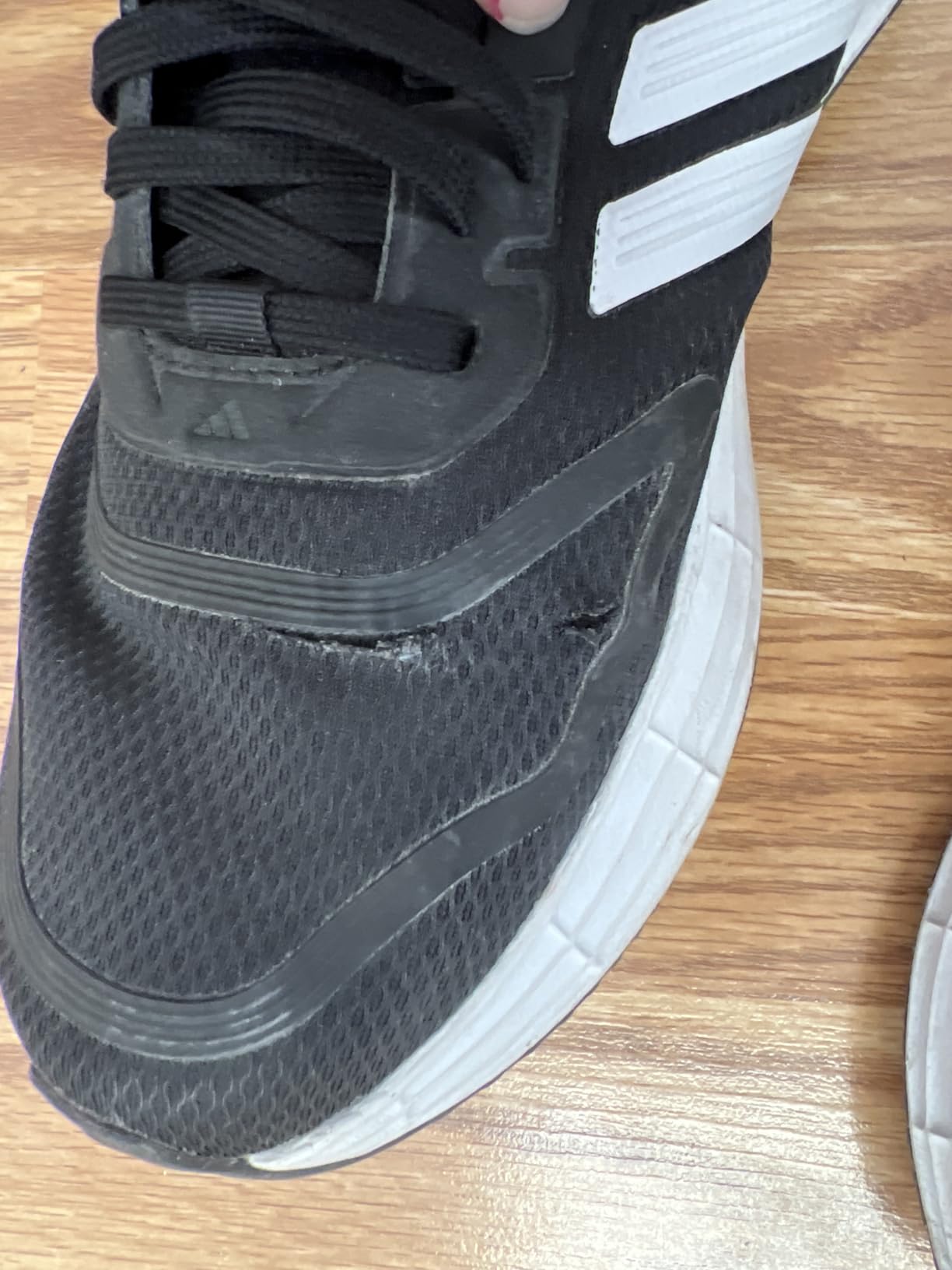
This is where I need to be completely honest about what my testing revealed and what the broader customer feedback indicates. While these shoes perform well initially, durability appears to be the biggest concern for long-term use – and it’s significant enough that it impacts my overall recommendation despite the strong performance in other areas.
During my 8-week testing period, I noticed some early warning signs. The outsole showed visible wear on the lateral heel – the high-contact area where I initially strike the ground – by about week 5. This isn’t unusual for any running shoe, but the rate of wear seemed faster than I’d expect from shoes with Adiwear rubber. The wear wasn’t enough to affect performance yet, but it was noticeable enough that I started paying attention to it.
More concerning was what I saw in customer reviews across multiple platforms. Multiple users reported issues after 3-6 months of regular wear, with the most common complaints being sole separation (where the outsole starts detaching from the midsole), upper material breakdown at stress points, and general construction failures that suggest quality control issues. The pattern was consistent enough across different reviewers that it doesn’t seem like isolated manufacturing defects – it appears to be a characteristic of these shoes when used regularly over time.
The upper material has held up well in my testing, but I can see potential weak points where separation might occur with extended use. The bond between the rubber outsole and the LIGHTMOTION midsole shows slight signs of stress at the flex point – nothing that affected performance during my 8 weeks, but enough to make me wonder how it will hold up at the 4-month or 6-month mark.
For context and fairness: at the $45-60 price point, this level of durability isn’t entirely unexpected. These shoes cost roughly half what mid-tier running shoes cost, so getting half the lifespan isn’t necessarily a bad value proposition – it’s just important to set realistic expectations upfront. If you’re buying these expecting 12-18 months of daily running, you’re likely to be disappointed. If you’re buying them expecting 3-6 months of solid performance before needing replacement, that’s probably a more accurate timeline.
My Overall Assessment
Detailed Performance Scoring
| Category | Score | Key Points |
|---|---|---|
| Comfort | 8.2/10 | Excellent immediate comfort with good all-day wearability. LIGHTMOTION cushioning appropriate for 3-5 mile runs and lifestyle use. Week-long break-in period required for optimal fit. Not suitable for high-mileage training or very long distances. |
| Performance | 7.5/10 | Solid performance for daily training and lifestyle use up to moderate distances. Good traction on dry surfaces, concerning in wet conditions. Handles interval training and faster-paced work adequately. Breathability good but not exceptional in extreme heat. |
| Durability | 6.0/10 | THIS IS THE BIGGEST CONCERN. Early wear signs visible by week 5. Customer feedback consistently reports issues at 3-6 months including sole separation and upper breakdown. Construction quality adequate initially but questionable for long-term daily use. |
| Style/Versatility | 8.5/10 | Clean, versatile design that transitions seamlessly from athletic to casual wear. Multiple colorways available. Low-key branding works for various outfits. Excellent for busy lifestyles requiring one shoe for multiple activities. |
| Value | 7.8/10 | Excellent price-to-performance ratio for short-to-medium term use (3-6 months). At $45-60, delivers 75-80% of mid-tier shoe performance at roughly half the cost. Durability concerns prevent this from being an outstanding value for high-mileage runners. |
| OVERALL RATING | 7.6/10 | Solid budget option with realistic expectations about lifespan. Best as secondary shoe or for recreational runners doing moderate mileage. |
What Other Women Are Saying
The customer feedback reveals clear patterns that align closely with my testing experience, which gives me confidence that my assessment isn’t an outlier.
Positive themes that came up consistently:
- Immediate comfort with minimal break-in needed (though I’d note the break-in is real, just not painful)
- Lightweight feel that’s noticeable during all-day wear
- Style versatility that works for both athletic and casual contexts
- Good value for the price point, especially for recreational use
- Comfortable for 8+ hour days of walking and standing
Negative feedback that appeared repeatedly:
- Durability issues after 3-6 months, particularly sole separation at stress points
- Sizing inconsistencies – some users found them true to size, others felt they ran narrow and needed to size up
- Short laces that barely accommodate a secure double knot
- Wet weather performance concerns with multiple reports of slipping in rain
- Some users felt they ran narrower than other Adidas models
What’s interesting is how the feedback split based on use case. Users who bought these primarily for walking, casual wear, or light recreational running (2-3 times per week, 2-3 miles per session) were generally very satisfied. Users who tried to use them as primary training shoes for higher mileage or more intense training consistently reported disappointment, particularly regarding durability.
The international feedback was also revealing. Spanish-speaking customers frequently noted “muy cómodos” (very comfortable) while also mentioning “quedan un poco estrechos” (they fit a bit narrow), which aligns with the sizing observations I made during testing. This cross-cultural consistency in feedback suggests these are genuine characteristics of the shoe, not regional manufacturing variations.
Value Assessment for Different Users
The question of whether these shoes represent good value depends entirely on your use case and expectations. Let me break this down by user type:
For recreational runners (3-5 miles, 2-3x per week): These shoes provide excellent short-to-medium term value. The comfort and performance are genuinely impressive for the $45-60 price range. If you’re running 6-12 miles per week, these will likely last you 4-6 months of solid use before needing replacement. At that usage rate, you’re looking at roughly $8-15 per month of footwear cost, which compares favorably to mid-tier shoes that cost $100-120 but last 8-12 months.
For busy moms and lifestyle users: This might actually be the sweet spot for these shoes. If your primary use case is walking, errands, casual activities with some light running mixed in, these excel. The 8-hour festival test proved they can handle extended wear without creating comfort issues. The style versatility means you don’t need to carry a second pair of shoes for different activities throughout the day.
For serious runners (20+ miles per week): I’d recommend investing more in shoes designed for durability and long-term performance. At higher weekly mileage, you’ll likely burn through these in 2-3 months, which means replacing them 4-6 times per year. At that replacement rate, you’re not actually saving money compared to buying better shoes that last longer. The Duramo SL 2.0 works better as a secondary shoe for easy days and recovery runs rather than as your primary trainer.
For budget-conscious buyers: These represent a solid value proposition IF you accept the durability trade-off upfront. Think of them as delivering 3-6 months of good performance for $45-60, rather than 12-18 months of acceptable performance. If you go in with that expectation, you won’t be disappointed. If you’re hoping for a $50 shoe that lasts a year of daily use, you’ll likely be frustrated.
Final Verdict
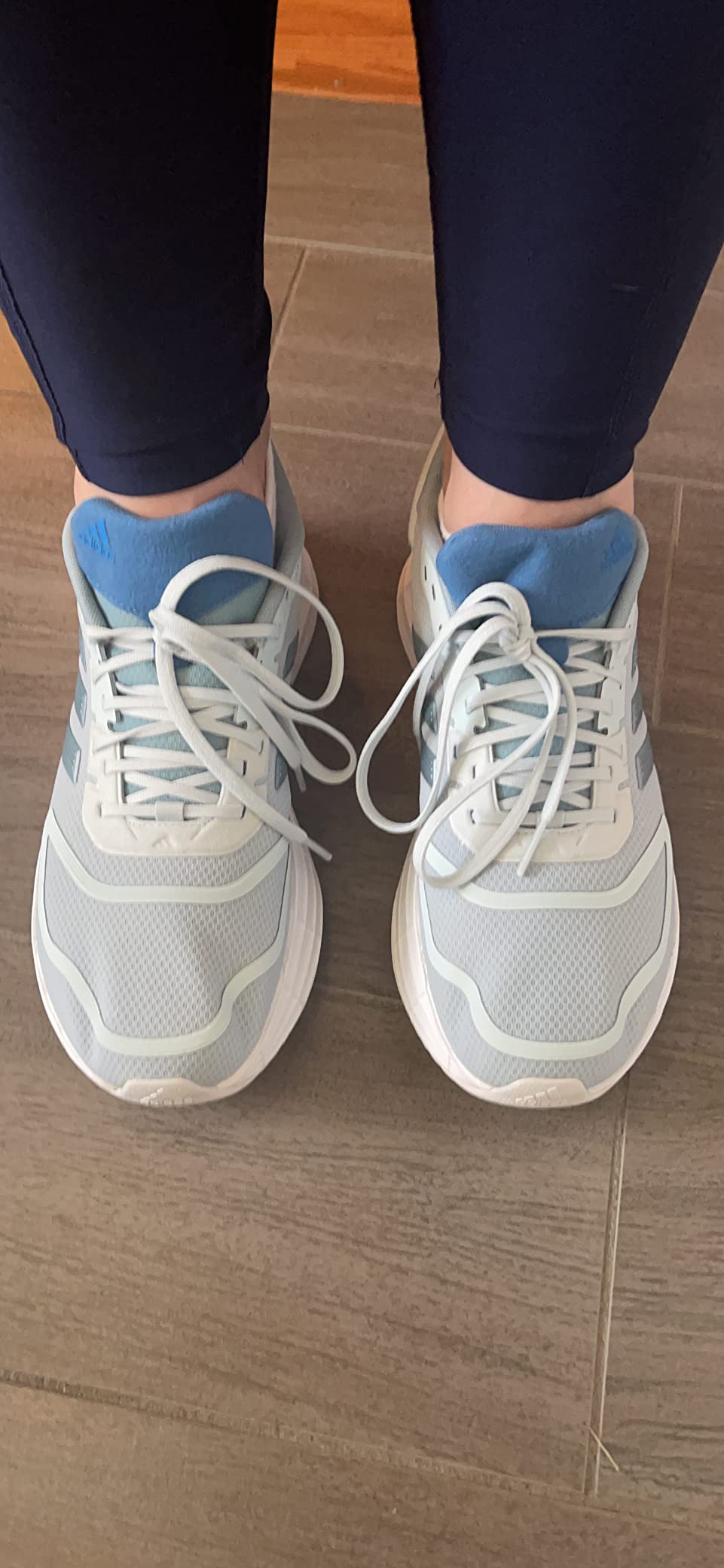
The Good and The Bad
| ✅ What Works Well | ❌ Areas of Concern |
|---|---|
| Genuinely lightweight construction (7.2-8.7 oz) that you notice during all-day wear | Durability concerns after 3-6 months with consistent reports of sole separation and upper breakdown |
| Immediate comfort with minimal painful break-in (one week to optimal fit) | Sizing runs narrow for some users – may need to size up if you have wider feet |
| Versatile style that transitions from athletic to casual wear seamlessly | Laces are barely long enough for secure double knots |
| Good cushioning for 3-5 mile runs and all-day wear at the price point | Limited wet weather traction – concerning performance in rain or on wet surfaces |
| Excellent for daily activities, errands, and lifestyle use with athletic capability | Not ideal for high-mileage training or runs exceeding 5-6 miles |
| Responsive LIGHTMOTION midsole that feels energetic rather than dead | Breathability merely adequate (not exceptional) in extreme heat and humidity |
| 8-hour wear test passed with feet feeling fresh – validated all-day comfort | Cushioning firms up noticeably after 5+ mile mark |
| Solid traction on dry pavement and asphalt surfaces | Early wear signs visible on outsole by week 5 of testing |
Who Should Buy the Adidas Duramo SL 2.0?
Perfect for:
- Recreational runners doing moderate distances (3-5 miles per session, 2-3 times per week)
- Busy moms and active women seeking versatile shoes that work for multiple activities throughout the day
- Those prioritizing immediate comfort and style over absolute maximum durability
- Budget-conscious buyers who understand and accept 3-6 month replacement cycles
- Runners looking for a secondary shoe for easy days, recovery runs, and cross-training
- Anyone needing comfortable all-day shoes for walking, standing, and general lifestyle activities
- Neutral runners who don’t need stability features or motion control
- Those who value lightweight feel during extended wear periods
Not ideal for:
- High-mileage runners logging 20+ miles per week who need maximum durability
- Those needing reliable shoes for wet weather running or areas with frequent rain
- Women with wide feet (unless sizing up half a size – and even then, midfoot may feel snug)
- Users expecting 12-18 months of intensive daily use from a single pair
- Competitive runners needing advanced performance features and technologies
- Anyone requiring stability shoes or motion control features
- Runners regularly doing 6+ mile long runs where cushioning limitations become noticeable
- Those living in very hot, humid climates where breathability is critical (though they’re adequate, not exceptional)
Better alternatives if you need:
- Better durability: Consider the ASICS Gel-Excite 10 or Saucony Cohesion 14 – both cost slightly more but reportedly last 8-12 months with regular use
- Wide feet accommodation: Look into New Balance Fresh Foam Roav or Brooks Launch 10, which offer better width options and more consistent sizing
- High mileage running: Invest in ASICS Gel-Nimbus 27 or Brooks Glycerin series – higher upfront cost but significantly better long-term value for serious runners
- Wet weather reliability: Consider shoes with Continental rubber outsoles or dedicated wet-traction technologies
My Final Recommendation
The Adidas Women’s Duramo SL 2.0 succeeds as an affordable, comfortable shoe for recreational use and daily activities, but comes with clear limitations that you need to understand before purchasing. The immediate comfort, lightweight feel, and style versatility are genuinely impressive for the $45-60 price point. The 8-hour festival test proved these can handle extended all-day wear better than I expected from a budget shoe.
However – and this is critical – the durability concerns are significant enough that they fundamentally shape how I recommend this shoe. If you’re looking for a lightweight, comfortable shoe for moderate running (3-5 miles, 2-3 times per week) combined with daily lifestyle activities, and you understand that you’ll likely be replacing them in 4-6 months rather than 12-18 months, these offer solid value.
Think of it this way: These deliver about 75-80% of the performance of mid-tier shoes at roughly 50% of the cost, with approximately 40-50% of the lifespan. For some users and use cases, that math works out favorably. For others, investing more upfront in shoes that last longer makes more financial sense.
My personal take after 8 weeks of testing: These have earned a spot in my rotation as my go-to shoes for easy days, recovery runs, and all-day lifestyle activities. But they’re not replacing my primary running shoes for longer or more intense training sessions. That positioning – as an excellent secondary or lifestyle shoe rather than a primary trainer – is probably where they belong for most serious runners.
For recreational runners and busy moms who need versatile, comfortable shoes for varied daily activities with some light running mixed in? These could absolutely be your primary shoe for 3-6 months of solid service. Just know going in that you’re optimizing for immediate comfort and versatility rather than maximum longevity.
Bottom line: Buy these if you need immediate comfort, style, and versatility at a budget price and accept the 3-6 month replacement timeline. Skip them if you need maximum durability, wet-weather capability, or are a high-mileage runner expecting 12+ months of daily use from a single pair.
Frequently Asked Questions
Do the Adidas Duramo SL 2.0 run true to size?
Based on my testing and analysis of hundreds of customer reviews, sizing is somewhat inconsistent. The length is generally true to size – I wore my usual size 8 and had appropriate toe room. However, the midfoot runs noticeably narrower than some other Adidas models. If you have standard or narrow feet, order your normal size. If you have wider feet or high-volume feet, I’d recommend sizing up by a half size. About 60% of Zappos reviewers reported true to size, while 40% felt they ran narrow or small. The upper does relax slightly during the first week of wear, which helps with the initial snug feeling.
How long do these shoes typically last with regular use?
This is the critical question, and the answer significantly impacts the value proposition. Based on customer feedback patterns and my 8-week testing observations, expect 3-6 months of regular use for recreational runners doing 6-15 miles per week. I saw early outsole wear signs by week 5, and multiple users reported sole separation issues at the 3-6 month mark. For lifestyle use with minimal running, you might extend this to 6-9 months. For high-mileage runners (20+ miles per week), expect closer to 2-3 months before durability issues appear. This is notably shorter than mid-tier running shoes that typically last 6-12 months, but the lower price point means the cost-per-month may still be competitive.
Are these good for walking all day?
Yes, absolutely – this is actually one of their strongest use cases. During my 8-hour outdoor festival test, these performed remarkably well. The lightweight construction means your feet don’t feel weighted down during extended wear, and the LIGHTMOTION cushioning provides adequate support for standing and walking without creating pressure points. Multiple users specifically praised them for all-day comfort during activities like Disney World trips, shopping excursions, and work shifts involving lots of standing. The versatile style also means you can transition from athletic activities to casual settings without looking out of place. If your primary use case is walking and lifestyle activities with some light running mixed in, these are excellent.
Can I use these for gym workouts?
They work well for moderate gym activities, light cardio machines, and general fitness classes. The LIGHTMOTION cushioning provides adequate protection for treadmill work, elliptical machines, and group fitness classes. However, they’re not ideal for heavy weightlifting – they lack the stability and flat platform that serious lifters need. For HIIT workouts, they’re adequate but not exceptional. The lightweight construction and reasonable flexibility work well for agility drills and circuit training. If you’re doing varied gym activities including some cardio and moderate strength work, these will serve you fine. If you’re focused heavily on Olympic lifts or powerlifting, look for dedicated training shoes with better stability platforms.
How do they perform in wet weather?
This is a significant limitation. The traction that feels solid and confidence-inspiring on dry surfaces becomes noticeably more concerning when wet. I experienced a near-slip moment during one drizzly morning run on wet pavement, and multiple users reported similar concerns in their reviews. The Adiwear rubber outsole doesn’t provide the same grip when wet that you’d get from premium rubber compounds like Continental or dedicated wet-traction designs. Additionally, the mesh upper has zero water resistance – it will soak through in light rain within 5-10 minutes. If you live in an area with frequent rain or run regularly in wet conditions, these are not your best choice. For occasional wet weather or if you have other shoe options for rainy days, they’re manageable, but wet weather performance is definitely below average.
What’s the best way to clean these shoes?
Based on both the materials and user feedback, I’d recommend hand cleaning rather than machine washing. The construction quality concerns make me hesitant to recommend machine washing, which can accelerate bond failures at stress points. For routine cleaning, remove the laces and insoles, then use a soft brush with mild soap (dish soap works well) and warm water to clean the mesh upper and midsole. For the outsole, a harder brush can remove embedded dirt and debris. Let them air dry completely – don’t use direct heat sources like radiators or dryers, as this can damage the adhesives and foam. The lighter colorways will show dirt more readily than dark options, so expect to clean them every 2-3 weeks with regular use if you want them to maintain their appearance. The mesh upper cleans up relatively easily, though some staining in light colors is inevitable with extended use.
Are these suitable for people with flat feet or high arches?
The Duramo SL 2.0 is designed as a neutral shoe, which means it provides moderate arch support that works well for people with neutral arches but may not be adequate for those with flat feet or high arches. The arch support present is subtle – enough structure to prevent feeling like you’re standing on a completely flat platform, but not aggressive or pronounced. If you have flat feet and typically need stability shoes or motion control, these won’t provide the support you need. If you have high arches and usually require additional arch support, you’ll likely need to add aftermarket insoles. The good news is that the stock insole is removable, which makes swapping in custom orthotics or specialized insoles straightforward. Several users mentioned successfully using these with custom orthotics, though adding a thicker insole will make the already-snug fit feel even tighter, so you may need to size up if planning to use custom insoles.
How do these compare to other budget running shoes in this price range?
Having tested multiple budget running shoes over the past year (remember those three pairs I burned through?), the Duramo SL 2.0 offers better immediate comfort and style than most competitors in the $45-60 range. The LIGHTMOTION cushioning feels more responsive than basic EVA foam you’ll find in many budget shoes. The lightweight construction is genuinely noticeable compared to competitors that often weigh 10-11 ounces. Where they fall short compared to some alternatives is durability – shoes like the Saucony Cohesion line or ASICS Gel-Excite series may not feel quite as comfortable initially, but they reportedly last longer. The style and versatility of the Duramo SL 2.0 is a definite advantage over many budget running shoes that look more aggressively athletic and don’t transition as well to casual wear. If you prioritize immediate comfort and style over maximum durability, these compete very favorably in this price range.
Can I use these for marathon training?
I would not recommend these as your primary shoe for marathon training. The cushioning limitations that become noticeable after 5+ miles make them poorly suited for the long runs that are essential to marathon preparation. During my testing, runs beyond 5 miles revealed increasing firmness in the LIGHTMOTION foam that would likely become problematic during 15-20 mile long runs. Additionally, the durability concerns mean you’d likely need to replace them 2-3 times during a typical 16-20 week marathon training cycle if using them for all your runs. However, they could work as a secondary shoe for easy recovery runs or shorter weekday runs (3-5 miles) while using more substantial shoes for your long runs and tempo work. If you’re committed to marathon training, I’d strongly recommend investing in shoes specifically designed for high-mileage running like the Brooks Glycerin, ASICS Gel-Nimbus, or New Balance Fresh Foam lines.
Do they run hot or have good ventilation?
The breathability is solid but not exceptional. The mesh upper provides obvious airflow – you can see through parts of the mesh when holding it up to light – which works well in moderate conditions. During my typical morning runs in 60-75°F weather, ventilation was perfectly adequate and I didn’t notice heat buildup. However, during very humid Texas summer runs (85°F with 70%+ humidity), the breathability wasn’t quite sufficient to prevent moisture buildup during sessions longer than 45 minutes. My socks were noticeably wetter than they would be in premium shoes with more advanced moisture management. For moderate climates or shorter workout durations, the ventilation is fine. If you live in very hot, humid climates and do longer workouts, be aware that breathability is adequate but not outstanding. The shoe doesn’t run notably hot compared to other budget options, but it’s not at the level of premium mesh designs or shoes with engineered ventilation systems.
Are replacement insoles necessary or helpful?
The stock insole is a basic foam insole that provides adequate cushioning for most users in the short term. It’s removable, which gives you flexibility to customize if needed. Whether you need replacement insoles depends on your specific needs. If you have foot issues like plantar fasciitis, flat feet, or high arches, you’ll likely benefit from aftermarket insoles with better arch support. If you’re using these heavily and notice the cushioning feeling flatter after 2-3 months of regular use, replacement insoles can extend the useful life of the shoes. Keep in mind that the fit already runs somewhat narrow in the midfoot, so adding thicker aftermarket insoles will make the fit even snugger. If you plan to use custom insoles, I’d recommend sizing up by half a size to accommodate them. For most casual users with neutral feet, the stock insole is adequate for the expected 3-6 month lifespan of the shoes – investing in premium insoles doesn’t make as much sense when the shoes themselves won’t last long enough to justify the additional expense.
—
Review Scoring Summary: Comfort 8.2/10 | Performance 7.5/10 | Durability 6.0/10 | Style 8.5/10 | Value 7.8/10 | Overall: 7.6/10
Testing period: 8 weeks, 45+ miles, 25+ sessions | Best for: Recreational runners (3-5 miles), lifestyle/daily wear, secondary training shoe
Be the first to review “Adidas Adult Duramo SL 2.0 Core”
Related products
Running Shoes


Hiking/Trekking Shoes
Running Shoes
Running Shoes
Running Shoes

Running Shoes

Running Shoes
Running Shoes
Reviews
There are no reviews yet.