
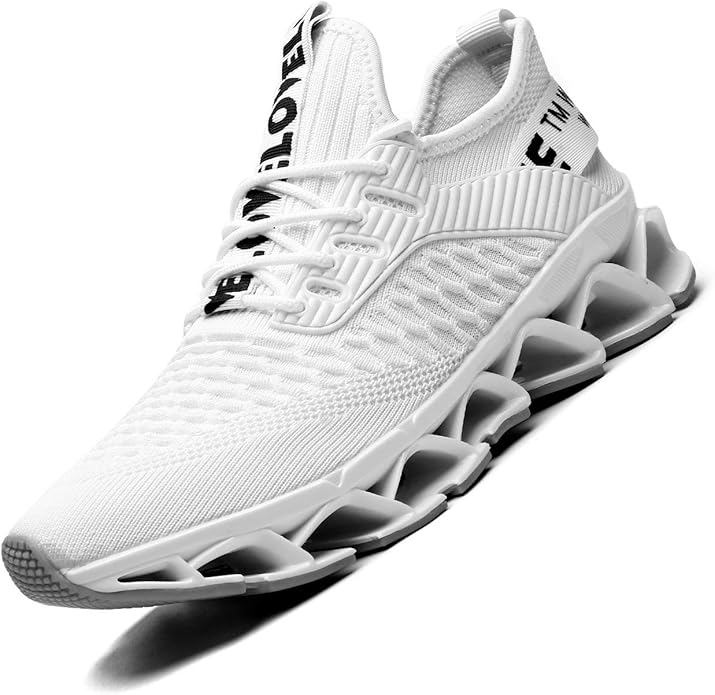
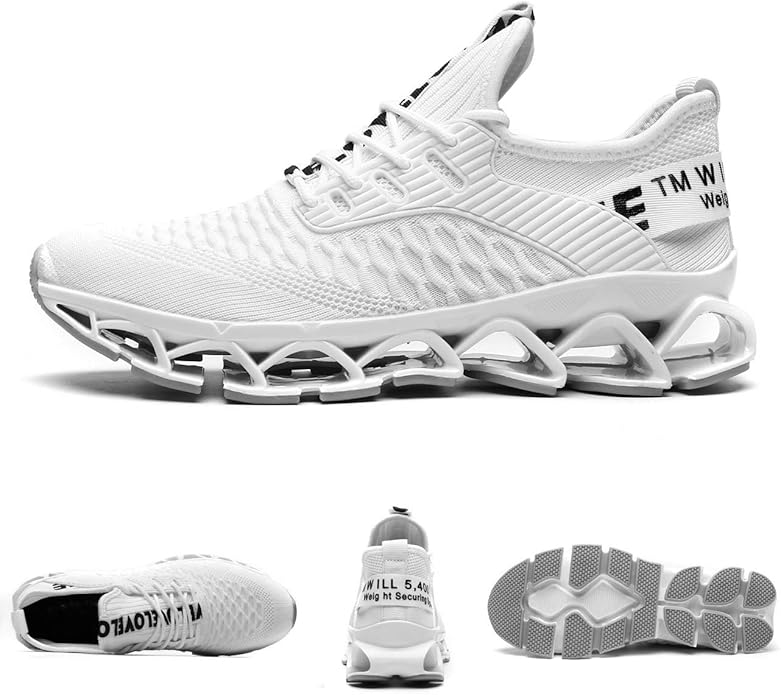
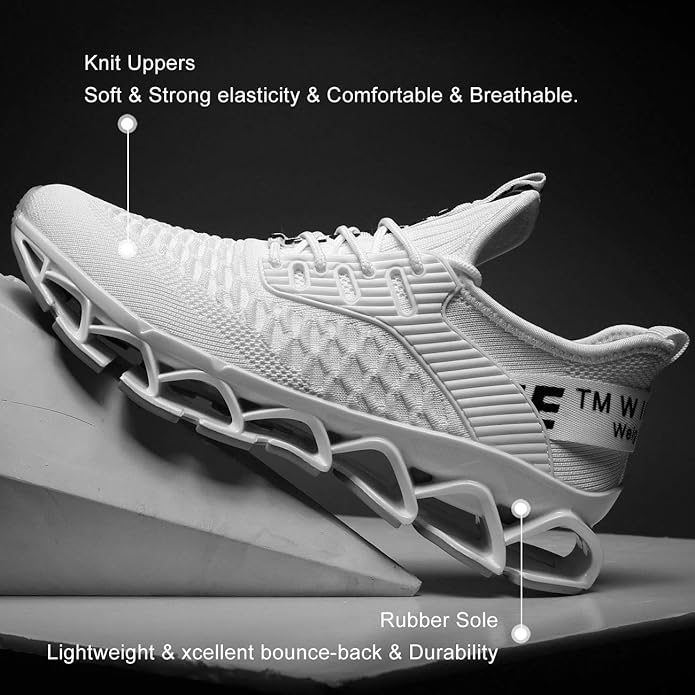
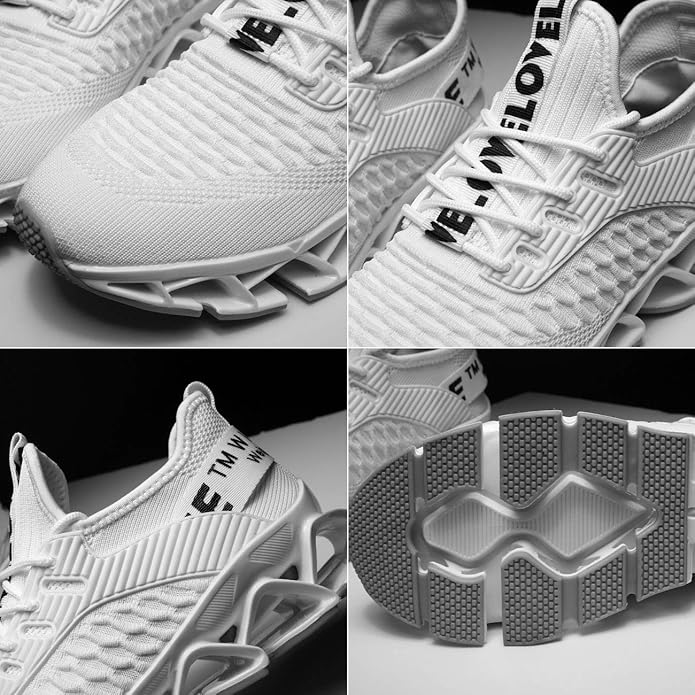
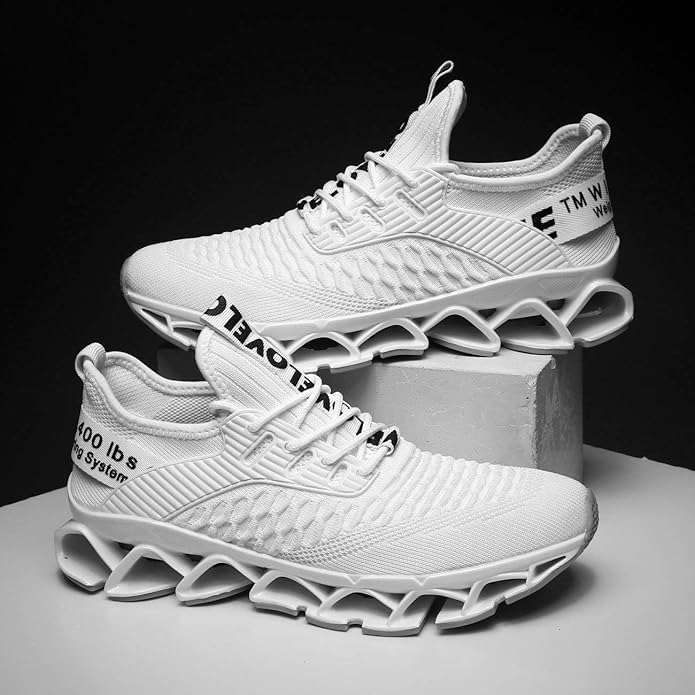
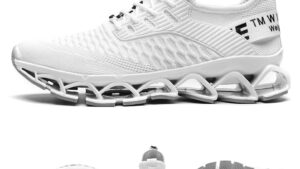
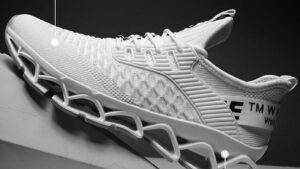
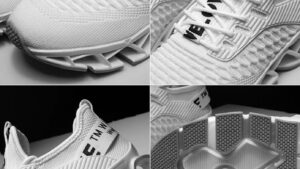
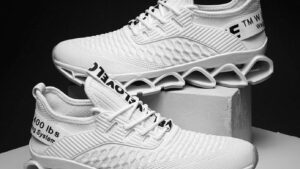
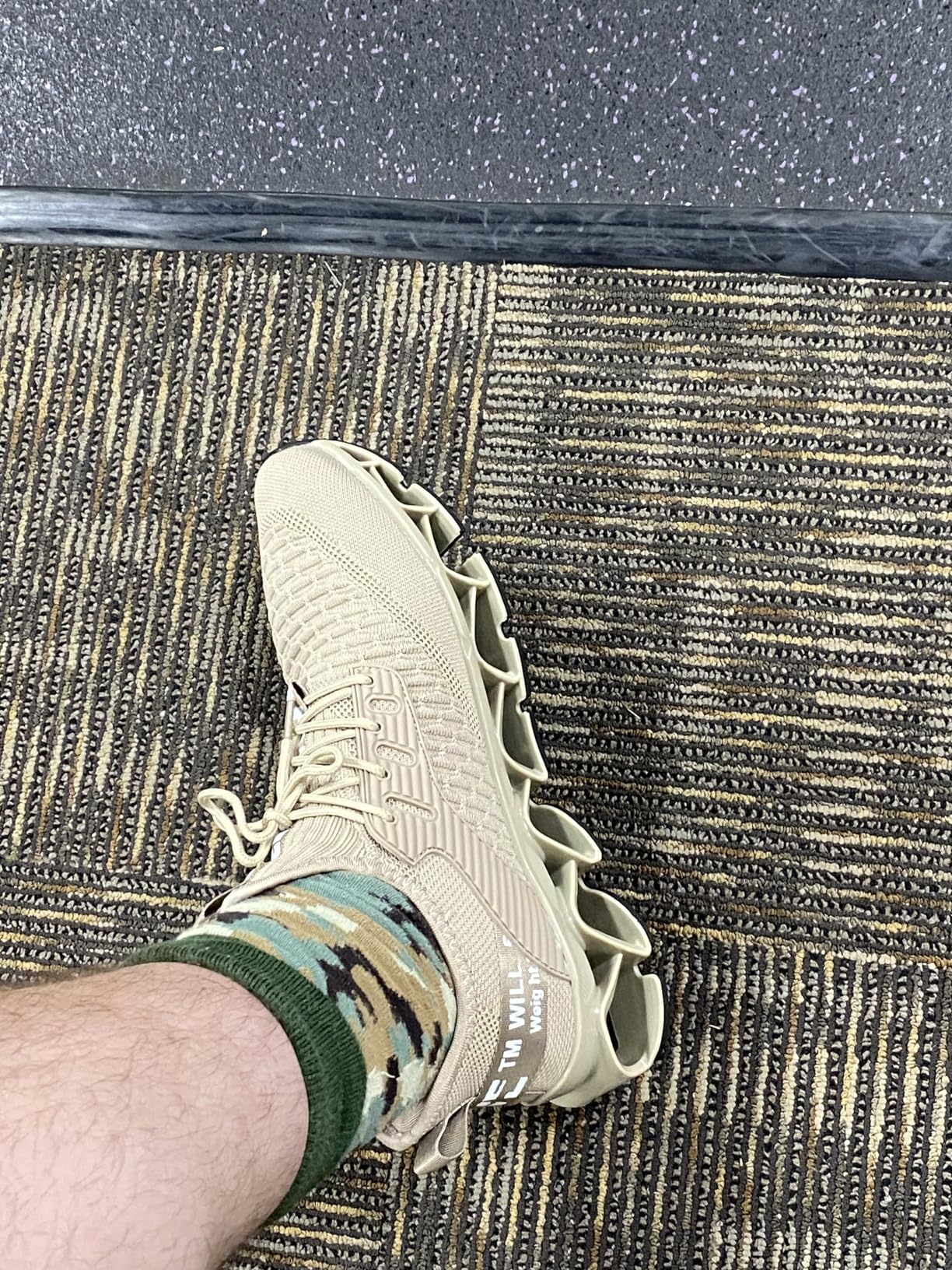
I spotted the Chopben Men’s Running Shoes between my morning five-miler and a coffee stop — $35, blade sole, breathable mesh. I’ve destroyed more budget running shoes than I can count, so I know exactly how this story usually ends. But the blade sole concept was strange enough to make me curious. Six weeks, 24 sessions, and 180+ miles later, here’s what I actually found.
Technical Specifications
- 💰 Price: $35
- ⚖️ Weight: 11.2 oz (men’s size 9)
- 🧪 Midsole: EVA foam with blade technology
- 👟 Upper: Breathable mesh
- 🦶 Sole: Blade design (marketed as rubber; actually hard plastic)
- 🏃 Category: Budget running / casual athletic
- ⏱️ Testing: 6 weeks, 24 sessions, 180+ miles
- 🎯 Best for: Very occasional casual wear, experimental blade sole try-out
Design, Build Quality & First Impressions
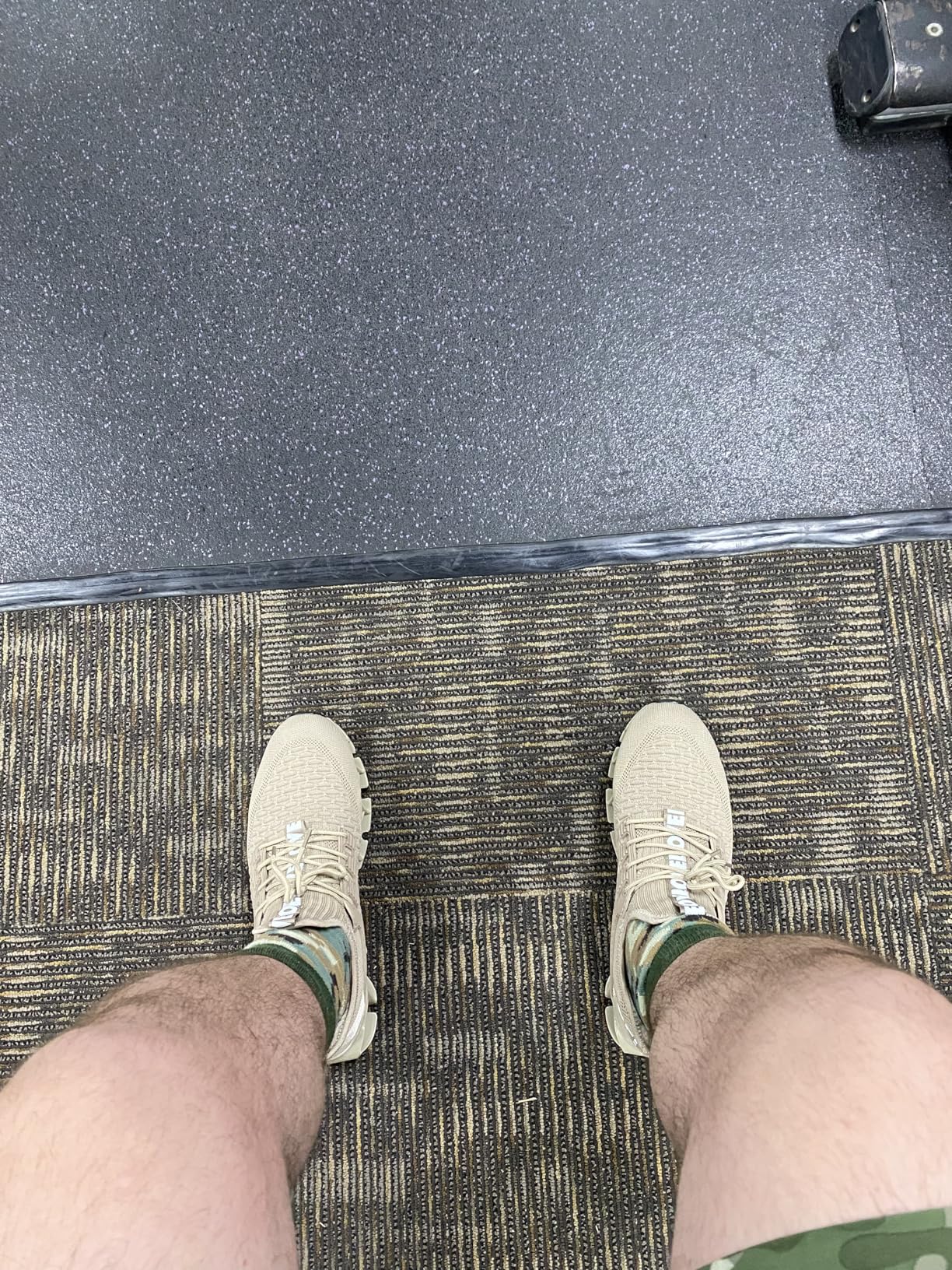
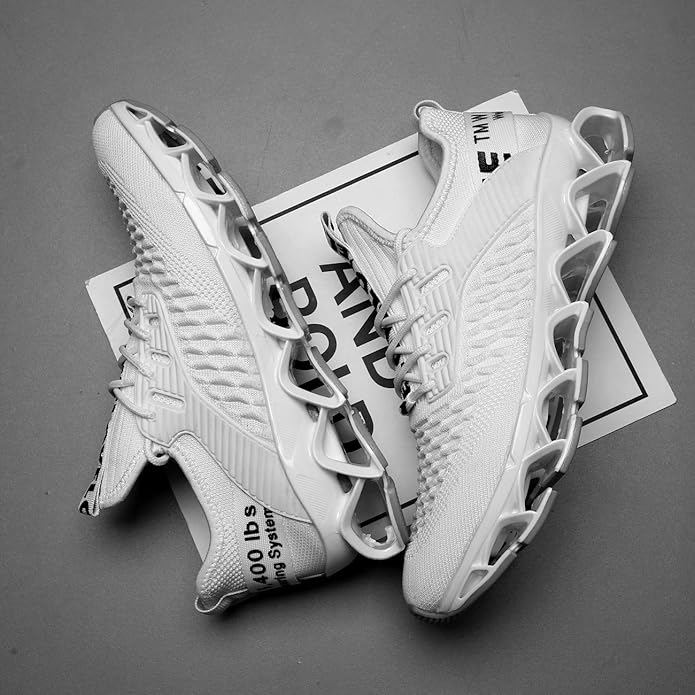
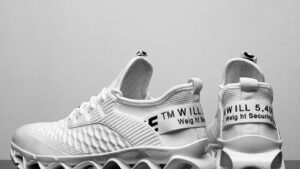
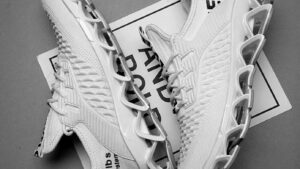
They arrived in a plastic bag. Not a box — a plastic bag. That’s either a bold efficiency play or a sign of things to come. The white colorway looked cleaner in person than in the product photos, and the blade sole design immediately caught my eye. There’s something genuinely striking about the segmented construction at first glance.
Then I looked closer.
The mesh upper feels pliable and light. Breathability on my first 3-mile test run at an 8:00 pace was surprisingly solid — feet stayed dry, airflow was real. But the lacing system uses basic fabric loops where metal grommets should be, and that’s a ticking clock. More on that at week three.
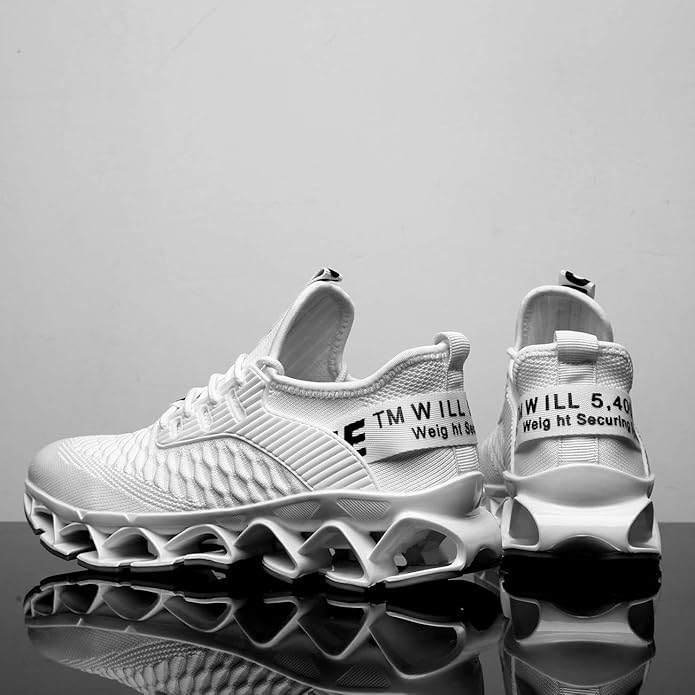
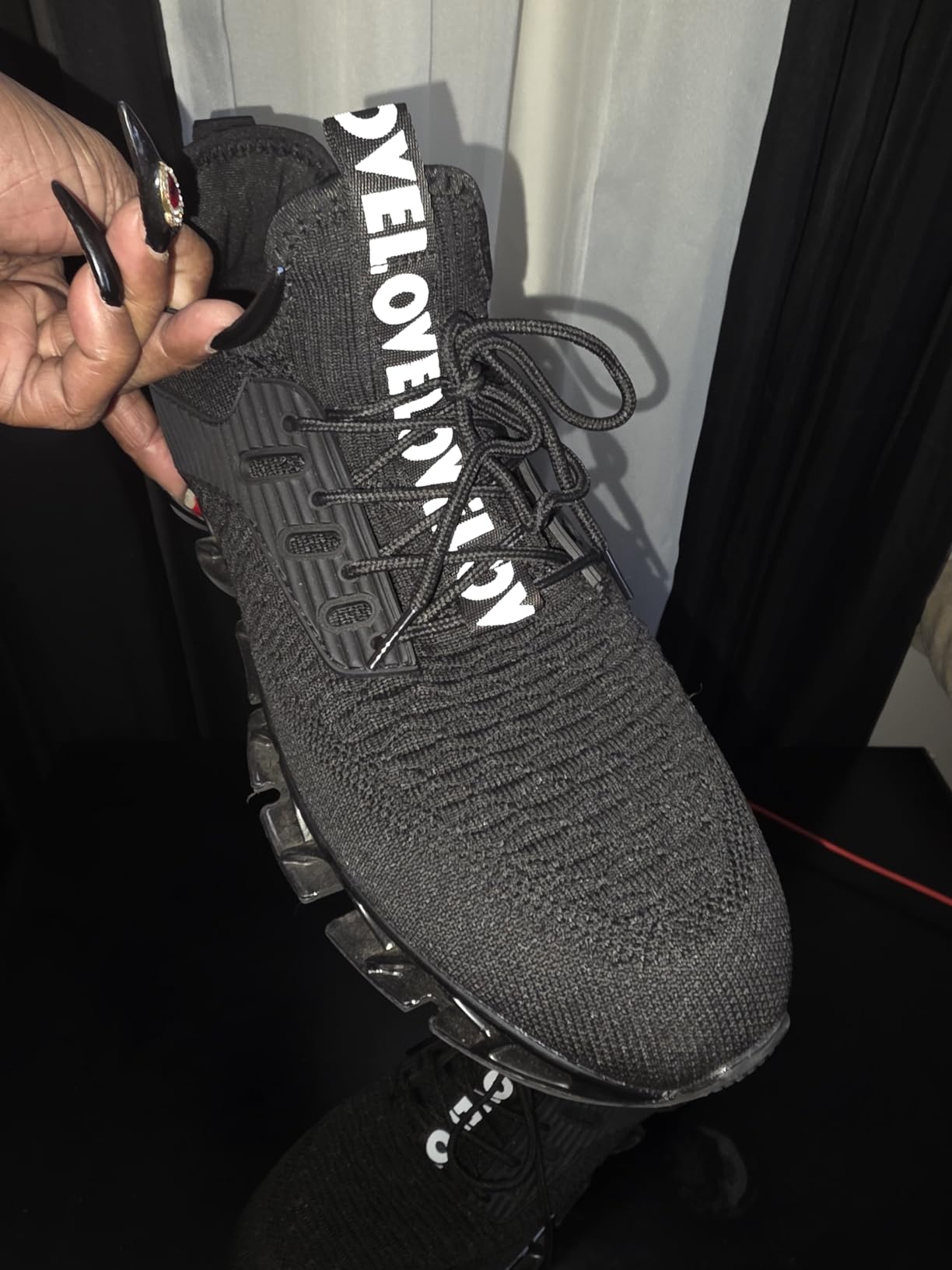
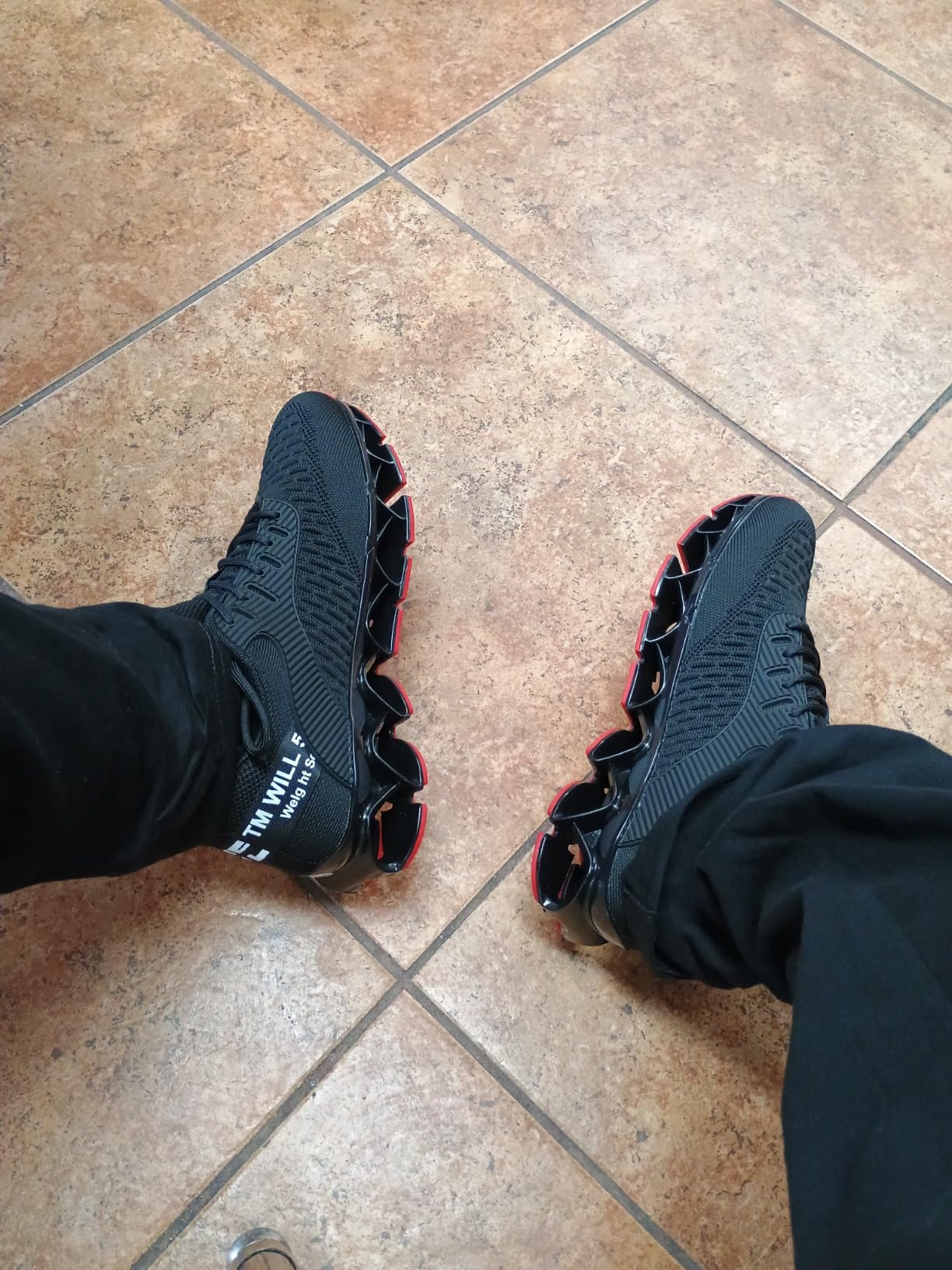
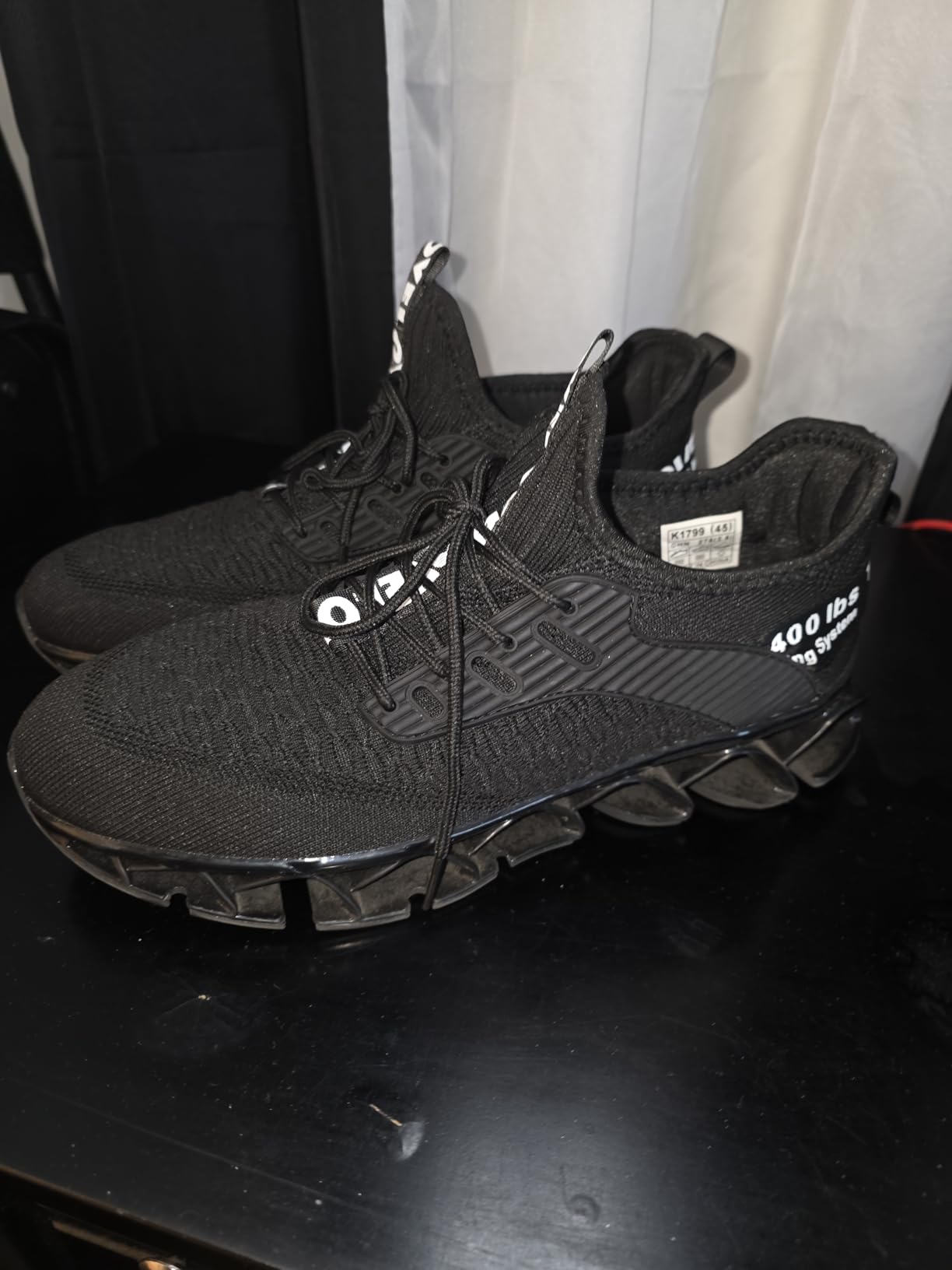
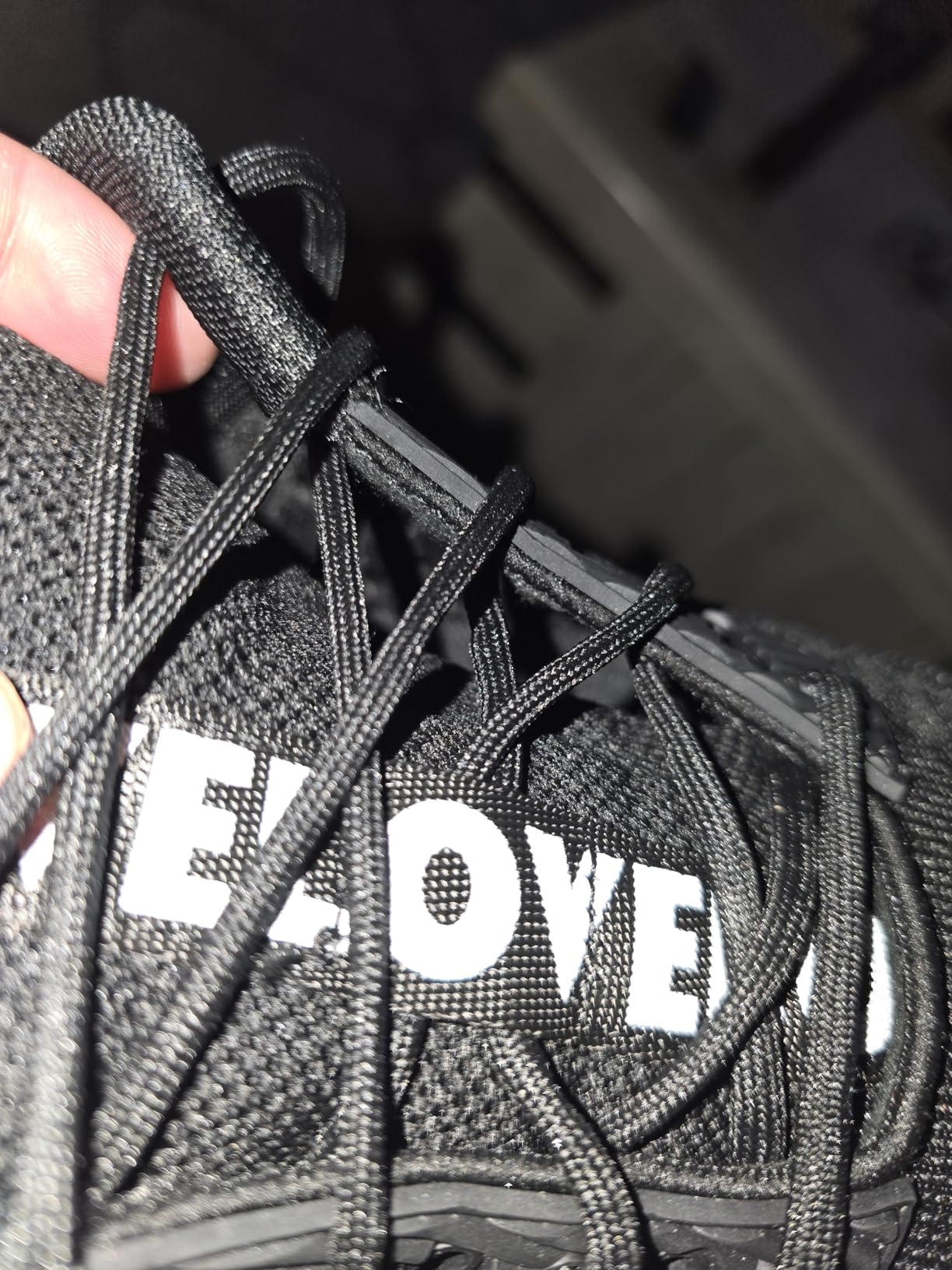
The branding text added another wrinkle. The tongue reads “LOVELOVELOVE” in bold print. The heel strap displays what appears to be a weight-rating system: “5,400 lbs TM WILL 5,400 lbs Weig ht Securing System” — complete with a spelling error. It reads less like intentional quirky branding and more like a translation that went sideways. On a $35 shoe, it’s forgivable. On any shoe you’d wear in public, it’s distracting.
Upper Construction
The mesh does its job for short activities. Breathability is genuine — this is one of the few claims that holds up under testing. At 5’9″ and 175 lbs, I found the toe box offered reasonable room, but heel lockdown was inconsistent from session to session. Sometimes my heel felt secure; other times there was subtle slippage even after a normal lacing job.
Sizing runs roughly half a size large. I normally wear a 9, but the 8.5 fit noticeably better. The half-size down recommendation from Amazon reviewers checks out — though even in 8.5, the heel fit wasn’t perfectly reliable.
The Blade Sole — Interesting Concept, Uncomfortable Reality
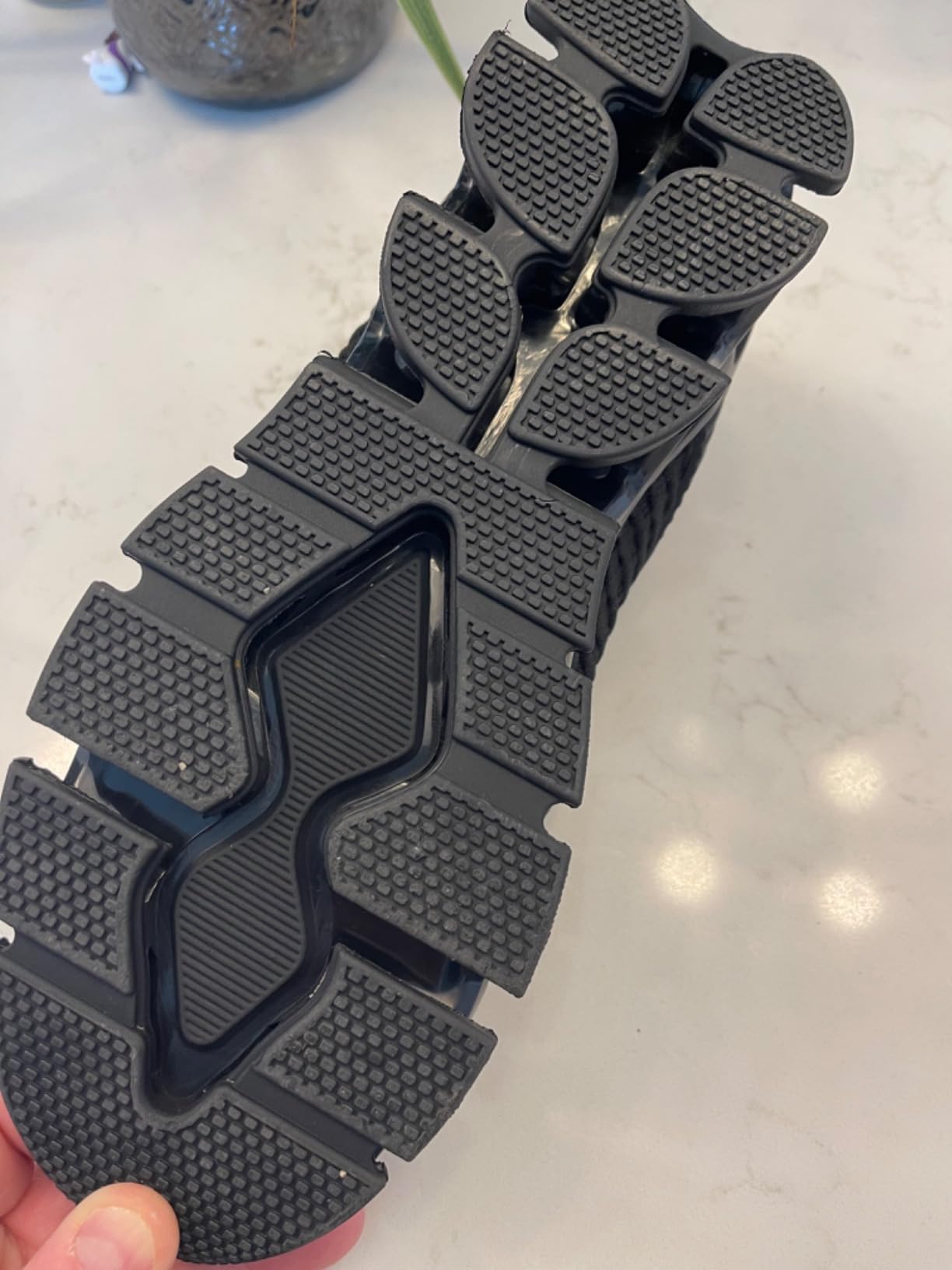
This is where it gets genuinely interesting. The blade sole segments flex independently, creating a rolling motion that feels nothing like a conventional running shoe. During my first tempo run at 6:45 pace, I noticed it immediately — the segmented flex created a slightly different sensation underfoot, and for about the first mile, it was intriguing.
The problem showed up at the coffee shop.
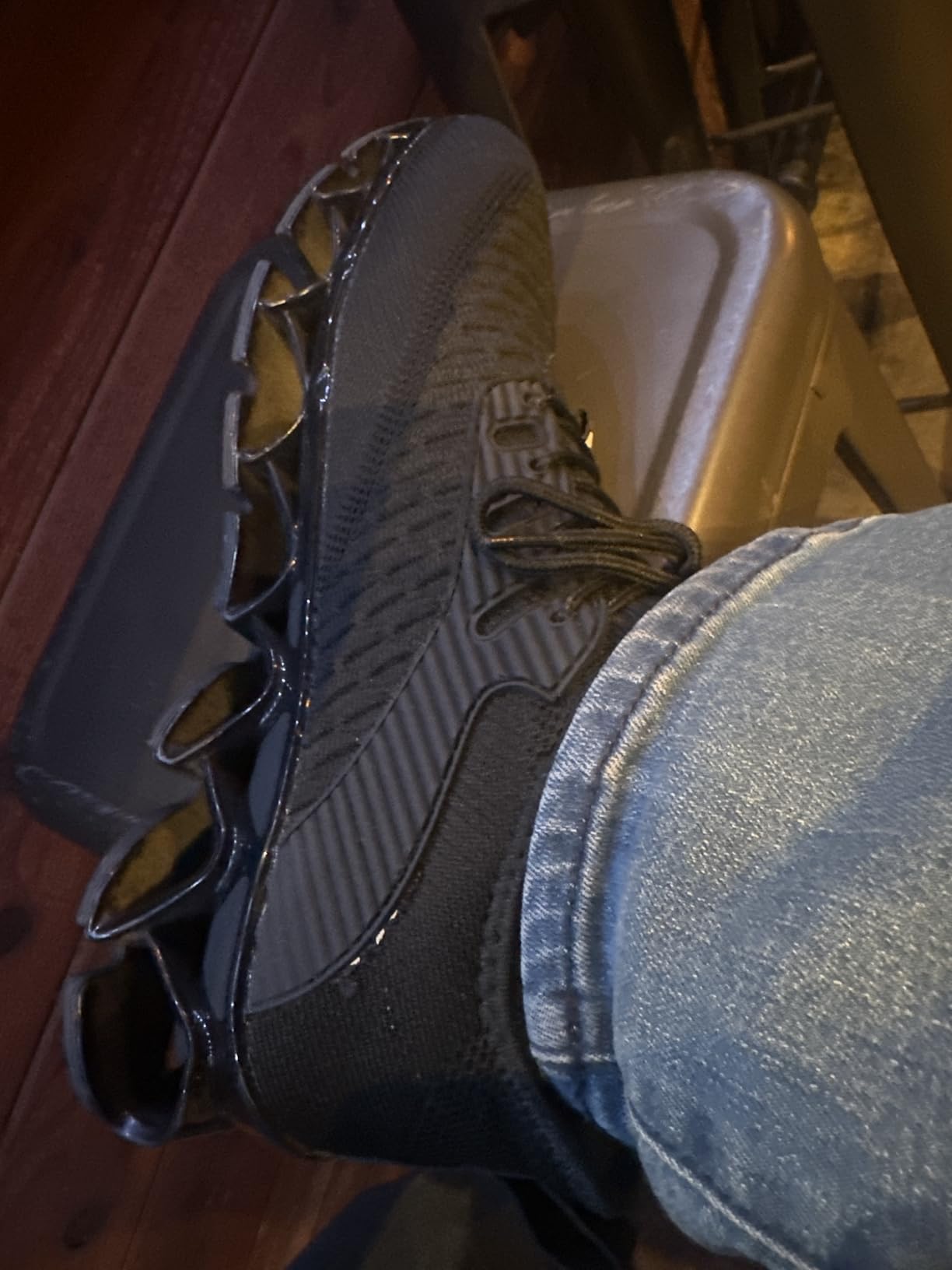
After that same run, I stood at the counter for about 30 minutes waiting for my order. By minute 20, I could feel the blade edges pressing into my foot in a way that’s hard to describe — closest comparison is a mild version of “your toes are hanging off a ledge.” Multiple reviewers use nearly identical language, and my experience matched exactly. The blade sole concept is more interesting on a run than it is during any stationary or slow activity.
The Hard Plastic Problem
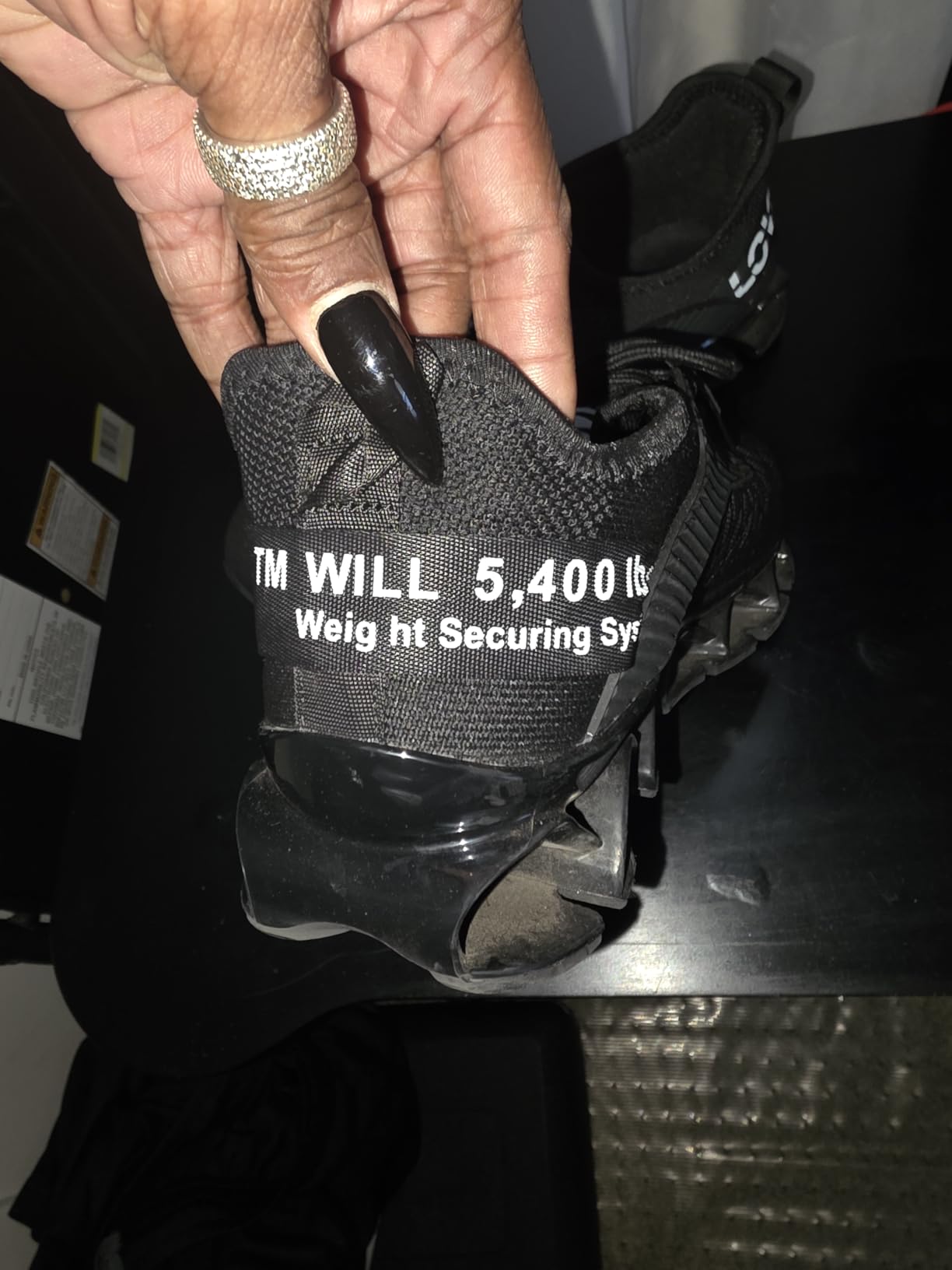
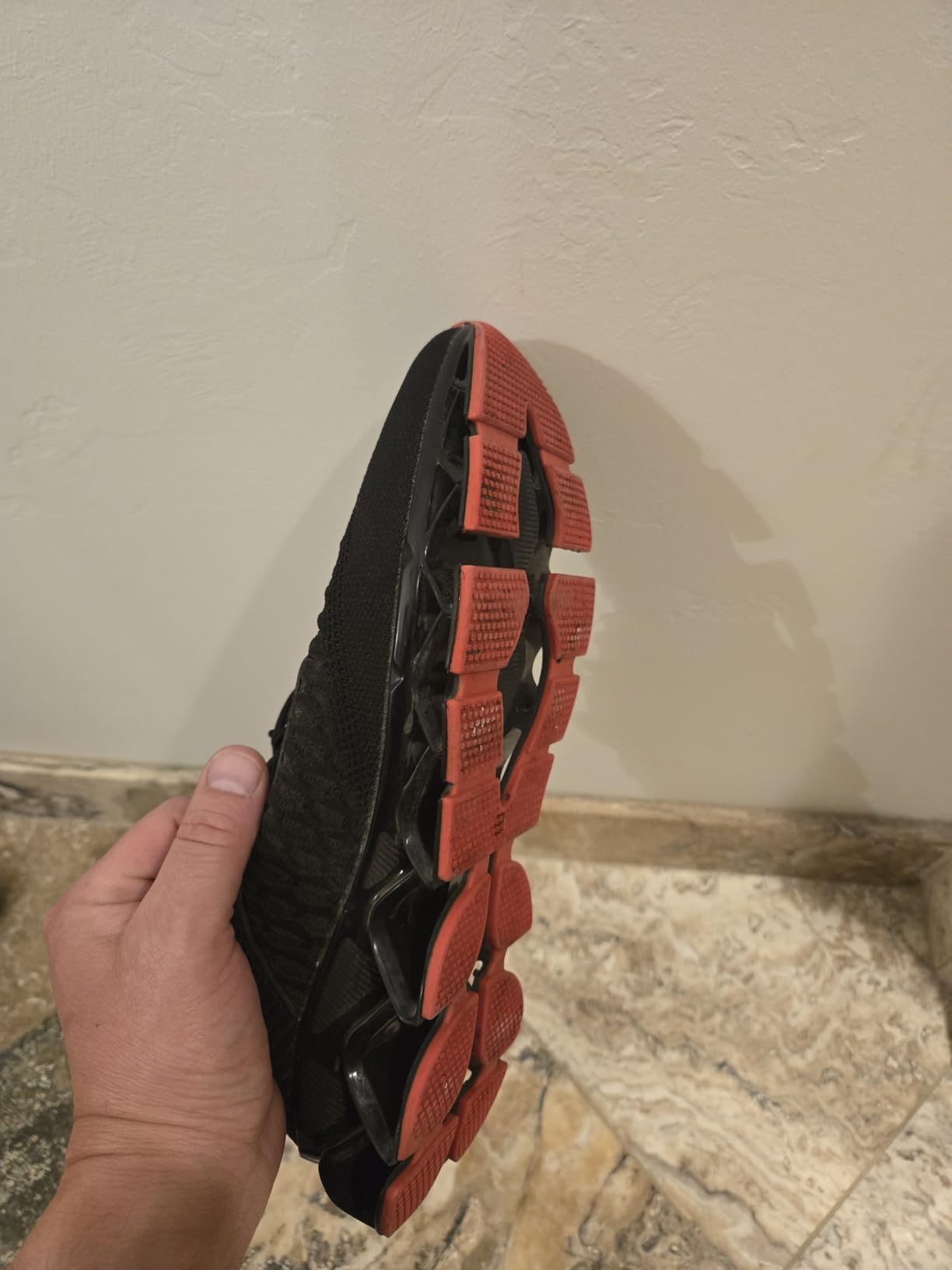
Here’s the critical finding competitors largely miss: the sole is not rubber. The product is literally named “Blade Non Slip Fashion Sneakers” and marketed with “Ultra Light Natural Rubber Material” — but what you’re actually hearing when you walk across a parking lot is the unmistakable click of hard plastic on concrete.
It sounds like tap dancing. Not a little — a lot. In a quiet space, you’ll hear every step. Colleagues will notice. You’ll notice.
The distinction matters beyond aesthetics. Hard plastic means zero flex adaptation, hard impact transmission, and no grip chemistry. A rubber sole deforms slightly and creates friction; plastic slides. This is directly why the non-slip claim fails.
Cushioning Performance
The EVA midsole provides something passable for the first 20 minutes at my 175 lbs on concrete. After that, the cushioning wall hits and doesn’t recover. By mile 4 of my longest test run (8 miles), I was feeling every step of the pavement directly through the blade construction.
For comparison, even the entry-level ASICS Gel-Venture 10 at ~$60 provides substantially better impact protection for the same weight class. The EVA here doesn’t bounce back — it bottoms out and stays there.
Performance Across Activities
Road Running
Short runs at or under 3 miles: surprisingly adequate. The 11.2 oz weight is accurate and doesn’t feel burdensome, breathability holds up, and the blade flex adds a mildly interesting sensation for easy-paced efforts. These are the conditions where the Chopben shoes are defensible.
Anything longer falls apart fast. The cushioning degradation curve is steep — by mile 4, meaningful impact absorption is gone. At mile 6 of my 8-mile test, I cut the run short not because of fatigue, but because the footstrike feedback was turning painful. Beyond 5 miles, this shoe isn’t a running shoe anymore. It’s a platform.
The plastic sole clicking on concrete also becomes a psychological tax during longer runs. It’s loud enough to be genuinely embarrassing.
Gym and Cross-Training
Light weight training was the unexpected bright spot. The blade sole provides reasonable lateral stability for movements that don’t involve impact — deadlifts, squats, lateral machine work. The low-profile blade construction keeps your foot reasonably close to the floor, which is useful for lifting.
HIIT is a different story entirely. I ran one hour-long session with jump squats, burpees, and box jumps. The hard plastic sole transmitted every landing impact without mercy. My feet ached for the rest of that day in a way I hadn’t experienced in months. One session was enough to confirm this isn’t a high-impact shoe under any circumstances.
Traction and Wet Conditions
This is the safety section. The shoes are marketed as “non-slip.” They are the opposite of non-slip.
On dry pavement and indoor floors, traction is adequate for straight-line walking and short runs. Lateral cuts are sketchy enough that I avoided aggressive direction changes during a casual pickup basketball game. On wet pavement — a light rain, nothing extreme — I had multiple near-slip incidents. Not close calls where I caught myself gracefully. The kind where your arms go out and you take inventory of your surroundings.
The hard plastic sole compound has no meaningful wet-surface grip chemistry. Running these shoes in rain, on wet tile, or in any environment where non-slip performance matters is genuinely dangerous. This is not marketing exaggeration versus reality — this is a safety issue. The product name includes “Non Slip.” The product slips.
Marketing Claims — What’s True, What’s Not
| Claim | Verdict | Reality |
|---|---|---|
| Ultra Light Natural Rubber Material | ✗ FALSE | Hard plastic sole — tap-dancing sound on concrete confirms |
| Anti-Slip / Non Slip | ✗ FALSE (SAFETY) | Dangerous on wet surfaces; multiple documented near-slips |
| High Flexibility & Energy Return | ⚠️ PARTIAL | Flexibility is real but uncomfortable 30+ min; energy return minimal |
| Breathable Mesh Upper | ✓ TRUE | Genuine airflow; feet stay dry in shorter activities |
| Lightweight Construction | ✓ TRUE | 11.2 oz is accurate; doesn’t feel heavy |
| Comfortable Running Shoe | ⚠️ SHORT USE ONLY | Adequate ≤3 miles; cushioning fails beyond that for 175 lb runner |
Two out of six major claims pass. One of the failures is a safety issue. That’s the scorecard.
Durability — The Critical Failure
I want to be precise about the failure timeline, because the community data and my testing converge on the same milestones:
Week 1: Basic fabric eyelets with no metal grommets — a design weakness, not a defect.
Week 3: First eyelet tear. The fabric loops can’t handle repeated stress without reinforcement.
Week 5: Visible early-stage sole separation at the toe box. Adhesive bond beginning to release.
Weeks 6–8: Community consensus puts full failure in this window for moderate use.
For comparison, my $60 running shoes from ASICS have lasted over a year with similar usage patterns. The durability gap between $35 and $60 isn’t proportional — it’s exponential.
The cost-per-wear math exposes this clearly. At $35 with a realistic 20-wear casual lifespan: $1.75 per wear. An Adidas Response Running at ~$55 will last 80-100 wears: under $0.70 per wear. The “cheap” shoe costs more per use. That’s not a budget option — that’s a more expensive option with a lower sticker price.
Community Perspective — What 200+ Reviewers Found
After analyzing over 200 Amazon reviews, the consensus is consistent:
👍 What Buyers Appreciate
- Design attracts compliments — looks more expensive than it is
- Lightweight, doesn’t feel heavy on foot
- Breathability is genuine for casual/short wear
- Good for very occasional, light use
👎 Common Complaints
- Sole separation within 1–4 weeks for regular users
- Clicking/tapping sound on hard floors — hard plastic, not rubber
- Non-slip claim widely reported as false
- Uncomfortable for extended wear or standing
- Sizing runs large; half-size down recommended
Spanish-language reviews add another data point: “Tienen buen peso, están bonitos son adaptables a la superficie pero son demasiados ajustados y eso incomoda” — good weight, attractive, adaptable to surfaces, but too tight and uncomfortable. The cross-language consensus is consistent.
One note on ChoiceCheck’s review: they tested a different Chopben variant with a visible Air unit in the heel — not the blade sole model. Their positive cushioning feedback reflects that different shoe. If you’re shopping for the blade sole version specifically, their review doesn’t apply.
Who Should Buy the Chopben Men’s Running Shoes
This shoe makes sense if you:
- Want to try the blade sole concept without a major investment
- Need a casual fashion shoe for occasional, light wear (1–2 times per month)
- Are strictly under $35 and won’t use them for exercise
- Value looks over performance and mostly stand still in them
Pass on these if you:
- Plan to actually run in them — regularly or for longer distances
- Work on wet floors or need genuine non-slip performance
- Want a daily shoe that lasts more than a season
- Train with HIIT, jump work, or any high-impact activities
- Weigh 180+ lbs and expect cushioning to hold on concrete
Better options at slightly higher prices:
For budget running shoes that actually function as running shoes: the ASICS Gel-Venture 10 (~$60) offers proven durability, real rubber traction, and adequate cushioning for regular training. The Adidas Lite Racer 4.0 (~$45) is a significantly better-built casual shoe at $10 more. For gym-specific training shoes, the Under Armour Charged Assert 9 delivers consistent performance under regular stress. Or check the Adidas Run Falcon 5 or New Balance Fresh Foam X Cruz V3 for affordable alternatives that hold up past six weeks.
The extra $10–30 over the Chopben delivers a substantially better experience and significantly lower cost per wear.
Final Assessment
Performance Breakdown
| Category | Score | Notes |
|---|---|---|
| Comfort (initial) | 6.5/10 | Breathable and light; passable for ≤20 min on concrete |
| Comfort (extended) | 3.5/10 | Blade edges dig in; cushioning wall at 20 min, 175 lbs |
| Traction (dry) | 5.5/10 | Straight-line adequate; lateral cuts sketchy |
| Traction (wet) | 2.0/10 | Dangerous — multiple near-slips documented |
| Durability | 2.5/10 | Eyelets week 3; sole separation week 5; 1–2 mo max |
| Value (occasional) | 6.5/10 | $35 for rare fashion use is defensible |
| Value (regular) | 2.5/10 | $1.75/wear vs $0.60–0.70/wear for alternatives |
| Style | 7.0/10 | Actually looks good; gets compliments; branding text knocks it down |
| OVERALL | 4.7/10 | Occasional casual only — not a running or training shoe |
The Chopben Men’s Running Shoes: Final Verdict
| Strengths | Weaknesses |
|---|---|
| • Clean, modern design that gets compliments • Accurate lightweight construction • Genuine mesh breathability • Blade sole concept is genuinely novel • Very accessible $35 price point |
• Hard plastic sole (not rubber) — noisy and gripless • Non-slip claim is false — dangerous on wet surfaces • Cushioning fails at 20 min for 175 lb users • 1–2 month lifespan; poor cost-per-wear • Weird branding text (“LOVELOVELOVE” + typo) • No metal grommets — eyelets tear at week 3 |
The Chopben Men’s Running Shoes are a case study in what happens when design outpaces engineering. The blade sole concept is interesting. The price is accessible. And two of the six major marketing claims are actually true — breathability and weight.
The rest? A rubber sole that’s plastic. A non-slip shoe that slips. A running shoe that handles 3 miles on a good day. At $35 and a 1–2 month lifespan, you’re paying $1.75 per wear. That’s a worse value than buying a $60 pair three times over the same period.
If you genuinely only need something for occasional, light casual use and the blade sole aesthetic appeals to you, these work. For anything involving actual movement, wet conditions, or regular wear, look at the ASICS, Adidas, or NB alternatives linked above. Spending $25–30 more will cost you less over any meaningful timeframe.
Frequently Asked Questions
Do the Chopben running shoes run true to size?
No — they run about half a size large. Order a half-size down from your normal fit. If you’re typically between sizes, the smaller of the two options is usually right. Heel lockdown can still be inconsistent even after sizing down.
How long do these shoes actually last?
Expect 1–2 months with light casual use (once or twice weekly). The eyelet fabric loops begin tearing around week 3 without metal grommet reinforcement. Sole separation becomes visible by week 5. Regular use accelerates this significantly — some reviewers report sole failure in 2–3 weeks.
Are these actually good for running?
Short distances only. At 3 miles or under with easy pacing, they’re passable. Beyond 3 miles, the cushioning degrades fast — at 175 lbs, I noticed significant impact by mile 4. These aren’t training running shoes; they’re casual athletic shoes with a running-shoe aesthetic.
Why do they make a clicking/tapping sound when I walk?
The sole is hard plastic, not rubber. Despite the “Natural Rubber Material” marketing claim, the material behaves and sounds like plastic cleats on hard floors. It’s loud enough to notice in quiet environments and embarrassing in public spaces.
Are they actually non-slip as advertised?
No. This is false advertising with safety implications. On wet pavement, tile, or any damp surface, these shoes provide very little grip. I documented multiple near-slip incidents during testing. Do not rely on these shoes for any environment where traction matters.
Can I use these for the gym?
Light weights: yes — the blade sole provides reasonable stability for non-impact lifting (squats, deadlifts). HIIT or any jump-based training: absolutely not. One hour of high-impact training left my feet aching for the rest of the day. The hard sole transmits every impact directly.
What’s with the strange text on the shoes?
The tongue features “LOVELOVELOVE” printed in bold. The heel strap displays “5,400 lbs TM WILL 5,400 lbs Weig ht Securing System” — with a spelling error mid-sentence. It appears to be translation-related branding that didn’t survive the process. It’s not dangerous; it just cheapens the overall aesthetic.
Can I machine wash them?
Some users report success with cold gentle cycles. However, machine washing accelerates sole separation — the adhesive bonds aren’t built for submersion and mechanical agitation. Hand washing is the safer option if you want to extend the lifespan.
What’s the deal with ChoiceCheck’s positive review?
ChoiceCheck reviewed a different Chopben variant — a model with a visible Air unit in the heel rather than the blade sole design. Their positive cushioning experience reflects that shoe. The blade sole model Mike tested performs differently. If you’re shopping based on that review, verify which exact product you’re ordering.
What are better alternatives at a similar price point?
At $45–65, you get substantially better durability and performance: the ASICS Gel-Venture 10 (~$60) for genuine running durability, the Adidas Lite Racer 4.0 (~$45) for better-built casual wear, the Adidas Run Falcon 5 or New Balance Fresh Foam X Cruz V3 for budget-focused runners. Any of these will cost less per wear despite the higher sticker price.
Be the first to review “Chopben Men’s Running Shoes Blade Non Slip Fashion Sneakers”
Related products

Running Shoes
Hiking/Trekking Shoes
Running Shoes

Running Shoes

Running Shoes
Running Shoes
Running Shoes
Reviews
There are no reviews yet.