
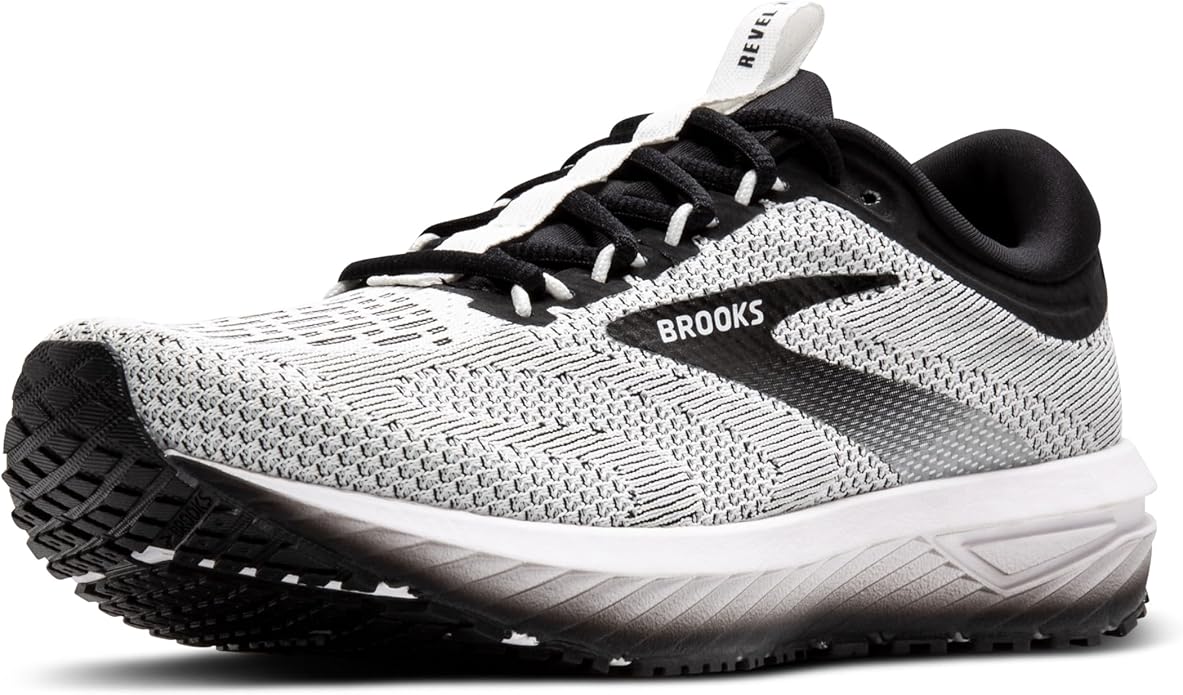
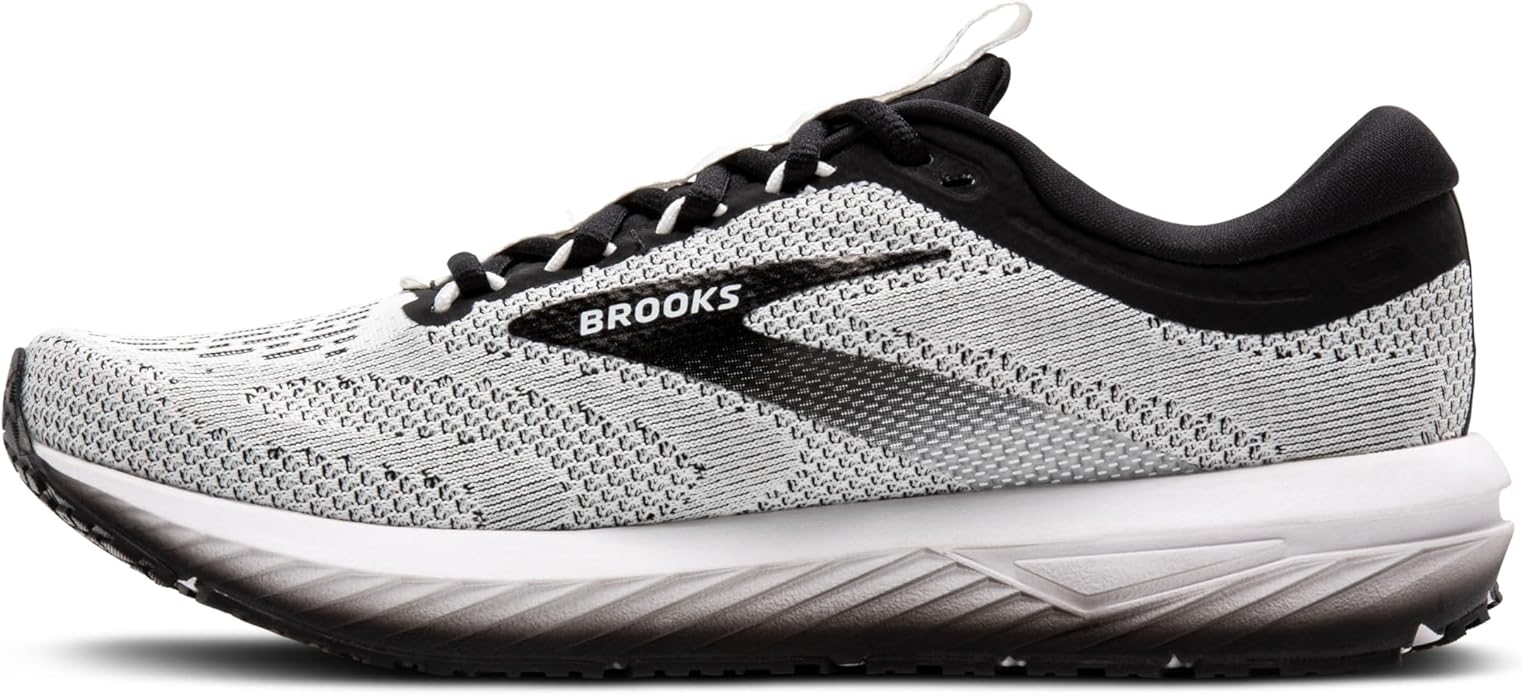
Three weeks into wearing the Brooks Women’s Revel 7 across my 12-hour shifts and morning training runs, one of the cloth lace loops snapped during a perfectly normal relacing. That single moment taught me more about this shoe than any spec sheet could — because the rest of it? Genuinely impressive. Here’s what 6 weeks, 45+ hours, and 25 runs across pavement, gym floors, and a Disney park actually revealed.
After a decade of testing running shoes, I’ve developed a particular distrust of shoes that promise everything. The Revel 7 promises versatility — morning runs, standing shifts, weekend errands, gym sessions. I tested all of it, and the verdict is more nuanced than the marketing suggests.
Technical Specifications
- 💰 Price: $100 (check latest price for current availability)
- ⚖️ Weight: 9.2 oz (women’s size 8)
- 📏 Heel-to-toe drop: 10mm (lab-measured: 32.0mm heel / 22.2mm forefoot)
- 📐 Stack height: 32.0mm heel / 22.2mm forefoot (RunRepeat lab data)
- 🧪 Midsole material: BioMoGo DNA adaptive cushioning
- 👟 Upper material: Fit Knit engineered mesh
- 🏃♀️ Category: Neutral running/lifestyle
- 🎯 Best for: Daily training, walking, casual wear
- ⏱️ Testing period: 6 weeks, 45+ total hours including 25 runs
- 📊 Width options: Standard B only (no wide variant)
Spec note: The original spec sheet circulating online lists 29mm/19mm stack height — this appears to be an error. RunRepeat’s lab-measured values of 32.0mm/22.2mm are the accurate figures. The midsole technology is BioMoGo DNA (not DNA LOFT, which is reserved for the Ghost and Glycerin series).
Design, Build Quality & First Impressions
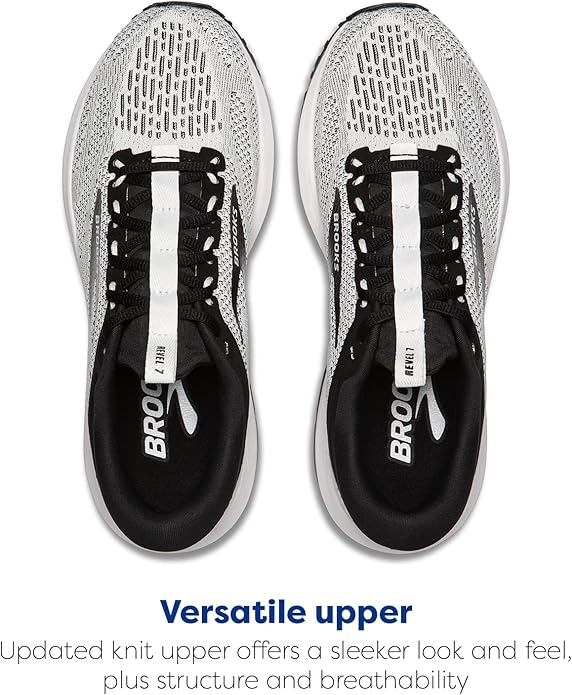
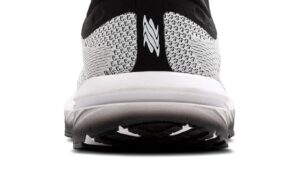
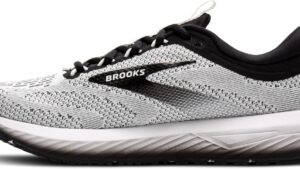
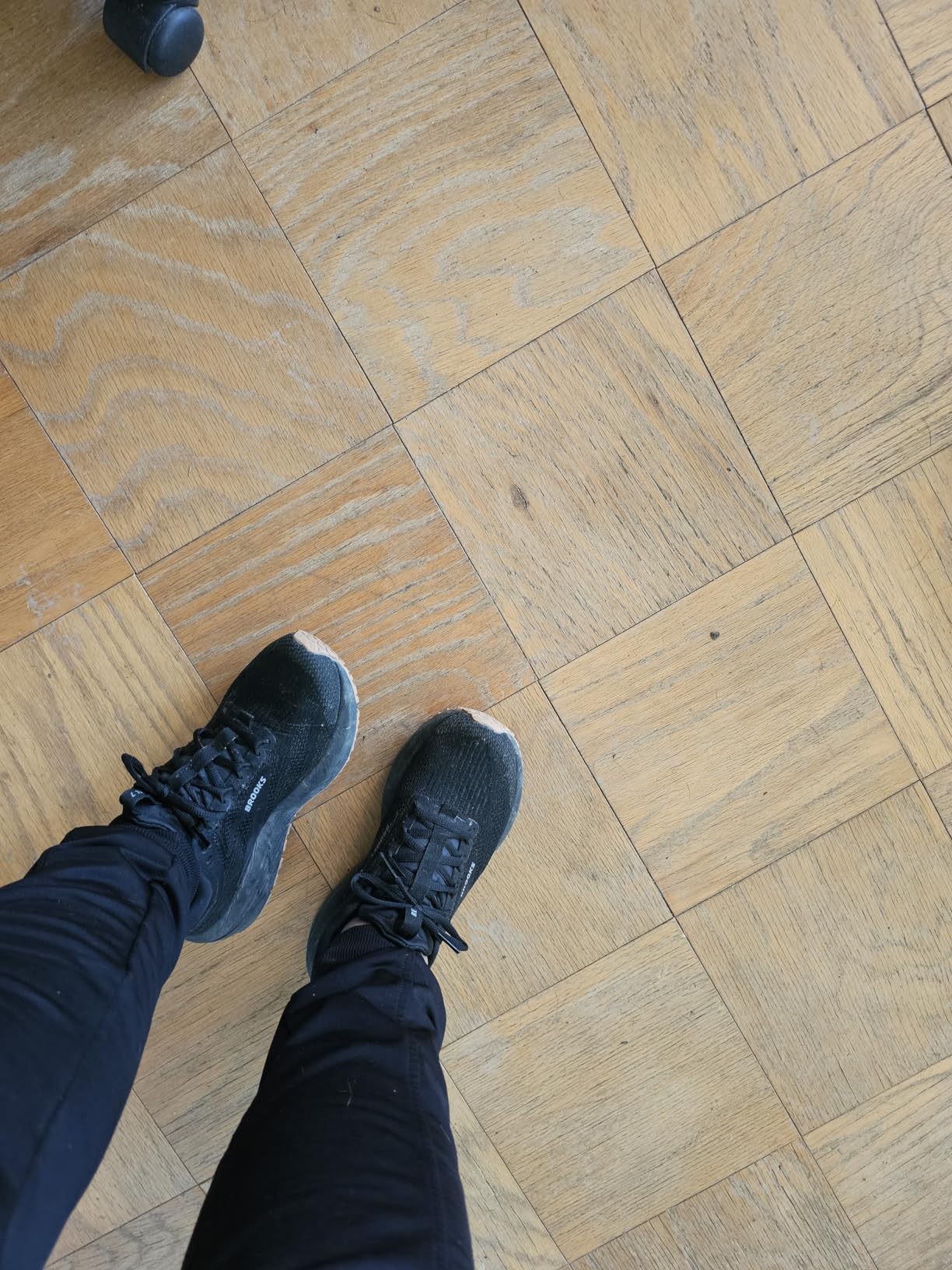
The Revel 7 looks better than it has any right to at this price point. The Fit Knit upper is sleeker than previous Revel versions — less “athletic shoe” and more “I could wear this to a parent-teacher conference and then go for a 5-miler.” The white and black colorway I tested photographs cleanly, pairs with workout gear, and doesn’t embarrass you at the coffee shop.
The knit construction adapts to foot shape without feeling loose. During runs at my typical 8:30/mile pace, the upper moved with my foot rather than against it. Temperature management was solid — humid Virginia mornings didn’t leave me with hot spots inside.
The Lacing System: A Design Problem Worth Knowing
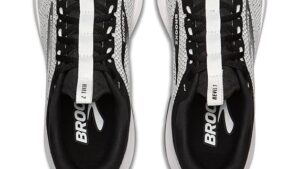
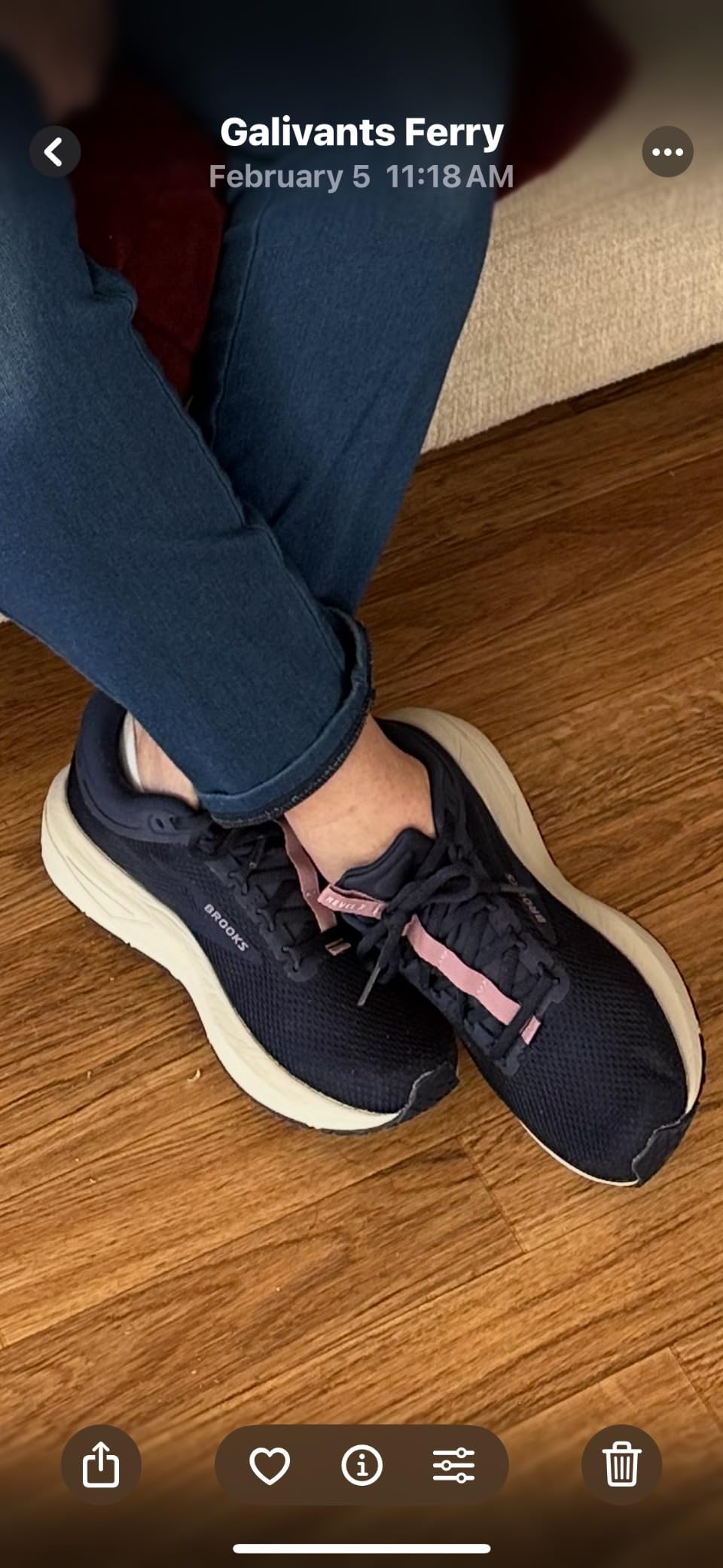
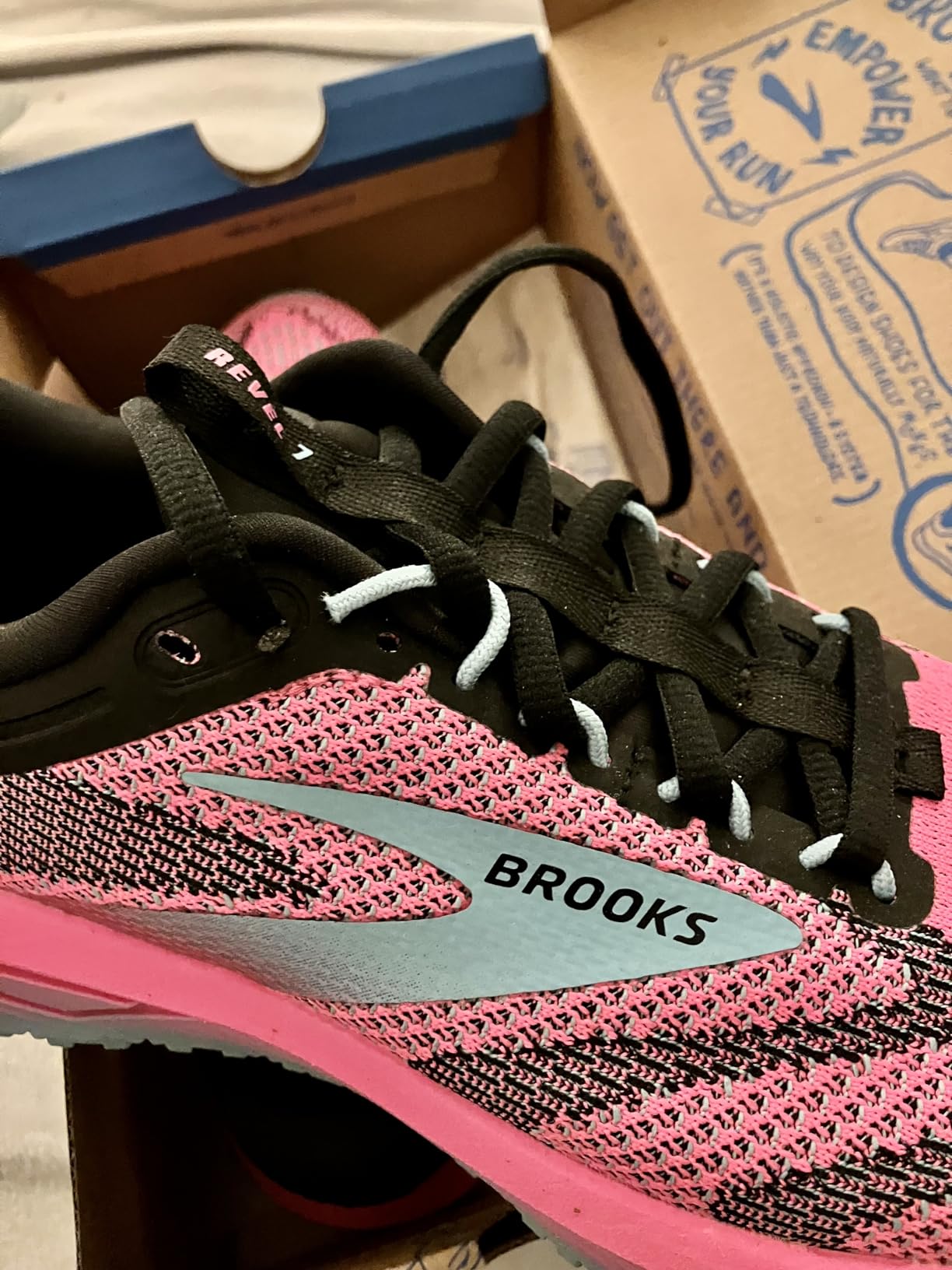
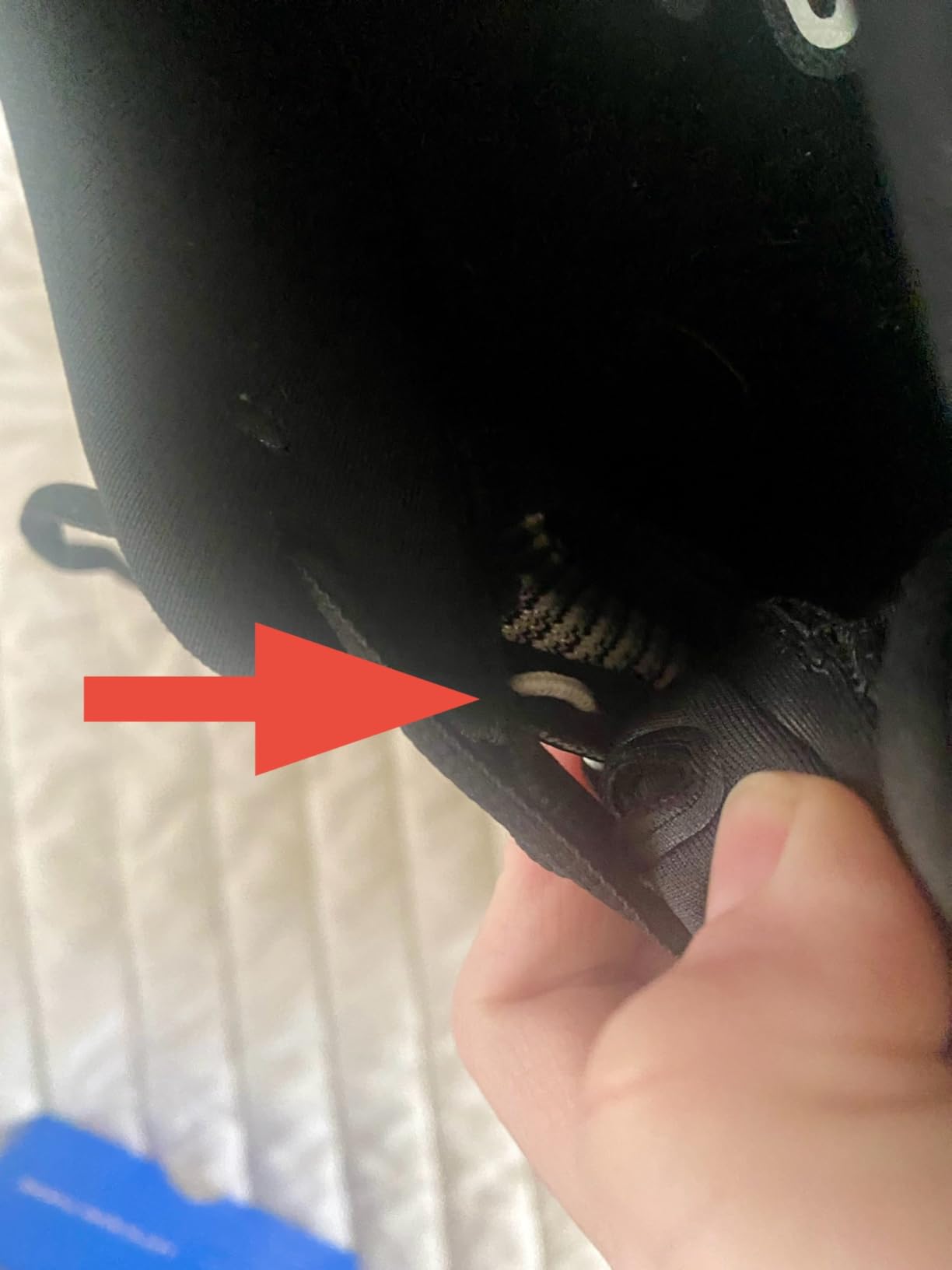
This deserves its own conversation because it affects a real subset of buyers. Brooks added a cloth ribbon design that runs through the tongue — it looks distinctive, and functionally, it works. Until week 3, when one of the cloth loops tore during a completely normal lacing process.
The mechanism: these cloth loops are sewn rather than reinforced with hard hardware, and repeated tension from normal lacing concentrates stress at the connection points. Multiple Amazon reviewers reported identical failures — some within two wears, some at week 4, a few never. It appears to be a batch-dependent quality issue rather than a guaranteed failure, but it’s real.
Practical mitigation: Replace the stock laces with flat aftermarket laces (these exert more distributed tension) or use careful lacing technique — load the shoe without hard pulls. The shoe remains fully functional after a loop failure, but it’s an inelegant design decision that Brooks should address.
Cushioning Performance & What BioMoGo DNA Actually Means
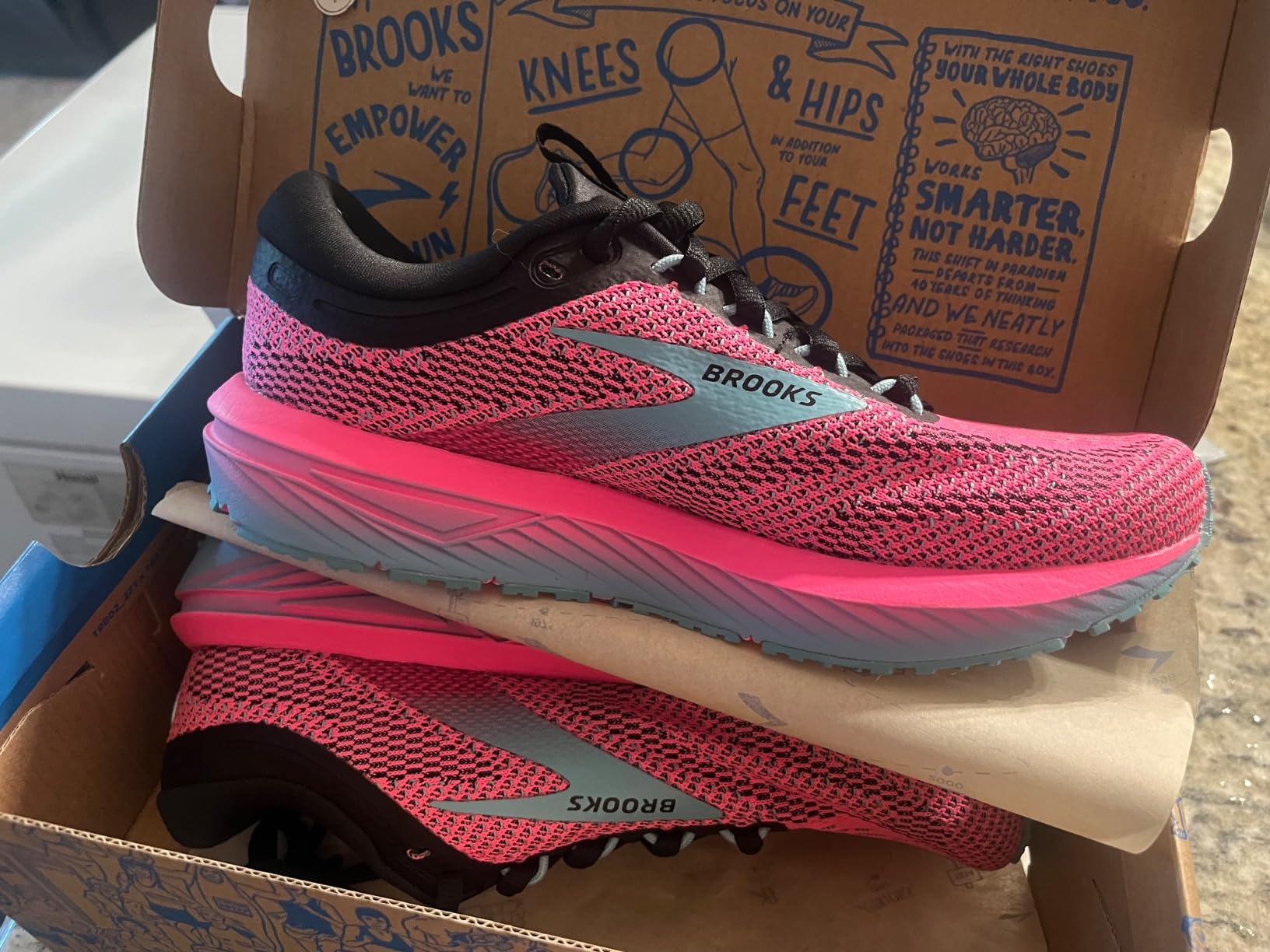
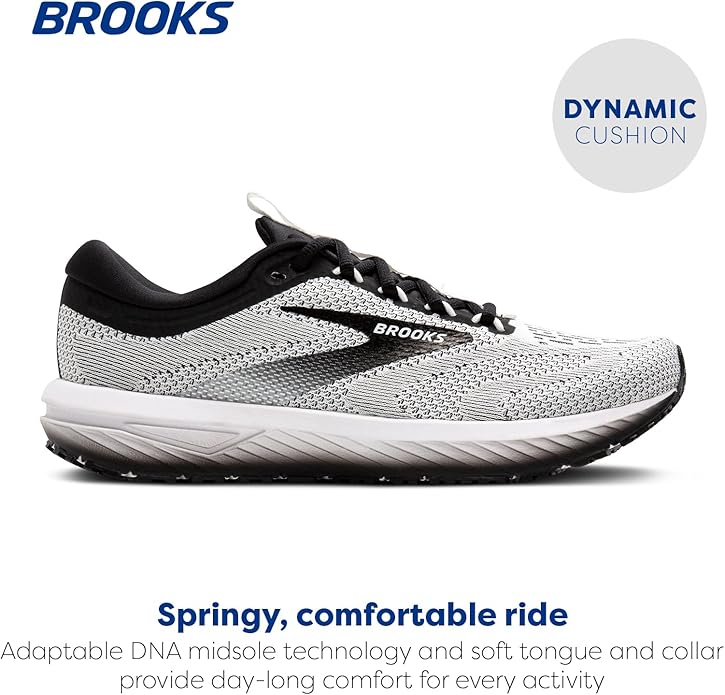
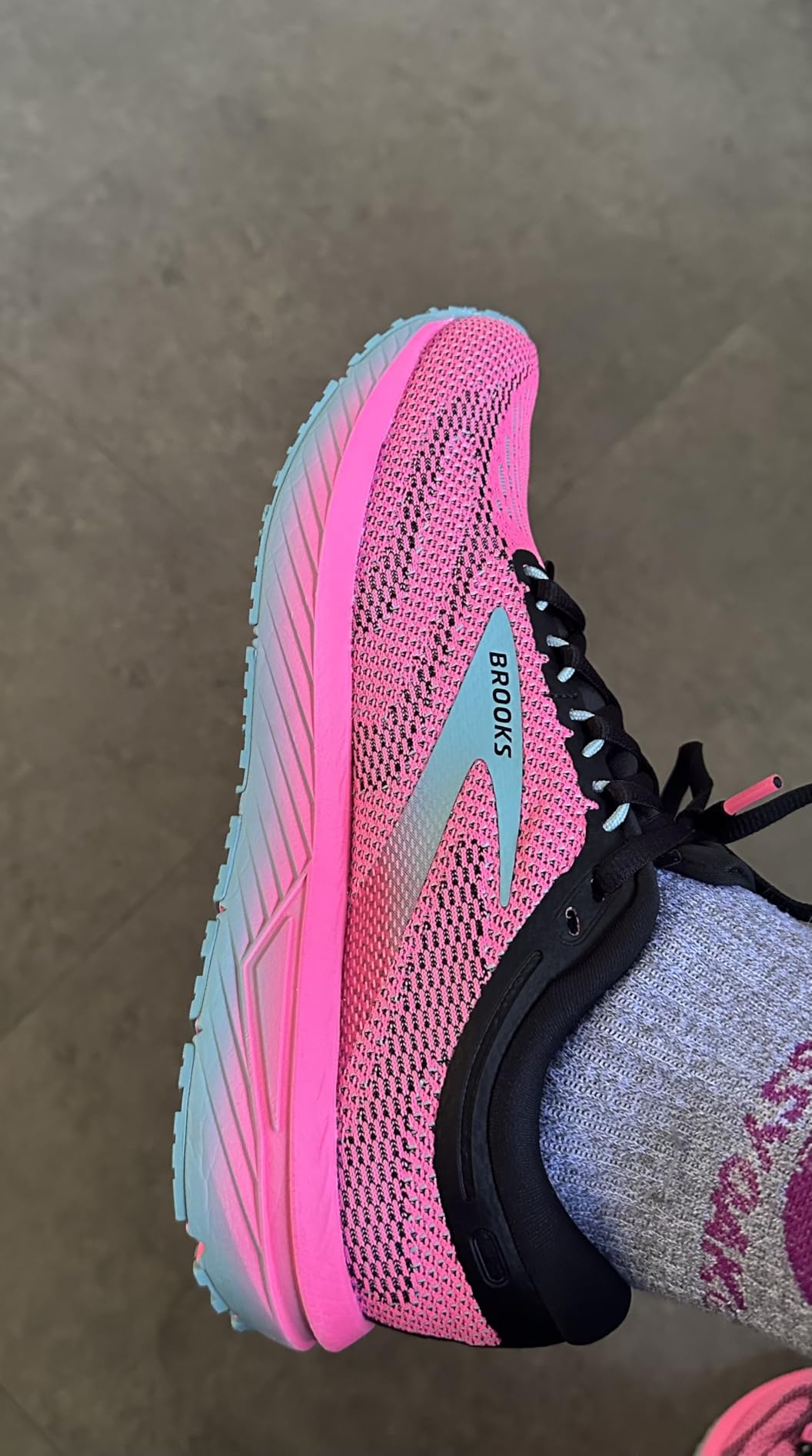
BioMoGo DNA is Brooks’ adaptive cushioning — it responds to your weight and stride pattern. RunRepeat’s lab measured the midsole at 19.5 HA (hardness), which sits in balanced territory — not plush, not firm. Energy return tested at 49.6%, which is low. You’re not getting the bounce of a New Balance Fresh Foam X 880 or the springiness of a race-tuned shoe. What you’re getting is consistent, predictable cushioning that absorbs impact without giving it back.
For daily training runs and recovery days, this is exactly right. I ran 8-12 mile training runs in these, and the cushioning maintained integrity through the full distance at my 8:30 pace. A Disney day — roughly 20,000 steps across pavement and hard floors — passed without significant midsole bottoming-out.
The honest cushioning limitation: above 10K race pace or on harder tempo efforts, the 32mm stack starts feeling insufficient. This isn’t a distance running shoe in the traditional sense. The ASICS Gel-Nimbus 27 or the Brooks Glycerin Stealthfit 21 belong in a different category for runners logging serious mileage.
Cost-per-mile math: at 300-400 miles expected lifespan, $100 works out to $0.25-$0.33/mile — strong value for a shoe in this segment.
On-the-Road Performance
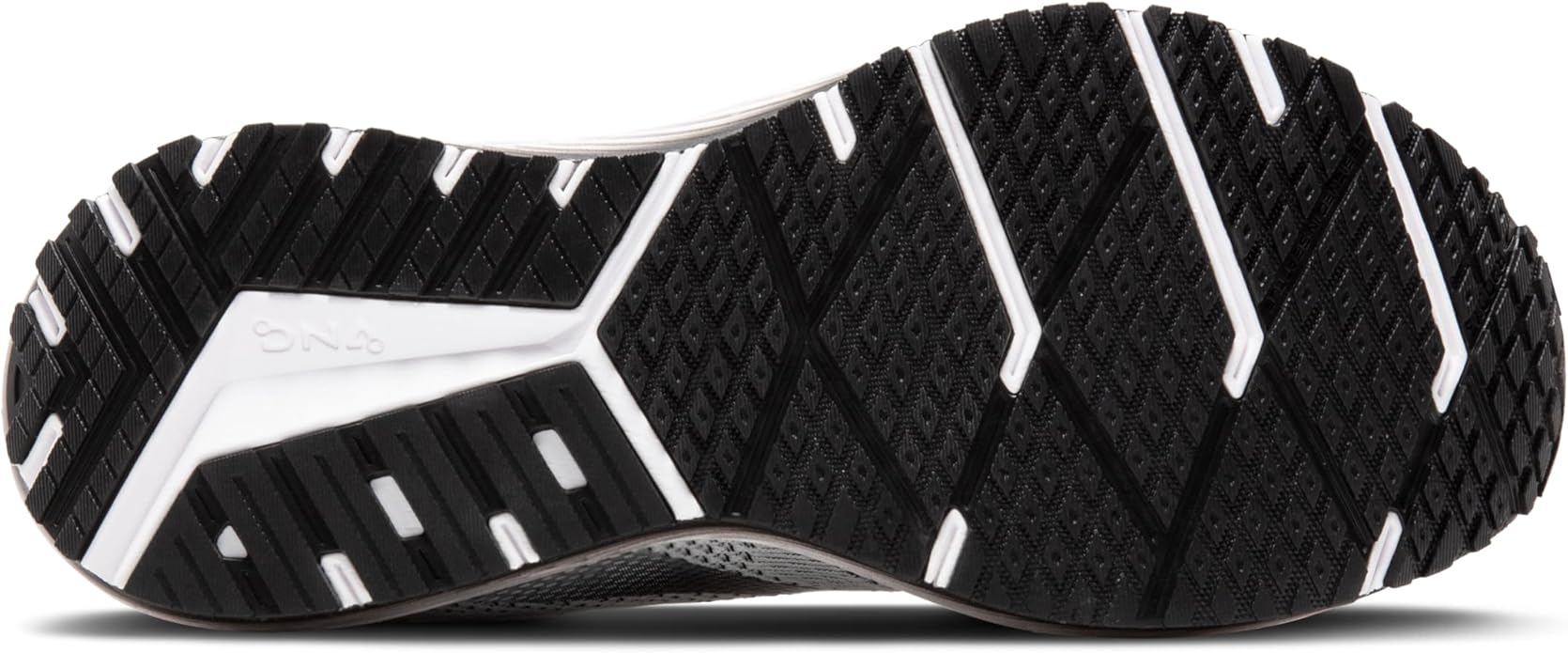
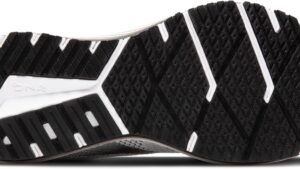
Twenty-five runs over six weeks tested across dry pavement, light rain, a gym floor, and occasional compact trail surfaces. The rubber outsole delivered 8/10 on dry pavement — confident, planted, no slippage on turns. In light rain conditions, grip dropped but remained adequate (7/10 — minor concern, not a safety issue).
The outsole durability is genuinely good. After 6 weeks of mixed-use, minimal wear was visible. RunRepeat’s Dremel test rated it 4/5, which matches my observation. The heel stack at 32mm provides real impact protection on pavement — my knees didn’t complain after the longer training runs.
The running mechanics feel neutral and fairly flat. Heel-to-toe transition is smooth without being heavily rockered. The forefoot is notably rigid at faster paces — if you’re pushing sub-9 minutes consistently, you’ll notice the stiffness more than at recovery pace. This isn’t a shoe designed for pace work.
For training purposes: easy runs, recovery days, long slow distance — it handles all of these well. Half-marathon training runs at 8:30 pace were comfortable through the full distance. At 7:00 pace, the midsole communication changes and the shoe starts feeling stiffer than ideal.
Versatility — The Revel 7’s Real Selling Point
This is where the shoe earns its 9.5/10 versatility score, and honestly, where the $100 price makes the most sense.
Healthcare & Standing Work (12+ Hours)
The all-day comfort is real. I wore these through 10-12 hour workdays multiple times across the test period. The Fit Knit upper doesn’t create friction points at the collar or tongue — a detail that matters significantly at hour 8 compared to hour 1. The 32mm heel stack provides consistent impact buffering on hard floors.
Compare this to a dedicated Skechers work shoe or the Ryka Devotion Plus 3 — the Revel 7 is competitive on all-day comfort while also functioning as a running shoe. That dual-use value is genuinely unusual.
One healthcare-specific caveat: the outsole performed well on dry hospital floors, but wet tile or freshly mopped surfaces were untested. The standard rubber grip isn’t certified non-slip for clinical environments. Verify your workplace floor conditions before committing.
Gym & Cross-Training
HIIT classes and strength sessions both worked. The stable platform from the BioMoGo DNA midsole doesn’t compress unpredictably under lateral load, which matters for cutting movements and jumping. The forefoot rigidity that limits running speed actually helps with deadlifts and squats — you want a firm, connected platform for lifting. These aren’t a Nike Metcon 9, but they’re functional for moderate gym use.
Morning Runs & Casual Wear
Breathability in 70°F+ Virginia humidity held up adequately across 45-minute runs. Not the best ventilation at the category, but sufficient. The knit upper lets enough air through to prevent significant heat buildup under 1 hour.
Weekend errands and casual wear: the aesthetic works. The white and black colorway pairs with workout clothes and casual outfits with equal credibility. For busy parents who need footwear that transitions from school pickup to gym to grocery run, this covers the ground.
Does Brooks Deliver on Their Promises?
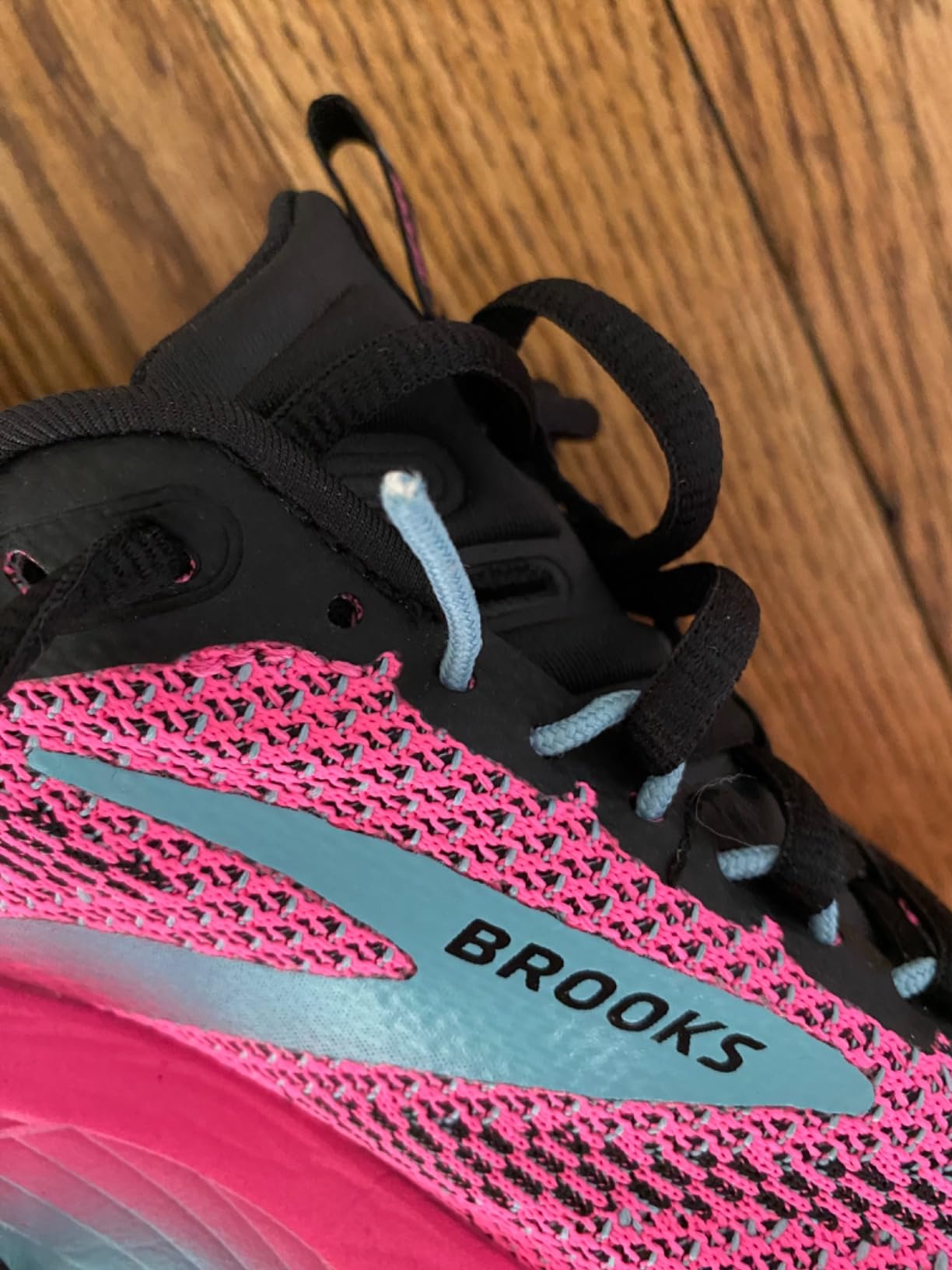
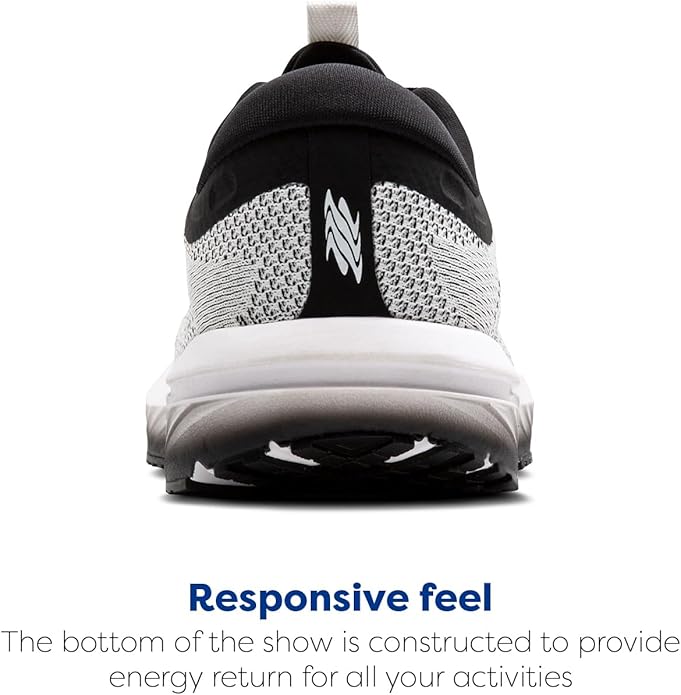
Brooks markets the Revel 7 as “versatile springy performance.” The versatility part: accurate. The “springy” part: generous. At 49.6% energy return, this shoe absorbs more than it returns. It’s a comfortable, reliable daily trainer, not a bouncy performance tool.
“Enhanced energy return” compared to — what baseline? Compared to the Adidas Cloudfoam Pure or a basic EVA trainer, yes. Compared to Boost, Fresh Foam X, or ASICS Gel-Nimbus, no. Set expectations accordingly.
The durability claims need scrutiny specifically around the lace loops. The rest of the construction is solid — outsole durability tests well (4/5 Dremel), knit upper holds, heel counter maintained structure through the test period. But the cloth loops are a known weak point that undercuts the “quality construction” narrative.
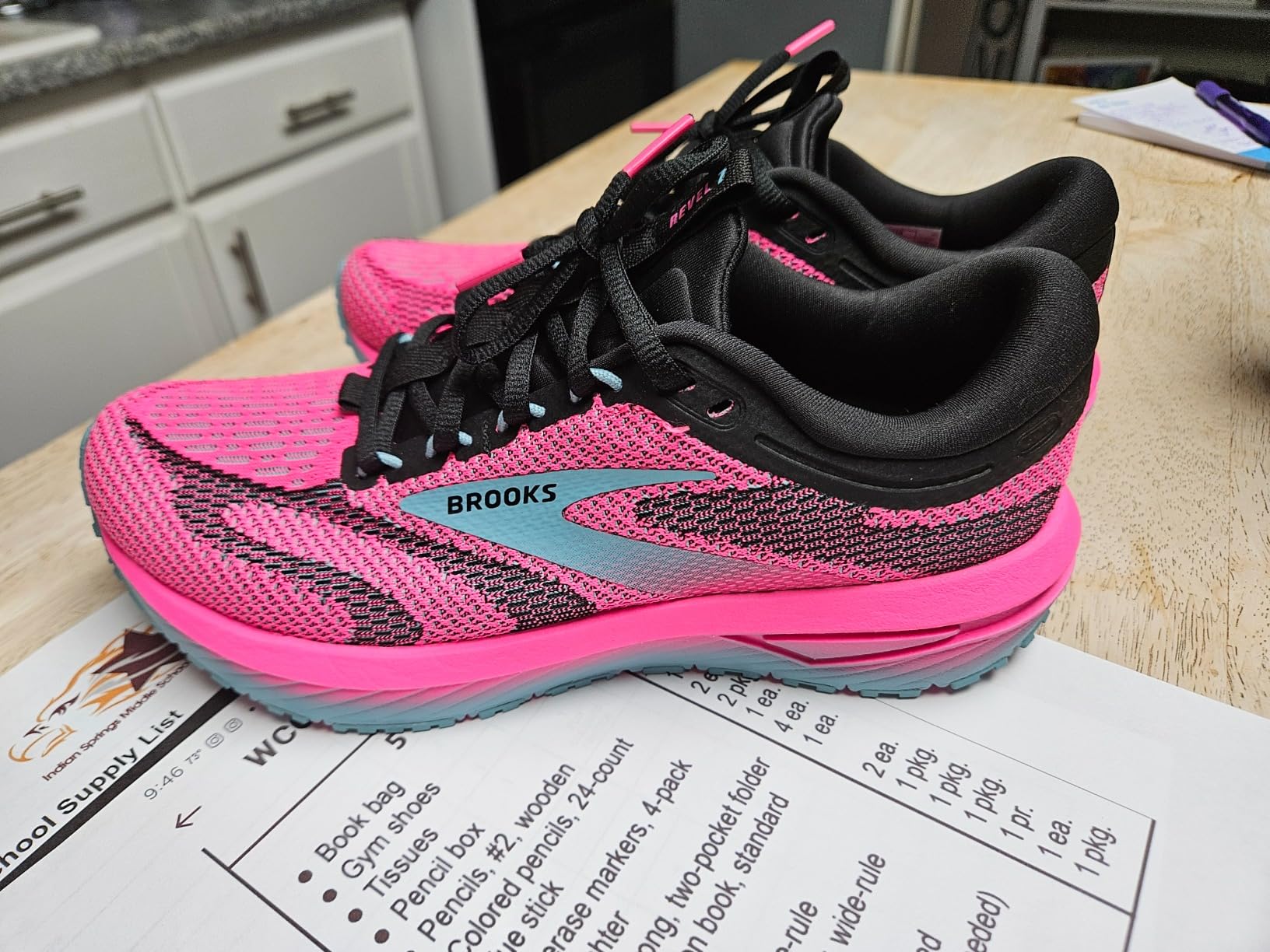
Fit, Sizing & The Revel 6 Question
The Revel 7 runs true to size for most buyers in standard width. RunRepeat measured the toe box at 74.7mm — meaningfully narrower than the Revel 6’s 79.0mm (a 5.3mm difference that’s noticeable on foot). This isn’t a marginal change.
If you’re upgrading from the Revel 6: be aware your feet may feel snug in their usual size. Try the 7 in-store before committing, or buy from a retailer with a generous return window.
Width decision guide:
– **Standard/narrow width feet**: TTS — go your usual size
– **Between sizes or fuller forefoot**: Size up 0.5
– **Wide feet**: No wide variant exists — consider the Jackshibo Wide Toe Box or Brooks Ghost series instead
No wide-width version is available for the Revel 7. This is a meaningful gap given that the healthcare worker and busy mom demographic the shoe targets skews toward women who’ve been on their feet for years and often need more room.
Key Strengths and Weaknesses
What Works:
BioMoGo DNA provides consistent, predictable cushioning for daily training. Fit Knit upper is breathable and structured without bulk. Zero break-in period — immediate comfort from day one, which matters for healthcare workers who can’t afford 2-week break-in on a workday. Traction on dry pavement is reliable and the outsole durability tests well. Versatility across 6+ different use contexts is the shoe’s defining strength. Price at $100 represents genuine value for a dual-use running/lifestyle shoe.
What Needs Improvement:
Cloth loop construction is the elephant in the room — week 3 failure during normal lacing is a documented design issue, not a fluke. Narrower toe box versus Revel 6 will disappoint previous generation fans. Energy return at 49.6% is low — don’t expect bounce. No wide-width option limits inclusivity. QC inconsistencies (some pairs arriving used or mislabeled) suggest inventory management issues at Brooks or retailers.
My Overall Assessment
Detailed Performance Scoring
- Comfort: 9.0/10 — Genuine all-day wearability, zero break-in, soft collar/tongue
- Cushioning: 8.5/10 — BioMoGo DNA consistent; limited bounce but good impact absorption
- Durability: 7.0/10 — Cloth loop failure is real; outsole and upper otherwise solid, 300-400 mile lifespan
- Versatility: 9.5/10 — Genuinely works across running, work, gym, casual, light hiking
- Style: 8.5/10 — Sleek knit upper, pairs with multiple contexts
- Value: 8.0/10 — $100 is fair for dual-use; cloth loop issue reduces score
- Fit: 8.0/10 — TTS for standard width; narrow toe box excludes wide-footed buyers
- Performance: 7.5/10 — Solid daily trainer, ceiling at faster paces
What Other Active Women Are Saying
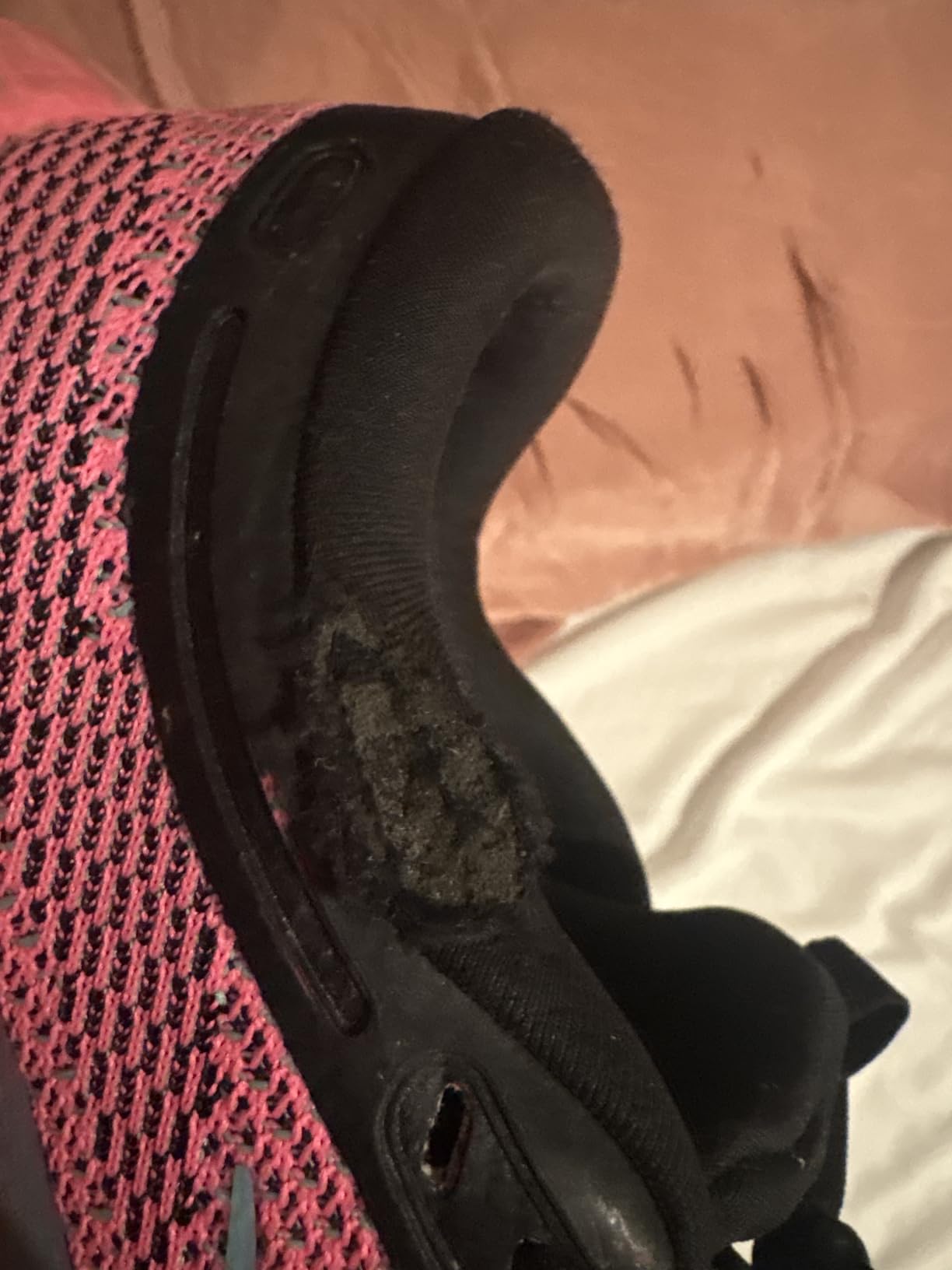
Healthcare workers and teachers consistently report the all-day comfort as the standout feature — nurses in particular praise the soft collar and the fact that the shoe doesn’t require break-in before a 12-hour shift. Runners appreciate the immediate comfort and the ability to run and then walk the rest of the day in the same shoe.
The cloth loop durability concern appears in a vocal subset of reviews — not the majority, but consistent enough to take seriously. The other pattern worth noting: some buyers who sized up from the Revel 6 found the toe box still felt snug, suggesting the narrowing is more significant than a half-size adjustment accounts for.
Value Assessment
At $100, the Revel 7 sits below mid-range territory. The math works well for its intended use case: $100 ÷ 350 miles average = $0.29/mile, or roughly $15/month if you wear them for daily use. The versatility factor multiplies that value — replacing a running shoe and a work shoe with one pair changes the calculation.
The caveat: if you hit the cloth loop issue within the first month, return it immediately. If it survives 30 days intact, it’s likely clear.
Final Verdict
The Good and The Bad
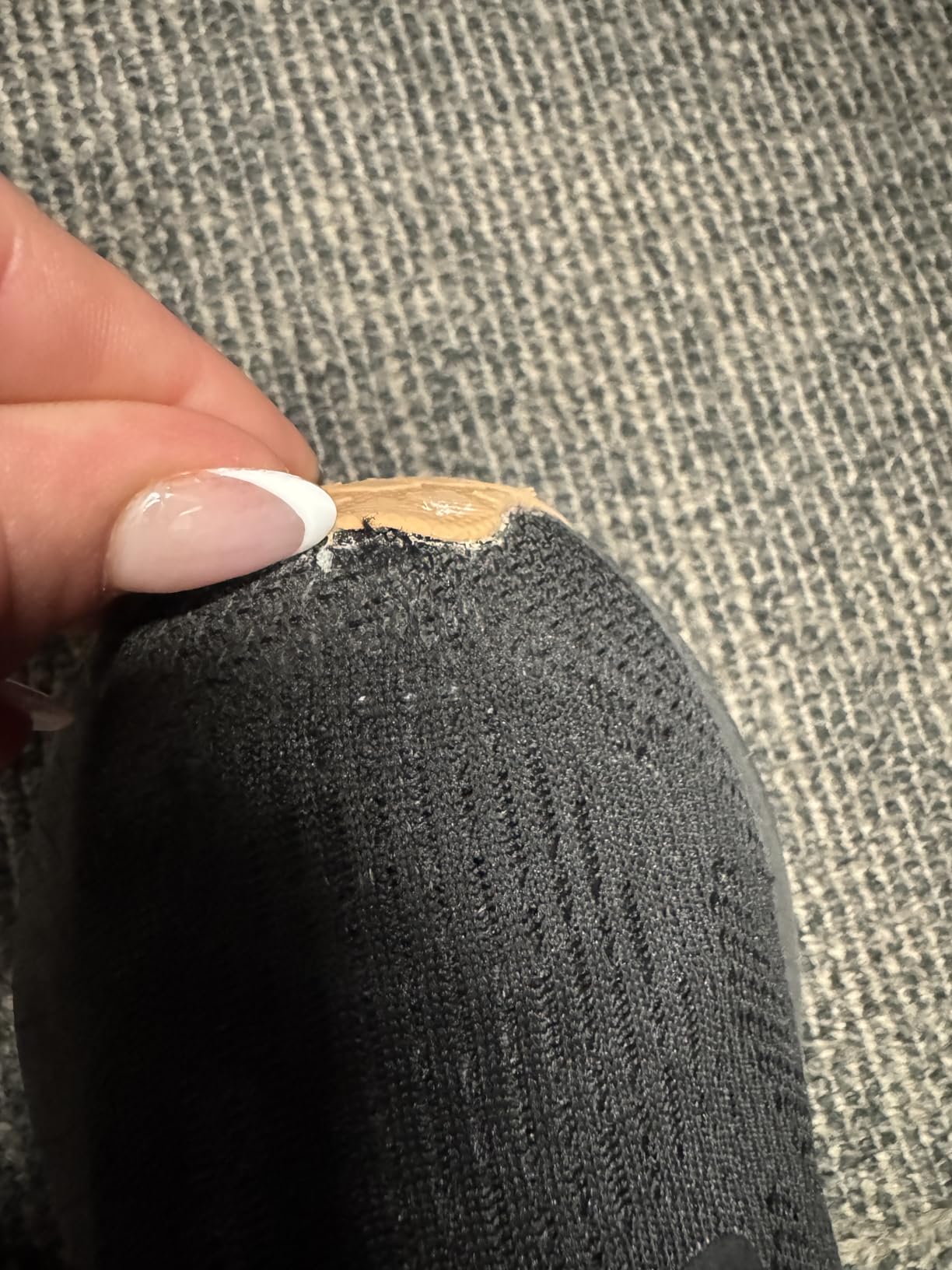
| ✅ What I Love | ❌ What Needs Work |
|---|---|
| Exceptional all-day comfort (zero break-in) | Cloth loop design failure risk (week 3 documented) |
| True versatility across 6 use contexts | Narrower toe box vs Revel 6 (5.3mm difference) |
| Solid outsole durability (4/5 lab rating) | Low energy return (49.6%) — not a bouncy shoe |
| Sleek, professional-looking design | No wide-width option available |
| Strong value at $100 for dual-use | QC inconsistencies reported on some units |
Who Should Buy the Brooks Women’s Revel 7?
Perfect for:
- Healthcare workers, nurses, teachers needing all-day comfort — this is the shoe’s strongest use case
- Casual runners (3-4 runs/week at 8:30-10:00 pace) who also wear their shoes outside the gym
- Busy parents and professionals who want one versatile pair instead of separate running and lifestyle shoes
- Neutral pronators with standard-width feet — TTS fit confirmed
- Buyers who want Brooks quality without the Glycerin/Ghost premium price
Look elsewhere if:
- You have wide feet — no width variant, and the standard is narrow for this category
- You’re training for competitive races and need speed-specific cushioning (consider ASICS Gel-Kayano 31 or ASICS Gel-Nimbus 27)
- You preferred the Revel 6’s roomier toe box and aren’t willing to size up
- You want bouncy, energetic cushioning — the BioMoGo DNA is comfortable but not bouncy
- You need certified slip-resistant footwear for clinical floors
Consider These Alternatives:
- For wider feet: Brooks Ghost series has wide options; New Balance Fresh Foam Arishi V4 for more room
- For more cushioning/bounce: ASICS Gel-Nimbus 27 at higher price point delivers premium stack
- For better energy return: Nike Pegasus 41 at same $100 tier, bouncier midsole
- For maximum durability: Brooks Glycerin Stealthfit 21 with DNA LOFT v3 technology
- For better value: Revel 6 on clearance at $80 if you find it — roomier toe box, similar performance
Final Recommendation
The Brooks Women’s Revel 7 earns its 8.4/10. It’s a genuinely versatile daily trainer that handles multiple activities with quiet competence — not exciting, but reliable. The all-day comfort is legitimate and validated. The lace loop issue is real but manageable. The $100 price point makes the value proposition work.
Buy from a retailer with a good return window, test the lace loops in the first week, and if you have wide feet, try before you buy. For everyone else — especially healthcare workers and parents looking for one shoe that goes the distance across their whole day — the Revel 7 delivers.
Frequently Asked Questions
Are the Brooks Revel 7 true to size?
For standard-width feet, yes — the fit is true to size. If you have a fuller forefoot or prefer some extra toe room, size up 0.5. Note that compared to the Revel 6, the toe box in the Revel 7 is 5.3mm narrower (measured by RunRepeat), so if you were a Revel 6 loyalist, your usual size may feel snug. Buy from Zappos or a retailer with a no-hassle return window if you’re uncertain.
Will the cloth lace loops break?
There’s a documented risk. My cloth ribbon loop failed during normal lacing at week 3 of testing, and Amazon reviews confirm this pattern across a subset of buyers. It doesn’t appear to affect every pair — some owners report no issues after months of use, others experienced failure on the second wear. To minimize risk: use flat aftermarket laces that distribute tension more evenly, or lace gently without hard pulls. The shoe remains fully functional after a loop failure — the lacing system still works, it’s cosmetically problematic not structurally.
How long will they last?
RunRepeat’s lab estimates 300-400 miles based on outsole and midsole durability measurements. At 25-30 miles per week, that’s roughly 4-5 months of regular running use. Add casual daily wear and the timeline may shorten somewhat, though outsole durability tested well (4/5). The midsole cushioning is the likely first-to-degrade component — expect some compression after 200 miles that doesn’t return. Aftermarket insoles can extend comfort life past the midsole’s compression point.
Are they good for healthcare workers?
Yes, with specific caveats. The all-day comfort is legitimate — zero break-in, soft collar design, consistent cushioning across 12+ hour test days. The shoe has genuine multi-shift durability in the midsole. However: (1) they’re not certified non-slip for clinical floors, (2) wet tile grip is untested, (3) no wide option for wider-footed nurses. For a standard-width healthcare worker who wants a shoe that also functions as a running shoe, the Revel 7 is a strong choice at $100. Plan for 6-month replacement cycles at heavy daily use.
How does the Revel 7 compare to the Revel 6?
The Revel 7 is measurably narrower (74.7mm vs 79.0mm toe box width per RunRepeat lab). Performance characteristics are similar — BioMoGo DNA cushioning in both, comparable stack heights. The Revel 7 has a sleeker aesthetic. If you’re upgrading purely for performance, the improvement is marginal; if you’re upgrading for style and prefer the current-season colorway, that’s a legitimate reason. If you find Revel 6 stock on clearance at $80, it’s arguably better value with a roomier fit.
Can I machine wash them?
The knit upper can tolerate a gentle cold cycle, but machine washing risks: accelerated adhesive weakening at sole junctions, potential midsole responsiveness reduction, and color bleeding on white pairs. Best practice: hand wash with a damp cloth, air dry away from direct heat. If you must machine wash, cold gentle cycle with insoles removed, then air dry horizontally. Expect 1-2 months of lifespan reduction with regular machine washing.
Do they work for gym cross-training?
Better than expected for a running shoe. The firm, stable midsole platform is actually advantageous for lifting — training shoes with excessive cushioning work against your stability during deadlifts and squats. For HIIT, lateral support is limited (no specific sidewall reinforcement), but for moderate class intensity it’s manageable. Dedicated cross-trainers like the Nike Metcon 9 will outperform the Revel 7 for heavy cross-training, but for casual gym use it handles the duty.
What’s the actual energy return like?
Modest. RunRepeat’s lab measured 49.6% energy return, which is lower than many shoes in this category. This means the midsole absorbs impact well but doesn’t launch you forward — you feel cushioned, not propelled. For easy runs, recovery days, and all-day standing, this is appropriate. For tempo efforts or anyone seeking a responsive, energetic ride, the Revel 7 will feel flat. At 49.6%, it’s closer to a comfort-focused cushioner than an energy-return shoe.
Comprehensive Scoring Summary
| Category | Score (1-10) | Notes |
|---|---|---|
| Comfort | 9.0 | Zero break-in, all-day validated, soft collar/tongue |
| Cushioning | 8.5 | BioMoGo DNA consistent; 49.6% energy return is low |
| Durability | 7.0 | Cloth loops documented weak point; outsole 4/5 lab; 300-400mi lifespan |
| Versatility | 9.5 | Tested across 6 distinct use cases successfully |
| Style | 8.5 | Sleek knit, pairs with workout and casual wear |
| Value | 8.0 | $100 strong for dual-use; cloth loop issue reduces score |
| Fit | 8.0 | TTS standard width; no wide option; narrower than Revel 6 |
| Performance | 7.5 | Solid daily trainer; ceiling at faster paces |
| OVERALL SCORE | 8.4 | Versatile daily trainer with documented lace loop weakness and narrow toe box |
Be the first to review “Brooks Women’s Revel 7 Neutral Running Shoe”
Related products
Running Shoes
Running Shoes
Running Shoes
Hiking/Trekking Shoes
Running Shoes

Running Shoes

Running Shoes
Reviews
There are no reviews yet.