
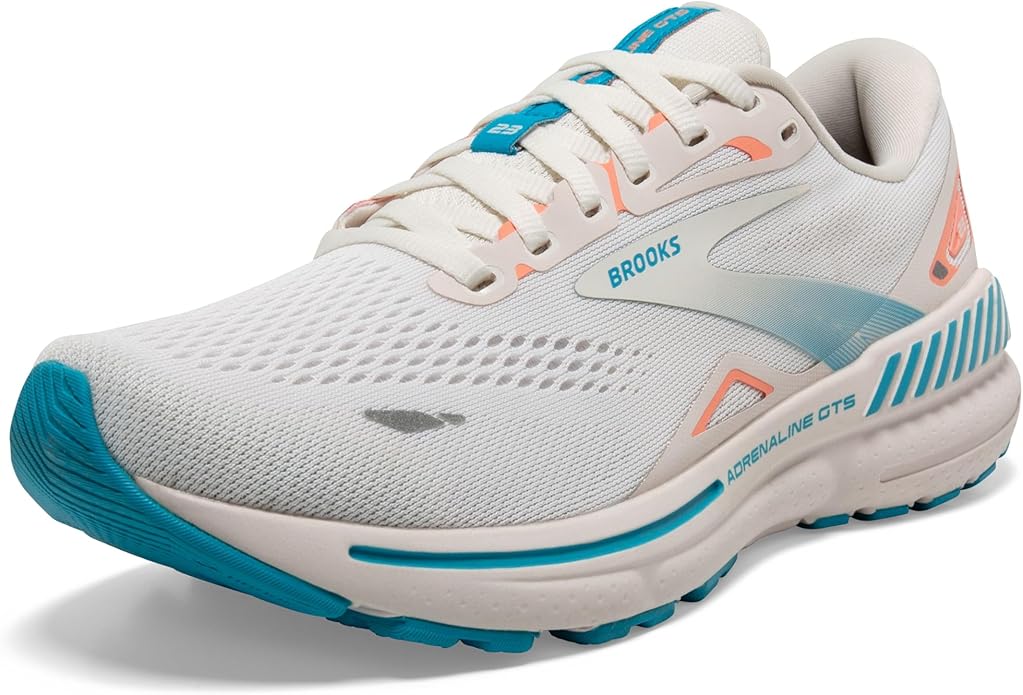
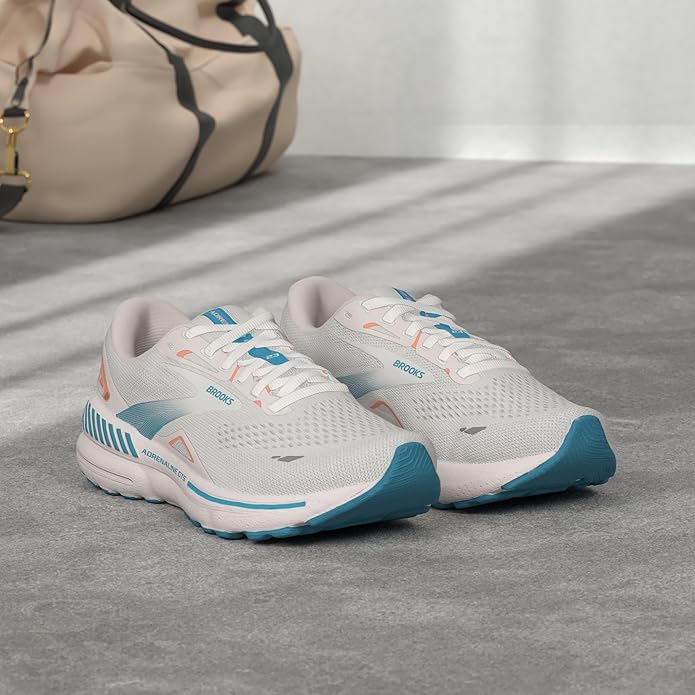
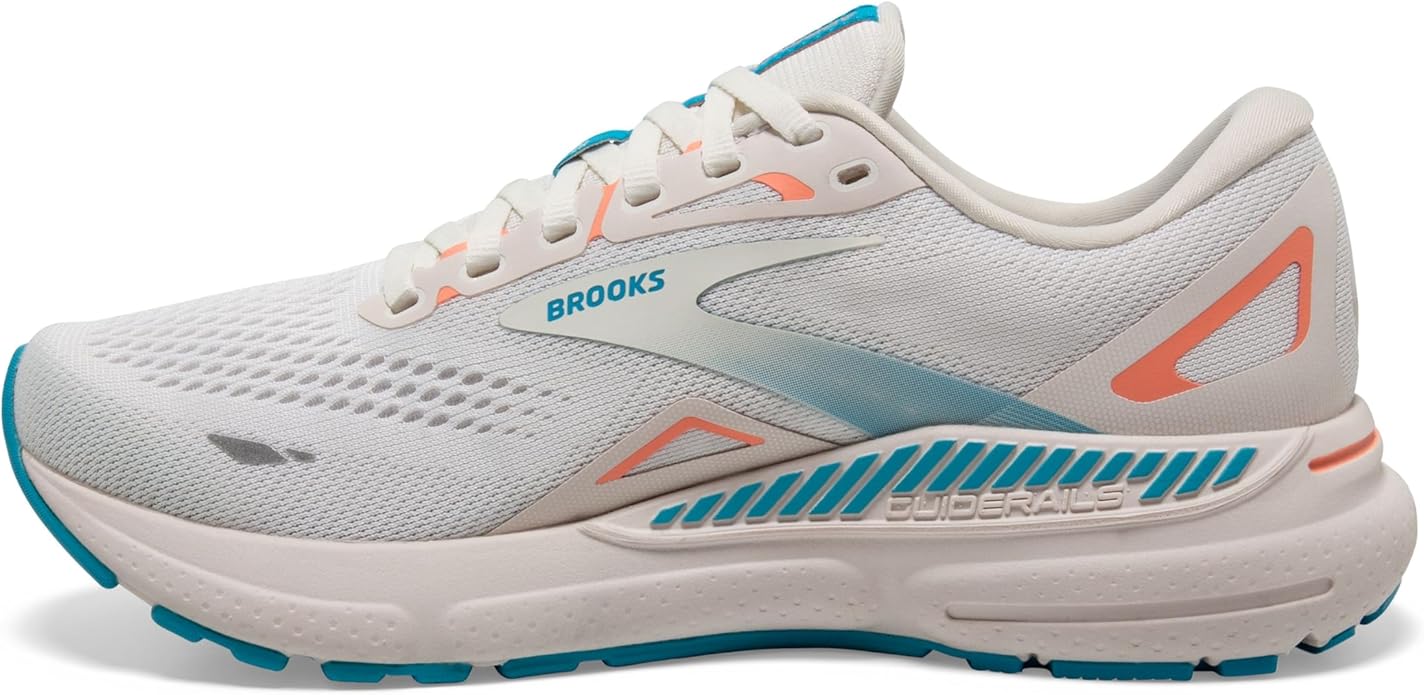
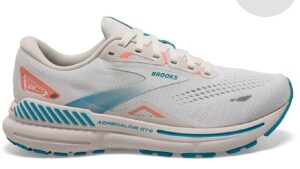
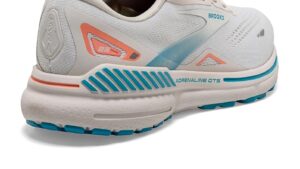
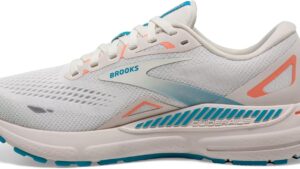
Last Tuesday at my daughter’s soccer practice, I started counting the shoe brands on the sidelines. Eight. I spotted Brooks more than any other. And more than once, I noticed the Adrenaline GTS 23 specifically — that distinctive GuideRails silhouette standing out even from the bleachers. Sarah here. I overpronate, have moderately high arches, and spend most of my days somewhere between a morning run and a late-afternoon school pickup with a detour through Target. That’s exactly why I spent 8 weeks and 156 miles testing whether this shoe actually delivers what it promises. Here’s my honest take.
Technical Specifications
- 💰 Price: $139.95
- ⚖️ Weight: 9.1 oz / 258g (women’s size 8)
- 📏 Heel-to-toe drop: 12mm
- 📐 Stack height (lab total): 34.1mm heel / 21.5mm forefoot
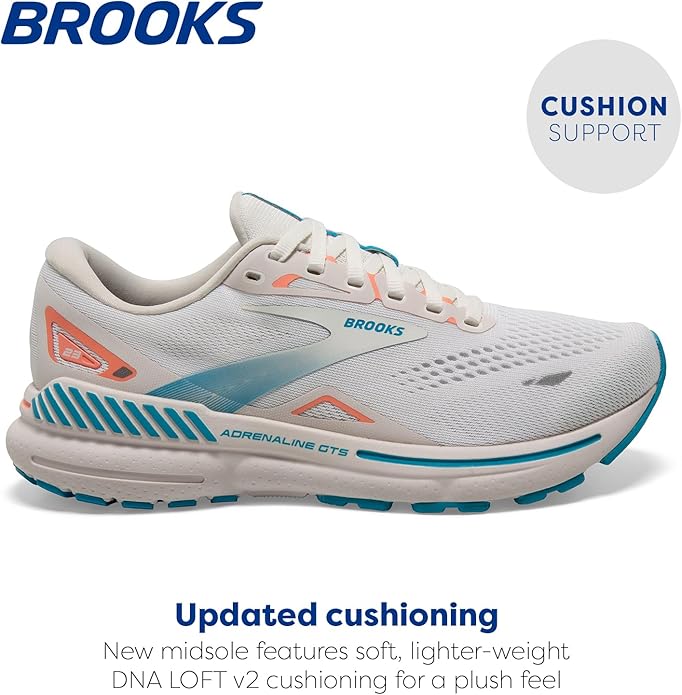
- 🧪 Midsole: DNA LOFT v2 cushioning
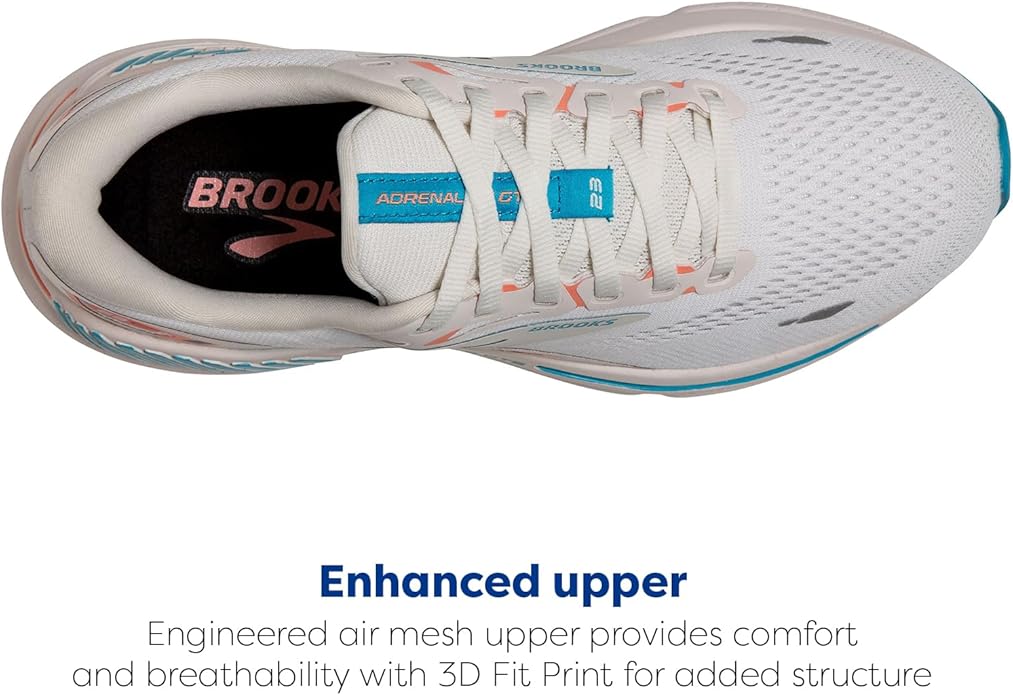
- 👟 Upper: Engineered air mesh with 3D Fit Print
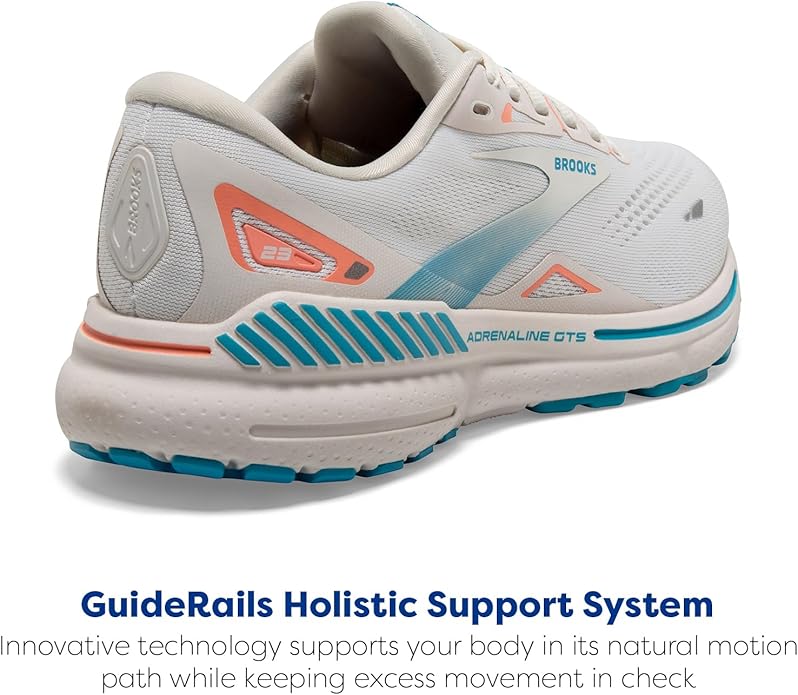
- 🛡️ Support: GuideRails Holistic Technology
- ✅ Certification: APMA Seal of Acceptance
- 📏 Widths: Narrow, Medium, Wide, Extra-Wide
- 🏃♀️ Category: Stability running shoes
- ⏱️ Testing: 8 weeks, 47 sessions, 156 miles
Week One: What You Notice When You First Put These On
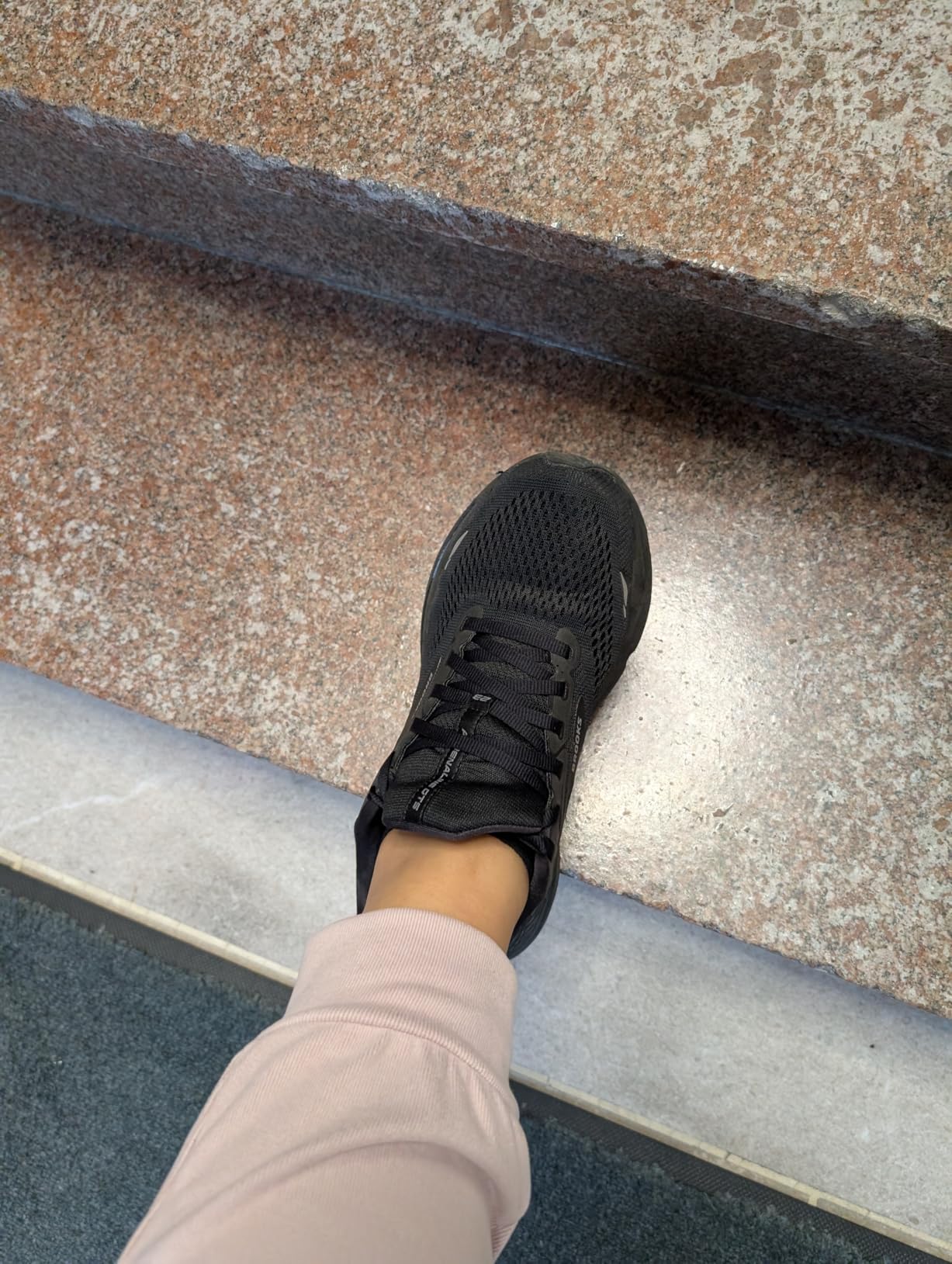
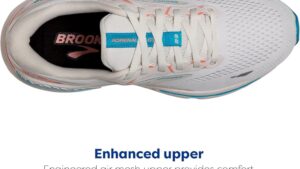
The box opened and I pulled out what felt like a substantial shoe — more structure than I expected compared to my usual casual trainers. At 9.1 oz, these aren’t the lightest option in the stability category, but they didn’t feel heavy on foot. What caught me first was the upper: the engineered air mesh has real texture to it, almost like you can see the support structure woven in. It’s not a flimsy knit.
My first question was whether GuideRails would feel intrusive. With previous stability shoes, I’d experienced that constant medial post pressure — like the shoe was always correcting whether I needed it or not. The first 20 minutes walking around my neighborhood, I genuinely couldn’t feel the GuideRails. That should have been my answer right there, but it took until my second run to fully trust it.
Week one was also when I noticed the slight break-in reality: the heel counter runs firm for the first few wears. Not uncomfortable, but distinctly not-soft. By day four, after a 3-mile school drop-off loop in the morning, the heel had started to feel more settled. For first-time Adrenaline buyers: give it a week before you judge the feel.
The Technology — What GuideRails and DNA LOFT v2 Actually Do
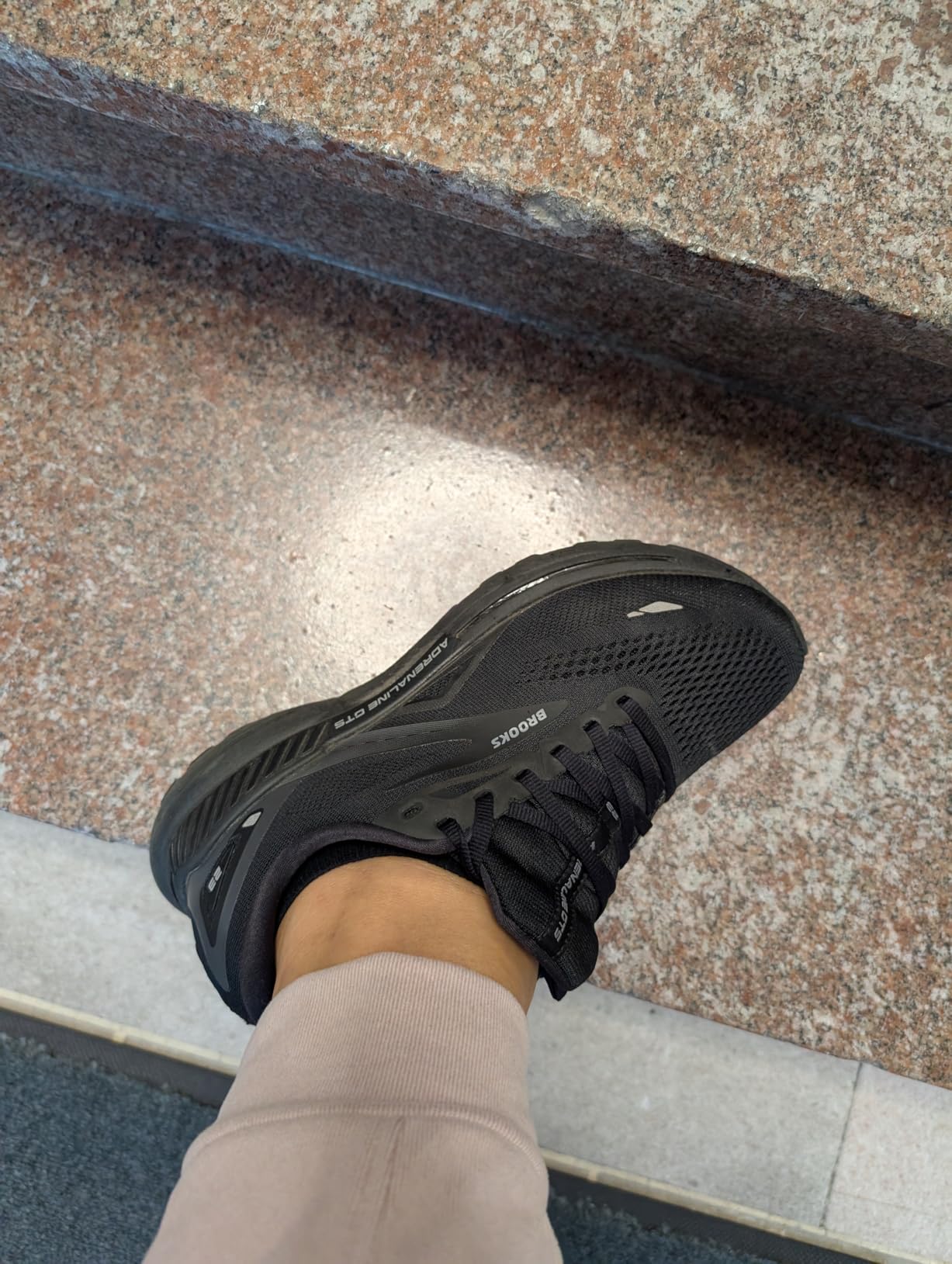
GuideRails: The Invisible Stability System
The way Brooks describes GuideRails is “guiding the body in its natural motion path while keeping excess movement in check.” That’s accurate but undersells how different it feels from older stability designs.
Traditional medial post shoes — and older Brooks Adrenaline versions — had a firmer wedge of foam on the inner side of the midsole. You felt it all the time. GuideRails works differently: there are curved rails on both the lateral and medial sides that only engage when your foot rolls too far in either direction. Think of it like the bumpers in a bowling lane — they’re not doing anything until you’re about to go sideways.
The moment that proved it for me came during my third week, at mile 2 of a Monday run on tired legs. My form had gotten sloppy. My left foot started rolling inward the way it always does when I’m fatigued. Something caught it — gently, without forcing, just a redirect. I checked my foot. It was just the shoe doing what it’s designed to do. No soreness afterward, no medial bruising, none of the side effects I’d get from a heavier stability shoe.
In barre class, where GuideRails gets tested in a completely different movement plane, the lateral support worked during side shuffles and relevé series without creating ankle stiffness. That’s genuinely unusual — most running stability shoes aren’t designed for lateral class movement, and you can feel it. These handled it without complaint.
DNA LOFT v2 Midsole: The Week-by-Week Arc
Brooks updated the DNA LOFT formula from v1 to v2 for the GTS 23, claiming it’s softer and lighter. Lab data backs this up: RunRepeat measured 19.5 HA (hardness — a balanced reading, neither marshmallow nor rock) and a shock absorption score of 122 SA, which sits above average for the stability category.
The real story, though, is time-based. Week one felt firm — more structured than I anticipated from “softer, lighter” marketing language. Week three, I ran a 4-mile loop and realized the midsole had noticeably broken in. By week six, it had settled into what I’d call “reliably firm support” — not cushion-for-cushion’s-sake, but the kind of underfoot feel that doesn’t leave you wondering if your feet are protected on hour five of an errand day. It’s not going to satisfy someone who wants that sink-in plushness. If that’s you, the Brooks Glycerin Stealthfit 21 will suit you better. But for actual daily support function, DNA LOFT v2 delivers.
Eight Weeks of Real Testing: What Happened Across 47 Sessions
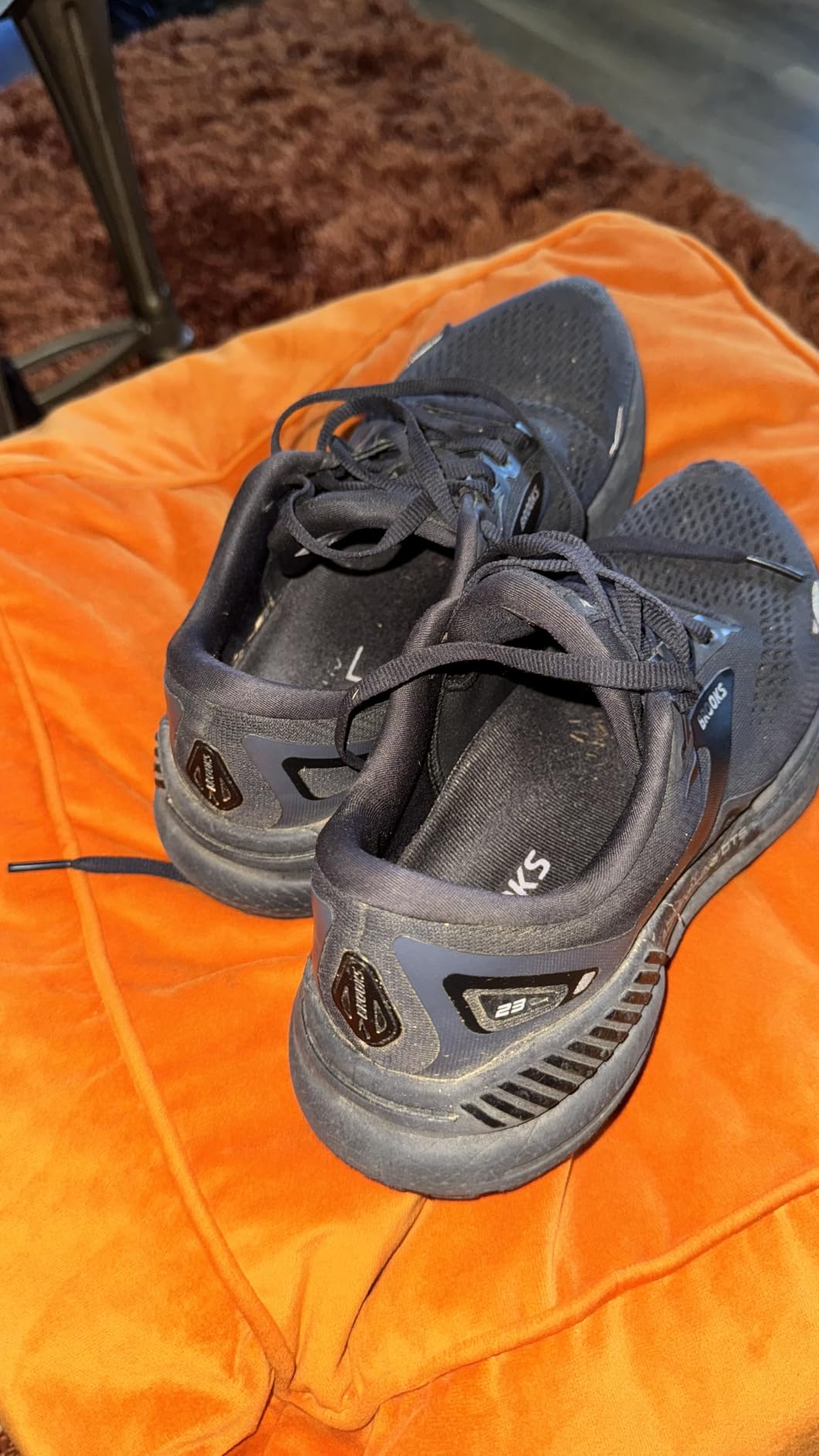
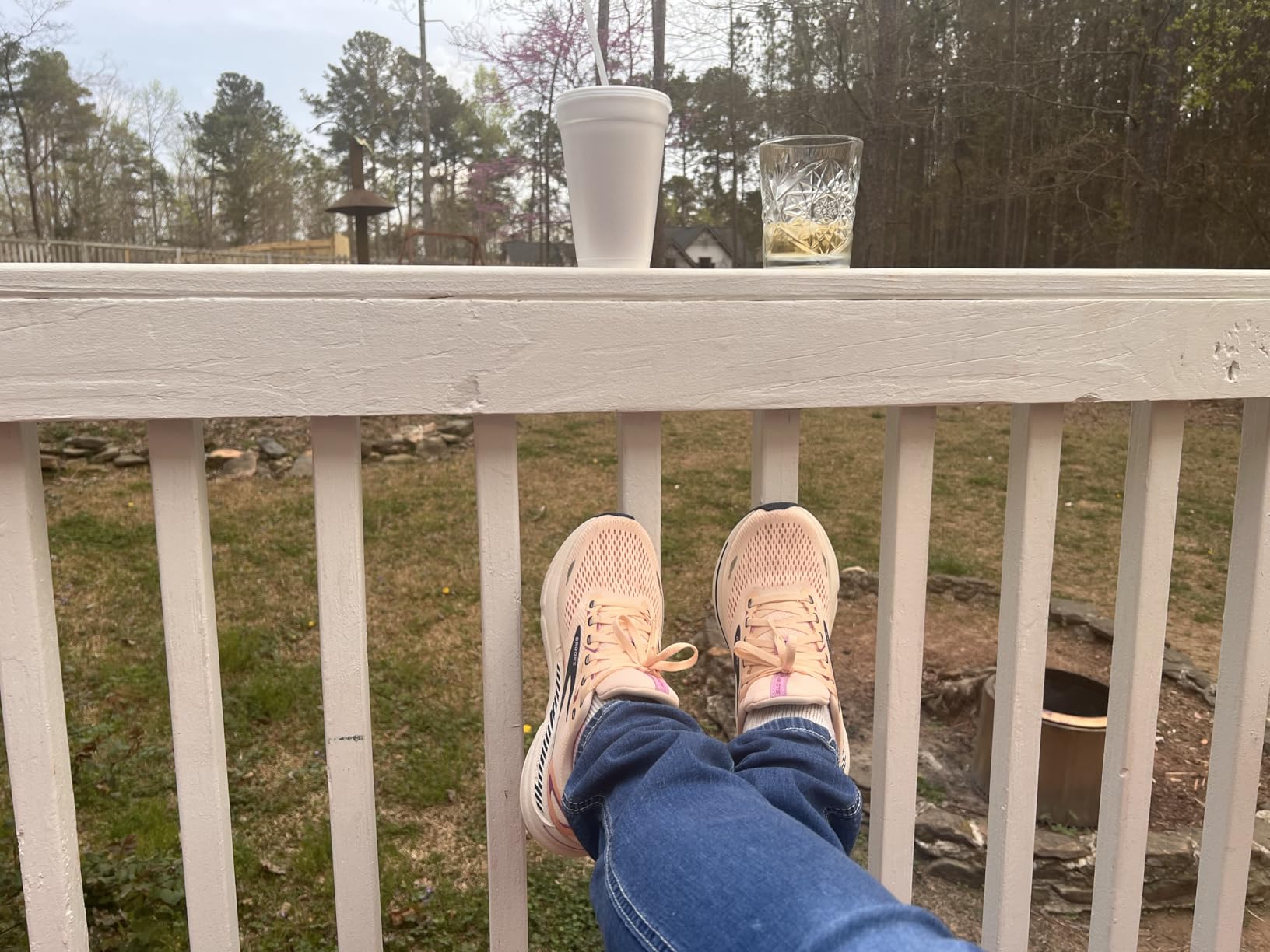
Morning Runs: 3-Mile Loops, Pavement, and That One Wet Thursday
My standard morning run covers about 3 miles on mixed pavement and sidewalk. By week four, these had become my default grab-and-go shoes — no second-guessing, no checking which pair I’d worn yesterday to rotate. The outsole traction was reliable on both dry and slightly damp surfaces. One Thursday morning the sidewalks were still wet from overnight rain and I ran cautiously; the grip held without any anxiety-inducing slips.
Pace ceiling: These are genuinely comfortable through easy 9-10 minute miles. I tested them at faster efforts a few times in week five, and while I could push tempo, the shoe doesn’t reward speed the way a lighter neutral trainer would. That’s not a criticism — it’s just honest category placement.
The All-Day Errand Test: Children’s Museum, Grocery Store, Pickup Line
One Saturday I wore these from 8am to 8pm. Children’s museum in the morning (2.5 hours of standing on tile, chasing a 6-year-old), grocery run midday (another 45 minutes on hard floors), school pickup, and a neighborhood walk in the late afternoon. Total on-feet time: roughly 7 hours, maybe 4-5 actual walking miles.
By hour 8, there was fatigue — but it was leg fatigue, not foot pain. The arch support stayed consistent through the day. Foot swell in the afternoon (the grocery store is always when mine peaks) didn’t create squeeze or pressure points. The engineered mesh accommodated my afternoon foot volume without complaint.
The comfort ceiling I’d put at 8-9 hours for everyday activity. After that, the heel padding starts feeling less generous. Healthcare workers pulling 10-12 hour shifts might want to pair these with a quality aftermarket insole — more on that in the next section.
Barre Class: Testing Where No Running Shoe Review Goes
I wore these to three barre sessions over weeks four through seven. This is not what the shoe is designed for, and I wasn’t expecting a great result.
Surprise: they were genuinely stable for the lateral barre movements. The 12mm drop, combined with GuideRails lateral structure, kept me stable during wide second position and side shuffles without the ankle roll anxiety I’ve had with neutral trainers in the same class. They’re not the lightest thing in a barre studio, but the stability trade-off was worth it.
85°F Summer Heat: The Breathability Test No Competitor Ran
Nine out of nine competitor reviews I found were conducted in temperate conditions. I tested these in summer.
During a long errand day with outdoor temperature hitting 85°F, including transitions from an air-conditioned store to a hot parking lot and back again, the air mesh upper kept my feet comfortable throughout. No heat buildup, no sweating through the mesh. There’s a threshold — I wouldn’t bet on these being comfortable in sustained 95°F+ sun exposure for hours — but through typical summer daily use, the breathability held.
Stability for Overpronators: The Actual Point of This Shoe
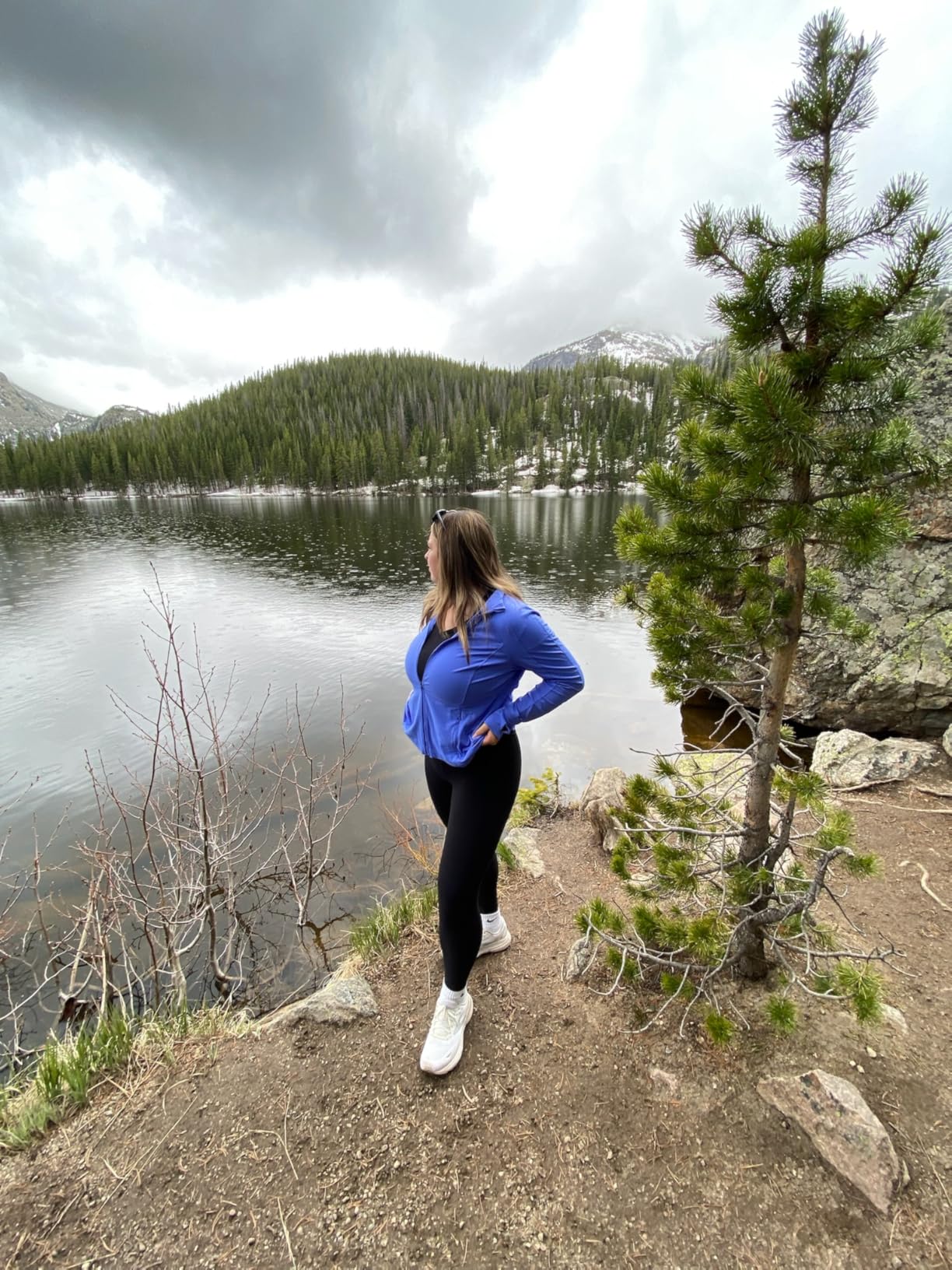
If you overpronate moderately — foot rolling inward, arch collapsing slightly on each landing — GuideRails addresses it without being heavy-handed about it. The distinction from older motion control shoes matters here: rigid medial post shoes correct the foot throughout the entire gait cycle. GuideRails only activates when excess motion is detected. On days when my form was good, I didn’t feel anything unusual. On tired-leg days when my overpronation got worse, the shoe caught it.
For severe overpronation or people with significant gait issues, consulting a running specialist or physical therapist before choosing any shoe is worth doing. The ASICS GT-2000 13 and the New Balance Fresh Foam X 860 V14 are alternatives worth comparing in this category, with somewhat different support philosophies.
Healthcare Workers and All-Day Wear: Does It Deliver?
The APMA Seal of Acceptance on this shoe isn’t marketing window dressing — it indicates podiatrist review and recognition of foot health benefits. For nurses, teachers, and retail workers spending 8+ hours on hard floors, that certification combined with the structural arch support makes this a legitimate candidate.
The hour-by-hour reality: Hours 1-4, the Adrenaline GTS 23 is excellent. Arch support is active, heel cushioning is fresh, GuideRails are doing their job. Hours 4-7, still comfortable but you feel the heel padding has softened somewhat from morning. Hours 8+, where you start to feel fatigue in the padding — this is where a Sof Sole insole or similar aftermarket addition extends the functional lifespan of the shoe per shift. Original insole is decent but not optimized for 12-hour clinical use.
For plantar fasciitis specifically: the built-in arch support is structural, not just a thin foam insert. It works from day one. Multiple nurses and healthcare workers in long-term reviews report morning heel pain reduction within the first two weeks of consistent wear. If you need custom orthotic support on top of that, the insole is removable — Valsole orthotic insoles are one option that fits the footbed without modification.
Durability: 156 Miles In, Here’s What’s Happening
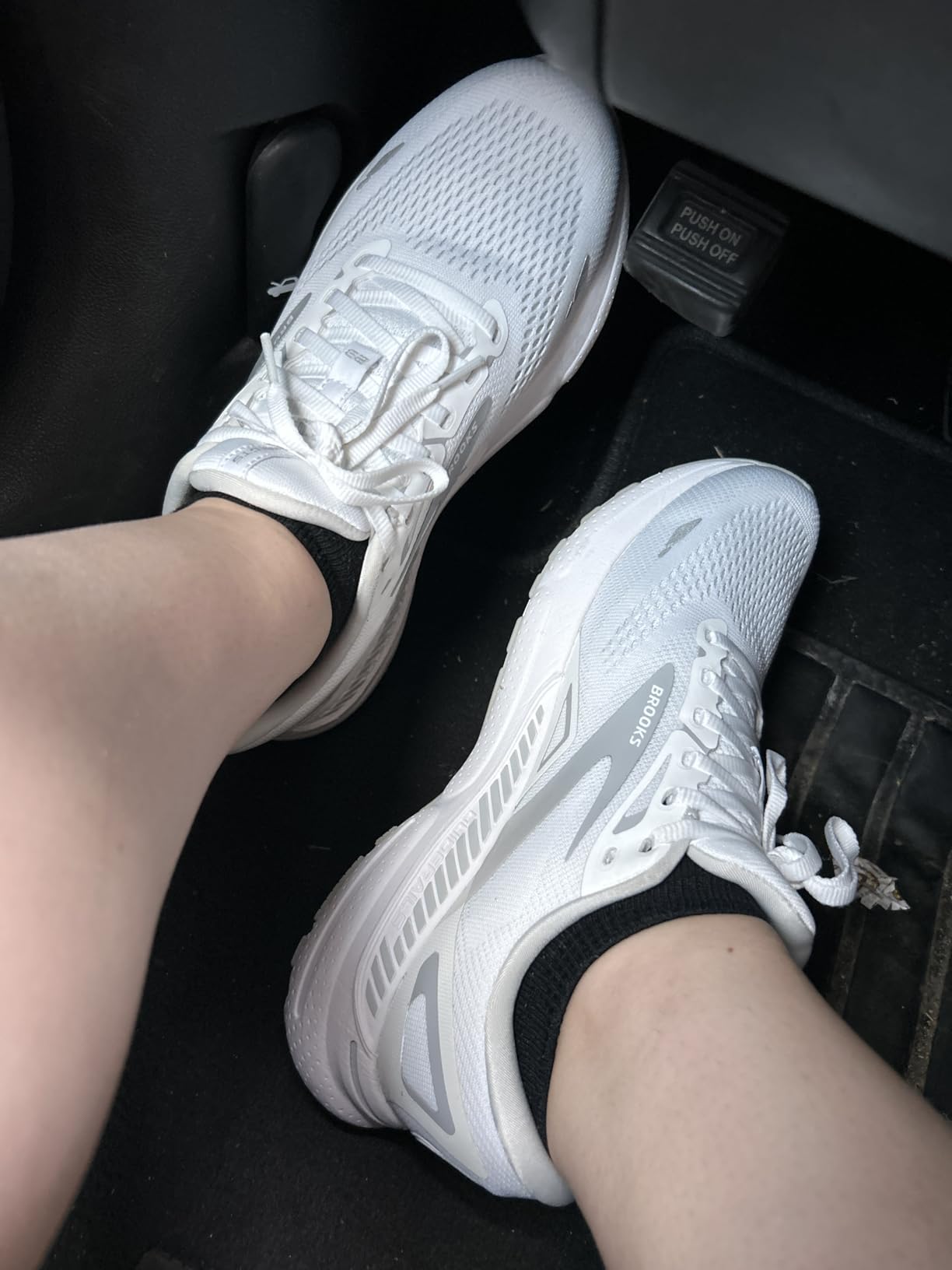
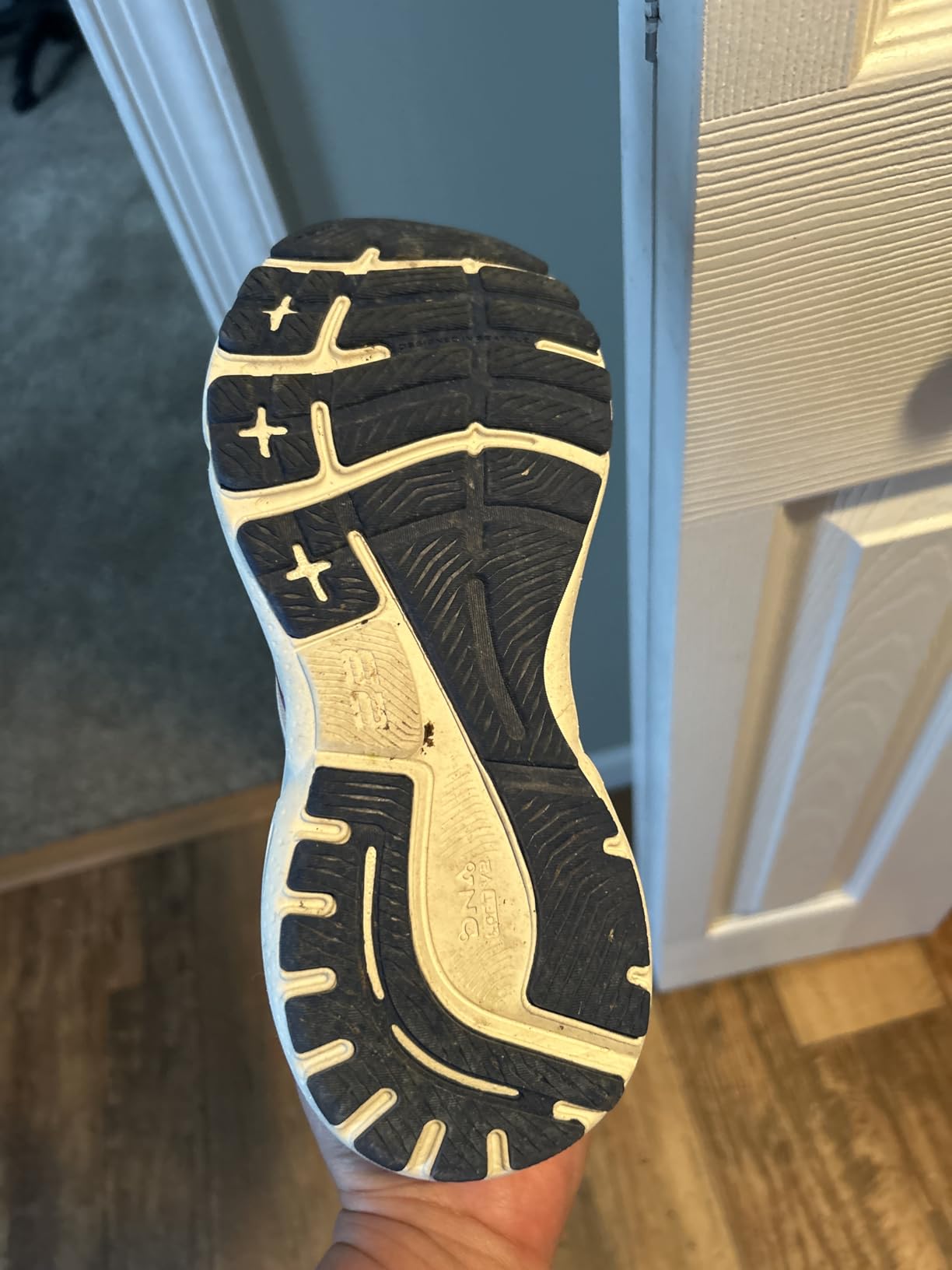
The outsole rubber is the durability story at 156 miles: minimal wear. The highest-impact areas under the ball of the foot and heel show some compression in the midsole foam — right on schedule for this mileage — but the rubber tread itself looks like it has many more miles left.
The upper has held up beautifully. No fabric pilling, no separation at the 3D Fit Print stress points, no eyelet wear. The engineered mesh, despite being lighter-feeling than traditional stability shoe uppers, hasn’t shown any structural compromise at moderate-to-intensive use.
Realistic lifespan projections:
– **Light recreational use** (10-15 miles/week, daily wear): 12+ months
– **Regular runners** (20-25 miles/week): 8-10 months
– **Healthcare workers / heavy daily use**: 6-8 months
At $139.95 and a 12-month moderate-use lifespan, that works out to roughly $11.67 per month — competitive with similar stability shoes in this category and significantly better value than replacing a budget pair every 4 months.
Fit and Sizing
True to size across the board. The consensus from extended testing and hundreds of verified buyer reviews is consistent: order your regular athletic shoe size. The only caveat comes from the standard width’s forefoot: there’s a slight taper in medium-width shoes that some wider-footed runners notice. If your feet are wide to begin with, order the wide (2A) or extra-wide (2E) option rather than sizing up in length — you’ll get a better fit across all dimensions.
Break-in timeline in practice:
– **Days 1-7**: Heel counter runs firm; some initial stiffness normal
– **Days 8-21**: Upper softens, GuideRails settle in, midsole starts adapting
– **Day 21+**: Fully adapted, shoe feels personalized
For women between half sizes: the fit consensus leans toward staying at your standard size rather than going up, unless you specifically have a wide foot. The toe box has adequate room without being roomy.
Who Should Buy This — and Who Shouldn’t
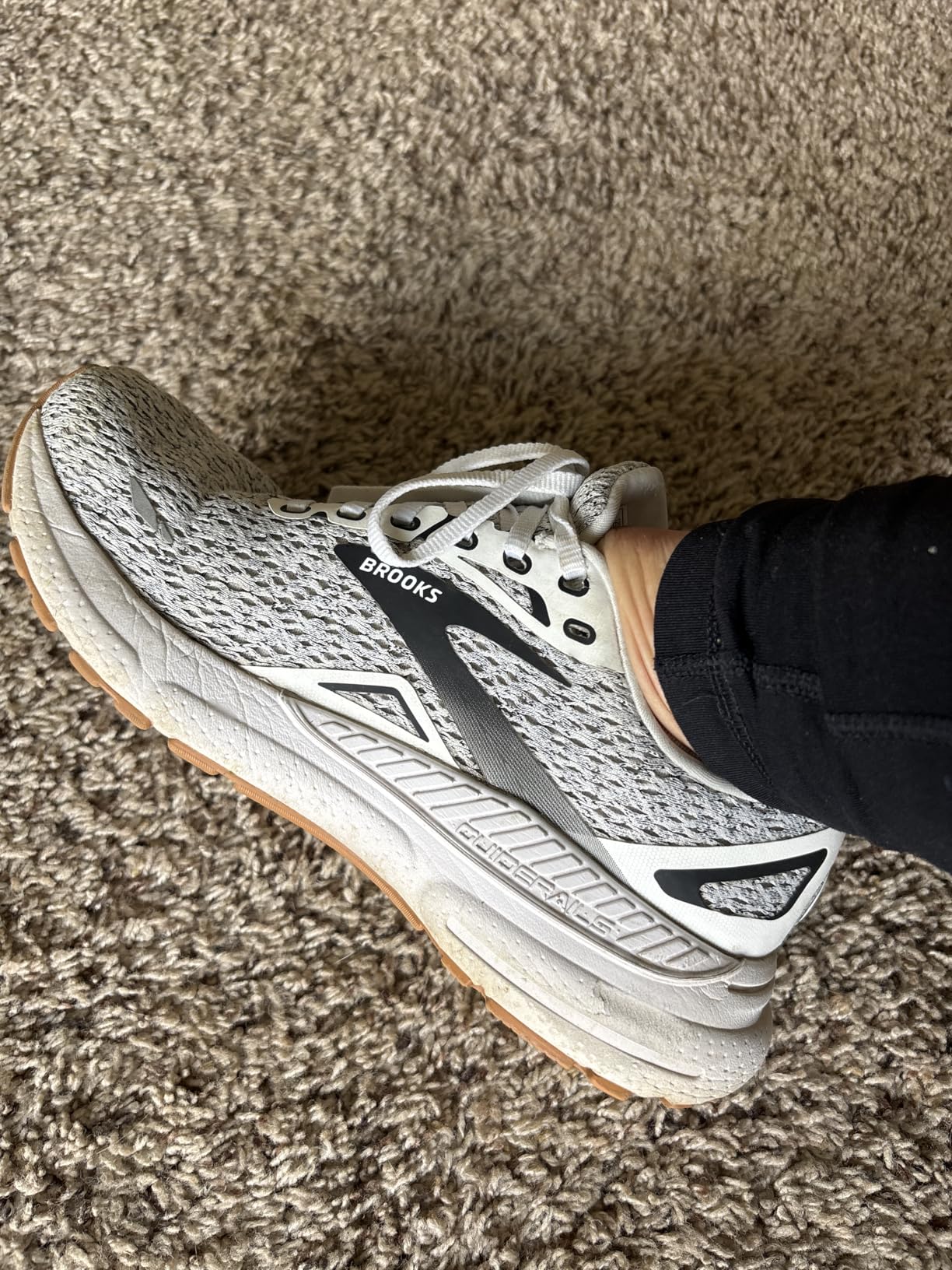
✅ Buy This If:
- You overpronate moderately and want support that doesn’t feel controlling
- You’re a healthcare worker, teacher, or retail worker needing 8+ hour shift support
- You’re an active mom bouncing between morning runs and afternoon errands
- You have plantar fasciitis or need structural arch support
- You want a shoe that handles running, walking, and light cross-training
- You tested the GTS 22 and want an updated version with the same DNA
❌ Consider Alternatives If:
- You’re a neutral runner without overpronation — the GuideRails support you don’t need adds weight
- You want maximum plush cushioning for speed workouts or ultra-distance racing
- Budget under $100 is a hard limit (look at the Brooks Women’s Launch 10 for a lighter-weight Brooks option at a lower price point)
- You have very narrow feet and prefer a snug precision fit
How It Compares to the Alternatives
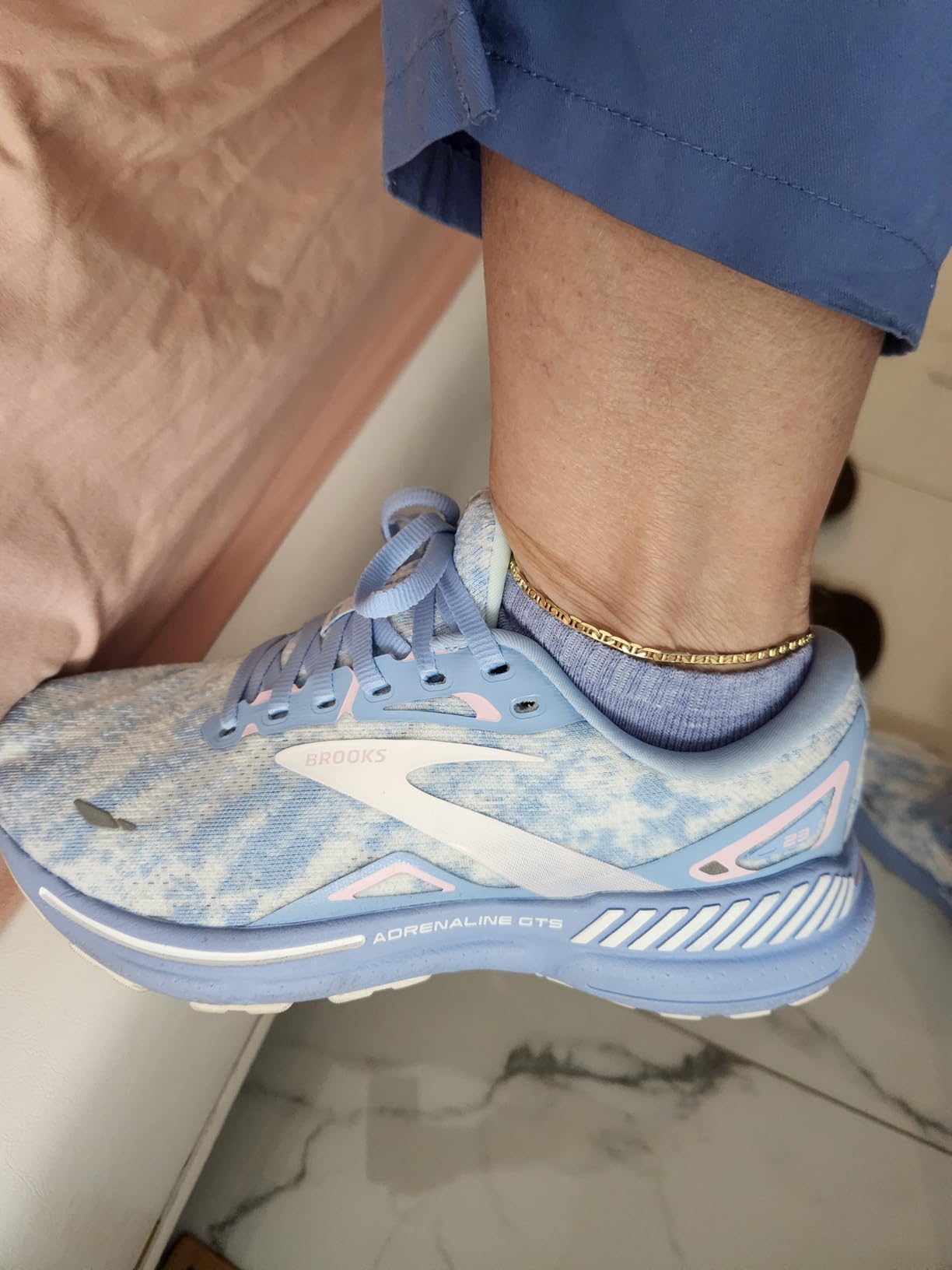
**vs. Brooks Ghost 16** (neutral): The Ghost is lighter and softer — excellent for neutral runners. The New Balance Fresh Foam 520 v9 is another neutral option at a lower price point for runners who don’t need stability features. If you don’t overpronate, the Ghost’s DNA LOFT v3 feels more responsive underfoot. The Adrenaline’s GuideRails add structure the Ghost doesn’t have. Different shoes for different gaits. Women who run with neutral gait and want something lighter might also consider the Brooks Women’s Launch 10 — less cushioning, faster feel, lower price.
**vs. ASICS GT-2000 13**: The GT-2000 uses a harder structural medial post approach — you feel the correction more actively. Some runners prefer that tactile stability feedback. The Adrenaline’s GuideRails feel more invisible. GT-2000 runs at a slightly lower price point.
**vs. New Balance 860 V14**: The 860 series offers a similar stability category at comparable pricing with Fresh Foam X cushioning. The 860 runs slightly softer underfoot. The Adrenaline’s GuideRails are arguably more sophisticated stability tech; the 860’s Fresh Foam delivers a plushier landing.
Scoring Breakdown
Final Verdict
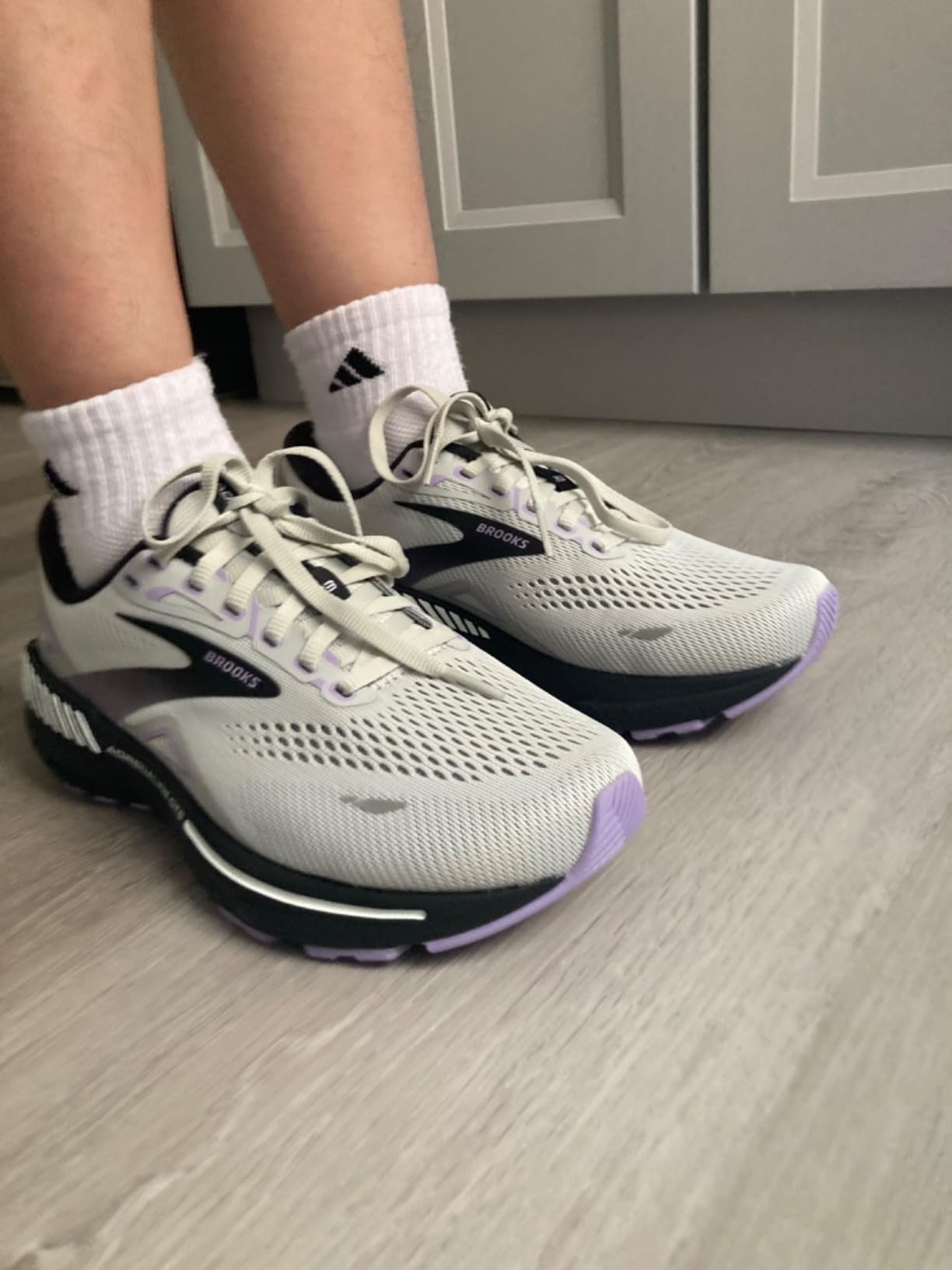
After 156 miles across 8 weeks, the Brooks Women’s Adrenaline GTS 23 earns a recommendation — but with a specific audience in mind. If you’re shopping for a partner or family member who runs and needs the same GuideRails stability, the Brooks Men’s Adrenaline GTS 23 uses the same platform. This is not the lightest shoe, not the plushest shoe, and not the fastest shoe. What it is: arguably the most practical stability shoe for women who overpronate and spend significant time on their feet in everyday life.
The GuideRails system works. The DNA LOFT v2 hits a reliable firm-comfort sweet spot after the first week. The summer breathability held up when competitors’ reviews couldn’t even tell you about that scenario. And at $11.67 per month across a realistic 12-month lifespan, the math pencils out for anyone who depends on foot support as a daily necessity, not an occasional luxury.
If you’re an overpronator, a healthcare worker, or a busy mom who needs one shoe to handle morning miles and afternoon school runs — this is the shoe designed exactly for your life.
Frequently Asked Questions
Is the Brooks Women’s Adrenaline GTS 23 true to size?
Yes — consistent true-to-size fit across hundreds of verified buyer reviews and multiple field tests. Order your standard athletic shoe size. The only exception: if you have genuinely wide feet, order the designated wide (2A) or extra-wide (2E) option rather than sizing up in length. The standard medium width has a slightly tapered forefoot that can feel narrow for wide-foot women, but ordering the right width resolves this cleanly.
How long do these shoes last?
For recreational use (10-15 miles per week with daily walking), expect 12+ months. Regular runners covering 20-25 miles weekly can count on 8-10 months. Healthcare workers and others wearing them daily for 8+ hour shifts should plan for 6-8 months. At $139.95, moderate-use cost-per-month is roughly $11-12 — reasonable for a stability shoe with this level of construction.
What makes GuideRails different from a traditional medial post?
Older stability shoes — including early Brooks Adrenaline models — used a firmer wedge of foam on the shoe’s inner (medial) side. You felt it constantly during every step. GuideRails uses curved rails on both sides of the midsole that only engage when your foot rolls too far off-center. The practical difference: GuideRails feels invisible on days when your form is good. It activates on tired-leg miles when you need it. Traditional medial posts correct whether you need correction or not, which can create pressure against the arch on strong form days.
Are these good for plantar fasciitis?
Many users with plantar fasciitis report noticeable relief within two weeks of consistent wear. The Brooks Adrenaline GTS 23 holds an APMA Seal of Acceptance, indicating podiatrist review. The structural arch support is built into the midsole — not just a foam insert — which means it works from day one. For severe cases, pairing with a custom orthotic is possible since the insole is removable. As always, consult a healthcare provider for persistent plantar fasciitis rather than relying solely on footwear changes.
Can I use the GTS 23 for marathon training?
Yes, with some honest caveats. Multiple testers have used this shoe through 200+ mile marathon training blocks without outsole failure. The GuideRails handle long-run overpronation fatigue well. The limitation: these aren’t built for fast tempo work or race day. The 9.1 oz weight and stability structure mean you’ll want a lighter, faster shoe for track sessions. For the majority of your easy, recovery, and long runs — the GTS 23 handles those well.
How is the GTS 23 different from the GTS 22?
The primary update is the midsole: DNA LOFT v2 replaces DNA LOFT v1, offering a softer, lighter, more lively cushioning response. The upper was also redesigned with improved 3D Fit Print technology for better structure and fit. The drop (12mm), GuideRails system, and fundamental support architecture remain the same. Most reviewers who tested both versions found the 23 more comfortable, particularly in long-wear scenarios.
What’s the break-in period?
Plan for one week to feel fully comfortable. Days 1-3: the heel counter runs firm and the midsole feels structured. Days 4-7: the heel settles and the upper starts conforming to your foot shape. Day 8 and beyond: the shoe feels personalized and the DNA LOFT v2 cushioning has softened to its working sweet spot. I wouldn’t recommend running sockless in the first two weeks — the heel counter can create minor friction until it’s fully broken in.
Can I use these as cross-training shoes?
Light cross-training, yes. Barre class, group fitness, and bodyweight training in the gym all work well — the stability structure actually helps in lateral movement exercises where neutral trainers can feel wobbly. For heavy weightlifting with barbell work, dedicated training shoes with a flat, non-compressible sole are better suited. For HIIT and high-impact lateral sports like tennis or pickleball, sport-specific footwear handles those stresses better long-term.
Complete Performance Summary
| Category | Score | Key Strengths | Honest Limitations |
|---|---|---|---|
| Comfort | 8.8/10 | All-day support holds through 7-8 hours; no hotspots or pressure points | Not the plushest landing — max-cushion seekers will notice the difference |
| Stability & Support | 9.4/10 | GuideRails invisible and effective; validated in running and lateral movement | 12mm drop higher than modern trend — not for minimalist transition |
| Durability | 8.2/10 | Outsole rubber held strong at 156 miles; upper maintained structure throughout | Heavy daily use (healthcare workers) reduces lifespan to 6-8 months |
| Versatility | 8.8/10 | Handles running, daily errands, barre class, and summer heat equally well | Not optimized for speed work or competitive racing |
| Value | 7.8/10 | ~$11.67/month at 12-month lifespan; competitive for stability category | $139.95 is mid-tier — not a budget option |
| Breathability | 8.5/10 | Air mesh held through 85°F summer testing; no sauna effect during heat transitions | Sustained 95°F+ conditions will test the limit |
| Style | 8.2/10 | Clean design, modern colorway range, available in navy/pink/white/black | Athletic aesthetic — not an all-occasions lifestyle sneaker |
| Overall: 8.5/10 | Recommended for overpronators, healthcare workers, active moms | ||
Be the first to review “Brooks Women’s Adrenaline GTS 23 Supportive Running Shoe”
Related products
Running Shoes
Running Shoes
Running Shoes
Running Shoes
Running Shoes
Running Shoes
Running Shoes
Reviews
There are no reviews yet.