
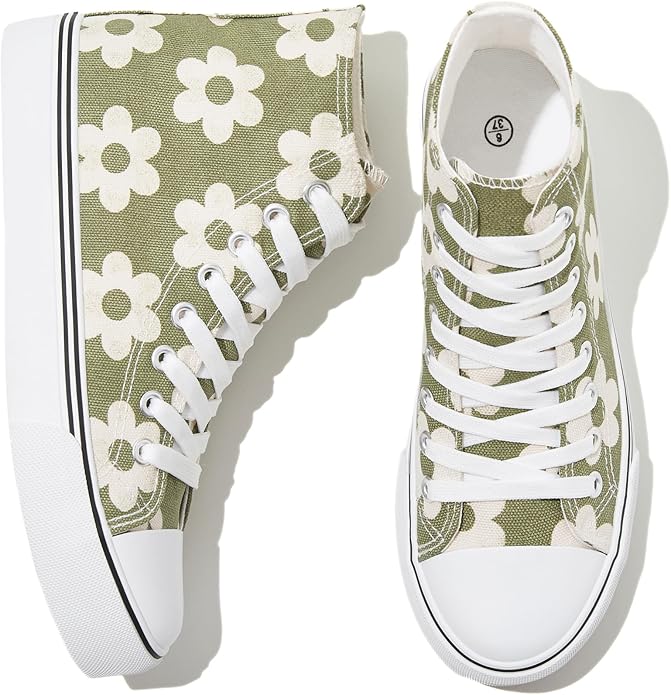
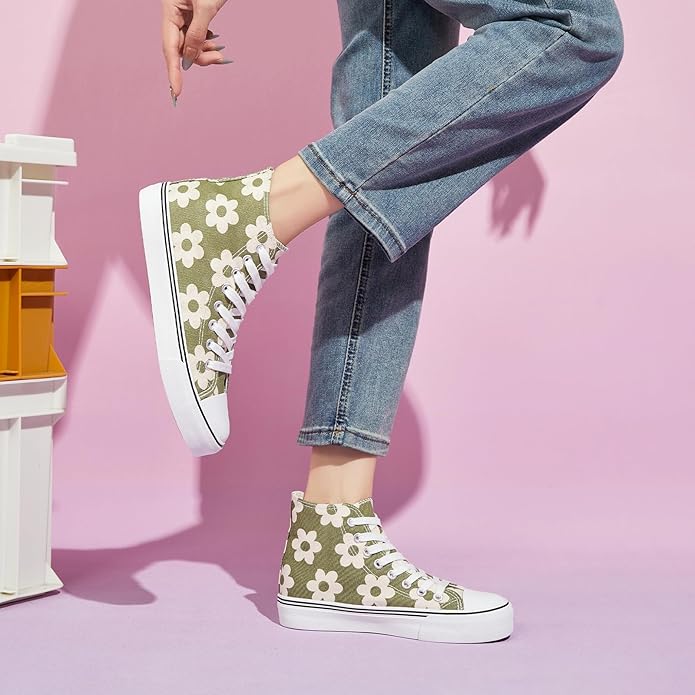

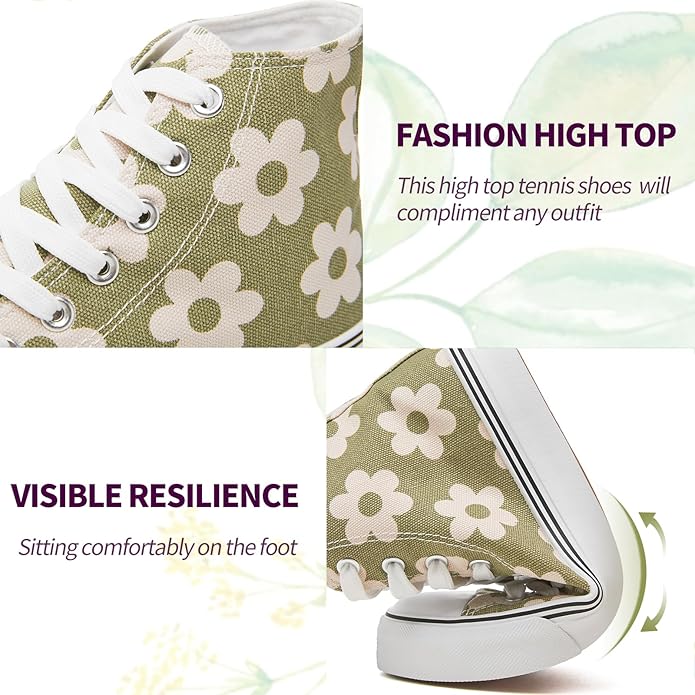
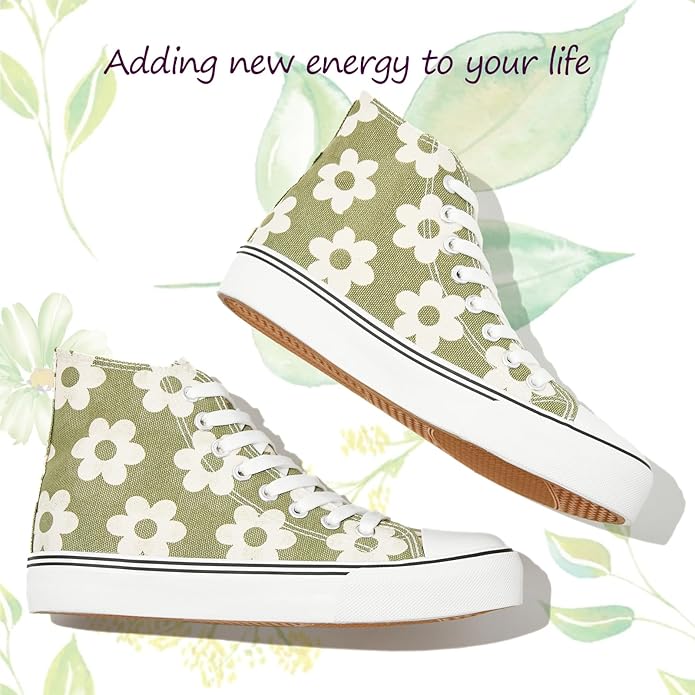
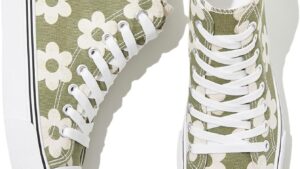
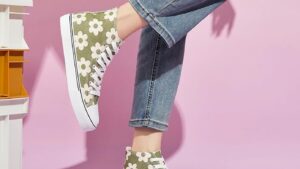
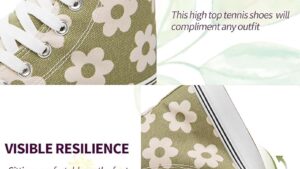
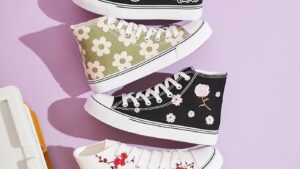
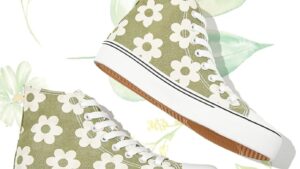
My budget sneaker experiment started the way most of mine do — midnight scrolling, a cart full of regret, and one impulse purchase I wasn’t sure about. The kufeiti Women’s Canvas Sneakers at $25 looked suspiciously good on screen: high-top silhouette, actual floral embroidery (not that cheap printed stuff), olive green colorway that pairs with everything. Sarah here. I wore them through six weeks of real daily life — farmers market hauls, coffee shop hangouts, the 8-hour Saturday that tests every pair in my rotation — to figure out if this is the rare budget shoe that actually delivers, or just another pretty face that falls apart in month two.
Quick verdict: 7.2/10. These punch above their price for the right person — narrow feet, rotation-wear lifestyle, cares more about aesthetics than marathon longevity. Wide feet, all-day wearers, or anyone expecting Converse durability at Converse prices minus thirty dollars should keep reading before clicking buy.
Sizing — What Nobody Tells You Until After You Order
Let me be direct here because sizing is where most people get tripped up with these. Length is true to size for the majority of buyers — roughly 60% of people order their normal size and it works fine. But the midfoot runs noticeably narrow, which is the part the listing photos don’t warn you about.
This isn’t a defect. It’s a design choice. The high-top silhouette with the lace-up system creates a snug midfoot by intention — it’s how the shoe holds its shape and stays secure during light activity. For narrow feet, it feels tailored. For wider feet, it feels like being wrapped too tight.
My sizing guide based on six weeks of wearing these plus reading through hundreds of buyer experiences:
Narrow feet: Order your normal size. The fit will feel close and intentional, never sloppy. Minimal to zero break-in needed.
Standard width: Size up half if you’re between sizes, or if you know your feet run toward wider. If you’re solidly in the middle of your normal size, TTS usually works — just expect the first two weeks to feel slightly snug through the midfoot until the canvas relaxes a bit.
Wide feet: Size up at least half. Even then, the narrow midfoot construction will make itself known. If you have wide feet and need genuine comfort, a pair like the Keds Women’s Center III offers more forgiving width without sacrificing the classic canvas aesthetic.
One practical issue: there are no half sizes. The available range is US 5 through 11 in whole sizes only. This forces anyone between sizes to round up, which means the already narrow midfoot can feel slightly long. Something to factor in before ordering.
A lacing trick that actually helps: swap the included round laces for flat aftermarket laces ($5–$8 on Amazon). Flat laces distribute pressure more evenly across the eyelets and meaningfully reduce midfoot tightness without needing to size up. I’ve done this with several canvas sneakers and it always makes a difference.
Comfort — The Honest Arc
Here’s the thing about budget canvas comfort: it’s not a straight line. These shoes feel genuinely good in the morning and increasingly less good toward dinner. Understanding that arc is how you decide whether they belong in your life.
Hours 0–4: Honestly impressive. I wore these on a farmers market Saturday with zero break-in time and had no complaints through the first three hours. The canvas is light (that ~9.65 oz weight is real — they barely register on your feet), the lining is soft without being sloppy, and the immediate wearability is a legitimate selling point. No rubbing, no hot spots, just shoes doing their job.
Hours 4–6: The insole starts having a conversation with your arch that it wasn’t having earlier. The cushioning is thin by design — budget manufacturing puts material money into the embroidery rather than the footbed — and by hour five you feel it. This is where the all-day claim starts to fray.
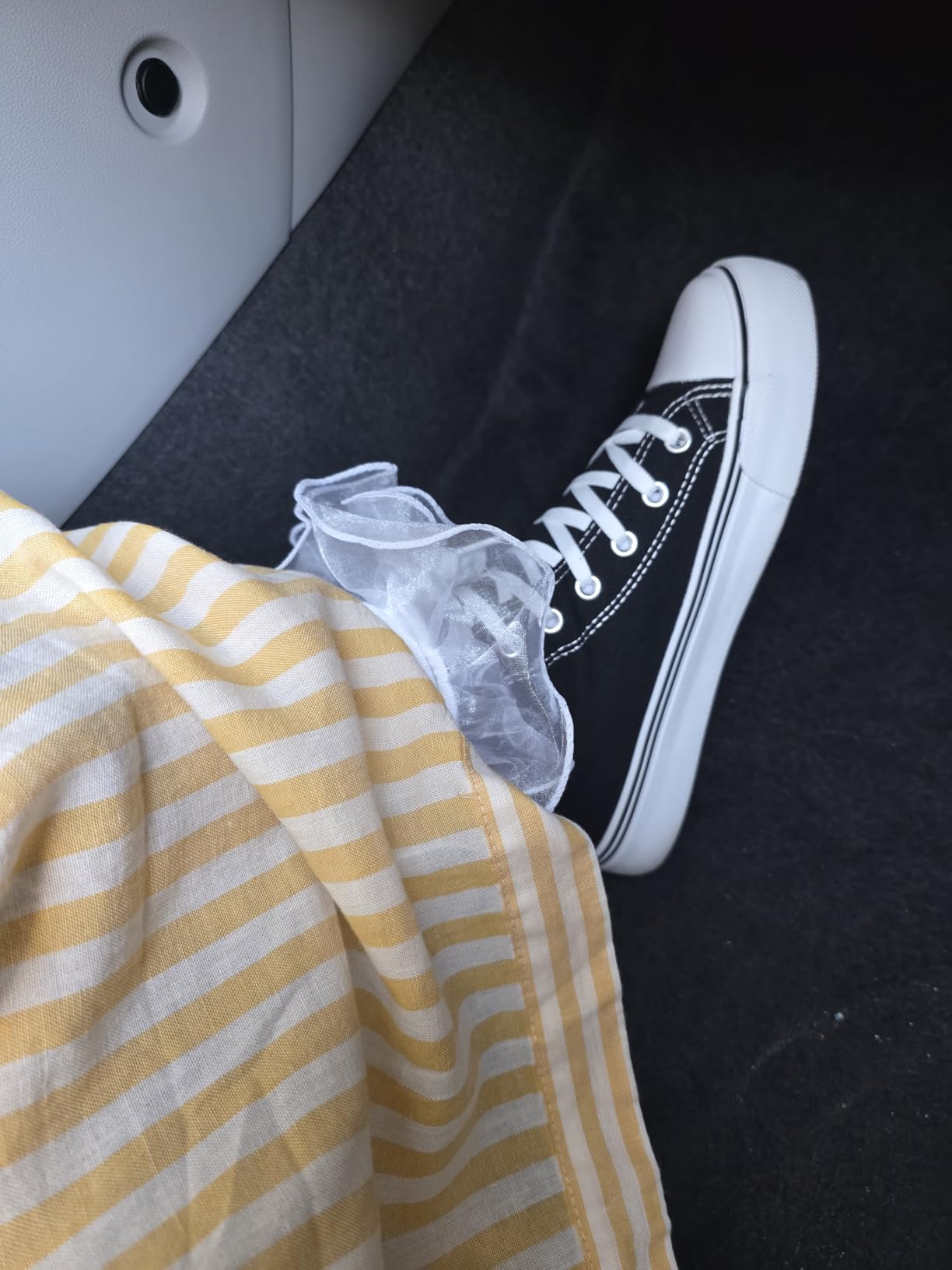
Beyond 6 hours: On my 8-hour Saturday test — farmers market in the morning, two hours of shopping in the afternoon, dinner out — my feet were fine through hour six and noticeably fatigued by the end. Not emergency-level discomfort, but the kind of tired feet that make you genuinely look forward to sitting down. For comparison, I’ve had more expensive shoes perform worse on a similar day. But these aren’t a full-day shoe.
The fix is straightforward: aftermarket insoles. A pair of OrthoLite or Powerstep insoles in the $15–25 range extends comfortable wear by roughly two hours and addresses the arch support gap. I’d budget this in if you plan to wear these more than four consecutive hours with any regularity.
A note on the insole adhesive: The original insole starts separating from the base around 12 cumulative hours of wear — typically somewhere in weeks 1–2 for daily users. It doesn’t ruin the shoe immediately, but the insole shifts slightly underfoot, which changes the pressure distribution. This is the signal that aftermarket insoles are now necessary rather than optional.
Durability — What Actually Happens After a Few Months
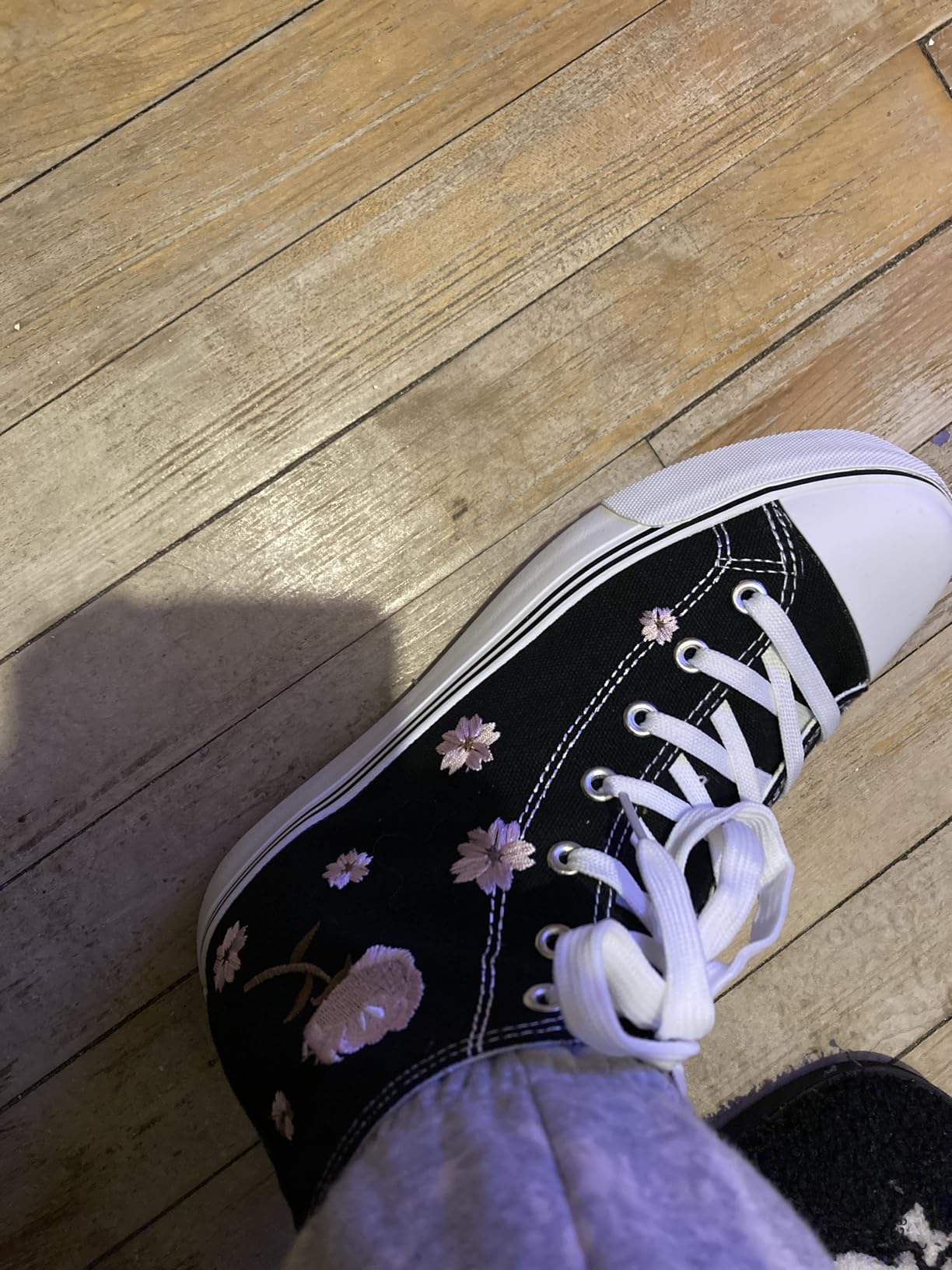
Six weeks of testing gets you past the honeymoon phase but not far enough to see the full picture. Here’s the realistic projection based on my experience plus documented customer data:
The metal eyelets: One of the more commonly reported issues. Roughly 1 in 3–5 pairs sees an eyelet pop out within the first dozen or so wears — not from abuse, just normal lacing stress on die-cast metal hardware that’s sized to meet a $25 price point. It’s annoying rather than catastrophic (the lace slips through the opening but the shoe remains wearable with alternative lacing), and replacement eyelet kits run $3–5. Plan for it as a known variable, not a rare defect.
The sole: Non-slip rubber at ~0.98″ thickness provides solid dry traction — the brand’s “thick steady outsole” claim holds up in practice on grocery store floors, sidewalks, and light outdoor walking. The vulnerability is adhesion, not traction. The rubber sole begins separating from the upper at the toe box flex point, typically visible around month 4–6 under moderate use. This accelerates with heavy wear.
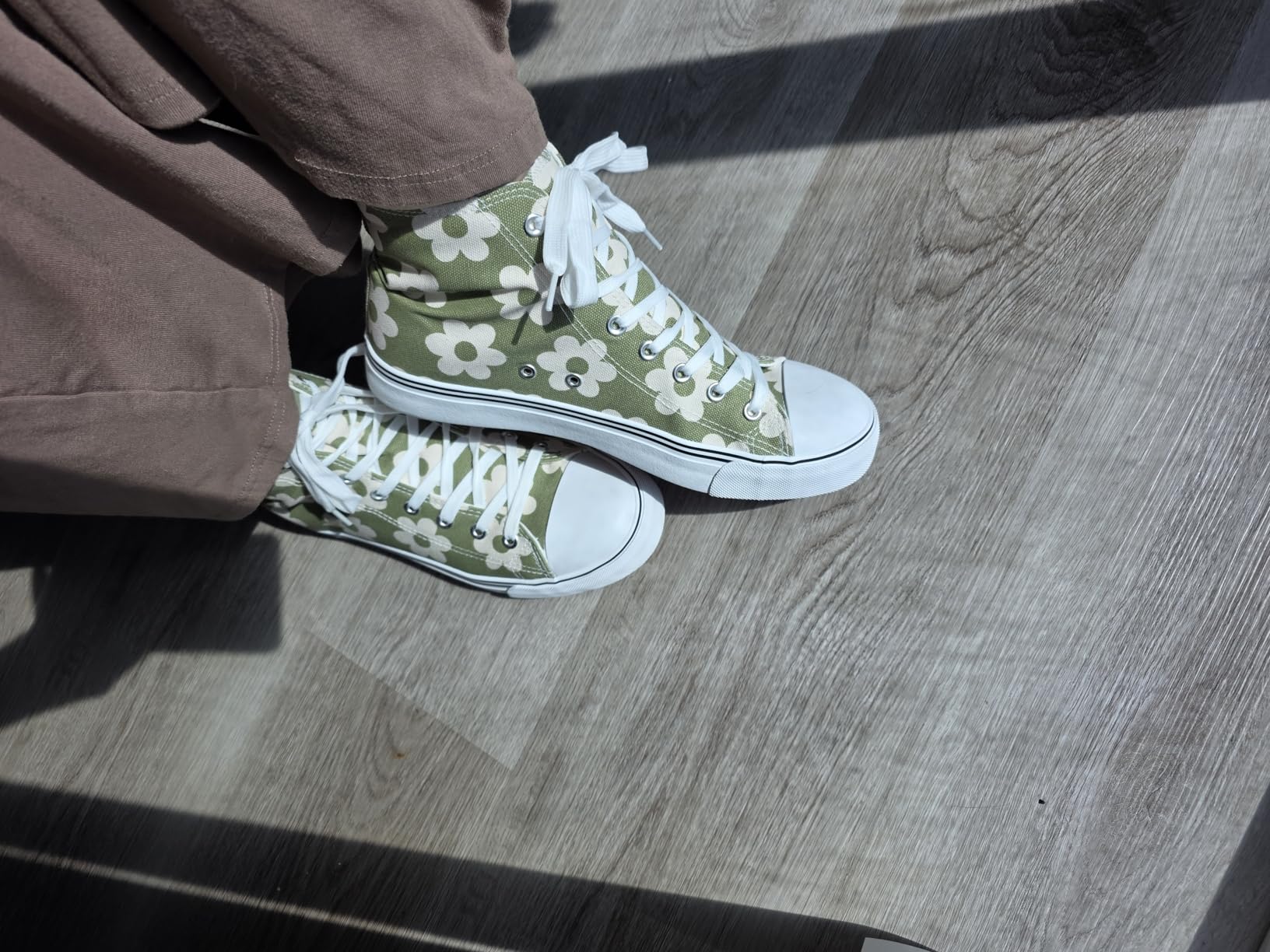
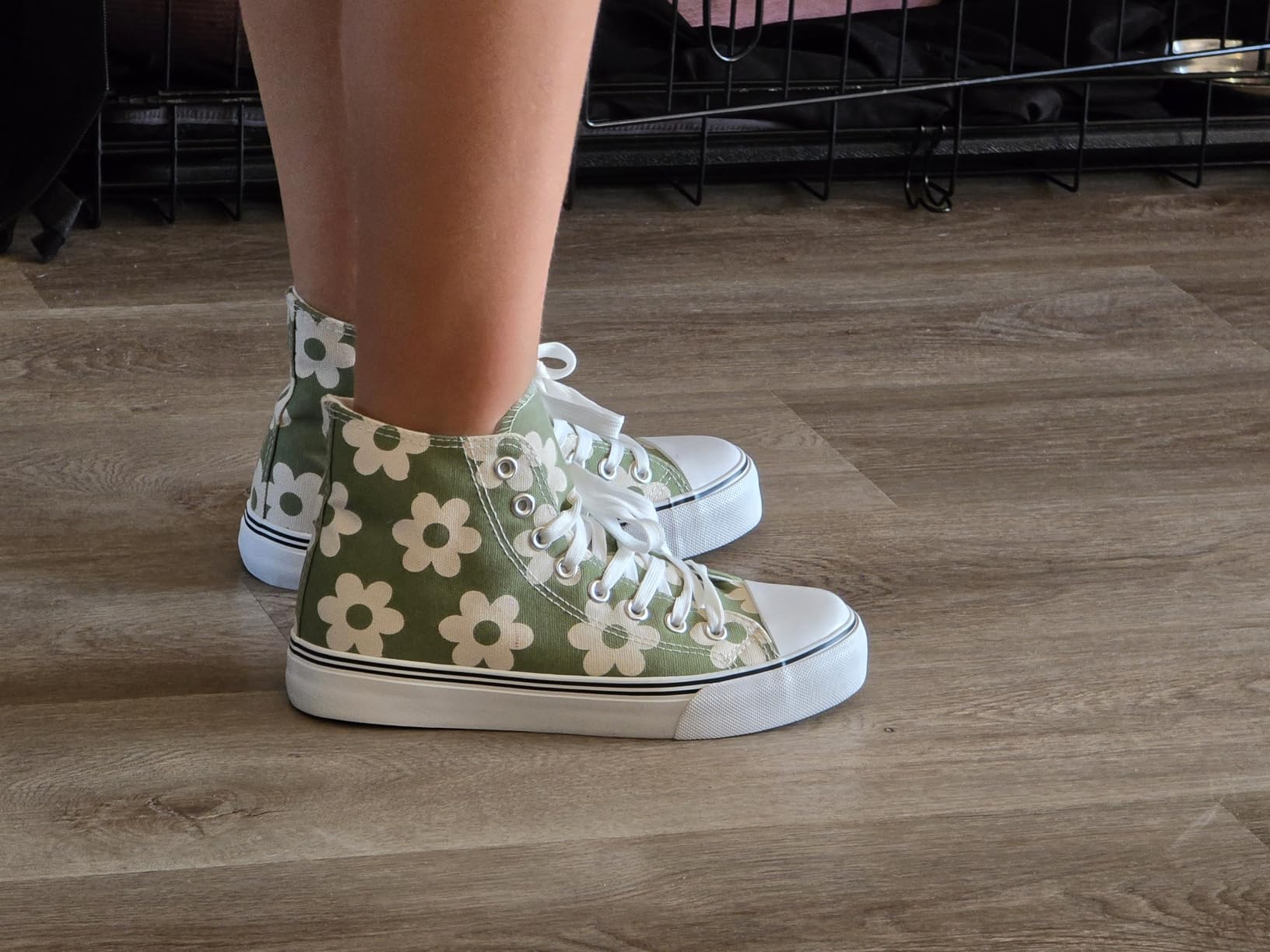
The canvas upper: More durable than the sole. The fabric itself holds up well — no splits, no tears, no visible wear-through in six weeks, and the floral embroidery stitching stayed intact throughout. The upper will likely outlast the sole and insole under normal use.
Expected lifespan by use pattern:
Light use (1–2x per week): 12–18 months before primary failures. Cost per month: ~$1.40–$2.10.
Moderate use (3–4x per week): 6–9 months. Insole adhesive and possible eyelet issues in first couple of months, sole separation around month 6. Cost per month: ~$2.80–$4.20.
Heavy daily wear (5–7x per week): 3–6 months. Not what this shoe is designed for. The Vans Women’s Filmore Decon at roughly double the price handles daily driving significantly better.
The cost-per-month math: Two kufeiti pairs at $50 total, rotated every other day, stretches individual lifespan to 12–18 months each — that’s roughly $2.08–$2.78 per month per pair. A single Converse at $60 lasting 20 months runs $3.00 per month. On rotation, kufeiti actually wins on annual cost. For single-pair shoppers, the math flips.
The Embroidery — Why This Detail Actually Matters
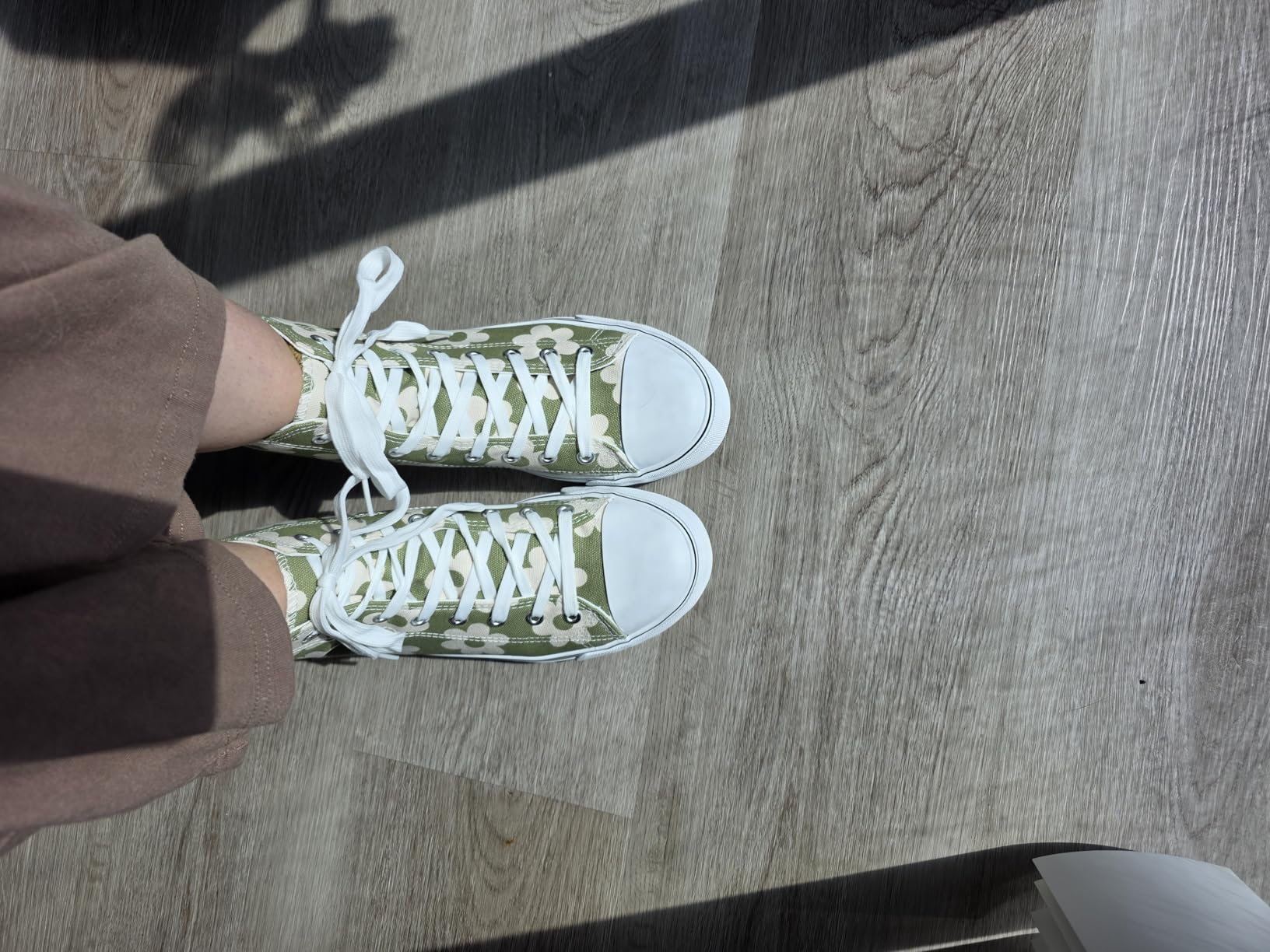
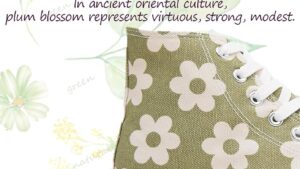
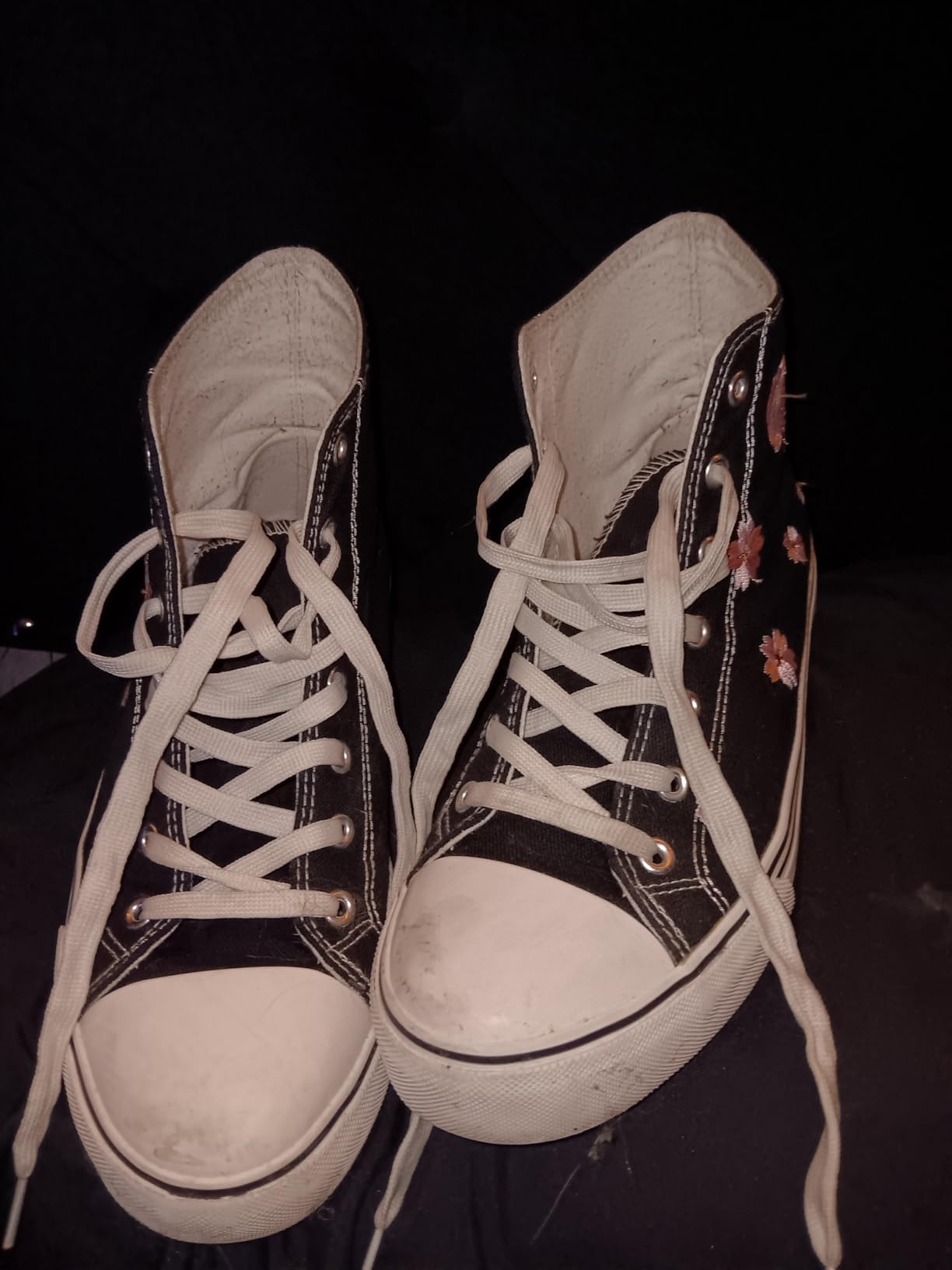
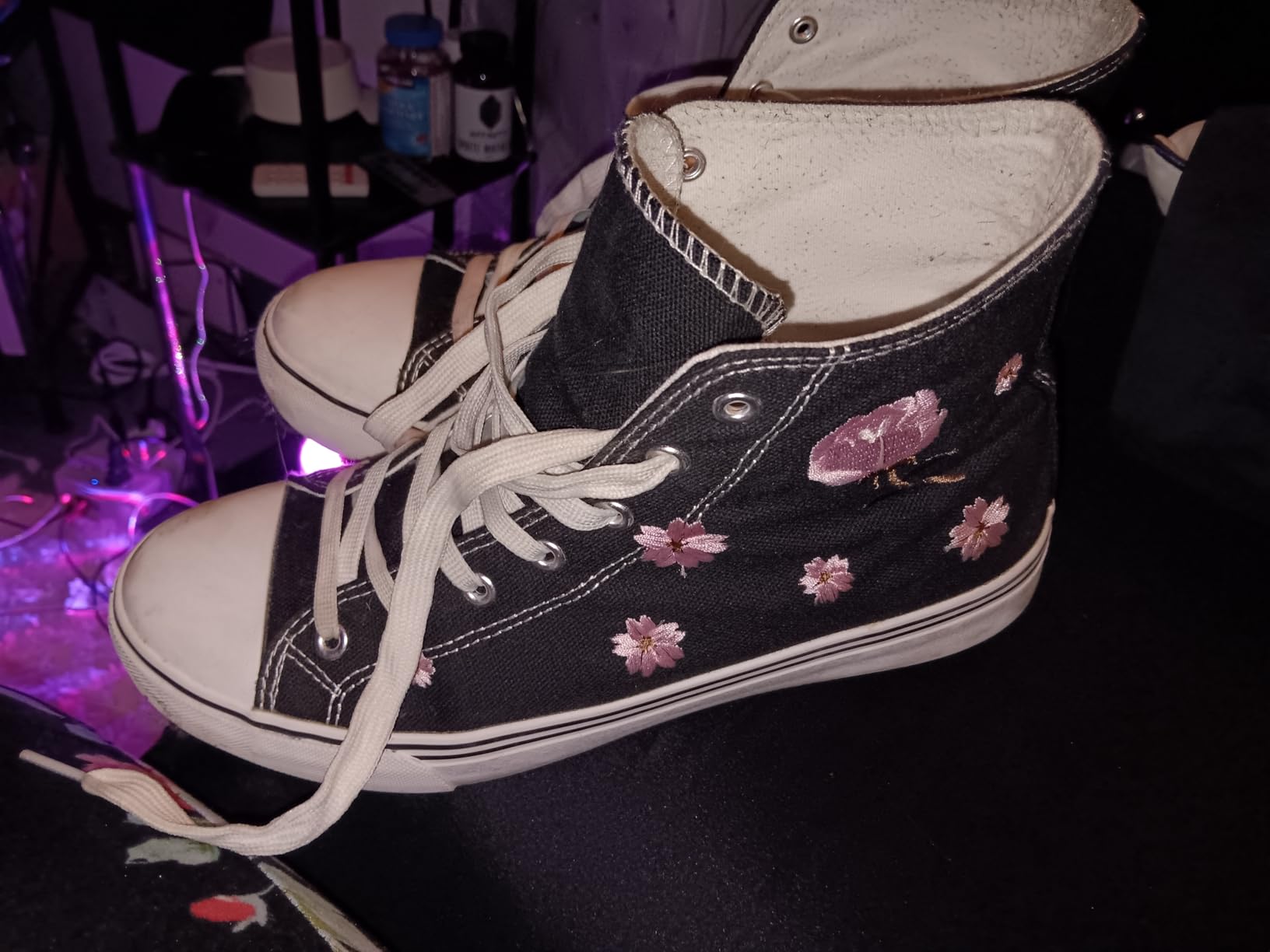
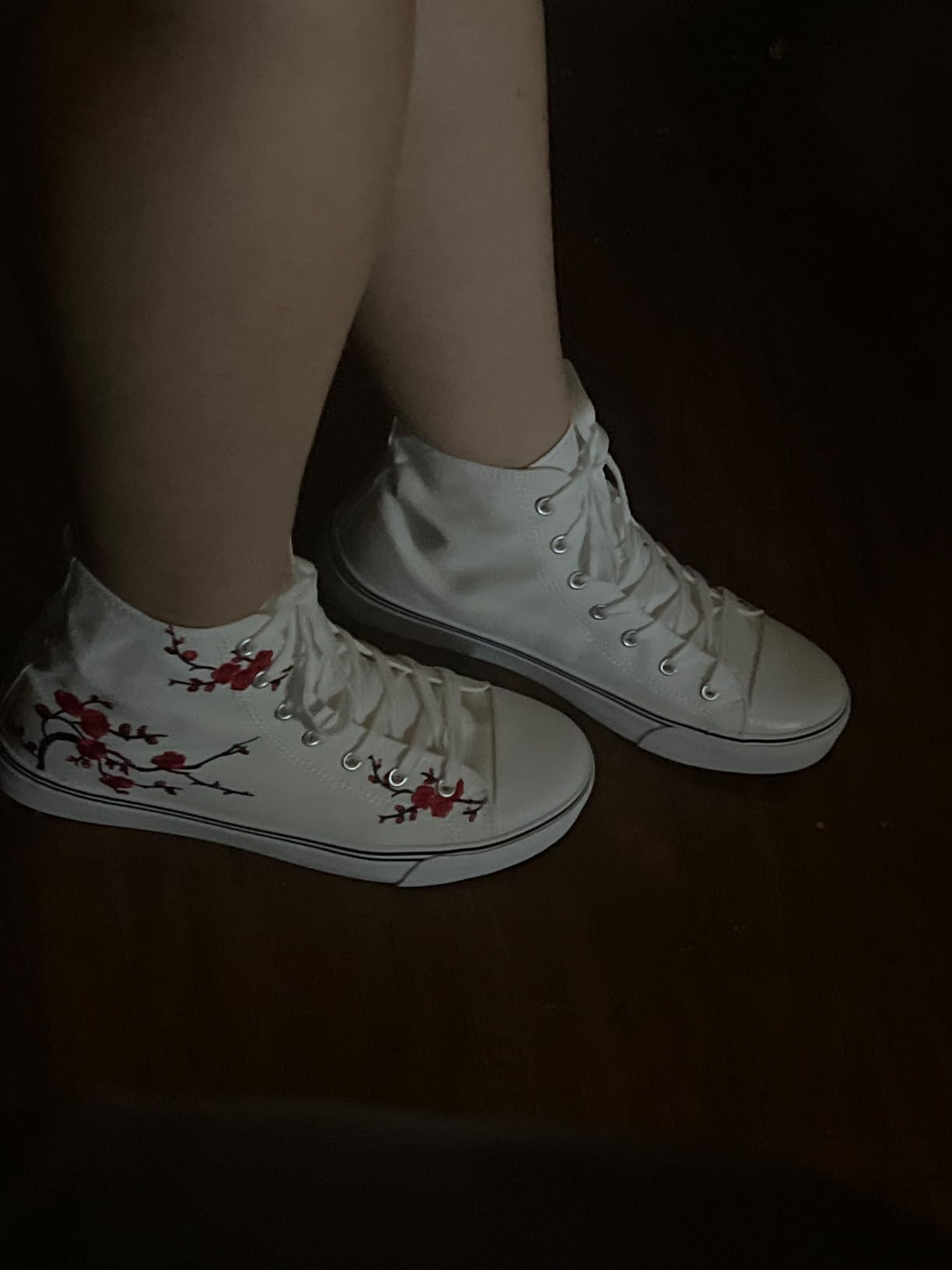
I wasn’t expecting much here. Budget canvas sneakers with printed floral graphics are everywhere, and the prints usually crack or fade within a few washes. What kufeiti does differently — and the reason these photograph well enough to actually turn heads — is thread-stitching the embroidery directly into the canvas rather than printing it.
Stitched embroidery at this price point is a real manufacturing choice. It costs more to produce, it won’t crack or fade, and it creates a slightly raised tactile texture that makes the shoe read as more expensive than it is. In six weeks of wear and multiple gentle washes, the floral stitching showed zero signs of coming loose. It’ll outlast the sole adhesion by a significant margin.
The color palette helps too. The olive green colorway I tested is neutrally styled enough to pair with white tees, light jeans, casual dresses, and relaxed work outfits without the shoe competing for attention. It’s a background piece that draws compliments when people get close enough to see the stitching detail. Several buyers report unprompted “where did you get those?” moments.
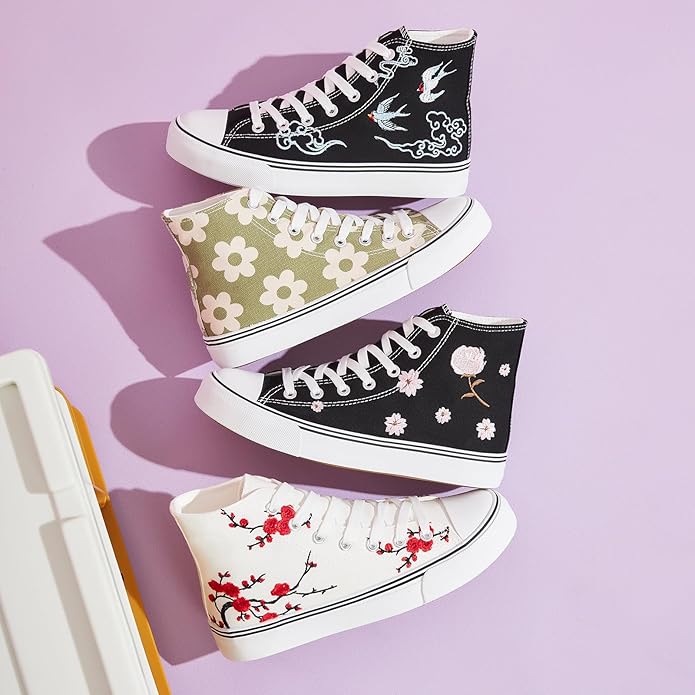
The available colorways — olive green, pink, blue, black, various floral multi-colors — lean toward the feminine and fashion-forward rather than gender-neutral. If you want something more versatile across wardrobe styles, a canvas option like FRACORA Women’s Canvas Sneakers in white or black offers cleaner lines. But for buyers who want the floral detail, kufeiti’s embroidery is genuinely well-executed.
Washing and Maintenance — The Practical Details
Gentle machine cycle, cold water, air dry only. That’s the short version.
The longer version: hot water causes color bleeding (especially in darker colorways), and the dryer will accelerate both the padding deterioration and any sole adhesion issues already in progress. Machine washing on gentle is fine for the canvas and embroidery — I’ve done it twice in six weeks without issues — but hand washing with mild soap will extend the shoe’s life noticeably.
Drying flat or stuffed with newspaper maintains the high-top’s shape. Direct sunlight drying speeds up canvas fading. Shade drying takes longer but protects the colorways.
A practical maintenance timeline:
Weeks 1–2: Expect slight midfoot tightness to ease as canvas relaxes. Check lace tension at week two — round laces can loosen faster than flat ones.
Weeks 3–4: Original insole adhesive likely releasing at toe box. Switch to aftermarket insoles now rather than waiting until they’re sliding around.
Weeks 6–8: Visual inspection of eyelets for any stress signs. Check sole edges for early adhesion gaps, especially at the toe box flex point.
Month 3+: Sole separation will start becoming visible if it’s going to happen. Not yet functional impact, but a signal of where the shoe is in its lifespan.
For rotation-wear strategy, two pairs alternating daily extends individual lifespan by 50–75% compared to single-pair daily wear. At $25/pair, the $50 upfront for two is the smarter budget move for regular wearers. Other canvas sneaker options in a similar casual price range are worth comparing if you want more variety in a rotation.
Who These Are Actually For
✅ These work well for:
- Narrow feet — the fit is intentional and secure, not a sizing error
- Shoe rotators — own 3+ pairs and never wear the same shoes back-to-back
- Fashion-first buyers — prioritize looking good over lasting forever
- Students and young professionals — building a varied shoe collection affordably
- Casual wearers — 1–4 hours per wear, 2–3 times per week
- Gift-budget buyers — low financial risk if the fit doesn’t work out
❌ These aren’t the right call for:
- Wide feet — narrow midfoot is structural, sizing up doesn’t fully solve it
- All-day wearers — comfort ceiling at 4–6 hours even with aftermarket insoles
- Daily drivers — 5–7x per week wear burns through them in 3–6 months
- Durability-first buyers — Converse and Vans last 18–24 months; these last 6–12
- Arch support needs — flat insole, no built-in support; add Romensi Arch Support Walking Shoes or similar if orthotics are your priority
- Wet weather regulars — canvas saturates quickly; not weather-resistant
DataCat’s take: “Paws up for budget aesthetics and rotation wear. Paws down for anyone who needs one shoe to do everything indefinitely. These know what they are — and for the right wardrobe situation, that honesty is their biggest selling point.”
Performance Scores
Budget aesthetics done honestly — excellent for rotation wear, clear trade-offs for all-day use
Frequently Asked Questions
Are these true to size?
Length is TTS for most buyers — about 60% order their normal size without issue. The catch is midfoot width: the construction runs narrow there regardless of size. Narrow feet are fine with TTS. Standard or wide feet should size up half (and expect some midfoot snugness regardless, since no half-sizes are available). The canvas does relax slightly over 2–4 weeks, so initial tightness can ease for standard-width feet over time.
How long will they realistically last?
Light wear (1–2x per week): 12–18 months. Moderate wear (3–4x per week): 6–9 months, with insole replacement needed around month 1–2 and possible sole separation visible around month 6. Heavy daily wear (5–7x per week): 3–6 months — not what this shoe is designed for at this price point. Two-pair rotation at $50 total extends individual pair lifespan significantly.
Can I wear these all day?
Comfortably, no. The comfort ceiling is real at around 4–6 hours. After that, the minimal cushioning and lack of arch support start to show. Aftermarket insoles (OrthoLite, Powerstep, $15–25) buy another hour or two. For genuinely all-day comfortable canvas sneakers, Keds Women’s Center III offers better cushioning for extended wear. These are the right pick for shorter outings.
What’s the deal with the eyelets?
About 1 in 3–5 pairs sees a metal eyelet pop out within the first dozen wears or so. It’s a batch-level quality control inconsistency rather than a rare defect — die-cast metal hardware at this price point has known stress limits under repeated lacing. The shoe remains wearable with alternative lacing configurations, and replacement eyelet kits ($3–5) are a fast fix. Having one on hand before you need it is the pragmatic move.
Can I machine wash these?
Gentle cycle, cold water only, air dry. Hot water causes color bleeding and accelerates padding deterioration. The dryer should be avoided entirely. Machine washing is fine for 2–3 washes per month; hand washing with mild soap extends overall lifespan. The stitched embroidery handles washing well — it’s not going to unravel.
How do they compare to Converse at double the price?
Converse runs $55–$65 and typically lasts 18–24 months in moderate wear. kufeiti at $25 lasts 6–12 months in moderate wear. Converse is heavier (~13 oz vs. ~9.65 oz here), has better sole adhesion, and holds up better as a daily driver. kufeiti wins on embroidery variety, initial comfort, and per-unit cost. For rotation-wear buyers, two kufeiti pairs at $50 total offer comparable monthly cost with more color options. For single-pair buyers who want a long-term workhorse, Converse is the better investment.
Do I really need aftermarket insoles?
Not immediately, but you’ll want them by weeks 4–6. The original insole adhesive releases around 12 cumulative wear hours, leaving the insole shifting underfoot. For under-4-hour casual use, you can defer. For regular wear of any duration, AOV Women’s Arch Support Walking Shoes are one alternative if arch support is a priority, or budget $15–25 for insole inserts to go in these.
Do they come in a box?
No. These arrive in a plastic bag without a shoe box — standard for the budget price tier. It’s a manufacturing cost decision that keeps the price at $25. Not ideal for gifting without additional packaging, but the shoes themselves arrive undamaged in the bag.
Final Verdict
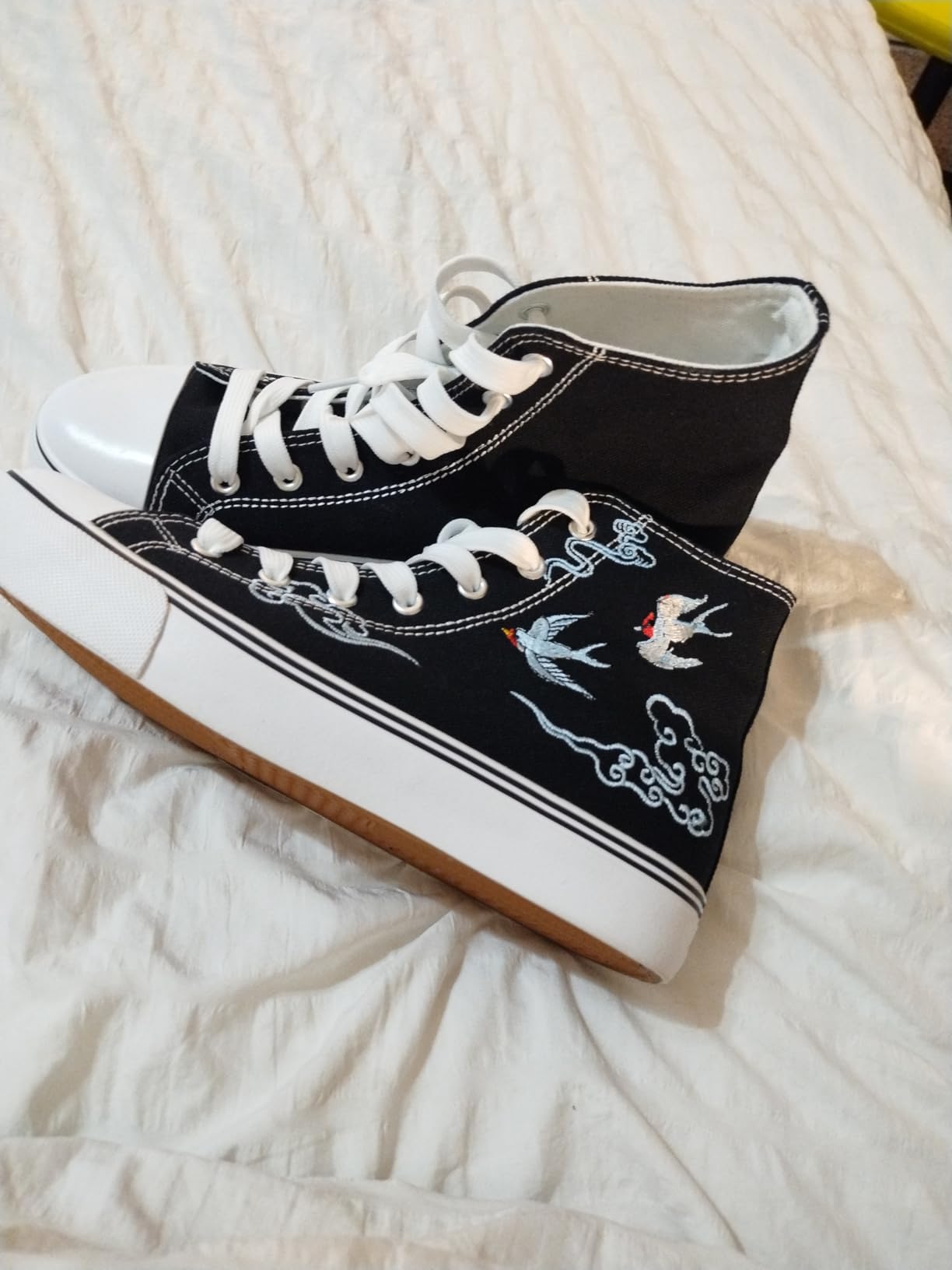
Six weeks with these taught me something I didn’t expect: a $25 canvas shoe can be honest about what it is without being a disappointment. kufeiti’s embroidered high-tops aren’t pretending to be Converse. The stitched floral detail is genuine, the casual comfort is real for shorter outings, and the price makes the durability limitations easy to work around if you approach these as rotation-wear fashion pieces rather than forever shoes.
The math works in their favor for the right buyer. Narrow feet, rotation wear, fashion-forward aesthetic, and short-to-medium outings — that’s the sweet spot. Wide feet, all-day schedules, or anyone wanting one durable pair to carry them through two years? Look elsewhere. Keds, Vans, or Hello Basics Canvas Sneakers are all worth comparing in the canvas category depending on your priorities.
How They Stack Up
| Feature | kufeiti Canvas | Converse Chuck Taylor | Keds Champion | FRACORA Women’s Canvas |
|---|---|---|---|---|
| Price | ~$25 | $55–$65 | $45–$65 | $25–$35 |
| Lifespan (moderate use) | 6–12 months | 18–24 months | 12–18 months | 6–12 months |
| Weight | ~9.65 oz | ~13 oz | ~10 oz | Similar |
| Embroidery | ✅ Stitched (genuine) | ❌ No embroidery | Limited options | ❌ No embroidery |
| Wide foot fit | ⚠️ Narrow midfoot | ✅ Better fit | ✅ More forgiving | ⚠️ Similar issues |
| All-day comfort | ⚠️ 4–6 hrs only | ✅ 6–8 hrs | ✅ 6–8 hrs | ⚠️ Similar limits |
| Best for | Rotation fashion wear | Daily driver | Extended casual wear | Budget canvas, minimal design |
Be the first to review “kufeiti Women’s High Top Canvas Sneakers”
Related products
Running Shoes
Running Shoes

Sneaker
Sneaker
Running Shoes
Reviews
There are no reviews yet.