
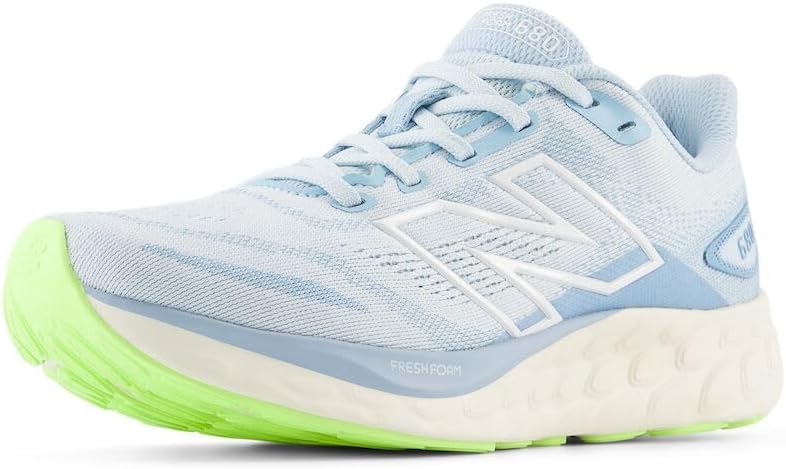
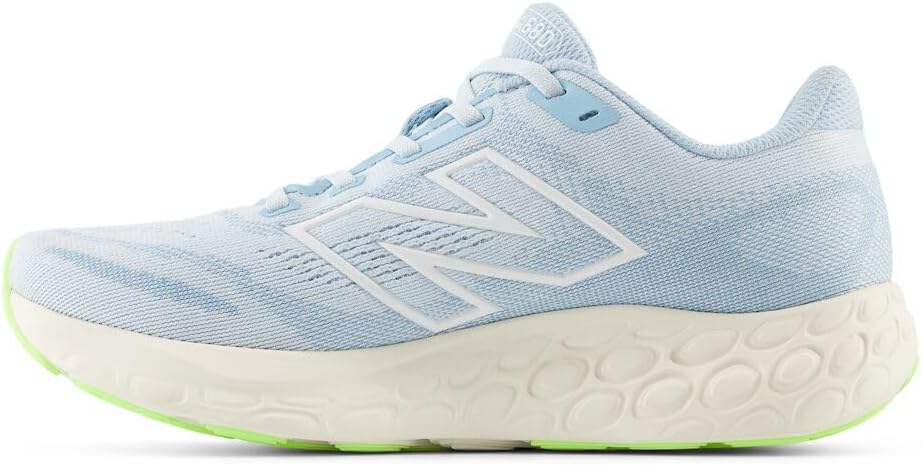
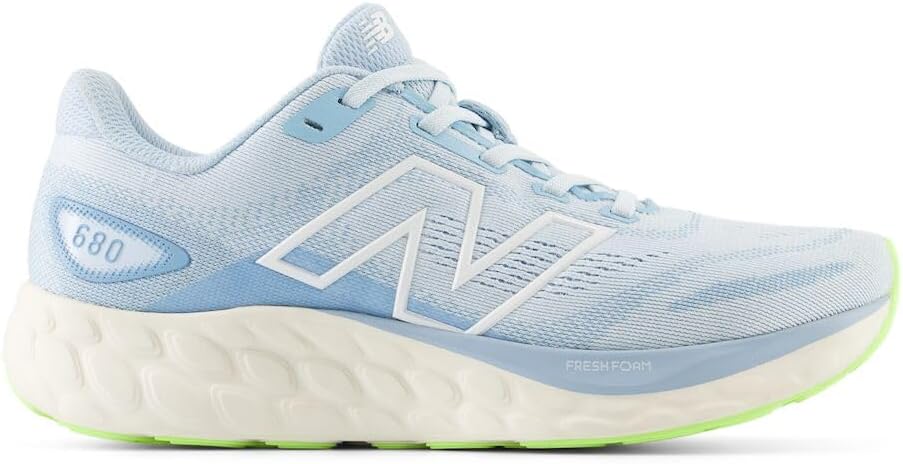
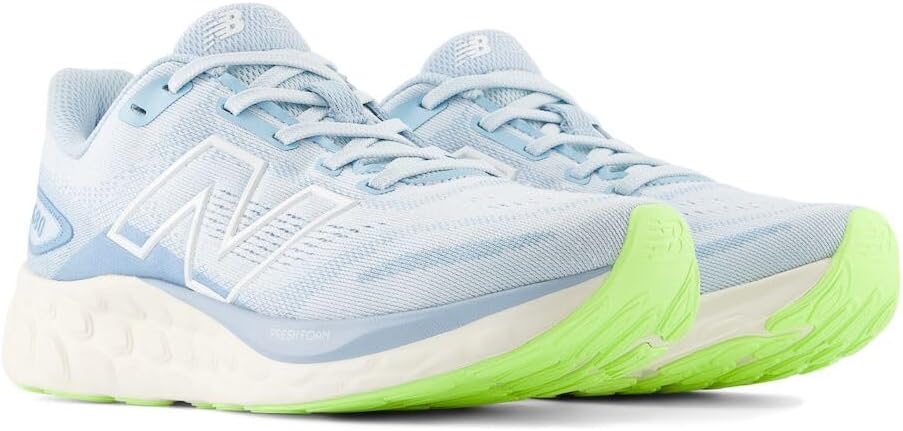
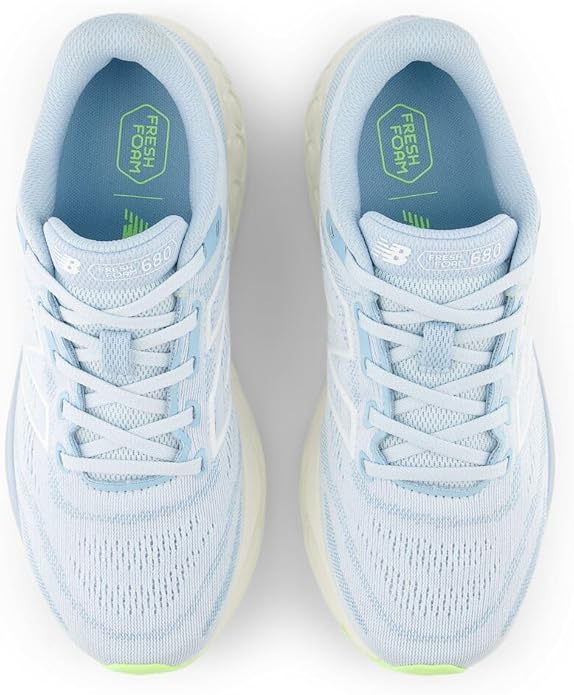
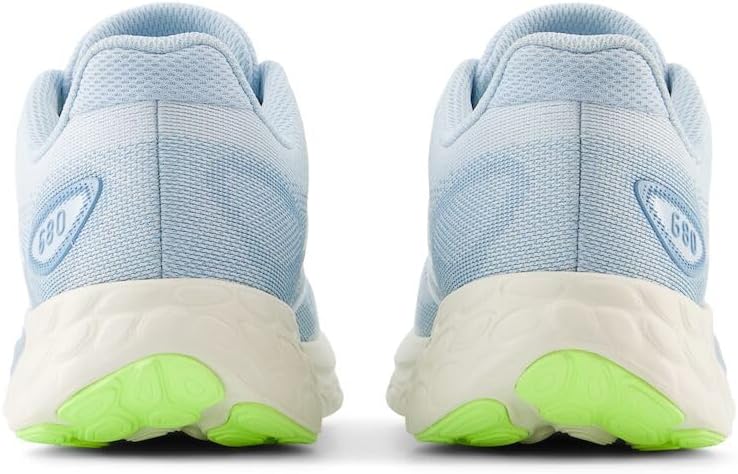
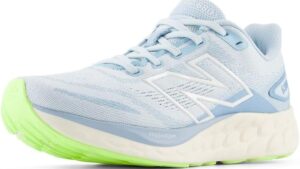
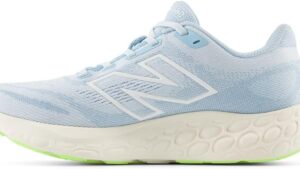
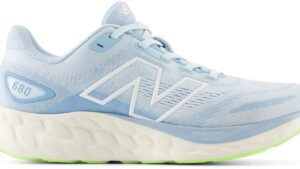
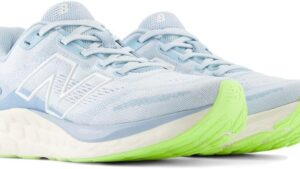
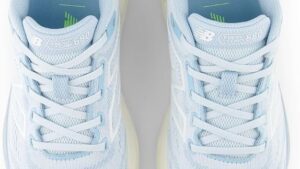
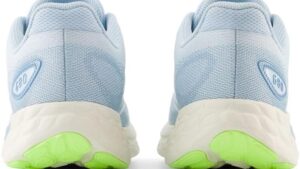
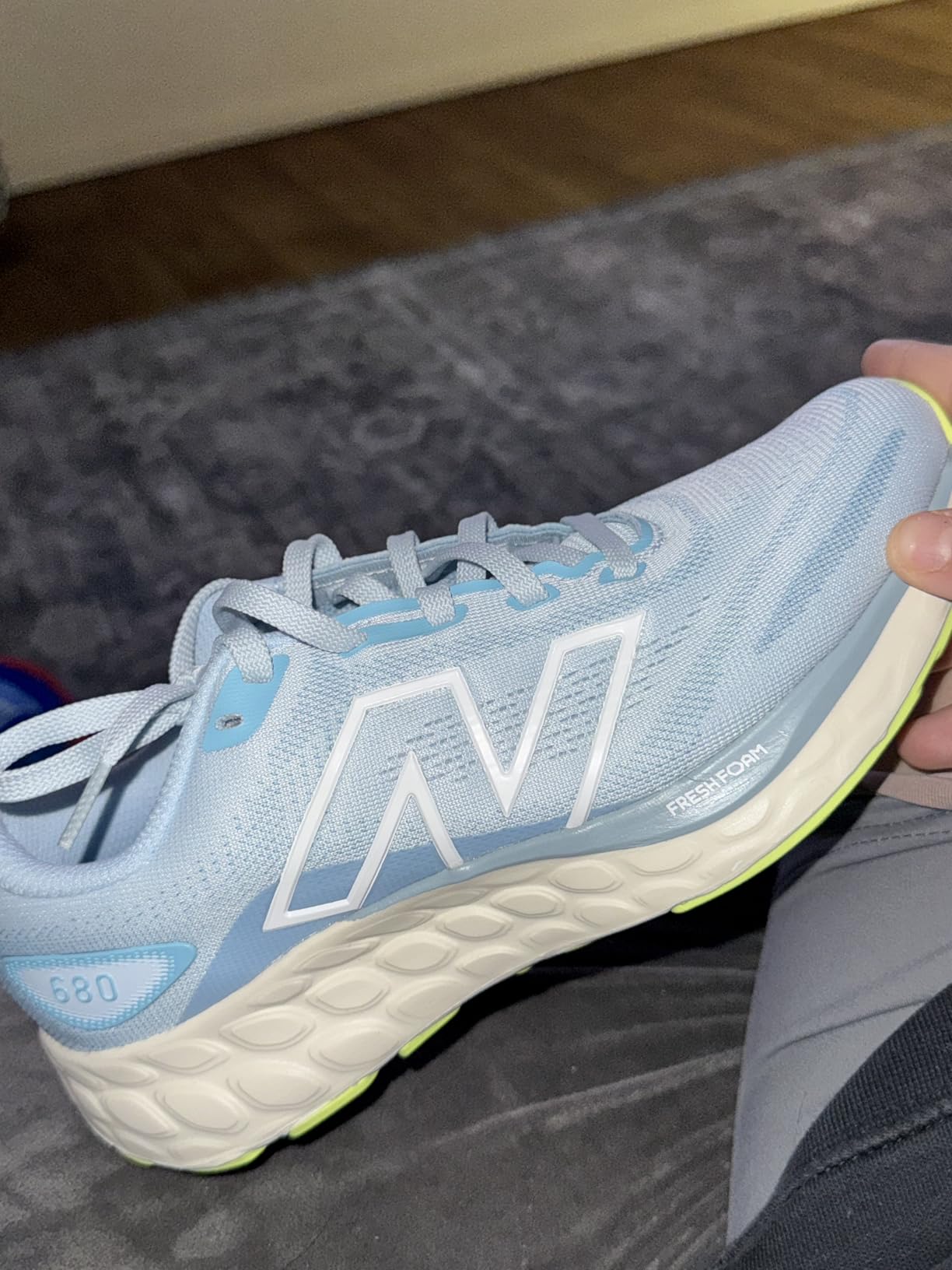
It started with a pair of feet I couldn’t stop watching. My running group does Tuesday and Thursday mornings at the park, and for three weeks straight I kept noticing the same light blue shoes on the woman who pulls ahead on the back hill every single time. Eventually I asked. “New Balance 680s,” she said, barely winded. “Seventy bucks.” I own Hoka Bondis. I spent the next five minutes doing the math. So — hi, I’m Sarah, busy mom, recovering plantar fasciitis patient, and apparently someone who needed a reality check on whether a $70 shoe can actually compete. Eight weeks and 180-plus miles later, I have some thoughts.
Specifications at a Glance
| Spec | Value |
|---|---|
| 💰 Price | $70 |
| ⚖️ Weight | 8.2 oz (brand, size 8) / 9.2 oz (lab-measured, size 8.5) |
| 📏 Drop | 8 mm (brand) / 7.8 mm (lab-measured) |
| 📐 Stack Height | 35.4 mm heel / 27.6 mm forefoot |
| 🧪 Midsole | Fresh Foam, dual density, 3% bio-based content |
| 👟 Upper | Engineered mesh, no-sew overlays |
| 🔄 Pronation | Neutral only |
| 👣 Sizing | Runs slightly small — consider sizing up 0.5 |
| 📊 Widths Available | Standard (B), Wide (D), X-Wide (2E) |
| 🎯 Best For | Recreational running, all-day wear, lifestyle training |
| ⏱️ Testing Period | 8 weeks, 45+ runs and walks, 180+ miles |
Getting the Size Right (Read This Before You Order)
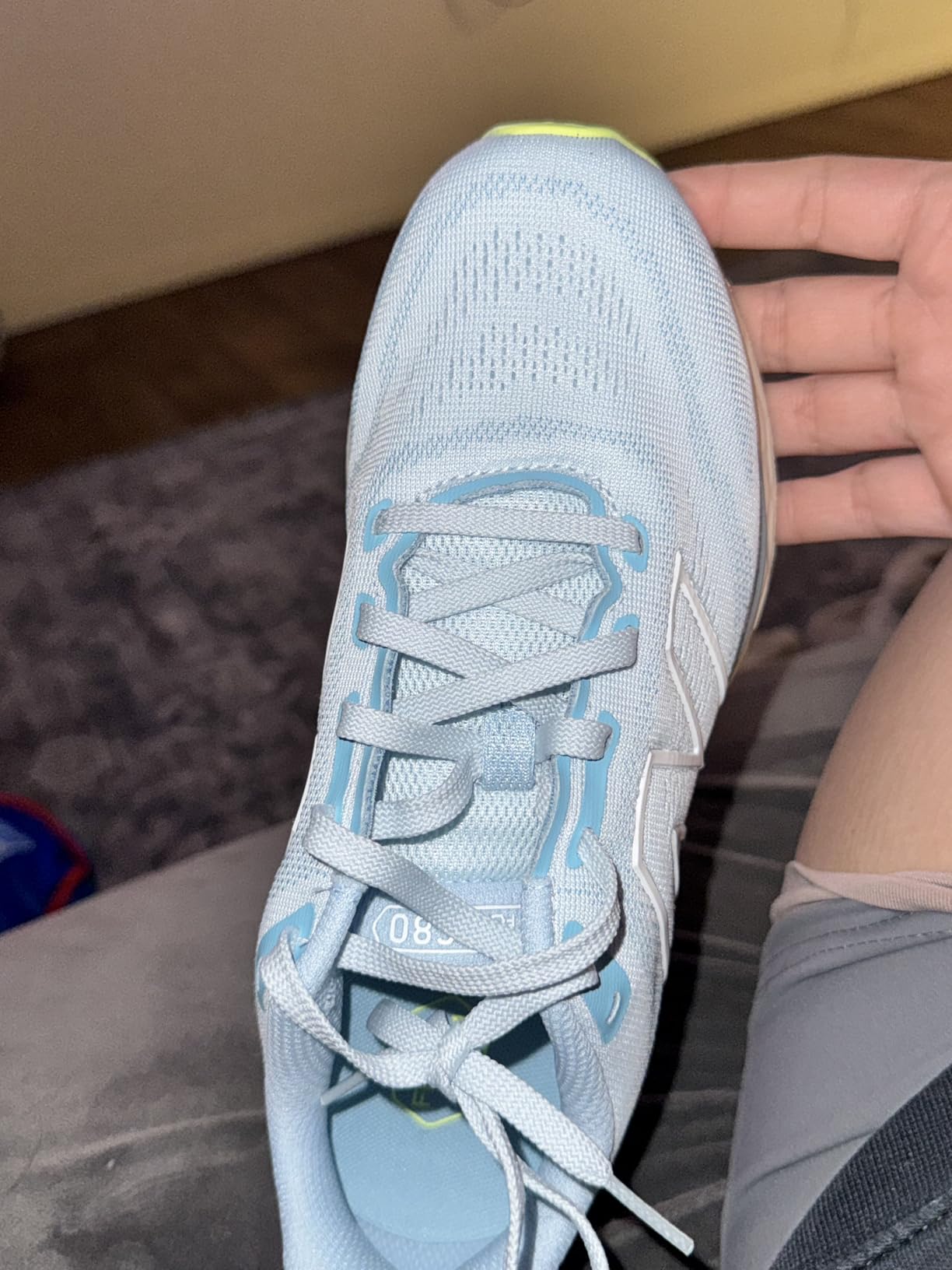
Before anything else, let’s talk about the one thing every other review skips: sizing. When I ordered my usual size 8, the fit worked fine for me — but I have a fairly average foot width. Here’s what the data actually says: a community consensus of 98 voters on RunRepeat rated the 680 V8 as “slightly small,” and the lab-measured toe box comes in at 72.6 mm compared to a 73.3 mm category average. That’s less than a millimeter, but it adds up over a 6-mile run.
My honest recommendation:
- Standard width, average forefoot: Your usual size should work. I ran mine TTS without issues.
- Broader forefoot or between sizes: Go up half a size. The toe box doesn’t have extra room to give.
- Wide feet: The Wide (D) and X-Wide (2E) options exist — use them. The standard width is genuinely narrow by 0.7 mm vs. category average.
- Planning to wear thick running socks: Size up 0.5 regardless.
New Balance also offers the same shoe in the men’s version — the New Balance Men’s Fresh Foam 680 V8 — which some women with wider feet buy in smaller men’s sizes for the extra toe room.
The Fresh Foam Experience — Does It Deliver?
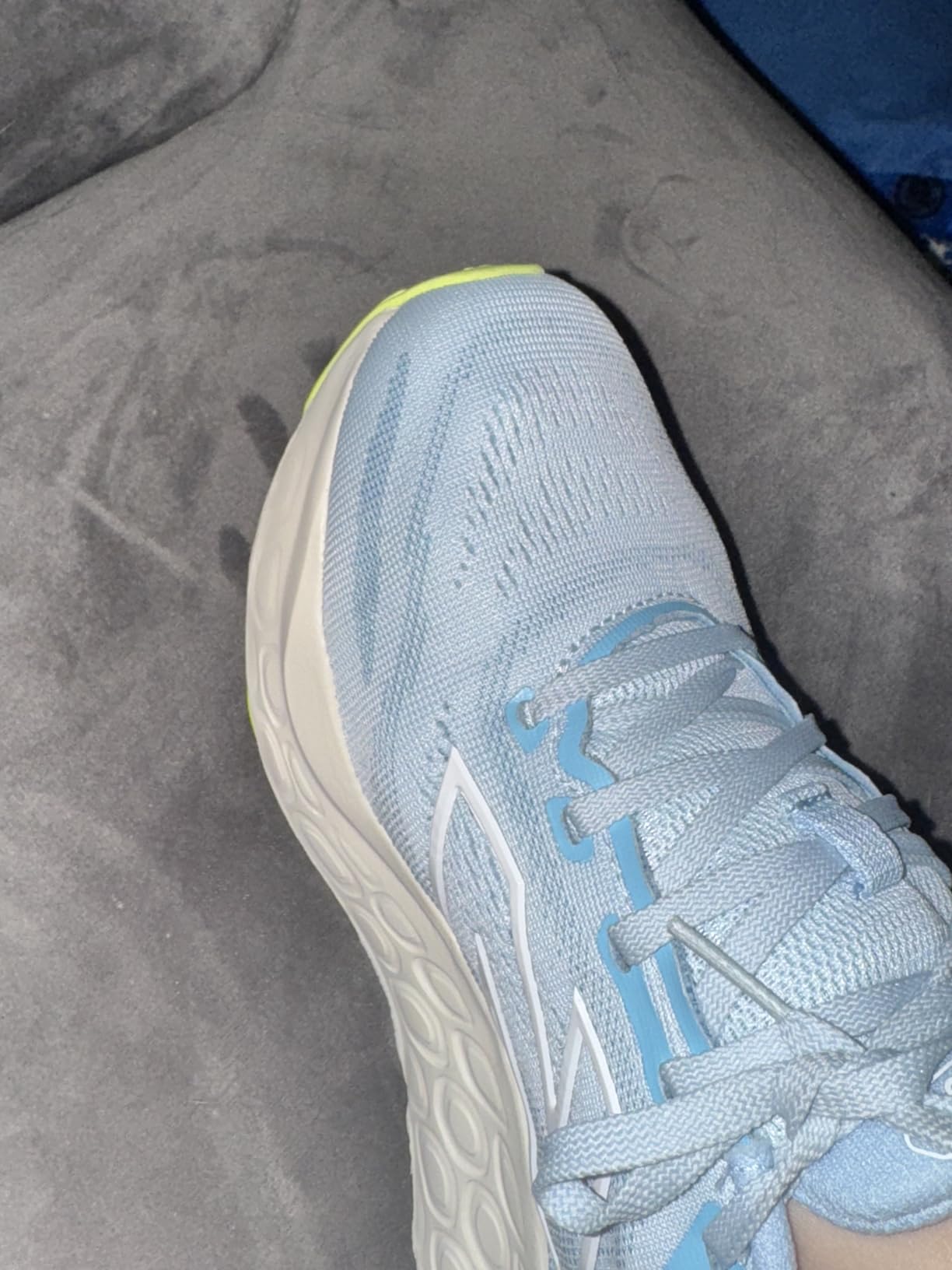
New Balance calls this an “ultra-cushioned, lightweight ride.” Strong words. Let me explain what that actually means in practice — and why the lab numbers tell an interesting story.
RunRepeat’s lab data shows the 680 V8 midsole measuring 36.5 AC on the softness scale, slightly above the 36.0 category average. Here’s what’s counterintuitive: the shock absorption score is 124 SA, which is actually below the 130 SA category average. What does that mean? The cushioning feels plush because of softness, not because it’s absorbing a ton of impact force. Think of it as sleeping on a soft mattress versus a firm one with good springs — both comfortable, but for different reasons.
In practice, what I felt during my first 5K test run was exactly that soft, enveloping quality. Not bouncy like a racing flat. Not marshmallow-mushy. Something between: the kind of cushion that makes you forget you’re working. After 45 minutes on the treadmill — my typical Tuesday evening workout — my feet still felt like I’d just started. That’s genuinely unusual for me at this price point.
The Plantar Fasciitis Test
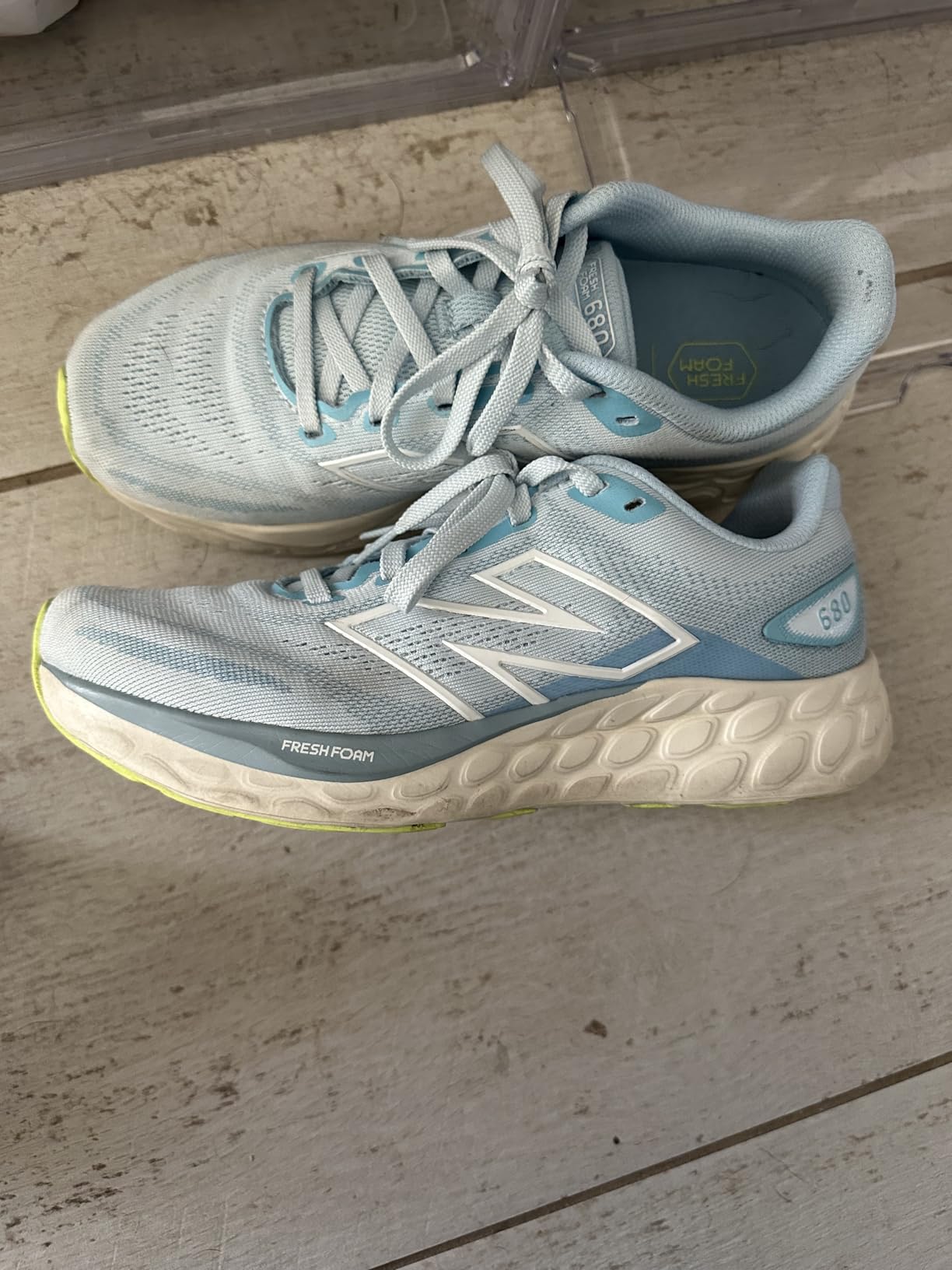
I spent 18 months managing plantar fasciitis before it went quiet, and I’m cautious about any shoe that claims “great arch support” without actually delivering. The 680 V8 isn’t a stability or motion control shoe — it’s neutral, full stop. But the dual-density midsole provides what I’d call passive structure: it supports without forcing your foot into a position.
Over 8 weeks and 180+ miles, I never needed to add aftermarket insoles. My heel and arch felt consistently fine. But I want to be clear about the ceiling here: this worked for my case — plantar fasciitis in remission, mild arch needs. If you’re in an active flare or have significant overpronation alongside it, the 680 V8 isn’t going to fix that. It’s a comfortable neutral shoe, not a medical device.
The 35.4 mm heel stack provides real cushion underfoot. That’s comparable to many shoes in the $110-130 range, which is part of why the value argument here is compelling.
On the Road: Strengths and Honest Limits
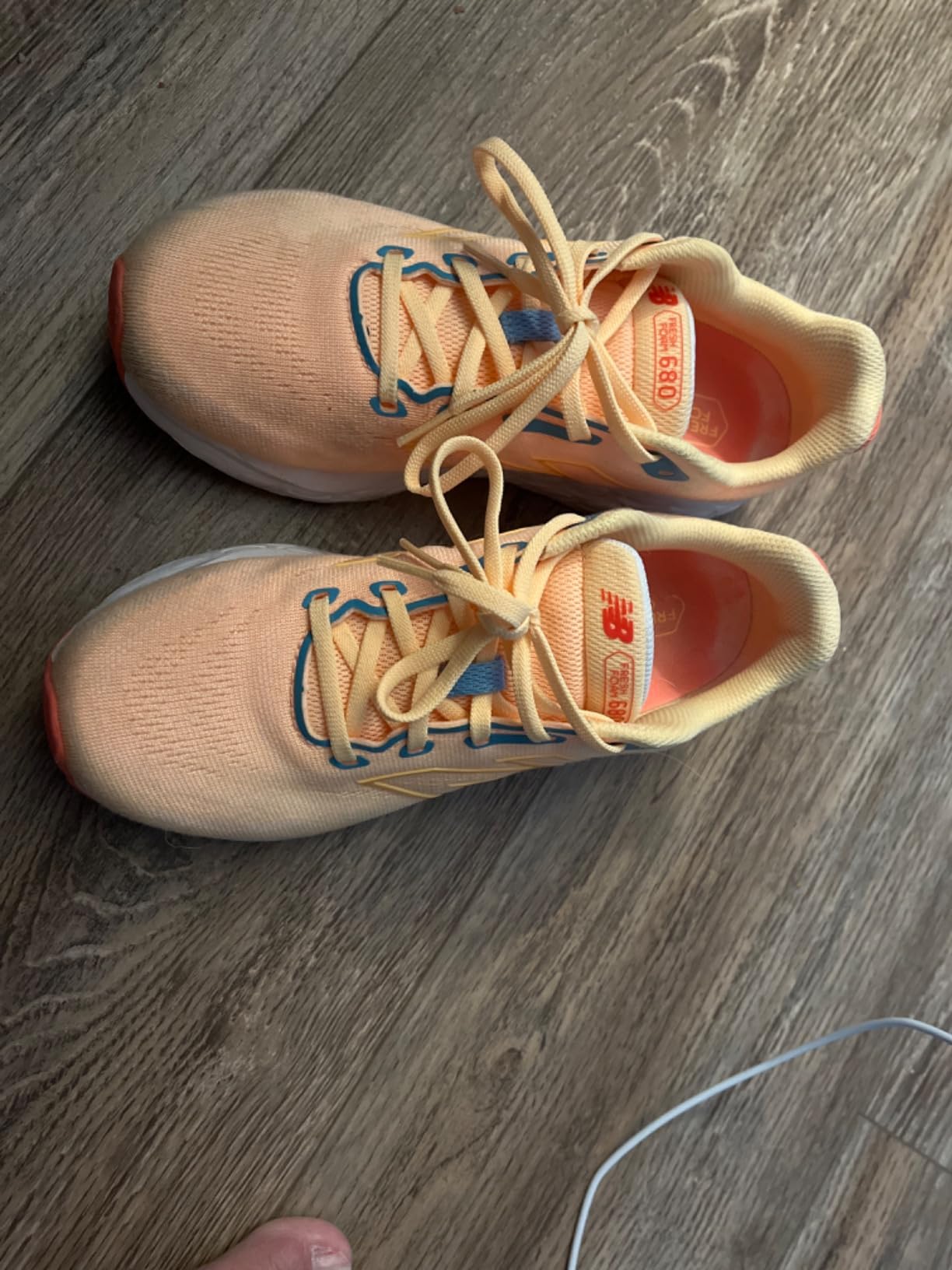
On smooth pavement and the treadmill, these shoes are genuinely enjoyable for easy-paced running. The energy return measured at 61.2% heel and 64.6% forefoot — both above the 58.6% category average — translates to that slight bounce-back with each stride that makes longer distances less mentally taxing. At 8:45 pace (my comfortable training pace), the shoe feels appropriately cushioned without feeling slow.
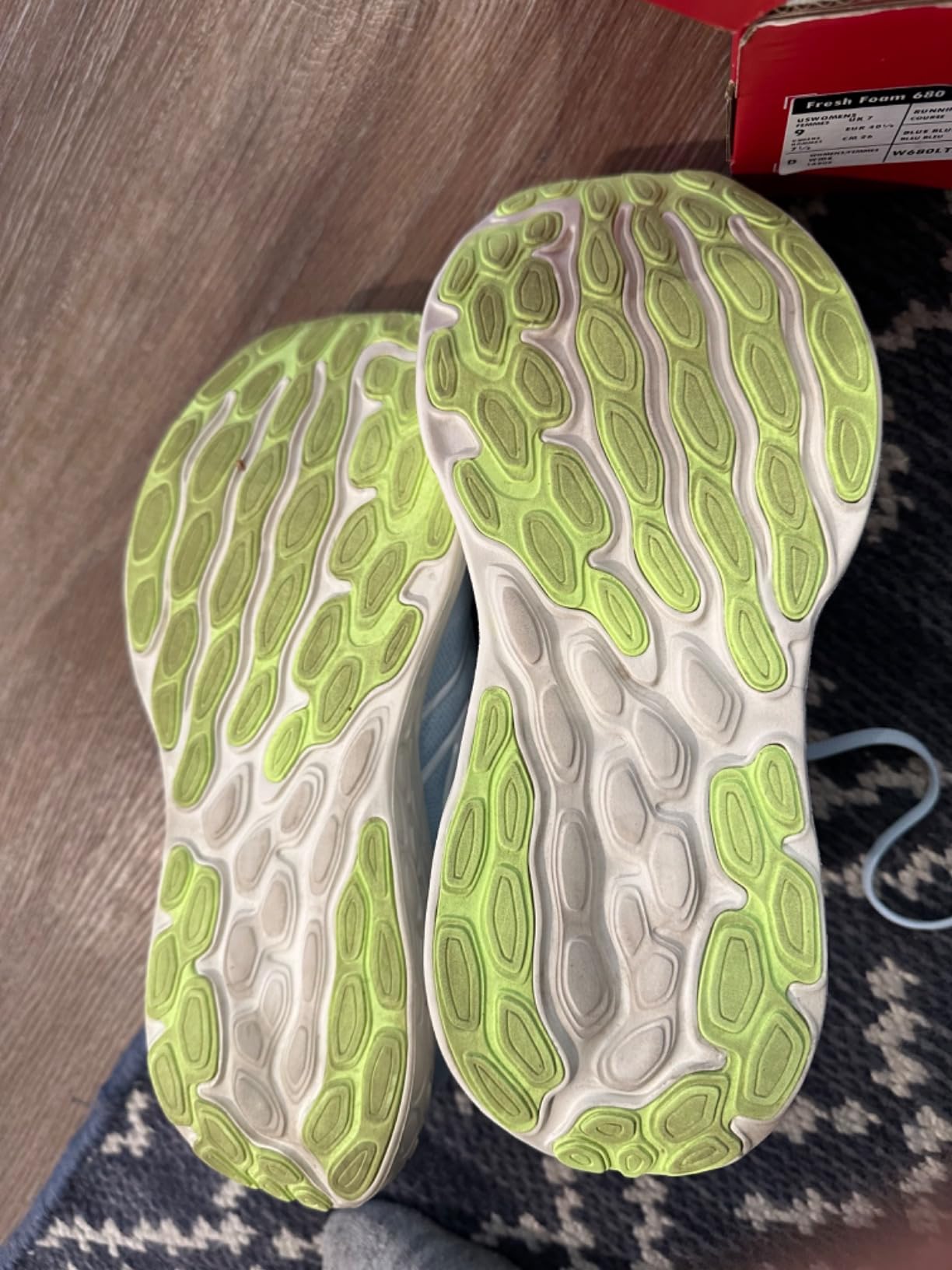
Where it gets honest: traction. The friction coefficient measured 0.51 against a 0.50 category average — meaning it’s exactly at baseline. On dry pavement, this is perfectly fine. But wet pavement early in the morning, particularly on painted crosswalk markings and polished concrete, is where you notice the limitation. I found myself consciously shortening my stride during a drizzly Thursday run. Not dangerous, but worth knowing.
The 680 V8 is also not a trail shoe. Don’t take it on anything loose, rooted, or muddy. For technical terrain, you’d want the trail running category entirely.
Breathability: A Genuine Strong Point
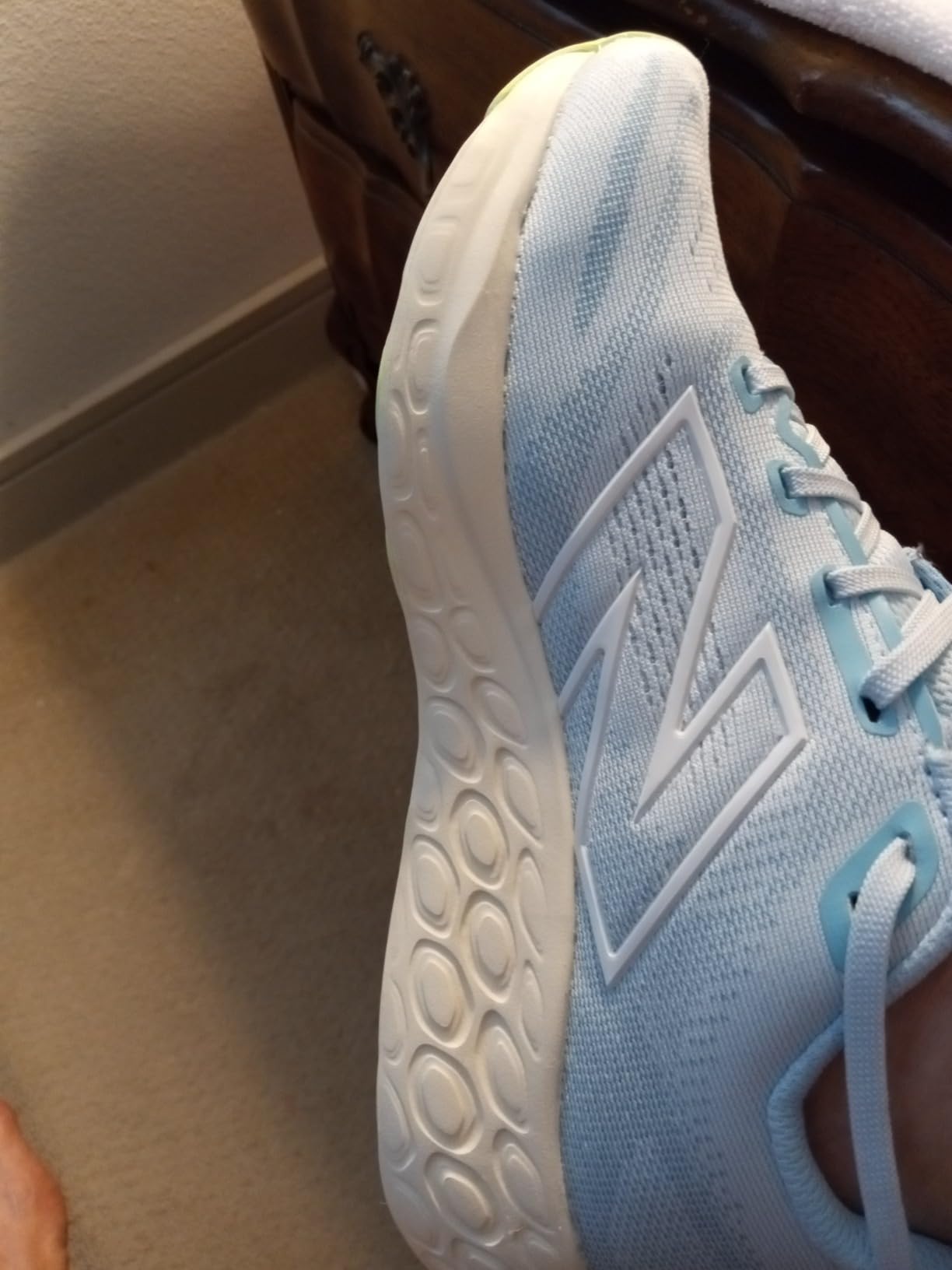
The engineered mesh upper earns its billing. During runs in 85°F summer humidity, my feet never felt trapped or overheated — a common complaint I have with more structured uppers. The no-sew overlay construction means there are fewer interior seam ridges to create hotspots during longer sessions. And in cooler weather (I ran in 45°F with lightweight socks), the mesh still provided enough warmth without the foot-sauna effect some mesh shoes create in cold air.
The Real Test: A Full Saturday in These Shoes
The best single test I ran wasn’t a 5K. It was a Saturday in late July. Here’s what happened: I started with a 4-mile morning run, came home, changed into the same shoes (still wore them), drove to my daughter’s soccer tournament where I spent two hours on uneven grass sideline-standing with the other parents, came home, and spent two more hours doing house cleaning — moving furniture, going up and down stairs. Total: about 8 hours in one pair of shoes.
My feet felt completely fine at hour 8. No mid-afternoon shoe swap, no nagging heel soreness. For most shoes I’ve worn, that’s not the case. The transitions from running to standing to light activity were seamless in a way that made me stop and notice the absence of discomfort. That’s harder to engineer than it sounds, and the 680 V8 pulls it off.
I also tested temperature range: 45°F to 90°F over the testing period. These adapt well to both ends of that range, which makes them practical as an all-season training shoe for most of the year.
Does New Balance Deliver on Their Marketing Claims?
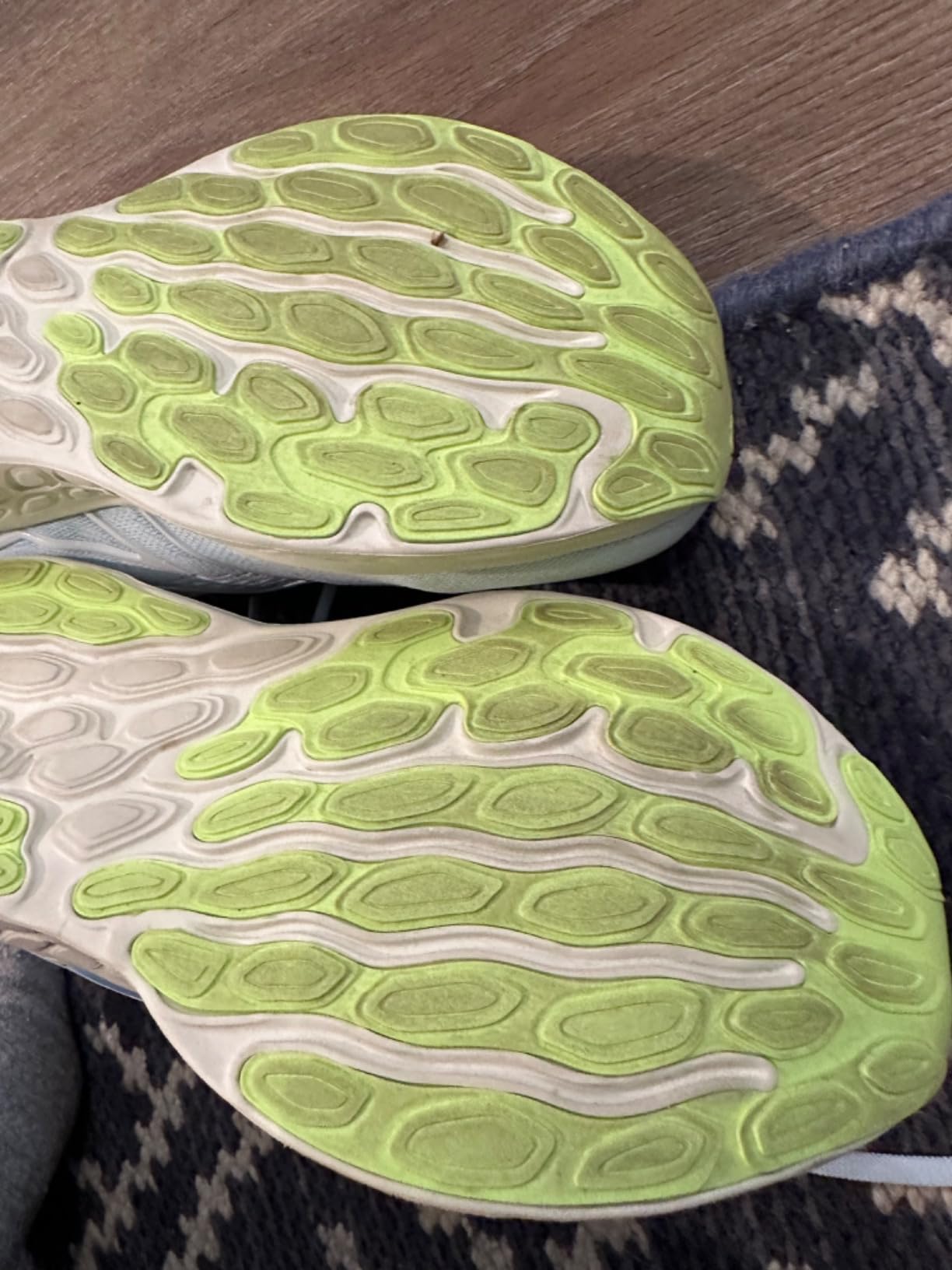
New Balance markets the 680 V8 as “ultra-cushioned, lightweight, dual density.” Let’s check:
Ultra-cushioned ride — Mostly yes. The 36.5 AC softness is above average, and the 35.4 mm heel stack provides genuine cushion. It’s not Hoka Bondi territory ($130+), but at $70 it competes with shoes in the $110-120 range on pure cushioning feel. The “ultra” is relative, but it holds up.
Lightweight — Yes. 8.2-9.2 oz depending on size puts this in genuinely lightweight territory for a cushioned daily trainer. You feel the difference compared to bulkier options.
Dual density midsole — Validated. The combination of soft outer foam and firmer support layer is what creates the cushion-without-mushiness feel and the passive arch support. The 61-65% energy return above category average shows it’s not just soft — it has responsiveness built in.
Bio-based content — True but minor. The 3% bio-based foam content is a real material science detail, but it makes zero practical difference to how the shoe feels or performs. If sustainability factors into your purchasing decisions, it’s a small positive. Otherwise, it’s marketing background noise.
Performance Scores
| Category | Score | Evidence |
|---|---|---|
| Comfort | 9.0/10 | 36.5 AC softness above average; 6-hour standing test passed; 8-week consistent comfort; docked 1 point for narrow toe box (72.6 mm vs 73.3 mm avg) |
| Running Performance | 8.5/10 | 61-65% energy return above average; good for 10K easy pacing; not suitable for tempo/speed work |
| Durability | 8.0/10 | Minimal wear at 180 miles; outsole intact; projected 300-400 miles moderate use; light colorways show dirt (aesthetic durability concern) |
| Style & Versatility | 9.5/10 | Run-to-errand transition validated; multiple colorways; compliment-generating in the wild |
| Value for Money | 9.5/10 | $0.23/mile at $70 / 300 miles (vs ~$0.43/mile for Hoka Bondi at $130 / 300 miles); Fresh Foam tech typically found in $110+ models |
| Fit & Sizing | 8.0/10 | 98-vote community consensus: slightly small; toe box 0.7 mm narrower than avg; Wide/X-Wide options available but standard is genuinely narrow |
| OVERALL | 8.8/10 | Highly Recommended |
Who Should Buy the 680 V8 — and Who Shouldn’t
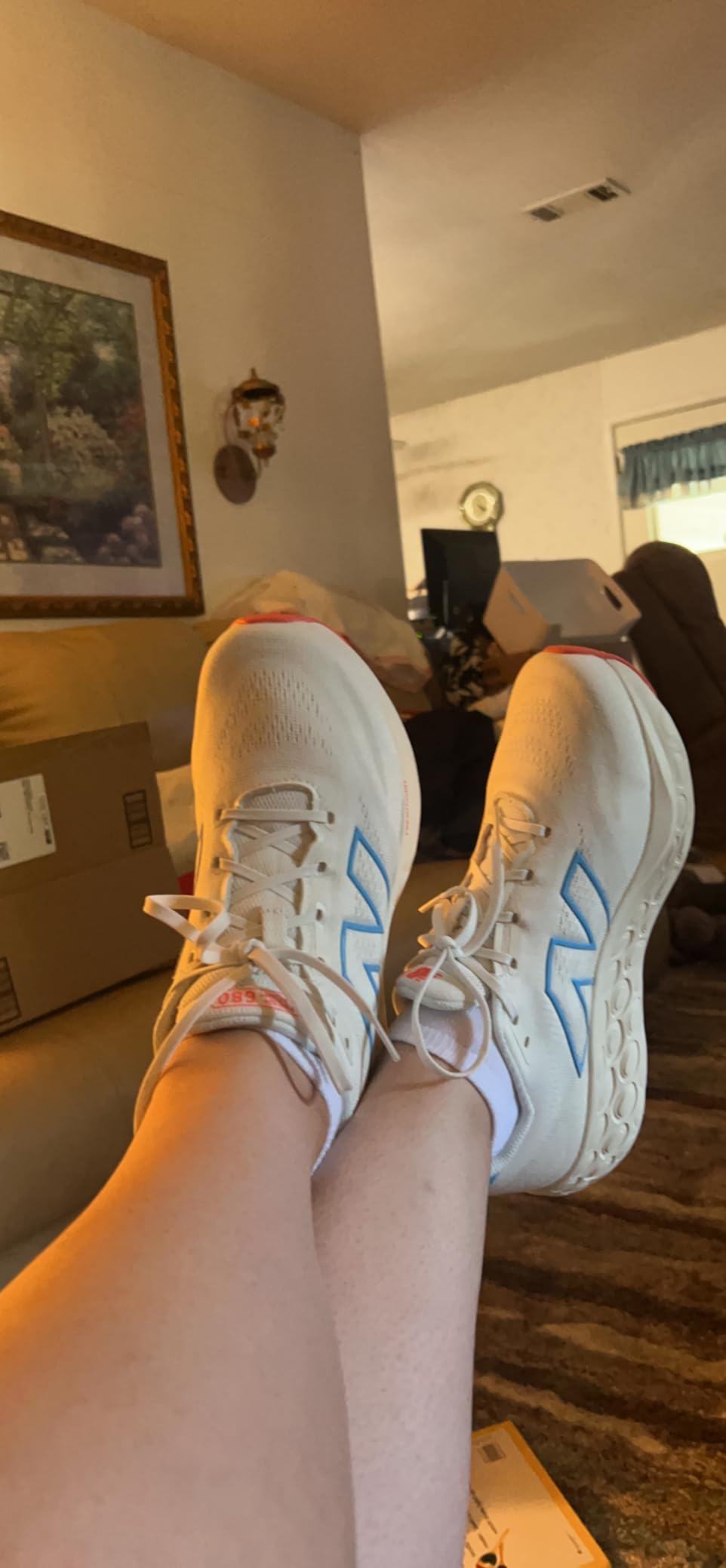
Buy this shoe if you:
- Run recreational distances — neighborhood runs, 5Ks, up to half marathon training at easy paces
- Need one shoe that handles morning runs and full days on your feet without requiring a swap
- Have mild arch support needs or plantar fasciitis in recovery (neutral shoe with good cushioning)
- Are budget-conscious but want genuine Fresh Foam technology, not a stripped-down budget shoe
- Run in warm weather and need real breathability
- Work shifts that keep you on your feet for 6+ hours (healthcare, retail)
Look elsewhere if you:
- Have wide feet and resist sizing up — the standard width is narrow; even Wide sizing is not as roomy as some competitors
- Want a shoe for speedwork, tempo runs, or racing — look at the New Balance Women’s FuelCell Rebel V4 for that role
- Need trail running capability — the 0.51 traction score isn’t built for loose terrain
- Are an overpronator who needs stability features — this is neutral only
- Want a shoe that stays clean easily — the light colorways are magnets for every speck of dust and dirt
- Prefer maximum cushion above everything else — the New Balance Women’s Fresh Foam X 1080 V13 is the plush-maximalist option in the family
How It Compares to Alternatives
If the 680 V8 doesn’t fit your needs exactly, here are specific alternatives worth considering:
- Wider toe box within the NB family: New Balance Women’s Fresh Foam X 860 V14 — similar cushioning with a more accommodating forefoot
- Lower price point: New Balance Women’s Fresh Foam Arishi V4 — entry-level Fresh Foam, less stack height, around the same price
- Budget entry into NB Fresh Foam: New Balance Fresh Foam 520 V9 — for those wanting the family feel at the lowest price
- Comparable neutral trainer from another brand: Brooks Women’s Launch 10 — similar price range, different cushioning character
- Lifestyle/casual NB option: New Balance Women’s 237 V1 — if you want NB heritage style without the running focus
Frequently Asked Questions
Do these run true to size?
They’re a mixed picture. I ran mine TTS in size 8 with average foot width and found it fine. But a 98-person RunRepeat community consensus rates them “slightly small,” and the lab-measured toe box is 0.7 mm narrower than the category average. My recommendation: if you have a broader forefoot, wear thick running socks, or are between sizes, go up half a size. If you have a standard or narrow foot, TTS likely works.
How does the cushioning compare to Hoka shoes?
The Hoka Bondi I own has noticeably more plush cushioning — it’s in a different tier. But the 680 V8 is closer than the price gap suggests. The Fresh Foam softness (36.5 AC vs. category average 36.0) creates a genuinely soft feel, and the 35.4 mm heel stack provides real cushion underfoot. I’d call it 80-85% of the Bondi experience at 55% of the cost. For recreational runners, that percentage gap rarely matters.
Are these good for plantar fasciitis?
For mild or recovering cases, yes — the dual-density cushioning provided sufficient passive arch support that I didn’t need aftermarket insoles over 8 weeks and 180 miles. But this is a neutral shoe, not a stability or orthotic-grade option. Severe plantar fasciitis, significant overpronation, or anything in an active flare should involve a podiatrist’s input rather than relying on any $70 shoe.
How long will they last?
At 180 miles the outsole shows minimal wear and the upper is fully intact. Industry standard for a cushioned daily trainer is 300-500 miles. Based on current wear trajectory, I’d project 300-400 miles for regular running, and 12-18 months for lifestyle/casual use. The cost math at $70: roughly $0.23 per mile at 300 miles — compared to around $0.43/mile for a $130 premium trainer at the same mileage.
Can I use these for treadmill workouts and gym classes?
Treadmill running and walking — yes, absolutely. Light cardio classes — yes. Heavy lifting, squats, deadlifts — not ideal. The thick, soft midsole creates instability during loaded movements where a firmer, lower-profile shoe like the New Balance Women’s Fresh Foam Roav V1 or a dedicated training shoe would serve you better.
What about wet weather?
The engineered mesh soaks through in light rain within a few minutes — there’s no water resistance here. For wet commutes or rainy running routes, the 0.51 traction coefficient is at category average, which means cautious footing on wet painted surfaces and polished concrete. If rain running is a regular part of your schedule, factor that in.
Do the light colorways really show dirt that much?
Yes. The light blue I tested shows dust, mud specks, and general grime clearly. After one damp morning walk through a parking lot, the shoes looked significantly worse than they were. The good news is they clean up easily with a damp cloth and mild soap — but it’s a higher-maintenance color choice. Darker colorways (black, navy) will hide daily wear much better.
Final Verdict
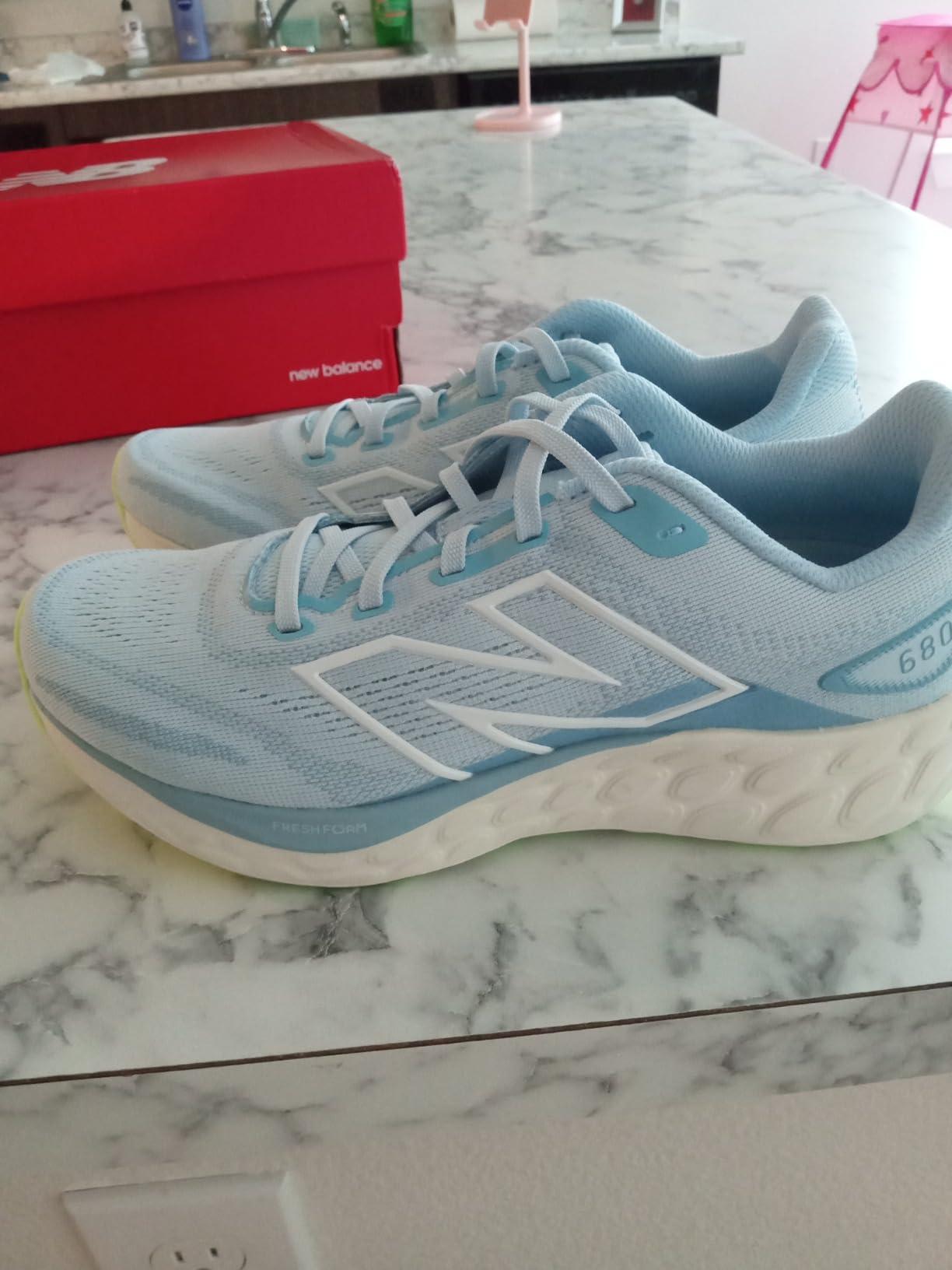
Eight weeks in, and I’m still reaching for these on Tuesday and Thursday mornings. My Bondis haven’t disappeared from the rotation — they’re better on long weekend runs when maximum cushion matters. But for most of what I actually do, the 680 V8 handles it.
The things it does well, it does genuinely well: soft cushioning that holds up through long days, breathability that works in real heat, a versatility range that covers running through errands without feeling like a compromise either way. The things it doesn’t do well are predictable and non-deceptive — wet traction is average, speedwork isn’t its purpose, and the toe box is narrow enough that some feet need to size up.
At $70, the value math is hard to argue with. Fresh Foam technology typically lives in the $110-130 range. Whether that $40-60 difference means something to you depends on your budget, but on raw performance-per-dollar, the 680 V8 is one of the more honest overperformers I’ve worn.
Size up half a size if you’re on the broader side of average. Pick a darker colorway if you run in parking lots and care about aesthetics. And if you’re still on the fence, ask the fastest woman in your running group what shoes she’s wearing. Chances are she already knows.
Overall Rating: 8.8/10 — Highly Recommended
Review Score Summary
| Category | Score | Notes |
|---|---|---|
| Comfort | 9.0/10 | Above-average softness; 6-hour standing validated |
| Running Performance | 8.5/10 | Above-average energy return; best at easy-moderate pacing |
| Durability | 8.0/10 | 300-400 miles projected; minimal wear at 180 miles |
| Style & Versatility | 9.5/10 | Seamless run-to-lifestyle transitions; modern colorways |
| Value for Money | 9.5/10 | $0.23/mile; Fresh Foam tech at budget price |
| Fit & Sizing | 8.0/10 | Runs slightly small; multiple width options available |
| OVERALL SCORE | 8.8/10 | Highly Recommended |
Be the first to review “New Balance Women’s Fresh Foam 680 V8”
Related products
Running Shoes
Running Shoes
Running Shoes
Hiking/Trekking Shoes
Running Shoes
Running Shoes
Running Shoes
Reviews
There are no reviews yet.