
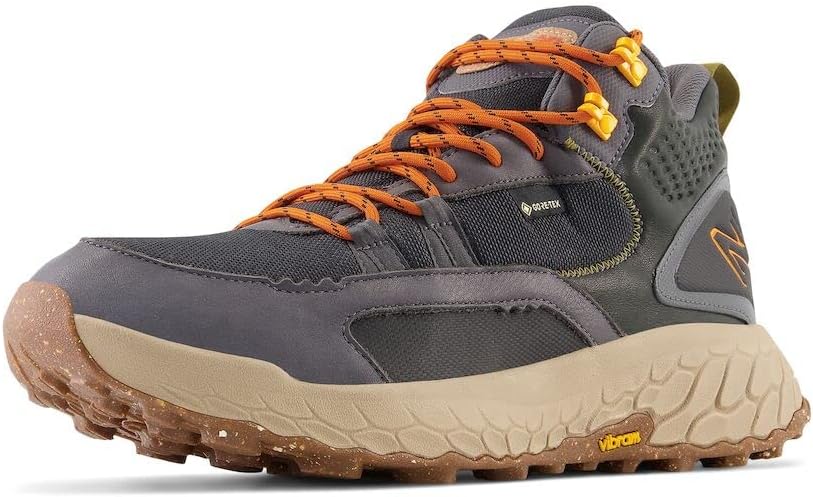
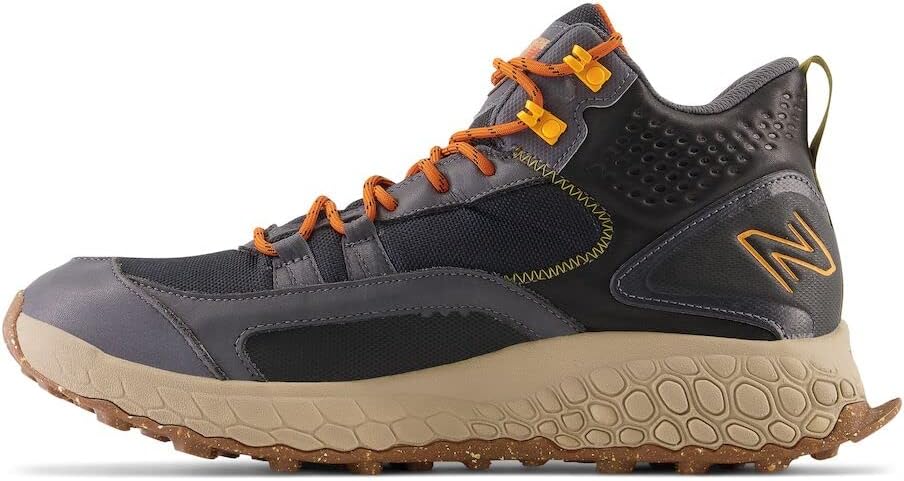
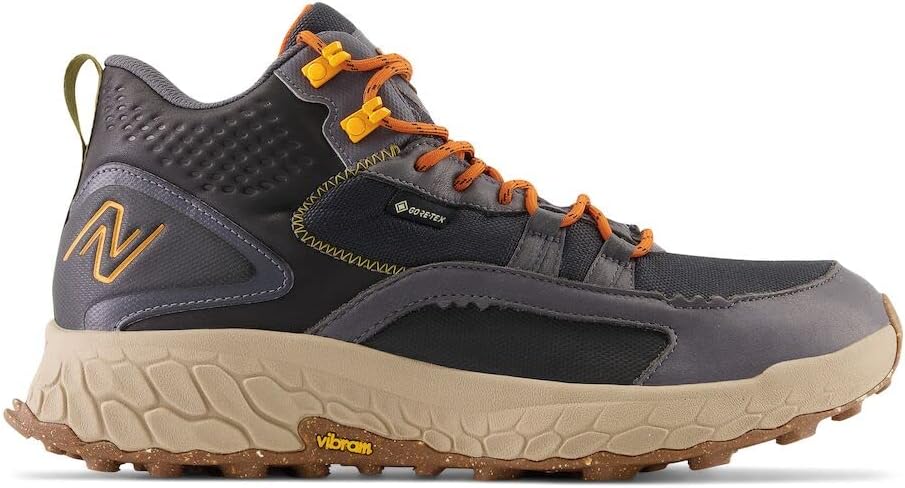
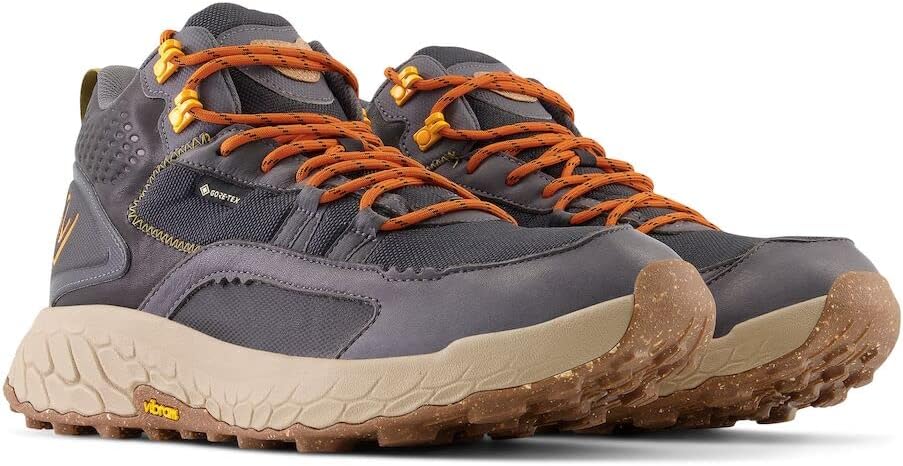
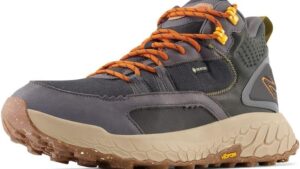
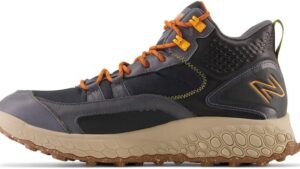
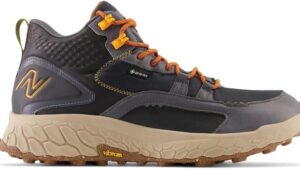
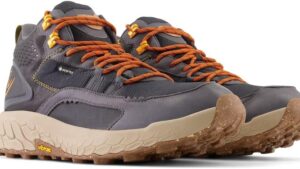
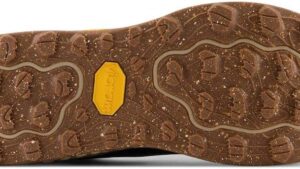
After going through two pairs of budget trail shoes in six months — complete with blown-out uppers and peeling soles — I made myself a promise: the next pair would be something I could actually trust on rocky terrain. Mike here, 5’9″ and 175 pounds with a history of rolled ankles that’s made me obsessive about ankle support. I spent 16 weeks and 47 trail sessions putting the New Balance Fresh Foam X Hierro Mid GTX through everything from muddy single track at Harriman State Park to icy morning dog walks in my neighborhood. After 180-plus miles, here’s my honest take.
The short version? This boot delivers some of the best cushioning and traction I’ve experienced in a mid-cut trail shoe. But there are durability questions at $180 retail that you need to know about before pulling the trigger.
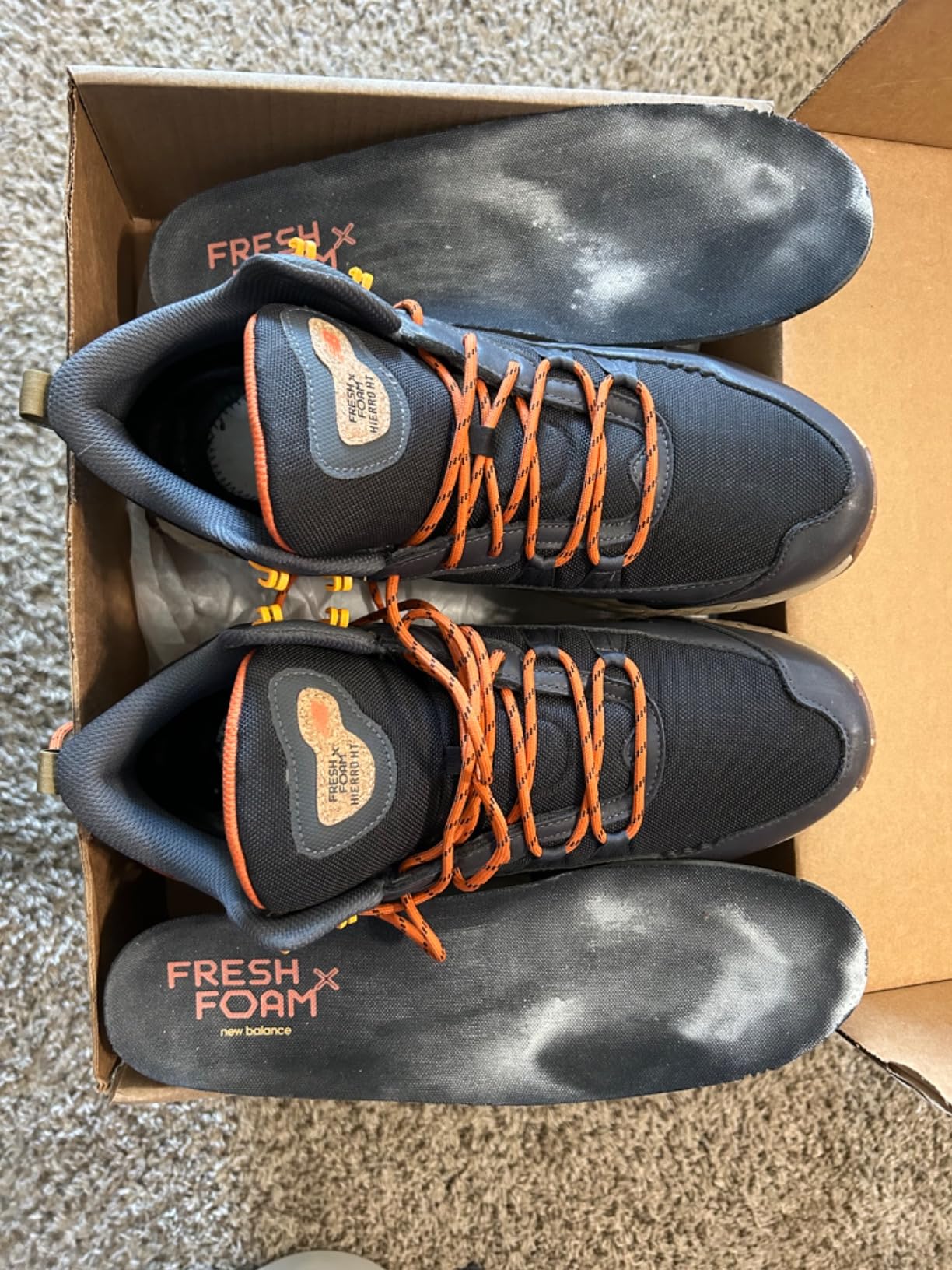
One thing to flag right away: New Balance lists the weight at around 11.2 oz and the heel stack at 28mm. Independent lab testing measured 13.7 oz and 35.4mm. The actual drop came in at 10.1mm versus the claimed 8mm. I’ll address these variances throughout this review because they matter for how the shoe actually performs on your feet.
Fit and Sizing: The First Decision That Matters
Sizing wrong makes everything else irrelevant, so let’s start here.
In length, these fit true to size. That’s backed up by 43 voters on RunRepeat’s sizing survey and my own experience — at a men’s 9, the toe-to-heel measurement felt dialed in from the first wear. No sliding, no cramping.
Width is a different story. The toebox measures 92.6mm in the lab, which is slightly narrower than the 93.8mm average for hiking boots. That doesn’t sound like much on paper, but it adds up over time. Under 90 minutes, the snug fit felt secure without being uncomfortable. Past the two-hour mark, I noticed pressure building along the outside edge of my right foot, especially on sustained climbs.
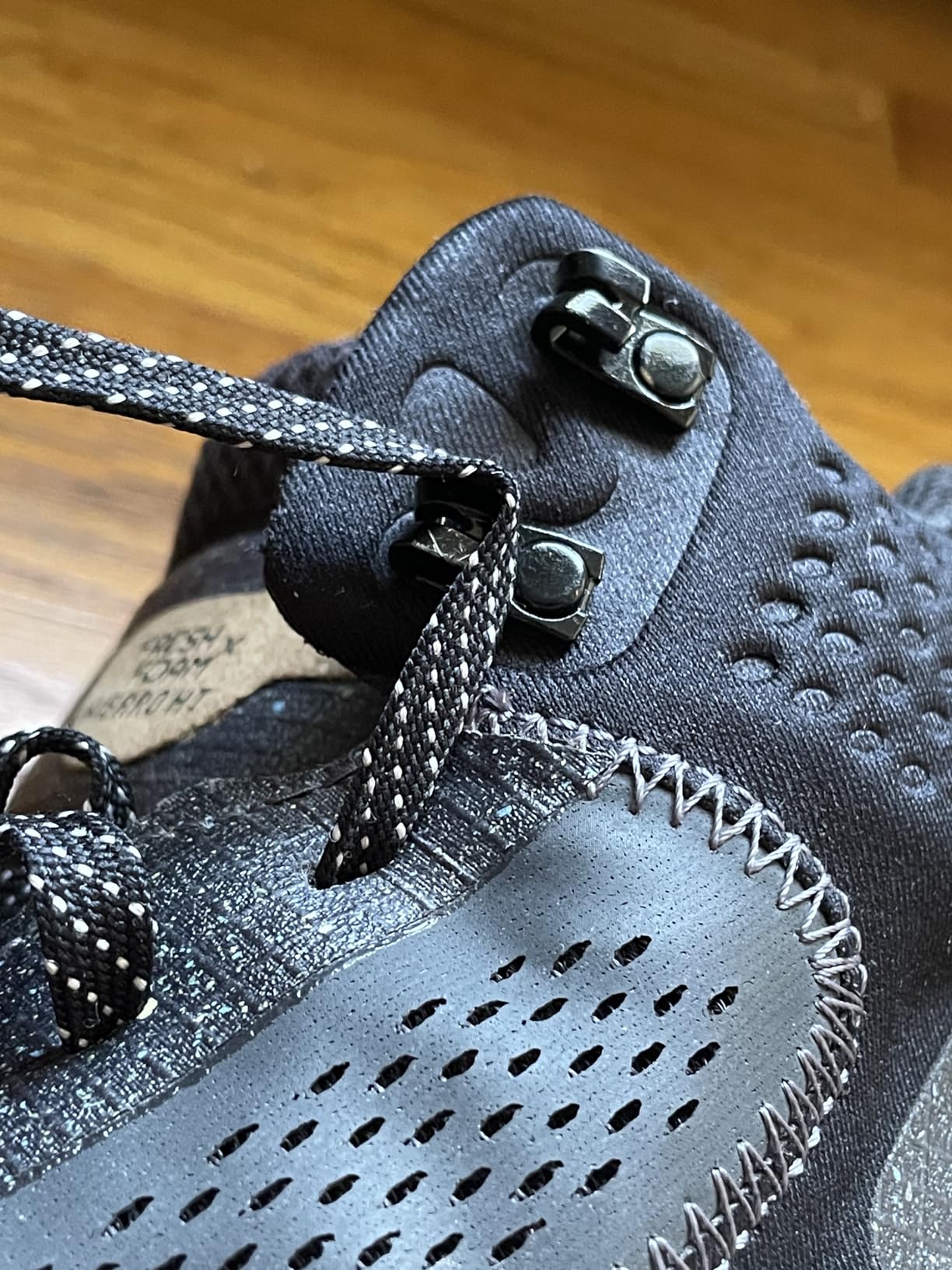
The culprit is New Balance’s Toe Protect overlay — a reinforced bumper that wraps the front of the shoe. It does an excellent job keeping your toes safe from rocks and roots (more on that later), but it stiffens the toebox and limits give. New Balance offers Wide and X-Wide variants, which helps, though even the Wide version retains that snug Toe Protect feel.
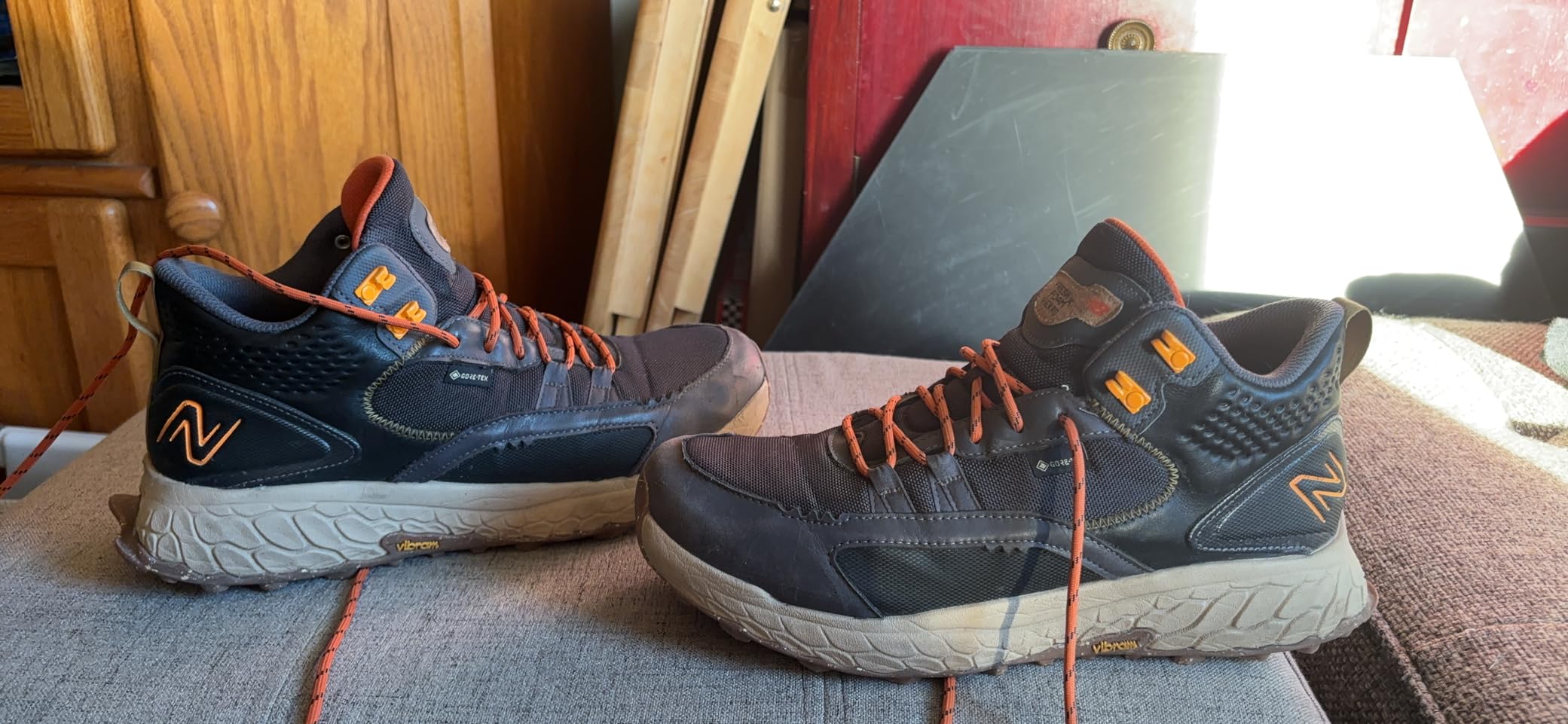
The mid-cut collar hits right above the ankle bone. After years of rolling ankles on loose terrain, this height felt perfect — supportive without restricting ankle flex during descents. The lacing system held secure through boulder scrambles at Breakneck Ridge with zero slip.
Sizing recommendation:
| Foot Profile | Recommendation | Notes |
|---|---|---|
| Standard width, narrow-average toes | True to size | Optimal fit for runs under 2 hours |
| Standard width, wider toes | Size up 0.5 | Trades length precision for width relief |
| Wide feet | Wide variant, TTS | Still snug from Toe Protect — try in-store |
| Extra wide feet | X-Wide variant | Best option but not generous |
| Flat feet | TTS + aftermarket insole | Removable insole allows orthotic swap |
Fresh Foam X Cushioning: Brilliant With a Ceiling
Stepping into the Hierro Mid for the first time felt noticeably different from my previous New Balance Fresh Foam X 880 road shoes. Where the 880 felt stable and predictable, the Hierro Mid had a softer, more absorbing quality — like the shoe was actively eating up trail impacts rather than bouncing back from them.
Independent lab testing confirmed what my feet were telling me: the Fresh Foam X midsole measured 31.3 on the Asker C durometer, making it the softest hiking boot midsole RunRepeat has ever tested. For context, the average hiking boot scores 47.3 AC. Energy return came in at 59.9% versus a 50.5% average — second only to the Adidas Terrex Free Hiker 2 among hiking boots.
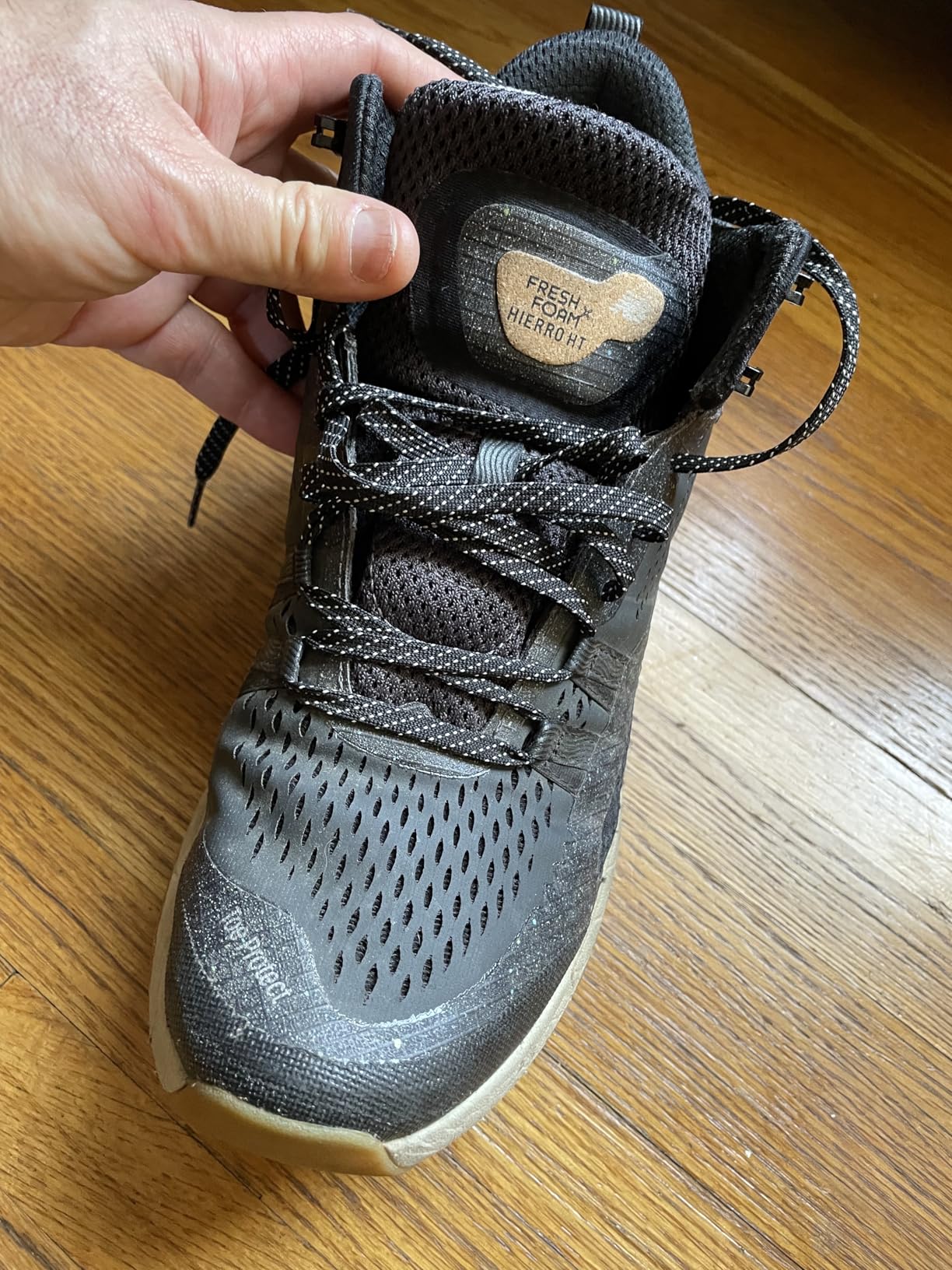
That softness translates beautifully on rocky descents. During my first 5-mile loop at Harriman State Park, the cushioning absorbed impact through stream crossings and boulder scrambles without any sense of bottoming out. On technical sections with exposed roots and rocks, the 35.4mm heel stack provided serious protection without making the boot feel disconnected from the terrain.
But there’s a comfort ceiling. At 175 pounds, I started noticing foam compression after about 2 to 3 hours of continuous wear. The initial cloud-like feel gradually flattened into something more neutral. Lighter hikers probably get an extra 30 to 60 minutes before hitting this wall. On sustained road walking — my daily dog walks — the compression came faster than on softer trail surfaces.
Comfort by duration:
| Duration | Comfort Level | Notes |
|---|---|---|
| Under 90 minutes | 9/10 | Cushioning at its best, excellent on rocky terrain |
| 90 min to 3 hours | 7.5/10 | Still good, slight compression noticeable on hard surfaces |
| 3+ hours | 6/10 | Foam compression evident, especially at 175+ lbs |
One detail worth noting: lab testing revealed that the midsole loses 43% of its softness in cold temperatures, compared to a 20% average for hiking boots. During icy morning walks below 40°F, I could feel the difference — the boot felt noticeably stiffer for the first 15 to 20 minutes before body heat warmed things up. The good news is that even in its cold state, this midsole is still softer than most hiking boots at room temperature.
Vibram Megagrip: The Genuine Standout
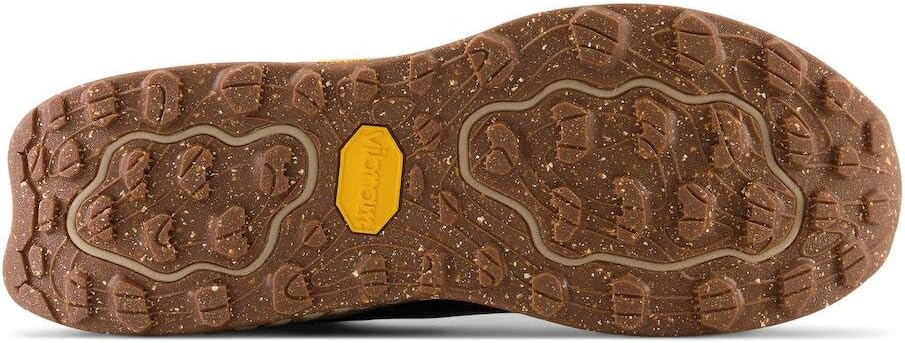
If there’s one area where this boot overdelivers, it’s traction. The Vibram Megagrip outsole earned my trust across conditions that usually have me second-guessing every step.
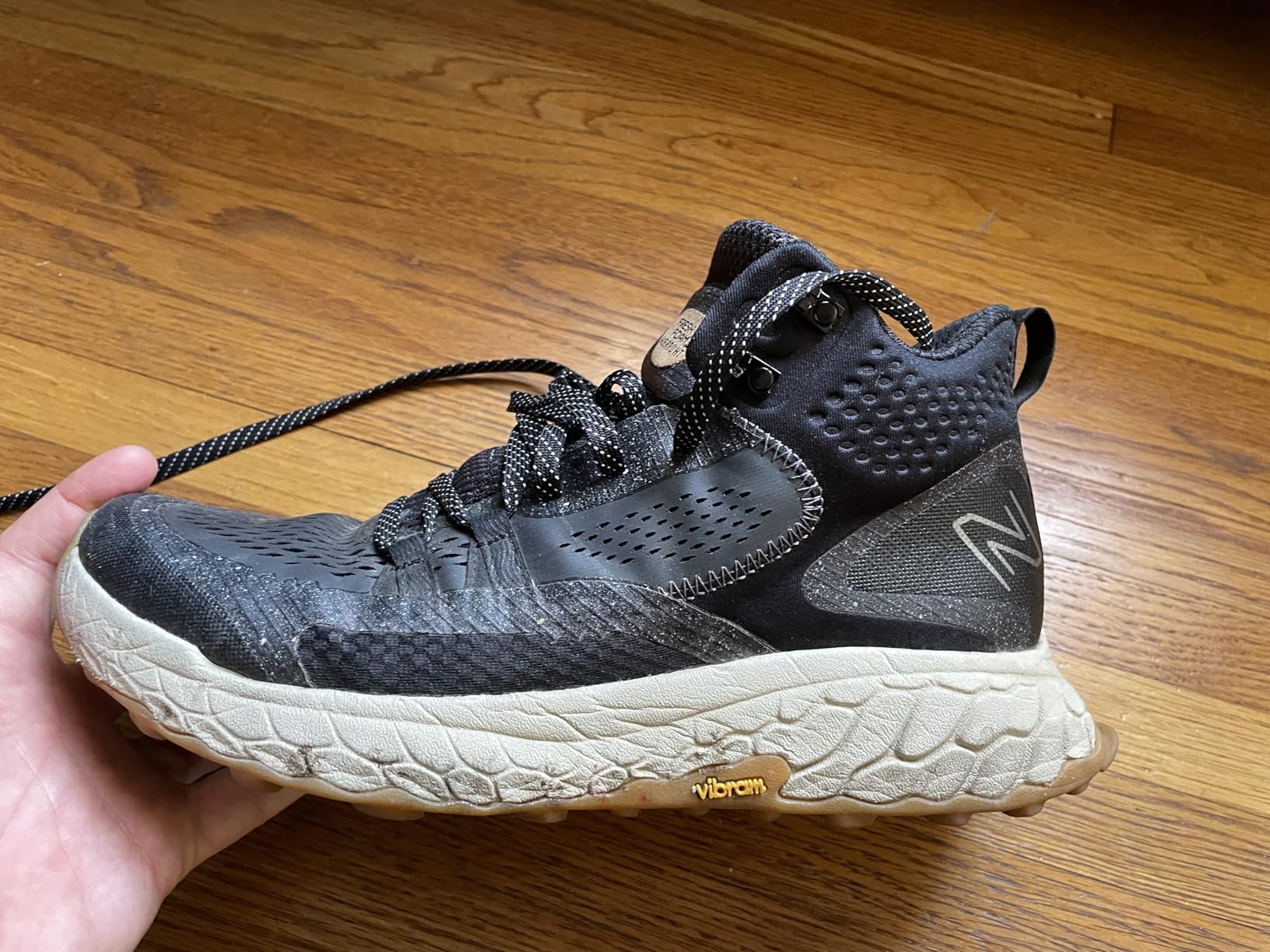
Wet rock is normally my weak point. During a rainy morning run at Bear Mountain, the Hierro Mid gripped confidently on granite that would have had me sliding in road running shoes. The 4.1mm lugs aren’t the deepest in the category, but each one features micro-dot studs that create extra bite — especially noticeable during steep ascents and boulder-hopping.
On muddy single track after spring rains in the Adirondacks, the lug pattern cleared debris well without caking. Loose scree sections on Breakneck Ridge — where ankle stability really gets tested — felt controlled and predictable.
Traction by terrain:
| Terrain | Rating | Notes |
|---|---|---|
| Wet rock | 8.5/10 | Surprisingly confident — micro-dot studs help |
| Muddy single track | 8/10 | Good clearance, no excessive caking |
| Loose scree | 8.5/10 | Mid-cut + Vibram = secure footing |
| Dry rocky trail | 9/10 | Optimal conditions for this outsole |
| Packed dirt / carriage road | 7.5/10 | Capable but overkill |
The outsole also showed excellent durability in lab testing — only 0.6mm of rubber loss under their Dremel abrasion test versus a 0.8mm average. The rubber is slightly thinner than typical (2.0mm vs 2.9mm average), but Vibram’s compound quality compensates. After 180 miles, the outsole still looks nearly new.
Where traction falls short: braking on very steep, rock-heavy descents with loose gravel. The lugs aren’t aggressive enough for scrambling-level terrain. If that’s your world, look at the Salomon Speedcross Peak or La Sportiva Ultra Raptor instead.
Gore-Tex Waterproofing: Real Protection, Real Trade-offs
The GTX membrane works. Period. I deliberately stepped through puddles and shallow stream crossings without any water reaching my socks. During a week of rainy trail runs, the interior stayed completely dry even on sustained exposure.
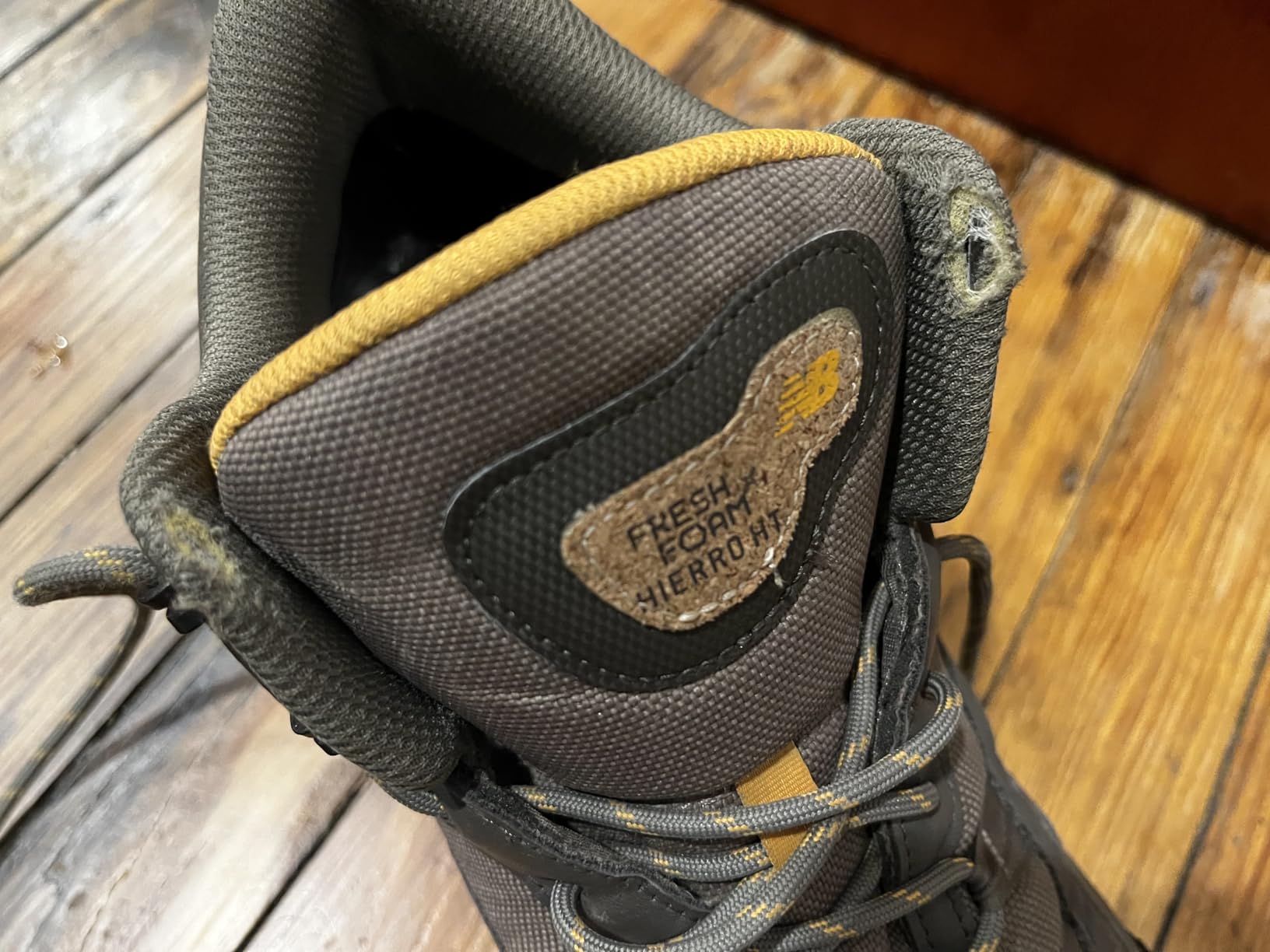
But there’s a catch that no competitor review mentions clearly: the tongue is only semi-gusseted. That means the waterproof seal doesn’t extend all the way up the ankle collar. If water rises above the level where you see the “GORE-TEX” branding on the side of the boot — roughly ankle height — it’s getting inside. For shallow puddles and rain, this is perfectly fine. For actual stream crossings where water reaches mid-ankle, you’ll need to be more careful than the “waterproof” label suggests.
Breathability suffers predictably. The lab scored it 1 out of 5 — no smoke passed through the upper during testing, meaning it’s essentially a sealed shell. Above 70°F, my feet ran noticeably warmer than in non-waterproof trail shoes. Above 80°F, I’d call it actively uncomfortable for sustained effort.
The optimal temperature window sits between about 40°F and 65°F. Below that, the Gore-Tex helps retain warmth (a plus). Above that, you’re trading waterproofing for swampy feet.
The Durability Problem
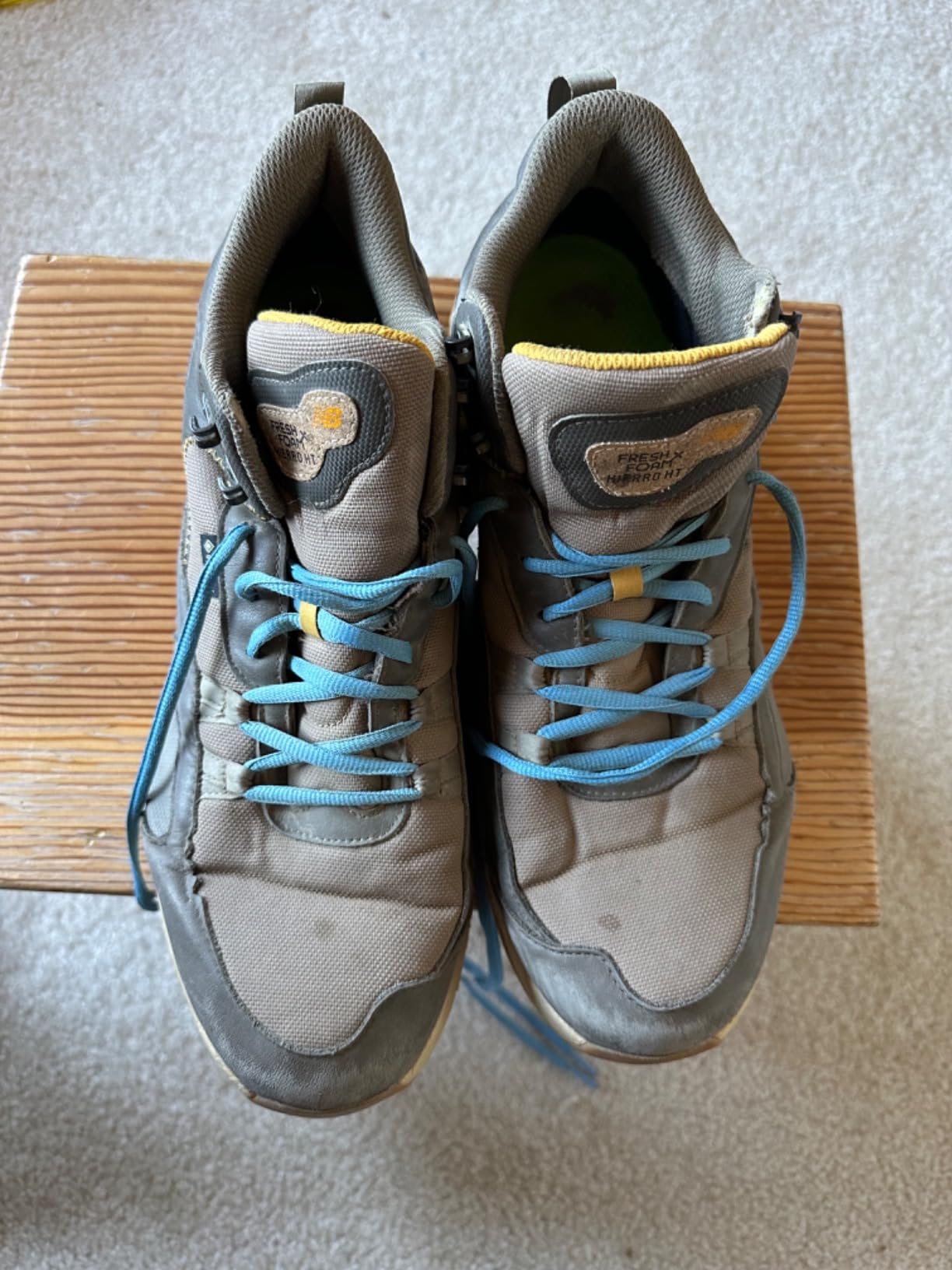
Here’s where I need to be straightforward. At 12 weeks and roughly 150 miles, I started seeing stitching separations near the toe box. Visible wear appeared on the upper material where the tongue meets the body of the shoe.
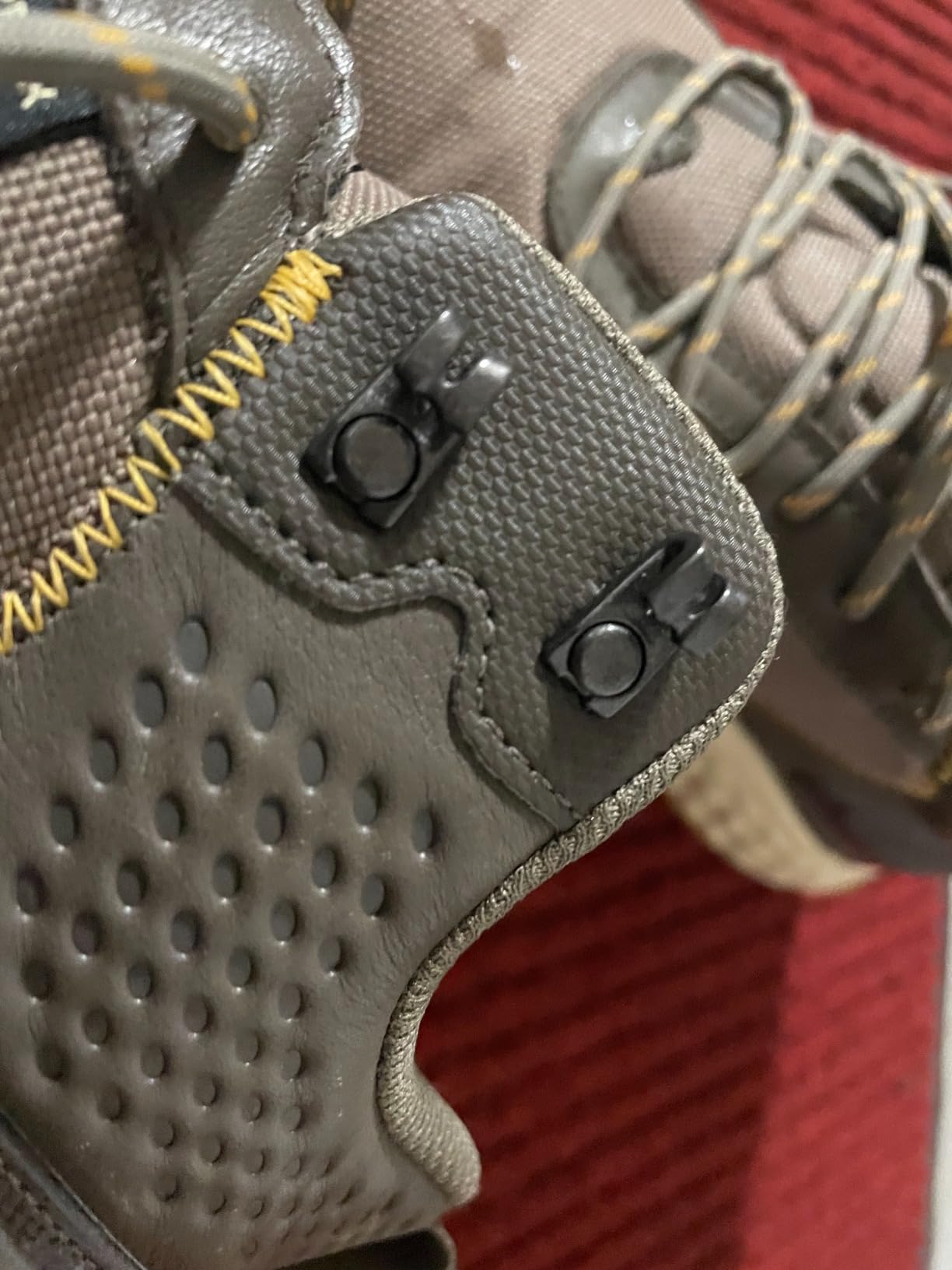
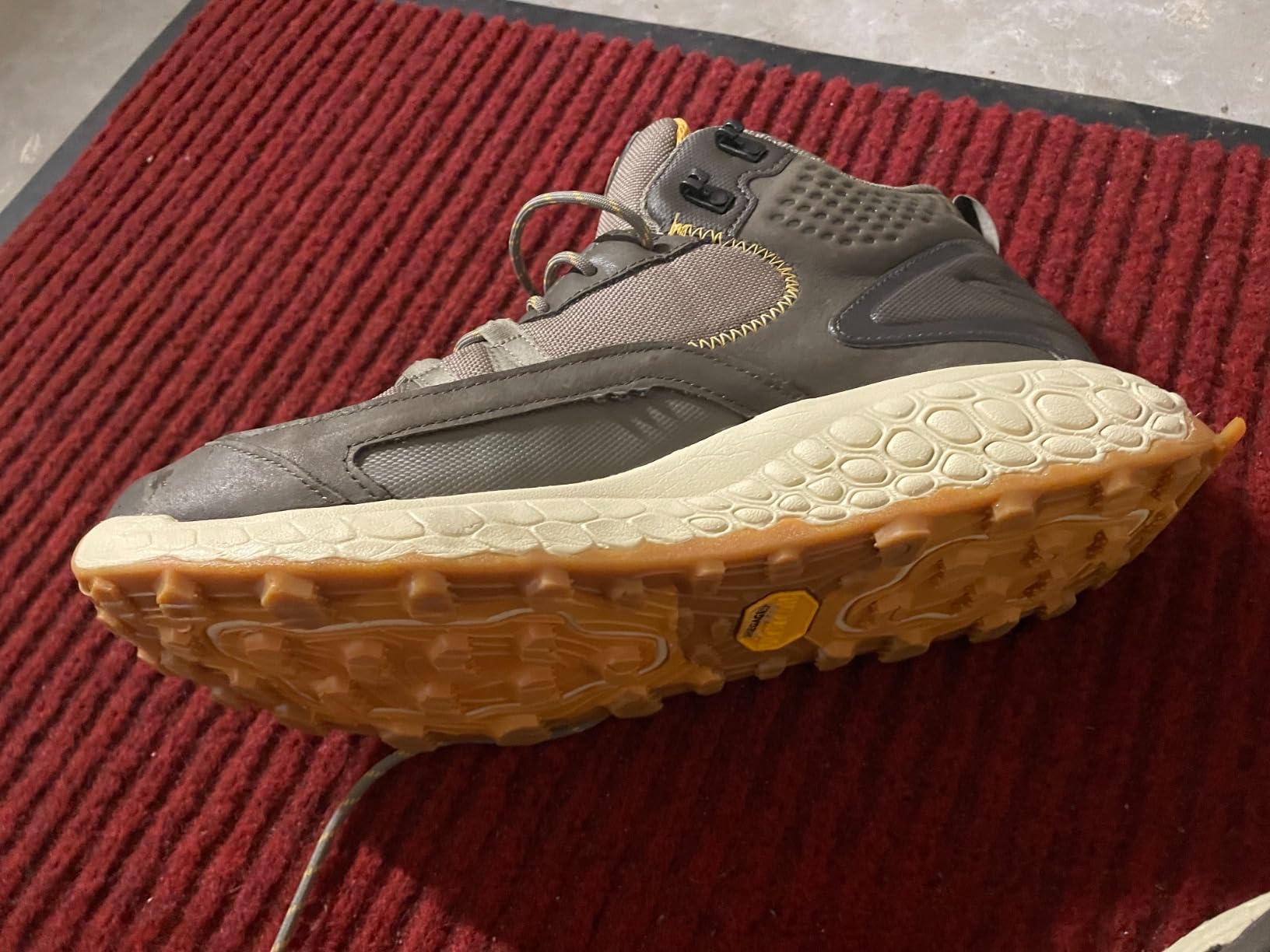
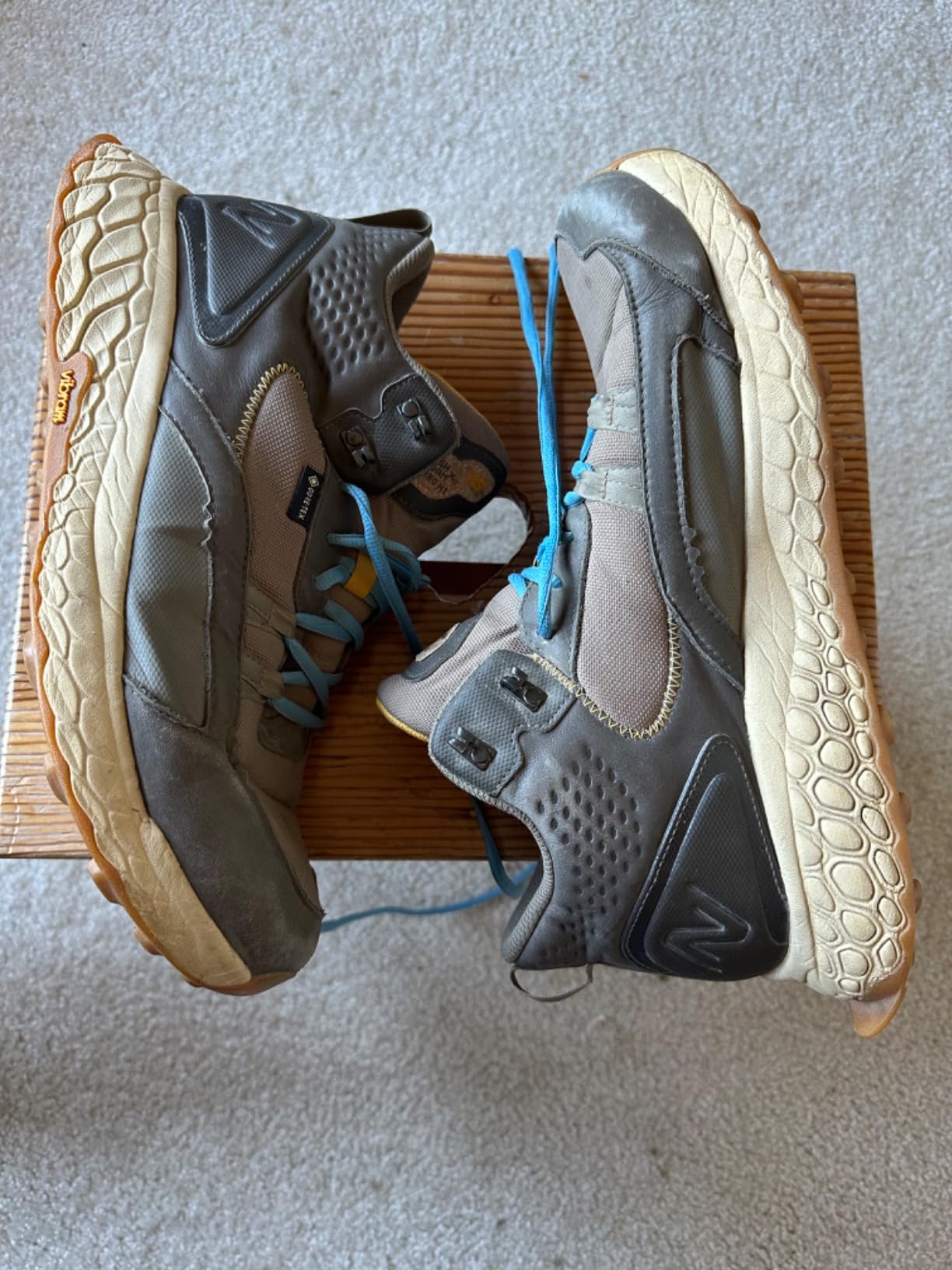
This creates an odd paradox: the Vibram outsole looks practically new after 180 miles, while the upper is showing its age. Lab testing backs this up — outsole durability scored well, but heel padding durability scored just 2 out of 5.
For comparison, my previous Salomon trail runners lasted over a year with similar usage patterns. The Merrell Moab 3, a direct competitor, typically delivers 8 to 12 months before showing comparable wear.
Cost math at different usage levels:
| Usage Pattern | Expected Lifespan | Cost Per Month | Cost Per Mile |
|---|---|---|---|
| Light (2x/week, easy trails) | 8-12 months | $15-22 | ~$0.45 |
| Moderate (3-4x/week, mixed terrain) | 4-6 months | $30-45 | ~$0.60 |
| Heavy (daily, technical terrain) | 3-4 months | $45-60 | ~$0.75 |
At $180 retail, moderate users are looking at roughly $30 to $45 per month. The KEEN Targhee IV and Merrell Moab 3 Mid GTX both deliver comparable performance at lower cost-per-month due to better upper durability.
What New Balance Claims vs. What I Found
“Most cushioned Fresh Foam experience” — Accurate. Lab confirmed the softest hiking boot midsole they’ve tested. For runs under 2 hours, this claim holds up completely.
“Superior grip with Vibram Megagrip” — True. Wet rock, mud, dry trail — the traction consistently exceeded my expectations. Genuinely impressive.
“Toe Protect technology” — Works as advertised. Multiple encounters with rocks and roots left my toes unscathed. The trade-off is reduced toebox width.
“Durable construction” — This is where marketing diverges from reality. The outsole is durable. The upper is not.
Who Should Buy the Fresh Foam X Hierro Mid GTX
This boot is a strong pick if you:
- Prioritize cushioning over everything and primarily do day hikes under 3 hours
- Have ankle stability concerns and want mid-cut support that doesn’t feel restrictive
- Need reliable wet-condition traction — this Vibram outsole genuinely delivers
- Want waterproof protection for spring/fall hiking in the 40-65°F range
- Appreciate New Balance’s width options (Wide and X-Wide available)
Look elsewhere if you:
- Need shoes that last 12+ months with regular use — upper durability is a concern
- Hike primarily in warm weather above 70°F — breathability is effectively zero
- Want value for money at full retail ($180) — cost-per-mile is high for the lifespan
- Need aggressive traction for technical scrambling — these are moderate-terrain boots
- Run long distances on trails — foam compression after 2-3 hours limits use
How It Compares
| Feature | NB Hierro Mid GTX | Merrell Moab 3 Mid GTX | KEEN Targhee IV WP | Salomon X Ultra 4 Mid GTX |
|---|---|---|---|---|
| Weight | 13.7 oz | 17.5 oz | ~16 oz | 17.4 oz |
| Cushioning | Softest in class | Moderate-firm | Moderate | Firm, responsive |
| Traction | Vibram Megagrip (excellent) | Vibram TC5+ (excellent) | Rubber (good) | Contagrip MA (very good) |
| Durability | 4-8 months | 8-14 months | 10-16 months | 8-12 months |
| Width Options | Normal/Wide/X-Wide | Normal/Wide | Normal/Wide | Normal/Wide |
| Breathability | 1/5 (sealed) | Low (GTX) | Low (WP) | Low (GTX) |
| Price | $180 | $170 | $175 | $195 |
| Best For | Cushion-first day hikes | All-around moderate trails | Wide feet, all-day comfort | Technical terrain |
The Under Armour Charged Maven Trail is worth considering as a budget alternative if you don’t need Gore-Tex. The Columbia Hatana Max Outdry offers better durability at a similar price point for moderate trails.
Final Verdict
The New Balance Fresh Foam X Hierro Mid GTX does two things exceptionally well: cushioning and traction. If your typical outing is a 2-hour day hike on moderate terrain in cool weather, this boot delivers a genuinely premium experience. The ankle support is confident without being restrictive. The Vibram grip inspires trust on surfaces where other boots leave you tentative.
But at $180 retail, the durability timeline is hard to ignore. Seeing stitching fail at 12 weeks when the outsole barely shows wear suggests an engineering mismatch between the upper and lower construction. Your per-mile cost is noticeably higher than competitors that last twice as long.
My recommendation: If you find these on sale for $140 to $150, they become a much easier call — the cushioning and traction at that price point are hard to beat. At full retail, factor in replacement cost when calculating value.
Scoring
| Category | Score | Notes |
|---|---|---|
| Comfort | 8.5/10 | Softest hiking boot in lab testing; compression after 2-3hrs at 175 lbs |
| Traction | 9.0/10 | Vibram Megagrip excels across wet and dry conditions |
| Durability | 5.5/10 | Upper fails well before outsole; stitching separation at 12 weeks |
| Fit & Sizing | 7.0/10 | TTS in length; runs narrow — wide variant recommended |
| Waterproofing | 8.0/10 | Gore-Tex works but semi-gusseted tongue limits flood level |
| Breathability | 3.0/10 | Lab: 1/5 — sealed upper, uncomfortable above 70°F |
| Value | 6.0/10 | Performance justifies price; lifespan does not |
| Overall | 7.0/10 | Exceptional short-term performer with durability asterisk |
Frequently Asked Questions
Do the Fresh Foam X Hierro Mid GTX run true to size?
Length is true to size based on 43 user votes and my own testing. Width runs narrow — order the Wide variant if you normally wear standard width, especially for sessions over 2 hours.
How long will these boots last?
With moderate use (3-4 outings per week), expect 4 to 6 months before upper construction shows wear. Light users may get 8 to 12 months. The Vibram outsole outlasts the upper significantly.
Are they actually waterproof?
Yes — the Gore-Tex membrane kept my feet dry through puddles, stream crossings, and sustained rain. The limitation is the semi-gusseted tongue, which creates a flood risk if water rises above ankle level.
How do they handle cold weather?
The midsole loses about 43% of its softness in cold temps (lab tested), making it noticeably stiffer below 40°F. It warms up after 15-20 minutes of activity. Even cold, it’s still softer than most hiking boots at room temperature.
Can I use custom orthotics?
Yes. The insole is removable and the boot accommodates aftermarket orthotics or orthotic insoles without issue. The stock insole is basic and compresses noticeably by week 4.
How does Fresh Foam X compare to Hoka’s cushioning?
Fresh Foam X is softer initially (31.3 AC vs typical Hoka foam) but compresses faster under sustained load. Hoka’s foam compounds tend to maintain their cushioning properties over longer durations. For short to moderate outings, Fresh Foam X feels more plush; for all-day hikes, Hoka holds up better.
Is the Toe Protect feature worth the width trade-off?
If you hike rocky trails where toe strikes are common, absolutely. I kicked multiple rocks and roots over 180 miles with zero discomfort. The narrowing effect is most noticeable on long sessions — for hikes under 2 hours, most standard-width feet won’t have issues.
Are these good for trail running specifically?
For moderate-pace trail running under 90 minutes, they’re excellent. The cushioning absorbs impact well and the traction inspires confidence. For longer runs or faster paces, the 13.7 oz weight and foam compression become limiting factors compared to dedicated trail running shoes.
What’s the best temperature range for these boots?
40°F to 65°F is the sweet spot. Below 40°F, the midsole firms up noticeably. Above 70°F, the sealed Gore-Tex upper traps heat. Spring and fall hiking in temperate climates is where these shine.
Be the first to review “New Balance Men’s Fresh Foam X Hierro V1 Mid-Cut Trail Runners”
Related products
Running Shoes
Running Shoes
Running Shoes
Running Shoes
Running Shoes
Running Shoes
Running Shoes
Running Shoes
Reviews
There are no reviews yet.