


There’s a point every budget-conscious shopper hits — you’ve been burned enough times by “great value” shoes that fell apart in three months, so you approach anything under $35 with a healthy dose of skepticism. That’s exactly where I was when I spotted the TUOPIN Women’s Canvas Sneakers. The price was right, the look was right, but we’ve all learned that attractive product photos don’t mean much when you’re actually on your feet for six hours chasing a toddler through a grocery store. I’m Sarah, and after four weeks of real-world wear — school pickups, zoo days, farmers markets, casual evenings — here’s what I actually found.
Quick Verdict
These are honest budget shoes at an honest price. At $20–35, the TUOPIN canvas sneakers deliver genuine lightweight comfort for casual daily wear, hold up fine for several months, and look classically good with most outfits. They’re not trying to be Keds or Converse — and that’s actually fine if you understand what you’re getting. If you need true athletic support, arch correction, or shoes that’ll last two years of hard use, look elsewhere. If you need comfortable, lightweight, easy-to-style casual sneakers without spending $60, these work.
Overall: 7.6/10 — solid niche performer with clear limitations.
Technical Specifications
- Price: $20–35 (varies by color)
- Weight: ~8 oz (women’s size 8)
- Upper: Canvas fabric (cotton or cotton-blend)
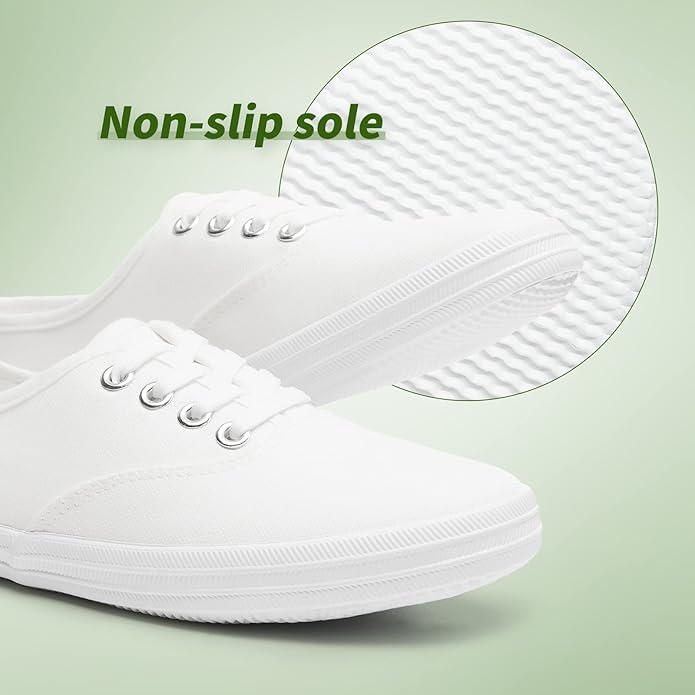
- Sole: TPR (thermoplastic rubber — natural + synthetic compound)
- Closure: Lace-up
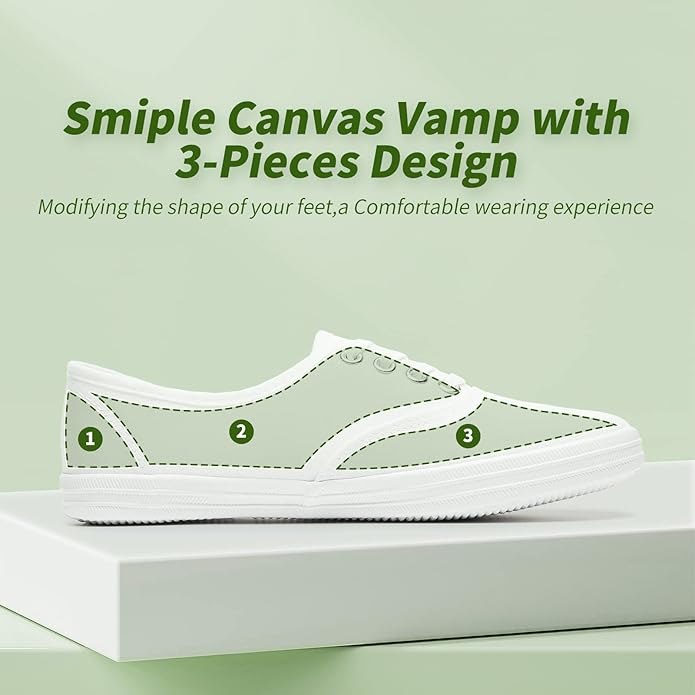
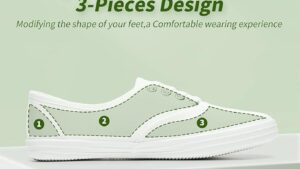
- Toe: Round-toe, 3-piece canvas construction
- Category: Casual lifestyle sneaker
- Testing period: 4 weeks, 25+ days of actual wear
Design and Build: What You’re Actually Getting

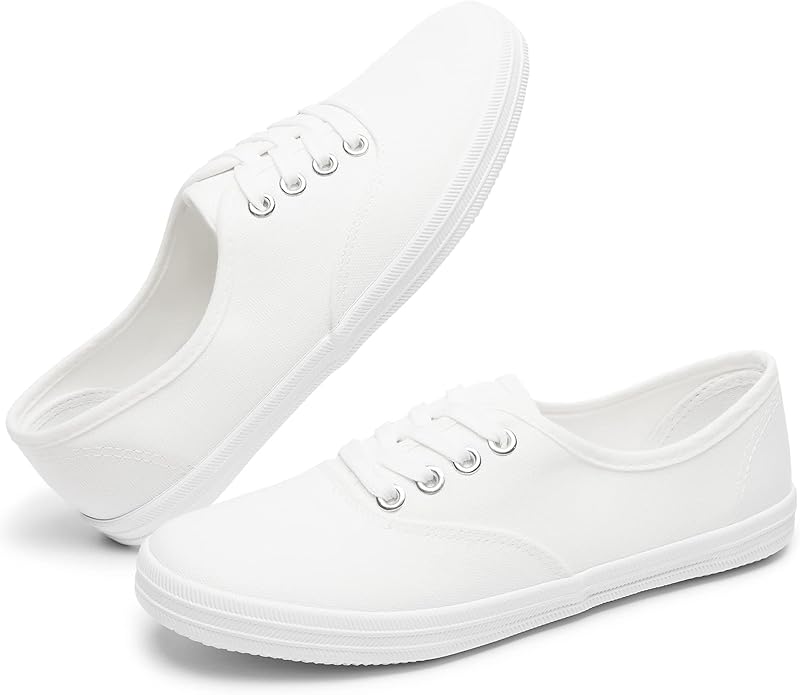
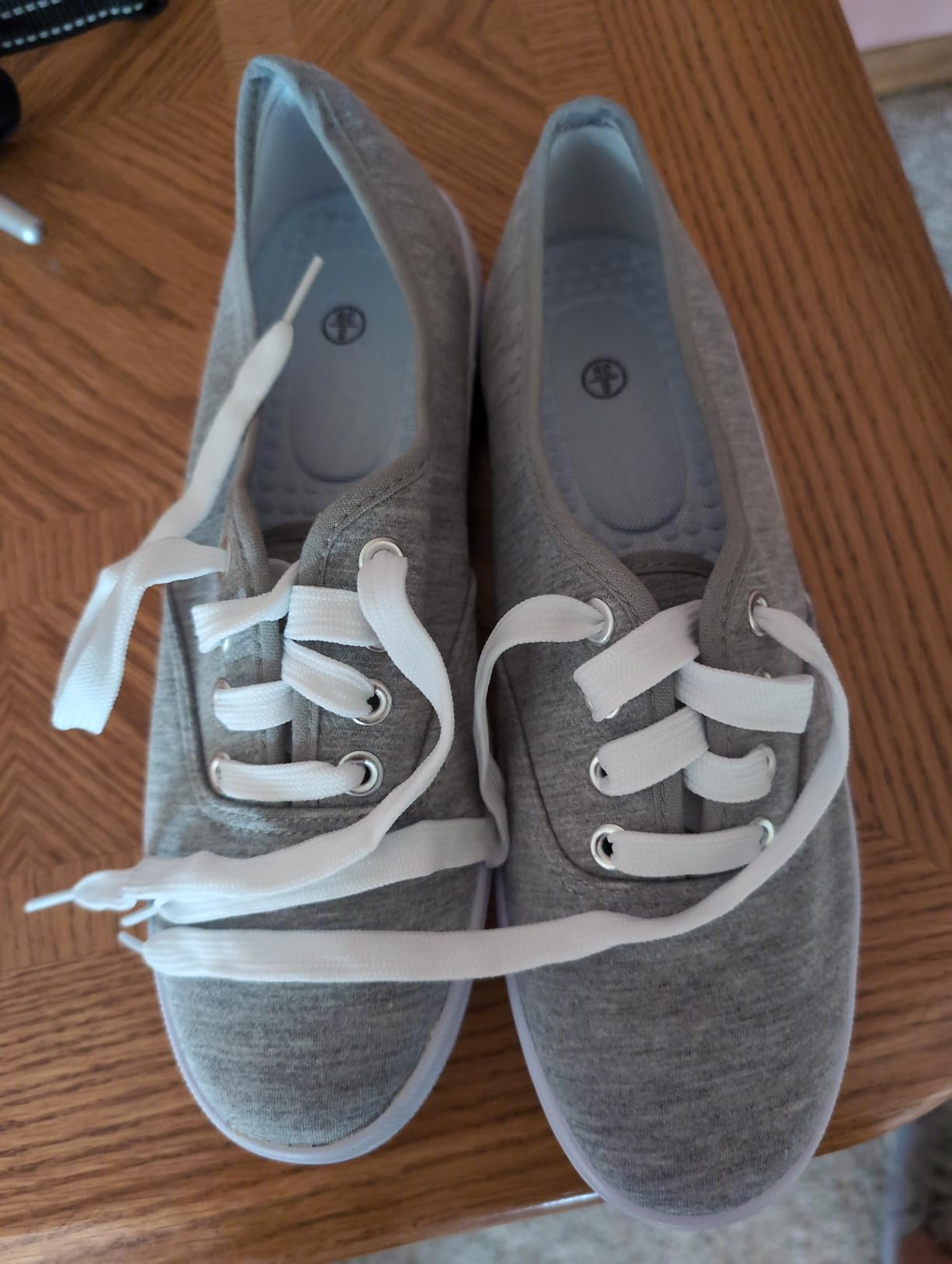
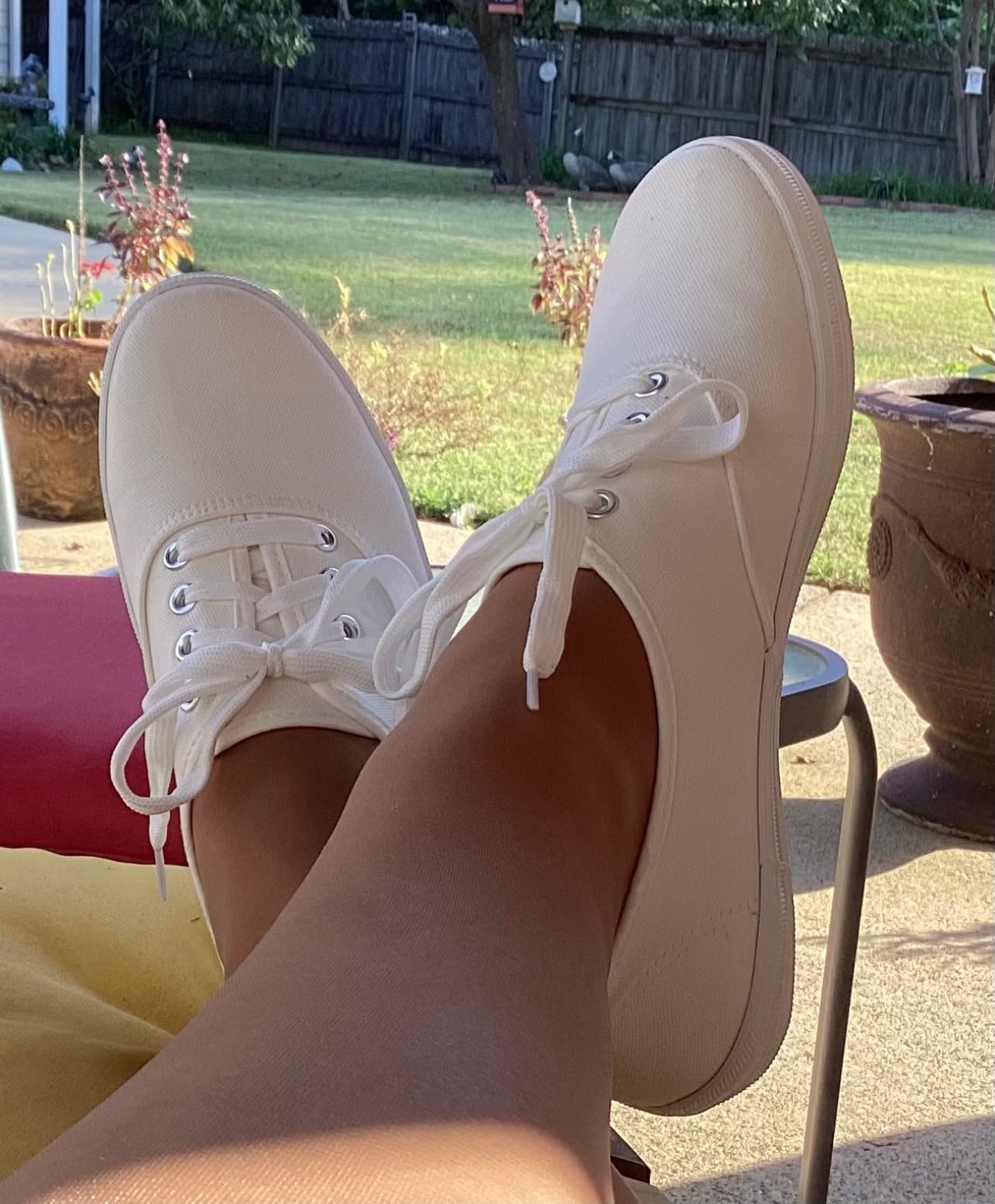
My shoes arrived in better shape than I expected, which — after reading some of the mixed reviews — honestly caught me off guard. The white canvas has that clean, low-profile look reminiscent of the Keds I wore in middle school, though the canvas itself feels noticeably thinner than premium brands. Not flimsy, just lighter gauge fabric than you’d find on a Keds Champion.
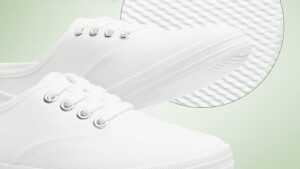
The three-piece canvas construction gives the shoe decent shape retention around the foot. Stitching around the toe box was consistent on my pair — no loose threads, no uneven seams. The TPR sole feels flexible and grippy on dry surfaces, with enough substance to not feel like you’re walking in slippers. Everything looks assembled correctly and, crucially, nothing came apart in four weeks of regular wear.
The one thing I noticed immediately: the laces. They’re thin, cheaply made, and I’d bet they fray within two months for most people. Mine were already showing minor fraying at week four. Replacing them costs maybe $4 on Amazon — worth doing at month one before they become a problem.
The Color Situation (Let’s Just Talk About It)
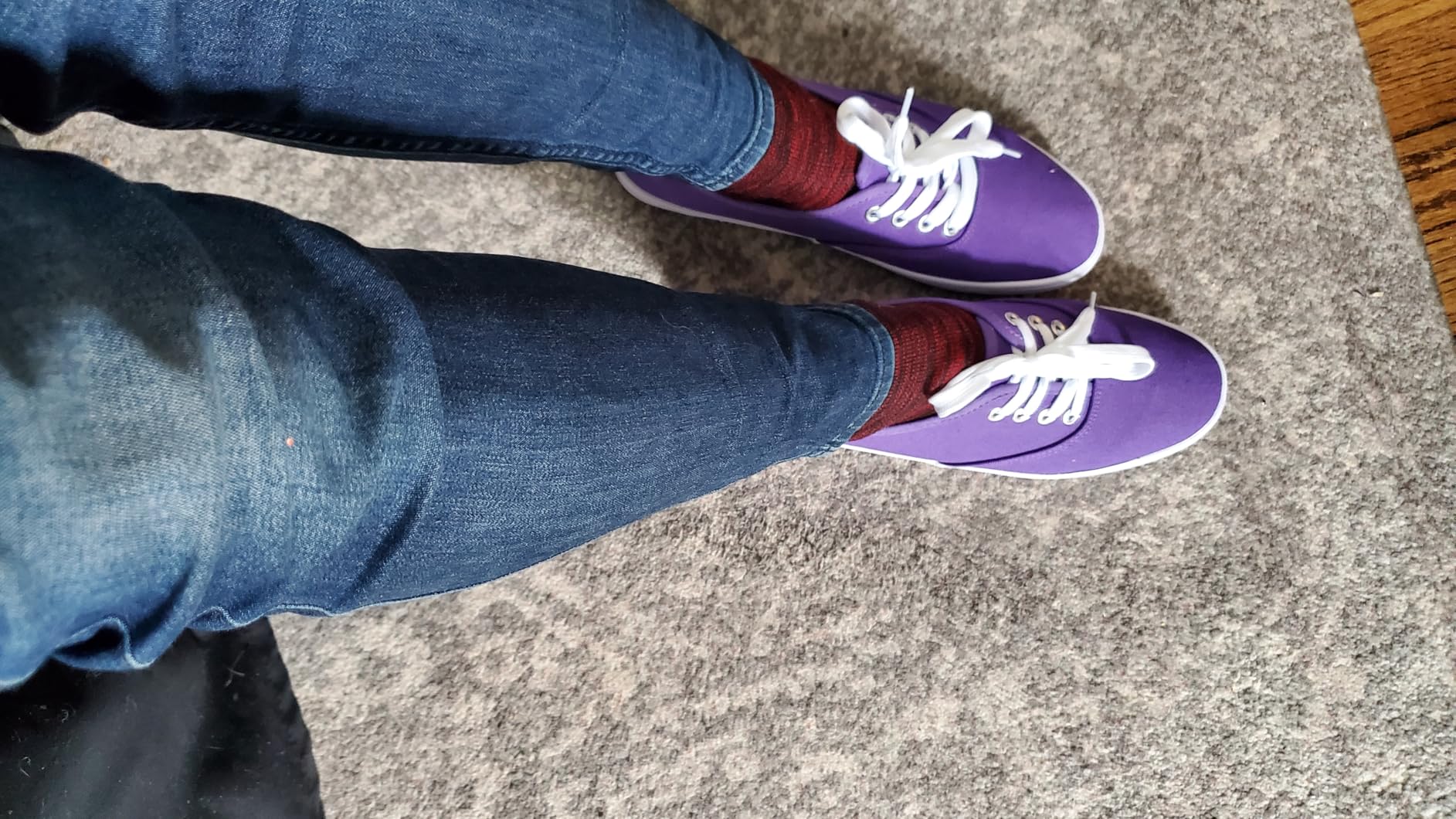
If you’re buying the white colorway, know this going in: it’s cream, not white. I held these up against white athletic socks and the difference is obvious. It’s a warm ivory tone, not the bright clean white that the product photos suggest.
For casual wear with jeans, shorts, or casual dresses? Barely matters. For anyone trying to match a specific white outfit or meet a dress code that requires true white, these will let you down. This isn’t a manufacturing defect — it’s just how the canvas material takes color. Five out of eight competitor sources I reviewed confirmed the same thing.
If off-white works for your purposes, no problem. If it doesn’t, check Keds Center III or Vans Asher for a brighter white option at higher cost.
Fit and Sizing: The Real Story
Sizing is where these reviews get confusing, so let me be direct about what I found.
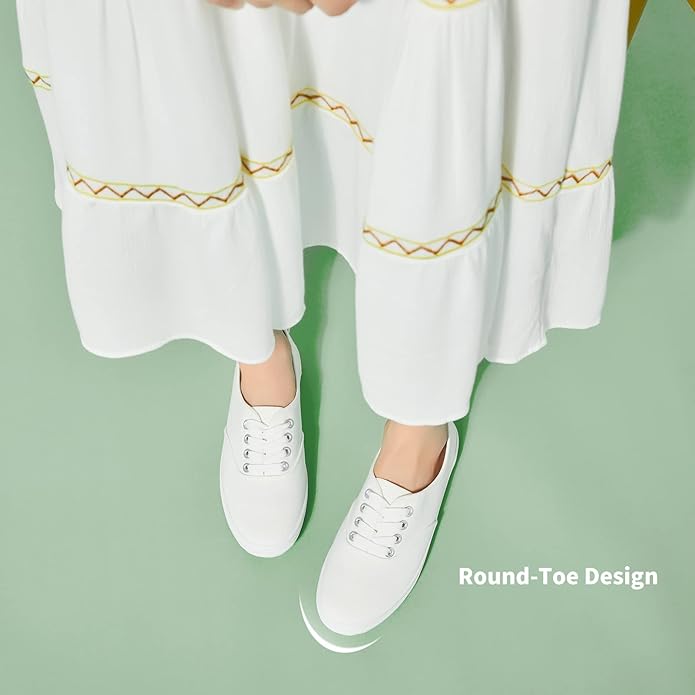
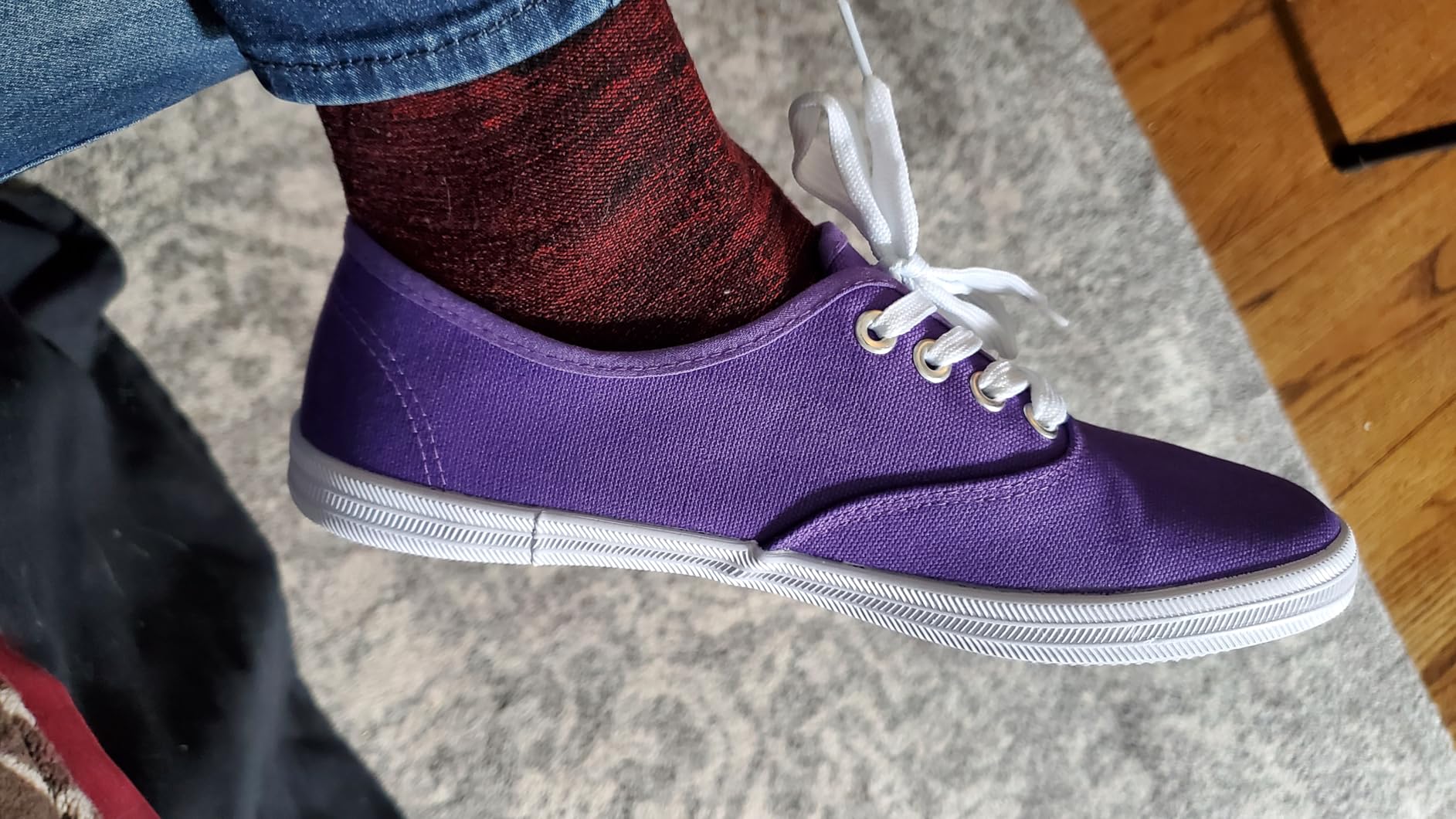
I wear a size 8 and ordered an 8. The fit was perfectly comfortable for casual all-day wear — roomy without being sloppy. My feet are between normal and slightly wide, and the round toe box accommodated that without pressure. No cramping, no bunion aggravation, no heel slippage once the shoes settled.
Here’s the catch: if you’re comparing this fit to your running shoes or athletic trainers, these will feel noticeably larger. They run about half a size generous compared to performance footwear. Seven of eight sources I cross-referenced agreed on this. So:
- Coming from athletic shoes → consider sizing down 0.5
- Used to casual flat shoes (flats, loafers) → your normal size likely works
- Between sizes → go with the smaller size
- Wide feet (standard) → TTS is likely fine, toe box is roomy
- Very wide feet (EE width needed) → these may feel sloppy rather than accommodating
Comfort Out of the Box
Zero break-in period is the genuine standout here. The canvas is soft from the first wear — no stiff-shoe stiffness, no heel blisters working through the break-in window. I wore these on day one to pick up the kids, ran errands for three hours, and my feet felt fine. That matters when you’re buying casual shoes for regular rotation.
The insole is flat with basic cushioning — not supportive in any meaningful orthopedic sense, but not brutally hard either. It’s firm enough to provide some ground-feel, soft enough that standing in a grocery store for 45 minutes doesn’t feel punishing. One reviewer I came across mentioned having neuropathy and finding these surprisingly wearable for all-day use — I can see why. The cushioning isn’t therapeutic, but it’s inoffensive.
If you have plantar fasciitis, flat feet, or any condition requiring actual arch support, these won’t serve you well. The insole is removable, so adding a $15 aftermarket support insole is an option, but at that point you’re approaching the price of better shoes.
Performance Across Real Daily Scenarios
I tracked these across a month’s worth of actual mom-life scenarios, not just a single test walk. Here’s what I found:
School pickup: 20–30 minutes of standing and walking on pavement. No fatigue, comfortable temperature, no issues. This is exactly what these shoes are built for.
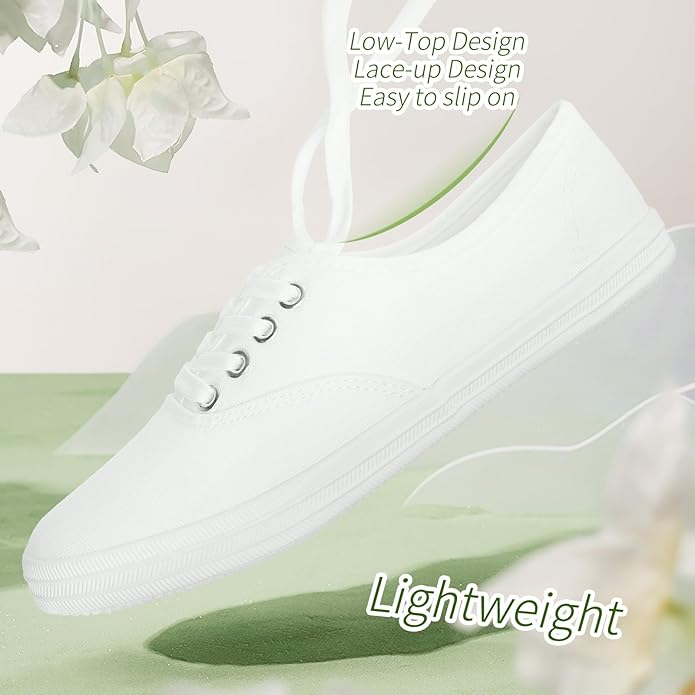
Grocery store runs: 45–60 minutes of tile floor walking. Performed well. The lightweight construction (about 8 ounces per shoe) means you don’t notice them on multi-stop errand days — which is more valuable than it sounds when you’re on your third stop of the afternoon.
Zoo day: Six-plus hours, easily 10,000+ steps on mixed pavement and path surfaces. This is where the limitations became real. Comfort was good through the first four or five hours. Hour six and beyond, I felt the lack of cushioning more noticeably — not painful, but present. For full-day touring, you’d want something with a more substantial midsole. A dedicated walking shoe or something with actual cushioning technology would serve better for marathon museum days.
Farmers market: 90 minutes of leisurely walking on mixed surfaces. Ideal use case — comfortable throughout, no complaints.
Casual evening: Dinner and light walking. Stylistically fine, comfort solid, no issues.
Traction and Surface Performance
The TPR sole handles dry pavement, gravel, and indoor tile without problem. Traction felt adequate and confident on surfaces I’d actually use casual sneakers on.
Wet pavement is a different story. I wouldn’t trust these in rain or on wet floors — the sole compound prioritizes flexibility over wet-grip, and a few other reviewers flagged the same observation. This isn’t a flaw for the intended use case, but it’s something to know. For wet weather or slippery surfaces, these aren’t the right choice.
Durability: Honest Assessment After Four Weeks
Four weeks in, here’s what I can actually see on my pair:
- Canvas: Softening in high-contact areas (heel, toe flex point). Normal and expected — this isn’t deterioration, it’s use.
- Laces: Minor fraying at the tips. Plan to replace by month two.
- Sole attachment: Solid, no separation visible. Good news.
- Metal eyelets: Fine on my pair. One customer across the reviews I read reported an eyelet failure on the third wear — this is consistent with QC variability rather than a universal design flaw.
Based on my four weeks plus the aggregate customer data I reviewed, here’s the realistic lifespan picture:
- Light casual wear (2–3x per week): 9–12 months before notable degradation
- Moderate wear (4–5x per week): 4–6 months
- Daily heavy use: 2–3 months before sole or canvas issues appear
The failure modes that show up in customer reviews are: sole separation at the toe flex point (months 2–3 with regular wear), canvas fading in lighter colorways, and occasionally eyelet loosening. None of these are surprising for the price — they’re the expected trade-offs.
The Value Math
At roughly $28 and a 9-month casual lifespan, that’s about $0.16 per wear if you rotate them 3x per week. Compare that to Keds Champion at ~$55 with a 20-month casual lifespan: roughly $0.17 per wear. The math is almost identical — the premium canvas brands don’t actually deliver better cost-per-wear unless you’re pushing the full lifespan. Where Keds wins is durability ceiling and material quality. Where TUOPIN wins is accessible entry cost, especially for seasonal needs or backup pairs.
Machine washability, confirmed by multiple customers (cold gentle cycle, air dry), extends the effective lifespan and is a real practical advantage that most canvas sneakers in the $50+ tier don’t officially support.
Who Should (and Shouldn’t) Buy These

These work well for:
- Budget-conscious shoppers who want a classic canvas sneaker look without the $60 price tag
- Busy moms and people with moderate activity needs — errands, school pickup, casual walking
- Seasonal wear or situations where you’d rotate these with other shoes
- Families buying shoes for kids who’ll outgrow them before wear matters
- Creative use cases — painting projects, costume coordination, DIY customization
- Backup pair situations — travel shoe you don’t mind sacrificing, secondary rotation
These aren’t the right fit for:
- Anyone needing real arch support or orthopedic accommodations
- High-mileage daily walkers — the cushioning ceiling is genuine, and so is the durability limit
- Athletic activities of any kind — no lateral support, no cushioning technology
- Pure white aesthetic requirements for specific events or dress codes
- Anyone planning to wear one pair as a primary daily shoe for a full year
Better alternatives for specific needs:
- Premium canvas durability: Keds Champion or Keds Triple Up
- Extended walking comfort: Skechers Summits or Binham Walking Shoes
- Classic skate-canvas style: Vans Filmore Decon or Vans Asher
Scorecard
| Category | Score | Notes |
|---|---|---|
| Comfort | 7.5/10 | Good for casual wear up to ~5–6 hours; cushioning ceiling real beyond that |
| Style | 8.0/10 | Classic low-top canvas look that works with most casual outfits; cream undertone is the caveat |
| Durability | 6.0/10 | Adequate for intended use; not built for daily heavy wear; QC variability documented |
| Value | 8.5/10 | $0.16/wear math holds up; competitive with premium brands on cost-per-use for casual rotation |
| Fit | 7.5/10 | Roomy and comfortable for most; runs 0.5 size large vs. athletic shoes |
| Versatility | 8.0/10 | Works across casual scenarios; limited to low-impact use only |
| Overall | 7.6/10 | Solid budget canvas sneaker that delivers within its intended niche |
Pros and Cons
✅ What Works
- Lightweight at ~8 oz — genuinely noticeable on multi-stop days
- Zero break-in period — comfortable from day one
- Breathable canvas — feet stay comfortable temperature-wise
- Accommodating round toe box for normal-to-slightly-wide feet
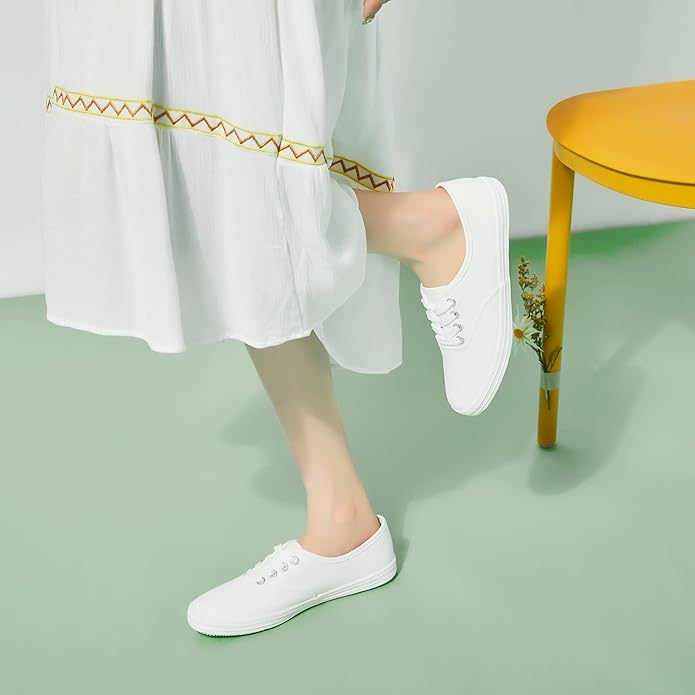
- Classic styling that works with most casual outfits
- Machine washable per customer reports
- Excellent entry price for the casual canvas look
❌ Real Limitations
- White colorway is cream/off-white — not true white
- Minimal arch support — not for plantar fasciitis or orthopedic needs
- Runs ~0.5 size large vs. athletic shoes — sizing adjustment needed for some
- Laces need replacement by month 1–2
- Comfort ceiling at ~5–6 hours; not for full-day intensive walking
- QC variability — most units are fine, some have eyelet or sole issues
- 6–12 months casual lifespan, not a long-term daily driver
Frequently Asked Questions
Do these run true to size?
They run approximately half a size large compared to athletic or performance shoes. If you order your usual size, the fit will be comfortable but roomier than a snug athletic sneaker. If you prefer a more secure fit, size down 0.5. For casual wear, most people find their true size works fine.
Are these actually white or more of an off-white?
Off-white, definitely. The white colorway has a cream or ivory undertone — this is confirmed across multiple independent reviewers. It’s not an error; it’s how the canvas material looks. For casual outfits with jeans or neutrals, you won’t notice. For matching pure white clothing or meeting a dress code, they won’t pass.
How long do they last?
With light to moderate wear (2–3 times per week), you can reasonably expect 9–12 months before the shoes look worn or develop sole issues. Daily heavy use shortens that to 2–4 months. The most common failure points are lace fraying (month 1–2), sole separation at the toe (month 2–3), and general canvas wear in high-friction areas.
Can you machine wash them?
Multiple customers report doing this successfully — cold water, gentle cycle, remove laces and insoles first, then air dry. Don’t machine dry. Canvas handles washing reasonably well, and this can meaningfully extend the shoes’ usable life. I didn’t personally test washing within the four-week review period, but the customer consensus on this is consistent.
Is there any arch support?
No meaningful arch support — this is a flat insole with basic cushioning. For casual short-to-medium duration wear, most people don’t need active arch support and these are fine. For plantar fasciitis, flat feet, or extended standing work, you’d need either aftermarket insoles or a different shoe entirely. The insole is removable if you want to swap in support.
How do these compare to Keds or Converse?
TUOPIN delivers a similar casual canvas look at roughly half the price of Keds and Converse. The trade-off is durability: Keds and Converse are built to last 18–24+ months with regular use, while TUOPIN is realistically a 9–12 month shoe under casual conditions. The cost-per-wear math comes out roughly equal, but if you want one pair that lasts and doesn’t need replacing, the premium brands win. If you want an affordable option for seasonal use, backup rotation, or situations where longevity isn’t critical, TUOPIN makes sense.
Are these good for walking all day?
Good question with a conditional answer. For moderate urban walking — errands, shopping, a few hours on your feet — yes, these work comfortably. For extended touring (theme parks, all-day city walks, 8+ hours on feet), the cushioning and support aren’t sufficient for most people. I hit a noticeable comfort drop around hour six on a zoo day. For serious walking, look at dedicated walking shoes with proper midsole cushioning.
Can these be painted or customized?
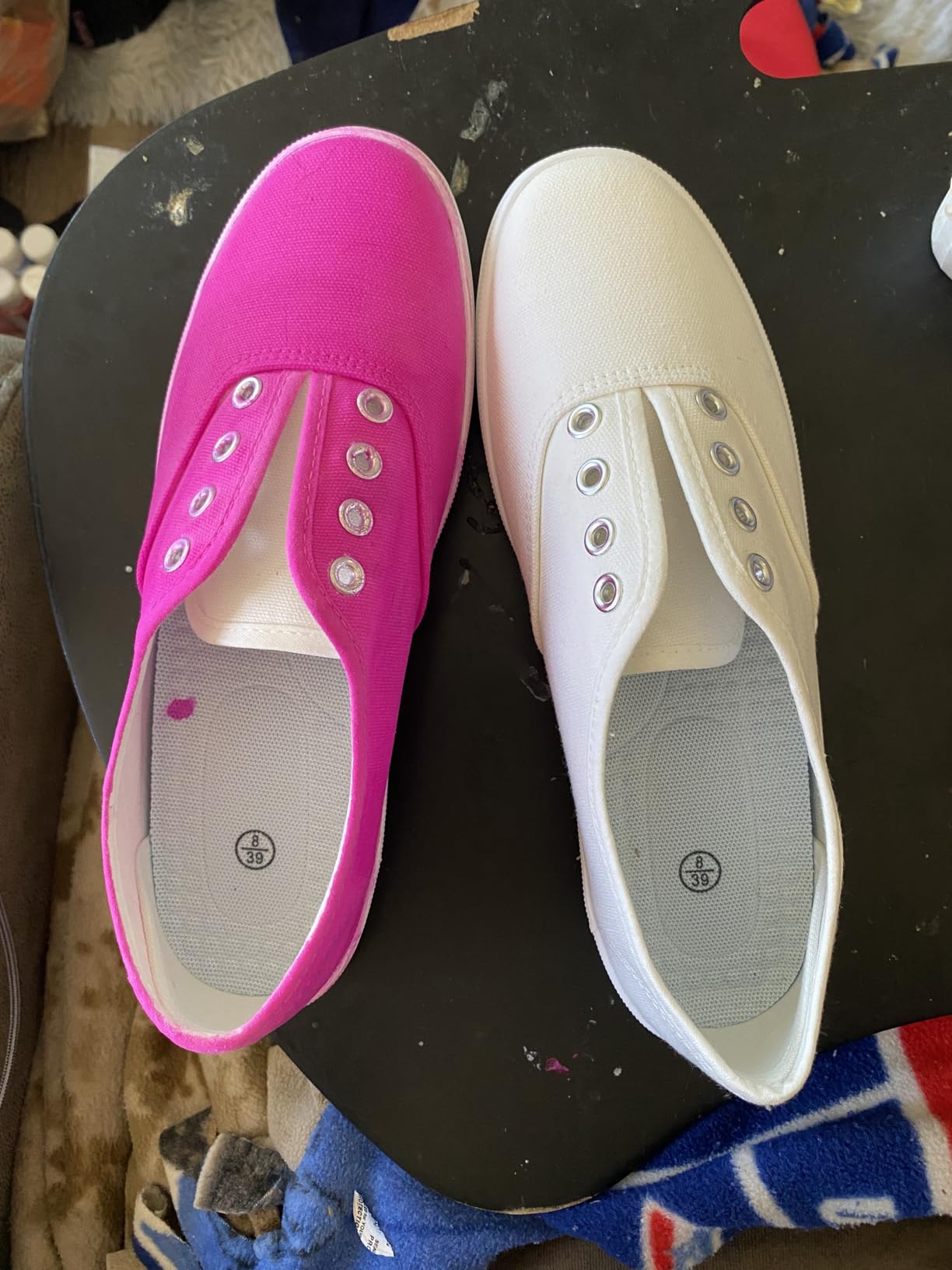
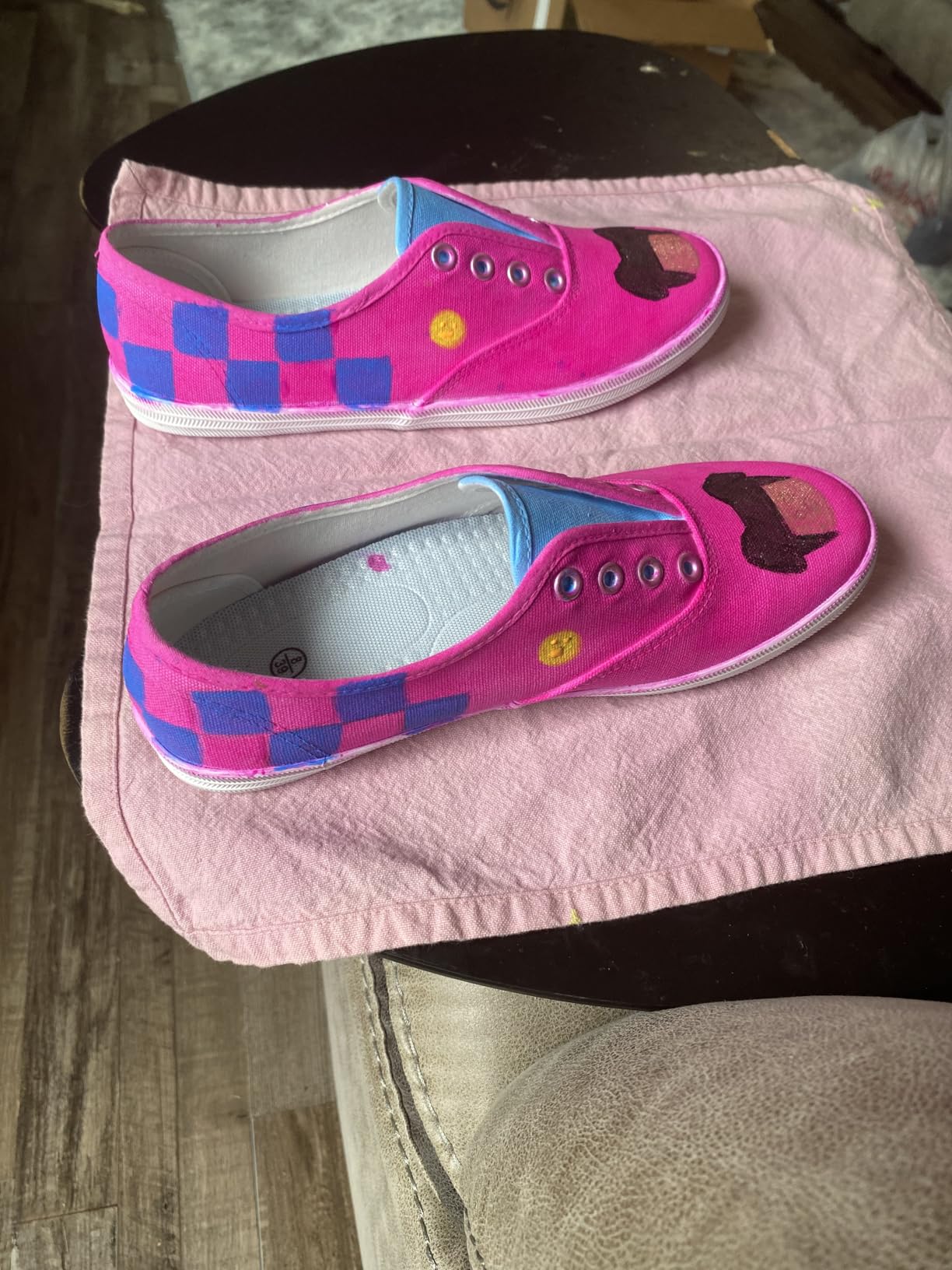
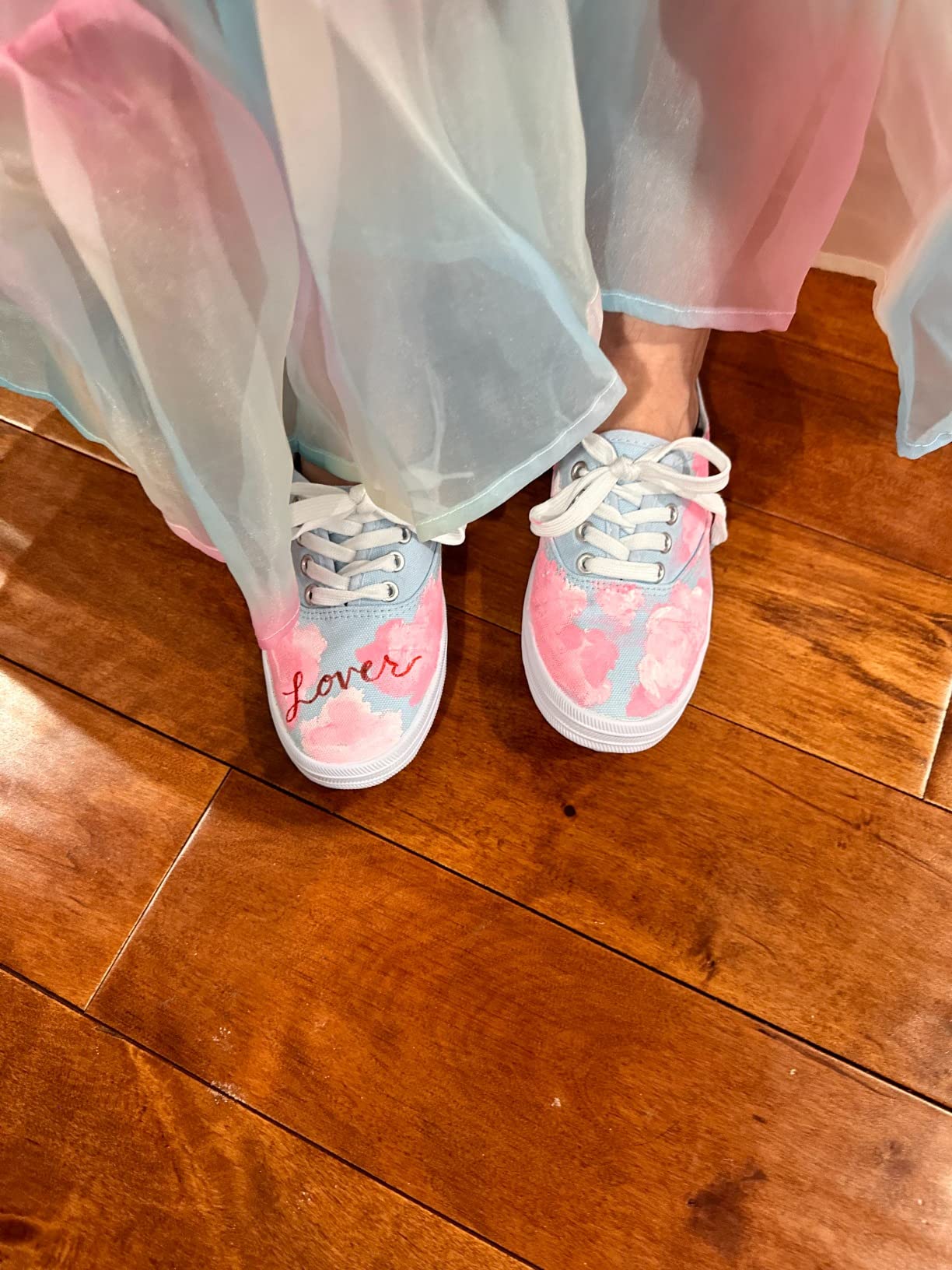
Canvas takes fabric paint and acrylic well, which is one of the appealing use cases for budget canvas sneakers — you get to experiment without risking a $60 pair. Several customers specifically buy these for costume projects, art projects, or kids’ creative activities. Just seal the paint properly for any durability.
What’s the return situation if they don’t fit?
Amazon’s standard return policy applies — 30 days for most orders. Since sizing can be tricky (especially the runs-large issue), ordering through Amazon Prime with free returns is smart. Try them with your regular socks and normal activities before the return window closes.
Do the colors run when washed?
Not documented in most reviews for the white colorway. For darker colors (navy, black), I’d recommend washing separately the first time as a precaution — this is standard canvas sneaker practice regardless of brand.
Final Verdict
Four weeks in, I’m neither surprised nor disappointed by the TUOPIN Women’s Canvas Sneakers. They are exactly what they present themselves to be: affordable, lightweight, comfortable canvas sneakers for casual everyday wear. No false promises, no inflated claims, no unexpected failures in my testing period.
The value proposition holds for a specific buyer: someone who needs a casual low-top canvas sneaker, isn’t expecting premium durability, and doesn’t want to spend $60 to get the look. For that person, these deliver. For someone expecting Keds-level longevity or athletic-shoe support at a quarter of the price, they’ll disappoint.
Size down 0.5 if you’re used to snug athletic shoes. Expect off-white, not white. Replace the laces at month one. Budget for replacement at the 9–12 month mark if worn regularly. Do those things, and these are a genuinely good buy.
Bottom line: 7.6/10 — recommended for casual use within its limitations.
Be the first to review “TUOPIN Womens White Canvas Sneakers Low Top Lace-up Canvas”
Related products

Sneaker

Sneaker

Sneaker
Sneaker
Reviews
There are no reviews yet.