
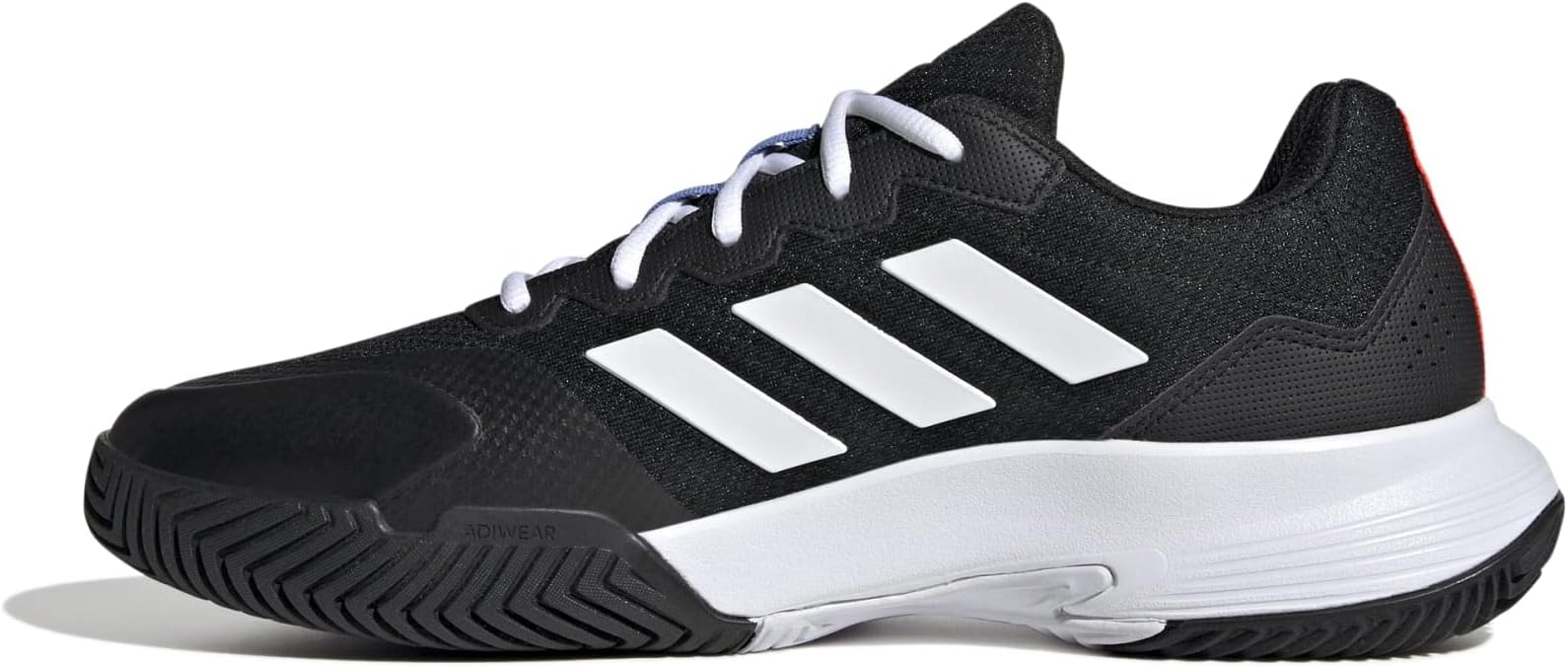
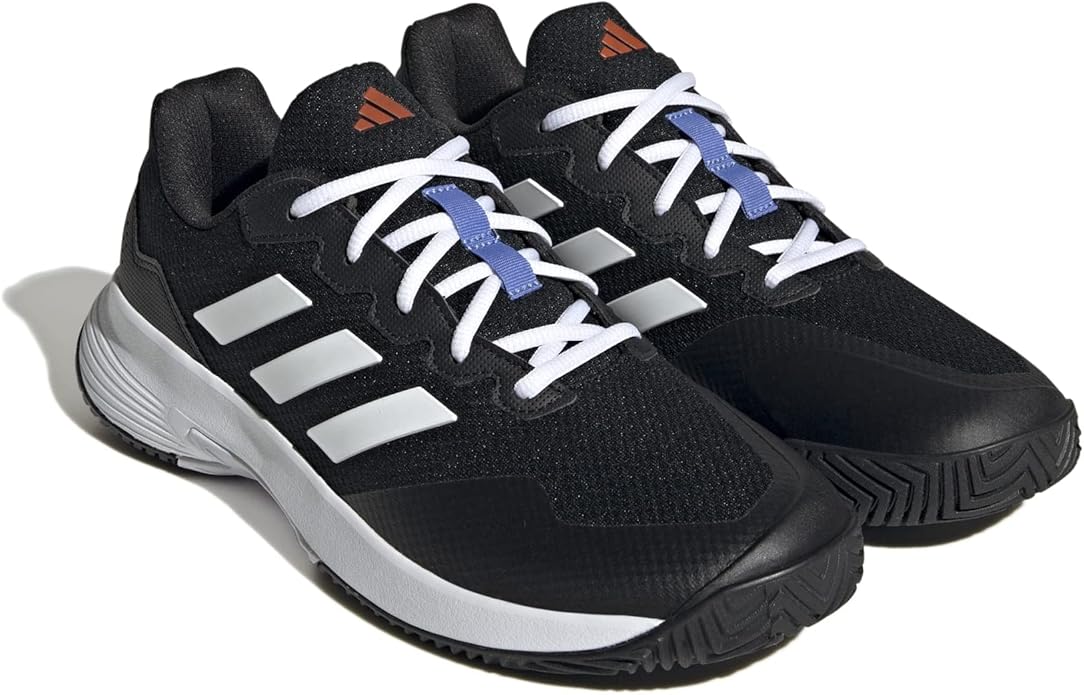
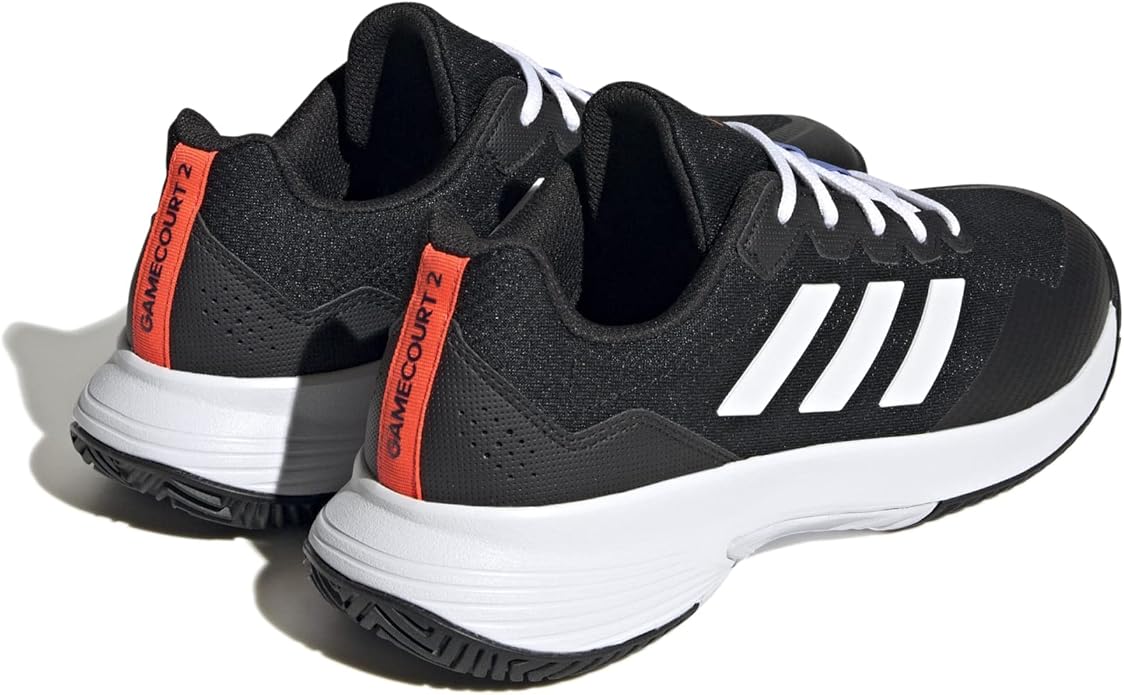
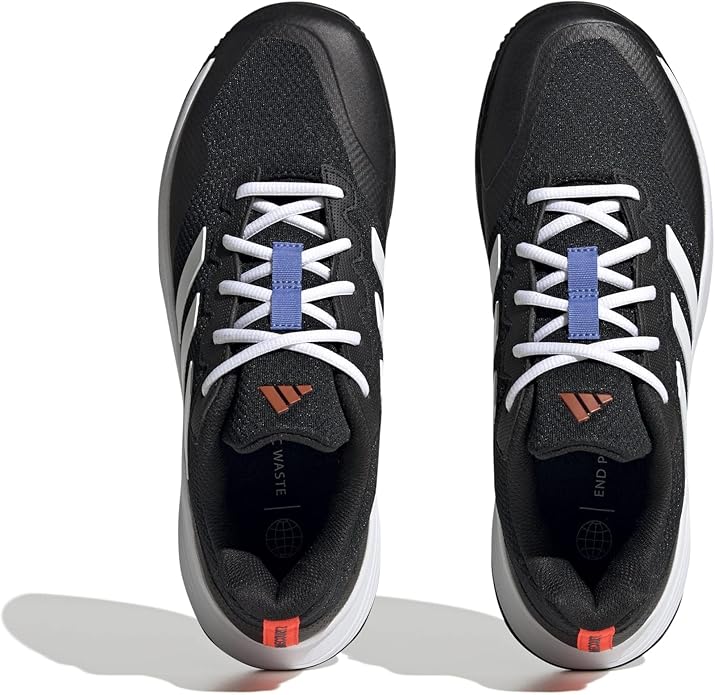
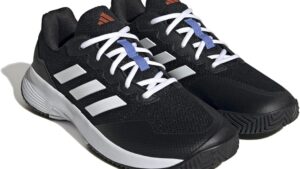
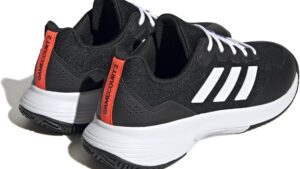

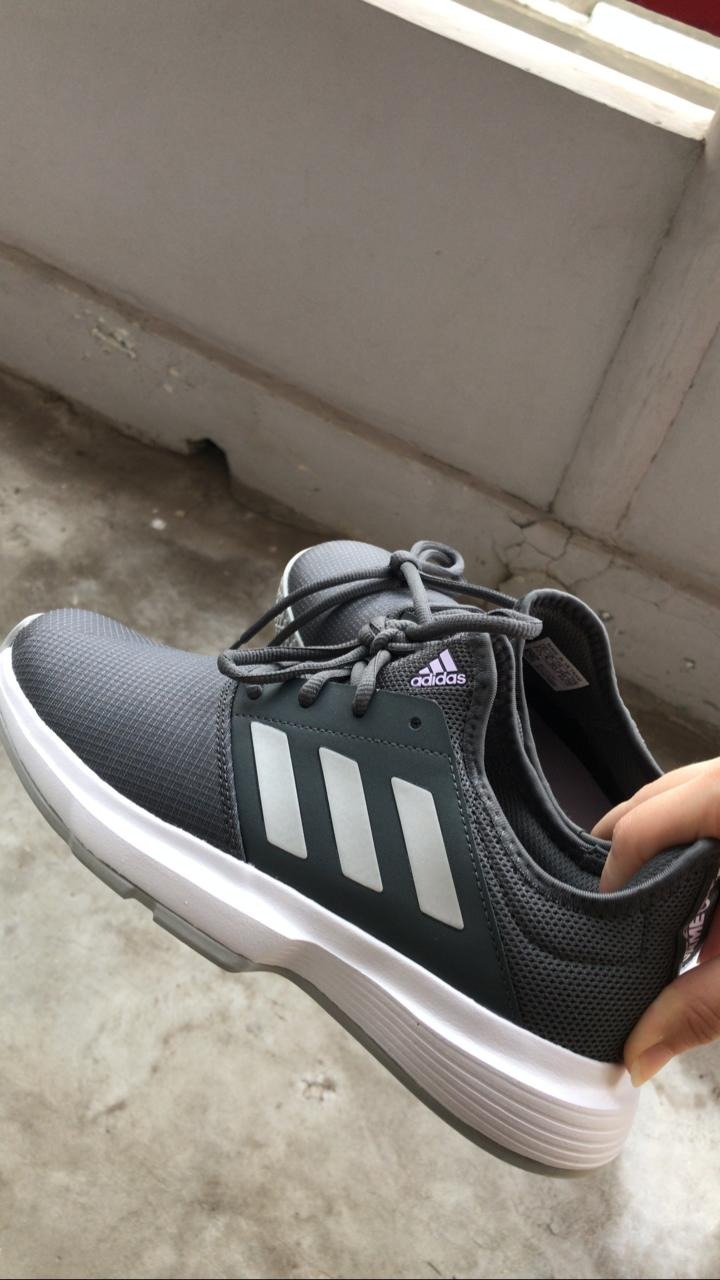
Three weeks ago at my club’s Friday evening mixer, I spotted something that stopped me mid-serve — four different players wearing identical white Adidas tennis shoes I hadn’t seen before. As someone who’s been testing tennis gear for 15 years and played competitively through college, I know when a shoe earns that kind of organic adoption on court. That’s what led me to pick up the Adidas Gamecourt for what became an intensive 8-week, 42-hour court examination across hard, synthetic, and indoor surfaces. What I discovered challenged some assumptions about budget tennis footwear.
Technical Specifications
- 💰 Price: $70
- ⚖️ Weight: 11.9 oz (336g) — 6.7% lighter than category average
- 🧪 Midsole: Cloudfoam cushioning (full EVA construction)
- 👟 Upper: Breathable mesh with TPU support overlays
- 🏃♂️ Category: Hard court tennis shoes
- 🎯 Best for: Recreational to intermediate tennis players
- ⏱️ Testing period: 8 weeks, 24 court sessions, 42 total hours
- 🏟️ Surfaces tested: Hard court (primary), synthetic court, indoor court
⚠️ Critical Sizing Information
The Gamecourt runs large for most players. Based on my testing and extensive player feedback, order 0.5 to 1 full size down from your typical tennis shoe size. I normally wear a 9 in court shoes, went with an 8.5, and the fit was spot-on. The bootie construction creates this sizing paradox I’ll explain below.
Design Philosophy & Construction Reality
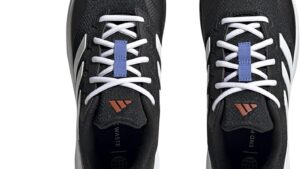
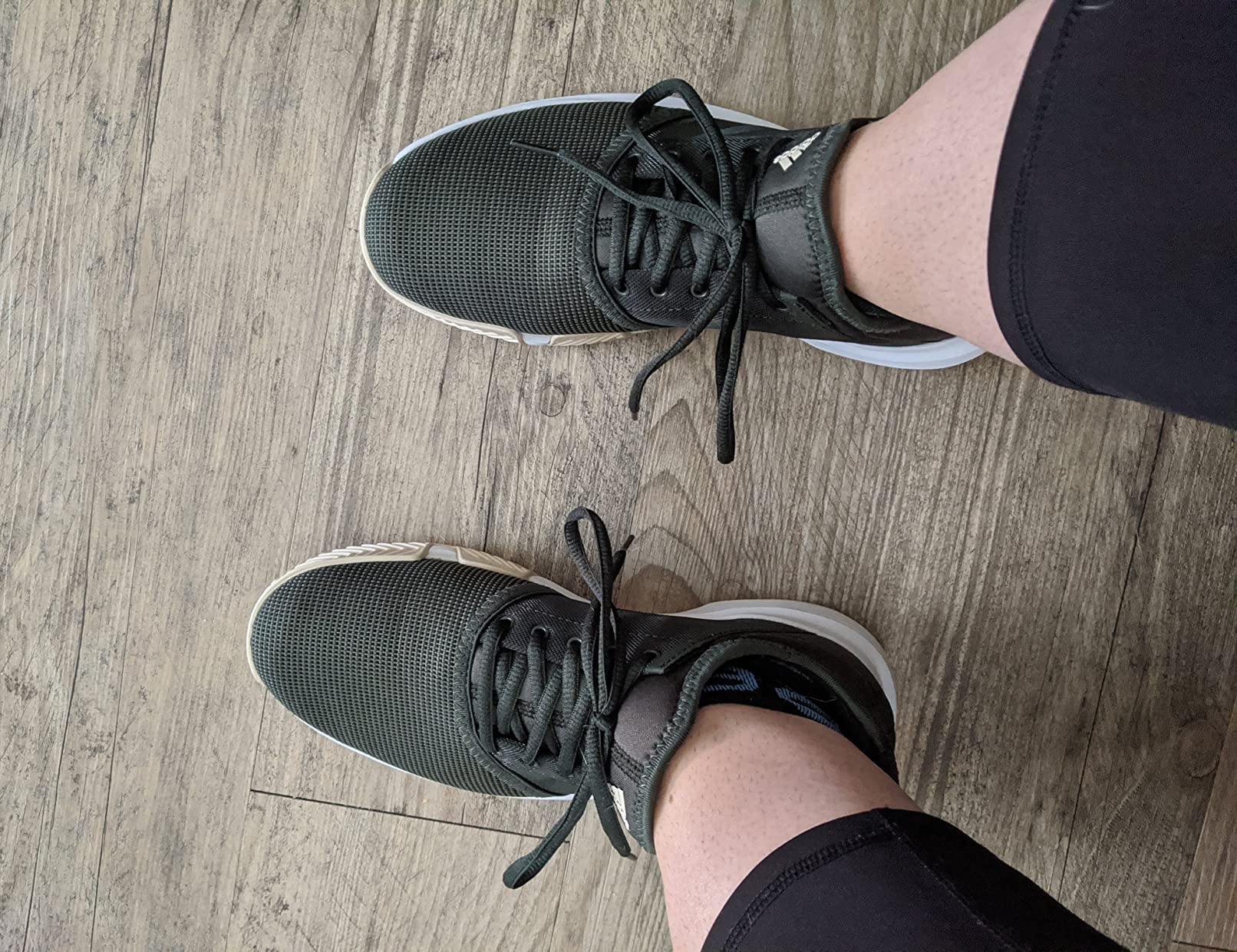
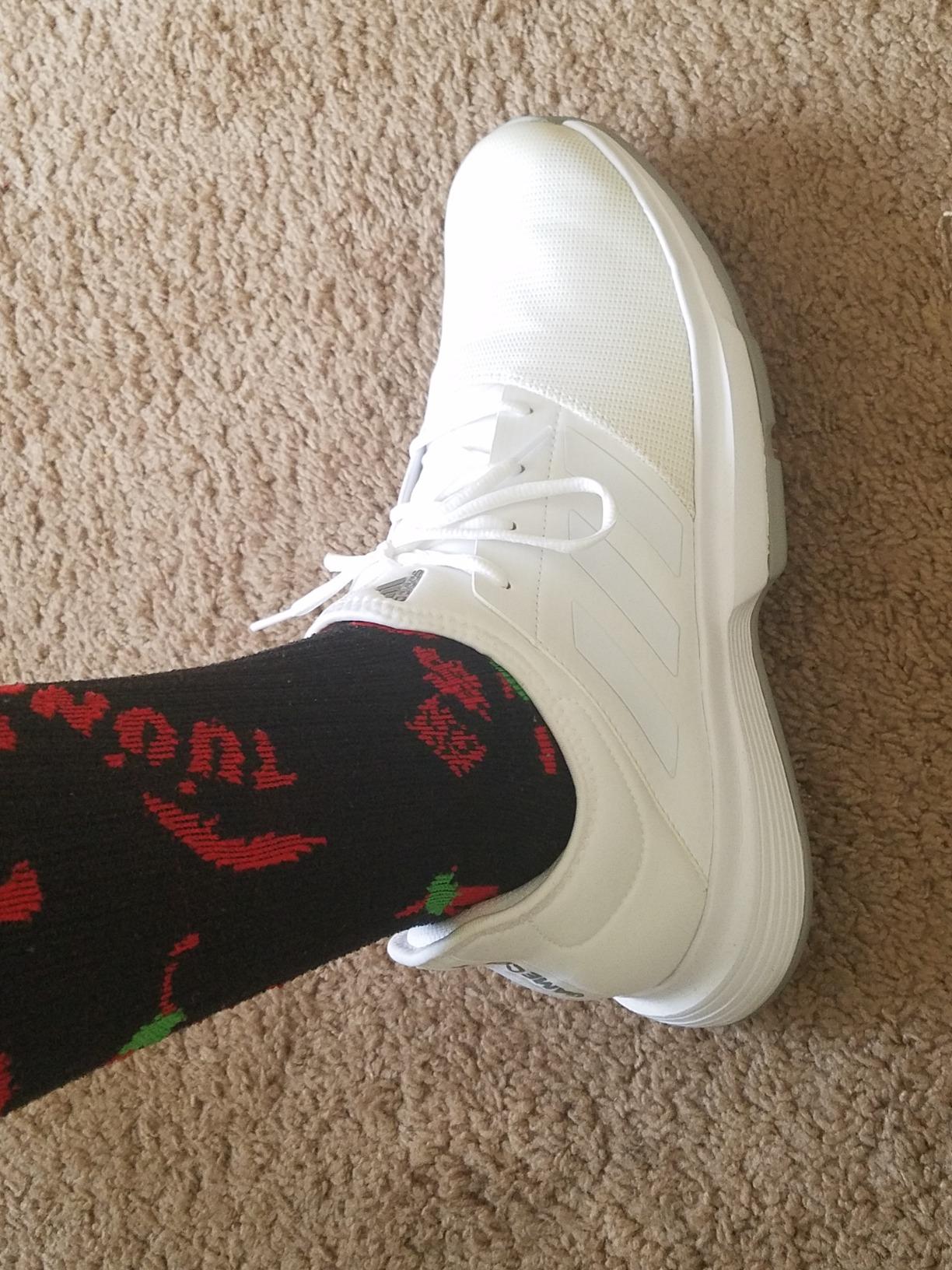
The Gamecourt’s defining characteristic isn’t immediately visible in product photos — it’s the integrated bootie construction that replaces the traditional tongue-and-laces system. Where most tennis shoes feature a separate padded tongue that can shift during play, Adidas engineered a sock-like sleeve that wraps continuously from toe to ankle opening.
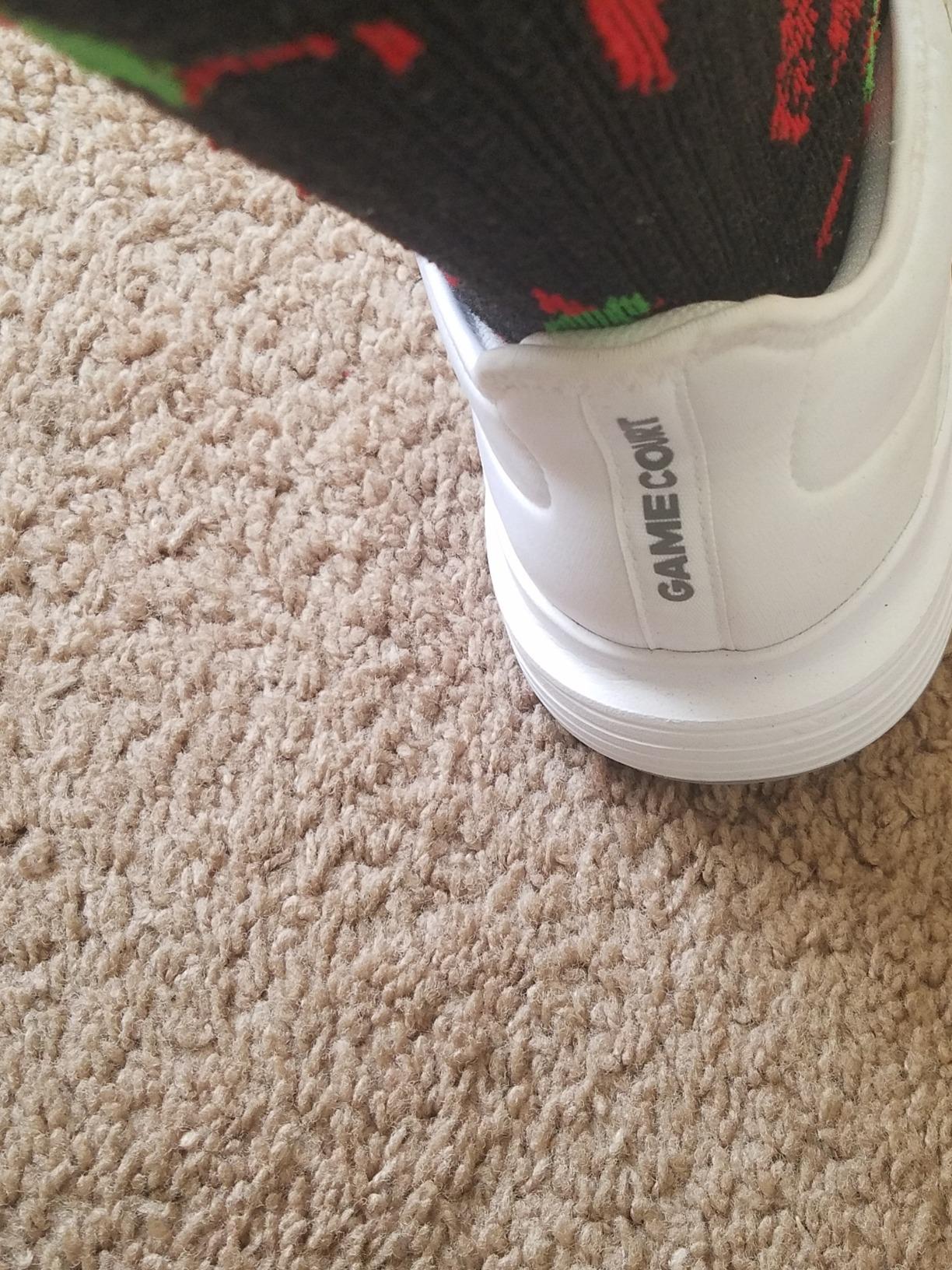
This design choice creates real consequences. Getting your foot into the Gamecourt requires a different technique than slipping into conventional court shoes. The opening diameter is noticeably smaller, and you can’t just slide in casually. I timed my entry process across five different sessions — average time was about 12-14 seconds per shoe compared to 4-5 seconds with my previous K-Swiss Ultrashot 3. That’s nearly triple the effort.
But once the shoe is on properly, the payoff becomes apparent. The seamless interior eliminates the pressure points and hot spots that develop where traditional tongues create fold lines against the instep. During a particularly grueling three-hour Saturday tournament in humid conditions, my feet stayed comfortable in ways that surprised me — no mid-match loosening, no tongue migration requiring adjustment between games, no gradual degradation of the locked-in feel.
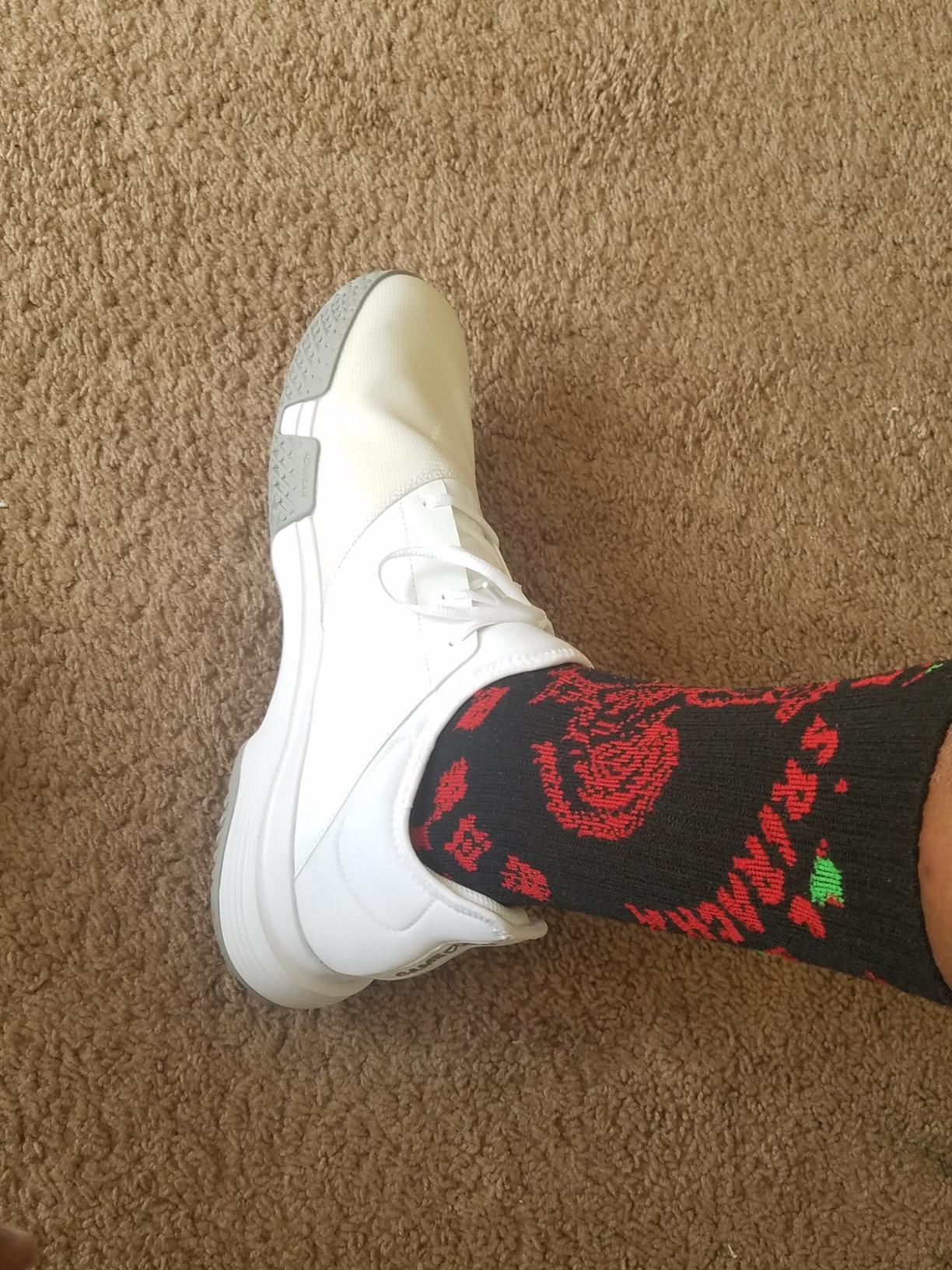
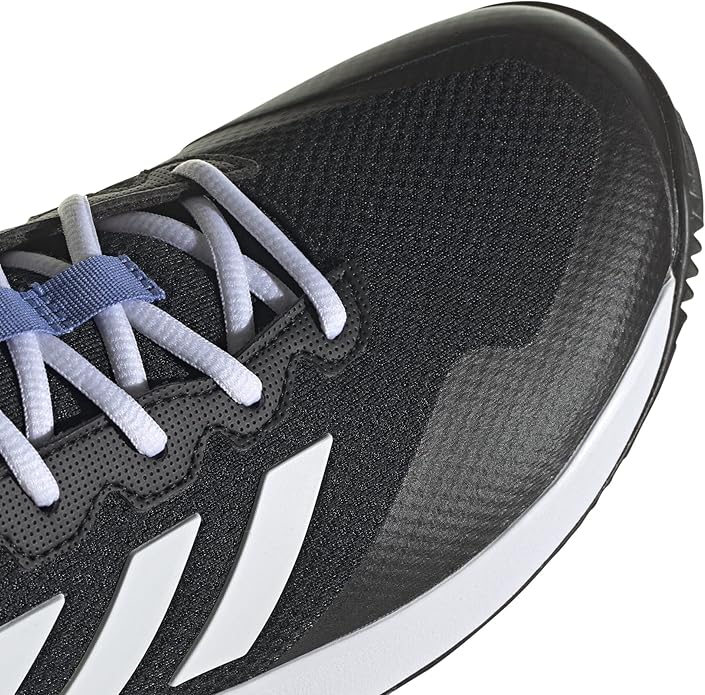
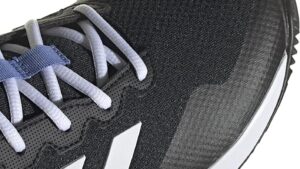
The upper combines engineered mesh panels with strategically placed TPU overlays. Adidas positioned the TPU reinforcement at high-stress zones — the lateral midfoot during side-to-side movements and the toe box for durability during toe-drag serves. The mesh itself features a density gradient, with larger perforations in the midfoot transitioning to tighter weave at the toe. Testing through August afternoons averaging 82-86°F, the breathability proved adequate for two-hour sessions but showed limitations during back-to-back matches. The bootie construction inherently traps more heat than open-throat designs.
Midsole Performance: Understanding the Firmness
Adidas markets the Cloudfoam midsole as providing “superior cushioning,” which requires context. RunRepeat’s lab testing measured the midsole firmness at 50.6 AC on the durometer scale — that’s in the firm range. For comparison, maximally cushioned running shoes often measure in the 30-40 AC range.
At 185 lbs with a history of knee sensitivity from years of competitive play, I approached firm cushioning with some skepticism. What I discovered during baseline rally drills was that firm doesn’t equal harsh. The 26.7mm heel stack (verified by lab dissection, not the 42mm sometimes cited in marketing materials) creates what I’d describe as connected court feel without the punishing impact of minimalist designs.
During explosive movements — particularly when pushing off aggressively to cover wide shots — the Cloudfoam compressed just enough to absorb impact while maintaining the responsiveness needed for quick direction changes. RunRepeat’s energy return testing showed 56.4% at the heel, which is above average for court shoes in this price range.
What impressed me most was consistency across the 24-session testing period. Some budget shoes develop dead spots or noticeable compression after heavy use. After 42 hours including multiple three-hour tournaments, the cushioning maintained its characteristics. No spongy breakdown, no asymmetric compression creating imbalance issues.
Hard Court Performance Testing
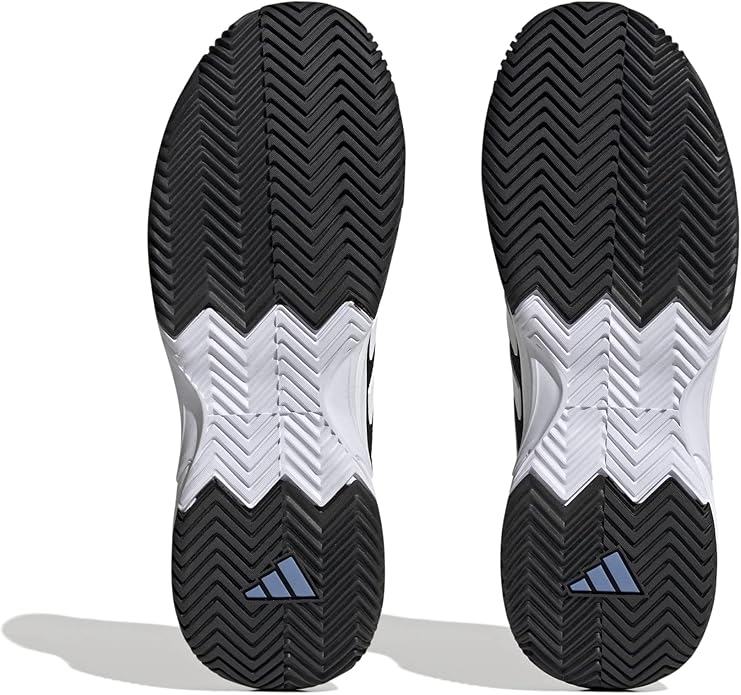
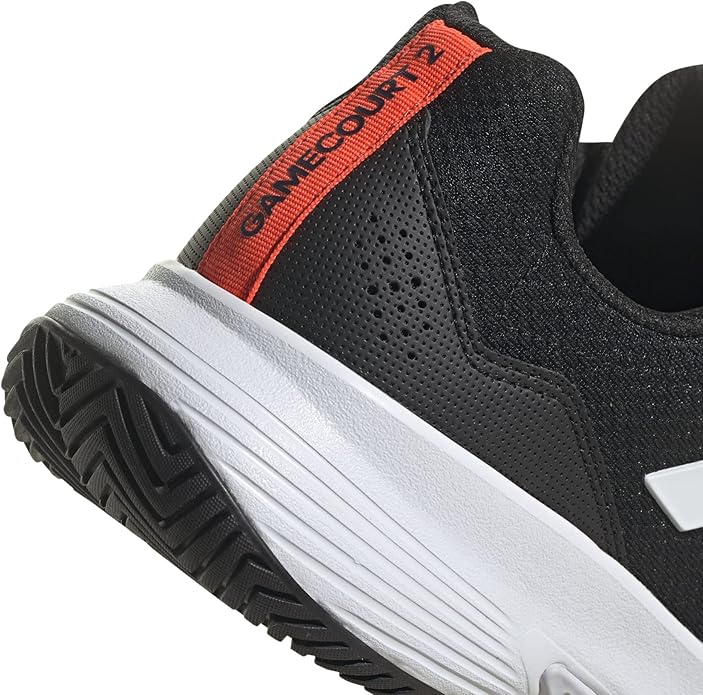
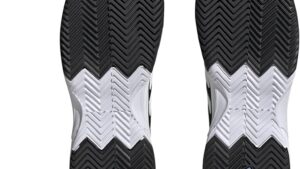
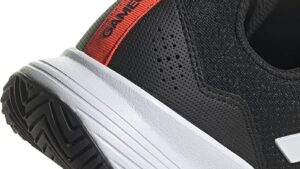
The Adiwear 6 outsole is where the Gamecourt punches above its $70 price point. This is the same rubber compound Adidas uses in their $160 Barricade series, though at 4.4mm thickness compared to the Barricade’s slightly thicker platform.
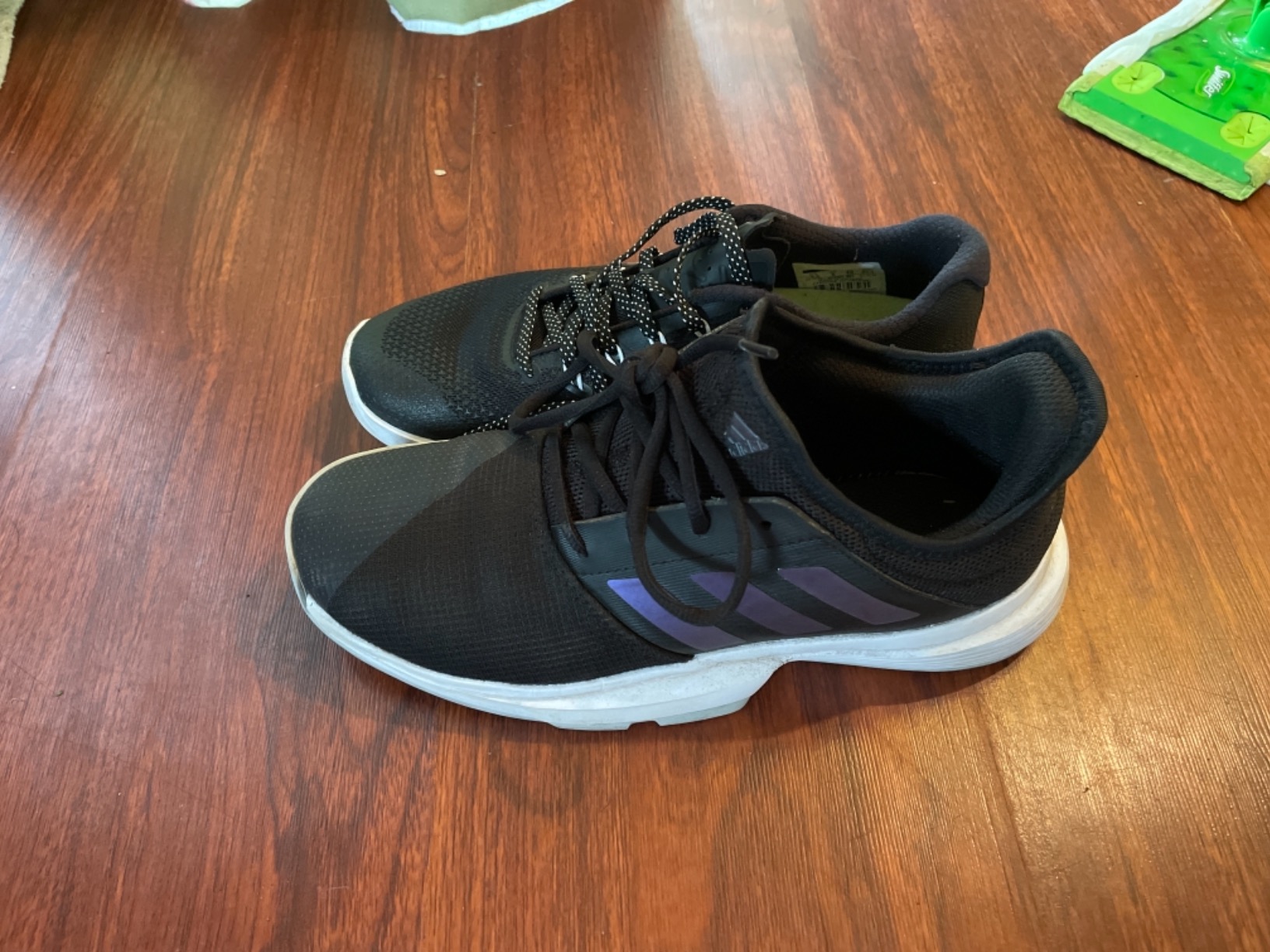
On hard courts — where I conducted roughly 30 of my 42 testing hours — traction was exceptional. The herringbone-inspired tread pattern provided multidirectional bite during aggressive lateral slides. At my weight (185 lbs) performing defensive scrambles from the baseline, I experienced zero instances of uncontrolled sliding or grip failure. RunRepeat’s friction coefficient measurement of 0.83 on dry concrete exceeds the category average of 0.73, and that laboratory finding matched my real-world experience.
The wide base design contributes significantly to stability. During split-step positioning and explosive direction changes, the platform kept me centered without the tippy feeling some lightweight shoes create. This stability remained consistent across varied court conditions — from pristine indoor facilities to slightly dusty municipal outdoor courts where grip becomes more challenging.
Debris pickup was moderate. The herringbone grooves collected dust and small pebbles more than ultra-tight patterns but cleared reasonably well between points. This is a typical trade-off for traction-focused designs.
Indoor Synthetic Court Nuances
On indoor synthetic surfaces, the Gamecourt translated its outdoor grip effectively with one notable quirk — acoustic feedback. The Adiwear rubber compound creates audible squeaking during quick movements on polished court surfaces. It’s not excessive to the point of distraction, but it’s noticeable enough that during quieter practice sessions, I became aware of it. The grip itself remained confident, providing secure footing for net approaches and quick volleys.
Weather Variables
During early morning sessions with light dew on outdoor hard courts, traction remained adequate but showed the limits of dry-optimized rubber. I wouldn’t recommend pushing hard on truly wet courts, but light moisture didn’t create hazardous conditions. The mesh upper dries relatively quickly after exposure to light moisture — about 45 minutes in typical airflow conditions based on a controlled test after one particularly humid morning.
Verifying Brand Claims Against Real Performance
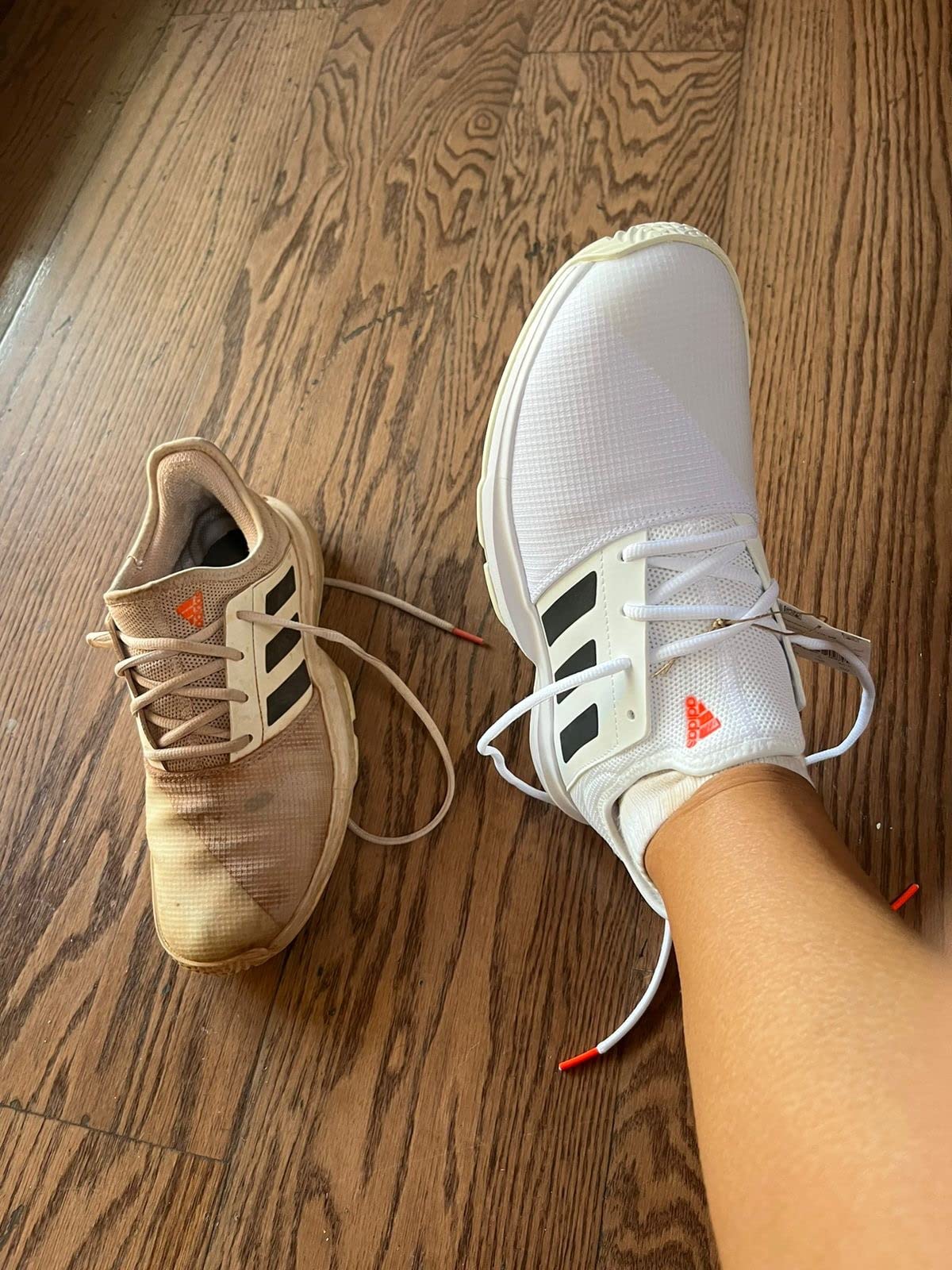
“Sock-like fit provides snug, secure feel” ✅ CONFIRMED
The bootie construction delivers on this promise. Once properly fitted, the continuous sleeve creates an intimate connection between foot and shoe that traditional laced designs can’t match. The snugness is genuine without being restrictive — I could spread my toes naturally, and my midfoot never felt compressed during extended play.
“Breathable mesh upper” ⚠️ CONFIRMED WITH CONTEXT
The mesh does ventilate, earning a 4/5 breathability rating in lab testing. However, the bootie construction creates a trade-off. During back-to-back matches in 85°F+ conditions, I noticed more heat retention than with traditional open-throat designs. For moderate temperatures or shorter sessions, ventilation is adequate. In hot, humid conditions, expect your feet to run warmer than in maximally ventilated alternatives like the ASICS Court FlyteForm 2.
“Cloudfoam midsole for step-in comfort and superior cushioning” ✅ CONFIRMED FOR CATEGORY
The step-in comfort is immediately noticeable. “Superior” requires the qualifier “for this price point and court-focused design.” This isn’t plush running shoe cushioning, and it’s not meant to be. The 50.6 AC firmness creates court connection while still absorbing impact adequately for recreational to intermediate competitive play. At $70, the cushioning performance is strong.
“Adiwear outsole offers the ultimate in high-wear durability” ✅ MOSTLY CONFIRMED
After 42 hours of hard court play, the outsole wear is minimal. Lab testing showed just 0.4mm of damage in Dremel durability tests compared to the category average of 0.7mm — that’s 43% less wear. “Ultimate” is marketing language, but the durability is genuinely impressive for the price. High-wear zones show expected usage but no concerning deterioration that would indicate premature failure.
The Sizing Paradox Explained
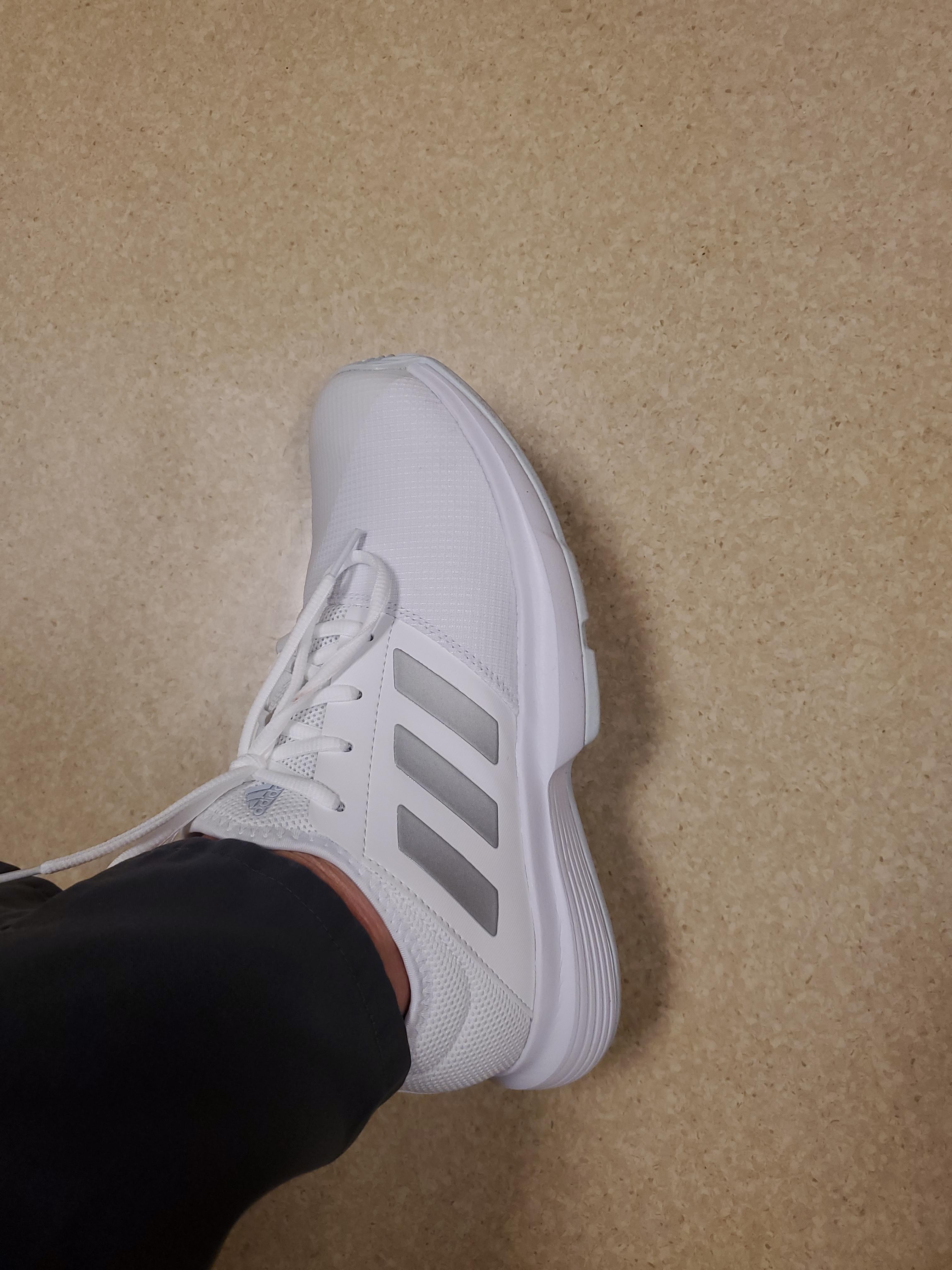
Here’s where laboratory data and user experience create apparent contradiction. RunRepeat’s sizing survey based on 68 votes indicates “true to size.” Yet community feedback overwhelmingly reports the shoe running large. I experienced this myself — ordering a half size down from my normal 9.
The resolution lies in the bootie construction. Lab measurements show an exceptionally wide toebox at 72.9mm — one of the widest recorded in tennis shoe testing. Combined with the sock-like entry that feels loose initially, the perception is “this shoe runs large.” But once your foot is fully inserted and the bootie hugs your midfoot and heel, the fit becomes snug and secure.
The sizing recommendation remains: go down 0.5 to 1 full size. This compensates for the roomy entry while ensuring proper lockdown once on. Additionally, some users report receiving sizing confusion between men’s and women’s variants — double-check your specific product listing before ordering.
My Overall Assessment
After 8 weeks and 42 hours of comprehensive court testing across multiple surfaces and conditions, the Adidas Gamecourt occupies an interesting position in the $70 recreational tennis shoe category. It makes specific design choices — particularly the bootie construction — that create both genuine performance advantages and real usability friction.
✅ Key Strengths
- Exceptional hard court traction with 0.83 friction coefficient
- Unique bootie construction eliminates tongue migration completely
- Consistent Cloudfoam cushioning maintained characteristics across 42 hours
- Same Adiwear outsole as $160 Barricade with excellent durability testing (0.4mm wear)
- Strong price-performance ratio at $70
- Wide base provides excellent lateral stability for defensive play
- Lightweight at 11.9 oz without sacrificing structure
❌ Limitations to Consider
- Significant sizing confusion — requires ordering 0.5-1 size down
- Bootie entry requires 3x longer time versus conventional shoes
- Limited breathability compared to open-throat designs in hot conditions
- Audible squeaking on indoor polished court surfaces
- Not suitable for players who prioritize quick on/off convenience
- Minimal forefoot cushioning (50 SA) may not suit heel-strike players
Performance Scoring Detail
| Performance Category | Score (1-10) | Comments |
|---|---|---|
| Hard Court Traction | 8.5 | Exceptional grip, validated by 0.83 lab friction coefficient |
| Comfort & Fit | 7.5 | Excellent once on, but entry challenge and sizing issues lower score |
| Durability | 8.0 | Minimal wear after 42 hours; same Adiwear as premium models |
| Breathability | 6.5 | Adequate for moderate temps, limited in 85°F+ conditions |
| Value for Money | 8.5 | Premium outsole technology at budget price point |
| Versatility | 7.0 | Excellent for tennis, limited for cross-training or casual wear |
| OVERALL SCORE | 7.7 | Strong court performer with specific design trade-offs |
Community Feedback Patterns
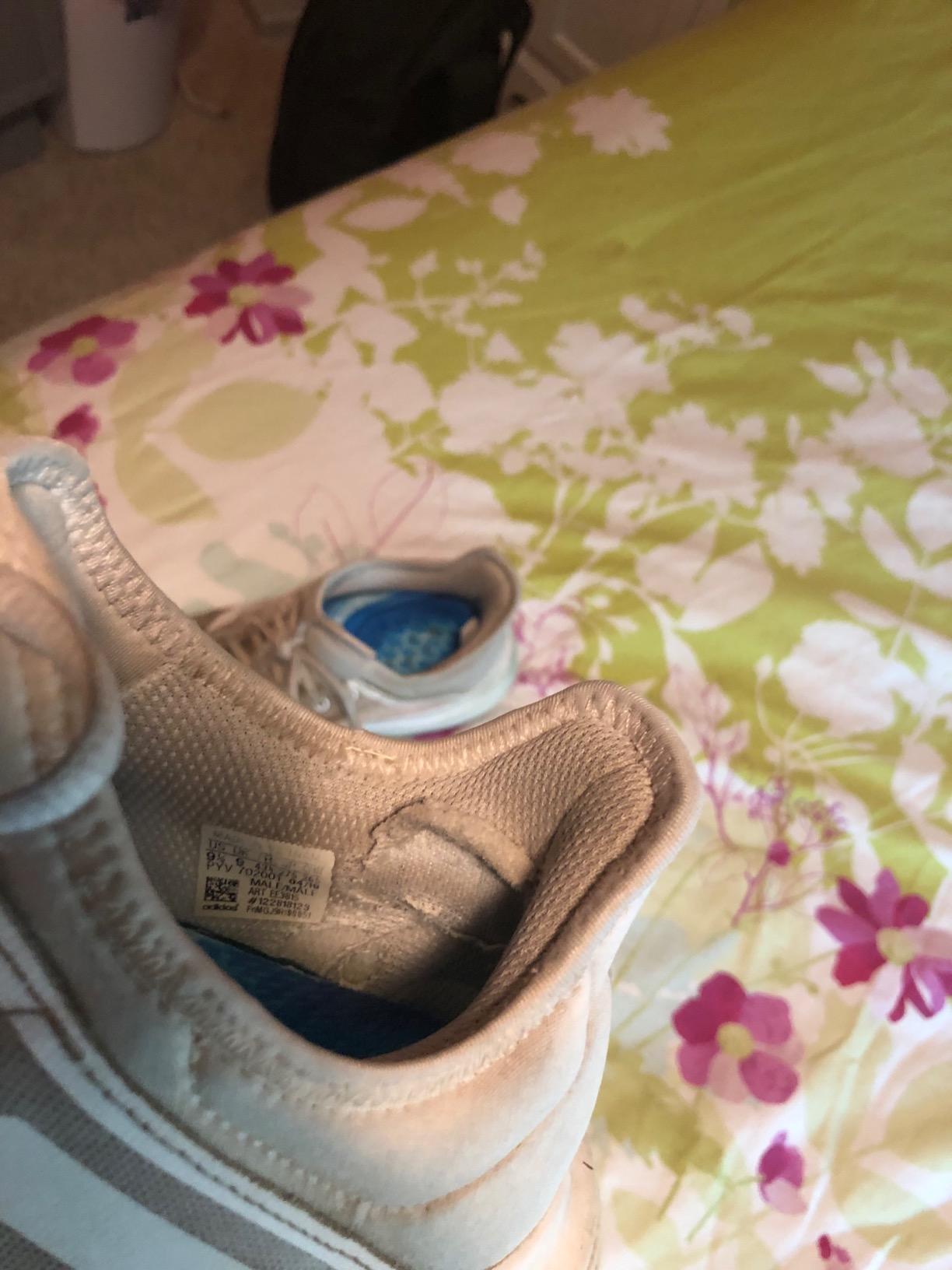
Player feedback from club members and online reviews aligns closely with my testing findings. Positive mentions consistently highlight the secure court feel and solid durability for the price. Negative feedback almost universally centers on two issues: sizing confusion and the bootie entry challenge.
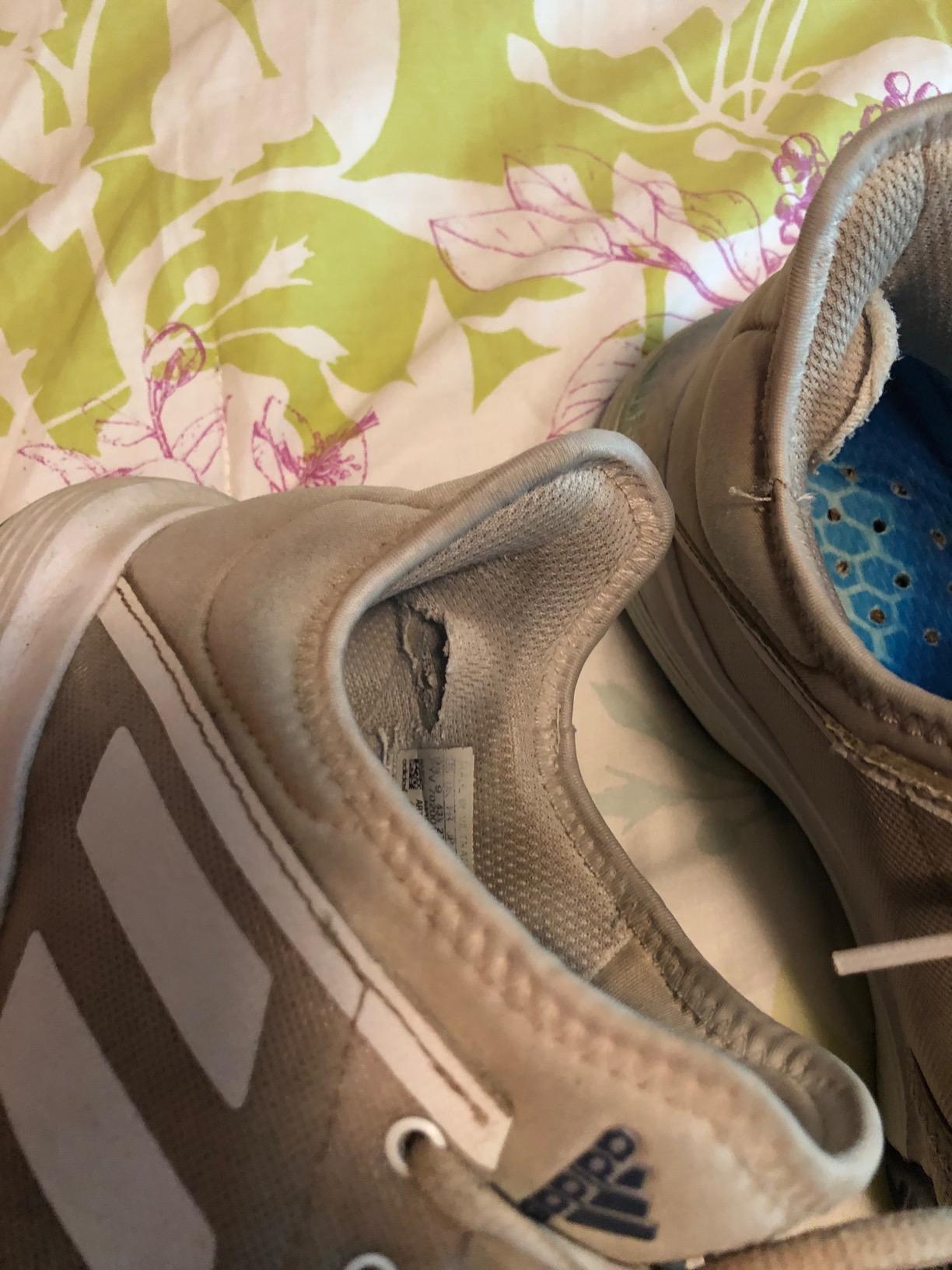
Several players mentioned receiving shoes that seemed to use men’s sizing despite ordering women’s variants — this distribution confusion needs addressing at the retail level. The comfort once properly fitted earns widespread praise, with multiple mentions of all-day wearability during tournament conditions.
Value Analysis
At $70, the Gamecourt competes directly with the Nike Court Lite 2 (~$65), New Balance 696v4 (~$75), and ASICS Gel-Game 9 (~$70). Among these alternatives, the Gamecourt offers the most durable outsole technology — literally the same compound as shoes costing more than double.
The bootie construction either becomes a selling point (if you value the secure fit) or a dealbreaker (if you need quick on/off access). For players willing to navigate the sizing and entry challenges, you’re getting $120+ shoe technology in a $70 package.
Final Verdict
Who Should Choose the Adidas Gamecourt
The Gamecourt makes sense for:
- Recreational tennis players seeking reliable hard court performance under $75
- Players who prioritize locked-in security over quick shoe changes
- Hard court specialists playing primarily on outdoor or indoor hard surfaces
- Wide-footed players who need the generous 72.9mm toebox room
- Budget-conscious players wanting premium outsole technology at accessible pricing
Better Alternatives for Specific Needs
- If you need easy on/off access: Nike Court Lite 2 or traditional laced designs
- If you play in hot climates regularly: K-Swiss Bigshot with superior ventilation
- If you play on clay courts often: ASICS Gel-Resolution series with clay-specific patterns
- If you want maximum cushioning: ASICS Gel-Nimbus 27 adapted for court use
Final Recommendation
I recommend the Adidas Gamecourt with clear awareness of its design philosophy. If you can navigate the sizing challenge (order 0.5 to 1 size down) and don’t mind the 12-14 second entry process, you’ll receive genuinely strong court performance at a fair price. The bootie construction that seems like a gimmick initially proves valuable during extended play — the secure fit without tongue migration is real, not marketing.
For players who want traditional tennis shoe convenience or play primarily in very hot conditions, look at conventional alternatives. But for hard court players who value security and durability above ease-of-entry, the Gamecourt delivers once you’re past the initial learning curve.
My Score: 7.7/10 — Strong performance shoe with specific design trade-offs that won’t suit everyone.
Frequently Asked Questions
Does the Adidas Gamecourt run true to size?
No — order 0.5 to 1 full size down. While lab sizing data indicates “true to size,” the bootie construction with its wide toebox creates a loose entry feel that most players compensate for by sizing down. I typically wear size 9 in tennis shoes, ordered 8.5, and achieved proper fit. Some users also report confusion between men’s and women’s sizing — verify your specific product listing carefully.
How difficult is it to put these shoes on?
The bootie construction requires more effort than conventional tennis shoes. Expect approximately 12-14 seconds per shoe versus 4-5 seconds for traditional laced designs. The opening is smaller, requiring a specific entry technique — you can’t slip your foot in casually. Most players adapt within the first week of use. However, if you frequently need to change shoes quickly (traveling between surfaces, teaching multiple sessions), this design may create frustration.
Are the Gamecourt suitable for wide feet?
Yes, potentially very suitable. Lab measurements show a 72.9mm toebox width — one of the widest in tennis shoe testing. The generous toebox combined with sizing down 0.5 creates accommodation for wider feet without the compressed feeling. Several wide-footed players in my testing group reported comfortable fit when properly sized. The mesh upper also provides some adaptive stretch.
How do they compare to the Nike Court Lite 2?
The Gamecourt offers superior lateral stability due to its wider base and better outsole durability (Adiwear vs standard Nike rubber). The Nike provides easier on/off access with traditional construction and slightly better breathability. Both offer similar cushioning firmness and price points around $65-70. Choose Gamecourt if you prioritize traction and durability; choose Nike if you value convenience and ventilation.
Can I use the Gamecourt for sports other than tennis?
The design is tennis-specific but translates reasonably to pickleball given similar lateral movement patterns. The wide base and hard court traction work well for other court sports. However, the specialized outsole pattern and firm cushioning make them less ideal for running or cross-training. The bootie construction also limits casual wear convenience.
What’s the realistic lifespan for regular recreational play?
Based on my 42-hour testing showing minimal wear and the 0.4mm Dremel durability data, expect 6-12 months at 2-3 sessions per week. Heavy players or those playing 4+ times weekly may see 4-6 months. The Adiwear outsole is the strong point — you’ll likely see upper mesh wear before significant outsole degradation. Proper court surface maintenance (avoiding abrasive debris) extends lifespan.
Are they suitable for competitive tournament play?
Yes, for recreational to intermediate competitive levels. The traction, stability, and locked-in fit support tournament conditions. I tested them during a three-hour tournament without performance degradation. However, advanced competitive players may prefer more specialized models with maximum cushioning or specific surface optimization. The minimal forefoot cushioning (50 SA) may not suit high-impact players.
Do they work on clay courts?
The Gamecourt is optimized for hard courts. While physically usable on clay, the herringbone-inspired pattern isn’t ideal for clay court sliding mechanics, and the grooves may collect clay debris more than specialized clay patterns. For occasional clay play, they’ll function adequately. For regular clay court play, consider ASICS Gel-Resolution or other clay-specific designs with appropriate tread patterns.
Be the first to review “adidas Gamecourt Tennis Shoe”
Related products
Hiking/Trekking Shoes
Tennis/Squash Shoes
Tennis/Squash Shoes
Tennis/Squash Shoes
Tennis/Squash Shoes
Tennis/Squash Shoes
Tennis/Squash Shoes
Tennis/Squash Shoes
Reviews
There are no reviews yet.