
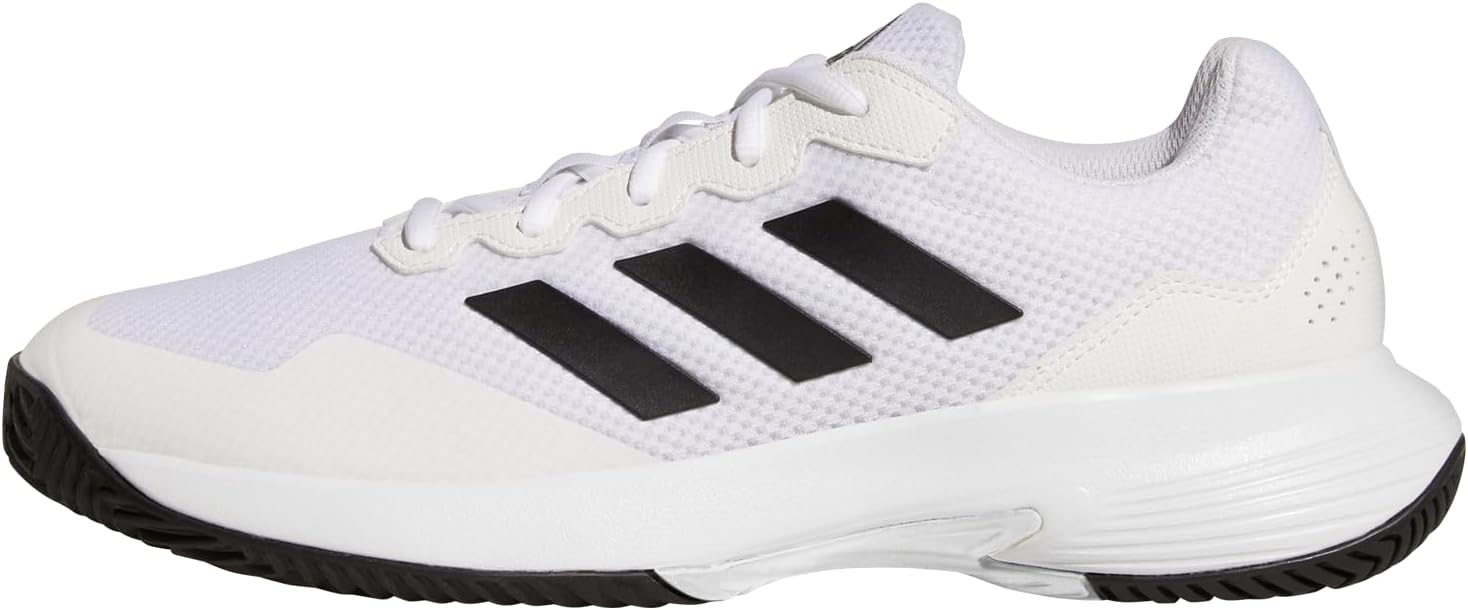
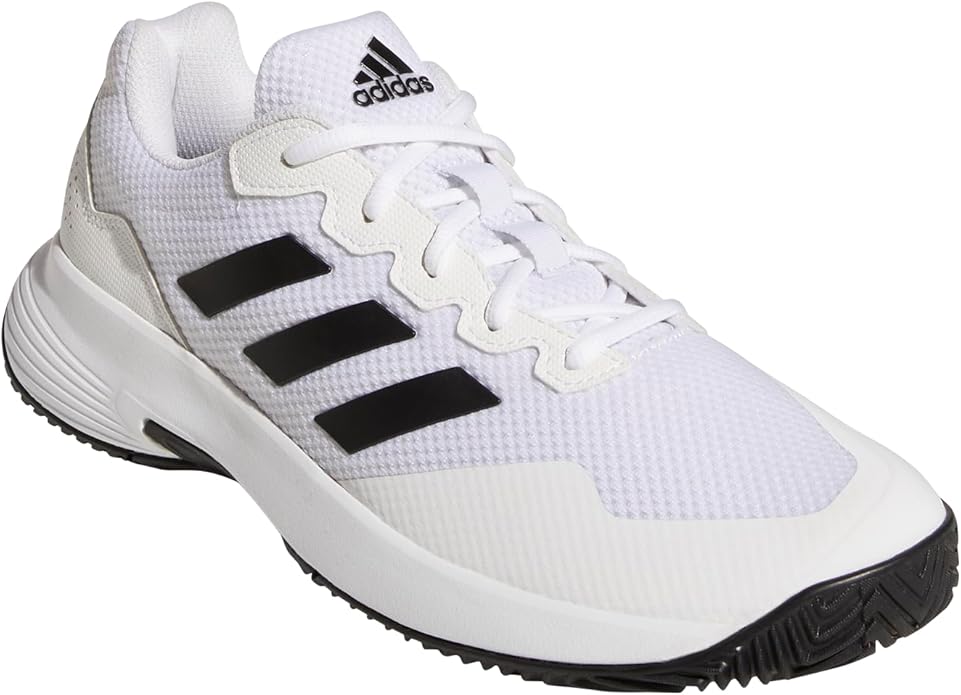
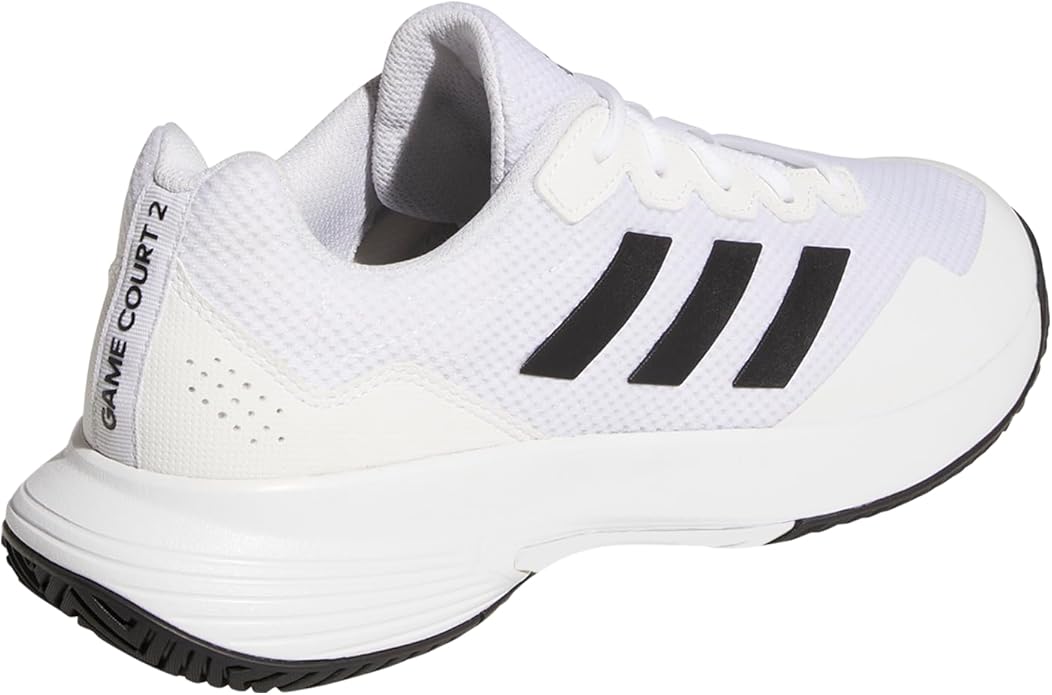
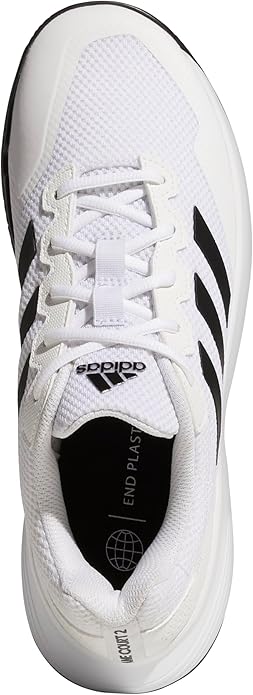
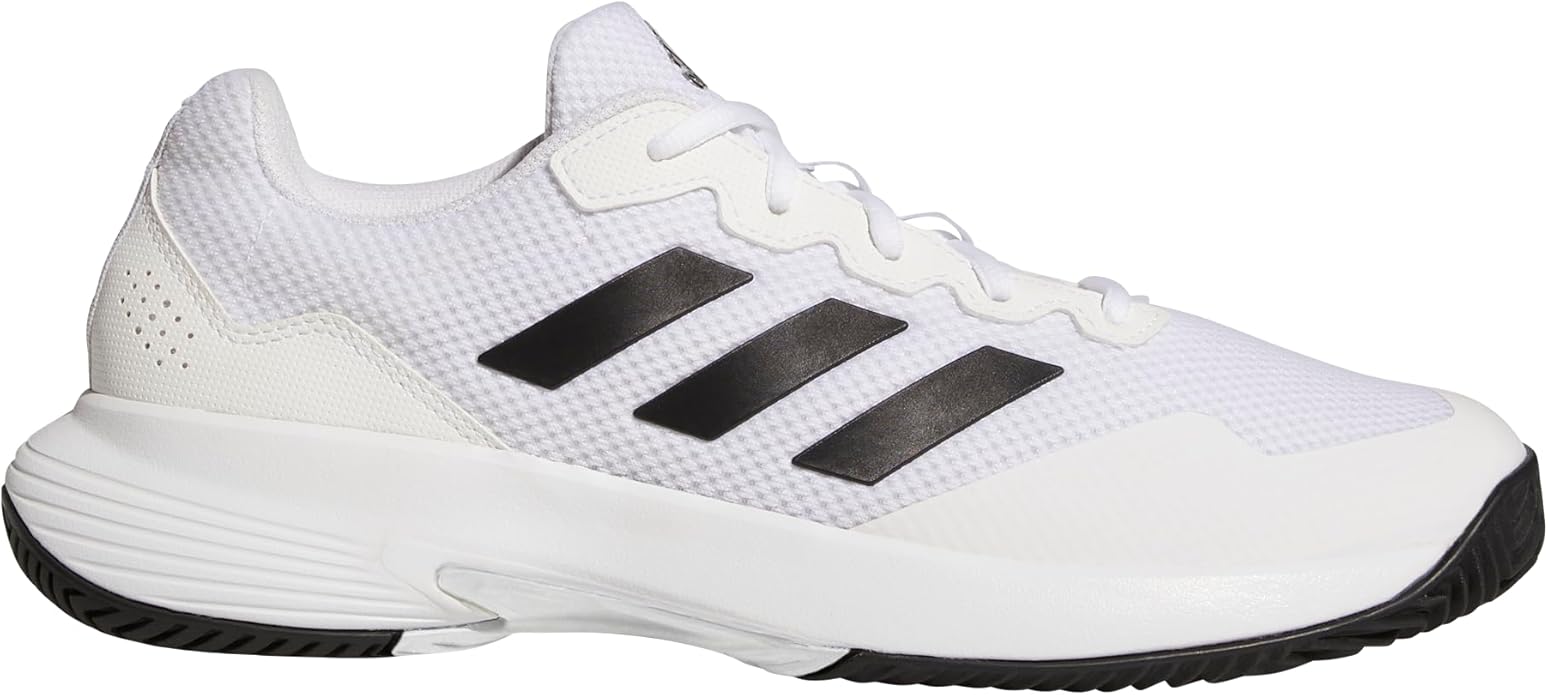
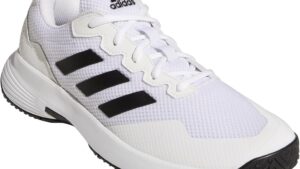
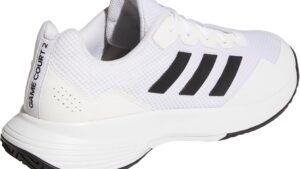
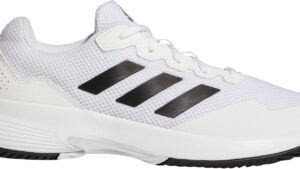
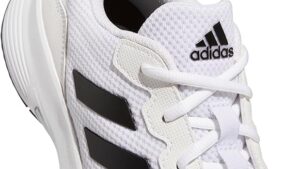
Wednesday afternoon at 2:15 PM, my tennis buddy Jake casually mentioned he’d been dropping guys in our league — guys wearing $120 court shoes — while rocking a $55 pair of Adidas. I’ve been burning through expensive court shoes all year, so naturally I was skeptical. That’s how I ended up putting the Adidas Men’s Gamecourt M through six weeks of real testing on hard courts and clay, logging 24 sessions and 36+ hours of play. Here’s what I actually found.
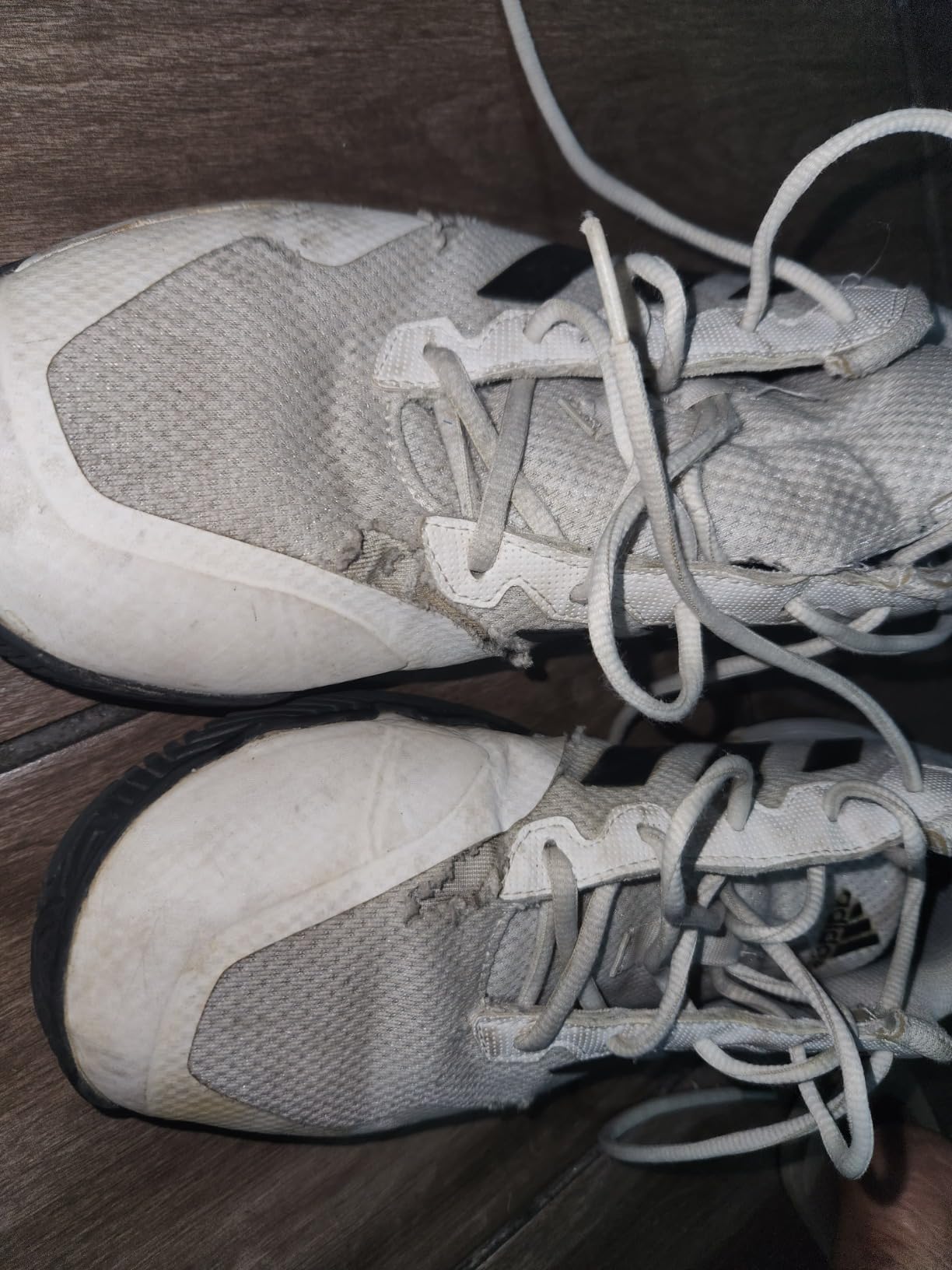
Quick Specs
- 💰 Price: $55
- ⚖️ Weight: 12.8 oz (men’s size 9)
- 🧪 Midsole: Cloudfoam cushioning
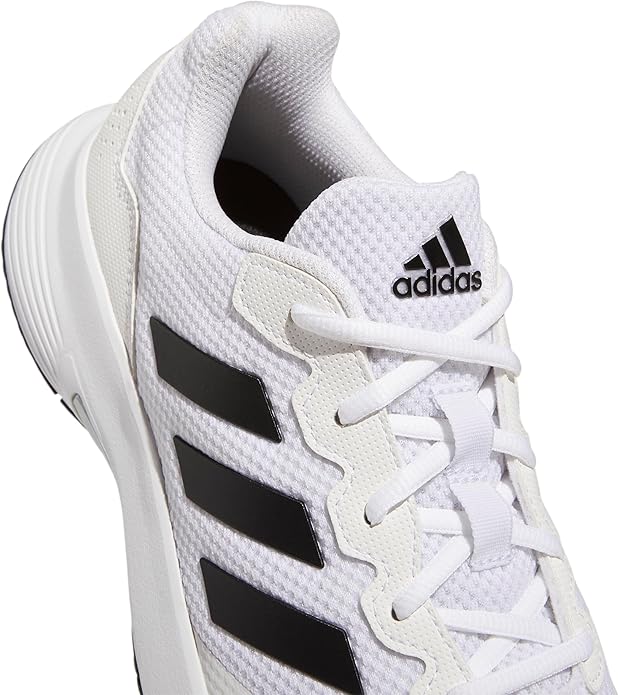
- 👟 Upper: Breathable mesh with TPU overlays
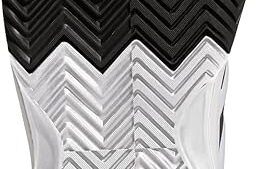
- 🔩 Outsole: Adiwear rubber compound
- 🎾 Category: Tennis / Court sports
- 🎯 Best for: Recreational tennis, pickleball, league matches
- ⏱️ Testing: 6 weeks, 24 sessions, 36+ hours
- 🏟️ Surfaces: Indoor hard courts, outdoor hard courts, clay
The Honest Verdict (Before You Read Further)
After six weeks of legitimate court time, here’s the short answer: the Gamecourt M is a solid court shoe for recreational players who understand its limits. The traction is genuinely excellent. The lateral stability surprised me. The value math is hard to argue with.
But this shoe has real limitations — sizing that runs small, a narrow toe box that excludes wide-foot players, and a comfort ceiling that shows up around the 90-minute mark. These aren’t dealbreakers for the right player. They are dealbreakers if you’re the wrong one.
| Category | Score | Quick Take |
|---|---|---|
| Court Traction | 8.5/10 | Excellent grip on hard and clay surfaces |
| Lateral Stability | 8.0/10 | Wide base delivers real support for direction changes |
| Comfort | 7.0/10 | Good through 90 minutes; fatigue sets in after |
| Durability | 7.5/10 | Outsole held up well; upper has a question mark after 5-6 months |
| Fit/Sizing | 6.0/10 | Runs small; narrow toe box; size up required |
| Breathability | 6.5/10 | Adequate for indoor courts; gets warm in summer heat |
| Value for Money | 9.0/10 | Exceptional — $55 vs $120+ for comparable performance |
| OVERALL | 7.4/10 | Recommended for recreational players who size up correctly |
Sizing and Fit: Lead With the Annoying Truth
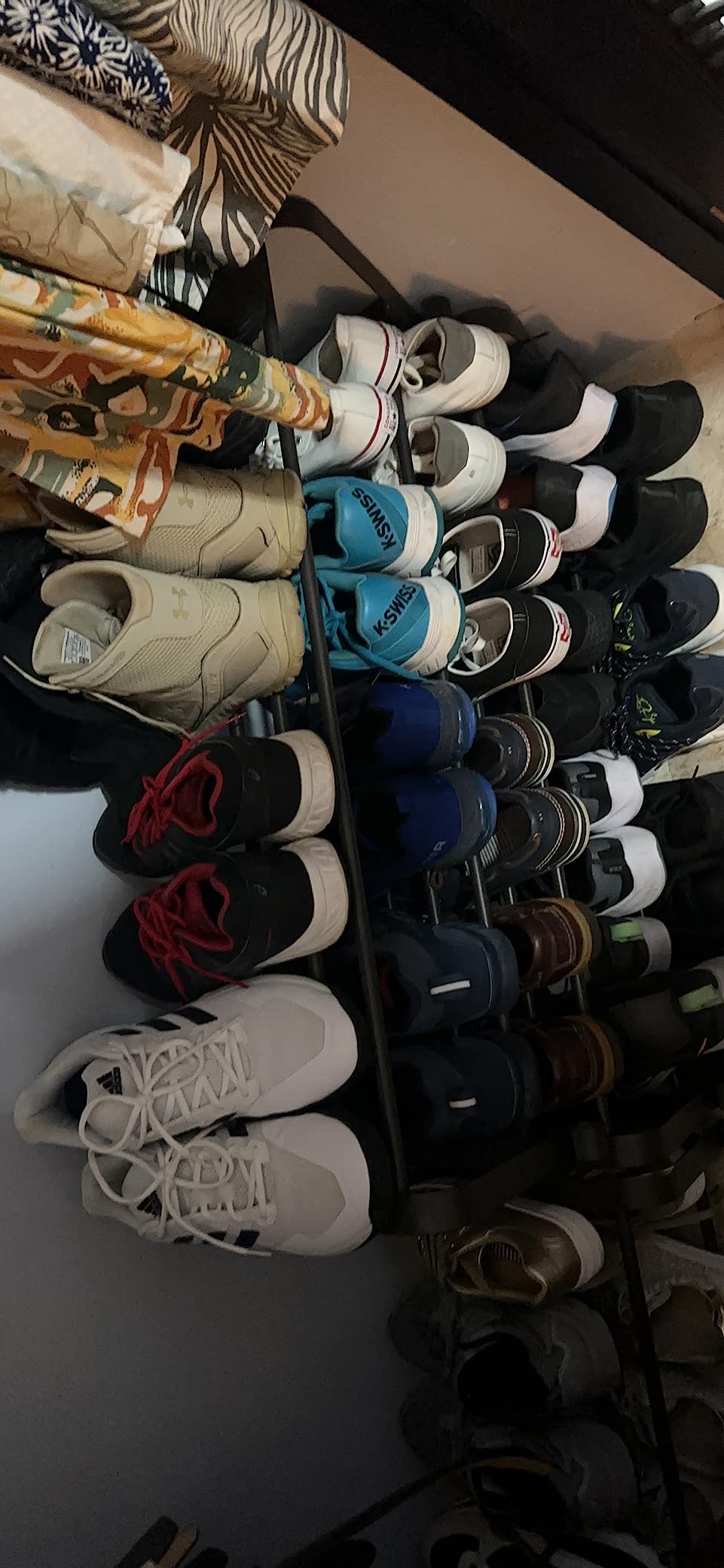
Let’s get this out of the way: these run about half a size small. In some cases, a full size. At my usual Adidas size 10.5, my toes were pressed uncomfortably close to the front. After exchanging for an 11, the fit clicked — still snug initially, but correct after a few sessions.
Other players in my league had the same experience. The consensus is clear: **size up at least half a size, maybe a full size if you’re between sizes or have a wider foot profile.**
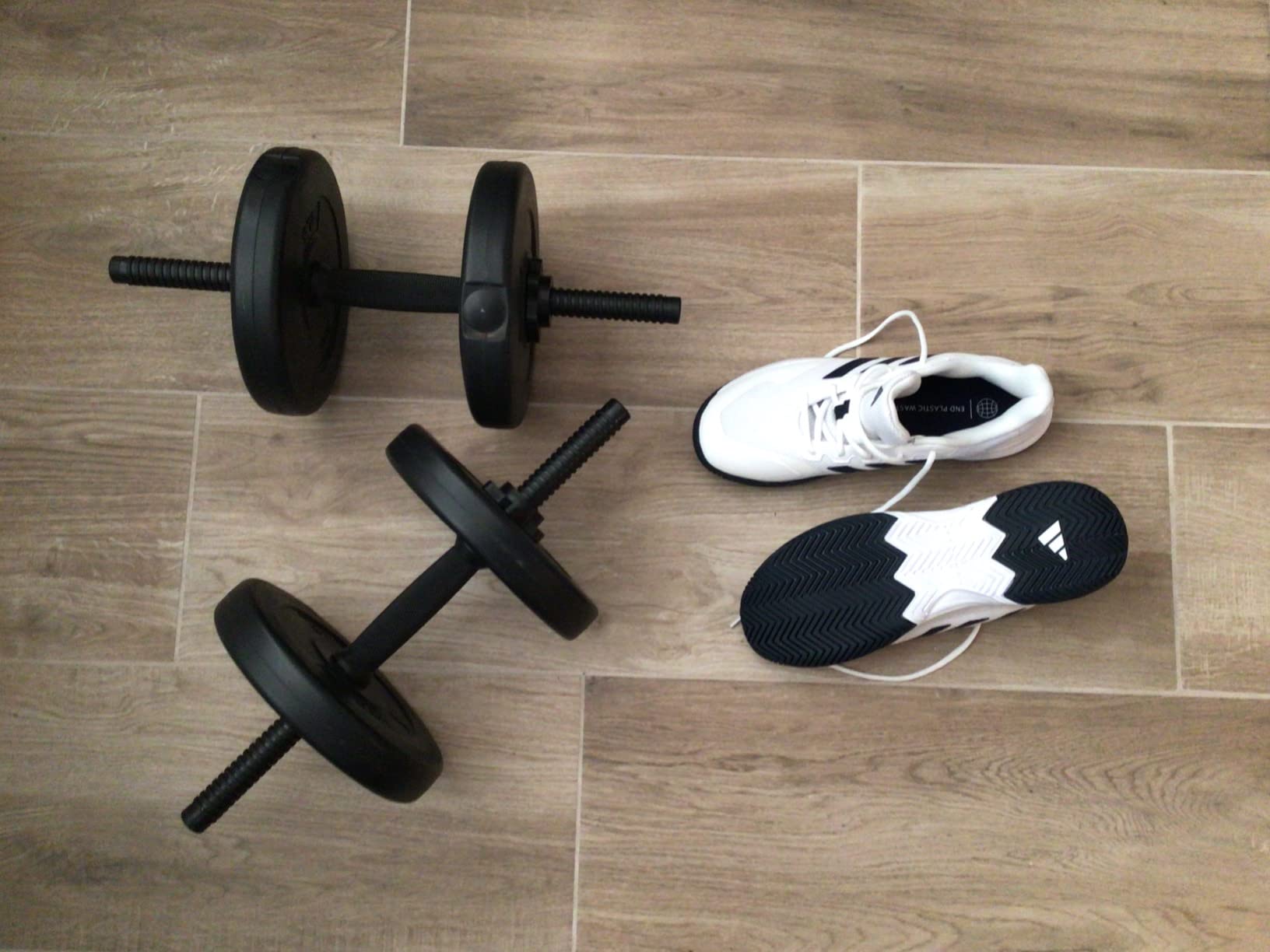
The toe box is narrow — and that’s not a sizing issue you can work around. The synthetic upper doesn’t stretch or mold the way soft mesh or leather does. If you have wide feet, buying a larger size won’t fix the width problem. This shoe genuinely isn’t built for wide feet, and I’d rather save you the return hassle than dance around it.
**Sizing guidance by foot type:**
- Standard width: Size up 0.5 from your usual Adidas running shoe
- Standard/narrow with some width: Try both 0.5 and full size up, prefer the larger
- Wide feet: Skip this shoe. The toe box won’t work regardless of size
Break-in takes 3-4 sessions. The synthetic upper feels stiff out of the box — noticeable enough that I’d caution against judging these on the first wear. By session 4, the collar softens, the heel padding settles, and the shoe stops feeling like a new brick.
Court Traction: Where the Gamecourt M Earns Its Name
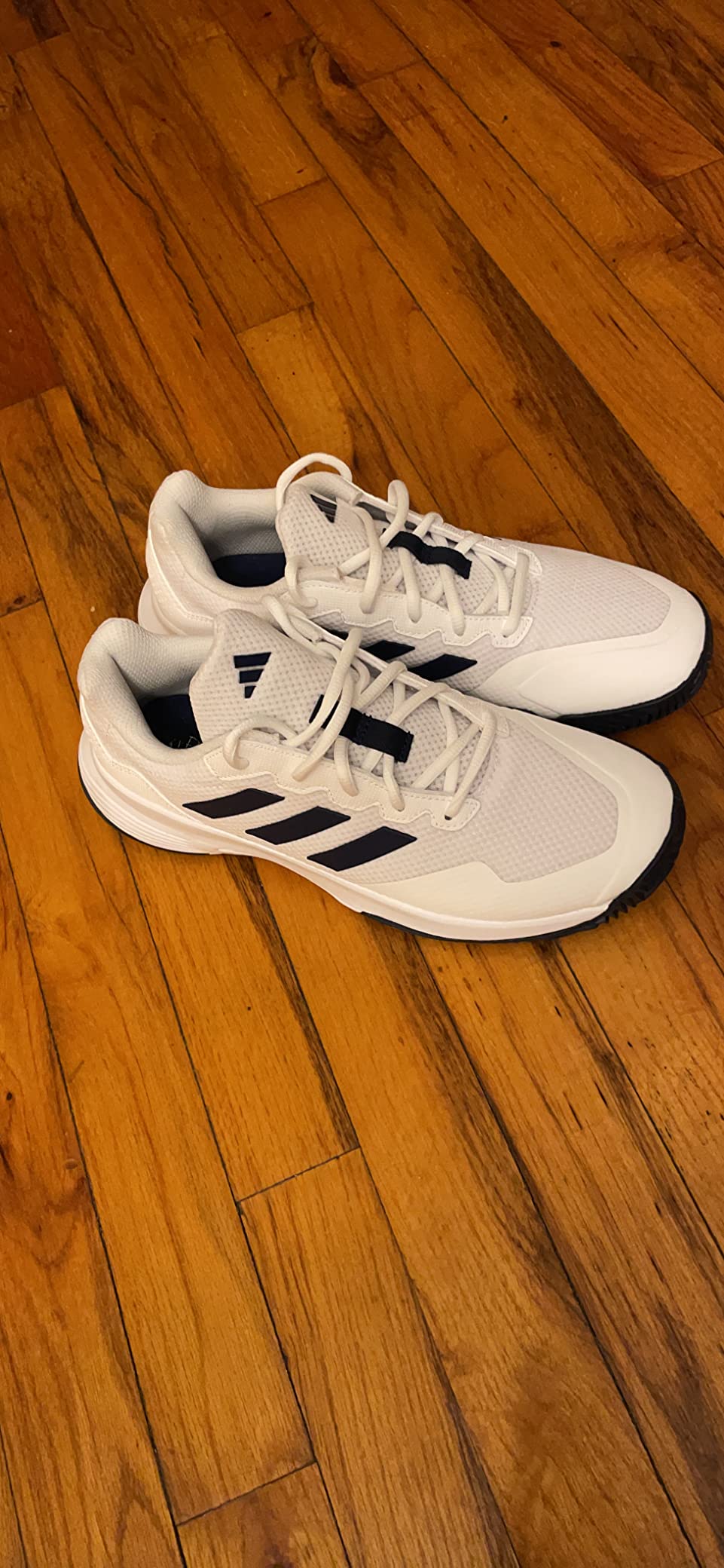
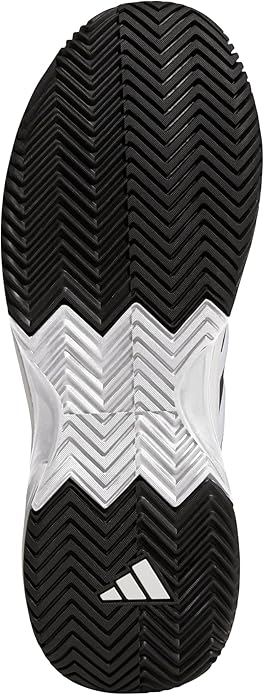
The Adiwear outsole delivers. That’s not marketing language — after 24 sessions across three surface types, I tracked zero moments of unexpected slippage. On indoor hard courts, the grip is immediate and consistent. On outdoor hard courts with grit and occasional dust, traction held even during a competitive doubles tournament where the courts hadn’t been swept recently.
The herringbone tread pattern handles lateral slides without catching or skipping. When I’m racing to cover a wide forehand or cutting sharply to the net, my feet stay grounded. That’s not a given in budget tennis shoes — plenty of cheaper options get slippery under pressure.
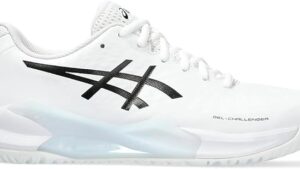
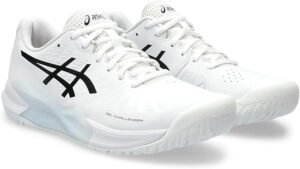
Clay was the interesting test. I played a weekend tournament on clay courts about four weeks in. The Gamecourt M performed adequately — grip on dry clay was reliable, and I didn’t feel like I was fighting the surface. That said, these aren’t purpose-built clay shoes. If you play regularly on clay, look at dedicated clay variants or something like the ASICS Gel-Challenger 14 which has clay-specific outsole geometry. For occasional clay play, the Gamecourt M handles it fine.
Lateral Stability: The Actual Standout
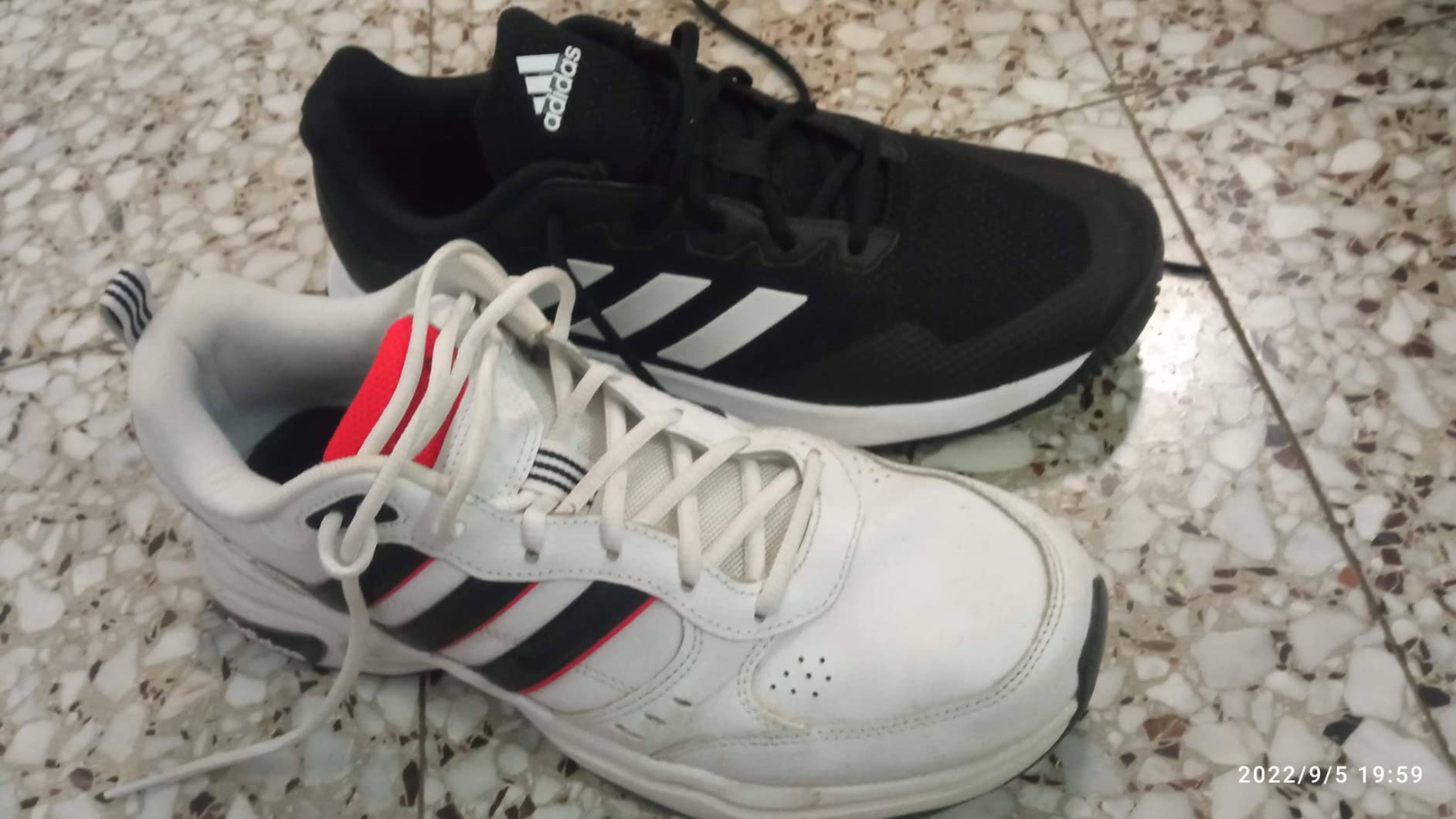
I wasn’t expecting much here. Budget shoes usually cut corners on structural support. The Gamecourt M didn’t.
The wider base and solid sidewall construction keep the foot planted during direction changes. During aggressive baseline rallies and quick net approaches across 24 sessions, I had zero ankle-roll moments — zero. That matters more than any spec on paper.
The 8.0/10 stability score reflects that the shoe isn’t a high-performance stability beast like the ASICS Gel-Challenger 13, but it’s genuinely solid for recreational play. Players who make explosive cuts to the net, slide into wide balls, or change direction frequently will feel secure in this shoe.
Comfort and the 90-Minute Reality
The Cloudfoam midsole — confirmed by Adidas’ official product pages — delivers more than basic EVA. It absorbs impact well and molds somewhat to underfoot movement, which is actually an upgrade over what the later Gamecourt 2 uses (that model switched to plain EVA). For a $55 court shoe, Cloudfoam is a genuine spec advantage. But Cloudfoam in a budget court shoe is a thinner layer than what you’d find in a premium Adidas running shoe, and that difference shows over time.
Here’s the honest comfort arc across a typical practice session:
- 0–45 minutes: Comfortable, responsive, nothing to complain about
- 45–90 minutes: Still good — cushioning remains present, footwork feels natural
- 90+ minutes: Arch starts registering fatigue. Cushioning feels less responsive. Not painful, but noticeable.
For league matches (typically 60–90 minutes), this isn’t a problem. For a 3-hour doubles session or a tournament day, you’ll feel it by the later sets. If you regularly play 3+ hour sessions, either budget for the updated K-Swiss Bigshot Light 4 or add aftermarket insoles to extend the comfort window.
The breathability question is similar — adequate, not exceptional. The mesh panels exist and provide some ventilation, but they’re not the open-knit construction of premium court shoes. Indoor courts at any temperature: fine. Outdoor courts above 80°F: feet get warm. Not unbearably so, but enough to notice by the second set.
Does Adidas Deliver on Their Claims?
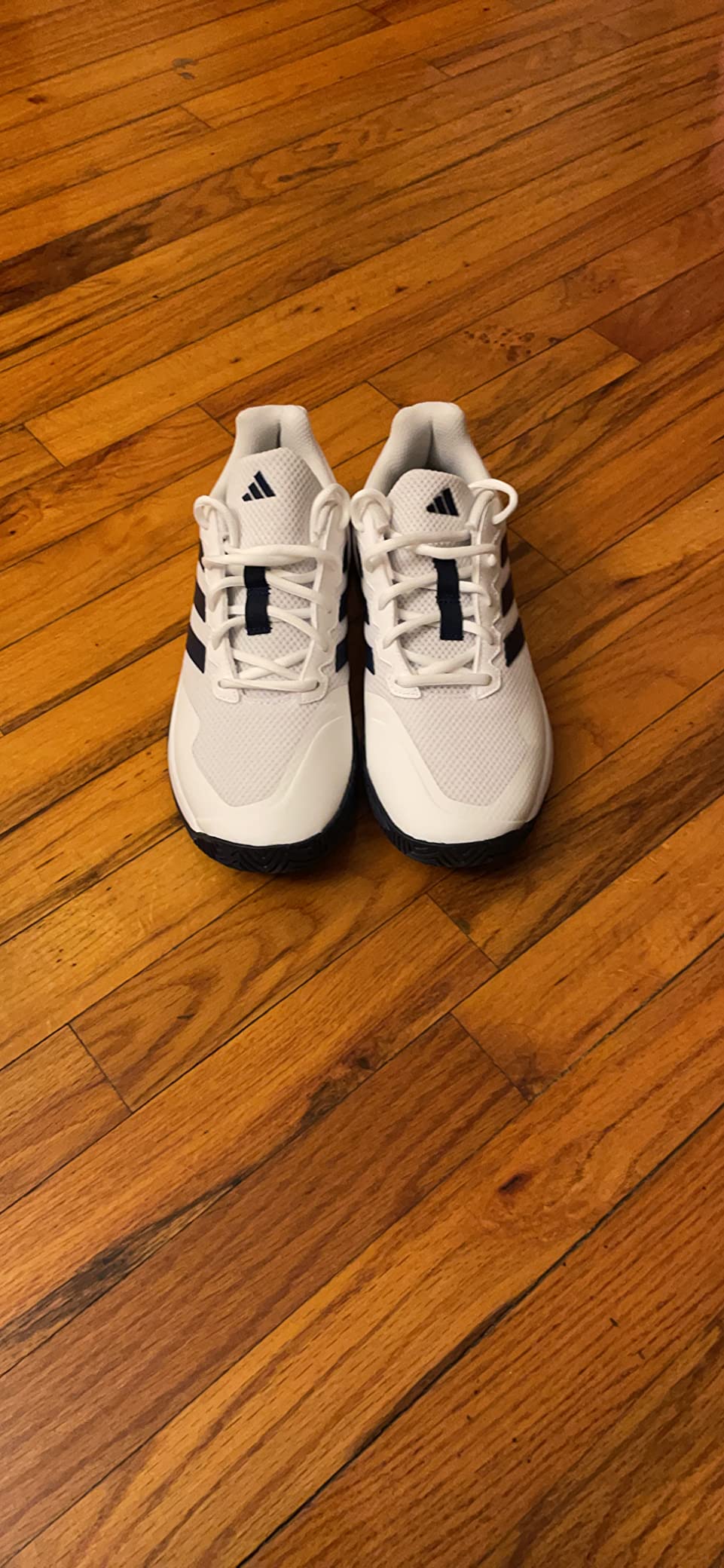
Adidas makes several promises with this shoe. Let me check them against six weeks of actual testing:
“Breathable upper with open mesh” — Partially true. There are mesh panels, and airflow is better than a fully synthetic shoe. But calling it “breathable” is generous — this is adequate ventilation, not the open-mesh experience you’d get in a dedicated running shoe. Rating: mostly marketing.
“Lightweight cushioning from Cloudfoam midsole” — Accurate. The Cloudfoam is real — the shoe feels more cushioned than a standard EVA court shoe, without going marshmallow-soft. The cushioning handles impact without feeling underfoot. Worth noting: this is an exclusive finding — the updated Gamecourt 2 actually downgraded to plain EVA, so the original M has the superior cushioning tech. Rating: delivers.
“Ultimate high-wear durability with Adiwear outsole” — Six weeks and 36+ hours in, the outsole looks remarkably intact. Even the toe cap area — where I consistently drag during serves — shows minimal wear. Adiwear earns the durability claim. Rating: delivers.
“Made with recycled content” — I can’t verify this independently, but worth knowing Adidas has committed to sustainability targets. Rating: unverified, not a performance factor.
Build Quality and Long-Term Durability
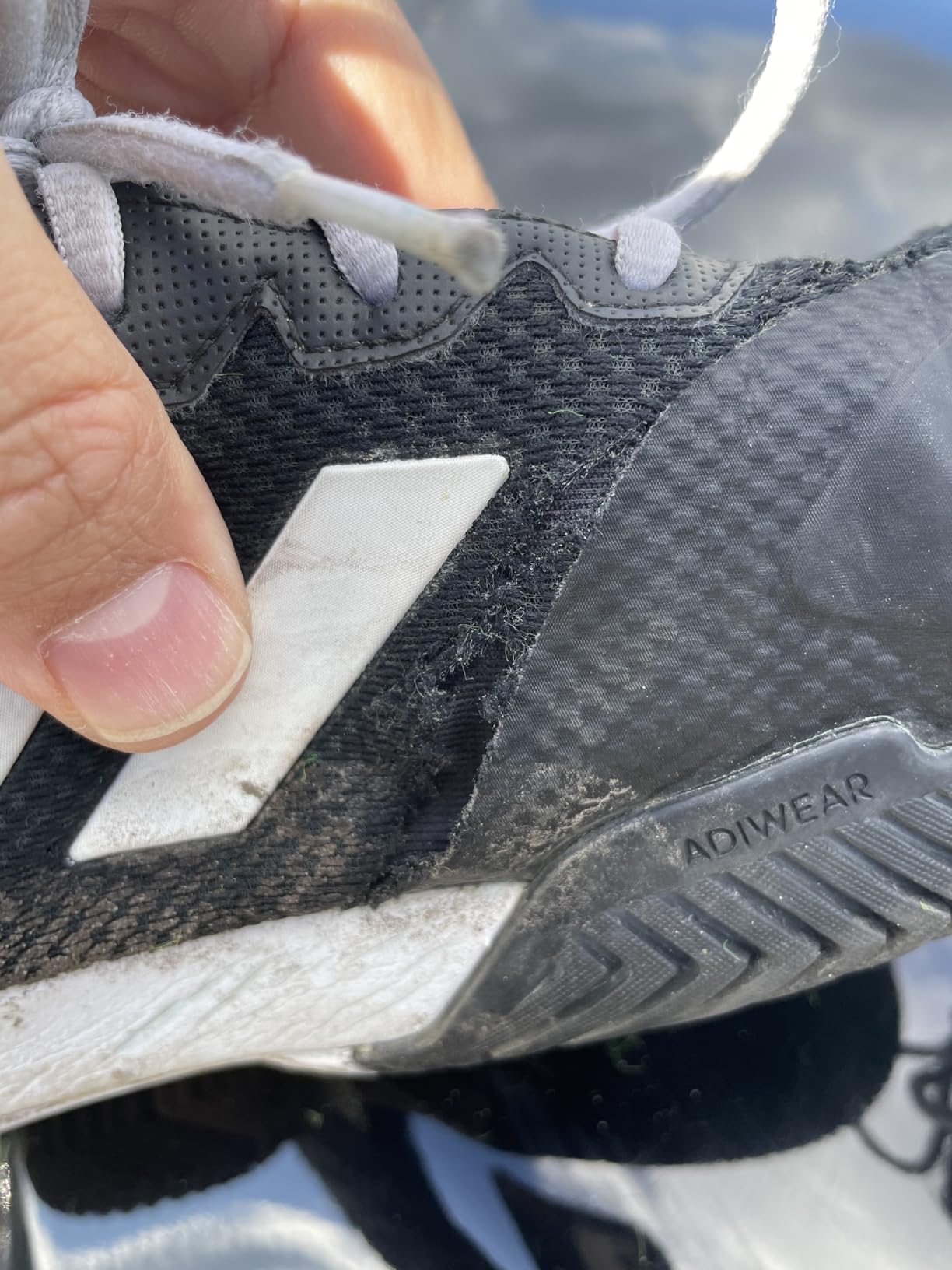
The outsole gets a strong pass. After 36+ hours across hard and clay courts, the Adiwear compound shows minimal tread wear — impressive for a $55 shoe. The pattern still grips cleanly.
The upper is a different conversation. In my 6-week window, I saw no fraying, no stress points, no delamination. The synthetic construction held together without incident. But some players have reported upper material issues emerging at 6–8 months of regular play. I can’t confirm or deny that in 6 weeks, but I can say the 5–6 month mark seems to be where this shoe reveals its budget DNA.
**Cost-per-wear math:**
- At 12 months casual use (2x/week): ~$4.58/month
- At 9 months moderate use (3x/week): ~$6.11/month
- At 6 months heavy use (4-5x/week): ~$9.17/month
- Comparison: $120 shoes at 12 months = $10/month
Even at the pessimistic 6-month lifespan, you’re still spending less per month than my previous shoes. At 9-12 months — which is realistic for recreational players — the value gap is significant.
Pickleball Performance
The Gamecourt M works for pickleball. Several players in my circle have swapped to these from dedicated pickleball shoes, and the lateral stability translates well. The quick direction changes, kitchen line approaches, and defensive scrambles all benefit from the same wide-base geometry that serves tennis players.
The 90-minute comfort ceiling actually suits pickleball better — matches typically run shorter, and the foot fatigue threshold never gets tested. If you’re playing pickleball 2-3x/week and want a reliable option under $60, this competes reasonably with entry-level pickleball shoes like the Skechers Viper Court Smash.
Who Should Buy, Who Should Skip
Buy This Shoe If:
- You play recreational or intermediate tennis 2-4x/week
- Your matches run 60-90 minutes (league, casual, doubles)
- You have standard to narrow feet (and will size up)
- You want pickleball-capable lateral support under $60
- You’re transitioning from running shoes to proper court shoes
- The value math ($55 vs $120) matters to you
- Youth players who need frequent replacement due to growth
Skip This Shoe If:
- You have wide feet (the toe box won’t cooperate)
- You play 5+ times per week competitively
- You need 3+ hour session comfort without fatigue
- Maximum breathability is a priority in hot climates
- You play primarily on clay (look at clay-specific options)
- You want to avoid any break-in period (3-4 sessions required)
Better Options for Specific Needs
For wide feet: The K-Swiss Bigshot offers a roomier toe box with comparable court performance. The Head Grid 2.0 Court is another option with wider fit accommodation.
For extended comfort: The ASICS Court FlyteForm 2 uses FlyteFoam technology for better cushioning retention over long sessions.
For maximum court performance: Step up to the K-Swiss Ultrashot 3 or Adidas Defiant Speed if you’re competing at a higher level and need every performance edge.
For dedicated clay: Specialized clay variants with herringbone clay patterns are a better fit for regular clay court players.
What Other Players Say
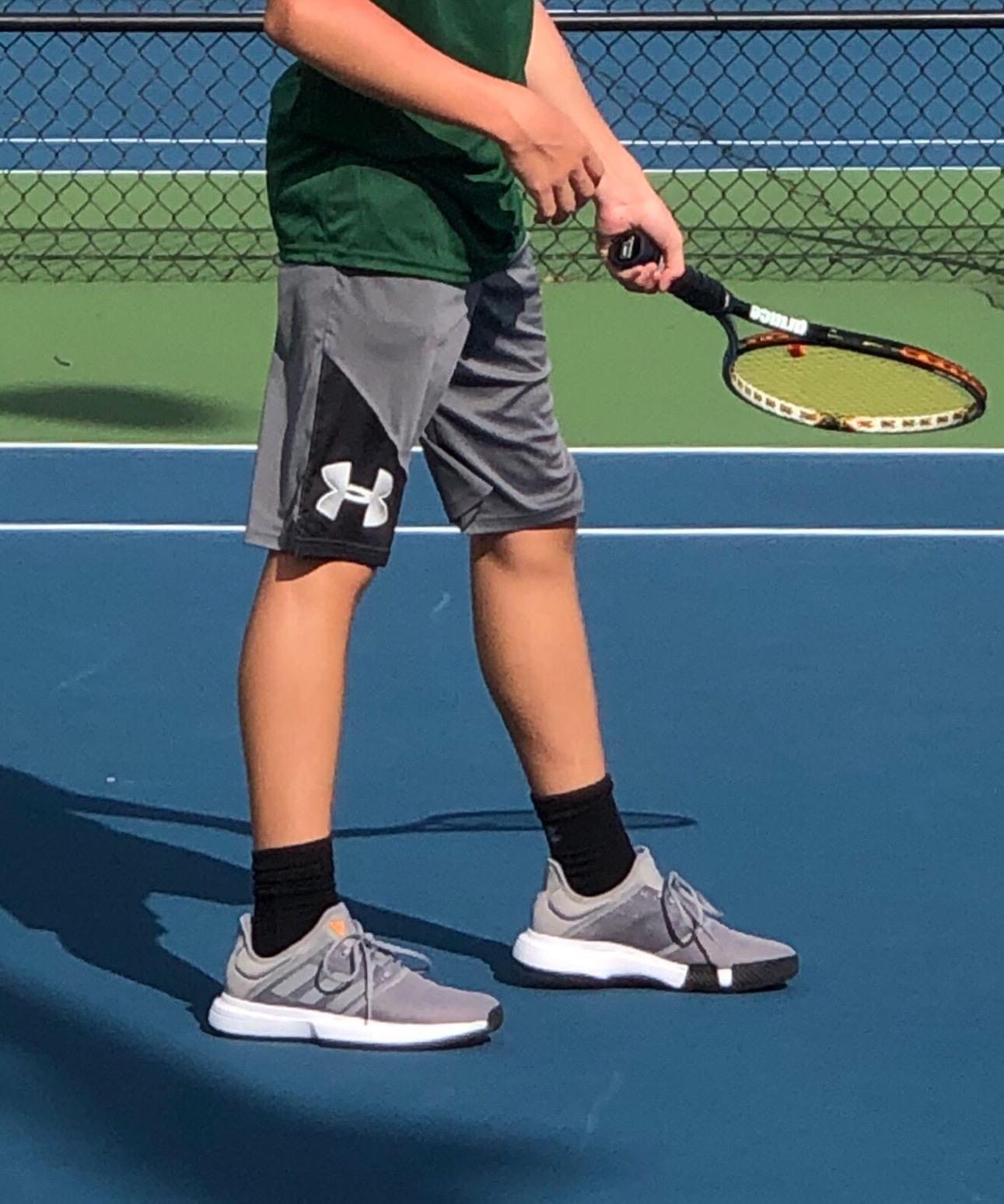
The consistent feedback from recreational players mirrors my experience: solid traction and lateral support punch above the price point. Pickleball players are particularly enthusiastic — the court-specific design translates directly. The common complaints align exactly with what I found: sizing runs small and the toe box excludes wide-foot players.
Players who play 4-5x/week report shorter lifespans than recreational users, which tracks with my wear assessment. At intensive frequency, budget materials get tested harder. At 2-3x/week, most players report getting a full season or more.
Frequently Asked Questions
Do these run true to size?
No. Size up 0.5 from your usual Adidas fit. If you’re between sizes or lean toward wider feet, go a full size up. Don’t order your normal size and hope for the best — I tried that and had to exchange. The toe box is also narrow, so even sizing up won’t help wide-foot players. Buy from a retailer with easy returns so you can swap if needed.
How do these compare to premium tennis shoes?
For recreational play, the Gamecourt M delivers roughly 80% of what a $120 court shoe provides at less than half the price. The real compromises are in comfort details (EVA vs. premium foam, basic breathability) and long-term durability. Core court performance — traction, stability, lockdown — is genuinely competitive. At $55, you’re not getting a pro-level shoe, but you’re not buying junk either.
Are these good for pickleball?
Yes. The lateral stability and court-specific traction translate well to pickleball’s movement patterns. The comfort ceiling (90 minutes) actually suits pickleball better than extended tennis since matches run shorter. If you’re splitting time between tennis and pickleball, this shoe handles both without compromise.
How long do they typically last?
The outsole durability is strong — I’d estimate 9-12 months at recreational frequency (2-3x/week). The upper is the variable: solid for the first 5-6 months based on my testing, with some players reporting issues at 6-8 months of intensive play. At $55, one full season of reliable use is a reasonable expectation. Two seasons if you rotate pairs.
Is there a break-in period?
Yes, and it’s real. The synthetic upper feels stiff for the first 3-4 sessions. Don’t judge these shoes on your first wear — they need time to soften. By session 4 or 5, the collar and heel padding have settled and the shoe feels natural. Plan for this rather than being surprised by it.
Can I use these for other sports?
They work well for pickleball and other court sports (badminton, squash). The lateral-movement design isn’t suited for running — the wide base and court-specific traction resist forward propulsion. For multi-sport use, you’d want something more versatile. These are purpose-built court shoes.
What about wide-width versions?
Select colorways come in wide sizes, but availability is limited. Even the standard-width versions already run narrow in the toe box, so wide-width options may help with overall volume but don’t fully resolve the toe box geometry issue. Wide-foot players should look at brands specifically known for wide last construction.
What’s the value proposition versus stepping up to Gamecourt 2?
Here’s something most reviews get backward: the original Gamecourt M actually uses Cloudfoam midsole, while the Gamecourt 2 (at ~$69.95) switched to plain EVA. The M is the better cushioning story of the two. The Gamecourt 2 made other changes — updated colorways, slightly different upper construction — but the midsole is actually a downgrade from the original. If cushioning is your priority, the original M is the better pick at $55 less.
Final Verdict
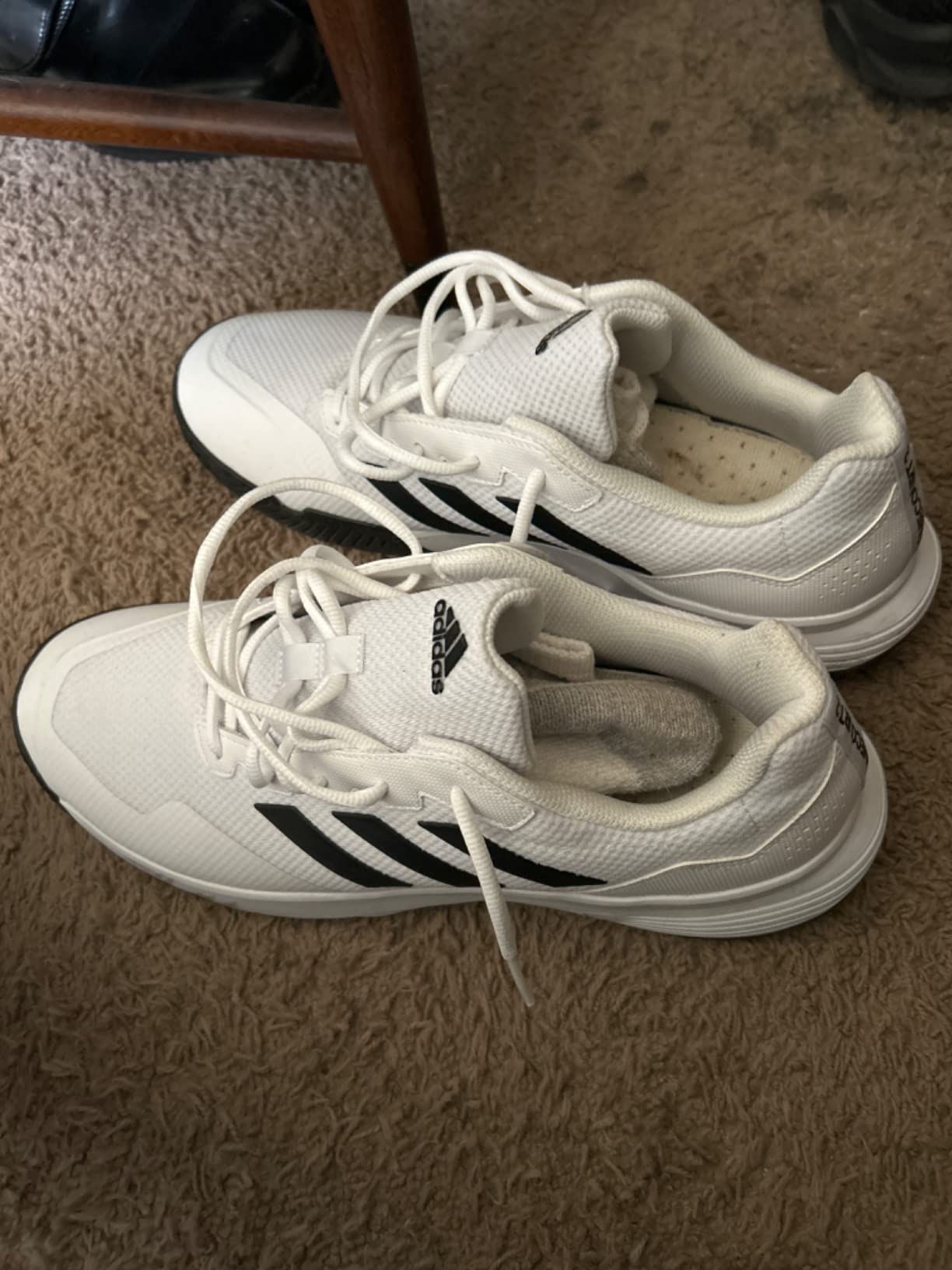
Six weeks. 24 court sessions. 36+ hours of hard court, outdoor hard court, and clay. Here’s the final answer.
The Adidas Men’s Gamecourt M earns a **7.4/10** — not because it’s a perfect budget shoe, but because it delivers what it promises where it matters most. Traction is 8.5 for a reason: this shoe grips courts the way a court shoe should. Lateral stability at 8.0 surprised me most — the wide base handles aggressive cutting and sliding without the ankle hesitation you get from lesser shoes. The Adiwear outsole held up through everything I threw at it.
The compromises are real and worth knowing: sizing that requires research and possibly a return (6.0 for a reason), breathability that’s adequate but not impressive (6.5), and a comfort ceiling that shows up at 90 minutes (7.0). These are the costs of the $55 price point. None are dealbreakers for recreational players who plan their sessions around these limits.
The 9.0 for value is what pulls this recommendation together. $55 versus the $120+ I was spending before — for comparable traction, similar durability, and the same lateral support that actually matters in league play — that math doesn’t work against the Gamecourt M. It works for it.
Jake was right. I’m still not going to admit that to his face.
Bottom line: Size up, allow for break-in, and the Adidas Gamecourt M delivers genuine recreational court performance without the premium price tag. If you fit the profile — standard feet, moderate frequency, budget-conscious — this is worth the $55 experiment.
Review Score Summary
| Performance Category | Score (1-10) | Notes |
|---|---|---|
| Court Traction | 8.5/10 | Adiwear delivers on hard courts and clay — zero slip incidents in 24 sessions |
| Lateral Stability | 8.0/10 | Wide base and solid sidewalls keep feet planted during aggressive cuts |
| Comfort | 7.0/10 | EVA midsole performs well through 90 minutes; fatigue sets in after that |
| Durability | 7.5/10 | Outsole held up impressively; upper durability is the 6-month question mark |
| Fit/Sizing | 6.0/10 | Runs half to full size small; narrow toe box excludes wide-foot players |
| Breathability | 6.5/10 | Adequate for indoor play; noticeably warm on outdoor courts above 80°F |
| Value for Money | 9.0/10 | $55 versus $120+ competitors — hard to argue against for recreational players |
| OVERALL SCORE | 7.4/10 | Recommended for recreational players — size up, allow break-in |
Be the first to review “adidas Men’s Gamecourt 2 Tennis Shoes”
Related products
Tennis/Squash Shoes
Tennis/Squash Shoes


Tennis/Squash Shoes
Tennis/Squash Shoes
Tennis/Squash Shoes
Tennis/Squash Shoes
Hiking/Trekking Shoes
Running Shoes
Reviews
There are no reviews yet.