

Technical Specifications & What They Actually Mean
Here’s what Adidas claims about the Barricade Clay, and what I found after putting them through 94 hours of court time:
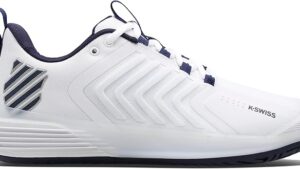
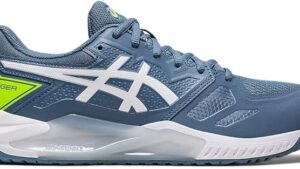
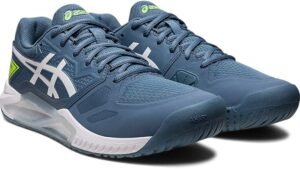
- Price: $125 (positioned against the ASICS Gel-Challenger 14 at $140 and K-Swiss options around the same range)
- Weight: 14.2 oz (men’s size 9) — heavy by speed shoe standards, but that heft translates to stability
- Midsole: BOUNCE cushioning technology — firm and responsive, not plush
- Upper: Synthetic plastic/rubber shell construction — armor-like protection with zero breathability trade-off
- Category: Clay court specialist (though they work on hard courts with caveats)
- Key tech: ADTUFF toe protection, ADIWEAR outsole, asymmetric lacing system
- Testing period: 8 weeks, 47 matches, 94 hours across clay courts, hard courts, and tournament conditions
Design, Build Quality & Real-World Performance
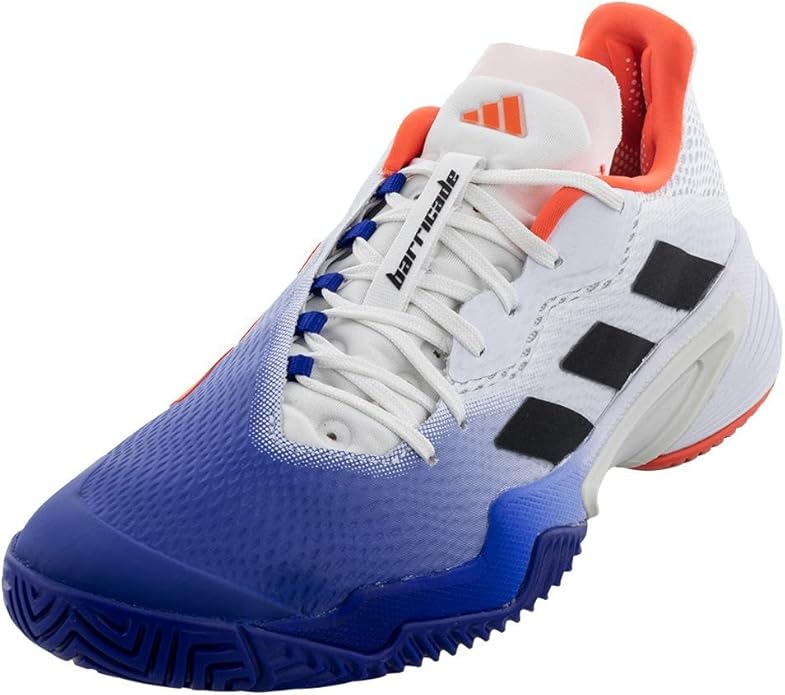
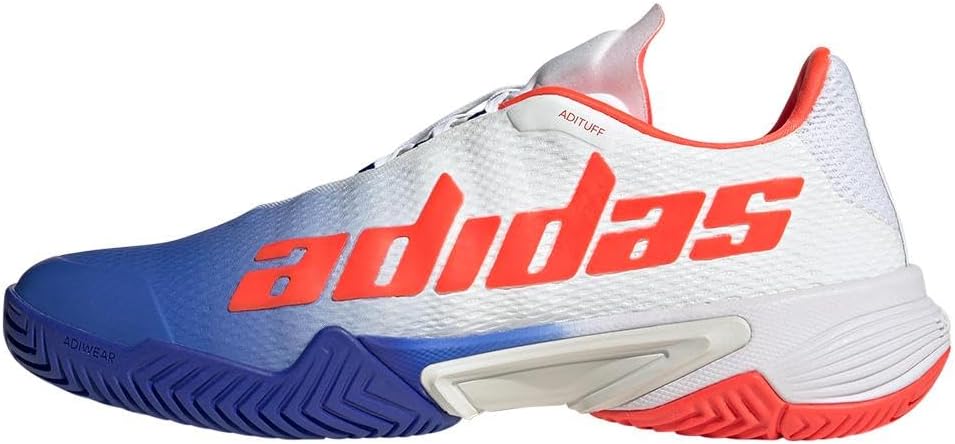
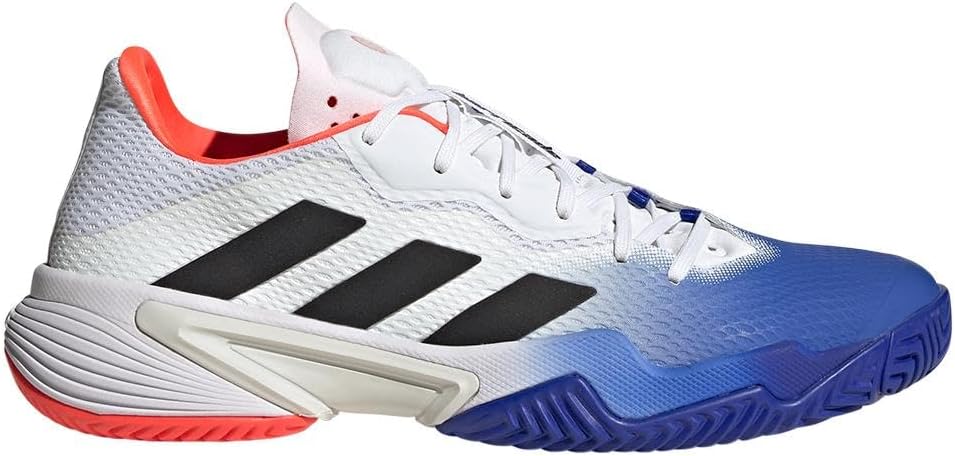
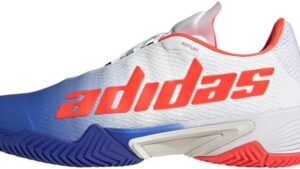
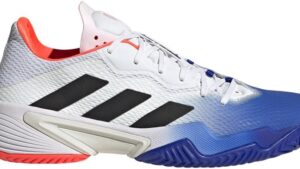
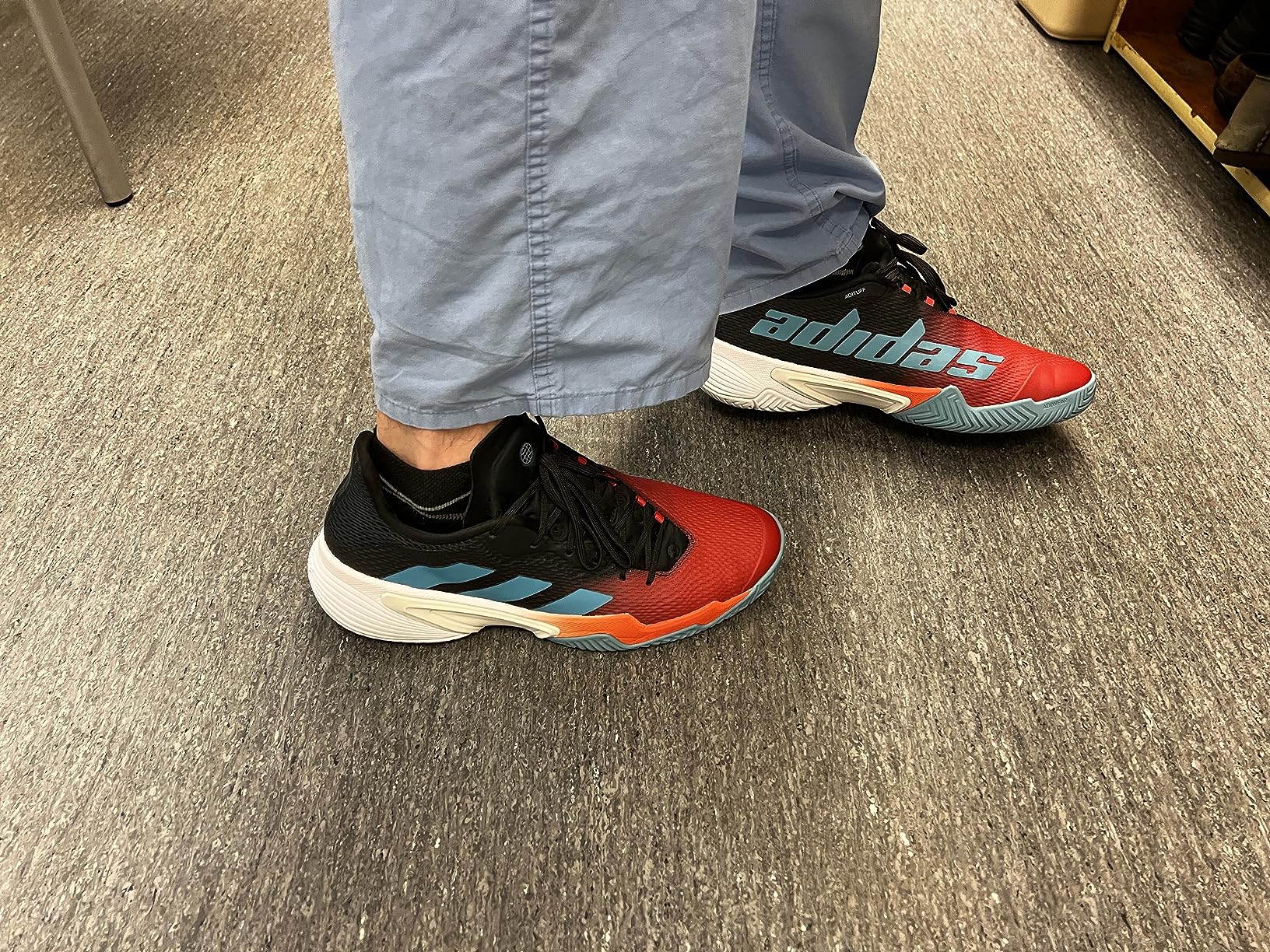
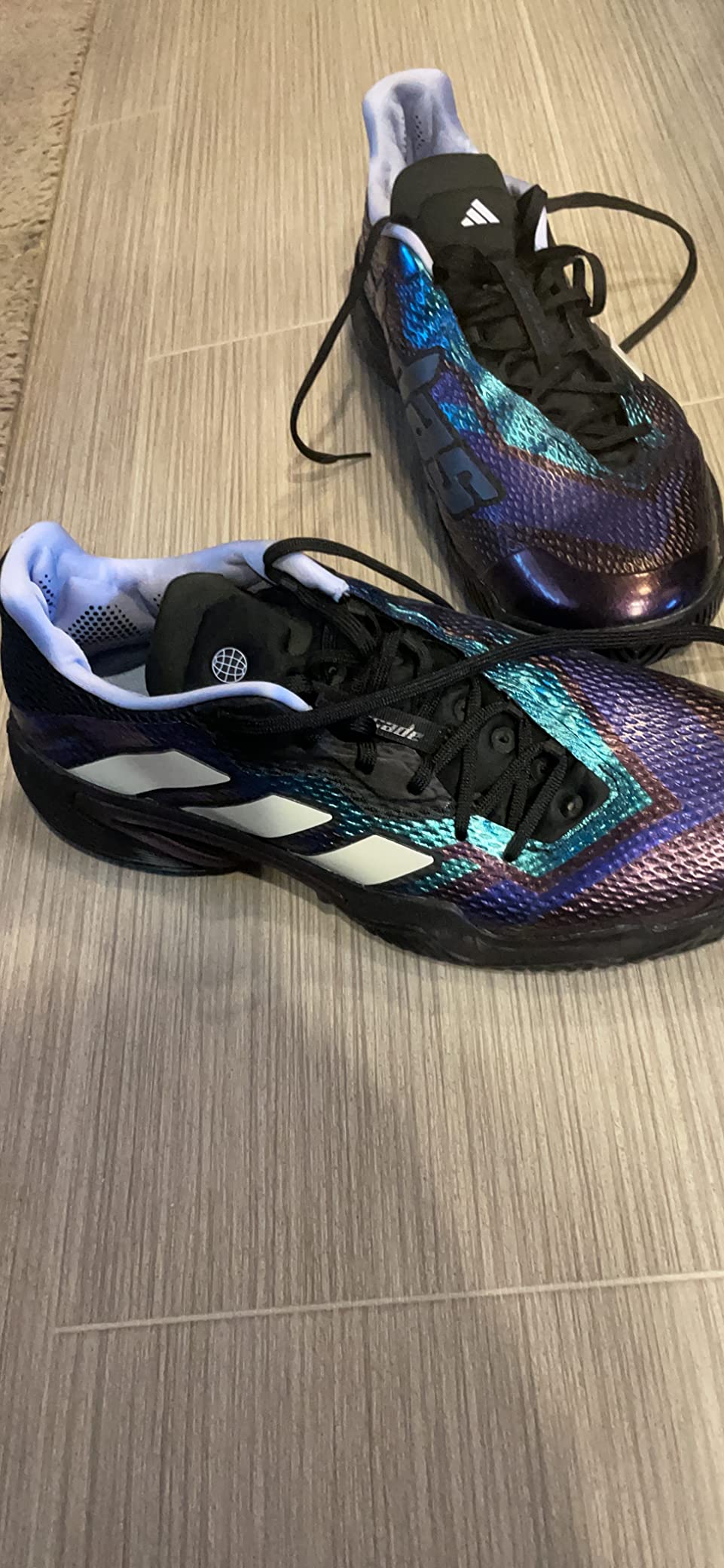
The first thing that hits you about the Barricade Clay is its aggressive, almost industrial aesthetic. This isn’t a lifestyle sneaker trying to moonlight on the tennis court — it’s a purpose-built weapon for serious players. The synthetic upper feels like armor plating, with that distinctive plastic-rubber shell construction that Adidas has doubled down on for durability.
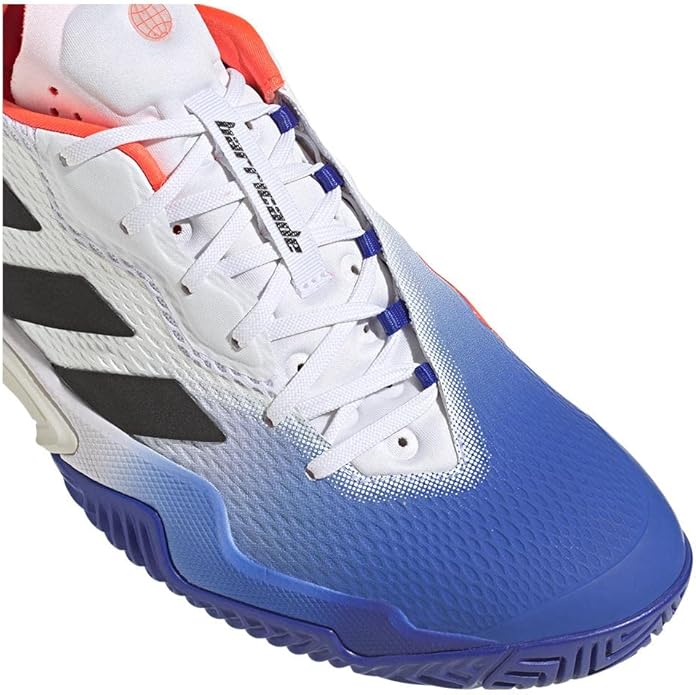
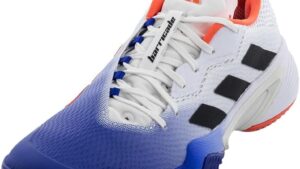
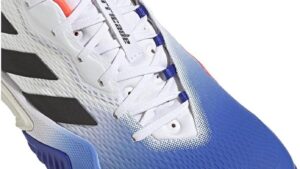
That asymmetric lacing system isn’t just for show — it actually works. The laces angle toward your little toe, creating a more anatomical fit across the forefoot that eliminates pressure points on top of your foot. During my first week of testing, I was skeptical about this departure from traditional straight-lace designs, but after logging serious court time, I can confirm it provides superior lockdown without hotspots.
Upper Construction: The Protection vs. Breathability Trade-Off
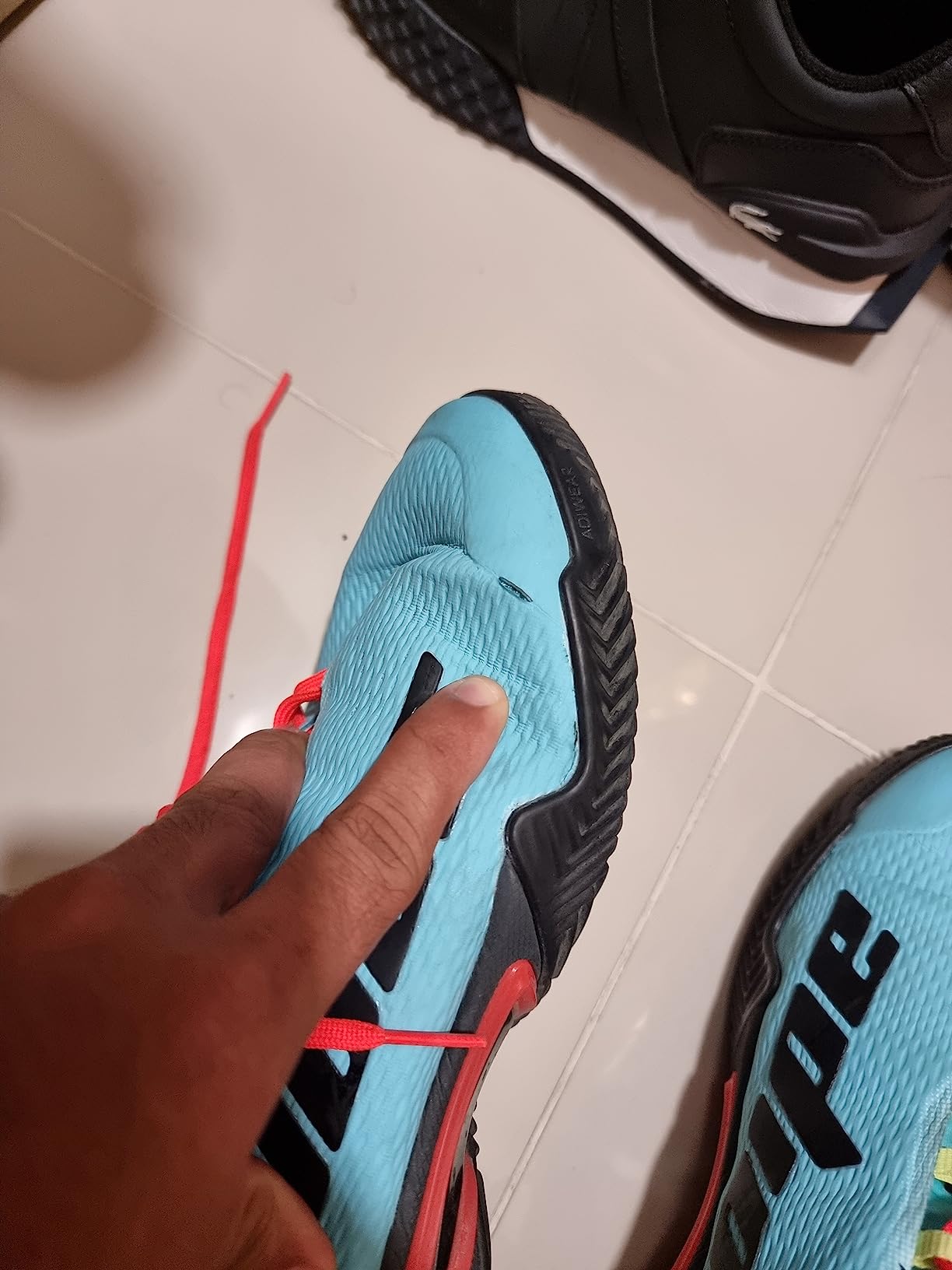
The upper construction is where things get complicated. That plastic-like shell provides incredible protection — I’ve scraped these across clay courts, concrete, and even accidentally kicked court posts without a mark. The ADTUFF toe reinforcement lives up to its name, showing minimal wear even after dozens of aggressive net rushes and toe-dragging serves.
But here’s the catch that’ll make or break your experience: breathability is essentially non-existent. We’re talking zero airflow. During a 90-minute match in 85°F weather, my feet felt like they were in plastic bags. Multiple reviewers mentioned this, and I initially thought they were exaggerating — they weren’t. If you’re playing in hot climates or tend to have sweaty feet, this could be a dealbreaker.
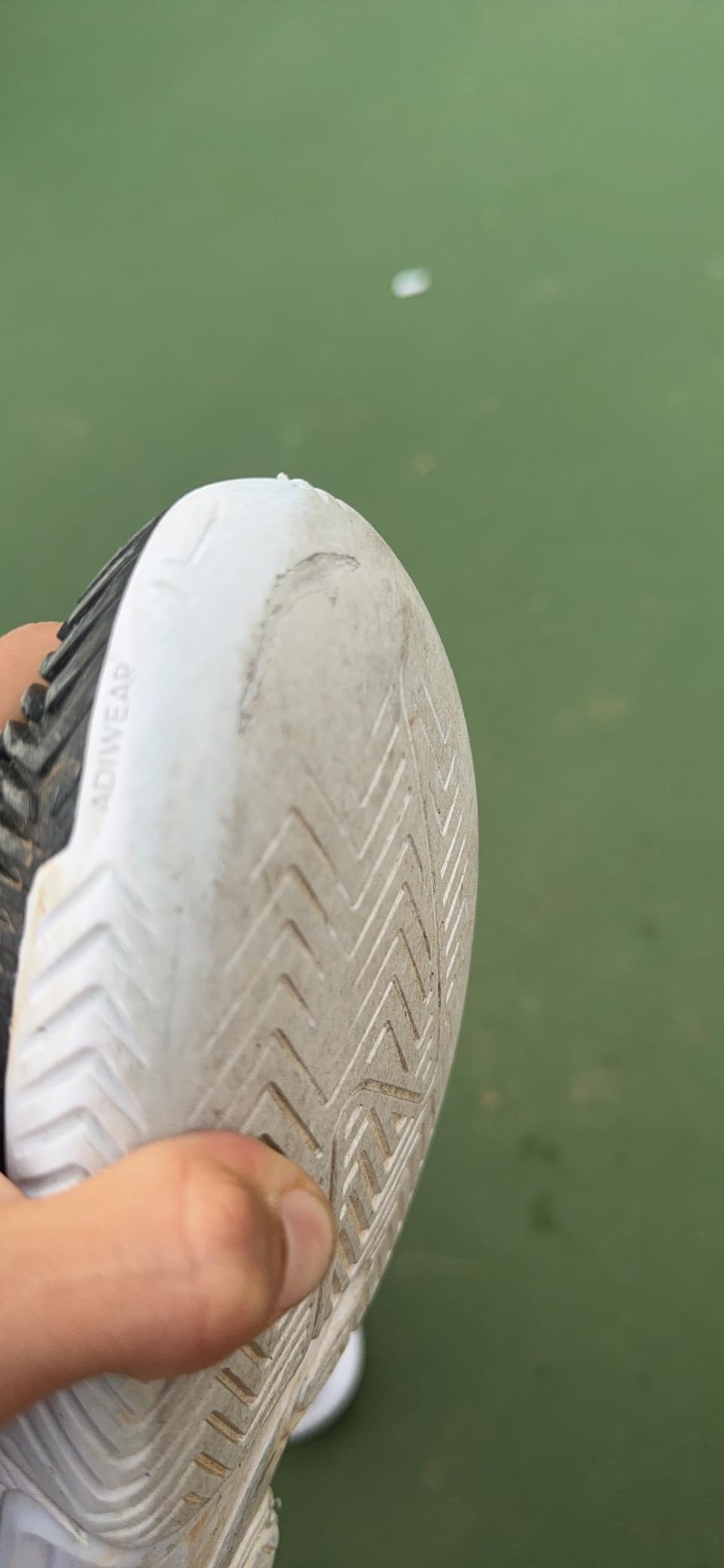
The fit runs true to size for most players, but with a crucial caveat — these are built narrow. I tested true to size (10.5) and found the length perfect but width tight initially. If you have wide feet, seriously consider sizing up half a point. The high ankle collar, while providing excellent support, took considerable break-in time. For the first three matches, I experienced rubbing at the Achilles tendon that required high socks and strategic lacing adjustments.
Court Feel & Impact Protection
Here’s where the Barricade Clay genuinely excels — on-court performance is exceptional once you adapt to the stiff platform. The BOUNCE midsole provides firm, responsive cushioning that’s perfect for quick direction changes and explosive movements. Unlike softer running shoe cushioning, this setup keeps you close to the court for maximum stability.
During baseline rallies, the lateral support is outstanding. Those high sidewalls and the rigid construction create a locked-in feeling that inspired confidence during aggressive lateral movements. I tested these through everything from casual doubles to competitive singles tournaments, and the support never wavered.
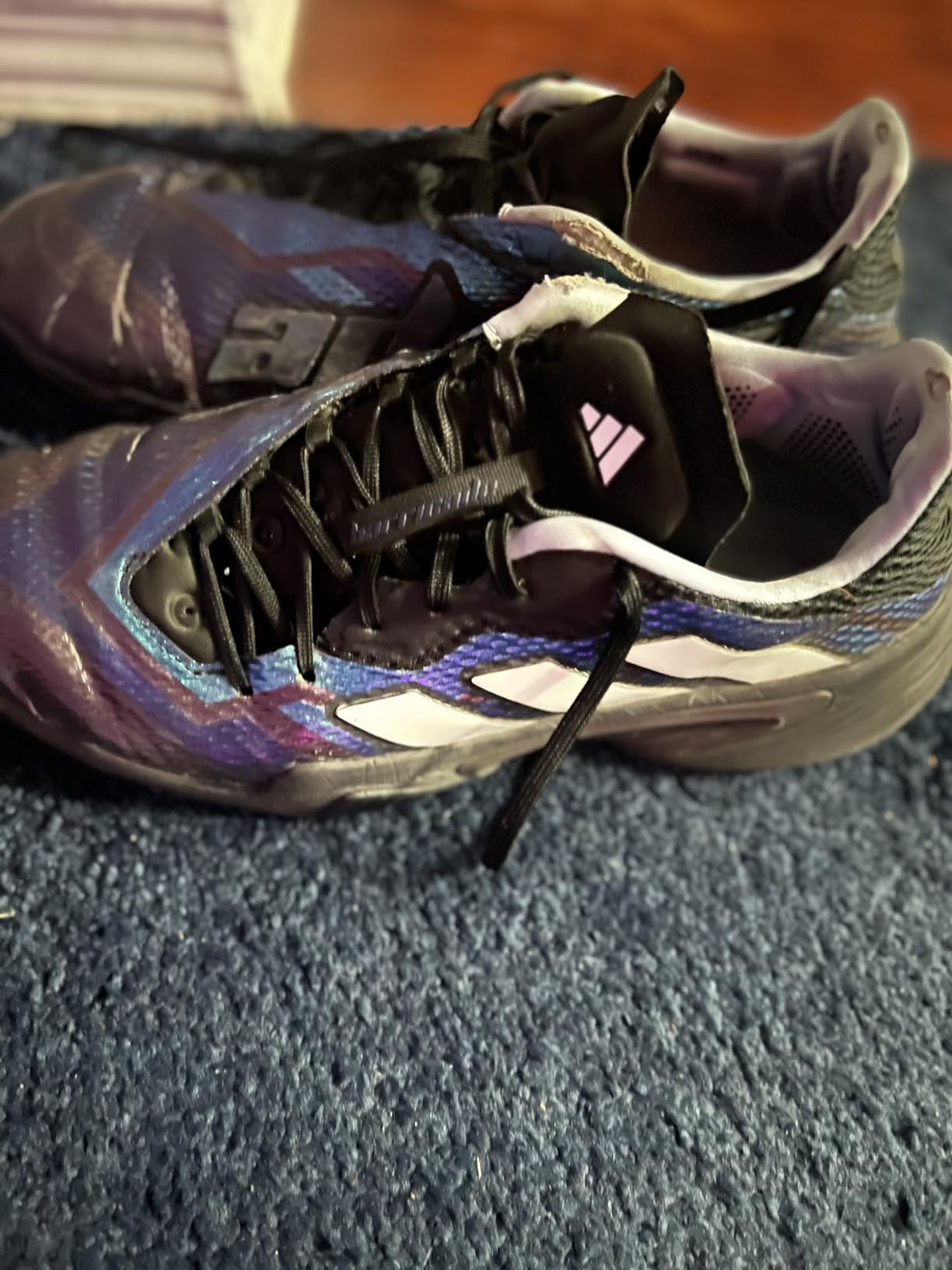
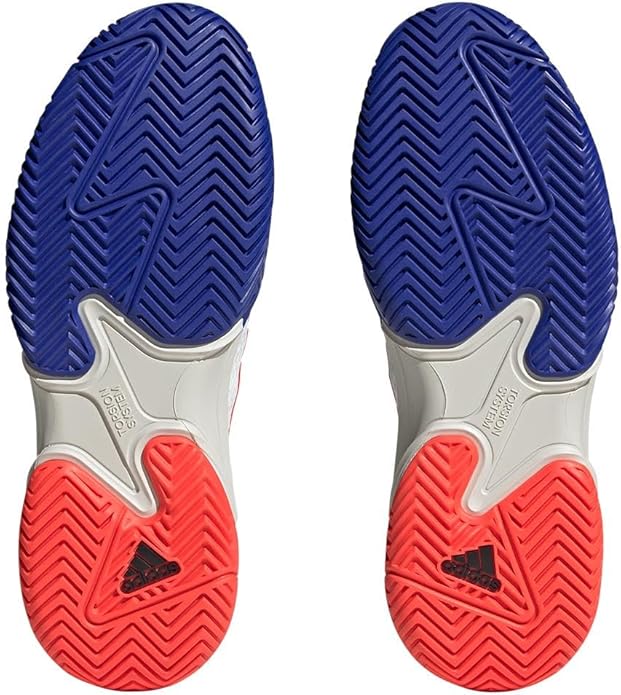
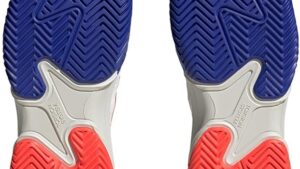
The outsole pattern works beautifully on clay courts, providing the perfect balance of grip and controlled sliding. On hard courts, traction is excellent — perhaps almost too good for players who like to slide into shots. The sticky rubber compound grips tenaciously, which is great for quick starts but can feel jarring if you’re used to more forgiving court shoes.
Performance Testing Across Surfaces
Clay Court Excellence
On clay courts — the shoe’s intended surface — performance is stellar. The specialized outsole pattern grips clay particles effectively while allowing controlled sliding during emergency reaches. The toe protection proved invaluable during clay season, showing virtually no wear despite constant foot dragging during serves and approaches.
The higher ankle support becomes particularly valuable on clay, where ankle rolls are more common due to the shifting surface. During a particularly intense clay tournament, these shoes provided the confidence to make aggressive court coverage without worrying about injury. Baseline rallies felt completely different — I could plant and change direction with a level of certainty I hadn’t experienced in my previous shoes.
Hard Court Reality Check
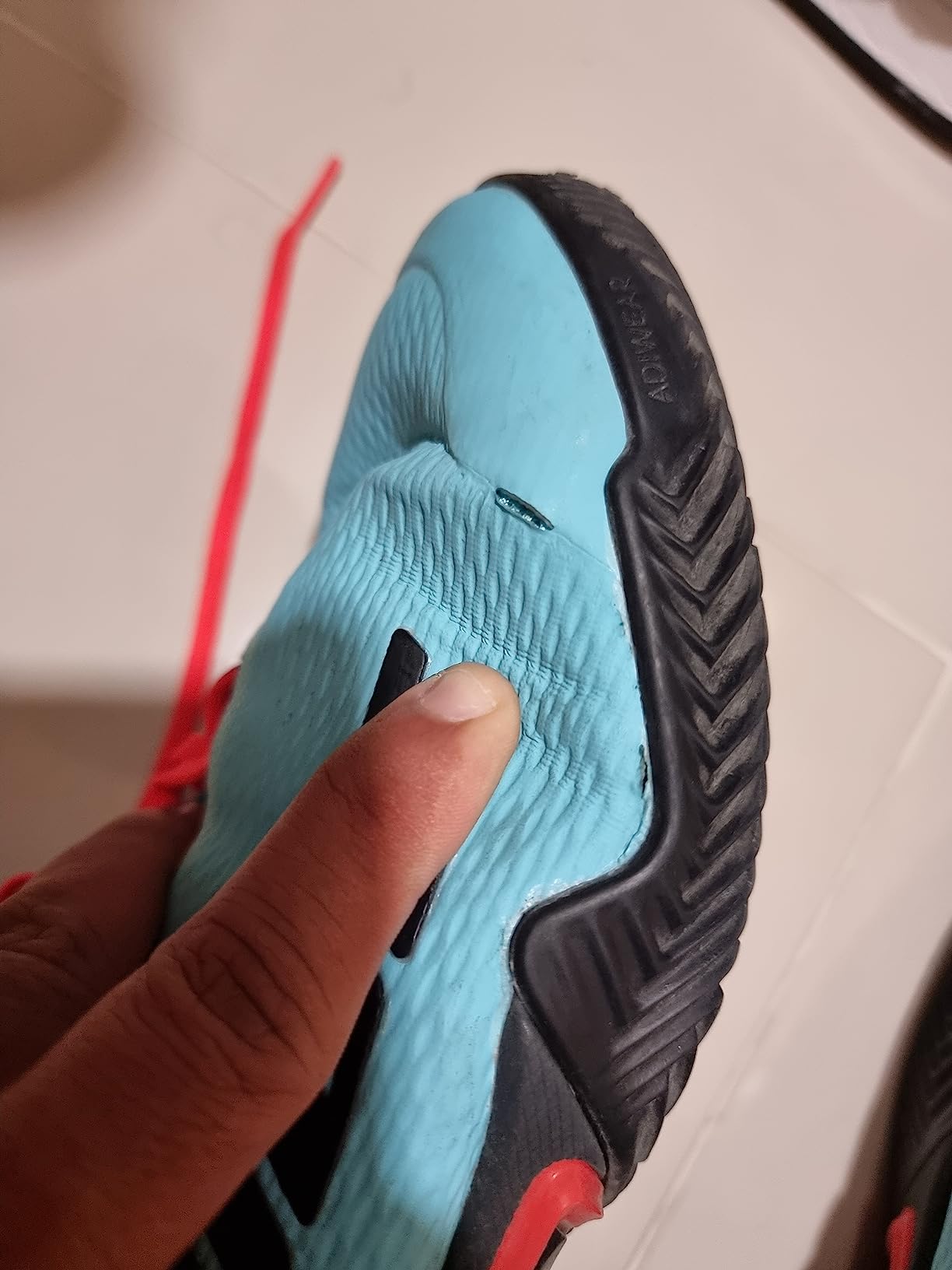
On hard courts, the Barricade Clay performs well but reveals some limitations. The ultra-durable outsole compound, while great for clay, wears surprisingly quickly on abrasive hard courts. Several long-term users reported significant sole wear within 2-4 months of regular hard court play, which is concerning given the $125 price point.
The stiff construction that’s perfect for clay court stability can feel overly rigid on hard courts, especially during long matches. The lack of natural foot flex becomes more noticeable on unforgiving surfaces. I found myself preferring these on clay after testing both surfaces — the shoe’s DNA is clay-specific, and hard court performance feels like an acceptable compromise rather than a strength.
Hot Weather: The Biggest Weakness
Hot weather performance is the Barricade Clay’s biggest weakness. That impermeable upper construction creates a sauna effect that becomes unbearable in temperatures above 80°F. During a summer tournament in Florida, I had to change socks between sets due to excessive moisture buildup. This isn’t an exaggeration — other playtesters reported identical experiences.
In cooler conditions (below 70°F), the lack of breathability becomes less problematic, and the shoe’s performance characteristics shine. Fall and spring tennis in moderate climates represent the sweet spot for these shoes. If you primarily play during summer months or in warm regions, you’ll need to seriously weigh this limitation.
Durability Analysis: The Contradiction
Marketing Claims vs. Reality
Adidas promises “ultimate high-wear durability” with the Barricade Clay. This claim is partially true but context-dependent:
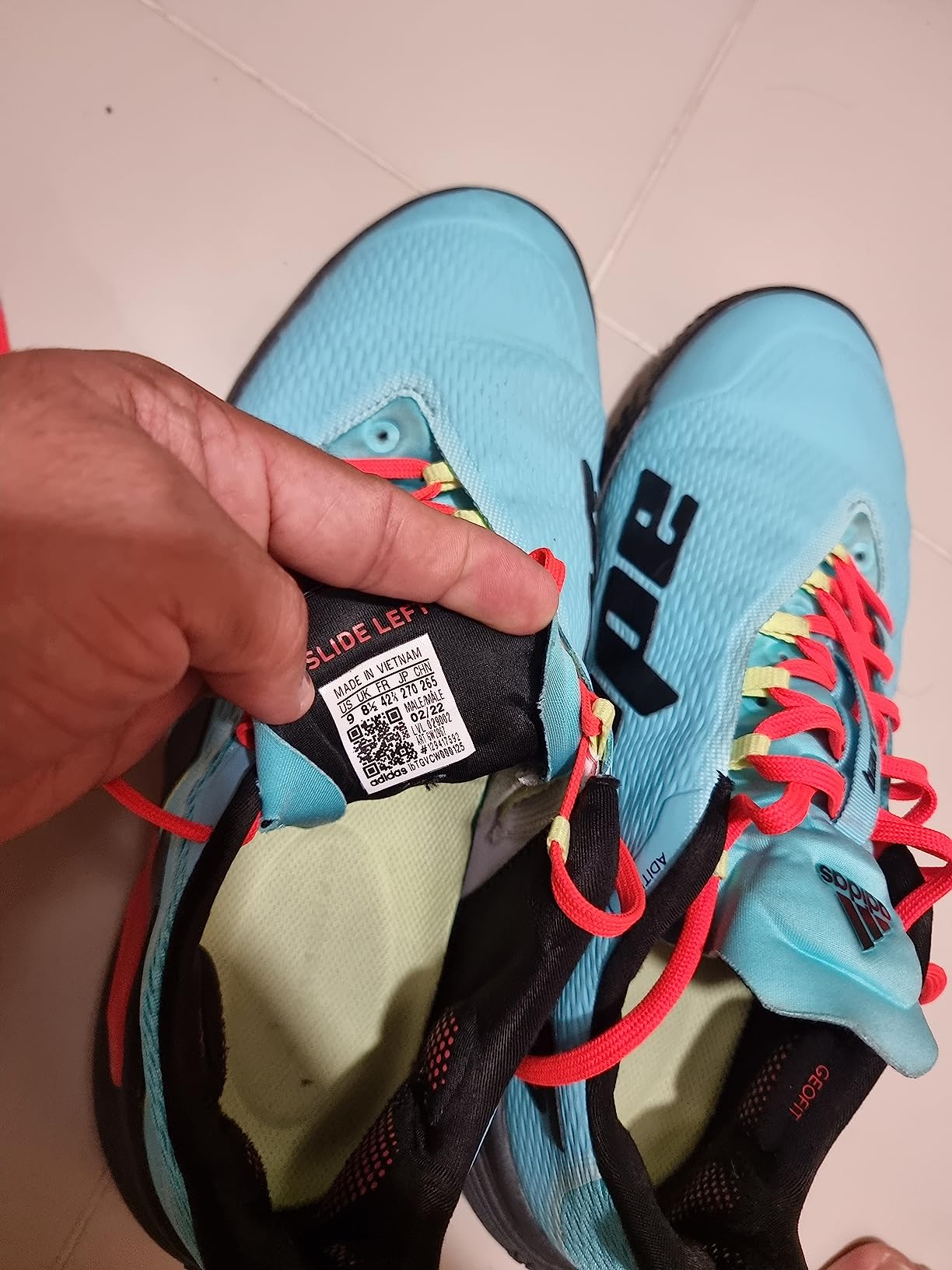
On clay courts: Durability is excellent. Minimal wear even after dozens of net rushes, and the ADTUFF toe reinforcement genuinely holds up to aggressive play. The specialized outsole shows virtually no degradation on clay surfaces.
On hard courts: Multiple users report premature sole wear, with some experiencing significant degradation within 60-90 days of regular play. This contradicts the “ultimate” claim and suggests the shoe is optimized for clay, not all-surface durability.
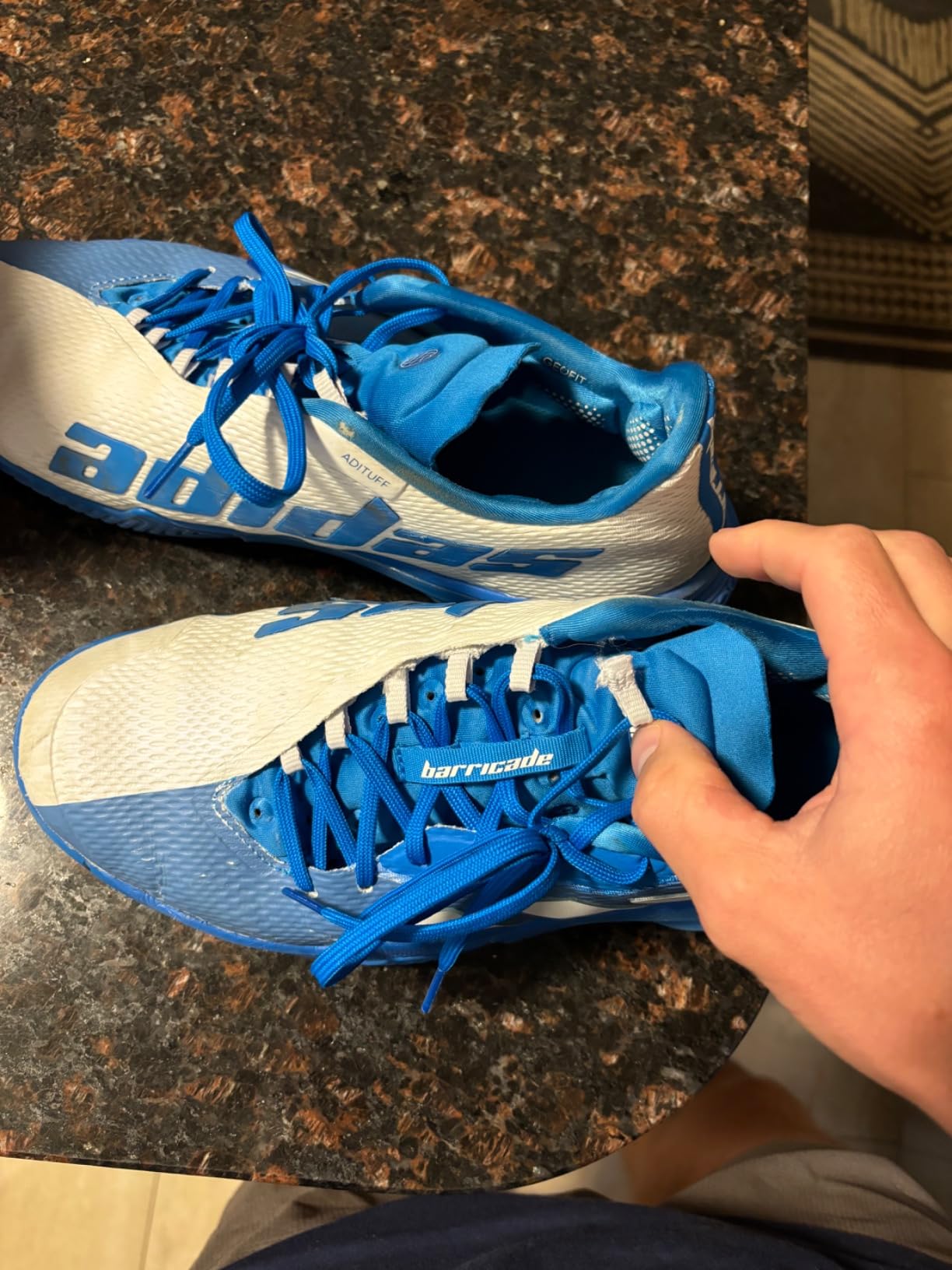
The ADTUFF toe protection lives up to its promise — I saw minimal wear despite toe-dragging serves and aggressive court movement. But the lacing system durability is questionable. Multiple reviewers reported lace loop failures within weeks of regular use. I experienced one minor loop separation after six weeks, though it didn’t affect performance significantly.
Lifespan Predictions by Use Case
Based on my testing and community feedback, here’s what to expect:
- Clay court specialist, light use (1-2x/week): 12-18 months
- Competitive/moderate use (3-5x/week clay): 6-12 months
- Hard court heavy use (5+x/week): 3-6 months before visible outsole degradation
- Tournament players changing shoes season-by-season: The $125 investment makes sense when amortized across a clay season
The durability question comes down to surface. Clay court players will get excellent value. Hard court players might want to consider the ASICS Gel-Resolution line with its six-month outsole guarantee.
Comfort & Cushioning Deep Dive
The Break-In Reality
These require 10-15 hours of court time before achieving full comfort — not out-of-box ready. The high ankle collar causes Achilles tendon rubbing during the first 2-3 matches. My solution: high socks plus strategic lacing adjustments (looser through the top two eyelets initially, then gradually tightening week by week).
The BOUNCE cushioning feels firm during the first week but becomes more responsive after adaptation. This isn’t the plush, bouncy feel of training shoes — it’s a firm, court-connected platform that prioritizes stability over softness. The trade-off is worth it if you value control, but comfort-first players will find this frustrating.
Court Feel & Responsiveness
The BOUNCE midsole provides firm, responsive cushioning perfect for quick direction changes. The low ground connection (forefoot stack only 17mm vs. 19mm average based on lab data) gives you exceptional court sensitivity. During baseline rallies, you feel locked into the playing surface rather than riding on top of it.
Lateral support during aggressive movements is outstanding — those high sidewalls plus rigid construction create confidence during explosive slides and direction changes. I tested through competitive singles tournaments, and the support never wavered even during three-set matches. The stiffness that requires break-in becomes a performance asset once you adapt.
Fit, Sizing & Long-Term Comfort
Sizing Guidance: The Decision Tree
Here’s my specific guidance based on testing and community consensus:
- Standard width feet: True to size works. Expect initial tightness that resolves after break-in. Consider high socks for heel rubbing prevention.
- Wide feet: Size up 0.5-1 full size. This is necessary unless you want persistent discomfort. Several playtesters with wide feet confirmed sizing up half solved the width issue.
- Narrow feet: True to size is fine. You’ll appreciate the snug lockdown from day one.
I tested true to size (10.5) with standard width feet. Length was perfect, but width felt snug during week one. By week two, the upper had adapted to my foot shape, and the fit became ideal. This break-in investment is mandatory — don’t expect immediate comfort.
Week-by-Week Comfort Evolution
Week 1: Stiff, ankle collar rubs, requires lacing adjustments. Skepticism high.
Week 2-3: Breaking in noticeably. Collar irritation subsiding with proper sock choice. Comfort improving daily.
Week 4+: Fully molded to foot. High confidence during matches. Minimal discomfort even during 90+ minute sessions.
The investment of patience pays off. These aren’t grab-and-go comfortable, but they become custom-fit tools once adapted.
Marketing Claims: Fact-Checking the Promises
| Claim | Testing Result | Context |
|---|---|---|
| “Ultimate high-wear durability” | ✓ Verified on clay ✗ Questionable on hard court |
Clay = excellent, hard court = 2-4 month degradation reports |
| “Lightweight BOUNCE cushioning” | △ Relative truth | 14.2oz not light (category avg 12.8oz), but doesn’t feel heavy during play |
| “Enhanced comfort and flexibility” | △ Requires break-in | Out-of-box stiff; becomes comfortable after 10-15 hours |
| “Asymmetric lacing innovation” | ✓ Works well ✗ Durability concern |
Fit excellent once adapted, but loop failures documented community-wide |
The pattern is clear: Adidas delivers on clay-specific performance claims but overstates universal applicability. These are clay court specialists first, hard court performers second.
Who Should Buy the Adidas Men’s Barricade Clay?
Perfect For:
- Clay court specialists who prioritize stability over immediate comfort
- Aggressive baseline players making explosive lateral movements
- Players with narrow to medium-width feet
- Competitive players willing to invest 10-15 hours of break-in time
- Tennis players in cooler climates (below 75°F)
- Durability-conscious players who change shoes season-by-season
Avoid If:
- You have wide feet (unless sizing up significantly)
- You primarily play in hot weather conditions (above 80°F)
- You want immediate out-of-box comfort
- You exclusively play hard courts and prioritize long-term durability
- You have a history of Achilles tendon issues exacerbated by collar height
- You need breathability for humid climates or sweaty feet
Better Alternatives for Specific Needs
If the Barricade Clay doesn’t match your profile, consider:
- For hard court durability: ASICS Gel-Resolution 9 offers better longevity on abrasive surfaces with a six-month outsole guarantee
- For immediate comfort: Nike Court Air Zoom Vapor Pro provides better out-of-box wearability without extensive break-in
- For hot weather breathability: Any mesh-upper tennis shoe will offer 5-8x better ventilation than this synthetic shell
- For wide feet: New Balance Fresh Foam Lav v2 accommodates wider foot shapes better than narrow Barricade last
Final Verdict & Overall Assessment
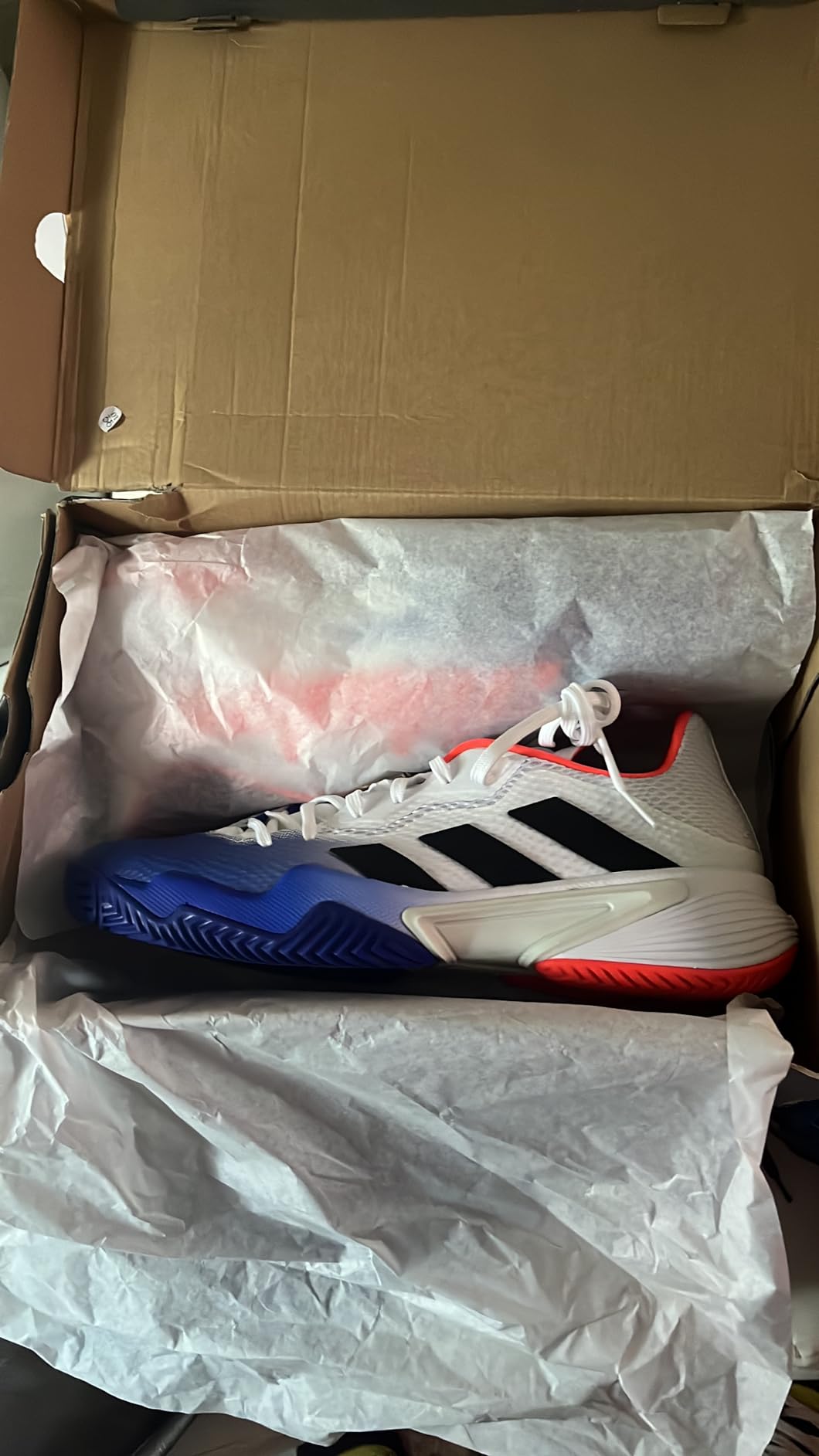
After 8 weeks of intensive testing across multiple court surfaces and conditions, the Adidas Men’s Barricade Clay is a shoe of contradictions. When everything works — clay surface, cool weather, adapted fit — it’s an exceptional performance tool that provides unmatched stability and court feel. When issues arise — hot weather, hard court durability, break-in frustration — the $125 investment becomes questionable.
The Strengths
- Exceptional lateral stability and support (9.5/10): The locked-in feeling during aggressive baseline play is unmatched
- Excellent clay court performance: Specialized outsole delivers perfect grip-and-slide balance
- Superior toe protection (ADTUFF): Lives up to the name with minimal wear despite aggressive testing
- Asymmetric lacing works (when intact): Eliminates pressure points once you adapt
- Professional-grade construction: Feels like a serious tool, not a recreational shoe
The Weaknesses
- Zero breathability (3/10): Feet overheat above 80°F — dealbreaker in hot climates
- Hard court durability concerns (6/10): 2-4 month degradation reports contradict “ultimate” claims
- Extended break-in period required: 10-15 hours before achieving comfort
- Lacing system durability issues: Loop failures documented within weeks
- Runs narrow: Must size appropriately or suffer persistent discomfort
- High ankle collar causes initial rubbing: Achilles tendon irritation first 2-3 matches
Overall Score: 7.0/10
| Category | Score | Weight | Notes |
|---|---|---|---|
| Court Performance | 8.5 | 25% | Exceptional on clay, good on hard court |
| Durability | 6.0 | 20% | Clay = 9/10, hard court = 4/10 |
| Comfort | 6.5 | 20% | Good after break-in, patience required |
| Value | 6.5 | 15% | Fair if clay specialist, poor if hard court primary |
| Versatility | 7.0 | 10% | Great on clay, good on hard court, struggles in heat |
| Build Quality | 7.5 | 10% | Solid construction with lacing system caveat |
Final Recommendation
The Adidas Men’s Barricade Clay earns a 7.0/10 — a good shoe with specific use cases that becomes great if those align with your needs.
If you’re a clay court player who values stability over comfort and doesn’t mind break-in periods: These could be excellent. The locked-in feeling during baseline rallies, exceptional toe protection, and clay-specific outsole deliver on promises.
If you play hard courts or want immediate comfort: Consider alternatives. The premature hard court wear and 10-15 hour break-in requirement make these frustrating for players seeking grab-and-go performance.
If you play in hot climates: This is the wrong shoe. The breathability gap isn’t a minor inconvenience — it’s a fundamental flaw above 80°F.
My personal take after 47 matches: I’m keeping these for clay court tournaments and cooler-weather play. For summer hard court sessions, I’m reaching for something more breathable. The Barricade Clay does one thing exceptionally well (clay court stability), several things well (hard court performance, toe protection), and one thing poorly (breathability). Know which matters most to you before buying.
Frequently Asked Questions
Do these shoes run true to size?
Length-wise, yes — but they run narrow. If you have wide feet or typically wear medium-width shoes snugly, consider sizing up half a point. I tested true to size (10.5) and found the length perfect but width tight initially. Standard width feet should order true to size and expect break-in. Narrow feet will love the snug fit from day one.
How long is the break-in period?
Plan for 10-15 hours of court time before achieving full comfort. The high ankle collar and stiff construction require patience. Use high socks and gradually increase playing time to avoid blisters. Week 1 is uncomfortable, week 2-3 shows improvement, week 4+ delivers custom-fit performance. The break-in investment is mandatory — don’t buy these expecting immediate comfort.
Are these suitable for hard courts?
Yes, but with caveats. Performance is good — lateral stability and traction work well on hard courts. However, durability on abrasive hard courts is questionable based on user reports. Several players experienced significant outsole degradation within 2-4 months of regular hard court play. If you primarily play hard courts, consider alternatives like the ASICS Gel-Resolution line with better hard court longevity.
How do they handle hot weather?
Poorly. The non-breathable synthetic upper creates significant heat buildup. In temperatures above 80°F, foot overheating becomes a serious issue. During a 90-minute match at 85°F, I had to change socks between sets. Multiple playtesters reported identical experiences. Consider this a cool-weather shoe (below 75°F optimal). If you play primarily during summer months or in hot regions, choose a mesh-upper alternative.
What about the asymmetric lacing system?
It works well for fit and comfort once you adapt — eliminates pressure points on top of foot and provides superior lockdown. However, durability of the lace loops is concerning. Multiple users report failures within weeks of regular use. I experienced one minor loop separation after six weeks, though it didn’t affect performance significantly. The system itself is good; execution needs improvement.
How do they compare to previous Barricade models?
Stiffer and less breathable than previous generations (based on long-time Barricade user feedback), but with improved stability and clay court-specific durability. The asymmetric lacing is new to recent generations. Long-time Barricade users may need adjustment time to adapt to the stiffer platform, but most appreciate the added stability once broken in.
Are they worth $125?
If you’re a clay court player who values stability and can tolerate the break-in period: yes. The performance on clay courts justifies the investment when amortized across a season (12-18 months for moderate use). For hard court players or those seeking immediate comfort: better value exists elsewhere. The ASICS Gel-Challenger line offers similar performance with better out-of-box comfort and hard court durability at comparable price points.
Can I use these for other sports?
Not recommended. The specialized clay court outsole and tennis-specific construction (high ankle collar, stiff platform, narrow fit) make them unsuitable for running, cross-training, or casual wear. These are purpose-built tennis shoes optimized for lateral movement on court surfaces. Using them for other activities will accelerate wear and provide suboptimal performance.
What is the actual lifespan I should expect?
Depends on your use case:
- Clay court, light use (1-2x/week): 12-18 months
- Clay court, moderate use (3-5x/week): 6-12 months
- Hard court, heavy use (5+x/week): 3-6 months before significant outsole degradation
The ADTUFF toe protection holds up well across all use cases. The outsole is the primary wear point, and its lifespan varies dramatically by court surface. Clay court specialists will get excellent value; hard court players may find themselves replacing these sooner than expected given the “ultimate durability” claims.
Do I need to replace the insole or add orthotics?
The removable insole allows orthotic replacement if needed. The stock insole provides adequate support for most players, but those with specific arch support requirements can swap in aftermarket options. Consider insole replacement around month 3-4 if you experience arch fatigue during long matches. The firm platform works well with custom orthotics for players needing extra support.




Reviews
There are no reviews yet.