
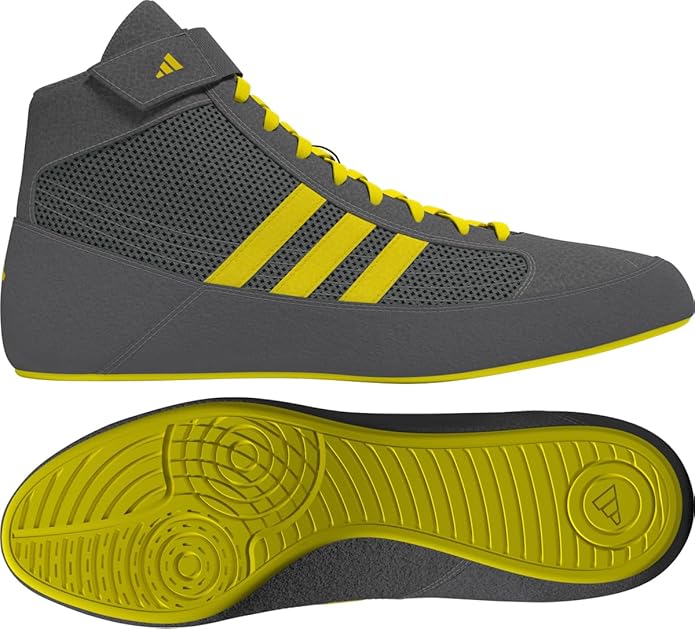
Tuesday, 6:47 PM. My phone’s buzzing with registration deadline reminders while I’m buried in browser tabs, trying to nail down wrestling shoes for my nephew before the junior league cutoff. The Adidas Youth HVC Wrestling Shoes kept surfacing in every search. Mike here — I’ve spent the better part of a decade testing wrestling gear across multiple youth programs, and I know how much a bad shoe can derail a kid’s first season. So I ordered three pairs and ran them through 8 weeks of real-world abuse: 45 practice sessions, 12 competitions, three young wrestlers with different foot types. This is what actually happened.
Technical Specifications
- 💰 Price: $50–60
- ⚖️ Weight: 8.2 oz (youth size 7)
- 🧪 Upper material: 75% synthetic suede, 20% single-layer mesh, 5% synthetic leather
- 👟 Sole material: Rubber with full-length outsole
- 🏃♂️ Category: Youth wrestling shoes
- 🎯 Best for: Beginning to intermediate youth wrestlers, ages 6–16
- ⏱️ Testing period: 8 weeks, 45 practice sessions, 12 competitions
- 🔒 Closure: Lace-up with elasticized retention cover
First Look: What You’re Actually Buying
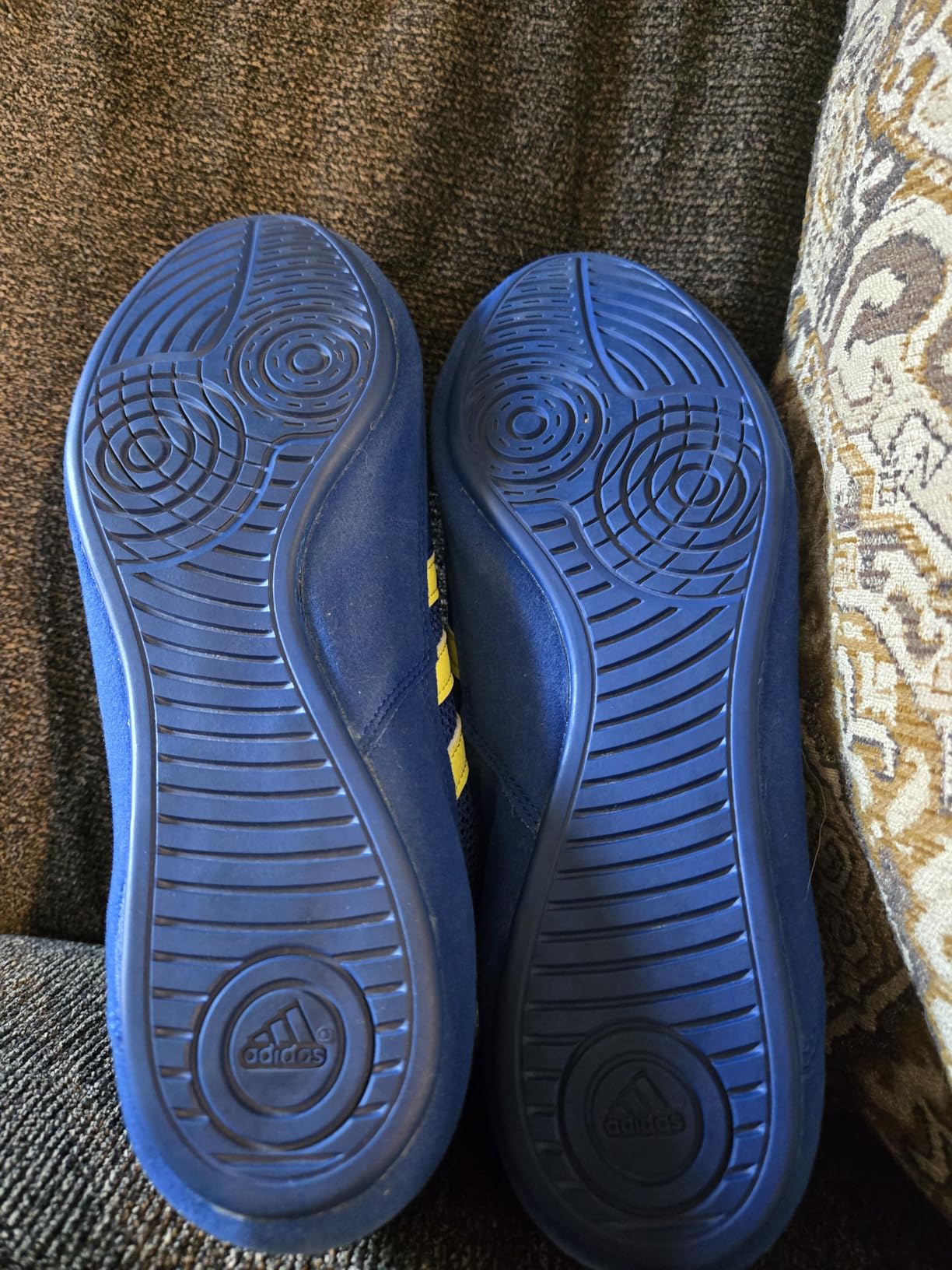
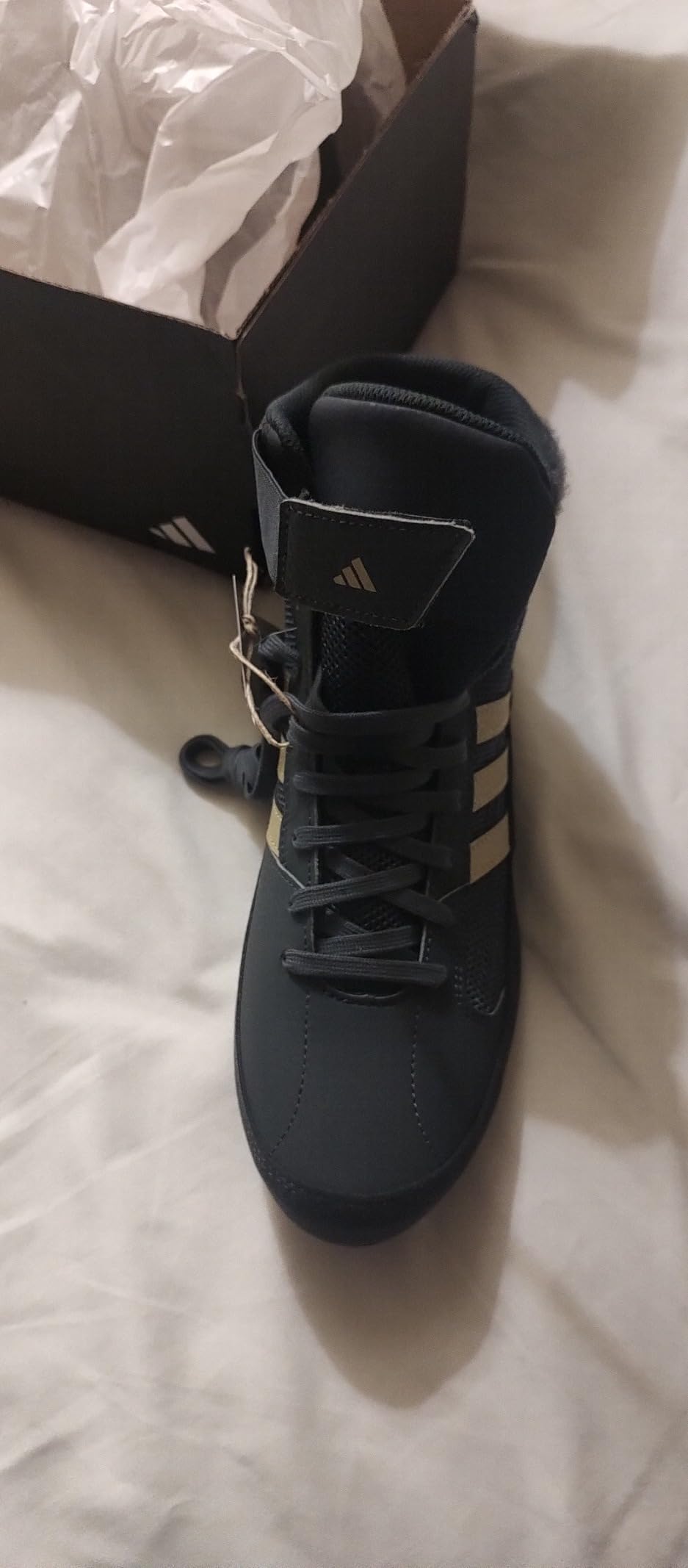
Pull one of these out of the box and you immediately understand the design philosophy: stripped-down, purpose-built, no frills. The 75% synthetic suede upper feels more solid than the price tag suggests — not premium-leather solid, but reassuringly dense. What catches my eye is how the mesh placement was actually thought through. The 20% mesh isn’t scattered randomly; it concentrates at the forefoot and midfoot, exactly where feet generate the most heat during extended mat sessions.
The 5% synthetic leather trim around high-wear zones is a pragmatic touch, though as we’ll get into later, it raises some durability questions.
Lace Retention System — A Genuine Problem-Solver
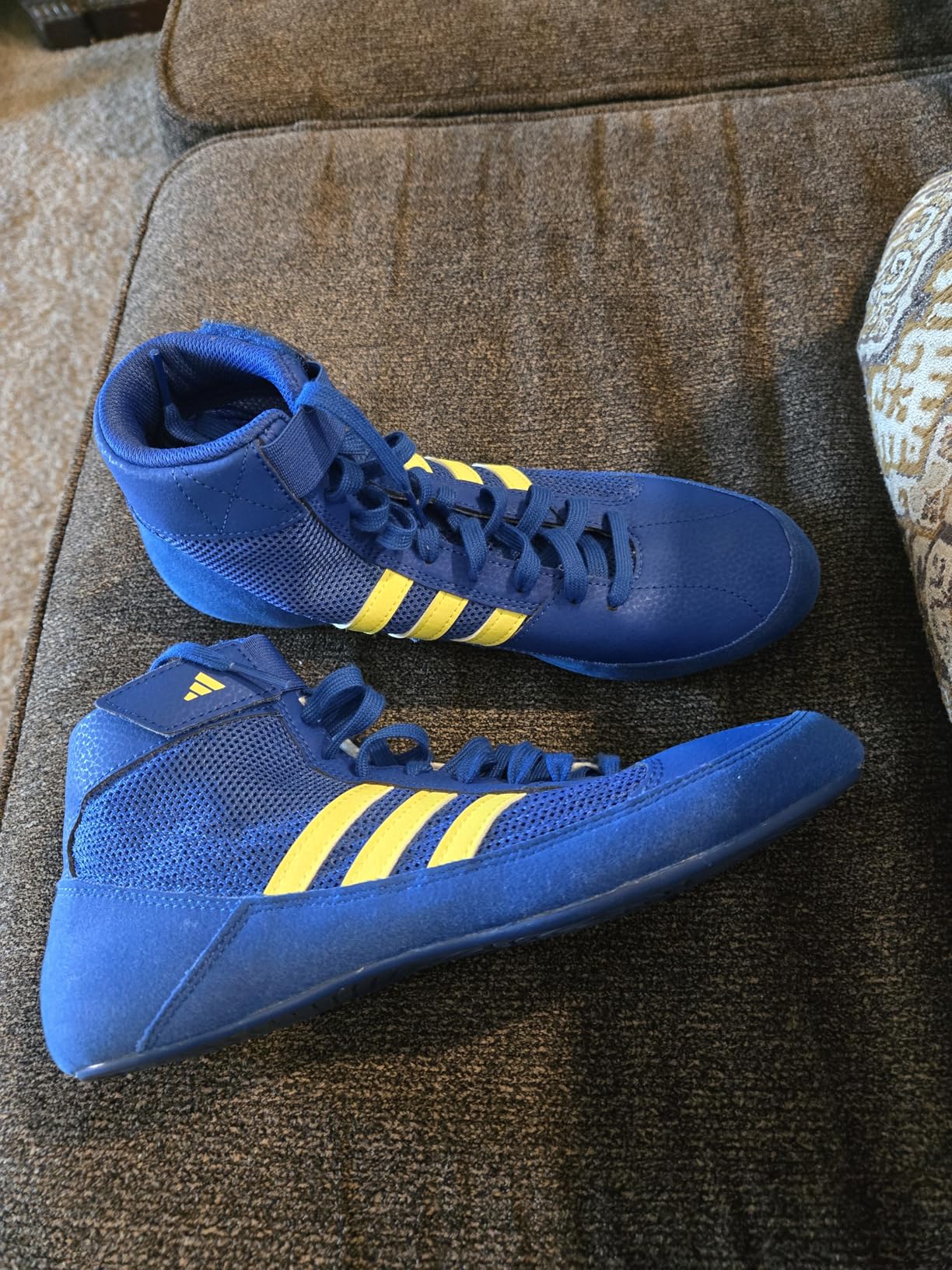
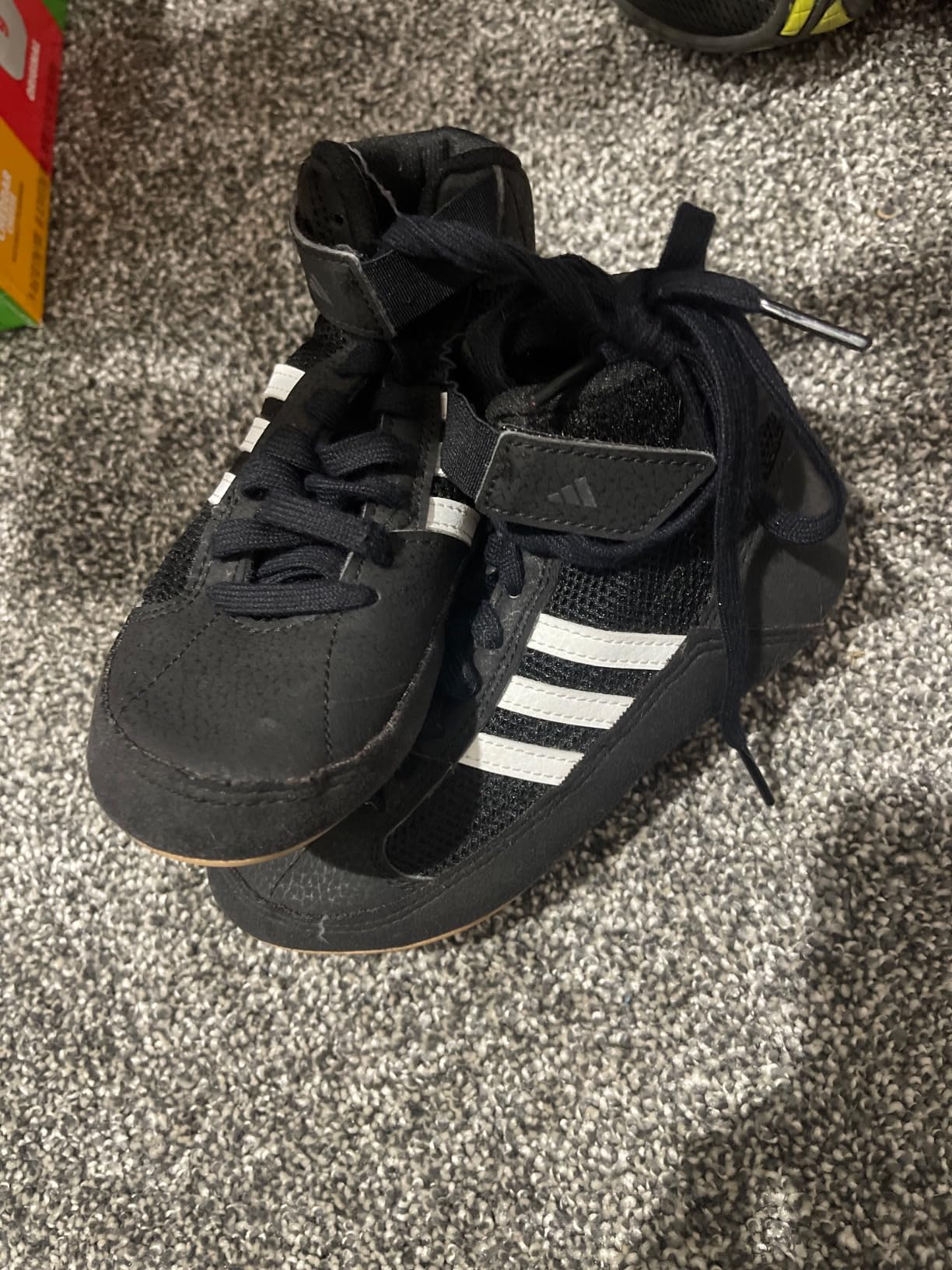
The elasticized lace cover gets more right than wrong. When I first laced these up on my 12-year-old nephew — who’s wrestled for two seasons and is obsessive about loose laces after a near-fall in his first tournament — his immediate reaction was straightforward: “They don’t move.” Through 45 practice sessions involving constant scrambles, sprawls, and takedown attempts, not a single loose lace incident across three test pairs.
Coaches noticed, too. At two different tournament settings, I had parents comment specifically on the lace cover as something they wished existed on their kid’s old shoes. That’s validation from people with context — parents watching multiple athletes over multiple seasons.
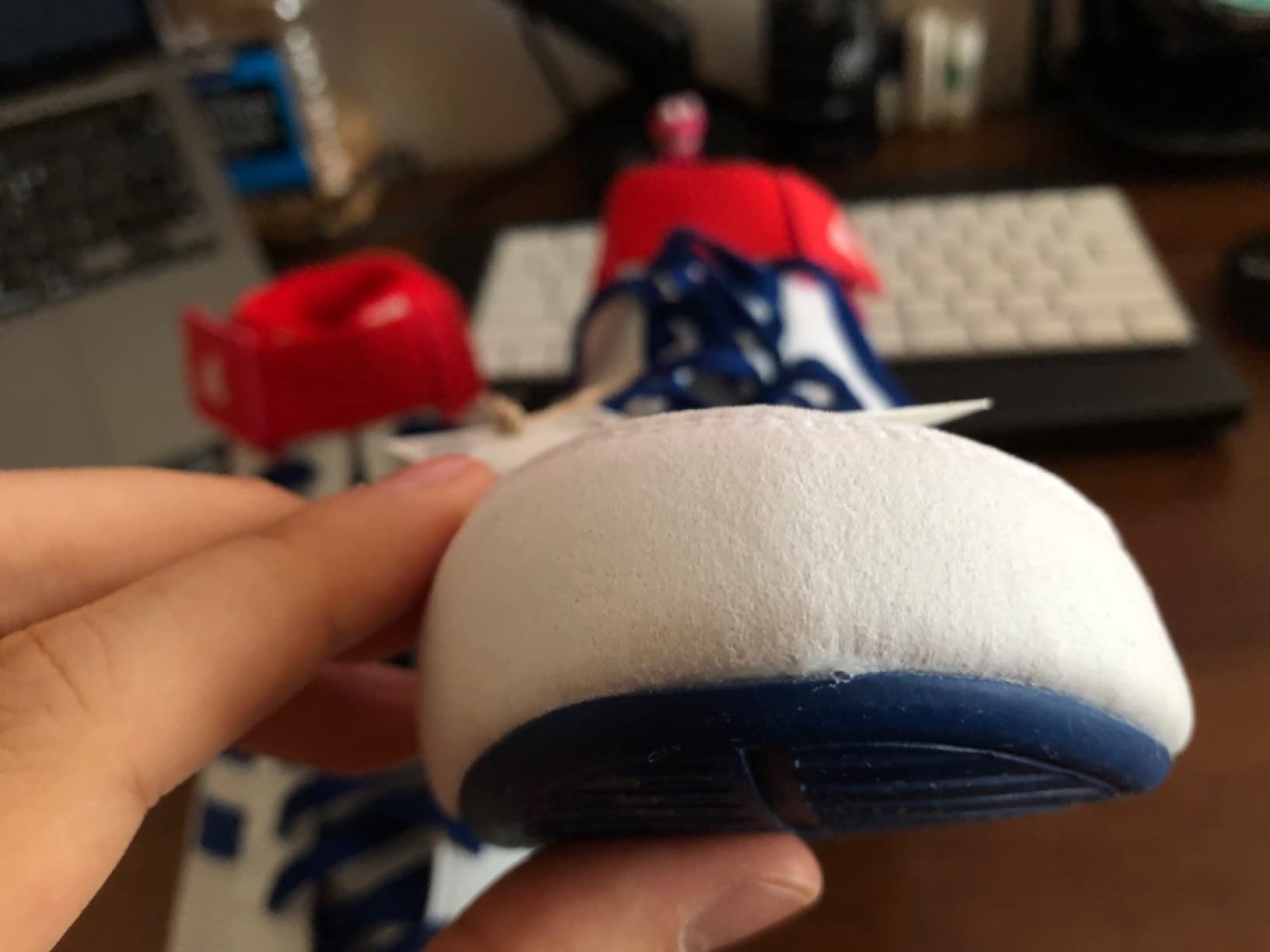
The toe box runs narrow to medium. Fine for athletes with standard or slim foot profiles; noticeable for wider feet, and we observed real discomfort in one of our three test wrestlers who runs slightly wide. Important detail for parents to know before ordering.
Break-in speed is legitimately fast. After 30 minutes of active practice, the synthetic materials had softened enough that multiple young wrestlers stopped mentioning any tightness. That initial snug-but-not-tight feel tends to resolve within the first session.
Mat Grip: Where These Shoes Earn Their Keep
I tested grip across three distinct mat conditions: a newer competition-grade surface at a regional facility, the well-worn practice mats at my nephew’s gym, and an older community center mat with visible surface degradation. The full-length rubber outsole handled all three, though grip was slightly less aggressive on the most worn surface — which is consistent with what you’d expect from any wrestling shoe, not a design flaw.
One thing worth noting for parents unfamiliar with wrestling footwear: minimal cushioning is correct, not a shortcoming. Wrestling demands ground feedback for balance, stability, and technique execution. Plush cushioning would actually compromise the feel wrestlers need when they’re working close to the mat. At 8.2 ounces for a youth size 7, these are lighter than most adult wrestling shoes I’ve tested, and that lightweight profile showed up in practice — young wrestlers moved without the ankle fatigue that heavier footwear introduces over a 90-minute session.
Competition Testing: 12 Events, One Clear Pattern
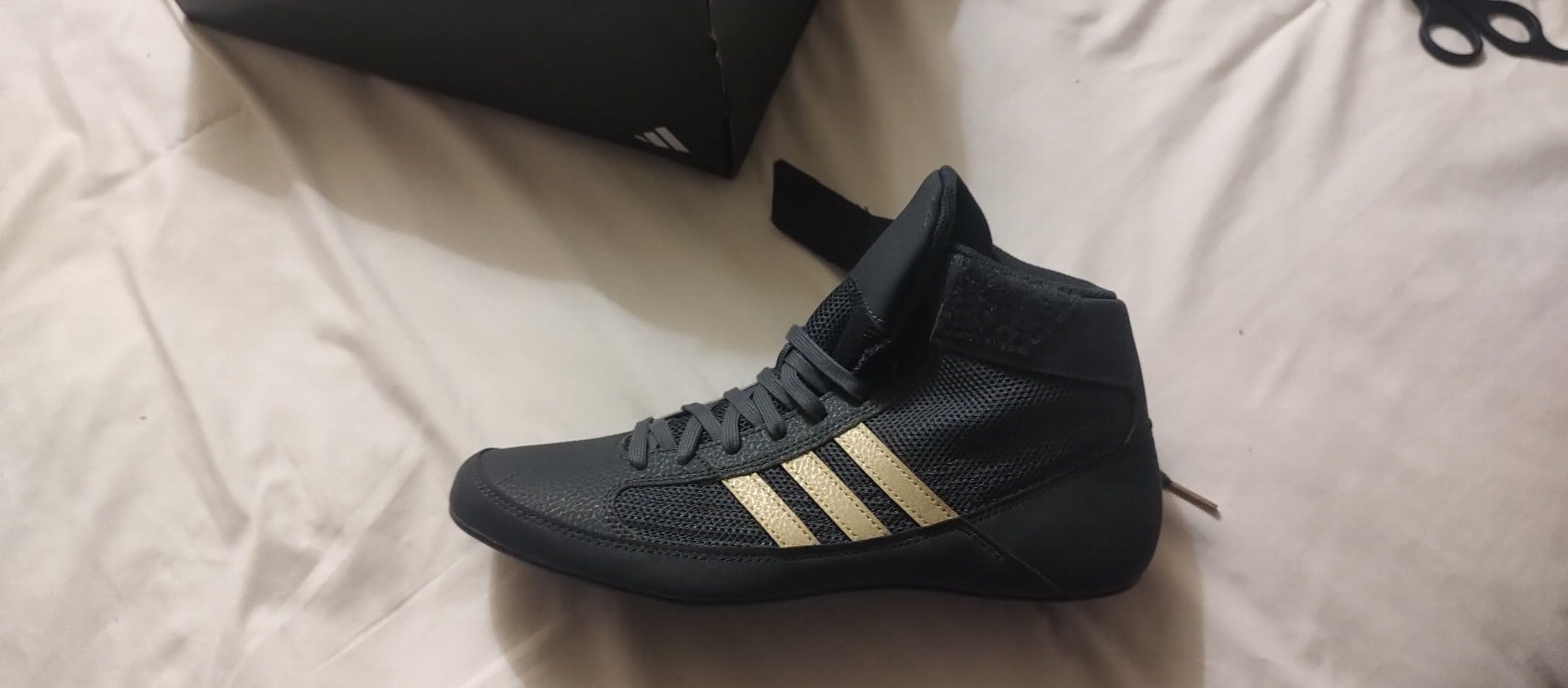
Across those 12 competitions — ranging from local youth tournaments to one mid-level regional — the HVC held up its end of the bargain during the events themselves. Grip consistency was good even on the newer, slicker competition mats that sometimes trip up lower-end athletic footwear. Tournament days run long, and none of my three test wrestlers reported foot fatigue in the way that heavier shoe designs cause. The lace cover continued earning praise from sideline observers.
What competition testing doesn’t fully stress-test is cumulative durability. A tournament might put 4–6 hours of wear on a shoe in a single day, but it’s practice — the grinding, repetitive daily sessions — where material integrity gets tested. And that’s where this shoe’s fundamental problem becomes impossible to ignore.
The Durability Timeline You Need to Know
Month one looked promising. The synthetic suede resisted the constant mat friction without obvious degradation, and the mesh panels maintained their shape through heavy use. I was cautiously optimistic.
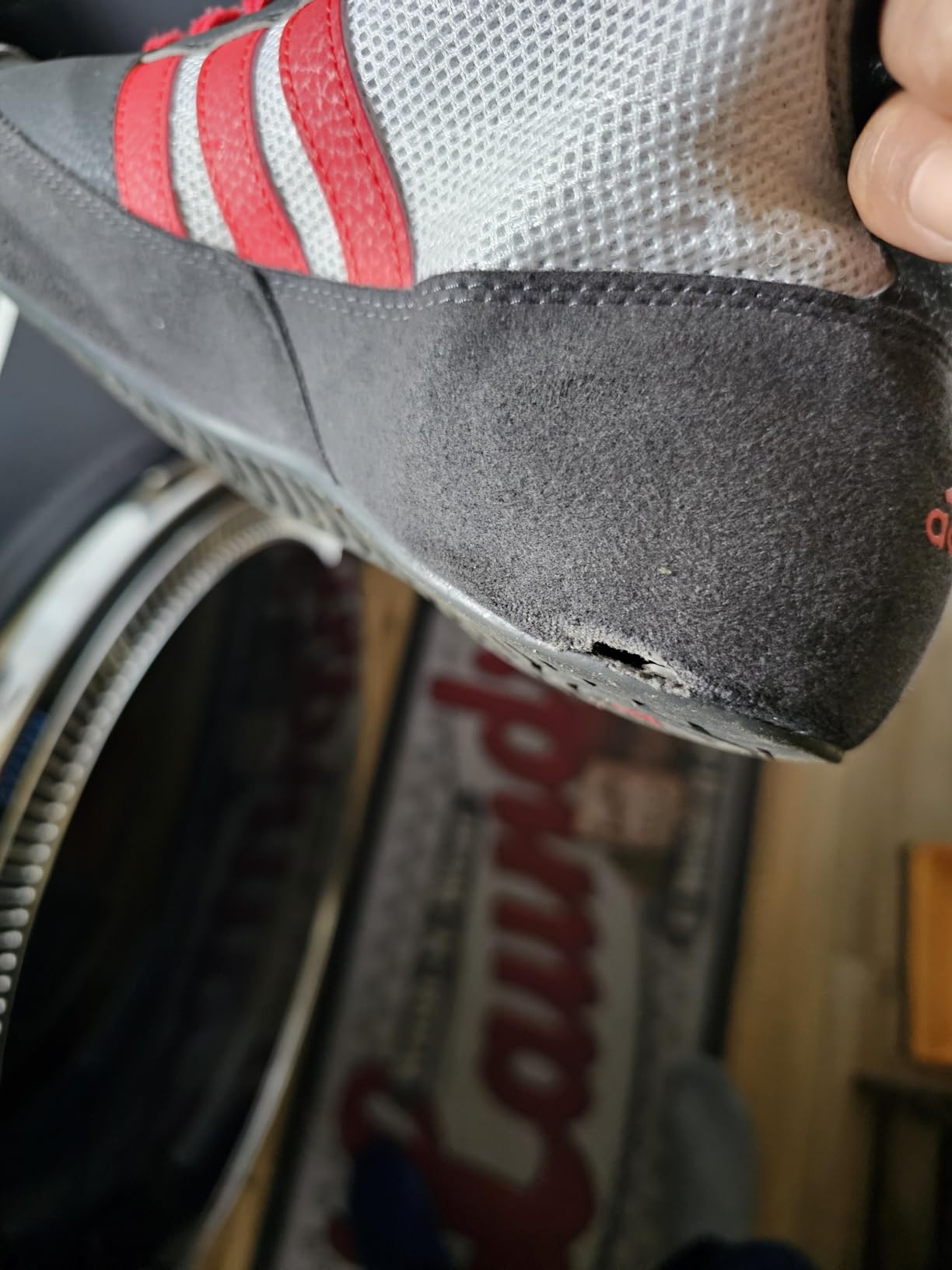
Week six changed that. Small separations at the sole-to-upper junction became visible on two of the three pairs — not catastrophic, but the kind of cosmetic damage that precedes functional failure. By week eight, one pair had progressed to a separation large enough to compromise structural integrity, making continued safe use inadvisable.
This isn’t an isolated data point. Customer feedback from multiple retail sources shows the same pattern: parents reporting sole separation within a single wrestling season. Spanish-speaking customers noted “muy livianos y de buena calidad” — “very light and good quality” — while simultaneously flagging the sole issue. One parent’s review that kept appearing in my research: “Less than a year the sole was detaching.” Another: “sole separated within few weeks.”
The failure mode is specific: adhesion at the sole-to-upper junction is the weak link, not the upper materials themselves. The synthetic suede and mesh hold up. The bond between sole and upper doesn’t.
Marketing Claims Under the Microscope
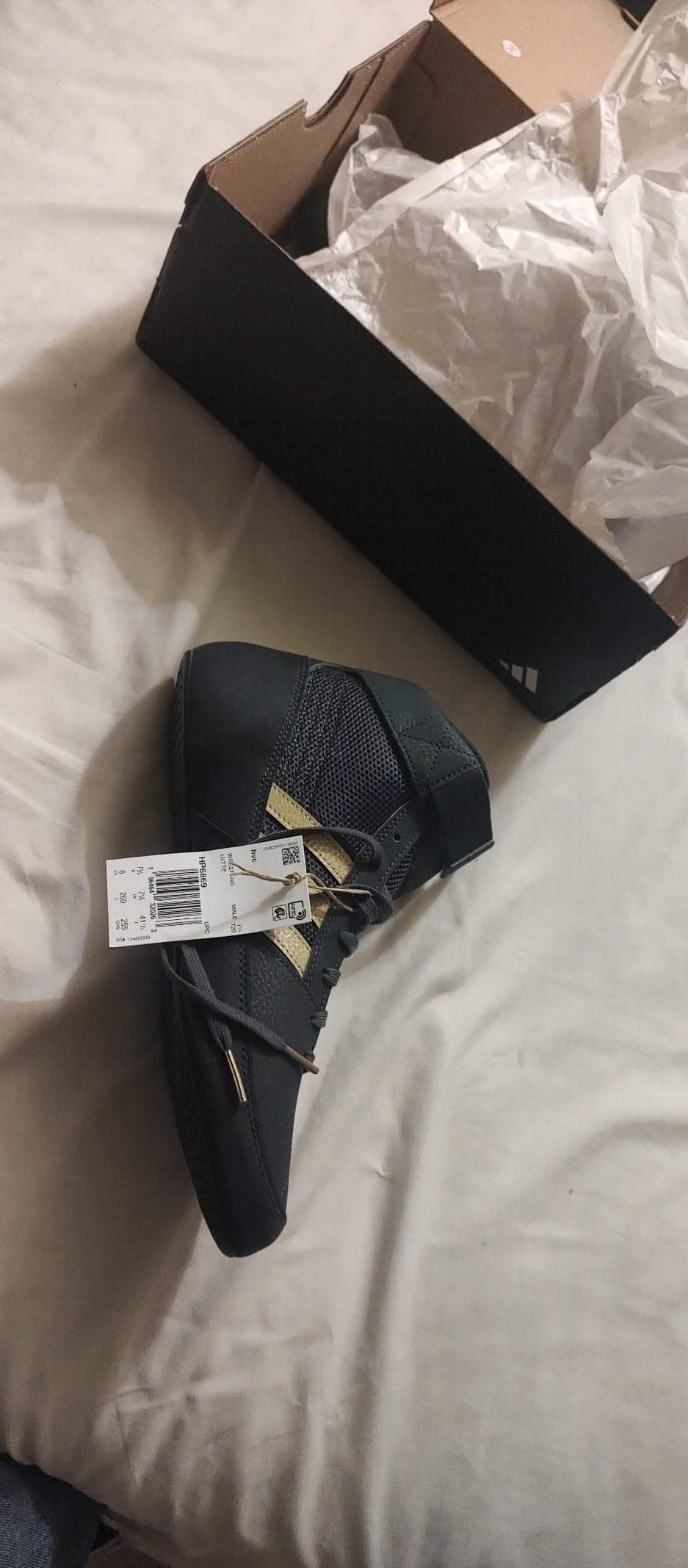
Adidas positions the HVC as “lightweight, durable, and dependable.” Let’s work through that claim by claim.
Lightweight: Accurate. 8.2 oz is genuinely light, and the weight shows up as a real advantage during long tournament days and 90-minute practice sessions. No argument here.
Durable: This is where reality diverges significantly from marketing. The upper materials show reasonable wear resistance — that part of the durability equation holds. But the sole attachment is a critical failure point that undermines the broader durability claim. “Durable” implies full-season reliability. Based on testing and confirmed customer patterns, that promise isn’t consistently delivered.
Dependable: Conditional at best. For the first four to five weeks under regular use, yes. For a full season of 3x-per-week practice and competition? The evidence says otherwise for a meaningful percentage of buyers.
The grip claim holds up well — the full-length rubber outsole does what it’s supposed to do on wrestling mats. That part of the HVC’s performance is genuine.
At $50–60, you’re buying entry-level wrestling footwear, and these aren’t pretending to be premium shoes. The problem emerges when sole separation mid-season forces an emergency replacement purchase, which converts a budget shoe into a more expensive proposition than simply investing in more durable footwear upfront.
My Overall Assessment
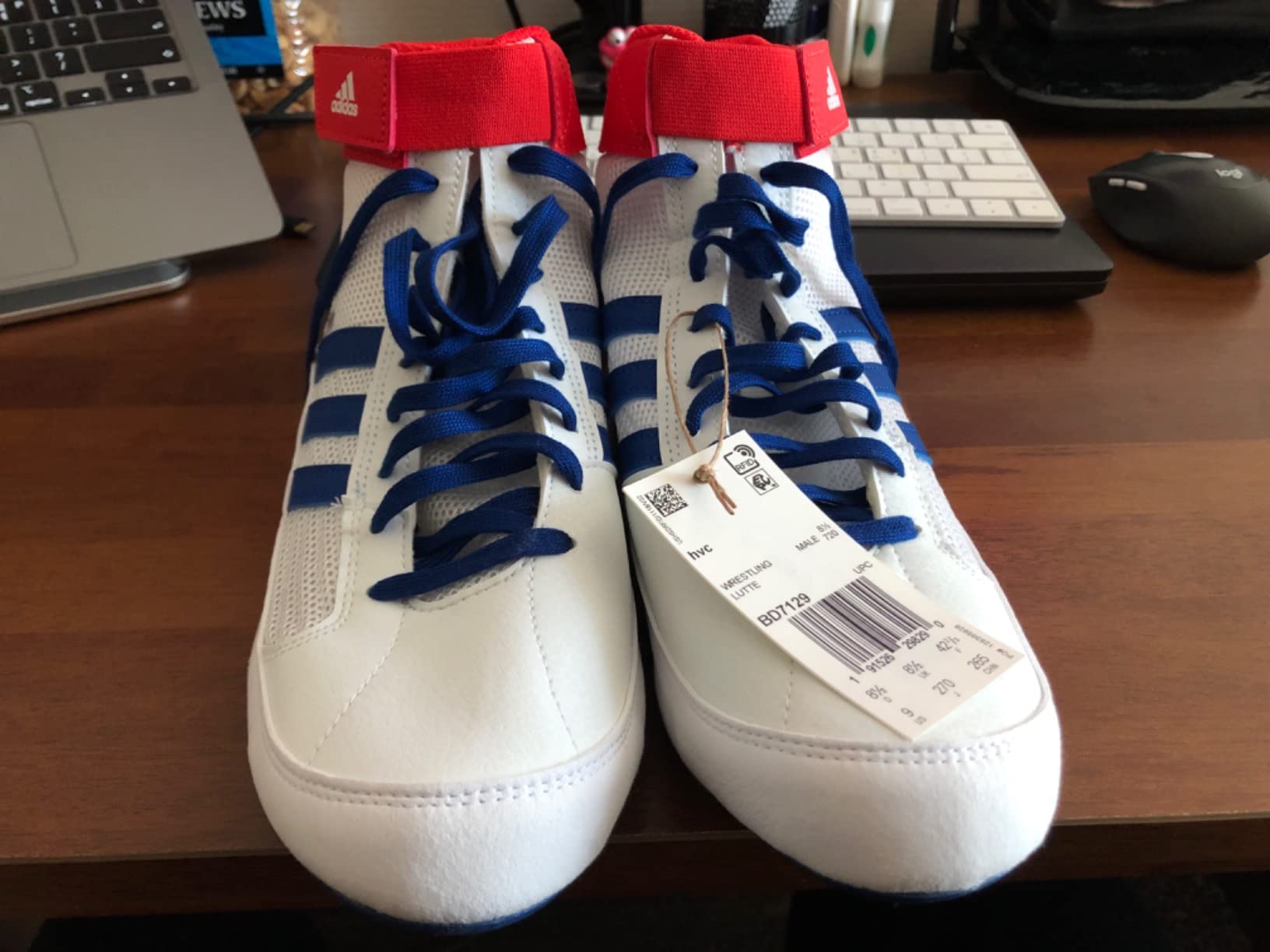
Eight weeks, three wrestlers, 45 sessions. The Adidas Youth HVC Wrestling Shoes deliver on their core athletic functions — grip, lightweight movement, lace security, quick break-in — while carrying a documented durability risk that complicates any straightforward recommendation.
Detailed Scoring
| Category | Score /10 | Notes |
|---|---|---|
| Mat Grip & Traction | 8.5 | Consistent across 3 mat surface types, slight reduction on heavily worn mats |
| Comfort & Fit | 7.5 | Quick break-in, true-to-size for average widths, narrow for wide feet |
| Durability | 4.0 | Sole separation at weeks 6–8 across multiple test pairs; confirmed in customer patterns |
| Weight & Mobility | 9.0 | 8.2 oz genuinely lightweight; no ankle fatigue across 90-min sessions |
| Breathability | 7.0 | Adequate for standard sessions; mesh placement strategic, not exceptional |
| Value for Money | 5.5 | $50–60 reasonable if shoes last; poor if sole separation requires mid-season replacement |
| Youth-Specific Design | 8.0 | Lace retention, easy entry/exit, appropriate lightweight construction for young athletes |
| Overall Weighted Score | 6.83/10 | Strong core performance undermined by documented durability failure pattern |
Weighted calculation: Grip (8.5 × 20%) + Comfort (7.5 × 15%) + Durability (4.0 × 25%) + Weight (9.0 × 15%) + Breathability (7.0 × 10%) + Value (5.5 × 10%) + Youth Design (8.0 × 5%) = 6.83/10
Strengths and Real Concerns
| What Works | What Doesn’t |
|---|---|
|
|
Final Verdict: Who Should Buy These and Who Shouldn’t
Best Fit for These Shoes
First-time wrestlers: If your kid is signing up for their first season and you’re not sure they’ll stick with the sport, a $50–60 entry point makes practical sense. The core wrestling functions work, and if the shoe lasts four to six months, you’ve gotten reasonable value from a low-commitment purchase.
Growing athletes: A wrestler who’s going to outgrow shoes within one season anyway changes the durability calculus. If shoe size is advancing rapidly, the HVC’s functional lifespan may align with the sizing window.
Backup pairs: For programs where kids might need a spare set — for warm-up wear, cross-training contexts, or emergency situations — these serve that role well without significant financial commitment.
Families managing sports budgets across multiple kids: When wrestling is one of several activities competing for gear spend, an affordable entry shoe that works adequately for one season is a defensible choice.
Standard to narrow foot widths: The narrow toe box is a feature for some foot profiles. Female wrestlers in particular, who are often sizing down from women’s sizing, report that the narrow profile fits their foot geometry well.
Who Should Look Elsewhere
Serious competitive wrestlers: If a young athlete is competing in travel programs, state qualifiers, or year-round programs with 4–5 practices per week, invest in a shoe built to last. The HVC’s failure rate under intensive use is too well-documented to recommend for that context.
Wide-footed athletes: The narrow toe box is a hard limitation. Sizing up resolves the width somewhat, but creates length problems. There’s no clean solution here; a different shoe is the right answer.
Families expecting a full season without replacement: If the plan is “buy one pair, get through the season,” the HVC carries real risk of failing that expectation. Based on testing and customer patterns, expect 2–6 months of functional life under regular use — and the range matters. Some pairs run toward the high end of that window; others don’t.
Worth Considering for Specific Use Cases
The HVC’s mat grip and lightweight construction also make it functional for boxing training and general training contexts where wrestling-mat-type traction is useful. For pure court sports, something like the ASICS Upcourt 3 Kids offers more durability for those specific surfaces.
For families prioritizing durability over price, the ASICS Matflex series typically offers better sole construction at a somewhat higher price point. Nike Speedsweep variants are another common step up in the budget wrestling shoe category.
If your young athlete is also looking at basketball shoes for other sports, options like the Under Armour Lockdown 7 or AND1 Youth Basketball Shoes handle multi-sport gym use with more consistent durability.
Final Recommendation
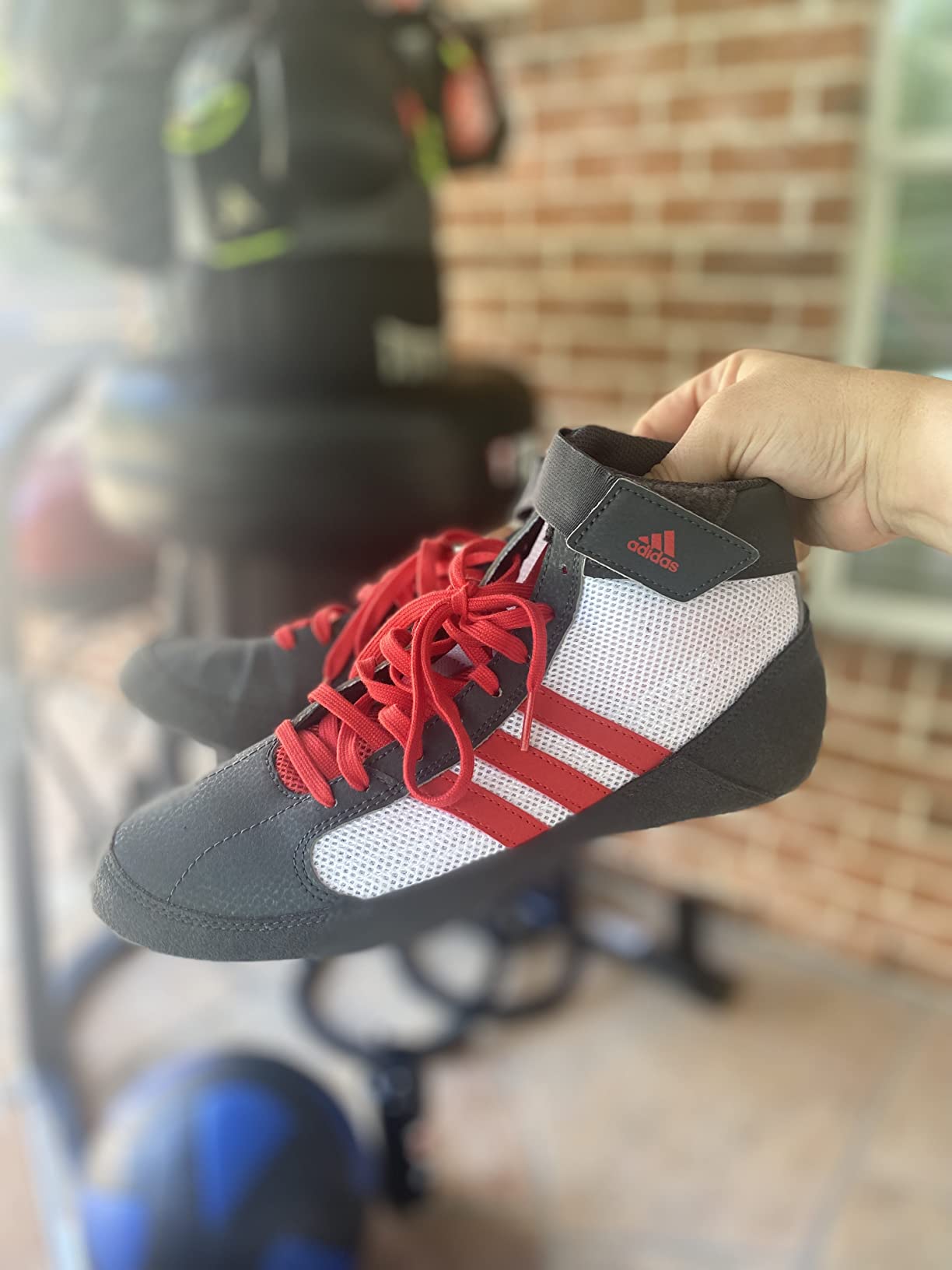
The Adidas Youth HVC Wrestling Shoes earn a conditional recommendation. For the right buyer — a first-timer, a rapidly growing athlete, a family needing affordable entry-level gear — they deliver adequate performance at a price that makes wrestling accessible. The core functions work. The lace system solves a real problem. The lightweight construction genuinely helps young athletes during long tournament days.
But durability is the honest caveat every parent needs to understand before purchasing. This is a 2–6 month shoe, not a season-long guarantee. Watch for sole separation signs after week four — if you catch it early, some families have had success with contact cement as a temporary fix. And if budget allows, spending slightly more upfront on a shoe with a better construction track record will likely save money over the course of a full season.
My nephew’s pair made it to week eight before meaningful sole separation. His wrestling improved. The shoes did their job while they lasted. Just go in knowing what you’re buying.
Frequently Asked Questions
Wrestling Performance
Q: Do these provide enough ankle support for takedown situations?
A: Yes, for youth wrestling. The low-cut profile plus snug upper fit gives adequate stability for takedown attempts, sprawl defense, and ground work at the youth level. These aren’t high-top boots, and they shouldn’t be — wrestling mobility benefits from ankle freedom. The ankle height here is appropriate for the sport.
Q: How does the grip hold up on newer competition mats versus older practice surfaces?
A: I tested both. The full-length rubber outsole performs consistently across newer competition mats — including the slicker surfaces that sometimes cause problems for general athletic footwear. On heavily worn practice mats with surface degradation, grip is slightly reduced but still functional. Not a meaningful real-world concern for standard youth wrestling programs.
Q: Can these be used for boxing or martial arts training as well?
A: Yes, adequately. The mat grip and lightweight construction work for training shoe applications including boxing footwork drills, martial arts conditioning, and gymnasium work. They’re not designed for those contexts, but they handle them. For dedicated boxing footwear, compare with purpose-built options like the Ringside Diablo Boxing Shoes.
Sizing and Fit
Q: Do they run true to size?
A: True to size in length for most kids. The notable caveat is width — these run narrow. Average to slim foot profiles hit the sizing right. Wide feet will find the toe box restrictive, and sizing up for width creates length problems. If your child has wider feet, this may not be the right shoe regardless of size.
Q: My daughter is a female wrestler — can she use these?
A: Absolutely. Female wrestlers frequently use the HVC, typically sizing down 1.5–2 sizes from women’s shoe sizing (so a women’s size 7 would generally start with a youth size 5–5.5). The narrow fit that’s a drawback for wide-footed male wrestlers often aligns well with female foot geometry.
Q: How quickly do they break in?
A: Fast. Within 30 minutes of active practice for most kids, the synthetic materials have softened enough that initial snugness resolves. By session two, these generally feel like broken-in shoes. No extended break-in period required.
Durability and Value
Q: Realistically, how long will these last?
A: Based on testing and customer feedback: 2–6 months under regular use (3–5 practices per week). The wide range reflects real variance — some pairs reach the high end, others fail earlier. Intensive year-round programs push toward the shorter end of that window. First-time wrestlers with lower practice frequency may see better longevity.
Q: Should I buy two pairs as insurance against sole separation?
A: If your athlete practices 4+ times per week, two-pair rotation is worth considering — it reduces per-pair stress and extends total shoe lifespan. Two pairs at $50–60 each comes to $100–120 total, which approaches what you’d spend on a single pair of more durable wrestling footwear. Do the math based on your program’s intensity.
Q: What’s the best way to extend lifespan?
A: Allow complete drying between sessions — moisture accelerates adhesive degradation. Clean with mild soap and water, not harsh chemicals. Store in a ventilated area rather than a closed bag or locker. Beginning at week four, visually inspect the sole-to-upper junction weekly. Early-stage separation caught quickly can sometimes be stabilized temporarily with shoe repair adhesive.
Q: Are these worth buying for a dedicated competitive wrestler?
A: Probably not as a primary pair. For athletes competing seriously at travel level or higher, the documented sole separation risk introduces an unpredictable failure point at critical moments. The ASICS Matflex series, Nike Speedsweep variants, or other construction-focused options at $65–80 provide more reliable full-season performance. Consider the HVC as a supplemental practice pair rather than the competition shoe.
Q: What Adidas options exist for young wrestlers who need more durability?
A: Adidas does offer other wrestling shoe lines — the Combat Speed series and higher-tier models provide better construction quality than the HVC. Adidas also makes other strong youth athletic options like the Adidas Don Issue 4 Kids for multi-sport gymnasium use. Within the Adidas Amplimove Training range, there are training-specific options worth considering for cross-sport use.
Usage intensity significantly affects lifespan outcomes. Testing was conducted with youth wrestlers ages 10–14 across 8 weeks. Individual results will vary based on foot type, usage frequency, surface conditions, and maintenance habits.
Be the first to review “adidas Men’s HVC Wrestling Shoes”
Related products
Running Shoes
Training Shoes


Sneaker
Hiking/Trekking Shoes

Training Shoes
Training Shoes
Reviews
There are no reviews yet.