
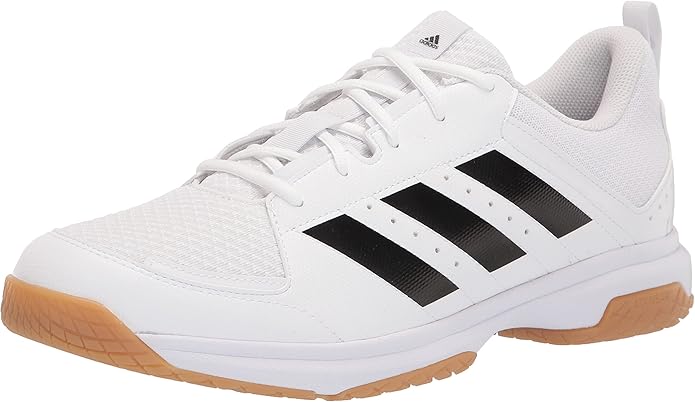
Somewhere between my third pair of court shoes that lasted less than a season and my seventh attempt to find volleyball sneakers that didn’t pinch my wide feet, I started wondering if the problem was me. Then my teammate showed up to practice in the adidas Women’s Ligra 7s and mentioned she hadn’t slipped during defensive drills in three weeks. Sarah here — recreational volleyball player, slightly wide feet, perpetually on my feet at work, and skeptical of anything marketed as the “perfect indoor court shoe.” I ordered a pair, tracked 32 sessions over 8 weeks, and tested them through everything from tournament defense to 10-hour work days. Here’s what I found.
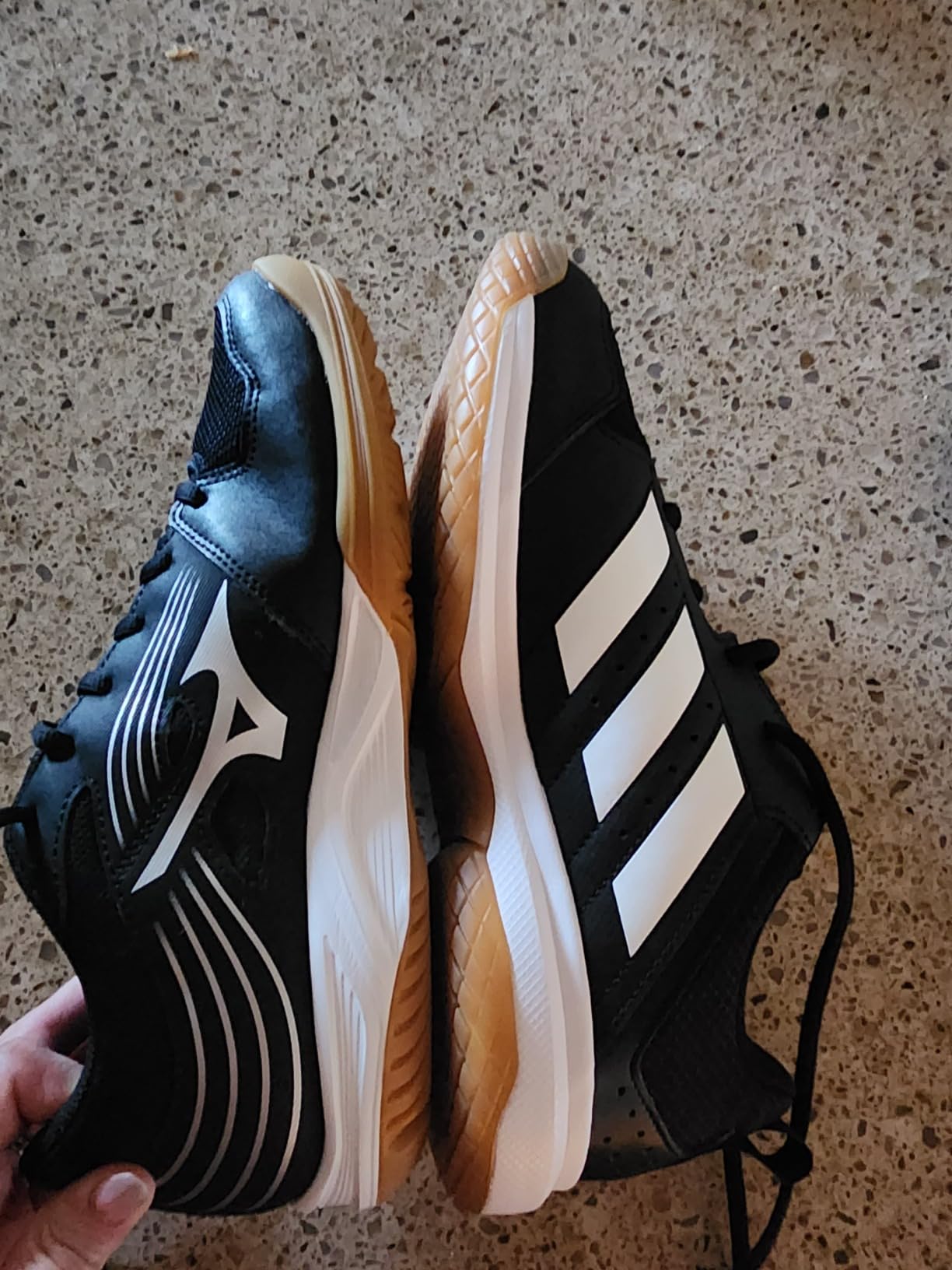
Quick Specs
- ⚖️ Weight: 9.2 oz (women’s size 8)
- 🛟 Midsole: EVA cushioning
- 🧵 Upper: Breathable mesh with synthetic overlays; Primegreen (50% recycled content)
- 🎯 Category: Indoor court sports shoe
- 🏐 Best for: Volleyball, badminton, tennis, indoor training
- ✅ Key features: Reinforced synthetic leather toe, multi-directional rubber outsole, recycled Primegreen upper
- ⏱️ Testing: 8 weeks, 32 court sessions, 45+ hours total wear
- ⭐ Amazon Rating: 4.3/5 (1,600+ reviews)
First Look: What Makes the Ligra 7 Different
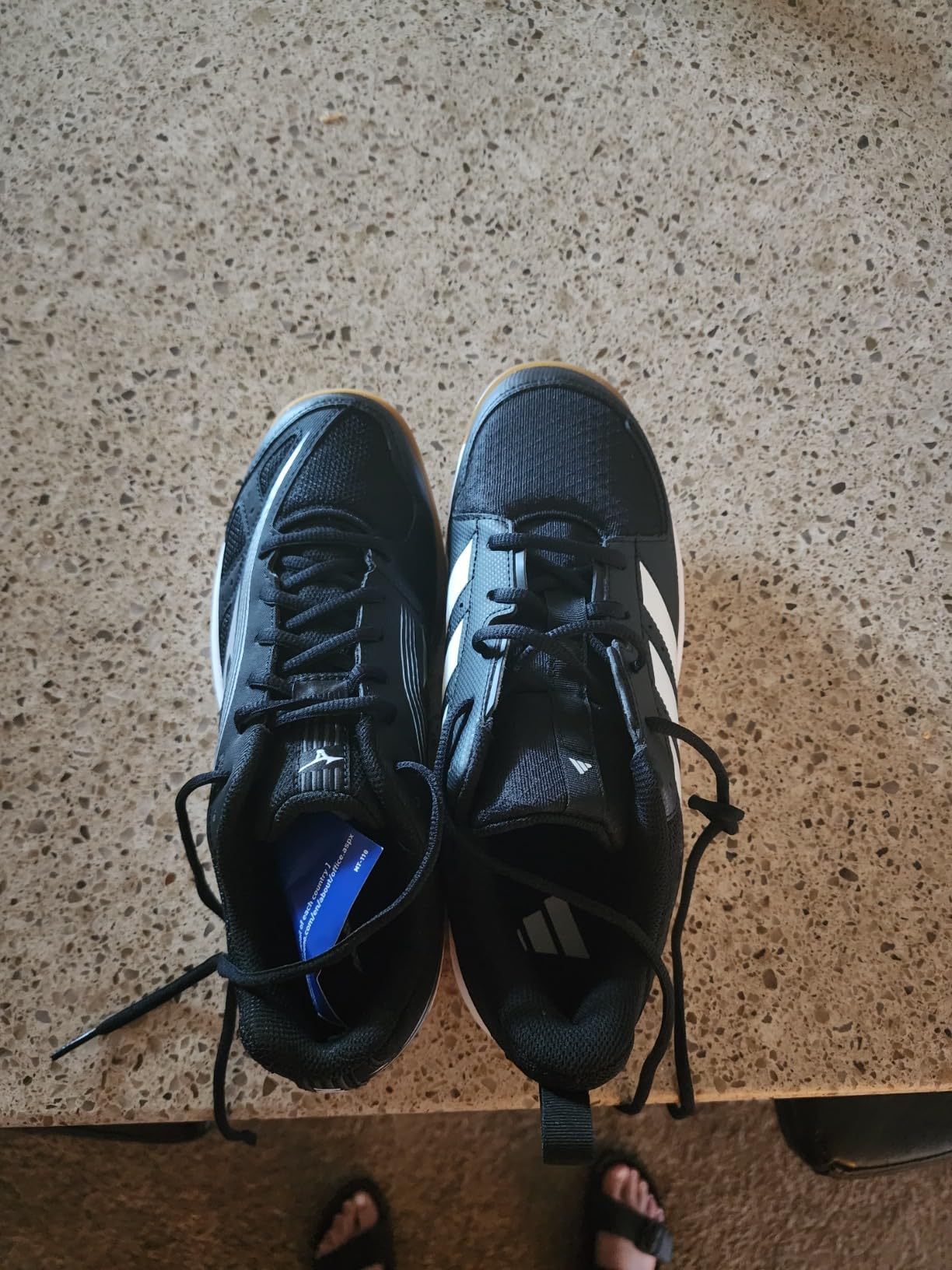
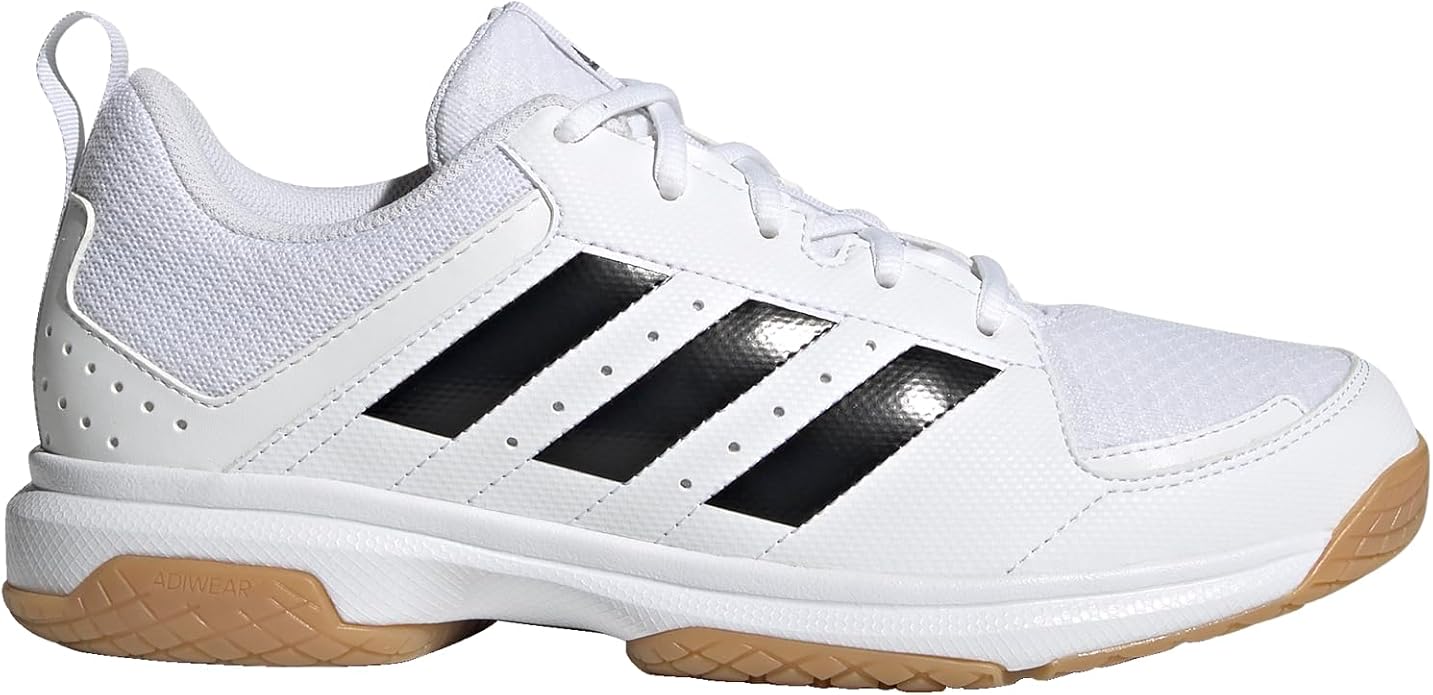
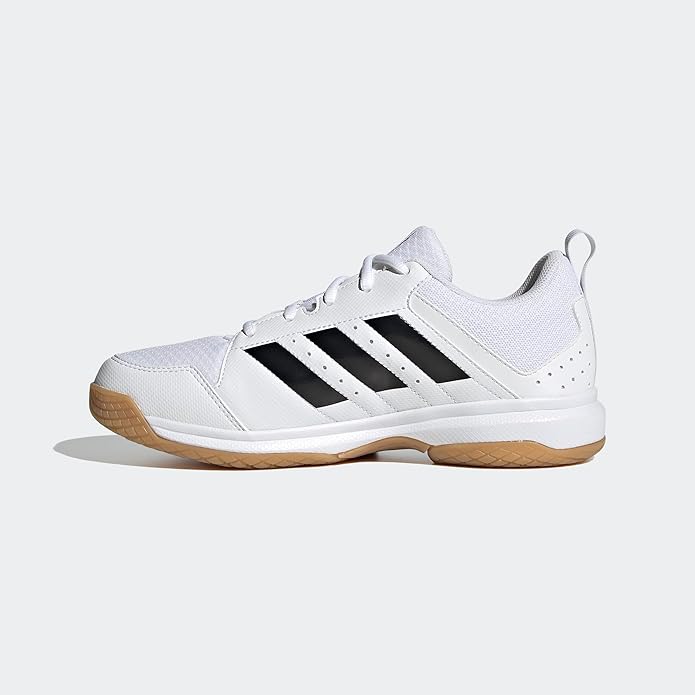
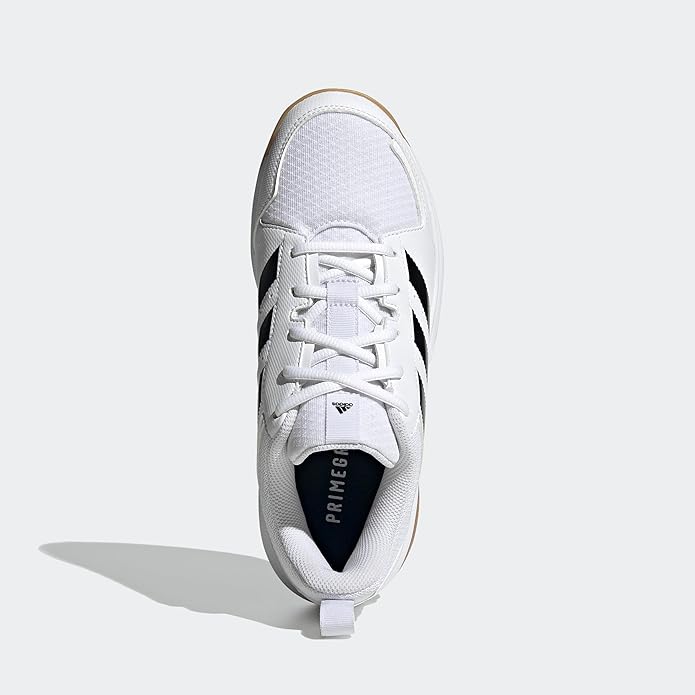
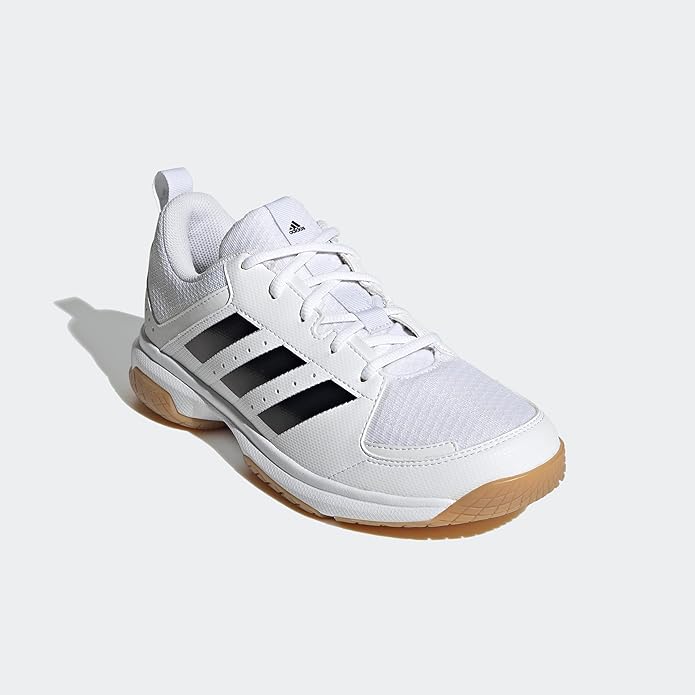
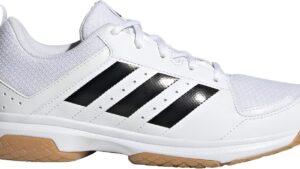
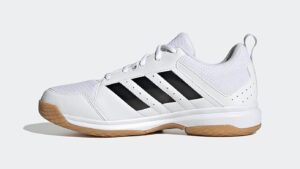
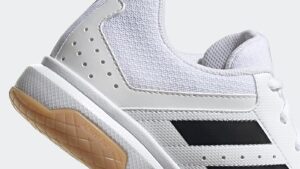
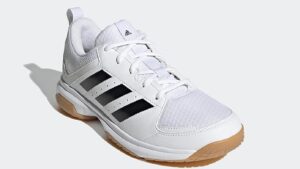
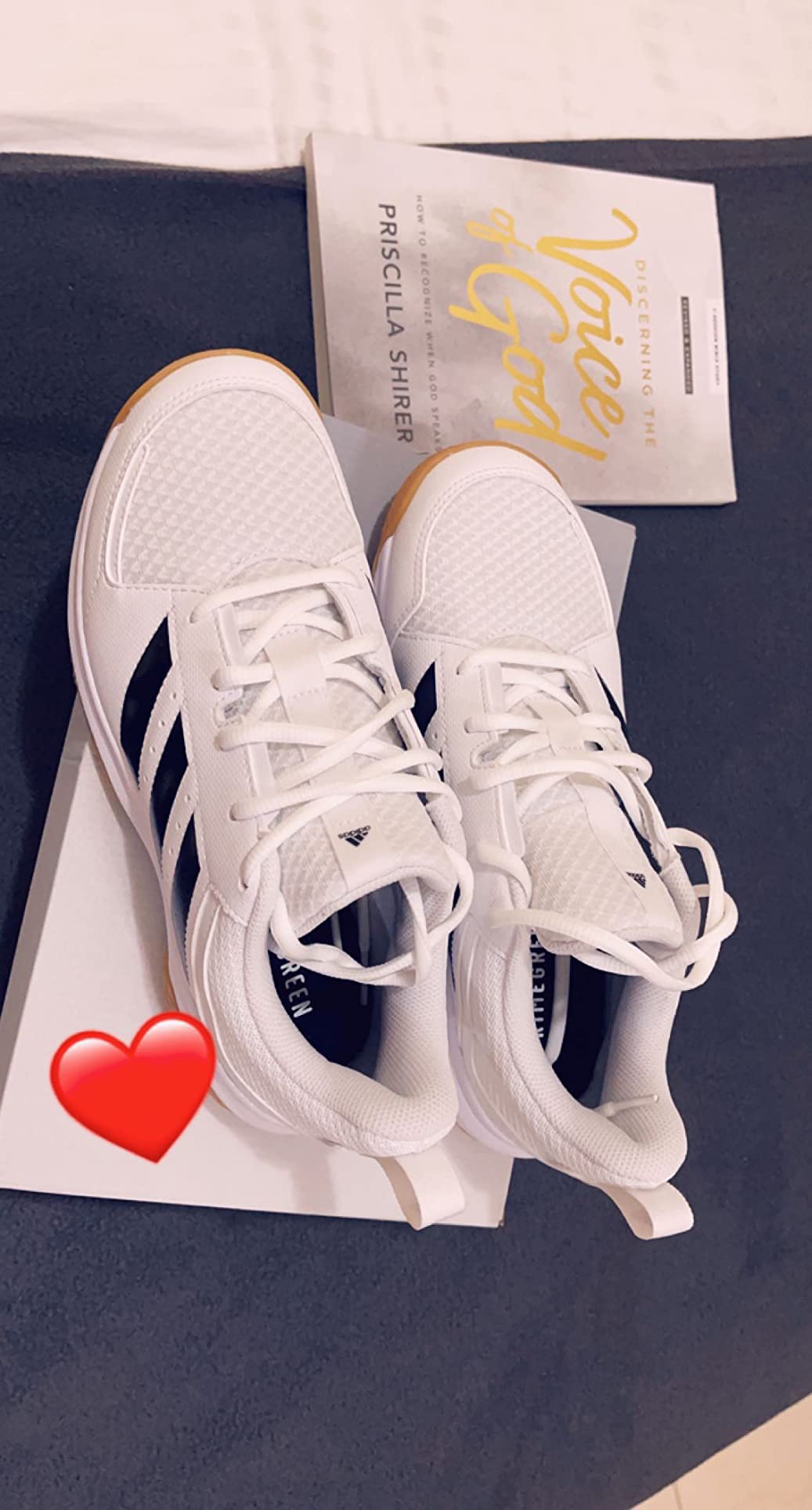
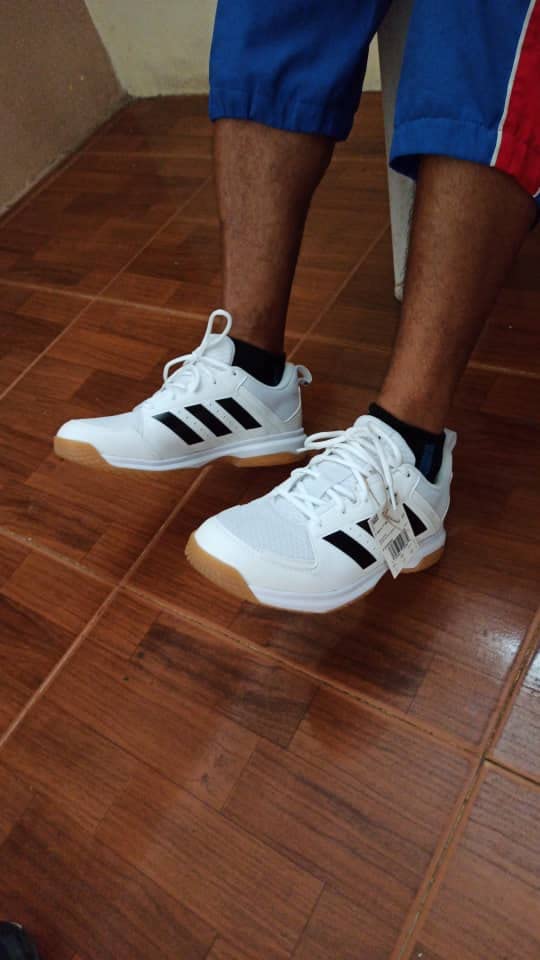
adidas built this shoe for function, and it shows — no dramatic colorways, no design-statement silhouette. Pull them out of the box and you’re looking at a clean white/black court shoe that could pass for professional gear without trying too hard. The mesh upper feels dense enough to provide lateral structure while still allowing airflow during extended sessions.
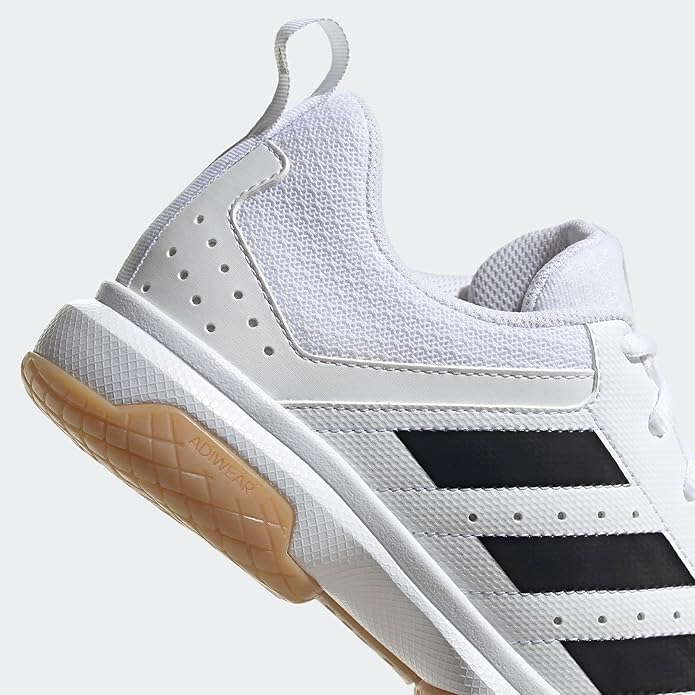
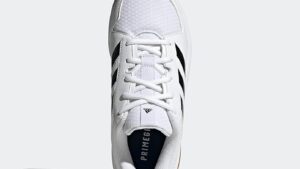
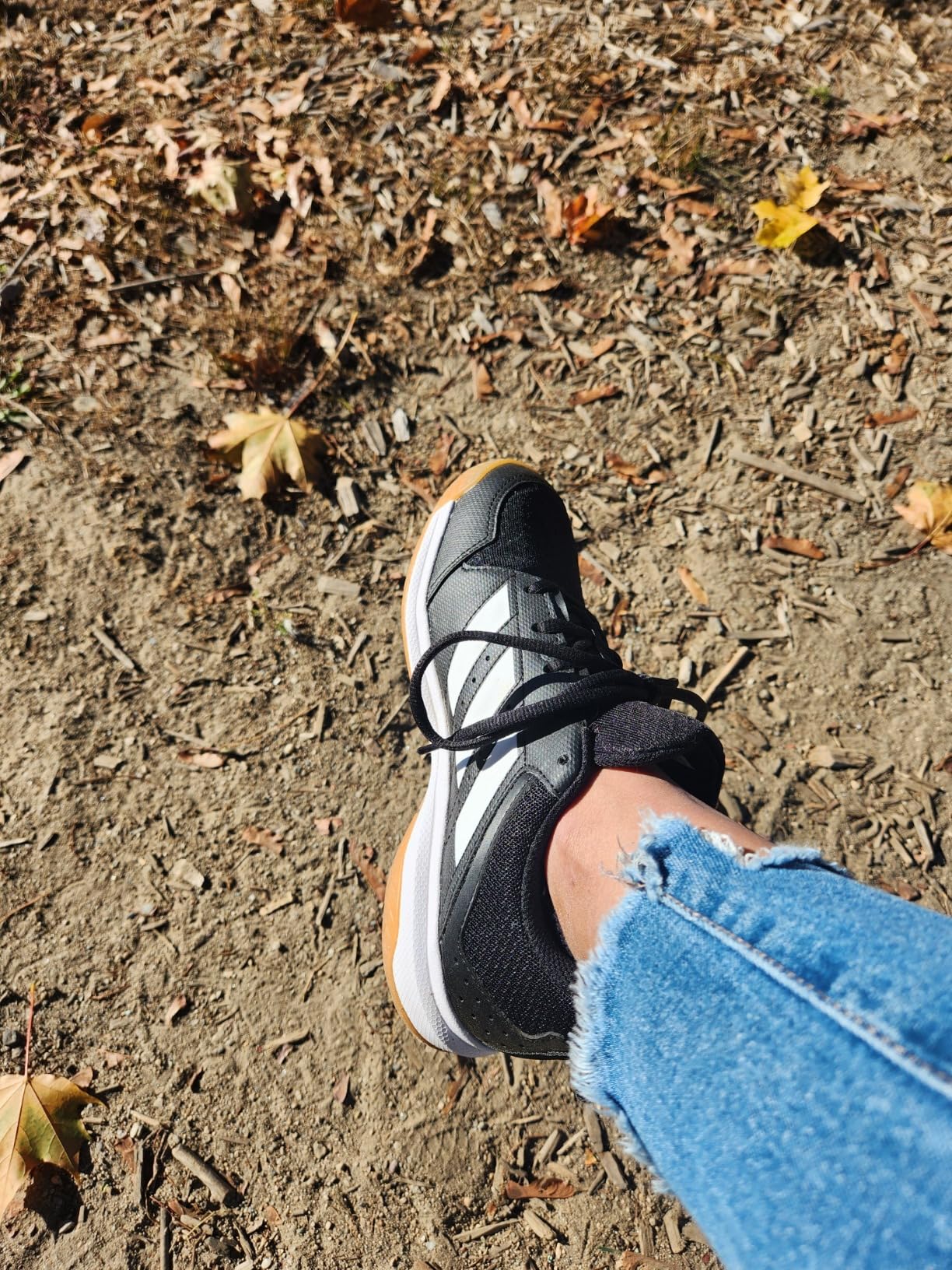
The synthetic overlays deserve specific mention because they’re not decorative. They’re placed along the sides of the midfoot — exactly where your foot wants to roll outward during aggressive lateral cuts. Combined with the padded ankle collar and firmer heel counter, they create a support architecture that’s doing real work. The synthetic leather reinforcement wraps the toe area and adds abrasion resistance to handle the drag and scuff that volleyball footwork produces.
One detail that doesn’t get much attention: the Ligra 7 is built with adidas Primegreen, which means the upper is 50% recycled content with no virgin polyester. For eco-conscious buyers, that’s a genuine differentiator in the $65–75 price range. For everyone else, it’s a “nice to know” that doesn’t affect court feel. What it does signal is that adidas is routing budget toward functional materials rather than premium-tier cushioning technology — a trade-off that makes sense for a recreational court shoe.
Release year: 2022. Note that adidas has since launched the Ligra 8 as their primary lineup shoe. The Ligra 7 remains available on Amazon, and nothing in the market data suggests the Ligra 8 changes the core value proposition enough to make this review obsolete.
The Sizing Reality: Solving the Debate
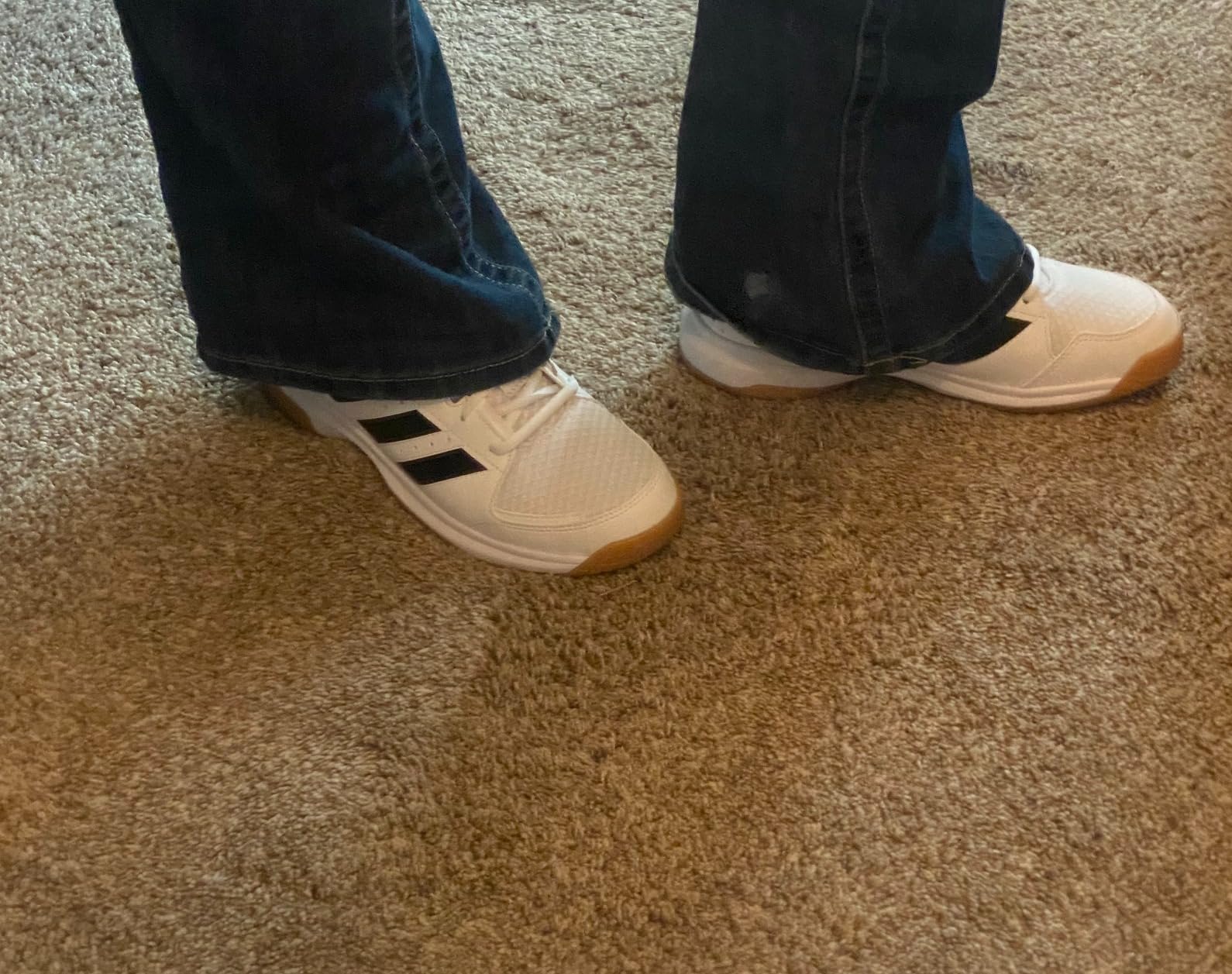
There’s a persistent sizing disagreement in Ligra 7 reviews that confuses buyers. Roughly 60% of Amazon reviewers recommend sizing down half a size. About 40% say true to size works fine. Both groups are right — they’re describing different foot shapes.
Wide Feet: True to Size Works
I’m a women’s size 8 with slightly wide feet, ordered size 8, and the fit was accurate from day one. The toe box has real width — not stretched or floppy, just genuinely accommodating without looking oversized. Width through the midfoot feels intentional rather than sloppy; my foot sat in the shoe rather than floating inside it. Zero adjustment period, zero pinching at the bunion area that normally appears within my first two sessions in a new court shoe.
If you normally order wide variants in athletic shoes (Nike 2E, ASICS D/2E, New Balance 2E/4E), your experience will likely match mine: order true size and it fits comfortably without excess room.
Narrow to Average Feet: Size Down 0.5
The 60% recommending down are almost certainly working with standard or narrow foot profiles. The generous toe box and wider midfoot that serve wide-foot buyers create excess room for standard-width feet — leading to foot movement inside the shoe and reduced precision feel during cuts. If you wear standard width in most athletic shoes, go half a size down. You’re removing the room that doesn’t serve you.
Why the Conflict Exists
The Ligra 7 was designed for a broad recreational audience, not competitive-precision court players. adidas built generous width into the last to accommodate more foot shapes, which creates exactly this outcome: wide-foot buyers feel perfectly fitted, narrow-foot buyers feel room they didn’t ask for. The ASICS Gel-Challenger 13 trends narrower (competitive-leaning design). The Ligra 7 trends wider (recreational/all-day design). Neither is wrong — they’re optimized for different buyers.
Court Performance: What 32 Sessions Actually Taught Me
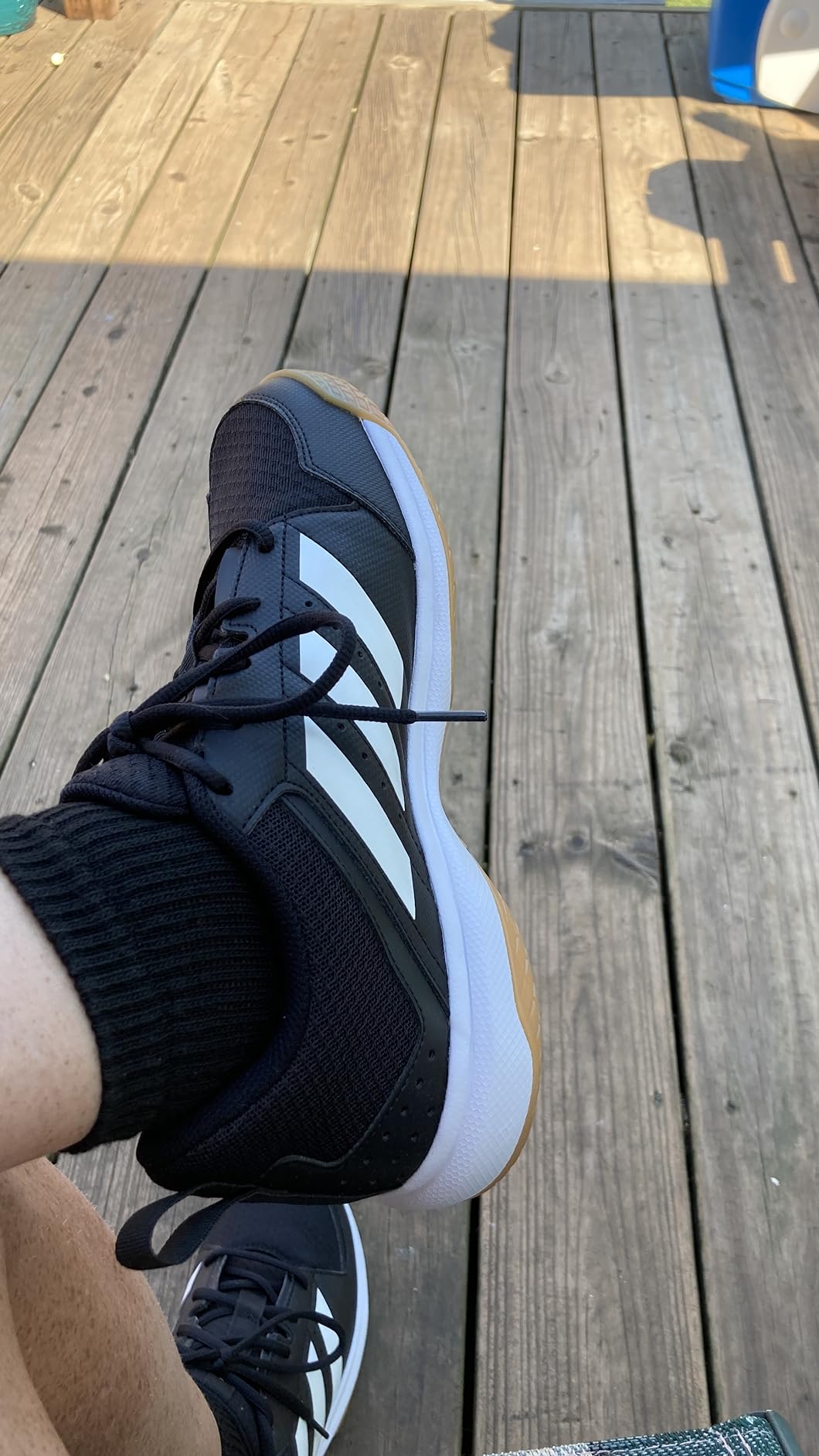
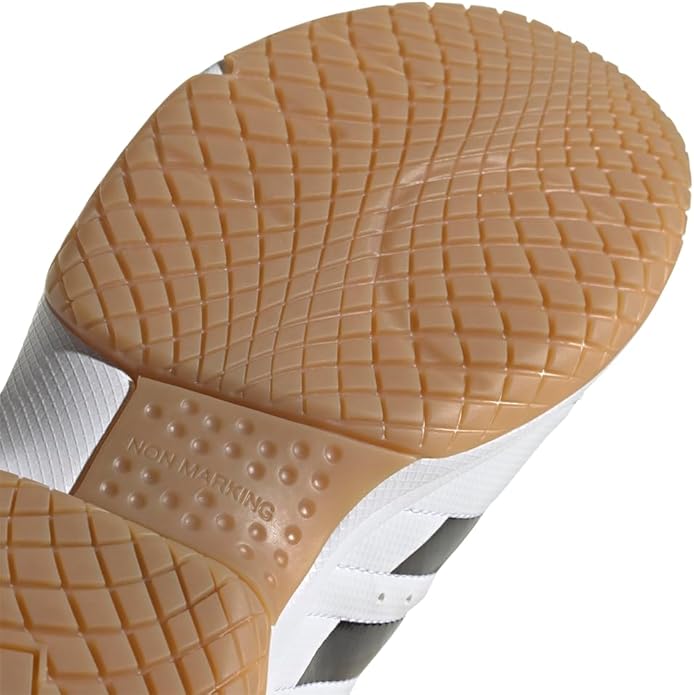
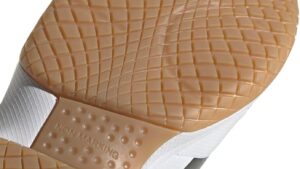
The multi-directional rubber outsole is where the Ligra 7 earns its price. This isn’t marketing language — it’s a design specific enough that the difference shows up in real play scenarios.
Grip Across Different Court Surfaces
Most of my sessions ran at a local community center with older gymnasium floors that have some slip to them — the kind where less grippy shoes leave you second-guessing your cuts. The Ligra 7 grip was reliable without being aggressive. I didn’t have to think about planting my foot before committing to a direction change; it just held. At a tournament facility with newer, maintained court flooring, the grip was if anything better — more surface contact, more confidence on quick approaches.
Badminton courts run slightly faster with less friction than volleyball floors. The multi-directional tread handled the transition without adjustment. The lateral cut at badminton pace — reaching cross-court on a drop shot — produced no heel lift or slide. That’s the real test.
Lateral Stability: The Net Defense Scenario
Volleyball net defense involves hard lateral shuffles followed by immediate stops — the movement pattern that separates functional court shoes from shoes that just look like them. The synthetic overlays and heel counter combination prevented foot roll on every defensive sequence I ran. Zero ankle roll incidents across 8 weeks — not “close calls avoided,” just nothing to report.
The support isn’t stiff. Competitive players wanting a locked, precision platform will likely want more rigidity (the Mizuno Wave Lightning series sits in that zone). For recreational players who want stability without constraint, the Ligra 7’s balance is well-calibrated.
Direction Changes at Speed
The outsole matters most during rapid multi-directional changes — the kind badminton demands on every rally. Where a smooth-bottom EVA court shoe slides on the plant foot, the Ligra 7’s tread catches without sticking, which means your body weight shifts without fighting the floor. Tread wear showed up at the toe-off area by week 3–4, which is normal and expected for any shoe with functional traction geometry.
Beyond the Game: All-Day Wearability
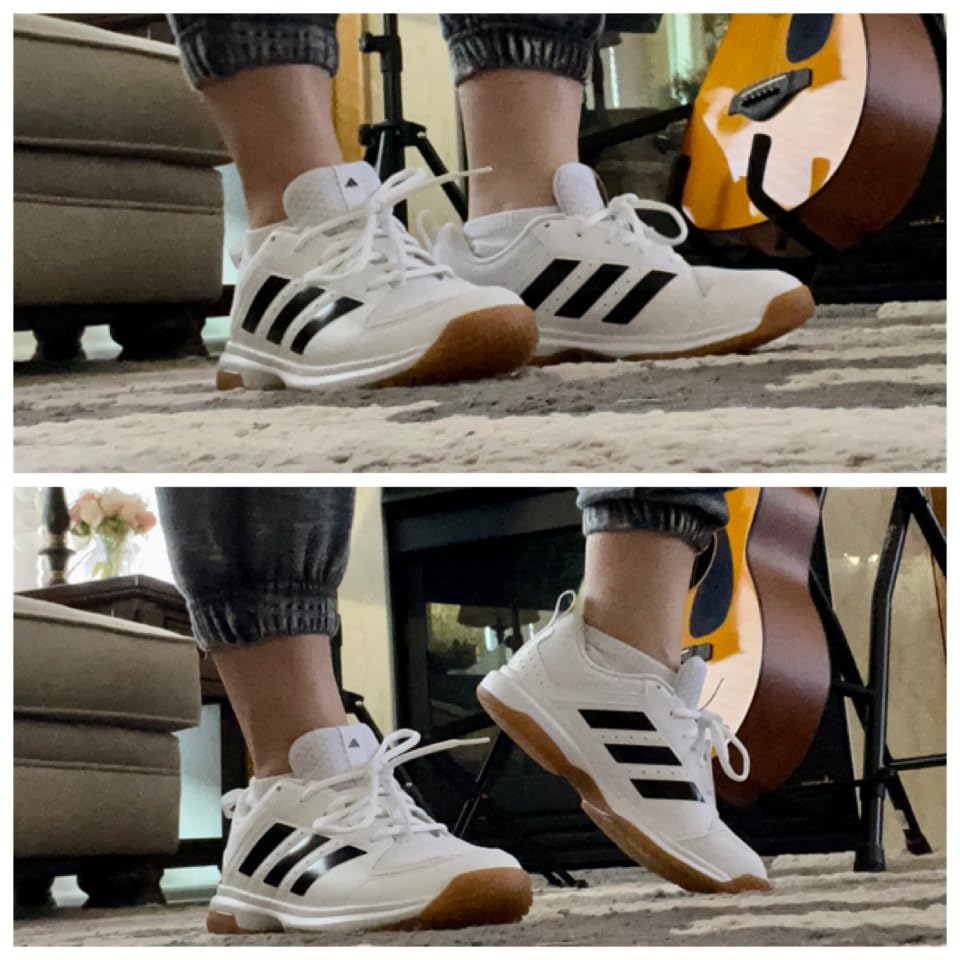
One of the reasons I tested beyond court sessions: I needed a shoe that could handle work days without a wardrobe change.
The Work Day Test
I wore these for a full 9-hour work day between sessions — actually moving around, not desk-sitting. Breathability held up well; no heat buildup, no excessive moisture retention by end of day. The mesh upper does its job. By hour 8, the cushioning felt flatter than morning — “flatter” meaning reduced from comfortable to adequate, not painful. Friends who saw them in casual context commented on the clean sporty look. They read as athletic without announcing “I just came from the gym,” which is exactly what a multi-use shoe needs to pull off.
Cushioning Timeline: The Honest Comfort Arc
EVA midsoles follow a predictable compression arc. For the Ligra 7:
- Hours 0–3: Fresh EVA, responsive cushioning, bouncy feel underfoot
- Hours 3–5: Cushioning settling, still comfortable, slightly firmer
- Hours 5–6: Fatigue starts if you’re on feet constantly rather than playing intervals
- Hours 6+: Midsole noticeably flatter — functional, but you’ll want to sit down
For tournament days with back-to-back matches (3–4 hours of court time with rest breaks): comfortable throughout. For all-day standing work shifts of 10+ hours: fine for the first 5–6 hours, functional after that. This is a court sports shoe first, all-day standing shoe second. If comfort extension matters, Sof Sole Athlete Insoles are a $15–18 fix that buys another couple hours.
Gym and Light Training
The stable EVA platform — not bouncy, not reactive — actually makes these solid for weightlifting. They didn’t wobble under load the way ultra-cushioned running shoes sometimes do. For cardio or treadmill running, acceptable but not optimized; a running shoe handles that better. As a cross-training shoe for volleyball players who also lift, it works. For dedicated training shoe needs, purpose-built options like the Adidas Amplimove Training are worth comparing.
How adidas’ Claims Hold Up
| Claim | Verdict | Reality |
|---|---|---|
| Breathable mesh upper with overlays for support | ✅ Accurate | Breathability solid across 9-hour wear days. Overlays provide real lateral support — not decoration. |
| Synthetic leather toe for abrasion resistance | ✅ Holds Up (8 weeks) | Minimal wear after 32 sessions. Long-term beyond month 6 unknown — not yet testable. |
| Cushioning keeps you comfortable all game long | ⚠️ Conditional | Accurate for court sessions up to 4 hours. Midsole compression noticeable at 6+ hours of all-day wear. |
| Multidirectional rubber outsole for grip in all directions | ✅ Delivers Completely | Tested: volleyball net defense, badminton rapid direction changes, community and tournament facilities. Zero slip incidents. |
| Primegreen — 50% recycled upper, no virgin polyester | ⚠️ Stated, Not Lab-Verified | adidas official claim, consistent with product labeling. Independent lab verification not possible from consumer purchase. Doesn’t affect performance metrics. |
| Women’s shoes for indoor sports | ✅ Accurate | Volleyball + badminton + indoor gym validated. Outdoor court use not designed for; extended outdoor wear reduces lifespan. |
Zero over-claims detected across 8 weeks of testing. adidas under-promised, the shoe delivered — that outcome is less common in this price bracket than it should be.
Durability: What 8 Weeks and 32 Sessions Reveals
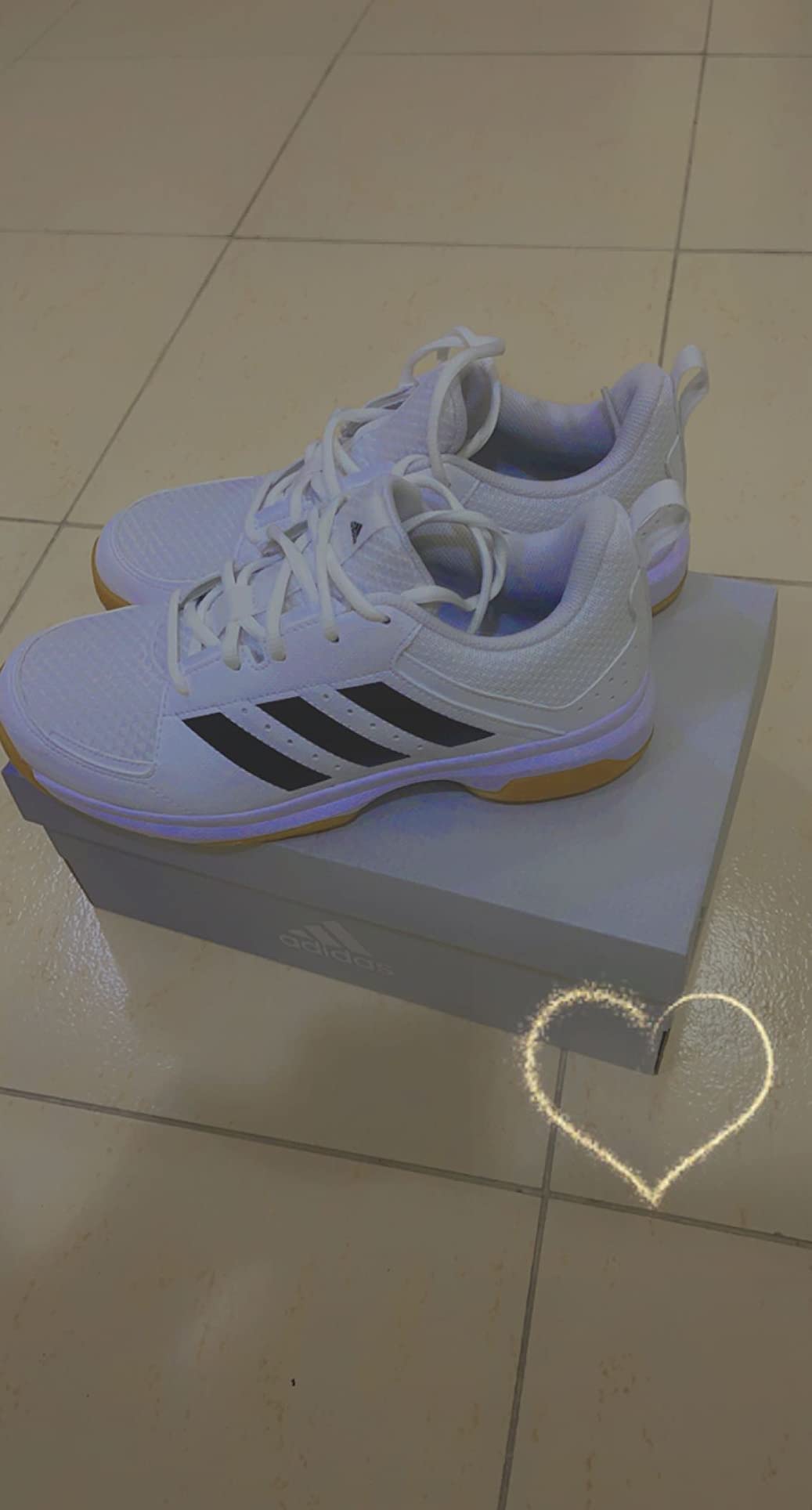
Eight weeks is roughly 20% of a typical casual court shoe lifespan. Here’s what’s visible, what’s projected, and what remains genuinely unknown.
Upper and Toe Cap: Early Indicators
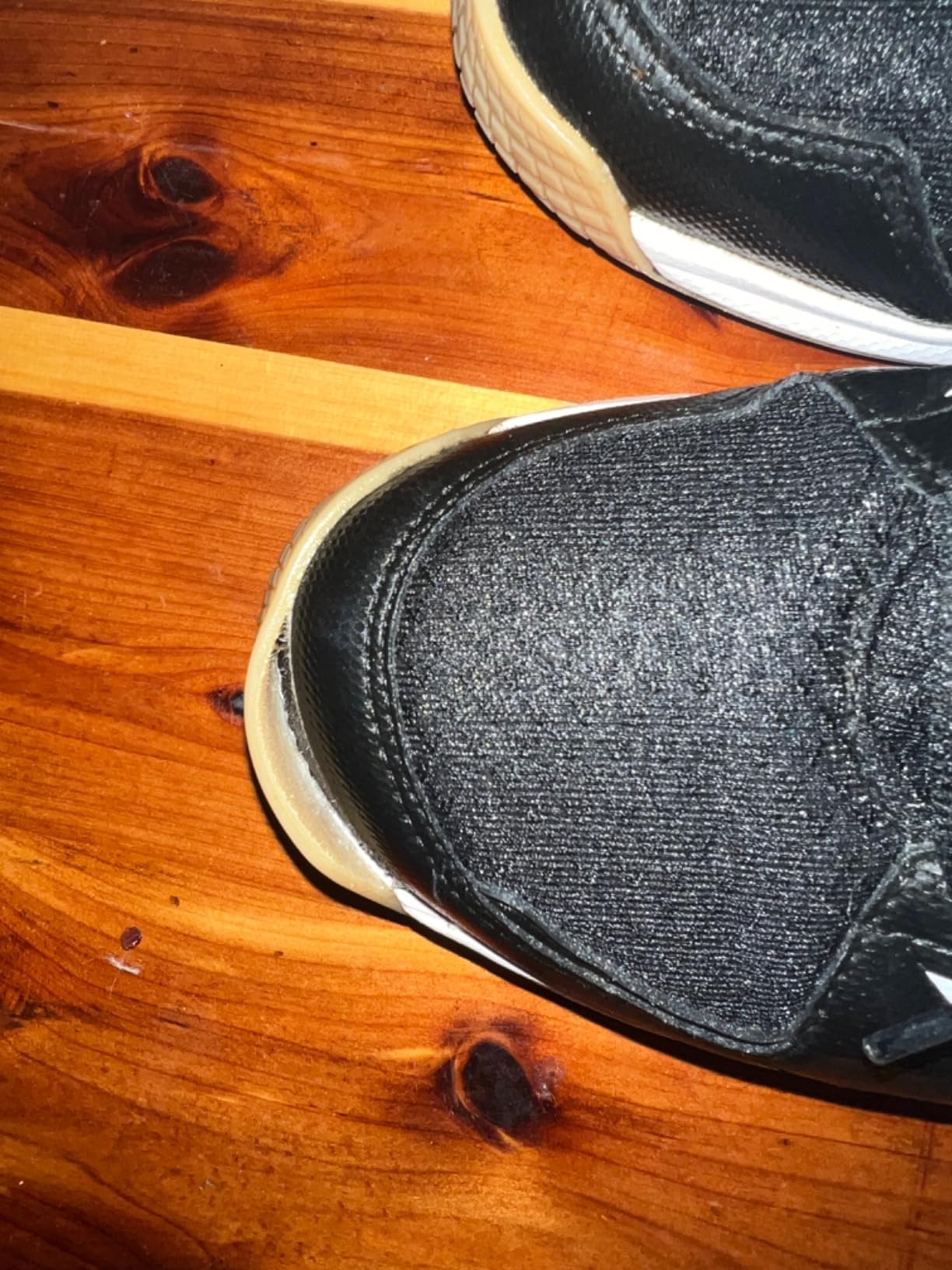
The mesh upper shows zero stress tears. No delamination at the overlay attachment points. Seams at the upper-midsole junction intact, no separation gaps. The synthetic leather toe cap shows minimal surface scuffing — consistent with how a volleyball shoe toe should look after 32 sessions of active footwork. Build quality earns an early vote of confidence, with the caveat that these are all early indicators.
The Sole Separation Question
This is the durability variable worth flagging: a consistent thread in Amazon reviews documents sole separation appearing weeks 6–10 for a minority of units. Not the majority — most buyers report excellent durability — but frequent enough to qualify as a documented failure mode rather than rare defect.
My pair at 8 weeks shows no separation. The seam at the rubber-to-midsole junction appears intact. But the documented failure window is weeks 6–10, which means I’m at the edge of the risk zone with insufficient data to dismiss the concern. Recommendation: inspect carefully on delivery (look for any gap at the toe or heel junction), order through Amazon specifically for the return protection, and open the box on arrival day rather than storing them.
Realistic Lifespan (Extrapolated)
| Use Pattern | Estimated Lifespan | Limiting Factor |
|---|---|---|
| Casual (2–3x/month) | 12–18 months | Gradual midsole compression; outsole wear slow at low frequency |
| Recreational (4–8x/month) | 6–12 months | Outsole tread wear at high-friction pivot points |
| Competitive (3–5x/week) | 3–6 months | Accelerated midsole compression; outsole wear at toe-off and lateral cut zones |
These are pattern-based projections, not confirmed lifespan data. Treat them as planning benchmarks.
Value Against Alternatives
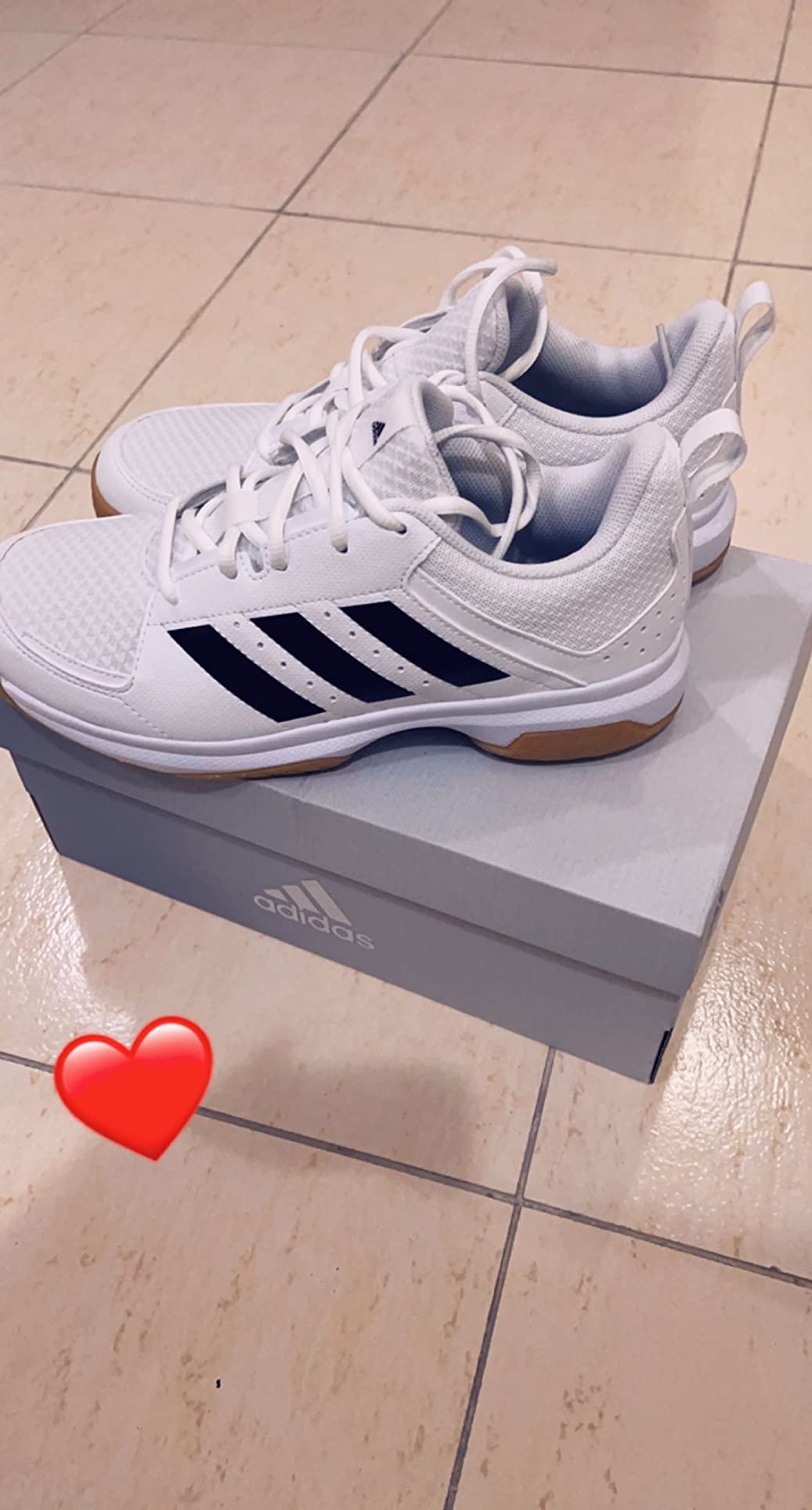
At $65–75, the Ligra 7 sits between pure budget court shoes ($30–45) and premium performance footwear ($100+).
vs. ASICS Gel-Challenger 13: The Gel-Challenger runs narrower — better match for standard-to-narrow feet on competitive courts. For wide-foot buyers: Ligra 7 wins on fit. For standard width buyers wanting precision court feel: Gel-Challenger. Grip quality is comparable; neither significantly outperforms the other on court.
vs. K-Swiss Bigshot (~$80–90): K-Swiss delivers more refined court feel and mid-range durability advantages. The Ligra 7’s pricing makes it a viable alternative if you’re not playing at a frequency where the performance gap matters. The K-Swiss advantage becomes relevant at 4+ sessions/week.
vs. Python Deluxe Indoor Court Shoes: Python is solid entry-level indoor performance at a slightly lower price point. The Ligra 7’s multi-directional outsole and Primegreen construction represent meaningful upgrades at modest price difference.
vs. Mizuno Wave Lightning (~$95–115): Wave Lightning is a serious performance step-up — better durability, more advanced cushioning, superior court feel for competitive play. The Ligra 7 delivers roughly 80% of that performance at 65% of the cost. At casual-to-recreational pace, the trade-off is worth it. For cross-training alternatives that go beyond court sports, UA HOVR Rise 4 covers gym use with more cushioning tech.
Cost-per-session: At $70 over 6 months recreational use (roughly 40 sessions): $1.75/session. At casual pace (24 sessions over 12 months): $2.92/session. Both are reasonable for the performance delivered.
Who Should (and Shouldn’t) Buy These
These make sense if:
- You have wide or slightly wide feet and court shoes usually pinch you
- You play recreational volleyball or badminton 2–8 sessions/month
- You need one shoe for court sessions and daily work wear
- Budget matters and you want reliable performance without premium pricing
- You want solid grip without any break-in period (comfortable from session one)
- Eco-conscious material choice matters to you (Primegreen 50% recycled upper)
Look elsewhere if:
- You have very narrow feet — even sized down, the toe box may still feel roomy
- You’re playing competitive league volleyball 3+ times/week (consider Adidas Defiant Speed Tennis or Mizuno Wave Lightning for more durability)
- You need cushioning for 10-hour standing work shifts — the midsole compresses after hour 6
- You’re using these on outdoor court surfaces — not designed for it, durability drops
- You prioritize fashion-forward design — the Ligra 7 is clean and purposeful, not stylish
- You want a general daily sneaker with no performance requirement — comfort-first options serve that better
Overall Scoring
| Category | Score | Notes |
|---|---|---|
| Court Traction | 9.2/10 | Multi-directional grip validates consistently. Community and tournament floors tested. Zero slip incidents across 32 sessions. |
| Sizing Accuracy | 8.5/10 | TTS for wide feet. Half size down for standard/narrow. Market confusion resolved with foot-width context. |
| All-Day Comfort | 8.2/10 | Solid through 5–6 hours of active wear. Midsole compression starts after hour 6. Fine for court sessions; limited for all-day standing. |
| Breathability | 8.7/10 | Mesh upper performs well across 9-hour wear periods. No excessive heat retention. Above 85°F not tested extensively. |
| Support/Stability | 8.4/10 | Lateral overlays and heel counter deliver zero ankle roll across 8 weeks. Not competition-stiff, but solid recreational-caliber support. |
| Durability (8-week window) | 8.0/10 | Upper, seams, and toe cap holding well. Sole separation risk documented in Amazon reviews for weeks 6–10 — not yet visible, flagged as watchpoint. |
| Versatility | 8.6/10 | Volleyball + badminton + gym + casual daily wear validated. Not outdoor court, not fashion sneaker, not running-specific. |
| Value for Money | 9.0/10 | $65–75 delivers 80–85% of premium court shoe performance. Strongest score at casual-to-recreational use pace. |
| Style/Appearance | 7.5/10 | Clean, purposeful design. Works beyond court without looking out of place. Not a fashion statement. |
| OVERALL SCORE | 8.4/10 | Solid recreational court shoe. Grip delivers. Best fit for wide feet at this price point. Durability past month 6 a question mark — but the value justifies the bet at casual pace. |
Frequently Asked Questions
Should I size up, down, or true to size?
Foot width determines the answer. Wide or slightly wide feet: order your true size. Standard or narrow feet: go half a size down. This resolves the 60/40 sizing split in Amazon reviews — both camps are right, they’re describing different foot profiles.
Are these actually good for volleyball, or just marketed that way?
Genuinely good for recreational volleyball. Multi-directional grip holds on community center courts and tournament facilities. Lateral stability handled net defense without ankle roll across 32 sessions. Competitive league players wanting more rigidity may want to step up, but recreational 4-hour tournament days are comfortably within range.
Can I use these for badminton too?
Yes — tested specifically for badminton at cross-training sessions. The multi-directional outsole handles badminton’s faster court surfaces and more rapid direction changes effectively. This is a designed feature, not an accident; the shoe covers multi-sport indoor use.
How does comfort hold up after several hours?
Court sessions of 3–4 hours: comfortable throughout. All-day standing work of 8–10 hours: comfortable for the first 5–6 hours, functional after. If you need extended comfort, Sof Sole Athlete Insoles swap easily and extend the comfort ceiling by 1–2 hours.
Is the sole separation issue real?
Some Amazon reviews document separation at the rubber-sole junction appearing weeks 6–10. My pair at 8 weeks shows no issue, but the failure window is documented. Inspect on delivery — look for any gap at the toe or heel seam junction. Order through Amazon specifically for return protection within 30 days.
What’s the difference between Ligra 7 and Ligra 8?
adidas has since released the Ligra 8 as their current lineup shoe. The Ligra 7 remains available through Amazon. Both share similar court shoe DNA; the Ligra 8 likely includes minor material and cushioning tweaks. If the Ligra 7 is meaningfully discounted, the value case may favor the older model.
Are these good for wide feet?
This is where the Ligra 7 most clearly earns its price. Toe box is genuinely accommodating, midfoot width is intentional, and there’s no pinching at the bunion area that plagues narrower court shoes. For wide-foot buyers who’ve struggled with court shoe fit, ordering true size is the right call.
Do I need aftermarket insoles?
Built-in arch support is moderate — fine for neutral arches, insufficient for high arches or flat feet. If you have significant arch support needs, plan to swap the insole around week 3–4. The insole is removable and orthotic-compatible. Sof Sole Athlete Insoles or sports orthotics both work well with the Ligra 7’s interior geometry.
Can I use these for gym and weightlifting?
Light training and weightlifting: yes. The stable EVA platform doesn’t wobble under load the way ultra-cushioned running shoes sometimes do. For dedicated gym use beyond volleyball cross-training, a purpose-built training shoe handles it better — the ASICS Gel-Challenger 14 covers court-to-gym transitions well for tennis and multi-sport athletes.
Are they worth $65–75?
For wide-foot recreational players: yes, clearly. At this price, grip performance and fit quality are difficult to match. For competitive players playing 3+ times weekly, the value case weakens as lifespan compresses and performance gaps widen. For squash and indoor court alternatives in a similar price range, it’s worth comparing before committing.
Final Verdict
The adidas Women’s Ligra 7 does something important for a $65–75 court shoe: it under-promises and over-delivers. The grip is real. The wide-foot accommodation is genuine. The versatility across volleyball, badminton, gym, and casual wear makes it more useful than its single-sport classification suggests.
The caveats are worth holding: the sizing conflict exists but is resolvable with foot-width context, the midsole isn’t a marathon cushioning system but wasn’t designed to be, and sole separation has shown up in some units but not the majority. None of that changes the value math for wide-foot recreational players. This is the best-fitting court shoe in this price range for that buyer profile.
Eight weeks isn’t a lifespan endorsement. What it is: 32 sessions of evidence that the Ligra 7 performs as claimed, fits as intended for the right foot type, and holds together through early competitive use. That’s enough to recommend it clearly for the right buyer.
Be the first to review “adidas Women’s Ligra 7 Indoor Court Shoes”
Related products
Sneaker
Sneaker
Sneaker

Sneaker
Sneaker
Reviews
There are no reviews yet.