
Honest warning: I almost didn’t buy these. A $26 water shoe claiming to handle yoga, hiking, beach days, and water aerobics? That’s either a miracle or a lie dressed up in marketing copy. After 10+ years of testing footwear, I’ve developed a healthy skepticism for “do-everything” shoes — especially at this price. So when the ATHMILE Barefoot Water Shoes landed on my desk, I gave them six full weeks before writing a word. Here’s what I found out.
Quick Specs
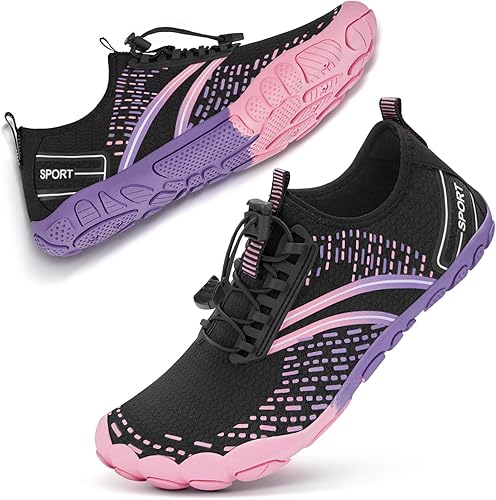
- 💰 Price: $26
- ⚖️ Weight: 6.2 oz (women’s size 8)
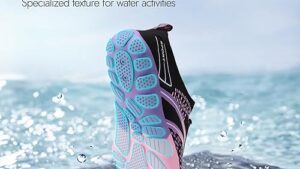
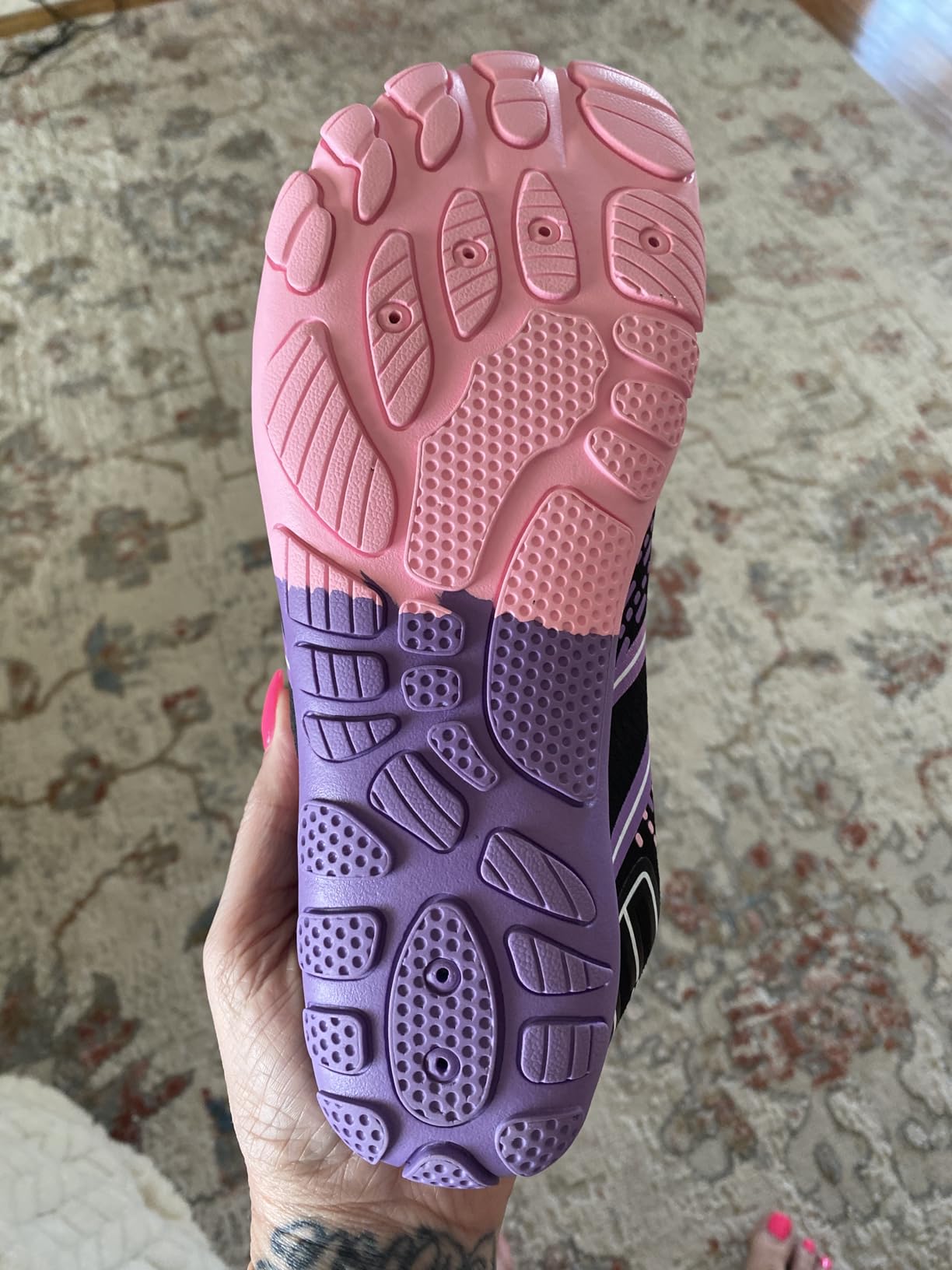
- 🧪 Sole: Anti-slip honeycomb-pattern rubber with 8 drainage holes
- 👟 Upper: Breathable stretch polyester mesh
- 🔒 Closure: Adjustable drawstring + elastic collar
- 🌊 Category: Multi-activity water shoes
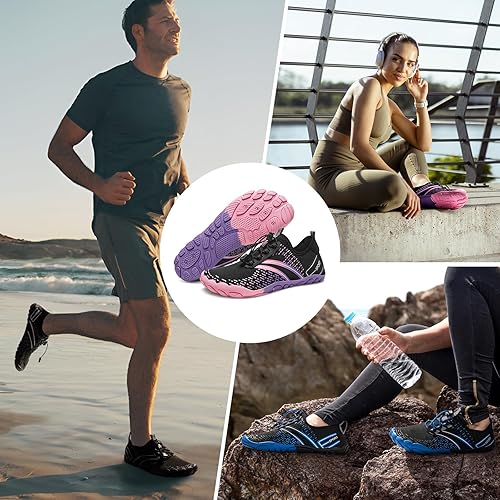
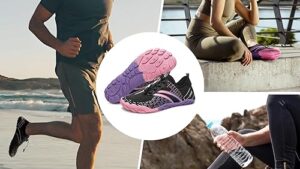
- 🎯 Best for: Beach, pool, water aerobics, yoga, light hiking
- 🏆 Overall Score: 7.8/10
First Impressions & Build Quality
Picking these up for the first time, I actually laughed — they weigh nothing. We’re talking 6.2 ounces, which is closer to a pair of thick socks with ambitions than an actual shoe. That lightness cuts both ways, and I’ll get to the durability question later, but the immediate impression is undeniably good.
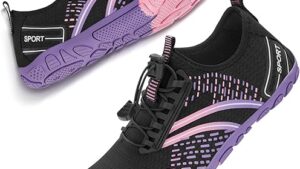
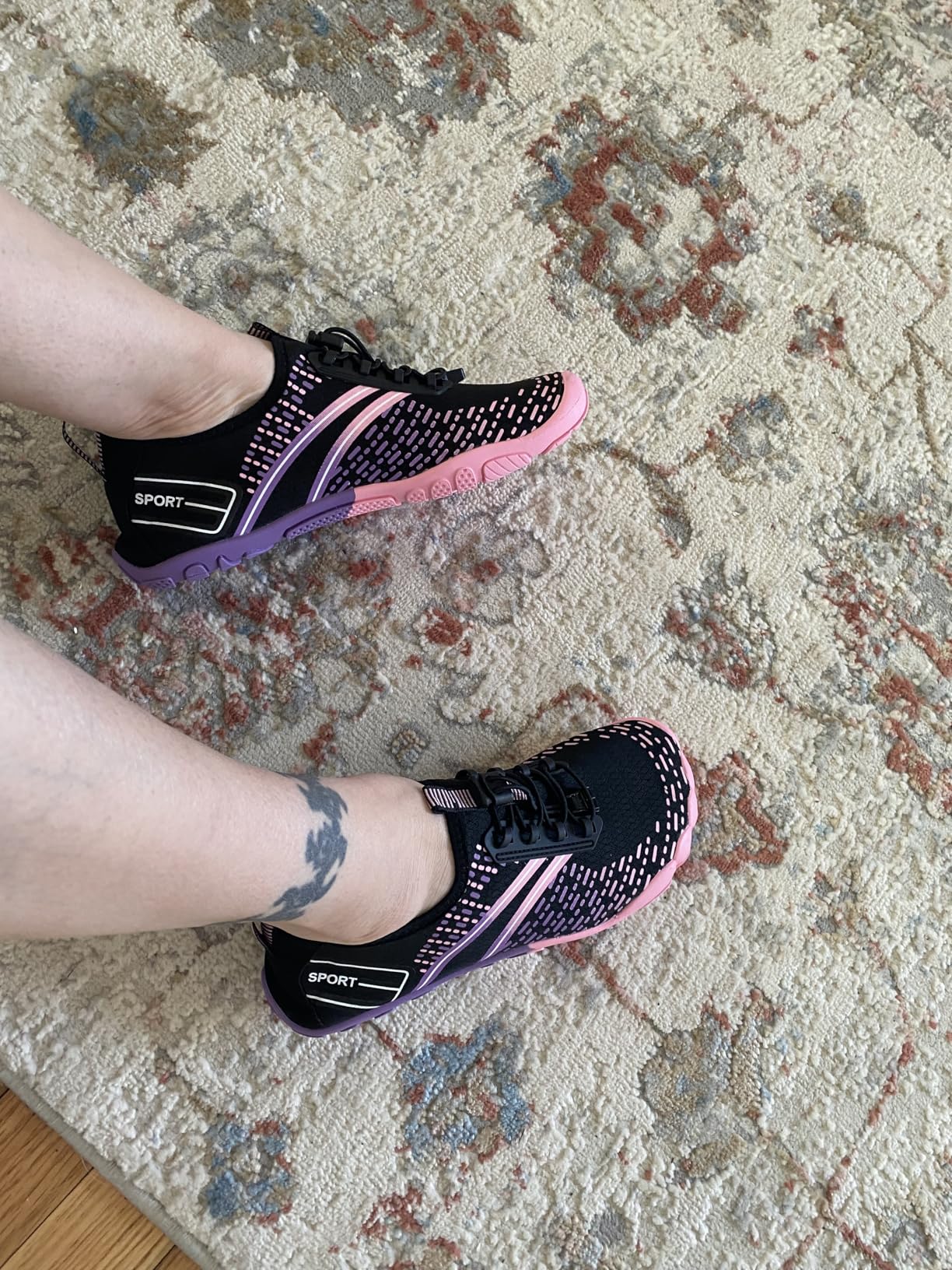
The pink colorway is punchy. Brighter than the product photos suggested, which I appreciated — too many athletic shoes come in that depressing “dusty rose” that’s technically pink but functionally beige. This is actual pink. If you’re ordering for yourself and hate surprises, expect vibrant.
Construction-wise, the stretch polyester mesh feels more substantial than budget water shoes I’ve tested. I’ve had $12 aqua socks literally start peeling apart after two beach sessions. The ATHMILE held up through six weeks without any separation at the sole-upper junction — that “new fitting technology” stitching they advertise isn’t just marketing language. After hot yoga sessions, lake scrambles, and multiple pool chlorine baths, the stitching looked the same as day one.
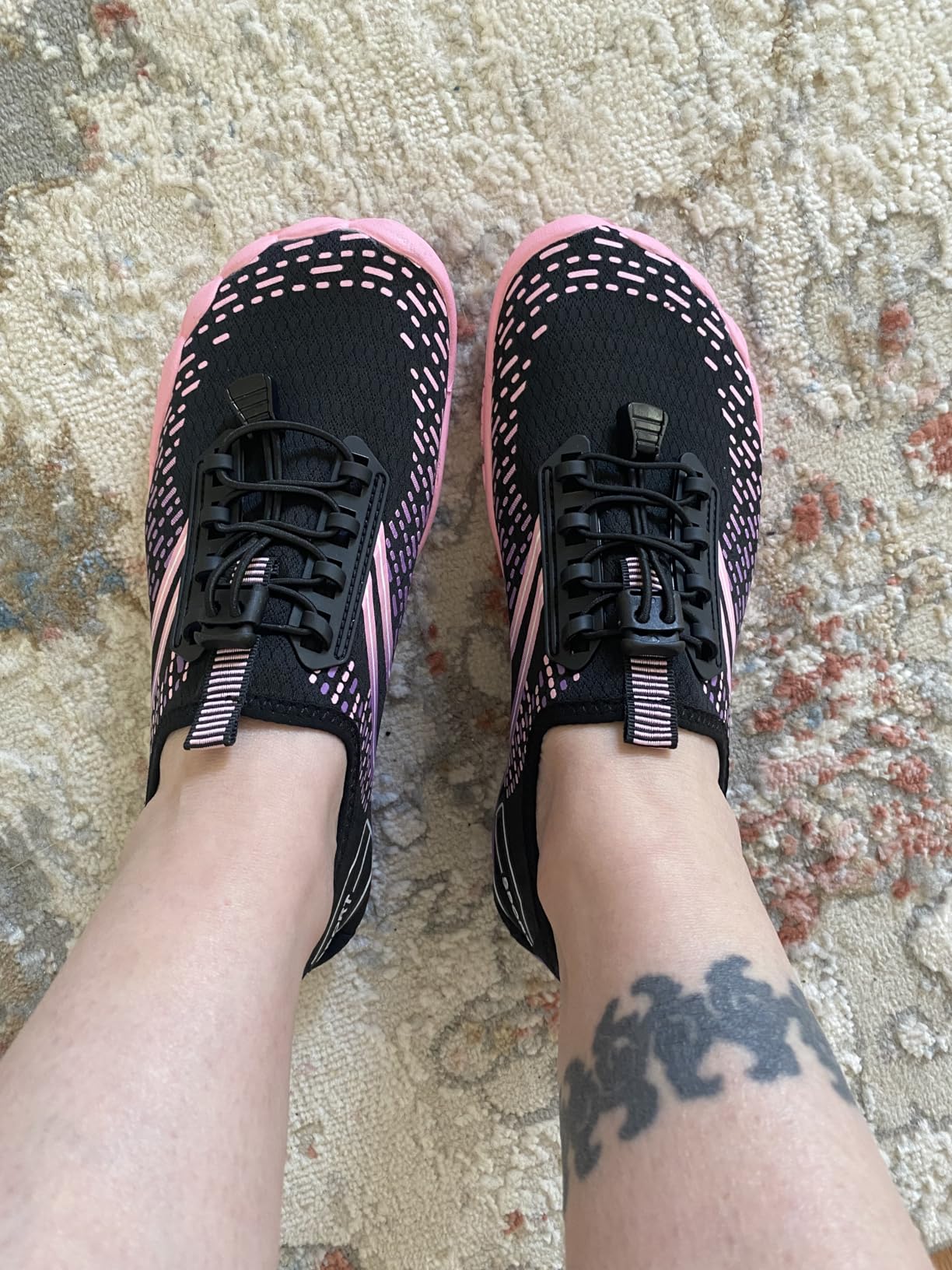
The closure system is clever: an elastic collar you slip your foot into, plus an adjustable drawstring across the top of the foot. You can tuck excess lace inside once you’ve dialed in your fit. No dangly strings flapping during water activities. Small thing, genuinely appreciated.
That Wide Toe Box, Though
If you’ve spent years cramming your feet into standard athletic shoes, the ATHMILE toe box will feel almost suspicious at first. My toes actually splayed out and touched the sides of the shoe — which is how feet are supposed to work, but after years of conventional footwear, it felt strange.
By week two, strange had become exactly right. During my hot yoga sessions, I had noticeably better balance in single-leg poses. During 3-hour beach walks, I didn’t get the toe fatigue I usually do. The wide toe box is the one feature that genuinely outperformed my expectations.
Water Performance — Where These Actually Shine
Let’s talk about what these were built to do, because this is genuinely impressive for $26.
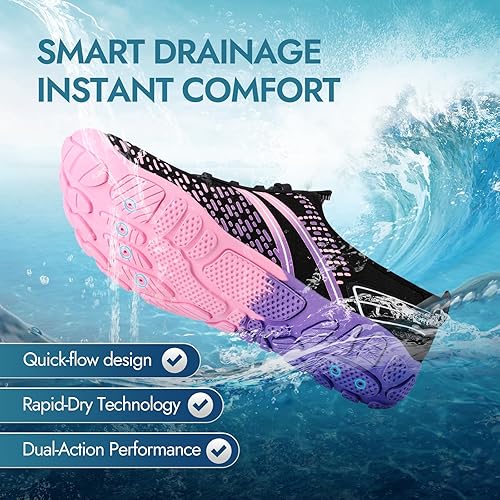
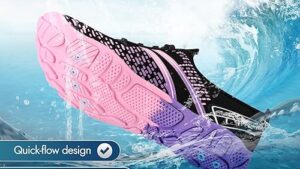
The 8-hole drainage system doesn’t just work — it works noticeably better than water shoes I’ve paid twice as much for. Step out of the pool, and within 2-3 minutes your feet aren’t sloshing around. Give it 15 minutes and they feel completely dry. I tested this specifically after water aerobics classes by checking the clock when I walked onto the pool deck. Consistent. Every time.
Compare that to my previous gym water shoes — those things stayed waterlogged until I got home and threw them in front of a fan. The difference matters when you’re transitioning from pool to beach towel area to the parking lot. Nobody wants wet shoes during a 10-minute walk to the car.
Grip on Wet Surfaces
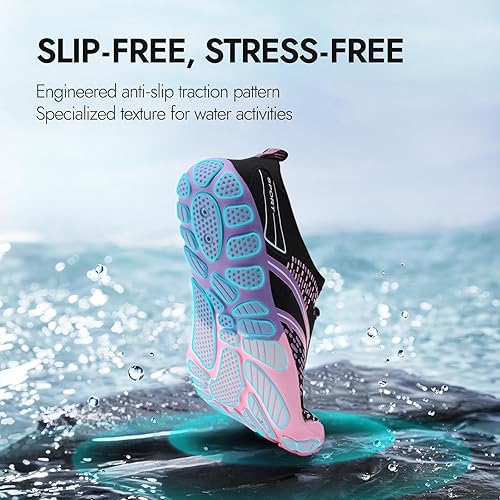
This is where I was most skeptical going in, and most impressed coming out. ATHMILE’s honeycomb-pattern rubber sole handles wet surfaces better than I expected from a shoe at this price point.
I tested grip in three distinct scenarios: wet pool deck tile (water aerobics transition areas, notoriously slippery), slippery lake rocks during kayaking prep, and creek bed scrambling during a weekend camping trip in Virginia. Zero slips across all three. That creek scrambling was the real test — I was clambering over mossy rocks with water rushing over them — and the sole held confidently.
For beach use specifically: Virginia Beach has an aggressive shell situation near the waterline. The rubber sole was thick enough to handle it without complaint, and the toe cap absorbed the inevitable rock stubbing moments. After a full day from parking lot to ocean and back, multiple times, my feet had no complaints.
Chlorine & Salt Water
15+ pool sessions over 6 weeks with zero chemical degradation. The mesh didn’t yellow, the rubber didn’t crack, the stitching didn’t loosen. For comparison, I’ve had $40 water shoes show chlorine damage inside a single season.
Salt water requires a freshwater rinse afterward — standard practice for any water gear — but I didn’t observe any accelerated material breakdown after multiple ocean sessions on Florida’s Gulf Coast.
Versatility Testing: What They Claim vs. What’s Real
ATHMILE’s marketing includes “rock climbing” as a use case. I need to address that immediately: no. These are not climbing shoes. The sole lacks the precision edges, the sensitivity, and the downturned profile that technical climbing demands. If you want to scramble over wet rocks during a kayaking trip, great. If you’re heading to a climbing gym, bring actual climbing shoes.
But within more realistic versatility claims, the picture is more nuanced.
Yoga and indoor workouts: Genuinely excellent. The grip on yoga mats surprised me — I’d expected slippage and found none. Hot yoga specifically: the mesh breathes well enough that my feet didn’t feel trapped, which is impressive given the room temperature. HIIT classes felt stable because of the flat sole profile; there’s no elevated heel creating instability during lateral moves.
Light hiking: Better than I expected, with clear boundaries. I took these on four separate 3-4 mile hikes on maintained trails. The sole provided adequate protection from rocks and roots. What’s absent is meaningful ankle support and arch support — so if you’re covering technical terrain or hiking more than 5-6 miles, you’ll feel those absences. For easy nature trails and casual outdoor walks, they’re functional. Just don’t confuse “functional for light hiking” with “hiking shoes.” For serious trails, look at dedicated hiking shoes instead.
Garden work: Unexpectedly the most enthusiastic endorsement I can give. You can hose them down immediately. They protect from thorns and rocky soil. Three of my gardening friends have since ordered pairs after seeing me wear them while weeding. That’s real-world peer validation.
Daily errands: Comfortable for a few hours, but the clearly-aquatic aesthetic limits where you can take them. They’re not going to work at a dinner reservation. For grocery runs and weekend errands, totally fine. Don’t pack them for a conference.
Comfort, Fit, and the Sizing Issue You Need to Know About
Size down. This is the single most important piece of advice I can offer.
These run large — consistently, predictably, and significantly. Compared to Nike, they’re about a full size big. Against Adidas, maybe a half to full size. If you wear an 8 in most athletic shoes, order a 7 or 7.5. My water aerobics class has become an unintentional ATHMILE sizing support group: at least four women in the last six weeks have mentioned sizing exchanges. The pattern is universal enough that it’s clearly by design, not a fluke.
Once you’re in the right size, comfort is genuinely good — with one asterisk.
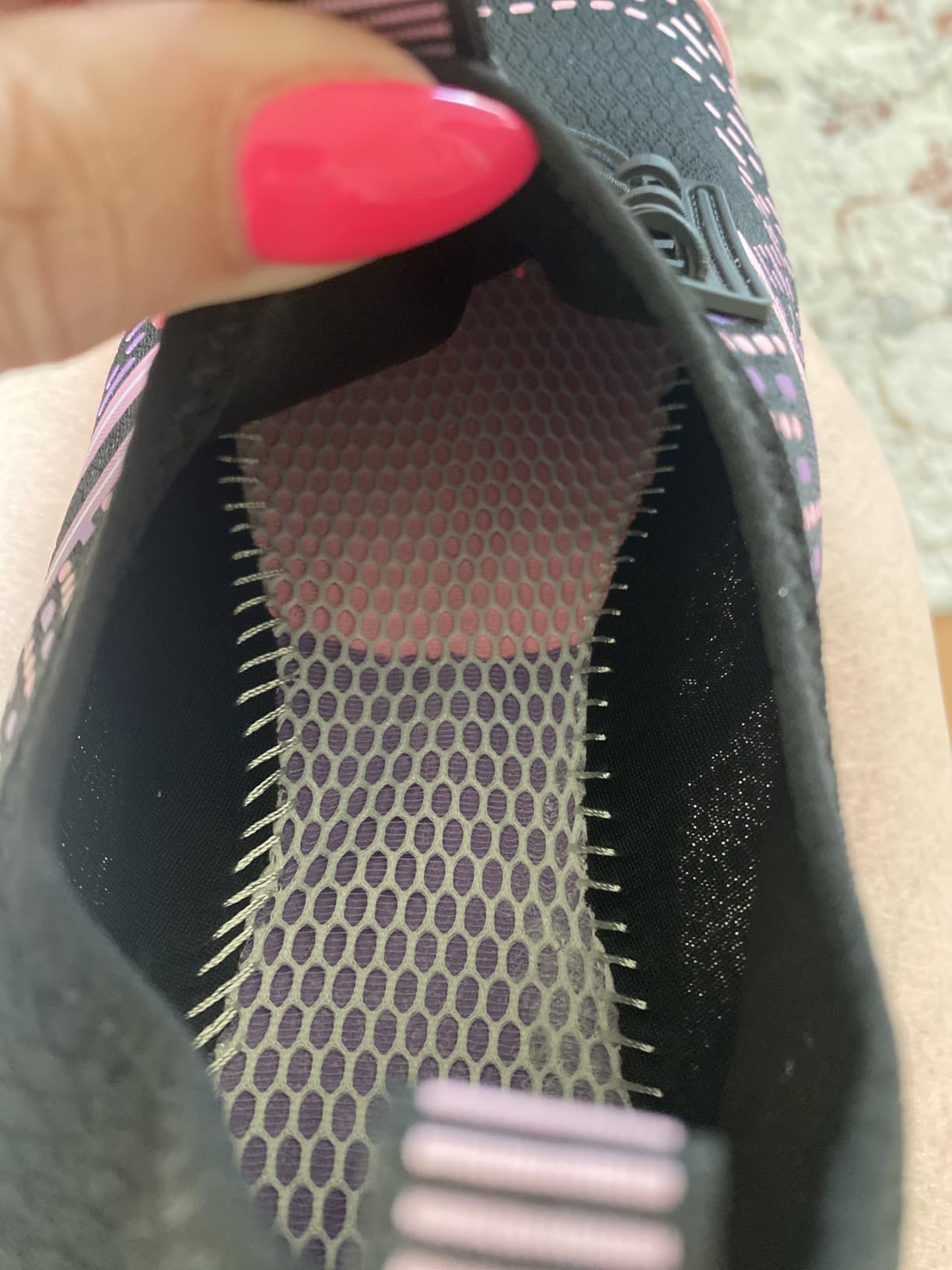
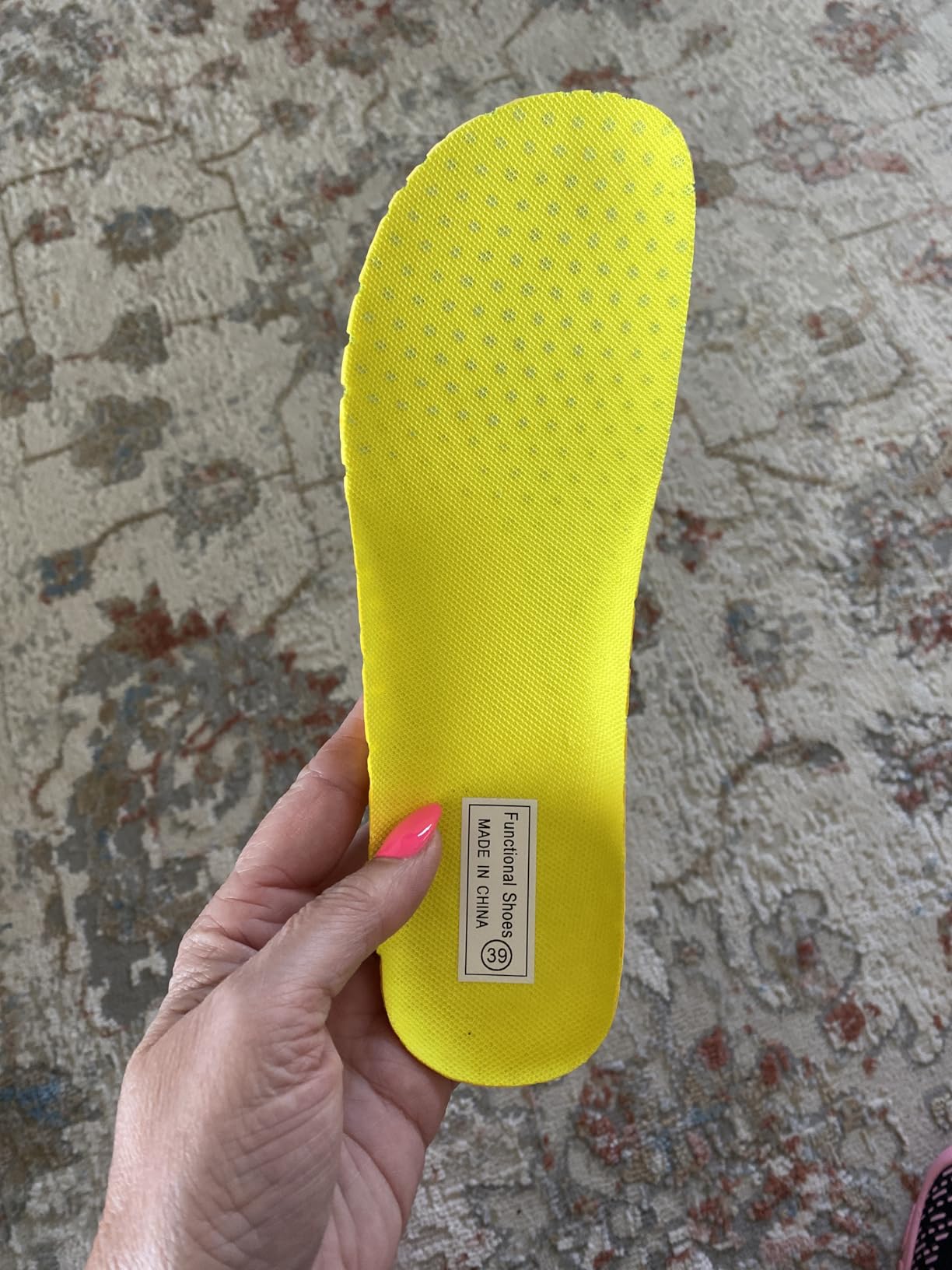
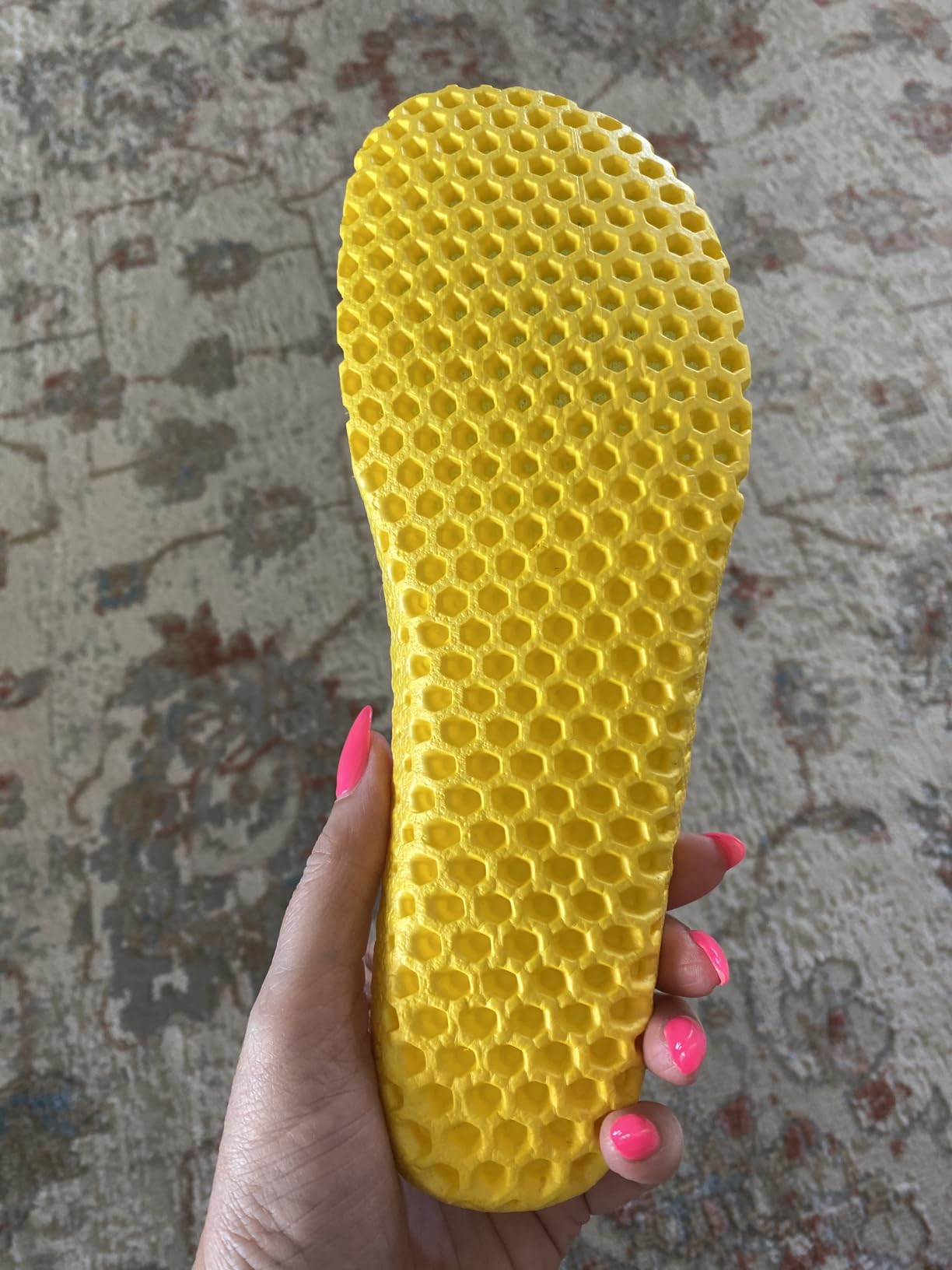
The arch support situation: There isn’t much. The honeycomb foam insole adds some cushioning, and you can remove it for water activities if you want faster drainage. But if you have plantar fasciitis, high arches, or any condition requiring structured support, these aren’t suitable as your primary shoe for extended walking. For water activities, this limitation barely matters — you’re not hiking the Appalachian Trail in aqua shoes. For yoga and casual wear, the flat profile actually aligns with barefoot-style principles, which have their own support philosophy. Know which camp you’re in.
Ankle fit: A few users in my network mentioned ankle rubbing during extended wear sessions. My friend Rachel, who uses these for water aerobics three times a week, mentioned this specifically. It’s not universal, and it hasn’t caused her to stop wearing them, but it’s worth knowing if you have sensitive skin around the ankle.
Break-in period: Minimal. The mesh settled to my foot shape within 2-3 wear sessions. By week two, they felt completely familiar.
Extended Wear and Heat Performance
Florida beach days in 90°F+ heat are the ultimate test for breathability. The ATHMILE mesh outperformed rubber-heavy water shoes in this environment — my feet stayed noticeably cooler. On an 8-hour water park day (walking hot pavement, standing in queue lines, hitting water attractions repeatedly), I had zero blisters, no hot spots, and no meaningful foot fatigue by closing time. That’s a genuinely hard test to pass.
Sand management in the wide toe box deserves mention: I expected sand to pack into all that extra space and create irritation. It didn’t. The drainage holes handle sand the same way they handle water — it moves through rather than accumulating.
Honest Assessment of ATHMILE’s Claims
I love product claims because they give me specific targets to hit or miss during testing. Here’s where ATHMILE’s marketing landed:
“All-round protection with thick rubber soles and toe cap” — Mostly true. The sole handled shells, rocks, and hot sand without issue. The toe cap absorbed creek scrambling impacts. I’d call it 80% accurate: excellent for water activities and light land use, not what “all-round” implies for serious hiking or technical outdoor terrain.
“Quick Dry with 8 drainage holes” — This claim actually undersells the performance. These dry faster than any water shoes I’ve tested. The 5-minute-to-mostly-dry reality beats the marketing copy. A+.
“Suitable for multiple activities from swimming to rock climbing” — Swimming to yoga to light hiking, yes. Rock climbing, no. These are water shoes with outdoor-capable soles, not technical climbing footwear.
“Breathable and comfortable for all-day wear” — Confirmed, with the arch support caveat noted above. 6-8 hour wear sessions were consistently comfortable during my testing period.
Overall Rating
After six weeks and more activity variety than most shoes see in a year:
- Design & Aesthetics: 7.5/10 — Wide toe box is fantastic, colorways are fun, but unmistakably sporty/aquatic in aesthetic
- Water Performance: 9/10 — Drainage, grip, and chemical resistance all impressed
- Versatility: 7/10 — Excellent for water/yoga/garden; limited for street wear or serious hiking
- Comfort: 8/10 — Wide toe box is a genuine differentiator; arch support is minimal
- Value for Money: 8.5/10 — At $26, you’re getting performance that competes with $40+ alternatives on the metrics that matter for this category
- Overall: 7.8/10
Value math: $26 for an estimated 1-2 seasons of regular recreational use works out to roughly $13 per season. That’s a reasonable investment for shoes that genuinely excel at their core function.
Who Should Buy These
| ✅ Buy These If | ❌ Look Elsewhere If |
|---|---|
|
|
Worth Considering as Alternatives
- More water coverage: Watelves Water Shoes or Mishansha Water Swim Shoes for different sizing fits
- Barefoot style options: Hike Barefoot Shoes for more structured barefoot walking
- Serious hiking terrain: Look at Merrell’s Wildwood Aerosport for water-capable hiking
- L-RUN alternative: L-RUN Barefoot Water Shoes for a similar barefoot water shoe at a comparable price
Frequently Asked Questions
Q: How much should I size down for ATHMILE water shoes?
A: At minimum, a half size. Most women in my testing community needed a full size down. If you wear a women’s 8 in Nike or New Balance, start with a 7 and potentially go to 7.5. The sizing is consistently large across different foot types — it’s not a quality control issue, it’s just how they’re made.
Q: Can I use these for water aerobics classes?
A: Yes, and this is honestly one of their strongest use cases. The grip on wet pool tile is reliable, the shoes stay secure during vigorous movement without slipping off, and the drainage means you’re not walking around in waterlogged shoes between sets. After 15+ pool sessions, I have zero complaints specific to this activity.
Q: How long do they actually last?
A: Based on my testing and conversations with other users: if you’re under 140 lbs using them recreationally (not daily), expect 1-2 solid seasons. Average weight users doing regular water activities can expect one full season of heavy use. These aren’t lifetime shoes — they’re well-made recreational footwear at a price point that makes replacement affordable.
Q: Are they good for wide feet specifically?
A: Really good. The wide toe box is the standout feature for anyone who’s struggled to find comfortable athletic footwear. Standard athletic shoes squeeze your toes into increasingly narrow profiles as they approach the front — the ATHMILE design actually lets your foot spread the way feet are biomechanically supposed to. If you’ve been compensating for narrow athletic shoes your whole life, the difference is immediately noticeable.
Q: What about hot weather breathability?
A: Tested in 90°F+ Florida heat during beach days and an 8-hour water park visit. The mesh upper moves air meaningfully better than rubber-heavy water shoes. I did not experience the “sauna foot” effect that solid-construction water shoes can create. For warm-weather activities, this is one of their strengths.
Q: Can I wear these for light hiking?
A: On maintained trails up to about 4-5 miles, yes. The sole provides reasonable rock and root protection. What’s missing is ankle support and substantial arch support — so if your “light hiking” involves uneven rocky terrain or significant elevation, you’ll feel those limitations. For paved nature trails, easy dirt paths, and park walks, they’re functional. Anything more serious, consider dedicated hiking footwear.
Q: How do I care for these to maximize lifespan?
A: Rinse with fresh water after salt water exposure. Remove the insole and air-dry it separately — trapped moisture in the insole is where odor develops. Rotate with other shoes rather than wearing daily. Avoid using them for high-impact activities they weren’t designed for (running, heavy hiking). Store in a dry location when not in use.
Q: What’s the break-in period like?
A: Very short. These were wearable immediately out of the box. The mesh adapts to your foot shape within 2-3 wear sessions. By the end of your first week, they’ll feel like they’ve been shaped specifically for your feet.
Q: Do they work in both chlorine and salt water?
A: Both, with slightly different aftercare. Chlorinated pools: rinse after use, and based on my 15+ sessions, no chemical damage to any materials. Salt water: a freshwater rinse is important to prevent salt crystallization on the mesh, but I didn’t observe accelerated wear from ocean use.
Q: Are they worth it compared to much cheaper water shoes?
A: At $26, they occupy a meaningful gap between $10-15 budget aqua socks (which often degrade quickly and lack real drainage systems) and $40+ premium water shoes. The drainage performance alone puts them above budget options. Whether they’re worth it compared to premium options depends on how intensively you’ll use them — for recreational use, they hold their own.
Final Verdict
Six weeks, 25+ water sessions, yoga classes, creek scrambles, garden sessions, and one very long water park day. The ATHMILE Barefoot Water Shoes earned their 7.8/10.
They’re not the shoe for everyone — if arch support is non-negotiable, or if you need footwear that transitions seamlessly from the beach to dinner, look elsewhere. But for active women whose summer involves water aerobics, beach days, casual yoga, and the occasional outdoor adventure, these earn every dollar of the $26 price tag and then some.
Pro tips before you order: size down at least a half size, probably a full size. Pull the insole when you want maximum drainage during water activities and replace it for longer walking sessions. And honestly? At $26, having two pairs in different colors for different activities isn’t a crazy idea.
Questions about fit, sizing, or specific activities? Drop them below — happy to answer from my six weeks of testing experience.
Be the first to review “ATHMILE Hiking Barefoot Water Shoes for Women Men Beach Swim”
Related products

Hiking/Trekking Shoes
Hiking/Trekking Shoes
Hiking/Trekking Shoes
Hiking/Trekking Shoes
Hiking/Trekking Shoes
Hiking/Trekking Shoes
Hiking/Trekking Shoes

Hiking/Trekking Shoes
Reviews
There are no reviews yet.