
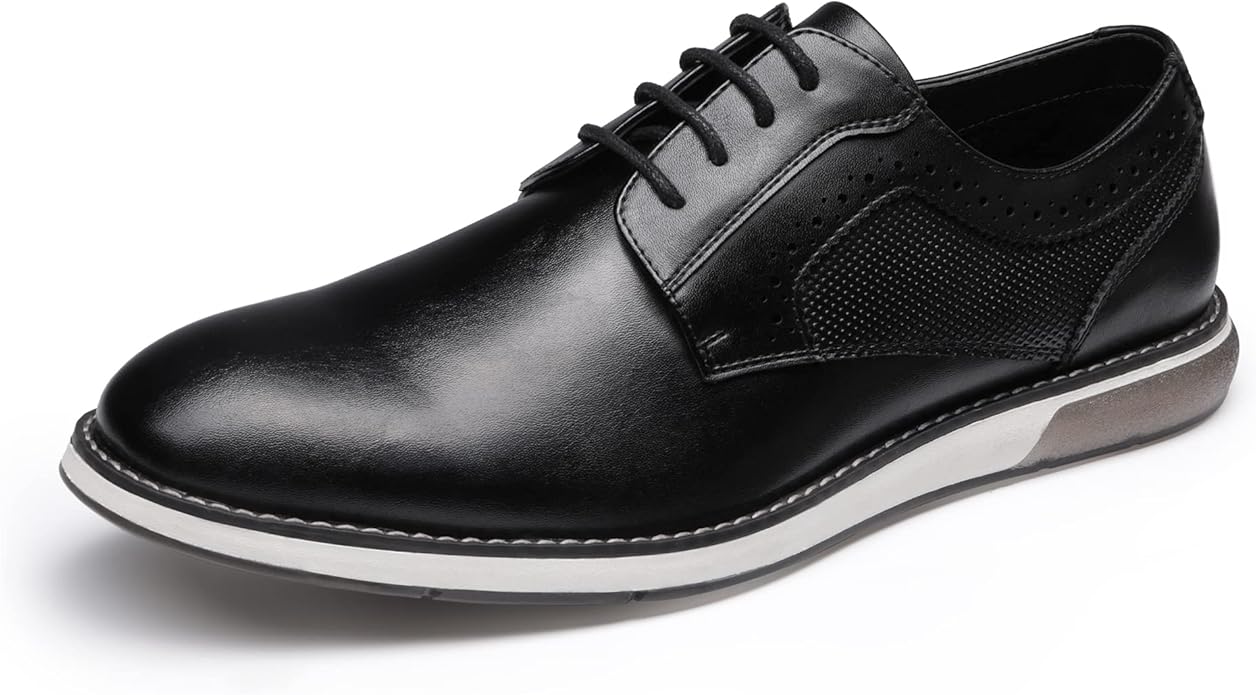
Last week at my son’s school pickup, three dads and I had the same conversation: dress shoes that destroy your feet by noon, then fall apart before the first lease renewal. Mike here. I’ve cycled through enough “comfortable dress shoes” to know that most of them are either comfortable OR dress shoes — rarely both. So when a parent mentioned these Bruno Marc CrossFlex GentEdge oxfords at $42, claiming they actually delivered on both counts, I did what any reasonable person would do: tested them for six weeks straight before saying a word about them.
Before You Buy: The Bruno Marc Oxford Confusion
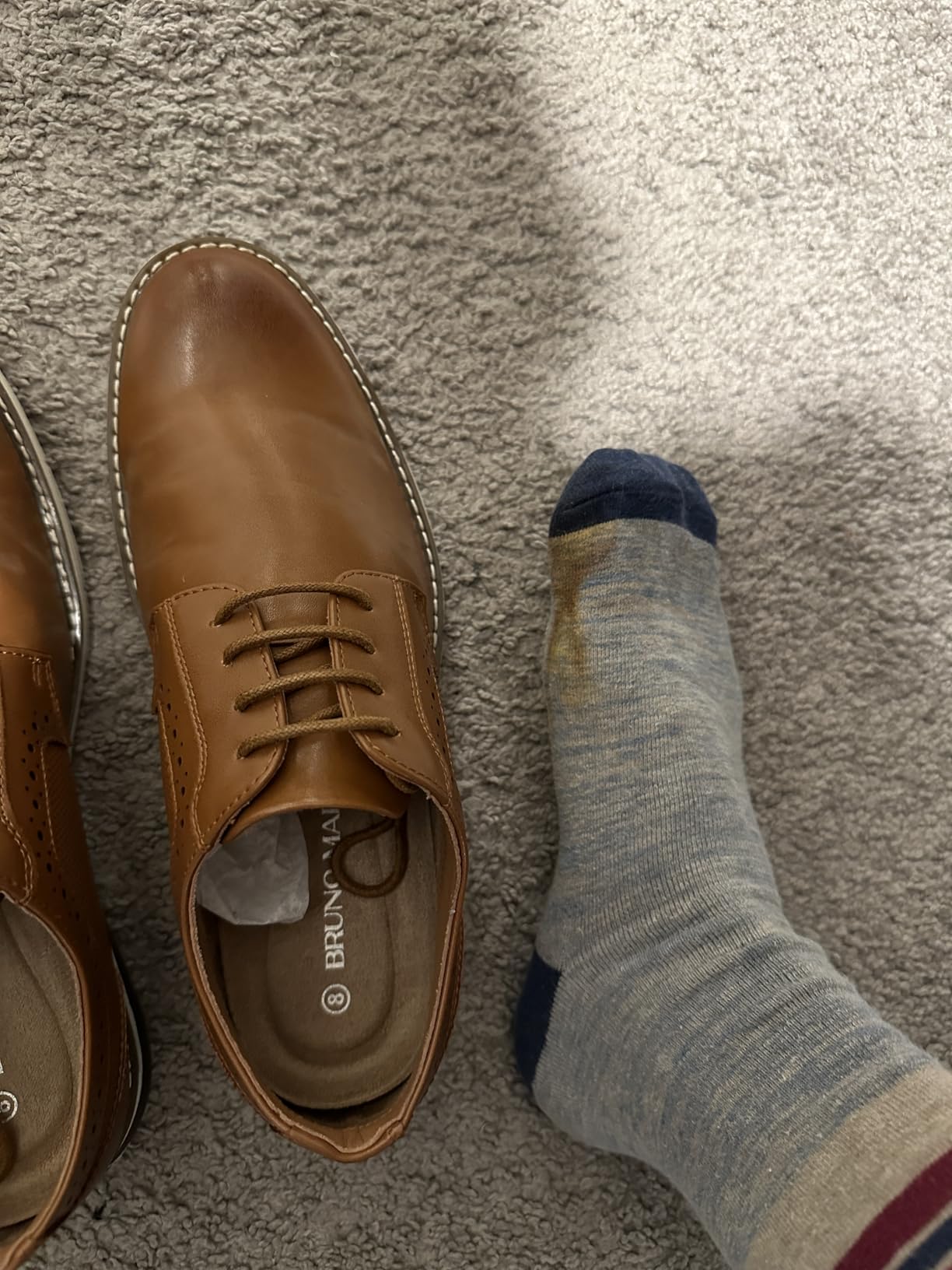
One thing competitors universally skip: Bruno Marc sells several Plain Toe Oxford variants under names like GRANDPLAIN, Purpose-2, and BMUMOX2510, and they’re not the same shoe. The GRANDPLAIN uses an EVA sole instead of TPR. The Purpose-2 is built entirely from leather at a higher price. The BMUMOX2510 has a foam insole instead of this model’s latex unit.
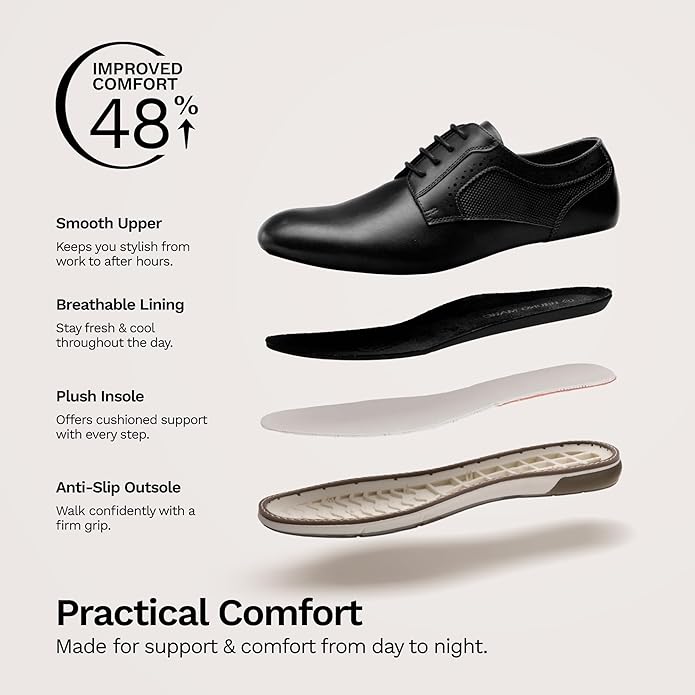
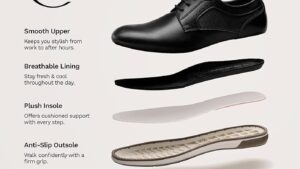
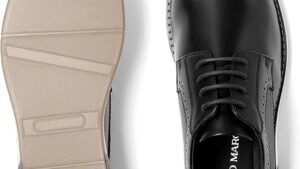
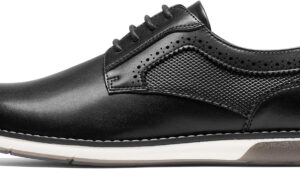
What I tested — and what you likely see when searching “Bruno Marc Plain Toe Oxford” — is the CrossFlex GentEdge SBOX223M: TPR+rubber outsole, 5mm latex insole, PU synthetic upper. If your product page lists EVA sole or leather upper, you’re looking at a different shoe with different performance characteristics.
One durability note worth knowing: TPR outsoles wear more slowly under abrasion than EVA, which compresses and abrades faster. That means the SBOX223M CrossFlex has a durability edge over the GRANDPLAIN (EVA sole) at the same price range — relevant if you’re deciding between the two.
Keep that in mind when reading any review of these oxfords, including mine.
Design & Build — What You Get for $42
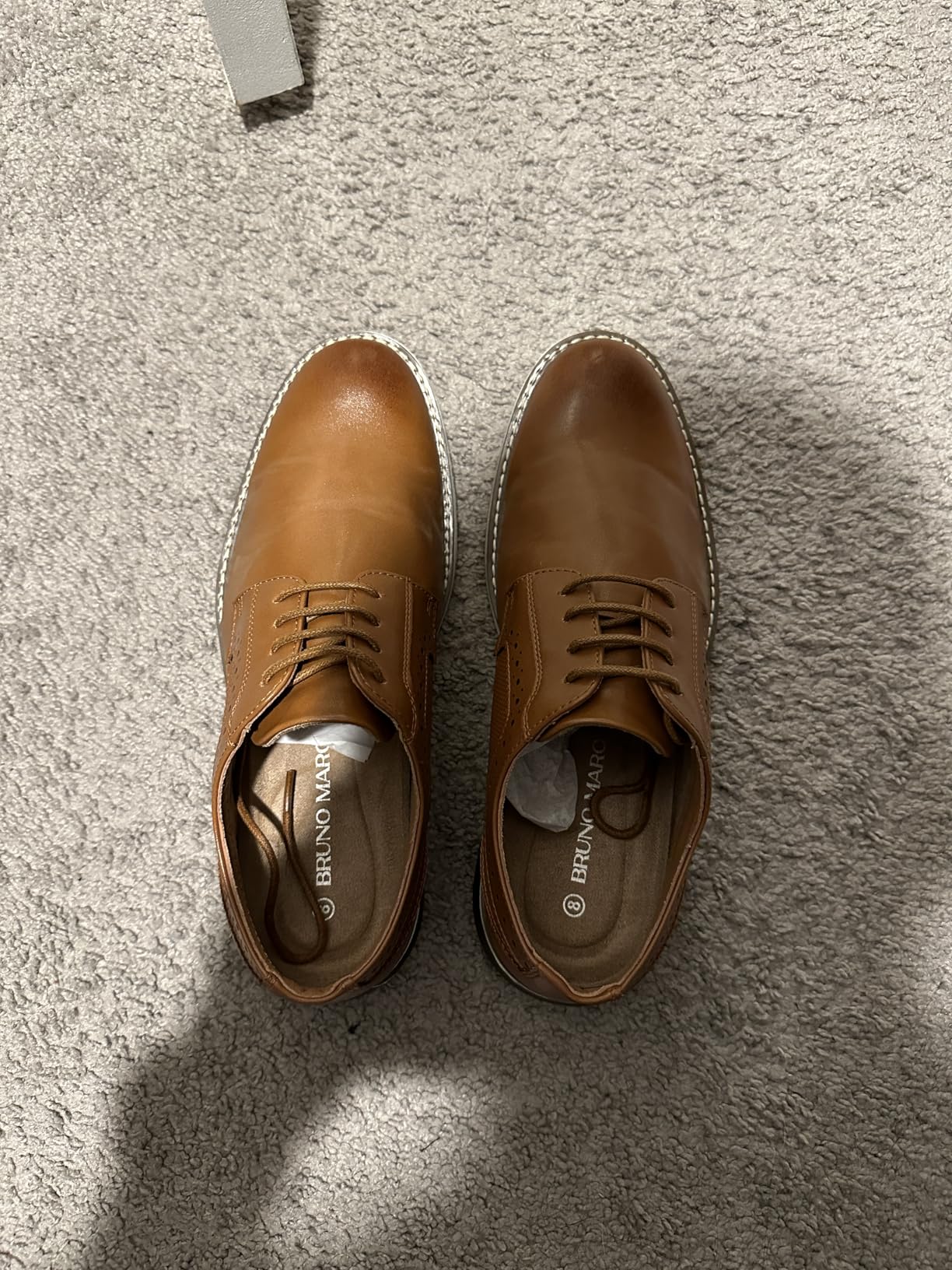
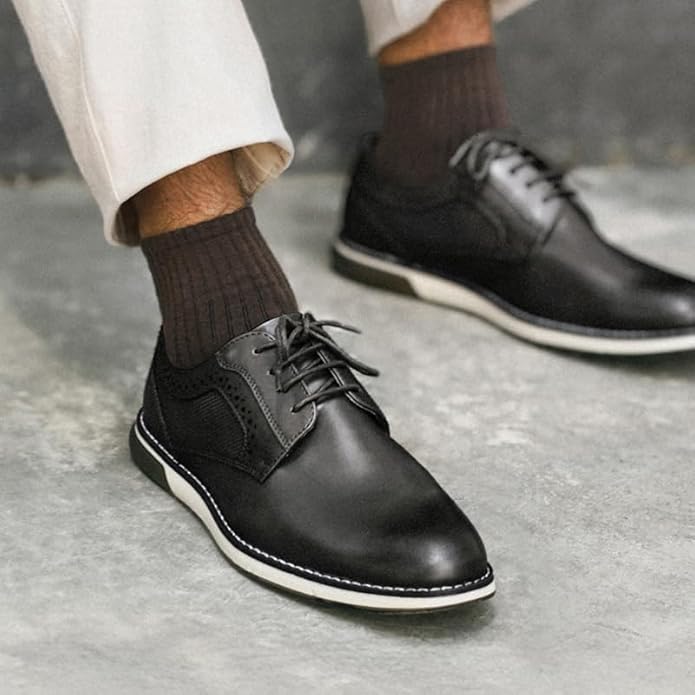
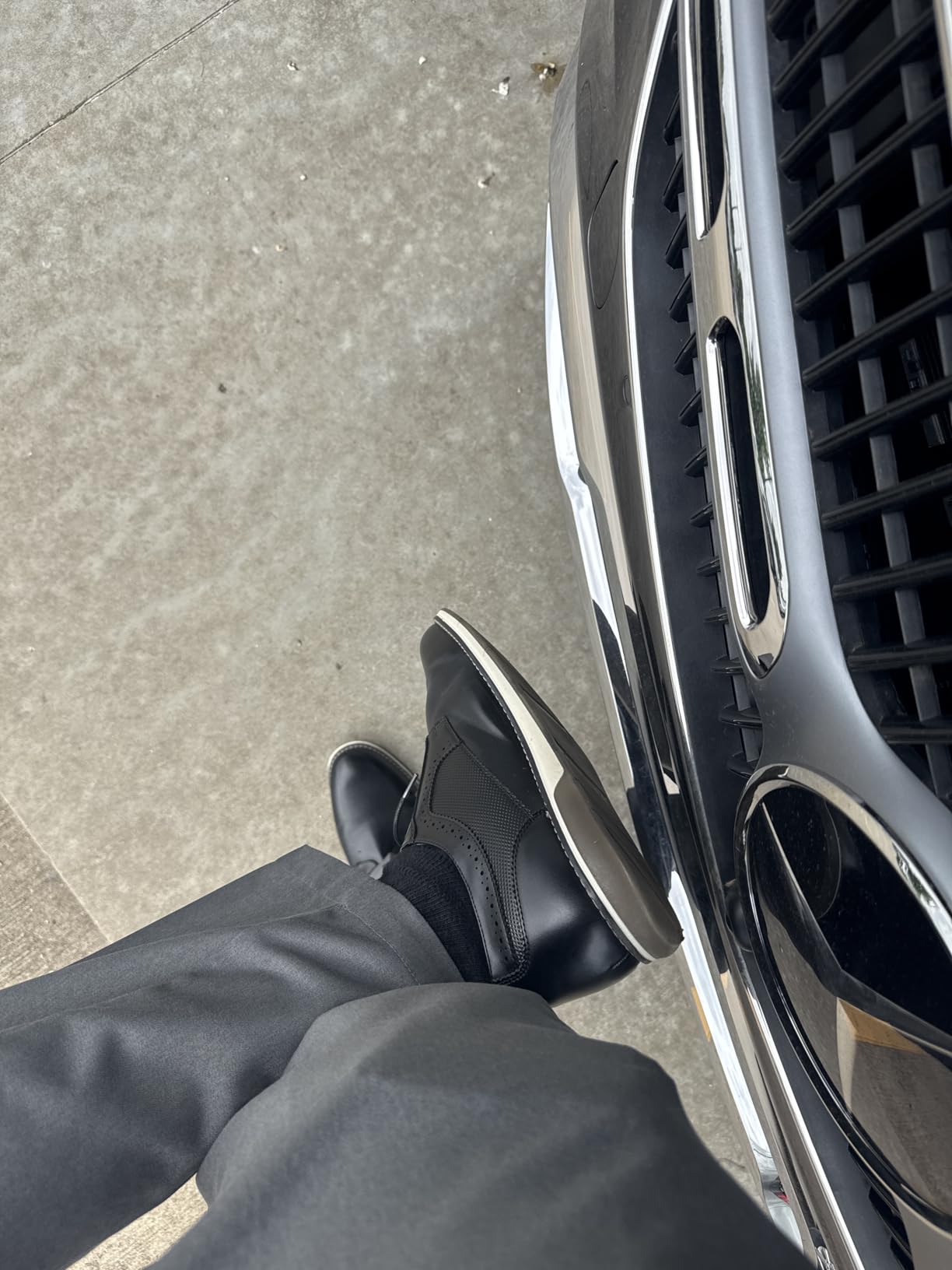
The unboxing experience set the tone. Each shoe arrived in its own protective cloth bag — a detail some $150 dress shoes skip. First impression: the PU leather upper was softer than I expected. Not leather-soft, but not that stiff, plasticky feel budget synthetics often have either. By the end of week one, it had molded to my foot shape without me noticing the process.
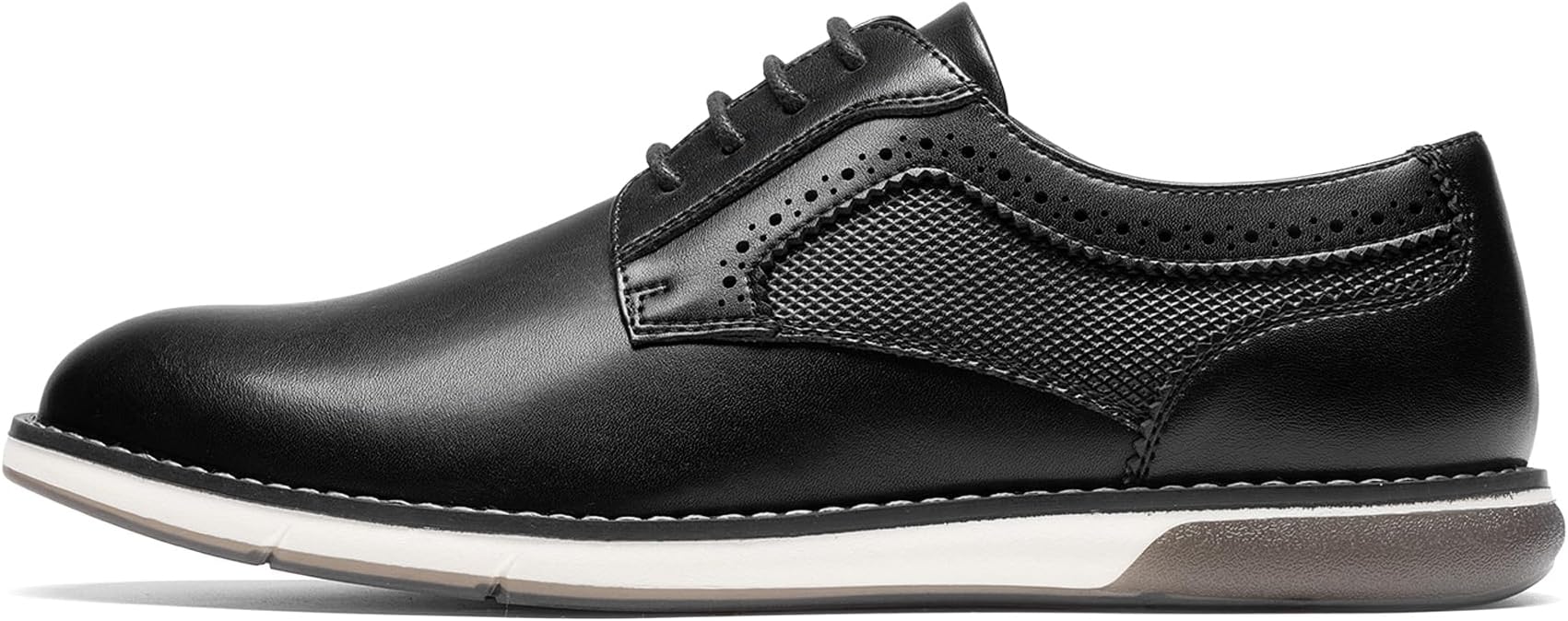
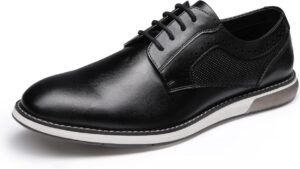
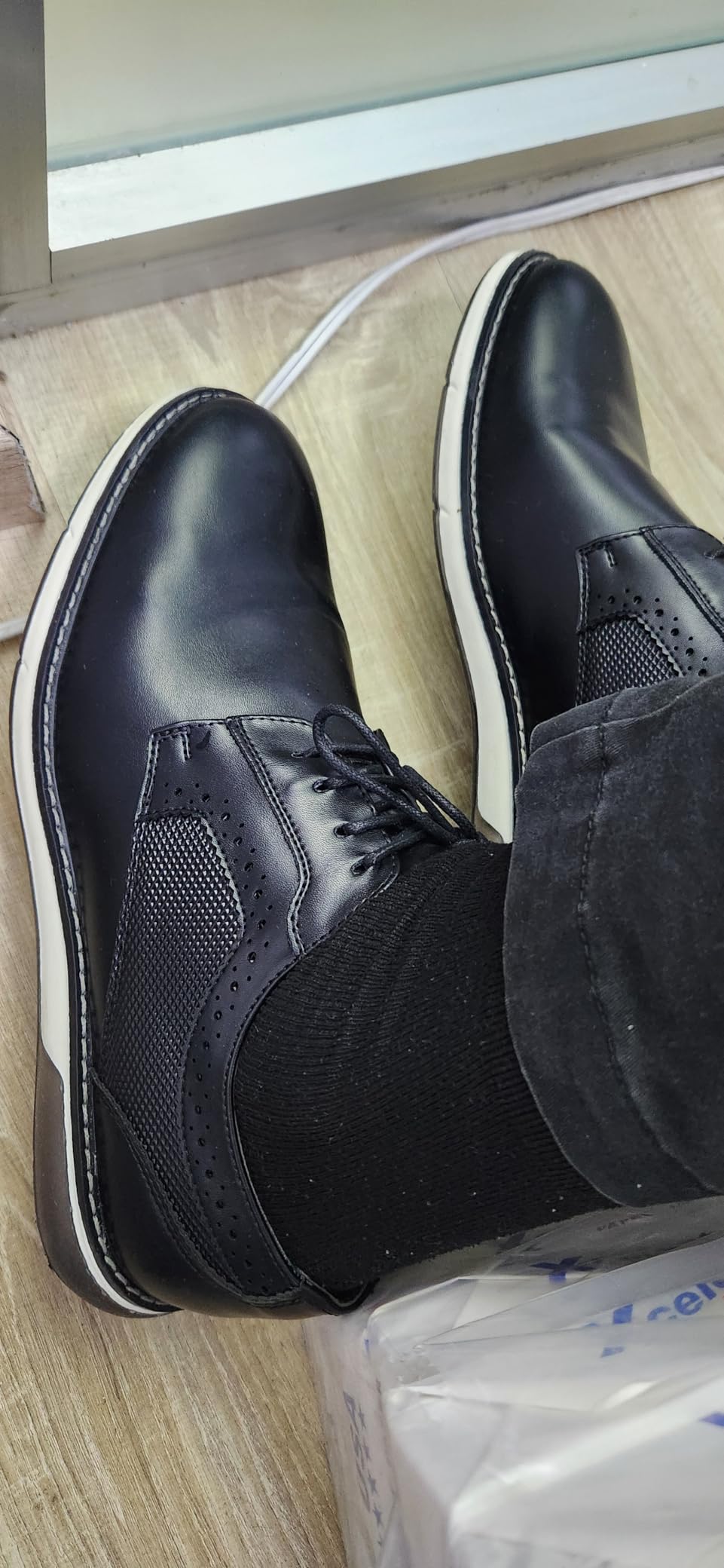
The plain toe design keeps things clean and professional. No wings, no cap toe stitching — just a smooth front that works in a conference room as naturally as it does at a casual Friday lunch. The contrast stitching is subtle enough to read as intentional style rather than a manufacturing quirk.
The blind eyelets deserve a mention. They sit flush with the upper instead of protruding, which creates cleaner lace channels and a neater profile when viewed straight-on. In terms of lockdown, they held well for medium-width feet across 40+ days. Wide-foot users: the toe box specifically has more volume than I expected, and multiple reviewers with wider feet confirm the same experience.
Lace quality is honestly budget. No plastic aglets on some units — several Amazon reviewers flagged this, and I noticed fraying starting around week four. Replacement flat laces cost around $5 and this is worth doing early if you care about longevity. The Handshop Athletic Shoelaces are a good fit for this profile.
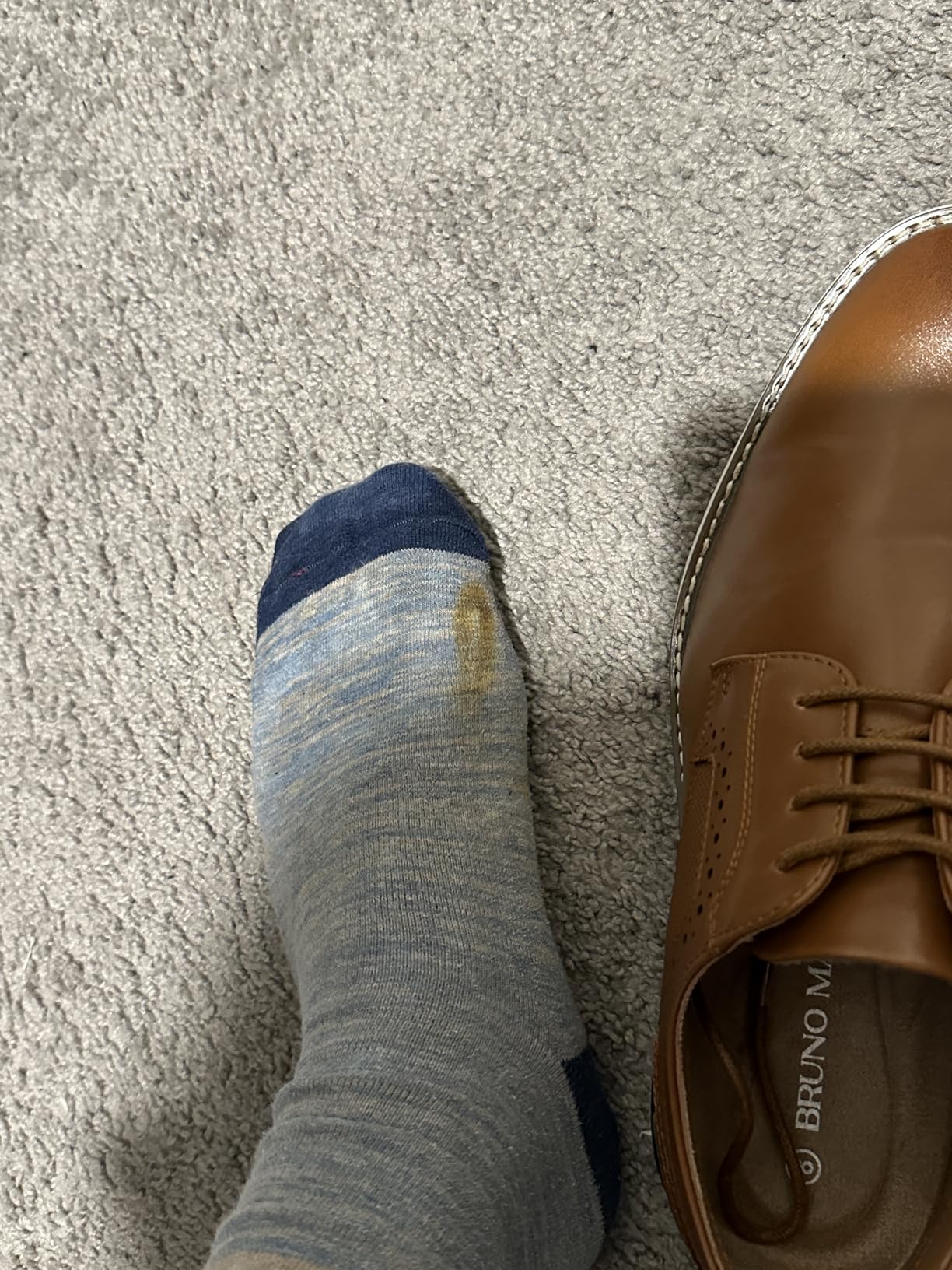
Weight: 1.8 lbs for the pair. Traditional leather dress shoes typically land between 2.2 and 2.8 lbs per pair, so you’re shaving off real weight here — enough to notice by the end of a long day.
The Comfort Timeline — Honest Hour-by-Hour
Every product listing says “ultra comfort.” None of them tell you when it stops being true.
The 5mm latex insole delivers differently across a workday, and it matters for your buying decision:
Hours 1–6: Excellent. The latex cushions foot impact on office tile and concrete without feeling springy or artificial. At 175 lbs, I had no hotspots, no pressure points, no arch fatigue. The microfiber lining doesn’t rub even without thick socks. This is the window where Bruno Marc earns its positive reviews.
Hours 6–8: Noticeable plateau. The insole has compressed slightly by now. Still functional, no pain — but there’s an awareness of impact that wasn’t there earlier. For a standard office day ending at hour 7 or 8, you’re fine.
Hours 8+: Needs help. Past the 8-hour mark, arch fatigue sets in at 175 lbs on hard surfaces. This isn’t catastrophic discomfort, but it’s the point where these shoes stop performing above their price and become just another pair of dress shoes. If you’re standing 10+ hours daily, the stock insole will let you down.
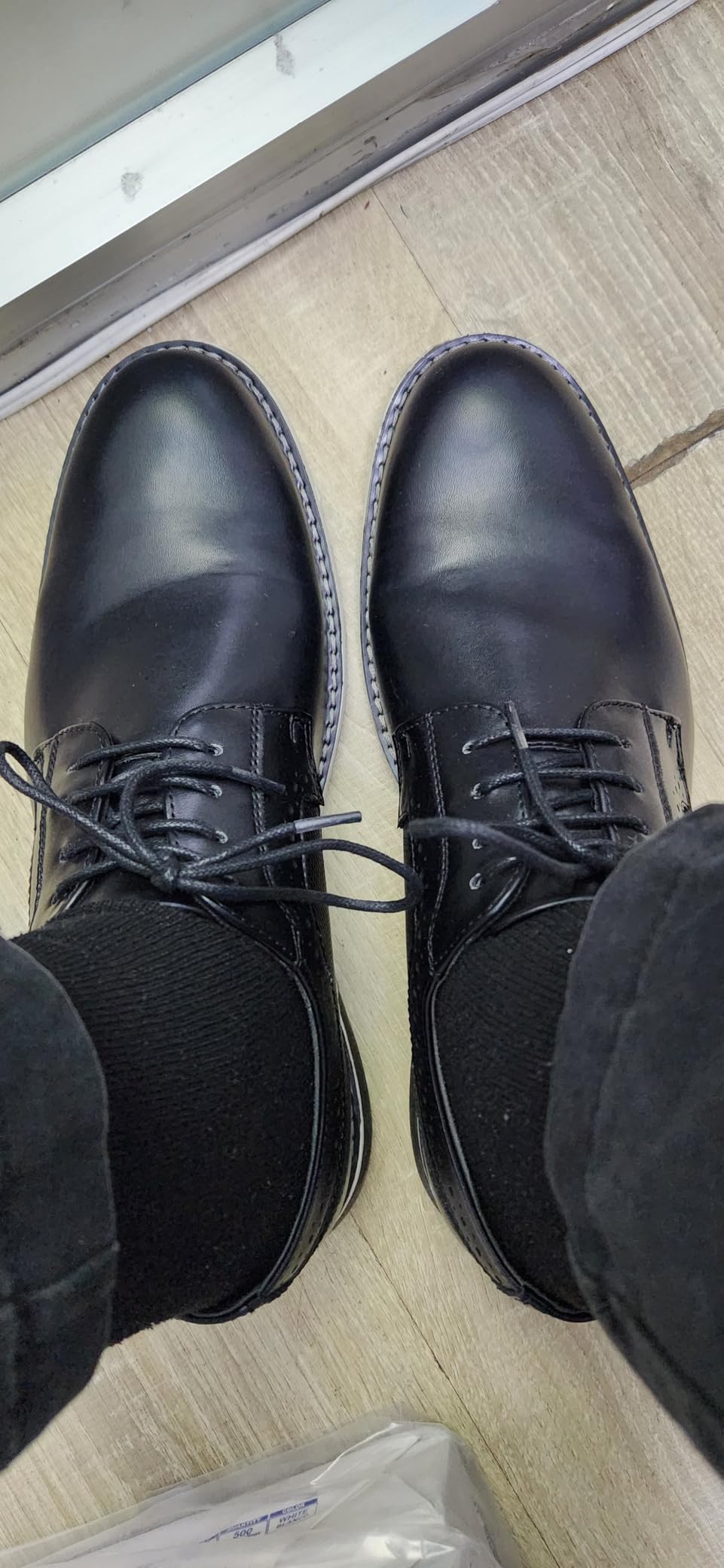
The trade show test made this concrete. I logged over 15,000 steps in a single day on concrete expo floors — the kind of use that exposes a shoe’s real limits. Comfort held well through the morning. After hour six, my feet knew they were in a $42 shoe, not a $130 one. Not a failure — just reality.
The fix is simple. Sof Sole Athlete Insoles or a comparable aftermarket insole extends the comfort ceiling by 2–3 hours. The stock insole is removable, so swapping takes 30 seconds. At $15–20, this upgrade makes a $42 shoe perform closer to a $65–70 one for all-day standing. For healthcare workers, warehouse staff, or anyone regularly hitting 10+ hour days, I’d budget for the insole upgrade on day one.
Breathability at 80°F+
Synthetic leather doesn’t breathe like mesh or full-grain leather, but this upper handles heat better than I expected. Through several 80°F+ humid office days, feet stayed dry enough to not be a problem. Not athletic-shoe breathable — but not the sweaty, sealed environment some budget synthetics create either.
Office Performance — Where These Actually Shine
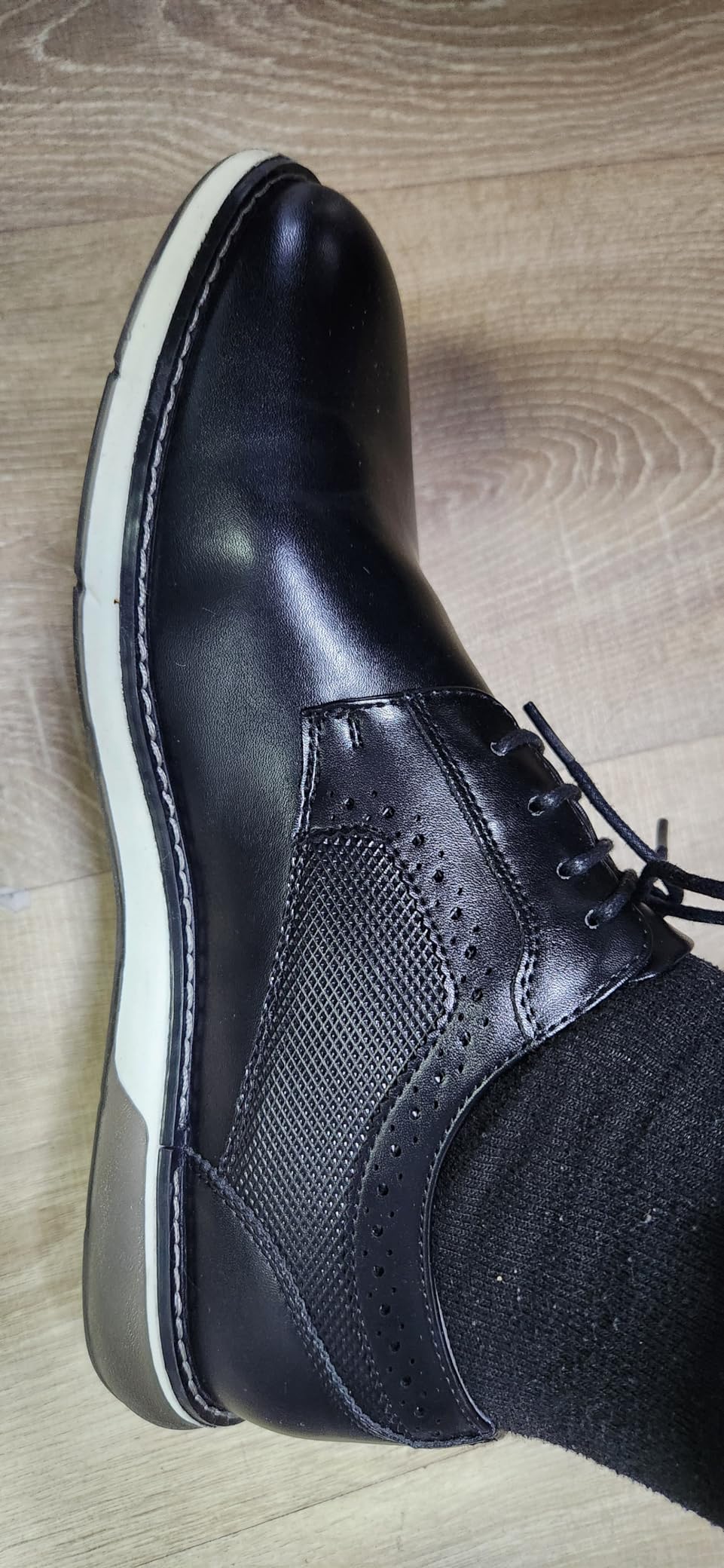
Business casual environments are where these shoes earn their rating. Client meetings, office presentations, after-work networking — I wore them to all of it over six weeks without feeling underdressed or receiving any “are those sneakers?” looks. The hybrid design threads the needle between professional and casual better than most shoes at twice the price.
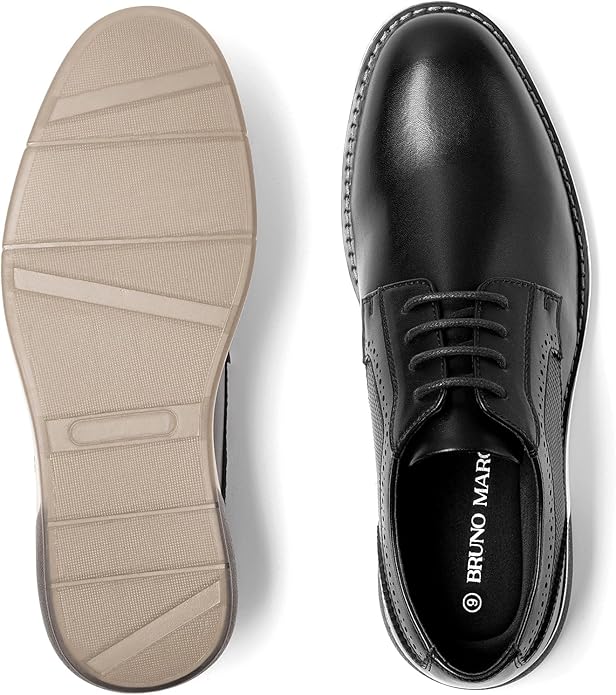
Traction on polished floors and tile is solid. No slipping on stairs, no nervous hesitation on wet lobby floors after coming in from rain. The TPR+rubber hybrid gives you more grip than a leather-soled dress shoe while making less noise on hard surfaces — an underrated feature in open-plan offices where every footstep echoes.
The 1-inch heel hits the right height. High enough to look like dress footwear, low enough to walk comfortably without the raised-heel fatigue traditional dress shoes can cause.
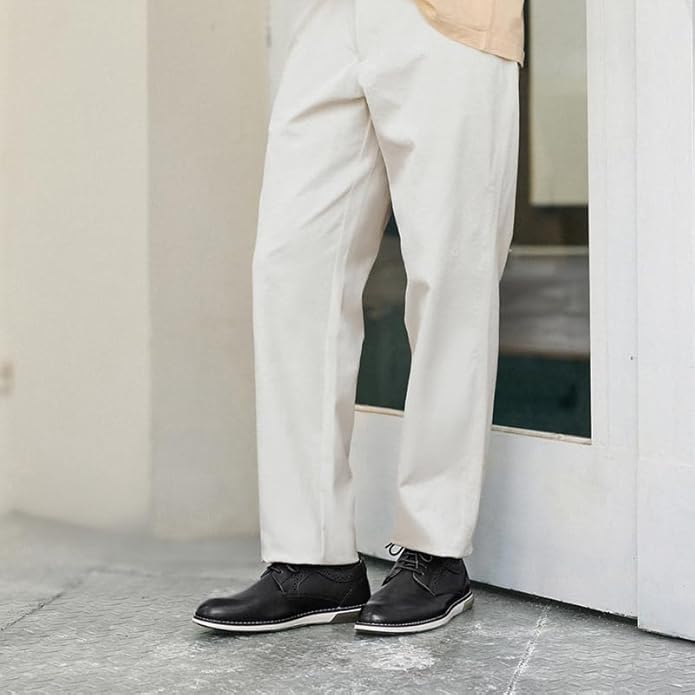
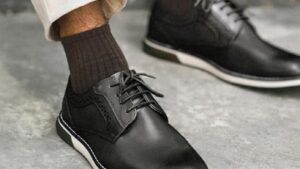
Styling versatility is legitimately impressive. I wore these with dark jeans and a blazer, with chinos and a button-down, and twice with a full business suit to client meetings. All three read correctly for their setting. If your wardrobe is primarily business casual, these are a genuine daily-driver shoe. The plain toe design is the key — it’s clean enough to read formal from a distance while the rubber outsole and profile say “comfortable” up close.
Weather & Durability — The Real Conversation

Not waterproof. Bruno Marc doesn’t claim otherwise, and I’m not holding it against them — but it’s worth stating clearly. Light splashes wipe off the PU upper with a damp cloth. Caught in moderate rain for 5–10 minutes: probably fine. Walking through actual puddles or caught in a downpour: moisture gets in. If your commute involves serious wet weather exposure, either treat the upper with a water-repellent spray or reconsider the shoe.
At six weeks and 40+ days of wear, the upper shows minimal scuffing and expected creasing at the flex points. Normal for any shoe. The outsole shows wear patterns consistent with regular office use, nothing alarming. The TPR compound appears to be holding up reasonably under mixed indoor/outdoor surfaces.
Where it gets more complicated: longer-term.
Customer reviews paint a consistent picture at the 2–6 month mark: sole separation at the toe box junction, heel wear, and material deterioration in the upper. One reviewer reported heel separation after a single month of daily use — though that reads more like a defective unit than a category average. The more credible pattern is a 3–6 month lifespan under heavy daily wear.
Based on six weeks of testing plus review aggregation, here’s the realistic timeline:
- Light office wear (2–3x per week, max 8 hrs): 8–12 months expected
- Regular daily wear (5 days/week, standard office hours): 4–6 months expected
- Heavy daily wear (10+ hrs, outdoor elements): 2–3 months expected
At $42, even the lower end of that range works out to roughly $7–14 per month — comparable to what you’d pay monthly on a $150 shoe with an 18-month lifespan. The math isn’t as one-sided as it looks.
One maintenance tip that extends synthetic leather shoes: a cedar shoe tree overnight pulls moisture out of the upper and helps the leather hold its shape between wears. And keeping a pack of sneaker wipes nearby makes quick cleanup effortless.
Do the Brand Claims Hold Up?
| Claim | Verdict | Evidence |
|---|---|---|
| Ultra Comfort | Mostly true, hours 1–6 | Comfort ceiling at hour 8+ without insole upgrade |
| Good Cushioning | True for the price point | 5mm latex insole — better than leather soles, less than foam athletic cushioning |
| Greater Stability | True for medium-width feet | TPR hybrid outsole performed well on polished floors and stairs |
| Versatile Style | Absolutely true | Worn confidently in jeans, chinos, and full business suit over 6 weeks |
| Long-lasting | Not stated, but implied — false | Sole separation pattern documented at 2–6 months heavy use |
“Ultra Comfort” is where they overreach. For a 6–8 hour office day, comfortable is accurate. Ultra-comfortable compared to traditional leather-soled dress shoes, sure. But anyone expecting athletic shoe cushioning will find the ceiling.
Sizing — What You Actually Need to Know
True to size for standard and medium-width feet. Consistent with Kenneth Cole and Florsheim sizing — if you normally wear a 10.5 in either of those, order 10.5 here.
Wide feet: Bruno Marc also offers this model as SBOX223MWIDE — a dedicated wide version at the same $42 price. If you’re a definite wide-foot wearer, that’s the cleaner choice. For borderline cases, the standard SBOX223M toe box already has more volume than many dress shoes in this category, including typical Adidas profiles, and multiple wide-foot buyers specifically flag it as comfortable at standard size.
Narrow feet: the upper has some give with wear-in, but the toe box may feel loose side-to-side. If you run narrow, consider sizing down 0.5 for a snugger fit.
Overall Scores
| Category | Score | Notes |
|---|---|---|
| Comfort | 7.5/10 | Excellent hours 1–6, plateau hours 6–8, insole upgrade needed 8+ |
| Style / Appearance | 8.5/10 | Clean plain toe, versatile across dress codes |
| Durability | 6.5/10 | Holds at 6 weeks; sole separation risk 2–6 months heavy use |
| Value for Money | 9.0/10 | $42 with 4–8 month realistic lifespan = $5–10/month |
| Build Quality | 7.0/10 | PU upper solid, lace quality budget, TPR sole reliable |
| Versatility | 9.0/10 | Works formal + business casual + dressed-down styling |
| OVERALL | 7.8/10 | Recommended with clear expectations on durability and comfort ceiling |
What Buyers Are Saying
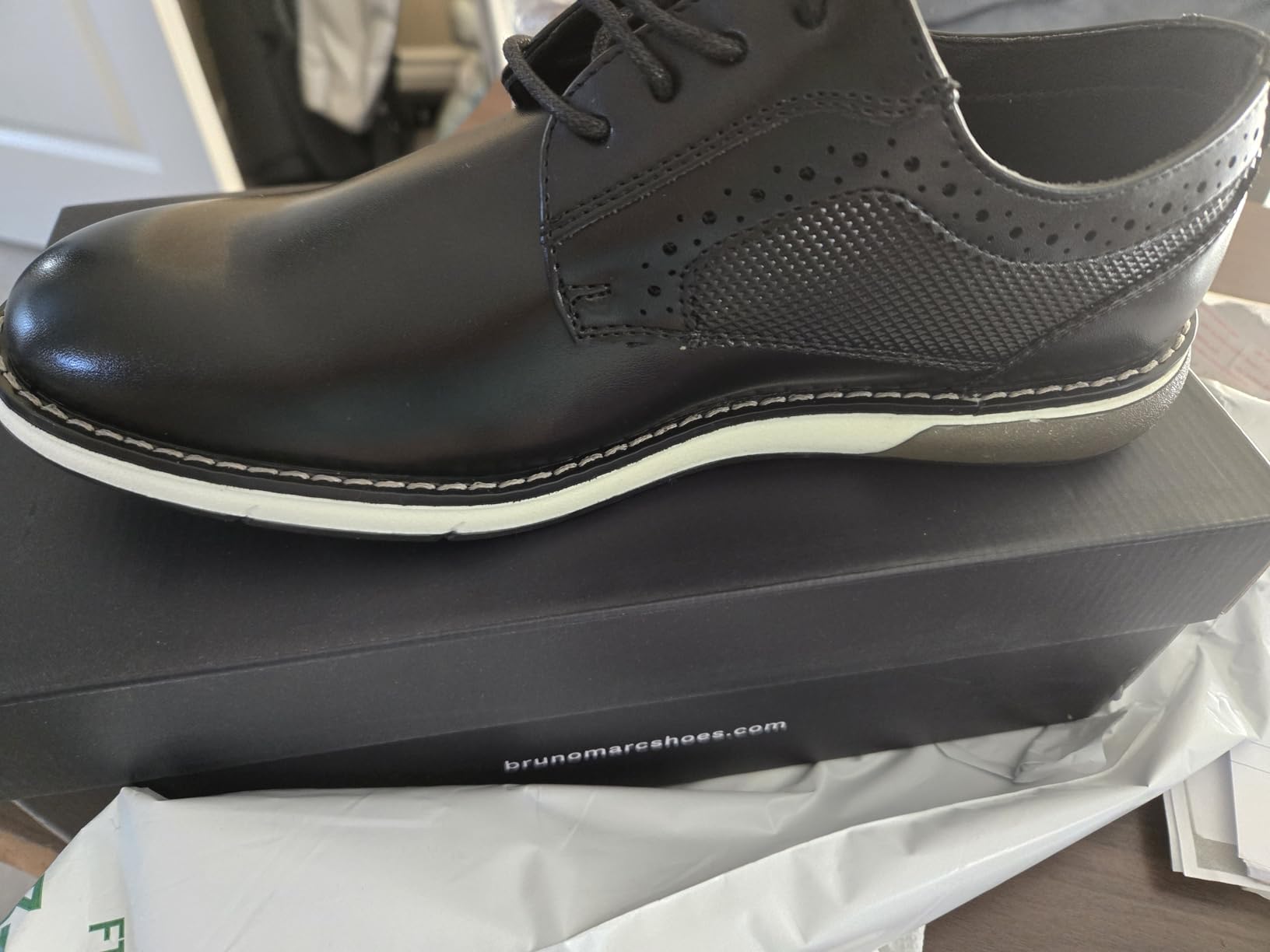
The positive consensus across hundreds of reviews is consistent: “muy cómodos” (very comfortable), “buena apariencia” (good appearance), lighter than expected, compliments from coworkers, value that surprised buyers. Multiple reviewers specifically called out wide-foot accommodation — something competitors at this price rarely handle.
The durability concerns are equally consistent at the 2–6 month mark. Sole separation, heel wear, and upper creasing past the expected flex point are the recurring complaints. The pattern is clear enough to treat as a design limitation rather than a quality control lottery.
Better Alternatives for Specific Needs
For longer lifespan and genuine leather: Jousen Leather Casual Sneakers or the Bruno Marc Purpose-2 variant step up to real leather construction at a higher price point. Leather upper holds its shape longer under flexing and resists creasing differently than PU synthetic.
For standing 10+ hours daily: Skechers Nampa and similar work-focused shoes are engineered specifically for extended standing on hard floors. The cushioning technology is built around that use case in a way the GentEdge isn’t.
For a Bruno Marc upgrade within the brand: The Bruno Marc KnitFlex Breeze shifts to mesh construction for substantially better breathability, though it reads more casual than professional. Also worth looking at: the Bruno Marc Maxflex Dress and Waveflex Coreneat for different construction approaches from the same brand.
If your real concern is appearance at lower-end price: Kvovzo casual dress shoes and Yolark dress shoes are worth comparing in the same budget tier.
For premium durability at higher investment: Cole Haan GrandPro Rally (~$150–170) and Rockport Style Leader 2 (~$100–130) are the most common upgrades cited at this tier. Worth noting: Cole Haan uses a rubberized EVA outsole with an OrthoLite footbed, and reviewers have documented its own sole-separation issues at 7–10 days of hard wear. The premium buys genuine leather and OrthoLite comfort, not necessarily a solved durability problem. Clarks Unstructured ($120–160) is arguably the stronger all-day comfort investment, with its ACS ventilation system and removable OrthoLite footbed confirmed for orthotic compatibility.
✅ What Works
- Exceptional value at $42 for the styling and comfort combination
- Comfort holds well for 6–8 hour standard office days
- Genuinely versatile — jeans to business suits without looking wrong
- Wider toe box than most dress shoes at this price; wide feet welcome
- Lighter than traditional leather dress shoes (1.8 lbs/pair)
- TPR outsole is quieter on hard floors than leather soles
- Removable insole — aftermarket upgrade is easy and immediately effective
❌ What Doesn’t
- Comfort ceiling at hour 8+ without insole upgrade
- Sole separation documented 2–6 months under heavy daily wear
- Not waterproof — serious rain exposure soaks through
- Lace quality budget — fraying and missing aglets reported
- PU synthetic breathability below leather or mesh alternatives
Who Should Buy This — And Who Shouldn’t
Right fit for:
- Office workers with standard 8-hour days who want sneaker comfort in dress-shoe styling
- Men with wider feet who struggle to find comfortable dress shoes at this price point
- Budget-conscious buyers who need professional appearance for interviews, events, or occasional office wear
- Anyone testing whether the “dress sneaker” category works for their wardrobe before investing more
- College students or newer professionals building a work wardrobe on limited budget
Wrong fit for:
- Healthcare workers, retail staff, or anyone standing 10+ hours daily without insole upgrade
- Buyers expecting 12+ month lifespan from daily heavy wear
- Commuters in consistently wet climates
- Anyone needing genuine leather construction for formal dress codes
Frequently Asked Questions
Depends on your priorities. The GentEdge (SBOX223M) reviewed here uses a TPR+rubber outsole and 5mm latex insole — best blend of comfort and professional look at $42. GRANDPLAIN swaps in an EVA outsole and reads slightly more casual. Purpose-2 uses real leather throughout for a more traditional dress shoe feel at higher price. The BMUMOX2510 is a newer GentEdge generation with foam insole instead of latex. For general office wear, the SBOX223M is the right starting point.
True to size against most Nike Air Force 1 sizing. Slightly roomier toe box than standard Adidas dress profiles — if you normally size up in Adidas for toe room, you likely won’t need to here. For department store dress shoes like Kenneth Cole or Florsheim, the sizing is consistent — order the same size.
Light splashes and brief exposure — yes, the PU upper wipes clean. More than 10–15 minutes of actual rain or walking through standing water — moisture will get in. If you commute in serious wet weather, apply a water-repellent spray treatment first, and still avoid puddles.
Comfortable for 6–8 hours. Past that, the 5mm stock insole compresses and arch support becomes noticeable. The insole is removable, so dropping in a pair of Sof Sole Athlete Insoles or a Superfeet insert extends the comfort window significantly. If you know you’ll be standing 10+ hours regularly, budget for the insole upgrade.
Yes — this is one of the genuine standouts at this price. The toe box has more volume than most business casual dress sneakers in this range, and wide-foot buyers specifically call it out as why they chose Bruno Marc. Order standard size for wide feet before assuming you need to go up.
Light use (2–3x per week): 8–12 months. Regular office wear (5 days/week, 8 hours): 4–6 months. Heavy daily wear including walking commutes and extended time on hard floors: 2–3 months. The 2–6 month sole separation pattern in reviews is real — plan for it rather than hoping for the outlier. At $42, the cost-per-month math still works out favorably.
Works best with dark-wash jeans and a collared shirt or blazer. The hybrid design bridges casual and formal better than most at this price. Light-wash jeans are possible but push toward casual territory depending on the rest of the outfit.
The laces will likely fray by month 3–4 under daily use, and some units ship without plastic aglets. Replacing early with quality flat laces costs around $5 and eliminates the issue entirely. The Handshop flat laces in 45–47″ are a good match for this profile.
Standard 30-day return policy applies when ordered through Amazon. Third-party sellers may vary — check before ordering.
Final Verdict
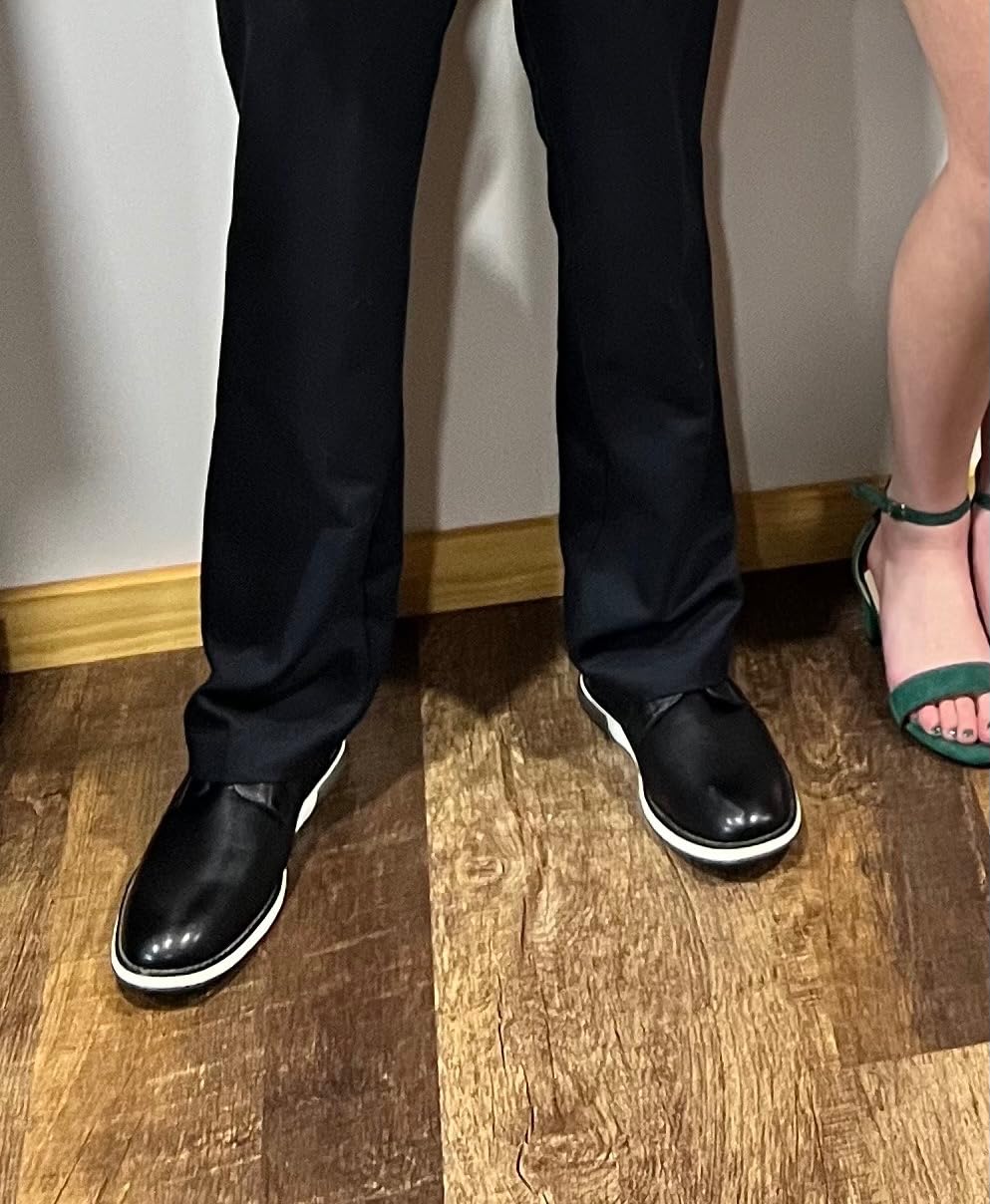
Six weeks in, the Bruno Marc CrossFlex GentEdge delivers exactly what it claims to be: a budget dress sneaker that gives you professional styling and genuine all-day comfort for standard office hours. The $42 price point isn’t a compromise — it’s the point. The trade-offs are real and documented, but they’re appropriate for what you’re paying.
The comfort timeline is the most useful piece of data: plan around a 6–8 hour sweet spot, add insoles if you regularly go past that, and rotate with another pair to push the lifespan. At 4–6 months under regular wear, $42 works out to roughly $7–10 per month — which holds up compared to spending $130 upfront and waiting 18 months.
The model confusion is worth flagging one more time. Search “Bruno Marc Plain Toe Oxford” and you’ll land on multiple variants. The SBOX223M GentEdge with TPR outsole and latex insole is what I tested and what these ratings reflect. Other variants have different specs and performance profiles.
For the right buyer — an office worker who wants the dress shoe aesthetic without the traditional dress shoe discomfort, on a real-world budget — these are worth trying.
Be the first to review “Bruno Marc Men’s Casual Dress Sneaker Shoes”
Related products
Tennis/Squash Shoes

Running Shoes

Hiking/Trekking Shoes
Running Shoes
Tennis/Squash Shoes
Hiking/Trekking Shoes
Hike Footwear HF Signature Healthy & Non-Slip Breathable Barefoot Shoes
Hiking/Trekking Shoes
Reviews
There are no reviews yet.