
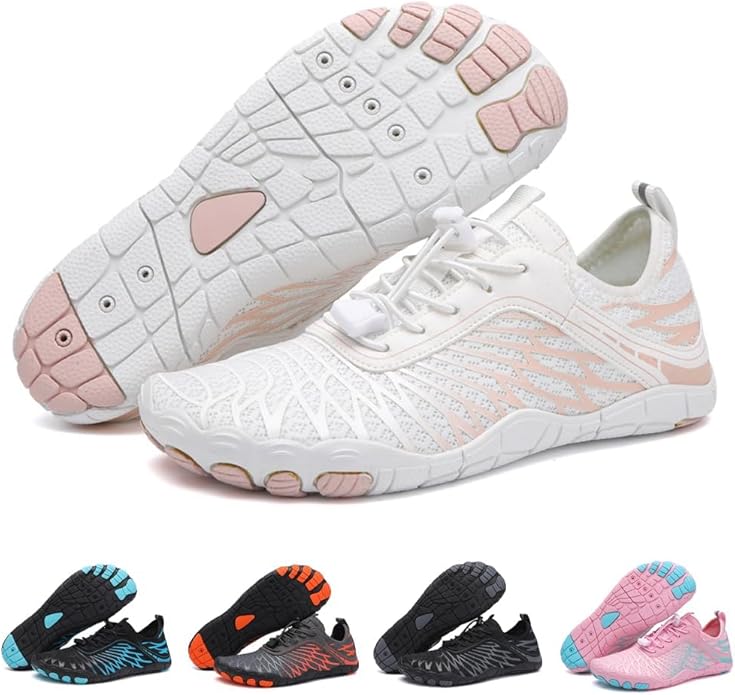
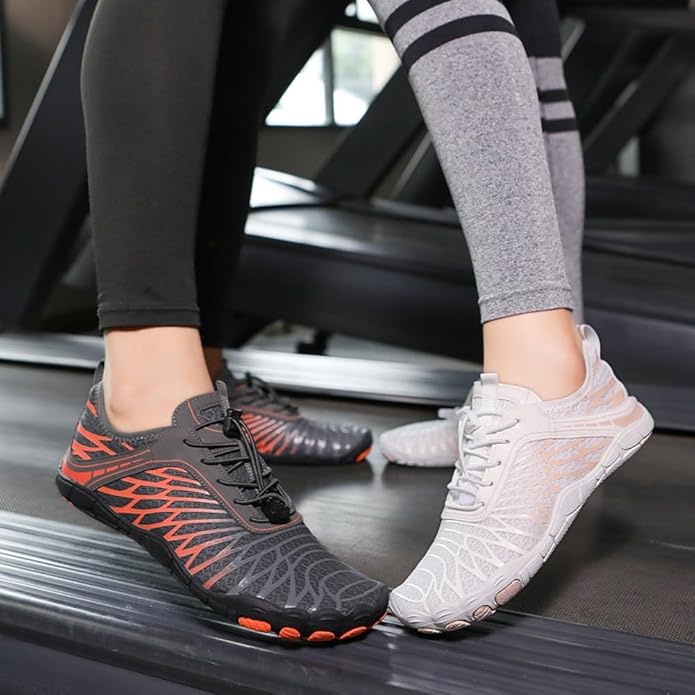
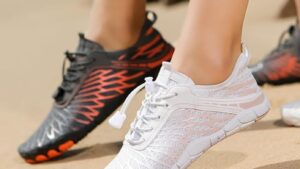
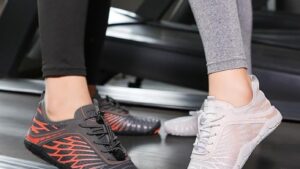
Eleton Hike Barefoot Shoes Womens Men Footwear
$21.20
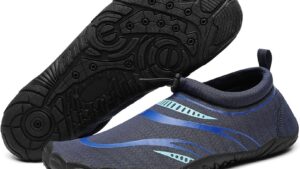
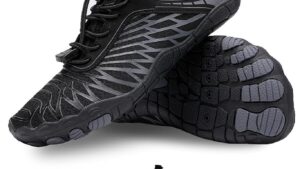
- Weight: ~6 oz per shoe (women’s size 8, user-reported)
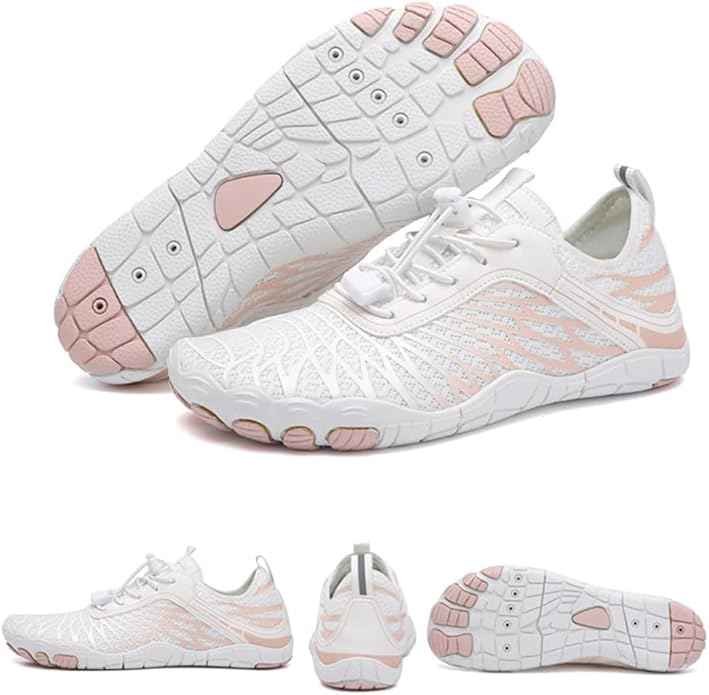
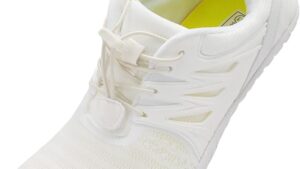
- Upper: Stretchy synthetic mesh with elastic construction
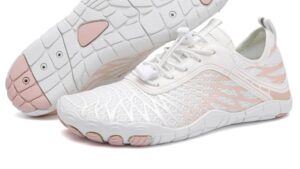
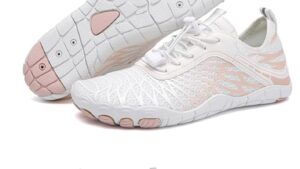
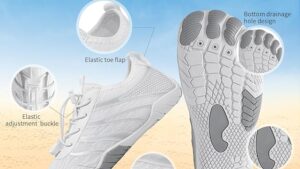
- Sole: Flexible non-slip rubber with drainage holes
- Drop: Zero-drop (flat sole, no heel elevation)
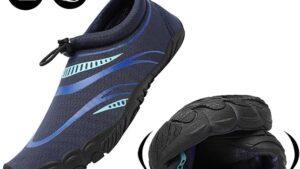
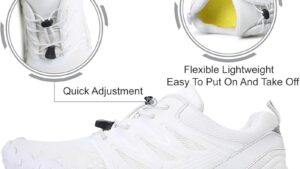
- Special features: Wide toe box, elastic cord closure, reflective heel strip
- Overall score: 7.4/10
I’ve spent years watching the barefoot shoe market from a safe distance. Every time I got close to trying one, the price tags sent me straight back to my regular sneakers — $120 for Vivobarefoot, $140 for Xero, and somehow they all had waiting lists like they were exclusive restaurants. When ELETON popped up at $35-45, I assumed it was too cheap to actually work. Sarah here, and I want to tell you exactly why I was wrong — and in a few ways, right — about that assumption.
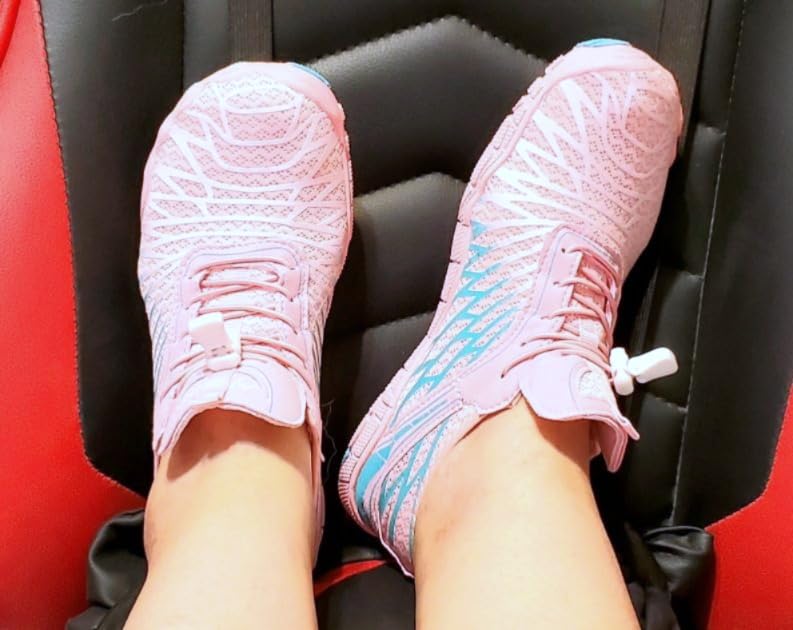
What You’re Actually Getting: Build Quality and First Impressions
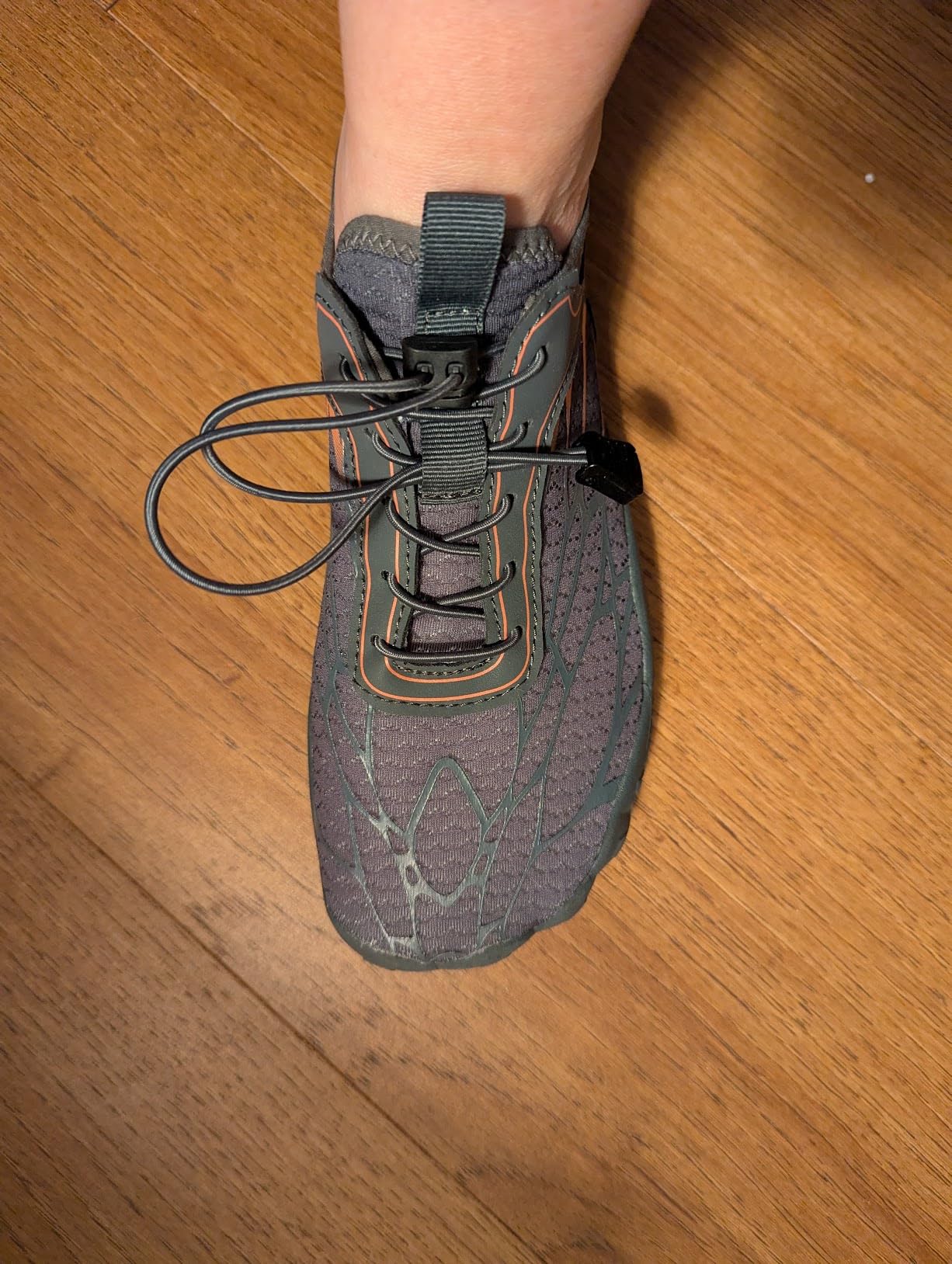
Pull these out of the box and the first thing you notice is how nothing they feel. Not in a bad way — in a genuinely “oh, these weigh nothing” way. At around 6 ounces, they’re lighter than the gym sneakers I’ve been lugging around, which already felt like a win before I even put them on.
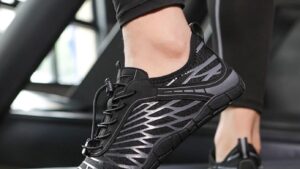
The elastic cord system is the feature I keep coming back to. There’s a small cord lock that tightens and loosens the fit, and I’ll be honest — I didn’t expect to love it as much as I do. Most mornings I’m juggling gym bag, coffee, and the general chaos of getting out the door, and these just… slip on and lock down in about four seconds. No untied laces at the gym. No fussing.
The mesh upper is genuinely soft but not fragile-feeling on day one. There’s an initial plastic smell that took about a week to fade — I left them near a window and it cleared up without any special treatment. Worth knowing if you’re giving these as a gift or planning to wear them straight out of the box.
Construction-wise: the stitching is clean, the sole-to-upper bond looks solid at week one. The rubber sole has a subtle tread pattern and small drainage holes that I initially dismissed as purely aesthetic. (They’re not. More on that later.)
The wide toe box is immediately obvious when you put these on, especially if you’re coming from traditional athletic shoes. My toes spread outward naturally without any forcing — and if you’ve had the cramped-toe experience that drove me to try barefoot shoes in the first place, that first sensation genuinely feels like relief.
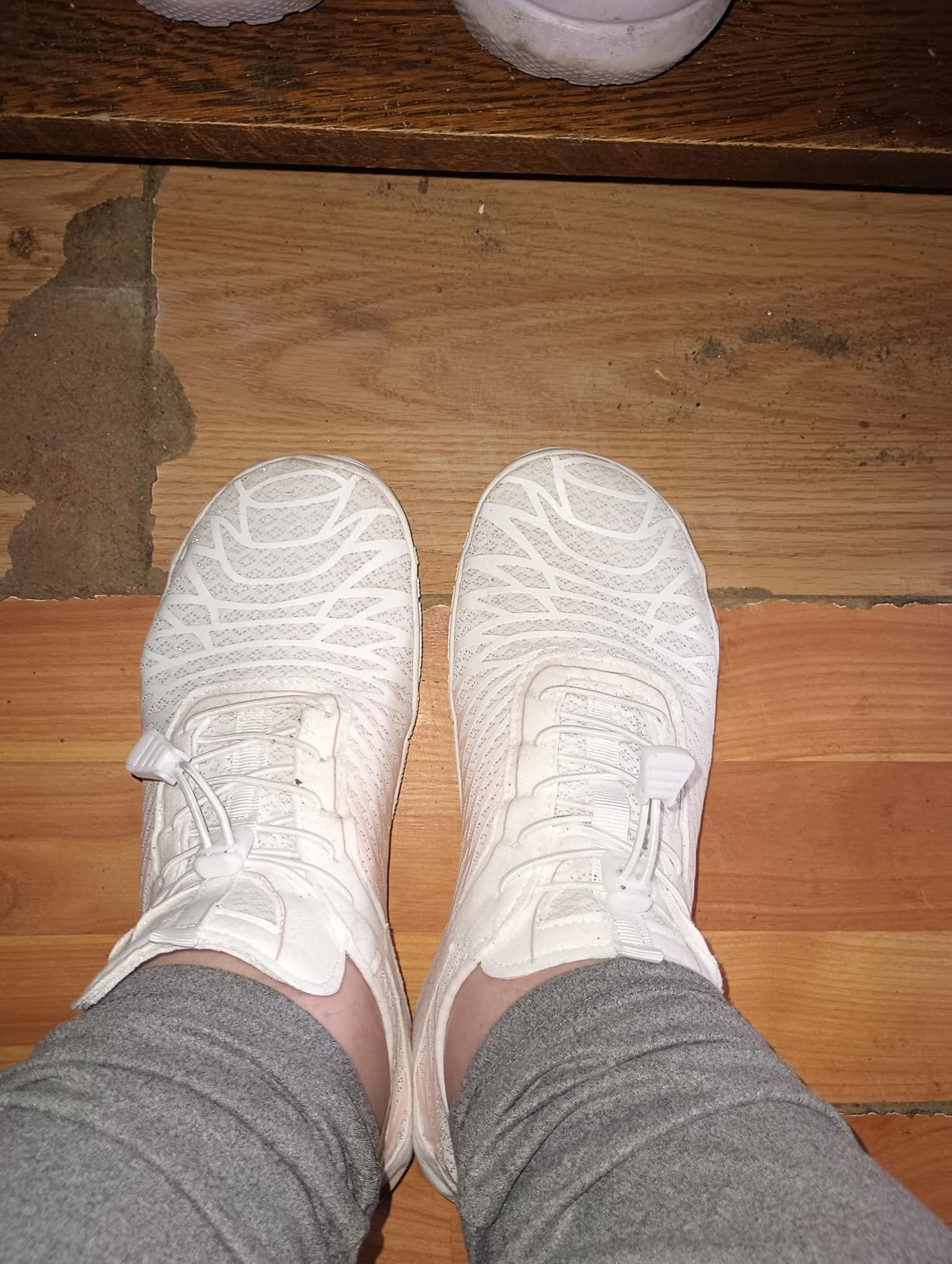
Learning to Feel the Ground Again
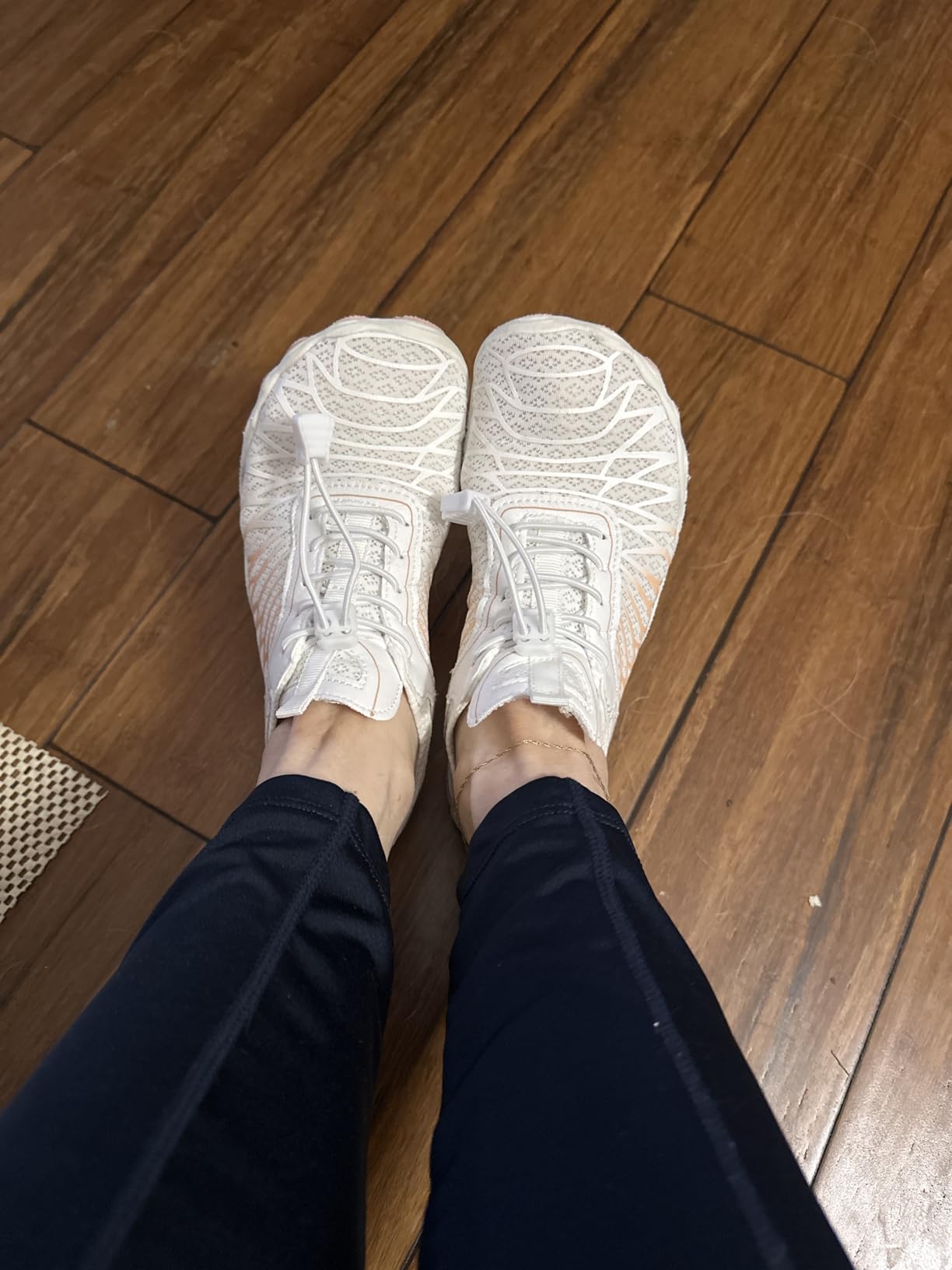
Here’s what nobody explains about zero-drop, ultra-thin barefoot shoes: the first week, you feel everything. And I mean everything. Walking to my car, I noticed the seam in the driveway. At Target, I was hyperaware of every slightly uneven tile. During evening walks with my neighbor, every pebble on the sidewalk registered.
That sounds like a complaint. It’s not, actually — or at least it stops being one around week two or three.
What I found genuinely surprising was what happened after I got past that initial adjustment: my feet felt less tired at the end of long days, not more. I initially chalked this up to coincidence, but it kept happening. I think the explanation is simple — in cushioned shoes, your foot muscles are passive passengers. In these, they’re actually doing something. That kind of active engagement is tiring at first and then strengthening over time. It’s the same logic as walking versus sitting.
The drainage holes earned their keep the week I got caught in a downpour during a morning walk. I expected soggy shoe misery for the rest of the day. Instead, the shoes drained and dried out quickly enough that it wasn’t really a thing. Not waterproof by any stretch — don’t test these in heavy rain expecting protection — but water-tolerant in a genuinely practical way.
Traction on wet surfaces has been better than I expected for a thin rubber sole. Smooth tile (pool deck, mall floors, bathroom floors): solid confidence. Rough, uneven, or graveled surfaces: feel the impact significantly more than you would in cushioned training shoes. That gap is real and worth knowing before you buy.
Six Weeks of Real Activities: Where These Shine and Where They Don’t
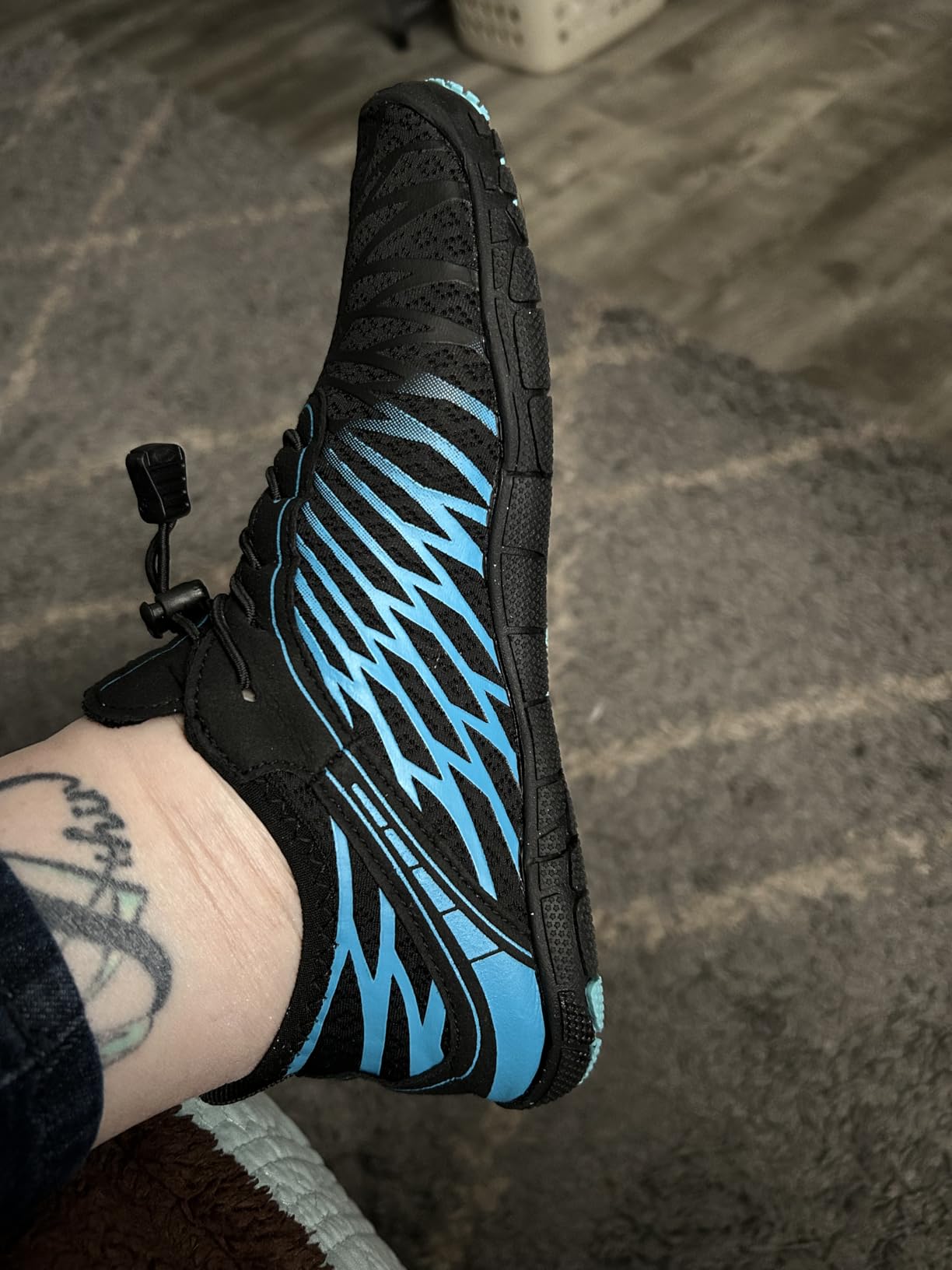
Yoga, Pilates, and Gym Floor Work — Strong Yes
For floor-based exercise, these are genuinely excellent. I’ve been wearing them to yoga classes two or three times a week since I started testing, and the barefoot feel maps almost perfectly to what you’d want: ground connection, balance, toe spread, flexibility. It honestly feels like you’re barefoot but with a thin layer between you and the floor, which is exactly the right description.
The same applies to my gym routine — bodyweight exercises, light weights, resistance band work. Squats and lunges in particular feel more natural with the wide toe box. I’m able to position my feet more intentionally without the constraint of a narrower shoe, and the thin sole gives better proprioception (the sense of where your foot actually is in space). Compared to my old chunky cross-trainers, these feel like a meaningful upgrade for controlled floor work.
The Zumba Lesson I Didn’t Expect
There’s an impact ceiling, and I found it in a Zumba class. About 30-40 minutes into an energetic session, my feet started registering the impact of all the lateral jumping and bouncy footwork in a way that made me genuinely aware I was choosing a thin-soled shoe. It wasn’t injury-level pain — just the point where you realize the cushioning under you has run out.
This is worth being clear about: these are not high-impact aerobics shoes. They’re not designed for repeated impact on hard floors, and they don’t pretend to be. If your workout is primarily jumping, running, or explosive lateral movement, you’re going to need more cushioning between you and the ground. If your workout is controlled, strength-focused, and floor-based, these work beautifully. Two different shoes for two different needs.
Walking and Everyday Errands — Where the Balance Is
My most-used scenario has been daily walking and errands, and this is where the comfort picture is most nuanced. My sister and I did a three-hour shopping trip wearing these, and my feet felt fresh at the end of it — something that couldn’t be said about my usual mall sneakers, which tend to leave me with foot fatigue around the two-hour mark.
But the surface matters. Smooth mall floors, flat sidewalks, grocery store tile: surprisingly comfortable and stable for hours. Uneven terrain, cracked pavement, gravel paths: the ground feedback gets pronounced quickly. I wouldn’t wear these for a long urban walk over varied terrain expecting the same comfort I got at the mall.
Evening neighborhood walks have been mostly smooth (literally and figuratively). These are my current default for 30-45 minute walks, and I have zero complaints for that use case.
Water Activities: The Underrated Advantage
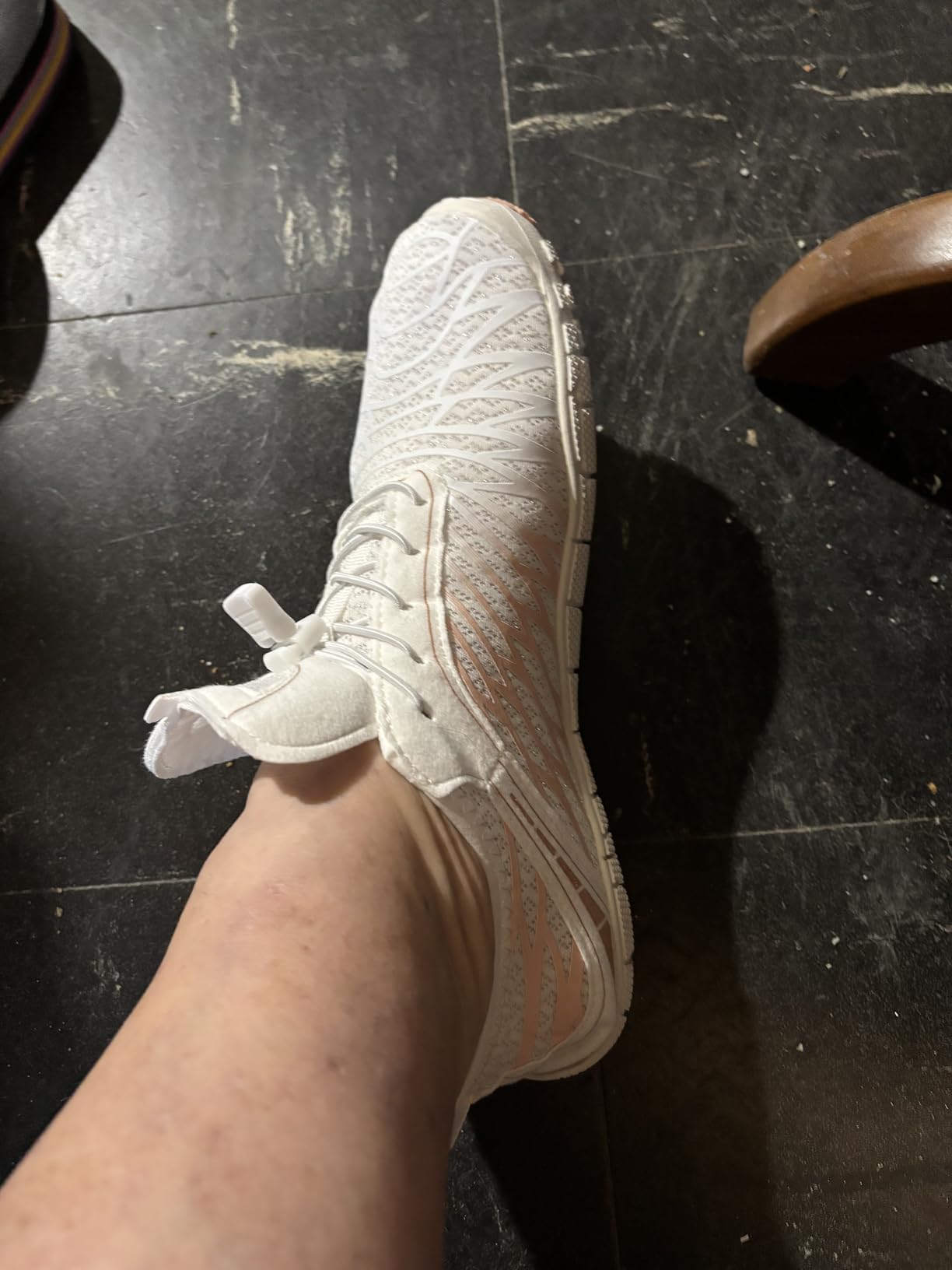
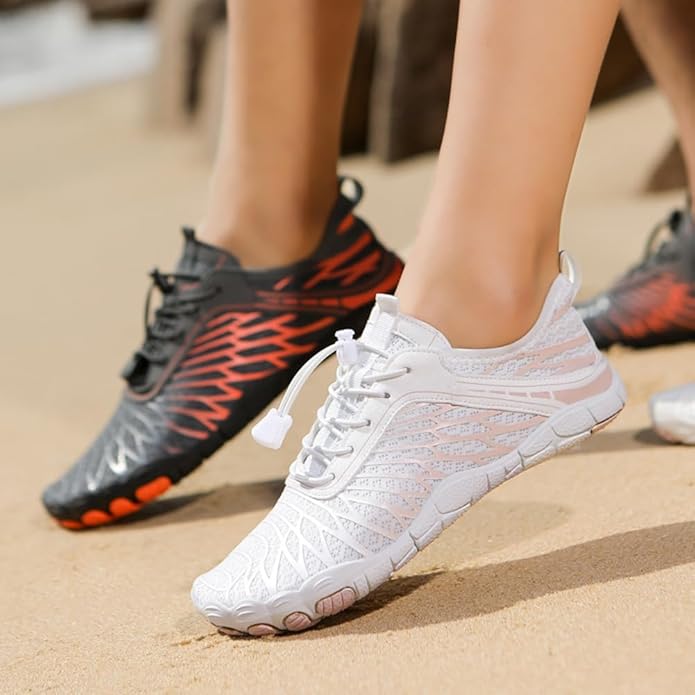
This was genuinely a surprise. A family beach outing gave me the chance to test these on wet sand, in and out of shallow water, on the wet path between the parking lot and the beach. They handled all of it better than I expected — the drainage holes cleared water fast, the rubber traction held on wet surfaces, and the shoes were comfortable for the full outing without the sand-grit accumulation you sometimes get with heavier footwear.
The comparison I keep reaching for: you know how you sometimes debate whether to wear sandals or sneakers to the beach, and then regret whichever you chose? These solved that problem. Comfortable enough to walk distance in, water-tolerant enough for casual wading, light enough that sand doesn’t weigh them down.
If you’re looking for dedicated water shoes for swimming or prolonged water immersion, something like the L-RUN Barefoot Water Shoes or Watelves Water Shoes are purpose-built for that. But for casual beach-and-everything-else use? These cover the base well.
Getting the Fit Right: Don’t Guess, Size Up
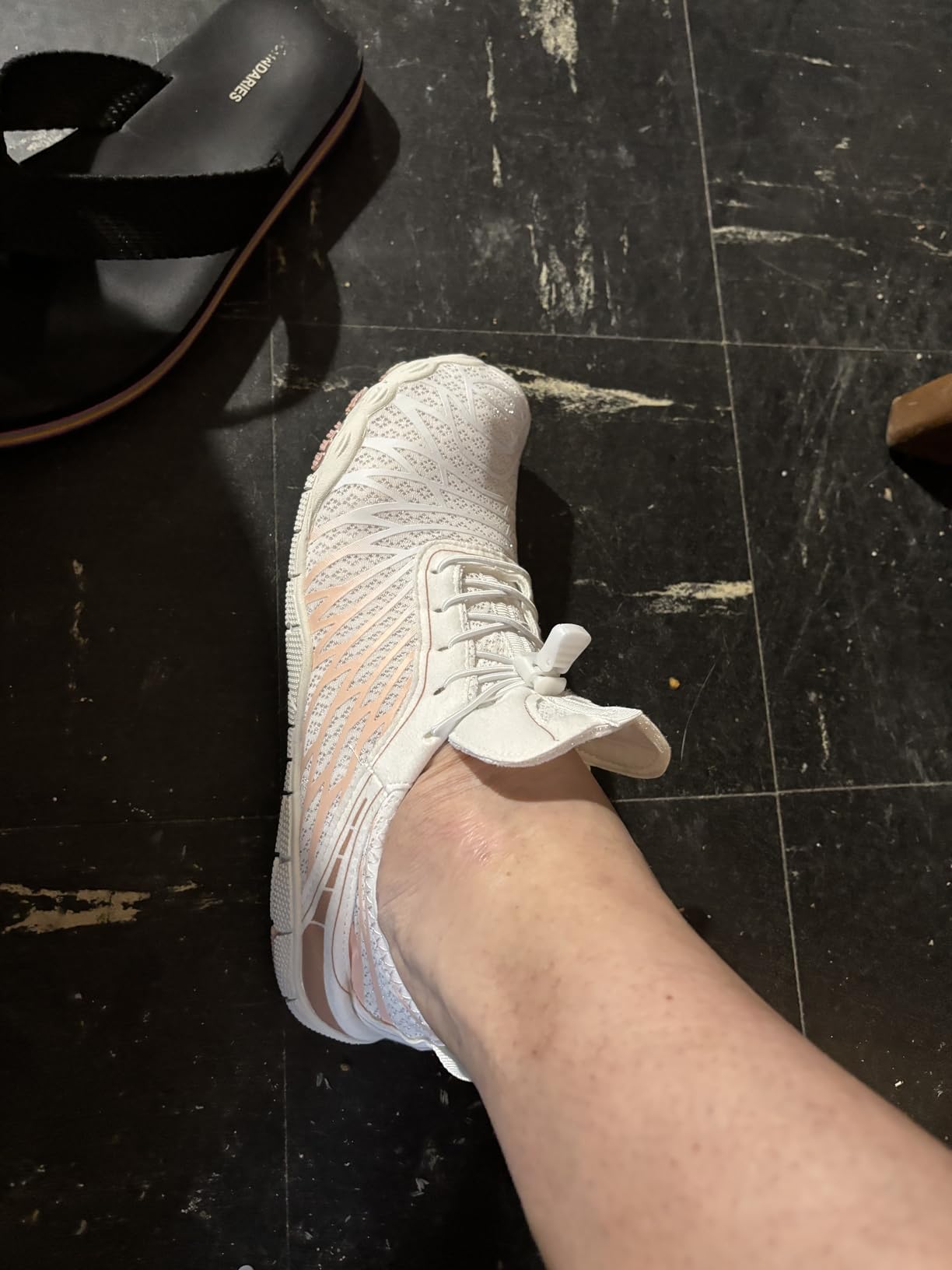
I normally wear a size 8 in most athletic brands. Based on the reviews I read before ordering, I went with an 8.5 — and it was the right call. The fit has been exactly right: toe spread room without any slipping or looseness. The elastic closure adjusted to compensate for the half-size up, and I’ve been comfortable wearing them both barefoot and with thin athletic socks.
The guidance I’d give other buyers:
- Narrow feet: True to size is likely fine
- Standard feet or between sizes: Start with your usual size; size up 0.5 if you want toe-spread room
- Wide feet: Size up 0.5 to 1 full size — these are genuinely designed for foot shapes that struggle with traditional athletic shoes
- Bunion concerns: The wide toe box is real; this might be one of the best fits you’ve tried at this price point
The elastic closure is a genuine help here — it adjusts throughout the day if your feet swell slightly, and it accommodates different sock thicknesses. Amazon’s return window is your friend if you need to size up from your initial order.
If you’re interested in other wide toe box options for comparison, Joomra Wide Minimalist Barefoot and Jackshibo Wide Toe Box are worth a look, though both are in a slightly different price range.
Six Weeks In: The Honest Durability Picture
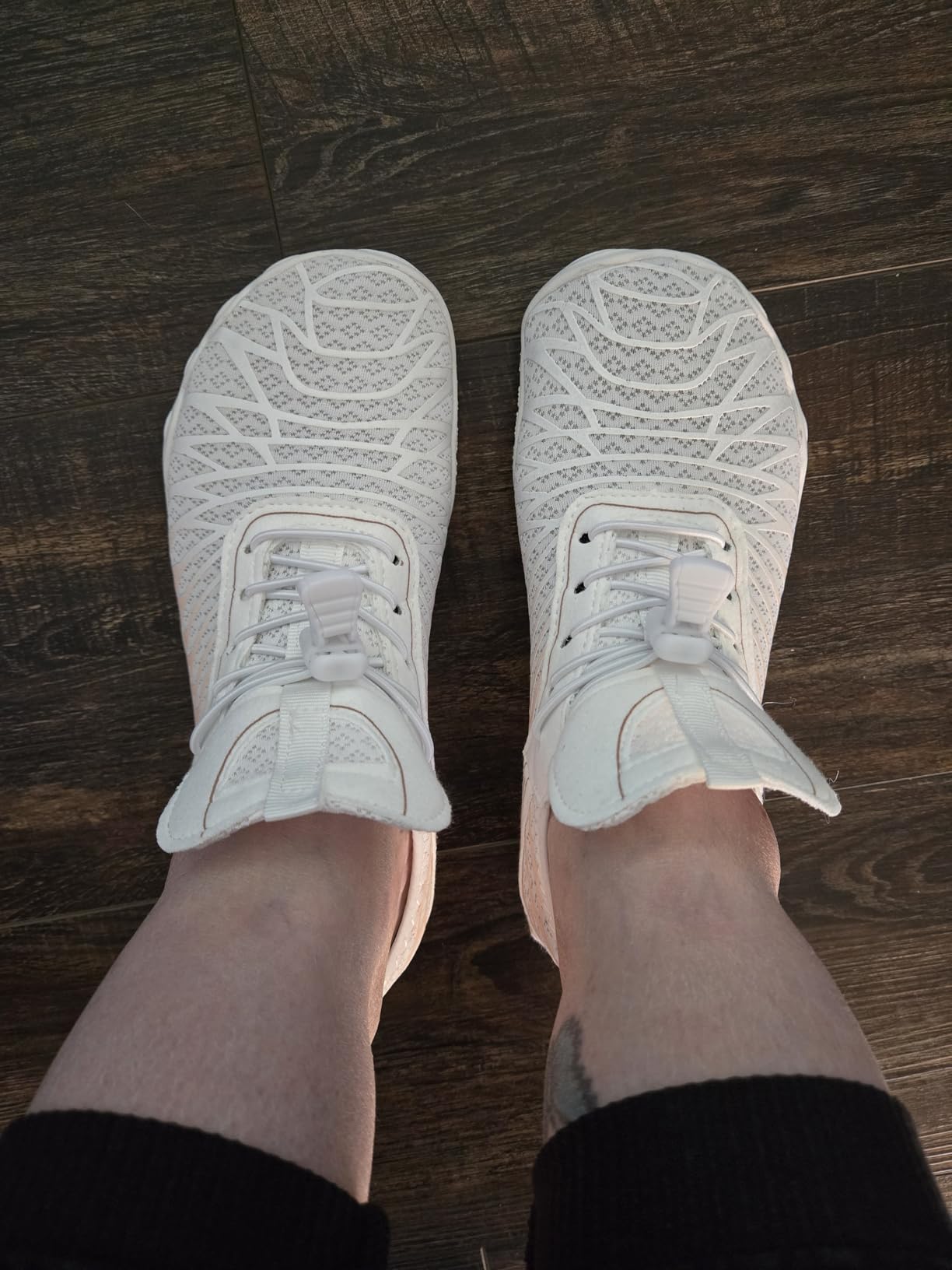
This section is the one I want to be completely straight with you about, because it’s where most reviews of budget barefoot shoes fall short.
At the six-week mark — roughly 4-5 sessions per week across all the activities I’ve described — here’s what I’m seeing: the mesh upper has some very minor fraying where the fabric meets the sole at the flex point. Nothing dramatic, nothing affecting performance right now. But the pattern of where it’s starting to wear tells me something about where it’ll eventually fail.
The sole itself is holding up better than I expected given how thin it is. The elastic closure shows no signs of degradation. The drainage holes are intact.
My honest projection based on the trajectory: 6-12 months of regular use is a realistic lifespan for these shoes. That wide window reflects the real variables — activity intensity, surface type, storage conditions. Heavy gym use at 5x/week will reach the lower end faster than casual 2-3x/week walking.
At $40, that math is actually fine. Six months at $40 = roughly $6.67/month. For comparison, my previous gym sneaker cost $95 and lasted about 14 months, or around $6.80/month. These aren’t as far behind on cost-per-month as the price gap suggests.
The failure mode I’d anticipate first is that mesh-to-sole junction continuing to fray, potentially leading to separation. If you’re considering adding supportive insoles as a preventive measure or comfort upgrade, Sof Sole Athlete Insoles are a solid budget option that would extend the effective comfort lifespan.
The $40 Question: Barefoot on a Budget
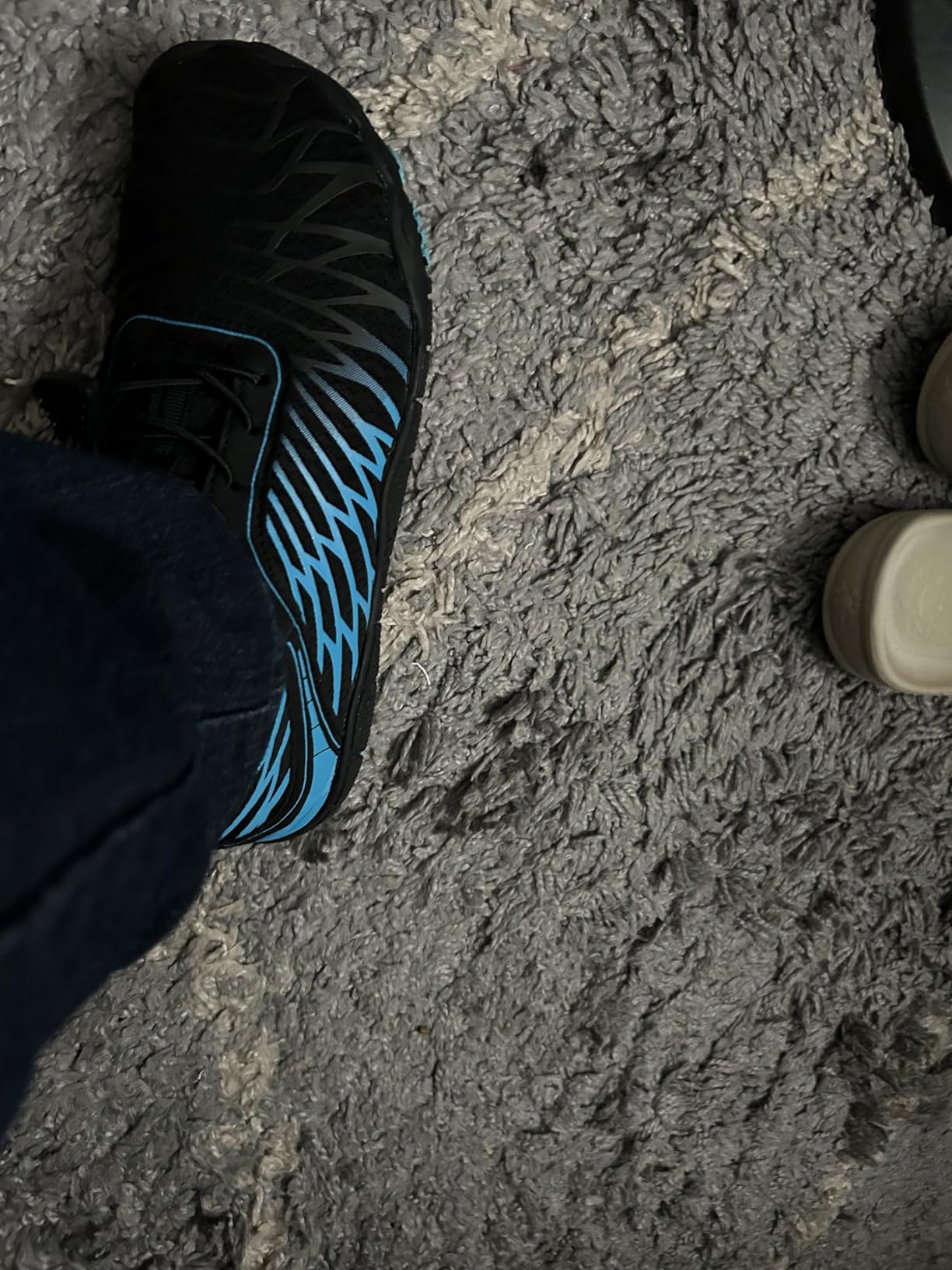
There’s a real decision-making question here that most reviews skip: Should you spend $40 on these, or $120+ on premium barefoot options?
The honest framing: if you’re curious about barefoot shoes and haven’t worn them before, these are a low-risk way to find out if the philosophy works for your feet and your life. You’re not committing $140 to an experiment. If after a month you decide you hate the ground feel, you’ve lost $40. If you love it, you have a clear data point for upgrading to HF Signature Barefoot or other higher-durability options when these eventually wear out.
The Hike Footwear brand (parent of ELETON) also has their Hike Barefoot Shoes line with slightly different construction — worth comparing if you want a step up from the entry-level ELETON model.
If you already know barefoot shoes work for you and you want something that’ll last 2-3 years, these aren’t the right purchase. Invest in something premium. But for a first-timer, the math argues convincingly for starting at $40.
One rotation strategy that came up in my research: two pairs of ELETON (~$75-80) worn in rotation tends to extend the total lifespan significantly versus a single pair worn daily. At roughly the same cost as one mid-range sneaker, you get a longer runway.
Performance Scores: Breaking Down the Numbers
| Category | Score | Key Finding |
|---|---|---|
| Comfort (intended activities) | 8.5/10 | Excellent for yoga, floor gym, smooth-surface walking. Ceiling at high-impact aerobics. |
| Build Quality (6-week assessment) | 7.0/10 | Clean construction on day one; minor fraying at mesh-sole junction by week 6. |
| Versatility | 7.5/10 | Yoga to beach is a genuine range. Not for trail hiking or serious running shoes territory. |
| Fit & Sizing | 8.0/10 | Wide feet: excellent. Elastic closure adds adaptive range. Size up 0.5 usually optimal. |
| Durability | 6.0/10 | Estimated 6-12 months regular use. Early signs of mesh-sole fraying noted at week 6. |
| Water Performance | 7.5/10 | Drainage and quick-dry genuinely work. Water-tolerant, not waterproof. |
| Value for Money | 8.0/10 | At $40 with 6-12mo lifespan, cost-per-month comparable to mid-range alternatives. |
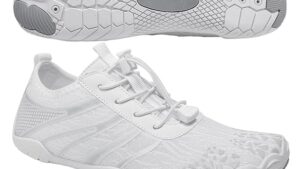
| Style & Appearance | 7.0/10 | Clean minimalist aesthetic. Versatile white colorway. Not fashion-forward but not awkward. |
| OVERALL SCORE | 7.4/10 | Strong performer within its designed scope; durability is the primary caveat. |
Who Should Buy These (And Who Should Skip Them)
Buy these if you’re:
- Curious about barefoot shoes and want to experiment before committing $100-150 to premium options
- Dealing with cramped toes or foot pain from narrow traditional sneakers — the wide toe box is genuinely different
- A yoga practitioner, gym-floor regular, or casual walker on smooth surfaces
- Looking for a versatile shoe that handles both gym mornings and beach afternoons
- Someone with wide feet who’s been rejected by narrow athletic shoes
- Comfortable with a 6-12 month replacement cycle in exchange for the budget entry point
Skip these if you:
- Need a single pair for years — the durability timeline isn’t there at this price
- Do high-impact aerobics, HIIT, or intensive training as your primary activity — the impact ceiling is real
- Plan serious trail hiking or rough-terrain walking — look at dedicated hiking and trekking shoes instead
- Require significant arch support — barefoot design means minimal arch support by philosophy; pair with custom orthotics if needed
- Are serious about barefoot running — the sole durability won’t hold up to regular pavement miles
Better alternatives for specific use cases:
- Trail hiking: Altra Lone Peak 8 for zero-drop trail running, or Merrell Women’s Moab 3 for structured hiking support
- Zero-drop alternatives: Airhas Barefoot Zero Drop for a different budget barefoot option
- Grounding/earthing focus: Addbili Grounding Shoes if grounding-specific conductivity is your priority
- Water activities only: L-RUN Barefoot Water Shoes for water-specific barefoot use
Your Questions Answered
Is the barefoot feel real, or is that marketing?
It’s real. You feel the ground — textures, small irregularities, surface changes. That’s exactly the experience, which takes about a week to feel normal and a few weeks to feel beneficial. If you’ve only worn cushioned shoes, the first few days are genuinely strange. After that, most people find it addictive.
Can I actually wear these with socks?
Yes, without any issues. I wear them with thin athletic socks about half the time. The elastic closure adjusts for the extra thickness, and the wide toe box means no compression. Thick socks are probably overkill, but thinner ones work fine.
How do they handle hot weather? What about cold?
The mesh upper breathes well — I wore these in late summer walks without feeling trapped heat. Cold weather is more of a question; the thin sole means cold surfaces transmit directly to your feet, and there’s no insulation. Fall weather with thin socks: fine. Winter outdoor use: probably better to find something with more protection.
My feet have been flat my whole life. Are these right for me?
Possibly, but carefully. Barefoot shoes work on the theory that strong foot muscles will support the arch naturally. Some flat-footed people report significant improvement over months. Others find zero-drop uncomfortable without a supporting insole. My suggestion: try them, but keep your return window open and consider a supportive insole if you need one.
How should I wash them?
Most users, myself included, have had success with machine wash on a gentle/cold cycle, followed by air drying. I’ve done this twice during my test period with no issues. Don’t put them in the dryer — the elastic components will degrade faster with heat.
Are these the same as the Hike Footwear brand I’ve seen elsewhere?
ELETON is produced under the Hike Footwear brand umbrella. There are several variants and models in their lineup, including the HF Signature and other construction types. If you want to explore the full range of their barefoot shoes, the HF Signature Barefoot is their more premium offering.
Is there an insole, and can I replace it?
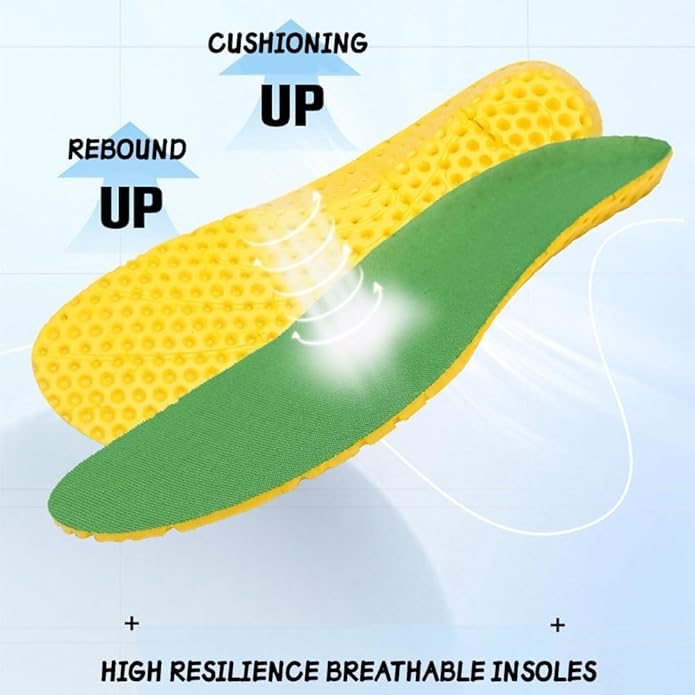
There’s a basic minimal insole. Removability isn’t confirmed in any official spec I could find — my unit doesn’t appear to have a cleanly removable insole without some effort. If arch support is a priority, an aftermarket insole trimmed to fit would work; I’ve seen users do this successfully. Based on my testing, the insole compression isn’t a concern at 6 weeks but is something to monitor around the 4-5 month mark.
Six Weeks Later: What I Actually Think
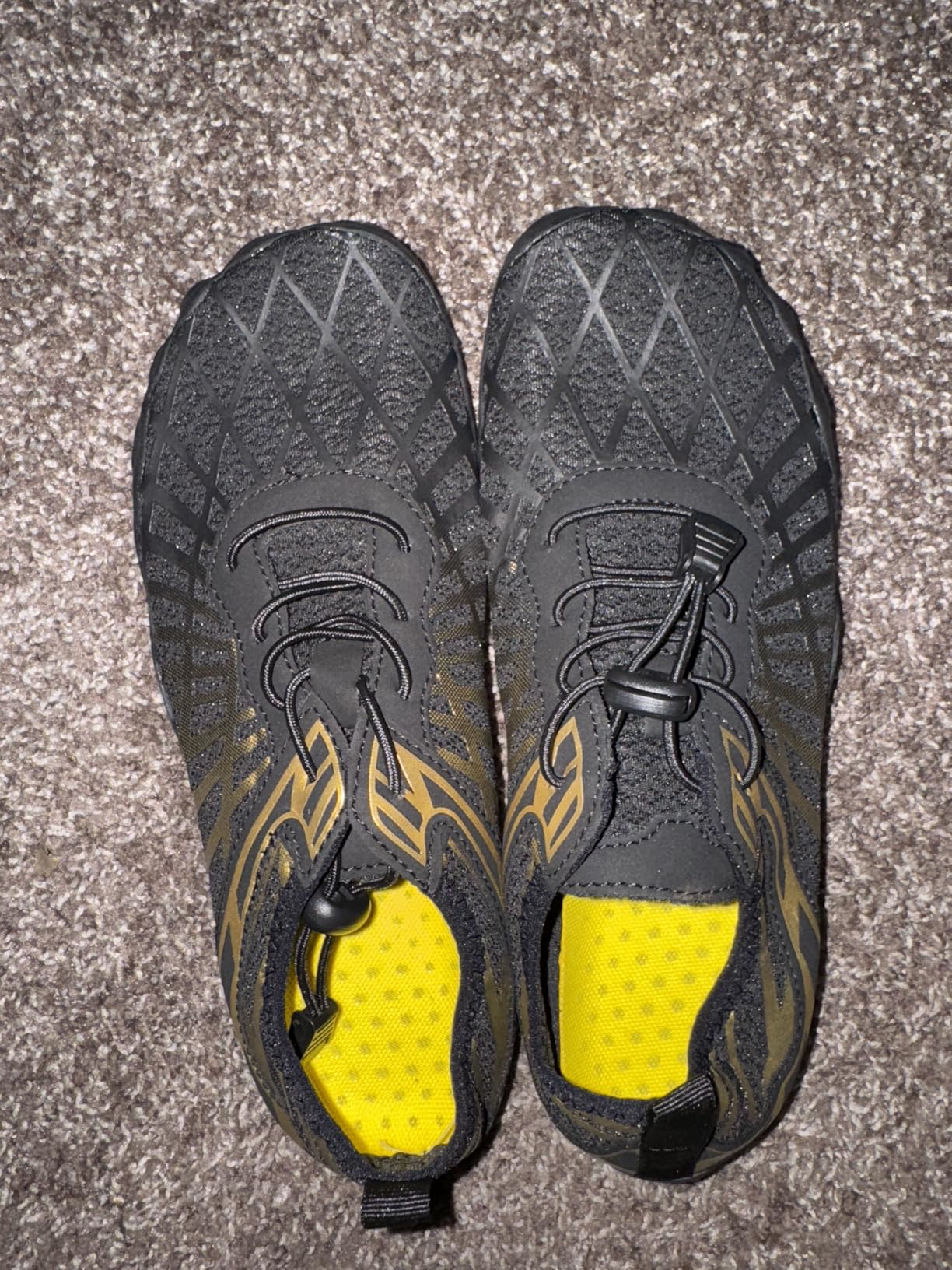
I started this test skeptical that a $40 shoe could meaningfully deliver on the barefoot promise. After 40+ sessions, my conclusion is more nuanced than “yes it does” or “no it doesn’t.”
For yoga, gym floor work, and smooth-surface daily use, these deliver genuine barefoot experience at a price that makes the experiment risk-free. The wide toe box solved my cramped-toe problem immediately and kept solving it for six weeks. The drainage, the lightness, the elastic closure — all earned their presence.
The honest caveat is durability. I can’t promise these will last a year, and the fraying I’m starting to see at the mesh-sole junction tells me I’m watching a clock tick. For some buyers, that’s a dealbreaker. For someone who’s never tried barefoot shoes and wants to find out if they work for their feet and their life, it’s a very reasonable trade.
If you fit the profile — barefoot-curious, yoga and light gym focus, wide feet, or just tired of cramped-toe sneakers — I’d say try them. Go in knowing what they are: a well-made budget entry point, not a long-term investment. That expectation management is the difference between being pleasantly surprised and disappointed.
Be the first to review “Eleton Hike Barefoot Shoes Womens Men Footwear”
Related products
Hiking/Trekking Shoes
Hiking/Trekking Shoes
Hiking/Trekking Shoes
Hiking/Trekking Shoes
Hiking/Trekking Shoes
Hiking/Trekking Shoes
Reviews
There are no reviews yet.