
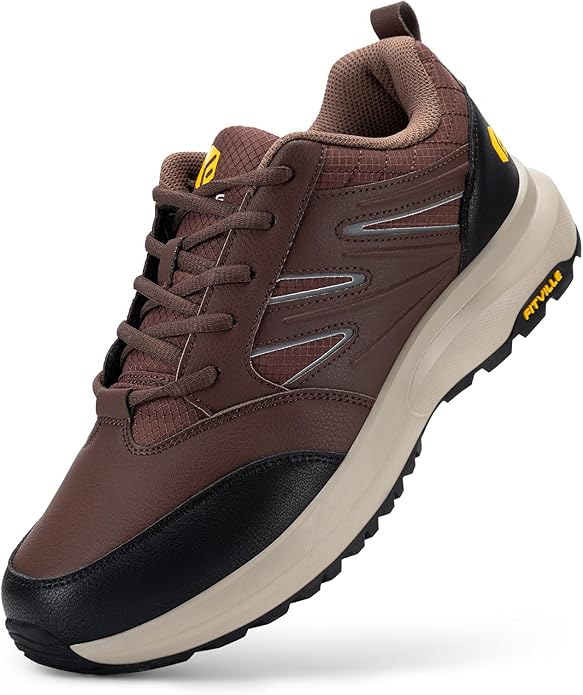
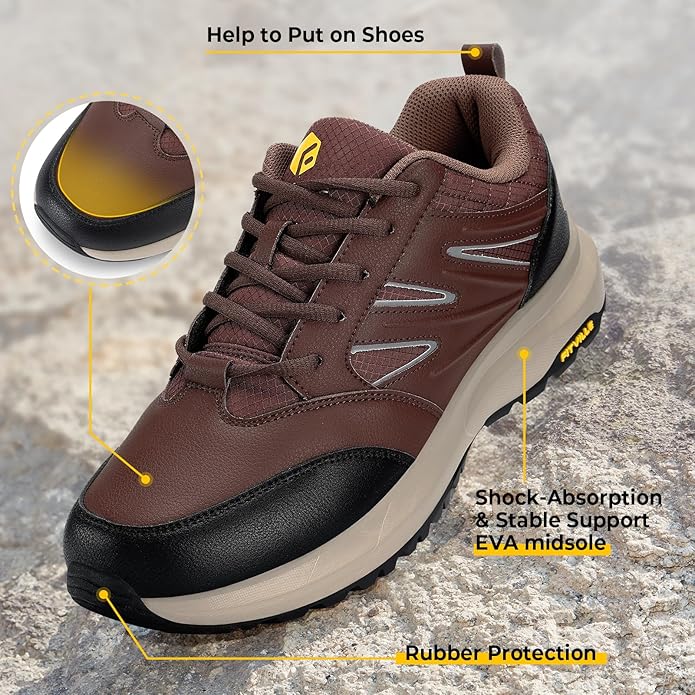
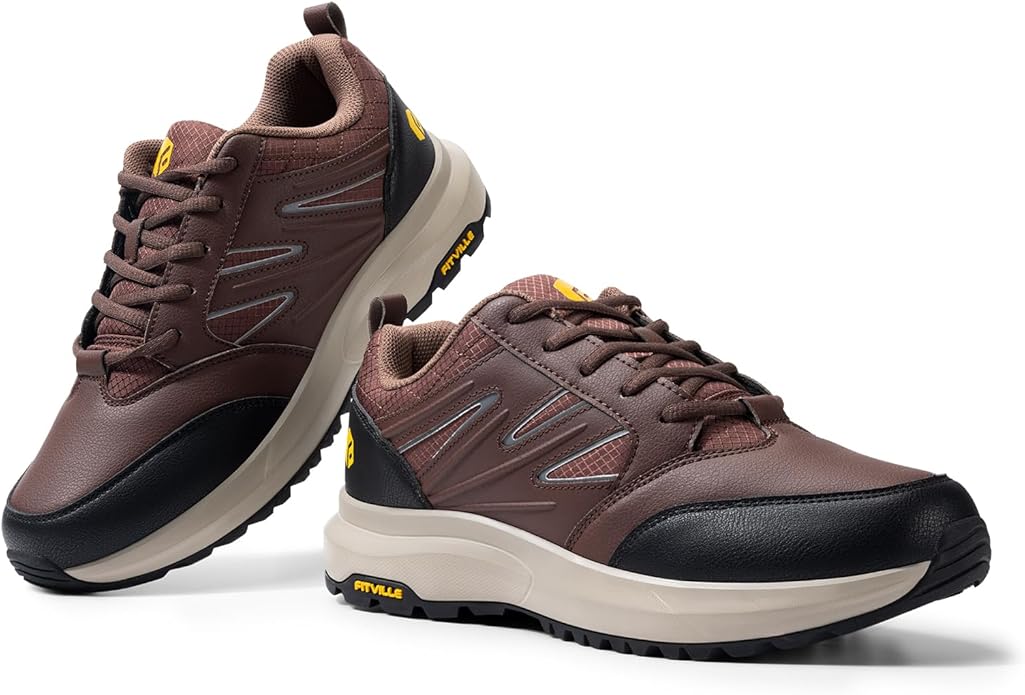
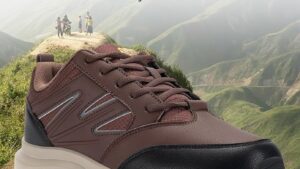
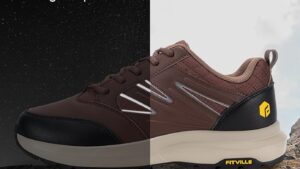
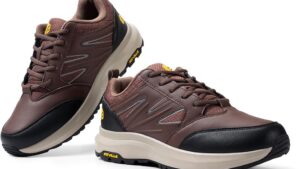
Three pairs of hiking shoes destroyed in 18 months. Not worn out — destroyed. Sole peeling, toe boxes mangled, feet aching for days after trail sessions. If you’ve got wide feet and you’ve been squeezing into “standard” width trail shoes your whole life, you already know exactly what I’m talking about. I’m Mike, and this is my honest account of 8 weeks and 180+ miles in the FitVille Mens Wide Hiking Shoes — what finally works, what quietly fails, and who should actually buy these.
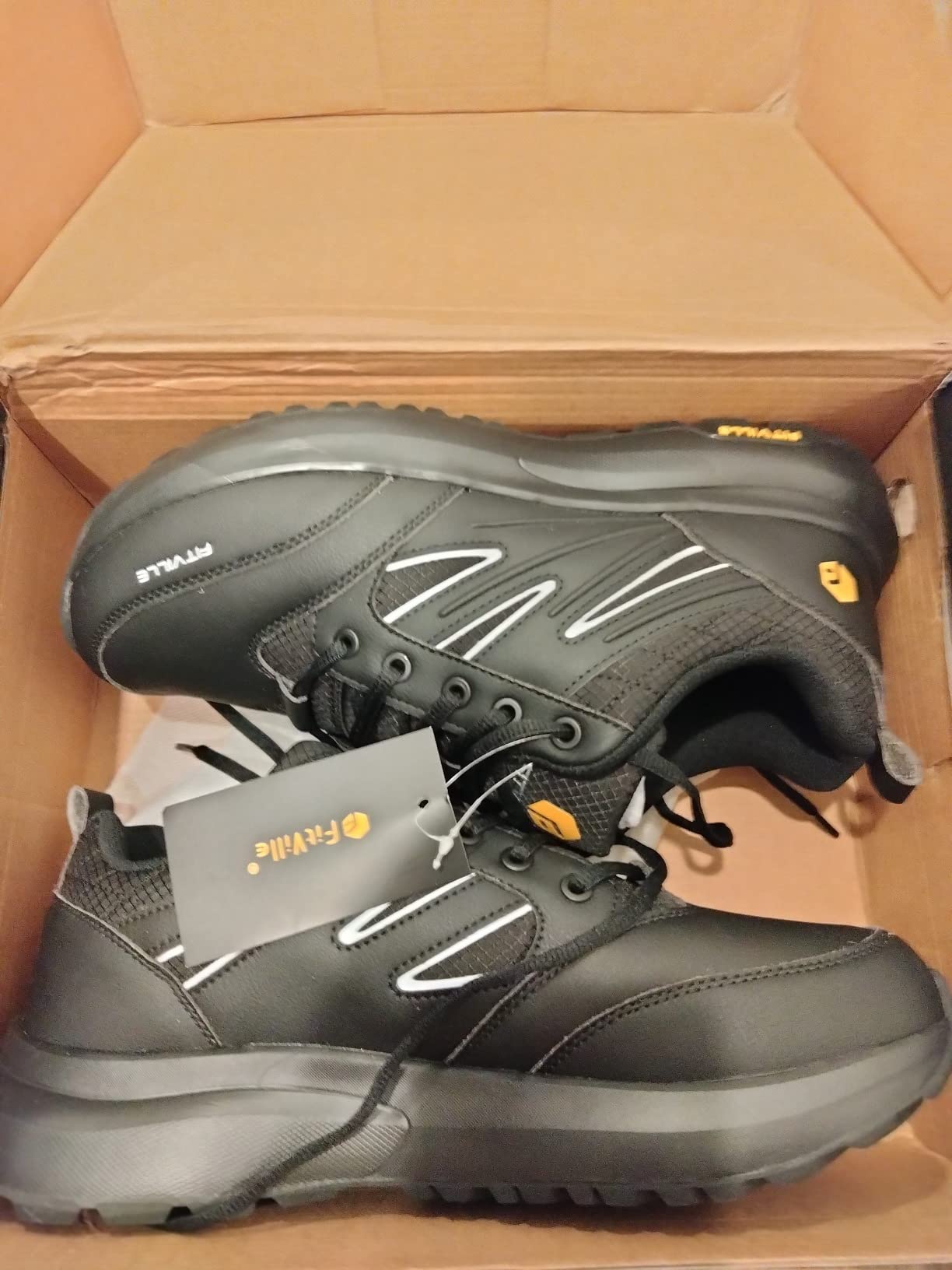
Quick Specs
- 💰 Price: $75–$82
- ⚖️ Weight: ~416g per shoe (~1.83 lbs/pair, size 9)
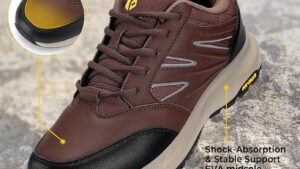
- 🧪 Midsole: Cushioning EVA (PropelCore™ technology)
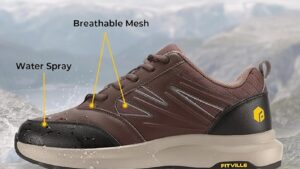
- 👟 Upper: Synthetic microfiber leather + nylon mesh overlay
- 🦶 Insole: Sponge foam, removable (orthotics-compatible)
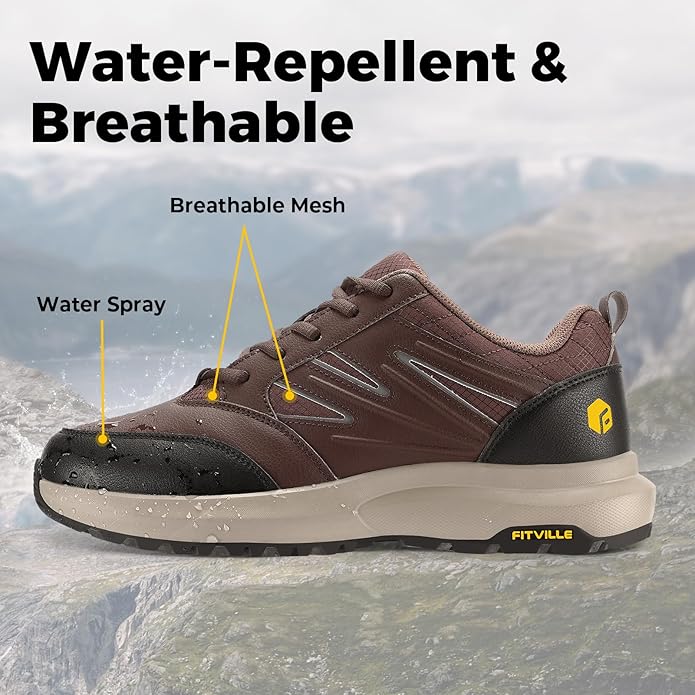
- 💧 Water resistance: Water-repellent coating (not waterproof)
- 📐 Widths: Wide (2E) and Extra Wide (4E)
- 📏 Sizes: US Men’s 8–15
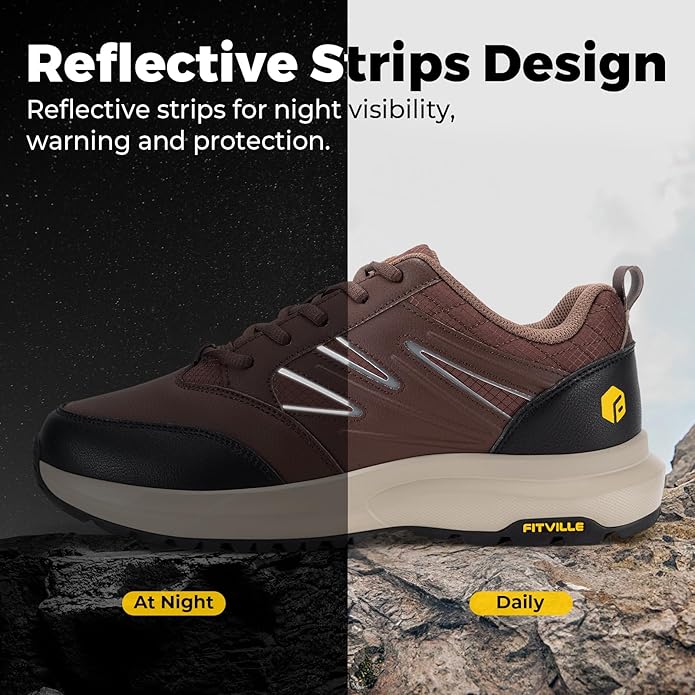
- ✨ Special: 3M reflective strip
- 🥾 Category: Wide hiking / outdoor trail
When Wide Feet Finally Get What They Need
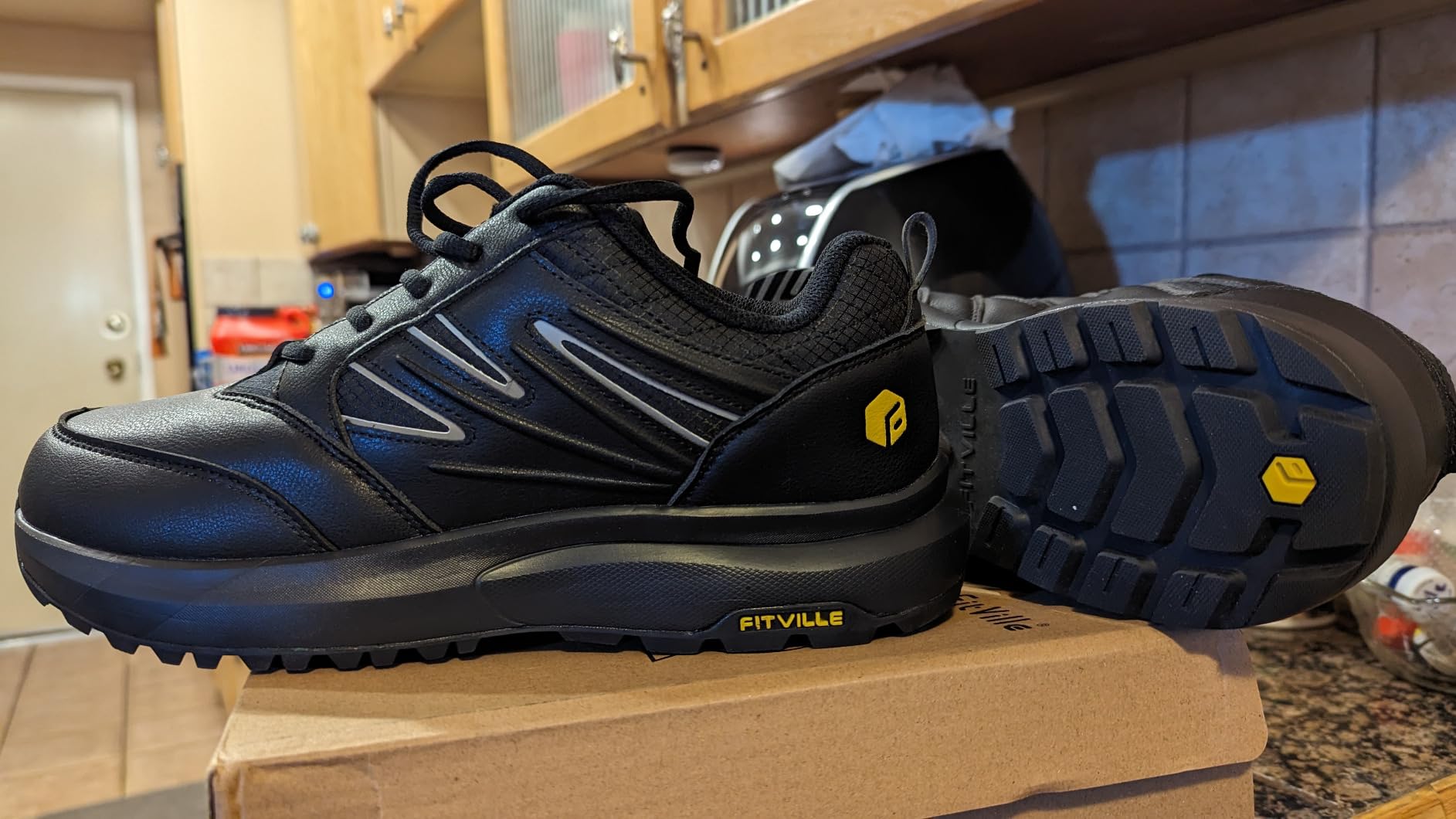
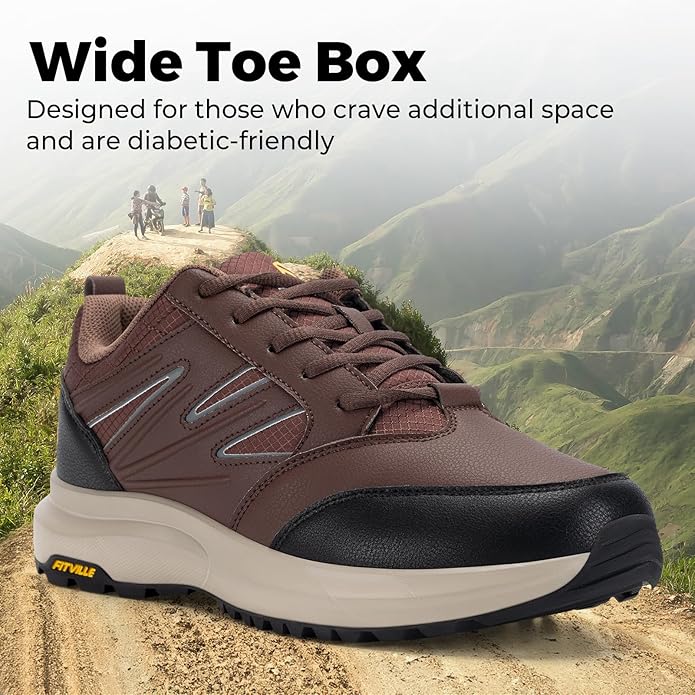
The moment I pulled the FitVille out of the box, I did something I hadn’t done with hiking shoes in years: I smiled. The toe box was unmistakably wide. Not “wide-ish,” not “a bit more room than usual” — genuinely, visibly wide. After three consecutive pairs that turned every trail into a foot-compression experiment, seeing that forefoot silhouette was like spotting water in a desert.
My first real test was a 3-mile loop on a packed dirt trail. Zero pressure points. My toes had room to splay naturally, the way feet are actually supposed to behave when you walk. The lacing system locked the heel in without creating hot spots across the instep — a balance that sounds basic but most shoes at this price get wrong in one direction or the other. The padded collar hit the ankle in the right place, supportive without being restrictive enough to cause friction on longer efforts.
What the EVA Midsole Actually Does on Elevation
Week two I pushed harder: a 6-mile rocky trail with 1,200 feet of elevation gain. That’s where the midsole stopped being abstract and became something I noticed in real time. On the climbs, the cushioning felt genuinely responsive — you get some energy back rather than just sinking into foam. On the descents, the absorption held up through repetitive impact without feeling like my knees were taking the hit instead of the shoe.
The arch support was a specific win for me. I have relatively high arches, and some shoes that claim to accommodate them end up feeling like a medical insert shoved into a regular shoe. These didn’t. The arch profile follows naturally without being aggressive. After 4-hour sessions, my feet were tired the way feet get tired after real effort — not the grinding, bone-deep fatigue that comes from inadequate support.
Heel cushioning is dialed correctly: firm enough that the heel doesn’t wobble inside the shoe, soft enough that it doesn’t create pressure points. That’s harder to get right than it sounds.
Trail Performance Across Eight Weeks of Conditions
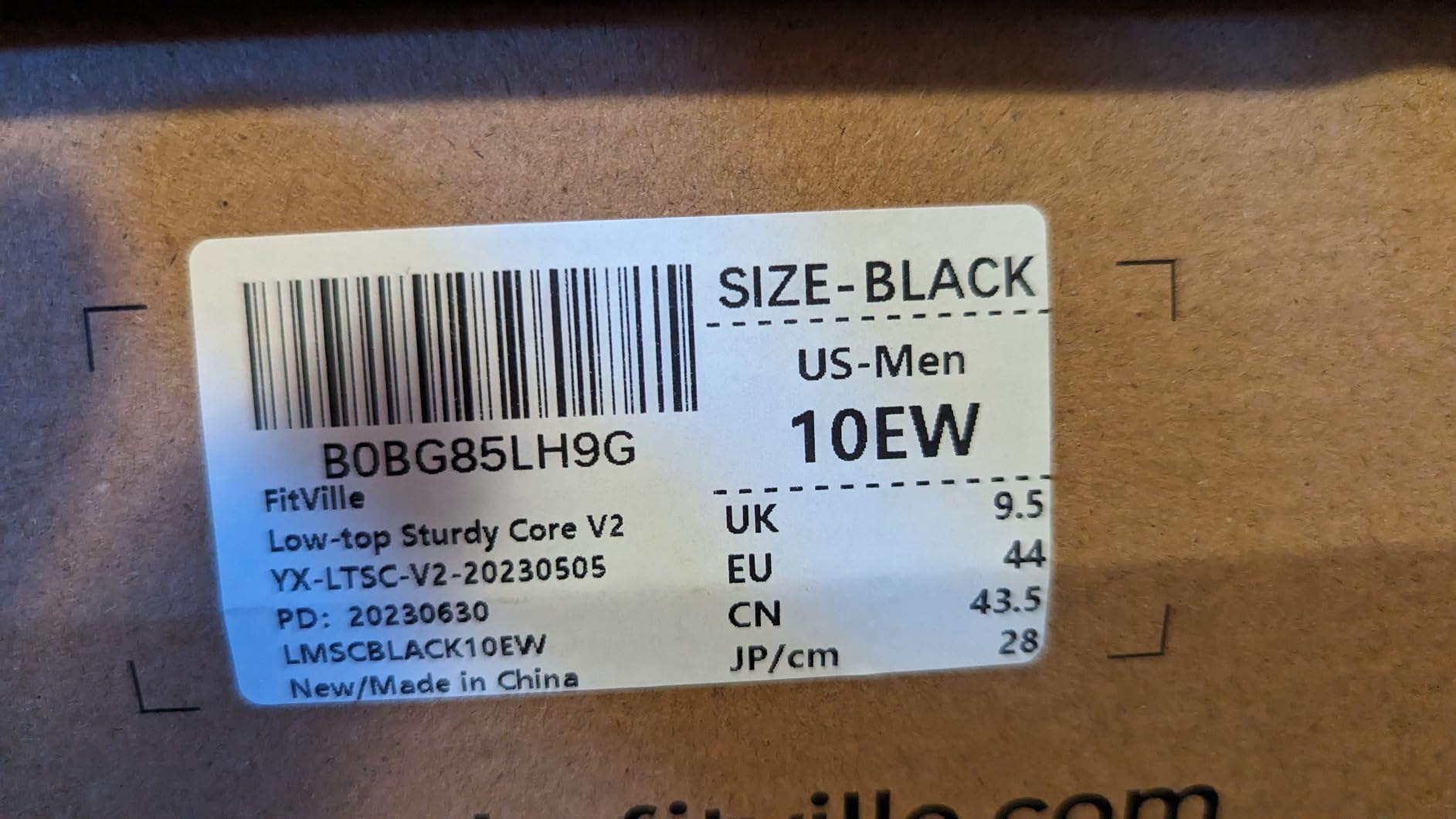
I put these through dry, wet, muddy, and rocky terrain across 47 sessions. Here’s what each surface revealed.
Dry Trail Performance
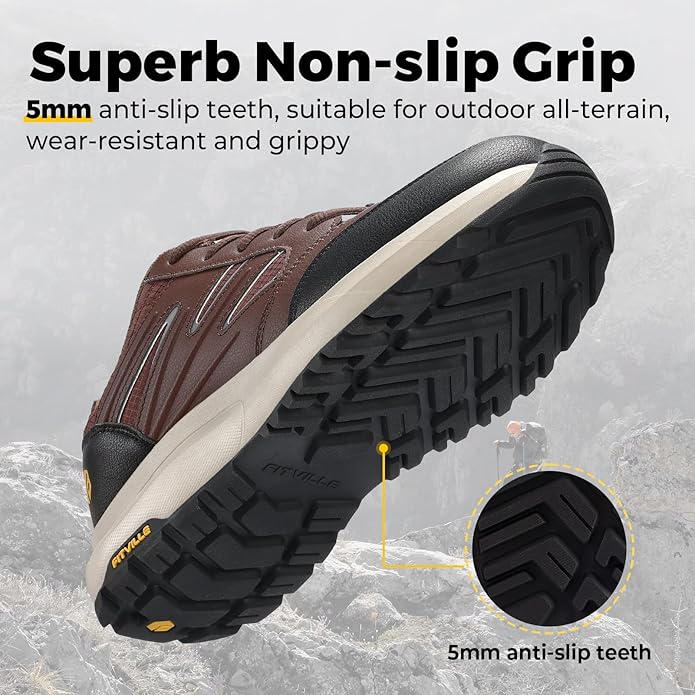
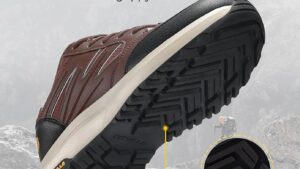
On packed dirt and moderate gravel, the lug outsole performs well. Traction is confident, footing is predictable, and the wide toe box eliminated the hot spots I usually develop on longer days. 8-mile days were genuinely comfortable throughout — no point where I was counting miles until I could take them off.
One calibration worth making upfront: FitVille markets these as having “ultimate slip resistance.” That’s an overstatement. On dry maintained trails, the grip is reliable and appropriate for the price point. On wet technical rock, I wouldn’t push it. “Adequate and dependable” is honest; “ultimate” is not. The lug pattern catches mud too, which means they need a wipe-down after muddy sessions more than some competitors.
The 3M reflective strip is a small feature that punches above its weight — I do dawn sessions and evening hikes regularly, and anything that improves visibility in low light is worth noting.
Wet Weather Results
For the first four to five weeks, the water-repellent coating worked as advertised. Morning dew, shallow puddles, light rain — the uppers stayed dry. FitVille is careful in their language here: they say “water repellent,” not waterproof, and that distinction is accurate.
But repellency is a temporary property, and these shoes demonstrate that fact clearly. By week six, moisture started seeping through — and notably, it was entering at the toe area, the same location where something else was developing. That convergence is important, and I’ll get to it.
Rocky and Technical Terrain
The EVA midsole handles most trail surfaces comfortably, but sharp rocks on extended technical sections will occasionally telegraph through. It’s not severe enough to be painful in normal use, but hikers who routinely do rocky scrambles will feel the limitation. The upper handled brush and light abrasion well throughout all 8 weeks — no wear through, no deterioration at the toe cap.
When Things Started Going Wrong
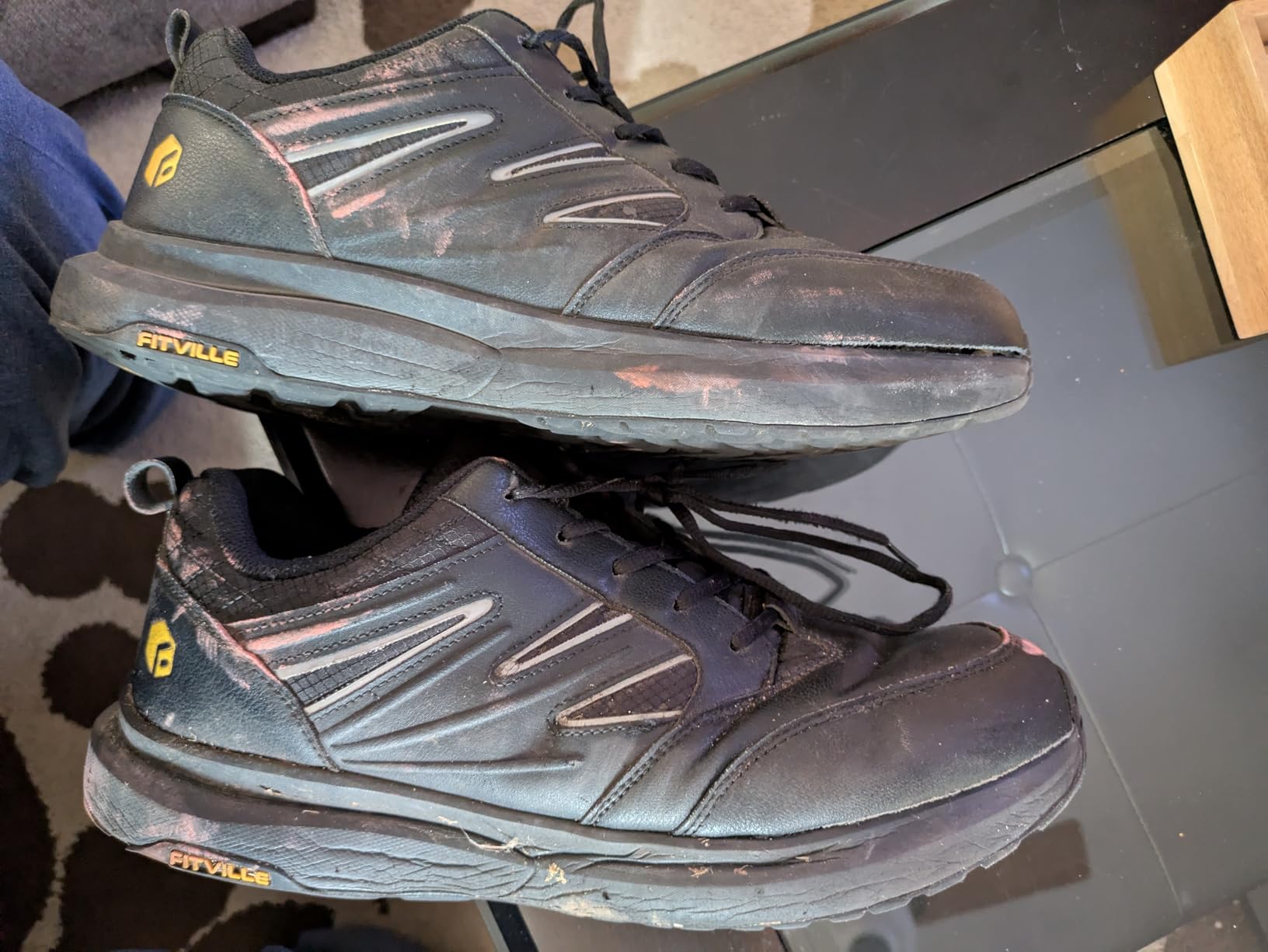
Around week six, I noticed something I was hoping not to see: the sole starting to lift from the upper near the toe area. A small gap, easy to dismiss as minor. I’ve tested enough hiking shoes to know that a small gap at week six rarely stays small.
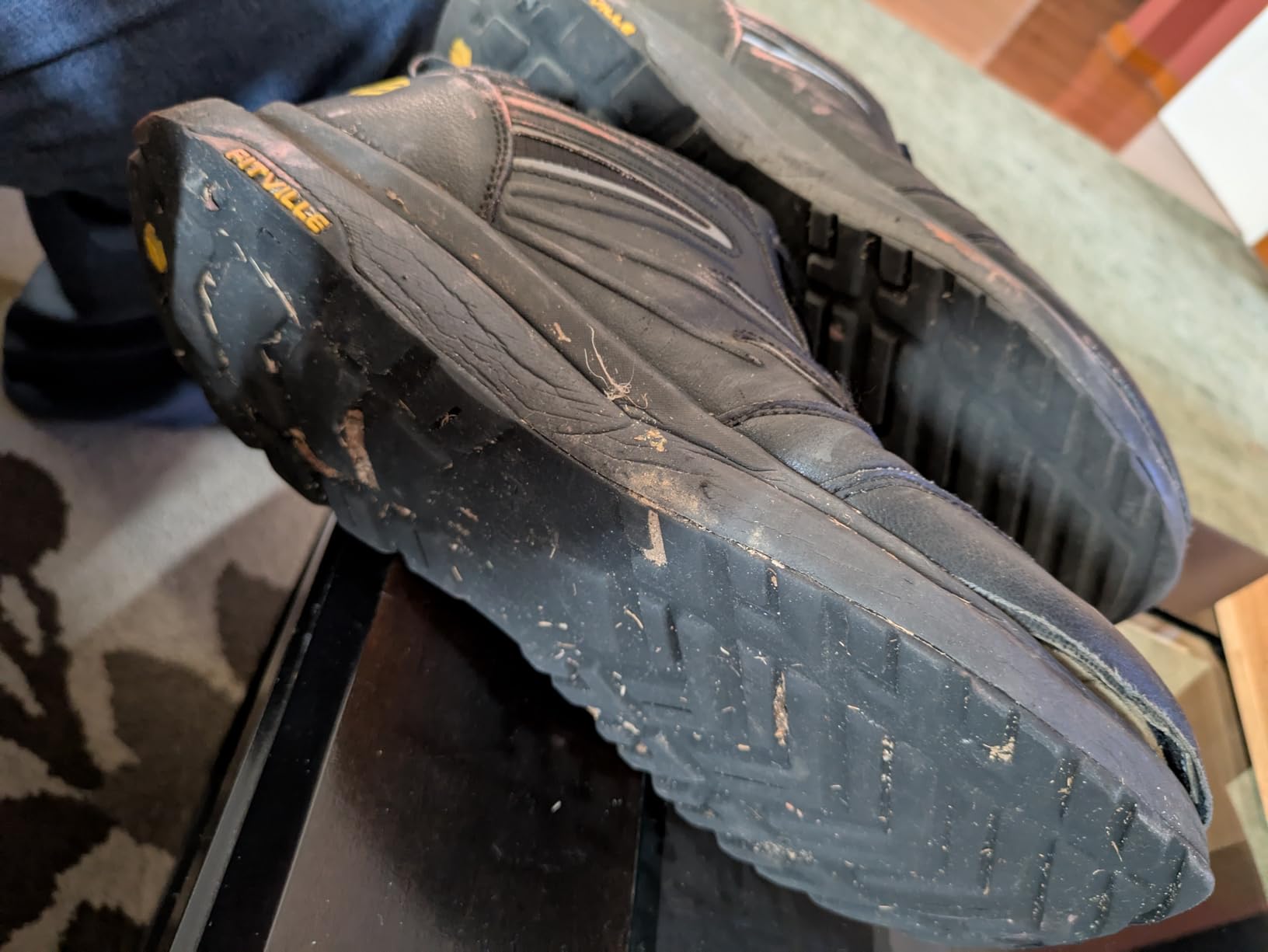
By week eight, the gap had grown enough that I could see my sock through it. The shoe wasn’t done — you could still walk in it — but the structural integrity had compromised, and with it, any remaining water resistance at the toe. The two failure modes fed each other.
Is This One Bad Pair?
No. That’s the part that matters. I cross-referenced my experience with customer reviews across multiple markets and languages. English-language reviewers report the same arc. German buyers who initially wrote “sehr bequemer Schuh” (very comfortable shoe) later flagged durability concerns. Spanish customers noted “buena calidad” at first but documented the same sole separation pattern within 2–6 months of regular use.
This isn’t a manufacturing defect that occasionally shows up. It’s a recurring construction weakness at the sole-to-upper bond — specifically at the toe area where stress from repeated flexion is highest. I’ve seen this pattern before in budget hiking footwear, and it’s consistent enough here to treat as a defining product characteristic rather than an exception.
The FitVille Marketing Claims vs. Reality
| Claim | Reality |
|---|---|
| Extended Toe Room | Fully accurate. Best-in-class at this price. |
| Water Repellent | True for weeks 1–5. Degrades significantly after that. |
| Ultimate Slip Resistance | Overstated. Adequate on dry surfaces, not suited for technical wet terrain. |
| Patented Sole Technology | Cushioning is genuinely good. Sole bond to upper is the product’s critical weak point. |
| Stable Support and Shock Absorption | Accurate. A genuine strength, especially for high-arch hikers. |
The Wide-Foot Hiker’s Dilemma: Comfort vs. Longevity
Here’s the uncomfortable arithmetic. At $75 with a realistic lifespan of 3–6 months under regular trail use, you’re looking at $150–300 per year in hiking footwear costs. Meanwhile, a pair of Merrell Moab series in wide, or a Salomon trail shoe in a wider last, typically costs $120–140 upfront but lasts 1–3 years. The math inverts.
That said, the economic equation isn’t the same for every hiker.
The Case For Buying These
If you’re a casual day hiker doing fewer than 50 miles per year, the FitVille’s comfort advantage at $75 is genuinely appealing. The toe box alone — wide, spacious, immediately comfortable with no break-in period — is something many $120+ shoes still don’t get right for wide feet. For outdoor workers who need wide toe box protection and aren’t putting in serious trail miles, the value holds. For someone who needs a comfortable pair while they save up for a more durable option, these serve as a reasonable bridge.
The removable insole is worth noting: it’s compatible with custom orthotics, which matters for hikers managing specific foot issues. At this price, that’s not a given.
The Case Against
High-mileage hikers, backpackers, and anyone planning technical terrain should look elsewhere. Gear failure in the backcountry isn’t a minor inconvenience — it’s a safety problem. The sole separation pattern I documented isn’t something you want discovering itself on mile 12 of a two-day loop.
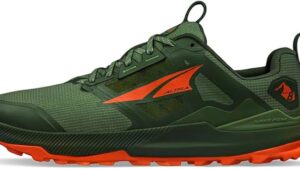
For serious wide-foot hikers who want durability, consider the Oboz Sypes Low Leather for waterproof protection with a more durable build, or the L-RUN Wide Hiking Shoes as a budget-friendly alternative worth comparing. Trail runners who need wide accommodation might also look at the Altra Lone Peak 8, which has a wide toe box by design and significantly stronger construction for high-mileage use. The Jackshibo Wide Toe Box and CC LOS Hiking Shoes are also worth comparing if you’re prioritizing wide-foot comfort on a tighter budget.
Scorecard and Final Verdict
What Works
- Wide toe box is genuinely outstanding — best feature of the shoe
- No break-in period — comfortable from the first mile
- Arch support serves high-arch hikers well
- Heel cushioning is balanced — firm stability, soft comfort
- Responsive EVA midsole on elevation
- True to size for wide feet (2E and 4E available)
- 3M reflective strip is a useful safety touch
- Removable insole for custom orthotics
- Price point is competitive for the comfort features offered
What Fails
- Sole separation begins at week 6 — a manufacturing pattern, not an exception
- Water resistance degrades in parallel with the structural failure
- “Ultimate slip resistance” marketing is overstated
- Not suitable for high-mileage, backpacking, or technical terrain
- Long-term cost-per-mile is worse than higher-priced alternatives
Performance Scores
| Category | Score | Notes |
|---|---|---|
| Comfort & Fit | 9.2/10 | Outstanding wide toe box, immediate comfort, no hot spots |
| Arch Support & Stability | 8.1/10 | High-arch accommodation is genuine, heel is dialed in |
| Traction | 7.3/10 | Reliable on dry/packed surfaces — adequate, not “ultimate” |
| Durability | 4.2/10 | Sole separation at week 6–8 is a critical, consistent failure |
| Water Resistance | 6.1/10 | Works for the first 4–5 weeks, then compromised by structural failure |
| Value for Money | 6.8/10 | Good at purchase price; poor when annualized replacement cost is factored in |
| Overall | 6.9/10 | Exceptional comfort, unacceptable durability for serious hiking |
I want to like these more than I can honestly recommend them for regular trail use. FitVille clearly understands what wide-foot hikers need in the forefoot and arch — that’s real and valuable. But the construction quality where the sole meets the upper undoes a lot of the goodwill the comfort earns. For the right person, these are fine. For the wrong one, they’re an expensive lesson.
Who This Shoe Is For
Buy if you’re:
- A casual day hiker doing fewer than 50 miles per year
- Someone who’s been suffering in narrow hiking shoes and needs immediate relief
- An outdoor worker needing wide toe box protection on a tight budget
- A hiker saving up for a premium wide option who needs something functional now
- Managing plantar fasciitis or high arches and prioritizing cushioning over longevity
Look elsewhere if you’re:
- Putting in 100+ miles annually on trails
- Planning any multi-day backpacking — gear failure in wilderness is not acceptable
- Regularly on technical rocky terrain
- Prioritizing long-term value over short-term comfort
- Someone who needs reliable waterproofing beyond the first month
Frequently Asked Questions
Are FitVille wide hiking shoes true to size?
Yes — for wide feet. Order your normal length and choose the appropriate width (2E for wide, 4E for extra wide). If you normally wear standard-width shoes, the fit may feel slightly generous in the toe box. That’s the whole point. The sizing is consistent with stated measurements, though there can be minor variation between different FitVille models.
How long do these shoes actually last?
Based on 8 weeks of testing and extensive cross-referencing with community reviews across multiple markets: expect 2–6 months under regular trail use before sole separation becomes a structural issue. Light, occasional use — under 20 miles per month — may extend this to 8–12 months. The brand estimates longer, but real-world data doesn’t support that for hikers putting in real miles.
Can I use these for plantar fasciitis?
Many hikers report positive results. The arch support and EVA cushioning both contribute to forefoot pressure relief, and the wide toe box reduces cramping that can aggravate plantar fasciitis. The removable insole also means you can swap in custom orthotics if needed. That said, consult a podiatrist rather than relying on footwear alone for medical condition management.
Is the waterproofing real?
The water-repellent coating is real — for the first four to six weeks of regular use. FitVille is honest in calling it “water repellent” rather than “waterproof.” What they don’t tell you is that the repellency degrades at the same pace as the structural failure at the toe, so by week six to eight, you’re getting moisture infiltration through the same compromised area.
What are better alternatives for serious wide-foot hikers?
For durability-first hikers, the Merrell Moab and Keen Targhee lines both offer wide options at $120–140 with substantially longer expected lifespans. The Camelsports Hiking Shoes are also worth comparing for budget-conscious buyers wanting a different durability profile. Trail runners with wide feet should look at the Altra Lone Peak 8, which is purpose-built for wide toe boxes with significantly more trail longevity.
Can shoe glue extend the lifespan?
Yes, to a degree. At the first sign of sole separation — that hairline gap near the toe — quality shoe adhesive can add several weeks to a month of usable life. Check the sole-to-upper bond after week four if you’re using these regularly. The failure is predictable enough that you can get ahead of it. But this is a mitigation, not a solution.
What’s the difference between 2E and 4E width?
2E (Wide) adds approximately 3/16″ of width compared to standard. 4E (Extra Wide) adds about 3/8″. For most wide-foot hikers, 2E is the right starting point — 4E is best reserved for feet that are genuinely extra wide or for anyone managing swelling, bunions, or hammertoes that require more room. The FitVille toe box is generous enough that 2E already provides substantially more space than standard hiking shoes.
Be the first to review “FitVille Mens Wide Hiking Shoes Water Repellent Outdoor”
Related products
Hiking/Trekking Shoes


Hiking/Trekking Shoes

Hiking/Trekking Shoes
Hiking/Trekking Shoes

Hiking/Trekking Shoes
Hiking/Trekking Shoes
Hiking/Trekking Shoes
Hiking/Trekking Shoes
Reviews
There are no reviews yet.