
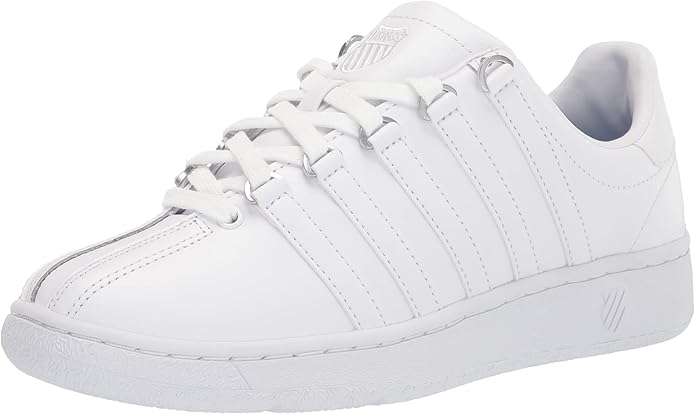
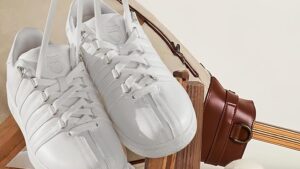
Three different women mentioned the K-Swiss Women’s Classic VN to me in the same month — at school pickup, at my fitness group, and at a neighborhood dinner. That’s not a coincidence; that’s a shoe worth investigating. I’m Sarah, and as someone who genuinely needs one sneaker to carry me through morning school runs, afternoon grocery hauls, and dinner out with friends, I spent 12 weeks putting these through every scenario my week could throw at them. Here’s what 45+ wear sessions actually revealed.
Quick Verdict
Before we get into the details: the Classic VN earns a solid 8.5/10 overall. It’s a genuinely versatile leather lifestyle sneaker that holds up across twelve weeks of real-world daily use — but it comes with a ~1 week break-in requirement and a comfort ceiling around 6-7 hours of continuous wear. Read on for the full story.
Technical Specifications
- 💰 Price: $75.00 MSRP (found at $52–80 depending on retailer and colorway)
- ⚖️ Weight: ~12.5 oz claimed (women’s size 8; not officially listed by K-Swiss)
- 🧪 Midsole: IMEVA (Injected Molded EVA) with OrthoLite sock liner
- 👟 Upper: Leather with textile tongue/collar lining
- 🌱 Outsole: Rubber herringbone brick tread
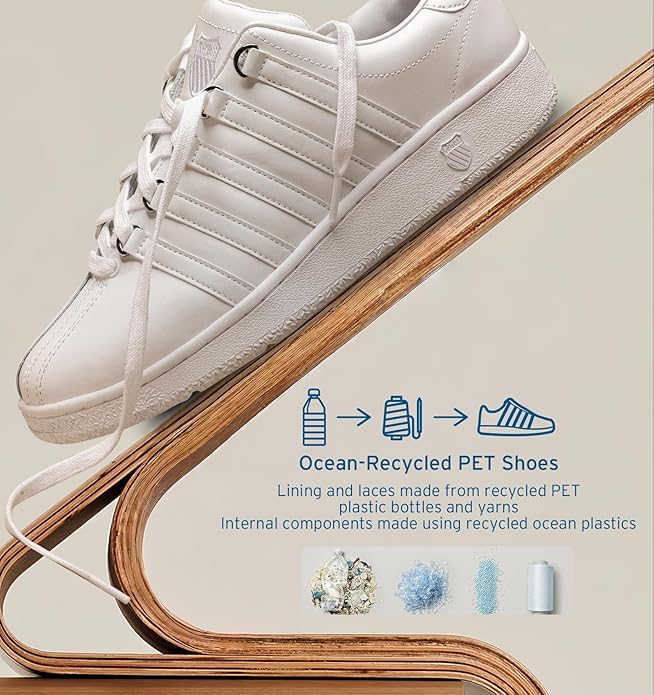
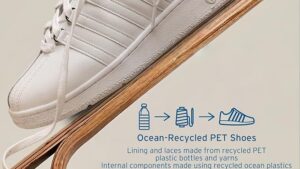
- ♻️ Sustainability: Recycled PET linings and laces, internal components from recycled ocean plastics, eco-friendly foam in sock liner and internal midsole
- 👠 Category: Lifestyle/fashion sneaker
- ⏱️ Testing: 12 weeks, 45+ wear sessions across daily activities
First Look: Design That’s Earned Its Keep
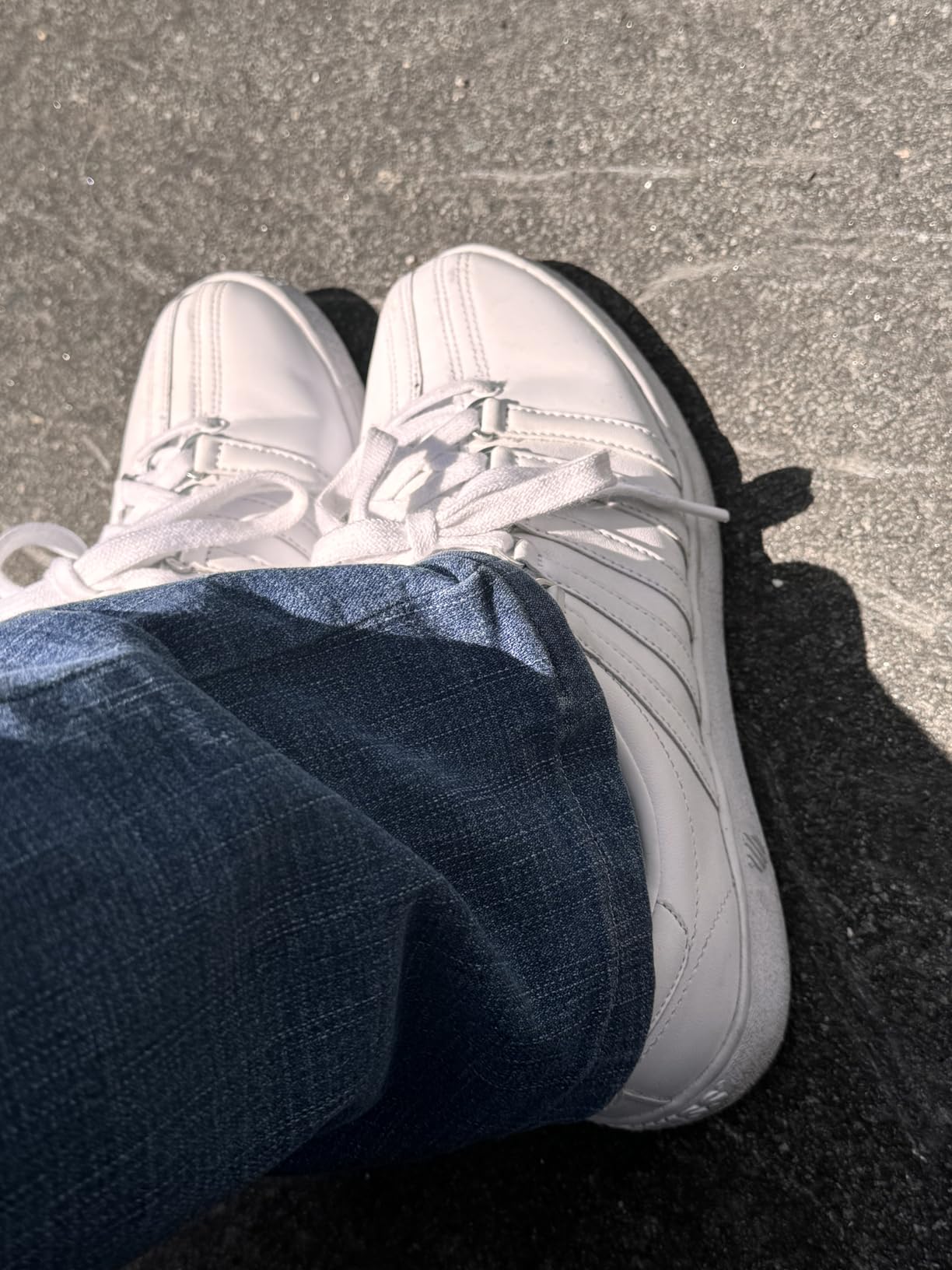
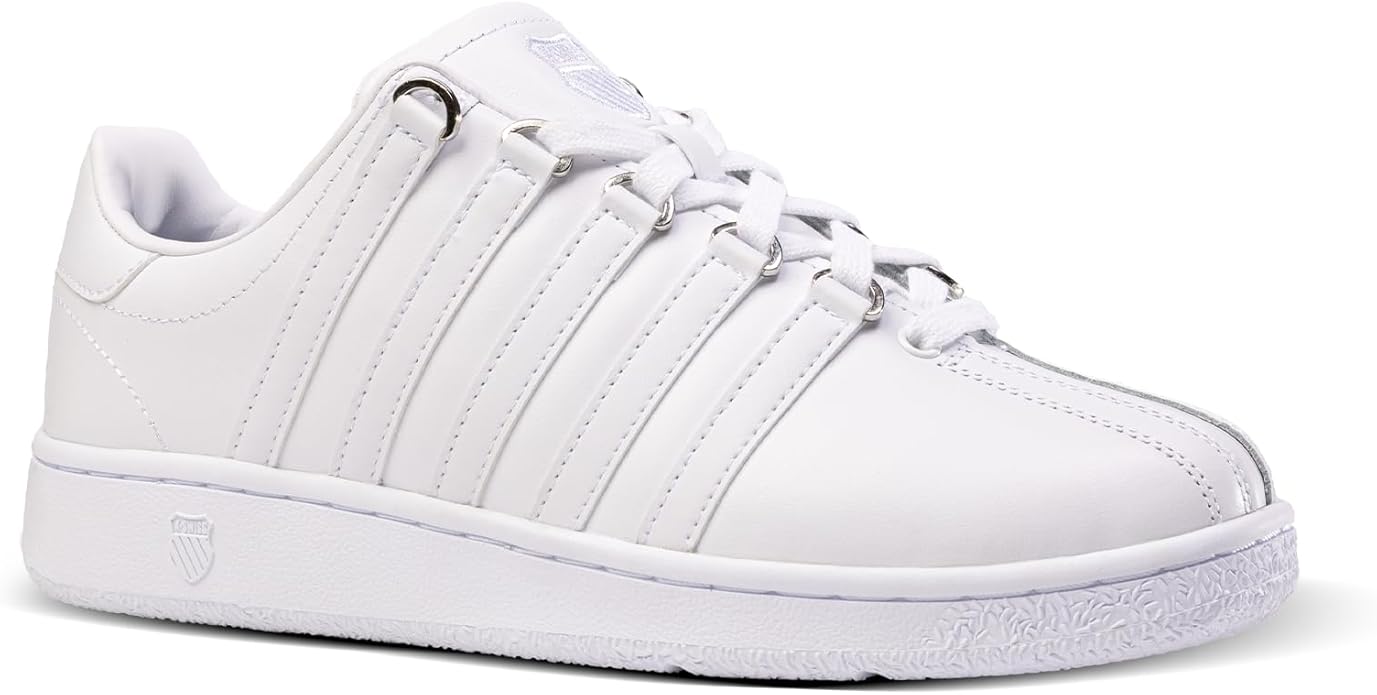
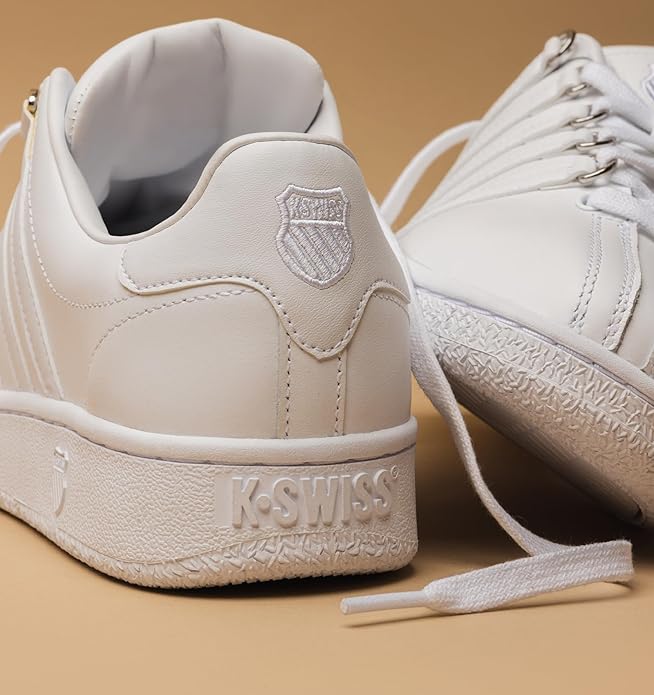
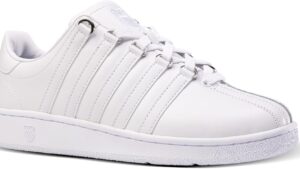
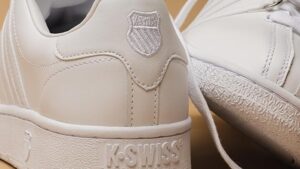
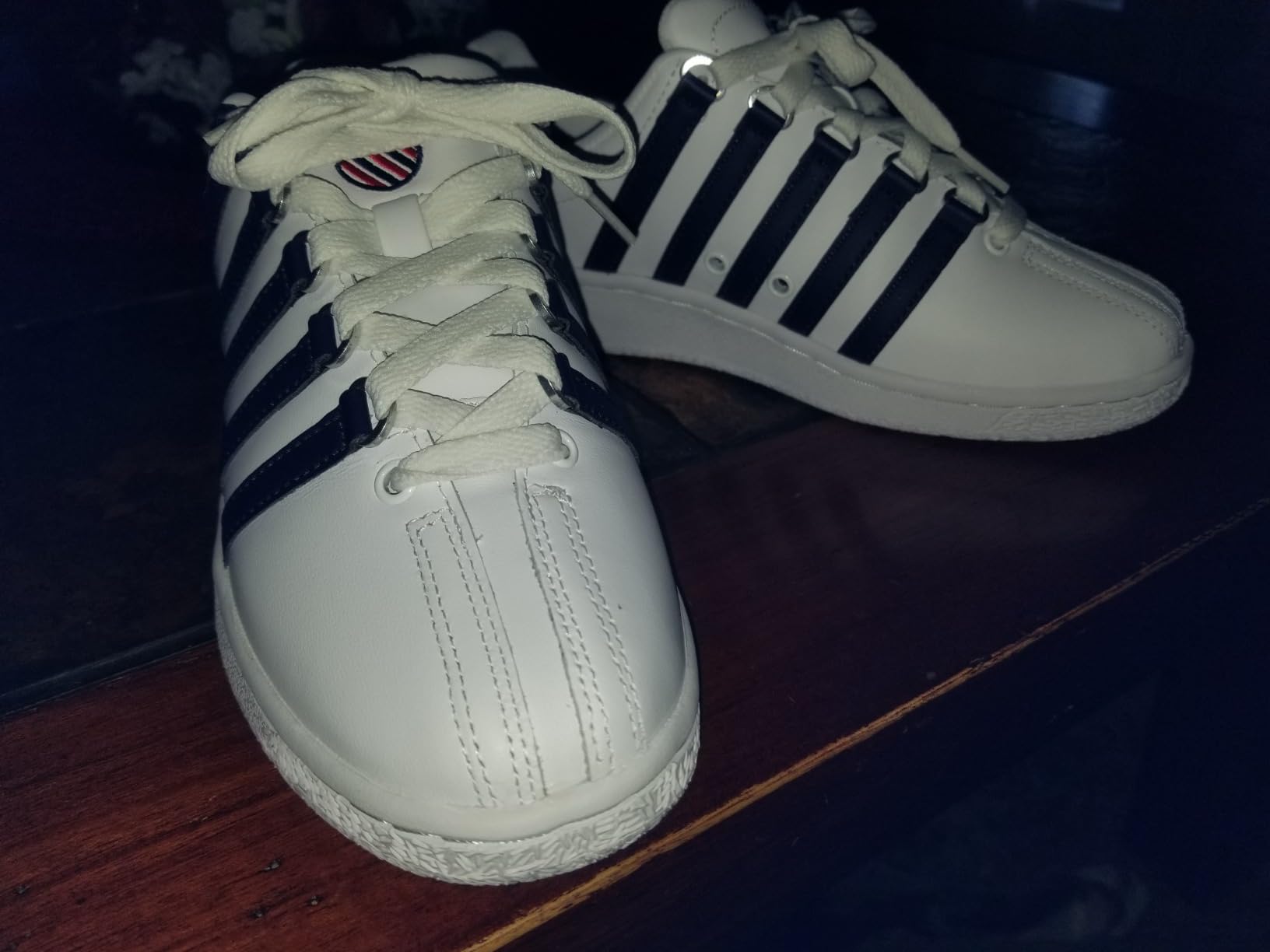
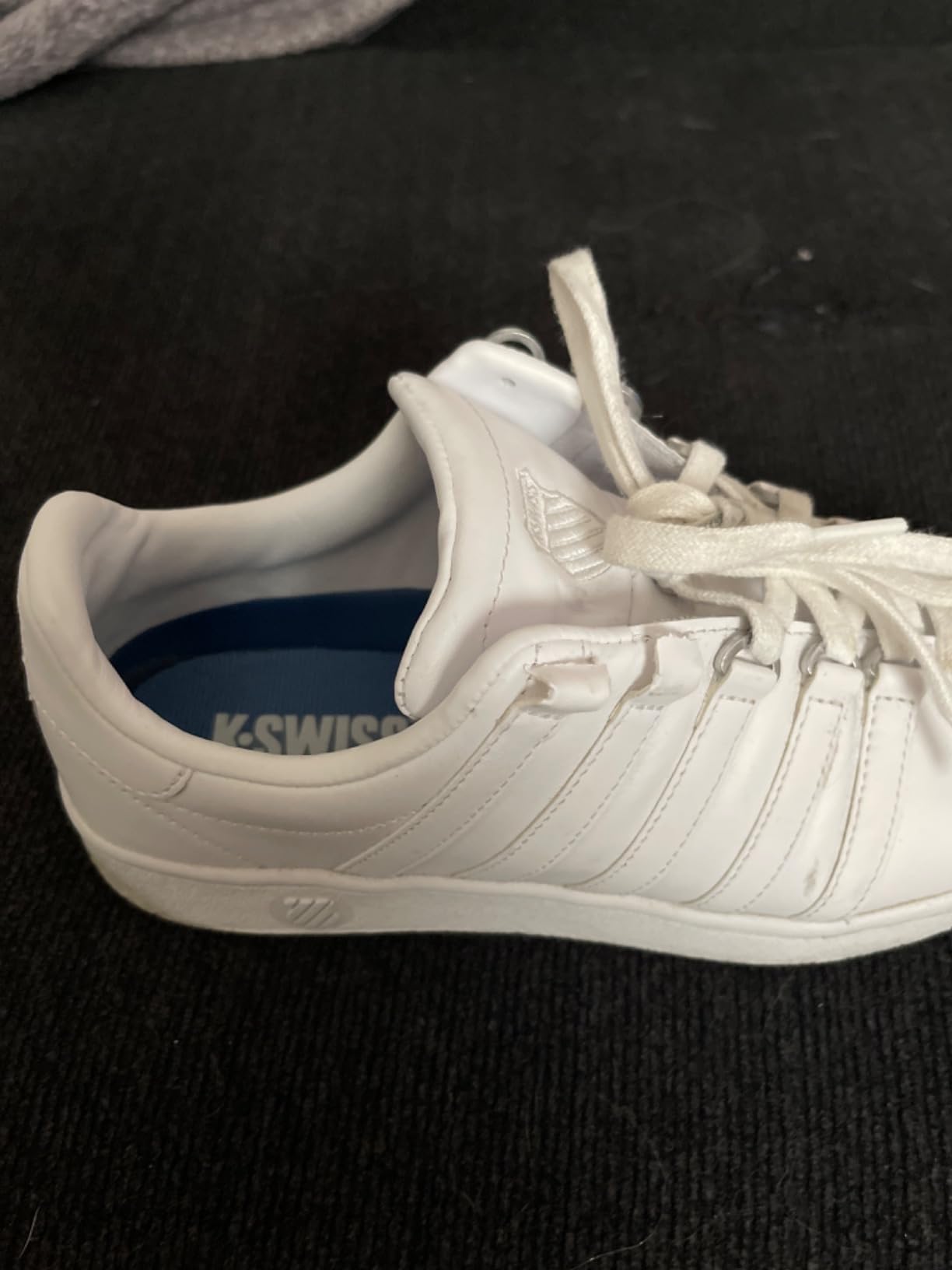
The Classic VN is K-Swiss’s foundational design, originally from 1966 and now in its 4th generation. Walking through the office with these on, nobody would guess they’re a budget-friendly pick — the premium leather upper, five-stripe branding, and D-ring lacing hardware look like they belong at a price point $40 higher.
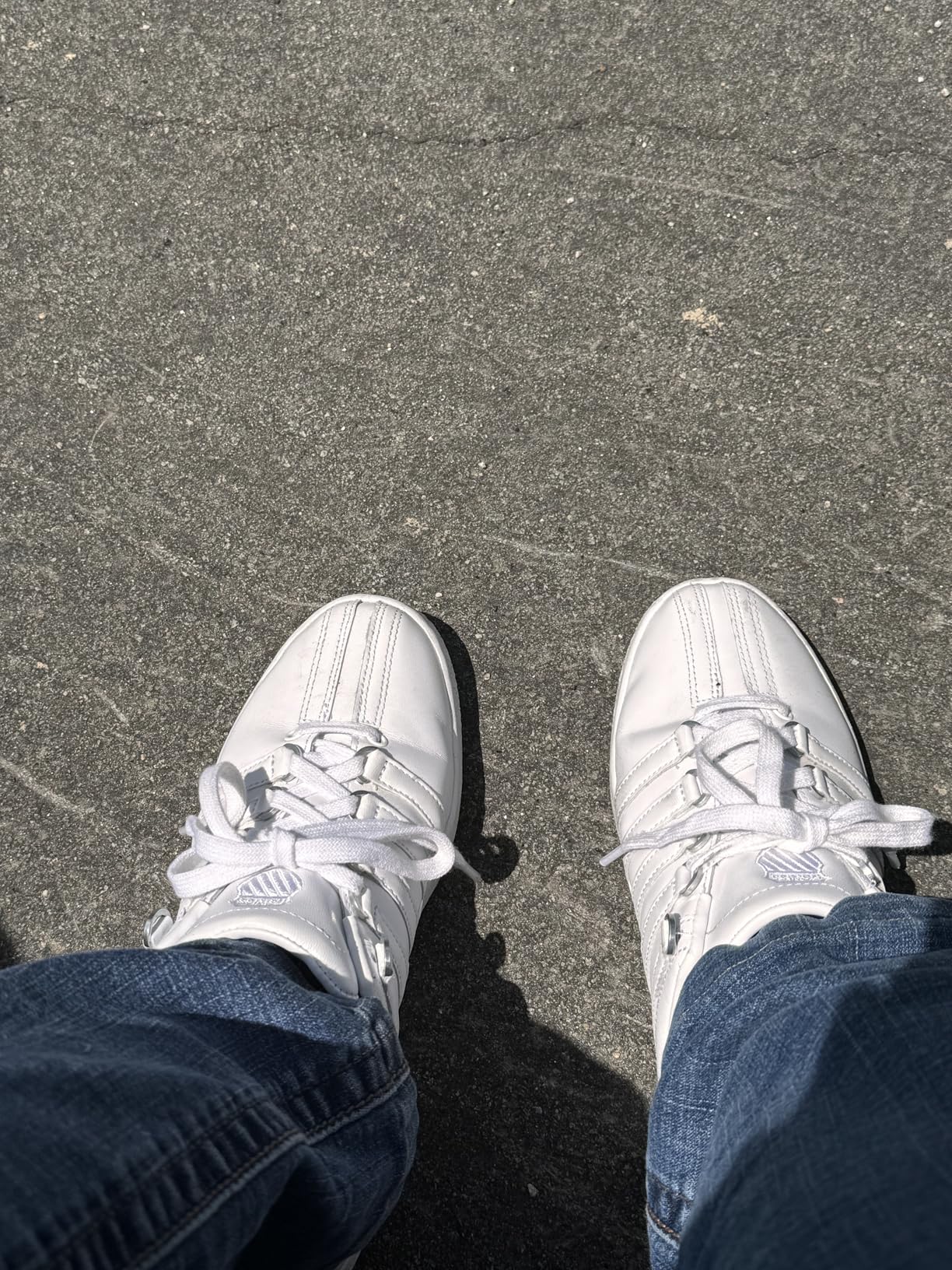
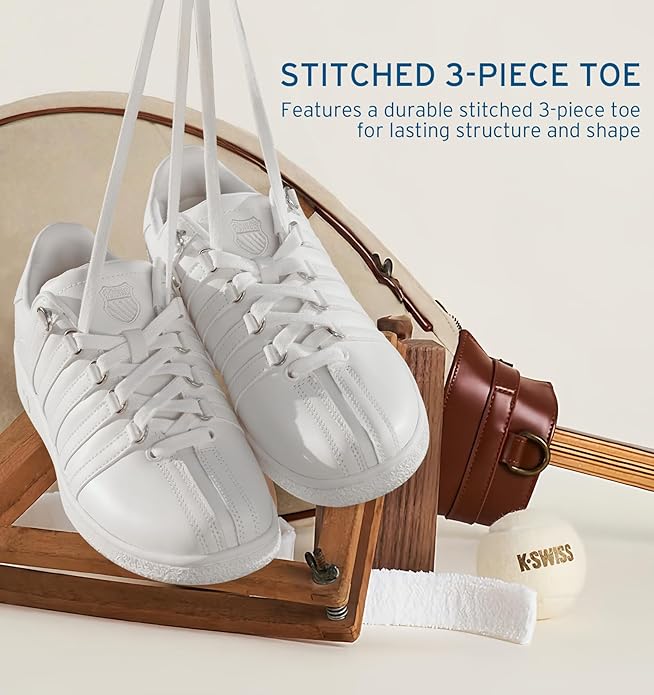
The three-piece toe construction is a genuine structural choice, not decorative. I noticed it during my longer walking sessions — the toe box retains its shape even after 12 weeks of regular flexing, with no collapsing or soft spots forming at the toe. Stitching is tight throughout; after 45+ wears, every seam sits exactly where it started.
One spec correction worth noting: K-Swiss’s official page lists IMEVA (Injected Molded EVA) as the midsole — not plain EVA as some listings suggest. The distinction matters. IMEVA is more dimensionally consistent, typically firmer, and holds its cushioning properties longer than compression-molded EVA. In practice, this shows up as steady underfoot feel that doesn’t soften into that “used up” sensation by month three.
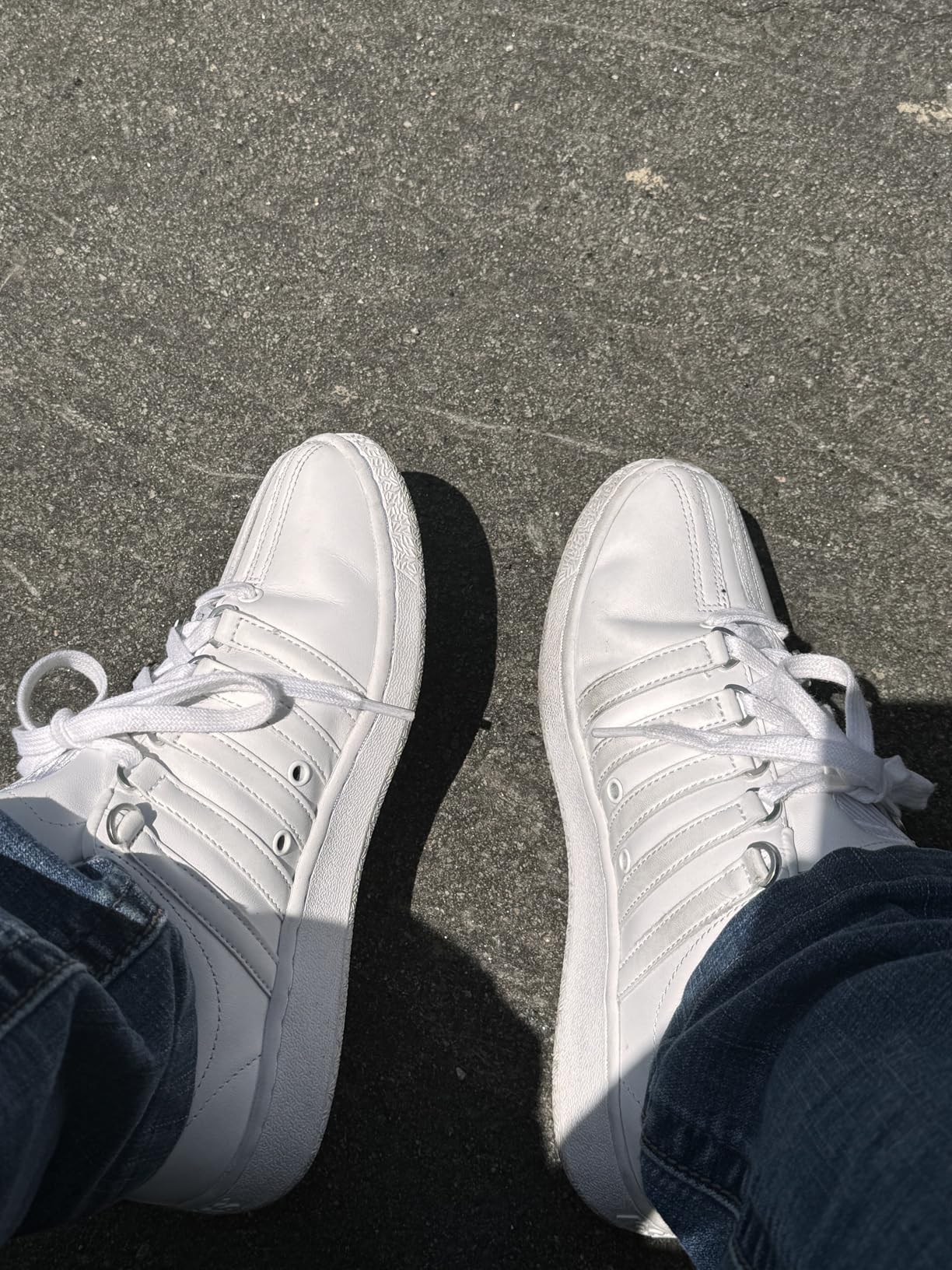
The herringbone brick outsole has zero drama on the surfaces I encountered — grocery store tile, restaurant hardwood, wet sidewalk, playground asphalt. Not once did I feel uncertain about my footing. The rubber compound is on the firmer side (this isn’t a sneaker designed for traction-heavy terrain), but for urban daily life, it does exactly what it should.
Fit and Sizing: The Honest Answer
After extensive cross-brand comparisons by WorkWearCommand (putting the Classic VN alongside Nike AF1, Adidas Superstar, Reebok Club C, Converse, and 15+ other brands), the consensus is clear: K-Swiss Classic VN fits true to size. Length and width both track closely to major athletic brands — no unusual narrowing, no generous sizing games.
Here’s my actual sizing breakdown:
- Standard/medium width: Order your normal size. My size 7 fitted cleanly after one week of break-in.
- Wide feet: Size up 0.5. The standard width construction doesn’t accommodate truly wide feet; the half-size up provides meaningful forefoot relief. No dedicated wide variant exists — if you need more accommodation, look at something like the Somiliss Wide Toe Box sneakers.
- Narrow feet: Stick with TTS. The shoe isn’t narrow, so going down won’t help.
Toe box depth is standard — not cramped, not swimming. The WorkWearCommand analysis placed it mid-range compared to Nike Dunk, Reebok Club C, and Nike Air Force 1, which matches my experience exactly.
Break-in is real but mild: days 1-3 feel slightly stiff around the ankle collar, day 4-5 the leather starts softening, day 7-8 the shoe conforms to your foot shape and everything settles. No blisters in my test; one minor heel rub on day 1 that resolved by day 4 without intervention.
The Discovery That Changed Everything: D-Ring Lacing
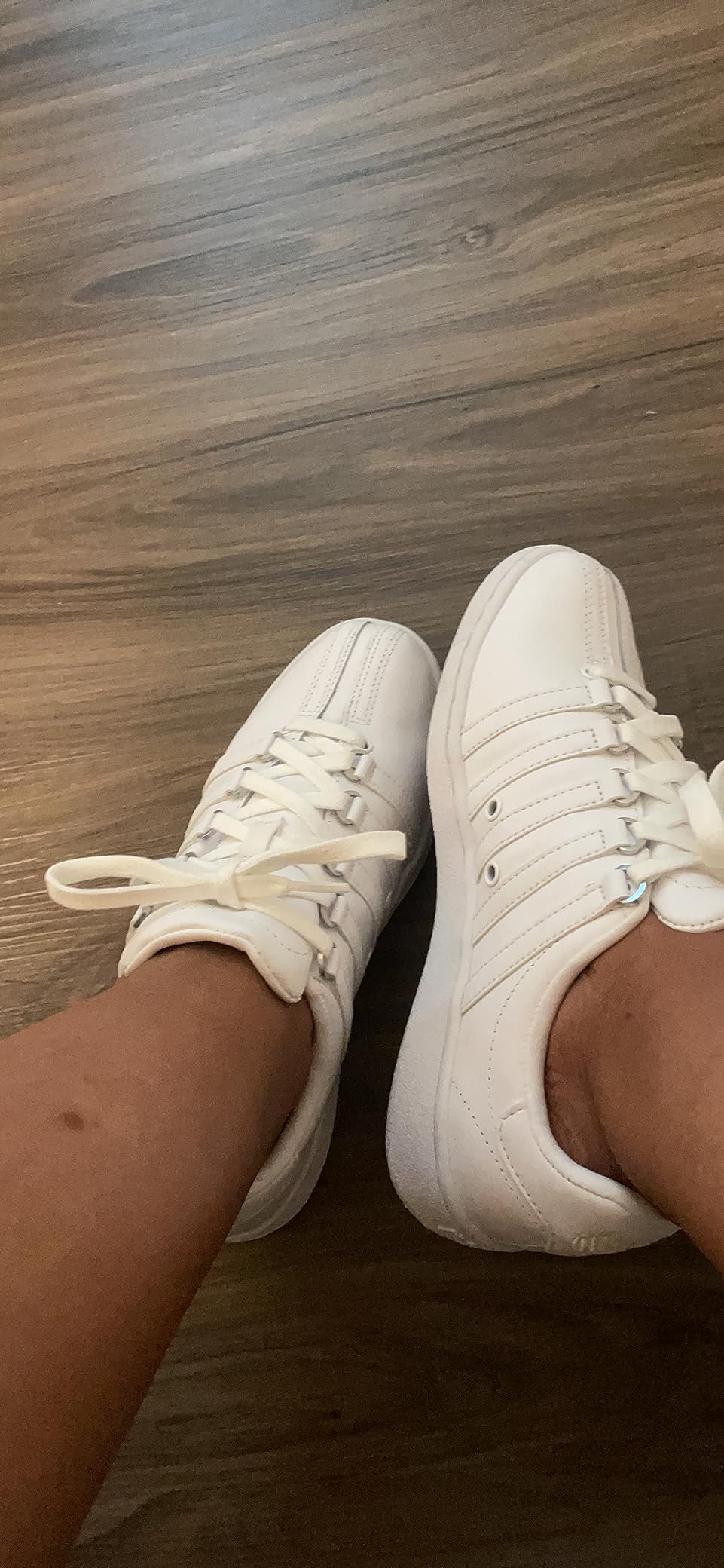
During week one, I wore these to a two-hour farmers market — enough walking to notice some ankle rubbing at the top eyelet. Not painful, but present. My first instinct was to return them.
Instead, I did something simple: I stopped lacing the top eyelet.
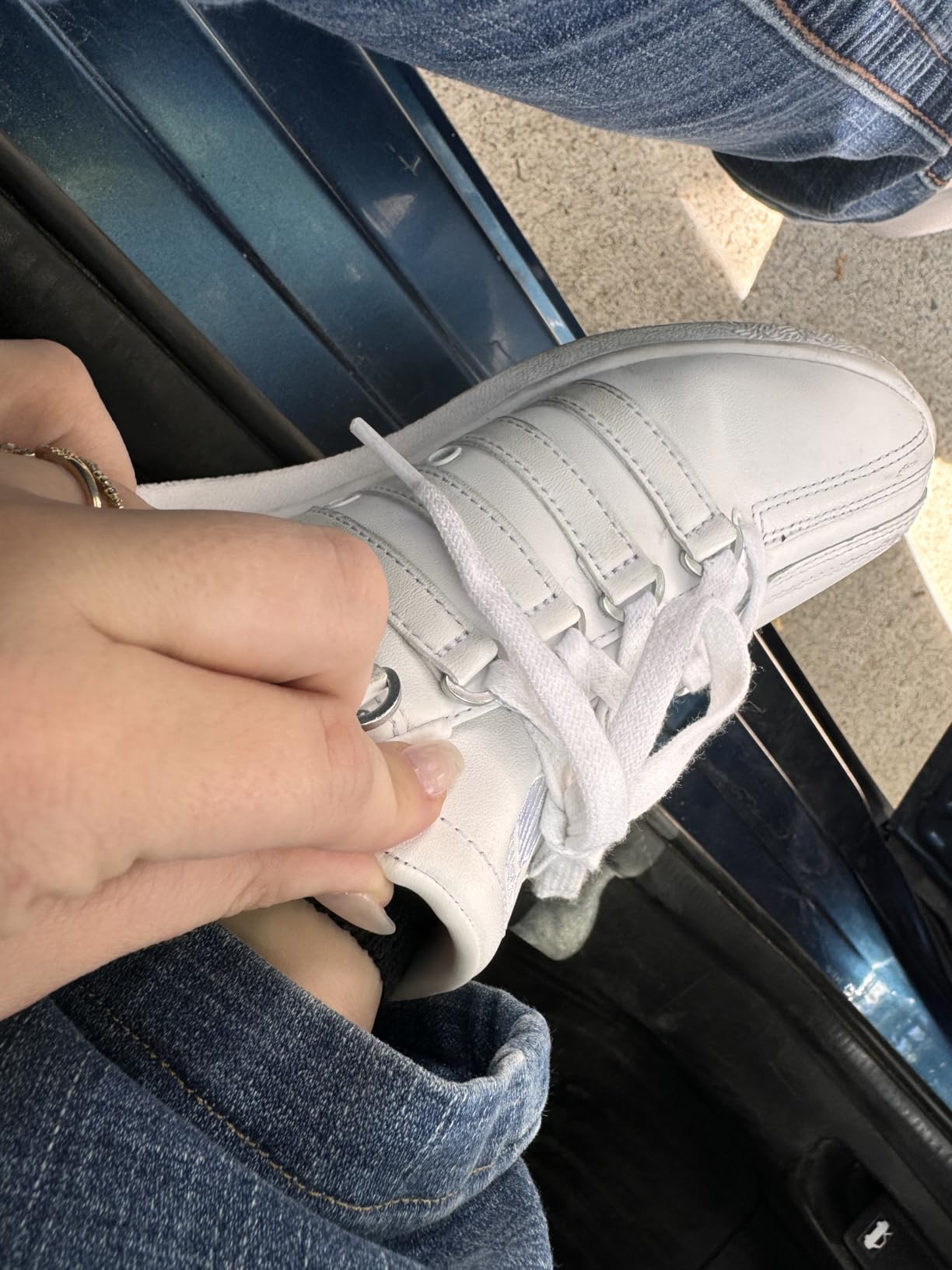
The top D-ring sits at the exact ankle bone height, and with full lacing, it creates a pressure point right there. But the D-ring system — a metal loop anchored to the side of the shoe — provides a secondary tension point that keeps the foot locked even without engaging that top eyelet. The result was immediate. Zero ankle rubbing, zero slippage, zero loss of lateral support.
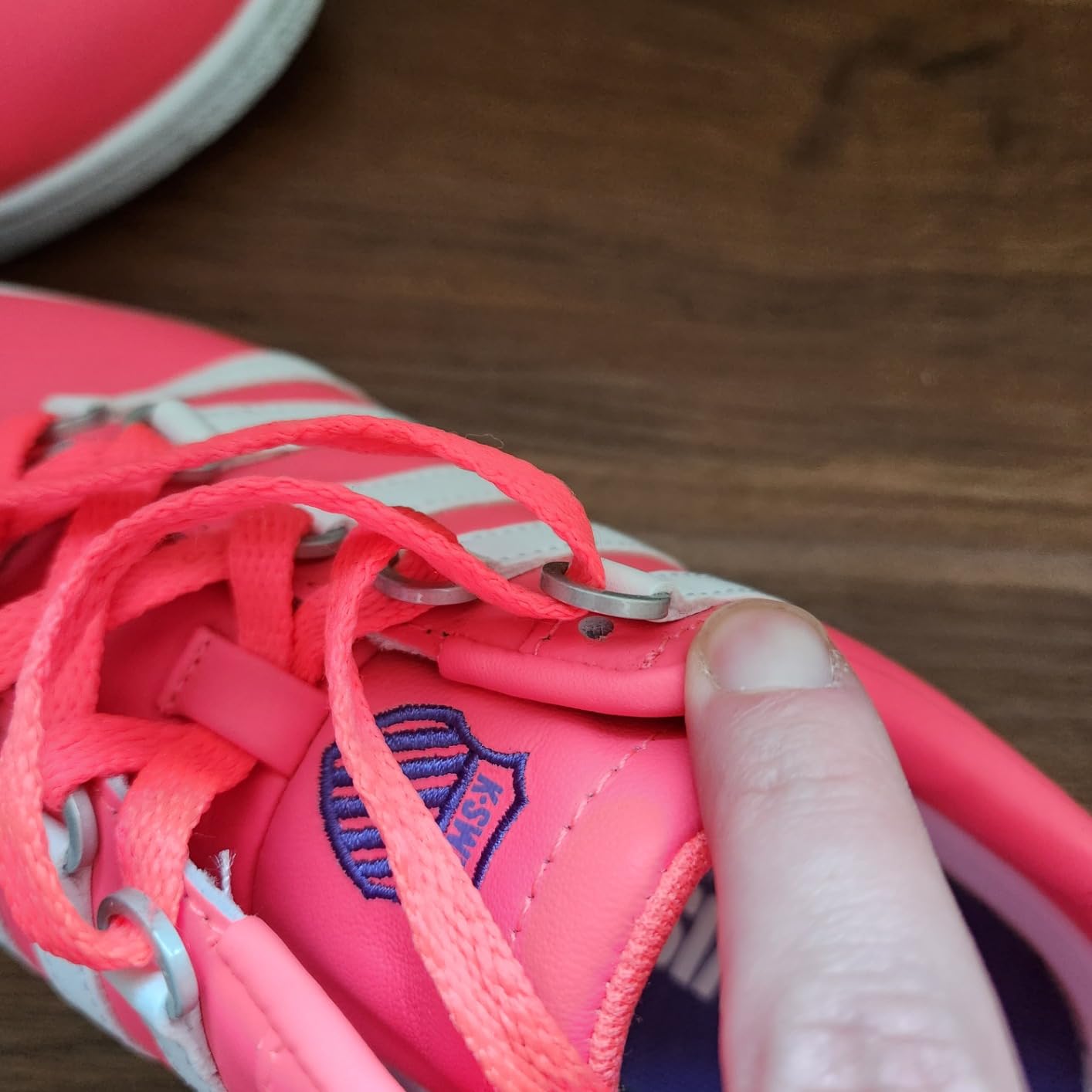
I kept the shoe laced this way for the remaining 11.5 weeks. If you’re picking these up, skip the top eyelet from day one — there’s no reason to use it unless you want the traditional fully-laced aesthetic in photos.
The D-ring is original to the 1966 design, carried forward through every generation. It’s not a marketing feature; it’s a functional lacing anchor that actually changes how the shoe fits in use.
All-Day Comfort: The Honest Hours
Note: This is where most shoe reviews hand-wave with “comfortable for all-day wear.” I’m going to give you the actual breakdown.
My longest test was a Tuesday that ran 14 hours straight: work meetings from 7 AM, grocery shopping mid-morning, daughter’s soccer practice in the afternoon, dinner out in the evening. Here’s what that actually felt like, hour by hour:
Hours 0–4 (meetings + grocery): Fresh and responsive. The IMEVA midsole provides that classic firm-cushioned feel — stable underfoot, not plush. OrthoLite moisture management noticeable; no foot sweat accumulating despite continuous movement.
Hours 4–7 (soccer sidelines + kitchen): Extended static standing hits differently than walking. By hour 6, there’s a first hint of arch tiredness — not pain, just awareness. The “sweet spot” arch support the shoe offers is well-suited for standard arches but won’t prevent fatigue on very long standing days.
Hours 7–14 (dinner + evening): The seated restaurant portion gave feet a reset. After sitting for 90 minutes, walking to the car felt fine. End-of-day: feet tired in the way a full day makes feet tired, not in the “these shoes destroyed my feet” way.
Comfort ceiling: approximately 6–7 hours of continuous mixed activity. After that, you’ll feel normal end-of-day fatigue, but it doesn’t become painful. Compare that to the Skechers Summits (which I’ve worn on 9-hour retail days) — the K-Swiss offers less cushion depth, but far more style versatility to compensate.
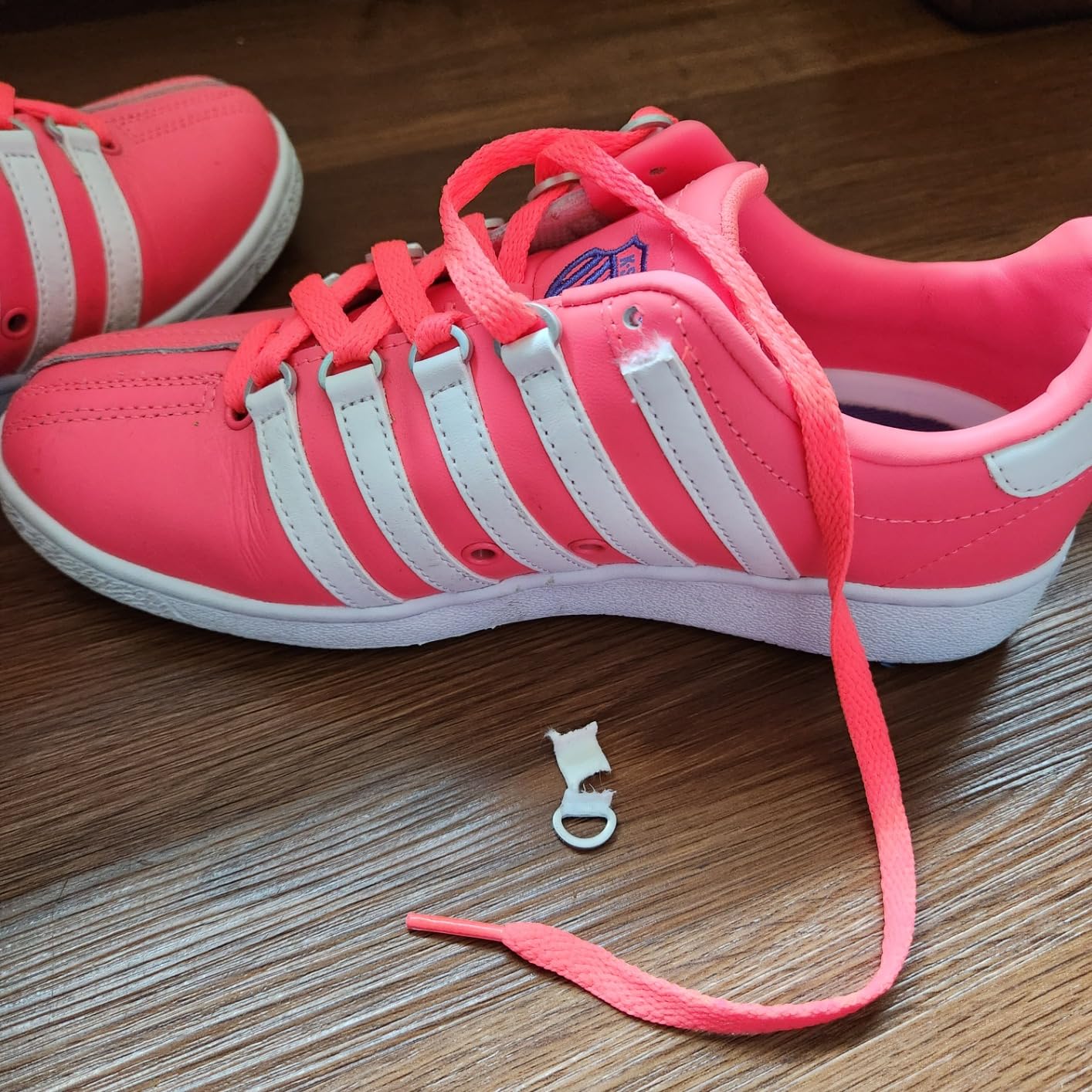
The OrthoLite sock liner earns its place. Unlike basic foam insoles that feel dead after a month, OrthoLite’s open-cell structure maintains moisture wicking and mild cushioning throughout the test period. My white pair never developed foot odor issues — meaningful for a shoe worn 45+ times without replacement insole.
12 Weeks of Wear: What Actually Happened
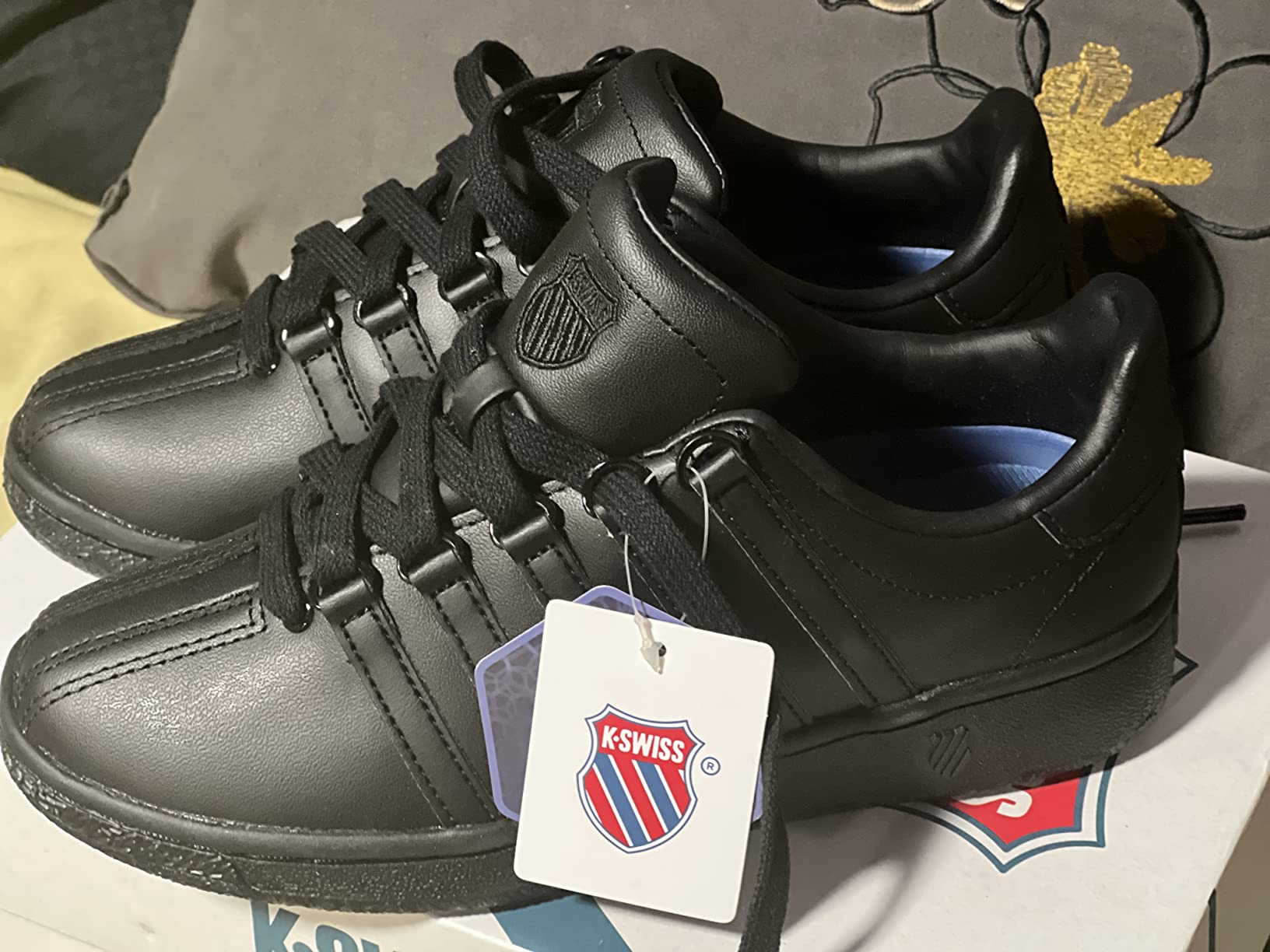
Weeks 1–4: Leather softening from break-in, no visible creasing. IMEVA midsole consistent. Outsole herringbone shows first faint wear marks on heel strike area — completely normal. D-ring rivet solid.
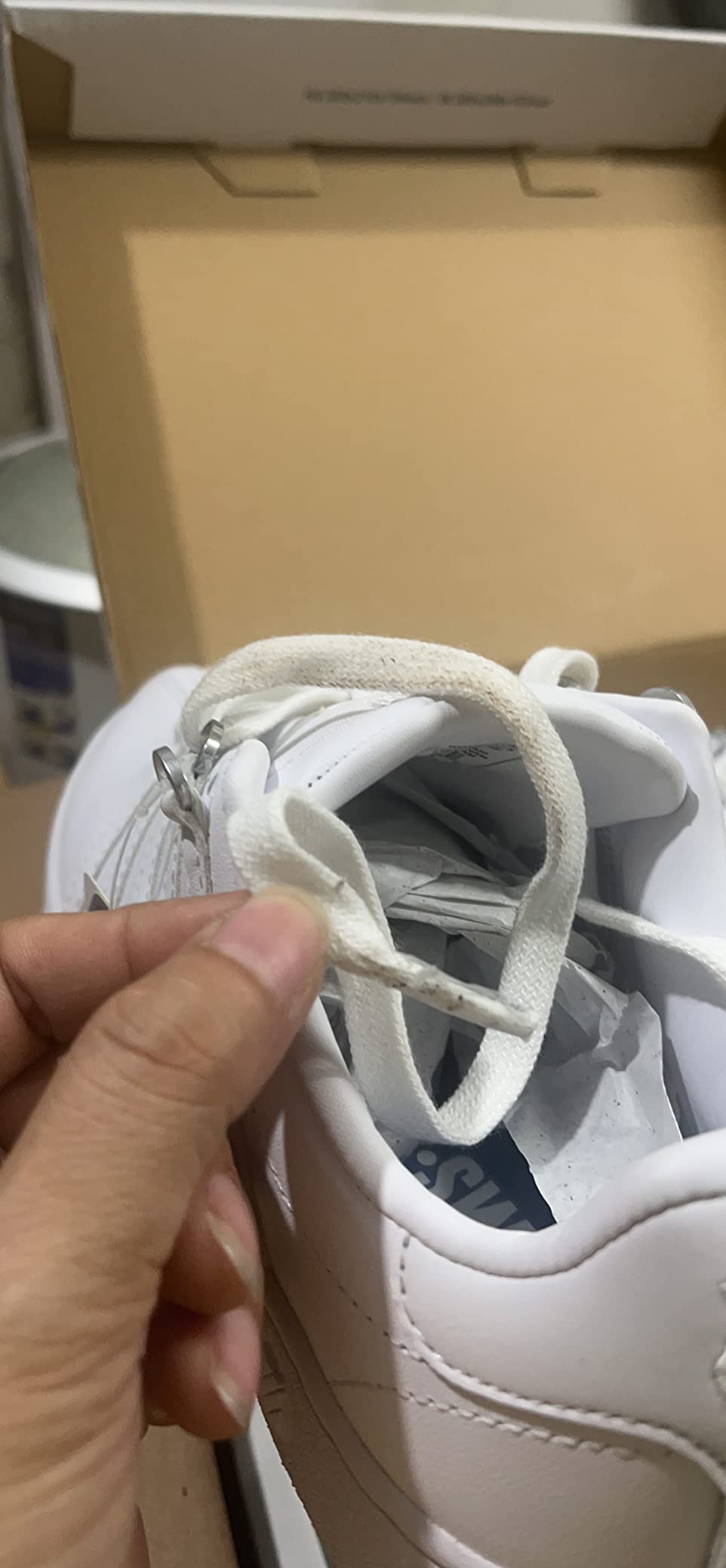
Weeks 5–8: Light creasing beginning at the toe flex point — expected with real leather and a sign the material is genuine, not synthetic. Midsole holds cushioning. Lace tips show minor fraying (normal).
Weeks 9–12: Shallow creasing across the toe and sides that reads as natural character rather than damage. Midsole compression estimated 10–15% from original — noticeable if you’re looking for it, not noticeable in comfort. Outsole tread still legible with no separation anywhere.
After 12 weeks, the leather has developed what I’d call a lived-in patina — slight character without looking beaten up. The D-ring hardware shows zero corrosion. Every stitch is intact. The herringbone outsole hasn’t peeled at any edge.
Durability estimate (based on observed wear rate):
- Light use (1–2 wears/week): 12–18 months
- Moderate use (3–4 wears/week, my pace): 8–10 months
- Heavy use (5+ wears/week): 6–8 months
Cost math at moderate pace: $75 ÷ 9 months = $8.33/month. Or roughly $0.28/wear at my session count. Respectable for premium leather.
Weather and the Leather Reality
Full transparency: these are not weather-resistant sneakers. They’re leather sneakers.
In light spring rain (under 10 minutes), the leather handles it fine — water beads and rolls off the natural grain. Three times during my test I got caught in brief showers; each time a quick towel-dry was all the recovery they needed. Zero lasting damage.
Beyond 15 minutes of sustained rain, you’re pushing it. The leather will absorb moisture, the lining will dampen, and the IMEVA cushioning will feel compressed until everything dries out. If your climate runs wet, budget for waterproofing spray to extend the shoe’s weather performance — or consider the K-Swiss Court Express if you want K-Swiss style with more weather durability.
Breathability surprised me. Full-grain leather typically runs warm, but this shoe’s natural grain texture allows more airflow than expected. At 60–70°F, feet stayed comfortable for 2-3 hour walking sessions. In 80°F+ heat, all leather shoes warm up — plan accordingly.
Style Versatility: One Shoe, Five Contexts
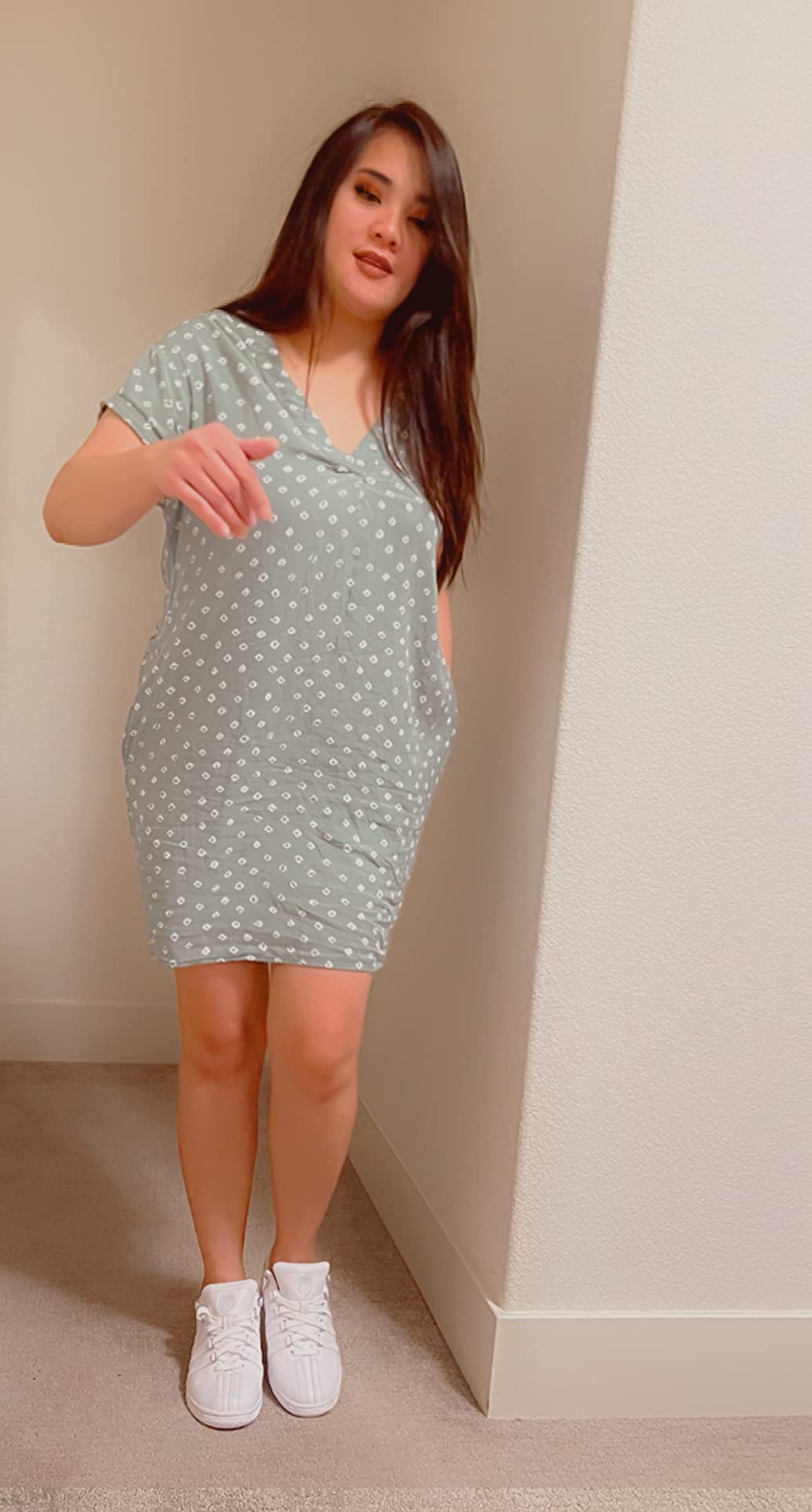
The specific claim I wanted to test: can one shoe credibly handle school drop-off through dinner out? After 12 weeks, the answer is yes — with appropriate expectations.
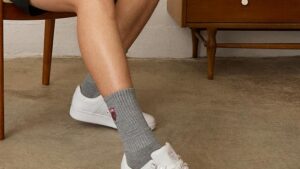
- Athletic wear (yoga pants + hoodie): The leather + five-stripe combination reads as intentional style, not “forgot to change out of gym shoes.” Works perfectly.
- Business casual (blazer, dark jeans): Better than expected. The classic tennis shoe silhouette skews heritage rather than athletic, which means it reads professional rather than sporty in polished contexts.
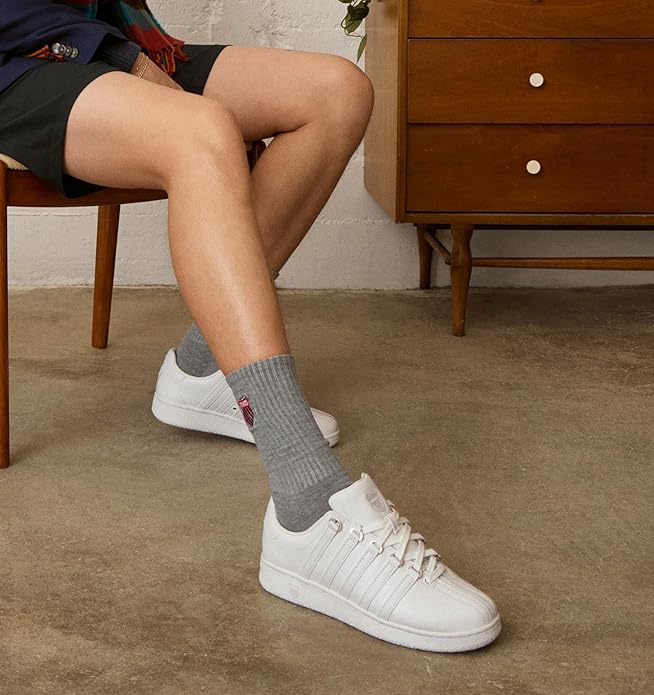
- Casual weekend (jeans, sweater): This is the shoe’s home territory. Timeless pairing that works with skinny, straight, or wide-leg denim equally well.
- Casual dress (sundress or midi skirt): Solid. The leather adds a finished quality that canvas sneakers don’t bring. Think Parisian casual rather than gym adjacent.
- Evening restaurant (nice jeans, cardigan): Comfortable enough not to swap, polished enough not to feel underdressed at a mid-range restaurant. Wouldn’t wear to a formal dinner, but that’s the right expectation for this shoe.
For retro-adjacent style in the same category, I also like the look of the Adidas Run 70s 2.0 and the Lucky Step Retro Fashion sneakers — both worth checking if vintage-inspired styling is your primary need, though neither matches the leather quality at this price.
Sustainability: What K-Swiss Actually Confirmed
This generation’s eco updates are confirmed across official K-Swiss materials:
- ✅ Recycled PET linings and laces
- ✅ Internal components using recycled ocean plastics
- ✅ Eco-friendly foam in the OrthoLite sock liner
- ✅ Eco-friendly foam in internal IMEVA midsole
- ⚠️ Specific recycled content percentages: not disclosed by K-Swiss
These are real material improvements over the previous generation — not greenwashing. The lining does feel distinct from standard synthetic: softer texture, better moisture performance. Whether this qualifies as “sustainable footwear” in a comprehensive sense depends on how you weigh leather sourcing (resource-intensive by nature) against recycled component use. For the average buyer, it’s a meaningful step in a responsible direction.
Pros and Cons
| Strengths | Weaknesses |
|---|---|
| Premium leather construction at mid-range price | ~1 week break-in required — not immediate comfort |
| IMEVA midsole: consistent density, holds cushioning longer than standard EVA | Comfort ceiling ~6-7 hours continuous activity |
| D-ring lacing system allows top-eyelet-free hack for ankle comfort | No dedicated wide width variant |
| True-to-size fit; standard width accommodates most foot shapes | Not suitable for heavy rain or sustained wet conditions |
| Versatile across athleisure, business casual, weekend, and evening contexts | Arch support middle-ground — adequate for most, insufficient for specific foot needs |
| Confirmed eco improvements (recycled PET, ocean plastic components) | Limited colorway range (primarily black and white) |
| Minimal creasing, solid outsole adhesion after 12 weeks | Estimated 8–10 month moderate-use lifespan (mid-range durability) |
Who These Shoes Are For (and Who Should Keep Looking)
These work for:
- Women who rotate between casual and business casual contexts several times a week
- Anyone who values timeless, non-trend-chasing aesthetics
- Moderate activity days (2–6 hours of mixed use)
- Temperate climates where you’re not regularly dealing with heavy rain
- Budget-conscious shoppers who want genuine leather quality without $100+ pricing
Look elsewhere if:
- You need a true athletic shoe — these aren’t running shoes; they won’t support sustained athletic activity
- Zero break-in is non-negotiable (you want out-of-the-box comfort)
- You have wide feet and need a proper wide variant — the size-up-0.5 workaround has limits
- Your daily life involves significant rain or snow exposure
- You need 8+ hours of high-impact comfort — a more cushioned lifestyle sneaker will serve better
How It Compares
| Shoe | Price | Break-in | Wide option? | Best for |
|---|---|---|---|---|
| K-Swiss Classic VN | $70–80 | ~1 week | No | Versatile lifestyle, casual–professional bridge |
| Nike Air Force 1 | $90–110 | 2–3 weeks | Yes | Athletic-casual crossover, streetwear |
| Reebok Club C 85 | $50–70 | 1 week | Yes | Retro minimalism, streetwear casual |
| New Balance 574 Women’s | $60–85 | Minimal | Yes (2E) | Wide feet, comfort-first casual |
| PUMA Carina L | $60–75 | Minimal | No | Casual comfort, softer cushion feel |
The K-Swiss slots in as the best value for the casual-to-professional bridge specifically. If that’s not your primary need, the alternatives may serve better. For K-Swiss’s own athletic lineup, worth checking the K-Swiss Women’s Court Express Pickleball or the K-Swiss Bigshot Light 4 for sport-specific performance.
Frequently Asked Questions
Do K-Swiss Classic VN run true to size?
Yes — true to size for length and width both, confirmed by direct comparisons to 20+ brands. Wide feet should size up 0.5; no dedicated wide variant exists.
What’s the break-in period like?
About one week of regular wear. Days 1–3 feel slightly stiff at the ankle collar; by day 7–8, the leather softens and the shoe molds to your foot. No painful blisters in my test — just normal new-leather adjustment.
Are they comfortable for all-day wear?
For mixed-activity days under 6–7 hours, yes. Past that, expect the natural fatigue that any non-maximalist cushioned shoe produces. The 14-hour day test left feet tired but not painful.
What’s the D-ring lacing system, and should I use the top eyelet?
The D-ring is a metal loop on the ankle side of the shoe that provides a secondary lace anchor. My strong recommendation: skip the top eyelet. It sits directly on the ankle bone and causes rubbing without providing meaningful additional support. Lacing to the second-from-top eyelet with the D-ring engaged provides complete foot lockdown.
Can I wear these in rain?
Light showers (under 10 minutes) are fine — water beads and runs off the leather grain. Extended rain or wet weather is not what these are designed for. Waterproofing spray extends weather performance if your climate requires it.
What exactly is IMEVA, and how is it different from EVA?
IMEVA (Injected Molded EVA) is a midsole foam manufactured through an injection process rather than compression molding. The result is more consistent density and typically better long-term cushioning retention. The Classic VN’s official spec lists IMEVA — a step up from the plain EVA some listings imply.
Are the sustainability claims genuine?
K-Swiss confirms recycled PET linings and laces, internal components from recycled ocean plastics, and eco-friendly foam in both the sock liner and internal midsole. These are real material changes. Specific recycled content percentages aren’t disclosed, and leather sourcing information is not provided — so this isn’t a zero-impact shoe. It’s a meaningful incremental improvement.
How long will these last?
At moderate wear (3–4 sessions/week), 8–10 months based on my observation of 12-week wear patterns. Light use (1–2 wears/week) pushes to 12–18 months; heavy daily use shortens this to 6–8 months.
Final Score
| Category | Score | Key Notes |
|---|---|---|
| Comfort | 8.0/10 | Excellent 0–6 hrs; manageable fatigue after that; D-ring hack solves ankle rubbing completely |
| Style & Versatility | 9.2/10 | Genuinely spans athleisure to business casual; timeless silhouette; limited colorways cap ceiling |
| Build Quality | 8.5/10 | IMEVA holds well; leather develops character naturally; D-ring hardware solid; outsole adhesion intact at 12 weeks |
| Value for Money | 8.8/10 | $8.33/month at moderate use; genuine leather + thoughtful design at $70–80; undercuts Nike AF1 by $20–30 |
| Sustainability | 7.5/10 | Confirmed recycled components and eco foam; leather sourcing not disclosed; no % content given |
| Overall Score | 8.5/10 | Excellent lifestyle sneaker for women who need style and substance across a full daily schedule |
After 12 weeks and 45+ wear sessions, the K-Swiss Women’s Classic VN earned a permanent spot in my rotation. The D-ring lacing adjustment alone is worth knowing about — it transforms the comfort experience entirely. Skip the top eyelet, break them in for a week, and these deliver what the marketing promises: real leather quality, genuine versatility, and a silhouette that won’t embarrass you in any casual or semi-professional context.
Would I buy them again? Yes. Already planning to.
Be the first to review “K-Swiss Women’s Classic VN Leather Sneaker”
Related products

Sneaker
Sneaker
Sneaker
Sneaker
Reviews
There are no reviews yet.