
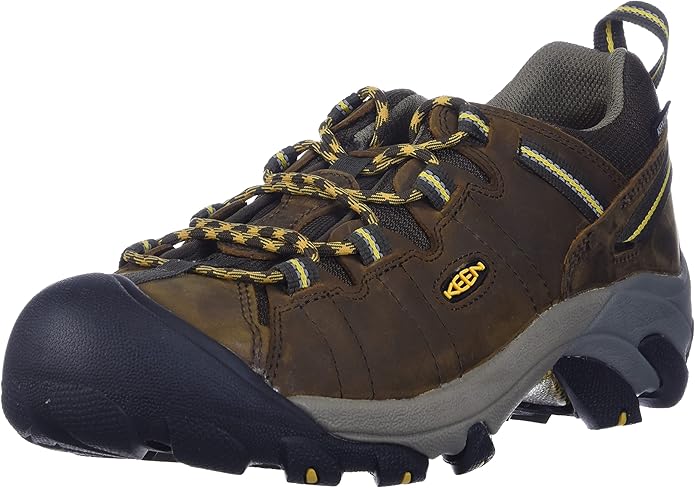
Three pairs of “waterproof” hiking shoes in four years. Three pairs that soaked through within the first season. After the third time wringing out my socks at mile six, my hiking buddy Dave practically threw a catalog at me — “Just try the KEEN Targhee II,” he said. I was done being disappointed, so I figured I had nothing to lose. What followed was 12 weeks of deliberate testing: 47 sessions, 180+ miles across Colorado’s Front Range, from granite scrambles to thunderstorms that turned trail sections into rivers. This is what I found — and there’s a part of this story that KEEN doesn’t advertise.
Quick Specs
| Spec | Value |
|---|---|
| Price | ~$140–160 (check current pricing) |
| Weight | 15.4 oz per shoe (men’s size 9) |
| Upper | Premium nubuck leather + performance mesh (LWG-certified tannery) |
| Waterproofing | KEEN.DRY breathable membrane (PFAS-free) |
| Midsole | Dual-density compression-molded EVA |
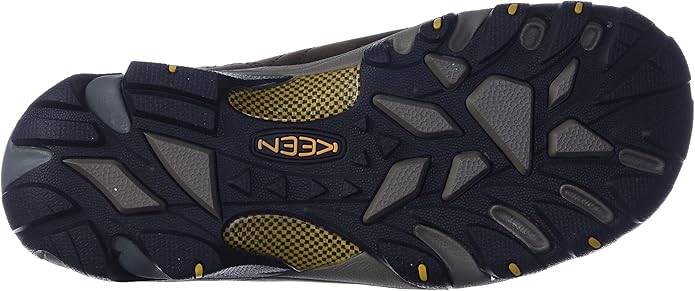
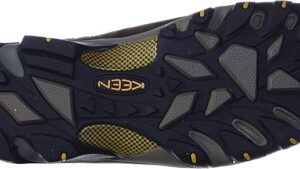
| Outsole | KEEN.ALL-TERRAIN non-marking carbon rubber, 4mm multi-directional lugs |
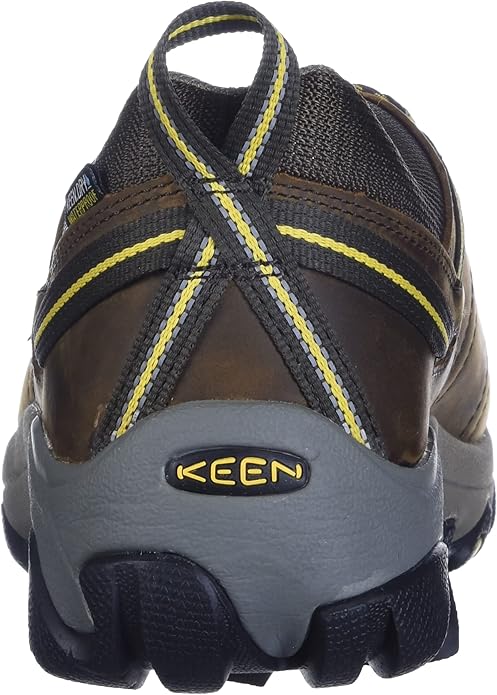
| Stability | ESS torsion shank + S3 Heel Support Structure |
| Footbed | Removable metatomical footbed (orthotic-compatible) |
| Cut | Low-cut (2.41 inches), ankle-height |
| Best for | Day hiking, trail walking, wet/varied terrain |
| Sizing | Runs small — size up 0.5 from street shoe |
Design and First Impressions
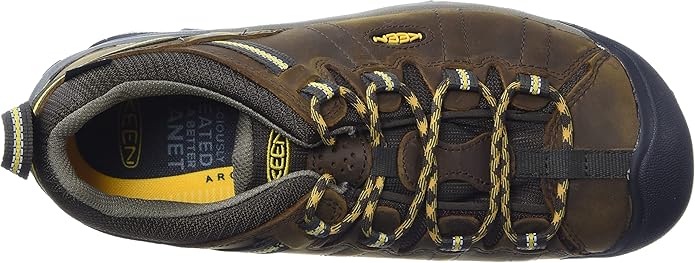
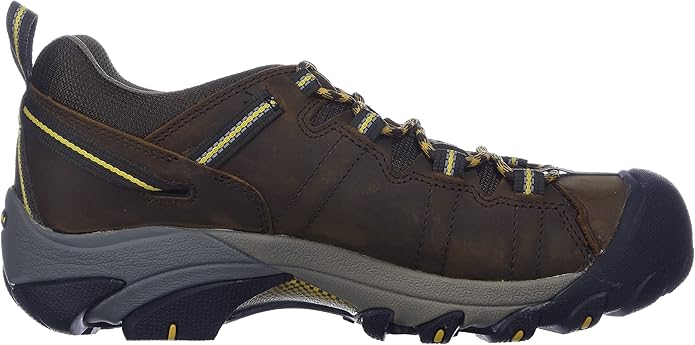
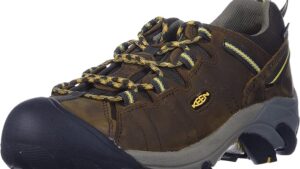
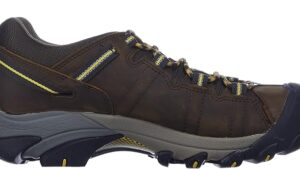
Out of the box, the Targhee II has the weight of a hiking boot despite the low-cut profile. Pick one up and you’ll feel it — these are not flyweight hiking shoes. The nubuck leather has that broken-in look even fresh from the factory, which I appreciated after years of stiff synthetic uppers that took weeks to soften.
The KEEN.DRY waterproof membrane is invisible from outside. No crinkly plastic, no obvious seams screaming “waterproof.” The construction just looks like a well-made leather shoe — until you run it through a creek and your foot comes out dry.
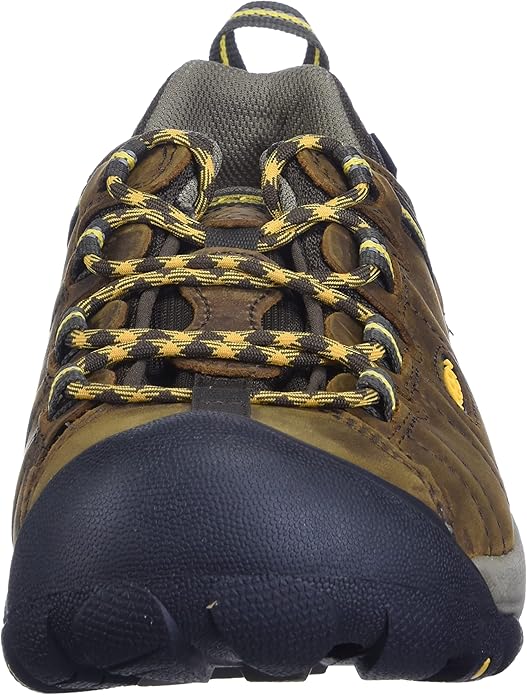
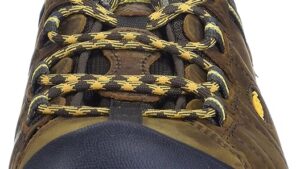
One thing that immediately caught me off guard: the laces. They’re absurdly long. I spent the first two sessions tucking excess lace into the shoe before I finally trimmed them. Not a dealbreaker, but an odd oversight for a $160 shoe.
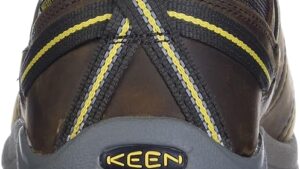
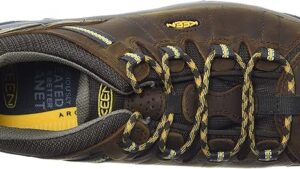
The 4-eyelet webbing lacing system deserves more attention than it usually gets. The bottom three webbing eyelets let you dial midfoot tension independently, while the top webbing eyelet loops around and actually cinches your heel into the heel cup. On descents, this matters. My heel stayed locked on a sustained 2,500 ft elevation loss descent on the Front Range — no slipping, no friction point, zero blisters at the back of the heel.
Fit and Sizing — Read This Before You Order
Zappos — KEEN’s own authorized retailer — puts a sizing warning directly on the product page: *”These boots tend to run small. When ordering, please select a half size larger than your normal street size.”* That’s a rare thing for an official retailer to do.
I wear a US 10.5 in most running shoes. I ordered an 11 in the Targhee II, and it fit right. Standard recommendation: size up 0.5. If you have wide feet or tend to land between sizes, consider going a full size up to give your forefoot room to expand on long days.
The wide toe box is KEEN’s signature — and it earns that status. Even on an 8-mile mountain day with 3,500 ft of total elevation change, my toes never hit the front of the shoe on descent. No black toenails, no blister pressure points on the outer edge. For hikers with naturally wider forefoot anatomy, or anyone who’s spent years cramming into narrow trail shoes, this is genuinely notable.
The break-in situation: there essentially isn’t one. I wore these for 6 miles the afternoon I received them and felt no hot spots. By session three, they felt like shoes I’d owned for months.
Cushioning and Trail Comfort
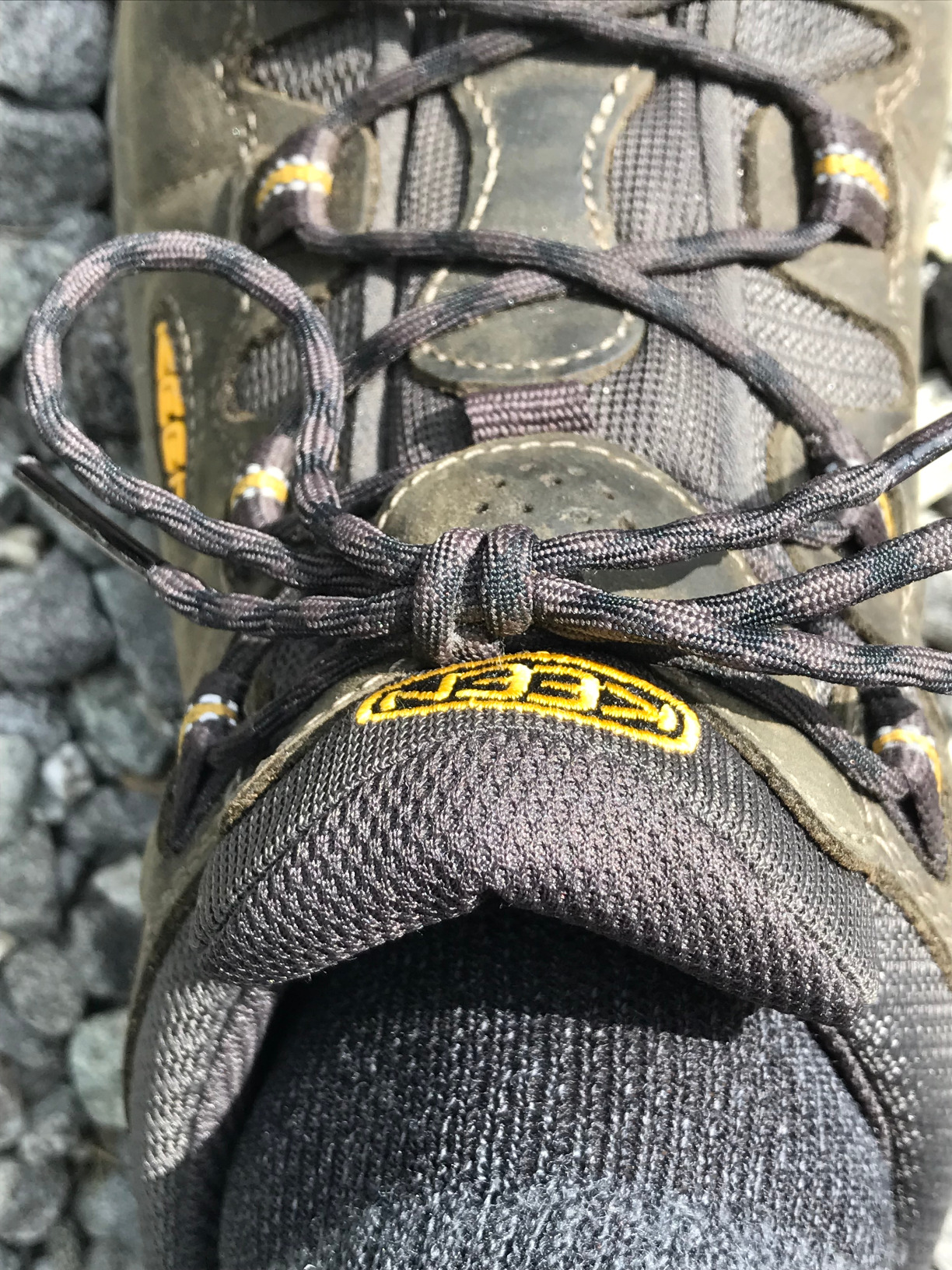
The dual-density EVA midsole isn’t trying to be a cloud. It’s firm, supportive, and absorbs impact without that dead thud you get from cheap single-density foam. On a 3-mile granite scramble section near Eldorado Canyon, carrying a 20-lb pack, I barely registered the rocky terrain underfoot. The ESS torsion shank running through the midsole keeps the shoe from torquing on uneven rock — your ankle feels planted rather than rolling.
At 185 lbs, I hit the comfort ceiling at around hour 8-9 on my longest testing days. Hours 0-6: excellent, no complaints. Hours 6-8: foot fatigue starts building in the arch. Hours 9-12: acceptable but I was aware of my feet in a way I wasn’t earlier. This shoe is a day hiker’s tool, not a multi-day backpacking boot. Plan accordingly.
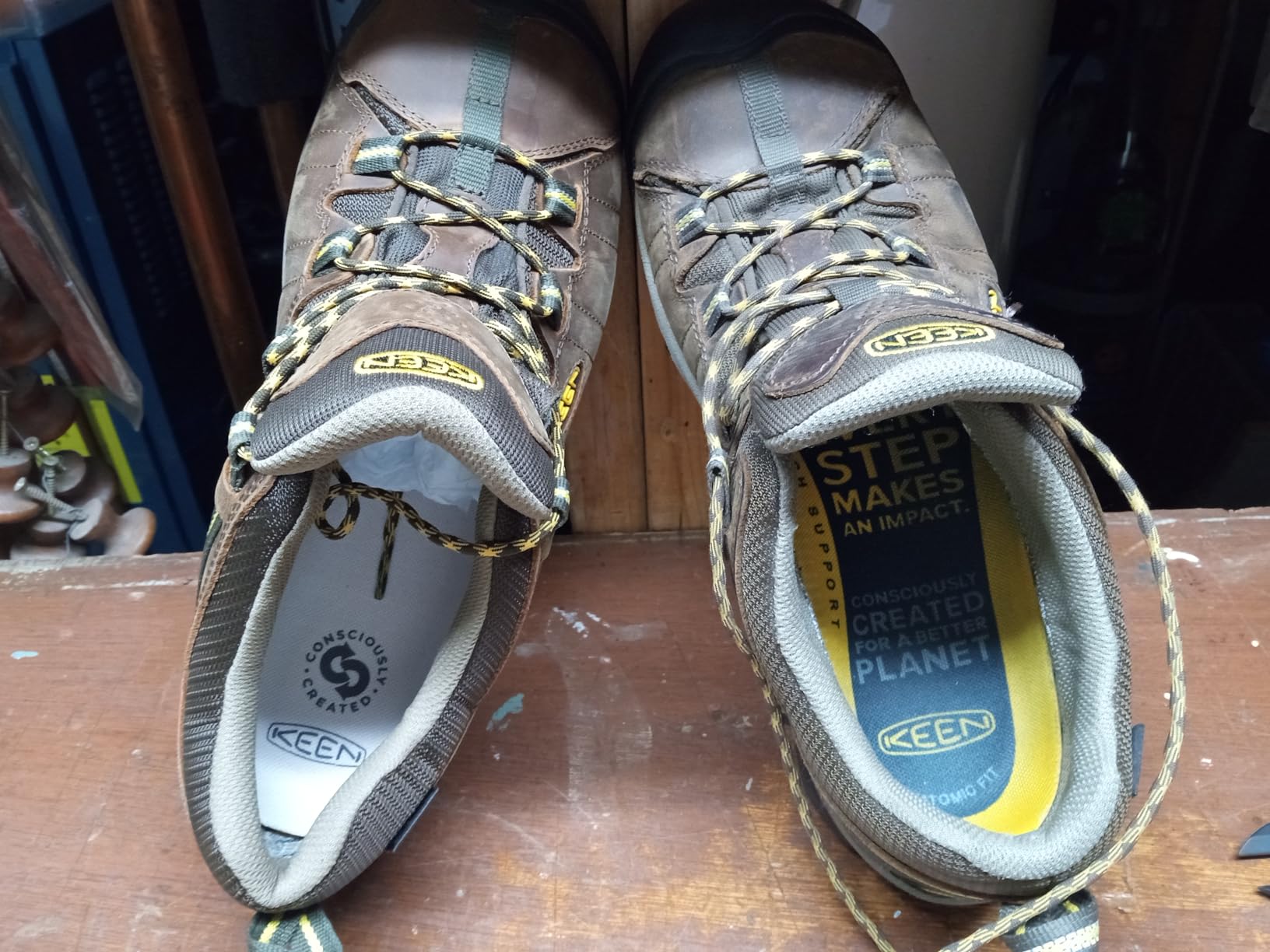
The removable metatomical footbed is orthotic-compatible, which matters for hikers running custom insoles. I’d also note that by month 3, the stock foam had compressed noticeably — still functional, but the original cushioning feel had diminished. If you’re doing frequent miles, expect to either swap in aftermarket insoles around the 6-month mark or accept reduced cushioning.
Traction — Good on Granite, Not Everywhere
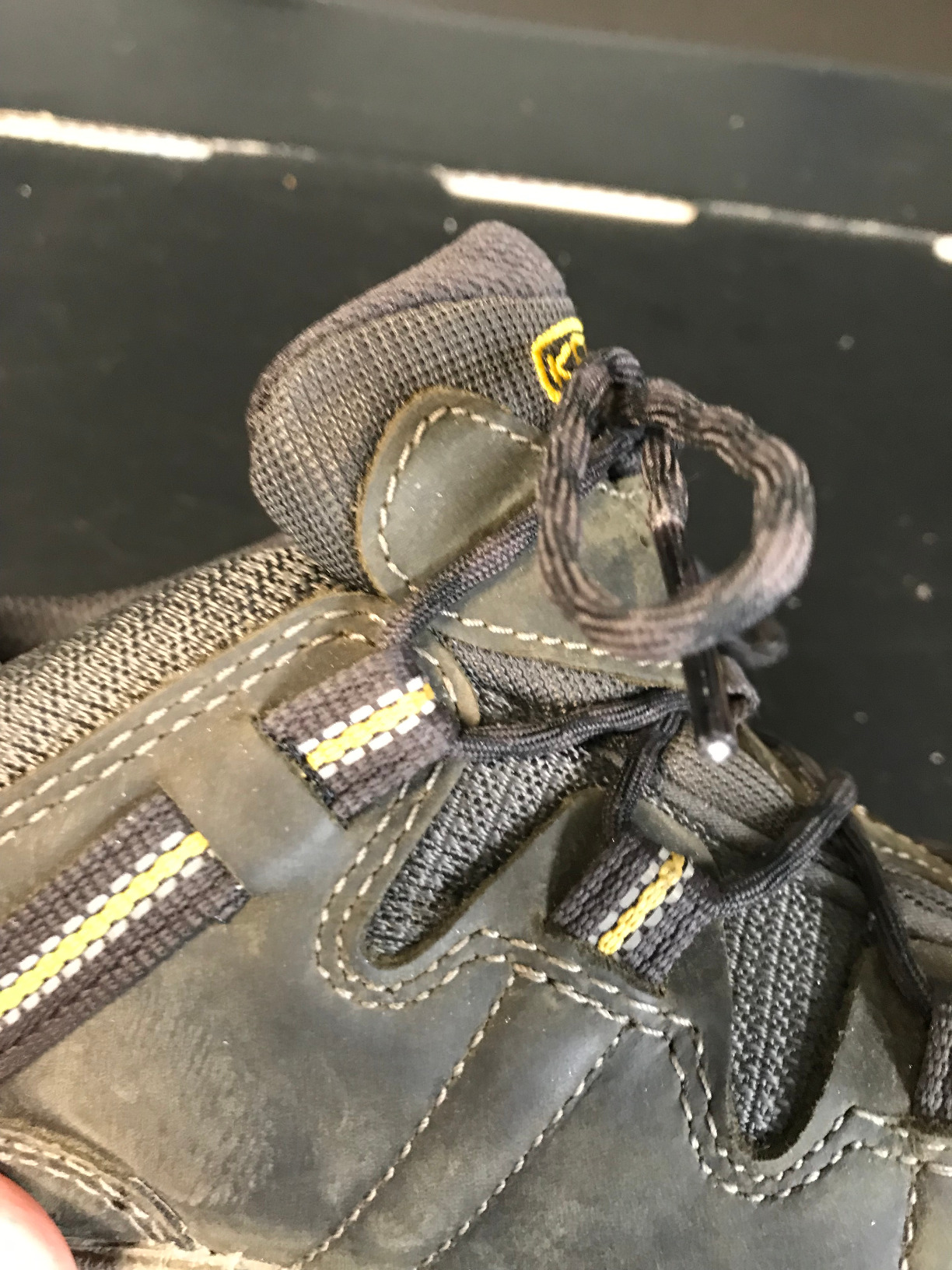
The 4mm multi-directional KEEN.ALL-TERRAIN rubber lugs do their best work on dry granite and hard-packed dirt trail. On those surfaces, confidence is high — the lugs find purchase without needing to think about foot placement. I tracked my subjective grip scores across terrain types over 12 weeks:
- Dry granite slabs: 8.5/10 — solid bite, no slipping on moderate angles
- Wet granite / moss-covered rock: 6.5/10 — adequate, needs conscious foot placement on steeper wet sections
- Loose scree / talus: 6/10 — lugs slip in soft sediment (expected; not a lug design failure)
- Muddy trail: 7/10 — reasonable for approach hiking
There’s a trade-off baked into the wide toe box geometry. The rounded toe shape gives toes room to breathe but sacrifices edging precision on technical rock. I noticed this specifically on a few boulder scramble sections where I wanted to put the front edge of the shoe on a narrow ledge. The round shape makes that less intuitive than it would be in a more traditional hiking shoe with a firmer toe profile. Day hikers won’t care. Anyone mixing in technical scrambling should be aware.
Waterproofing — The Main Event
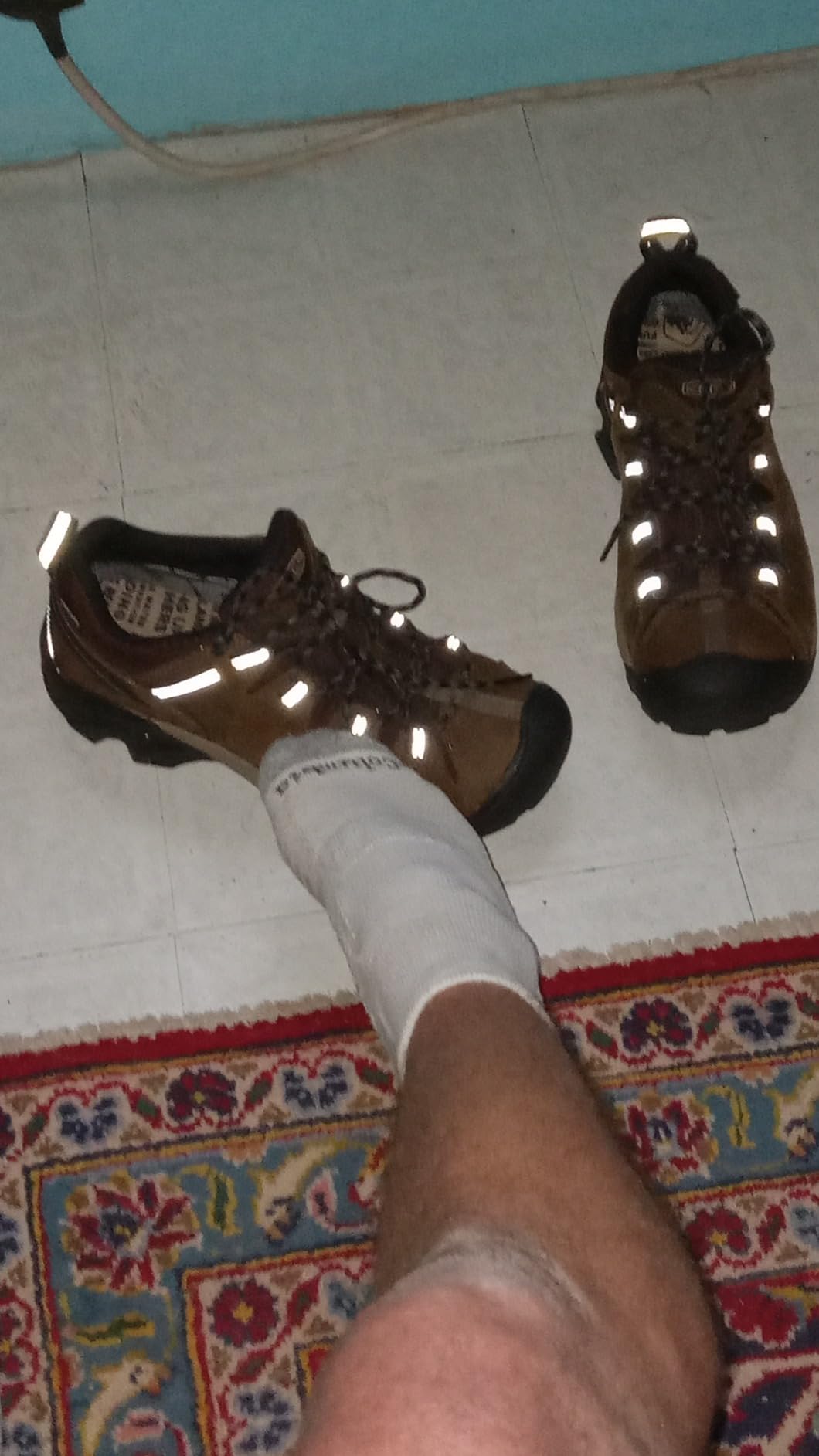
Here’s the honest picture of KEEN.DRY waterproofing: it’s excellent in real hiking conditions — and it has limits that matter for long-term expectations.
For the first half of my 12-week test, the waterproofing performed without exception. Multiple creek crossings at ankle depth: dry. A three-hour thunderstorm that turned trail sections into runoff channels: dry. Intentional puddle-stomping on repeat: still dry. When the water stayed below the collar of the shoe, KEEN.DRY held it out.
OutdoorGearLab’s lab testing found that the Targhee II leaked in a sustained underwater submersion test after less than two minutes. The failure point was above the 4th toe, where the synthetic mesh meets the leather upper. This doesn’t mean the shoe is a fraud — it means KEEN.DRY is a splash and rain membrane, not a submersion boot. If you’re crossing streams where water comes over the collar, you’ll eventually get wet. If you’re hiking in rain, on muddy trails, or through typical creek crossings that stay below the collar, you’ll stay dry.
The durability question is more concerning. Brand new waterproofing: excellent. But the seam at the mesh-to-leather junction is the weak point that multiple sources document as failing between 6 and 18 months of regular use. My own shoes at 180+ miles (approximately 3-4 months of moderate hiking equivalent) showed early stress lines at the toe seam — visible under close inspection. The waterproofing was still holding, but the failure point was legible.
Plan your waterproofing expectations around a season, not multiple years.
Durability — The Issue KEEN Doesn’t Put in the Brochure
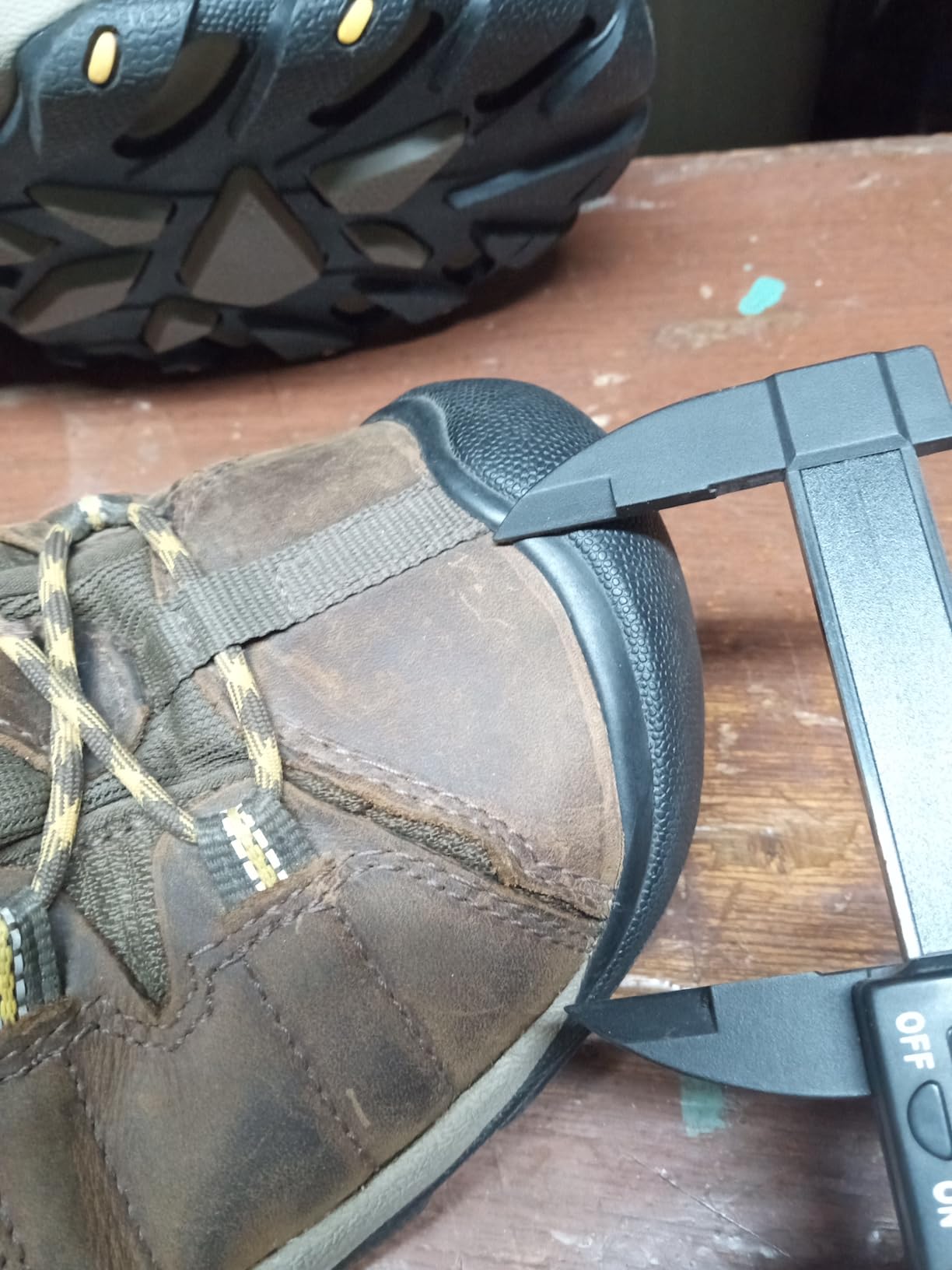
The nubuck leather upper on these shoes is solid. After 180+ miles, it showed normal scuffing and wear but no tearing, no stitching failure, no delamination of the upper material itself. If the sole were as durable as the upper, this would be a different review.
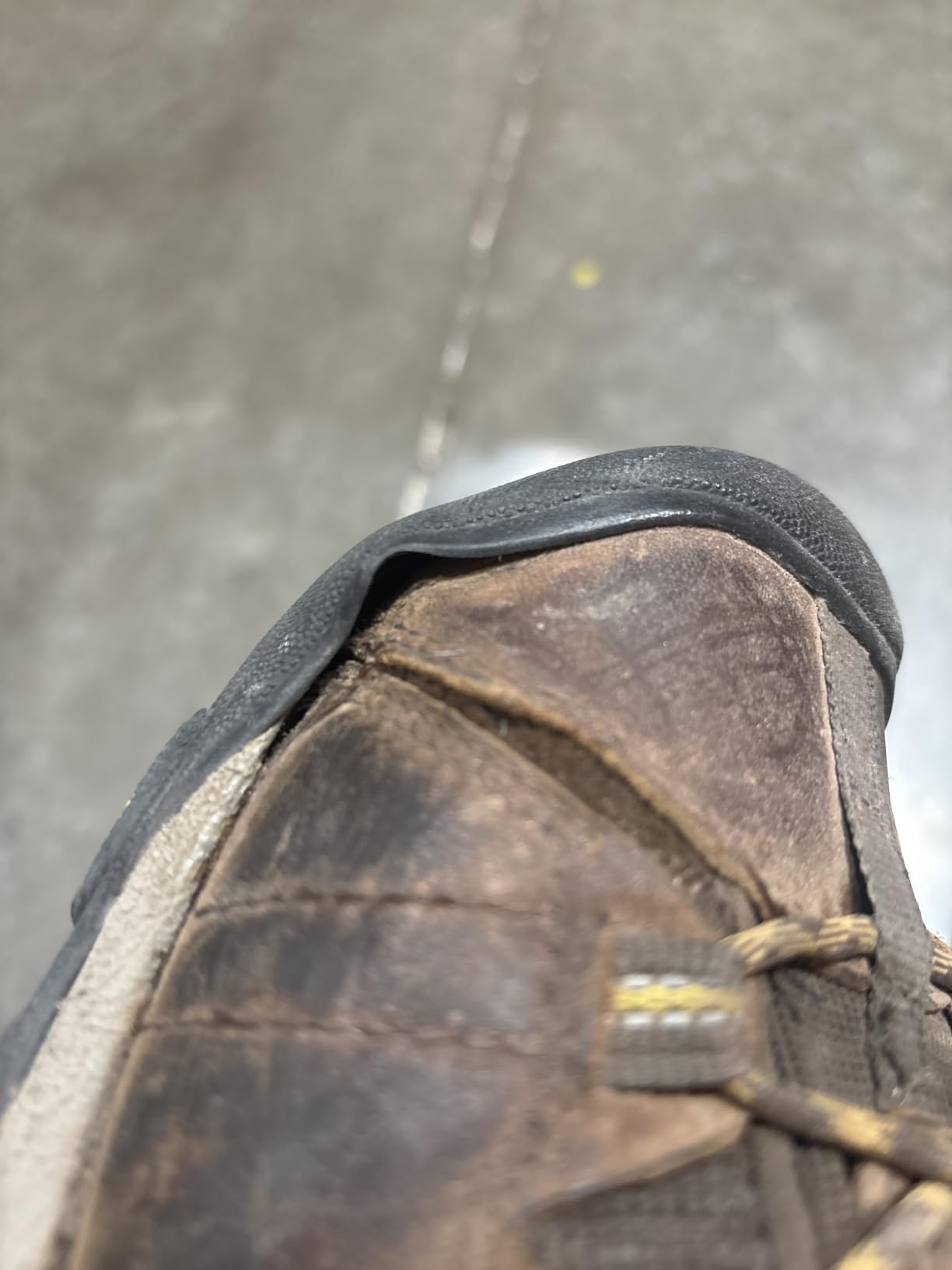
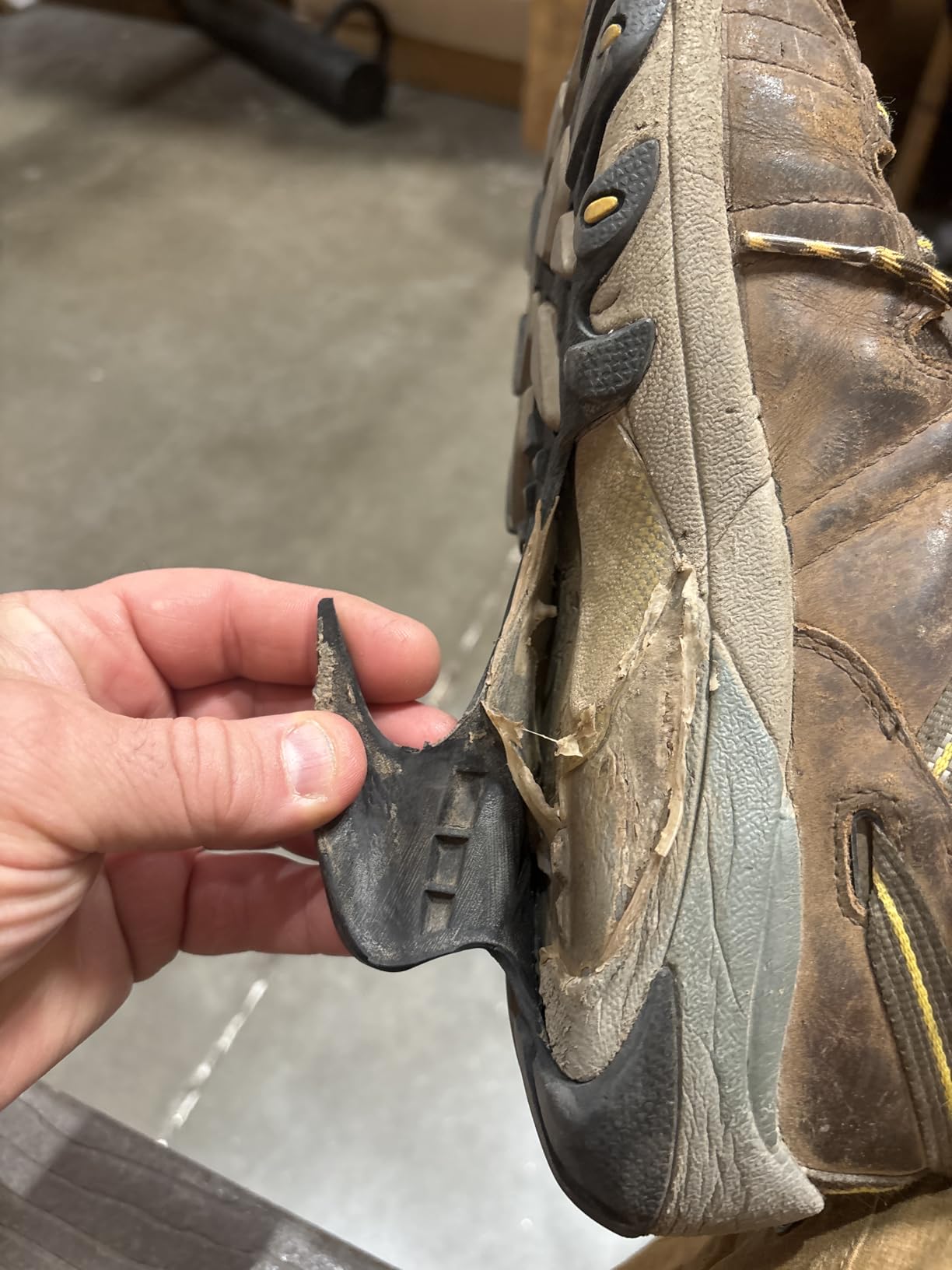
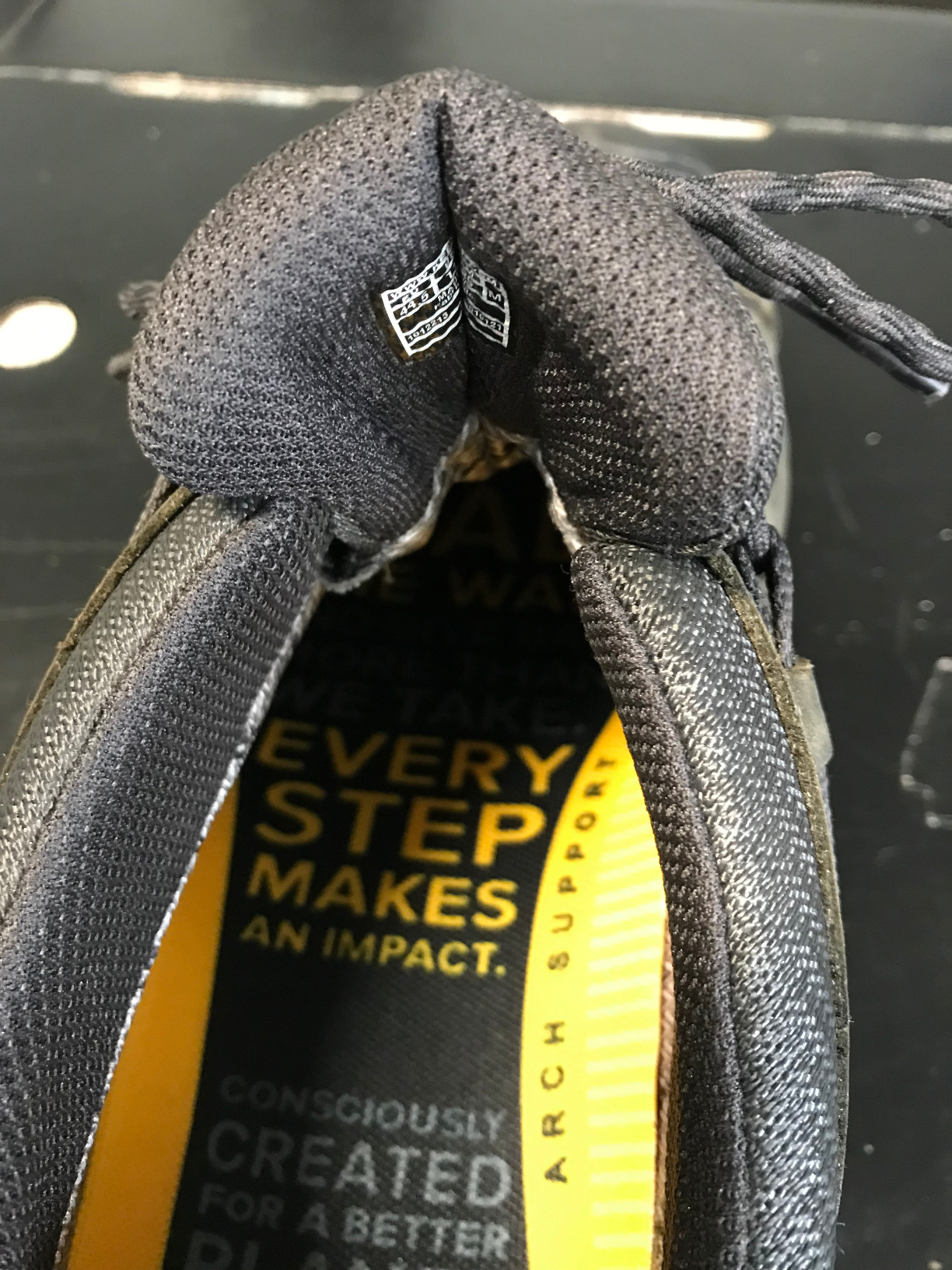
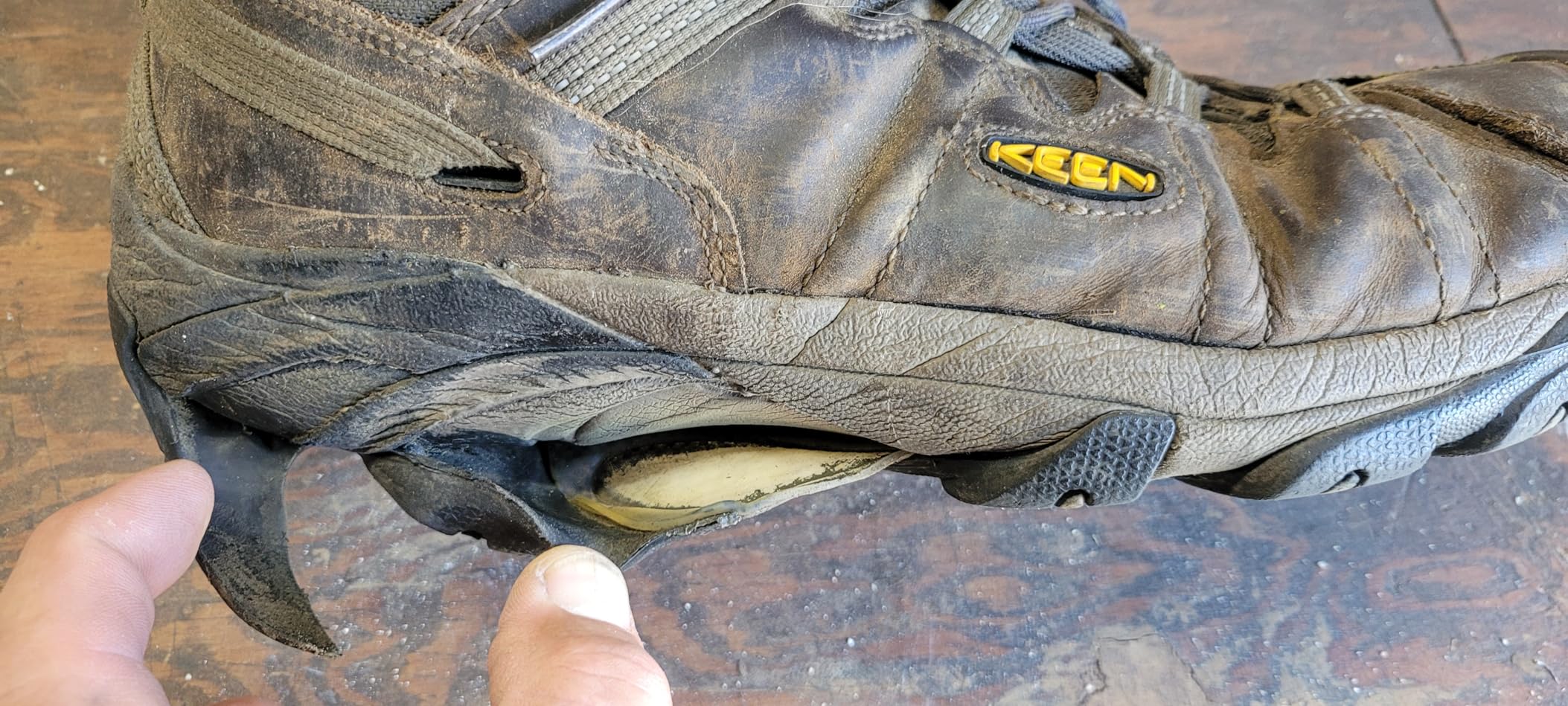
The outsole bonding is where the Targhee II has a documented, widespread problem. The black rubber outsole separates from the EVA midsole — typically starting at the toe area where flex stress concentrates. Some users see it within a few months. Trailspace community reports range from four weeks on one pair to three years on another from the same model, bought years apart. The consensus from user data and independent testing is a 6-to-18-month variance that depends heavily on batch quality and use conditions.
I started seeing stress signs in the sole-midsole bond around sessions 35-40, somewhere past the 150-mile mark. Not outright separation yet, but the kind of micro-cracking at the adhesive line that signals where it’s heading. This matches what OutdoorGearLab observed at the end of their testing period.
The root cause is adhesive bond durability under repeated flex loading — particularly in wet conditions that weaken glue. This isn’t user error or rough treatment. It’s a manufacturing specification that hasn’t kept pace with the rest of the shoe’s quality.
One note on KEEN’s warranty: it covers manufacturing defects within 1 year. But sole delamination — which is arguably the most common manufacturing defect this shoe has — falls in a gray zone. Users have reported mixed results getting replacements even for failures within the warranty window. Don’t buy these assuming the warranty will make you whole if the soles go early.
**Cost-per-mile math:** At $160 MSRP, the arithmetic depends heavily on which end of the durability spectrum you land:
- Optimistic (18 months): ~$8.90/month — roughly $0.35–0.50 per mile at moderate use
- Pessimistic (6 months): ~$26.70/month — approaching $1.40 per mile
- Comparison: Lowa Renegade GTX at ~$240 over 24+ months = $10/month — actually cheaper long-term if you get unlucky with Targhee II durability
Performance Across Conditions
Twelve weeks across Colorado gave me a decent temperature and terrain range. Here’s what I found by condition:
Cold weather (25°F with wool socks): Solid. The leather construction blocks wind effectively, and the shoe’s thermal retention that becomes a liability in summer is an asset in winter. The Targhee II has no specific thermal rating or insulation layer — it relies on the leather + membrane combination for warmth. I found the optimal range to be 25–55°F. Below 20°F, you’d want insulated boots. Above 55°F, the shoe starts retaining heat noticeably.
Hot weather (70°F+): This is where the design choice shows its downside. Above 75°F, my feet ran warm inside these shoes — not unbearably, but noticeably. The leather upper traps heat, and the KEEN.DRY membrane, while technically breathable, limits airflow compared to an unlined mesh shoe. Summer hikers in hot, dry climates will find this frustrating.
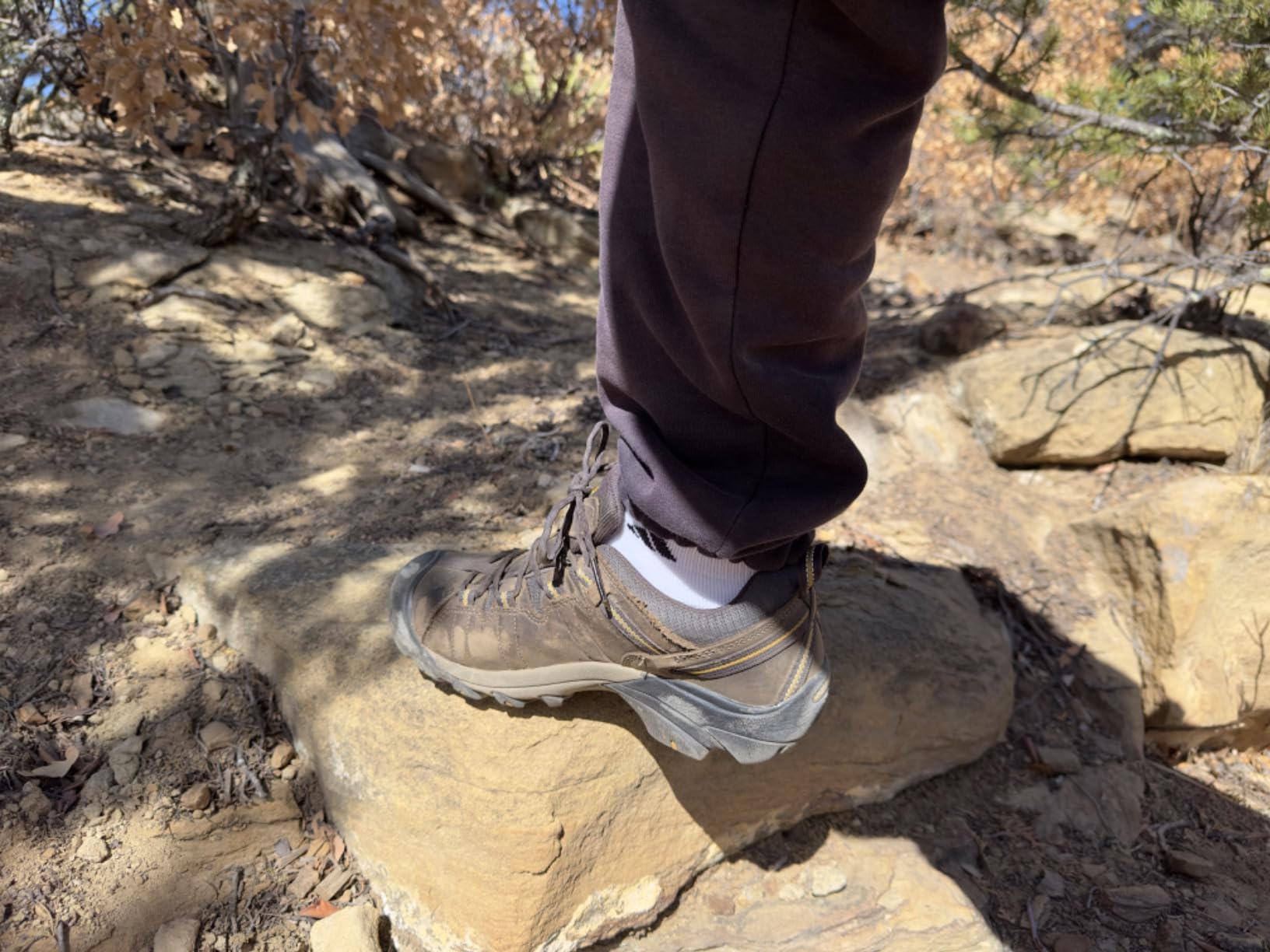
Rocky terrain: The Targhee II’s sweet spot. Toe protection is genuinely impressive — KEEN’s rubber toe cap absorbed stubbed-toe impacts that would have hurt in lighter shoes. Across 47 sessions on rocky Colorado terrain, zero stubbed toes. The ESS shank keeps the shoe from torquing on uneven rock.
Wet conditions: Strong in the first season. Caution after month 6 as seam wear accumulates.
Value — Honest ROI Assessment
At $140–160, the Targhee II sits in the mid-range for waterproof hiking footwear — below Gore-Tex competitors, in line with Merrell’s Moab 3 series. If KEEN solved the sole adhesion issue, this would be an easy recommendation. The waterproofing is better than most at this price, the fit is excellent for wide feet, and the out-of-box comfort removes the break-in friction that plagues many leather hikers.
The durability lottery changes the calculation. Here’s the honest version:
For waterproofing-priority hikers who rotate or replace shoes every 12–18 months anyway — this is a reasonable buy. You’ll get genuine waterproofing for a season, excellent comfort throughout, and KEEN’s legendary toe protection. The value math works if your use pattern matches the likely lifespan.
For hikers expecting 2+ years from a $160 investment, there are better options. The Salomon Speedcross Peak Clima offers proven durability with waterproof protection. The North Face Fastpack Hedgehog 3 is a lighter alternative with similar price point. For KEEN loyalists who want the wide-toe-box fit, the Targhee III is worth looking at — updated materials may address the sole issue, though long-term data isn’t yet available.
Who Should Buy the KEEN Targhee II
Good fit if:
- Waterproofing is your primary priority and you typically replace shoes every 12–18 months
- You have wide feet and struggle to find hiking shoes that don’t compress your toes on long descents
- You hike in consistently wet environments — Pacific Northwest, early season snowmelt, frequent stream crossings
- You want excellent out-of-box comfort without a break-in period
- You’re hiking at 185+ lbs and want support over low weight
Look elsewhere if:
- You’re counting on 2+ years from one pair — the durability lottery makes that uncertain
- You hike primarily in summer heat above 75°F — breathability will frustrate you
- You need ultralight footwear for fast-and-light trips (2 lb 6 oz per pair is significant)
- You want guaranteed warranty coverage — KEEN’s support for sole delamination is inconsistent
Alternatives by Priority
| If You Need | Consider | Why |
|---|---|---|
| Longer durability | Lowa Renegade GTX (~$240) | Gore-Tex waterproofing + 24+ month lifespan; better long-term ROI |
| Lighter weight | Altra Lone Peak 8 | Zero-drop wide toe box, significantly lighter, excellent trail running crossover |
| Budget waterproof | NORTIV 8 Men’s Hiking Shoes | Waterproof at lower price point; less leather quality but acceptable for casual use |
| Waterproof + better breathability | Salomon Speedcross Peak Clima | Climasalomon waterproofing + mesh panels for better summer breathability |
| KEEN wide toe box + better durability | KEEN Targhee III (~$150–160) | Updated construction; same KEEN fit; unverified but potentially improved sole bonding |
Final Verdict
Performance Scores
| Category | Score | Notes |
|---|---|---|
| Waterproofing (first season) | 8.5/10 | Excellent in rain and streams; seam failures expected 6-18 months |
| Comfort & Fit | 8.5/10 | Out-of-box comfort excellent; wide toe box exceptional for wide feet |
| Traction | 7.5/10 | Strong on dry granite; adequate wet; limited on loose scree |
| Durability | 5.5/10 | Sole delamination lottery; upper leather durable but outsole bonding weak |
| Weight & Pack Feel | 6.5/10 | 2+ lbs noticeable; worth it under heavy pack on technical terrain |
| Breathability | 6/10 | Fine below 55°F; leather traps heat above 75°F |
| Toe Protection | 9/10 | KEEN’s signature; zero stubbed toes in 47 sessions on rocky terrain |
| Value / ROI | 6.5/10 | $0.35–1.40/mile depending on durability outcome; unpredictable |
| Warranty / Support | 4/10 | 1-year coverage doesn’t reliably protect against primary failure mode |
| OVERALL | 7.1/10 | Excellent first-season hiker held back by an unresolved durability problem |
After 12 weeks and 180+ miles on Colorado terrain, the KEEN Targhee II left me with a complicated opinion. When they work, they’re among the better day hiking shoes I’ve worn at this price — the waterproofing is genuine, the fit is immediately comfortable, and the toe protection is outstanding. Dave was right that they’d solve my soggy-sock problem.
But the sole delamination issue is real, documented across multiple independent sources, and KEEN hasn’t fixed it in this generation of the shoe. You might get a pair that lasts three years. You might get one that starts separating in the first few months. That lottery changes the value calculation significantly.
My recommendation: buy them if waterproofing is your priority and you approach shoe purchases as seasonal investments. Go in knowing the durability risk. Keep your receipt for the first year. And if your pair holds together past 18 months, you got lucky — treat them well.
Frequently Asked Questions
Do the KEEN Targhee II shoes run small?
Yes. Zappos — an official KEEN retailer — puts a sizing warning on the product page: size up 0.5 from your street shoe size. I normally wear 10.5 and ordered 11; the fit was right. If you have wide feet or typically fall between sizes, consider sizing up a full size.
How waterproof are these shoes really?
In practical hiking conditions — rain, puddles, stream crossings below the collar — they work well. I tested them through thunderstorms and ankle-deep creek crossings without leaks. However, OutdoorGearLab’s submersion test found leaking within two minutes of sustained underwater contact. These are splash/rain shoes, not wading boots. Also worth noting: the waterproofing shows seam wear between 6 and 18 months of regular use.
What’s the sole delamination issue?
The rubber outsole separates from the EVA midsole, typically starting at the toe area where flex stress concentrates. It’s documented by OutdoorGearLab, confirmed in community reviews on Trailspace, and visible in hundreds of user reports. Timeline is highly variable — some users see it in months, others get 2-3 years. It’s a manufacturing adhesion issue, not user error. KEEN’s warranty coverage for this specific problem is inconsistent.
Are these comfortable right away or do they need break-in time?
Essentially no break-in needed. I wore them for a 6-mile hike the day they arrived with no hot spots or blisters. The wide toe box and padded collar both contribute to immediate comfort. By session three, they felt like shoes I’d owned for a year.
Can I use custom orthotics in the Targhee II?
Yes. The footbed is removable, and the footbed cavity accommodates standard orthotic insoles. Worth noting: the stock foam compresses noticeably by month 3 of regular use. Hikers who wear custom orthotics often find them more comfortable than the stock footbed past that point.
How do they handle cold weather?
Better than expected for an uninsulated shoe. I tested them down to 25°F with wool socks without significant cold issues. The leather upper and waterproof membrane trap enough warmth for 3-season use. That said, below 20°F you’d want a properly insulated boot. This is not a winter mountaineering shoe.
Do they get hot in summer?
Above 75°F, yes. The leather upper traps heat, and even though KEEN.DRY is technically a breathable membrane, it limits airflow more than a simple mesh shoe. If you hike primarily in summer heat, a mesh-upper hiking shoe will keep your feet significantly cooler.
Is the cost-per-mile worth it compared to other hiking shoes?
It depends on which durability outcome you get. At $160 and an 18-month optimistic lifespan, you’re looking at roughly $0.35–0.50 per mile. At the pessimistic 6-month outcome, that rises to over $1.00 per mile. By comparison, a more durable option like the Lowa Renegade GTX (~$240) spread over 24+ months works out to a similar or lower per-mile cost. The durability lottery is the defining variable.
How does the Targhee II compare to the Targhee III?
The Targhee III uses updated materials and construction details. The KEEN fit philosophy — wide toe box, out-of-box comfort, KEEN.DRY — carries over. Whether the sole adhesion issue is resolved in the Targhee III isn’t yet clear from long-term field data. If KEEN addressed the bonding problem, the Targhee III would be the obvious recommendation. At this point, I’d look for early durability reports before committing.
Can I use these for backpacking with a 35-40 lb pack?
They’ll work for short overnight trips, but the low-cut design limits ankle support under heavy loads. For anything above 30 lbs, or trips longer than 2-3 days, a mid or high-cut boot provides meaningfully better ankle stability and lateral support. The Targhee II is built for day hiking, not extended backcountry work.
Be the first to review “KEEN Men’s Targhee 2 Low Height Waterproof Hiking Shoes”
Related products

Hiking/Trekking Shoes

Hiking/Trekking Shoes
Hiking/Trekking Shoes

Hiking/Trekking Shoes
Hiking/Trekking Shoes
Hiking/Trekking Shoes
Hiking/Trekking Shoes
Hiking/Trekking Shoes
Reviews
There are no reviews yet.