
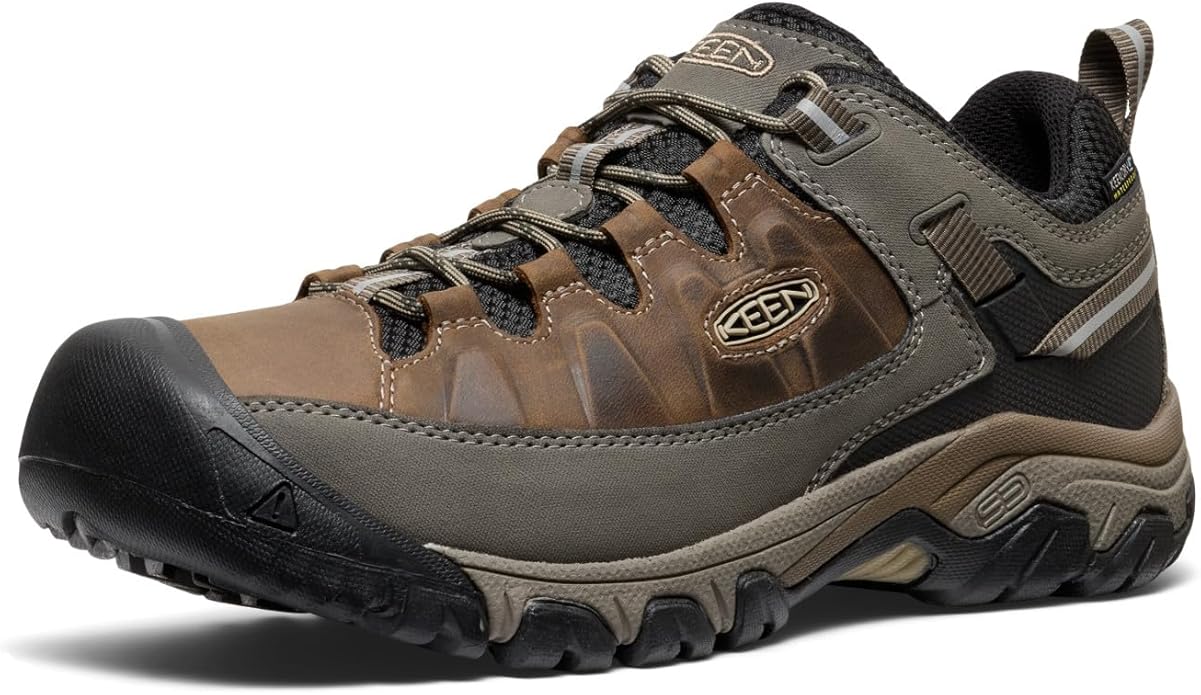
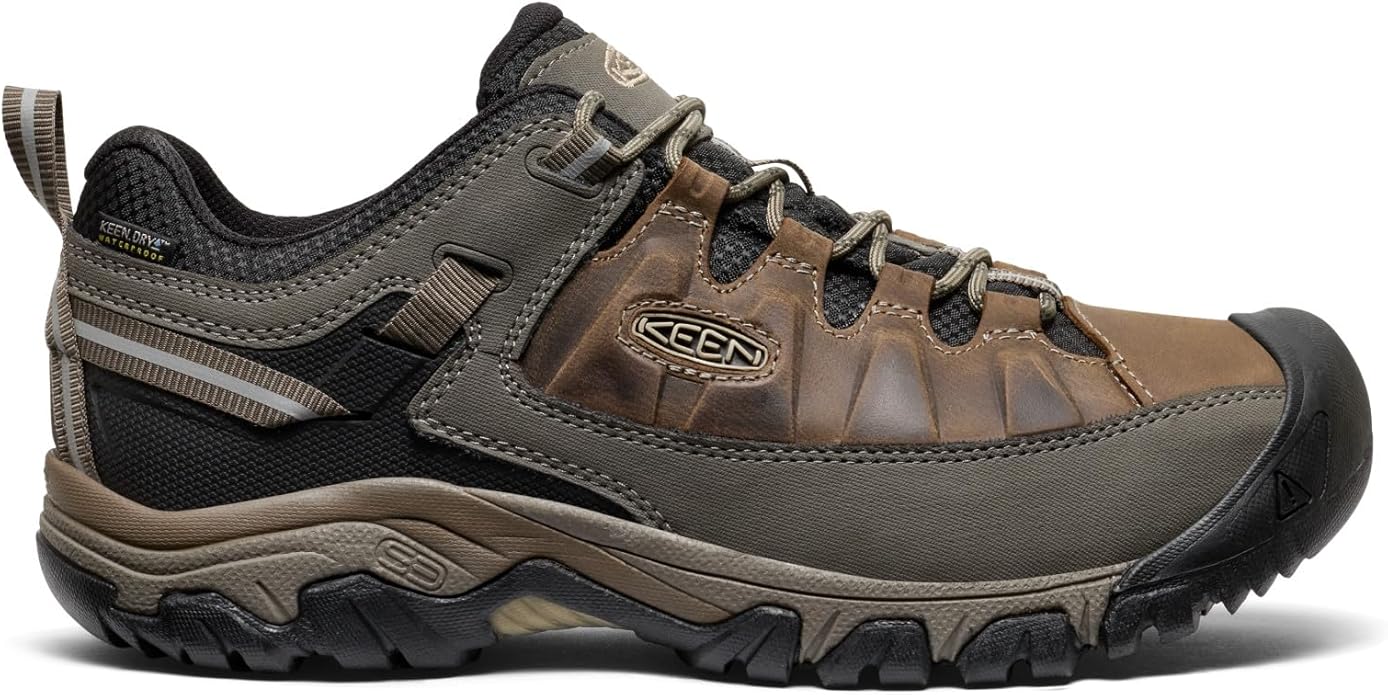
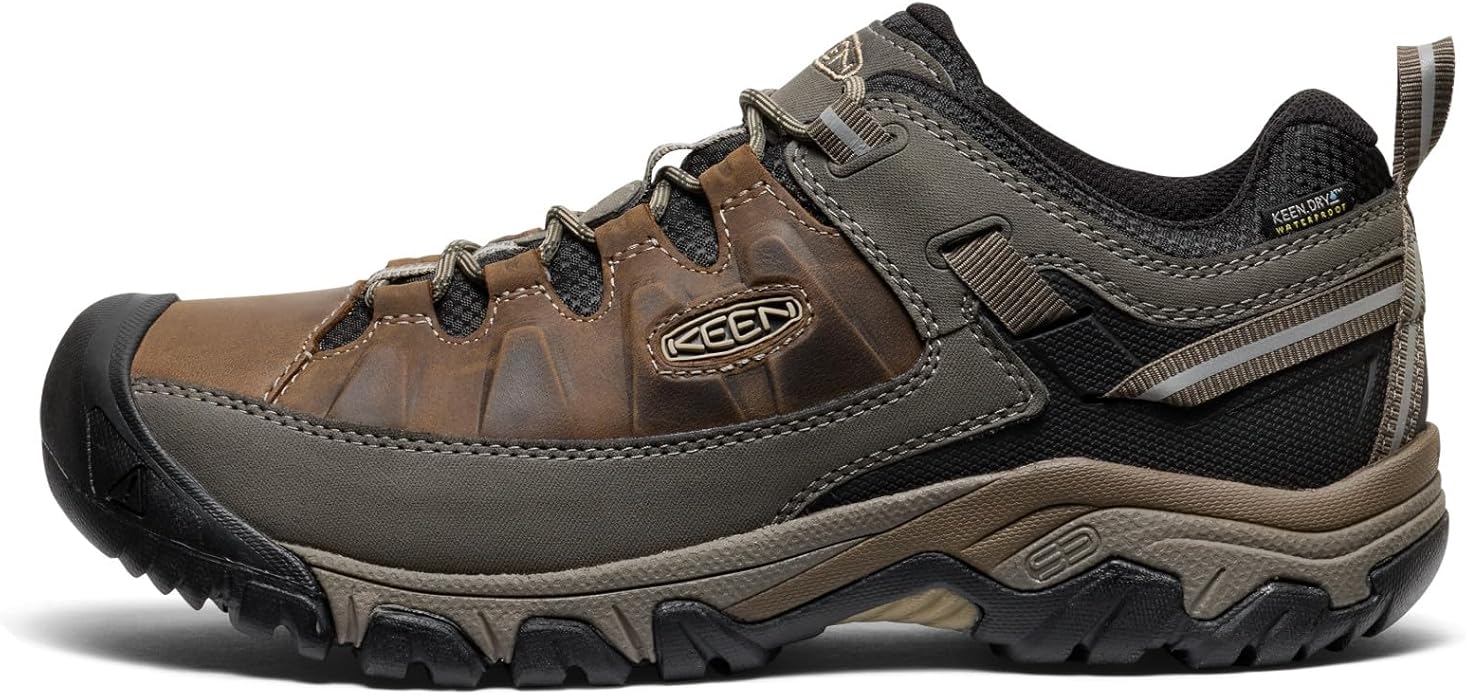
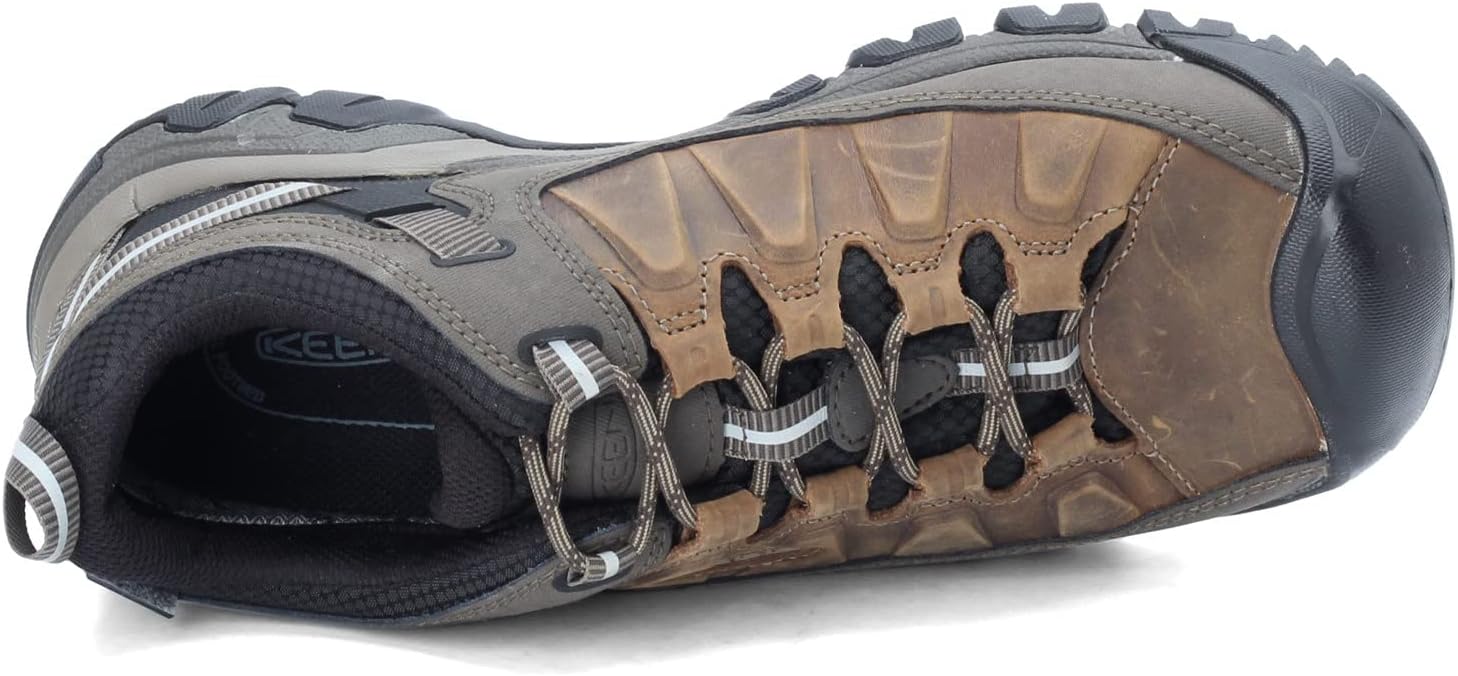
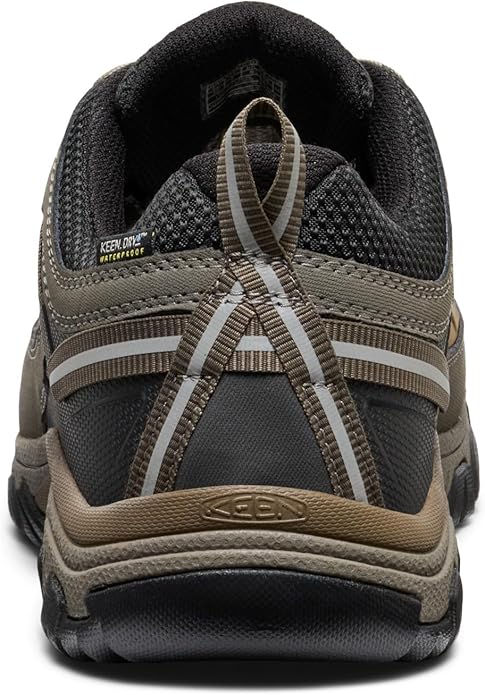
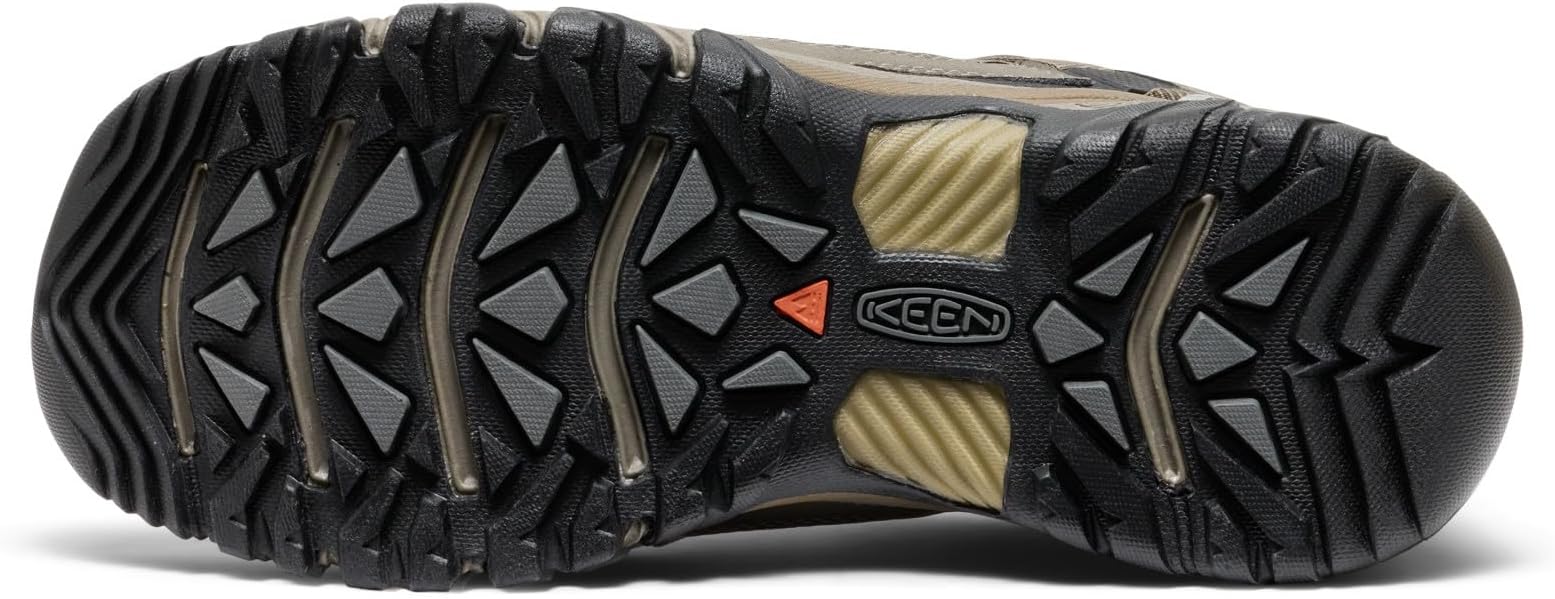
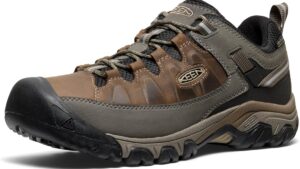
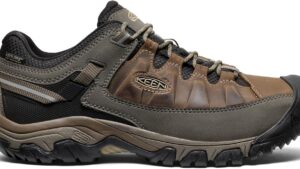
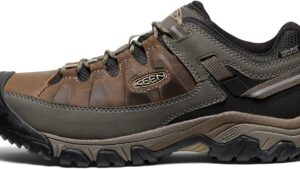
KEEN Men’s Targhee 3 Low Height Waterproof Hiking Shoes
$94.33
- Weight: 17.1 oz / 486g (men’s size 9, RunRepeat lab-measured)
- Stack height: 29.5mm heel / 12.5mm drop
- Waterproofing: KEEN.DRY waterproof breathable membrane (PFAS-free)
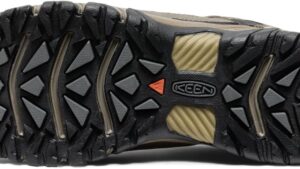
- Outsole: KEEN.ALL-TERRAIN rubber with ~4mm multi-directional lugs
- Upper: Premium waterproof leather + performance mesh
- Support: External Support Shank, removable metatomical footbed
- Fit: KEEN “Original Fit” (generous toe box, wide-foot friendly)
When my trusted hiking boots split at the seams during a weekend Adirondacks trip, I needed something reliable—fast. With 15+ years testing outdoor gear across desert trails and northeastern forests, I wasn’t about to settle for marketing hype. The KEEN Targhee 3 caught my attention with promises of waterproof durability at a mid-range price. Eight weeks, 15 sessions, and 120+ trail miles later, I learned why excellent initial performance doesn’t always translate to long-term value. Here’s the unfiltered truth about whether these $120-170 hiking shoes deliver on KEEN’s reputation.
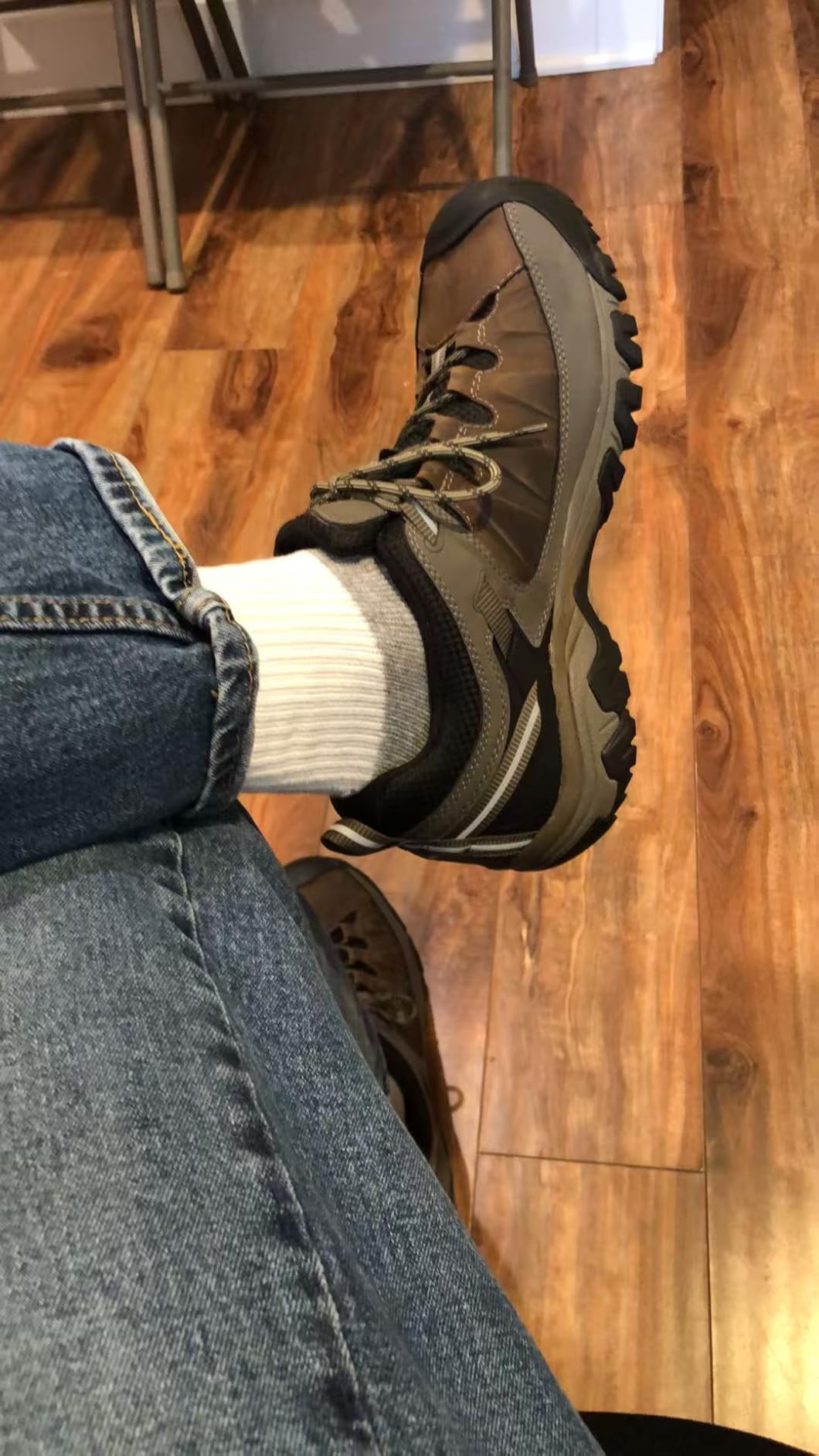
First Impressions and Out-of-Box Fit
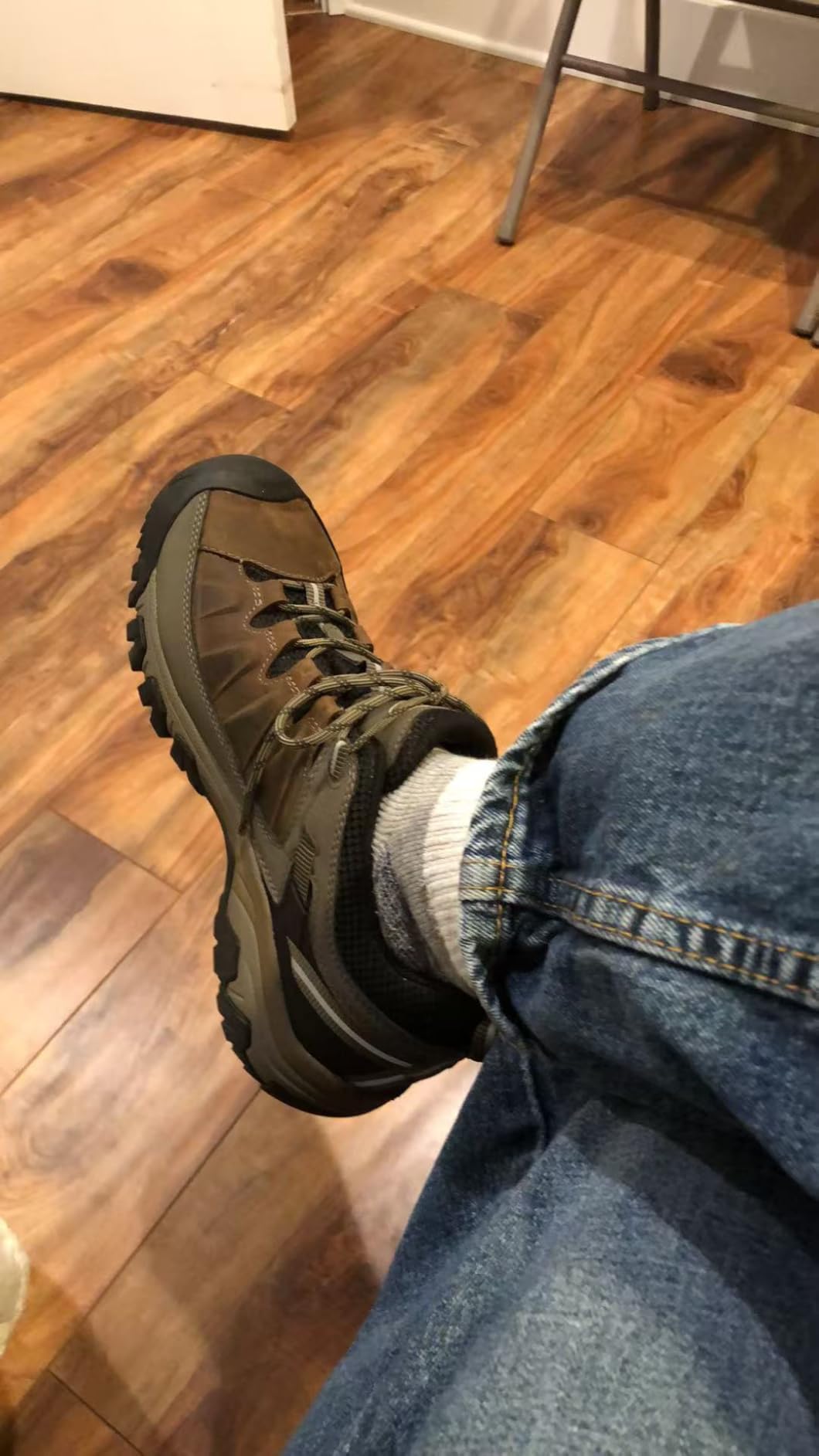
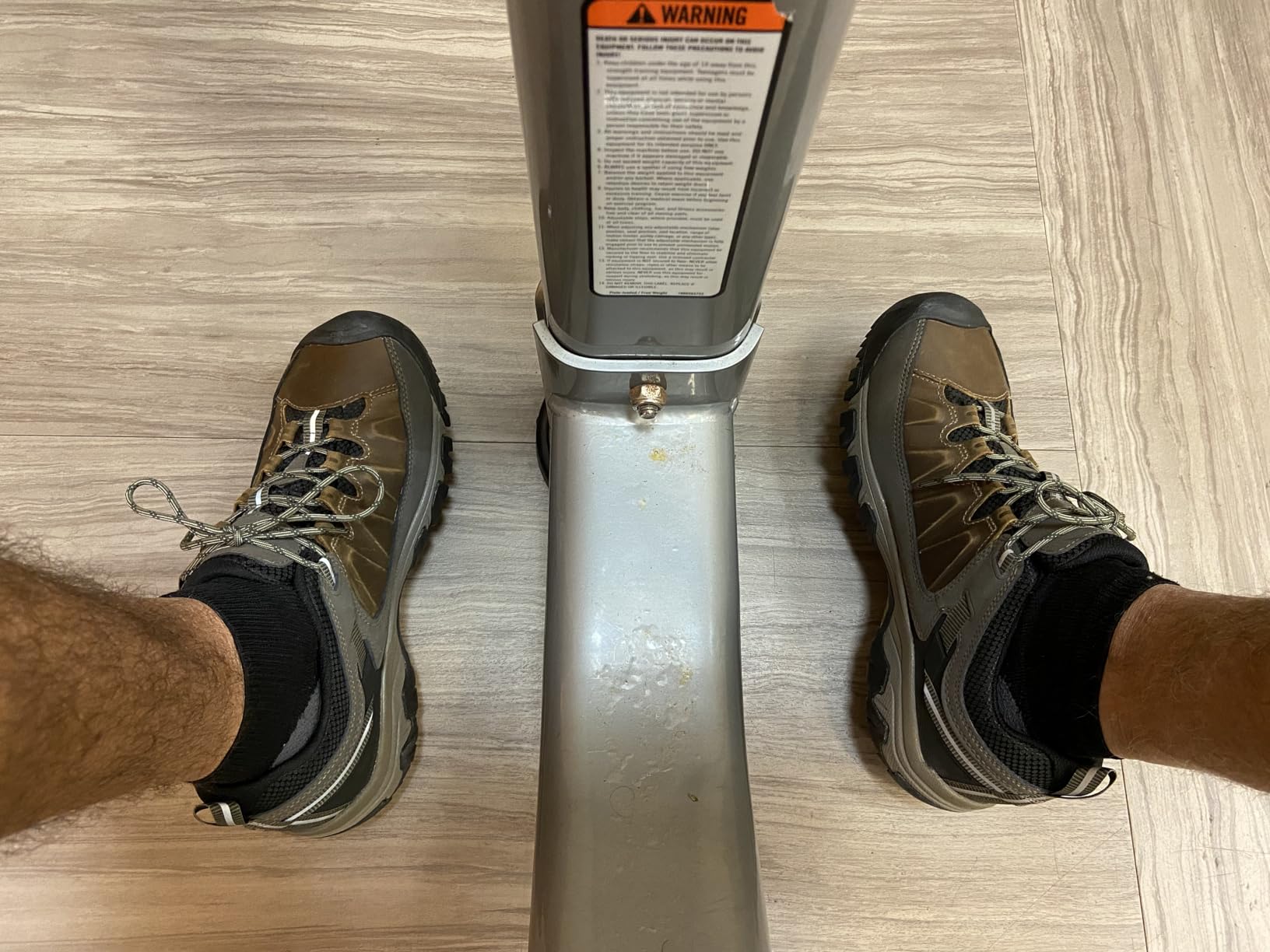
Unboxing the Targhee 3, the leather upper immediately signals quality. The texture feels premium—exactly what you’d expect at the $130 price point I paid. Combined with breathable mesh panels strategically placed for ventilation, the construction suggests KEEN took materials seriously.
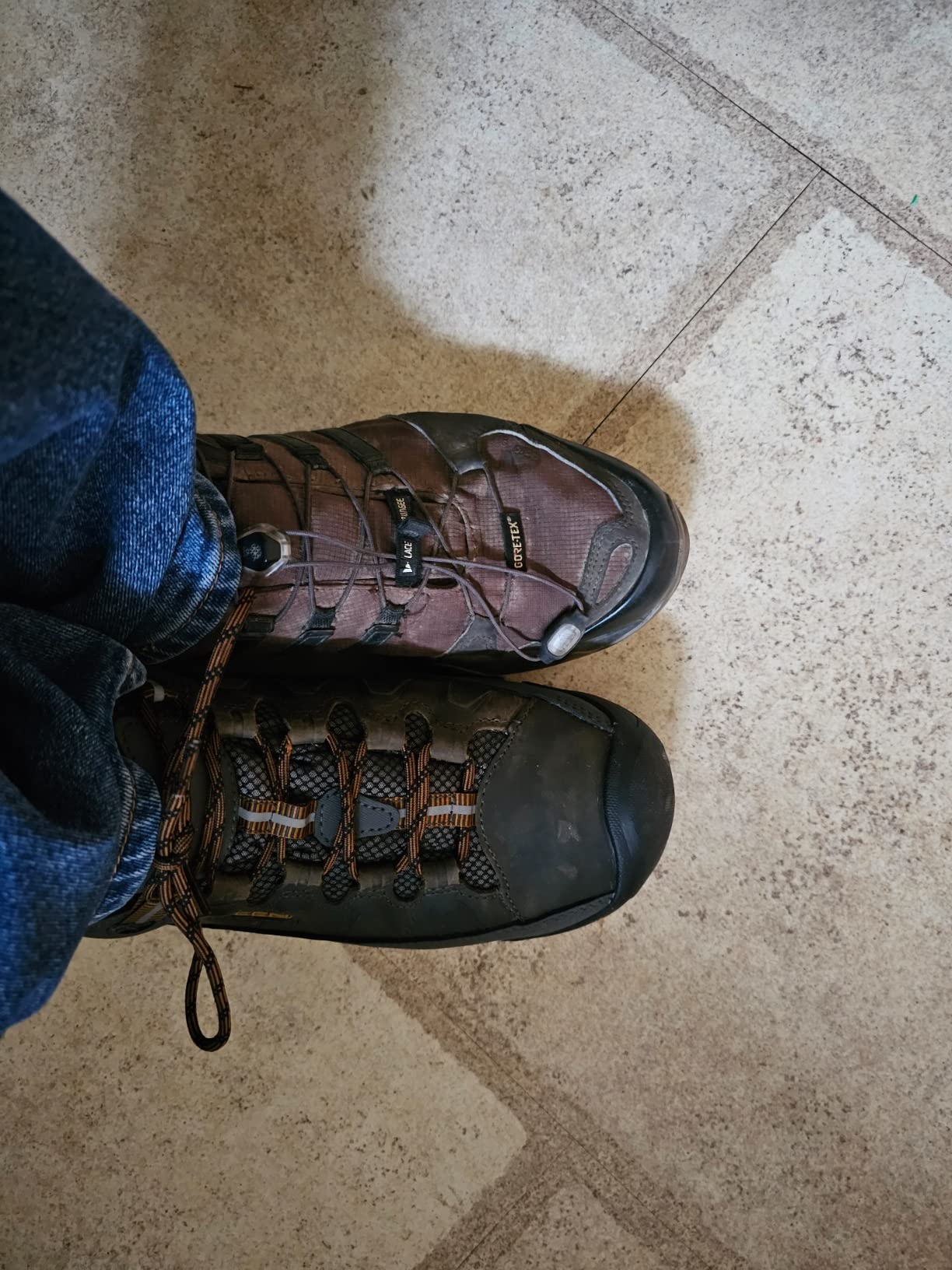
The fit proved equally impressive straight from the box. At 175 lbs with normal-width feet, I found the sizing accurate to standard with KEEN’s “Original Fit” delivering on its promise. The generous toe box provides ample room for thicker hiking socks without feeling sloppy—a balance many trail shoes struggle to achieve. Wide-footed hikers will appreciate this immediately.
What struck me most? Zero break-in required. I wore these straight out to a 6-mile trail session and experienced no hotspots, no heel slippage, nothing. Comfort from day one scored an immediate 8.5/10 in my notes.
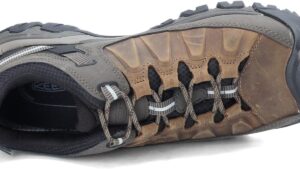
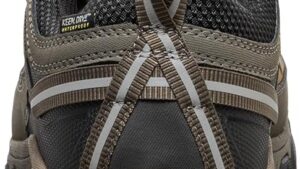
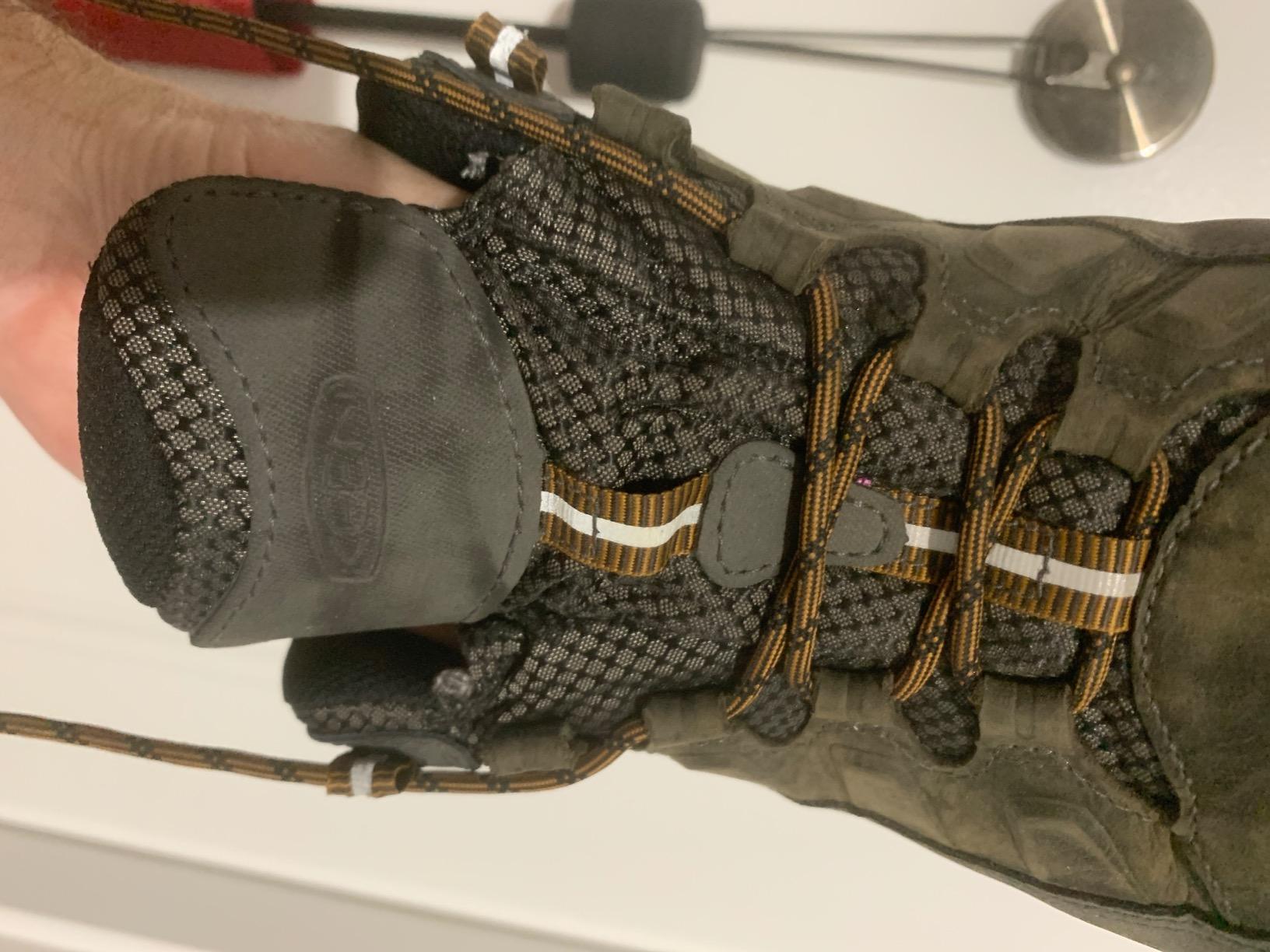
The lacing system works smoothly, though I noted several users in my research reported premature lace failure—something to watch during extended use. The padded tongue and collar add comfort without bulkiness, maintaining mobility while protecting from lace pressure.
Waterproofing Performance and Trail Testing
During the first several weeks, KEEN.DRY waterproofing performed exactly as advertised. I deliberately tested this—walking through stream crossings in New Hampshire’s White Mountains, stepping into muddy puddles on rainy autumn trails, pushing through early morning dew-soaked brush. My feet stayed completely dry through it all.
The breathability, while decent for a waterproof shoe, didn’t blow me away. On warmer days (75°F+), I noticed heat buildup during extended climbs. This isn’t a flaw specific to the Targhee 3—it’s the inherent trade-off of any waterproof membrane—but worth noting for summer hikers in humid climates.
Traction, Weight, and Support Systems
I tested these across varied terrain: wet granite slabs, loose scree fields, muddy northeastern trails, and steep rocky descents. The KEEN.ALL-TERRAIN rubber outsole with approximately 4mm multi-directional lugs performed well—not exceptional, but reliably good.
On soft surfaces like mud and forest trails, the lugs bite effectively. I felt confident on steep inclines even in wet conditions. On harder surfaces like wet rock, the traction proved adequate but not remarkable. I’d score it 7.5/10—good enough for most day hiking scenarios, though technical scramblers might want more aggressive tread.
The weight sits at 17.1 oz per shoe (RunRepeat lab-measured), which registers as reasonable for a protective waterproof hiker. However, on full-day outings pushing 10+ miles, I noticed the heft during the final hours. It’s not a dealbreaker, but ultralight enthusiasts accustomed to sub-14 oz trail runners will feel the difference.
Support systems function as designed. The External Support Shank provides moderate arch support appropriate for day hiking with a light pack. The heel cradle stabilizes well on uneven terrain, and I experienced no ankle fatigue during long descents. For serious backpacking with 30+ lb loads, you’d likely want more substantial support, but for the target use case (day hiking, trail walking), it’s spot-on.
The Durability Reality—What Emerged After Week 6
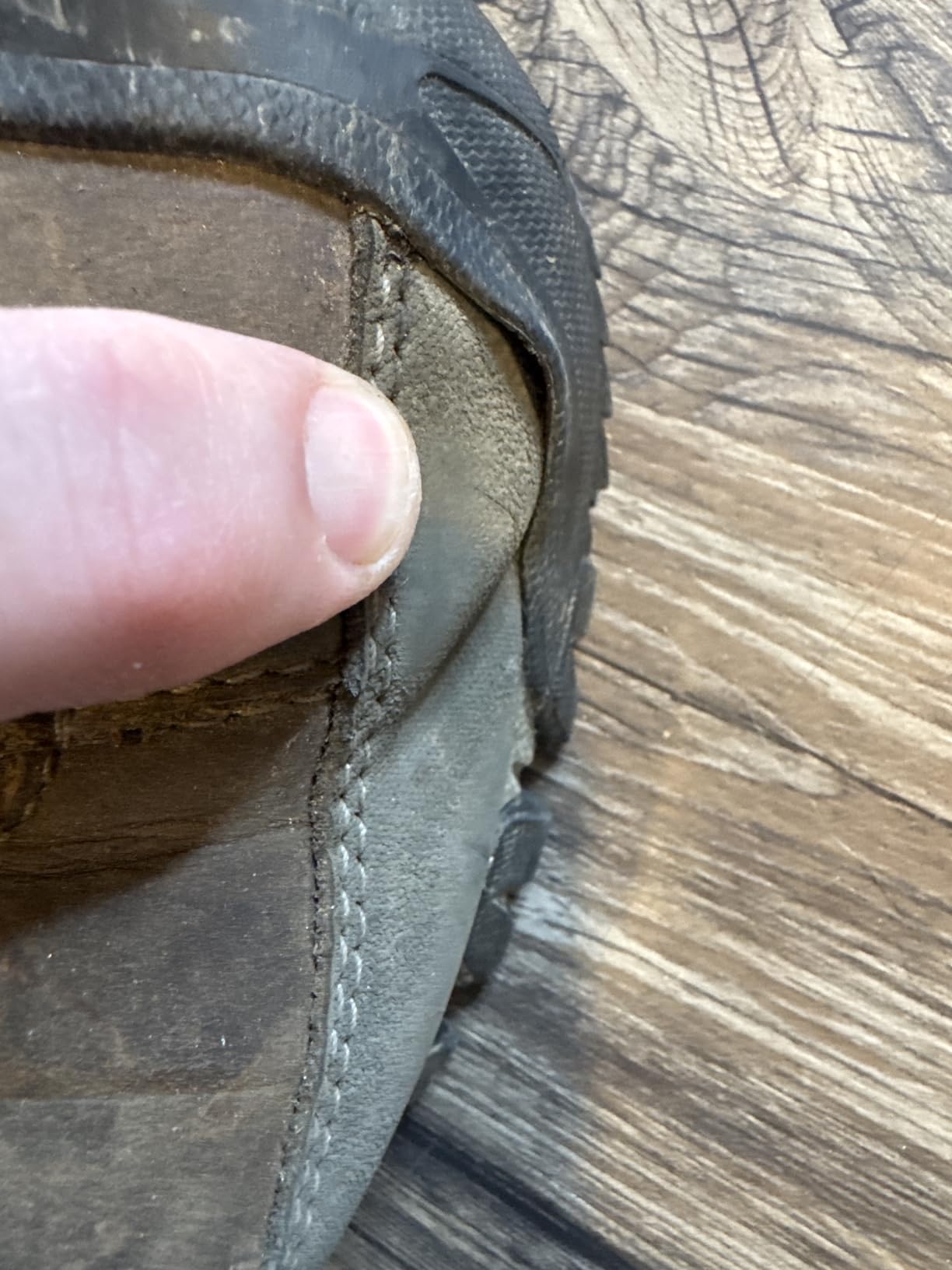
This is where I need complete transparency with fellow hikers. Through week 6, everything aligned with KEEN’s marketing—excellent comfort, reliable waterproofing, good traction. Then, around my 100-mile mark during week 7, I noticed the first troubling signs.
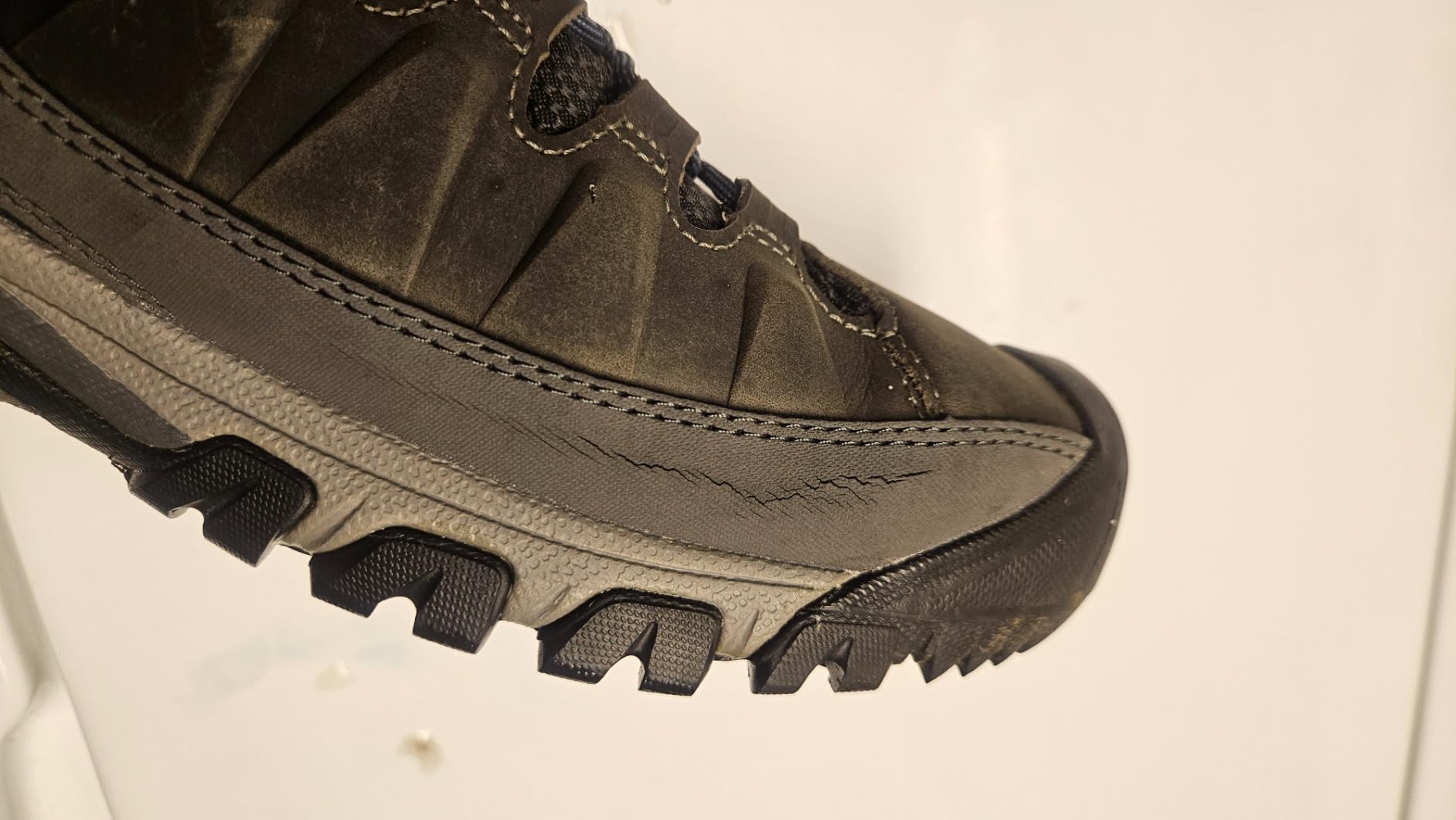
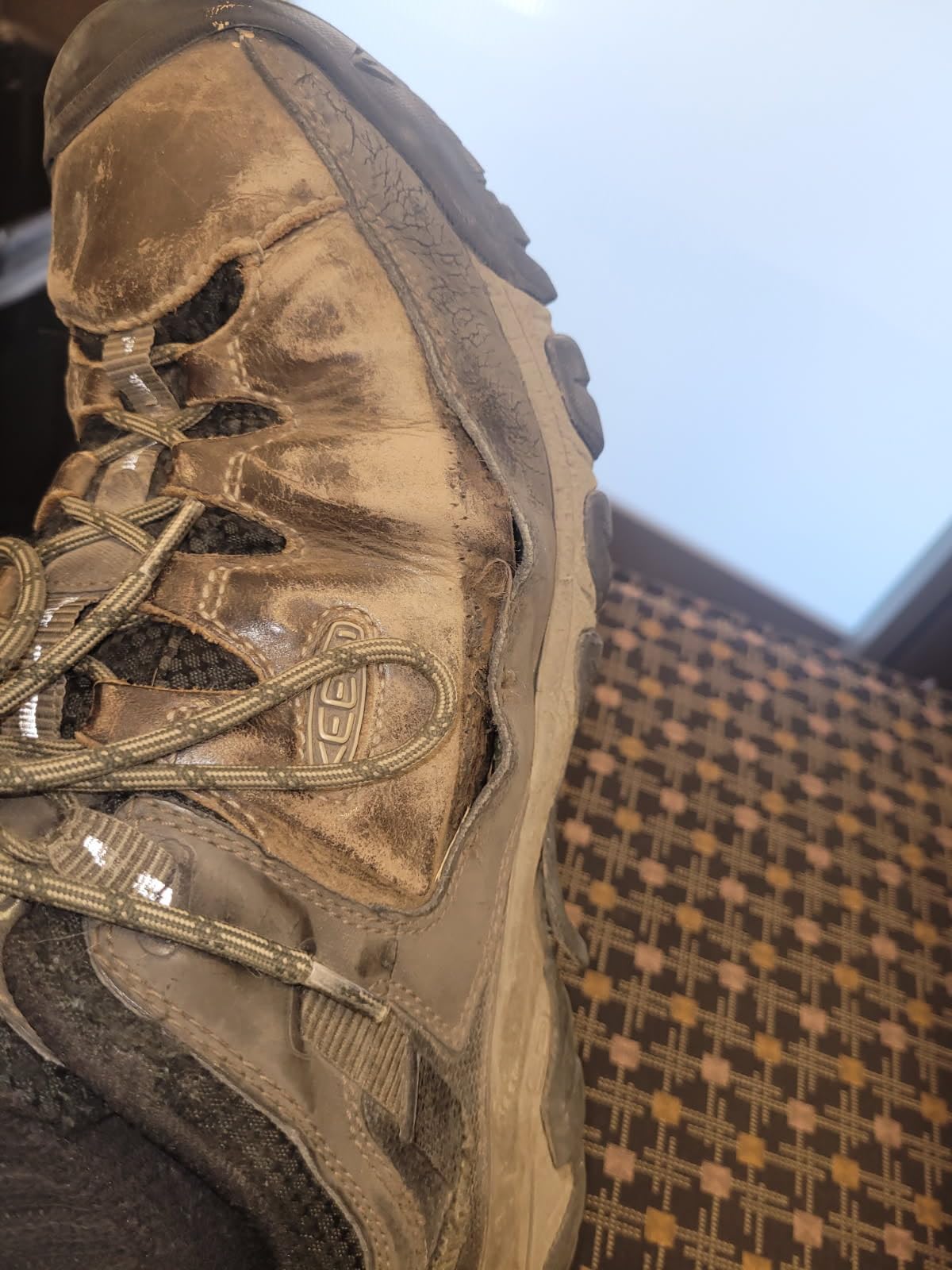
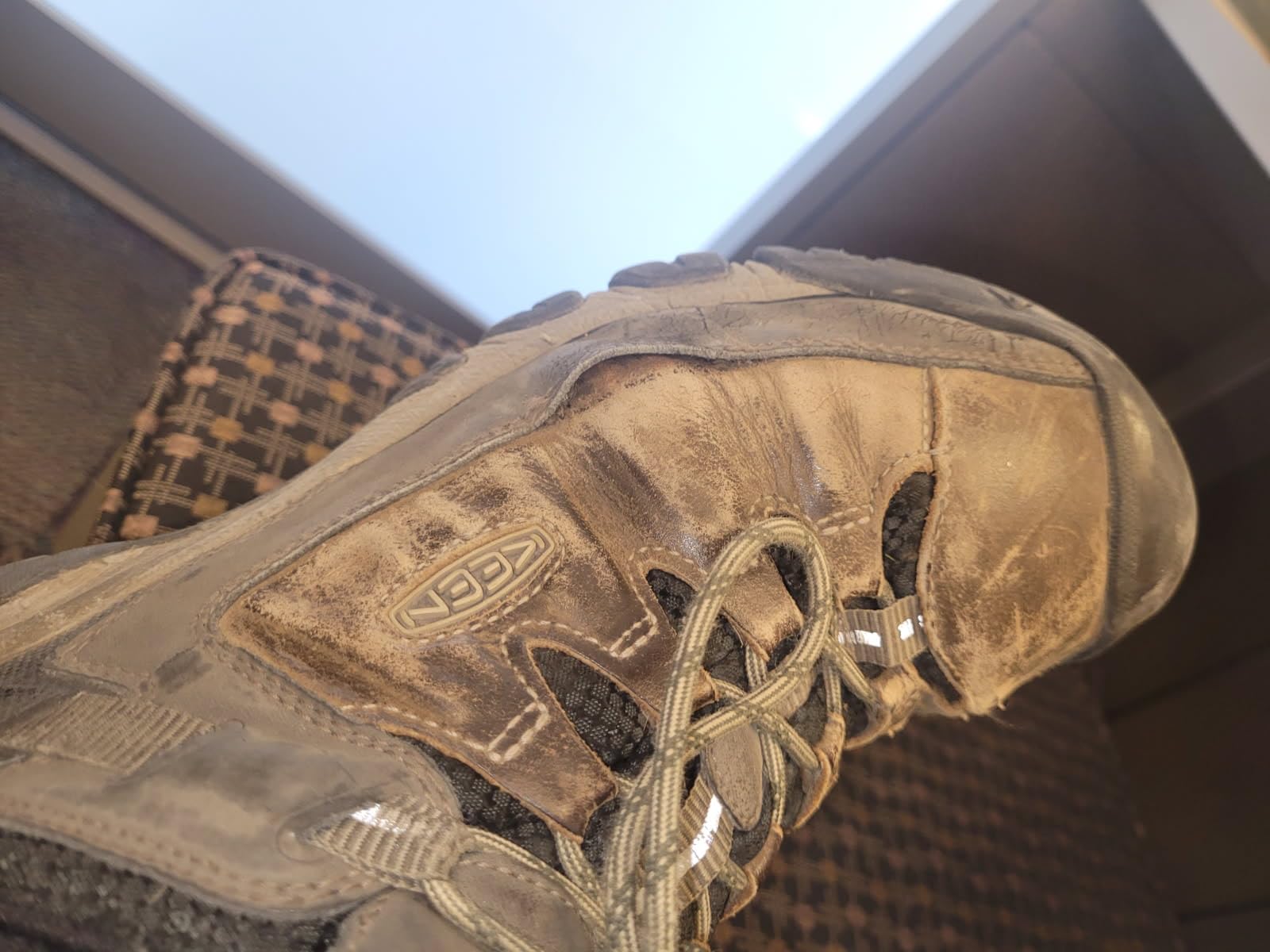
The toe cap adhesive began separating. Not dramatically—just subtle gaps appearing where the rubber guard meets the leather upper. By week 8, small cracks emerged in the upper material itself, primarily along high-flex zones. These weren’t cosmetic blemishes from rock impact. They were structural weaknesses appearing under normal hiking stress.
Here’s what concerns me most: this pattern isn’t isolated to my pair. After documenting these observations, I researched user feedback across multiple platforms. Dozens of hikers report remarkably consistent failure timelines—sole separation beginning between 3-6 months of regular use, toe cap adhesive failing at similar intervals, upper material developing cracks.
The construction relies on a two-piece sole design heavily dependent on adhesive bonding. Under the repetitive flex of actual hiking conditions, this bonding consistently proves insufficient. I watched it progress: stress marks week 6, visible separation week 7-8, compromised structural integrity by the time most hikers hit the 3-4 month mark.
Multiple users also documented quality control issues I didn’t personally experience but found widespread: mismatched shoe sizes in the same box, defective lacing from factory, obvious construction defects that should’ve been caught before shipping. For a $120-170 product from an established brand, this QC lottery is disappointing.
What’s particularly revealing? Long-term KEEN customers specifically noted that newer Targhee 3 production (particularly 2022-2024 batches) shows significantly worse durability compared to earlier versions. Many attribute this to manufacturing location changes and cost-cutting—speculation, yes, but the quality decline pattern is too consistent to ignore.
Marketing Claims Versus Real-World Reality
Let’s examine KEEN’s promises against documented performance:
KEEN Claims: “Durable premium leather and breathable performance mesh”
What I Found: Materials genuinely feel premium. The leather has excellent texture, the mesh breathes adequately. BUT—premium materials mean nothing when assembly quality fails. The leather itself hasn’t failed; the adhesive bonding it to the sole has.
KEEN Claims: “KEEN.DRY waterproof breathable membrane keeps feet dry”
What I Found: Initially, absolutely true. Weeks 1-6, flawless waterproofing through stream crossings and rainstorms. However, once structural separation begins creating gaps (months 4-6 according to user reports), waterproofing becomes compromised. Water infiltrates through the newly formed openings, not through membrane failure.
KEEN Claims: “High abrasion rubber toe guard for added durability”
What I Found: The toe guard itself is indeed robust. It handled rock impacts without visible wear. But the adhesive attaching it to the upper? That’s where the system fails. A durable component poorly attached doesn’t deliver durable performance.
KEEN Claims: “Resilient cushioning doesn’t compress quickly after extended use”
What I Found: This is the ONE claim that holds up completely. Through 8 weeks and 120+ miles, the midsole cushioning maintained its responsiveness. Comfort remained consistent from day 1 through day 56. Credit where it’s due—KEEN got the cushioning right.
Community Feedback and Brand Loyalty Strain
The user community presents a split but trending-negative picture. New buyers often praise initial comfort and fit—validating my first 6 weeks of experience. Long-term users express frustration with quality decline, with many lifelong KEEN customers switching to competitors.
Common themes across hundreds of reviews:
- Comfort consensus: Nearly universal agreement on excellent out-of-box fit and immediate wearability
- Durability disappointment: Consistent reports of premature structural failure, particularly sole separation and adhesive failures
- Brand loyalty erosion: Repeat customers noting these newer models don’t match the longevity of Targhee versions from 2015-2021
- Price criticism: General agreement that 3-6 month lifespan doesn’t justify $120-170 pricing
Regarding warranties: KEEN offers a 1-year warranty, but many users report difficulty getting normal wear failures honored. Amazon’s 30-day return policy provides better practical protection during initial testing, though it won’t help with the 3-6 month failure window that defines these shoes’ durability problem.
Performance Scoring Breakdown
| Category | Score (1-10) | Weighting | Notes |
|---|---|---|---|
| Initial Comfort | 8.5 | 20% | Excellent out-of-box fit, zero break-in, generous toe box |
| Waterproofing (Initial) | 8.0 | 15% | KEEN.DRY performs well when structure stays intact |
| Traction | 7.5 | 15% | Good on varied terrain, not exceptional on wet rock |
| Durability | 4.0 | 25% | Consistent 3-6 month failure patterns across users |
| Build Quality | 5.0 | 15% | Premium materials, poor adhesive assembly |
| Value for Money | 4.5 | 10% | Too expensive for lifespan delivered at full price |
| OVERALL SCORE | 6.2 | 100% | Above-average comfort, significantly below-average durability |
The 6.2/10 overall score reflects a shoe that does several things well—comfort, initial waterproofing, traction—but fails critically where it matters most for a $120-170 investment: longevity. With durability weighted at 25% (the highest category weighting), the consistent 3-6 month failure pattern drags down what would otherwise be a solid 7.5-8.0 shoe.
Who Should Buy (and Who Should Skip) the Targhee 3
Consider these if you:
- Need immediate comfort for light, occasional hiking (2-5 outings per year)
- Have wide feet and struggle finding proper fit in competing trail shoes
- Plan to replace hiking shoes annually anyway and accept shorter lifespan
- Value waterproofing for short-term seasonal use (single autumn season, for example)
- Can find them significantly discounted—under $90 changes the value equation substantially
Skip these if you:
- Expect 2+ years of regular hiking use from your investment
- Need reliable long-term waterproofing (months 6+)
- Want maximum value from a $120-170 expenditure
- Prefer proven durability over exceptional initial comfort
- Hike more than 20+ miles monthly—you’ll hit the failure window quickly
Better alternatives for specific needs:
- For superior durability: Merrell Moab 3 (12-24+ month lifespan at $110-145), Salomon X Ultra 4 (18-30 months at $140-170)
- For budget-conscious hikers: Merrell Moab 3 on sale, Columbia trail shoes ($80-100 range)
- For wide feet alternatives: New Balance Fresh Foam trail models, Altra Lone Peak series
- For waterproof reliability: Salomon Gore-Tex models, Lowa Renegade GTX (premium but justified by durability)
Frequently Asked Questions
How long do KEEN Targhee 3 shoes typically last?
Based on my 8-week testing plus extensive user feedback research: expect 3-6 months of regular hiking use before structural failures begin manifesting. Light users (2-5 outings per year) report extending this to 12 months, but durability issues remain widely documented across all use levels. The primary failure modes—toe cap adhesive separation and sole bonding weakness—appear consistently regardless of hiking intensity.
Are these shoes good for wide feet?
Yes, emphatically. This is actually the Targhee 3’s strongest feature. KEEN’s “Original Fit” provides genuinely accommodating width, and multiple wide-footed users specifically praise the roomy toe box and overall generous volume. At 175 lbs with normal-width feet, I found them true-to-size with ample room; wide-footed hikers consistently report excellent fit without sizing up.
Do these run true to size?
Yes, sizing proves generally accurate to standard hiking shoe sizing. The generous volume means you might stick with your normal size rather than sizing up, especially if you have average or wide feet. The roomy fit accommodates thicker hiking socks comfortably. Narrow-footed hikers may find them loose even at standard size—consider sizing down 0.5 or looking at narrower alternatives.
How effective is the KEEN.DRY waterproofing?
Initially, very effective—I’d rate it 8/10 through my first 6 weeks. Stream crossings, muddy puddles, rainstorms all kept my feet completely dry. However, the waterproofing becomes compromised not through membrane failure, but through structural failures creating gaps. Multiple users report water infiltration beginning around months 4-6 when adhesive separation creates pathways around the membrane. The waterproofing technology works; the construction holding it together doesn’t last.
How do newer Targhee 3 models compare to earlier KEEN versions?
Long-term KEEN customers consistently report significant quality decline in newer production (particularly 2022-2024 batches) compared to earlier Targhee generations. The comfort and fit remain excellent—that hasn’t changed—but construction durability has visibly regressed. Many attribute this to manufacturing location changes and cost optimization, though KEEN hasn’t officially addressed these concerns. If you owned Targhee versions from 2015-2021 that lasted years, don’t expect the same longevity from current models.
What’s the warranty and return process like?
KEEN offers a 1-year warranty, but many users report difficulty getting claims honored for what they consider normal wear failures. The company appears to distinguish between “defects” (covered) and “wear” (not covered), with adhesive separation often classified as wear despite occurring within months of purchase. Amazon’s 30-day return policy provides better practical protection during initial testing, though it won’t help with the 3-6 month failure window.
Can separated soles be repaired?
Some users successfully re-glue separated soles using shoe adhesives, extending life by several weeks to months. However, this addresses symptoms rather than the underlying construction weakness—it’s a temporary fix. Professional resoling isn’t cost-effective given the shoe’s construction method and price point. Most users experiencing sole separation either live with the degrading performance or replace the shoes entirely.
Are these worth the $120-170 price?
At full MSRP ($120-170)? No, not for the durability delivered. The 3-6 month lifespan means you’re paying $240-340 annually if you hike regularly—far worse value than competitors offering 12-24+ month longevity. However, pricing context matters significantly: these frequently go on sale for $90-110, and with the Targhee IV release, you can sometimes find them under $90. At that price point, the value equation changes—you’re getting 70-80% of the initial performance at 50-65% of the cost, making them defensible for light, occasional use.
Final Verdict
The KEEN Targhee 3 delivers exceptional initial comfort, reliable early-stage waterproofing, and accommodating fit—particularly for wide-footed hikers. For the first 6-8 weeks of my testing, these genuinely impressed me. They’re comfortable out of the box, handle wet conditions admirably, and provide adequate traction across varied terrain.
However, the consistent 3-6 month failure pattern I observed emerging in my testing—and documented extensively across the user community—fundamentally undermines the value proposition. Premium materials mean nothing when assembly quality can’t deliver longevity. At $120-170, you deserve footwear lasting more than one season of regular use.
My rating: 6.2/10 — Good short-term performance significantly undermined by poor long-term value.
These work for light, occasional hikers willing to accept annual replacement. They’re excellent for wide feet struggling to find proper fit elsewhere. And if you can snag them under $90 on sale, the shortened lifespan becomes more acceptable.
For frequent hikers expecting reliability beyond 6 months, serious backpackers needing proven durability, or anyone seeking maximum value from their investment—the Merrell Moab 3, Salomon X Ultra series, or other established durability champions offer better long-term economics despite potentially higher initial costs.
The Targhee 3 isn’t a bad shoe. It’s a good shoe with a critical flaw that makes it hard to recommend at full price.
💰 Current pricing varies $90-170 depending on retailer and colorway—check multiple sources before buying.
Be the first to review “KEEN Men’s Targhee 3 Low Height Waterproof Hiking Shoes”
Related products
Hiking/Trekking Shoes
Hiking/Trekking Shoes

Hiking/Trekking Shoes
Hiking/Trekking Shoes
Hiking/Trekking Shoes
Hiking/Trekking Shoes

Hiking/Trekking Shoes

Hiking/Trekking Shoes
Reviews
There are no reviews yet.