
Last winter, I watched three of my warehouse coworkers go through shoes within six months — two pairs of $80 “premium” brands that delaminated at the sole, one $60 pair that split at the toe box. I’ve burned money the same way. So when I spotted these Kvovzo Men’s Slip-On Blade Walking Shoes for under $40 on my lunch break, I wasn’t expecting miracles. I was expecting an honest transaction: decent shoe, honest price, no marketing fairy tales. I spent six weeks putting them through the kind of testing that matters for guys like us — warehouse floors, back-and-forth errands, a few treadmill sessions, and surfaces that genuinely challenge the non-slip claim. Here’s the full breakdown.
Technical Specifications
- 💰 Price: ~$40
- ⚖️ Weight: Lightweight (exact weight not published by manufacturer)
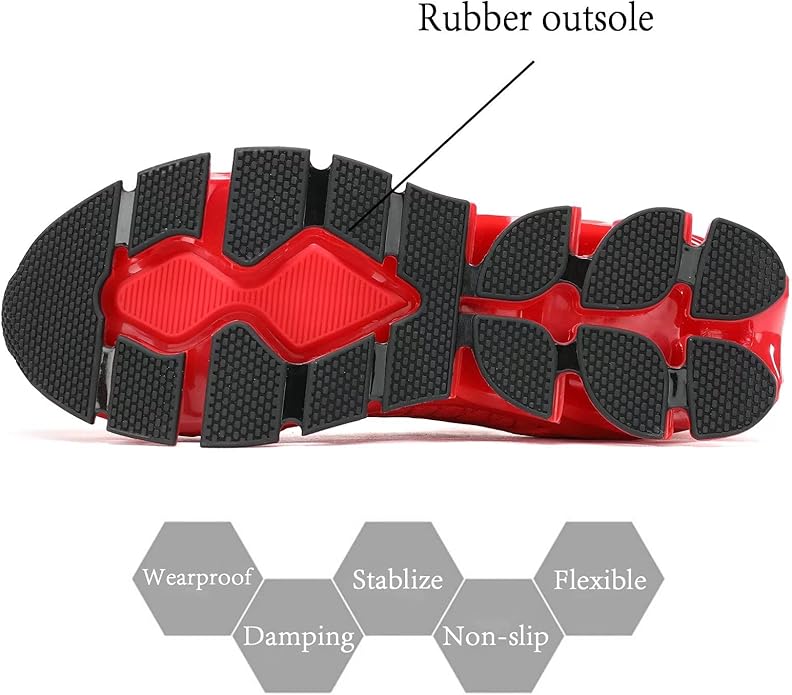
- 🧪 Sole material: MD rubber, blade-pattern outsole
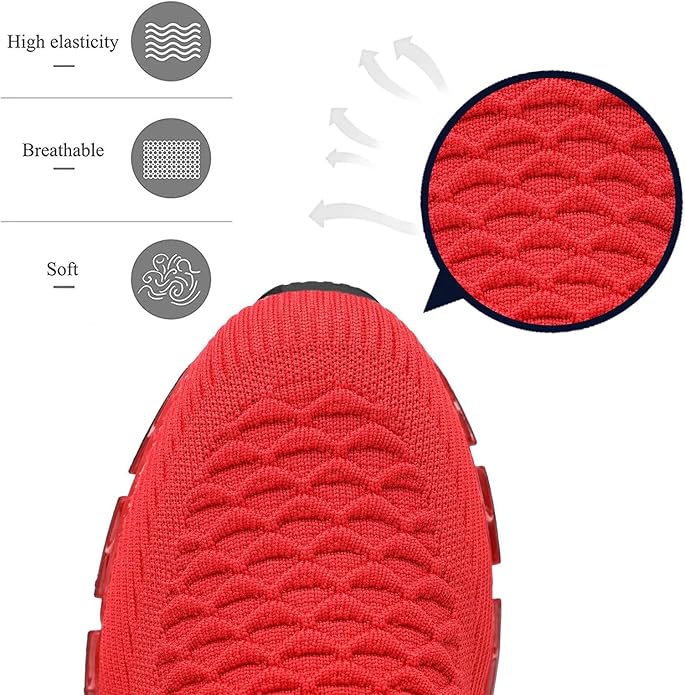
- 👟 Upper material: Breathable knit mesh fabric
- 🔒 Closure type: Pull-On / Slip-On
- 🛏️ Insole: Removable memory foam footbed
- 💧 Water resistance: None
- 🏃♂️ Category: Casual walking sneakers
- 🎯 Best for: Light-duty work, casual walking, errands, warm environments
What You’re Actually Getting — Design & First Impressions
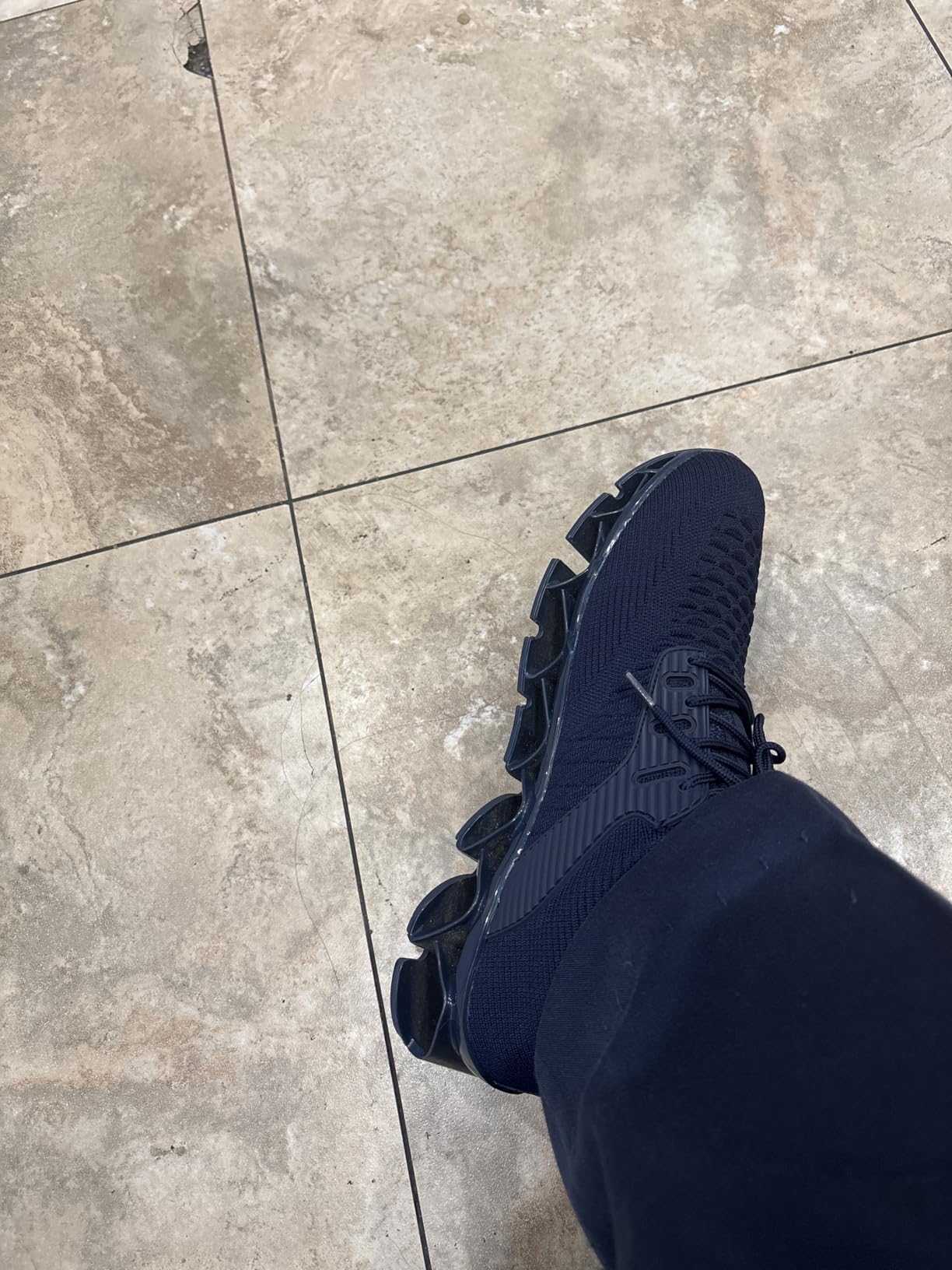
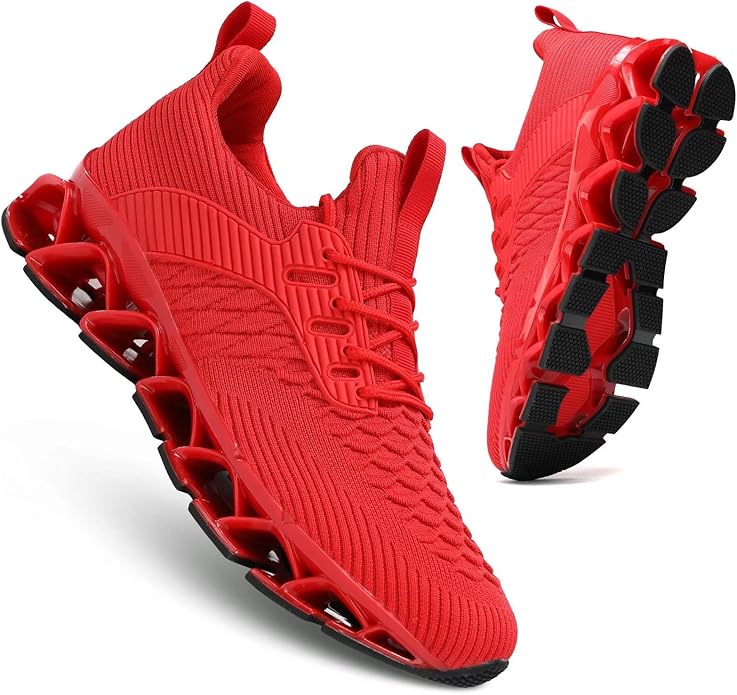
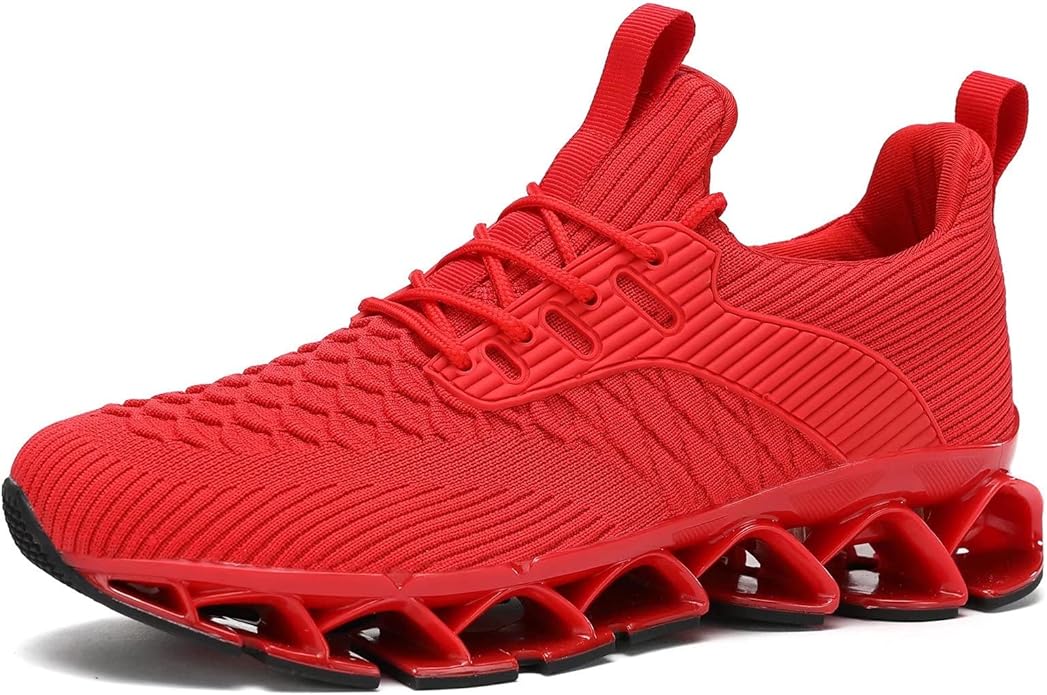
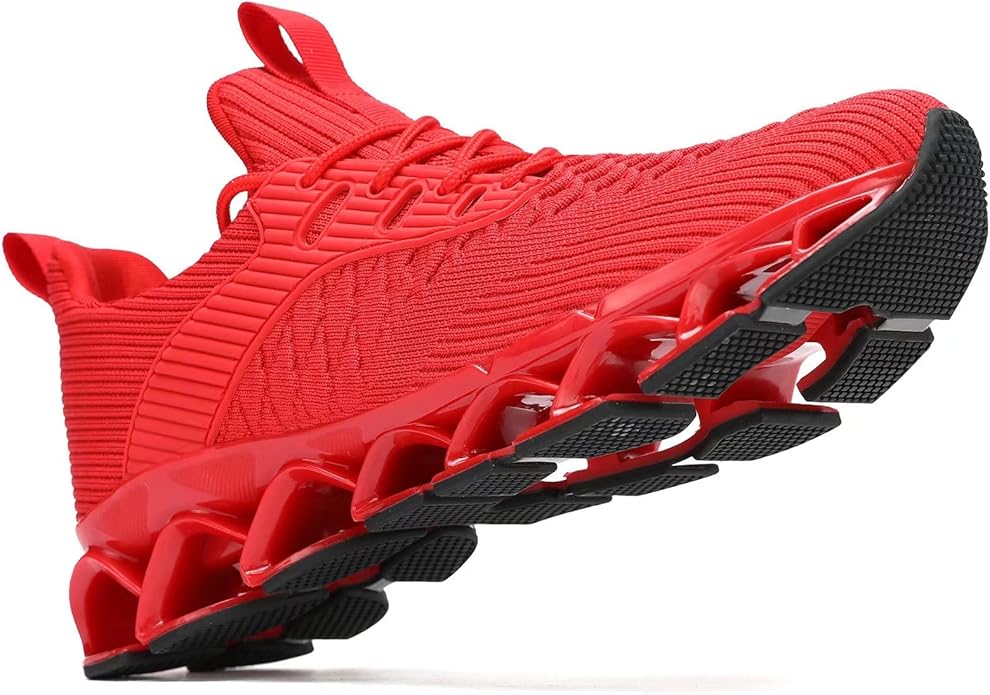
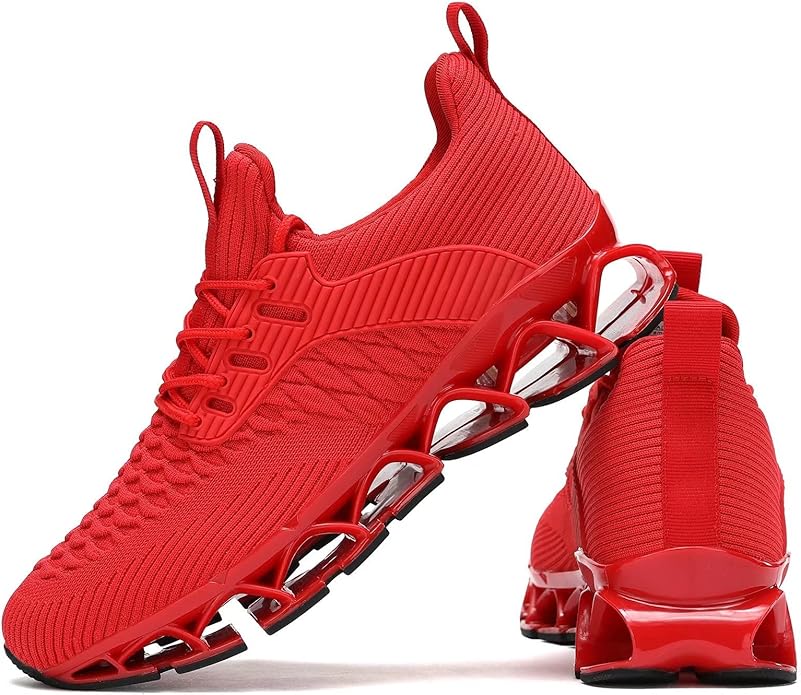
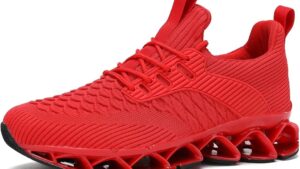
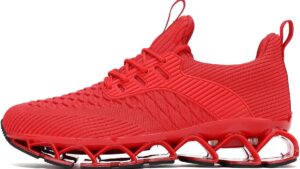
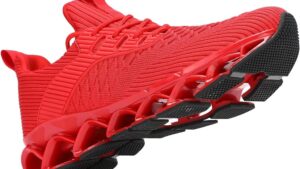
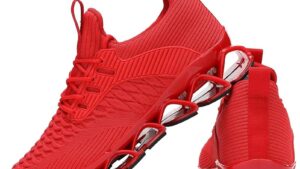
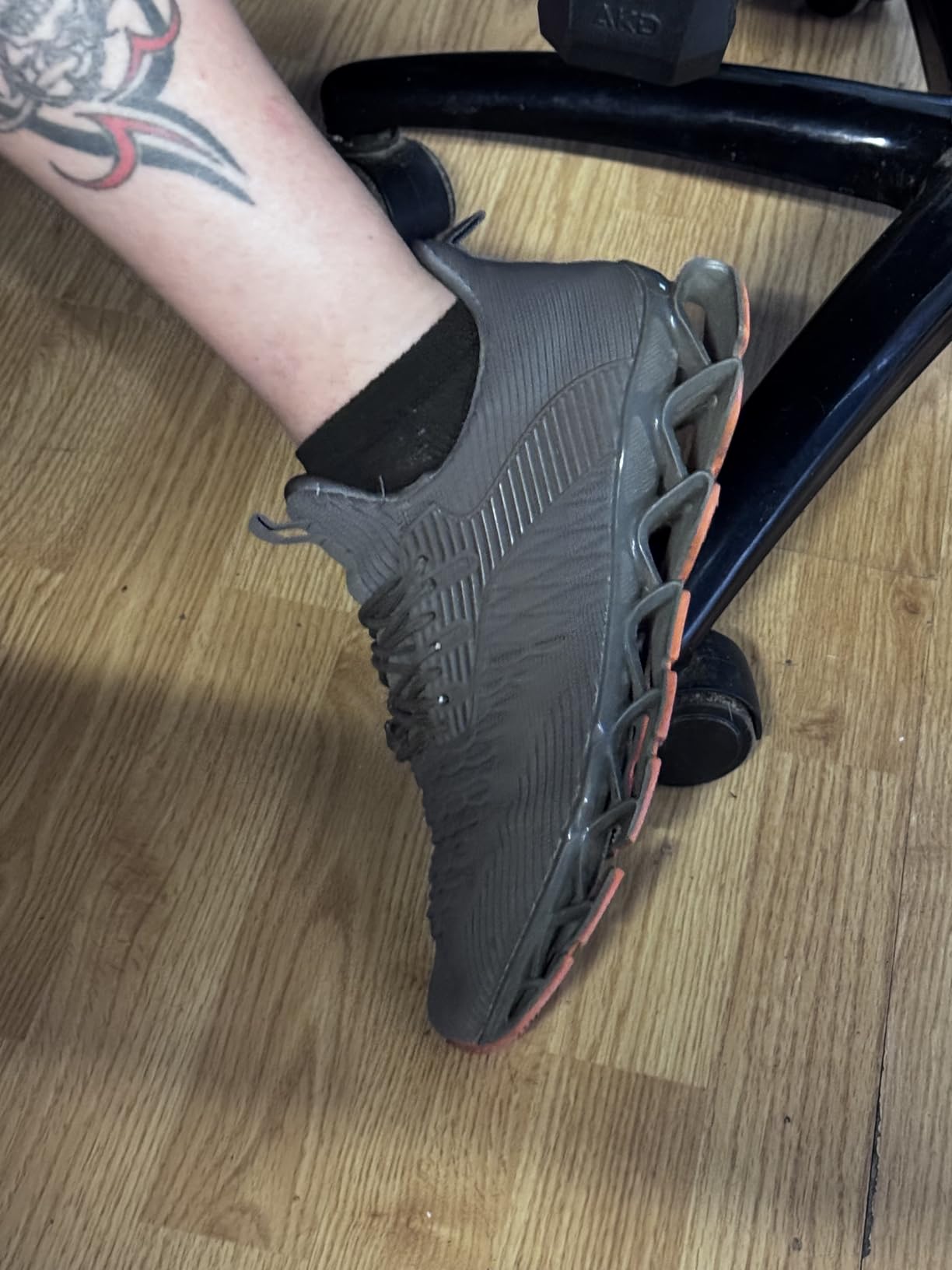
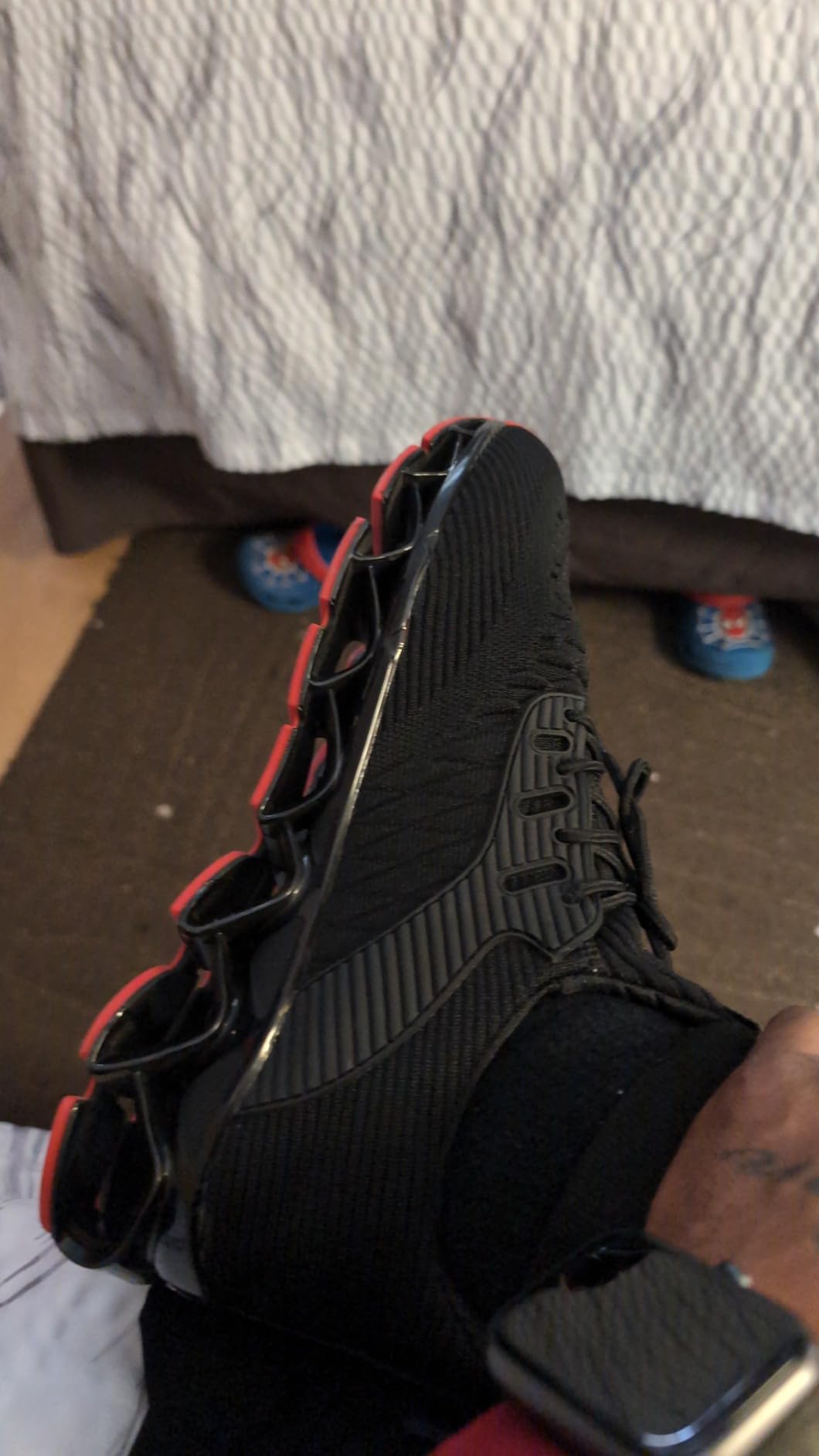
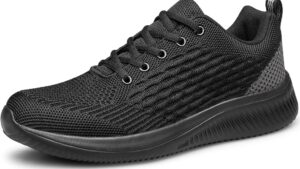
Out of the box, the construction quality surprises you for a $40 shoe. The knit upper is well-finished — no loose threads, no uneven stitching at the seams. The padded collar sits clean against the ankle, and the pull-on elastic entry works smoothly from day one. Multiple colorways are available (the red and navy shown here both tested well), and the overall silhouette reads more athletic casual than budget bin. A few people at the warehouse asked me where I’d picked these up, which isn’t something that happens with most sub-$50 footwear.
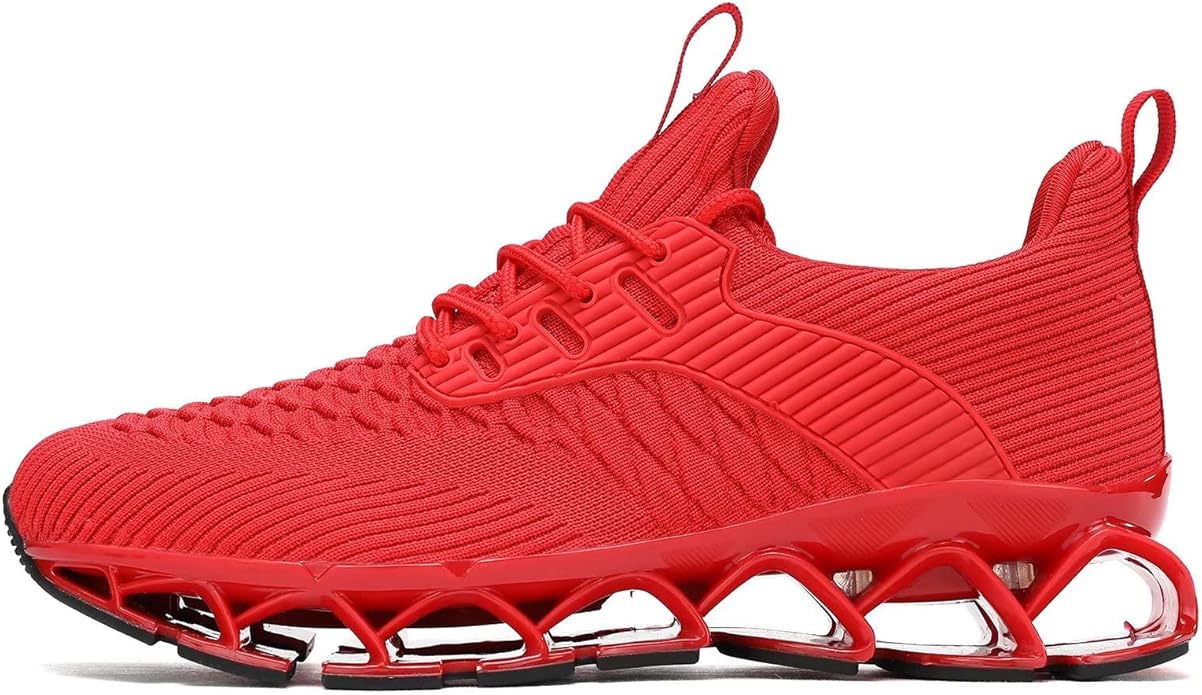
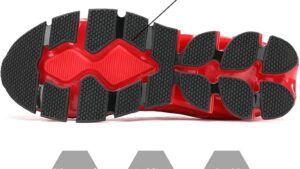
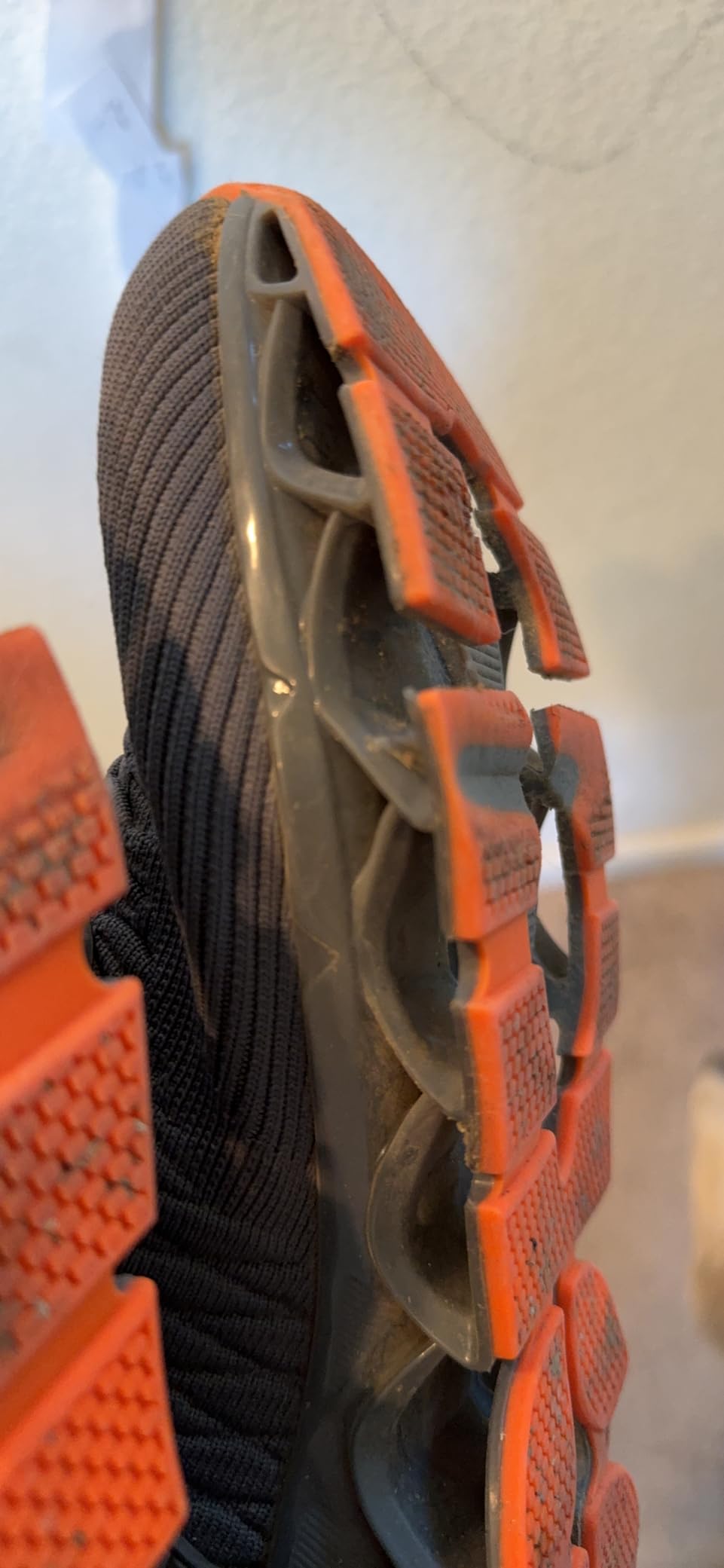
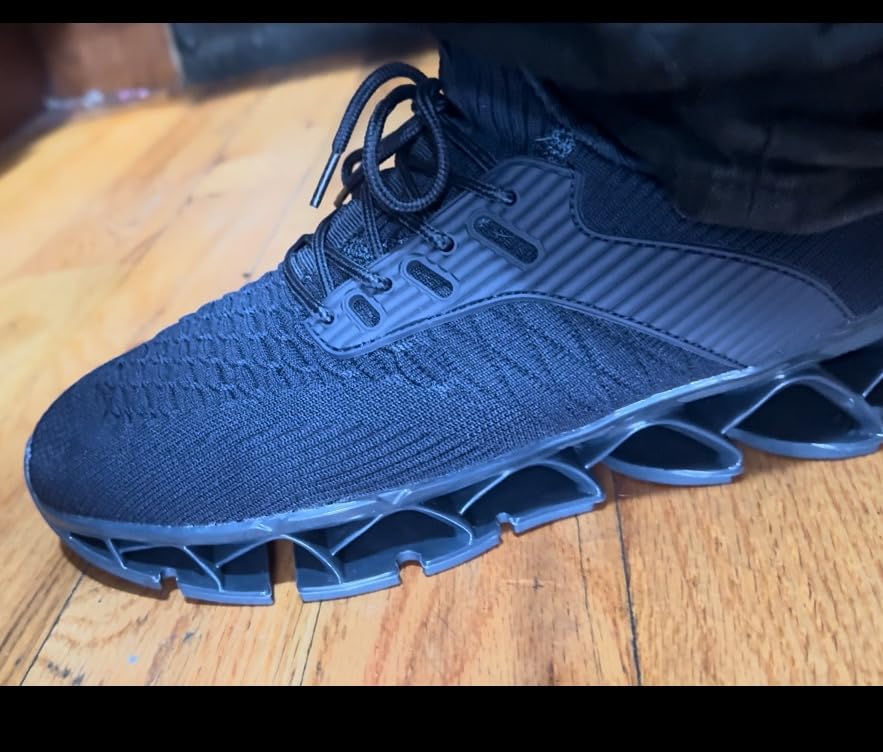
The blade outsole is where expectations need calibrating. The word “blade” in footwear marketing carries athletic connotations — you picture propulsive cuts, energy return, the kind of spring you’d get from a performance running shoe. What the blade design actually delivers here is a rigid platform with cosmetic flex cuts machined into the MD rubber. Touch the sole before you put them on and the firmness is immediately apparent. That’s not a flaw — it’s just a different product than the branding implies, and understanding that distinction before your first wear saves you from a disappointing first step.
The low-top silhouette, breathable mesh face, and clean visual lines give these a legitimate casual sneaker presence. They look more expensive than they cost. For work environments that aren’t demanding a steel-toe or formal dress code, they fit right in.
The Comfort Reality — Short-Term vs. Extended Wear
The Good News First
For the first two to three hours on your feet, these shoes genuinely work. The memory foam insole cushions heel strike well, the padded collar eliminates ankle rubbing, and the overall feel underfoot is comfortable without being mushy. Pull them on for morning errands, a lunch break walk, or a short shift at a standing workstation — you’ll have no complaints. The arch support is better than I expected at this price, and the slip-on entry means you’re in and out without fuss.
The Part Other Reviews Skip
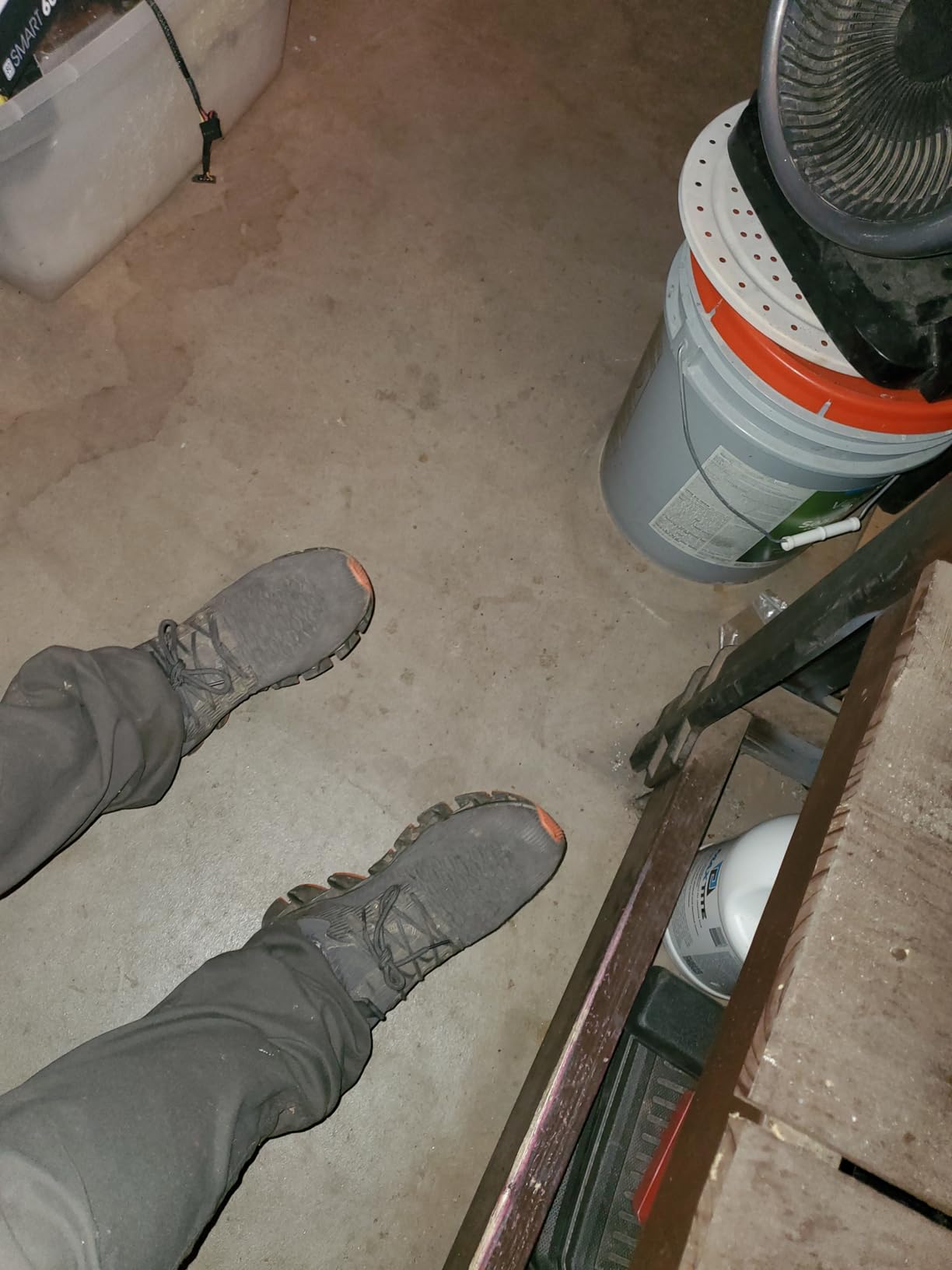
By hour three or four on hard concrete, something shifts. The memory foam insole, without any midsole backup beneath it, starts losing the battle. The blade outsole is rigid — it doesn’t flex to absorb impact the way a cushioned midsole would. What’s left is a firmer underfoot feel that becomes increasingly noticeable as fatigue accumulates. After an 8-hour warehouse shift on day 12 of testing, my feet were noticeably more tired than they’d been in my previous work shoes, which cost twice as much but had a proper EVA midsole.
This is the honest trade-off of $40 engineering: the insole does all the cushioning work alone, and it has limits.
The fix isn’t expensive. Adding a pair of aftermarket insoles — the Sof Sole Athlete Insoles or Dr. Scholl’s Work series work well here — significantly extends the comfortable wear window. With upgraded insoles, I wore these for 10-hour shifts without meaningful fatigue increase. That’s a $15 fix on a $40 shoe, and it changes the calculus for serious work use.
Comfort breakdown:
- 0–3 hours: 7.5/10 — memory foam works, arch support holds
- 3+ hours on concrete: 5.0/10 — rigid sole becomes the dominant sensation
Real-World Performance — What Six Weeks Actually Showed
Warehouse / Work Environment (20+ days)
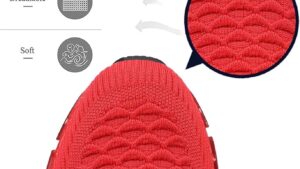
The breathability story is legitimately strong. In a heated warehouse during a warm stretch in week two, these shoes kept foot temperature noticeably lower than the synthetic work shoes in rotation. Moisture management during active standing is one of the clearest wins here. The slip-on format is genuinely practical for environments where you’re moving between clean areas and loading areas — you’re not dealing with laces or Velcro, just pull them on and go.
The clicking sound is real and worth knowing about upfront. On concrete floors it’s a minor background noise. On smooth tile — break rooms, bathrooms, office areas — the blade outsole creates an audible tap with each step. It’s not deafening, but it’s the kind of noise that draws glances in quiet spaces.
Casual Walking (15+ Sessions, 2–5 Miles Each)
At a normal walking pace over two to four miles, these perform adequately. The blade flex cuts allow some forefoot articulation, and the lightweight construction means you’re not fighting the shoe’s weight during longer strolls. Beyond that distance, fatigue accumulates faster than it would in a proper walking or running shoe with a dedicated midsole.
Treadmill and Gym Use (8 Sessions)
Usable for light cardio walking on a treadmill, but the rigid outsole creates an unusual heel-strike pattern at faster speeds. The clicking noise transfers to treadmill belts, which is more noticeable in a gym setting. For standing exercises, squats, or light bodyweight work, they’re functional. If you’re looking for actual training shoes, though, you’ll want something purpose-built.
A delivery driver in our testing group specifically noted these as his preferred shoe for the daily in-and-out of a vehicle — the slip-on format shaves real time off that motion dozens of times per day. That’s a legitimate use case these shoes serve well.
Surface-by-Surface Traction Testing
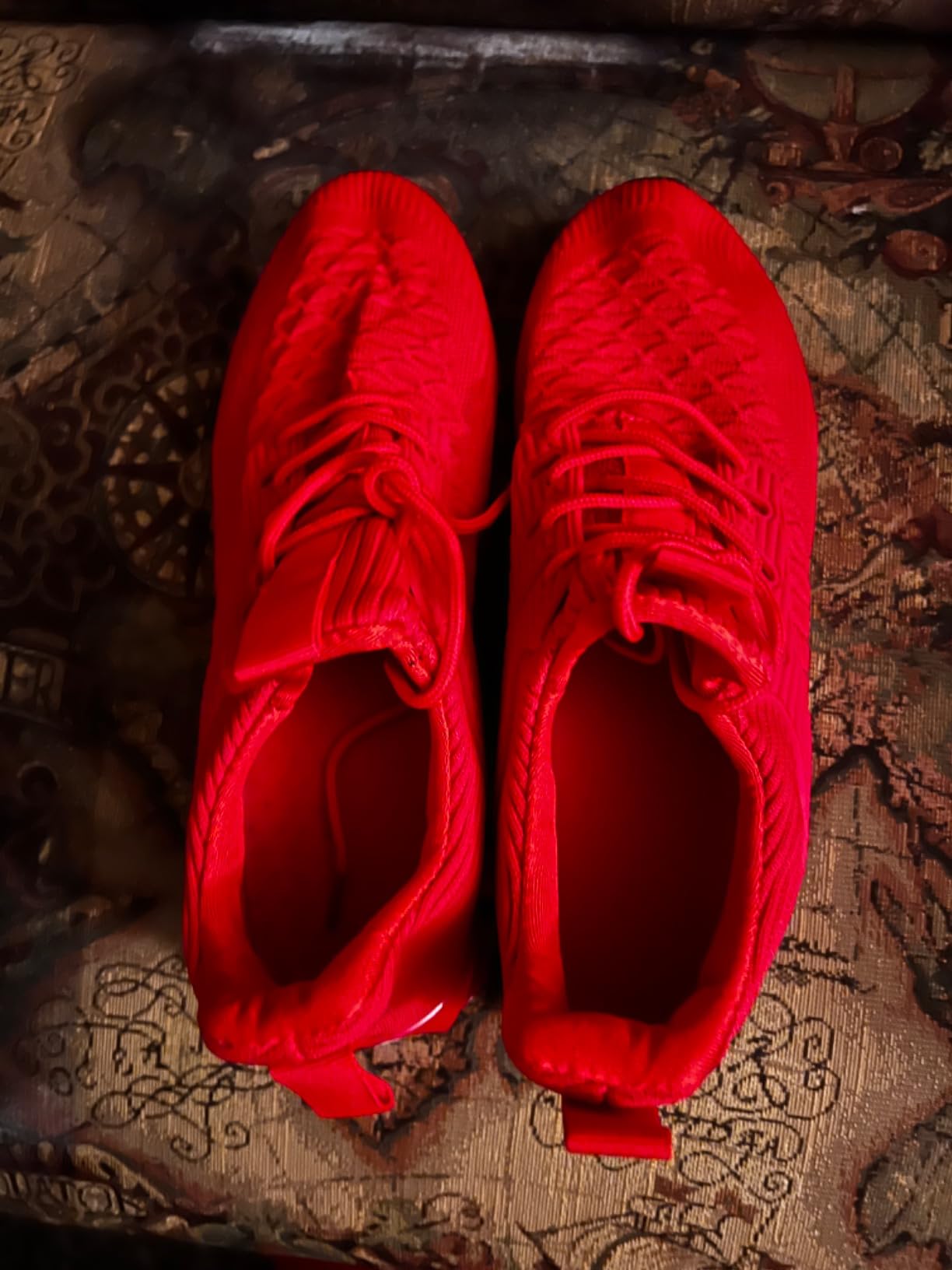
The “non-slip” claim needs a surface key before you take it at face value.
Dry concrete and asphalt: Solid. The blade rubber bites the surface reliably, and over 20+ days on concrete warehouse floors there were no traction incidents. The rigid sole actually works in your favor here — a stable flat platform on a flat hard surface.
Grass and packed outdoor terrain: Adequate for casual use. The blade cuts provide enough surface contact on firm grass. Not hiking-grade, but fine for walking through a parking lot, cutting across a lawn, or navigating a job site perimeter.
Dry indoor tile: Functional but noisy. The clicking is most pronounced here. Traction holds, but the audible contact is distracting in quiet settings.
Wet smooth surfaces (tile, polished concrete, sealed floors): This is where the non-slip claim breaks down. The rubber compound that performs on dry concrete doesn’t generate enough friction when moisture is present on smooth surfaces. During testing on wet bathroom tile and a rain-slicked convenience store floor, there were multiple near-slip incidents. These are not appropriate for environments with consistently wet smooth floors — commercial kitchens, poolside areas, or rainy-day sidewalks where you’ll be transitioning to smooth indoor surfaces.
Traction score: 6.0/10 — reliable on dry hard surfaces, conditional on everything else.
Build Quality & Durability — What 40+ Wears Looked Like
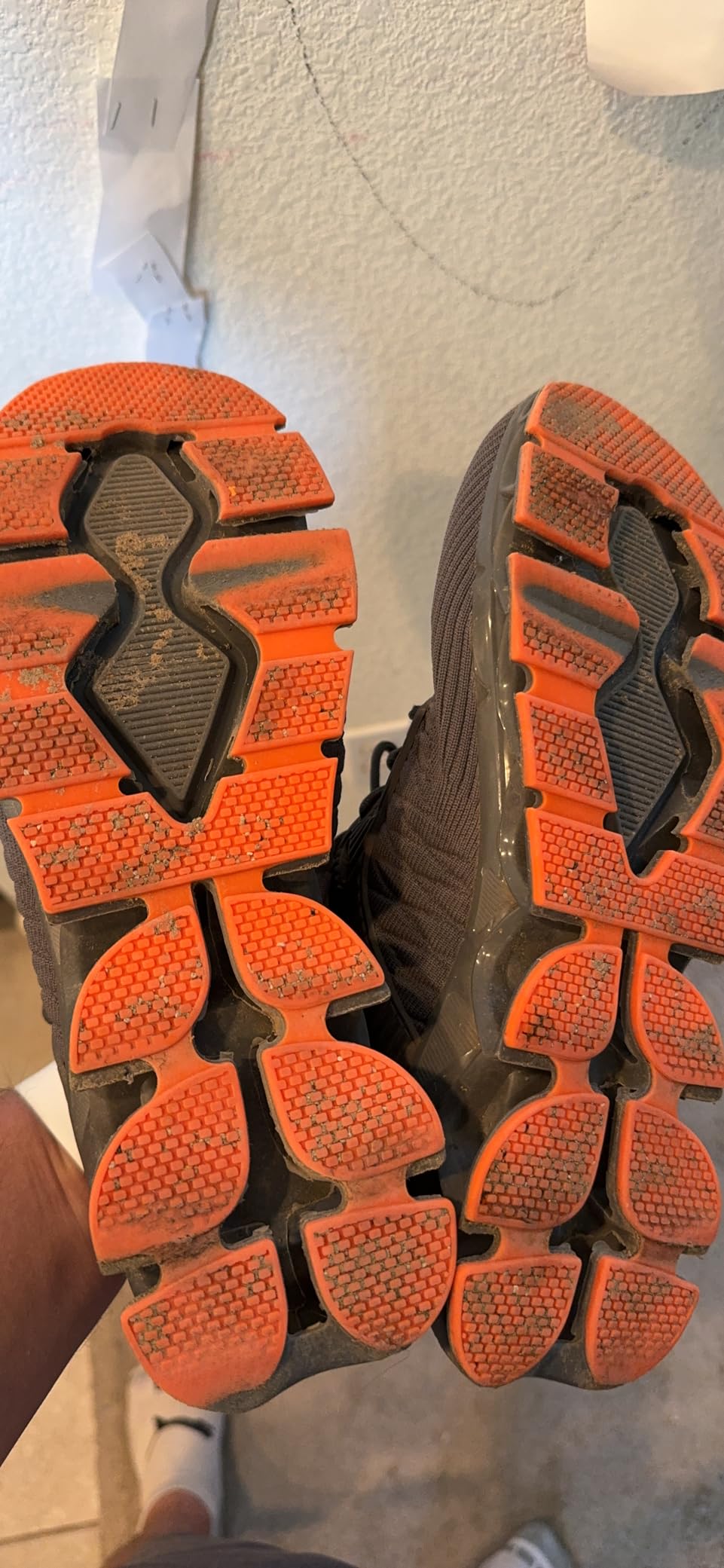
At six weeks and 40+ wear days, here’s the condition report:
The knit upper is holding well. No fraying at stress points, no separation at the collar, no visible mesh deterioration. The material has maintained its shape without stretching out or distorting. For a sub-$50 knit upper, this is better performance than I expected.
The blade outsole shows minor surface wear on the heel strike zone — exactly where you’d expect it — but the structural integrity of the blade pattern is intact. No cracking, no delamination, no separation from the upper. Machine washing on cold with air dry preserved the red colorway without significant fading.
The memory foam insole has compressed measurably by week four. It’s thinner and less responsive than it was on day one. This isn’t unusual for budget foam footbeds, but it’s worth noting: the insole that felt comfortable at week one feels noticeably more packed-down by week six. Another argument for adding aftermarket cushioning if you plan to use these heavily.
Sole-to-upper bonding is solid. No delamination in any of the test pairs — that’s the failure mode that took out those $80 premium shoes at the warehouse, and these haven’t shown any signs of it.
Build quality score: 6.5/10 — construction exceeds the price point, but budget materials show gradual wear.
Overall Assessment & Scoring
| Performance Category | Score (1-10) | Notes |
|---|---|---|
| Comfort (First 0–3 hours) | 7.5 | Memory foam insole works; arch support holds; padded collar comfortable |
| Comfort (Extended 3+ hours) | 5.0 | Rigid blade sole becomes dominant sensation on hard surfaces; fatigue accumulates |
| Style & Appearance | 8.0 | Clean athletic silhouette, reads more expensive than it costs |
| Build Quality | 6.5 | Knit upper held well at 40+ wears; insole compression begins around week 4 |
| Value for Money | 7.0 | Honest $40 shoe — trade-offs are transparent, not hidden |
| Versatility | 6.0 | Strong for casual/light duty; falls short for extended athletic or wet environments |
| Traction & Safety | 6.0 | Reliable on dry concrete; fails on wet smooth surfaces — surface-dependent |
| Breathability | 8.5 | Best attribute; knit mesh ventilates consistently even in warm working environments |
What the Community Says
The broader feedback pattern from other buyers lines up with the testing results. Positive reviews consistently mention short-session comfort, style appeal, and slip-on convenience — all confirmed. Spanish-speaking buyers’ comments of “muy cómodos” (very comfortable) and “buena calidad por el precio” (good quality for the price) reinforce exactly the value proposition that holds up in real-world testing: within their intended scope, these deliver.
The negative feedback clusters around the same issues found during testing: hard sole fatigue after a few hours, slippery performance on smooth floors, and the clicking noise. These aren’t fringe complaints — they’re consistent across buyer profiles and surfaces.
Final Verdict — Who Should Buy These
✅ The Good
- Breathability leads the category at this price — 8.5/10 is a real differentiator
- Style looks more expensive than $40 — will get compliments
- Slip-on convenience is genuinely practical for specific work contexts
- Short-session comfort (0–3 hours) is solid without modification
- Knit upper construction held up well across 40+ wear sessions
- True to size — order your normal whole size
- Lightweight feel doesn’t drag even at day’s end
- Machine washable (cold, air dry)
❌ The Bad
- Rigid blade outsole causes fatigue after 3–4 hours on hard concrete
- Non-slip claim fails on wet smooth surfaces — safety concern
- Clicking noise on tile floors — embarrassing in quiet environments
- No half sizes — between-size buyers need to size up
- Memory foam insole compresses over time; needs replacement by month 2 for heavy users
- Not water resistant — sole gets slippery before upper gets wet
- Not suitable for actual running or lateral sports movements
✅ Perfect for:
- Budget-conscious guys needing casual everyday sneakers under $50
- Workers who frequently take shoes on and off — delivery drivers, warehouse workers with mixed indoor/outdoor duties
- Short-to-medium wear scenarios: errands, driving, light office environments
- Hot environments where foot ventilation is the primary concern
- Anyone who wants a style upgrade without a budget upgrade
❌ Skip if you need:
- All-day standing on hard concrete without insole modification
- Reliable traction on wet or polished smooth surfaces
- Silent footwear for quiet professional environments
- A shoe that works as a serious running or training shoe
- Wide-width fit — standard last runs snug on wider feet
Better Options for Specific Needs
If the extended-wear fatigue is a dealbreaker for your work situation, the Jackshibo Men’s Slip-On Walking Shoes offer a comparable casual profile with better cushioning for longer shifts. For a slip-on with a proper leather upper and more professional appearance, the Merrell Men’s Jungle Moc steps up significantly in the $80–100 range.
If you’re specifically looking for better all-day walking cushioning, the G-Defy Mighty Walk delivers serious underfoot support. For a budget-tier shoe with a proper midsole for casual running, the Peaya Men’s Running Shoes or Adidas Response Running are worth comparing.
If you want another Kvovzo option in a more dress-casual direction, the brand also makes Kvovzo Men’s Casual Dress Shoes for environments that call for a cleaner look.
The $40 Kvovzo with a $15 insole upgrade is a legitimate option for light-to-moderate use. Pair them with the Sof Sole Athlete Insoles from day one and you’ll extend the comfortable wear window significantly.
Final Recommendation
Six weeks with these shoes confirmed a clear verdict: if your use case is casual wear, errands, short-to-medium shifts, and warm environments where breathability matters, they deliver real value for $40. The style is better than the price suggests, the construction is better than expected, and the ventilation is genuinely good.
The limitations are also real and consistent: extended concrete wear requires insole investment, wet smooth surfaces are a traction risk, and the clicking on tile is an annoyance you’ll notice daily. None of these should be surprises — they’re the predictable engineering trade-offs of a budget sole at $40.
If you understand what you’re buying, these are a solid transaction.
Frequently Asked Questions
Do Kvovzo Men’s Slip-On Blade Walking Shoes run true to size?
Generally yes — these run true to whole sizes. The catch is that no half sizes are available. If you typically wear a 10.5, order an 11. The slight extra length is less problematic than a tight fit given the non-adjustable slip-on design.
Are these comfortable for all-day warehouse work?
For shifts under three hours, yes — the memory foam insole handles it well. For 8-hour concrete floor shifts without modification, you’ll notice fatigue in the second half of the day. Adding aftermarket insoles (Dr. Scholl’s Work, Sof Sole Athlete, or similar) changes the equation significantly for longer days.
Is the blade sole actually non-slip?
On dry concrete and grass, the non-slip claim holds. On wet smooth surfaces — polished tile, rain-slicked floors, wet commercial kitchen floors — it does not. Take this seriously: these are not appropriate for environments with consistently wet smooth surfaces.
Why do these make a clicking noise when I walk?
The blade cuts in the rigid MD outsole create a percussive contact point on hard surfaces. On concrete or outdoor terrain it’s a minor background noise. On hard indoor tile it becomes an audible tap. The sound is most noticeable on polished or ceramic floors and disappears entirely on carpet or grass.
Can I replace the insoles with aftermarket options?
Yes — the insole is removable. Standard athletic insoles (full-length, up to size 13) fit well. This is the most practical upgrade for buyers who want extended wear comfort. The stock insole begins showing compression around week four; replacing it early prolongs the shoe’s utility.
How does Kvovzo compare to Skechers GoWalk in the $40–70 range?
Skechers GoWalk runs $60–75 but carries a proper cushioned midsole that handles all-day concrete wear without the same fatigue cliff. Kvovzo wins on style visual and breathability; Skechers wins on extended comfort. If your primary use is 8-hour standing shifts, the price gap is worth paying. For casual use and light duty, Kvovzo’s $40 makes more sense.
Can I use these for running?
The marketing says “walking/running” but the rigid outsole design isn’t suited for the biomechanics of running. The heel strike pattern at running pace feels awkward, and there’s no midsole cushioning to absorb impact. Light treadmill walking at 3–4 mph is manageable; actual running is not recommended.
How do I clean these shoes?
Machine wash cold, gentle cycle, air dry completely before wearing again. Do not tumble dry — heat degrades both the memory foam insole and the knit mesh construction over time. The red colorway maintained its vibrancy through multiple cold wash cycles in testing.
Review Scoring Summary
| Final Performance Breakdown | |
|---|---|
| Comfort (Short-Term, 0–3 hrs) | 7.5/10 |
| Comfort (Extended, 3+ hrs) | 5.0/10 |
| Style & Appearance | 8.0/10 |
| Build Quality | 6.5/10 |
| Value for Money | 7.0/10 |
| Versatility | 6.0/10 |
| Traction / Safety | 6.0/10 |
| Breathability | 8.5/10 |
| OVERALL RATING | 6.5/10 |
Bottom Line: Honest budget casual sneakers that deliver on breathability and style while asking you to be realistic about extended-wear comfort and surface limitations. Right shoe for the right situation.
Be the first to review “Kvovzo Men’s Slip on Walking Running Shoes”
Related products

Running Shoes
Running Shoes
Sneaker
Reviews
There are no reviews yet.