
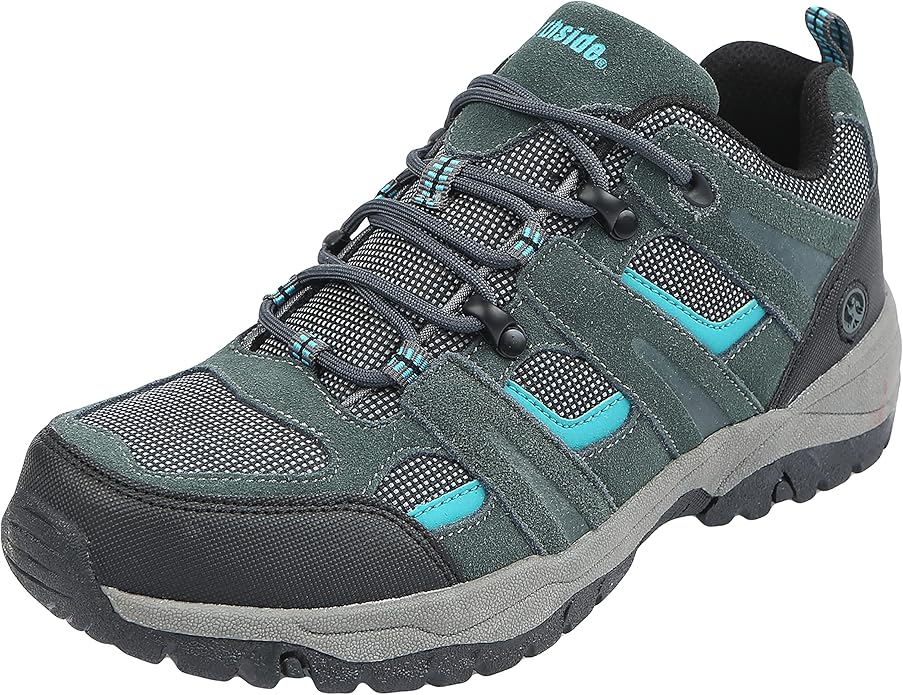
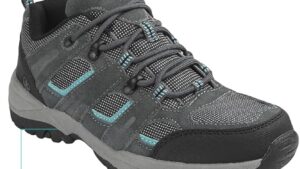
Forty dollars. That’s what the Northside Women’s Monroe Low costs — and that price alone generates two very different reactions from women I talk to in the hiking community. Half assume it’s a throwaway shoe not worth discussing. The other half want to know if it actually holds up. Sarah here, and after a decade-plus of testing outdoor footwear across the price spectrum, I put real mileage on these to answer that question honestly. Six weeks, North Carolina trails, yard work, a couple of light construction projects — here’s what I found.

Technical Specifications
- 💰 Price: $35–45
- ⚖️ Weight: 12.5 oz (women’s size 8, single shoe)
- 👟 Upper material: Natural suede with breathable nylon mesh inserts, PVC mudguard
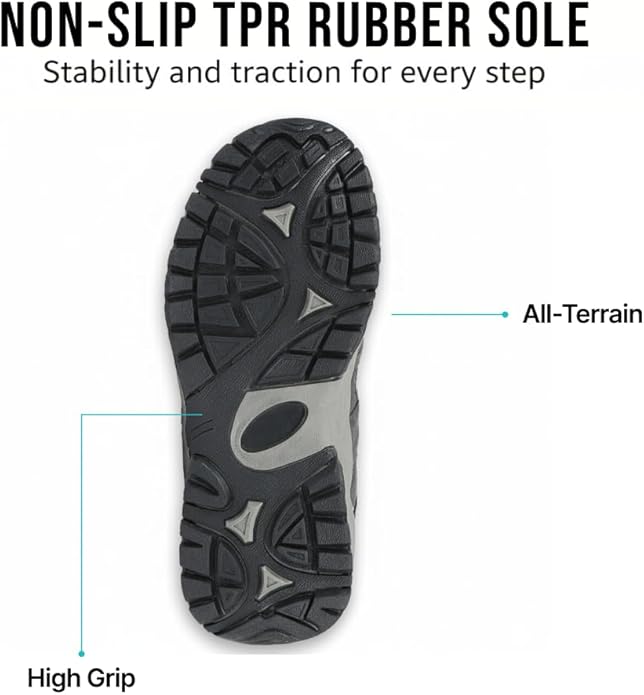
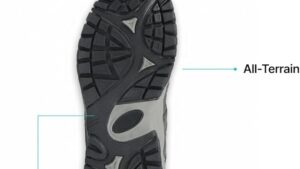
- 🦶 Sole material: Multi-directional TPR (Thermoplastic Rubber) outsole
- 🧦 Insole: Removable and washable EVA with padded collar and tongue
- 💧 Lining: Moisture-wicking with gusseted tongue
- 🏔️ Category: Budget hiking / outdoor work shoe
- 🎯 Best for: Casual trail hiking, light outdoor work, occasional use
- 🛡️ Water resistance: Water-resistant — NOT waterproof
- ⏱️ Testing period: 6 weeks, 25+ outdoor sessions, 60+ miles
Before diving in, one thing worth knowing upfront: the TPR outsole is a softer, more flexible rubber compound used across budget footwear. It grips well on most surfaces but wears down faster than Vibram or harder compound rubbers — and that matters a lot for durability expectations. More on that in the durability section.

First Impressions: What You’re Actually Getting
Unboxing a $40 hiking shoe, I’ve learned to adjust my mental calibration before opening the box. Mid-tier expectations lead to unnecessary disappointment. The question isn’t whether the Monroe Low competes with Merrell Moab or Oboz Sypes Low — it doesn’t, and it’s not trying to. The question is whether it delivers genuine outdoor functionality for the price.
The answer to that first impression: mostly yes, with a few caveats I wasn’t expecting.
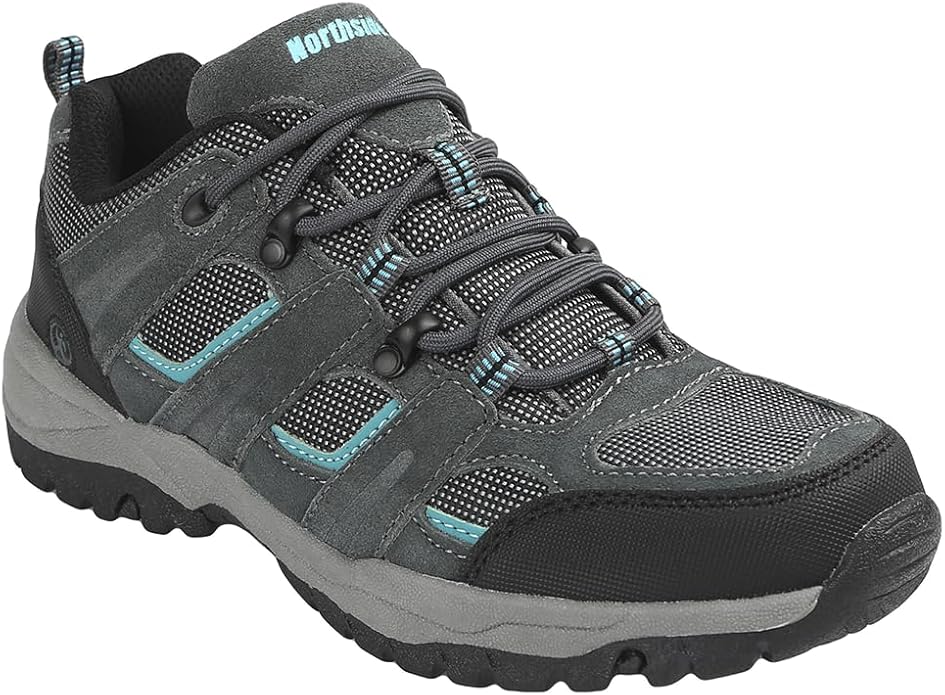
The Dark Gray/Dark Turquoise colorway is legitimately attractive — understated enough for work environments but outdoorsy enough for trail use. The suede panels feel denser than I anticipated, and the stitching is clean. Nylon mesh inserts sit at the forefoot and along the sides, which should help with summer breathability. The reinforced toe cap is reassuring for rocky terrain, and the heel stabilizer keeps things from feeling sloppy at the back.
The Sizing Discovery (Read This Before You Order)
This matters enough to address separately: the Monroe Low runs large. Not slightly large — noticeably large.
I wear a consistent size 8 across most hiking footwear, including technical trail shoes. The 7.5 I tested still had measurable room in the toe box — comfortable, yes, but roomier than I’d choose if I’d known ahead of time. Several women from my regular hiking group who’ve worn the Monroe Low in different sizes confirmed the same experience independently. One came up to me mid-hike on a recent outing specifically to mention she wished she’d gone down a half size.
My recommendation: if you typically wear size 8 in running shoes or hiking shoes, start with 7.5 in the Monroe Low. If you’re between sizes, go down rather than up. The wide toe box is genuinely roomy, which helps wide-footed women, but it contributes to the overall loose feel when you haven’t sized down.


Comfort and Trail Support: The First Two Hours vs. What Comes After
My first real test was a 3-mile state park loop — varied enough to matter, but not aggressive enough to break the shoe. The EVA insole surprised me. It provides genuinely decent arch support for medium-arch feet, with enough cushioning to take the edge off trail impact on packed dirt. The wide toe box kept my forefoot relaxed through the full loop, which isn’t something I can say about every budget trail shoe I’ve tested.
The heel loop made early-morning starts easier — a small quality-of-life detail that I’ve come to appreciate more than I expected. Getting these on without sitting down is genuine convenience for women who do a lot of outdoor work.
The Two-Hour Comfort Wall
Here’s the honest version: the Monroe Low has a comfort ceiling, and I hit it consistently around the two-hour mark of continuous hiking.
Past that point, the TPR outsole — which works well for moderate use — starts feeling firmer underfoot. Impact from rocks and roots transfers more directly to your foot than with shoes carrying proper midsole cushioning technology. I noticed this especially on a longer 5-mile Saturday hike. My feet felt more fatigued than the terrain justified, and some mild hot spots developed around hour three. Not painful — just the unmistakable feeling of a budget sole doing its best.
The arch support follows a similar pattern. For shorter sessions, it’s adequate. Push into four-plus hours, and you’ll want more underfoot structure than the EVA insole provides. If you’re comparing to mid-tier options like Salomon or similar trail shoes in the $90–120 range, the comfort gap is real and noticeable.
The breathability deserves honest mention too. The nylon mesh panels do their job in cooler conditions. Above 70°F, my feet ran warmer than I’d prefer for sustained hikes. The moisture-wicking lining helps, but the suede panels trap heat in summer. Budget performance for summer heat — factor this in for August trail outings.


On-Trail Performance: What the Monroe Low Actually Handles
Over six weeks, I put these through conditions that reflect realistic use for women buying at this price point — not technical mountaineering, but not a paved walking path either.
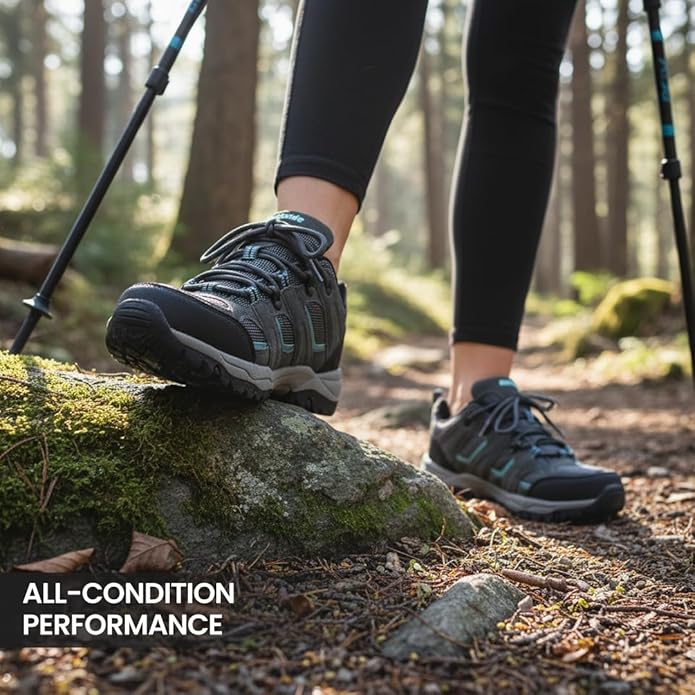
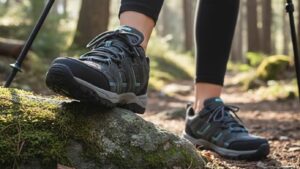
Packed dirt and light gravel trails: Solid. The multi-directional TPR tread pattern grips confidently on maintained trail surfaces. I had zero slip incidents on dry terrain, and the toe cap proved its worth twice when I clipped rocks while moving faster than I should have been. For typical state park trails, nature walks, and greenway paths, the Monroe Low handles the job competently.
Wet morning conditions: The water-resistant treatment held up for light moisture — dewy grass, small puddles, and brief creek crossings in the low range. My feet stayed dry during a couple of early morning hikes through wet vegetation. That said, “water-resistant” is the honest characterization here. Sustained rain, deeper water crossings, or muddy conditions will get through. If your hiking includes wet weather regularly, look at something with a waterproof membrane — options like the Ulogu Waterproof Hiking shoes offer a step up in moisture protection at a still-budget price.
Scramble sections and loose rocks: Here’s where the Monroe Low shows its limits. On a moderate scramble over loose rock in the second week, I felt my foot shift slightly inside the shoe during lateral movements. The heel stabilizer provides baseline lockdown, but it doesn’t deliver the secure, planted feel you’d want for anything technical. The shoe isn’t unstable — I never felt like I was going to roll an ankle — but confidence on challenging terrain isn’t this shoe’s strong suit.
Outdoor work environments: This was actually where the Monroe Low surprised me most positively. Yard work, garden projects, light outdoor construction help — the shoe performed well above expectations. The gusseted tongue kept debris out better than similar budget options I’ve worn. The easy on/off with the heel pull loop is genuinely convenient for work tasks where you’re taking shoes on and off throughout the day. If you need an affordable outdoor work shoe and trail performance is secondary, the Monroe Low earns solid marks here.

Setting Realistic Expectations: Who This Shoe Is and Isn’t For
The Monroe Low works. That’s the honest starting point. For the price, it delivers functional outdoor footwear that handles casual use with reasonable competence. The problems show up when buyers expect more than what a $40 budget construction can realistically deliver.
Where it excels:
- Casual hiking 1–2 times per month on moderate terrain
- Light outdoor work (yard, garden, construction helper)
- Women with wide feet who need toe box room at a budget price
- Backup outdoor shoe for travel or camp activities
- Day adventures under 3 hours on established trails
- Budget entry point for women just starting to hike
Where it struggles:
- Weekly hiking routines — the TPR outsole and EVA insole will compress faster than you’d want for regular use
- Sessions over 3 hours — the comfort ceiling kicks in with fatigue and potential hot spots
- Technical terrain — scrambles and loose rock require more foot lockdown than this shoe provides
- True waterproof needs — water-resistant treatment isn’t a waterproof membrane
- Daily intensive outdoor work — durability concerns accelerate under heavy daily use
The comparison that might help: think of the Monroe Low as a reliable commuter car rather than a trail vehicle. For everyday light duty, it’s dependable and affordable. Push it into demanding territory, and the limitations become apparent fast. Options from TNF or similar mid-tier trail shoes represent a meaningful step up for women who hike regularly.

Northside’s Claims vs. My Six Weeks
Northside markets the Monroe Low around three ideas. Here’s how they hold up:
“Built for everyday” — Accurate, with a caveat. If “everyday” means light outdoor activities, casual trail outings, and yard work rotations, this shoe delivers. I’d call it 85% delivery on this promise. The caveat: “everyday” cannot mean intense daily outdoor work. The shoe isn’t built for that frequency.
“All day protection” — Context-dependent. For activities under three hours and light-duty work, yes. For full-day hiking or heavy outdoor labor, “all day” is a stretch. The toe cap and water resistance provide genuine protection for their intended scope, but the comfort ceiling undermines all-day claims for demanding users.
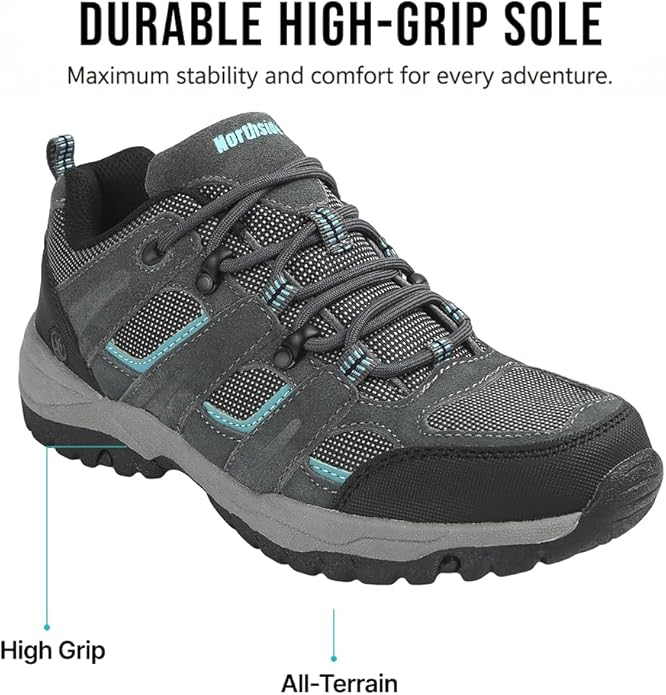
“Multi-directional outsole” — This one delivers. The TPR tread pattern works as described, gripping in multiple directions on moderate surfaces. The trail traction on maintained paths held up consistently across six weeks without slip incidents on dry terrain.
What Northside doesn’t claim but should be on your radar: durability. That’s the gap this review addresses directly.
The Durability Reality: What the Numbers Actually Look Like
I’m giving this its own section because it’s the most important factor for budget hiking shoes — and the one most reviews skip over.
During weeks four through six, I started seeing early edge wear on the TPR outsole. Nothing catastrophic, but the pattern was unmistakable: the outsole compound was compressing and wearing at the lateral edges from trail impact. My test pair held together through the six-week window. But several women I know who’ve worn the Monroe Low reported more significant durability failures: sole separation at the toe box junction, upper-to-sole adhesion issues, and material breakdown in the nylon panels — all within one to three months of regular use.
This aligns with what I see in the secondary market. Poshmark and eBay show significant Monroe Low turnover, with many pre-owned pairs listed after just a few months at heavily discounted prices. The pattern is consistent: the shoe works well initially, then hits a durability cliff that budget construction creates.
Realistic lifespan projections:
| Use Pattern | Expected Lifespan | Cost/Month |
|---|---|---|
| Light use (1–2×/month hiking or casual work) | 8–12 months | ~$3.50–5.00 |
| Regular use (3–4×/week trails or moderate work) | 3–6 months | ~$7.50–15.00 |
| Heavy use (daily outdoor work, frequent hiking) | 1–3 months | ~$15–45.00 |
At heavy use, the Monroe Low ends up costing as much or more per month than a mid-tier shoe that lasts 12–18 months. The Nortiv 8 Women’s Walking Shoes or alternatives with more durable construction might be worth considering for women who’ll push these shoes harder.
The bottom line on durability: not a defect, not a fluke — it’s the expected outcome of budget materials. Know your use pattern before buying.

Scores and Overall Assessment
After six weeks and 60+ miles across varied real-world scenarios:
| Category | Score | Key Finding |
|---|---|---|
| Design & Aesthetics | 7.5/10 | Attractive colorway; budget materials visible up close |
| Trail Traction | 7/10 | Multi-directional TPR works on moderate terrain; technical limits |
| Comfort | 6.5/10 | Good for first two hours; fatigue and hot spots after hour three |
| Durability | 5/10 | Early edge wear at week four; reported sole separation 1–3mo heavy use |
| Value for Money | 7/10 | Fair at $35–45 for light use; cost math reverses at heavy use |
| Overall | 6.5/10 | Solid for specific use cases; not a universal recommendation |
Who Should Buy the Northside Monroe Low?
| ✅ Good Fit | ❌ Look Elsewhere |
|---|---|
|
|
For women who need better durability at still-reasonable prices, the L-RUN Wide Hiking Shoes or stepping up to a mid-tier brand represents better long-term value. For technical trail use, look at something with a full waterproof membrane and more structured midsole support.

Frequently Asked Questions
Q: How should I size the Monroe Low?
Go down half a size from your normal hiking shoe size. If you’re size 8 in most trail shoes, order 7.5. The shoe runs 0.5–1 full size large, and the wide toe box amplifies this effect. This is the single most consistent finding across everyone I’ve talked to who’s worn these.
Q: Is there a break-in period?
Minimal. The suede softens noticeably after about a week of regular wear, and out of the box the shoe is comfortable for light activities immediately. This is a genuine advantage over stiffer hiking options — you won’t spend the first few hikes dreading blisters.
Q: How long will they last for weekly hiking?
At weekly frequency (3–4 sessions per week), expect 3–6 months before meaningful wear issues appear. The TPR outsole and EVA insole are the limiting factors — both compress under regular use faster than harder-compound alternatives. For occasional hiking (1–2× per month), the shoe can last 8–12 months.
Q: Can I use these with orthotics?
Yes — the EVA insole is removable, which means custom orthotics will fit. That said, the shoe’s overall arch support is modest baseline, so if you rely heavily on orthotics, the extra room created by removing the insole may make the fit slightly loose. Size accordingly.
Q: How do they perform in actual rain?
The water-resistant treatment handles light moisture well — morning dew, small puddles, and splash conditions. Sustained rain will eventually get through, and the shoe isn’t rated for creek crossings or wet weather hiking. For waterproof performance, you’d need a membrane like Gore-Tex or a proprietary waterproof lining that the Monroe Low doesn’t include.
Q: What’s the thermal range?
Optimal between roughly 45–65°F. Above 70°F, the suede panels trap heat and the shoe runs warm. Below 40°F, the TPR outsole can become less flexible. Not a winter hiking shoe, and not ideal for hot-summer all-day outings.
Q: How do these compare to Columbia Newton Ridge or Merrell Moab?
Different tiers entirely. Columbia Newton Ridge and Merrell Moab offer substantially better durability, waterproofing, and midsole support at $55–100+. The Monroe Low competes within the under-$50 budget category, where it holds its own — but it’s not a budget version of those shoes. Think of it as a separate category: casual hiking and light outdoor work vs. dedicated trail hiking footwear.
Q: Are they worth it if this is my first hiking shoe?
If budget is genuinely the constraint, yes — with caveats. Size down half a size, keep expectations calibrated to casual use, and treat this as an entry point to figure out if hiking is something you want to invest in. If you decide you love it, the Monroe Low will have served its purpose while you save for something with more long-term performance. If you have even a moderate budget, stretching to a mid-tier option will give you a better introduction to what good hiking footwear actually feels like.
Q: Any tips for extending their lifespan?
Rotate rather than daily-wear if possible — letting the EVA insole recover between sessions extends its useful life. Let them dry thoroughly after wet hikes rather than storing damp. Inspect the sole junction periodically for early separation signs, which are easier to address early than after the bond fully fails. Avoid using them as daily work shoes if you need them to last through a full hiking season.
Be the first to review “Northside Women’s Monroe Low Hiking Shoe”
Related products
Hiking/Trekking Shoes
Hiking/Trekking Shoes
Hiking/Trekking Shoes
Hiking/Trekking Shoes
Hiking/Trekking Shoes
Hiking/Trekking Shoes
Hiking/Trekking Shoes
Hike Footwear HF Signature Healthy & Non-Slip Breathable Barefoot Shoes
Hiking/Trekking Shoes
Reviews
There are no reviews yet.