
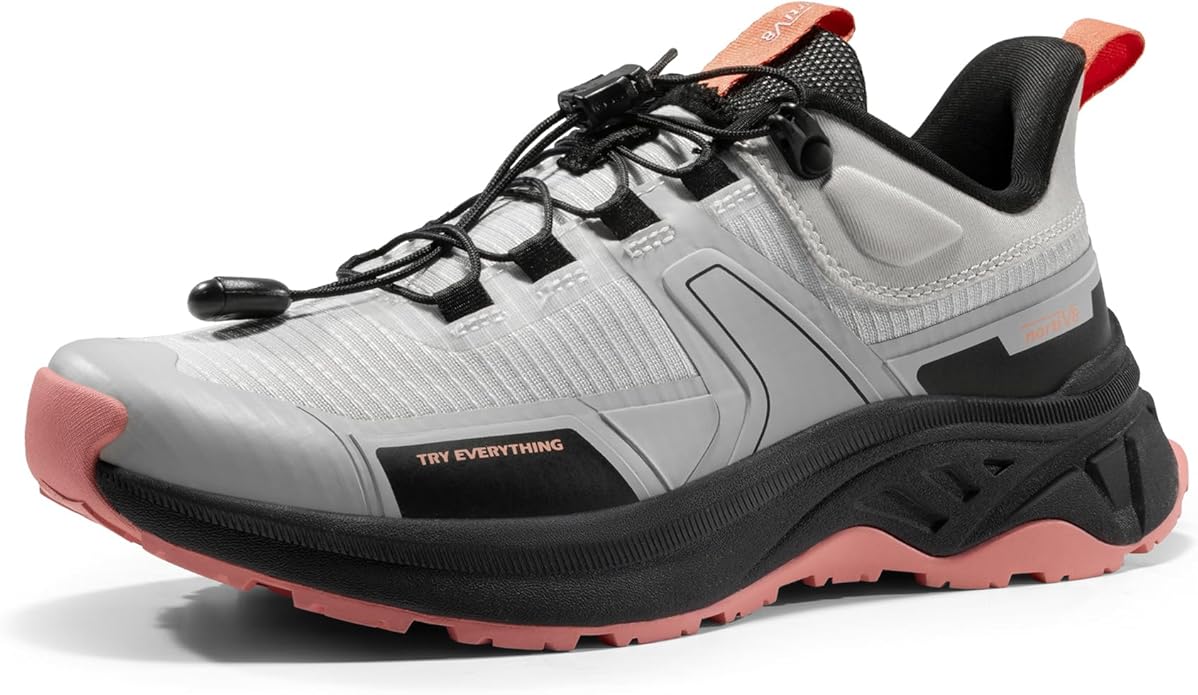
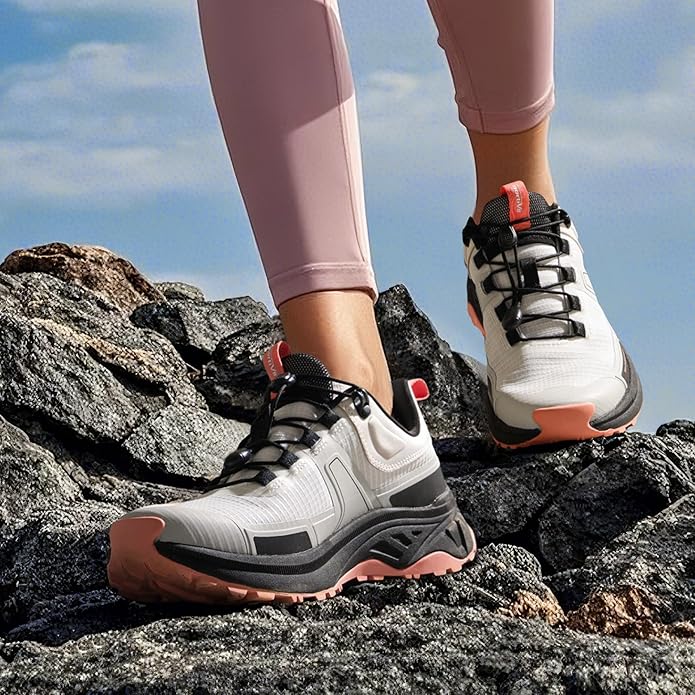
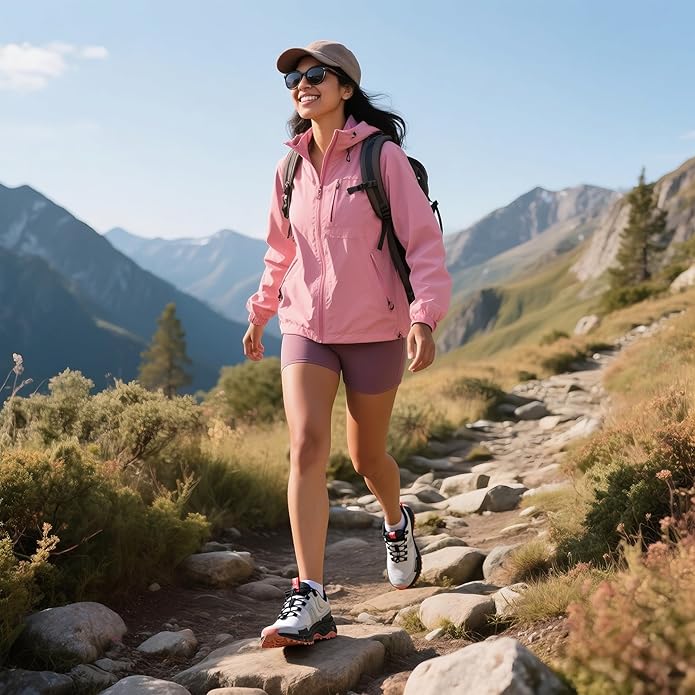

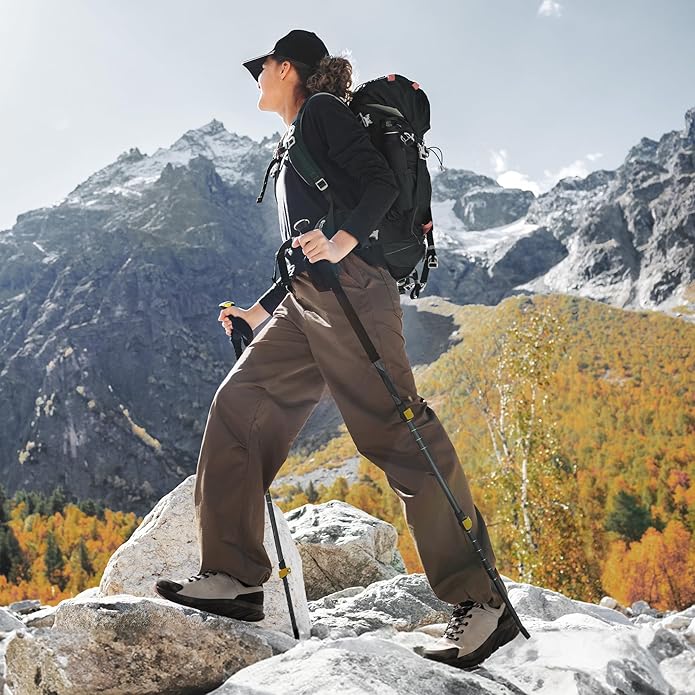


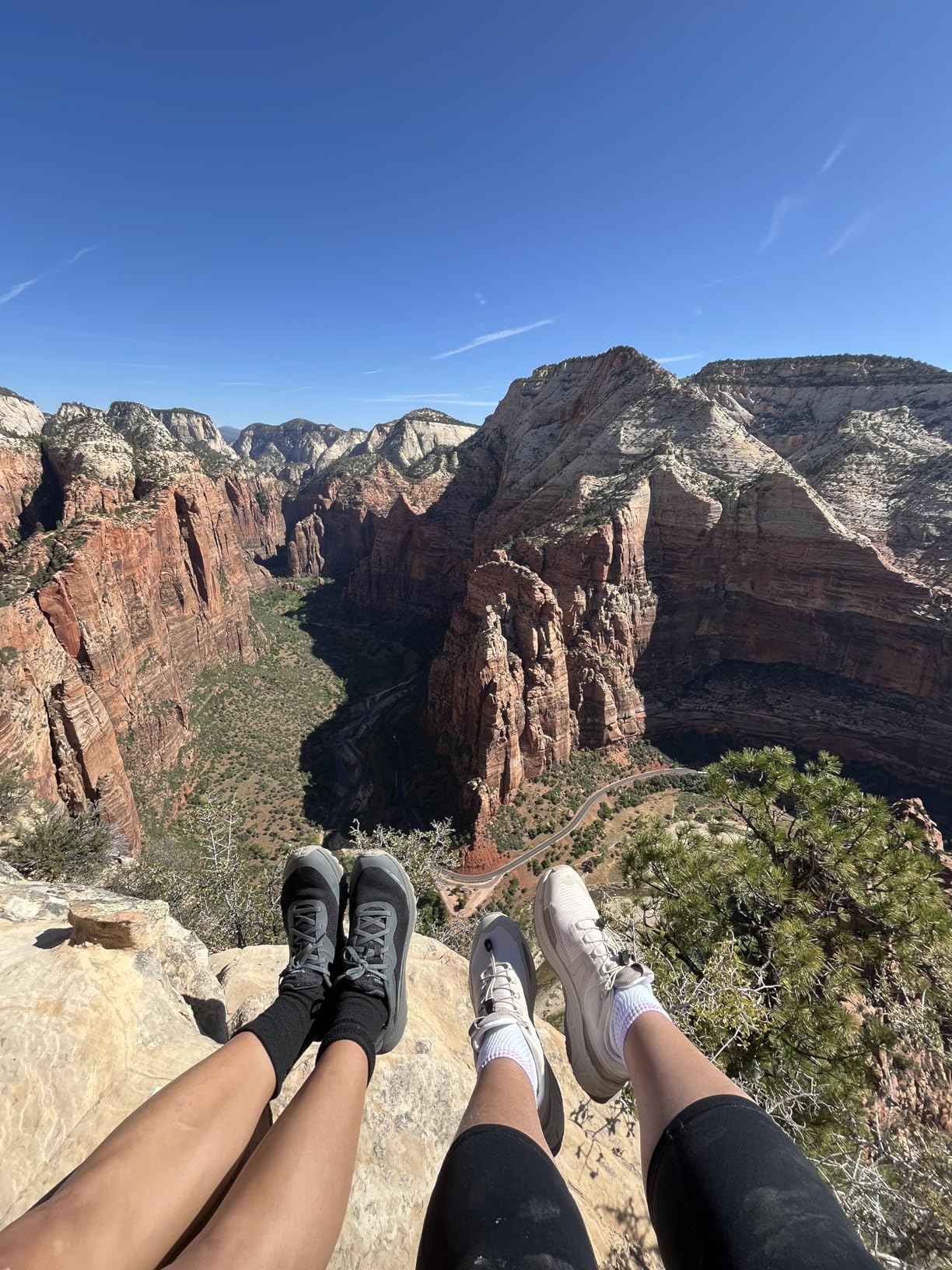
Somewhere between dropping the kids off at school and squeezing in a morning trail walk before work, my old hiking shoes gave up on me. The laces took forever, the cushioning had gone flat, and every trail session ended with that “I need a break” feeling by hour five. So when another mom at Target mentioned the NORTIV 8 Women’s Hiking Shoes — specifically the ones with the cord lacing system — I paid attention. She said they were lightweight, convenient, and actually held up on real trails. That’s a lot to claim at $45. Sarah here, and I spent eight weeks testing these through everything my busy schedule could throw at them, from a rocky six-mile hike in Sedona to a twelve-mile march through Disney World. Here’s what I actually found.
Quick Specs at a Glance
- 💰 Price: $45 (check current pricing)
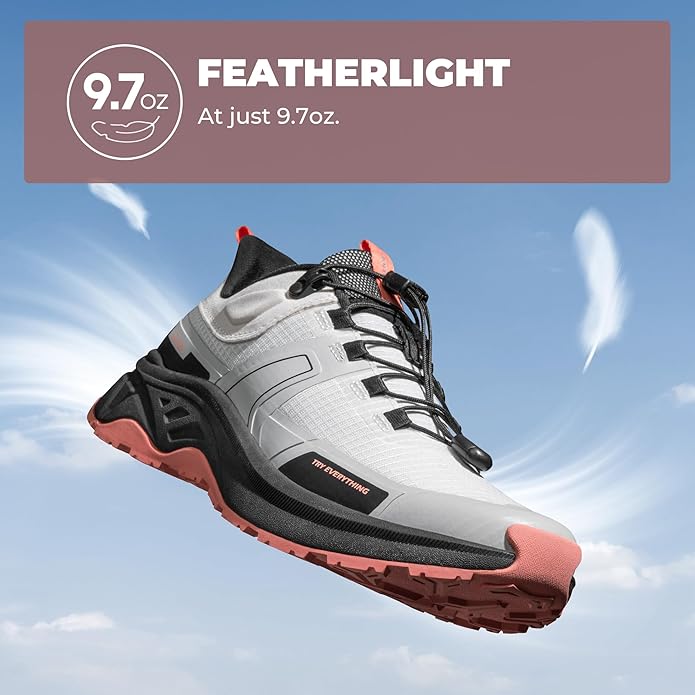
- ⚖️ Weight: 9.7 oz (women’s size 8)
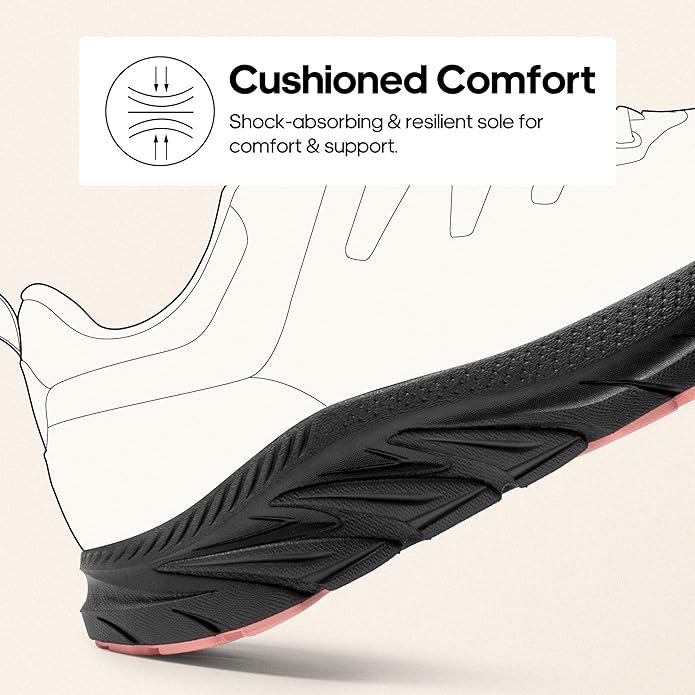
- 🧪 Midsole: EVA cushioning
- 👟 Upper: Oxford cloth with seamless TPU overlays
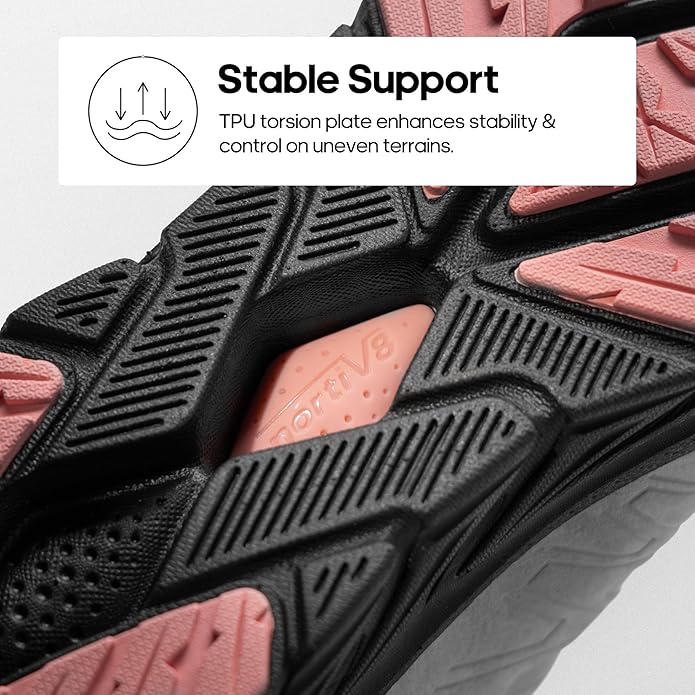
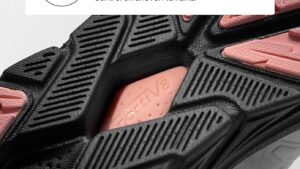
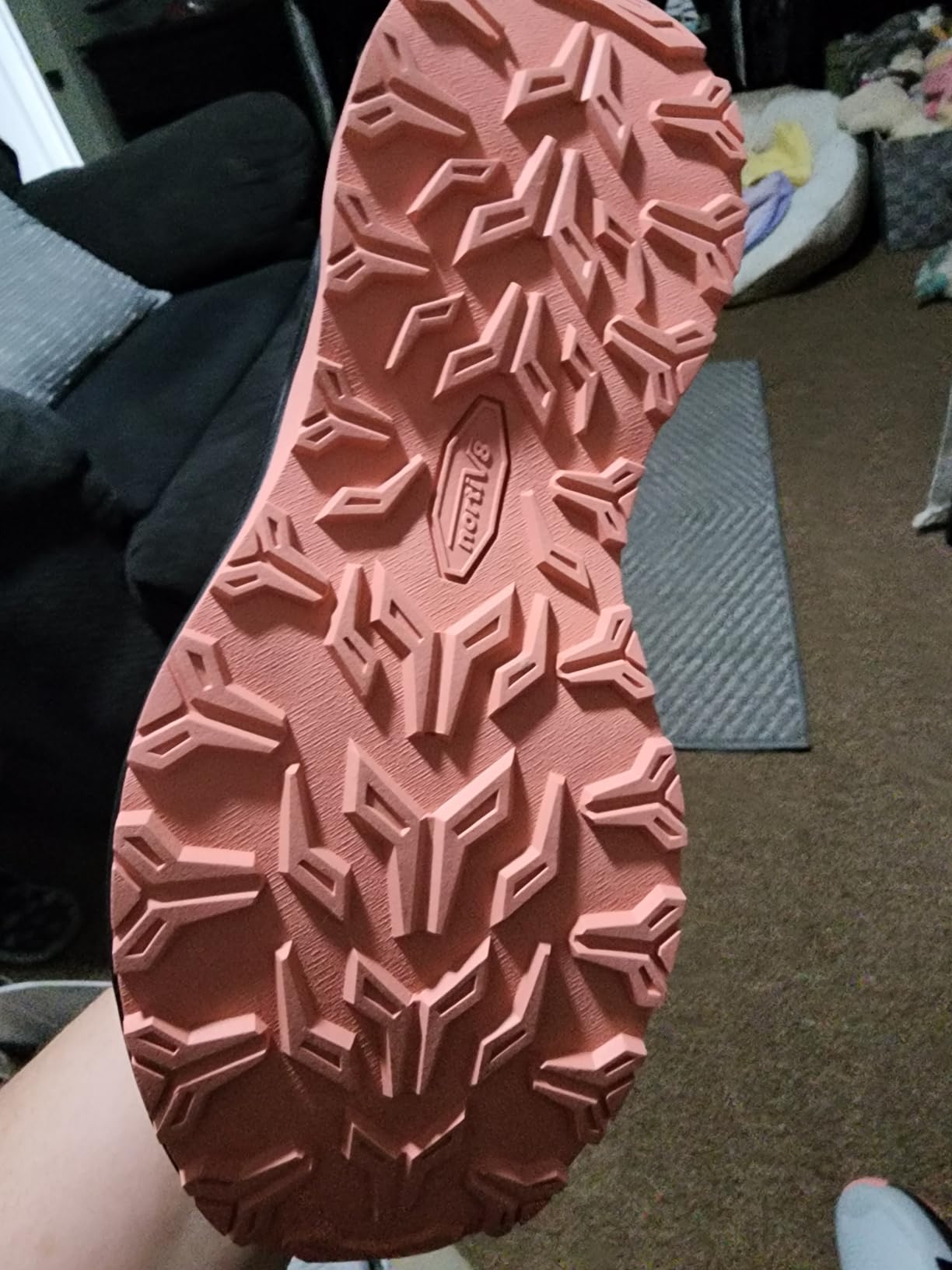
- 🦶 Outsole: Textured rubber, anti-abrasion
- 🔗 Lacing: Quick-release cord system with plastic toggle
- 💧 Water: Water-resistant (NOT waterproof)
- 🎯 Best for: Light hiking, daily walking, travel, casual outdoor wear
A few things worth noting before we get into the details. At 9.7 ounces, these sit squarely in the “lightweight” category — noticeably lighter than traditional hiking boots and even lighter than some of my everyday sneakers. The Oxford cloth upper is breathable and flexible, unlike stiff suede alternatives you’ll find at similar price points. The cord lacing system is the real conversation starter, and I’ll spend a fair amount of time on it because it’s genuinely unusual — for better and for worse.
First Impressions: Design and Build Quality
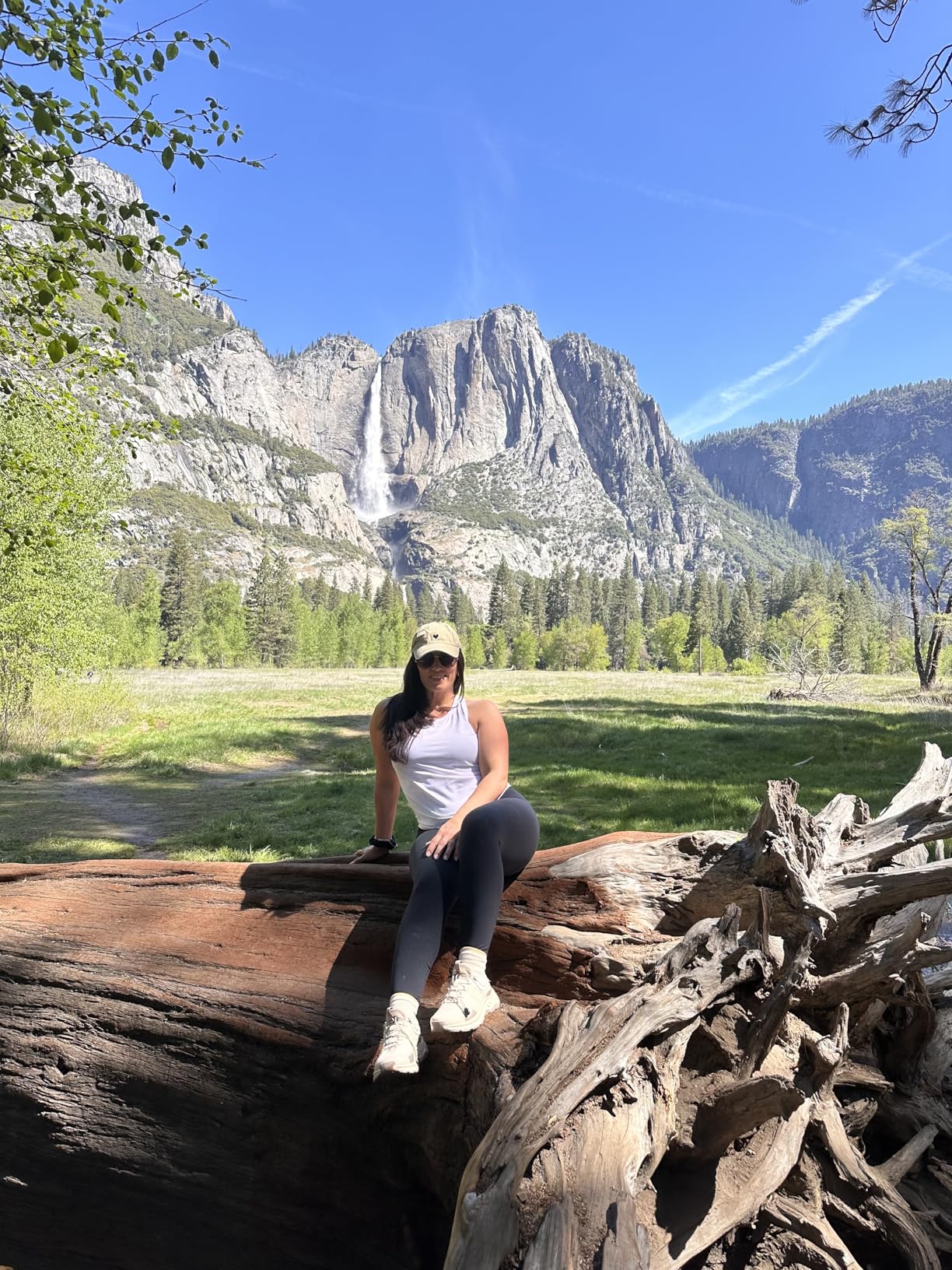
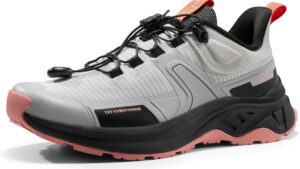
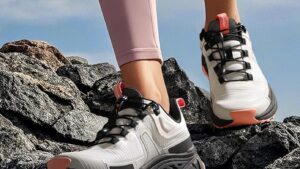
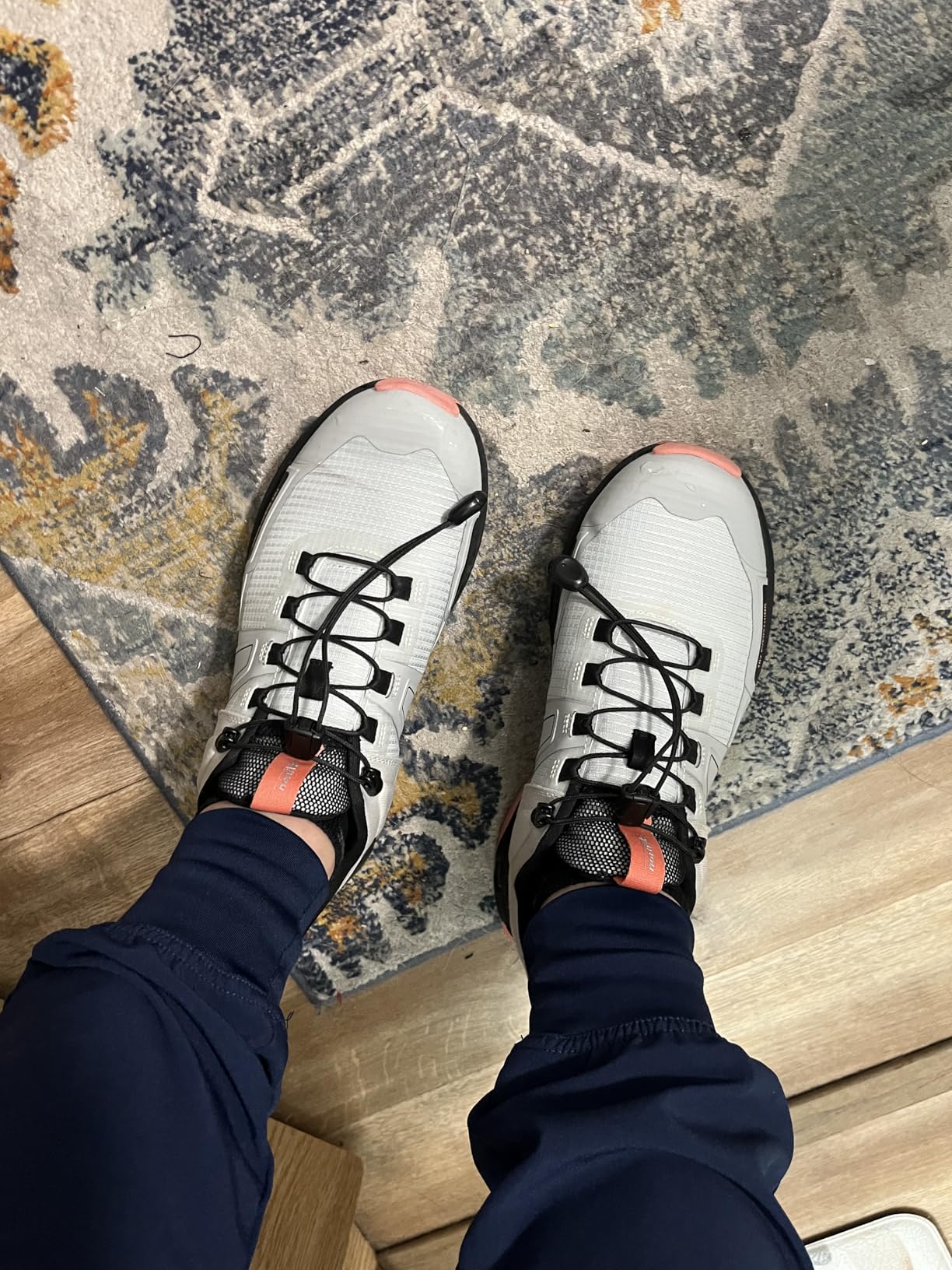
The first thing I noticed when I pulled these out of the box was that they didn’t look budget. The grey-pink colorway is subtle — the pink is more of an accent than a statement, which means these work with hiking pants, jeans, and casual outfits without looking like you’re trying too hard. My hiking group immediately asked where I’d gotten them.
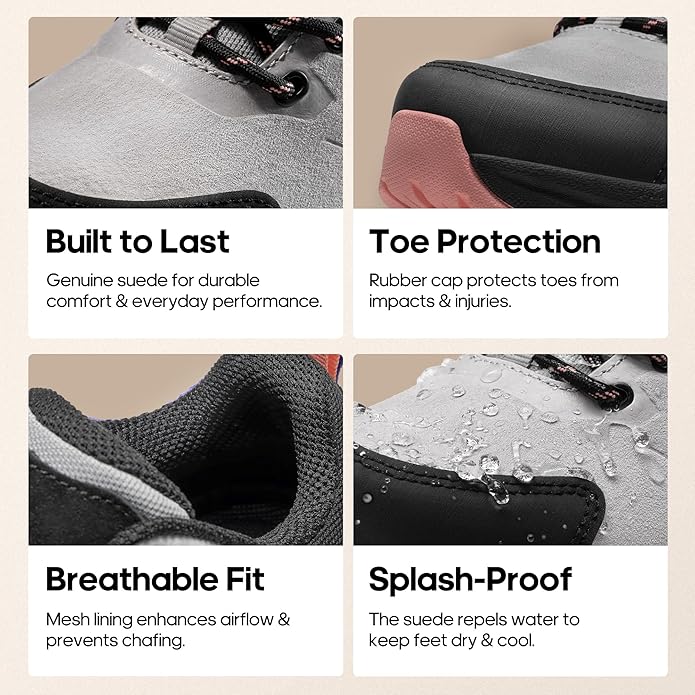
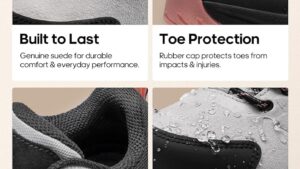
The Oxford cloth upper feels denser than I expected. It’s not rigid, but it has structure — it doesn’t collapse when you squeeze it like cheap knit uppers sometimes do. The TPU overlays (the reinforced sections around the toe and heel) are cleanly stitched and sit flush with the upper instead of bubbling or peeling at the edges, which is sometimes a giveaway on budget footwear.
What caught my attention more than the fabric, though, was the cord lacing system running up the front. It’s visually distinct from standard laces — thicker cord, a plastic housing at mid-lace, and a toggle at the top. I’d never used this type of closure before, and my first reaction was mild skepticism. Plastic moving parts on a hiking shoe felt like a compromise. I wasn’t wrong to notice it, but I was partially wrong about what it would mean in practice.
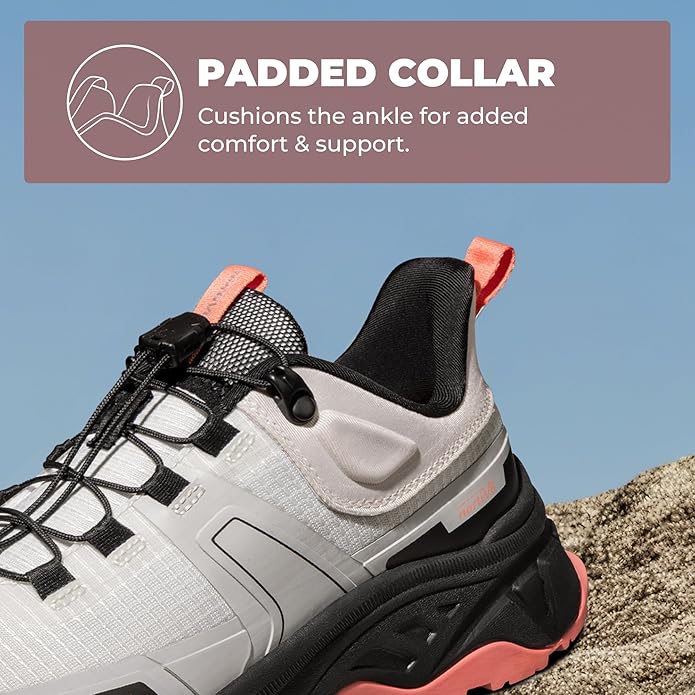
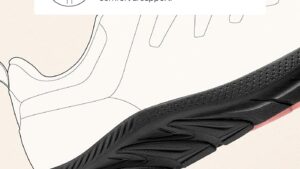
The padded collar sits soft against the ankle — no sharp edges, no rough stitching. The insole has a mesh fabric covering over EVA foam, which feels smooth underfoot and doesn’t create friction spots. The sole itself is thick enough to suggest real cushioning without being so chunky it makes the shoe look clunky.
One durability note from the start: the stitching throughout is clean and straight, and the glue seams at the sole-upper junction look solid. At week eight, none of that had changed. What I can’t tell you yet is how things look at month twelve.
The Cord Lacing System — What It Actually Does
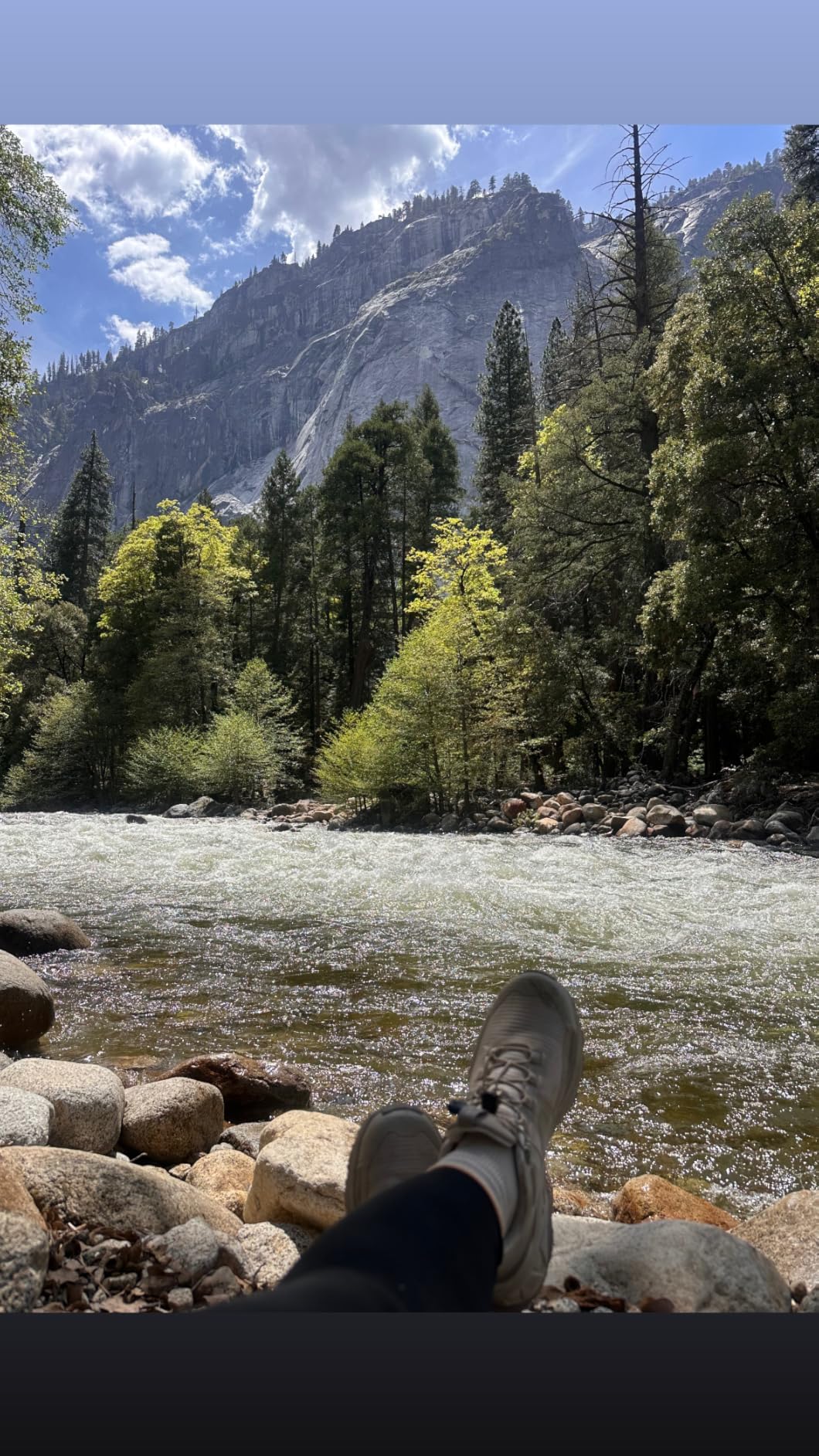
I want to explain the mechanism clearly before giving a verdict, because a lot of people find it confusing from the description alone.
To tighten: squeeze both sides of the plastic housing at mid-lace. The cord cinches down, pulling the shoe tighter around your foot. Release pressure and it holds the tension.
To loosen: squeeze the toggle itself (the part at the top). The tension releases and you can slip the shoe off without fully untying anything.
That’s it. No knot, no bow, no loop-and-thread. First time I tried it, I fumbled for about thirty seconds. Second time, muscle memory took over. By the third use, I was adjusting on the fly without thinking about it.
Where this actually matters to me: I take my shoes off a lot. School drop-off means shoes off at the door, then back on. Quick errands mean slip-off in the car, slip-on at the store. I’m not exaggerating when I say I probably put on and remove shoes fifteen times on a busy weekday. The cord system shaved genuine time off that routine — three seconds versus fifteen for traditional laces, consistently. Is that life-changing? No. But across a week, it adds up to actual convenience, not just marketing copy.
On trail is where the tradeoffs show up. During my Sedona hike, I wanted to tighten the fit on a steep descent. With traditional laces, you can localize the tension — pull tighter at the ankle but leave the toe box loose, for example. The cord system tightens uniformly along the full lace run. It works, but a technical hiker with specific fit preferences would find it limiting.
The plastic toggle is my main worry. After eight weeks and 25+ sessions, mine is intact. I can feel it’s been articulated hundreds of times, and there’s no visible cracking or loosening. But it feels like it operates on borrowed time at some point. I’ve seen community reports of cord toggles failing on similar shoes in the four-to-eight month range — none from NORTIV 8 users I could verify definitively, but enough of a pattern to mention. My advice: know where your backup plan is if the toggle fails mid-trip.
One more note for narrow-footed hikers. The cord system has less micro-adjustment range than traditional laces. If your feet are on the narrower side, the toggle may not achieve the level of snugness you’d get from a well-tied traditional lace. Sizing down 0.5 might help compensate, though that introduces its own tradeoffs in toe box space.
Comfort, Fit, and the Sizing Question
I wore these straight from the box on a two-mile neighborhood walk the same afternoon they arrived. No rubbing, no break-in discomfort, no hotspots. That’s not something I say about hiking shoes often. The padded collar, flexible Oxford cloth, and pre-formed EVA insole meant my feet settled into the shoe immediately rather than the other way around.
Sizing: I wear a true size 8 and these fit exactly right — slight generous room in the toe box, no heel slippage, snug but not tight. I’ve seen one review recommending sizing down 0.5 to a full size, which confused me until I dug into it. That reviewer was testing a different NORTIV 8 model — the waterproof hiking boot variant — which appears to have different fit characteristics. For the cord lacing shoe (model SNHS239W), true-to-size is consistent across the sources I found useful. If you have narrow feet, consider sizing down 0.5. If you have wide feet, TTS or even 0.5 up — the toe box is accommodating and generous.
I’ll give you my honest comfort timeline based on my Disney World day. Twelve miles, eight-plus hours, mostly pavement with some gravel paths.
Hours zero through four: legitimately comfortable. No awareness of my feet, which is the gold standard. The cushioning absorbed pavement impact better than I expected from shoes this light.
Hours four through six: still good. I noticed some warmth building in the midsole, but no fatigue or pressure points.
Hours six through eight: starting to notice my arches. Not pain — just awareness that the EVA cushioning had hit its ceiling. The foam doesn’t bottom out dramatically, but its shock absorption was clearly less effective than at hour one.
Beyond hour eight: arch fatigue became real. I switched to more deliberate walking, and my arches were sore by evening. Not unusual for that mileage in any shoe, but these hit that wall earlier than my Merrell hiking shoes would have.
For daily errands, short hikes, and two-to-six hour activities, the comfort is consistently excellent. The eight-hour ceiling matters for planning — you should know it going in.
One quirk worth mentioning: the tongue shifts sideways during wear, especially during longer sessions. It’s not painful, just slightly annoying. A quick mid-hike adjustment fixes it, but it keeps coming back. I suspect it’s a design characteristic of the cord lacing system — since the tongue isn’t connected to the lace in the same way as traditional shoes, there’s less anchoring. Not a dealbreaker, but something to know.
If you’re thinking about aftermarket insoles for better arch support, the stock insole is removable. Sof Sole Athlete Insoles or Valsole Orthotic Insoles would be an easy swap for anyone who needs more arch depth than the stock EVA provides.
Performance on the Trail
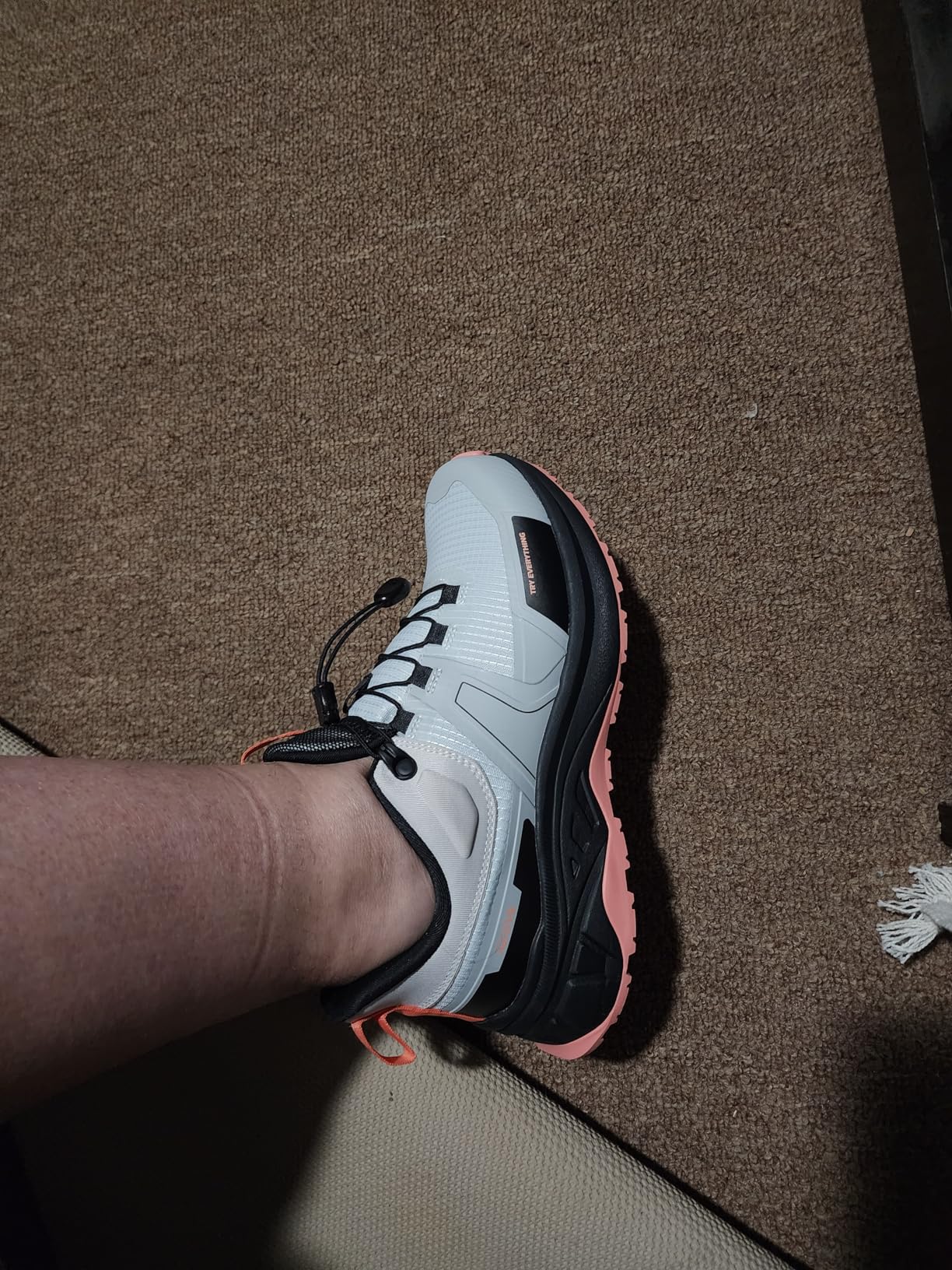
Traction — Rocky Terrain, Sedona
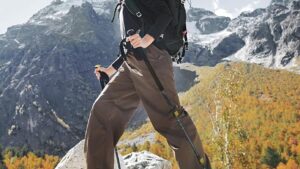
The six-mile Sedona hike was my benchmark test. Desert trail: packed dirt sections, loose red rock, moderate inclines, some brief technical scramble sections where the trail crosses exposed rock faces.
Dry, packed dirt: confident grip throughout. The textured rubber outsole held without slipping on inclines up to maybe thirty degrees.
Loose rock and gravel: competent but not aggressive. The tread pattern isn’t deep enough to really bite into loose material, so I chose my footing more carefully on scree-like sections than I would in dedicated trail shoes. Nothing dramatic — just awareness.
Exposed rock (dry): adequate. No alarming slippage, but also no the tacky stickiness of Vibram soles. Think “functional” rather than “grippy.”
Downhill: trustworthy on moderate grades. I didn’t feel like I was fighting the shoe on descents.
What I wouldn’t do: use these on steep, loose terrain or wet technical rock. They’re not designed for that, and the tread depth would be a liability in those conditions.
Water Resistance — Light Rain and Morning Dew
NORTIV 8 markets these as water-resistant, not waterproof. That’s accurate and honest, and I want to contextualize what that means in practice.
Light rain (thirty to forty-five minutes): feet stayed mostly dry. Some moisture at the tongue area toward the end, but nothing soaking through. For a morning hike in intermittent drizzle, these performed as advertised.
Heavier sustained rain or puddle walking: water seeps through. The Oxford cloth doesn’t have a waterproof membrane, so prolonged exposure will reach your feet. Expect wet socks if caught in a downpour for more than an hour.
Quick dry time is a genuine positive. After getting properly soaked on one rainy session, the shoes were dry within a few hours indoors. That’s impressive for the material and price point.
If your hiking involves frequent rain, stream crossings, or sustained wet conditions, these aren’t the right shoe. For that use case, look at the NORTIV 8 Women’s Waterproof Hiking Shoes — a different model with actual waterproofing — or dedicated options like the KEEN Women’s Circadia Waterproof or Cottimo Waterproof Hiking Shoes.
Does the Marketing Hold Up?
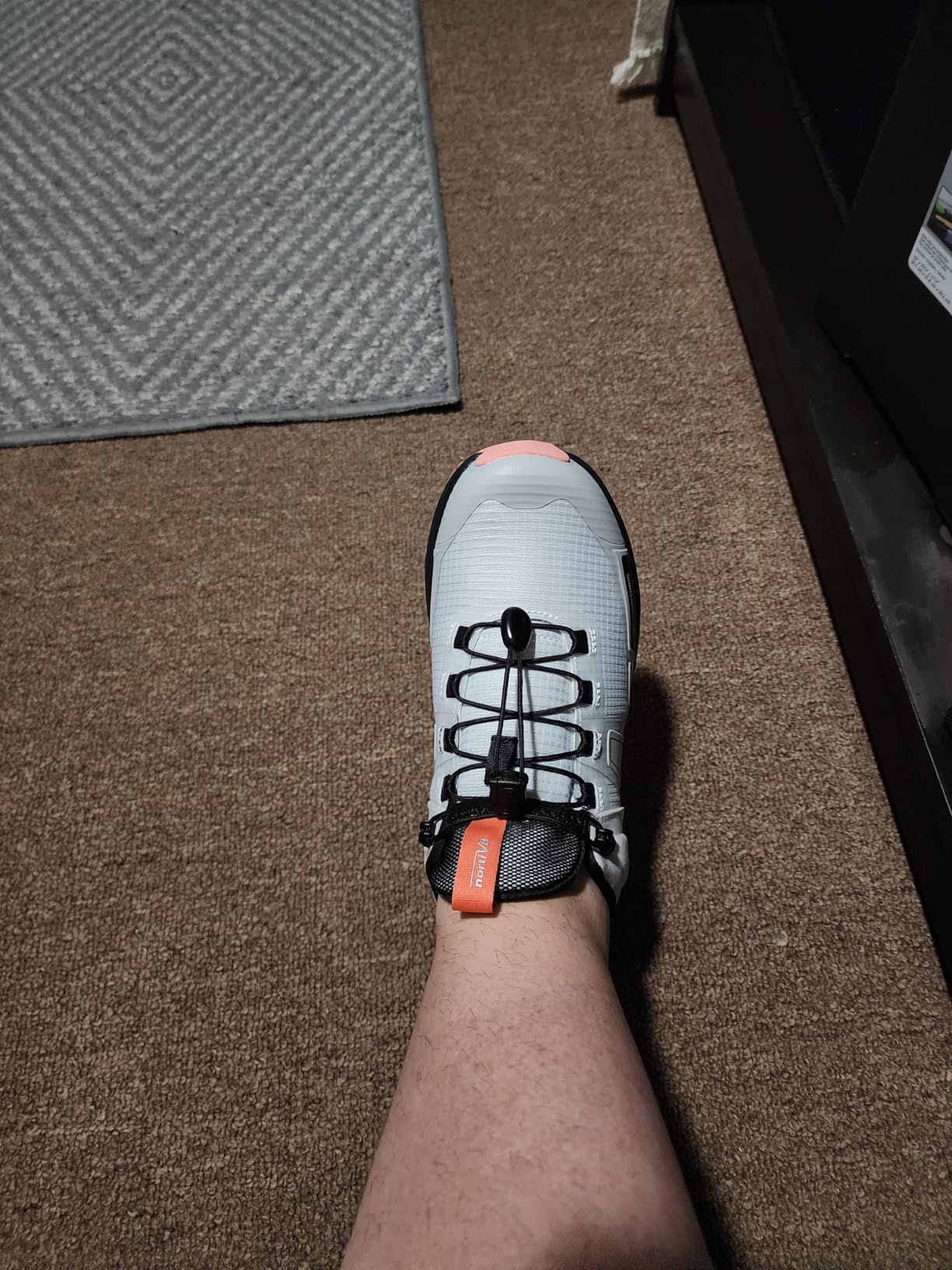
“Lightweight design reduces fatigue” — TRUE. At 9.7 ounces, the foot lift reduction on a six-mile hike is real. My legs were noticeably less tired at mile five compared to sessions in heavier boots. That said, lightweight doesn’t compensate for EVA cushioning limits on extended wear. The fatigue shifts from your legs to your arches as the day gets longer.
“Superior traction for all terrain” — MOSTLY TRUE, WITH CONDITIONS. The traction is solid for established hiking trails in dry weather. “All terrain” is the stretch — wet rock, steep loose surfaces, and off-trail scrambling exceed what the rubber outsole pattern can reliably handle.
“Quick, secure cord lacing” — TRUE WITH CAVEATS. The system is genuinely convenient and secure enough for casual hiking and daily activities. Toggle durability at six-plus months is an open question.
“All-day comfort” — PARTIAL. Six-to-eight hours: yes. Twelve-plus hours: arch fatigue becomes real. The EVA midsole has limits, and “all day” depends heavily on how you define your day.
“Water-resistant” — TRUE (AS STATED). Light rain and incidental moisture: fine. Waterproof: no. Reviewers who call these “waterproof” are doing readers a disservice.
Overall Assessment
Scoring Breakdown
| Category | Score | Why |
|---|---|---|
| Comfort | 7.5/10 | Excellent through 6-8 hours; arch fatigue beyond that |
| Durability | 6.0/10 | Upper solid at 8 weeks; plastic toggle durability unproven beyond that |
| Traction | 7.0/10 | Reliable on dry established trails; limited on wet or technical surfaces |
| Water Resistance | 6.0/10 | Light rain OK up to ~45 min; heavy rain or sustained wet fails |
| Weight | 9.5/10 | 9.7 oz is genuinely lightweight; minimal leg fatigue |
| Style | 8.0/10 | Grey-pink colorway is versatile; works on and off trail |
| Value | 8.5/10 | $45 for this build quality and comfort level is exceptional |
| Ease of Use | 8.5/10 | Zero break-in; cord lacing intuitive after 2 uses; convenient for daily wear |
| OVERALL | 7.5/10 | Excellent in its lane; clear limitations beyond casual hiking |
The 7.5 reflects a shoe that does its intended job well. It’s not trying to be a Merrell Moab or a KEEN Terradora — it’s a lightweight, convenient, budget-friendly option for casual hikers and active daily wear. Within that purpose, it delivers. The score comes down for durability (that toggle is unproven) and water resistance (genuinely limited despite feeling capable on light days).
Who Should and Shouldn’t Buy These
✅ Worth Considering If You:
- Want a lightweight hiking shoe for light trails and daily wear without paying premium prices
- Take shoes on and off frequently — the cord lacing pays off in daily use
- Have wide feet that struggle with narrow hiking shoes (the toe box is genuinely accommodating)
- Hike light terrain one to three times per month in dry conditions
- Travel and need packable footwear that handles both city walking and light trail days
- Want zero break-in from day one — these are genuinely immediate
❌ Skip These If You:
- Need waterproof protection for regular rain or wet terrain hiking
- Hike ten-plus hours regularly — the comfort ceiling will frustrate you
- Have narrow feet and require tight, precise fit (cord toggle limits micro-adjustment)
- Need high ankle support for technical or off-trail terrain
- Want maximum durability beyond twelve months of regular use
Better Alternatives for Specific Needs
For serious waterproofing: The NORTIV 8 Women’s Waterproof Hiking Shoes is the same brand with an actual waterproofing membrane if you want to stay in the budget category. For mid-range durability and proven outsole, the Merrell Women’s Moab 3 is the benchmark at roughly three times the price. If you want serious Gore-Tex waterproofing with trail credibility, Adidas Terrex AX4 Gore-Tex fits that bill. And the Merrell Women’s Bravada 2 is worth a look if you want a step up in build quality while staying in the sneaker-style format.
Frequently Asked Questions
Do these really need no break-in period?
No break-in required — and I mean that. I put them on and wore them on a two-mile walk the afternoon they arrived. No rubbing, no hotspots, no stiffness. The Oxford cloth is flexible from the start, and the padded collar doesn’t require softening. If you’ve ever dealt with hiking shoes that punished your feet for the first two weeks, these are a genuine relief.
Should I size down because of the cord lacing?
For standard or wide feet: order your normal size. The cord system tightens more than you’d expect, so TTS works well. I wear a size 8 and these fit perfectly.
For narrow feet: consider sizing down 0.5. The toggle can’t achieve the same micro-snugness as well-tied traditional laces, and narrow feet will notice looser fit at the sides. Sizing down partially compensates, though you’d lose some toe box space.
One note: you may see recommendations to size down significantly (half to full size). In my research, this seems to reflect testing of the waterproof boot variant, not the cord lacing shoe. They’re different models with different fit profiles.
Are these actually waterproof?
No. NORTIV 8 calls them water-resistant, and that’s accurate. Light rain for up to forty-five minutes is manageable. Sustained heavy rain, puddles, or creek crossings will soak through. They dry quickly afterward — a few hours indoors — which helps, but they won’t keep you dry in serious wet weather. If waterproof protection matters, look at the dedicated NORTIV 8 waterproof variant or invest in Gore-Tex lined options.
How long will the cord toggle last?
Honest answer: I don’t know beyond eight weeks of testing. The toggle in my pair is intact and shows no visible stress. It has been squeezed hundreds of times. Based on community patterns for similar cord lacing systems, the risk window appears to be somewhere in the four-to-eight month range with regular use. I’d keep a spare pair of traditional laces as backup — most shoes can be re-laced through existing eyelets if the toggle fails.
Can I hike all day in these?
Define “all day.” For a six-to-eight hour hike, yes — I did this in Sedona without issues. For a Disney World-style twelve-mile day, I hit arch fatigue around hour eight. It wasn’t painful, but it was there. The EVA midsole has a comfort ceiling, and extended hard surfaces bring you to it faster than trail terrain. If your typical hiking day is beyond eight hours, these aren’t your best option. For shorter day hikes and active travel days, they hold up well.
Are they good for wide feet?
Yes, genuinely. The toe box is roomier than most women’s hiking shoes at this price point, and the cord lacing adjusts to accommodate more volume than a fixed-knot traditional lace. Multiple wide-footed women in my hiking group tried these and found them more comfortable than shoes marketed specifically as “wide width.” TTS sizing is the right call for wide feet.
What’s the expected lifespan?
For casual use (two to three times weekly, mixed hiking and daily wear): twelve to eighteen months is a reasonable expectation for the upper and outsole. The cord toggle is the wildcard — I’d estimate six to twelve months before you should have a backup plan, though some users may see it last longer. Midsole compression at heavy use would likely become noticeable at month six to eight.
Are there similar options from NORTIV 8?
Yes. If you want a walking-focused variation, the Nortiv 8 Women’s Walking Shoes are worth a look. The Nortiv 8 FlexLife Women’s are designed more for running and walking hybrids. And if you need men’s sizing, the NORTIV 8 Men’s Hiking Shoes follow similar construction philosophy.
Final Verdict
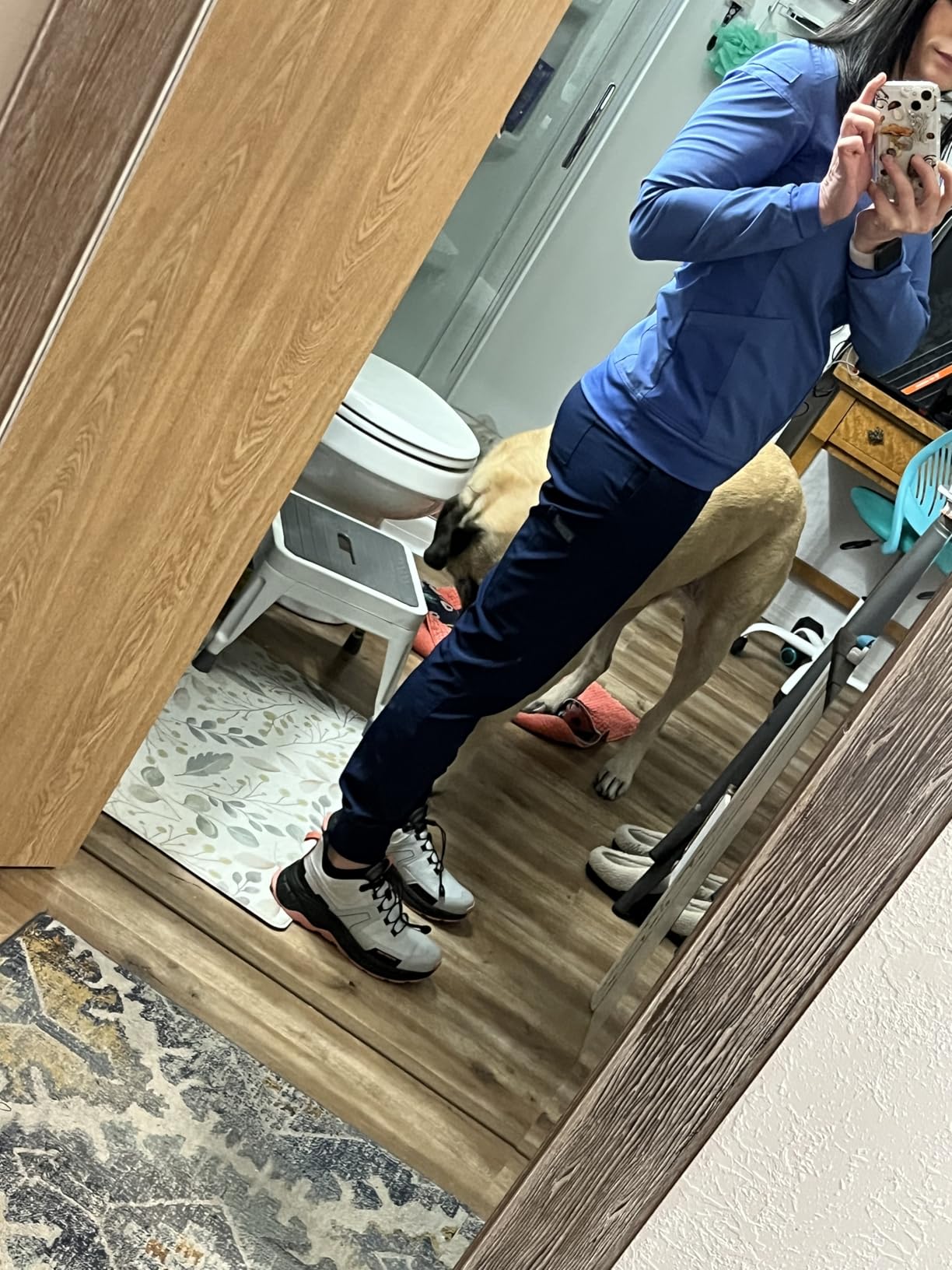
Eight weeks and a lot of miles later, I use these about twice a week — morning trail walks, school pickups, quick weekend hikes. They’ve held up without drama, which at $45 is a reasonable outcome.
The honest version: this shoe excels for casual hikers who want lightweight, versatile footwear without spending Merrell or KEEN money. The cord lacing genuinely helps if you take shoes on and off constantly. The immediate comfort means you can pick these up and use them today without a two-week adjustment period. And within light hiking terrain in dry conditions, the performance is solid.
The honest caveats: the EVA comfort ceiling is real at extended hours, the cord toggle is the component I’d watch over time, and water protection goes only so far. None of these are surprises for a $45 shoe — they’re tradeoffs you should know about, not hidden defects.
| ✅ What Works | ❌ What Doesn’t |
|---|---|
|
|
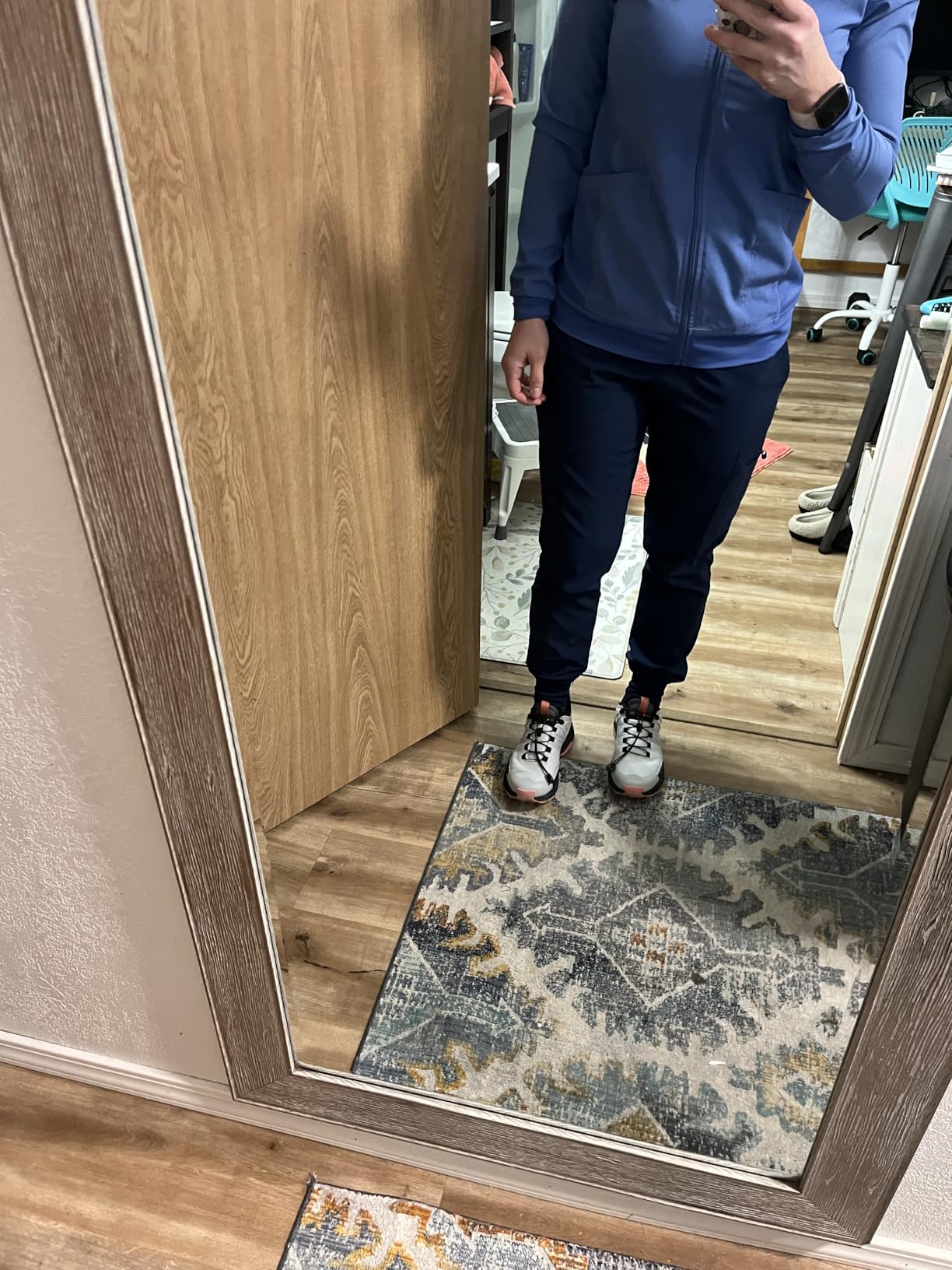
If your hiking life looks like mine — light trails, regular errands, the occasional longer day out — the NORTIV 8 Women’s Hiking Shoes are worth the $45. Know the limits going in, and they won’t disappoint you.
Be the first to review “NORTIV 8 Women’s Lightweight Hiking Shoes”
Related products

Hiking/Trekking Shoes
Hiking/Trekking Shoes
Hiking/Trekking Shoes
Hiking/Trekking Shoes
Hiking/Trekking Shoes

Hiking/Trekking Shoes

Hiking/Trekking Shoes
Hiking/Trekking Shoes
Hike Footwear HF Signature Healthy & Non-Slip Breathable Barefoot Shoes
Reviews
There are no reviews yet.