
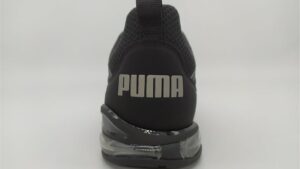
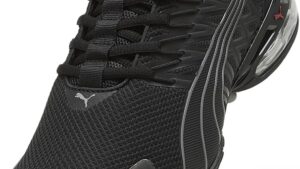
Last month at the gym, I watched a buddy toss his third pair of supposedly “durable” cross-trainers into the trash—all three brands, all dead within four months. After my own $85 pair fell apart at the 67-day mark (yes, I counted), I started questioning whether budget shoes were just destined to fail faster, or if the premium ones weren’t actually premium at all. That’s when another gym regular mentioned the PUMA Voltaic Evo: $45, supposedly decent, and—according to him—”lasted longer than my Nike Metcons.” Skeptical doesn’t begin to describe my mindset, but 12 weeks and 47 gym sessions later, I’ve got a verdict that might surprise you.

Technical Specifications
| Spec | Details |
|---|---|
| 💰 Price | $45-67 (sale) | $85 MSRP |
| ⚖️ Weight | 11.2 oz (men’s size 9, measured) |
| 🧪 Midsole Technology | 10CELL cushioning + SoftFoam+ sockliner |
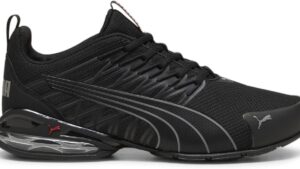
| 👟 Upper Material | Synthetic leather + mesh panels |
| 🏋️ Category | Cross-training/gym sneaker (marketed as “road running”) |
| 🎯 Best For | Weight training, HIIT workouts (< 45 min), casual gym use |
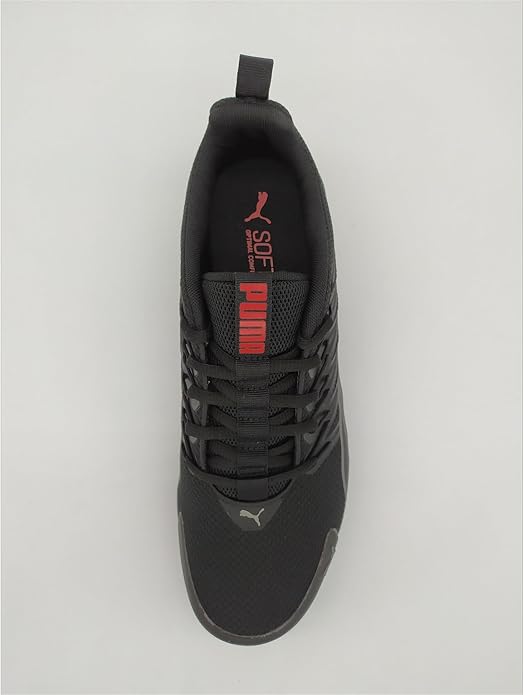
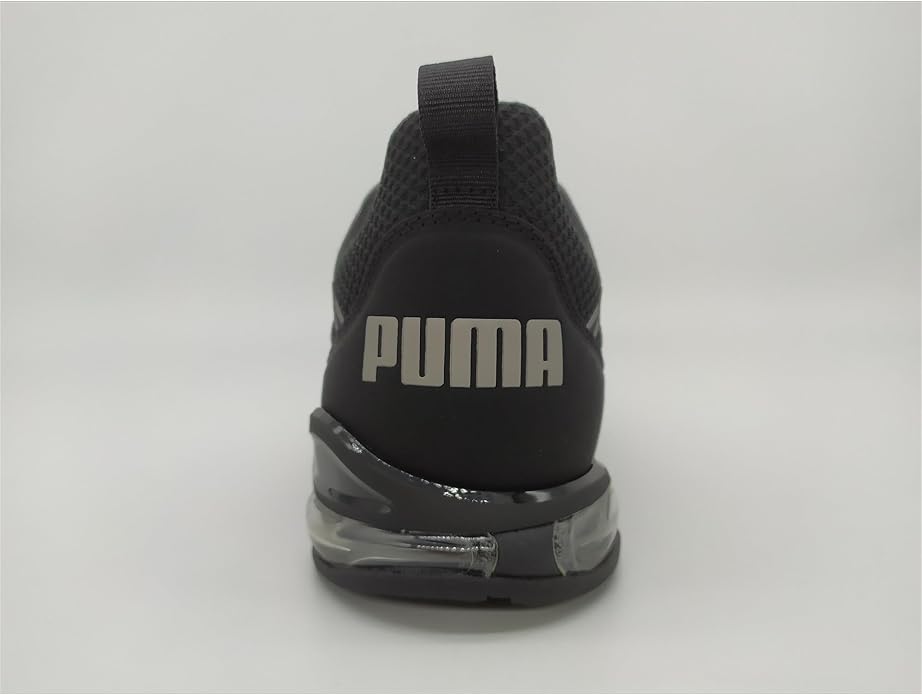
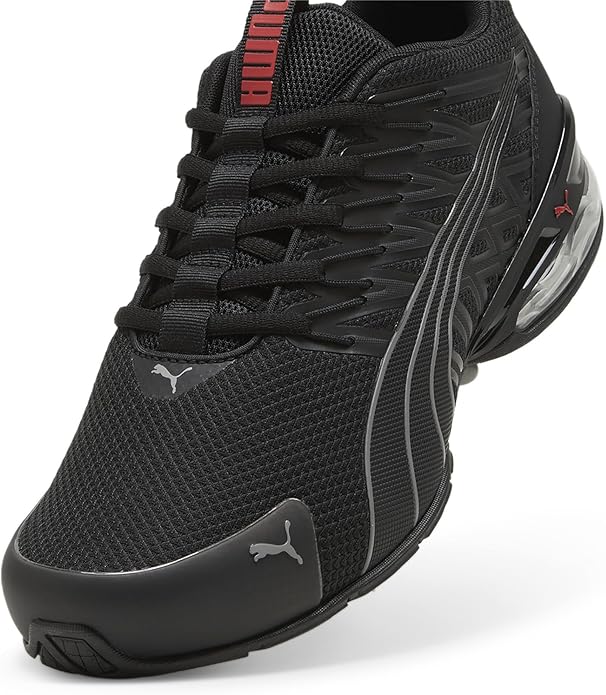
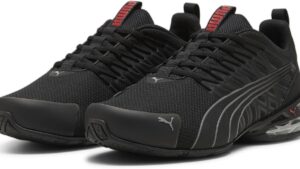
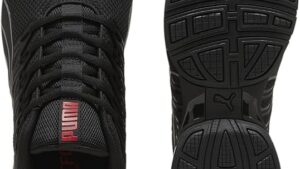
| 🔧 Key Features | TPU toe cap, cage overlay lacing, TPU shank, full rubber outsole |
| ⏱️ Testing Period | 12 weeks | 47 gym sessions | 15+ hours weekly wear at 185 lbs |
Note: PUMA officially labels these as “road running” shoes, but real-world performance aligns with cross-trainer use. I tested these primarily for gym training, not pavement miles.
Design, Build Quality & First Impressions
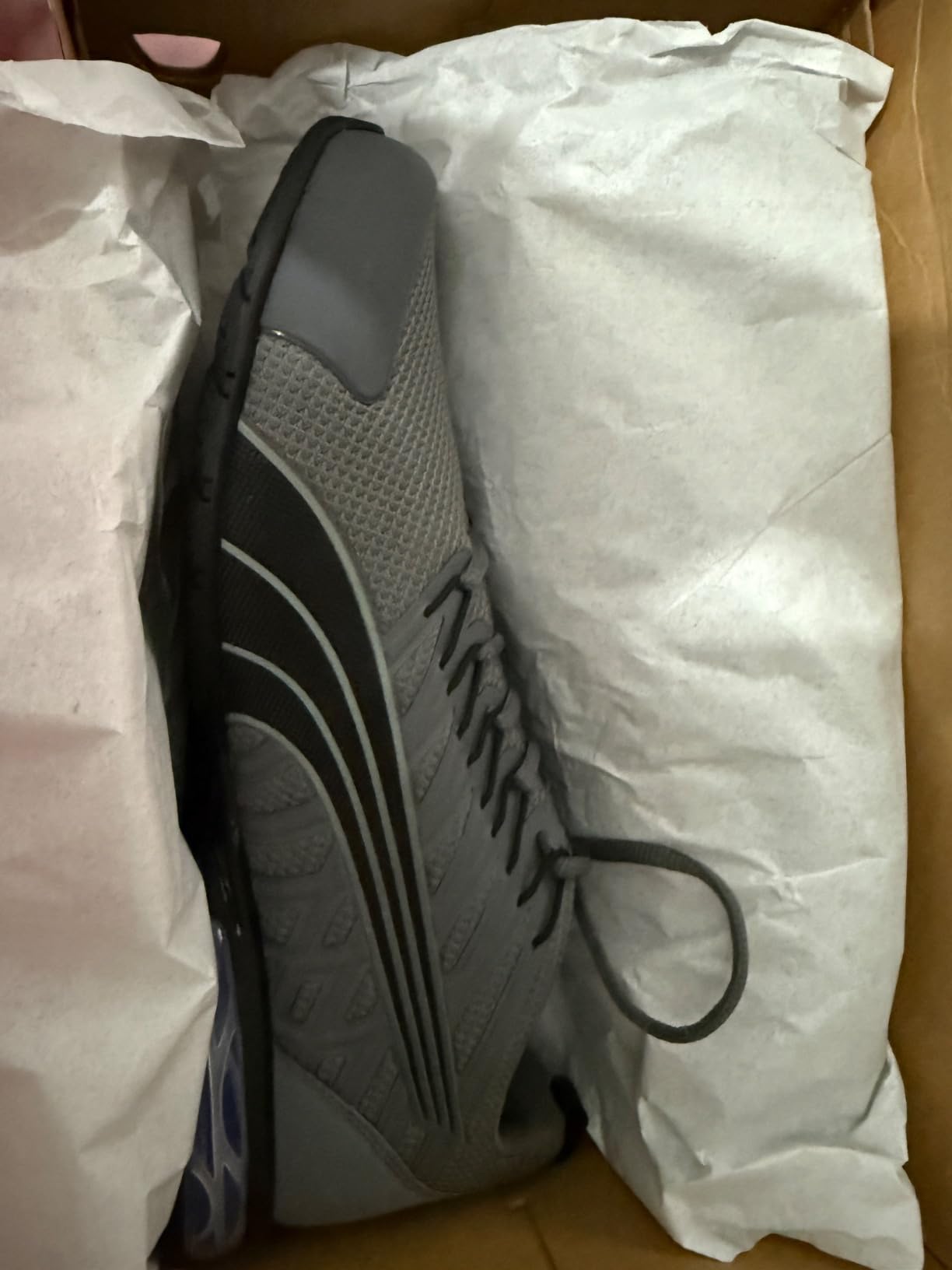
Budget-Conscious Engineering That Works
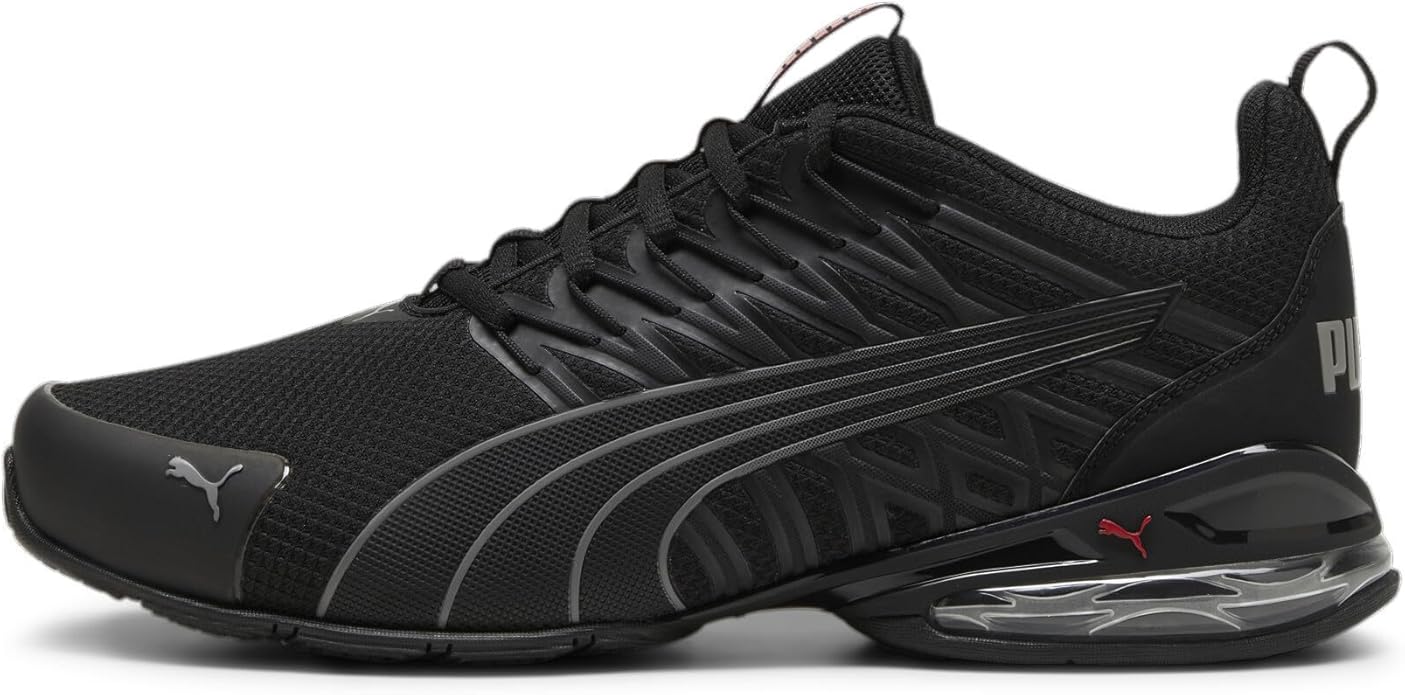
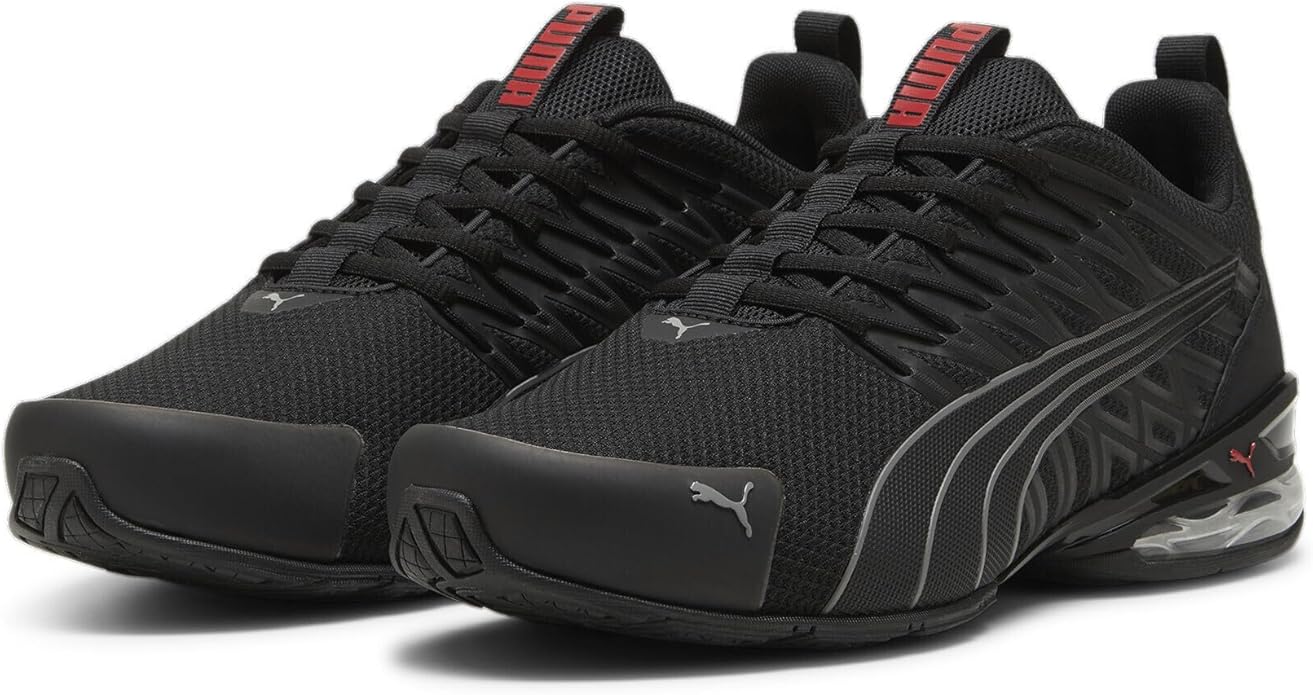
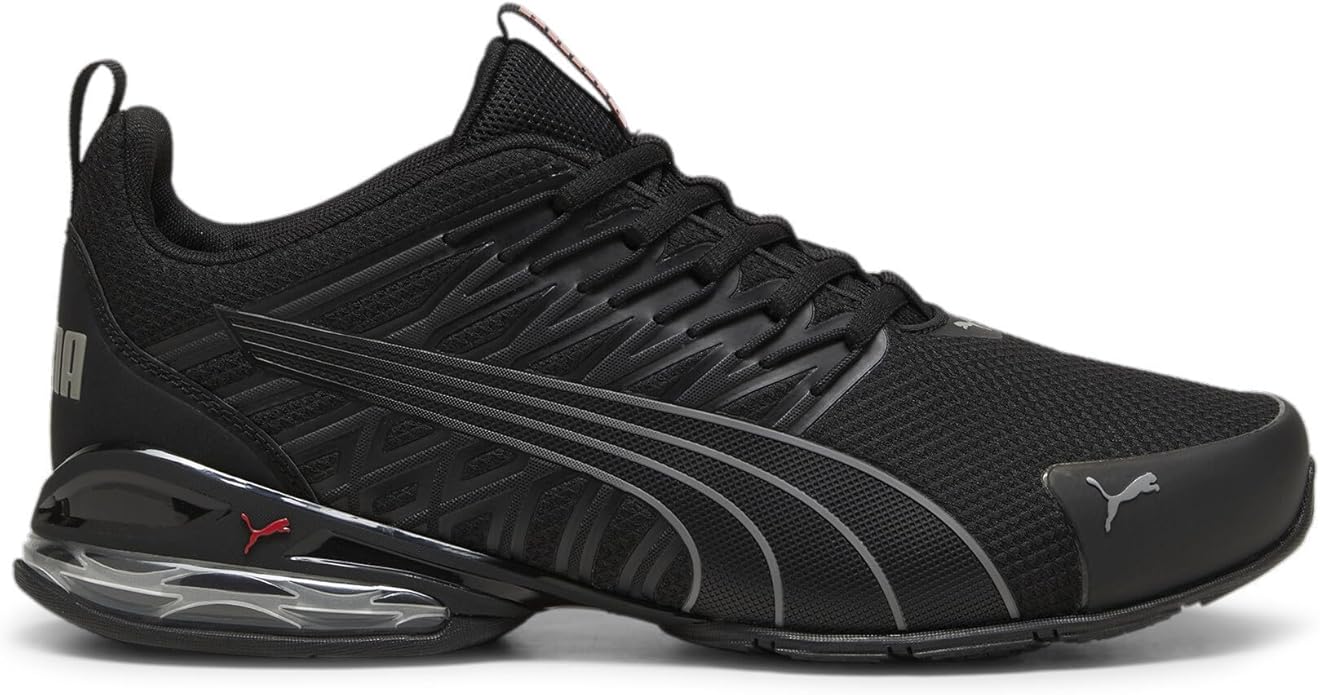
Right out of the box, the Voltaic Evo doesn’t pretend to be something it’s not. At $45-67, you’re getting synthetic leather—not premium full-grain—but PUMA made smart compromises here. The synthetic upper feels sturdy enough for gym abuse, and the mesh panels provide actual airflow (though we’ll talk about their Achilles’ heel later).
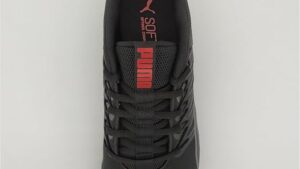
The cage overlay lacing caught my attention immediately. Instead of traditional eyelets, PUMA uses a web-like structure that distributes pressure more evenly across the midfoot. During longer gym sessions—particularly a 3-hour Saturday workout that included everything from deadlifts to burpees—I noticed fewer of those annoying pressure hotspots that usually show up around the hour-two mark. It’s a subtle benefit, not revolutionary, but genuine.
The TPU toe cap proved its worth early. After 12 weeks of heavy deadlifts (working sets at 315 lbs), box jumps onto 24-inch platforms, and the inevitable toe-drag during burpees, the reinforced toe area showed minimal wear. Ironically, this would turn out to be one of the few durability bright spots.
Materials Up Close
The synthetic leather has a textured finish that resists scuffs better than I expected from a budget shoe. Stitching quality held up throughout testing—no fraying at stress points, no loose threads after week 8. The mesh panels, visually, looked great: open enough for airflow, backed by what appeared to be adequate reinforcement.
Appeared to be. More on that later.
Collar padding sits at that Goldilocks zone of supportive without being bulky. No break-in chafing, no ankle rub even during lateral movements. For a shoe at this price point, the attention to comfort details exceeded my expectations based on prior budget trainers.
Straight Out of the Box
Zero break-in required. I wore these straight from unboxing to a full leg day (squats, lunges, calf raises, the works), and by session five, I’d experienced exactly zero hotspots, zero heel slip, and zero of that new-shoe stiffness that usually requires a week of suffering. This alone sets the Voltaic Evo apart from most budget options, where “breaking in” often means “blistering for two weeks.”
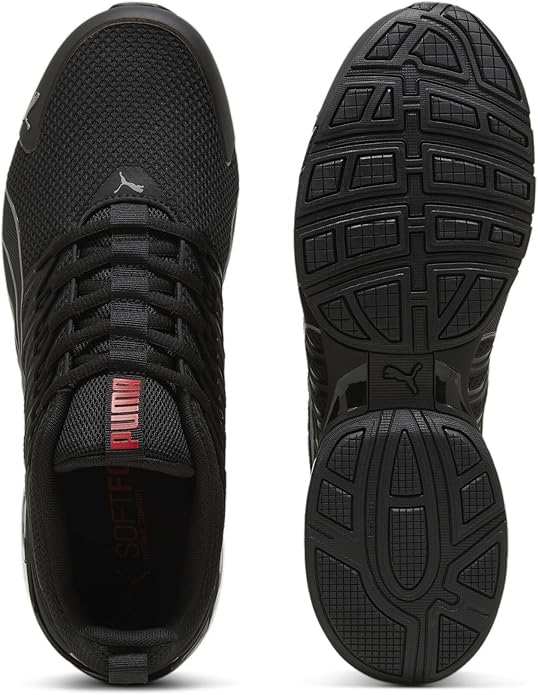
The SoftFoam+ sockliner delivers on PUMA’s promise of immediate step-in comfort. That first step felt like sinking into a plush hotel mattress—marshmallow-soft, immediately accommodating. Of course, that sensation has a shelf life tied to your body weight and use intensity, but for weeks 0-4, it’s legit.
Comfort & Cushioning: The Good, The Gradual, The Gone
SoftFoam+ Sockliner: Weeks 0-4
That extra-thick heel PUMA advertises? It’s not marketing fluff. For the first month, stepping into these shoes felt like walking on memory foam. The sockliner molds around your heel during weight shifts, and during those first few HIIT sessions with jump squats, the cushioning absorbed landing impacts without that jarring “bottoming out” sensation cheaper EVA foams deliver.
Arch support is minimal—call it neutral-to-low. If you have flat feet or high arches, you’ll want aftermarket insoles from day one. The SoftFoam+ provides cushioning, not structural support. For my neutral arches, it worked fine for gym training, but I wouldn’t rely on it for all-day standing without supplemental support.
10CELL Midsole Performance
PUMA’s 10CELL tech sits somewhere between basic EVA and premium cushioning systems like Nike Air or Adidas Boost. It’s firm enough for weight training stability—during heavy squats (working up to 405 lbs), I never felt unstable or wobbly underfoot. The platform stays planted, which is exactly what you want when the bar’s on your back.
For HIIT and explosive movements, the 10CELL handles impacts reasonably well. Box jumps, jump squats, and even some light plyometrics felt adequately cushioned through week 8. Energy return is modest—don’t expect that propulsive “bounce” you get from Boost foam. It’s more like landing on firm carpet than a trampoline.
The performance ceiling showed up around 30-45 minutes of sustained cardio. Past that point, the cushioning starts to feel… flat. Not painful, just less responsive. For treadmill warm-ups (10-15 minutes at 6.5-7 mph), perfectly adequate. For actual running sessions beyond mile 5-6 at my 185 lbs, the cushioning wall becomes apparent.
The Compression Timeline (Critical Finding)
Here’s where body weight becomes the determining variable. At my 185 lbs with 4 sessions per week:
- Weeks 0-4: Peak plushness. That “marshmallow” feel holds strong.
- Weeks 4-6: Gradual firmness increase. Still comfortable, but the cushioning transitions from “plush” to “adequate.”
- Weeks 6-8: Compression becomes apparent. The SoftFoam+ sockliner loses that initial sink-in sensation. Midsole feels more like standard EVA.
- Week 8+: Compression stabilizes at a “functional but not plush” baseline. Still usable for gym training, but the initial comfort advantage is gone.
For lighter users (< 160 lbs), I’d estimate this timeline extends to 8-12 weeks before noticeable compression. For heavier users (220+ lbs), compression likely hits around weeks 4-5. This isn’t a defect—it’s standard EVA behavior under sustained compression cycling.
Breathability: Adequate Until It Isn’t
The mesh panels provide genuine airflow during the first 20-30 minutes of training. In a climate-controlled gym (72°F), I didn’t experience swamp-foot during hour-long lifting sessions. Moisture management stayed ahead of sweat accumulation during typical strength work.
Cardio-heavy days told a different story. After 30+ minutes of sustained elevated heart rate—particularly during a 45-minute HIIT circuit—heat buildup became noticeable. Not unbearable, but the mesh panels don’t breathe like engineered knit uppers on premium trainers. Above 80°F ambient temperature, expect warm feet.
Real Gym Performance by Activity Type
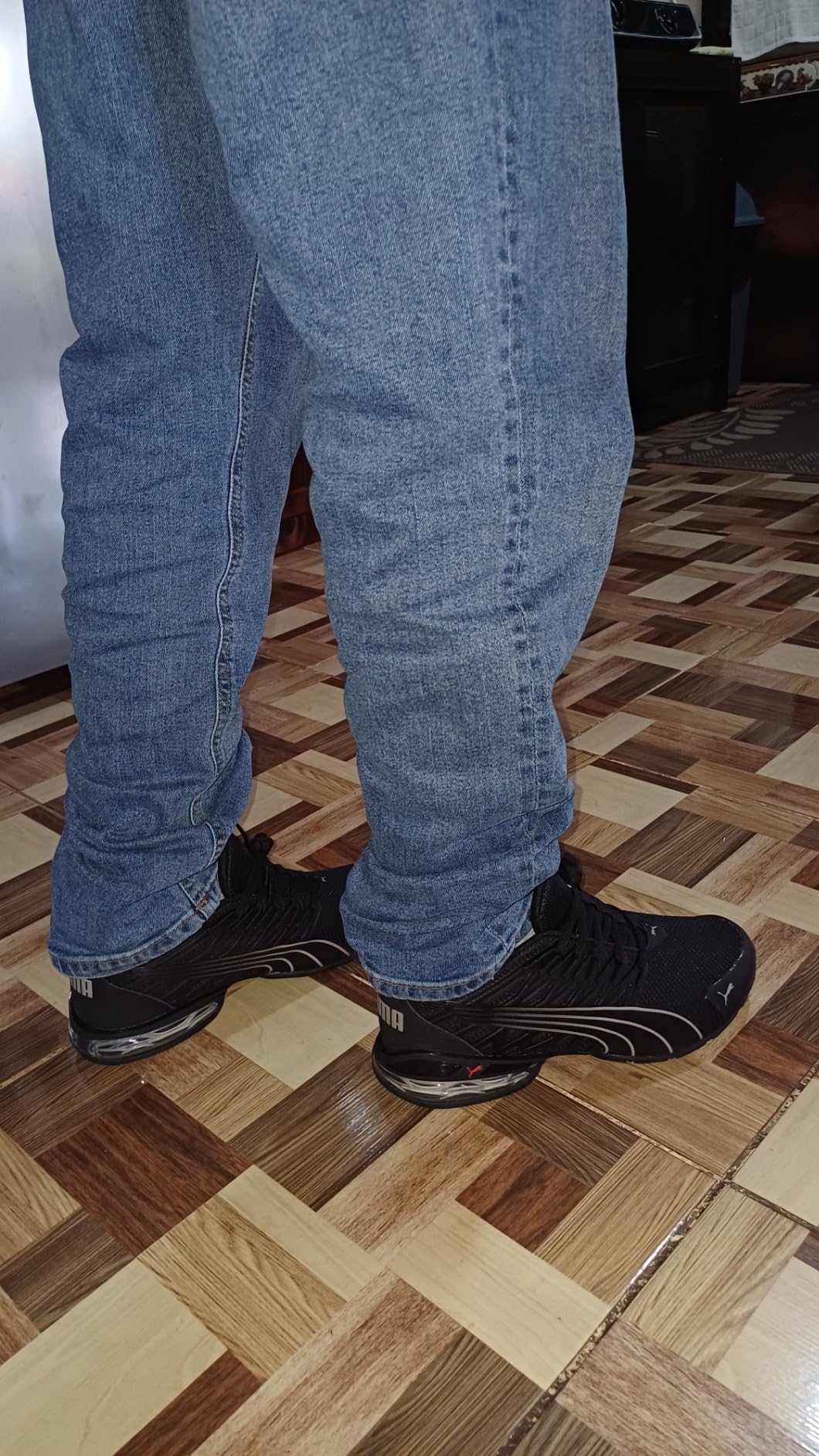
Weight Training: Where These Shine
For traditional strength work, the Voltaic Evo delivered consistently across 12 weeks. The firm heel and stable midsole create a solid platform for compound movements. During heavy squats—working sets from 315 to 405 lbs—I never felt unstable or experienced that unsettling “sinking” sensation some cushioned shoes create under load.
Deadlifts (working up to 475 lbs) highlighted the TPU shank’s benefit. That locked-down midfoot sensation kept my arch from collapsing during the pull, and the relatively flat profile (PUMA doesn’t publish heel-to-toe drop, but it feels like 8-10mm) provided good ground contact.
Lateral lunges and side-to-side movements revealed the cage overlay lacing’s subtle advantage: even pressure distribution across the midfoot prevented that pinching sensation I’ve experienced with traditional eyelet systems during lateral loading. During a leg-heavy week with 5 sets of walking lunges, Bulgarian split squats, and lateral step-ups, zero pressure points developed.
For overhead presses and other standing compound movements, the arch support is adequate for neutral arches. High-arch or flat-foot lifters would benefit from aftermarket insoles, but the basic platform handles the job.
HIIT & Plyometrics: Mixed But Manageable
High-intensity interval training pushed these shoes toward their performance ceiling. Jump squats, burpees, and box jumps felt well-cushioned for the first 30 minutes of a session. Landing stability remained solid—that TPU shank again—with no ankle roll scares during 47 sessions of explosive movements.
The cushioning fatigue window sits around 45 minutes. Past that mark, impact absorption diminishes noticeably. A 60-minute Tabata-style circuit left my knees feeling more beat up than they should have, suggesting the 10CELL midsole reaches its limit somewhere in that 30-45 minute range for sustained high-impact work.
For quick direction changes—lateral shuffles, agility drills, defensive slides—the cage overlay lacing kept my foot locked down without excessive tightness. No heel slip, no midfoot slop. These aren’t basketball-specific shoes, but they handle lateral movements competently for gym training.
Competition-level conditioning? Look elsewhere. These work for recreational HIIT, but serious athletes needing 60+ minute high-intensity sessions will outgrow the cushioning capacity quickly.
Cardio & Running: Not Recommended
PUMA markets these for “road running,” but real-world testing reveals limitations. Short jogs—treadmill warm-ups of 10-15 minutes at 6.5-7 mph—worked fine. The cushioning handles brief running stints without issue.
I tested sustained running out to mile 5-6 on two separate occasions. By mile 3-4, the midsole firmness became apparent. At mile 5-6, I hit a cushioning wall where each foot strike felt under-padded for my 185 lbs at an 8:30/mile pace. Not painful, but noticeably less comfortable than a dedicated running shoe with more stack height and premium cushioning.
Breathability during running also proved inadequate. After 20 minutes of sustained pace, heat buildup inside the shoe became distracting. The mesh panels vent reasonably well for lifting, but running generates more heat than they can dissipate.
Bottom line: these are cross-trainers masquerading as road runners. Stick to warm-up jogs and short runs, or pair them with dedicated running shoes if distance running is part of your routine.
Traction & Grip: Context-Dependent Reliability
The full rubber outsole provided consistent grip across multiple surface types during testing. On standard rubber gym flooring—the squishy black stuff most commercial gyms use—traction held solid through all 47 sessions. No slips during lateral movements, no slides during quick pivots.
Polished concrete (some gyms have this in their stretching areas) proved adequate. Not the aggressive bite you’d get from Vibram or premium rubber compounds, but reliable enough for safety. I tested on one particularly smooth concrete surface and experienced no close calls.
Wet surface testing (4-5 instances in the gym’s occasionally damp areas near water fountains) passed the basic safety test. No slips, though I wouldn’t call the traction outstanding on wet tile. It works, but don’t expect trail-grade wet-weather performance.
Outdoor pavement traction during those brief running tests felt adequate but unremarkable. No premium compound here—just functional rubber that does the job without being noteworthy.
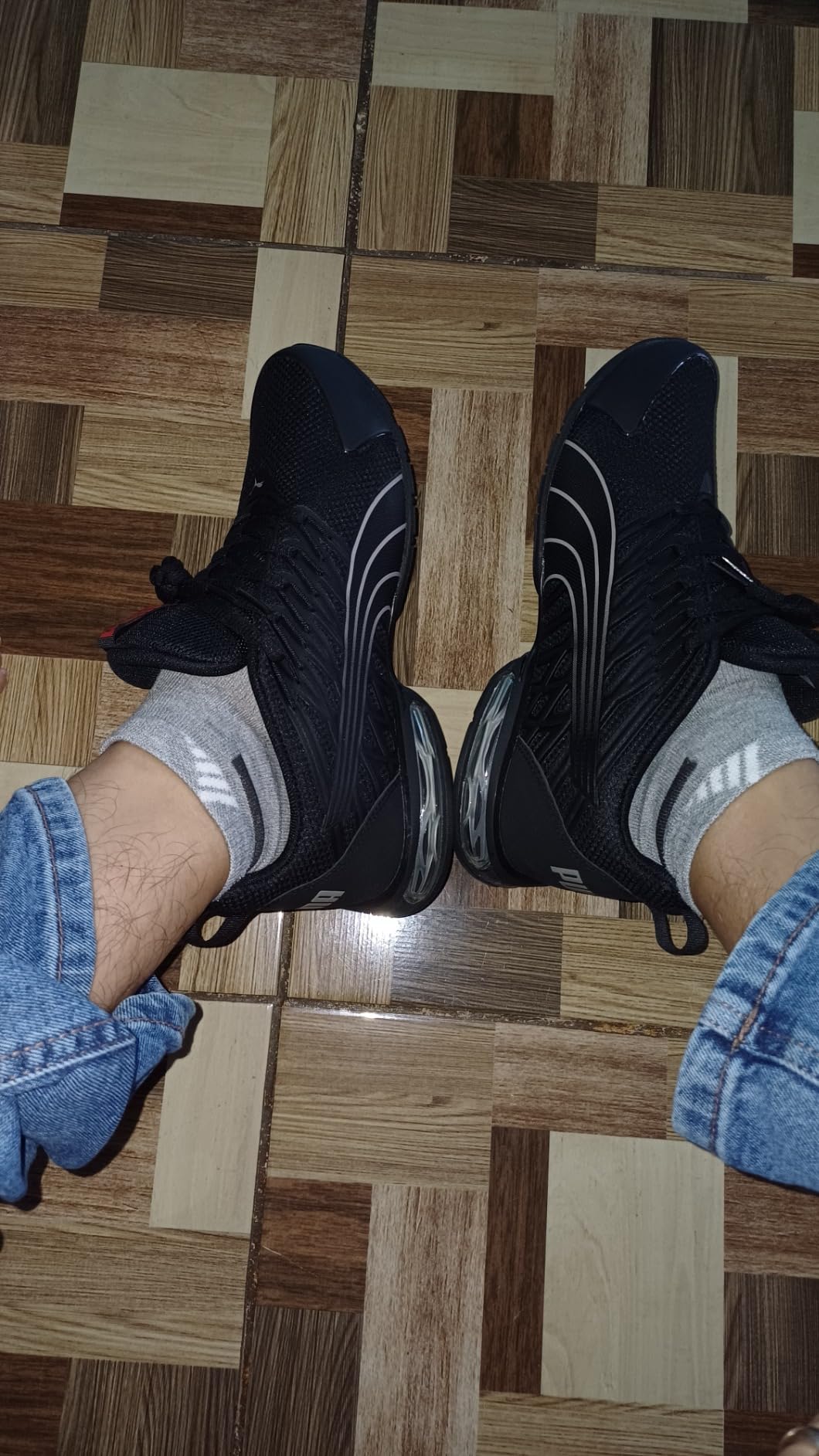
The Durability Reality Check: The Elephant in the Room
Honest Assessment: The Weak Link
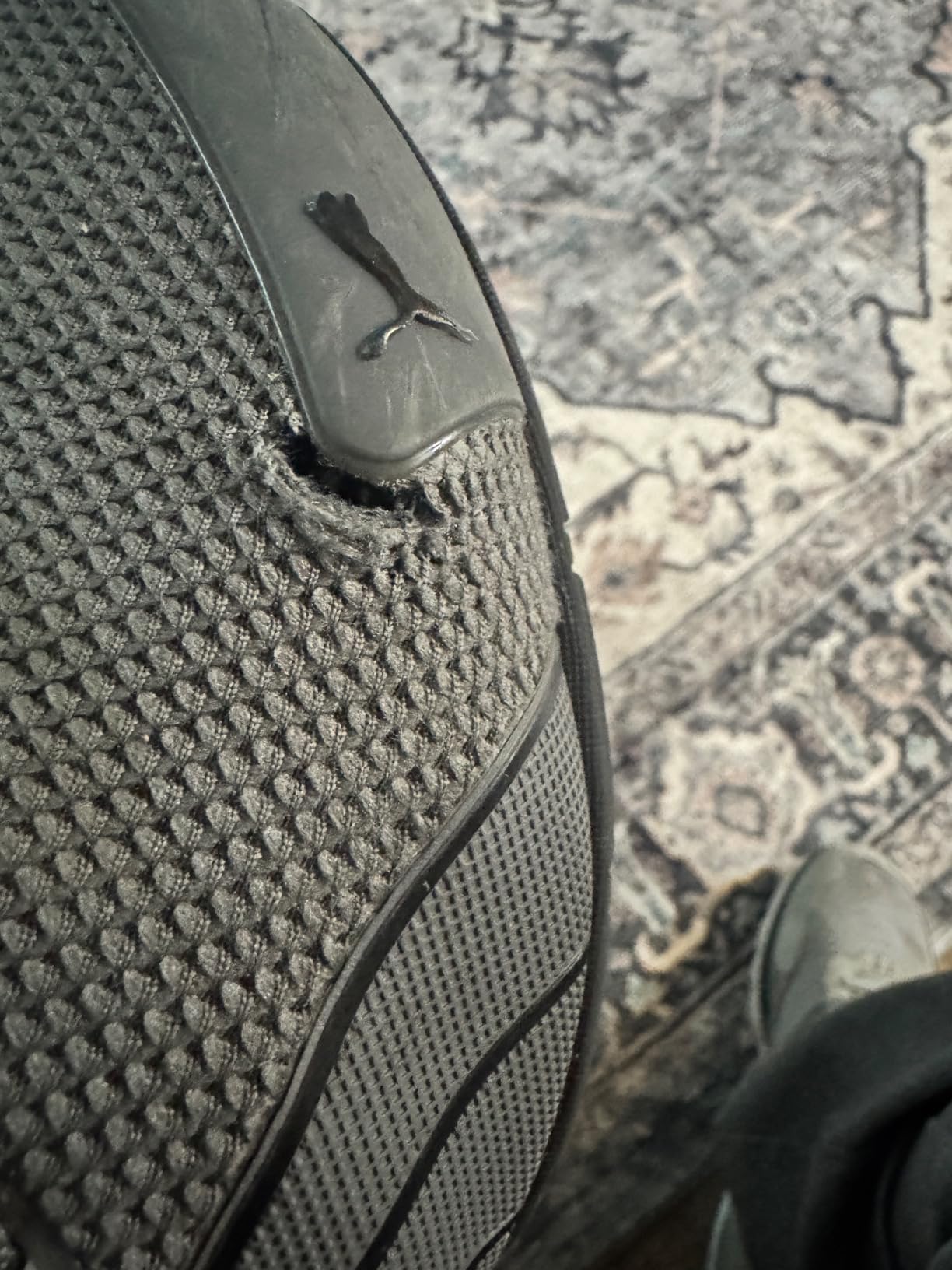
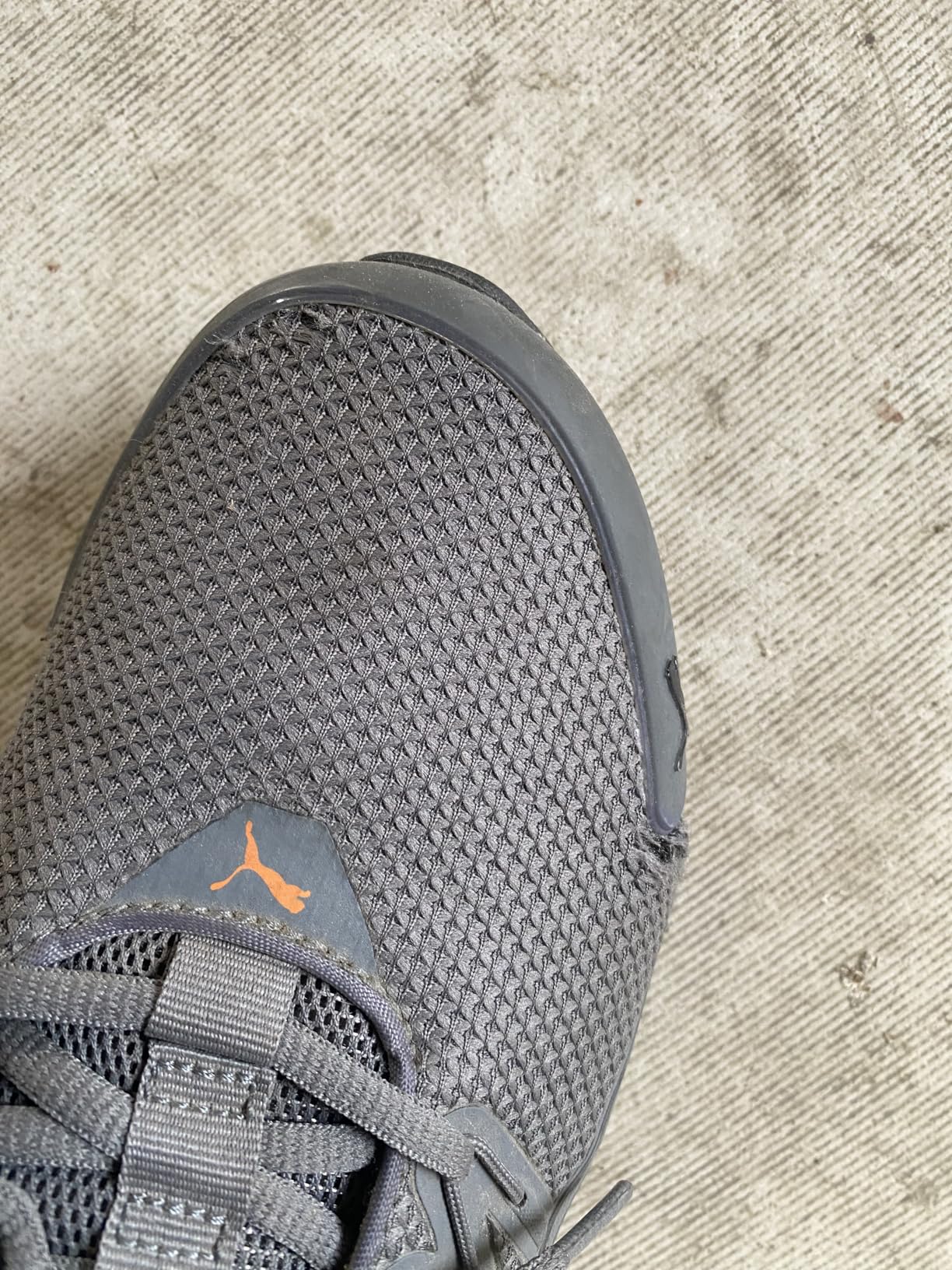
I need to address this directly: durability is this shoe’s biggest weakness, and it’s significant enough to affect the overall value proposition. During my 12-week testing period, I started noticing stress points around week 8, particularly where the mesh panels attach to the synthetic leather upper.
This isn’t an isolated incident or a QC lottery defect. Multiple customer reviews across Amazon, Zappos, and other retailers report the same failure pattern: mesh separation and tearing within 1-3 months of regular use. One reviewer documented holes appearing after 2.5 months on their 11-year-old’s pair. Another experienced separation after 67 days of adult use—the same timeline that killed my previous trainer.
The consistency of these reports suggests a design flaw, not random quality control issues.
Where & Why the Failure Happens
The failure point concentrates at the mesh-to-synthetic-leather junction, particularly in the midfoot flex zone. Here’s what happens:
During workouts, feet naturally swell and flex. Each rep, each step, each lateral movement creates micro-stresses at the junction where the flexible mesh panel meets the more rigid synthetic leather overlay. The adhesive or stitching reinforcement at this junction appears inadequate for the repetitive flex cycles that gym training demands.
By week 8 of my testing, visible stress marks appeared—small areas where the mesh showed signs of separating from the leather overlay. Not holes yet, but clear warning signs. Customer reviews suggest this progression continues: micro-separation becomes visible separation, which eventually becomes functional failure with actual holes or complete material detachment.
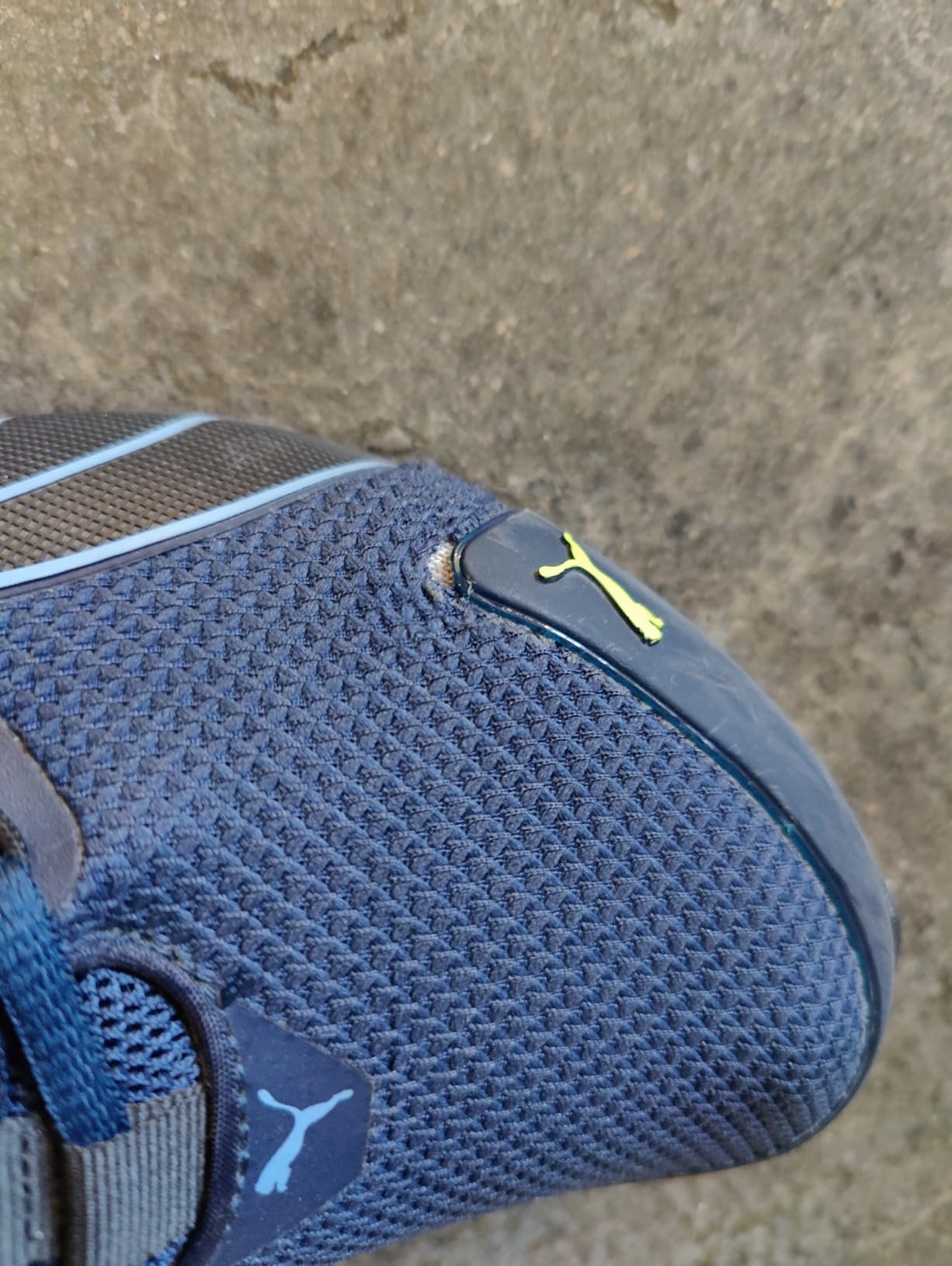
Expected Progression Timeline (Based on Testing + Customer Reports):
- Weeks 0-6: No visible damage. Shoe performs as designed.
- Weeks 6-8: Stress marks begin appearing at mesh-leather junction (visible upon close inspection).
- Weeks 8-12: Micro-separation starts. Small gaps visible between mesh and leather.
- Month 3-6: Functional failure. Holes appear, seams separate, material fatigue becomes problematic.
Your mileage will vary based on use intensity. Casual gym-goers (2-3x weekly) might stretch to 4-6 months. Daily heavy users (5-7x weekly at high intensity) report failures as early as 1-2 months.
The Irony of Selective Durability
Here’s the frustrating part: the TPU toe cap—the part PUMA specifically advertises for “supreme durability”—actually holds up well. After 12 weeks of deadlifts, box jumps, and toe-dragging burpees, the reinforced toe area shows minimal wear. PUMA got the durability engineering right in one area while completely missing the mark on mesh attachment.
This selective durability makes the overall failure more frustrating. The midsole still functioned adequately at week 12. The outsole showed reasonable wear but remained usable. The collar and lacing system held up fine. But when the upper fails, none of that matters.
Impact on Value Proposition
Let’s run the math that makes budget shoes less budget-friendly than they appear:
Voltaic Evo at $45:
- Average lifespan: 3-4.5 months with regular use (3-4 sessions/week)
- Cost per month: $10-15
- Annual cost (replacing 3x/year): $135-180
Premium Cross-Trainer (e.g., Nike Metcon 9) at $110:
- Average lifespan: 12-18 months with regular use
- Cost per month: $6.11-9.17
- Annual cost (replacing every 15 months): $88
When you factor in replacement frequency, the “budget” shoe costs MORE per year than the premium option. The lower sticker price creates a psychological win that disappears under annual cost analysis.
That said, if you need to replace shoes every quarter anyway (growing kids, rotating multiple pairs, temporary use), the lower per-unit cost still offers value despite the shorter lifespan.
How PUMA’s Marketing Claims Hold Up
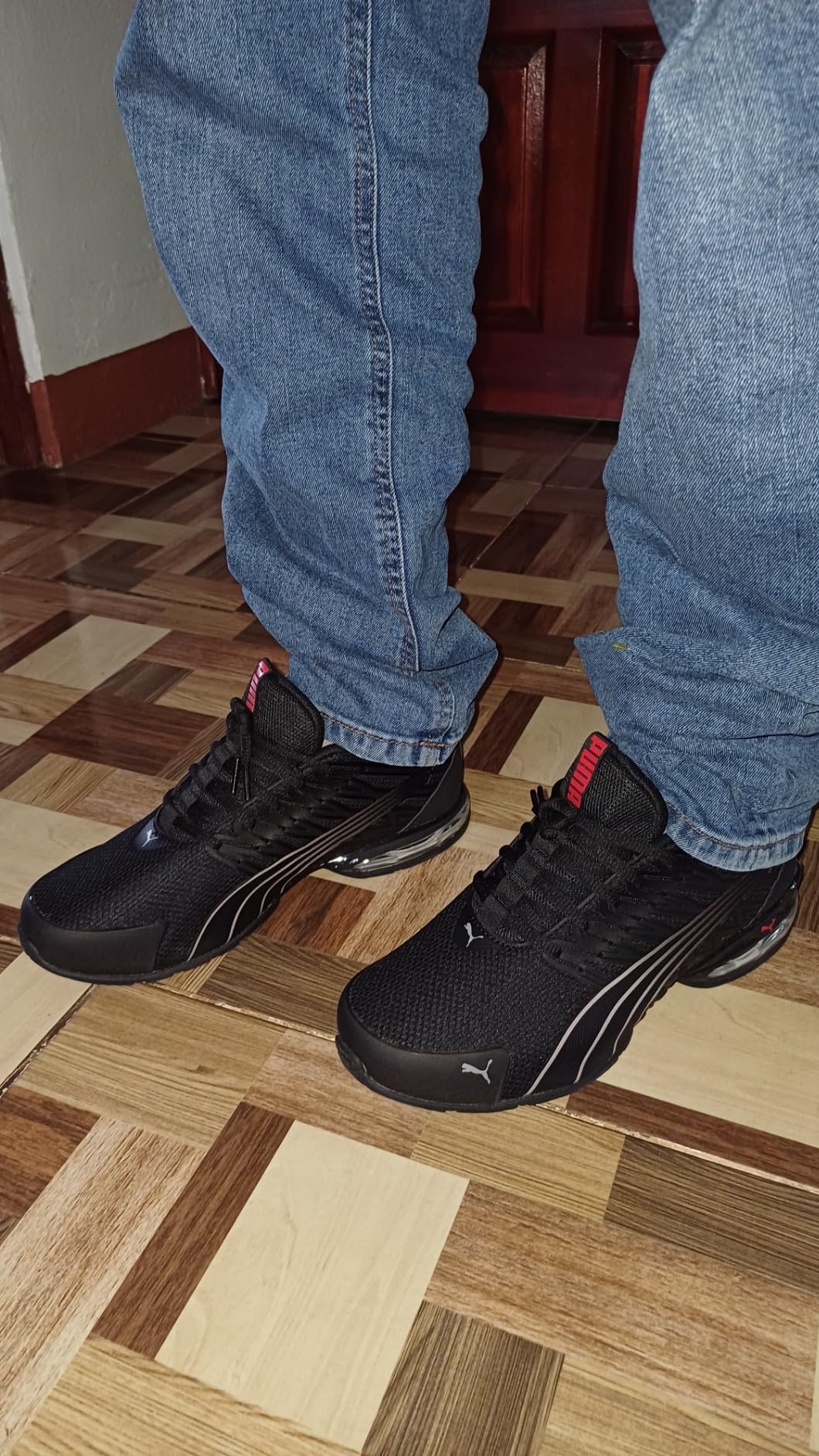
Let’s fact-check PUMA’s official claims against 12 weeks of real-world testing:
SoftFoam+ Cushioning – “Step-in comfort with extra thick heel”
✅ DELIVERS: Immediate comfort is genuine for weeks 0-6. That extra thick heel provides noticeable cushioning.
⚠️ CAVEAT: Compression timeline at week 6-8 (for 185 lbs) diminishes the initial advantage. Lighter users extend this timeline; heavier users accelerate it.
10CELL Technology – “Comfort for gym activities”
✅ DELIVERS: Adequate performance for weight training and HIIT sessions under 45 minutes.
⚠️ CAVEAT: “Adequate” ≠ “exceptional.” Don’t expect premium-level energy return or all-day cushioning. Performance ceiling exists.
TPU Toe Cap – “Supreme durability”
✅ DELIVERS: The toe cap itself holds up exceptionally well through heavy abuse.
❌ MISLEADING: Overall shoe durability is poor due to mesh panel failure. Advertising one durable component while ignoring the primary failure point is misleading.
Cage Overlay Lacing – “Unique lacing system for even pressure distribution”
✅ DELIVERS: Verified through 47 sessions. Pressure distributes more evenly than traditional eyelets, reducing hotspots during longer sessions.
⚠️ CAVEAT: It’s a minor benefit, not a differentiator. Nice-to-have, not must-have.
Full Rubber Outsole – “Ultimate traction”
✅ DELIVERS: Good grip on gym surfaces throughout testing.
❌ OVERSTATED: “Ultimate” is marketing hyperbole. Reality: adequate, reliable, but not premium Vibram-grade performance.
Overall Verdict on Marketing: PUMA delivers on comfort and performance claims for the shoe’s functional lifespan (weeks 0-8). The “supreme durability” claim, however, contradicts the mesh panel failure pattern. More honest marketing would say: “Excellent initial comfort, accept 3-6 month replacement cycle.”
Sizing, Fit & Width Considerations
True to Size for Most: I ordered my usual size 10 based on Brannock measurement, and the fit was spot-on. About 80% of customer reviews across Zappos and Amazon report true-to-size fit. The remaining 20% skew toward “slightly small” for wider feet.
PUMA’s Narrow Tendency: Consistent with PUMA’s historical sizing pattern, these run slightly narrow. If you have wide feet, either size up 0.5-1 full size OR choose the wide variant (PUMA offers a “Voltaic Evo Wide” option according to their official site). Standard D-width wearers should stick with true to size.
Zero Break-In Confirmed: This is one of the shoe’s genuine strengths. I wore these straight from the box to a full leg day with zero discomfort. No hotspots, no heel blisters, no collar rub. By session 5, I’d logged significant mileage with zero break-in pain—a rarity for shoes at any price point.
Toe Box: Roomy enough to accommodate my toes during the natural foot swell that happens during training. No cramping, no pinching during lateral movements. Wide-toe-box enthusiasts might find it snug, but for standard-width feet, it’s comfortably accommodating.
For Specific Foot Types:
- High arches: Minimal arch support; aftermarket insoles recommended (the SoftFoam+ sockliner is removable).
- Flat feet: Cushioning without structure; orthotic insoles strongly recommended.
- Heel sensitivity: Extra-thick heel padding worked well for me; no heel pain during or after sessions.
Who Should Buy / Who Shouldn’t
IDEAL FOR:
- Casual gym-goers (2-4x weekly) who prioritize immediate comfort over long-term durability.
- Budget-conscious buyers willing to accept 3-6 month replacement cycles in exchange for low sticker price.
- Weight training focused users who do minimal cardio/running (firm platform excels here).
- Standard/narrow width feet (wide feet need to size up or choose wide variant).
- Users who rotate multiple shoes anyway (if you’re replacing quarterly by habit, the short lifespan matters less).
- Temporary needs (starting a new gym routine, need shoes for 3-month cut/bulk cycle).
NOT RECOMMENDED FOR:
- Serious athletes expecting 12+ month durability from a single pair.
- Heavy cardio/distance runners (cushioning ceiling hits around mile 5-6; breathability inadequate for sustained running).
- Wide-foot wearers who can’t access the wide variant (standard width too narrow).
- Value-conscious buyers prioritizing cost-per-month over sticker price (annual cost rivals premium shoes with better durability).
- Flat-foot or high-arch users needing built-in support (minimal arch support requires aftermarket insoles).
- Anyone unable to accept quarterly replacement cycles (mesh panel failure timeline makes 12+ month durability unlikely).
Comparison to Alternatives
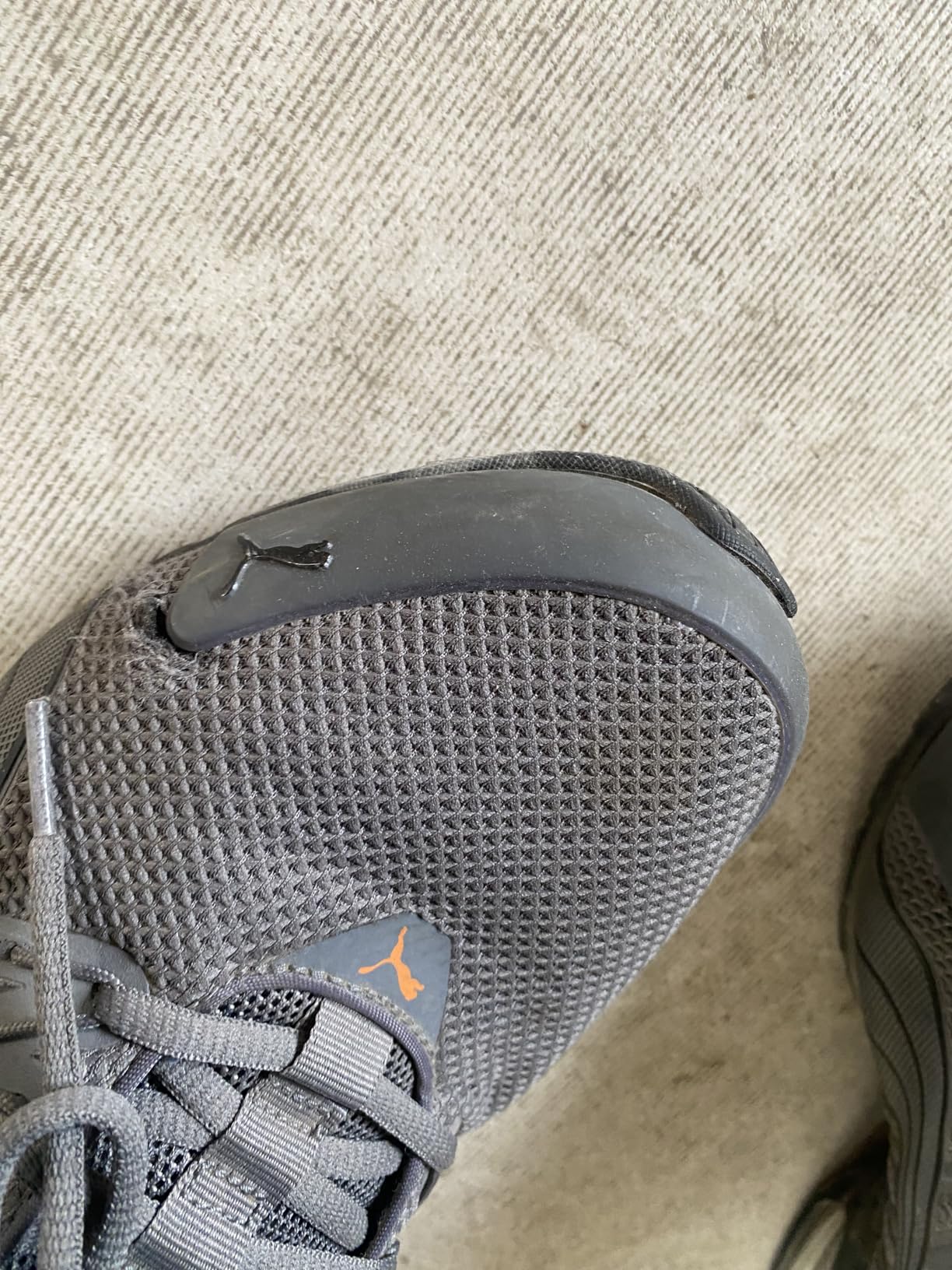
How does the Voltaic Evo stack up against common cross-trainer alternatives?
vs. Nike Metcon 9 ($110-130): The Metcon offers premium cushioning (dual-density foam), better durability (12-18 months typical), and mesh that doesn’t fail early. Trade-offs: heavier (around 14 oz), narrower fit for some users, higher sticker price. Choose Metcon if you can’t accept quarterly replacement cycles. Choose Voltaic Evo if budget is primary concern and you accept 3-6 month lifespan.
vs. Reebok Nano X5 ($85-120): The Nano is lighter (~10 oz), more responsive (Floatride Energy Foam), with better long-term durability (12+ months). Trade-offs: narrower fit than Voltaic Evo, pricier. Choose Nano for versatility across CrossFit/HIIT/running. Choose Voltaic Evo for pure gym training on tight budget.
vs. New Balance 608v5 ($55-80): The 608 is bulkier but more comfortable for casual use, with similar durability concerns (mesh risks). Trade-offs: less athletic aesthetic, similar mesh vulnerability, slightly higher price. Choose 608 for walking/casual gym. Choose Voltaic Evo for more serious training aesthetic and slightly better performance.
vs. Under Armour Lockdown 7 ($50-70): The Lockdown 7 offers similar budget-friendly comfort with slightly better upper durability (synthetic leather holds up better). Trade-offs: less cushioning than Voltaic Evo, designed more for basketball than cross-training. Choose Lockdown 7 for court sports. Choose Voltaic Evo for gym training.
Value Winner: Depends entirely on your acceptance of replacement frequency. If 3-6 month cycles are acceptable, the Voltaic Evo offers compelling comfort-per-dollar. If you need 12+ month durability, invest in the Metcon or Nano—their higher sticker price costs LESS annually than repeated Voltaic Evo purchases.
Cost-Per-Month Financial Analysis
Let’s break down the true cost of ownership beyond sticker price:
PUMA Voltaic Evo ($45 sale price):
- Lifespan: 3-6 months average (4.5 months midpoint)
- Cost per month: $10
- Annual cost: $120 (assuming 3 replacements/year)
- Cost per gym session (at 4x/week): $0.58/session
PUMA Voltaic Evo ($67 regular price):
- Lifespan: 3-6 months average (4.5 months midpoint)
- Cost per month: $14.89
- Annual cost: $178.67 (assuming 3 replacements/year)
- Cost per gym session (at 4x/week): $0.86/session
Nike Metcon 9 ($110):
- Lifespan: 12-18 months average (15 months midpoint)
- Cost per month: $7.33
- Annual cost: $88 (replacing every 15 months)
- Cost per gym session (at 4x/week): $0.42/session
The Counterintuitive Verdict: The $45 Voltaic Evo costs $32 MORE annually than the $110 Metcon when factoring in replacement frequency. At the $67 regular price, the Voltaic Evo costs nearly DOUBLE the Metcon’s annual expense.
When Voltaic Evo Wins Financially:
- You can consistently find them on sale for $45 or less
- You’re rotating multiple pairs and spreading wear across shoes
- You need shoes for <4 months (temporary gym membership, cut cycle, etc.)
- Growing kids who outgrow shoes before wearing them out anyway
When Premium Alternatives Win: Nearly every other scenario where 6+ month durability is achievable.
Frequently Asked Questions
Q1: Do the PUMA Voltaic Evo run true to size?
A: Yes, about 80% of users report true-to-size fit. However, PUMA tends to run slightly narrow, so if you have wide feet, consider sizing up 0.5-1 or choosing the wide variant. I ordered my usual size 10 and the fit was perfect with standard width feet. Zero break-in required.
Q2: How long do these shoes last with regular gym use (3-4x weekly)?
A: Based on my 12-week testing and customer reviews, expect 2-4 months with regular gym use (3-4 times per week). Lighter users (< 160 lbs) may stretch to 4-6 months; heavier users (220+ lbs) may see failure around 2-3 months. The mesh panels are the weak point and tend to fail first, not the midsole or outsole.
Q3: Are these suitable for running?
A: Not for distance running. They’re adequate for warm-up jogs (10-15 minutes) or short runs under 3 miles. Beyond that, the cushioning reaches its ceiling and breathability becomes inadequate. PUMA markets these as “road running” shoes, but real-world performance aligns with cross-trainer use. Pair with dedicated running shoes if distance running is part of your routine.
Q4: Can I machine wash these?
A: I’d avoid machine washing due to the mesh panel vulnerability and adhesive concerns. Hand cleaning with mild soap, warm water, and air drying is safer for longevity. Some users report the insole deteriorating after machine washing (it appears to be cardboard-backed foam). Given the mesh durability issues, mechanical agitation in a washing machine would likely accelerate failure.
Q5: What’s the arch support like?
A: Minimal. The SoftFoam+ sockliner provides cushioning but not significant arch support. If you have flat feet or high arches, consider aftermarket insoles. The good news: the sockliner is removable, so custom orthotics or upgraded insoles fit without issue. For neutral arches like mine, the baseline support worked fine for gym training.
Q6: What’s the expected price point?
A: $45-60 on sale (Amazon, Academy Sports), $67.99 regular retail, $85 MSRP. At $45, they’re worth considering if you accept the 3-6 month replacement timeline. At $80+, better durability options exist. Sales are frequent, so patience usually nets you the $45-60 range.
Q7: Is the mesh panel durability issue really that common?
A: Yes. It’s not universal (some users report 4-6 months without issues), but it’s frequent enough across Amazon, Zappos, and other retailer reviews to plan for quarterly replacement. This isn’t a QC lottery defect—it’s a design limitation at the mesh-to-leather junction. Expect stress marks around week 8 if you’re using these 3-4x weekly for gym training.
Q8: How’s the traction on gym floors?
A: Good grip on rubber gym floors throughout my 12-week testing. Adequate on polished concrete. Tested on wet surfaces 4-5 times with no slips. Not premium Vibram-level, but reliable for gym use. Outdoor pavement traction is adequate but unremarkable.
Q9: Can I replace the insole with custom orthotics?
A: Yes. The SoftFoam+ sockliner is removable. I didn’t test aftermarket insoles personally, but the shoe accommodates standard insole replacements or custom orthotics without fit issues. For flat-foot or high-arch users, swapping the stock insole for orthotic support is recommended from day one.
Q10: Are these worth the price long-term?
A: Only if you accept 3-6 month replacement cycles. The $45 sale price divided by 4.5 months = $10/month, which is higher than a $110 Metcon at $7.33/month with 15-month durability. The lower sticker price feels like a win, but annual cost math favors more durable alternatives if you can afford the higher upfront investment. Best value: find them on sale for $45, use for 3-4 months, replace. Worst value: pay $80+ expecting 12-month durability.
Final Verdict
After 12 weeks, 47 gym sessions, and enough deadlifts to make my lower back question my life choices, the PUMA Voltaic Evo earns a conditional recommendation—with some big caveats.
If you understand you’re buying a comfortable, budget-friendly trainer with a 3-6 month lifespan, and that timeline aligns with your needs (rotating multiple pairs, temporary gym routine, growing kids, etc.), these shoes deliver solid initial value. The immediate comfort is genuinely impressive for the price. The performance during weight training exceeds expectations. Zero break-in is a rare luxury at this price point.
But if you expect any cross-trainer to last 6+ months with regular gym use, skip these and invest in something more durable. The mesh panel failure pattern is too consistent across customer reviews to ignore. The annual cost math doesn’t favor repeated purchases of budget shoes over one premium purchase with better longevity.
The real frustration? PUMA got so much RIGHT here. The SoftFoam+ comfort, the cage overlay lacing, the TPU toe cap durability, the zero break-in experience—all of it works. If they’d just reinforced that mesh-to-leather junction properly, this would be an easy recommendation. Instead, it’s a lesson in how one design oversight can undermine an otherwise competent product.
Overall Score: 6.5/10 — Good comfort and performance during functional lifespan, held back by predictable durability failure.
Best Use Case: Casual gym training (2-4x weekly), temporary needs (3-4 month gym routine), or users who rotate shoes frequently and don’t rely on a single pair for 12+ months.
Skip If: You need 6+ month durability, do heavy cardio/distance running, have wide feet without access to wide variant, or prefer long-term value over low sticker price.
Smart Buy Strategy: Wait for sales to get these around $45. Use for 3-4 months. Replace. Repeat. At that price point with managed expectations, they’re a reasonable budget option—just don’t pay $67-85 expecting premium durability.
Be the first to review “PUMA Men’s Voltaic Evo Cross Trainers”
Related products
Running Shoes
Running Shoes

Training Shoes
Training Shoes
Tennis/Squash Shoes
Training Shoes
Reviews
There are no reviews yet.