
Six months, three pairs of training shoes, $300 gone. When my wife suggested maybe the problem wasn’t the shoes but the way I trained, I had no good comeback. So when I stumbled on the Relxfeet Men’s Barefoot Shoes priced at $35, I figured if I was going to prove her wrong, this was the cheapest possible way to do it. Eight weeks later, 45+ sessions across deadlifts, HIIT, rope climbs, box jumps, and some outdoor suffering — here’s the honest verdict on whether $35 can actually deliver on barefoot promises.
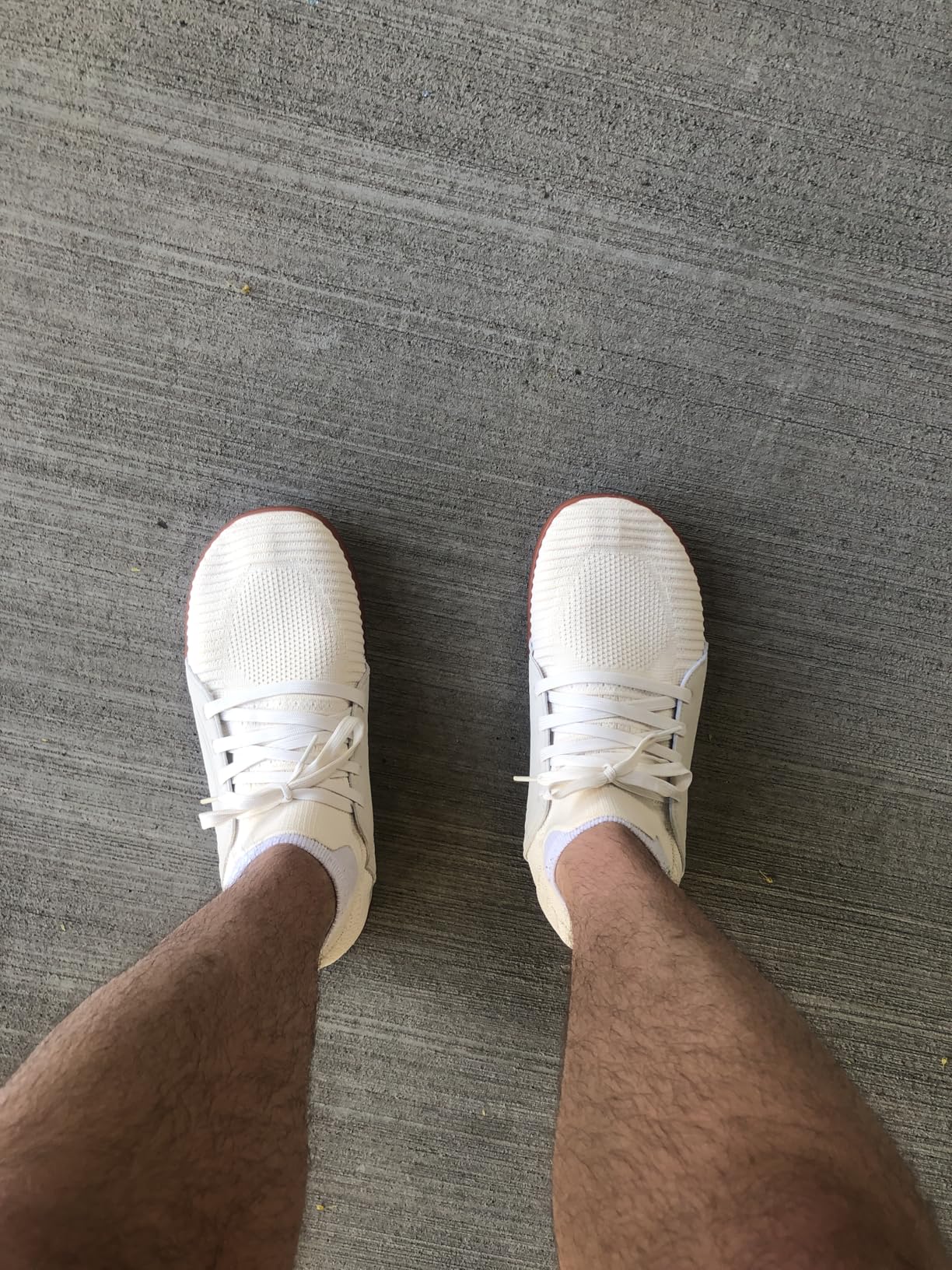
Who This Shoe Is Trying to Reach — and Why It Makes Sense
There’s a gap in the barefoot shoe market nobody talks about. On one end: $150+ minimalist shoes from Vivobarefoot, Xero Shoes, and similar brands that require real commitment before you even know if barefoot training is for you. On the other end: cheap “barefoot-inspired” shoes that are basically standard sneakers with a misleading product description.
The Relxfeet sits in neither camp, which is why it’s interesting. At $35, it’s positioned as a genuine entry point — a way to test zero-drop, wide-toe-box training before you spend four times as much on a premium option. That positioning only works if the shoe actually delivers on the core promises. Spoiler: it mostly does.
I came to this with size 10.5 feet (wider than average), a cross-training routine that punishes shoes badly, and zero prior barefoot experience. If the shoe works for someone like me — heavy use, wide feet, skeptical — it probably works for most of the people considering it.
What Happens When You Actually Open the Box
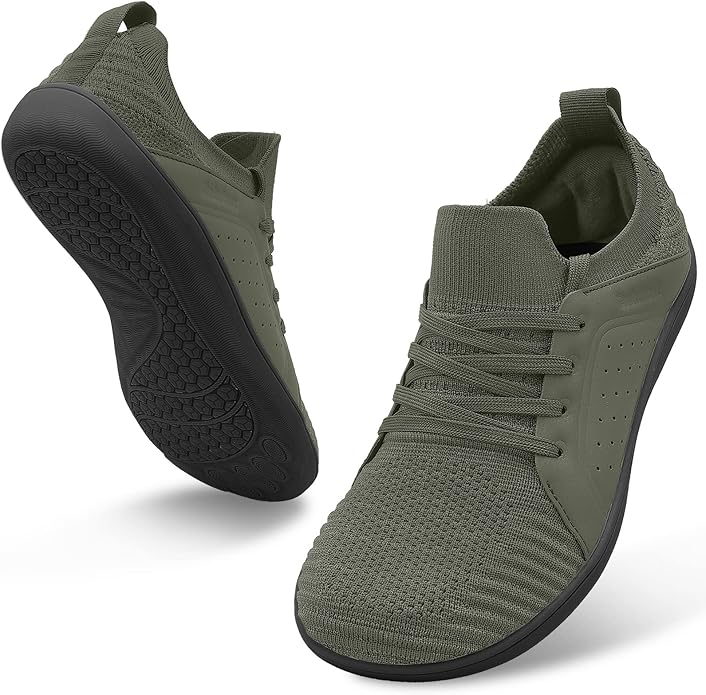
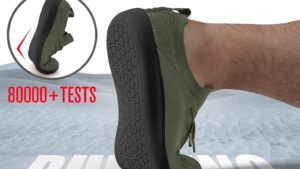
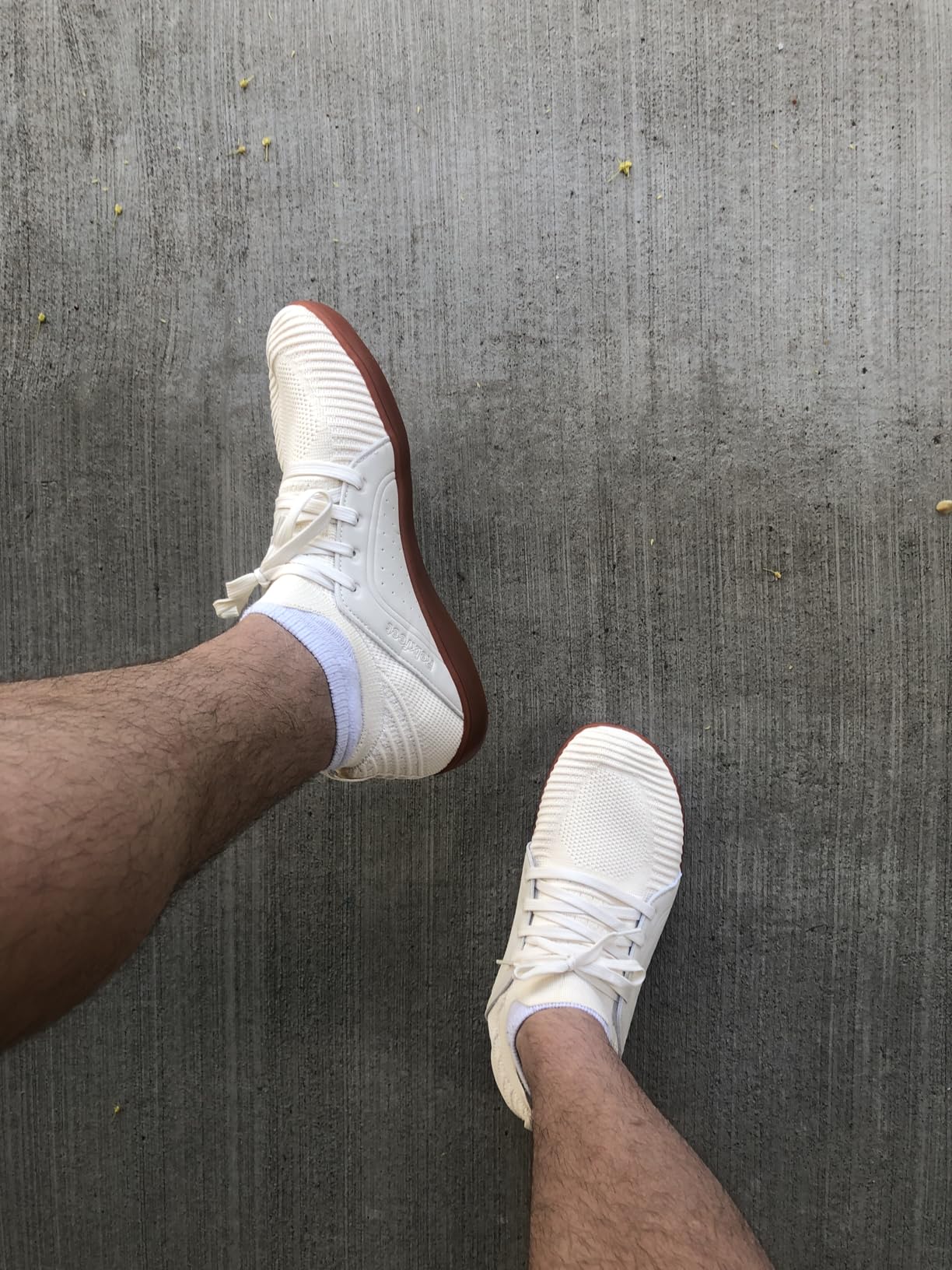
The first thing that surprised me was the weight — or lack of it. Picking these up compared to my old cushioned trainers was like the difference between carrying a textbook and a magazine. The ~250g (0.55 lbs) per shoe figure from the specs isn’t marketing fluff; it’s immediately noticeable.
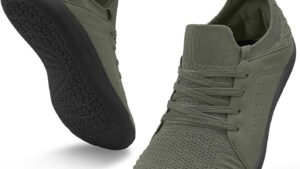
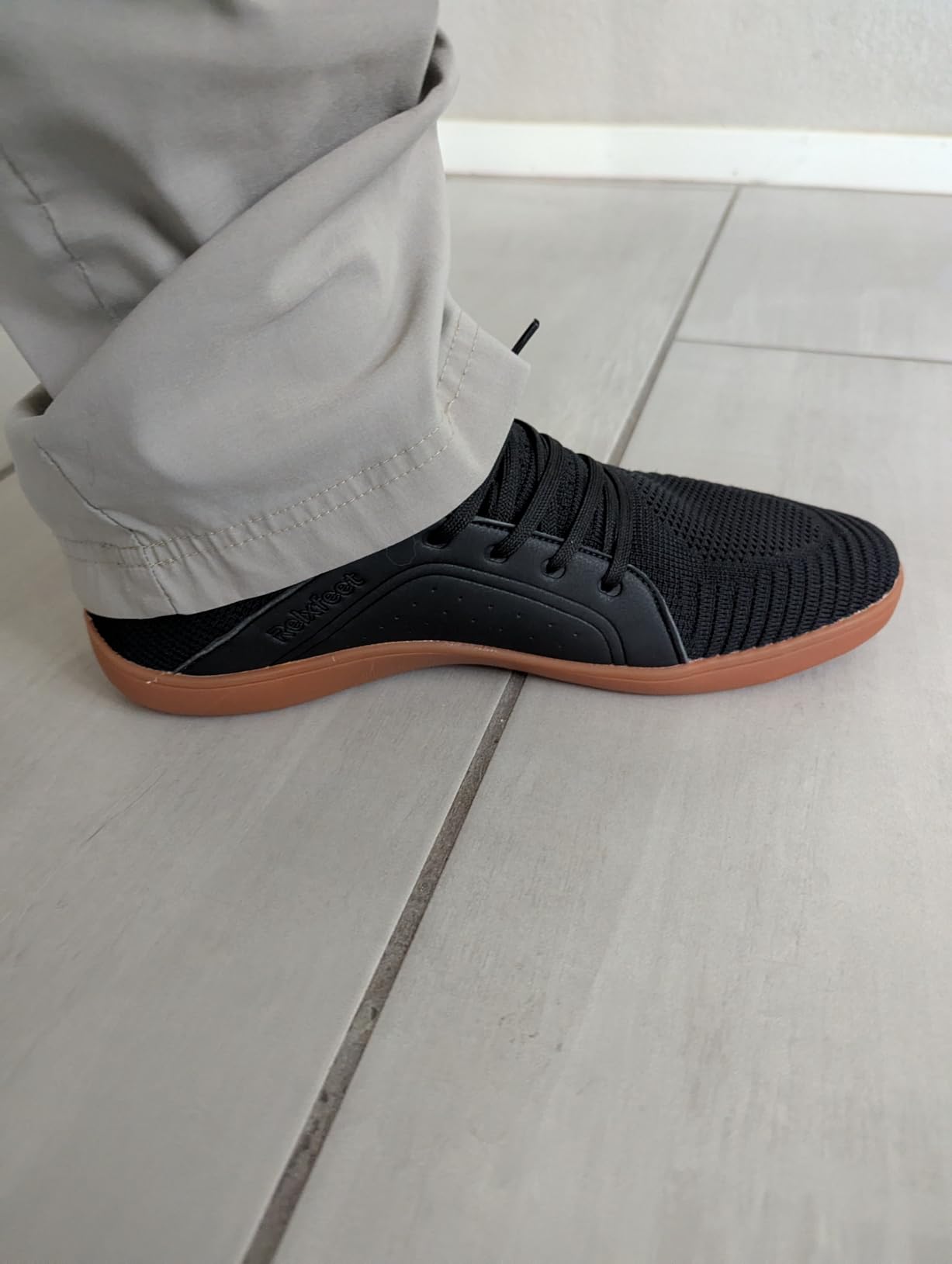
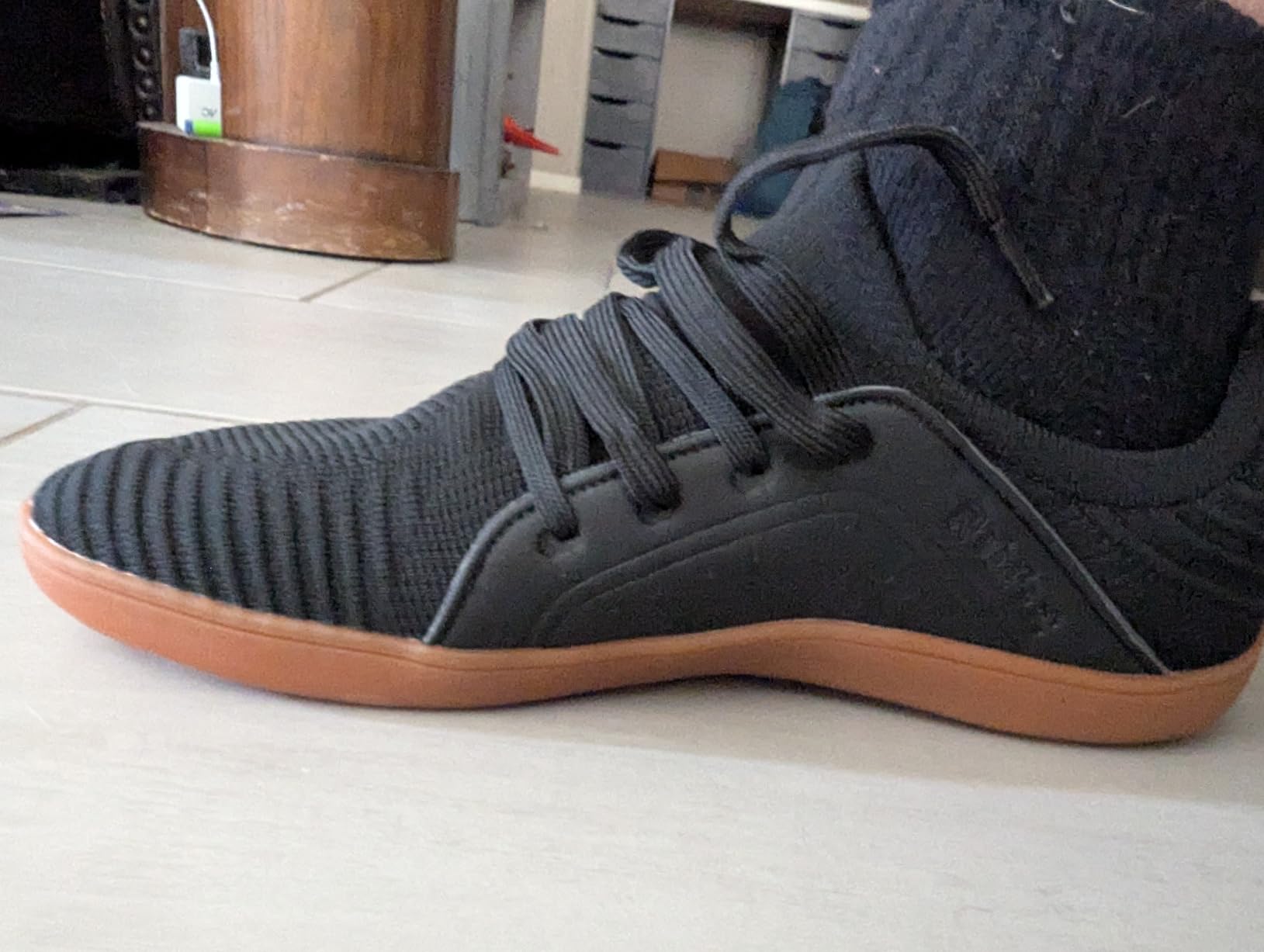
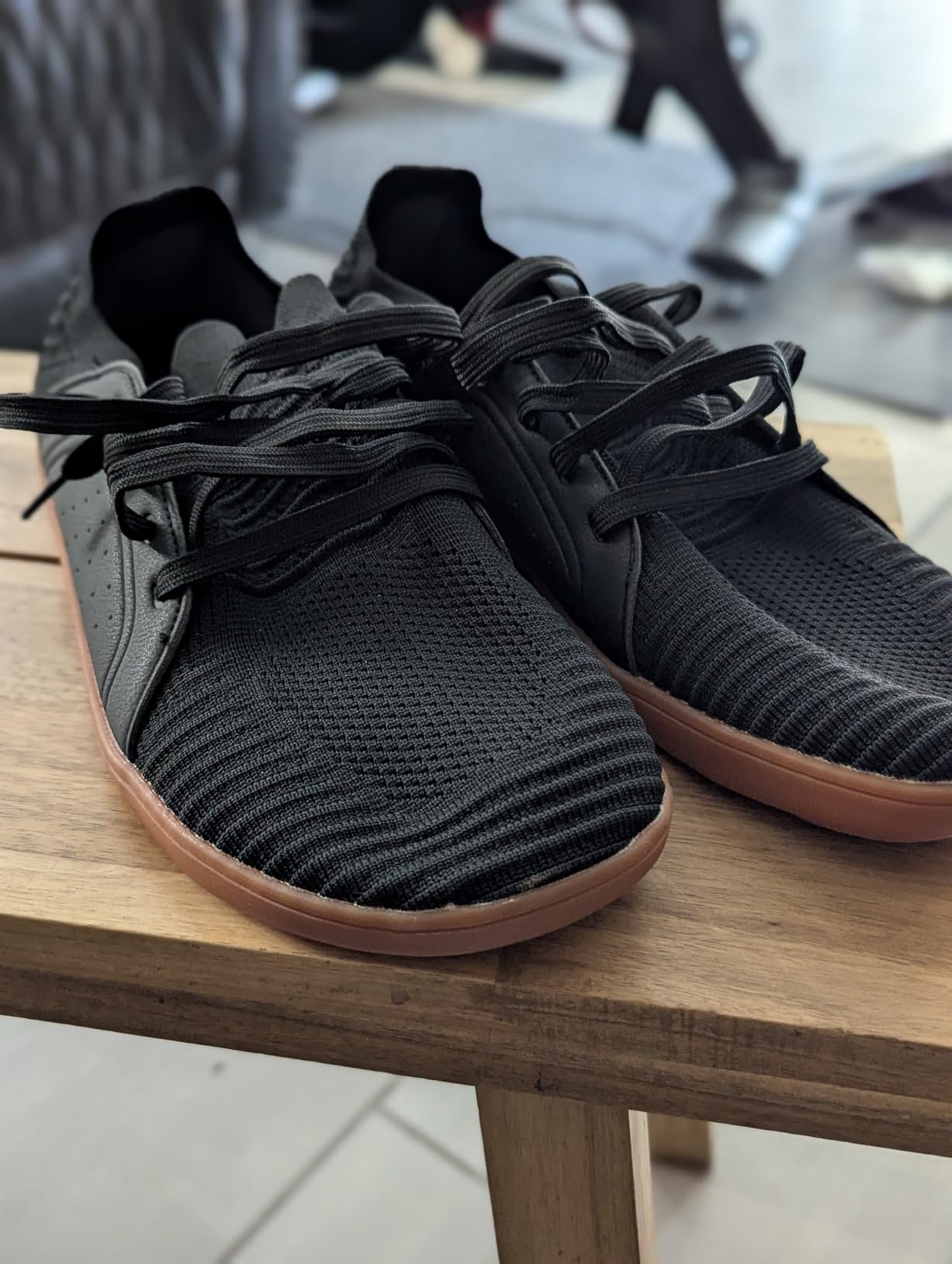
The army green colorway looks cleaner in person than in product photos. The knit mesh upper has a quality textile feel — not plasticky, not cheap-feeling, just functional. The rubber sole is thin and firm; flex it and it folds almost flat. Ground contact is going to be real with these.
Here’s the thing I want to tell you right now, before you buy: in week one, when I tried to get a secure fit by tightening the laces aggressively, the lace tore through the fabric eyelet. Not catastrophically — the eyelet construction just isn’t built for heavy lace tension. I grabbed an awl, created a new hole about half a centimeter lower in the upper fabric, and haven’t had an issue since. For seven straight weeks after that fix, laces held fine.
At $35, I’m not going to pretend this is unacceptable — it’s not. But you should go in knowing it can happen, and knowing the fix takes about ninety seconds if it does.
Sizing: The Wide Toe Box Is Real, But Read This First
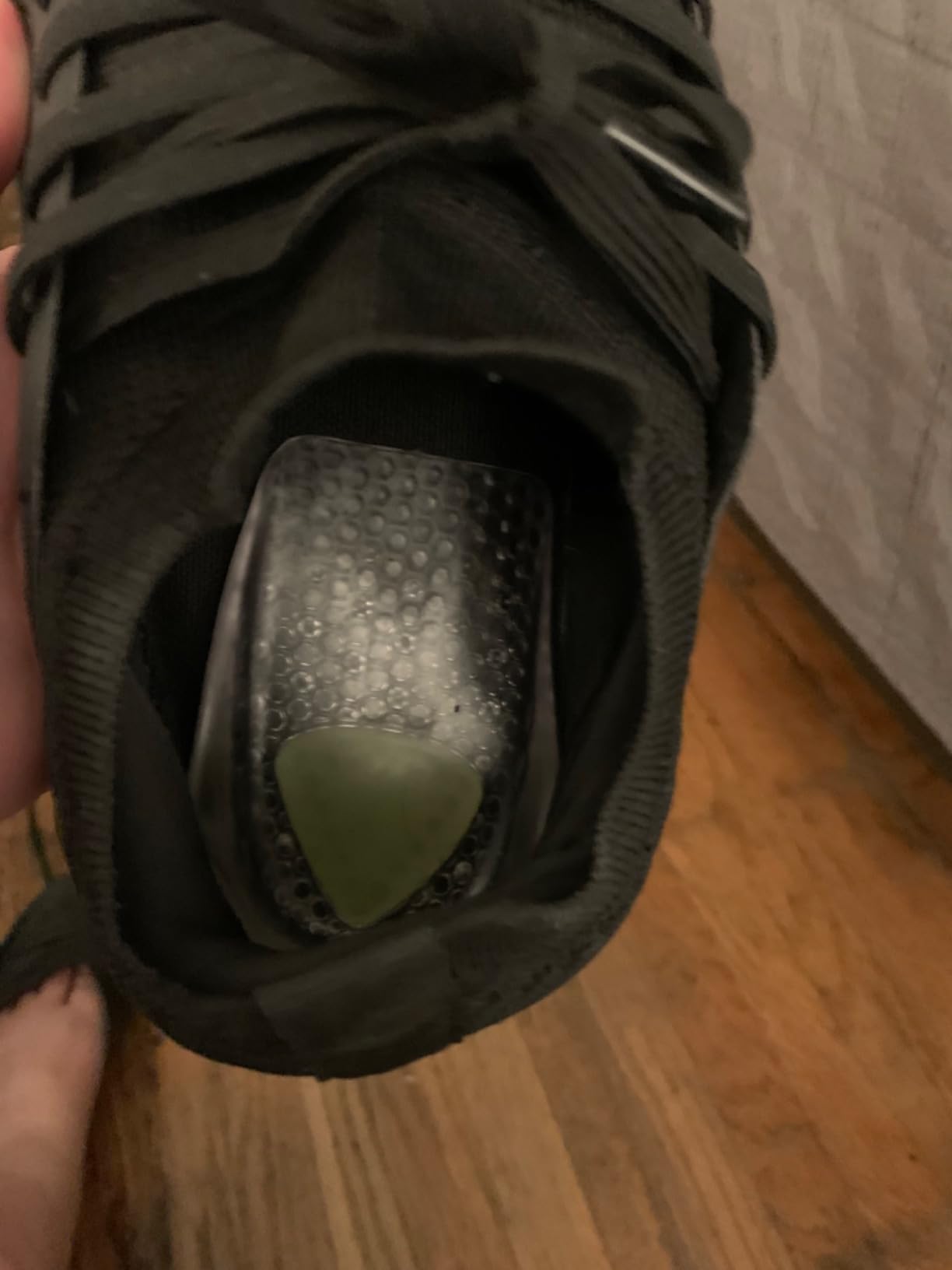
These run slightly large. I’m a consistent size 10.5 across most brands, and at true to size the Relxfeet fits, but there’s extra room I don’t need. If you’re between sizes, go down half a size. If you have genuinely wide feet (EEE territory), true to size is probably right.
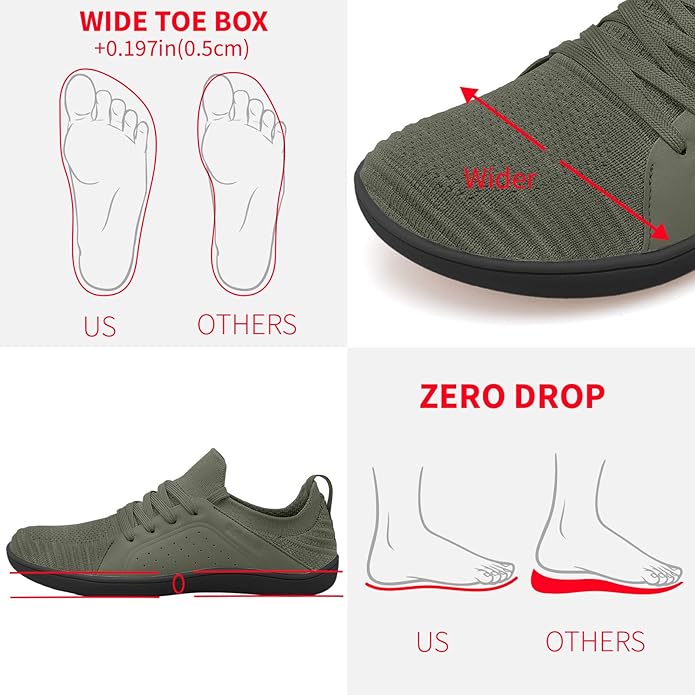
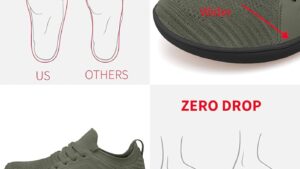
The wide toe box isn’t marketing language here. I held these against my old Nike cross-trainers and there’s a visible, meaningful difference in width through the toe area. For guys who deal with toe cramping during lateral movement — squats, lunges, lateral hops — that extra space matters. My toes had room to splay naturally without pushing against the upper at any point in my testing.
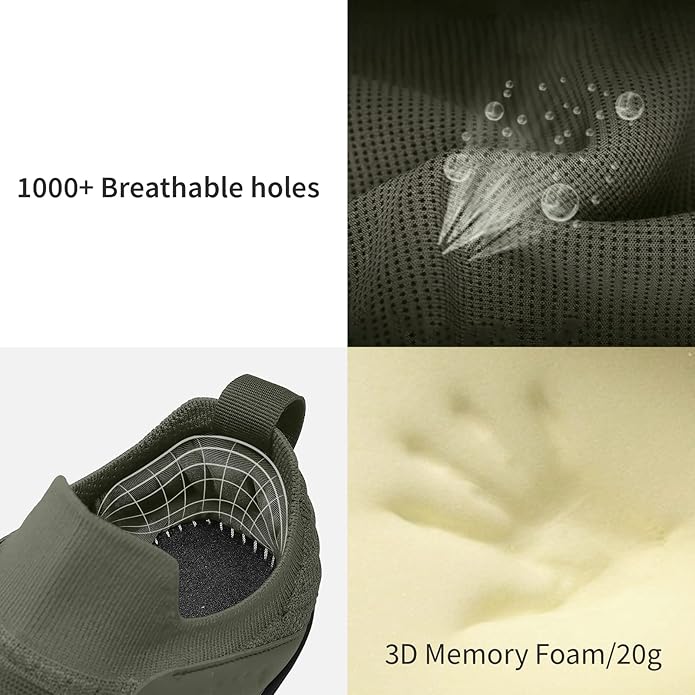
The heel and midfoot section is snugger, which keeps the shoe from sliding. I had zero slipping across 45+ sessions despite the roomy toe box. The sock-like upper construction means there’s no separate tongue to deal with, which is convenient for quick on-off between exercises — though it also means you can’t adjust the fit section by section the way you can with a traditional shoe.
Thin socks work better than thick ones. Thick socks compress the toe box, partially defeating the purpose.
The Zero-Drop Adjustment Period (What Nobody Mentions)
If you’re coming from cushioned trainers with any heel elevation — even a small amount — the first week in zero-drop shoes involves your calves filing a formal complaint. Mine were sore for five days after my first workout. Not injured-sore. Worked-harder-than-usual sore.
Here’s what the adjustment actually looked like over eight weeks:
Week 1: Calf soreness after every session. Cut workout duration slightly to let feet adapt. The sensation of feeling the gym floor through a 12mm sole is genuinely strange at first.
Weeks 2-3: Soreness fades. Arch muscles start engaging more noticeably. Post-workout fatigue shifts from calves to intrinsic foot muscles — which is the point.
Week 4: Something clicks. Deadlifts feel more stable. Squats feel more planted. The ground feedback that felt overwhelming in week one becomes useful information.
Weeks 5-6: New gait pattern sets in. Balance during single-leg exercises noticeably improves. The shoes feel like part of the foot rather than something on it.
Weeks 7-8: Full adaptation. Calf strength gain is tangible. Explosive movements — box jumps, broad jumps — feel more natural. Going back to cushioned trainers afterward felt weirdly disconnected.
If you have a history of plantar fasciitis or Achilles issues, transition slowly. One or two sessions per week in these initially, not cold turkey. The adaptation is real, but it’s a stress on structures that aren’t used to this kind of work.
Weight Room: Where This Shoe Earns Its Price Tag
This is the section that surprised me most. I expected adequate performance. What I got was performance that matched or beat shoes that cost four times as much.
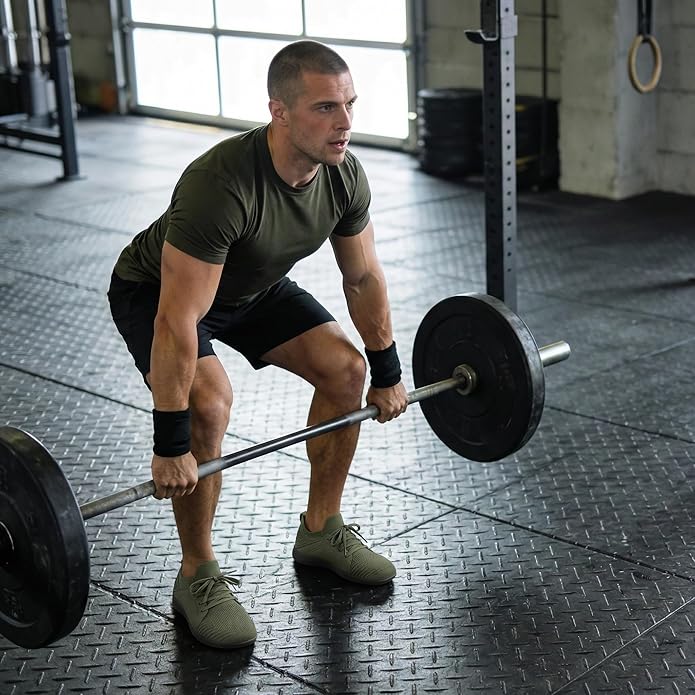
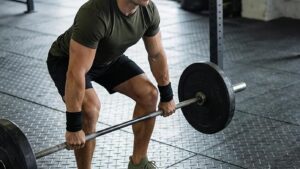
Deadlifts: The thin, flat sole means you can feel the floor throughout the entire lift. No midsole compression interfering with your sense of where you’re pushing from. My lockout consistency improved noticeably starting around week three — not because I got stronger, but because I could feel my foot positioning more precisely. Rating: 9/10 for this specific movement.
Squats: Zero-drop eliminates the forward lean that cushioned heels encourage. Knees track naturally. Feet stay planted. If you’ve ever been told to put plates under your heels for squatting, barefoot shoes address the same underlying issue — they just do it from the shoe design rather than a workaround. Rating: 8.5/10.
HIIT circuits: Lightweight pays off here. Over 100 burpees or 200 jump rope rotations, the shoe weight difference accumulates. The 0.55 lbs per shoe versus my old 0.85 lbs trainers doesn’t sound like much until you’re on rep 80. Rating: 8/10.
Rope climbs: Best performance of the test, honestly. Thin sole = your foot wraps and grips the rope better. I’d gotten used to a thick-soled shoe essentially creating distance between my foot and the rope. Taking that cushion away felt like cheating. Rating: 9/10.
Box jumps: Natural landing feels intuitive. Less heel-strike shock than cushioned shoes, surprisingly — the zero-drop encourages midfoot landing which is mechanically better anyway. Rating: 8.5/10.
Durability: Eight Weeks of Honest Wear
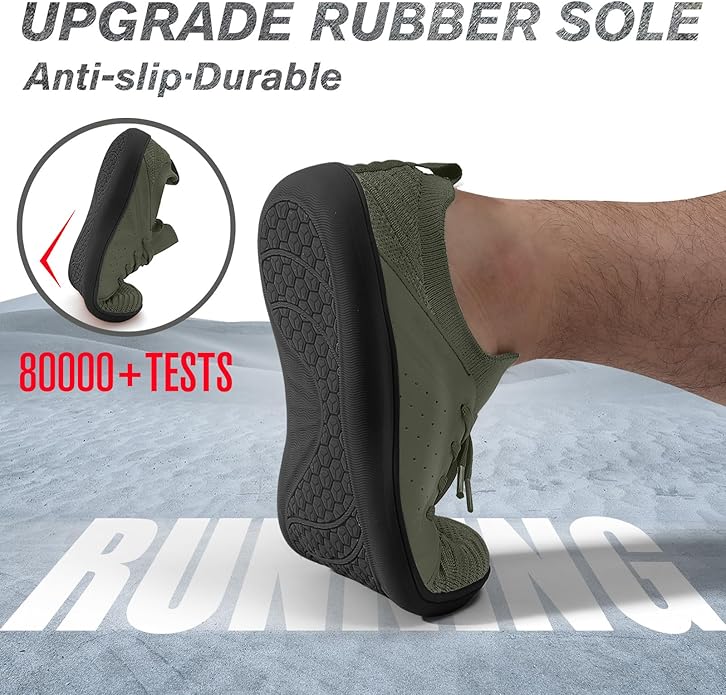
The upper mesh has held up better than I expected — no tearing, no fraying, just minor scuffing from occasional concrete contact. The rubber sole shows minimal wear across the contact points even after 45+ sessions. No sole separation; the glue bond looks intact, though I’d monitor this past the six-month mark.
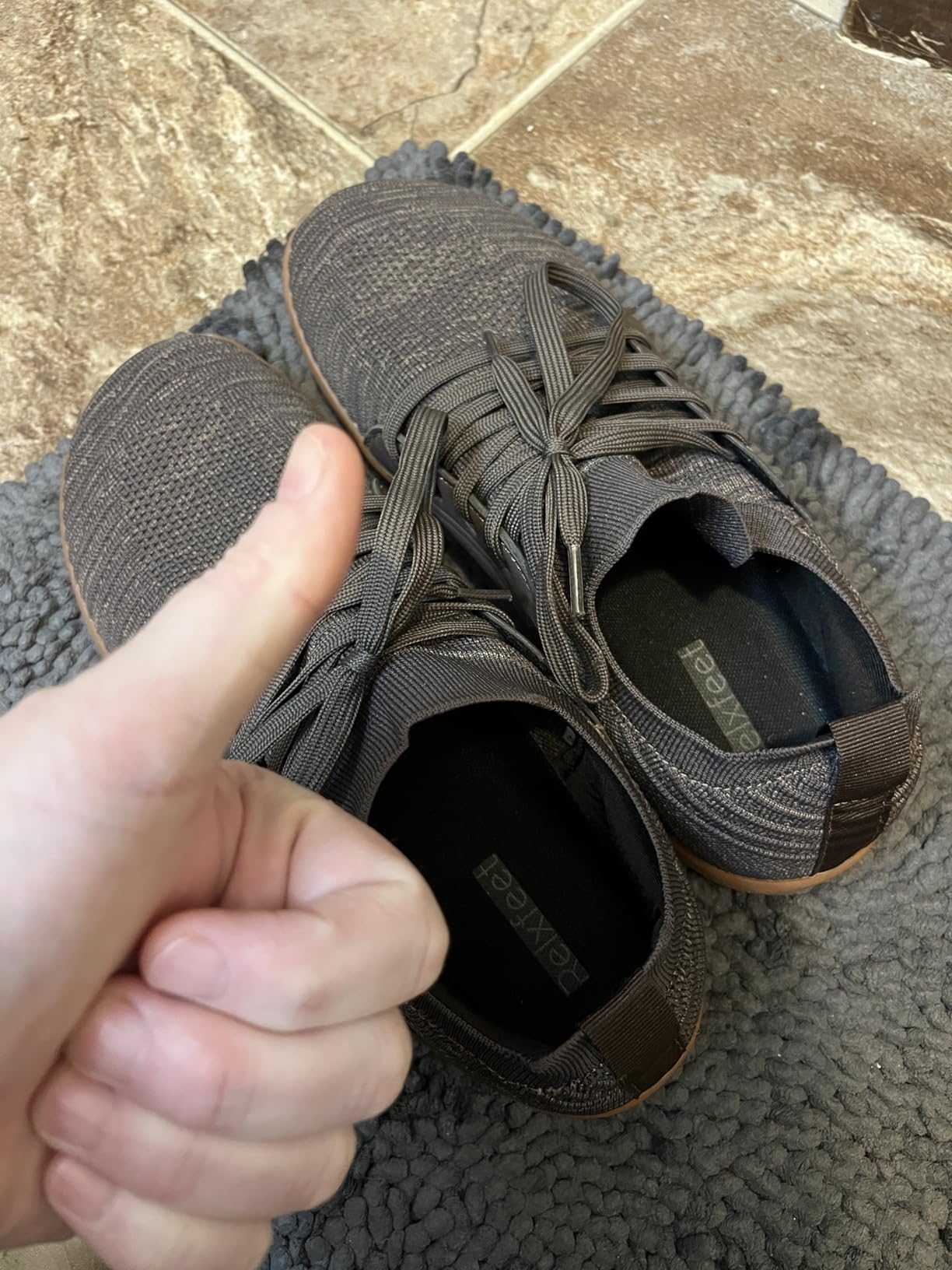
The removable insole is where I noticed the most wear. By week six, the heel cushioning had compressed visibly compared to a fresh insole. The shoe is still functional — the sole’s rubber provides ground protection regardless of insole condition — but if you want that original cushion feel, plan on replacing the insole around the six-month mark.
Based on my testing pace (3-4 sessions per week), I’d project 8-10 months before the shoe starts showing structural issues. Casual users doing 1-2 sessions per week might push a full year. Serious daily users should budget for replacement around six months.
One thing I’m watching: the sole-upper bond at the front of the toe box. It’s holding fine at eight weeks, but that area takes stress during rope climbs and push-up transitions, and budget shoes sometimes fail there. No current concern — just something to monitor.
The Claims vs. Reality Breakdown
Wide Toe Box: ✅ Verified. Genuinely wider, not marketing wide.
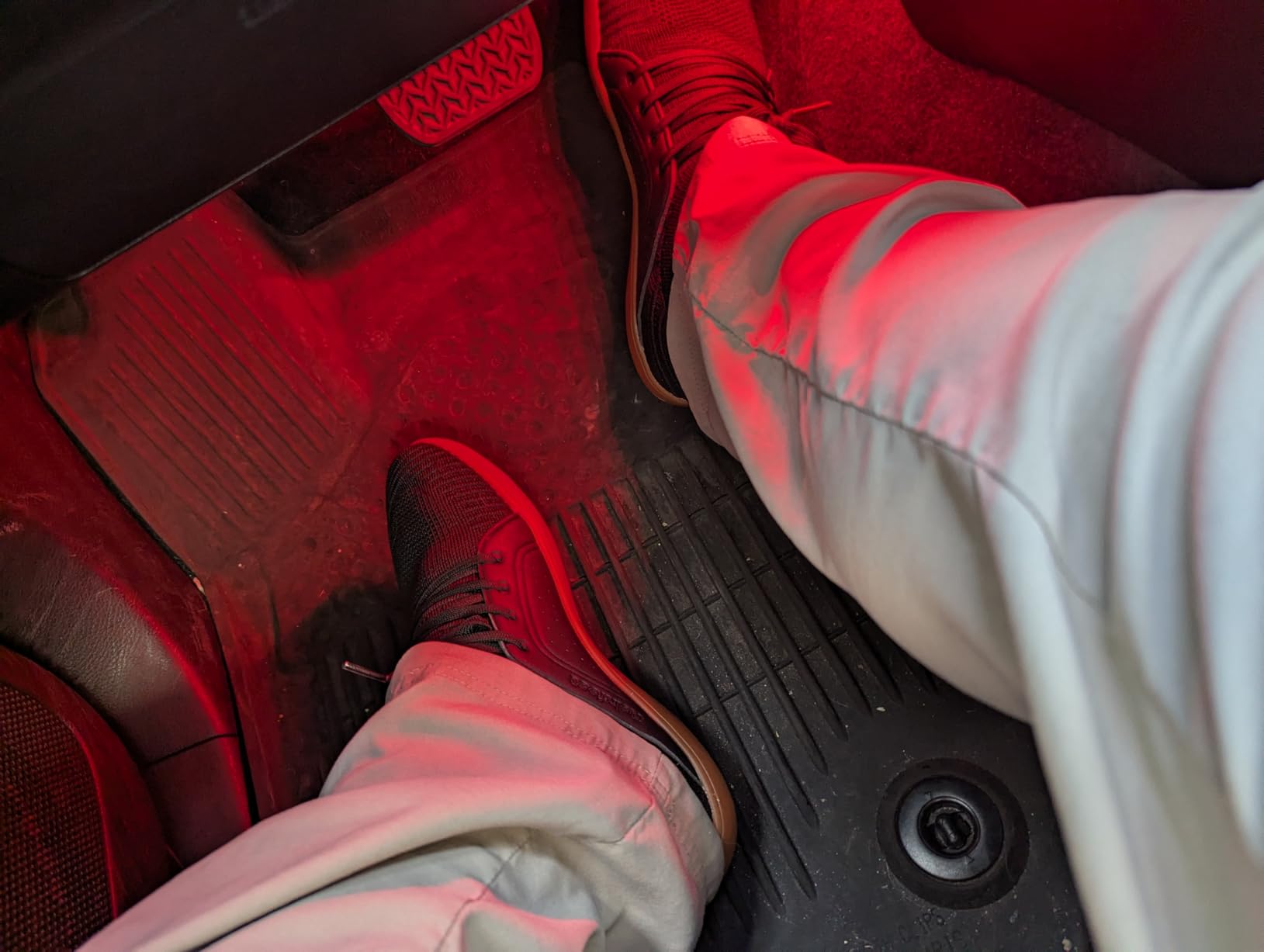
Zero Drop: ✅ Verified. True zero drop, confirmed across all sessions.
Lightweight (250g per shoe): ✅ Verified. Immediately noticeable difference from standard trainers.
Flexible & Durable: ⚠️ Mixed. Extremely flexible — passes the bend test easily. Durability is price-appropriate but the eyelet issue in week one is a real constraint on the “durable” claim.
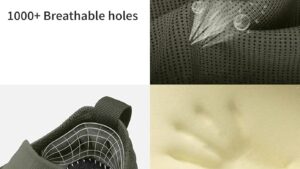
Breathable Upper: ✅ Verified. No heat buildup during hour-long sessions.
Machine Washable: ✅ Confirmed in product specs. Haven’t needed to test this but useful to know for gym use.
How It Compares: Budget vs. Premium vs. Traditional
| Feature | Relxfeet ($35) | WHITIN ($40-50) | Vivobarefoot ($150+) |
|---|---|---|---|
| Drop | 0mm | 0mm | 0mm |
| Gym Performance | Excellent | Excellent | Excellent |
| Expected Lifespan | 6-12 months | 8-14 months | 2-3+ years |
| Construction Quality | Budget | Budget+ | Premium |
| Best For | Gym/Cross-training | Gym/Trail | All-use |
| Verdict | Best entry point | Solid step-up | Long-term investment |
The case for Relxfeet over traditional cross-trainers isn’t that it does everything better — it doesn’t. It’s that for the specific movements where ground connection matters (lifts, rope climbs, explosive work), it outperforms shoes that cost twice as much. For distance running or anything requiring serious cushioning, those traditional trainers still win.
Versus Merrell Vapor Glove 6 or Xero Shoes — both excellent if you want durability and are committed to barefoot training long-term. The Relxfeet makes sense as a commitment-free test. Spend $35, find out if barefoot training works for your body and routine, then upgrade if you love it.
Who Should Actually Buy These
Buy if you:
- Train mostly in a gym (weightlifting, CrossFit-style circuits, HIIT)
- Have wide feet and struggle with toe compression in standard training shoes
- Want to try barefoot training without a $150 commitment
- Do rope climbs, gymnastics, or movements where thin-sole feel helps
- Need a budget option that looks presentable for casual wear too
- Are okay with 6-12 month lifespan at this price point
Skip if you:
- Run distance regularly — the minimal cushioning doesn’t hold up for mileage
- Need maximum durability and hate replacing shoes
- Have flat feet or significant arch issues without insole support
- Want something for basketball, tennis, or high-lateral-stress sports
- Expect premium construction at a budget price (you won’t get it)
Better options for specific needs:
For premium barefoot: Vivobarefoot Primus Lite III ($130-150) — better materials, better longevity, worth it if you’re committed.
For serious running shoes terrain: Xero Shoes HFS ($90-110) — more durable sole built for distance.
For maximum durability: Merrell Vapor Glove 6 ($100-120) — proven track record.
For traditional cushioning: Nike Metcon 9 ($130-150) — structured support and cushioning for those who prefer it.
For other barefoot options at different price points: Airhas Barefoot Zero Drop, MIFAWA Barefoot Shoes, and UBFEN Barefoot Minimalist are all worth looking at depending on your use case.
My Overall Scores
| Category | Score | Key Finding |
|---|---|---|
| Comfort | 8.5/10 | Wide toe box eliminates compression; all-day wearable |
| Cross-Training Performance | 7.5/10 | Exceptional for lifts and rope climbs; not for distance running |
| Build Quality & Durability | 6.5/10 | Eyelet issue week 1; insole compression week 6; 6-12 month lifespan |
| Value for Money | 9.0/10 | Outstanding at $35; 70% of premium barefoot experience at 20% cost |
| Style & Versatility | 7.0/10 | Army green works for casual; cleaner look than typical barefoot shoes |
| OVERALL | 7.7/10 | Best budget barefoot cross-trainer available at this price |
Frequently Asked Questions
Q: Do these shoes run true to size?
A: Slightly large. Most guys — especially those with narrow feet — may want to size down half a size. If you have wide feet, true to size is probably right given the generous toe box. When in doubt, start true to size and return if they feel too roomy.
Q: How bad is the zero-drop adjustment?
A: One week of calf soreness if you’re coming from standard trainers. Not painful — just the muscles working harder than they’re used to. By week two it’s substantially better; by week four you’re fully adapted. Starting with two sessions per week rather than your full training load makes the transition easier.
Q: Can I fix the eyelet issue proactively?
A: Avoid overtightening the laces. The sock-like upper provides most of the fit security; you don’t need aggressive lace tension. If an eyelet does fail, a leather punch or awl creates a reinforced hole that holds indefinitely.
Q: Are these machine washable?
A: Per the official specs, yes. The knit mesh construction handles washing. I’d use a gentle cycle with cold water to preserve the glue bond.
Q: How do they hold up for outdoor use?
A: Good on varied surfaces — grass, concrete, gravel. Comfortable for walks up to 3-4 miles. Not waterproof (rated explicitly as not water-resistant), so avoid puddles and wet conditions. For serious hiking or trail running, you’d want something more purpose-built.
Q: What about boxing or combat training?
A: The thin sole and flexible construction work well for stationary boxing, pad work, and shadowboxing. For sparring or anything with significant lateral cuts and pivots, a purpose-made boxing shoe offers better ankle support. But for casual boxing workouts at the gym, these perform fine.
Q: Do custom insoles or orthotics fit?
A: The insole is removable with care. Custom orthotics that match the footbed size should fit. If you rely on orthotics for arch support, test the fit carefully — the shoe’s minimal midsole means the orthotic is doing more structural work than in a standard shoe.
Q: How long before I need to replace them?
A: 6-12 months depending on use intensity. Gym-only use at 3-4 sessions per week: 8-10 months. Daily casual wear plus gym: 6-8 months. Casual use only (1-2 sessions per week): potentially a full year. Replace the insole around month 6 for best comfort.
Q: Are these good for people with bunions?
A: The wide toe box is genuinely accommodating for bunions — the toe area doesn’t compress or push against the bunion joint. Multiple reviewers with bunion issues report significantly more comfortable than traditional trainers. Not a medical device, but the design helps.
Q: What’s the best way to break in zero-drop shoes?
A: Start with shorter sessions — 30-40 minutes — and build up over two weeks. Focus on gym and lifting initially before adding explosive or high-volume work. Your calves and foot arches are the limiting factor, not the shoe.
Final Call
The math worked out in an unexpected way. I was burning through $300 of training shoes in six months — roughly $0.55 per workout. At $35 with an 8-10 month gym lifespan at my training frequency, the Relxfeet comes out to about $0.10 per session. Even accounting for the shorter lifespan versus premium options, the per-wear cost is dramatically lower.
But the real surprise was performance. These aren’t just financially sensible — they’re genuinely good at what they’re designed to do. For deadlifts and squats especially, the ground feel is something I didn’t know I was missing. My wife still hasn’t admitted she was right about the shoe situation.
The eyelet issue is real and worth knowing about. The durability ceiling is lower than premium alternatives. And if distance running is your main activity, look elsewhere. Within those limits, the Relxfeet Men’s Barefoot Shoes deliver more than the price tag suggests they should.
For anyone curious about barefoot training, wide feet causing problems in standard trainers, or just someone who’s tired of paying premium prices for gym shoes — this is the most sensible $35 you can spend on footwear right now. Buy them, try them, and if barefoot training clicks for you, then you’ll have a clear picture of what to upgrade to next.
Visit footgearusa.com for more cross-training shoe options, or check our full sneaker and running shoe collections.
Be the first to review “relxfeet Men’s Barefoot Shoes”
Related products
Hiking/Trekking Shoes
Running Shoes
Running Shoes
Running Shoes


Hiking/Trekking Shoes
Running Shoes
Running Shoes
Reviews
There are no reviews yet.